Remarkable Rwanda

kigali.25
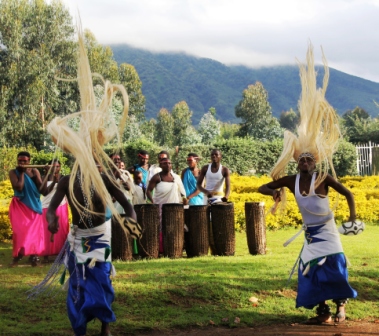
Rwandan dancers
A happy — and most important – healthy New Year to Tales and Travel readers. The following is another post resulting from Adventure Africa.  Before visiting Rwanda, two words sum up what I knew about the country: gorillas and genocide. My previous post, Gorillas in our Midst, details our unforgettable gorilla trek. The following provides a look at Rwanda 22 years after savage butchery took the lives of almost a million of its citizens.

Rwanda’s mountain gorillas are a national treasure, one that has reaped significant financial rewards for this tiny country in central Africa. Revenue from tourism was $303 million in 2014, up from $62 million in 2000 – mainly due to the gorillas.kigali.23

These gentle giants that hang out in the bamboo forests of the Virunga mountains are a source of wonder. Small groups of tourists follow a guide and a tracker into the dense jungle to find and observe a gorilla family. The tracker wields a machete, a common tool in Rwanda, to blaze a trail. But in Rwanda, the machete also has a sinister significance.

“The world withdrew and watched…and a million people were slaughtered.”

Names of the dead at mass grave
The machete was the weapon of choice during the horrific genocide that ravaged Rwanda in 1994. Hutu-Tutsi rivalry culminated in this bloodbath with Hutu rebels on the warpath, hacking Tutsi and moderate Hutu to death.

Driving through bustling Kigali, the country capital, it’s difficult to imagine that these boulevards now lined with neatly trimmed shrubs and flowers were littered with thousands of bodies 22 years ago. The Kigali Genocide Memorial in the country’s capital pays tribute to the victims. Its exhibits are an all-too vivid reminder of the carnage: photos and letters of the dead, accounts of survivors, details on child victims, such as favorite toys and food. It is shocking, heartbreaking, disturbing, chilling.

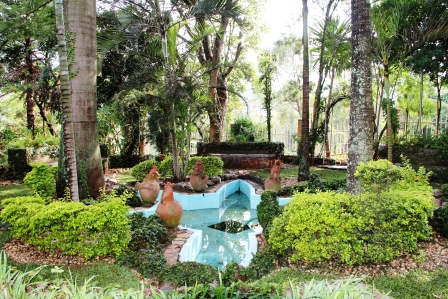
Garden at Genocide Memorial
Some 250,000 victims are buried in mass graves at the memorial site on a lush hillside overlooking the town. Exhibits also trace the history of the ethnic rivalry, the failure of the world community to step in, and reminders that Rwanda is not the only country tarnished by genocide.   Germany, Cambodia, Namibia, Serbia, Turkey – all have dark chapters in their past.

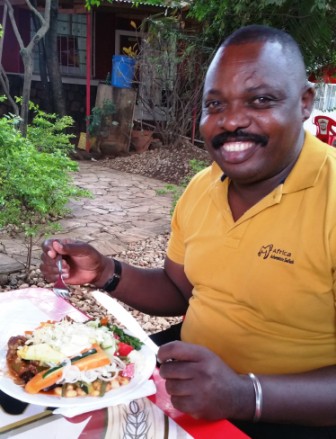
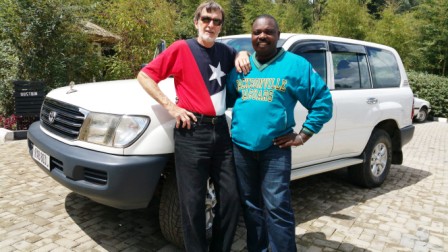
David taught us a lot about Rwanda
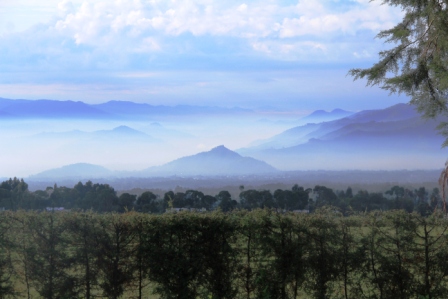
Three million people fled to refugee camps in neighboring countries to escape death. David Habarugira, our guide in Rwanda, fled to nearby Uganda. Rwandans are now at peace, he explained. No one is identified by ethnic background. Many, like David, have returned to their homeland, the Land of a Thousand Hills where steep mountains and deep valleys create a breathtaking landscape.kigali.24

“Rwanda is a country with a vision…better education, health care, infrastructure. .. We are well on our way,” Francis, another guide commented. The economy suffered greatly during and after the genocide, but has made strides in recent years. Gorilla revenue plays a role, with 80 percent earmarked for the government.

Subsistence agriculture, however, is the mainstay of the economy in Rwanda which is slightly smaller than Maryland. Some 90 percent of the population of almost 12 million farm. David, from a farm family, told us he did not have a pair of shoes until he was 20 years old.kigali.9

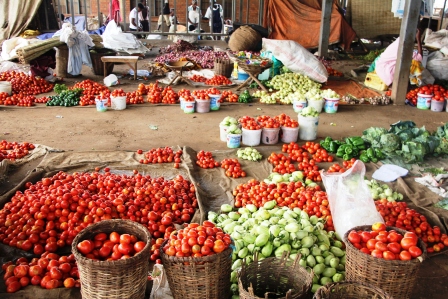
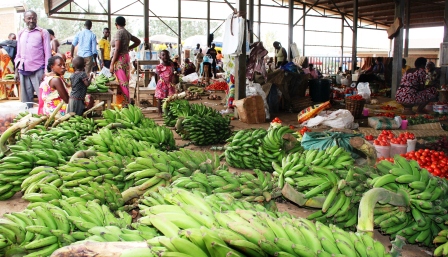
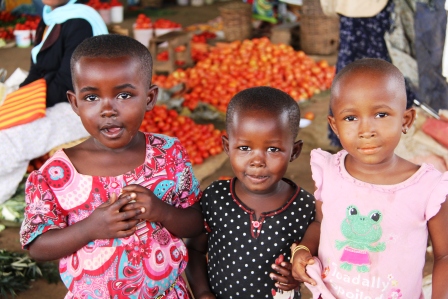
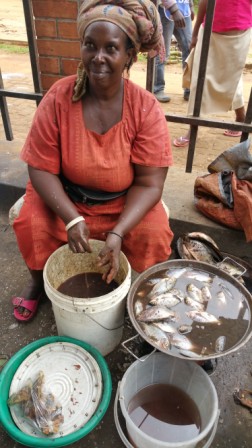
Anything and everything grows, with coffee and tea the main export crops. Markets are full of vibrant color with mounds of produce for sale, including five different kinds of bananas. The national dish is green bananas, ibitoke, steamed and mashed.kigali.17

Paul Kagame, who has been president since 2000, is credited with stabilizing the country and reviving the economy after the mass killings. On Dec. 31, 2015, he announced that he will run for a third term in 2017 after his second seven-year term expires. In a constitutional referendum last month, 98 percent of Rwandans voted to amend the constitution to allow Kagame to run again.   Despite his accomplishments, many see him as an authoritarian ruler.   His government has been accused of human rights abuses, including restrictions on freedom of speech and suppression of opposition groups. The US and the EU oppose a third term for Kagame.

?

On the positive side, Rwanda has low corruption compared to other African countries.   According to Wikipedia, it is one of only two countries with a female majority in the national parliament. Protection of the environment is de rigueur. Plastic bags are banned throughout the country. It is now illegal to cut papyrus, often used for building, since it filters swamp water, David explained. And Rwanda is tourist friendly – safe and delightful to visit, although some of the tourist sites are harrowing.

Mass grave at Nyamata
The memorials at Nyamata and Ntarama, about 30 kilometers south of Kigali, are among these. During the genocide, citizens took refuge in churches, assuming they would be safe. However, members of the clergy are said to have provided information to the rebels. Some of the most brutal massacres took place inside the holy shrines, including the one at Nyamata where skulls and bones of the dead are displayed.   At Natarma, blood-stained clothing still litters the floor.kigali.4

Despite the betrayal by some of the religious, faith is very strong in Rwanda with most citizens practicing Catholicism or another Christian faith. En route to the departure point for our gorilla trek, on muddy roads full of ruts, we witnessed a steady procession of the faithful in their finery, most with Bibles or prayer books in their hands, on the way to Sunday services.

Rwanda has three official languages. Kinyarwanda is spoken by most, followed by English and French. Rwanda was under Belgian rule until gaining independence in 1962. In 2009, the country joined the British Commonwealth although it has no colonial ties to Great Britain. “Pre genocide, we were Francophile, now we are Anglophile,” said David, who speaks English.kigali.6

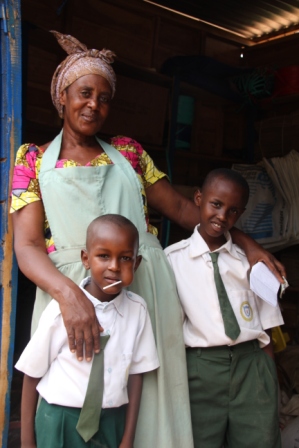
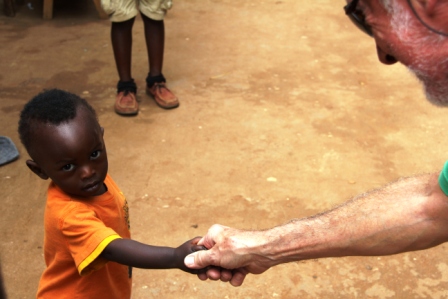
On our drives through the countryside past poor villages where goats and cows roam freely, I asked David why there were no dogs or cats. “We prefer children,” he said. Everywhere, happy, exuberant children waved at us.kigali.7

As Francis said, Rwanda is “well on the way. ” It still has far to go. Sanitation is poor. In both rural and urban areas most use shared pit latrines. The majority of the population has no access to electricity. Yet, many have cell phones.Kigali.22

As my previous post pointed out, a trek to see Rwanda’s gorillas is very expensive. It is gratifying to know that the revenues are contributing to improve living conditions for its citizens. Gorillas also mean jobs: guides, trackers, porters, drivers, and hotel staff. We were overwhelmed by their friendliness, kindness and joie de vivre.kigali.13

“A new found air of optimism pervades the country,” states Lonely Planet. It’s an optimism that is a joy to experience.

Scroll down for more Rwanda photos. More Adventure Africa to come in future posts: On Safari, Animals, People… If not already a Tales and Travel follower, sign up (upper right) so you will not miss future posts. Your address is kept private and never shared.kigali.8

Like my blog? Tell your friends.  Please leave a Reply below. Feedback is welcome. I love to know what my readers think about my posts.

Hungry for a hearty and tasty winter soup? The recipe for East German Soljanka is perfect. Try it. You won’t be disappointed. Click on photo, upper right.

Follow Tales and Travel on Facebook:  http://www.facebook.com/talesandtravel

Follow me on twitter: @larkleah

Riding a bicycle in hilly Rwanda is not for sissies. These guys cheated -- hanging on the back of a truck for an easy way up.
Riding a bicycle in hilly Rwanda is not for sissies. These guys cheated — hanging on the back of a truck for an easy way up.
Tobacco also grows in Rwanda.
?

kigali.12

Rwanda has 728 different birds -- a passion with David who seemed to know all of them.
Rwanda has 728 different birds — a passion with David who seemed to know all of them.
We asked David to take us to a local , non-tourist restaurant This was awesome. And, heaven for vegetarians -- all kinds of tasty veggie concoctions
We asked David to take us to a local, non-tourist restaurant. This was awesome. And, heaven for vegetarians — all kinds of tasty veggie concoctions.  Rwandans eat little meat.

Gorillas in our midst

In my next life, I want to be Dian Fossey. Well, not quite. I’d rather not be mysteriously murdered as she was in the jungles of Rwanda where she studied and lived with mountain gorillas.gorilla.2b

After observing, photographing and admiring these magnificent beasts in the dense bamboo forests high in the mountains of Rwanda, I was smitten. It is easy to understand Fossey’s fascination with the human-like gorillas which share 98 percent of our DNA.

gorilla.9b

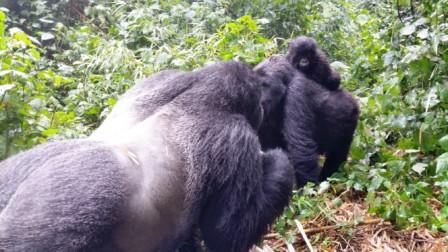
Children romp and play, chasing one another through the thick brush. Toddlers cling to mothers, often piggy-back. Mothers nurse babies. And Big Daddy, the awesome silverback, keeps a vigilant eye over all.

“Watch out! One coming on your left….Look up, one in the tree… Be careful. The silverback is just ahead.”

gorilla.5b

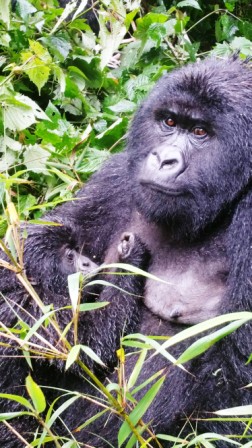
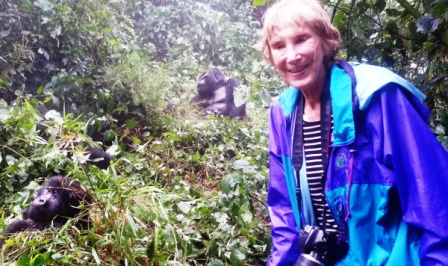
They were in our midst, the 22 member Kwitonaa gorilla family. One youngster raced by and grabbed the hand of a member of our trekking group. Another trekker was punched – lightly — by a teenager whose path he accidentally blocked. I was captivated by a nursing mother, no more than a foot in front of me. I could have easily touched her, but I dare not. We had been warned not to get closer than 10 feet to the beasts. Impossible. They were all around us, up close, and obviously accustomed to this parade of curious creatures who snapped away with all manner of cameras.

gorilla.7b

Mountain gorillas are “about as dangerous as pet lambs,” Fossey once told Alfred Hitchcock, apparently to his disappointment.

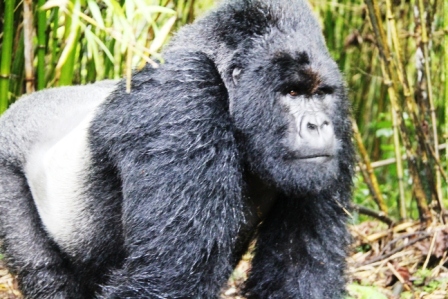
Mama occasionally cast me a stern glance as if to say, “Oh no, you guys again.” Not far behind her, higher up on an incline, sat the silverback, a picture of majestic power, like a king with his subjects at his feet. He seemed disinterested, but weighing in at close to 400 pounds; I did not want to upset him.

gorilla.b3

The Virunga Massif, volcanic peaks usually shrouded in mist along the borders of Rwanda, Uganda and the Democratic Republic of Congo, are home to 10 gorilla families visited regularly by tourists.gorilla.23b

Treks to observe the gorillas are strictly controlled and organized by officials in Rwanda’s Volcanoes National Park. Eager tourists arrive at park headquarters at 7 a.m. where they are divided into groups of eight, supposedly according to the difficulty of the hike ahead. Each group (a maximum of 10 groups or 80 tourists gorilla.27bgorilla.20bper day) is accompanied by a guide, trackers carrying machetes to blaze a trail, a gun-toting guard (in case of attack by Cape buffalo) and porters. Guides are in radio contact with other trackers stationed in the mountains who monitor the gorillas and advise them of the various gorilla family locations.

No longer young and fit, we asked to be in an “easy” trekking group since we had heard the hikes to locate the gorillas can take up to four hours, one way, over difficult terrain. I had been very nervous, not certain we were up to the challenge. My fears were assuaged when I met the others in our party: Fran (66) and John (76), seasoned hikers from Scotland; Selma (72) and Barry (a bit older) from D.C., and a mother- son couple from Germany. Annette, who appeared to be in her 70s, was on her fifth gorilla trek. “I’m addicted,” she said.

Selma announced to the guide that she had had two knee replacements and could only hike if the terrain was flat. She explained that a woman in her hotel had seen the gorillas the previous day after an easy, 37-minute hike. She expected the same.gorilla.25b

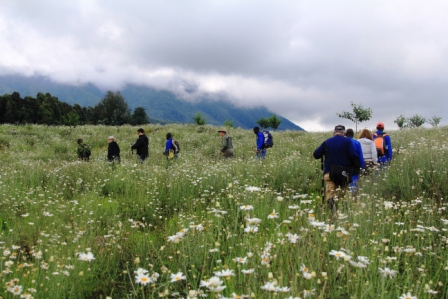
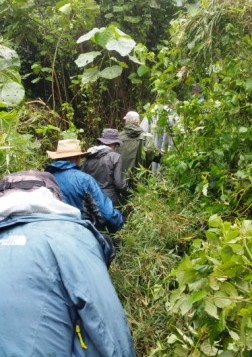
Poor Selma…close to three hours later, soaked to the bone, we finally found our gorillas. The hike started out as a pleasant walk in sunshine through farm fields. The sun soon disappeared and we started to climb, over rugged, rocky, slippery terrain. Up and up. Steeper and steeper. We were at an elevation of 8,500 feet. I was frequently out of breath, but there were rest stops.

Porters help with the ascent.

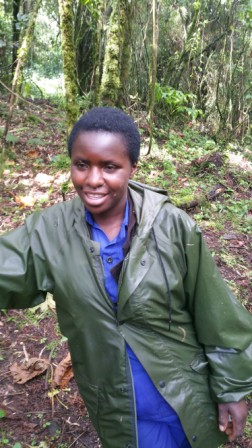
Fortunately I had hired a porter, Peragie, a tiny woman half my size but my savior. I had little to carry, just a small backpack with a water bottle and my gorilla.17bcamera. But, for only $10 (the standard charge for a porter), I figured it might be useful. She could hold my camera if I wanted to take photos with the phone and vice versa.

This mini power house did far more. On the steep sections, she took my hand and literally pulled me up. When the rains came, soon into the trek, she wiped my face and glasses. She tucked my pants into my boots – to keep the red ants away. She spoke no English, but I learned that she was 30 years old, a widow and mother of two young children. Her calm, gentle, caring demeanor was an inspiration and kept me going.

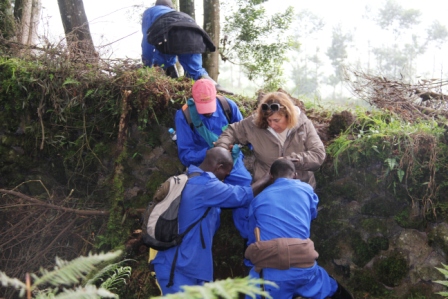
“My knees are wobbly. I can’ go any farther. I won’t make it,”   announced Selma, not far into the hike. Our guide assured her she could – would – make it. When we came to a high rock wall separating the fields from the forest, several porters lifted her over the obstacle.gorilla.29.bjpg We charged on, but the going in the tangle of jungle vines, roots and branches was a challenge. Rain did not help. “How much farther?” Selma asked time and time again.   However, we all were beginning to wonder if we would ever find the gorillas.

Over and over, guide Ignacie assured us they were not far ahead. “They’ve been here,” he explained as he surveyed the terrain. Of course, they were not waiting for us, but continually on the move, higher and higher, searching for more tasty bamboo.

gorilla.15a
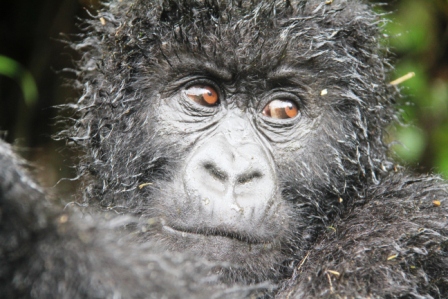
Playful baby

At last – a big patch of black lumbering through the jungle green ahead. We stopped. We could hear bamboo branches breaking. Suddenly more masses of matted black fur, on the right, left, ahead –all in motion. We were awestruck. After the grueling trek, it seemed miraculous.

Ignacie told us the youngest member of the family was a seven-day old baby. We came up behind the mother, cradling the infant in her arms. Unfortunately the 22-year-old silverback was ahead and she moved on to dutifully follow him before I could get a photo. The kids – all ages – were frolicking all around. Two teenagers got into a spat. “They are drunk,” Ignacie said. Apparently overdosing on bamboo has the same effect as too much booze.

The rain stopped. We moved about, each of us zeroing in on different family members for close up photos. It was thrilling, amazing, and beyond our expectations to be so close to these intriguing creatures.

Trekkers are supposed to spend no more than one hour observing the gorillas. Perhaps because our journey had been so long and arduous, Ignacie was generous. We were with them a bit longer, but not long enough. You cannot get bored watching gorillas.

gorilla.31

The trek down was worse than the ascent. It started to pour. This was the rainy season, and these rains were like no others I have known. The trackers decided to find a shorter route back through even denser jungle growth. The lead man thrashed a path with his machete. If it hadn’t been for my guardian angel, I surely would have slipped or tripped.

Selma survived. “I am glad it’s over,” she said as we reached the end. Had Ignacie not insisted, she obviously would have quit. We later learned that rather than sending a participant back, the guides call for a stretcher.   Trekkers are carried to the gorillas at an extra cost of $200. And, it is not uncommon for handicapped tourists to hire porters with a stretcher to take them to marvel at this wonder of nature.

gorilla.19b.jpg
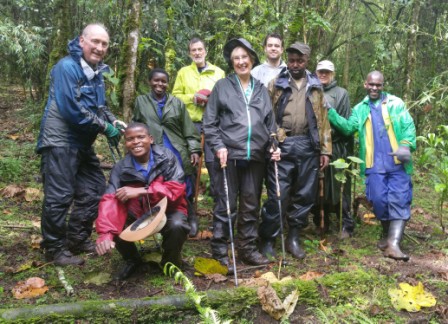
Group photo while we waited for Selma and Barry who were far behind.

The gorilla experience is costly, $750 per person for the required permit. This includes the guide, trackers, guard, but not the porters. There is no shortage of visitors, however. Since 2004, the number of gorilla customers has almost tripled: 20,000 in 2014. Much of the revenue helps fight poachers, as well as contributes to the country’s efforts to develop a high end tourist industry and continue its recovery from the horrific genocide of 1994.

Back in the early ‘80s when Fossey came to Rwanda, there were only about 240 mountain gorillas in the wild. They cannot survive in captivity. Today the number is estimated at about 900, with some 300 in the Volcanoes National Park.

Annette, our intrepid trekker from Germany, was planning to set off again the next day for another gorilla trek – her 6th.   She said she had never been so close to the gorillas as she had on our trek, nor had she ever been on such a difficult trek.gorilla.30b

Finding the Kwitonaa family did take far longer than anticipated, but only Selma complained. It is very rare that guides do not find the gorillas. If that happens, trekkers are offered the chance to try again the next day. Prosper Uwengeli, the park’s chief warden, told a New York Times reporter that in more than 30 years, guides have never had to shoot a gorilla and no visitor has ever been harmed by one.

In a research report, Fossey wrote that mountain gorillas are “dignified, highly social, gentle giants with individual personalities and strong family relationships.” Like Fossey and countless others who have watched them in the wild, I am enamored of these gentle giants and, if it weren’t so costly, would gladly endure another trek for another visit.gorilla.b1

Gorilla visitors can show up at the park at 7 a.m. with hopes of buying a permit for a trek that day, but that is risky as permits may be sold out. Most tourists book a package tour which includes the gorilla trek. We booked a 3-day package with Africa Adventure Safaris, an African company which also organizes tours in Uganda. Total for both of us was $3,250 which included a full-time driver/guide, three nights lodging and most meals, the gorilla permits, a permit and trek to visit endangered golden monkeys the day after the gorillas, city tour of Kigali and airport transfers. We were more than satisfied. www.rwandagorillassafari.comgorilla.10b

Bad - very bad -- hair day
Bad – very bad — hair day

From Rwanda, BB and I traveled south for more Adventure Africa: Botswana, Zambia, Zimbabwe and South Africa. Future posts will highlight our amazing experiences. But first, a bit more on Rwanda. Coming soon, “Rwanda — More than Gorillas.”

If not already a Tales and Travel follower, sign up (upper right) so you will not miss these exciting future posts. Your address is kept private and never shared.gorilla.6b

Like my blog? Tell your friends.  Please leave a Reply below. Feedback is welcome. I love to know what my readers think about my posts.

It’s time for a hearty soup. East German Soljanka, a recipe from my friend and food writer Sharon Hudgins, is perfect to warm both body and soul. See Today’s Taste, column at right.

Follow Tales and Travel on Facebook:  http://www.facebook.com/talesandtravel

Follow me on twitter: @larkleah
I


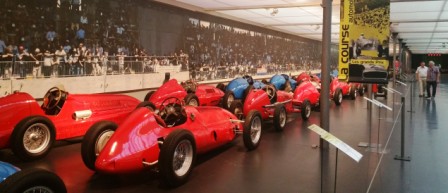
CARS: The marvels of Mulhouse

Following is a shorter version of an article I wrote for the magazine German Life. I am not as enamored of cars as BB/VR, but I was enamored of this museum.car.8

On both the French autoroute and the German autobahn drivers whiz by the exit to Mulhouse, an Alsatian city in northeastern France.

Germany is next door to the east and Basel, Switzerland, just 30 auto minutes to the south. Why stop in Mulhouse which is an industrial hub?

Museums — that’s why. After Paris museums, the museums in Mulhouse are the most frequented in France. Here visitors come to admire cars and trains, not masterpieces from the art world. The car museum is to cars what the Louvre is to art, states the museum literature.

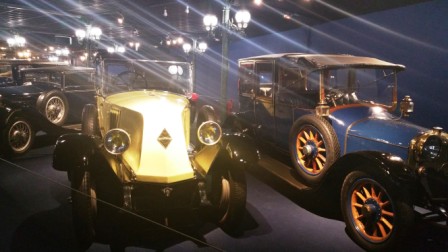
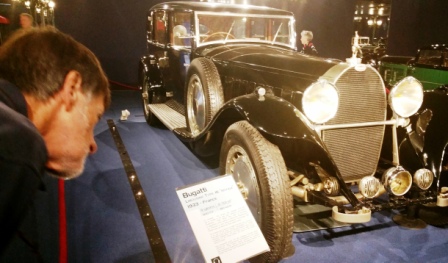
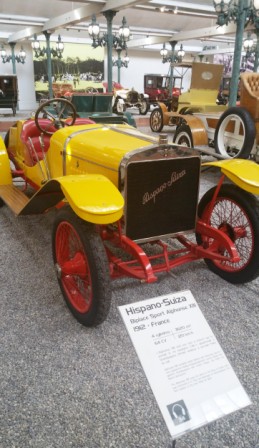
The Cite de l ‘Automobile or National Museum Schlumpf Collection is the largest automobile museum in the world with more than 400 shiny, spectacular vehicles on display, 125 of which are Bugattis.car.7

The prestigious automobile was an obsession of two brothers, Hans and Fritz Schlumpf, born in 1904 and 1906 respectively to a Swiss father and a mother who was from Mulhouse where they lived. Their story is as intriguing as the museum which houses their collection.

Mulhouse was a center of textile firms. Fritz initially worked as a wool broker while Hans worked for a bank.

They began buying shares in spinning mills, and then acquired various companies, including a textile factory in 1957. Fritz, who had a Bugatti, began buying vintage cars. Hans joined in and together over a 20 year period they amassed a secret collection of classy cars, including two of only six Bugatti Royales, the masterpieces of Ettore Bugatti.

Bugatti Royale
Bugatti Royale

Rumors circulated in the auto world about the mysterious collection. Some said the brothers were out to buy every Bugatti in the world with intentions of destroying them all to prevent them from ending up in the hands of the “wrong people.” A newspaper article in 1965 revealed the size of the hidden collection. The Schlumpfs were silent. They maintained the cars were for their personal purposes and of no business to others. However, they did take steps to prepare part of the collection for display.

In 1976 their world crashed. The textile industry in Mulhouse was dying. The Schlumpfs were broke. All their money had been spent on cars. Workers at the textile mill went on strike. They were infuriated at learning where much of the factory profits had been spent.

“I was earning 1400 francs a month, and now see where the rest of it went,” wrote an angry worker on the grill of a racing car.car.6

The brothers tried to sell the factory, but there were no buyers. It was closed in 1976.   Fritz and Hans fled to Switzerland and never returned to France, leaving behind the priceless car collection — 427 cars in mint condition including 122 Bugattis, and another 150 cars in workshops awaiting restoration.

Fritz Schlumpf had part of a factory warehouse refurbished where the cars were stored and which he had planned to open for exhibition. In 1977 trade unions occupied the warehouse, called it the “Workers Museum,” and opened it to the public.

The
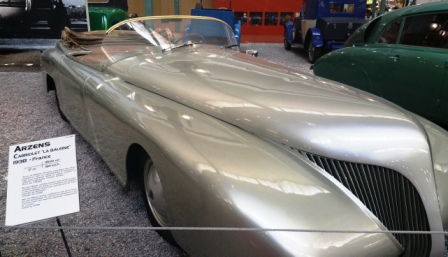
The “whale,” Arzens 1938 convertible

The French government listed the collection as an historic monument in 1978. It was purchased by the National Motor Museum Owner’s Association in 1981, and opened as the National Motor Museum in 1982. Culturespaces, a private organization managing French monuments and museums, took over management of the collection in 1999.

The museum is vast, an area of four hectares. Audio guides are provided with plenty of detail on many of the 437 cars representing 97 different car manufacturers that are on display.

There are three main sections to visit: Motor Car Experience, Motor Racing and Motorcar Masterpieces. For a quick overview, hop on the museum “train,” which makes stops at some of the most noteworthy cars while the driver provides informative commentary. Then, wander at leisure.car.3

The piece de resistance is no doubt the Bugatti Royale which Ettore Bugatti designed for his mother in 1933. She loved luxury, hence velvet seats. She wanted to be able to see the stars at night, hence a glass roof and the first car to have a panoramic roof, according to the guide. The car is valued at 40 million euros.

Check out some bizarre cars, such as the Arzens convertible, a car from 1938 nicknamed the “whale,” due to its size, seven meters in length, and shape. The “tank,” a Bugatti race car from 1923, indeed looks as if it belongs on a battlefield, not a race track. Yet, it was clocked at 189 km per hour in the 1923 tours Grand Prix.

?

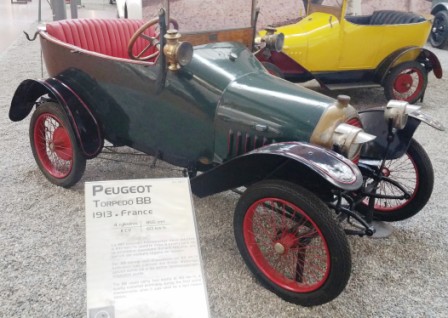
The oldest car in the museum is a Jacquot from 1878 with a steam engine. It needed two hours to heat 40 liters of water so it could travel seven kilometers. The audio guide provides a surprising fact on the 1913 Peugeot Torpedo BB, 3,000 of which were produced, including one for a customer in China.

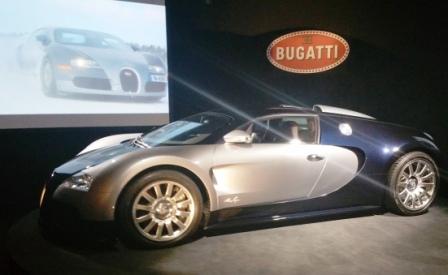
A long avenue lined with race cars, from a 1908 Panhard-Levassor two seater, to numerous Mercedes, Maseratis, Porsches, and Bugattis, gives a fascinating view of the changes in these speed machines over the years. Wind up the visit with the latest from Bugatti, the mind boggling 16.4 Veyron, displayed on a moving pedestal which slowly turns as spotlights highlight the beauty.

car.5 A large screen behind shows details and the car in action. It is the fastest car in the world with a top speed of 407 km per hour. Experts in the fields of aeronautics and astronautics have produced an incredible braking system. From a speed of 400 km per hour, the Veyron will come to a complete stop in just 10 seconds when the brakes are applied. It takes three weeks and eight technicians to make a Veyron, only one or two are made per week, and there are just 300 in existence.

You could spend an entire day admiring — and learning — about all these fascinating vehicles with a break at one of the museum’s lovely restaurants, including the gourmet, L’Atalante, for fine French cuisine.

But, don’t neglect trains. After a morning of cars and a tasty French lunch, we went on to the Cite du Train (French Railway Museum), another marvel of a museum in Mulhouse. Here you can see some 100 trains all displayed on 1,350 meters of track. And, here too, an audio guide provides background information and facts.

Museum entrance
Museum entrance

For more on the car museum, see www.citedelautomoible.com; for the train museum, www.citedutrain.com

A delightful and convenient place to stay in the city: Guest house Mondrian, www.maison-mondrian.fr

Alsatian cuisine and ambiance: Auberge au Vieux Mulhouse, Place de la Reunion, Tel. (00) (33) 3 89 45 84 18

If not already a Tales and Travel follower, sign up (upper right) so you will not miss future posts. Your address is kept private and never shared.

Like my blog? Tell your friends.  Please leave a Reply below. Feedback is welcome. I love to know what my readers think about my posts.

Follow Tales and Travel on Facebook:  http://www.facebook.com/talesandtravel

Follow me on twitter: @larkleah

Les Rosiers: Summer 2015

blog.lesrosiers

In a word, it was HOT. Week after week of temperatures in the upper 90s (Fahrenheit), even reaching 100 and above a few times. My roses, geraniums and petunias had to be watered continually. The grass (what little we have) turned brown. The pool water has never been so warm – too warm for me, but finally warm enough for delicate BB/VR* who was brave enough to jump in. This was only the fifth time he has been in the pool in the 10 years we have lived here. (Thanks to my dear mother who insisted my brothers and I all learn to swim at an early age, I am  a swimmer and love the water.  BB was not so lucky.)blog.pool2

Fall arrived too soon and too abruptly – for me… One will never be content.

Despite the heat, we enjoyed some fun activities and the wonderful folks who rented our guest apartment at Les Rosiers.

Klaus and Eva
Klaus and Eva

The season kicked off with the arrival of Klaus from Austria, his car loaded with Austrian delicacies and beer. He always brings us a generous gift of goodies, too. This was the fifth season that Klaus and his wife Eva have spent a month in our rental studio. She is still working as a legal secretary in Graz, arrives a week later by plane and only spends two weeks here. Klaus likes to cook and grill – lamb is his favorite. They know the area well, take long walks, swim, and visit friends and flea markets.  They have become friends, and it’s always a delight to have them here.

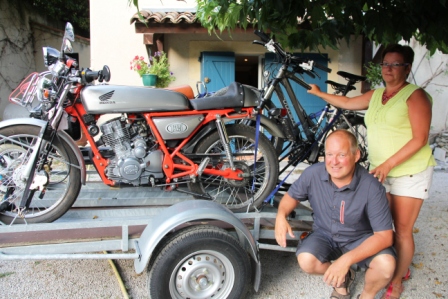
Patrick, Chantal and their bikes

Then came the Belgians, Patrick and Chantal, with two motorcycles and two bicycles towed behind their car. We were amazed. Due to the heat, they spent most of their time on the motorcycles. One of the bicycles was electric, but since the terrain here is anything but flat, they preferred their motorcycles. They took long excursions, almost every day during their two-week sojourn.

Chantal said they have been vacationing in southern France every summer, but always camping. They especially enjoyed the tranquility at Les Rosiers. Camp sites can be very noisy, she said. And, they loved our town, Reillanne.

Sunday market in Reillanne

“It’s an authentic village, not a Disney village like so many in the Luberon,” said Patrick. “There are not that many tourists, not that much traffic.” They like to visit the village cafes and talk to the locals. And, they especially liked the Bar restaurant de la Place where they dined many times.

?
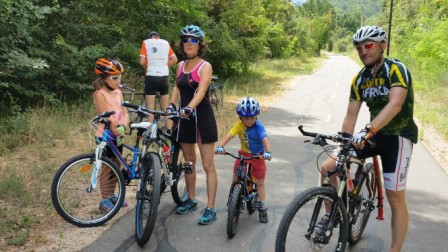
Czech cyclists: Lara, Katarina, Luka and Jakub

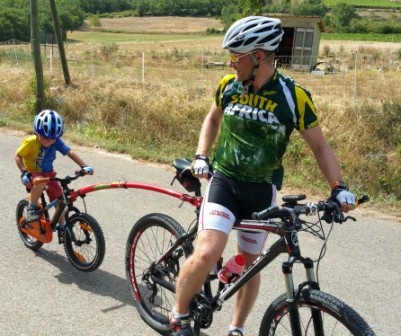
More bicycles next – a Czech family of four with five bikes. Jakub and Katarina and children Lara, 9, and Luka, 5, were back for the second time. We were overwhelmed with their bicycle prowess two years ago when they set out day after day, all day on bikes, albeit Katarina towing Luka in a carriage and Lara’s bike sometimes attached to her father’s bike. Lara now rides on her own, and Luka rides the bike that can be attached to Jakub’s . We rode with them one day – lots of fun.

Jakub and Luka
 Luka behind Daddy Jakub

They arrived a day late after participating in an orientation competition in the Jura where Jakub took first place in one category. Here he conquered Mont Ventoux for the fifth time. That was the reason for five bikes – a super bike for the challenging climb.

“We always like to come back to Provence, the terrain, the living historic villages that are not just for tourists,” said Jakub.   We were happy to have them back.

The hardy cyclists enjoyed the pool after those rides in the blazing Provence sun.

Wine was the focus for Patricia and Serge, visitors who come from Brittany. They traveled far and wide to buy Provence wine, driving 1,700 kilometers in the region, visiting six wineries and ending up with 14 cases of wine to take home.

Serge and Patricia
Serge and Patricia

Each evening when they returned from a buying trek they shared their adventures and raved about places they visited – some we had not known about.   Serge says they always buy the wine of the regions they visit. They live in an area of vineyards near the Loire where he helps harvest the grapes.

Serge's bounty
Serge’s Provence souvenirs

They presented us with a bottle of Grand Reserve Muscadet Sevre et Maine sur Lie which we tasted when they invited us to a super fish dinner Patricia prepared. She served the fish with beurre blanc, a well known sauce for fish in Brittany. She shared her recipe which I have tried to master. Mine could not hold a candle to hers, but I will keep trying. When I am successful, we will open the precious bottle of Muscadet.

Niki from Athens
Niki came to visit from Athens.  We met on a student ship 50 years ago!.

We visited the US this summer (see previous post, “USA: Summer 2015,” July14) and the Mediterranean coast (previous post: “Cannes: Far from the Madding crowd,” Aug. 20).

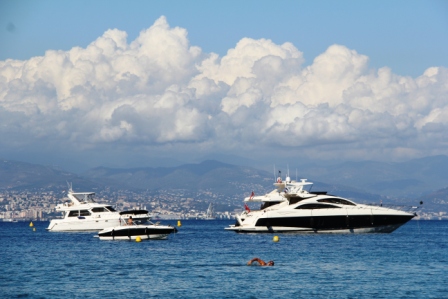
We recently went back to the coast for a gala evening at the Hotel Belles Rives in Juan les Pins/Antibes. Our Finnish friends, Terttu and Mikko, have a rental apartment which they generously offered us. In addition to dining and dancing, I swam in the Med which sure beats a pool, and we took a short but scenic hike around Cap d’Antibes.

?
La Dolce vita.
The Med at Juan les Pins

We are not sorry the heat has subsided, but sorry that summer is over.  The days are getting too short.  Some restaurants will soon close for the season.  No more concerts and village festivals.  Winter can be bleak here, and it’s  a long wait for spring.

Photos of other summer activities follow.

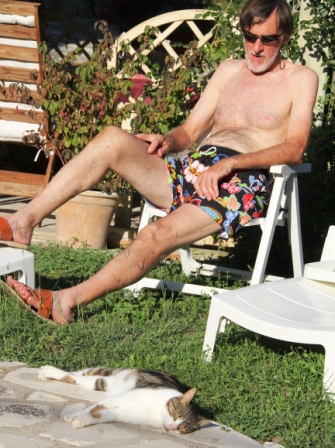
BB/VR and Filippo chill out poolside.
BB/VR* and Filippo chill out poolside.

*Bicycle Bob/Vino Roberto

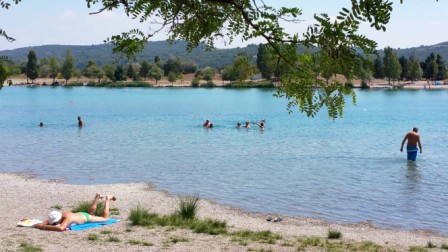
Lake Vannades near Manosque where I enjoyed a real swim
Lake Vanades near Manosque where I enjoyed a real swim
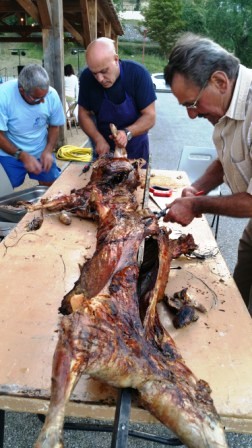
 A Bastille Day Mechoui-- lamb grilled on an open fire.

A Bastille Day Mechoui– lamb grilled on an open fire.

If not already a Tales and Travel follower, sign up (upper right) so you will not miss future posts. Your address is kept private and never shared.

The Med at Cap d'Antibes
The Med at Cap d’Antibes

Like my blog? Tell your friends.  Please leave a Reply below. Feedback is welcome. I love to know what my readers think about my posts.

The lavender must like the heat. The color was especially vibrant this summer.

Follow Tales and Travel on Facebook:  http://www.facebook.com/talesandtravel

Follow me on twitter: @larkleah

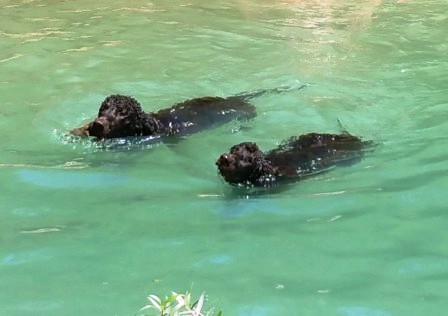
Champion swimmers, Koa and Nai'a, friend Lynne's Irish water spaniels. We swim together at Lake Ste. Croix
Champion swimmers, Koa and Nai’a, friend Lynne’s Irish water spaniels. We swim together at Lake Ste. Croix

Wunderschön Times in Germany

The previous post, Humanity is Lost, was my attempt to reblog a post of a bloger I follow.  If you click on the title, you should be able to open and read the post. 

Along the Moselle
Along the Moselle

201 kilometers of pedaling in four days. Certainly nothing to brag about. But, we are no longer young and it’s been a few years since we have done any serious cycling. We were also biking with our panniers – worth a few extra Brownie points. The cycling was mainly on flat terrain following bike routes along the Saar and Moselle rivers in Germany: pleasant, easy, scenic.

We made it -- back to the car in Merzig where it all began.
We made it — back to the car in Merzig where it all began.

The bike excursion was a highlight of our spring trip back to Germany where we lived for many, many years before moving to France. We love going back, seeing friends, drinking the world’s best beer, enjoying our favorite German foods — and discovering more of Germany. Wines in Baden, hikes in the Black Forest, sights in Saarbrücken– add all that to bicycling and it makes for a wunderschön  (wonderful) trip.

It wouldn't be Germany without a bit of rain.
It wouldn’t be Germany without a bit of rain.

Google led me to a blog post,”A Bicycle Ride along the Saar and Moselle Rivers.” Perfect for us, I decided. We cut short the part on the Saar, pedaling only from the town of Merzig to Konz where we picked up the Moselle Bike Route and followed it to Bullay.

A break from the bikes to enjoy the scenery.

The Saar section was serene, sublime. Few people. Few major towns. Trees, the river and vineyards. We stopped to chat with a couple from northern Germany who were taking a break from the bikes and lounging in the grass. “We’ve never be to Saarland. It’s beautiful and not so touristic,” she said.

Trier: Porta Nigra
Trier: Porta Nigra

Along the Moselle we pedaled past lots more vineyards, through more towns, and encountered more cyclists. We felt we needed to see the major sight in Trier, the Porta Nigra, but biking through the congested city was not pleasant. However, tasting wine in the town of Graach where Mythos Mosel, a Riesling wine tasting event was underway, was very pleasant.

BB/VR gets a taste of Moselle wine.

Be it in Germany, Austria, Switzerland, France—wherever, biking along marked cycle routes is usually a joy. For the most part you encounter few cars. Unfortunately this was not entirely the case for us this ride. As navigator, I am to blame.

Instead of carefully consulting the bikeline guidebook when leaving one town, I chose the wrong side of the river for our ride. We were on a bike path, but not the right one. The trail deteriorated, leading us onto a muddy track bordered by thick vegetation. No way to ride this, so we pushed the bikes through the swamp. The worst was not over. We followed the path out of the mud and up a hill, only to be faced with a busy major and narrow highway. Cars sped by much too close for comfort. Add to that: rain.

Postcard villages surrounded by vineyards abound on the Mosaelle.
Postcard villages surrounded by vineyards abound on the Moselle.

I don’t frighten easily, but this was very scary. I feared we may have missed the one bridge that would lead us to the other side and the correct bike route. I used all my energy to pedal as fast as I could, hoping we would find the bridge before being crushed by a car.

We survived and were relieved to arrive in Trittenheim and find the welcoming home of Marlene Bollig, a guest house where we had booked a room. I told her about our adventure. “No one rides on that side of the river,” she said. “Well now you have an adventure to write about. “ One adventure I could have done without.

Hikers learn about wild herbs
Hikers learn about wild herbs.

Our adventure in the Black Forest was problem free, fun and interesting. We joined a guided group hike, Wild herbs: Multitalent. “My passion is to delve into nature and gather herbs. I learned from my grandmother,” guide Heidi announced. The trek was easy with numerous stops where she plucked a plant or flower, then explained its use in the kitchen and its nutritional, as well as medicinal, value.

Butter mixed with wild herbs-- delicious on bread.
Butter mixed with wild herbs– delicious on bread.

The forests and fields are indeed rich in edible treasure, but don’t try to eat all.   “No, you can’t eat that,” she announced as one of the group pointed to some lovely yellow flowers. “Not even cows will eat that. The stomach won’t tolerate it.” She treated us to a wild herb snack which our stomachs tolerated with pleasure, bread smeared with tasty herb butter made from plants of the forest.

We followed guide Rolf Wein on another hike, uphill to the Genuss Platz (Pleasure Place), a scenic spot with benches he and friends had made long ago. His treat, wild plum schnapps which he had made.

Rolf Wein led us to his favorite spot in the Black Forest.

“This is my home,” Rolf said as he looked below to the town Baiersbronn surrounded by forests. “I enjoy outings with guests, to show it off. It is wunderschön here in the black Forest. I would never move away.”

Baiersbronn is a wunderschön town, especially for foodies. Its restaurants have a total of eight Michelin stars, quite amazing for a town of 14,500. I had the privilege of interviewing three-star chef Claus-Peter Lumpp at the Hotel Bareiss, one of the town’s five-star hotels.

3* Chef Claus-Peter Lumpp in his kitchen
3* Chef Claus-Peter Lumpp in his kitchen.

“It’s hard work,” he said of his profession, but “good.”   “There is nothing better than to see happy people when they are satisfied. Guests are the most important for me.”

Zwiebel Rostbraten with Spaetzle -- also wunderschoen.
Zwiebel Rostbraten with Spaetzle — very wunderschoen.

Dining at the three star restaurant was beyond our budget, but we enjoyed the tastes of Germany at the hotel’s gemütlich Dorfstuben where I indulged in my all-time German favorite: Zwiebel Rostbraten (Onion Beef). During our travels we savored other German favorites, such as Sauerbraten, Bratwurst, Sauerkraut and red cabbage.

Sauerbraten, Rotkohl and Bratkartoffeln (Sauerbraten with red cabbage and fried potatoes). Makes me hungry.

And, German wines. Although the Moselle is a noted German wine region, except for our one tasting along the bike route, we had no time for serious wine discovery there. We made up for it in Baden, part of the state of Baden-Wurttemberg in southwestern Germany. The Black Forest is part of this state. The Baden section borders both France and Switzerland and is Germany’s warmest and sunniest region. Baden produces more red than white wine, which is rare for Germany, a country known best for its white wines, especially Riesling.

Vineyards in Baden.
Vineyards in Baden.

Bicycle Bob (BB) is known more as VR (Vino Roberto) these days since his passion for wine now exceeds his love of his bicycle. We not only tasted our way through many Baden wineries, VR bought a supply, too.

With Heti and Heinz.

Our friend Heinz gave us a delicious souvenir to take home – six bottles of his favorite Baden white, Oberrotweiler Grauer Burgunder.  Heinz and Heti live in Sindelfinen adjacent to Stuttgart, not far from where we used to live. We stayed at their beautiful home and had the chance to reunite with many of our friends from those days at a fun evening, a pot luck dinner they arranged.  Danke Heti and Heinz.  Alles wunderschön.

We'd never been to Saarbruecken. It's worth a visit. Ludwig's, Church is a Baroque masterpiece.
We’d never been to Saarbruecken. It’s worth a visit. Ludwig’s Church is a Baroque masterpiece.

TRAVEL TIPS

Bicycling in Saarland: www.radfahren.saarland.de

The Moselle: www.mosellandtouristik.de

Baiersbronn: www.baiersbronn.de

Hotel Bareiss: www.bareiss.com

Viller0y & Boch, http://www.villeroy-boch.com

Wine fests abound in Baden, for more on Baden wine and a list of wines fests dates and places: www.badischerwein.de

Don’t miss Today’s Taste in column at right: ASIAN CHICKEN SALAD, tangy and terrific

Villeroy & Boch makes its home in Mettlach in the Saarland. A visit to its ceramics museum -- and outlet store -- is enticing.
Villeroy & Boch makes its home in Mettlach in the Saarland. A visit to its ceramics museum — and outlet store — is enticing.

If not already a Tales and Travel follower, sign up (upper right) so you will not miss future posts. Your address is kept private and never shared.

Visit to my angel cat savior Sigrid Ruckaberle and house where
Visit to my angel cat savior Sigrid Ruckaberle and house where “the maternal great grandfather of the fifth generation of Barack Obama” was born in 1729. Her hometown. Besigheim, is proud.

Like my blog? Tell your friends.  Please leave a Reply below. Feedback is welcome. I love to know what my readers think about my posts.

Saarschleife, a bend in the Saar River near Mettlach.

Follow Tales and Travel on Facebook:  http://www.facebook.com/talesandtravel

Follow me on twitter: @larkleah