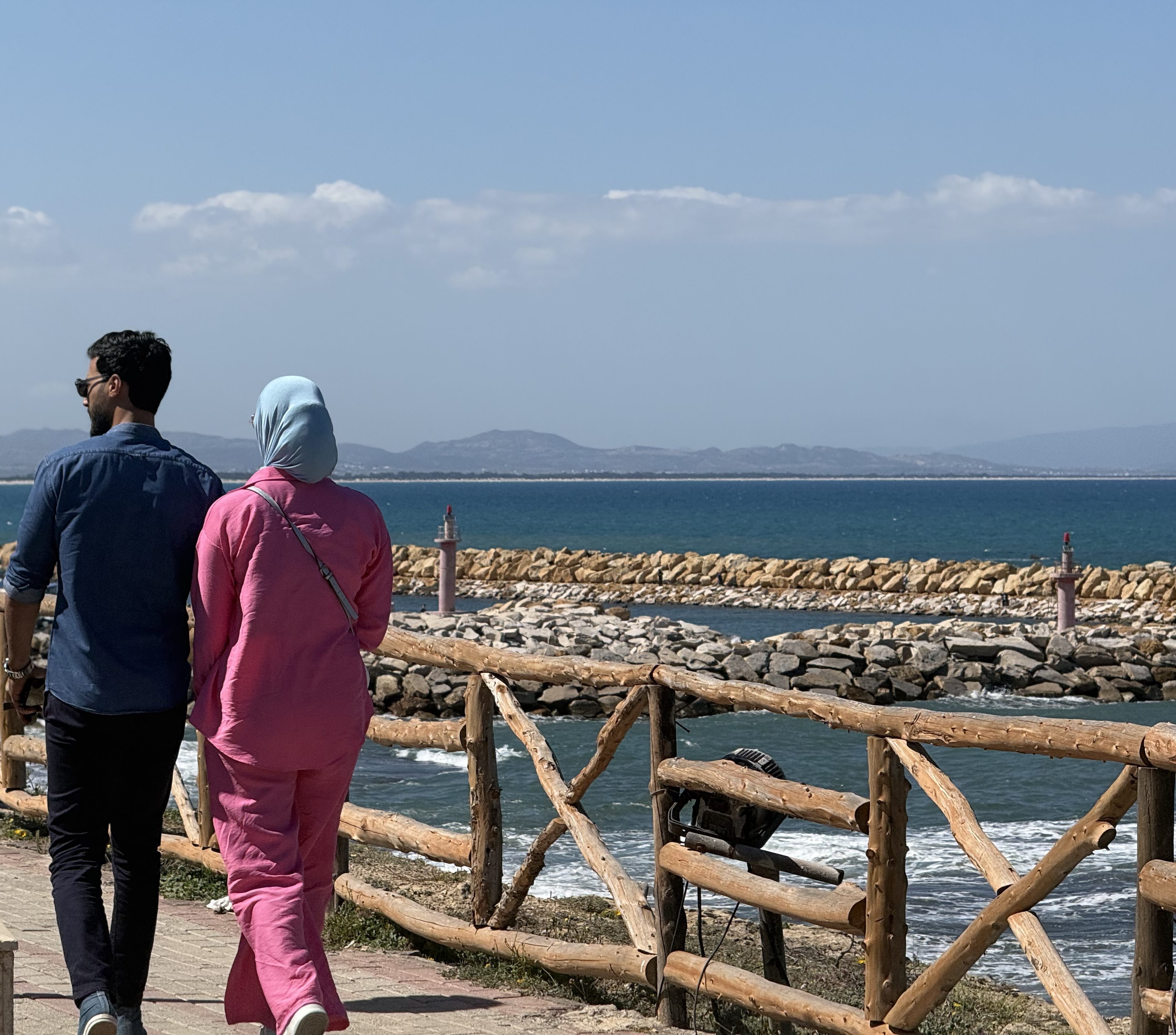
White, white — all the buildings white in Tunis, photo below.
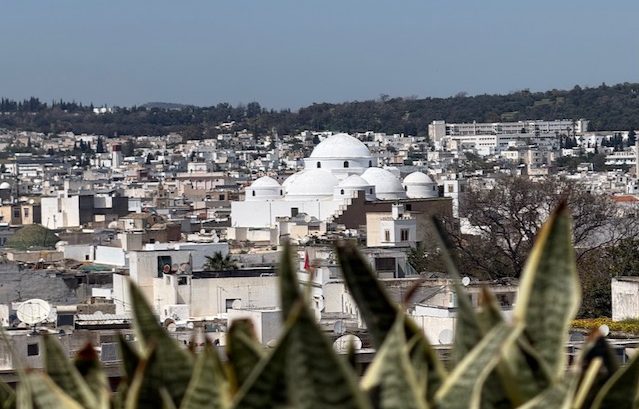
All the white may seem bland, but Tunisia is not. This small North African country is dynamic, vibrant, and a treasure trove of colorful sights: mind-boggling mosaics; joyful, boisterous markets; majestic mosques; intriguing souks, and super friendly, kind, understanding folk. I was so impressed with the later, by the end of my 10-day journey, I thought about reading the Koran and taking up Islam.
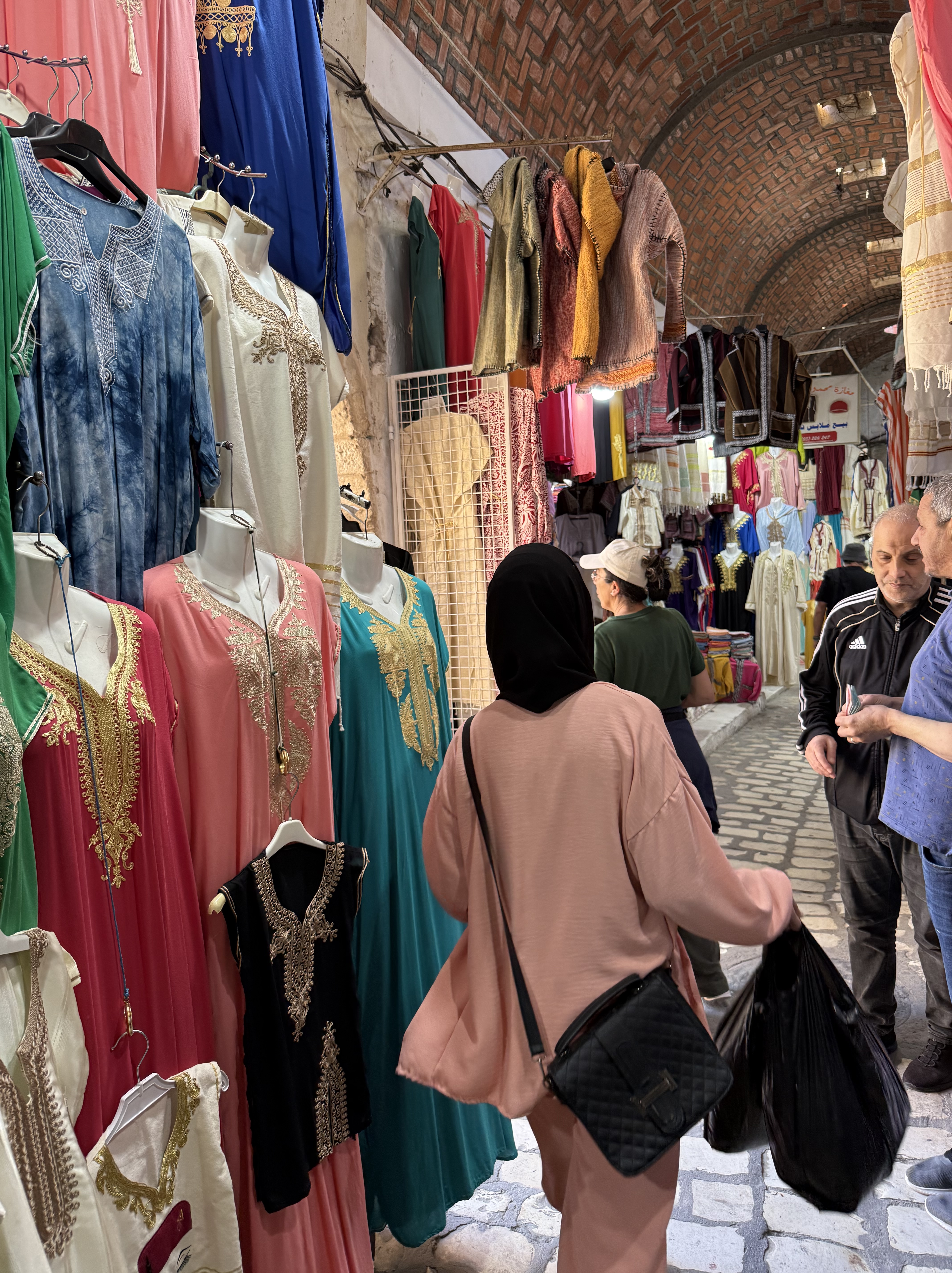
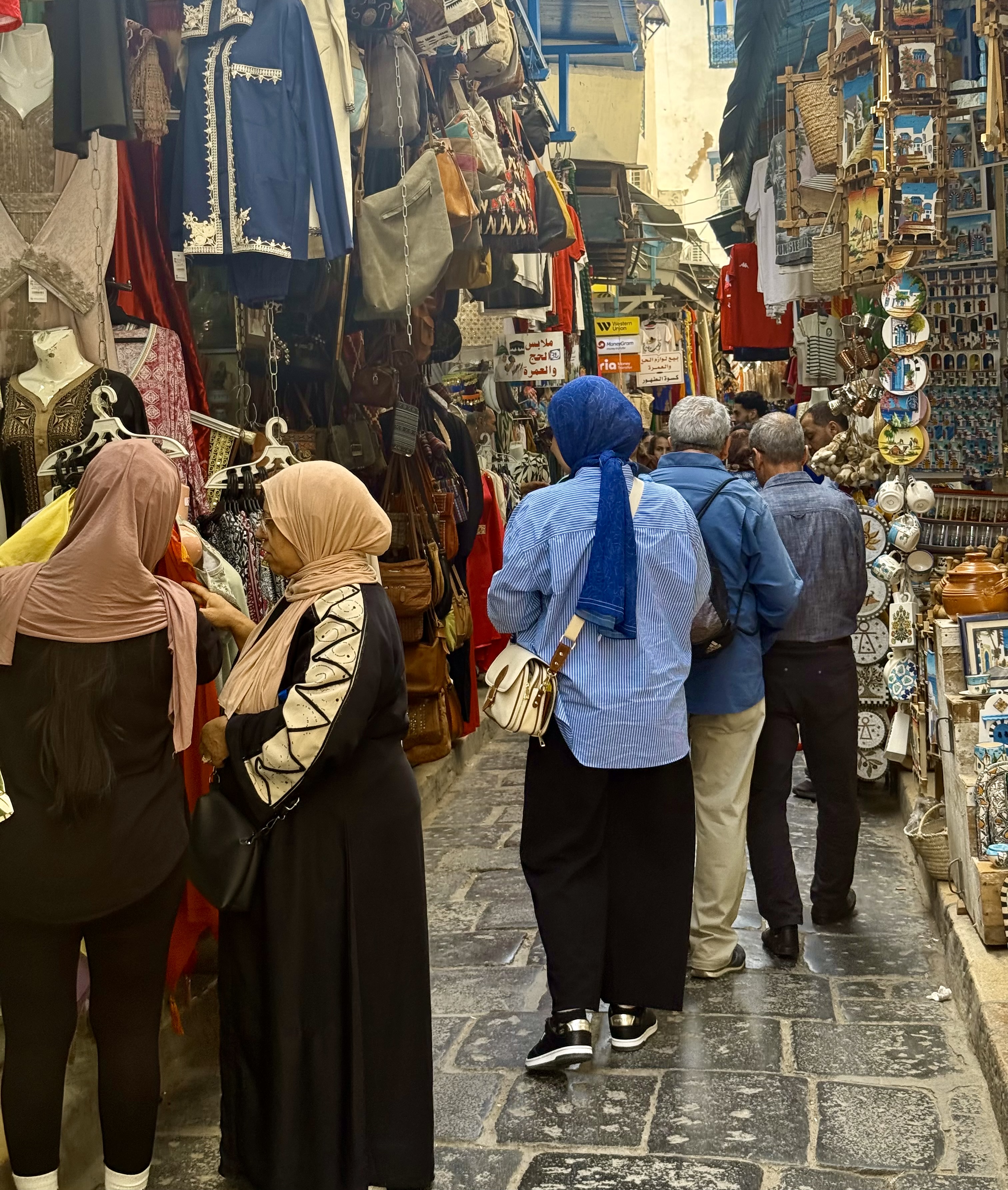
Souks, sinuous alleys with all kinds of merchandise, are endemic to Tunisia.
As the plane from Nice descended to Tunis, not much to see from the window except white buildings everywhere. Later from a roof top restaurant, more of the same. Somehow it seems spooky, but it’s the traditional architectural style and helps reflect the Mediterranean sun to keep interiors cool.
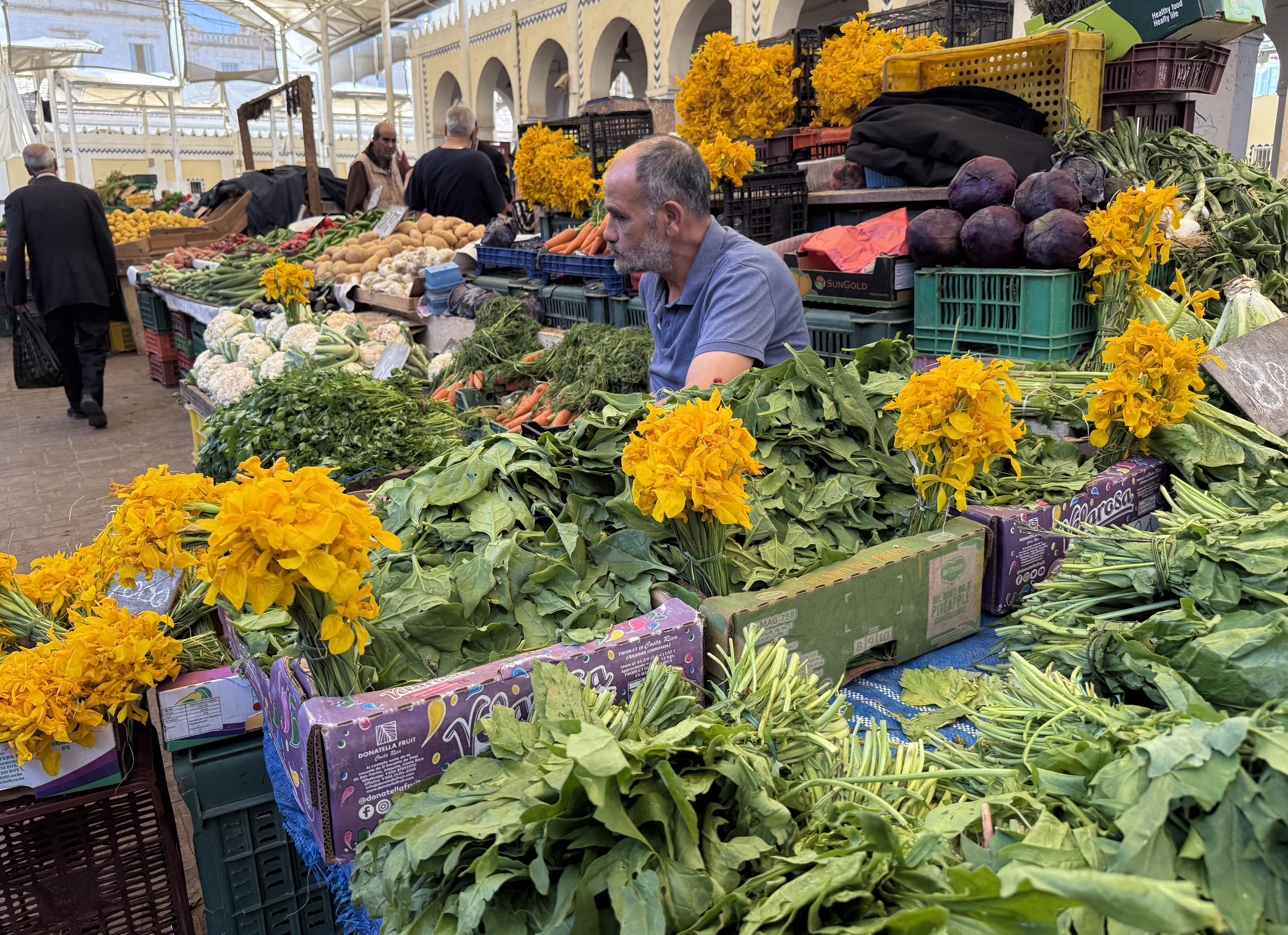
People — their customs, way of life, beliefs — fascinate me most about travel. Tunisia is an Islamic country, mainly Sunni, but as driver Faouzi pointed out, “We have mosques, we have bars, we have discos.”
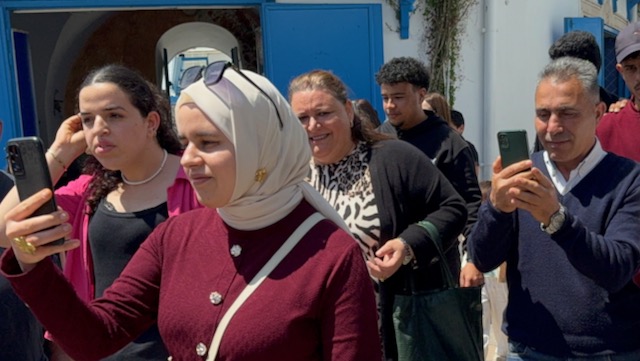
Tunisia is the birthplace of the Arab Spring in 2010. Protests led to the fall of the then president and his harsh regime, inspiring similar movements in the Arab world. Today however many Tunisians are more than disappointed. There are serious economic problems and unemployment. Corruption is rampant. Many young Tunisians want to leave the country for a better life in Europe.
As to religion, to each his or her own. It seemed to me that about 50% of the women cover their heads with the hijab. Guide Mondher maintains there is nothing in the Koran about the hijab. The Islamic belief is that the Koran was revealed to Mohammad over about 23 years. However, throughout `many years different scholars and traditions have developed different interpretations. His wife wears the hijab, his 20-something daughter does not. Both he and Faouzi are practicing Muslims. Neither drink alcohol.
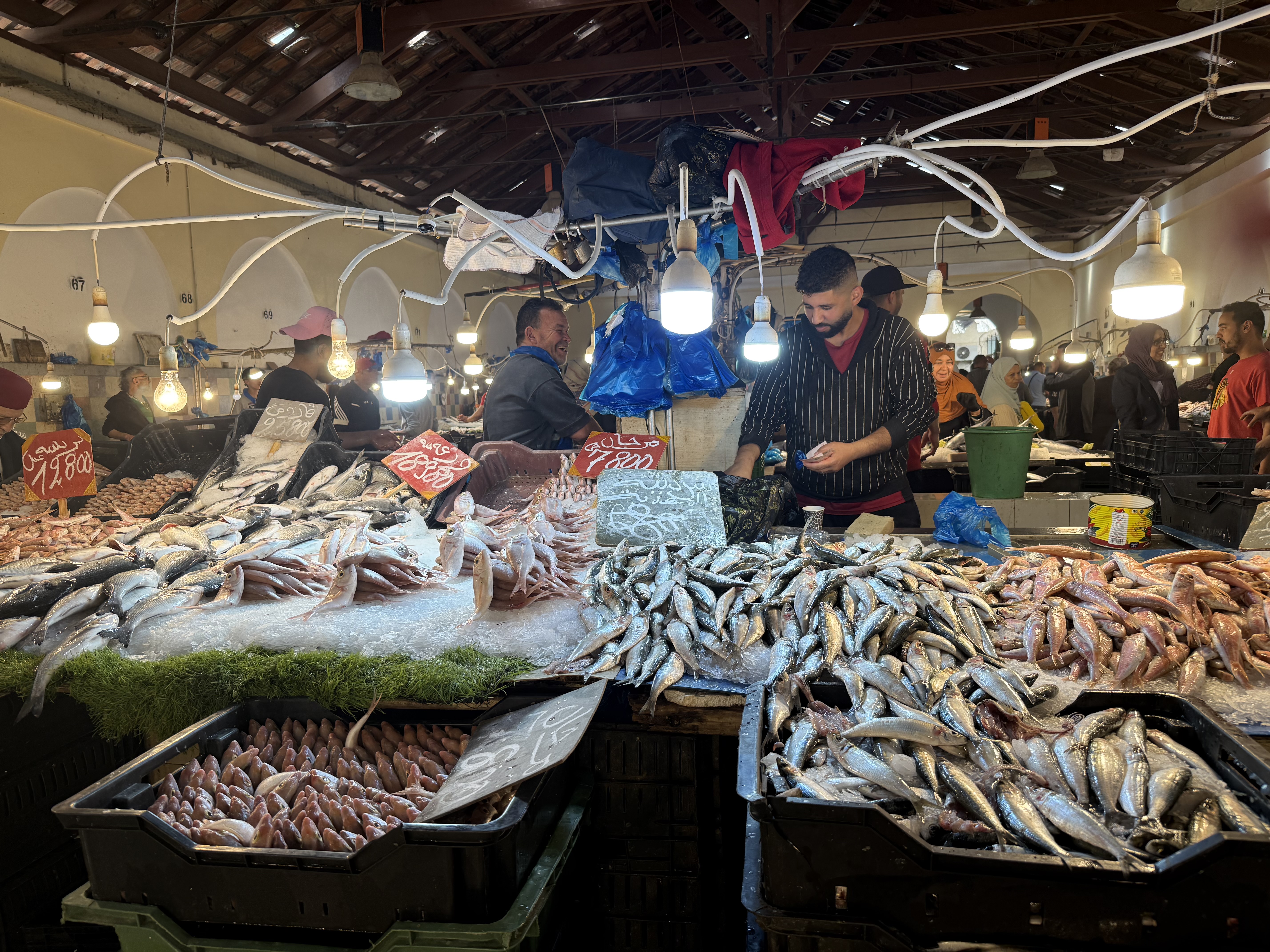
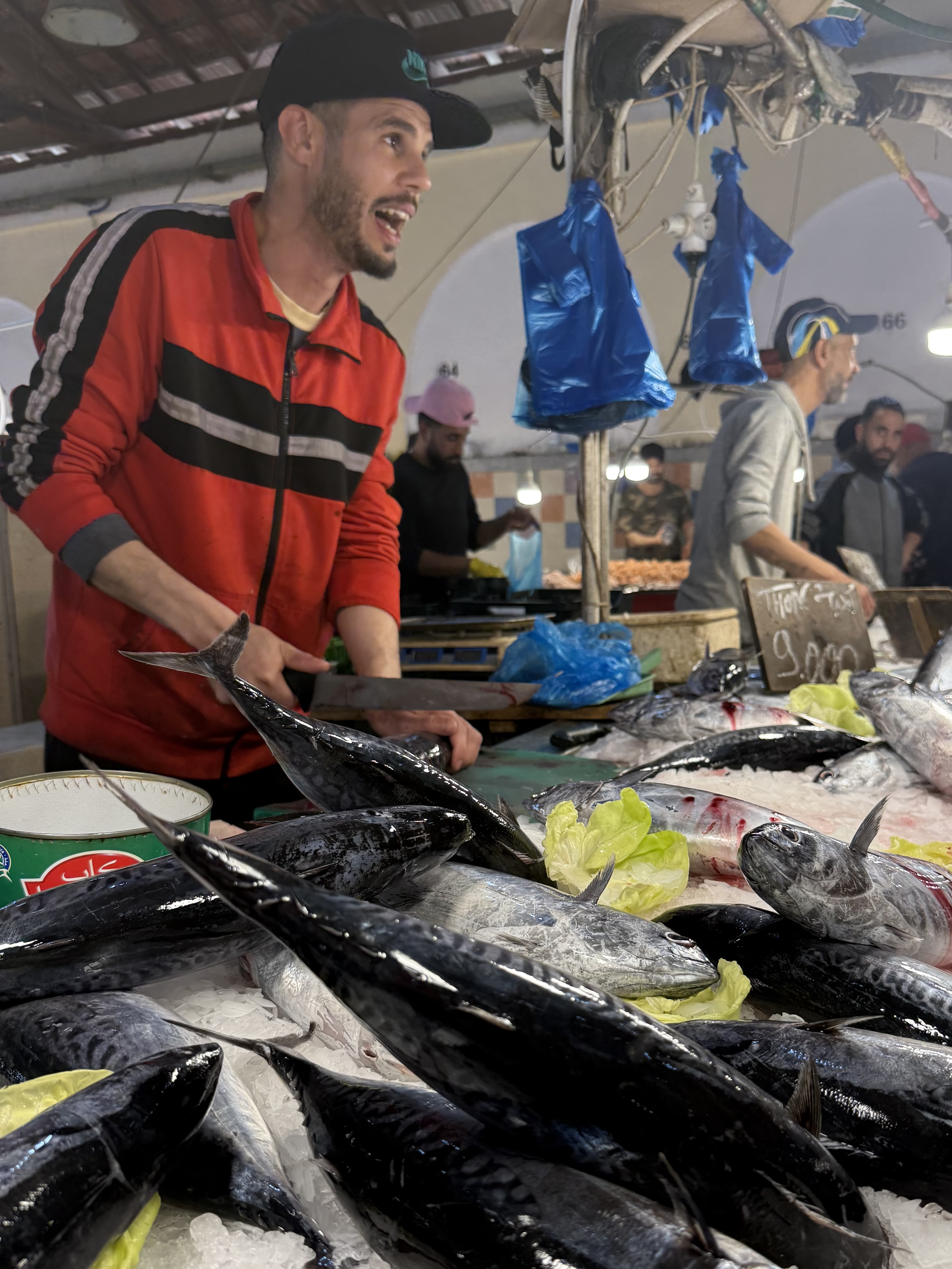
As a foodie, markets are a favorite for me. The fish market in Tunis is like no other, a giant party. Vendors shout, laugh, even sing -definitely a happy place. I was mesmerized and took far too many fish photos.
I did not want to leave the fun, uplifting ambience amidst the fish, but a guide steered me to another market section: flowers, but not bouquets for your loved one. Flowers for flower water, a must in every Tunisian household.
Most families have a large, complicated looking filter contraption in their home. The “machine” boils the petals. Filtered flower water, essential for Tunisian pastries and more, drips out. (More on flower water in a future post on Tunisian food and a pastry making session.)
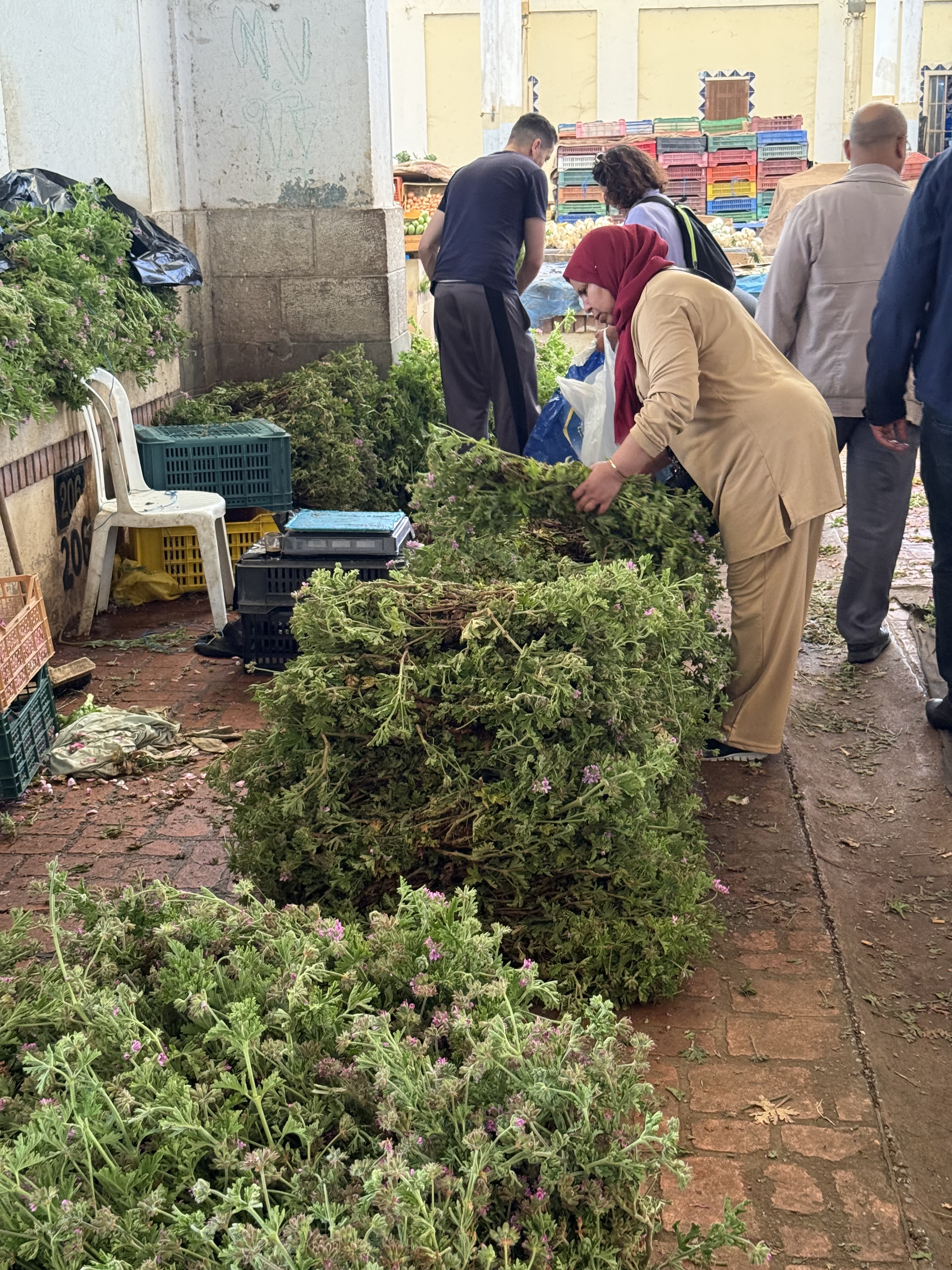
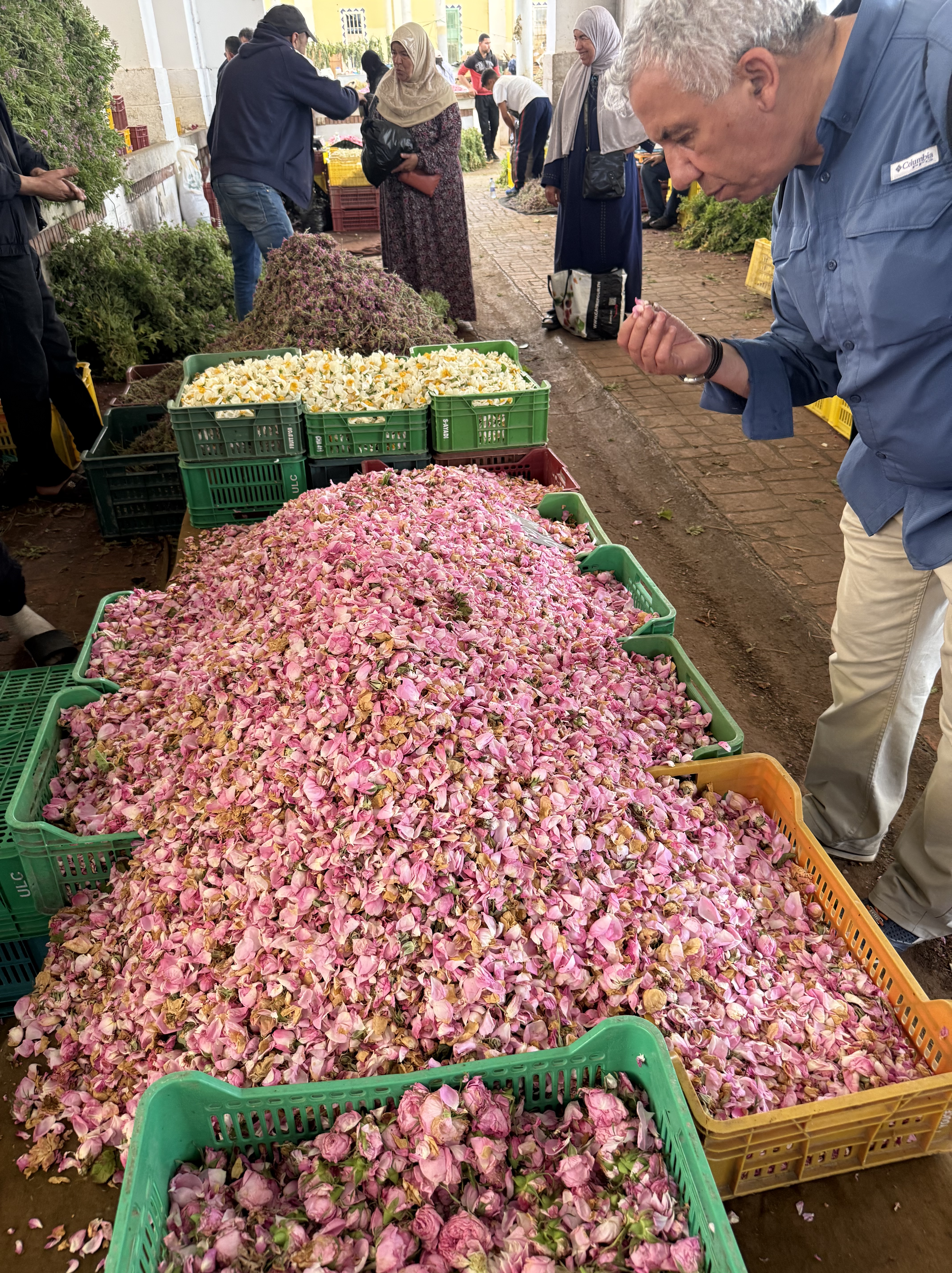
Selecting flowers and petals for flower water
Ancient Roman mosaics are a major Tunisian attraction, thousands displayed in museums. I saw small parts of vast collections at the Bardo museum in Tunis and the archaeological museum in Sousse. Many are in excellent condition, despite being 2,000 years old. At the time, North Africa was part of the Roman Empire, but the artists who made the mosaics were Africans, not Romans, a proud Tunisian pointed out. The mosaics were buried under sand which preserved them. Best visit with a guide who will lead you to the best and provide fascinating explanations.
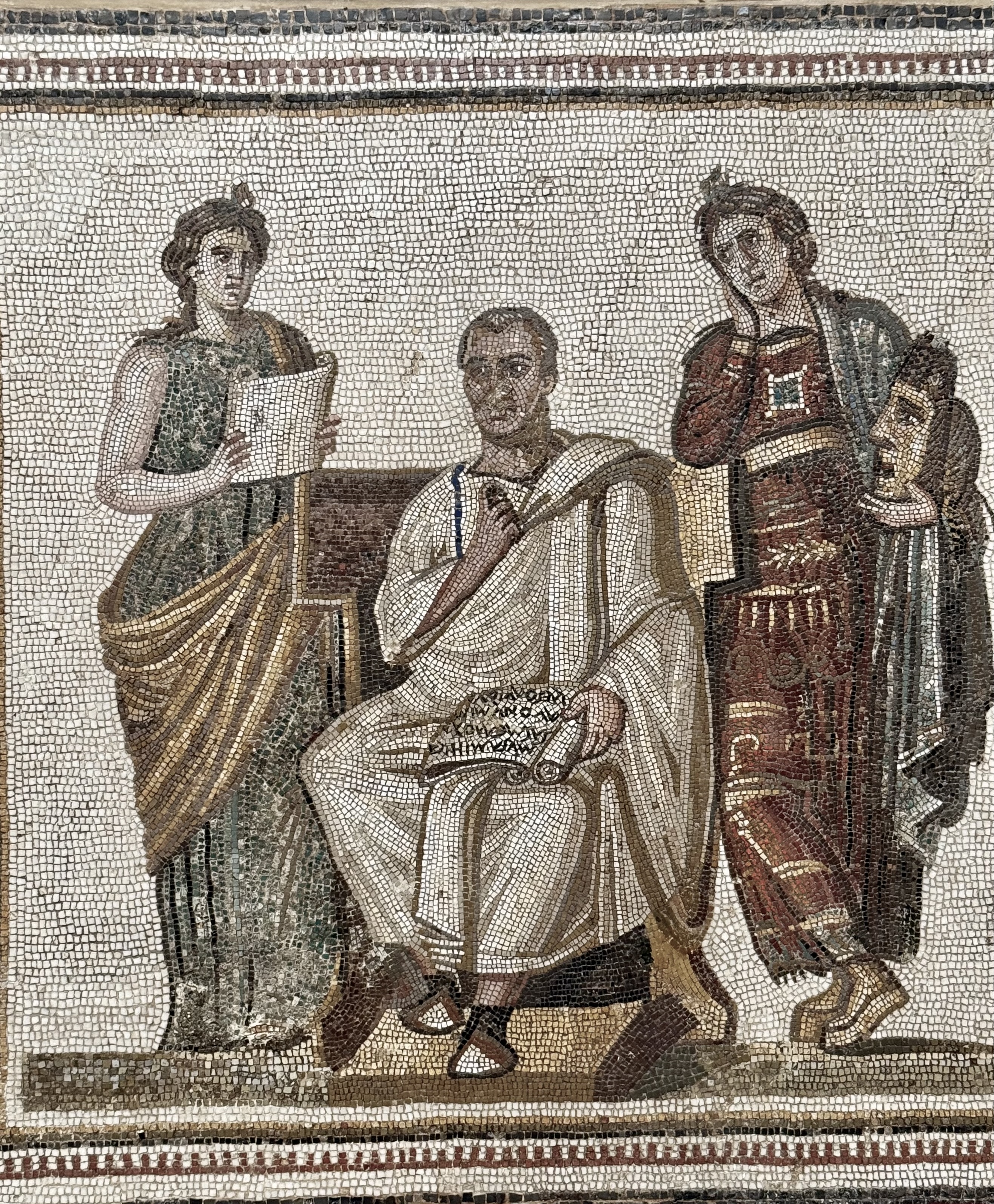
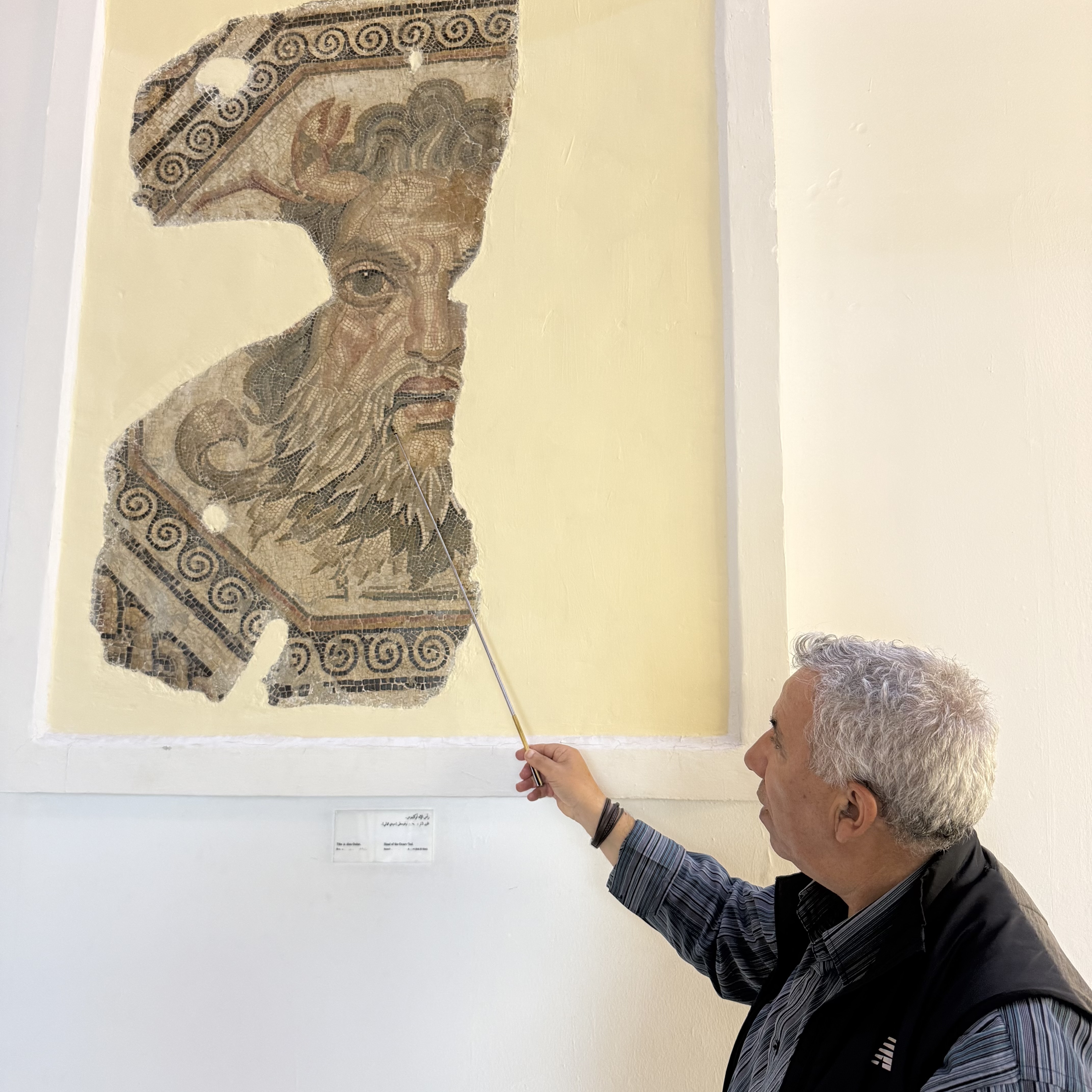
400 ancient mosaics are displayed in the Bardo Museum in Tunis.
Due to an unexpected hospital stay (see previous post, The Trip that Almost Wasn’t) my travel itinerary was altered. Instead of heading south, I stayed in the north. Towns visited: Tunis, Carthage, Sidi Bou Said, Sousse, Kairouan, Hammamet, Nabeul – all lively and thriving. Less thriving are some of the dusty country villages.
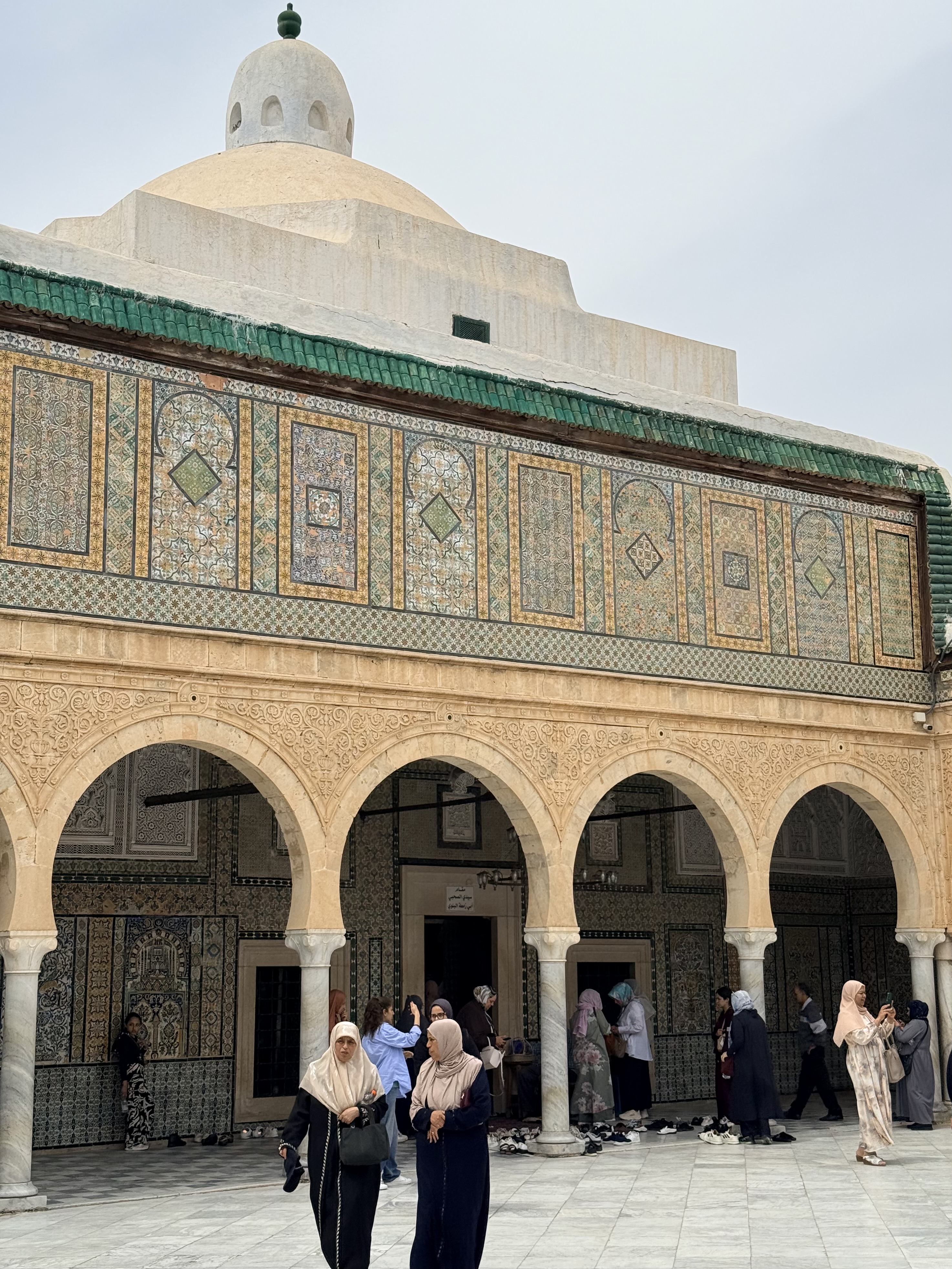
Only Muslims can enter mosques, but at the Grand Mosque in Kairouan, a guard happily takes visitors cell phones for indoor photos from the entrance. You can also peek through bars covering windows of this major Islamic monument whose origins date to the 9th century.
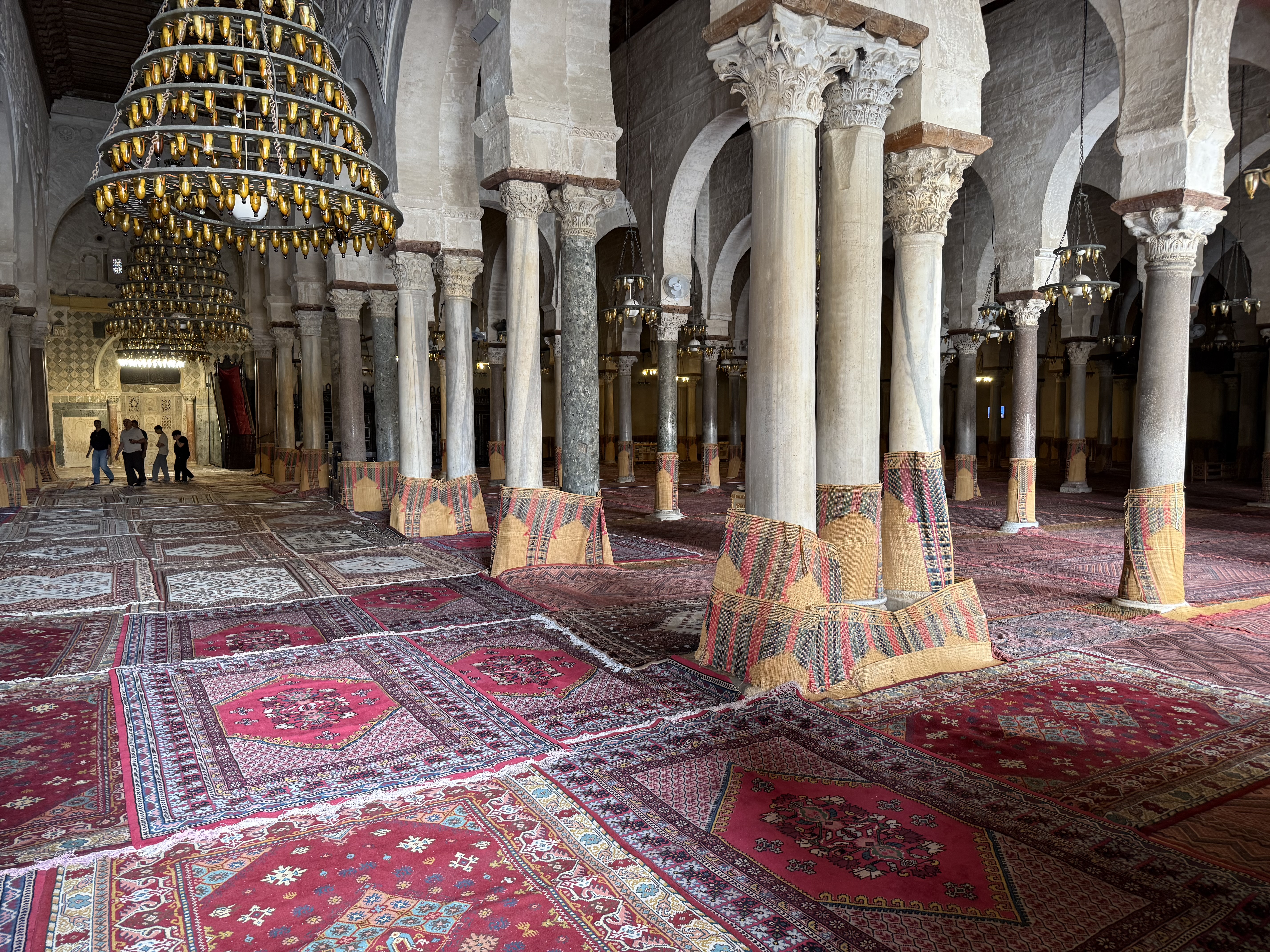
The interior is enormous, covered with carpets, beautiful handmade carpets for which the town is famous. I visited a carpet shop and learned that even today women make the rugs at home and offer them to the mosque. And, sell them to shops where they are a hot item for tourists.
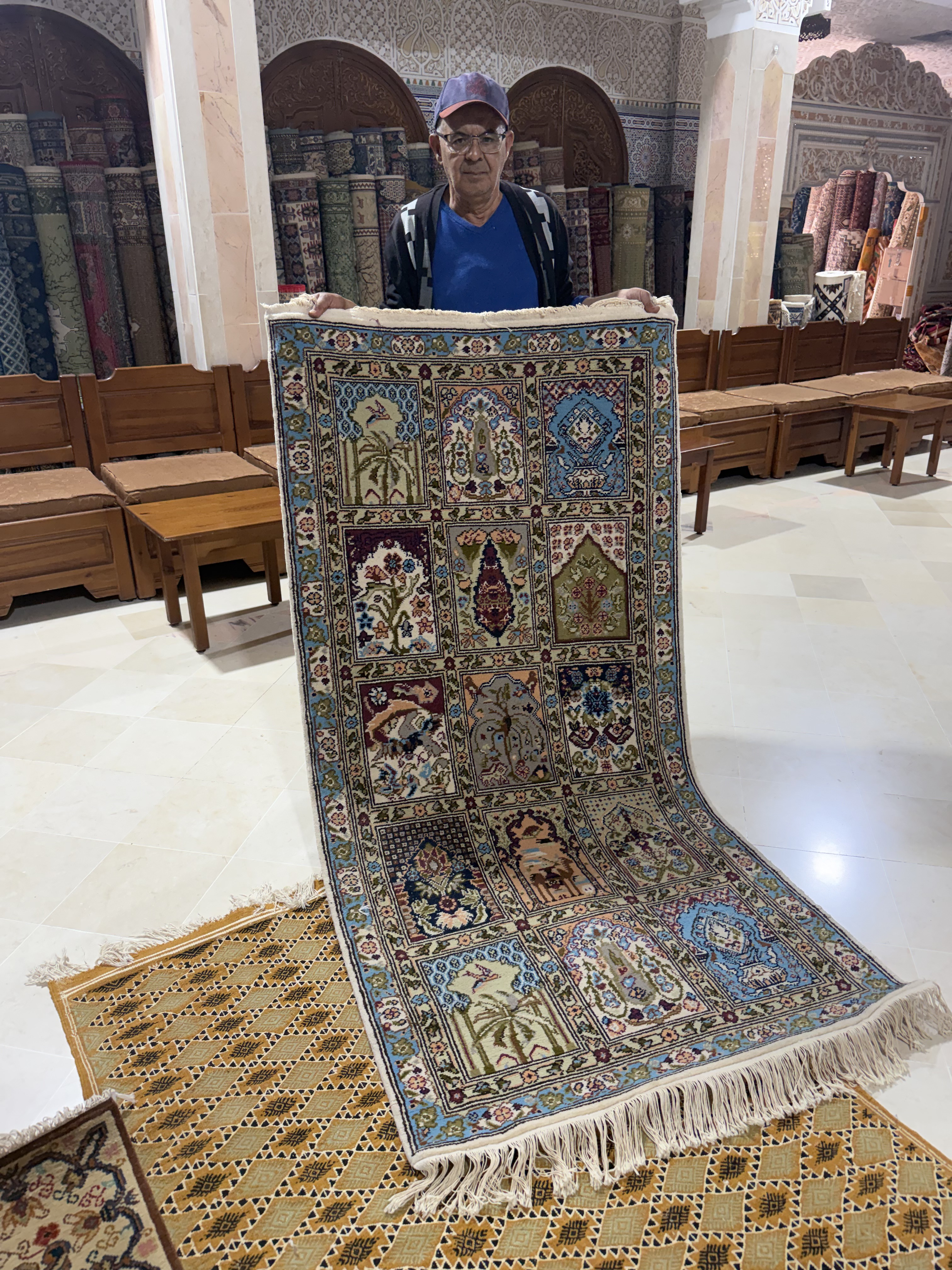
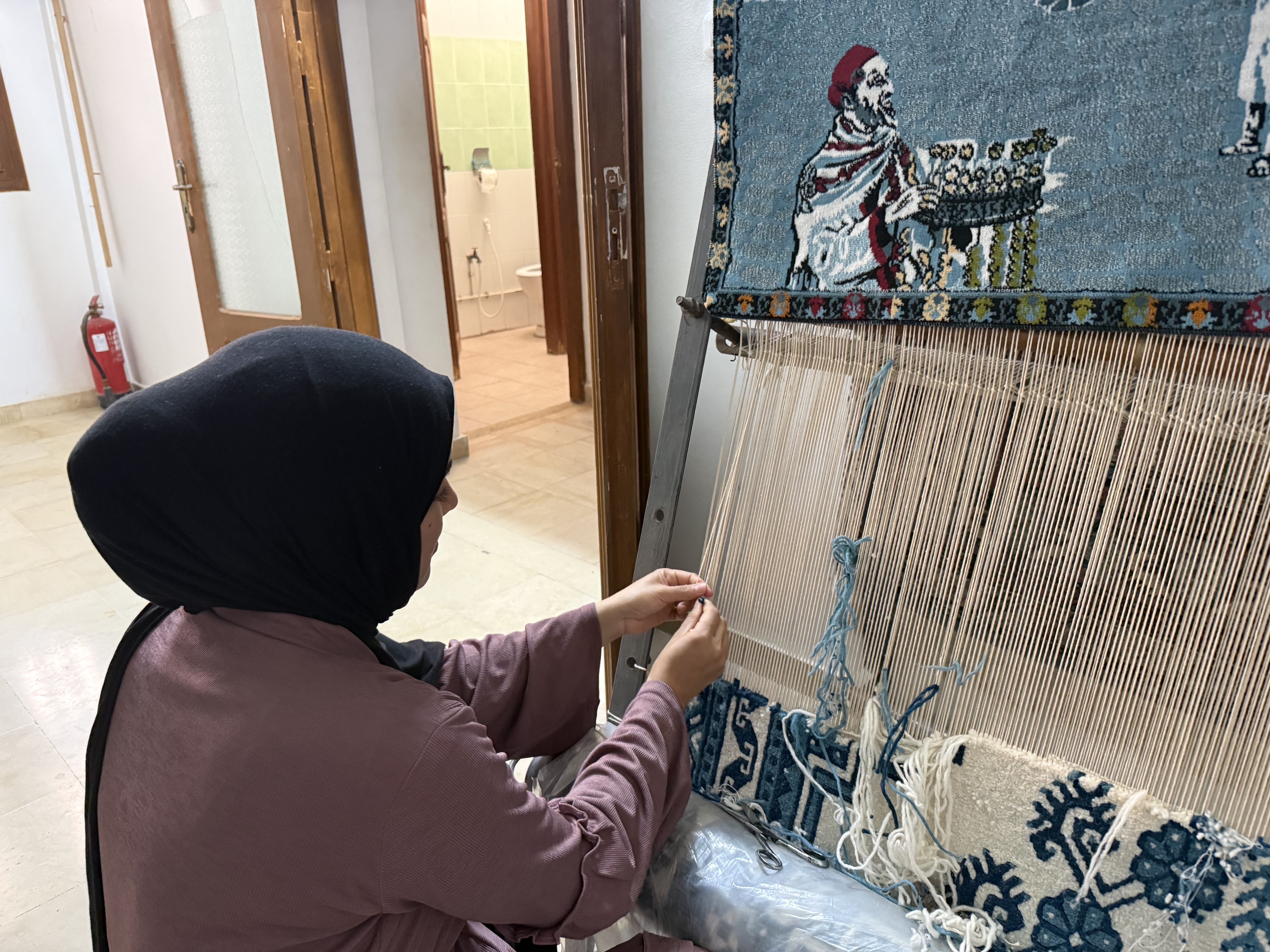
Carpet making is tedious, hand tying thousands of knots and can take many months for one carpet. Cost for a 7’by 5′ carpet from 9,000 euros.
Roads around major Tunisian cities are impressive — in many places five lanes in each direction. Country drives lead through vast areas of green hills and past fields and fields of olive trees, much smaller and younger than the olive trees around me in southern France. Mondher said Tunisian olive oil is renowned and great quantities are exported to Spain where it is sold as Spanish olive oil. Fact or fiction?
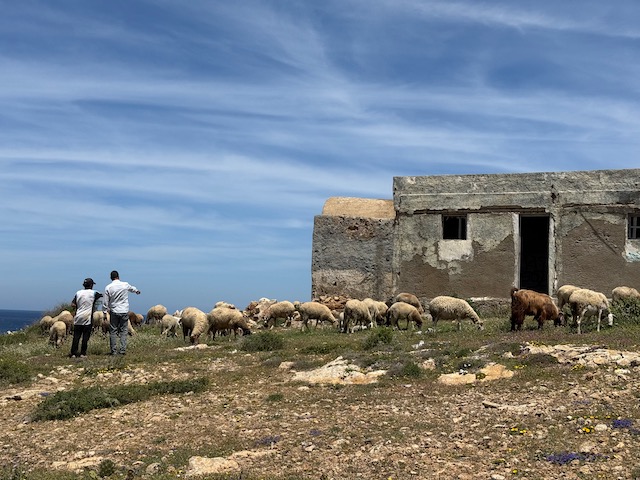
Where were all the sheep? Tunisians eat lots of lamb, but I had not seen the animals – until I was on a drive around Cap Bon and the northern tip of the country. Voilà- a shepherd and his flock on hillside. We stopped. Mondher got out and had a lengthy conversation with the shepherd, inspecting the beasts.
Eid-al-Adha, the Festival of Sacrifice, was approaching. It commemorates the prophet Ibrahim about to sacrifice his son to God, until God intervenes and substitutes a ram. Muslims in Tunisia celebrate the feast and many slaughter a lamb/sheep on that day.
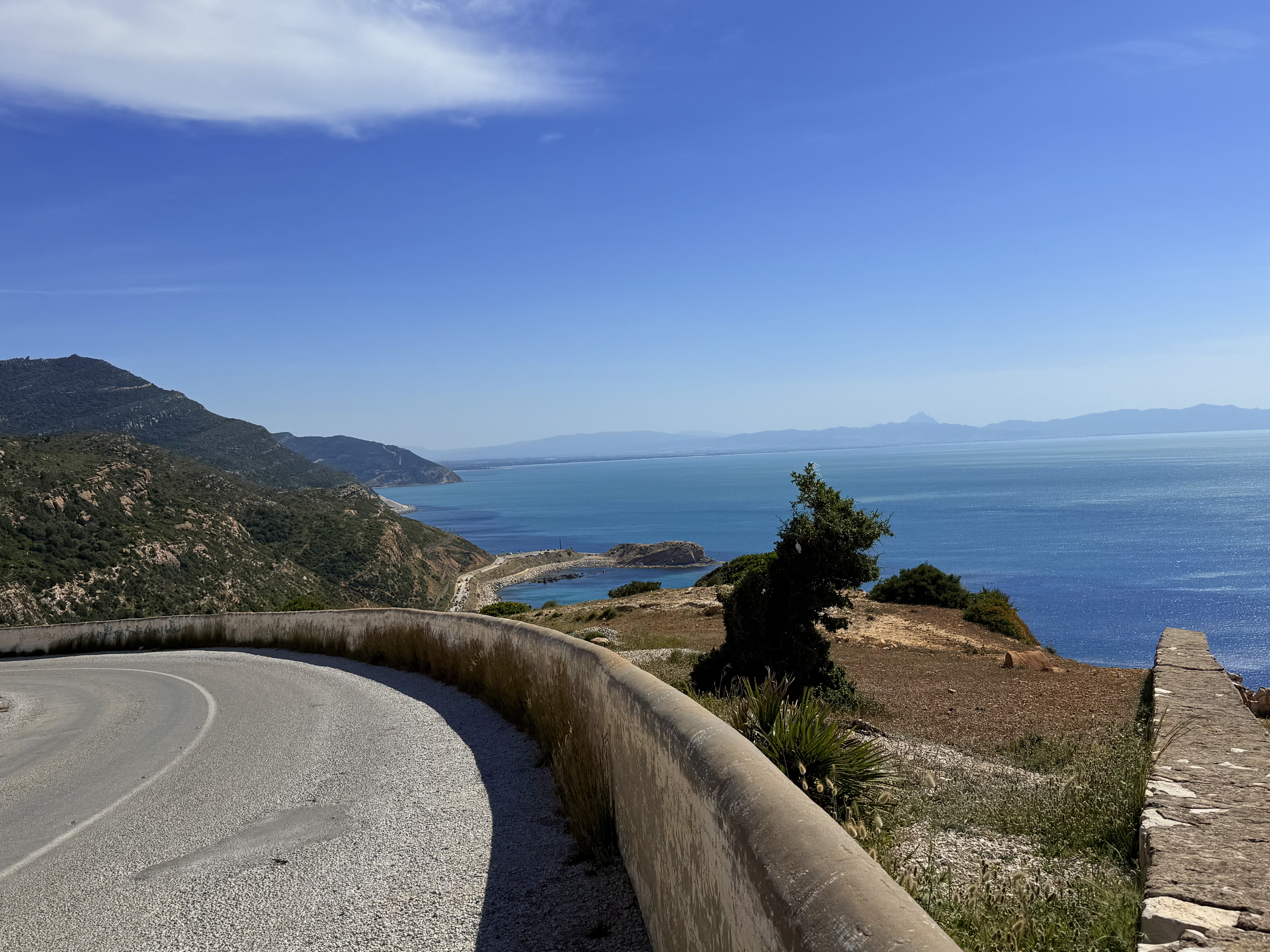
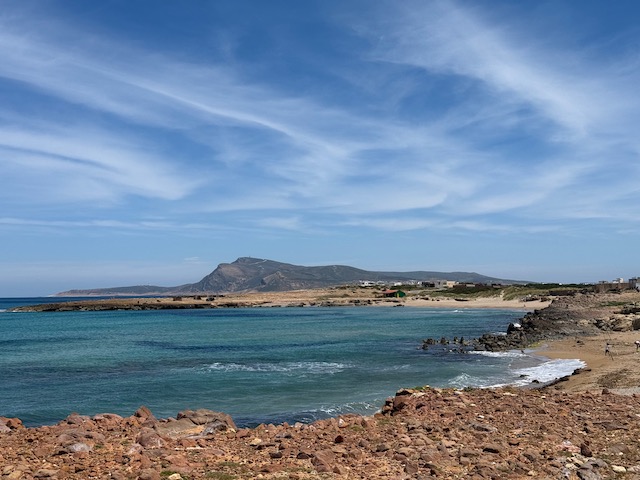
Cap Bon, Tunisia’s northern coast, just 140-160 kilometers from Sicily.
Mondher, who intended to kill a lamb on the holy day, reported that these sheep were too expensive (Fortunately – we did not have to take one home), but the meat would be “good quality.” Too gruesome for me — and driver Faouzi who said he had never killed a sheep, and never would.
On another drive we stopped at a special butcher so Faouzi could buy camel meat, not, however, for the above feast. He says it’s much less expensive than lamb, but good for a family couscous.
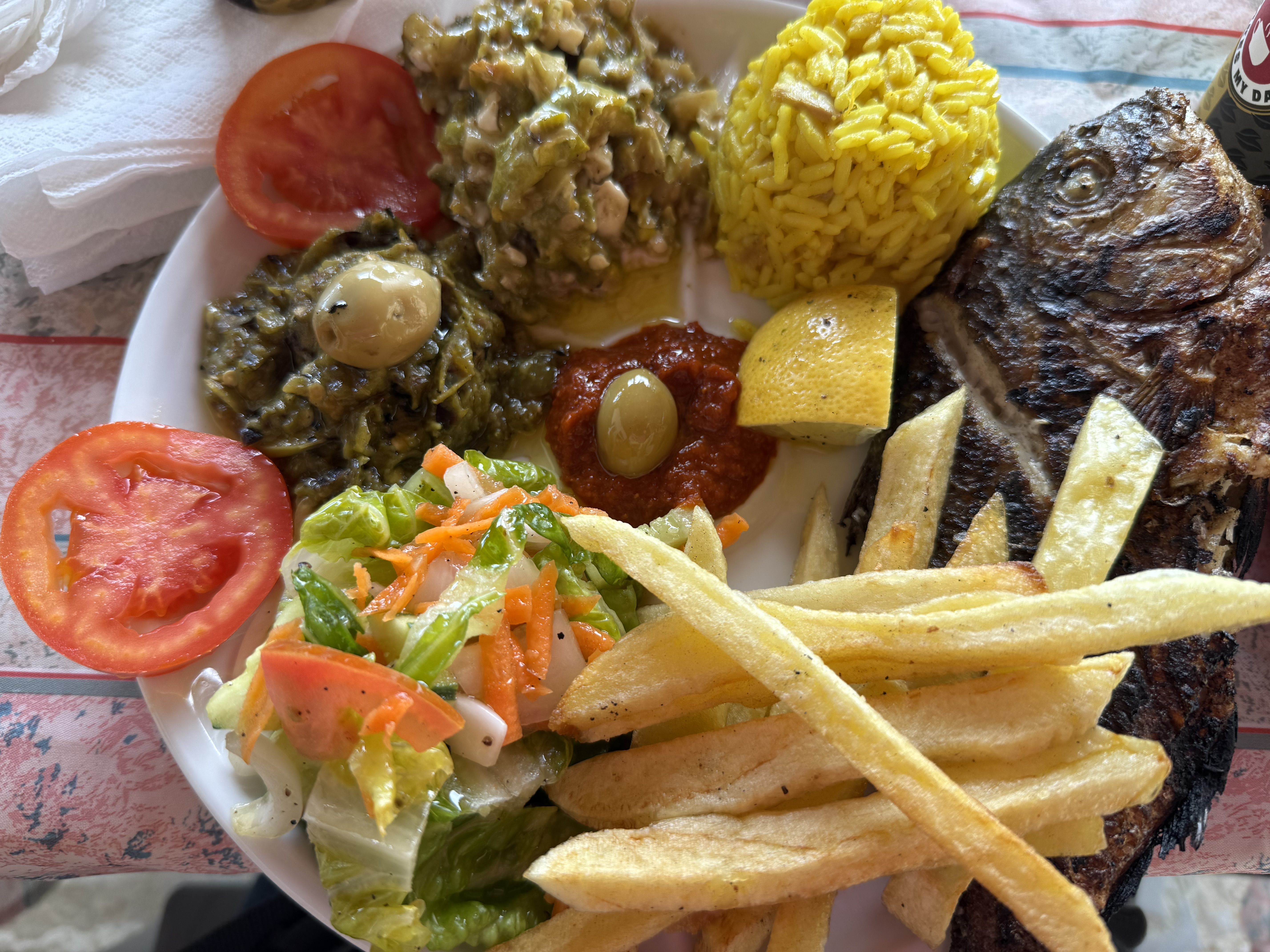
Tunisians spend from 25-35% of their wages on food. Sample costs for meat:
Beef: 45 Tunisian dinar (TND) per kilo (13,5 euros or $15,30).
Lamb: 55-60 TND per kilo ( 16,5 euros or $20.40)
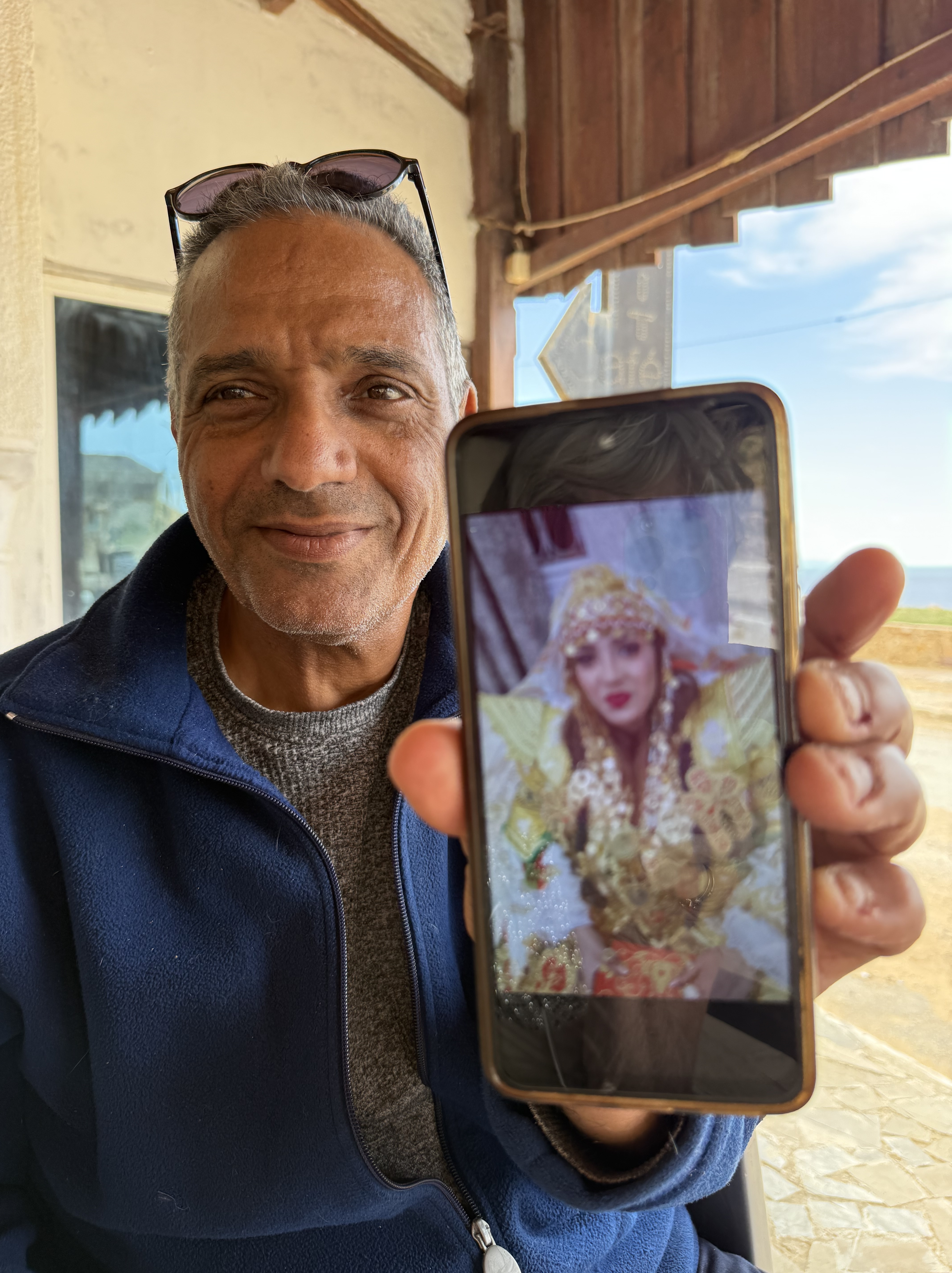
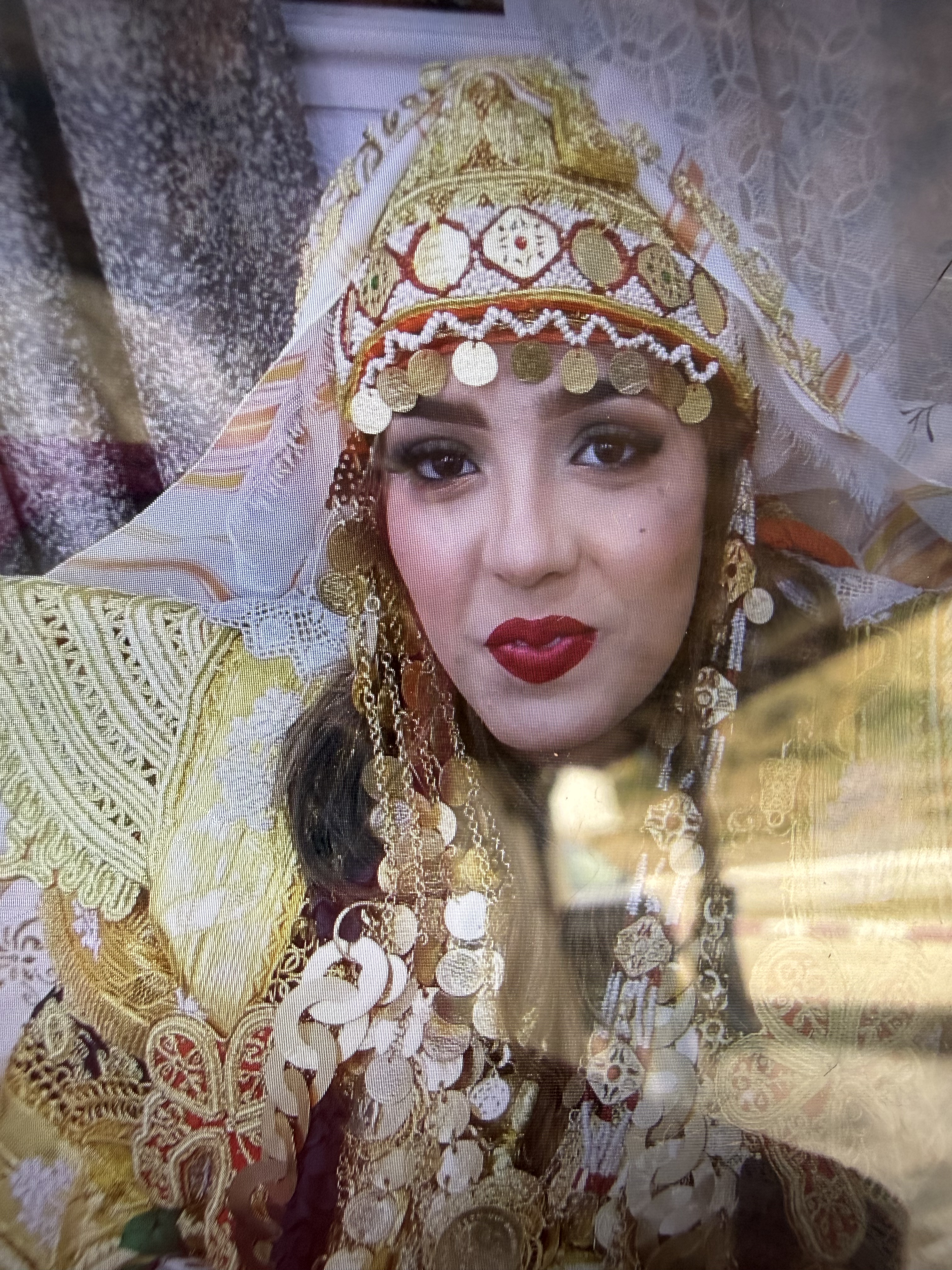
Faouzi proudly shows his daughter’s wedding picture. Tunisian weddings are multi-day events with hundreds of guests.
I am in awe of Tunisia. In Shallah, I will return to discover what I missed in the south. Scroll down for more photos .
Tunisian food (fabulous ) coming soon. If not a Tales and Travel follower, please sign up here. Trust me. It’s safe. Your address is kept private.
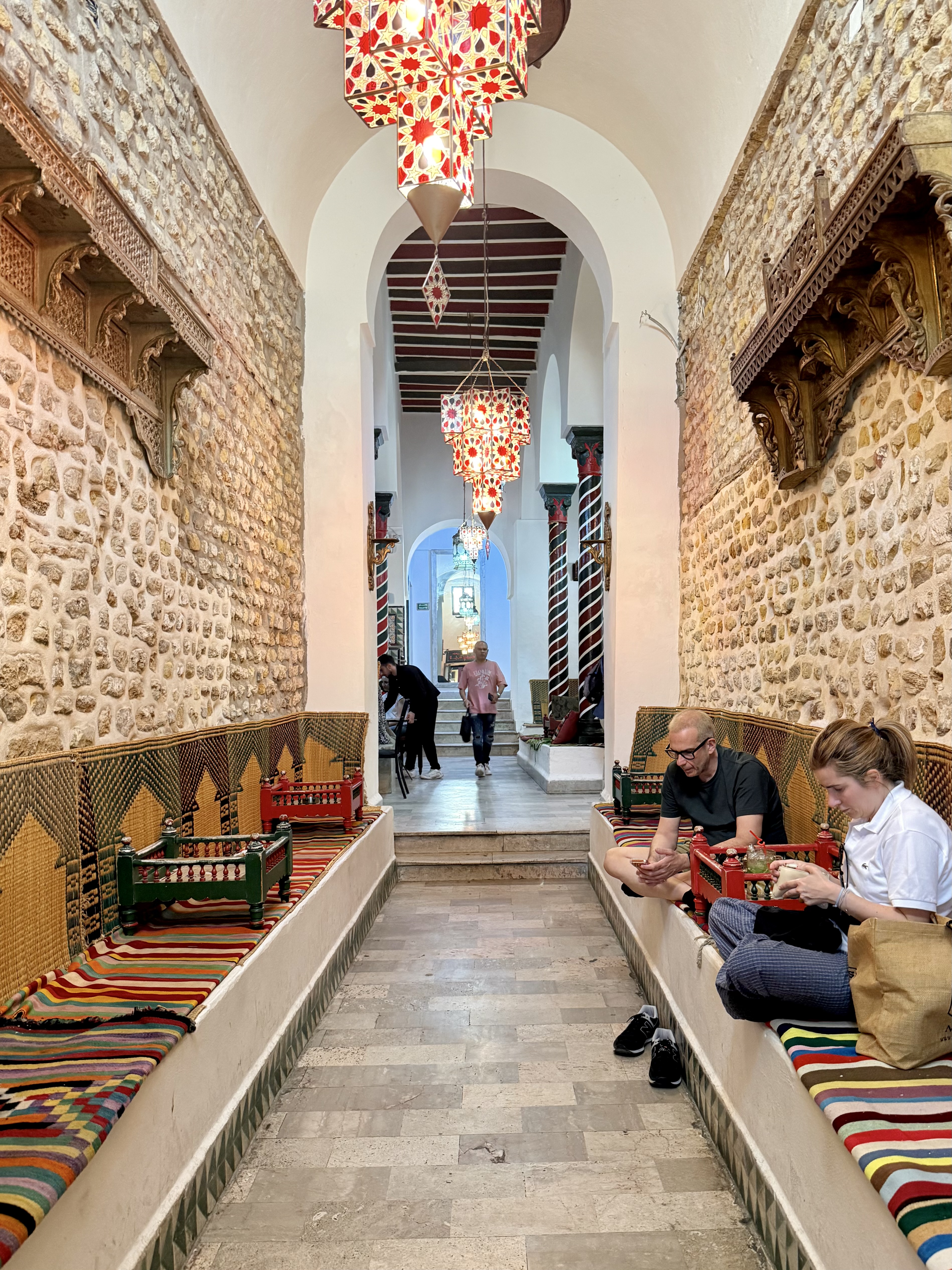
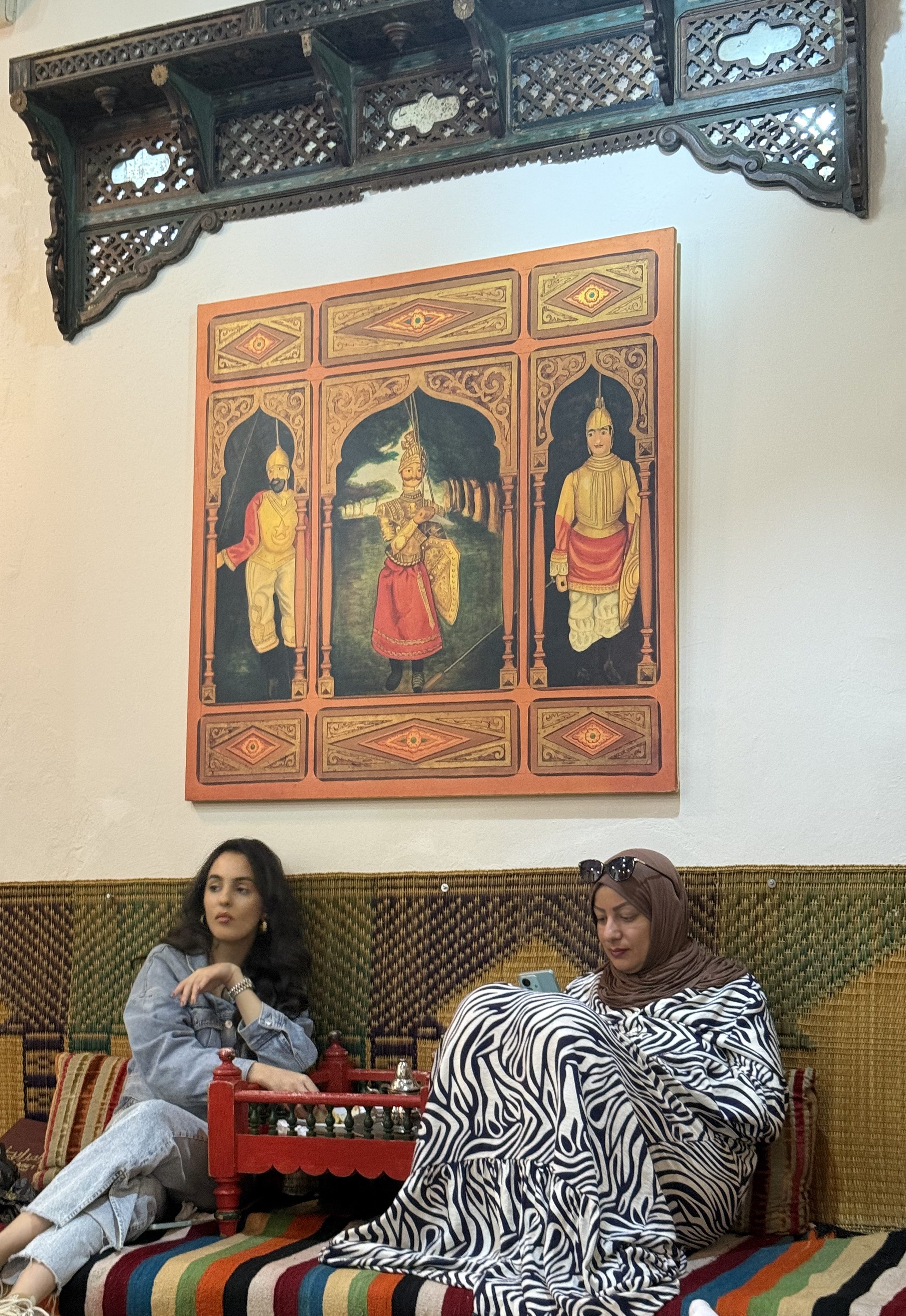
Many Tunisian cafes are ideal for hanging out, relaxing.
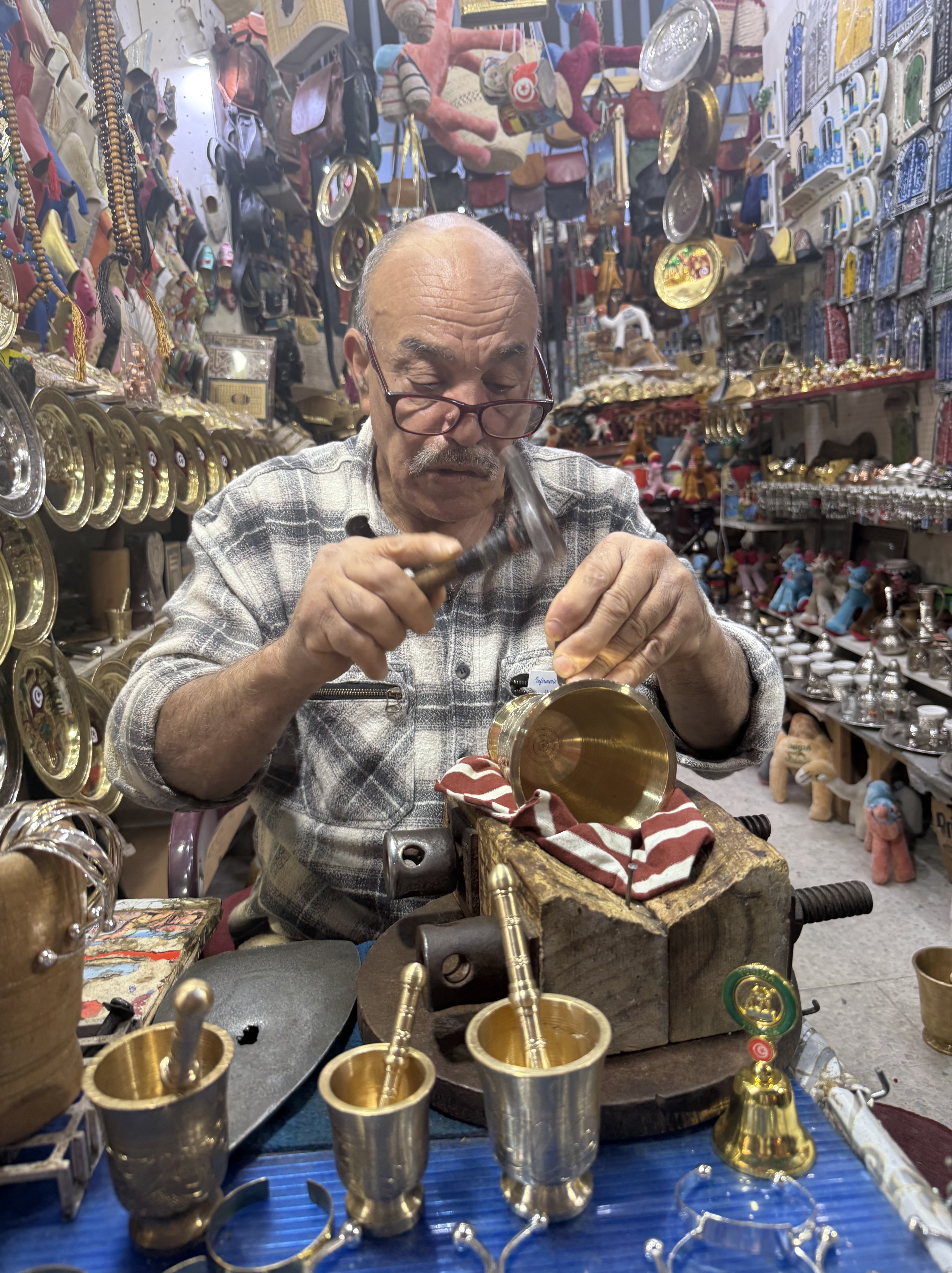
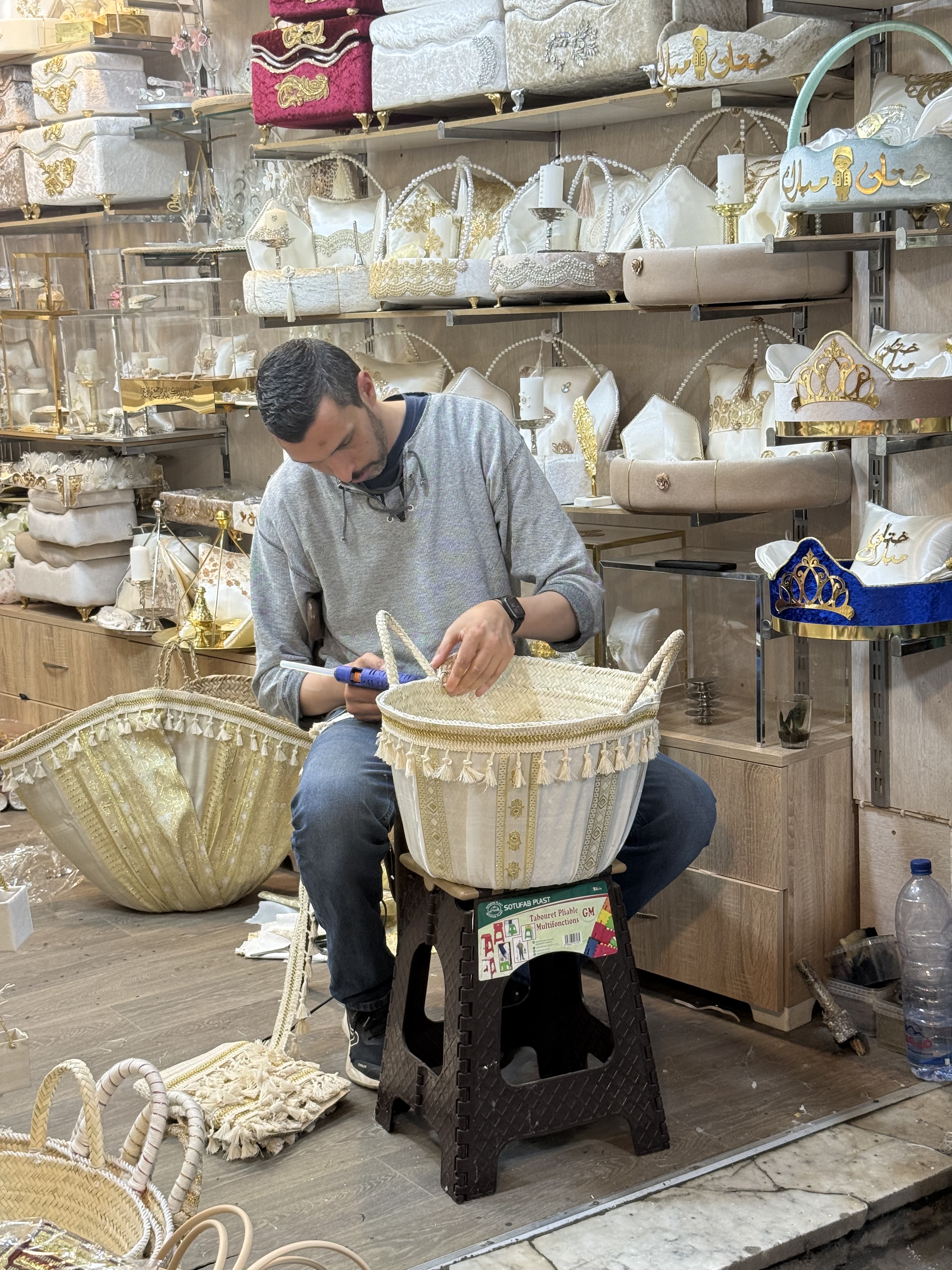
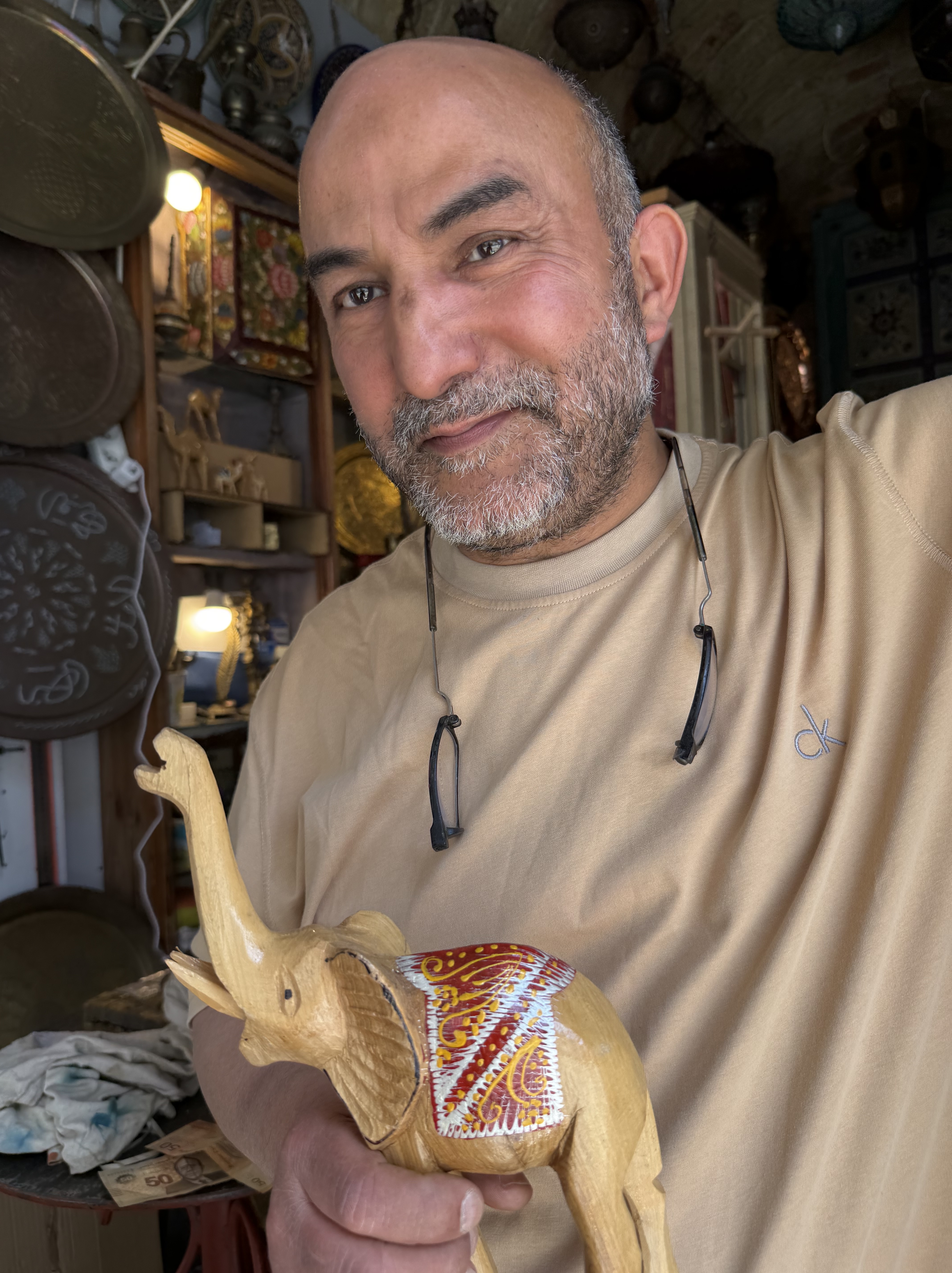
Craftsmen at work in the souks
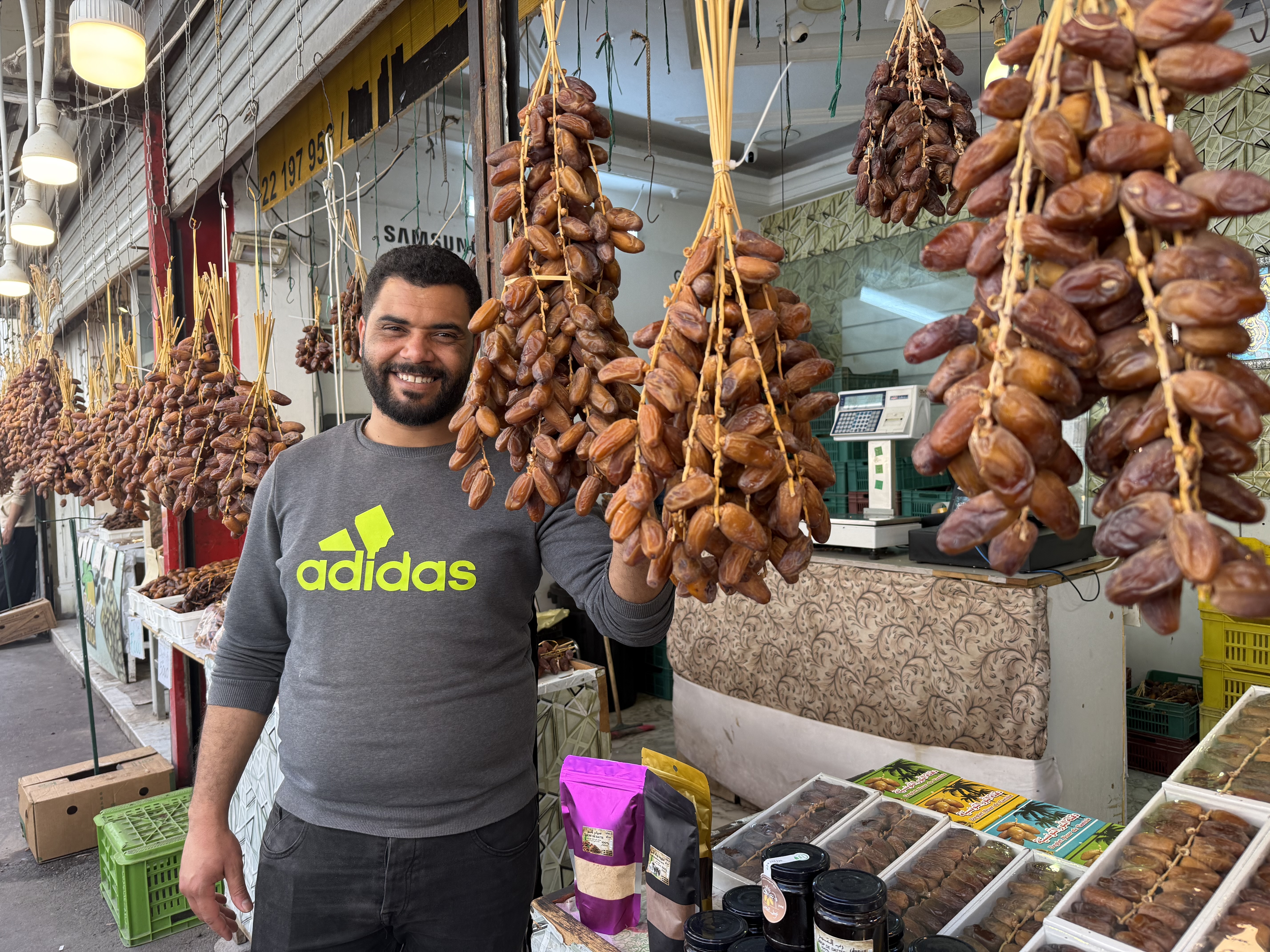
Dates anyone?
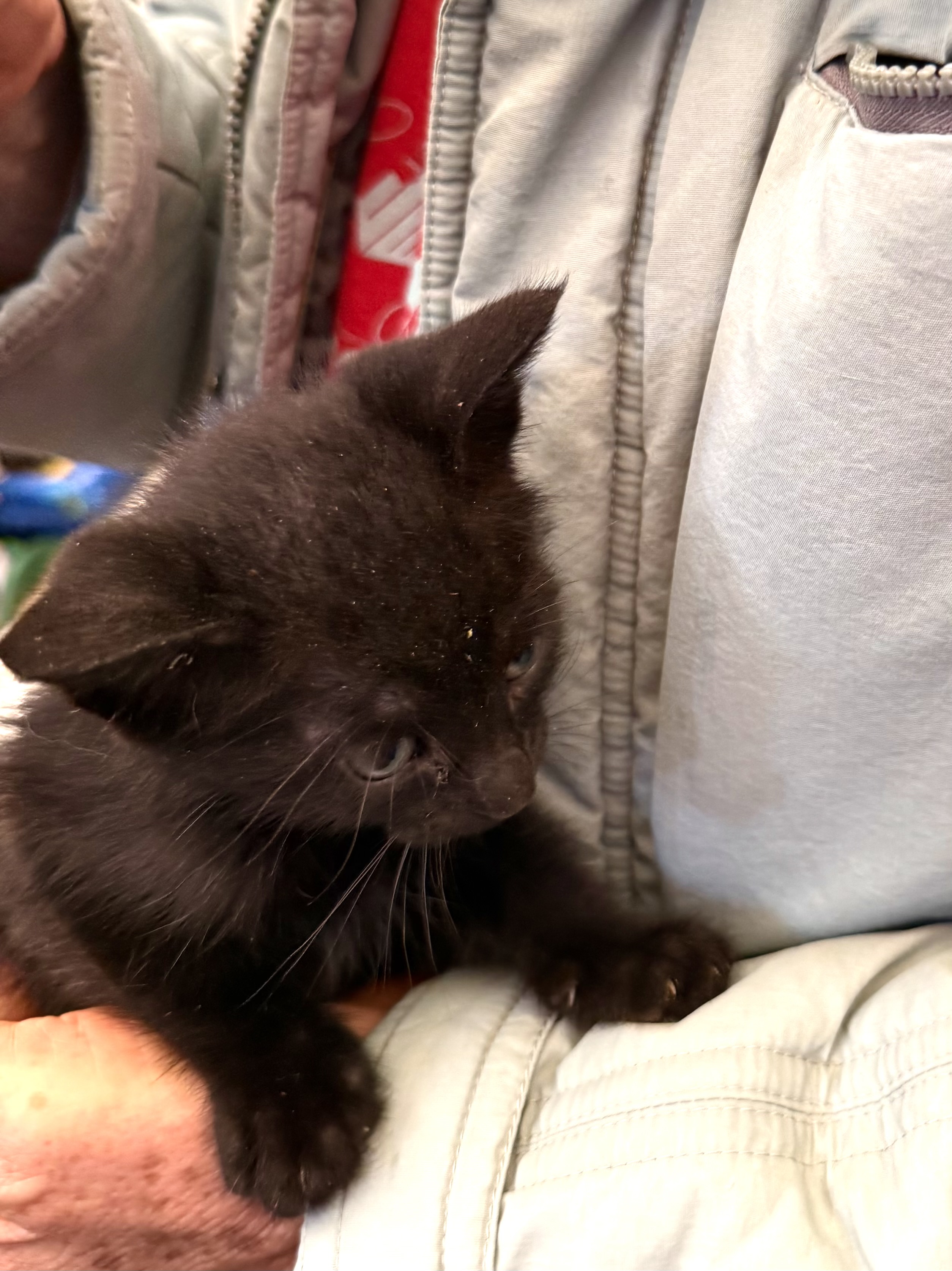
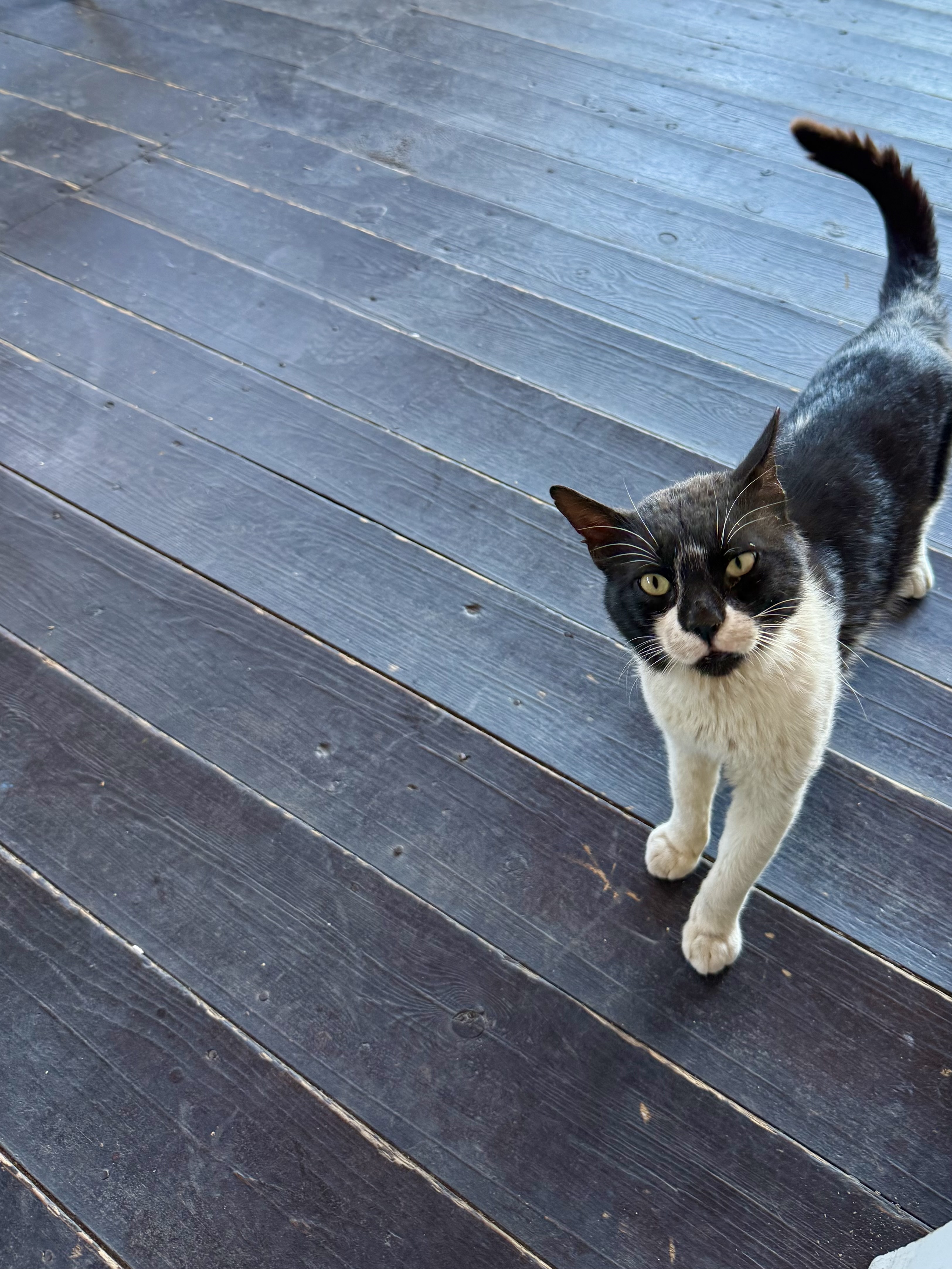
Tunisian felines. They are everywhere. I wanted to adopt them all.
I booked my Tunisia adventure with Worldwide Quest, http://www.worldwidequest.com
Please comment. I love feedback.


Please leave a comment . . .