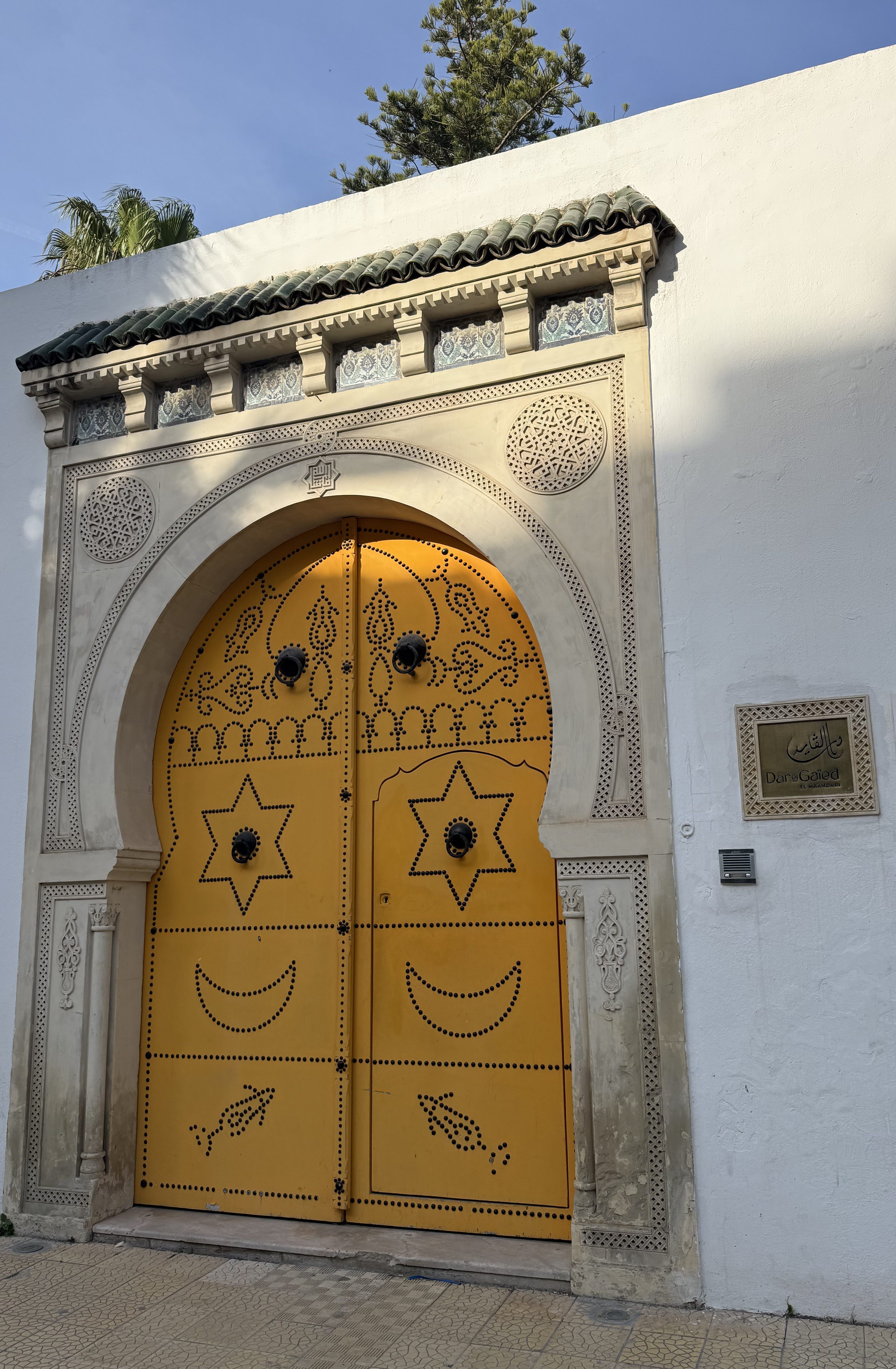
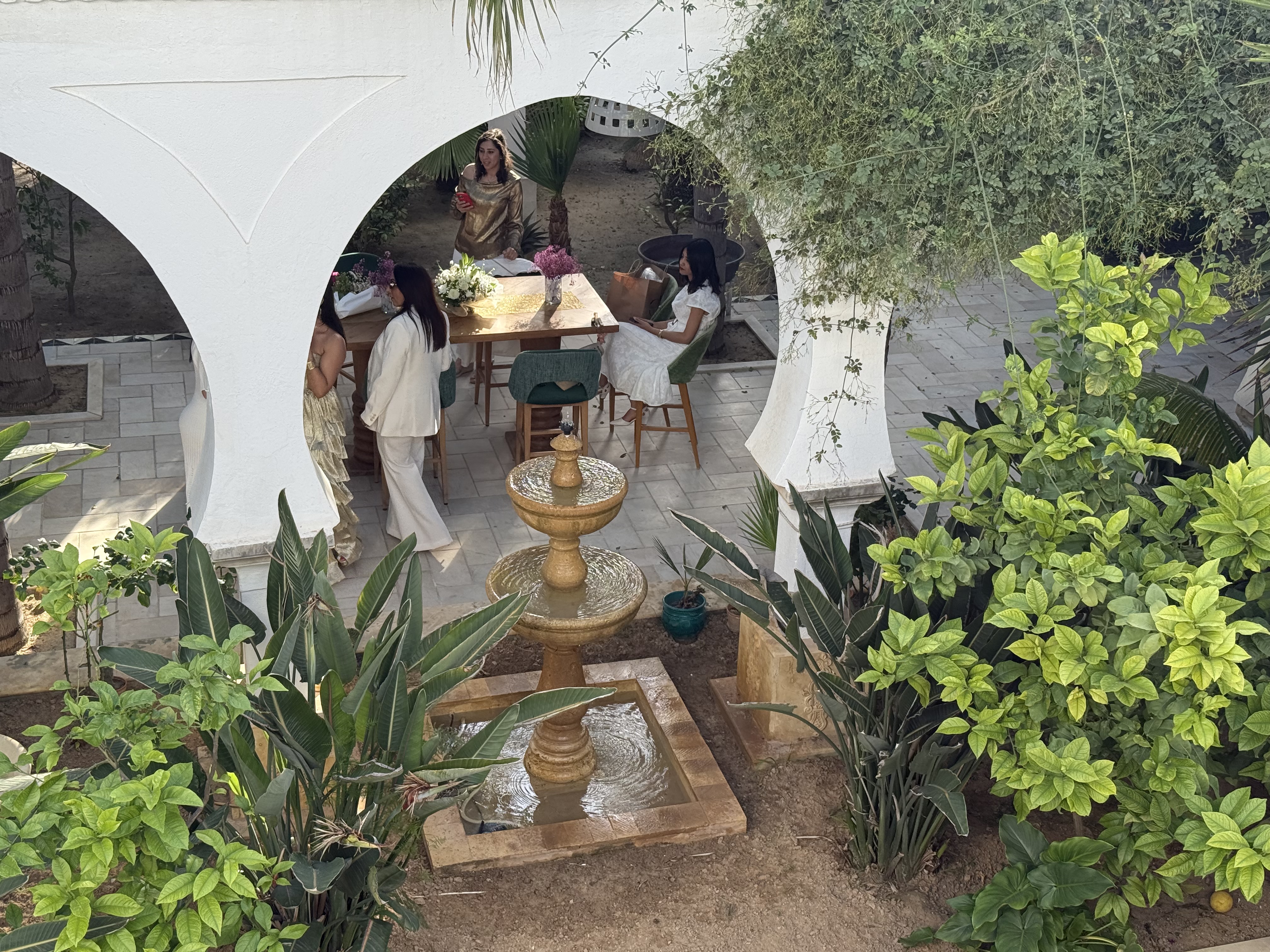
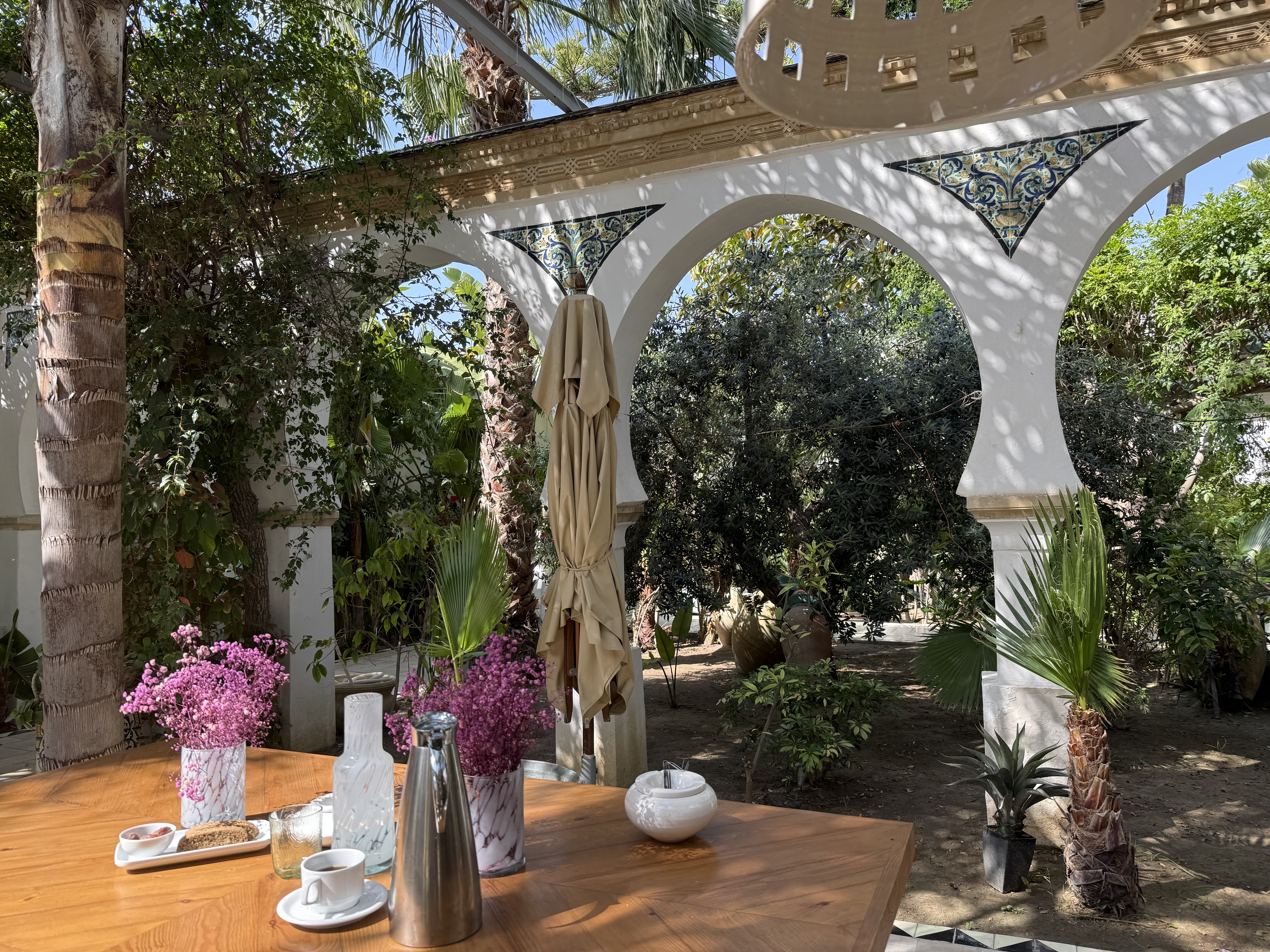
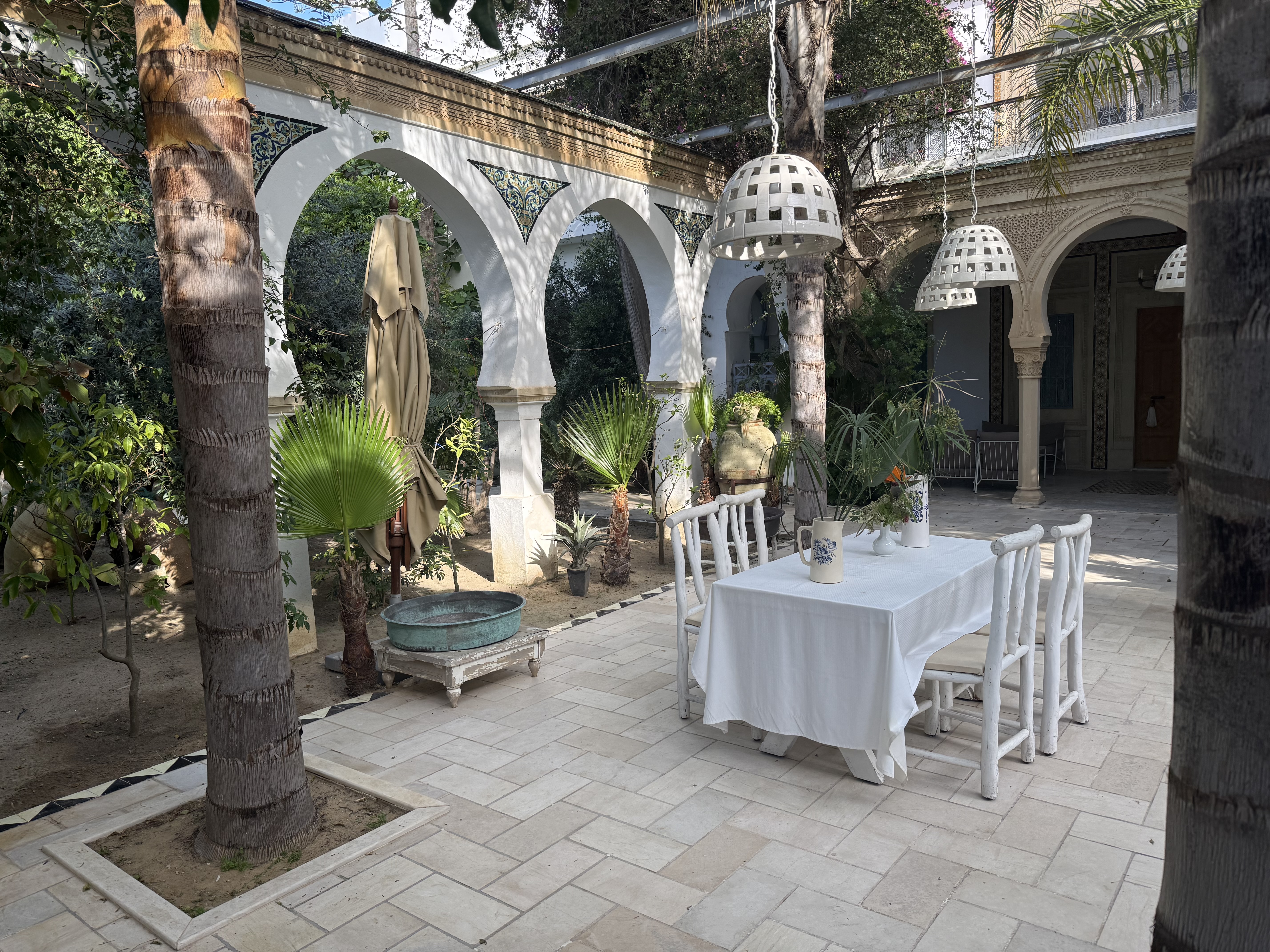
Beyond the golden door lies a wondrous world, a haven of calm, elegance, charm. Exotic plants, trees and blossoms, pools and fountains, ancient artifacts, corners for lounging …
The enchanting paradise is the courtyard of Dar El Gaied, a guesthouse in Nabeul, Tunisia, a very special guesthouse. A “dar” is a traditional Tunisian house constructed around an open courtyard with high walls to shield against the blazing Tunisian sun. Colorful tiles, plants and pools may add to the courtyard décor.
A Tunisian dar is similar to a riad in Morocco, and like riads, many dars offer guest accommodation. My two-day stay at Dar El Gaied was a delight, a trip highlight – one or those very special places you hope to return to.
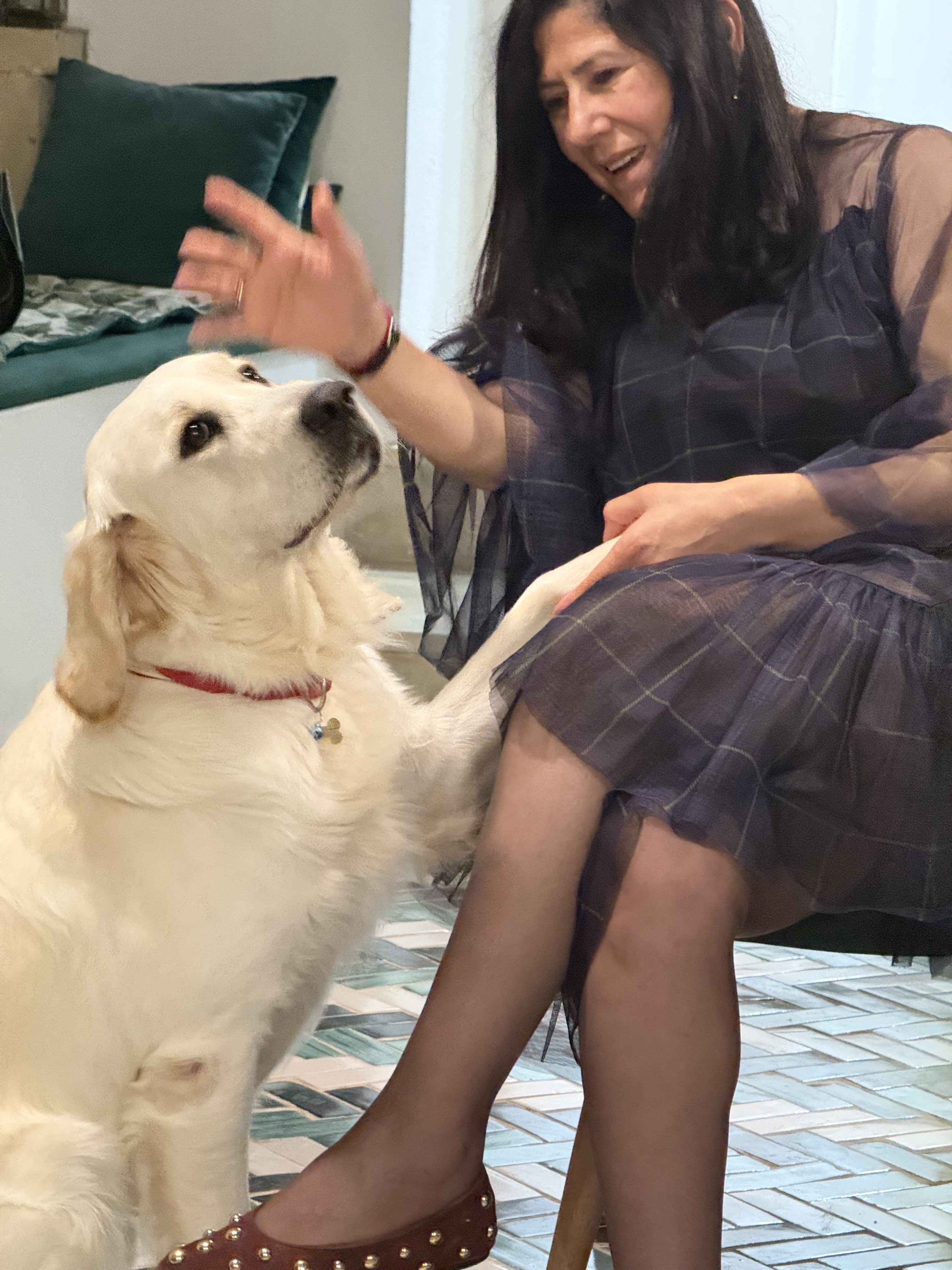
Donia Maamouri, who owns the dar with her husband, welcomed me with her two friendly dogs, Atos and Maya. She explained that Dar El Gaied was built at the end of the 19th century and was the family home of her husband’s grandfather. After 20 years of restoration, they opened it as a “maison d’hote” (guesthouse) in 2018.
“We had no choice” she says, “either abandon it or open a maison d’hote. It was not adapted to modern life. It was a challenge.”
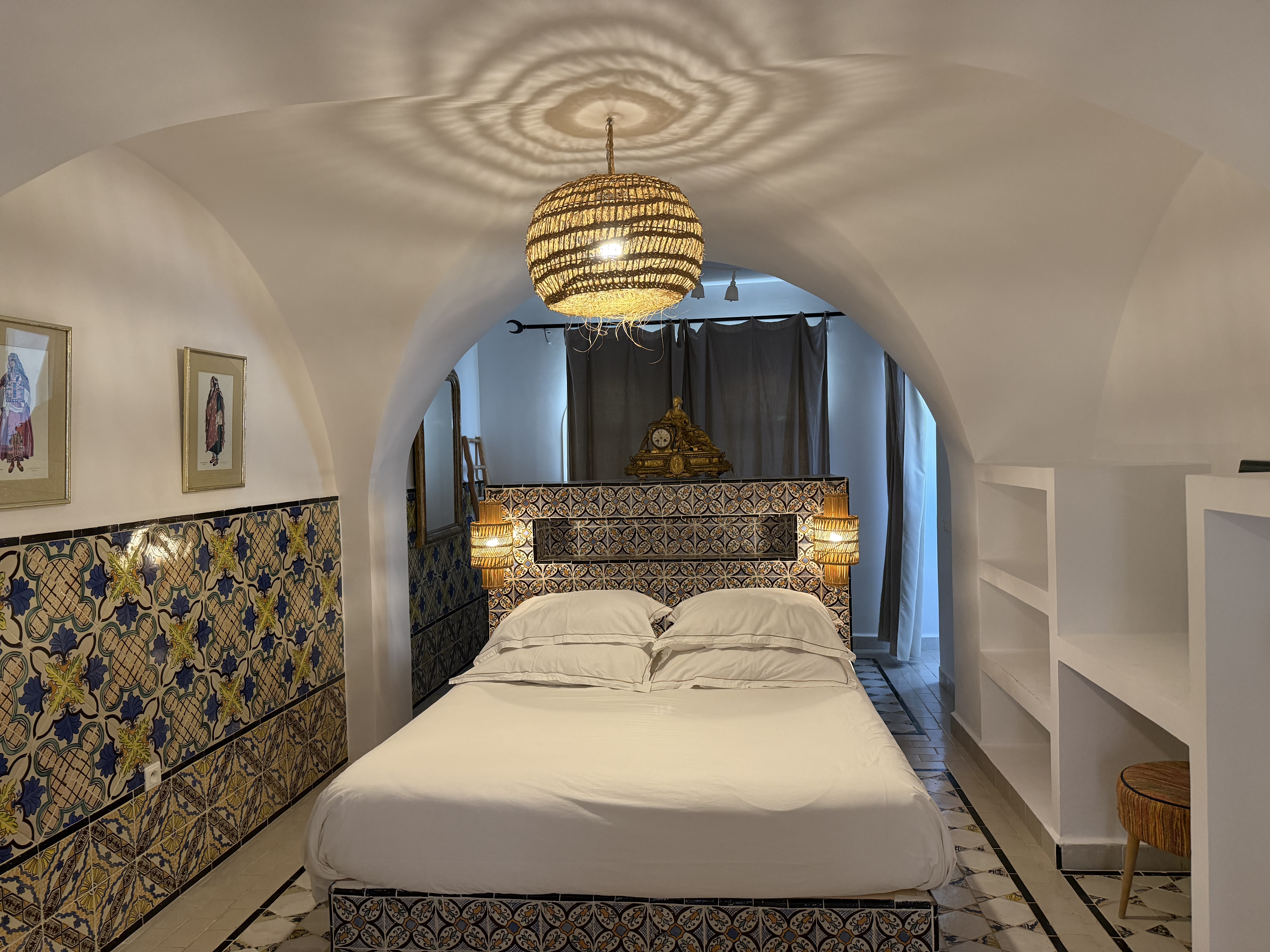
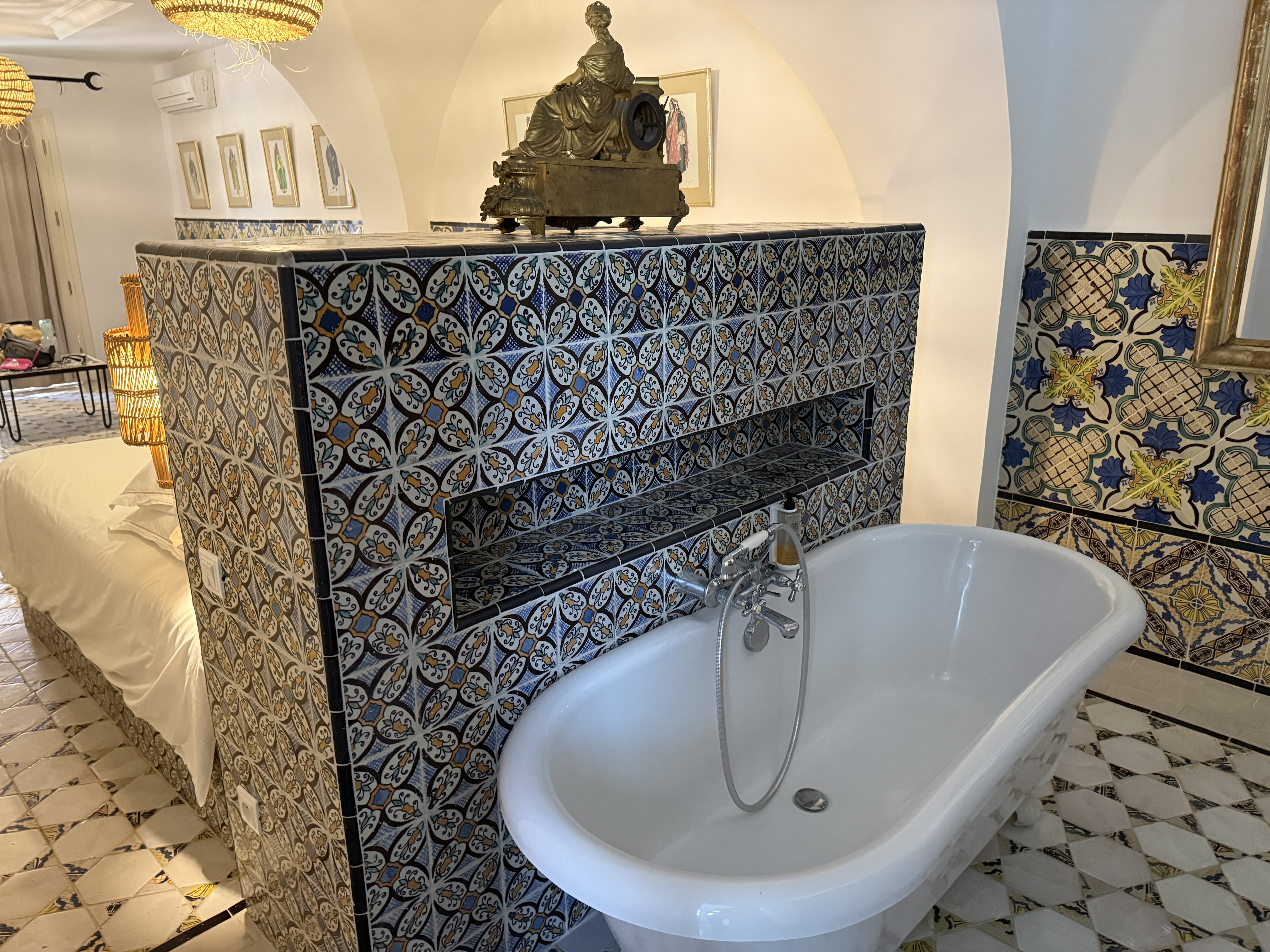
My room at Dar El Gaied. I passed on the bathtub and opted for a shower.
All guesthouse dars serve breakfast. Dar El Gaied also serves lunch and dinner by request. I had more than a fabulous dinner – a cooking class/demonstration as well.
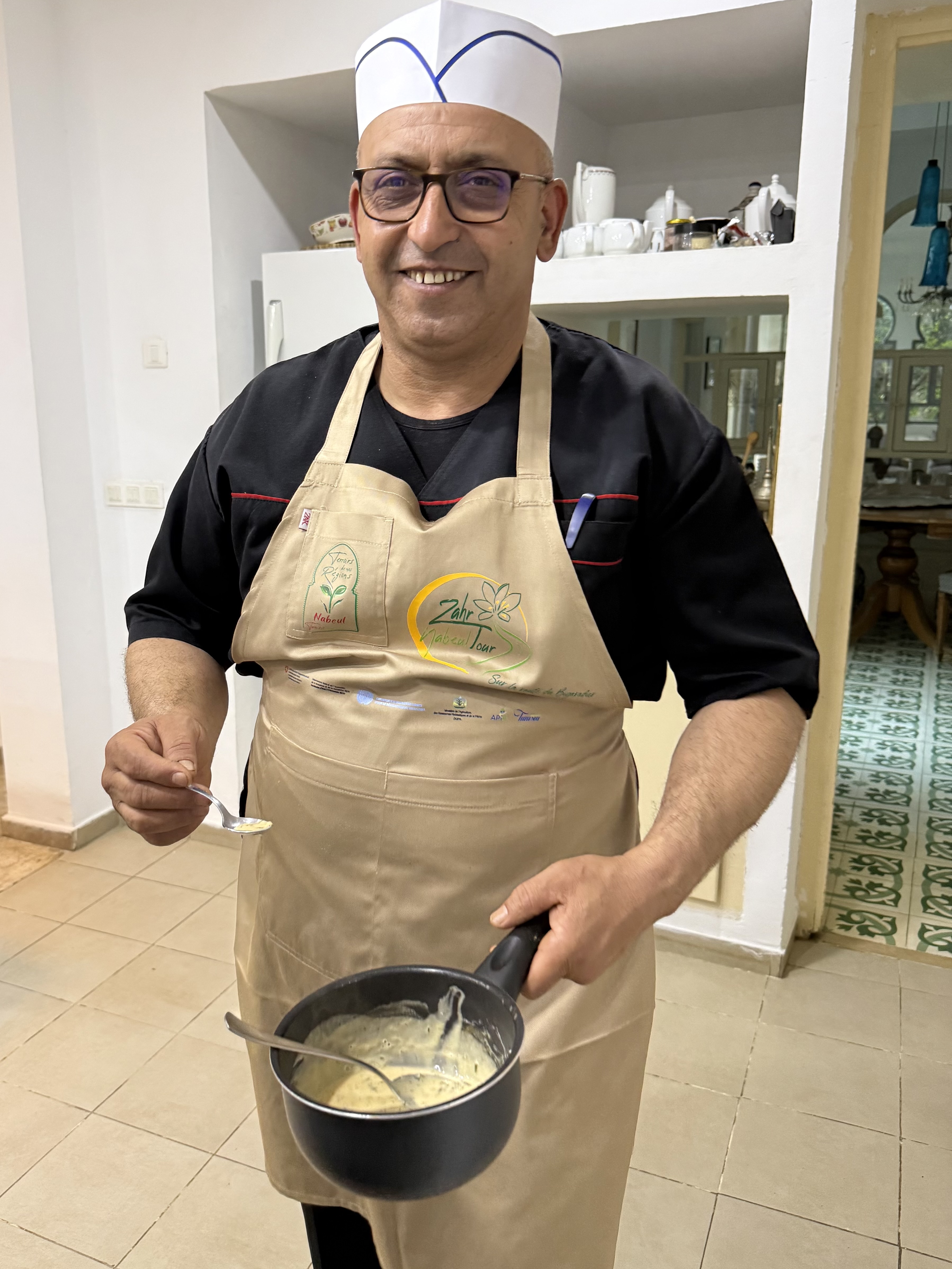
Jamel Ramadhani is the dar chef when needed. He has worked as a chef in many countries and is a master of numerous cuisines. French cuisine, he says, is his favorite.
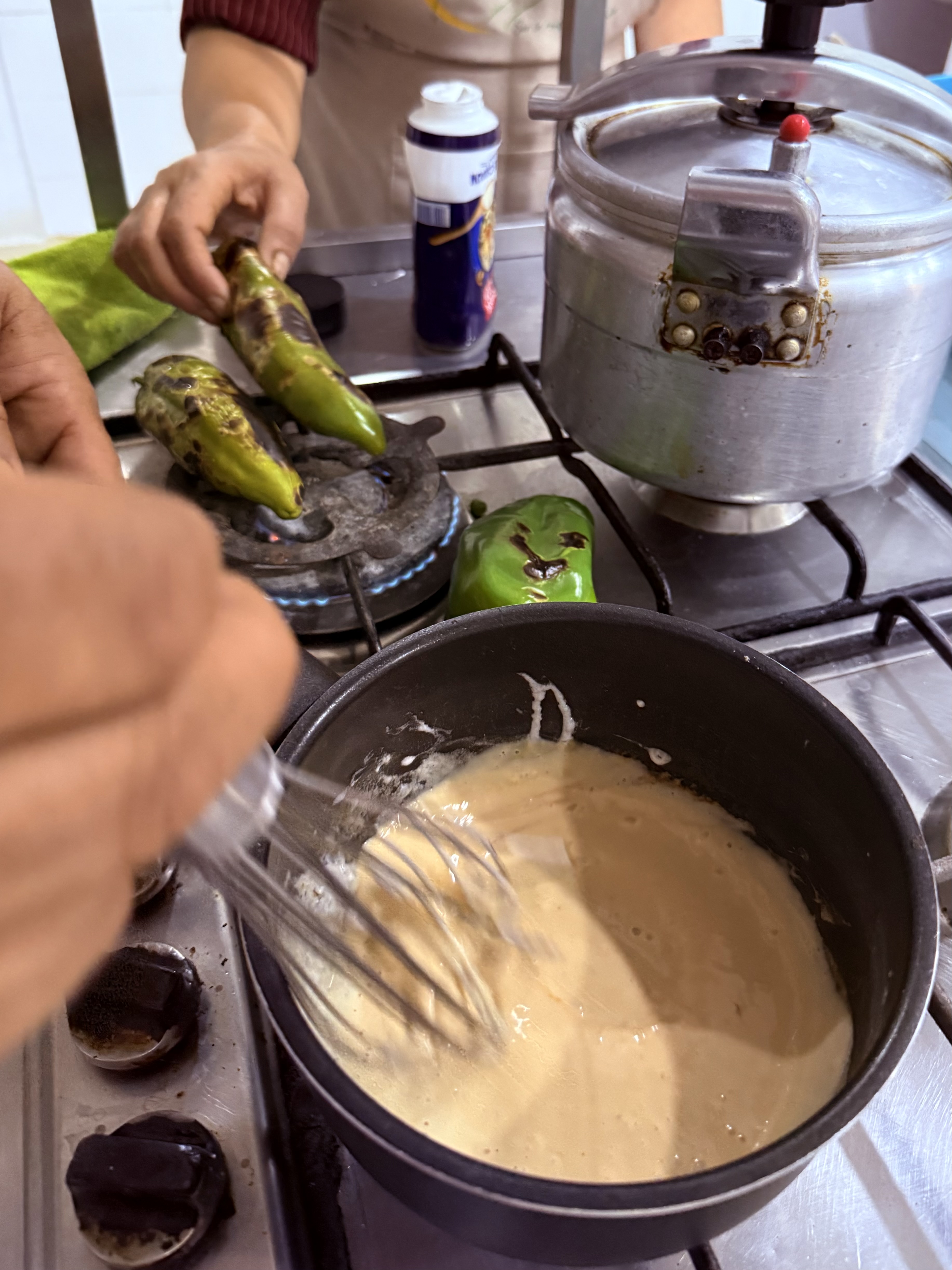
Grapefruit sauce for sea bass filet, right.
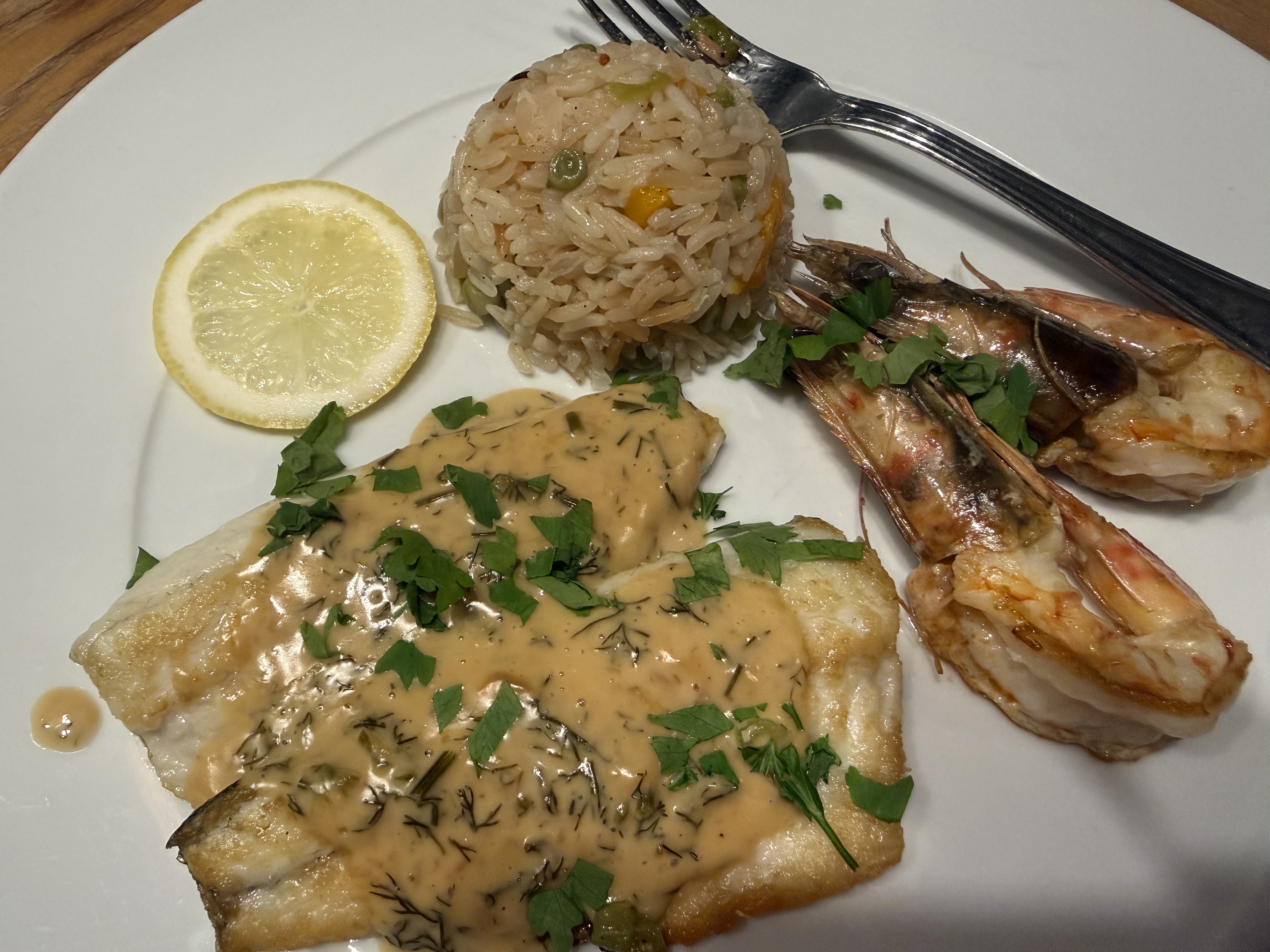
I love watching professional cooks – so speedy, efficient, organized (everything I am not). I observed and took notes as he whipped up an incredible multi-course dinner : soupe de legumes, salade Mechouia, brik au thon, filet de loup avec sauce agrumes aux pignons, riz piaf, fruits de saison, gateau Tunisien.
(Vegetable soup, Mechouia salad, brik with tuna, sea bass with citrus sauce and pine nuts, rice pilaf, seasonal fruits and Tunisian cake.)
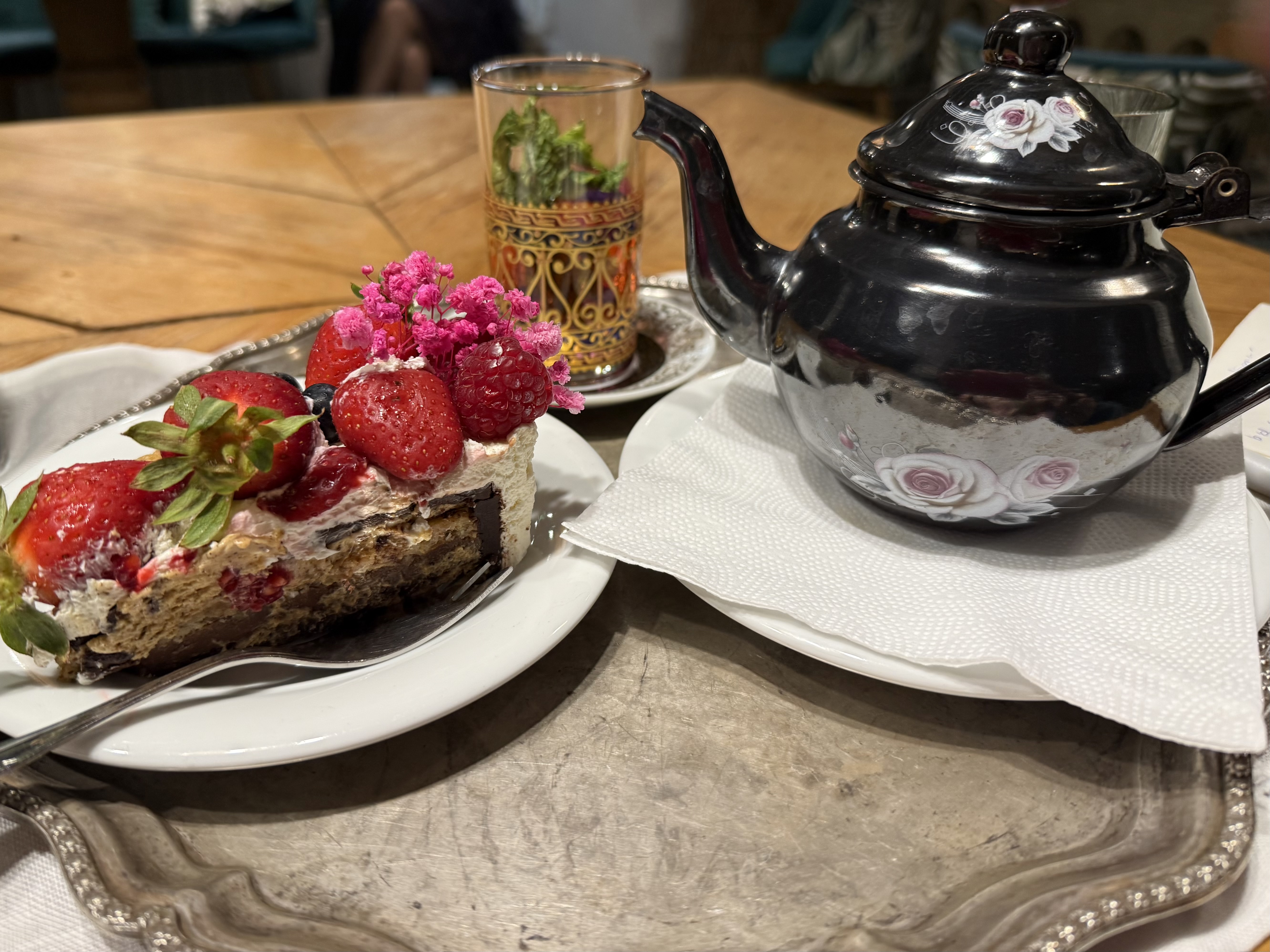
A decadent strawberry cake and mint tea for dessert.
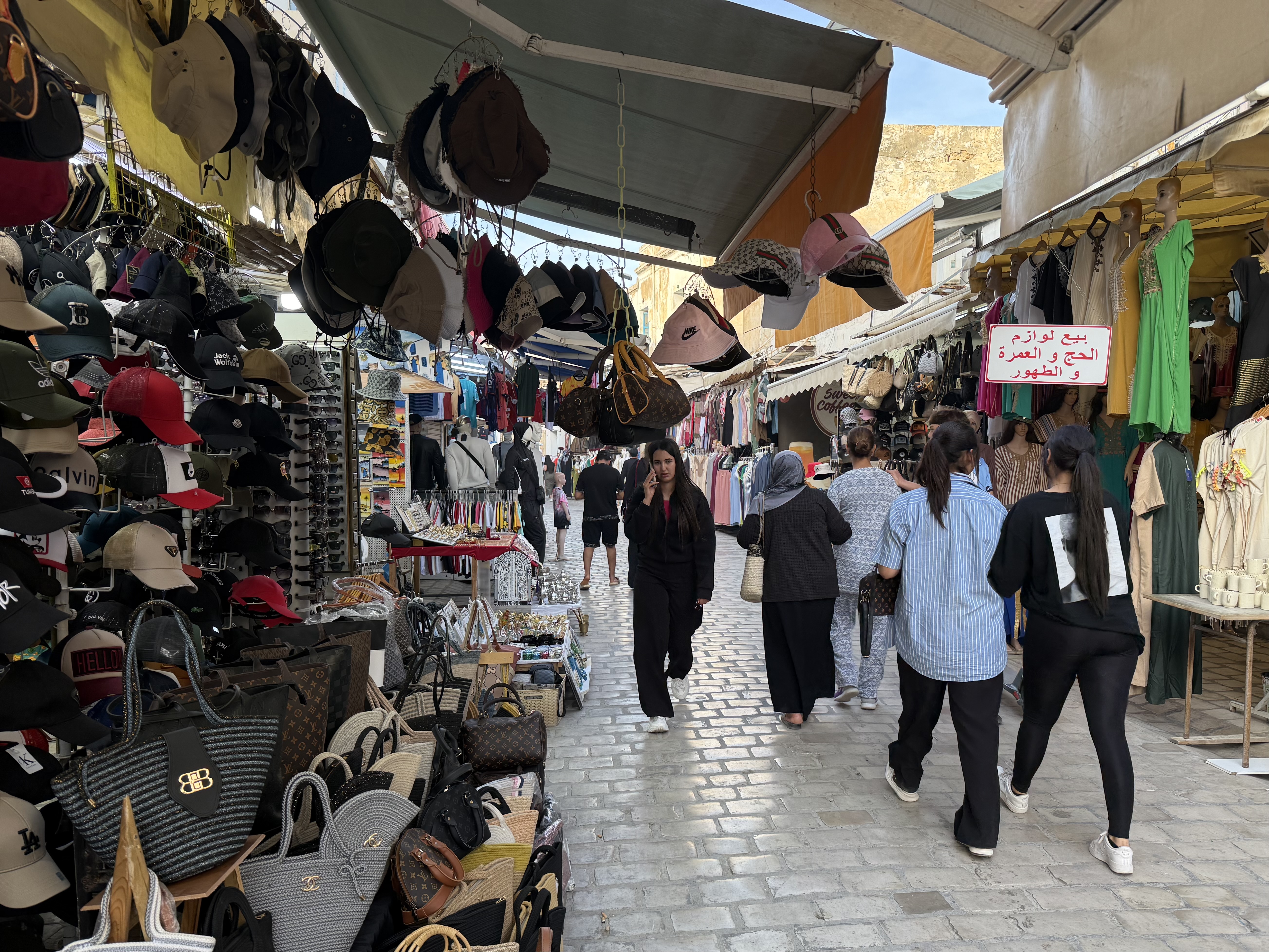
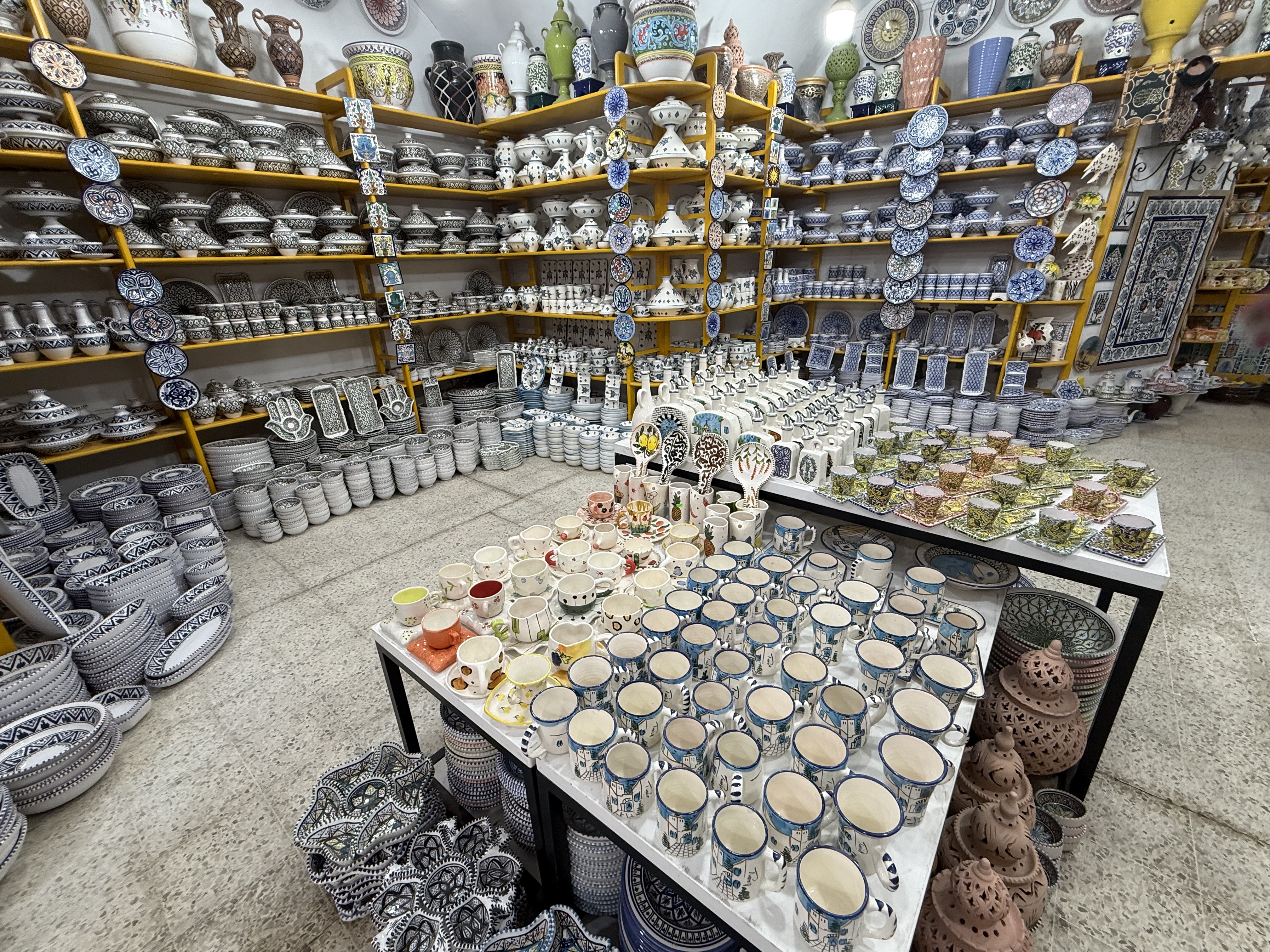
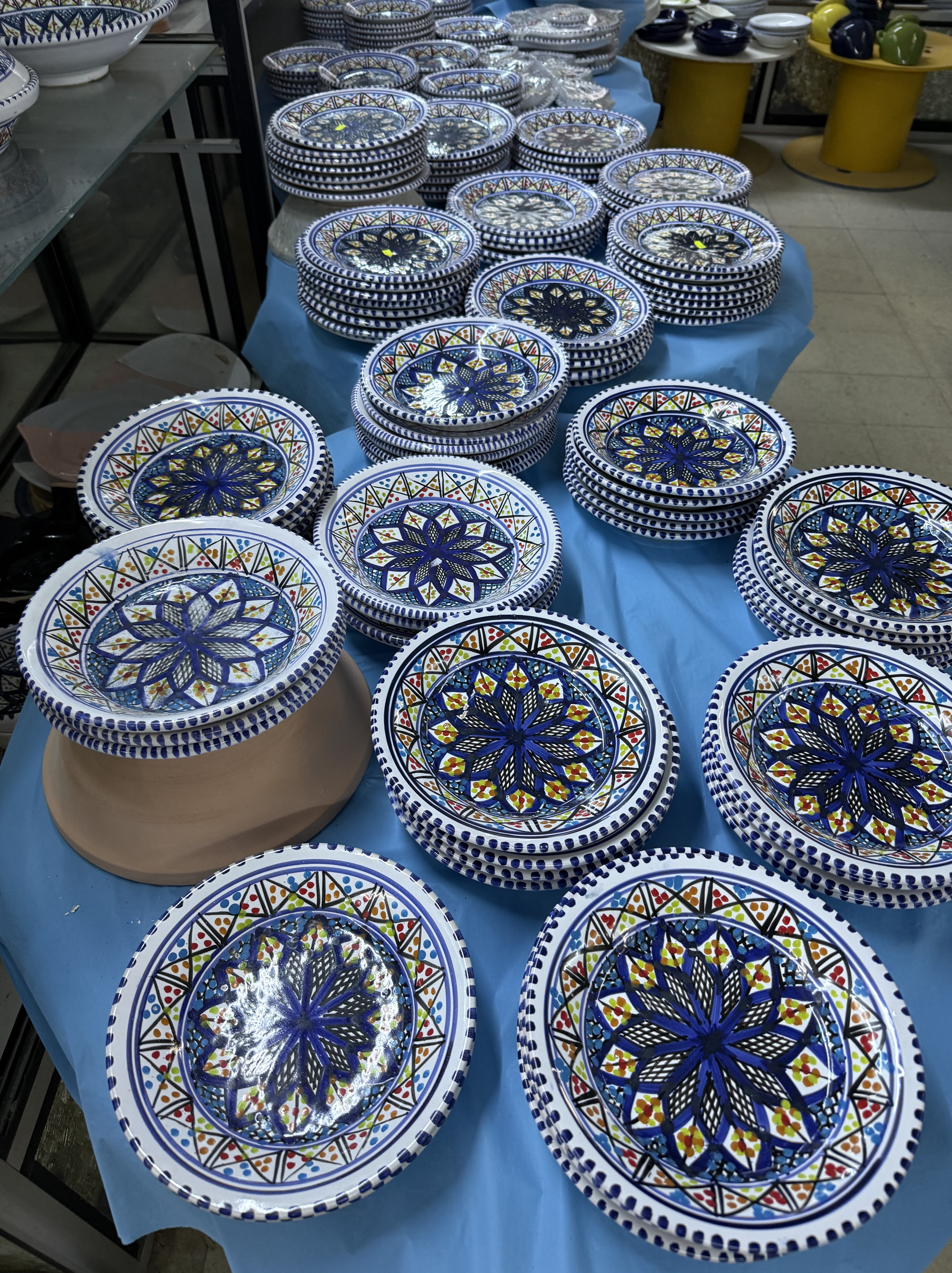
Dar El Gaied is on a quiet street at the edge of the Nabeul medina. I had fun browsing its many shops where ceramics, a noted product of Nabeul, are the star.
Colourful ceramics, the perfect souvenir.
Part II to this post coming soon – 2 easy recipes from my dinner at Dar El Gaied.
If not a Tales and Travel follower, please sign up here. Trust me. It’s safe. Your address iskept private.
And, please comment. See below.
I have been writing this blog for many, many years, detailing trips near and far to numerous fascinating destinations . If you seek info on a particular place, scroll down to the very bottom on your phone: Search. Type in your wish.
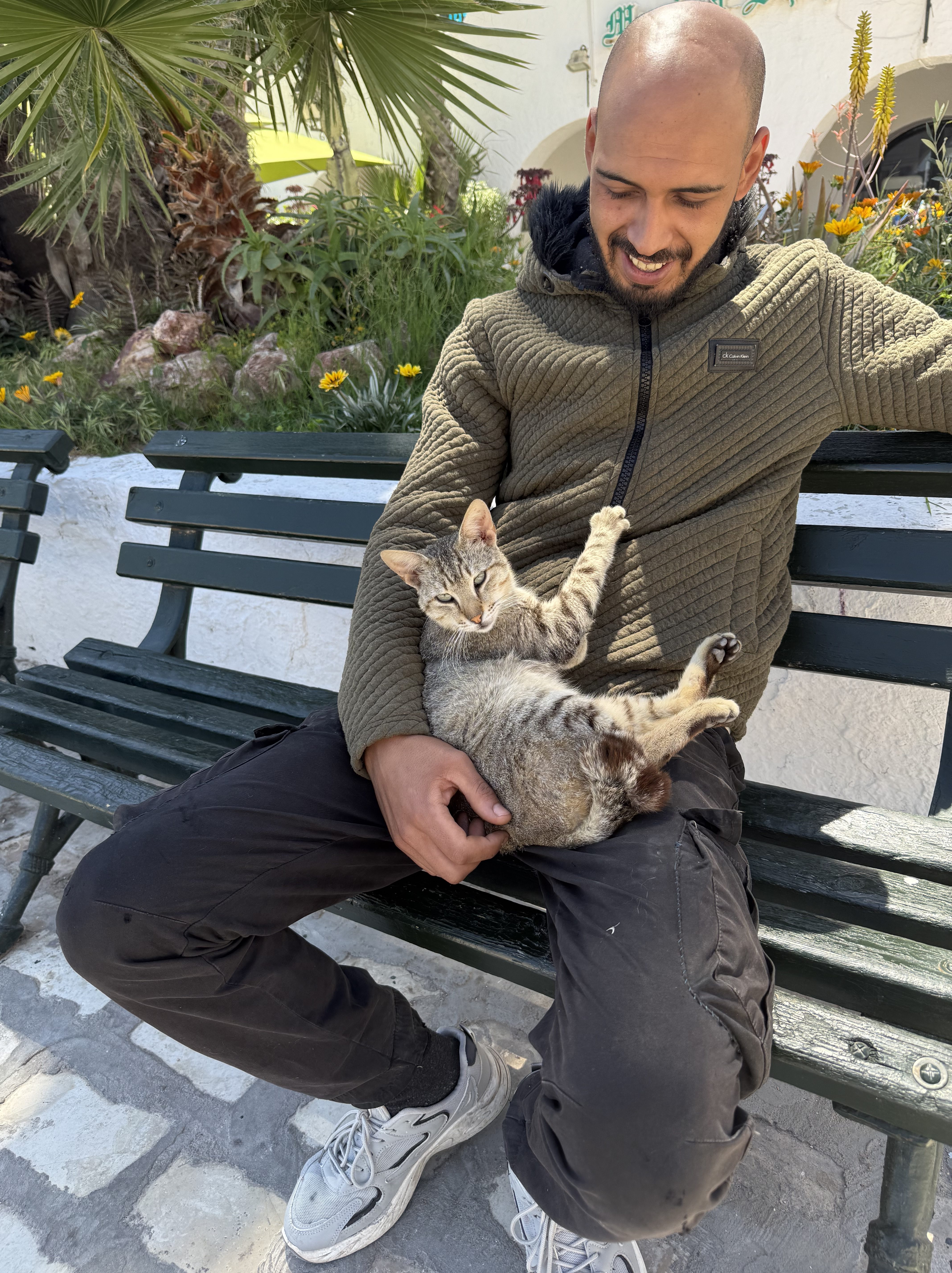
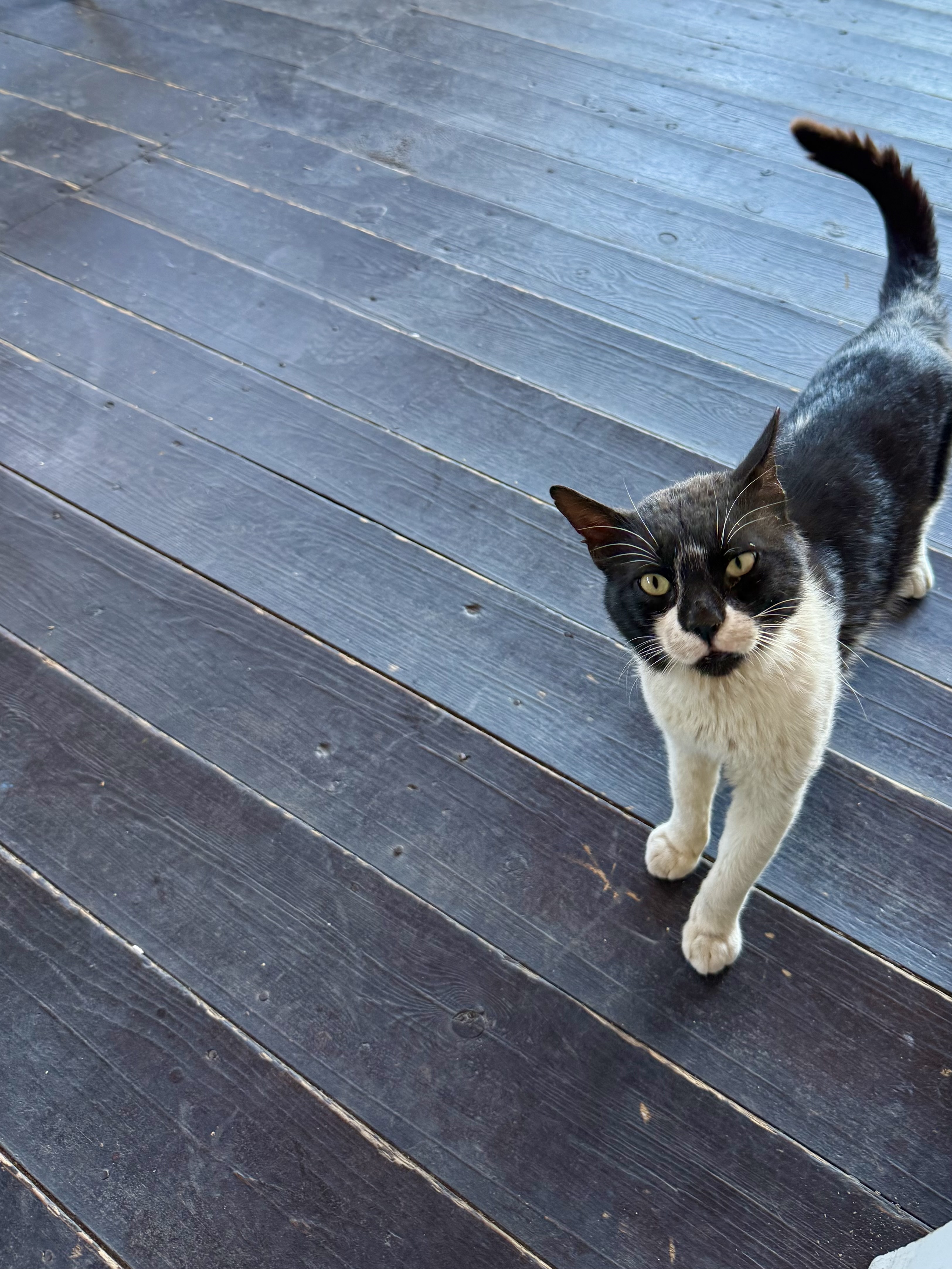
Today’s Tunisian cat photo. As a cat lover, I was happy to see that most Tunisian strays are fed — even loved.
I LOVE Tunisian food. Brik. Bambalouni. Couscous. Kafteji. Makrout. Mechouia. Mint Tea. Fabulous fish. And much, much more.
I love the vibrant markets, tasty street food, fancy and not-so-fancy restaurants. I loved my two cooking classes.
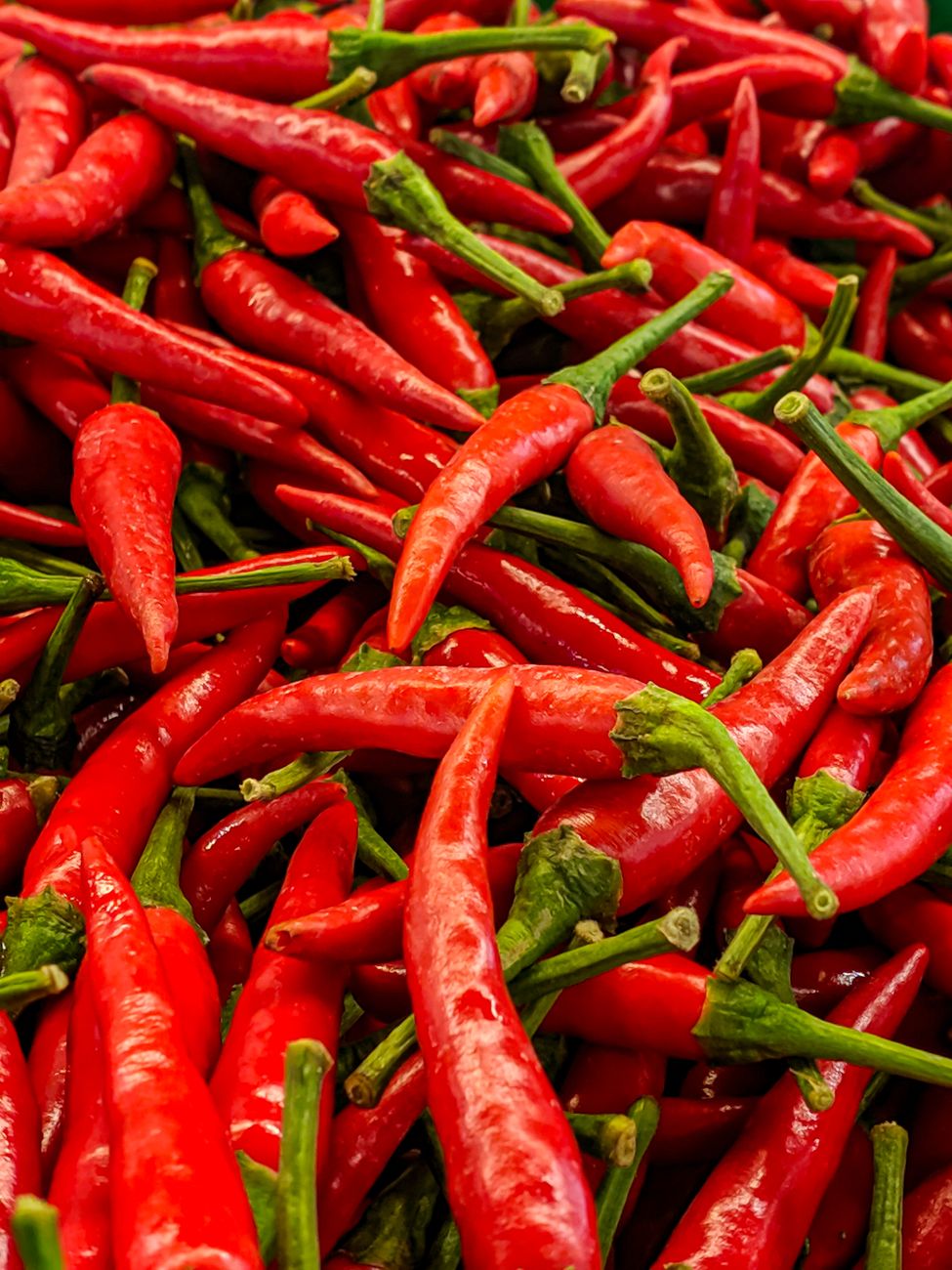
Red peppers. The ingredient of wicked harissa.
True Confessions. I do not love all Tunisian food. I HATE harissa, a scorching, blazing red sauce that is a mainstay in Tunisian cuisine. Fire food is not for me. I like to savor flavors, different tastes – not have them overpowered by heat. I know. I am outnumbered.
In many dishes harissa is served on the side – optional. In some, like couscous, it is usually a key ingredient. I learned. Just ask. “Hold the harissa.”
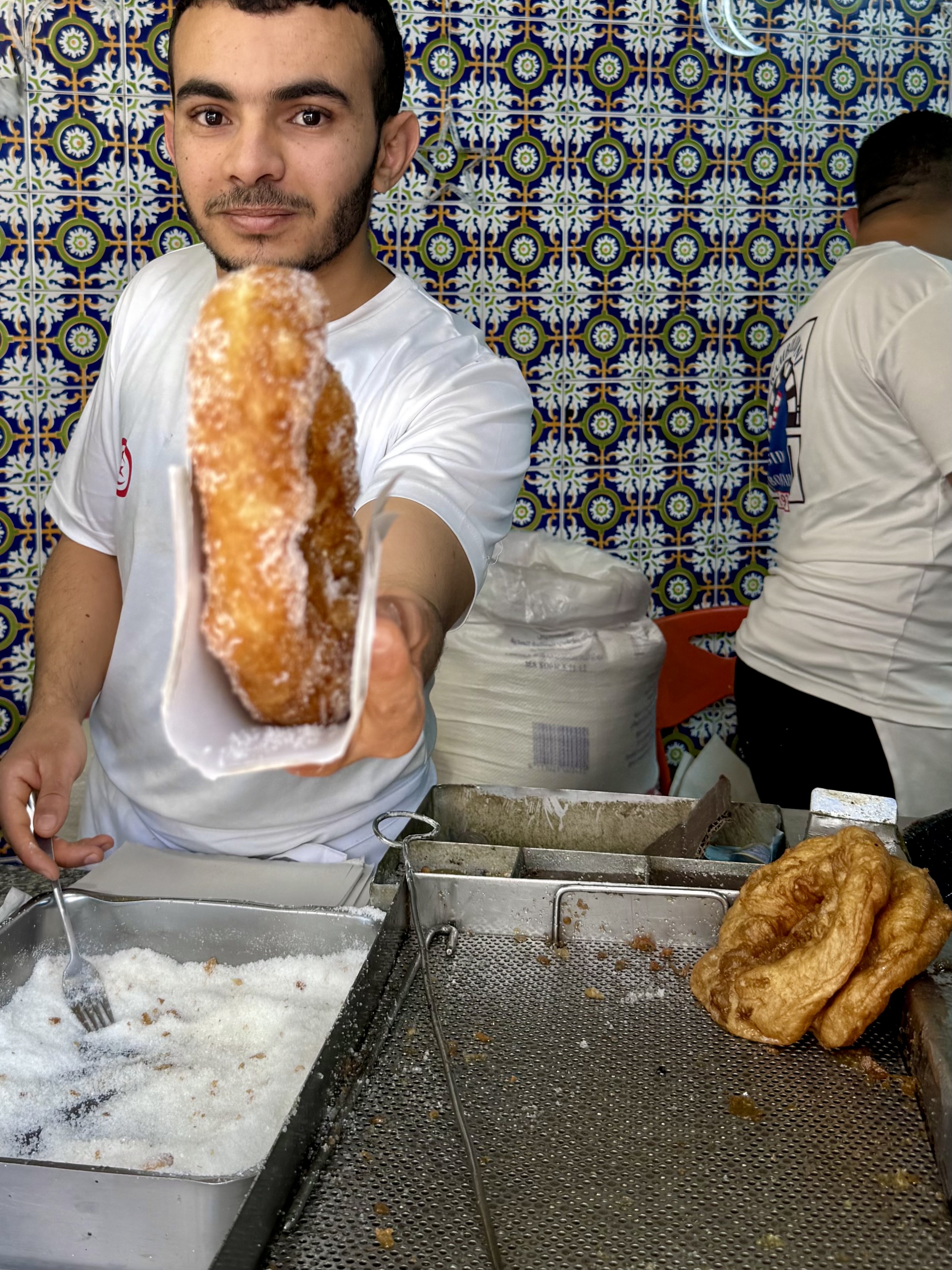
Harissa plays no role is one of my favorites: Bambalouni, a light, airy, crispy, deep-fried, large, donut like creation. It’s popular at street stands. It was a breakfast buffet selection at a hotel where I stayed. I’d like to begin every day with a Bambalouni and coffee. Heaven!
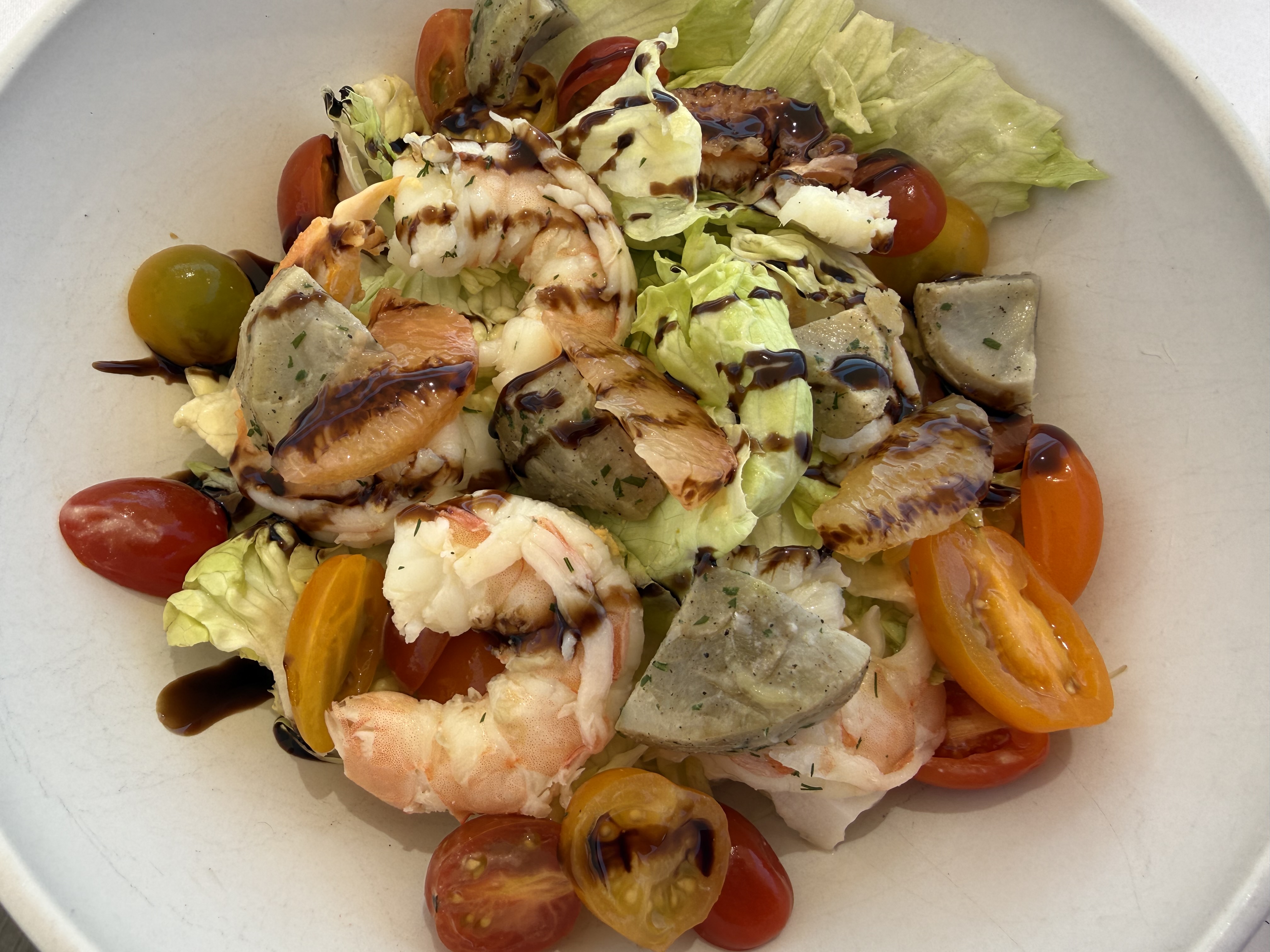
Tunisian salads – usually without harissa – are phenomenal. Above, a shrimp salad. Mechouia is a national favorite: green peppers, tomatoes, caraway, olive oil. Depending on the cook, other ingredients can be added. The secret is grilling the vegetables which gives a distinct, smokey enhancement.
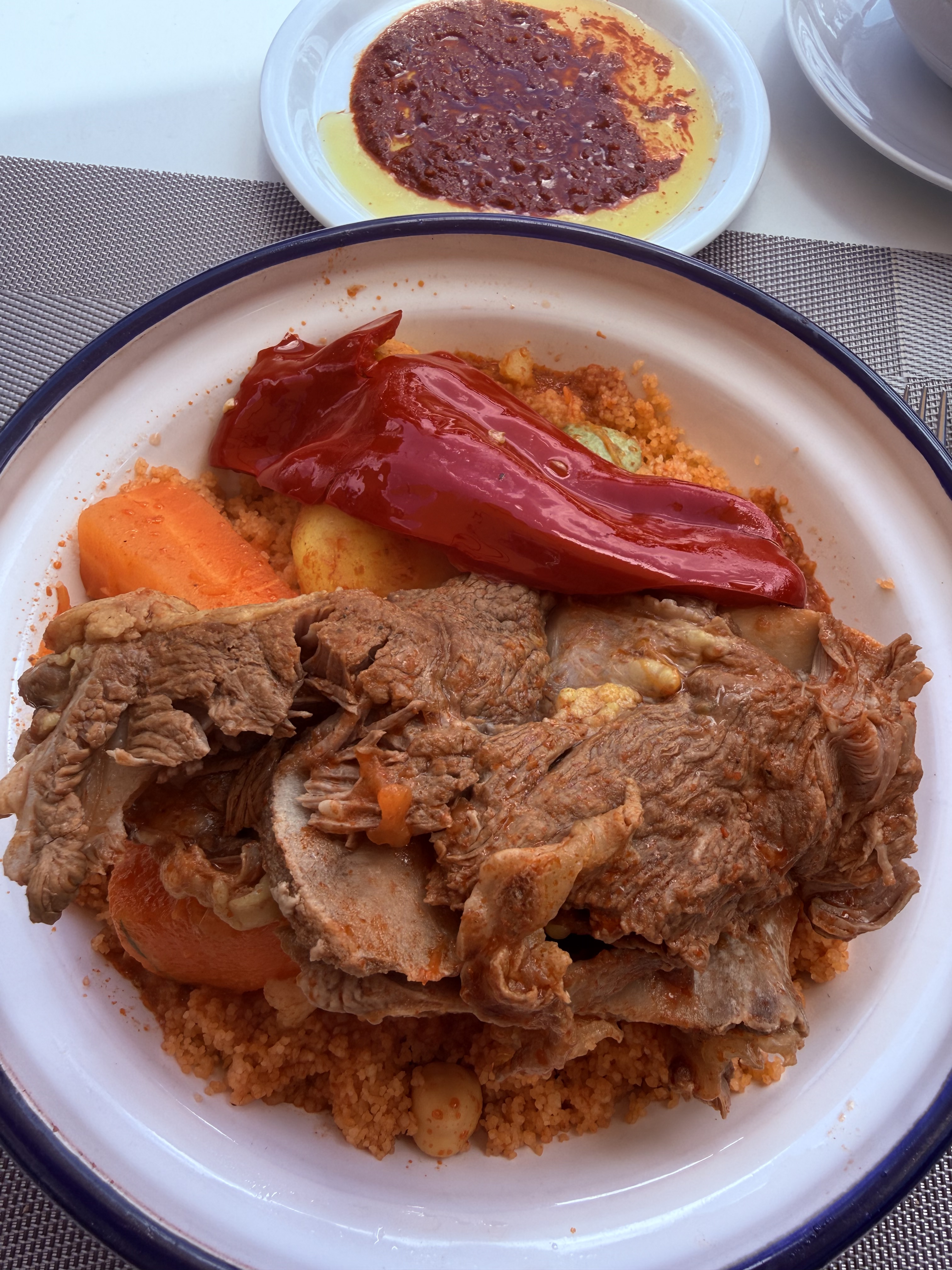
Couscous, above, is popular throughout the Maghreb, i.e. Morocco and Algeria too. It can be made with lamb (most traditional), beef, chicken or fish, added to steamed semolina and vegetables in a spicy sauce, normally including harissa. I ordered the lamb version for one of my first Tunisian meals. – delicious with harissa on the side. I tried a taste with fire — not for me. According to my guidebook, there are 300 different ways to prepare couscous.
Brik. So many versions. All so delicious. Very, very thin dough, like filo, is folded over a combo of ingredients, such as tuna, veggies, cheese, perhaps harissa, then deep fried until crisp and golden. In Tunisia you can buy packages of Brik dough. I may try with packaged filo. Bambalouni for breakfast and Brik for lunch — for me nothing could be better.
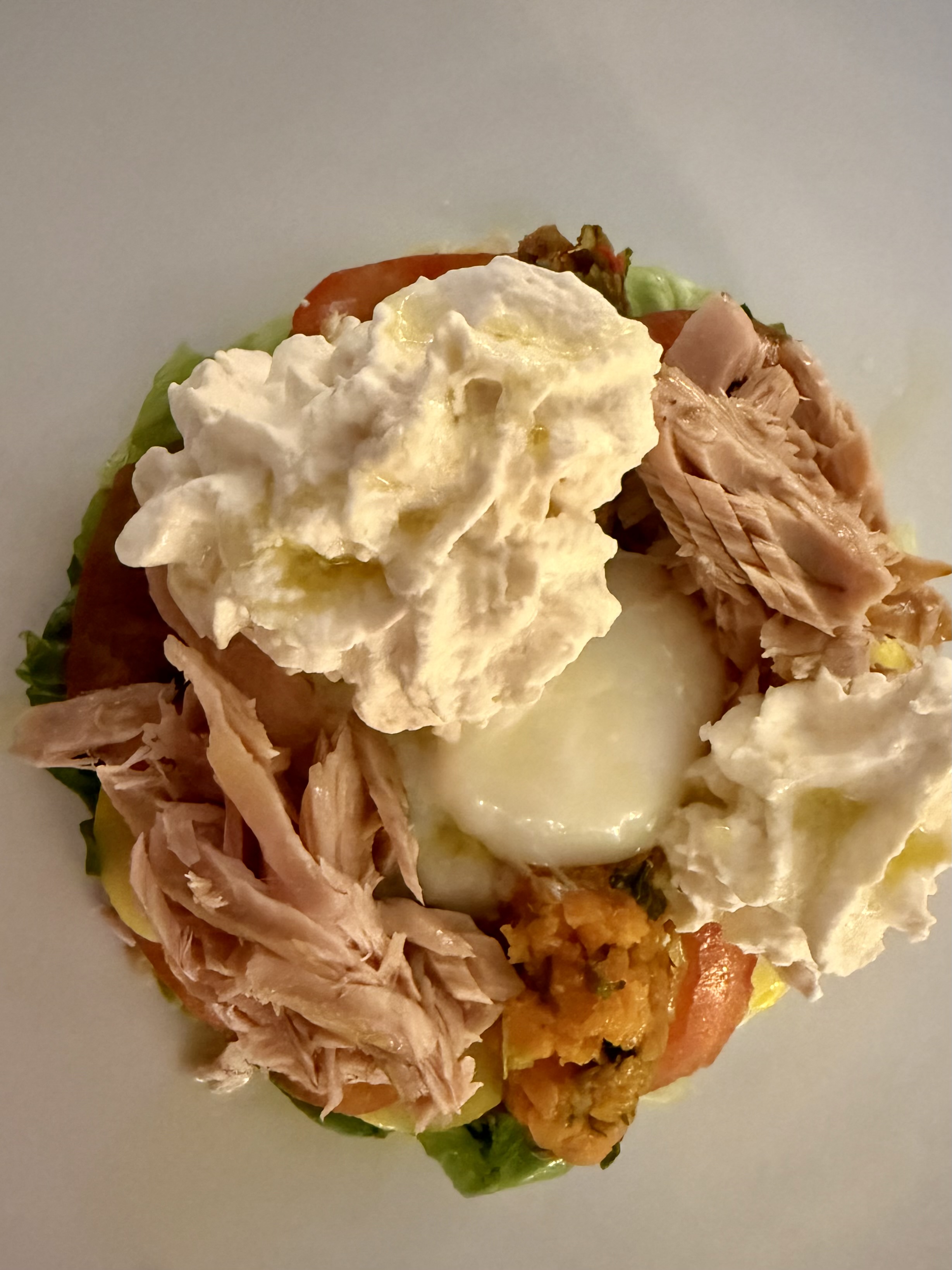
Tuna salad with poached egg, other goodies — and whipped cream. Delicious.
Canned tuna makes a frequent appearance in Tunisian cuisine — in innovative salads or sandwiches, combined with other goodies, and always a delight. An egg, usually soft boiled, is another frequent Tunisian ingredient. The gooey yellow is an added treat.
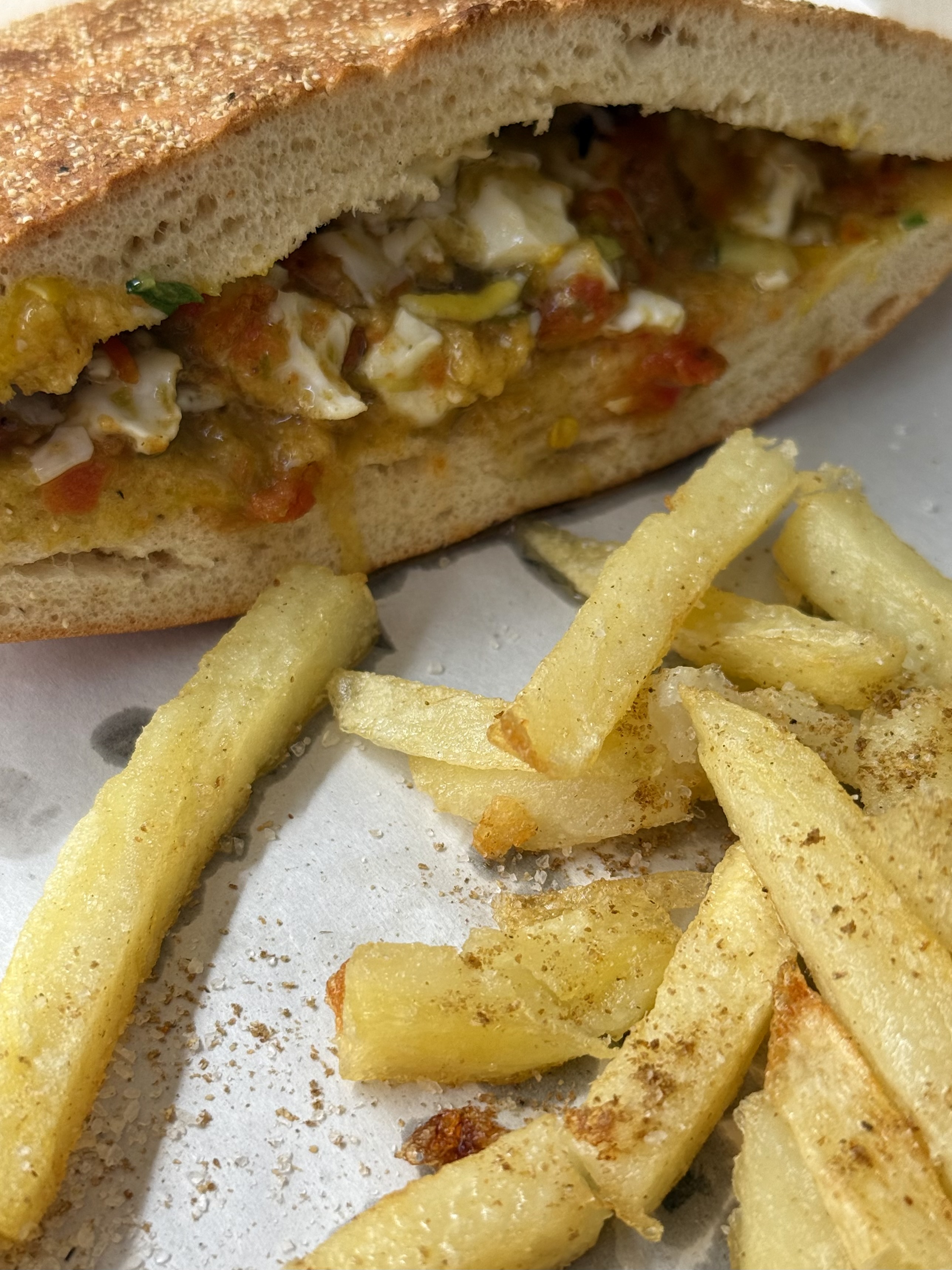
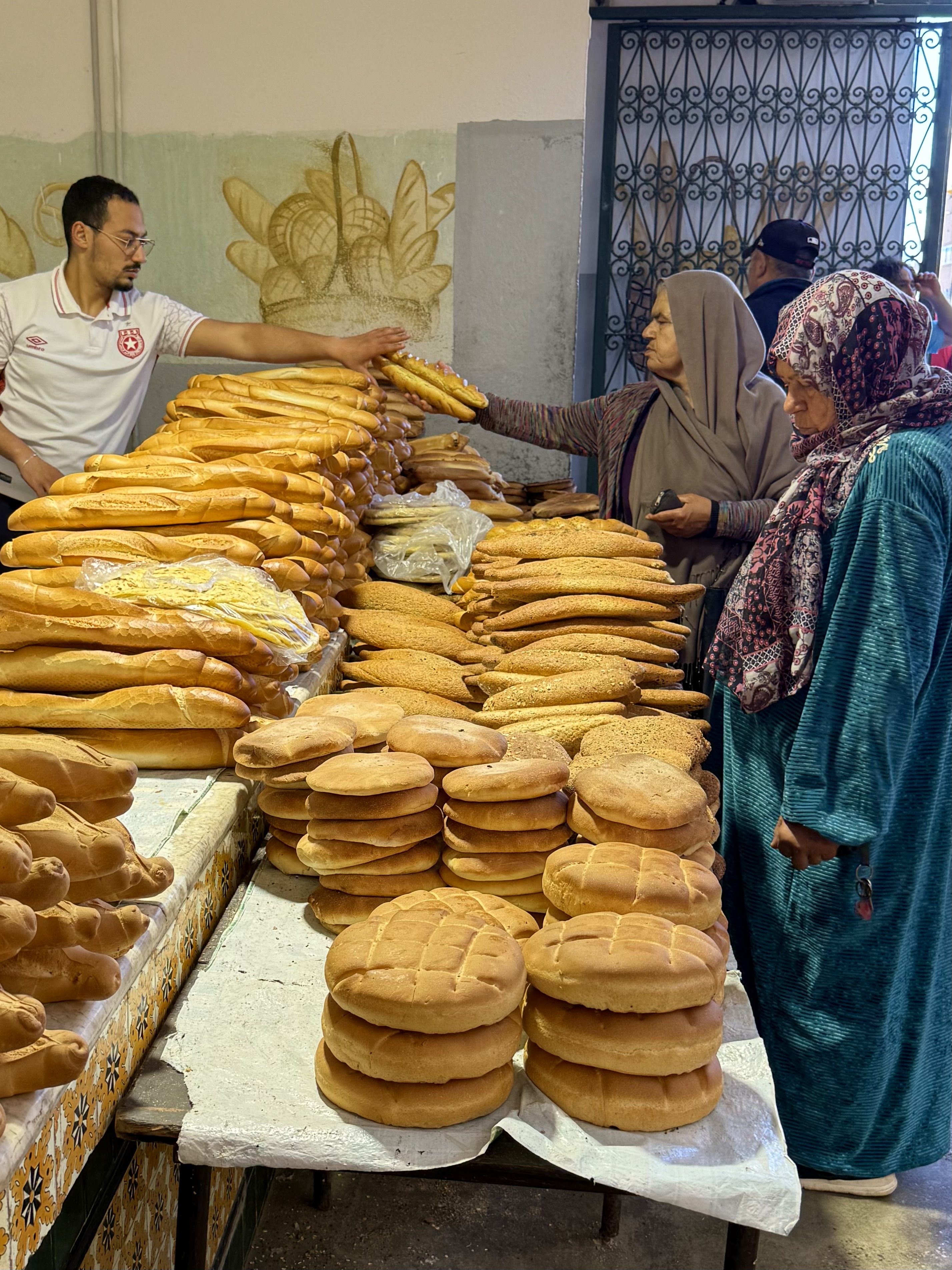
Kafteji sandwich, left. Tunisians eat bread with every meal . There are numerous varieties, including baguettes.
Kafteji Vegetables star in Tunisian cuisine. Here they are fried, finely chopped together, combined with an egg as mentioned above, harissa, and served alone or stuffed into a flatbread sandwich. They are another street food sensation with countless variations. You can “hold the harissa.”
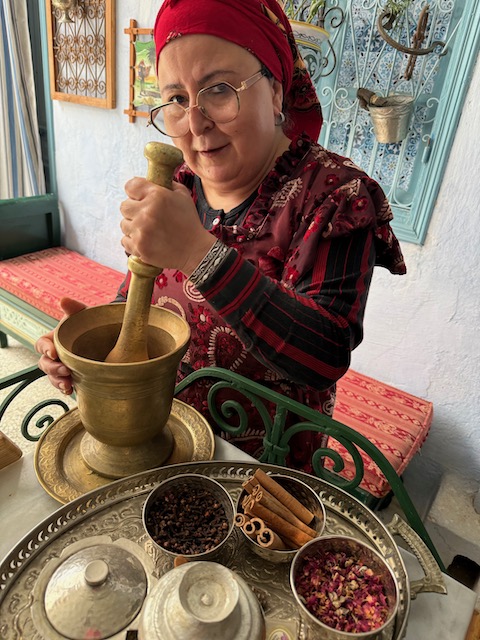
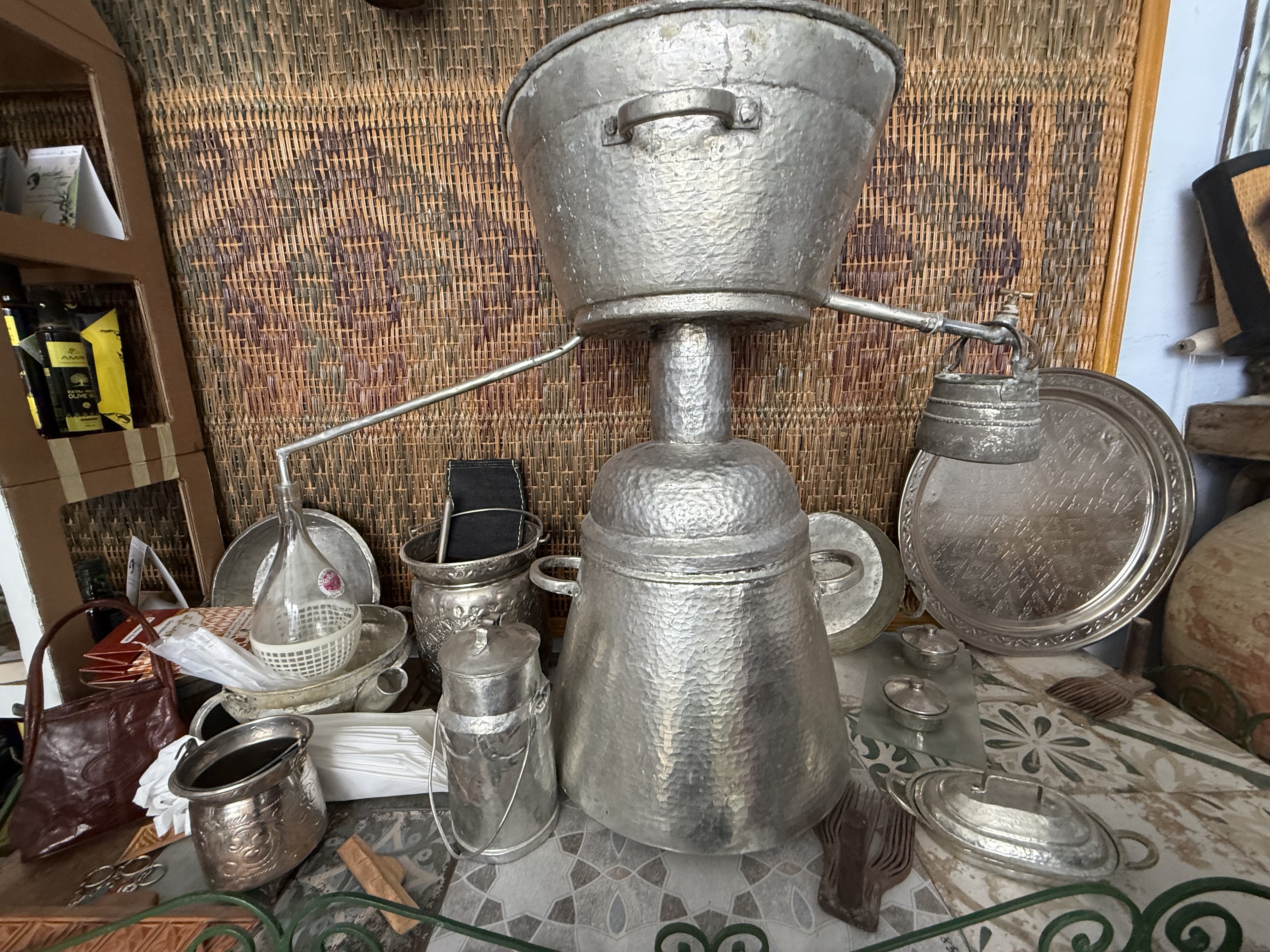
Makrout. Tunisians love pastry. This is THE national sweet, a deep-fried cookie made with semolina, flower water and filled with a date paste mixture. In the town of Kairouan, Mme. Halima offers a Makrout workshop in her home. I learned the preparation intricacies (see video above) and saw the amazing contraption, below, used for flower water distillation.
Mint Tea. Tunisia is a Moslem country, and most Moslems do not drink alcohol. Nonetheless the country produces both beer and wine. I indulge in both, but not on this trip due to the health crisis I suffered during my travels.(see previous post, The Trip that Almost Wasn’t) I did not miss the booze. I became addicted to mint tea which is served everywhere and better than any I can make at home. Must be the Tunisian mint.
A decadent strawberry cake and mint tea for dessert.
This is just a mini sampling of Tunisian food. For more on Tunisia, see previous post, In Awe of Tunisia. More food soon in a post about my stay at Dar El Gaied, an exquisite guest house where I had an at-home private cooking course…with harissa definitely on hold.
If not a Tales and Travel follower, please sign up here. Trust me. It’s safe. Your address iskept private.
More photos below :
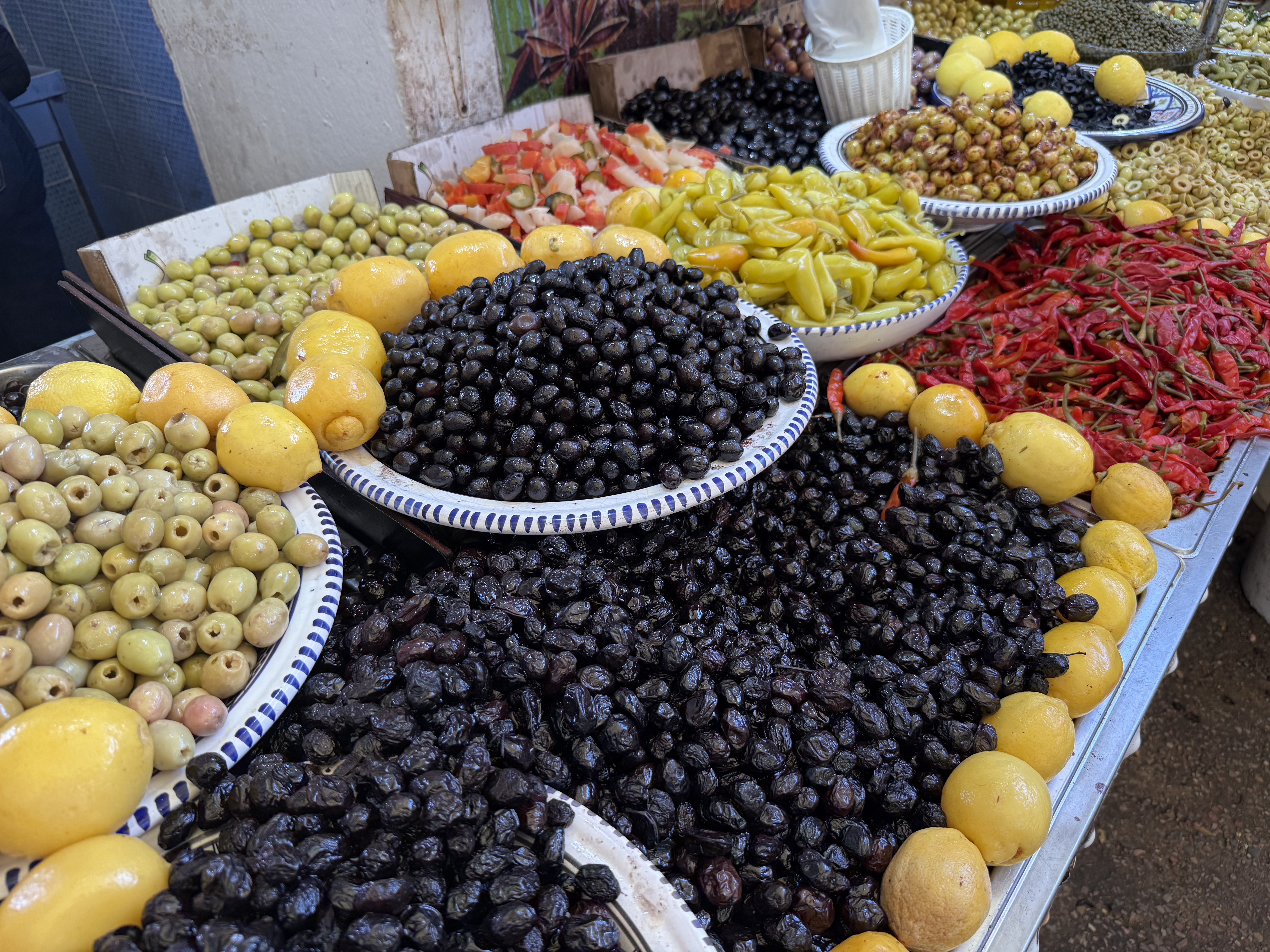
Tunisia is a major producer of olives.
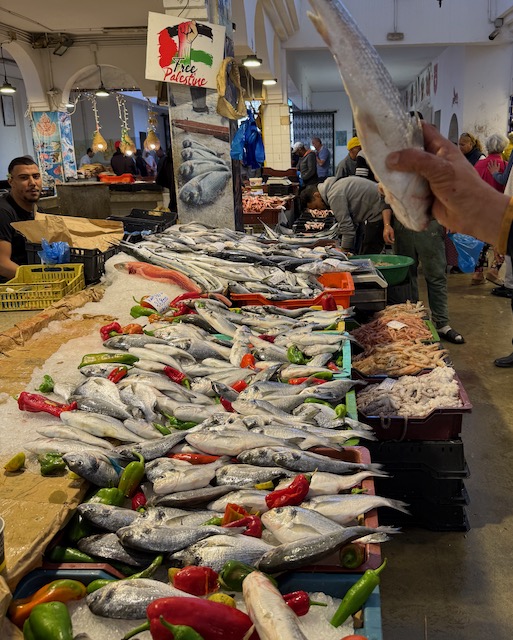
Fish — and Free Palestine.
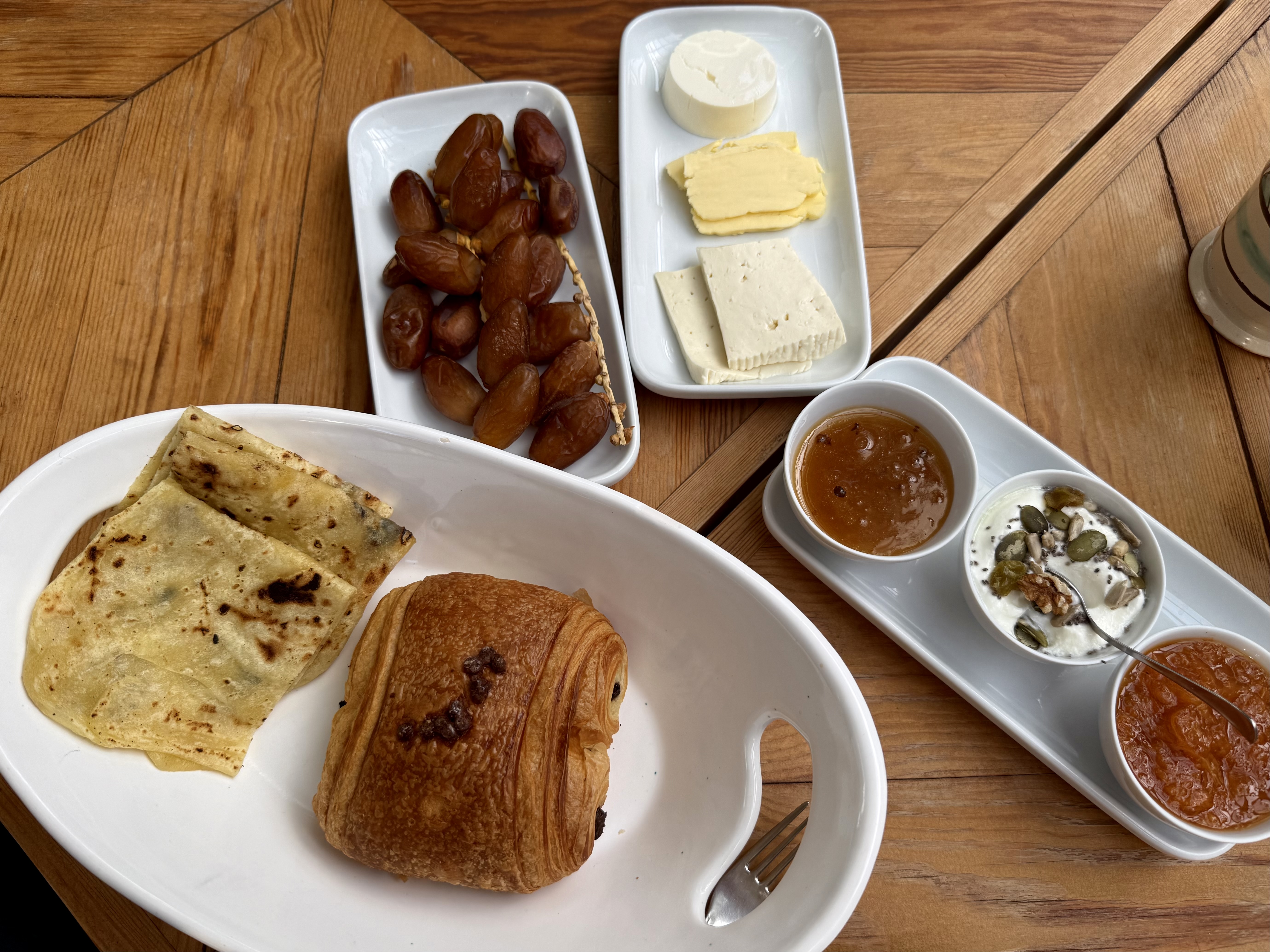
Tunisian breakfast: dates, cheese, pastry, jam and yogurt.
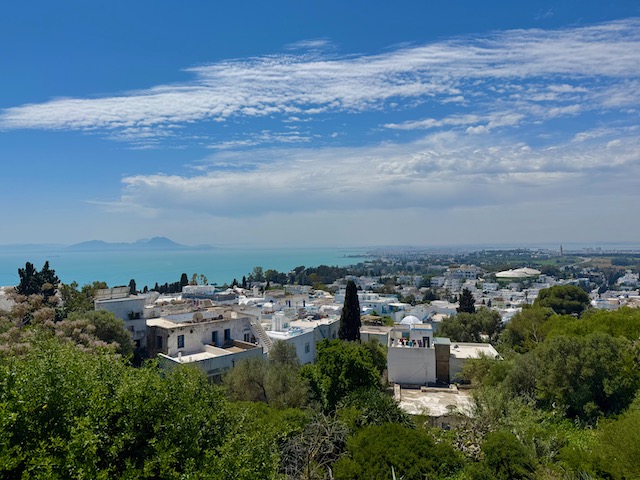
White, white — all the buildings white in Tunis, photo below.
All the white may seem bland, but Tunisia is not. This small North African country is dynamic, vibrant, and a treasure trove of colorful sights: mind-boggling mosaics; joyful, boisterous markets; majestic mosques; intriguing souks, and super friendly, kind, understanding folk. I was so impressed with the later, by the end of my 10-day journey, I thought about reading the Koran and taking up Islam.
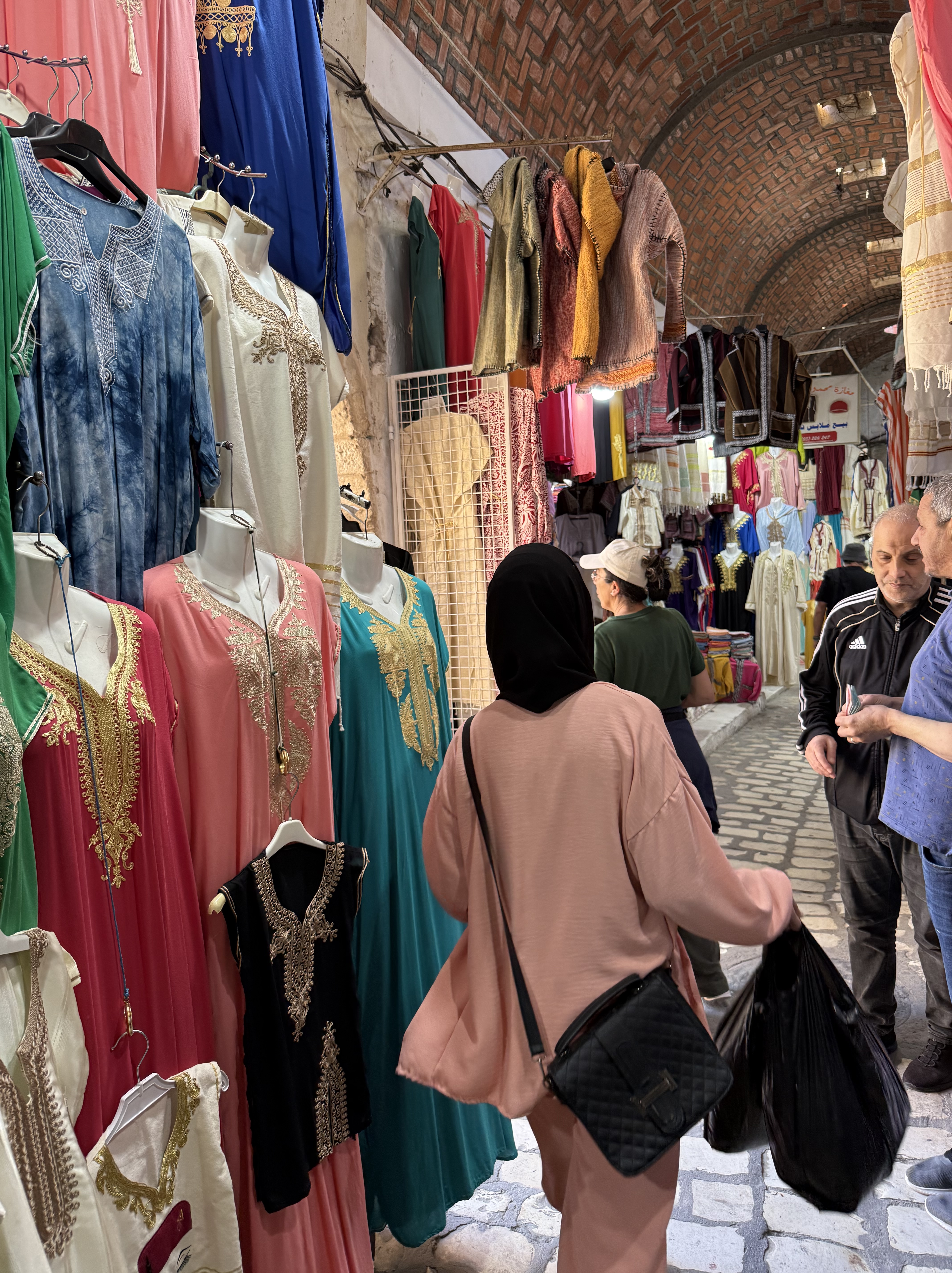
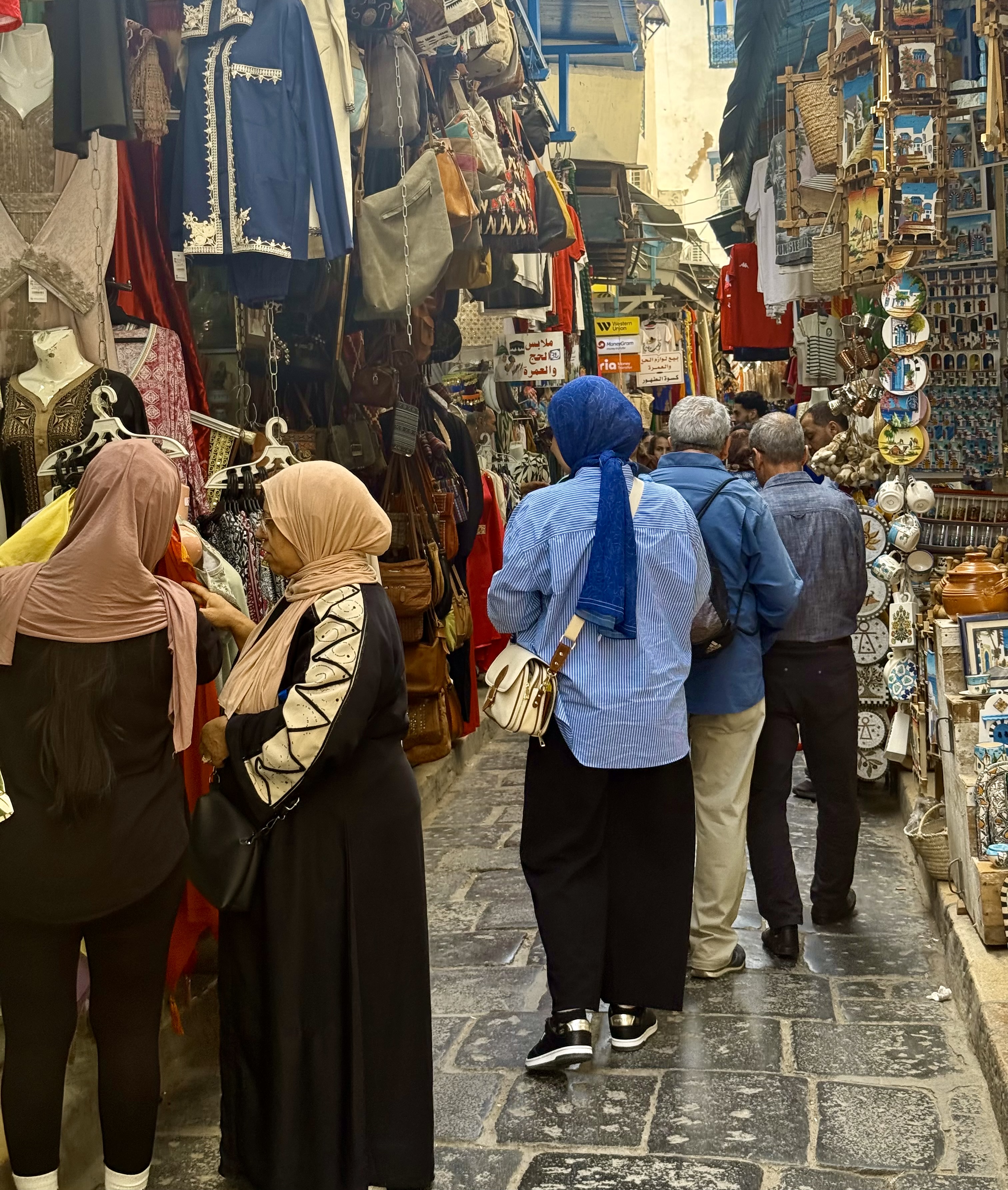
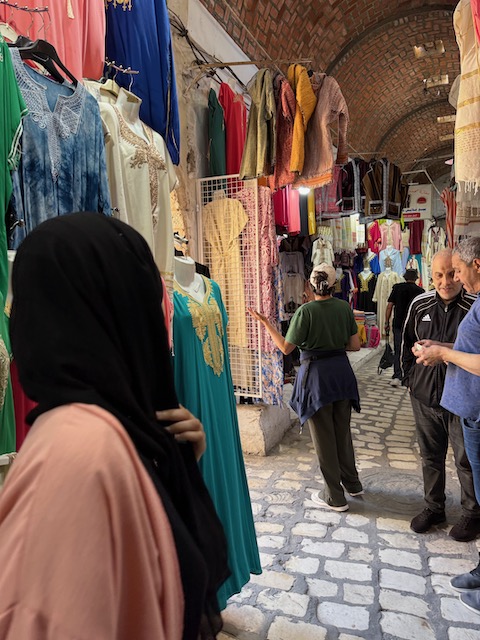
Souks, sinuous alleys with all kinds of merchandise, are endemic to Tunisia.
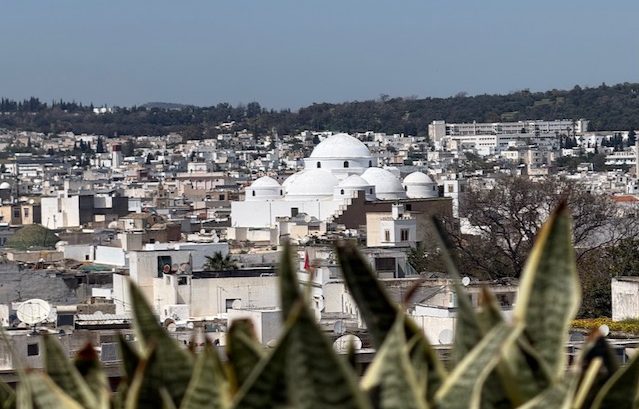
As the plane from Nice descended to Tunis, not much to see from the window except white buildings everywhere. Later from a roof top restaurant, more of the same. Somehow it seems spooky, but it’s the traditional architectural style and helps reflect the Mediterranean sun to keep interiors cool.
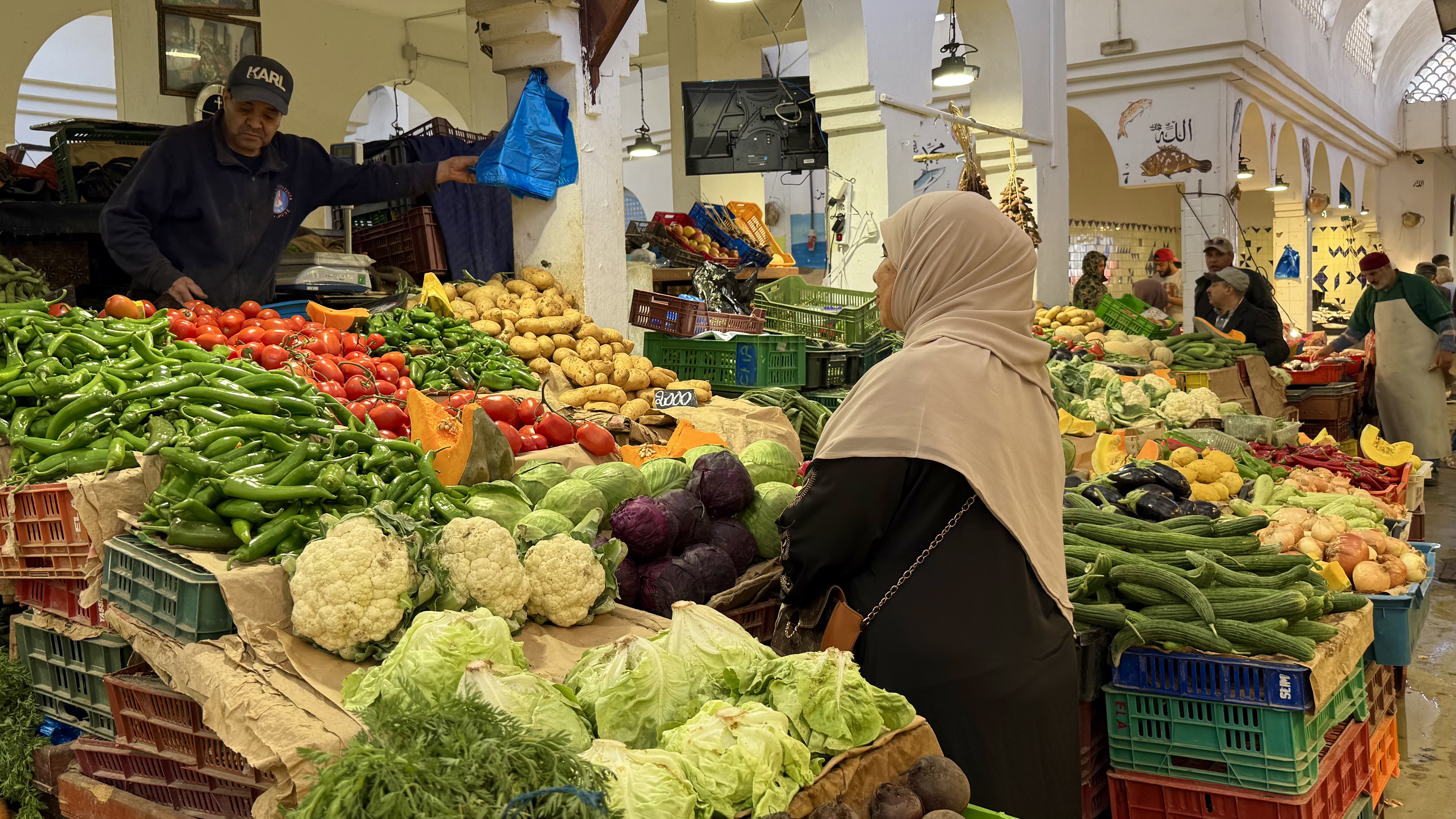
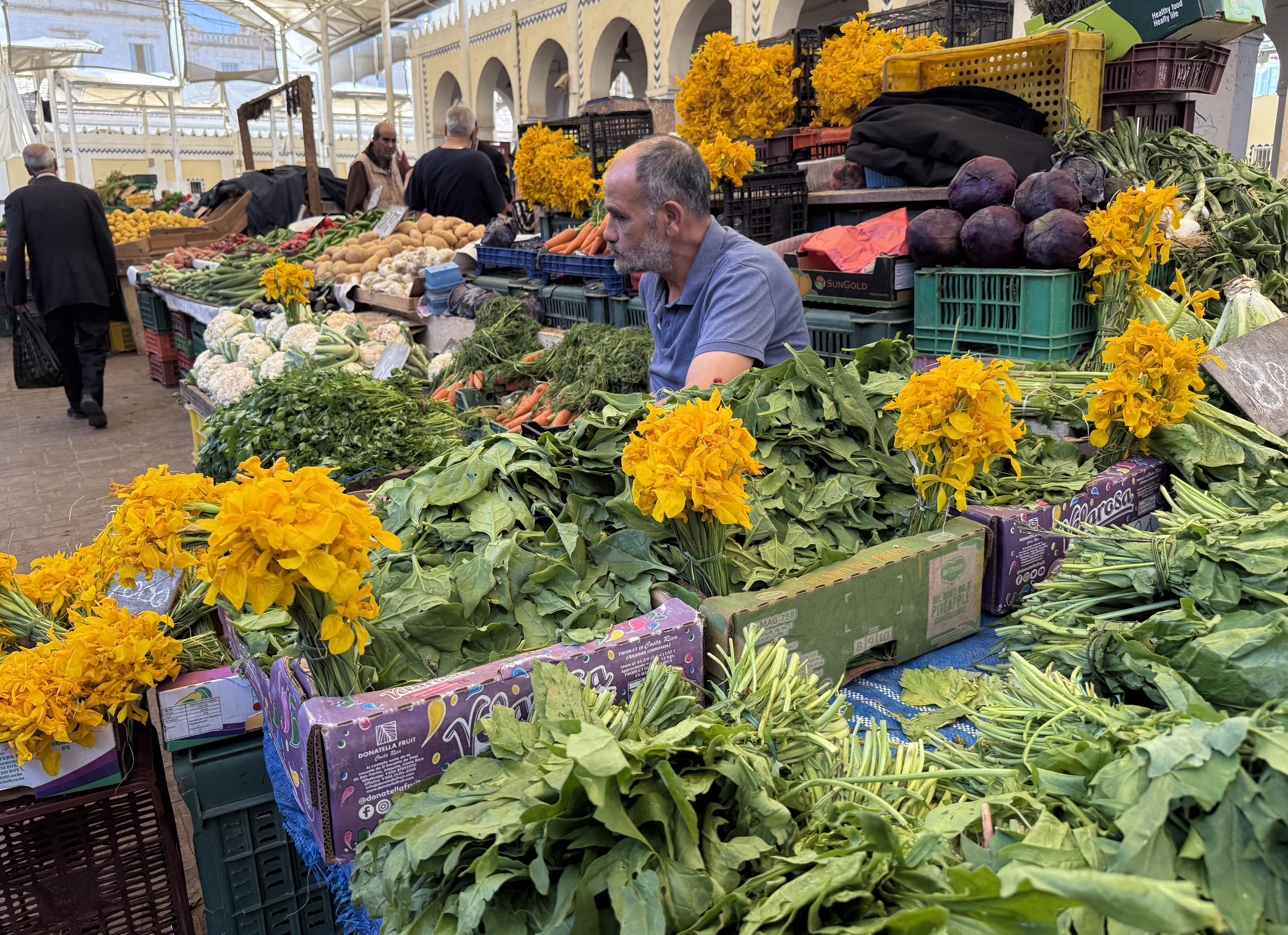
Plenty of color at the indoor market in Tunis.
People — their customs, way of life, beliefs — fascinate me most about travel. Tunisia is an Islamic country, mainly Sunni, but as driver Faouzi pointed out, “We have mosques, we have bars, we have discos.”
Tunisia is the birthplace of the Arab Spring in 2010. Protests led to the fall of the then president and his harsh regime, inspiring similar movements in the Arab world. Today however many Tunisians are more than disappointed. There are serious economic problems and unemployment. Corruption is rampant. Many young Tunisians want to leave the country for a better life in Europe.
As to religion, to each his or her own. It seemed to me that about 50% of the women cover their heads with the hijab. Guide Mondher maintains there is nothing in the Koran about the hijab. The Islamic belief is that the Koran was revealed to Mohammad over about 23 years. However, throughout `many years different scholars and traditions have developed different interpretations. His wife wears the hijab, his 20-something daughter does not. Both he and Faouzi are practicing Muslims. Neither drink alcohol.
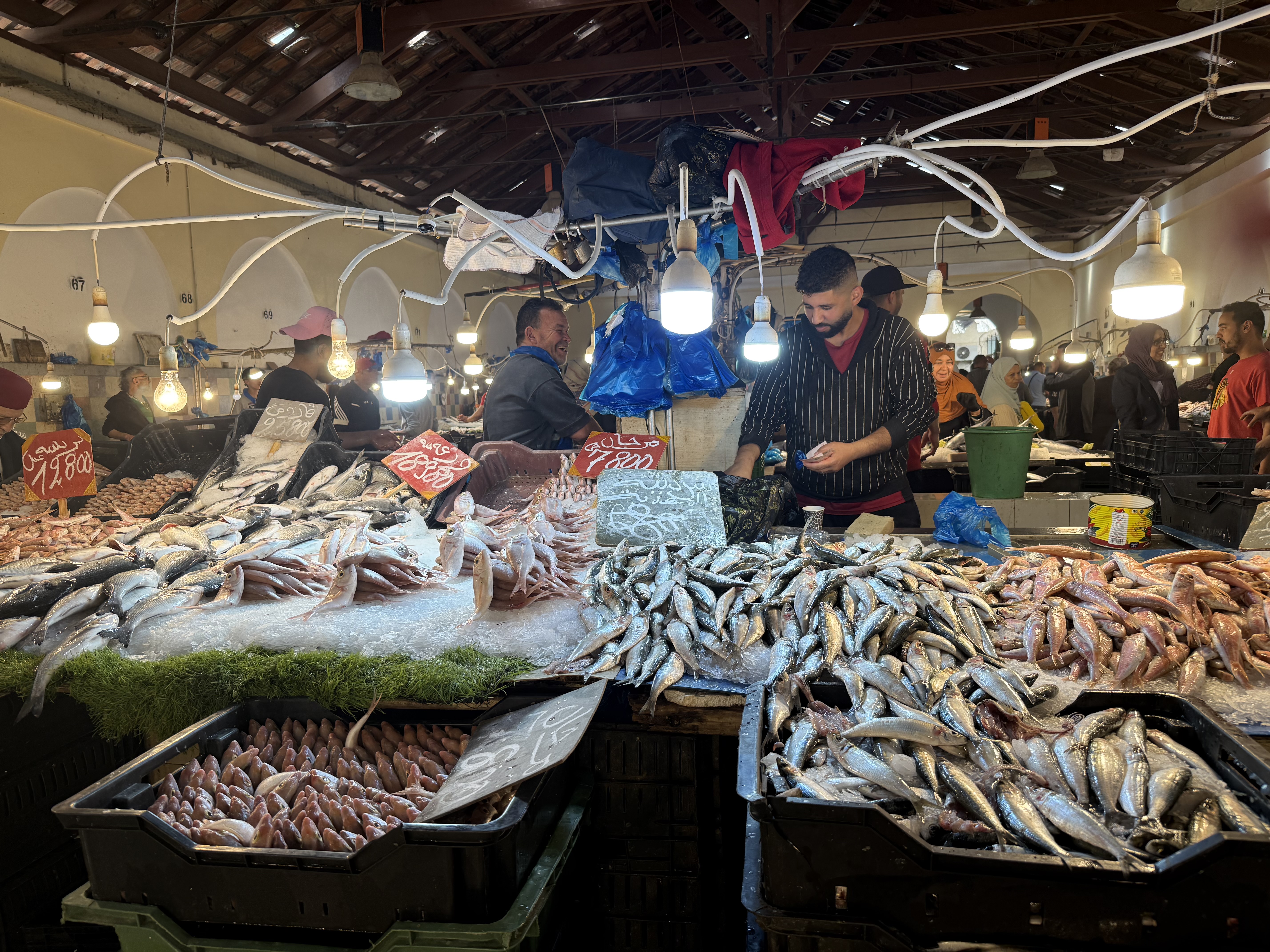
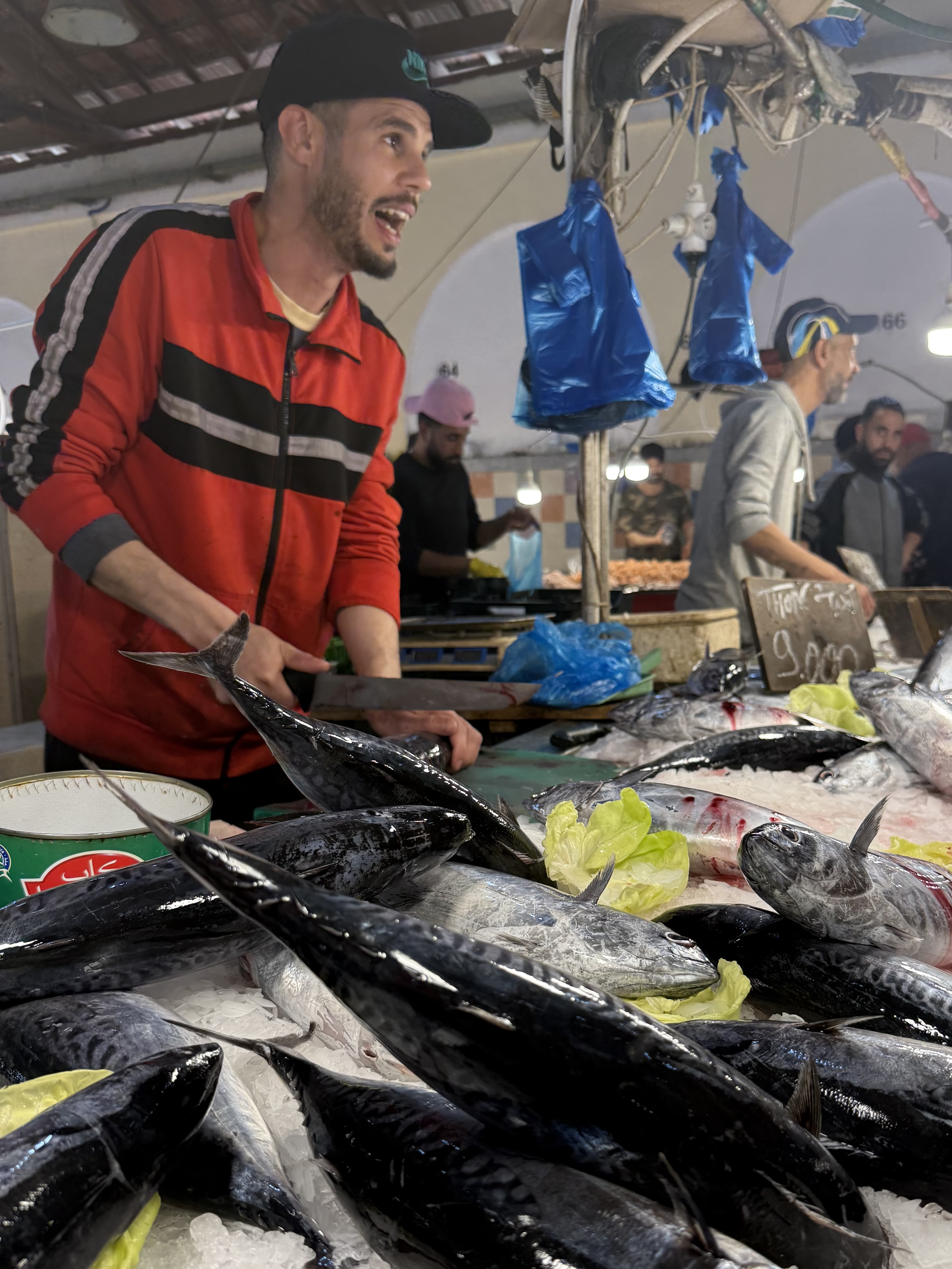
As a foodie, markets are a favorite for me. The fish market in Tunis is like no other, a giant party. Vendors shout, laugh, even sing -definitely a happy place. I was mesmerized and took far too many fish photos.
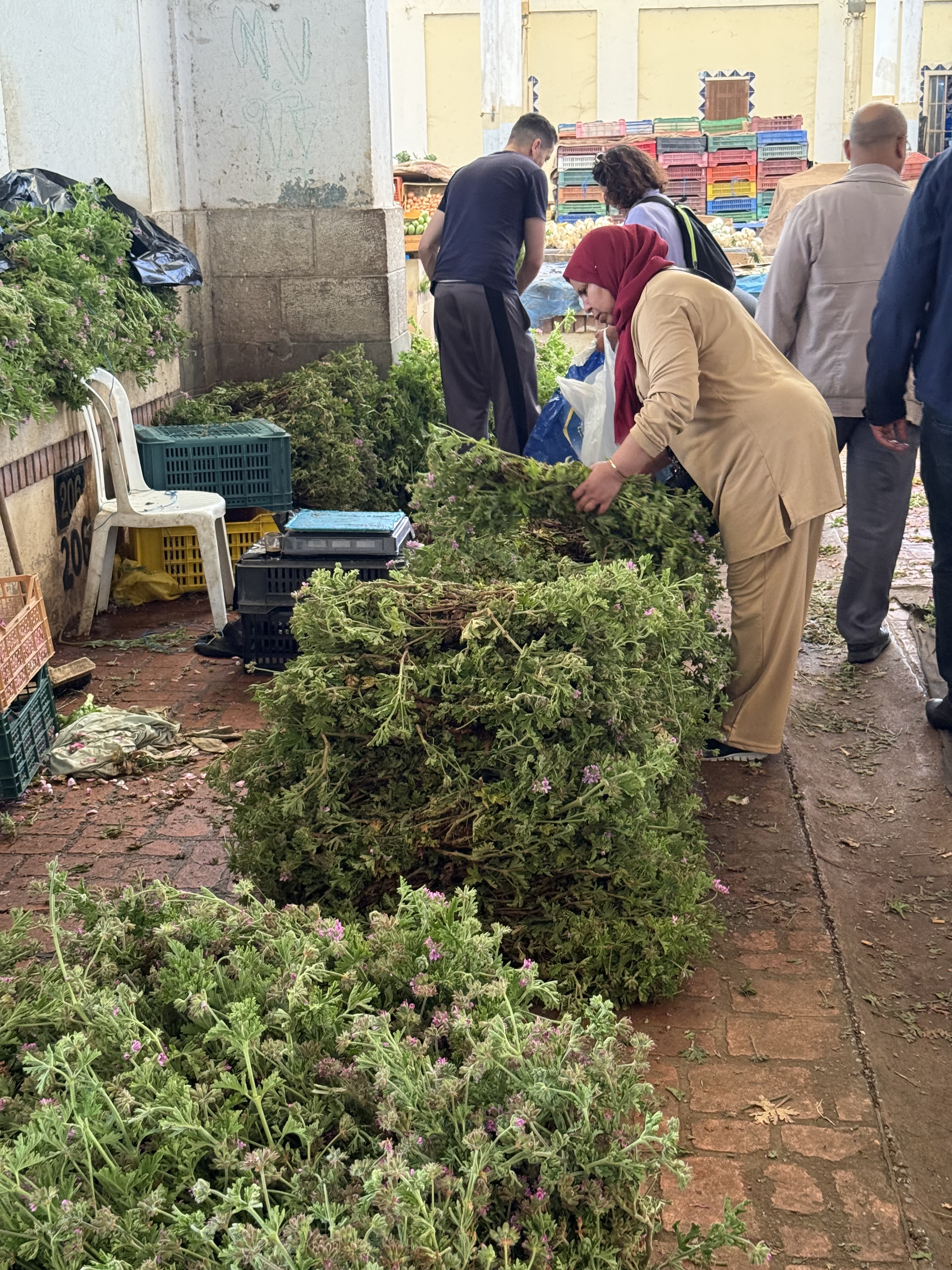
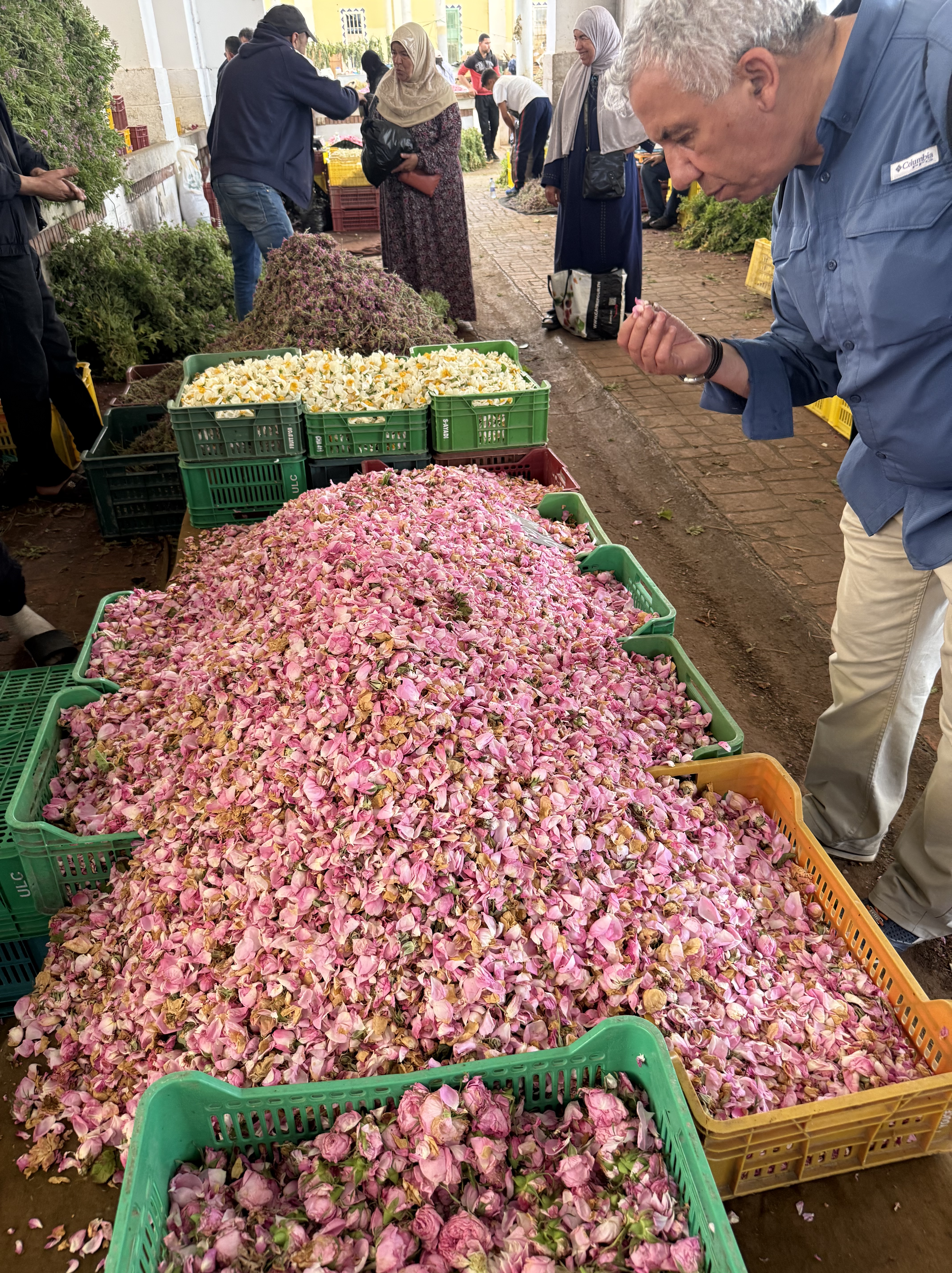
I did not want to leave the fun, uplifting ambience amidst the fish, but a guide steered me to another market section: flowers, but not bouquets for your loved one. Flowers for flower water, a must in every Tunisian household.
Most families have a large, complicated looking filter contraption in their home. The “machine” boils the petals. Filtered flower water, essential for Tunisian pastries and more, drips out. (More on flower water in a future post on Tunisian food and a pastry making session.)
Selecting flowers and petals for flower water
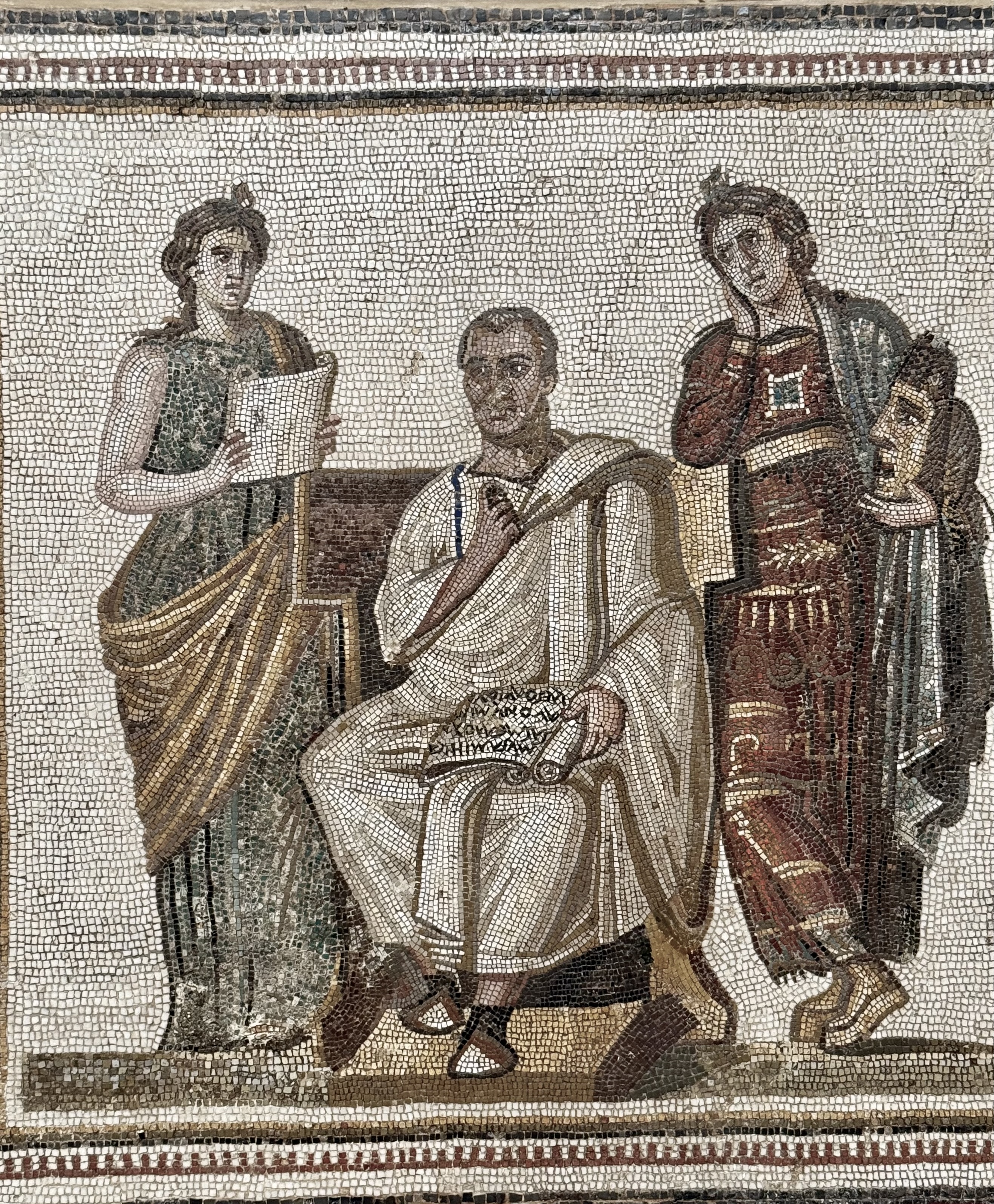
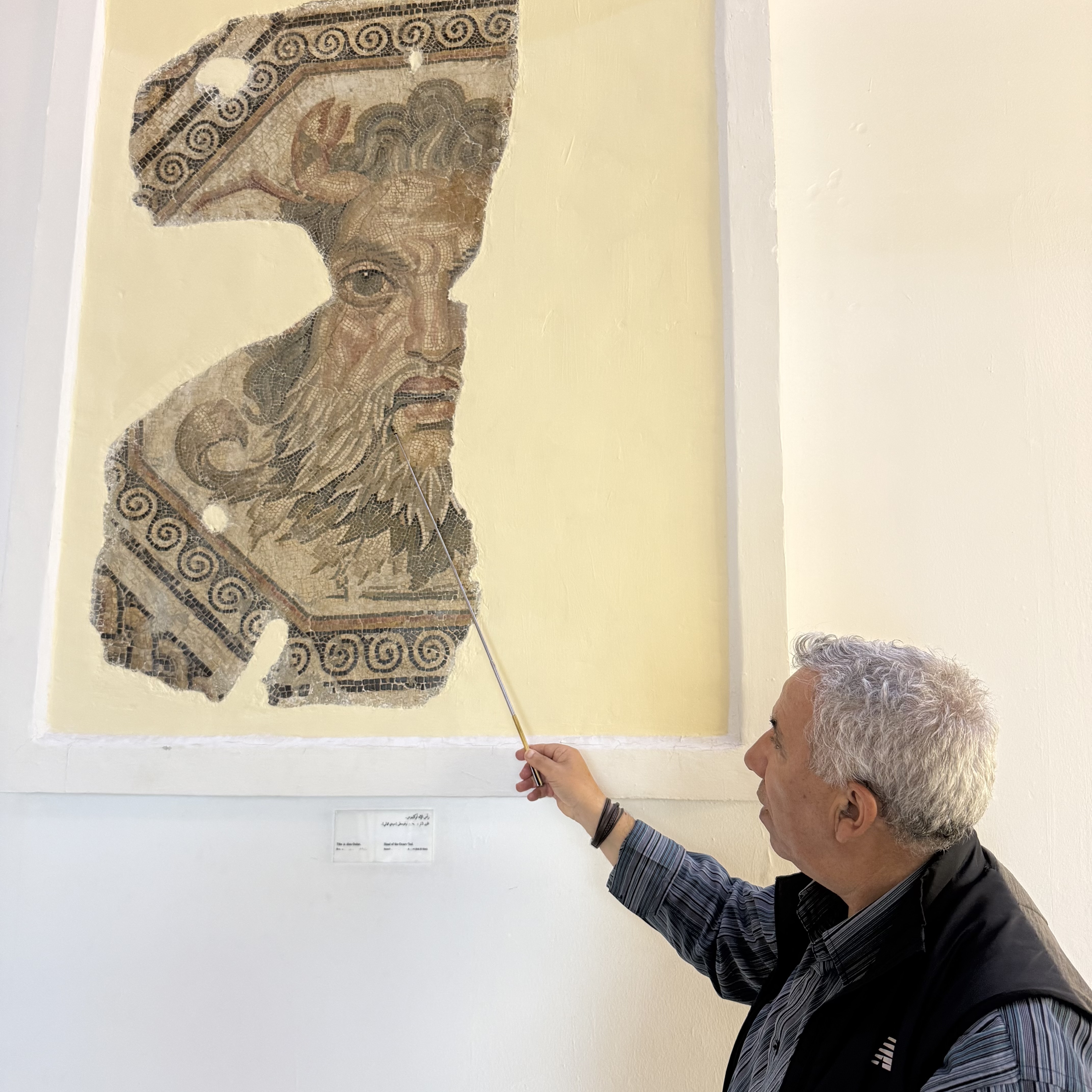
Ancient Roman mosaics are a major Tunisian attraction, thousands displayed in museums. I saw small parts of vast collections at the Bardo museum in Tunis and the archaeological museum in Sousse. Many are in excellent condition, despite being 2,000 years old. At the time, North Africa was part of the Roman Empire, but the artists who made the mosaics were Africans, not Romans, a proud Tunisian pointed out. The mosaics were buried under sand which preserved them. Best visit with a guide who will lead you to the best and provide fascinating explanations.
400 ancient mosaics are displayed in the Bardo Museum in Tunis.
Due to an unexpected hospital stay (see previous post, The Trip that Almost Wasn’t) my travel itinerary was altered. Instead of heading south, I stayed in the north. Towns visited: Tunis, Carthage, Sidi Bou Said, Sousse, Kairouan, Hammamet, Nabeul – all lively and thriving. Less thriving are some of the dusty country villages.
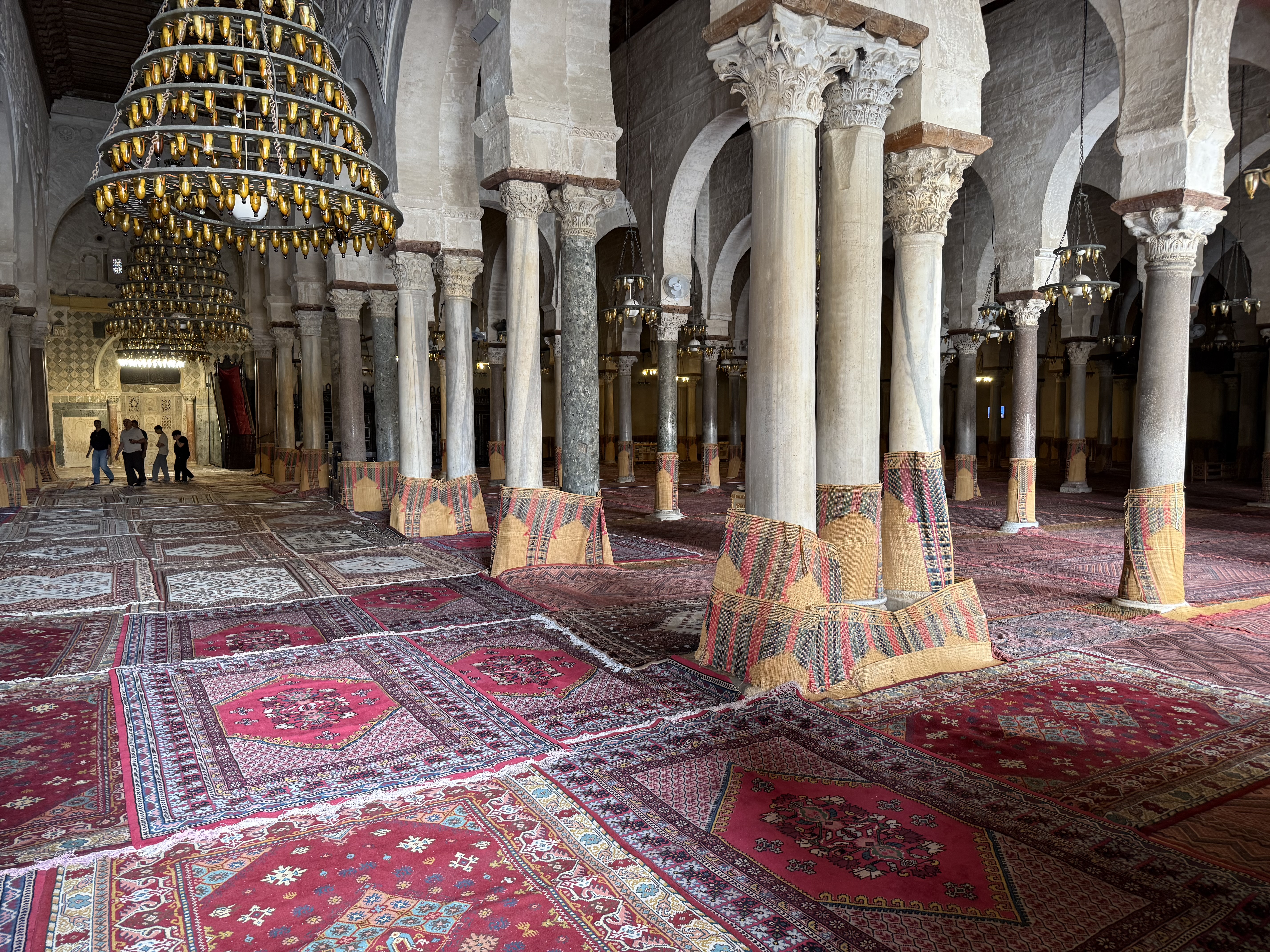
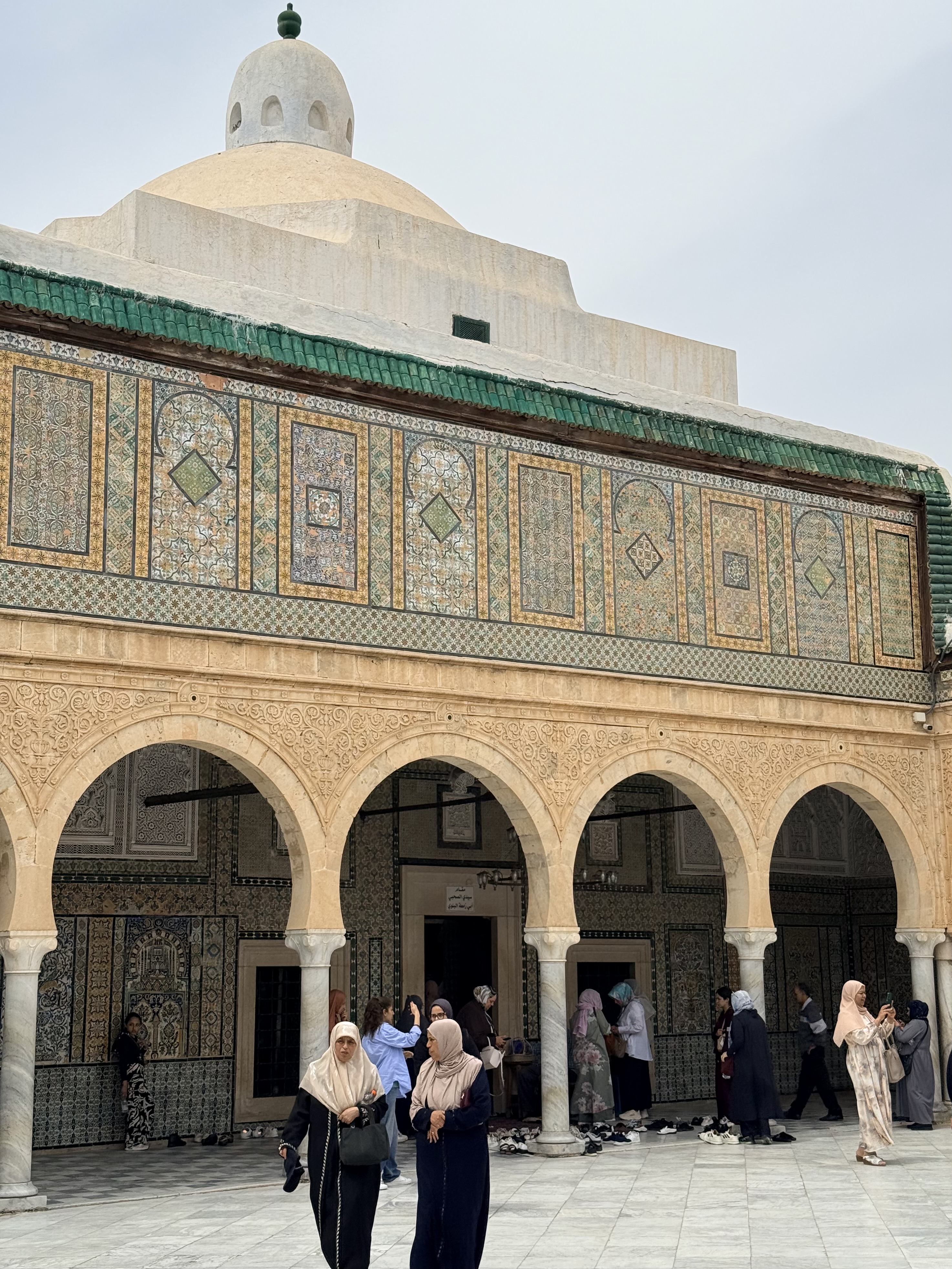
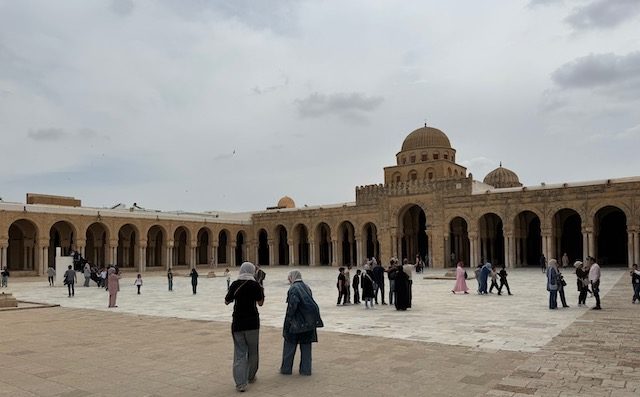
Only Muslims can enter mosques, but at the Grand Mosque in Kairouan, a guard happily takes visitors cell phones for indoor photos from the entrance. You can also peek through bars covering windows of this major Islamic monument whose origins date to the 9th century.
Interior of Grand Mosque with handmade prayer rugs
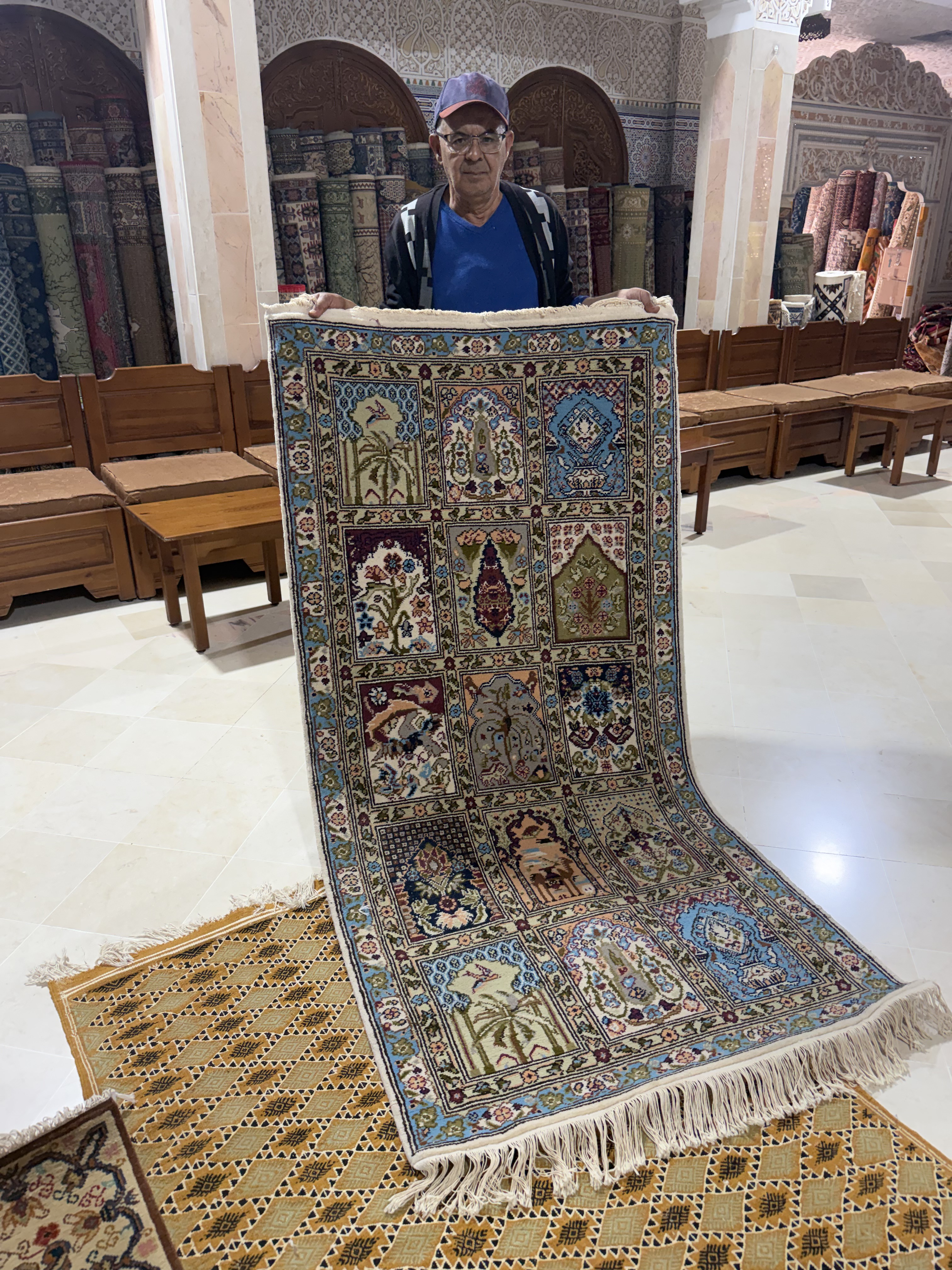
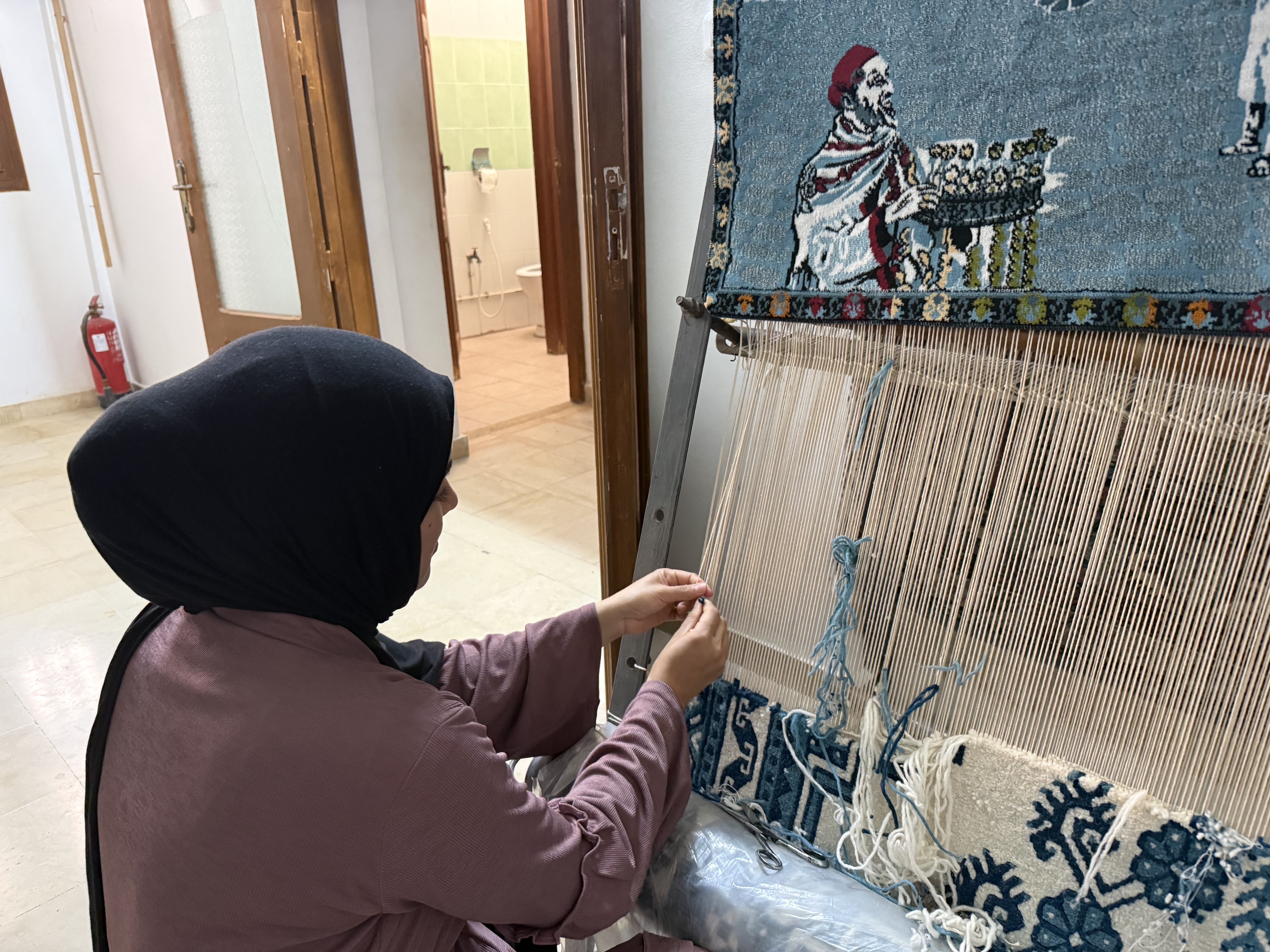
The interior is enormous, covered with carpets, beautiful handmade carpets for which the town is famous. I visited a carpet shop and learned that even today women make the rugs at home and offer them to the mosque. And, sell them to shops where they are a hot item for tourists.
Carpet making is tedious, hand tying thousands of knots and can take many months for one carpet. Cost for a 7’by 5′ carpet from 9,000 euros.
Roads around major Tunisian cities are impressive — in many places five lanes in each direction. Country drives lead through vast areas of green hills and past fields and fields of olive trees, much smaller and younger than the olive trees around me in southern France. Mondher said Tunisian olive oil is renowned and great quantities are exported to Spain where it is sold as Spanish olive oil. Fact or fiction?
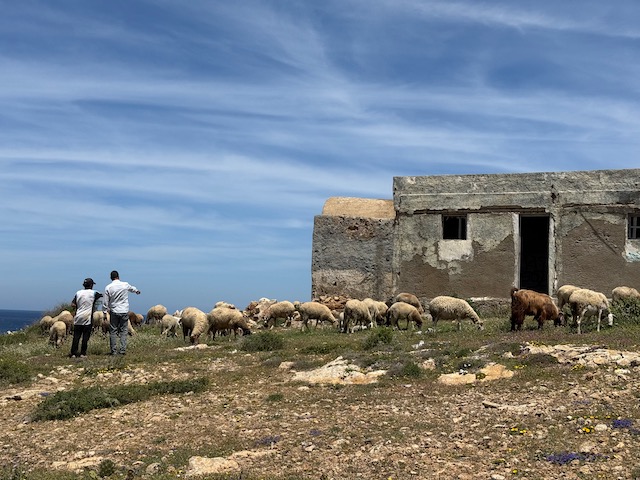
Where were all the sheep? Tunisians eat lots of lamb, but I had not seen the animals – until I was on a drive around Cap Bon and the northern tip of the country. Voilà- a shepherd and his flock on hillside. We stopped. Mondher got out and had a lengthy conversation with the shepherd, inspecting the beasts.
Eid-al-Adha, the Festival of Sacrifice, was approaching. It commemorates the prophet Ibrahim about to sacrifice his son to God, until God intervenes and substitutes a ram. Muslims in Tunisia celebrate the feast and many slaughter a lamb/sheep on that day.
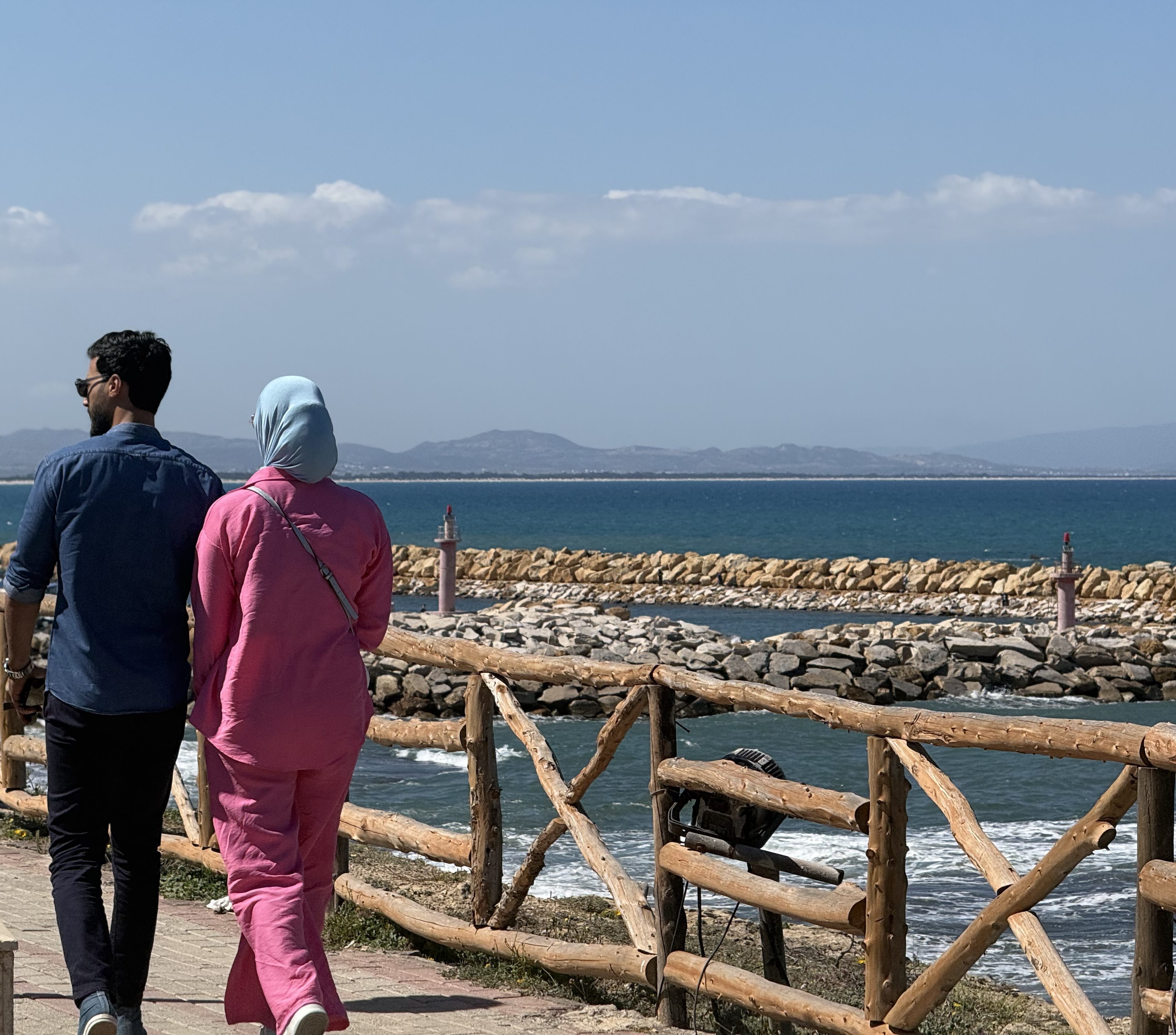
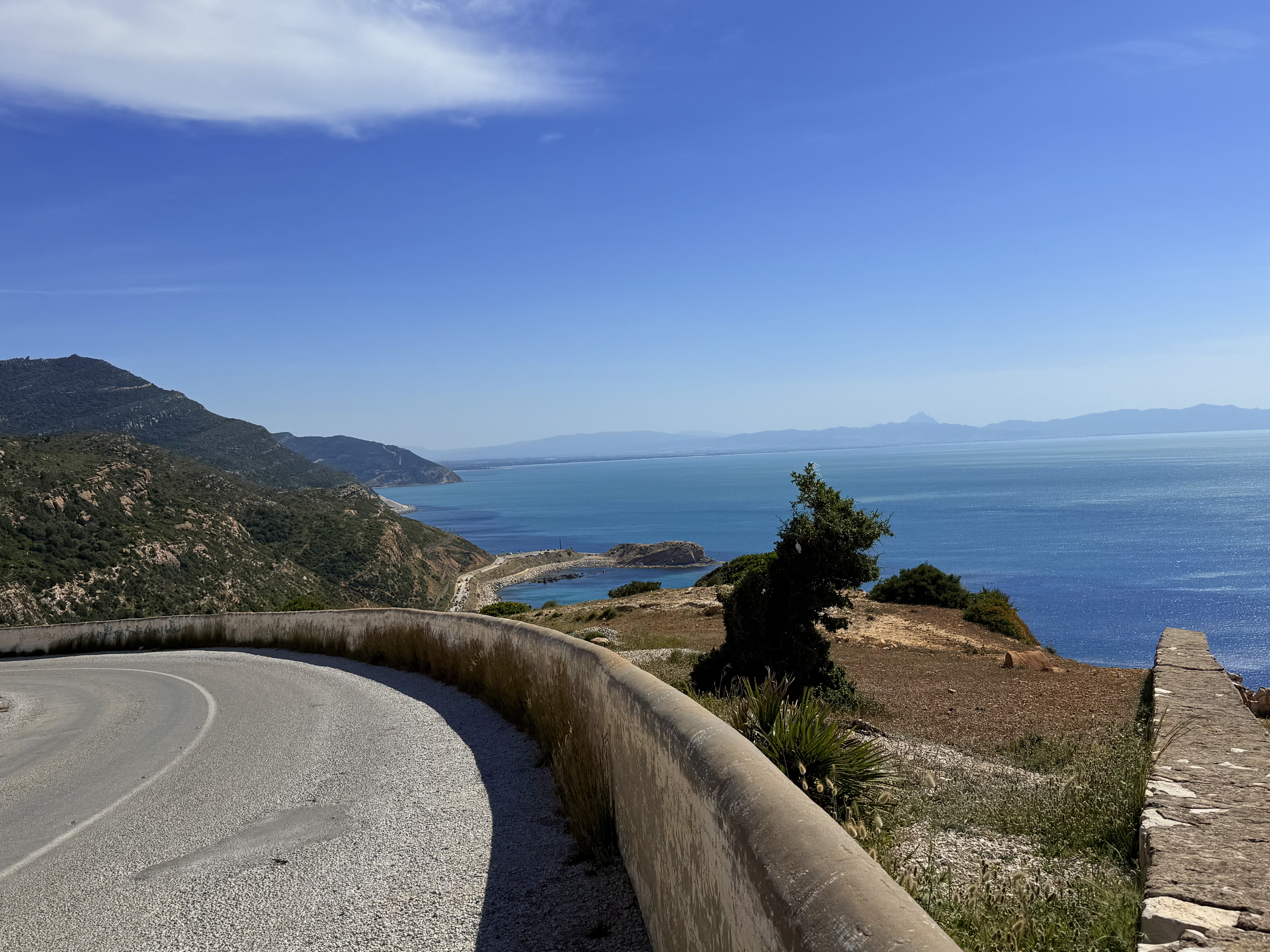
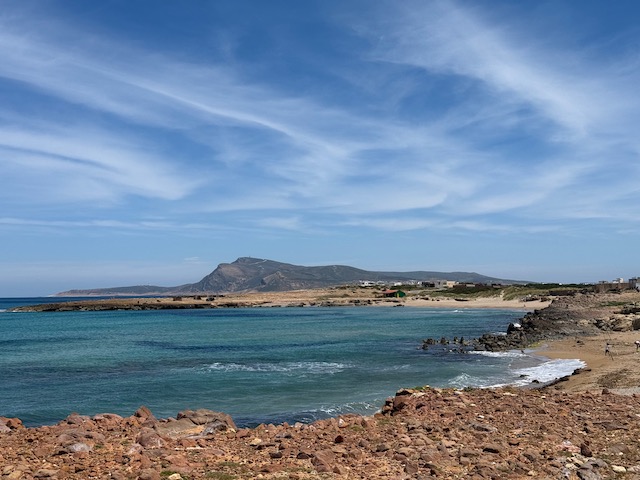
Cap Bon, Tunisia’s northern coast, just 140-160 kilometers from Sicily.
Mondher, who intended to kill a lamb on the holy day, reported that these sheep were too expensive (Fortunately – we did not have to take one home), but the meat would be “good quality.” Too gruesome for me — and driver Faouzi who said he had never killed a sheep, and never would.
On another drive we stopped at a special butcher so Faouzi could buy camel meat, not, however, for the above feast. He says it’s much less expensive than lamb, but good for a family couscous.
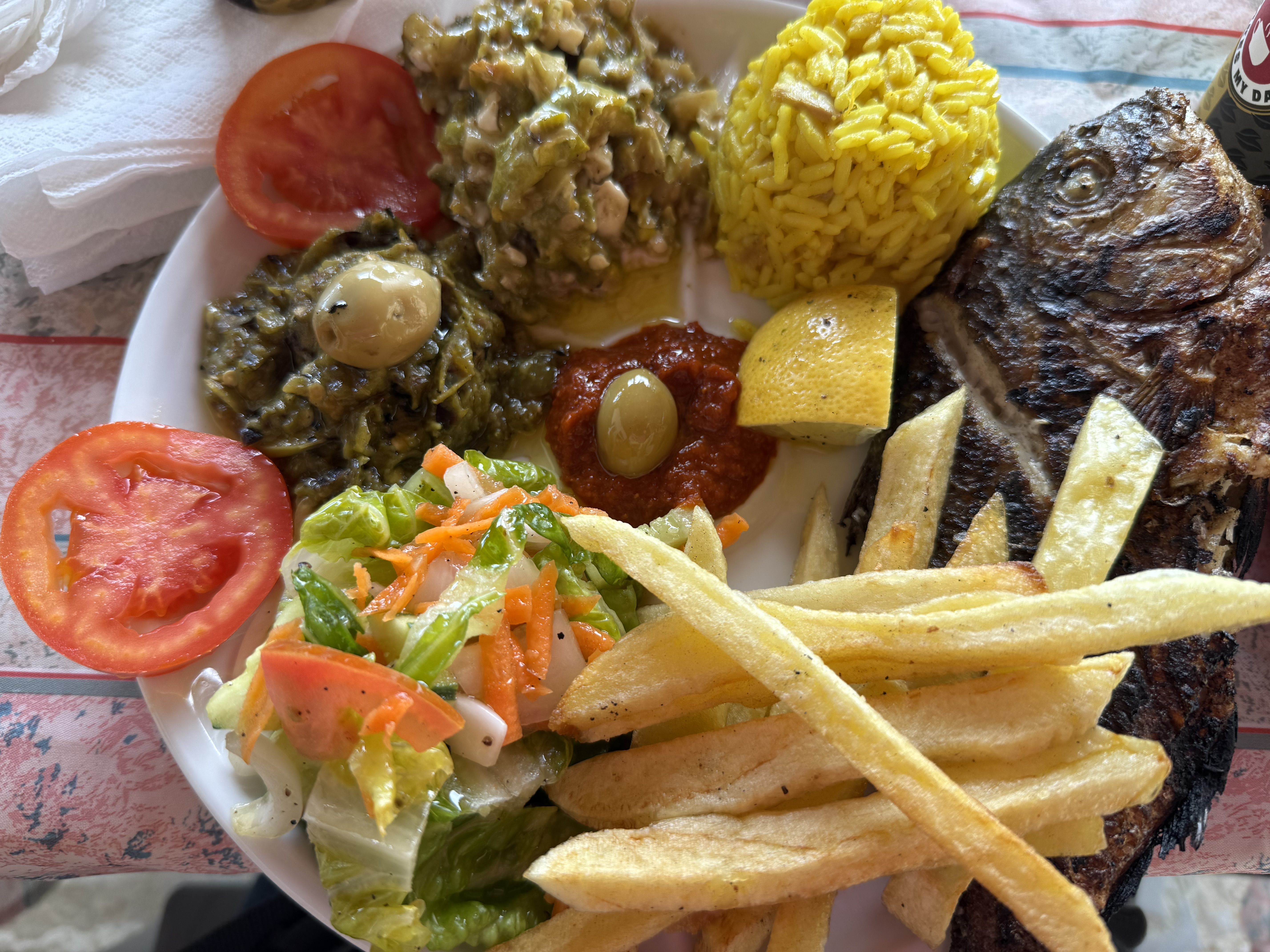
I found restaurant meals reasonable. Grilled fish, fries and more — all for about 9 euros or $1020.
Tunisians spend from 25-35% of their wages on food. Sample costs for meat:
Beef: 45 Tunisian dinar (TND) per kilo (13,5 euros or $15,30).
Lamb: 55-60 TND per kilo ( 16,5 euros or $20.40)
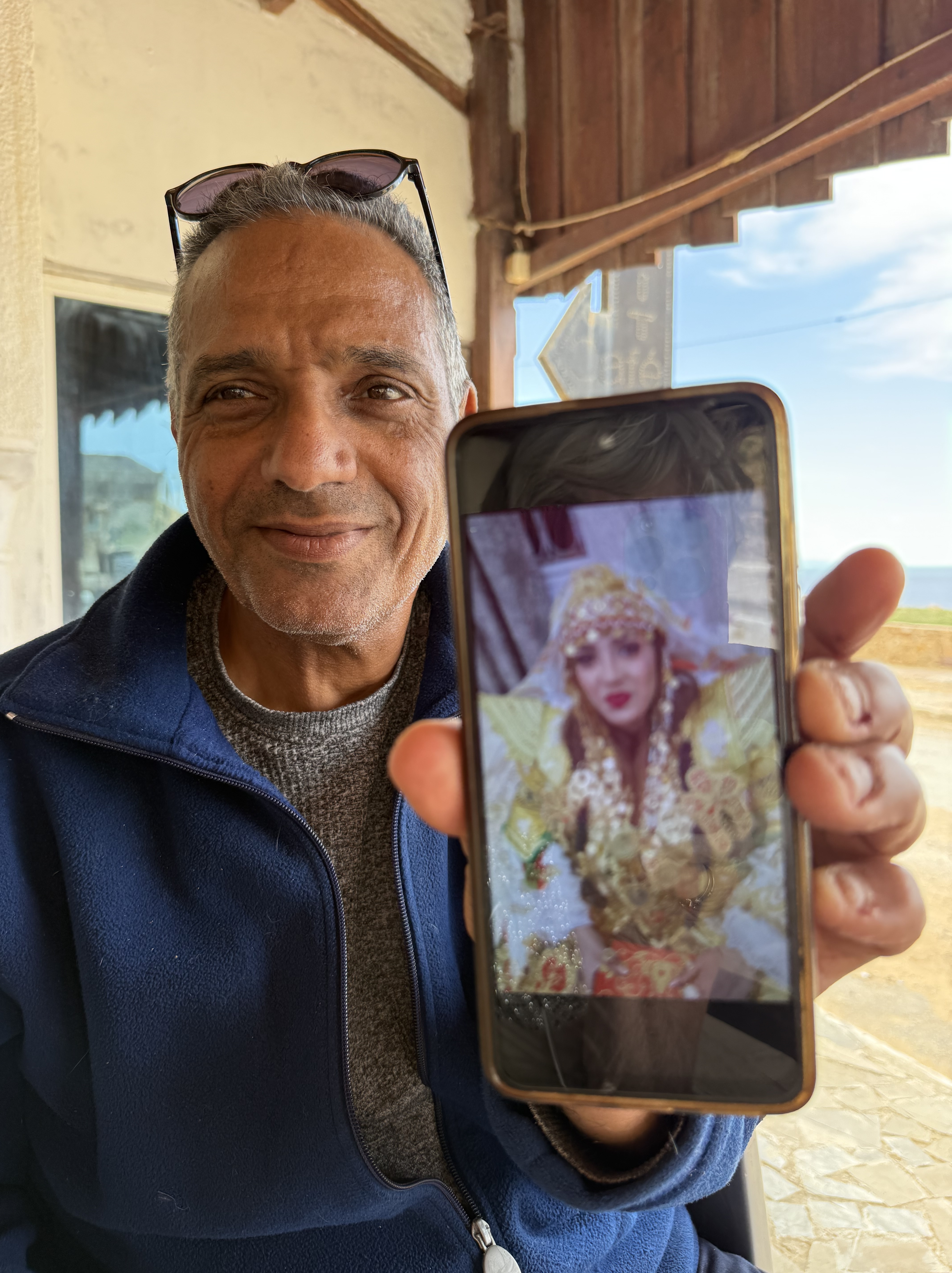
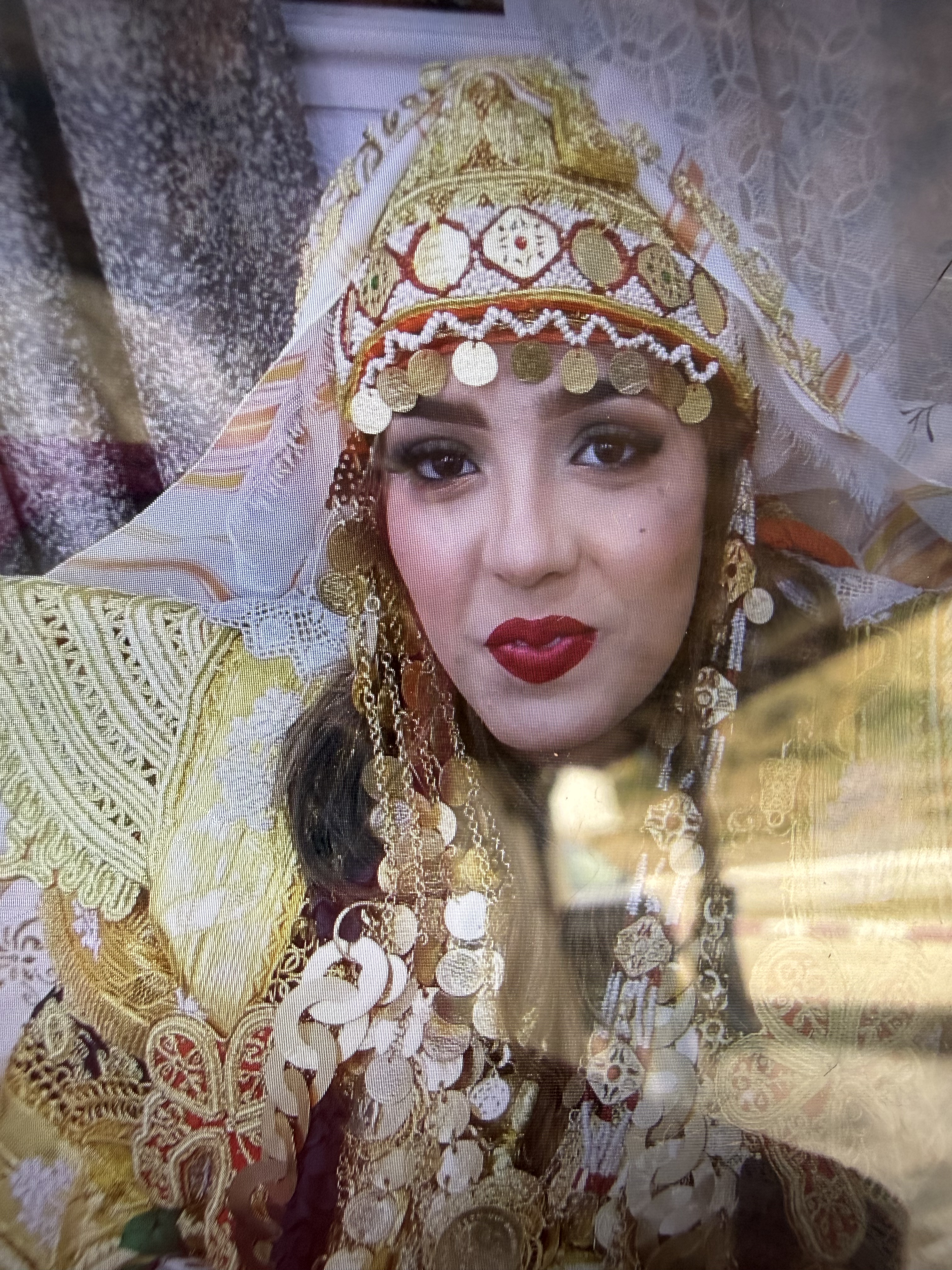
Faouzi proudly shows his daughter’s wedding picture. Tunisian weddings are multi-day events with hundreds of guests.
I am in awe of Tunisia. In Shallah, I will return to discover what I missed in the south. Scroll down for more photos .
Tunisian food (fabulous ) coming soon. If not a Tales and Travel follower, please sign up here. Trust me. It’s safe. Your address iskept private.
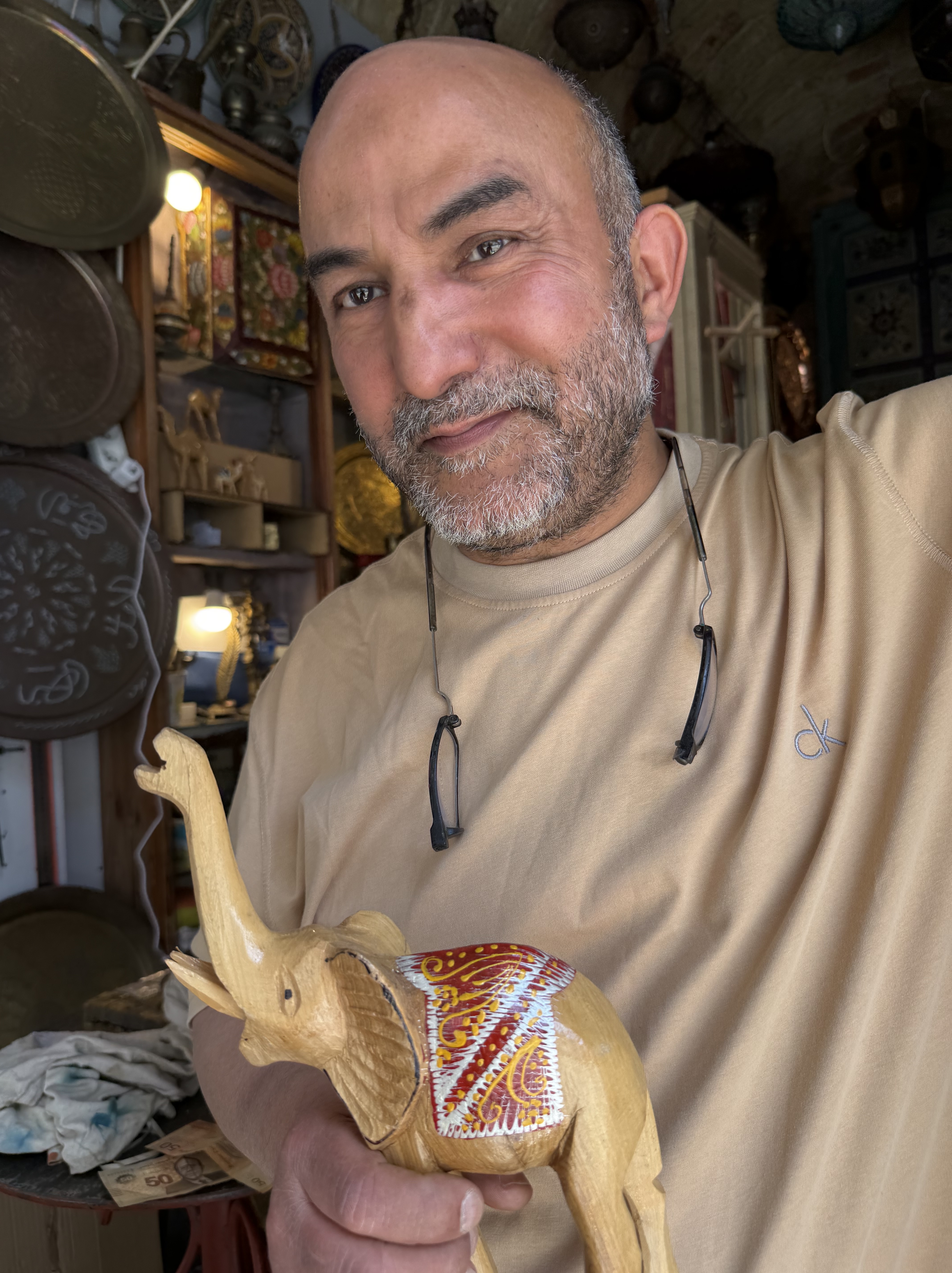
My Tunisian souvenir: Hannibal the elephant His namesake, Hannibal the legendary warrior from Carthage, led his army and elephants from Phoenicia across Spain and France, over the Alps to attack Rome, 218 BC. There are no elephants in Tunisia today.
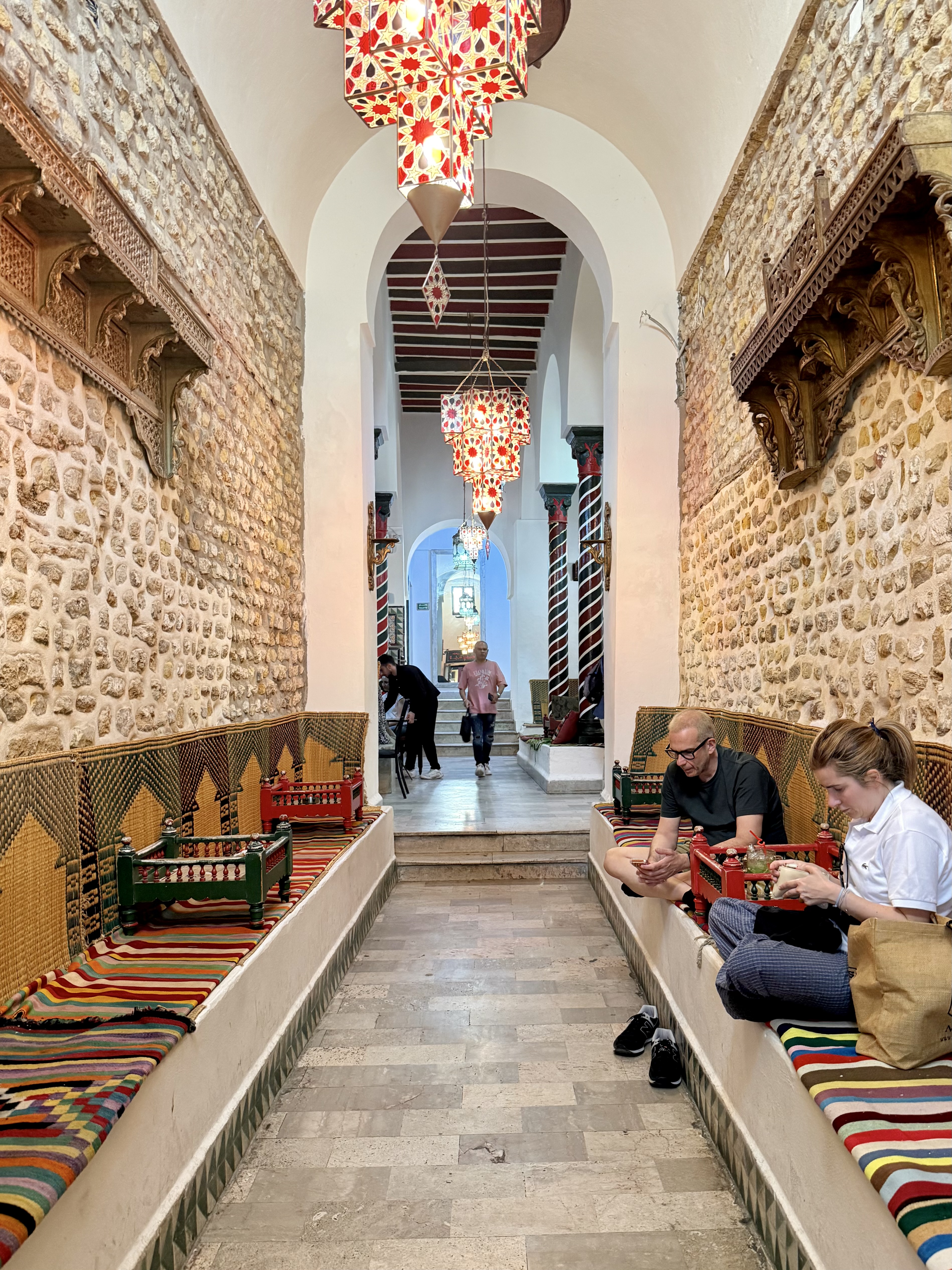
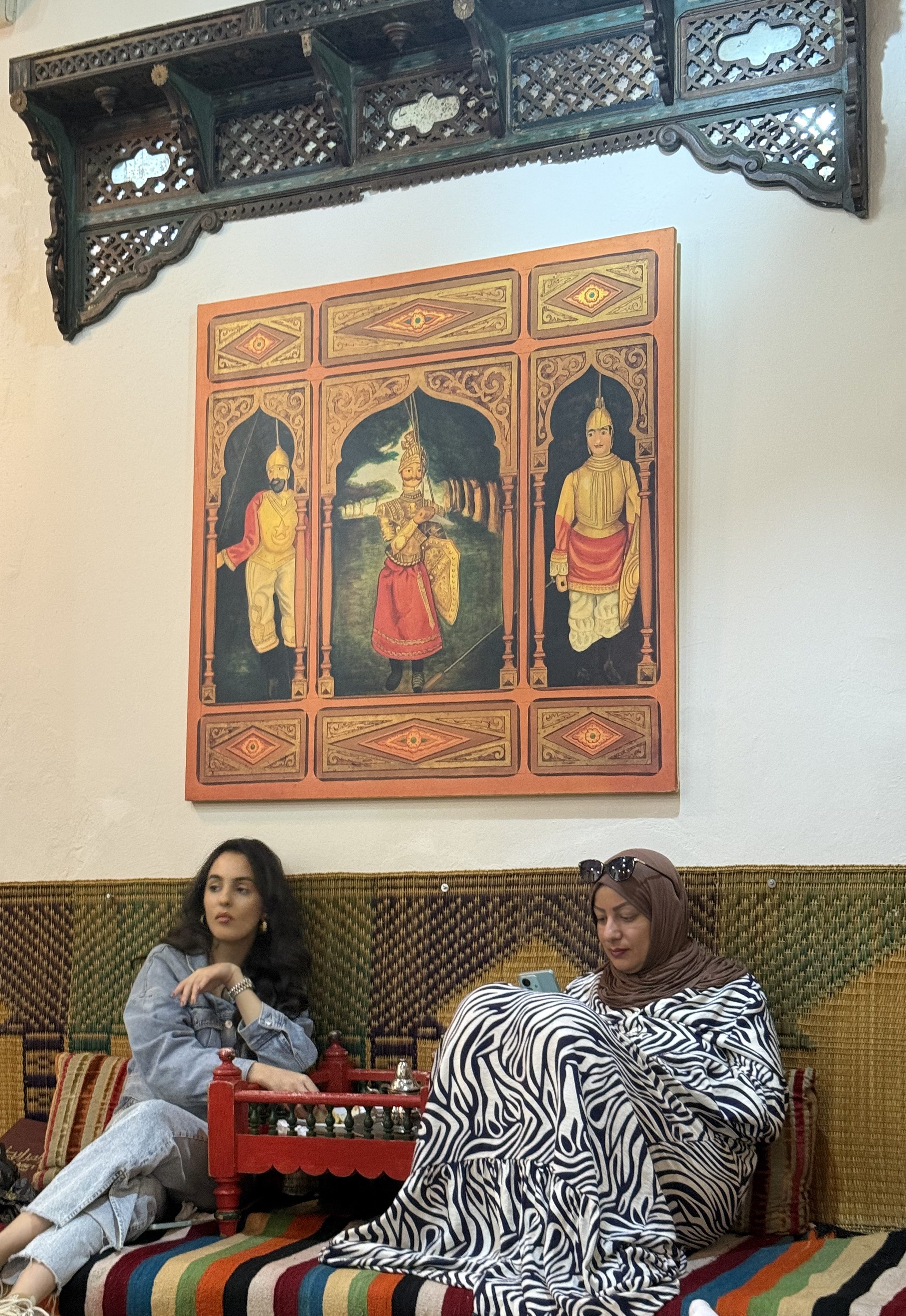
Many Tunisian cafes are ideal for hanging out, relaxing.
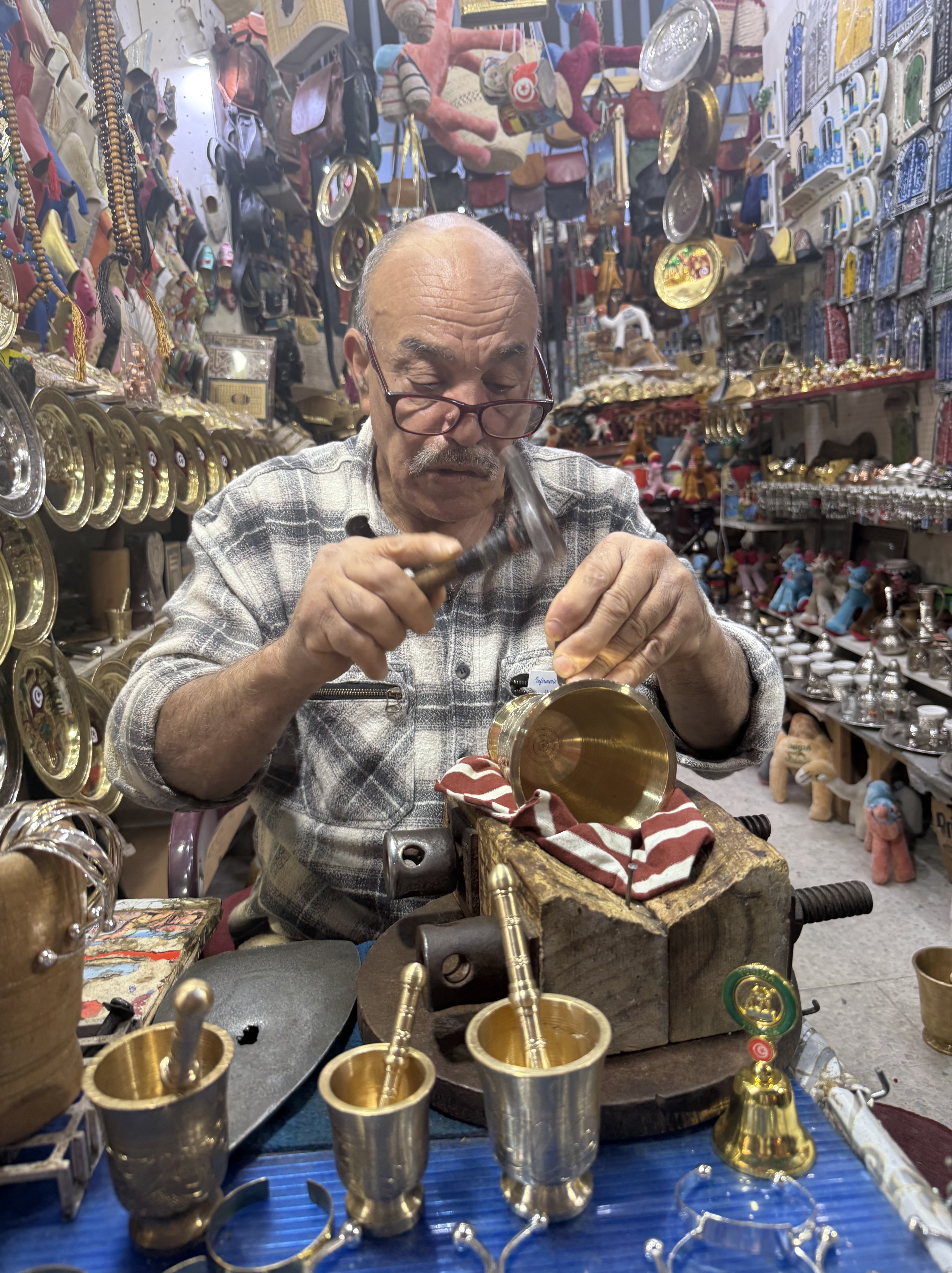
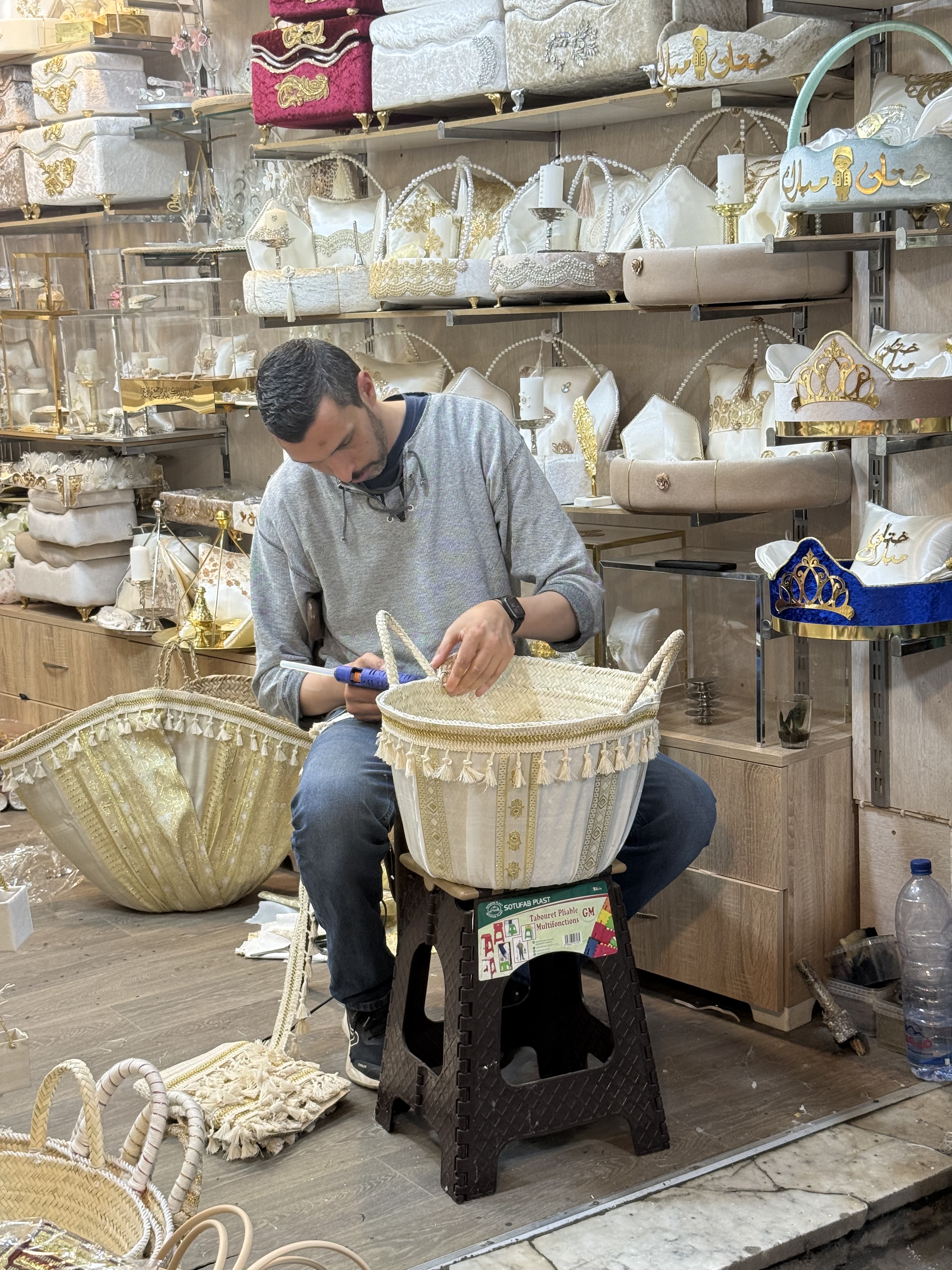
Craftsmen at work in the souks
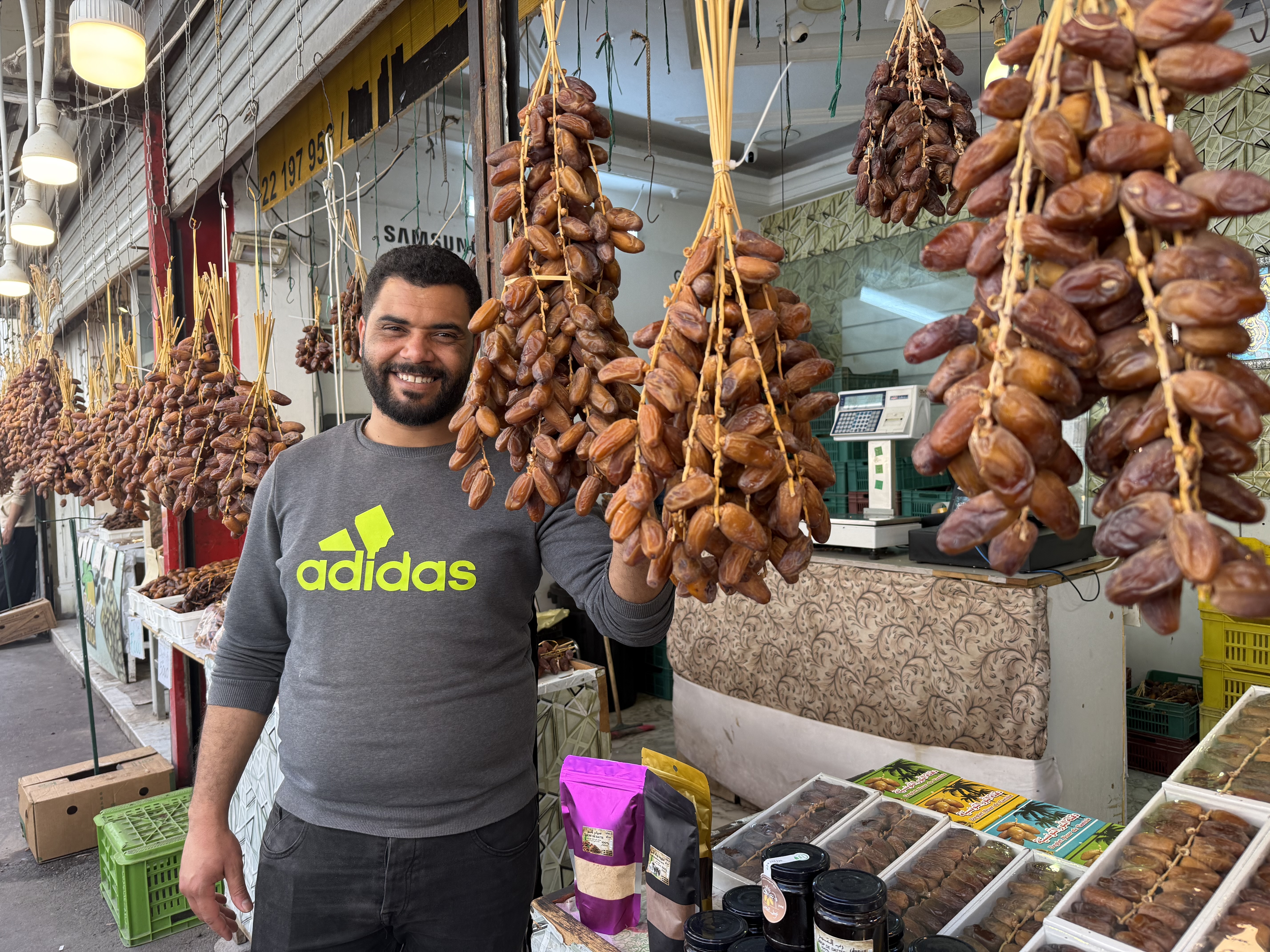
Dates anyone?
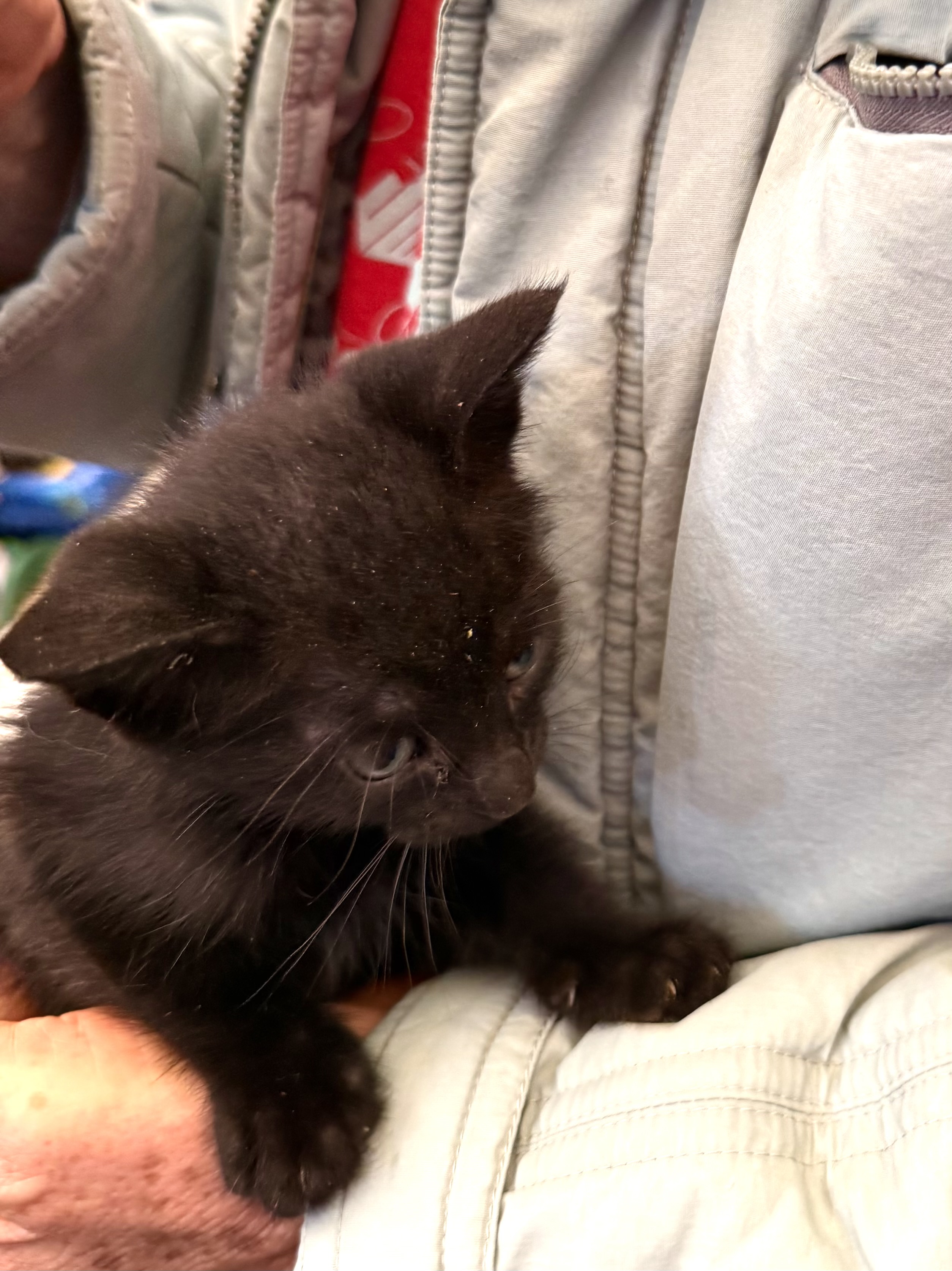
Tunisian felines. They are everywhere. I wanted to adopt them all.
“Tunisia – it’s wonderful, and so close,” they advised. “You should go.”
Why not? I had never been, and the flight from Nice (my airport) is just 1 ½ hours in duration.
I booked a 10-day “discovery” trip. I discovered more than I wanted.
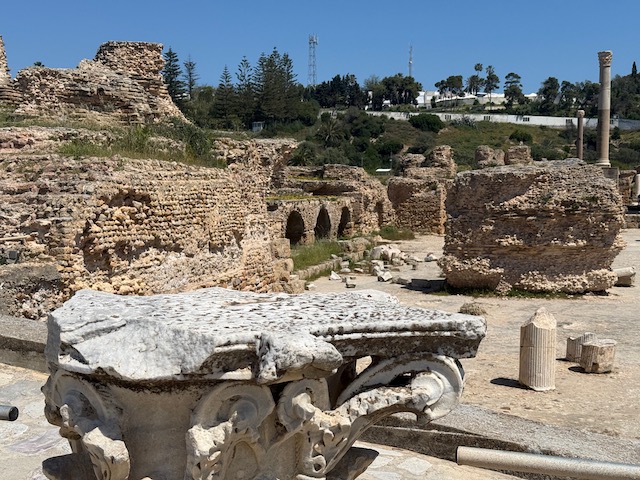
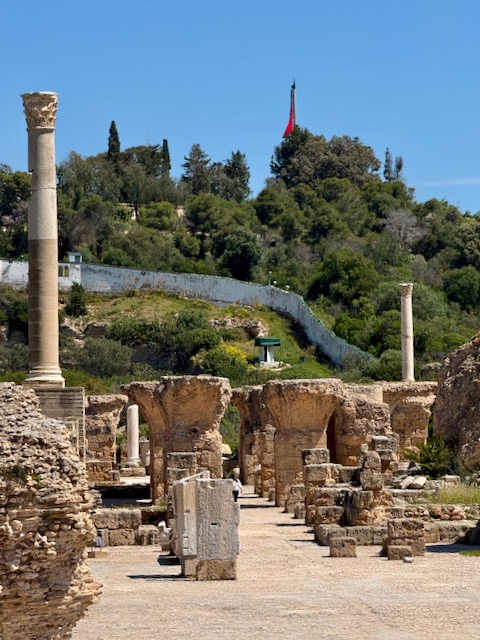
Ruins at Carthage, ancient site founded by Phoenician settlers in the 9th century BC, later destroyed and rebuilt by Romans.
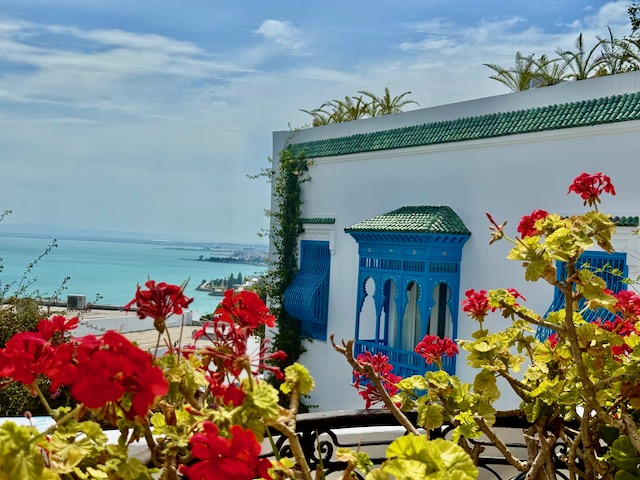
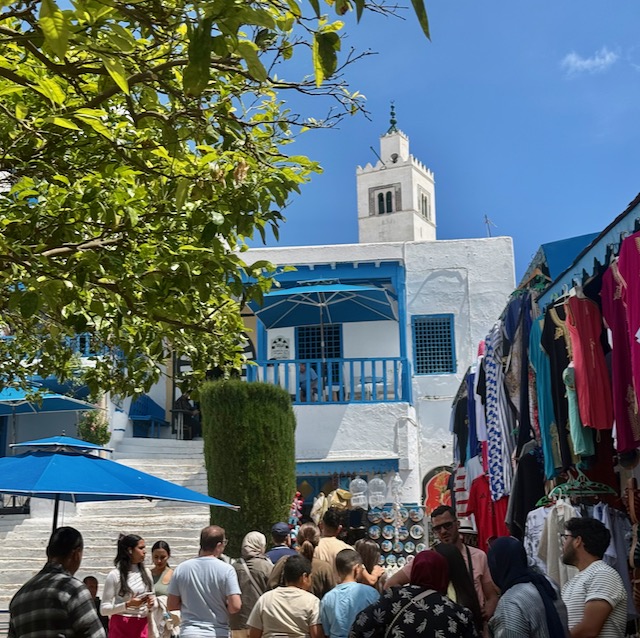
Day # 1, Highlights of Carthage, the ancient archeological site dating back to 900 BC, and an all-too-quick visit to Sidi Bou Said, the picturesque blue-and-white town.
Sidi Bou Said
Days #2 and 3, HOSPITAL. I had not booked a tour of Tunisian medical facilities. This was not on the itinerary. But I had terrible stomach pains during the night. By morning I knew I was not fit for sightseeing. I asked the hotel to call a doctor.
An affable doctor who spoke perfect English arrived in record time. He told me his name in English means “falling star.” Appropriate. I felt my star had plunged.
I related my history of intestinal problems, including previous surgery. Dr. Falling Star whisked me off to his clinic, then had a charming assistant accompany me to a lab for a blood test, and on to another facility for X-ray and echography. Doctors, lab assistants, technicians, secretaries, drivers – all were so kind, considerate, understanding.
Verdict: An intestinal obstruction. I was devastated. My fabulous trip down the drain and yet another surgery. I assumed I could return to France for treatment, but was told it would be too dangerous to fly. ???
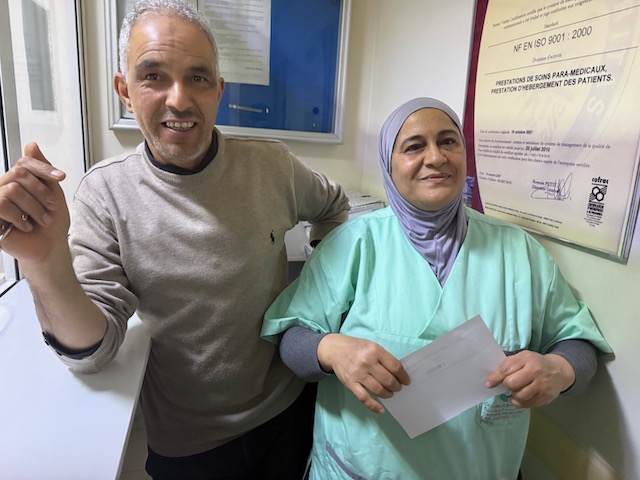
Hospital Staff at Polyclinique Les Berges du Lac, Tunis
This news almost sent me flying. I was worried, nervous, depressed. My angel assistant accompanied me to the hospital where I was given a spacious private room and TLC from the hospital staff. Their compassion was soothing in this troubled, frightening time.
A gastroenterologist examined me and evaluated the situation. Not so fast with surgery, he declared. This bit of good news brightened my spirits. Think positive, I told myself.
He ordered a scan, actually many scans. I had to drink an enormous quantity of a mysterious liquid. Throughout the night, every two hours, I had another intestinal scan.
In the wee hours, after scan #3, a miracle: the blockage had vanished. All OK.
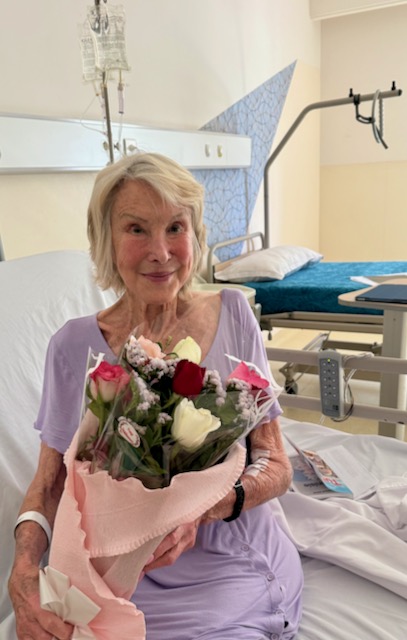
What an enormous relief, no surgery! My star surged. I did need to spend a day in the hospital to make sure all was in order. I was wiped out and slept most of the day, with the exception of a welcome interruption. A staff member from the travel agency arrived bearing an outstanding bouquet of roses. I was overwhelmed with the blossoms and the thoughtfulness.
The crisis had been avoided. What next? I asked the doctor if I could continue my trip or if it would be better to go home to France. “It’s up to you.”
A no brainer. I came to see Tunisia and would travel on
With two missed days, the itinerary had to be altered. The agency felt that after this episode, I should eliminate travel to southern Tunisia as originally planned (lengthy travel times) and focus on the north where there was plenty to experience.
Tunisia Part II: Grand Mosque in Kairouan.
This meant lots of extra work in rebooking and rescheduling. I had numerous phone calls and What’s App messages with agent Joella who patiently and diligently rearranged all. Thank you, Joella.
I was most impressed with my medical care in Tunisia – very thorough, professional, reassuring. And, cheap. My 2-night, 2-day stay in the hospital, including scans, medications, doctor’s fees : 798 euros or $925.
Compare that to the $6,780 I paid a few years ago for a night in observation in a San Francisco hospital after a bad fall. Details: “I left my $ in San Francisco”
Northern Tunisia is fun and fascinating. Inshallah. I will return to Tunisia to explore the south.
Tunisia Part II: Markets and souks
Don’t miss Tunisia Part II: Mosaics, Markets, Souks – and cats. To be followed by Part III: Food, Fabulous Tunisian Food.
If not a Tales and Travel follower, please sign up here. Trust me. It’s safe. Your address iskept private.
It’s a magical place, hidden away from the distractions of a hectic world, a place where nature and calmness reign. A place to relish the natural world and art:
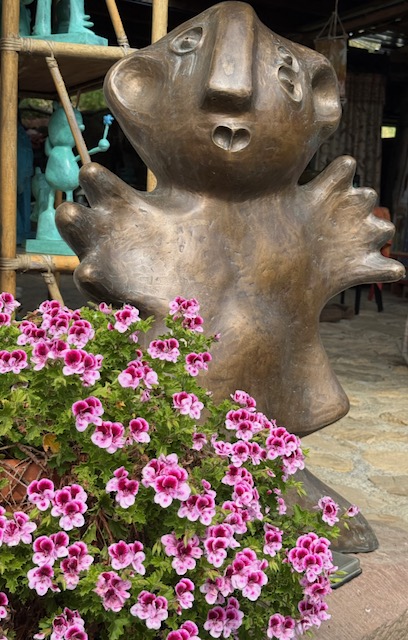
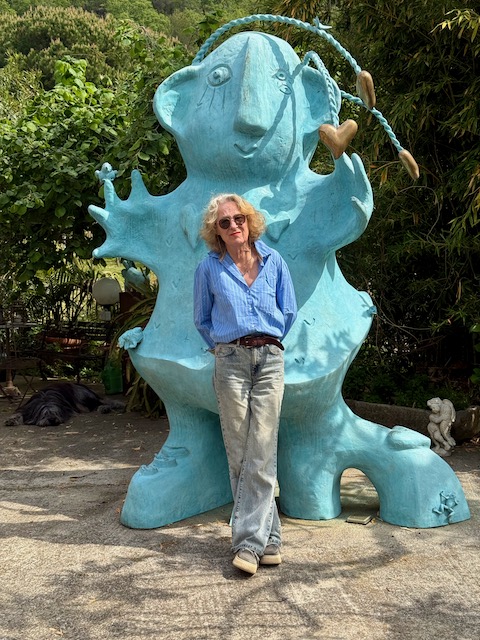
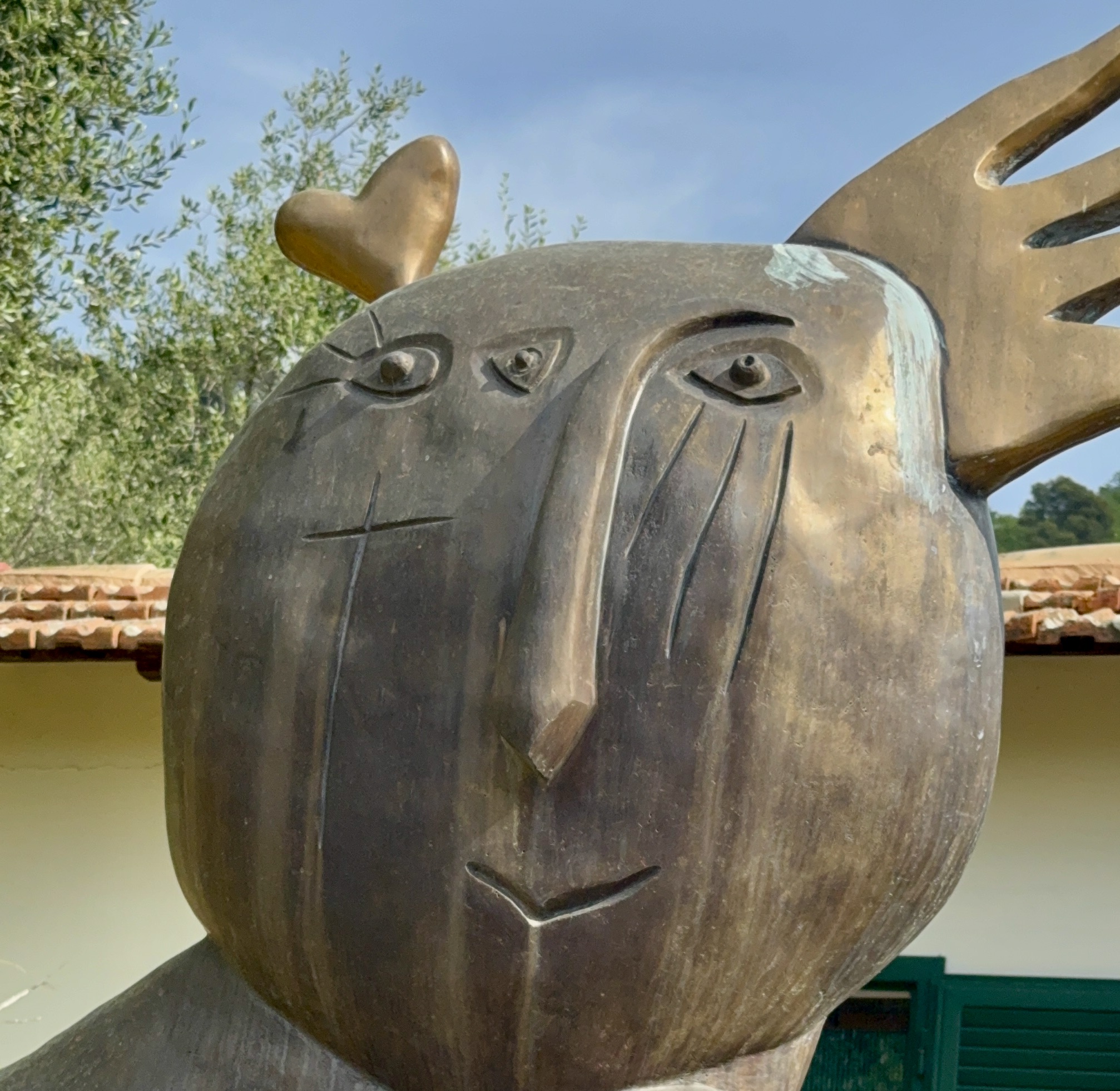
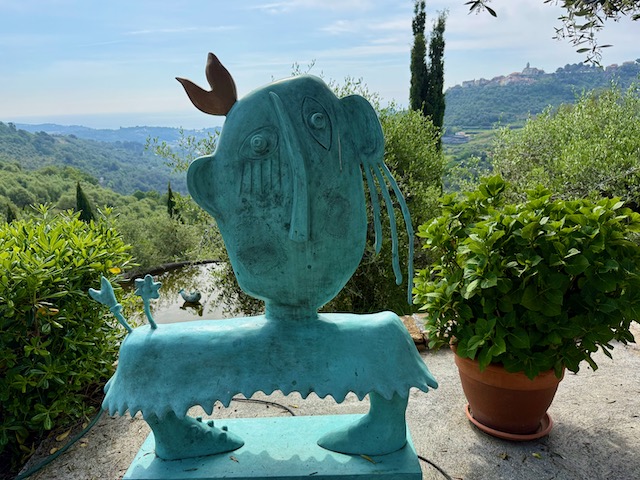
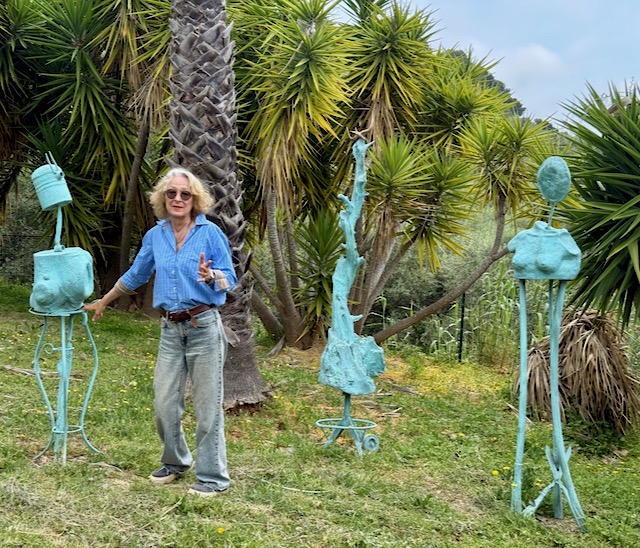
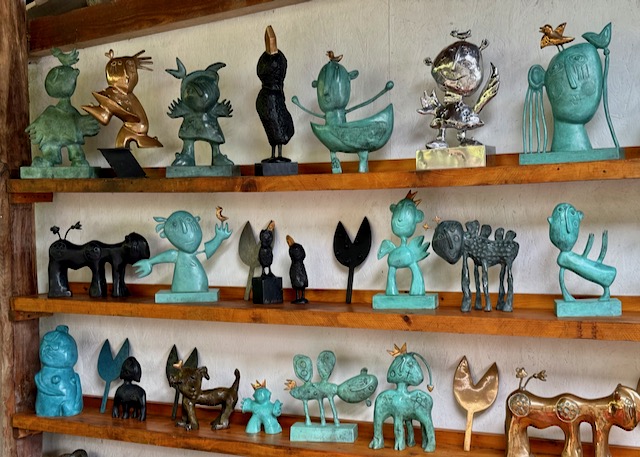
Joyful, fanciful, captivating sculptures
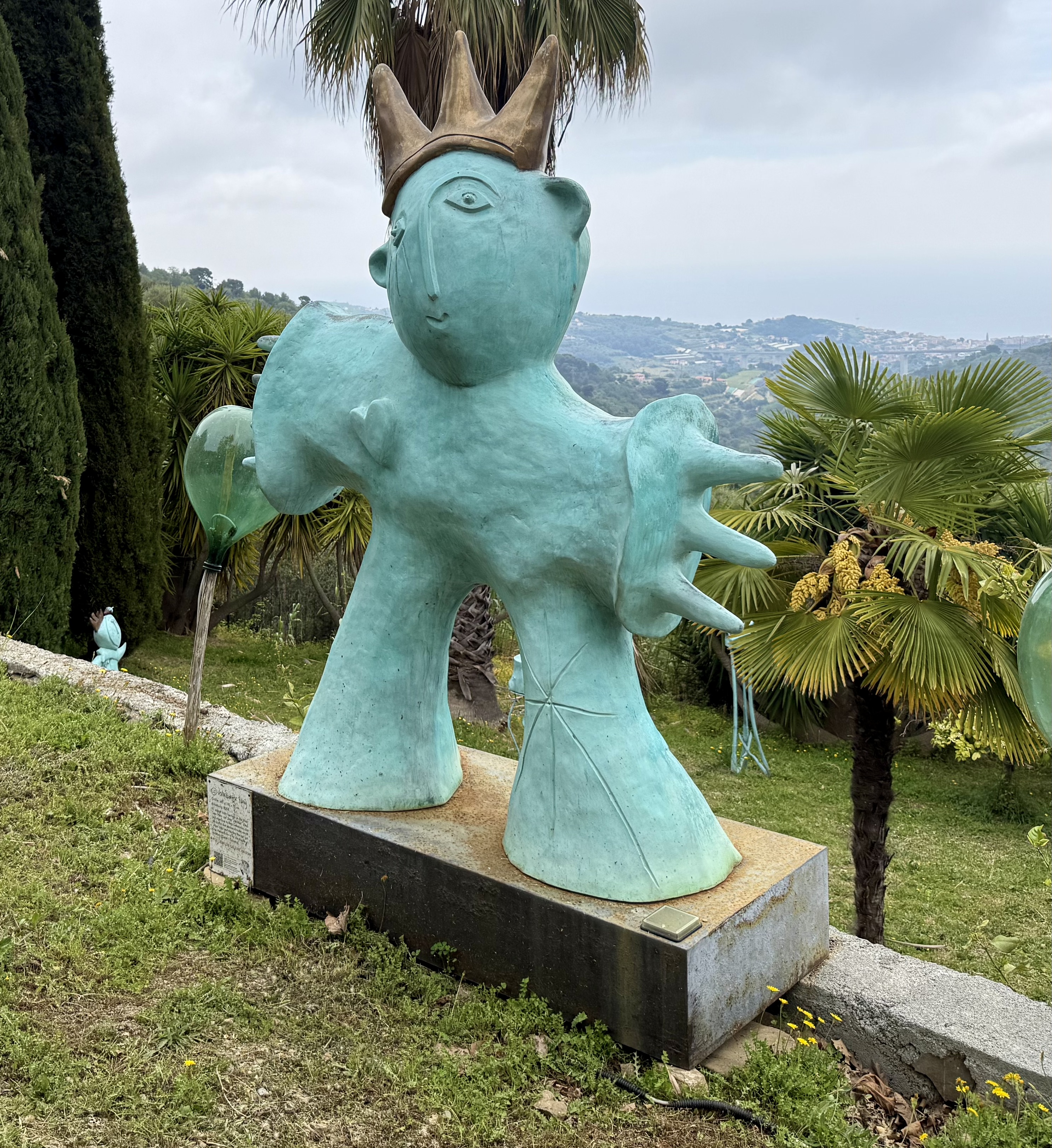
The Little King
Some are huge. Some are small. But all ooze a vibrant, happy spirit.
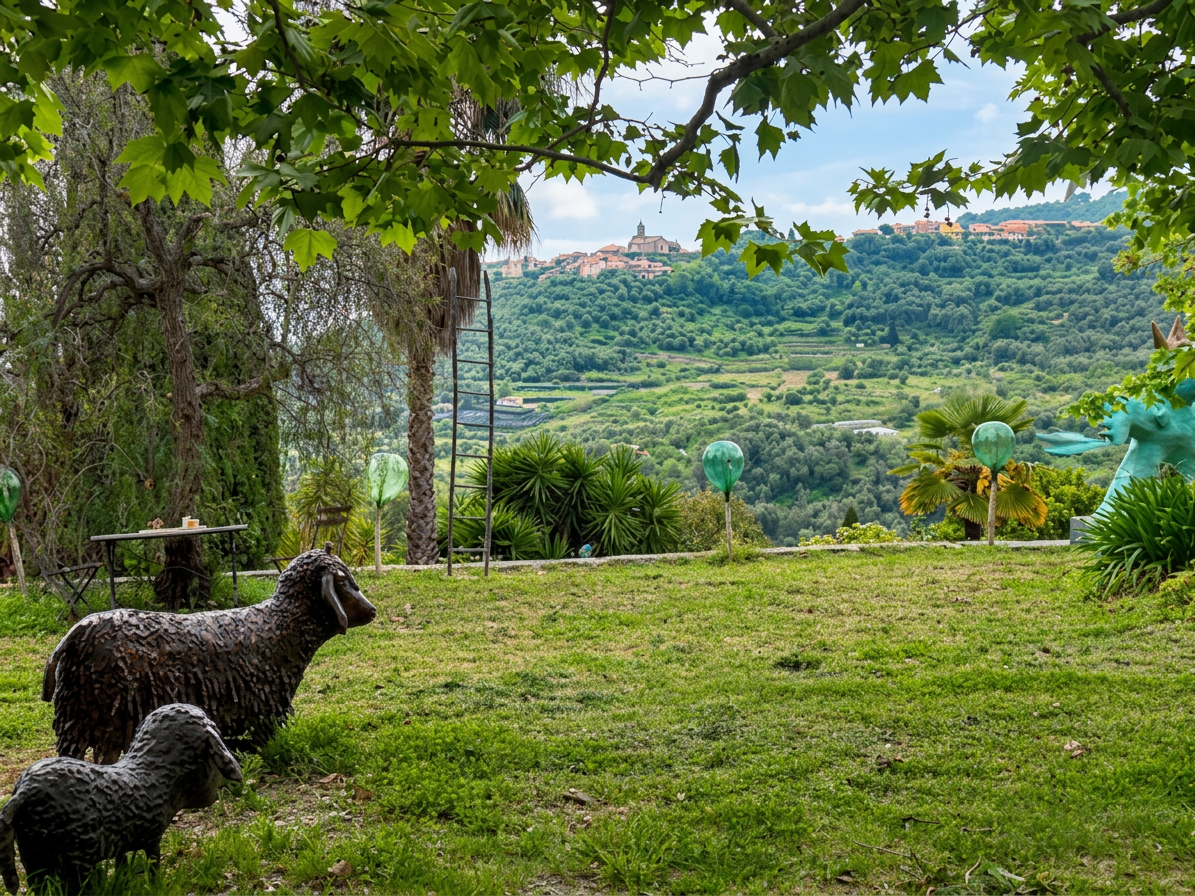
“Tra i Mondi” (between the worlds) is a secluded sculpture park tucked away amidst olive trees, wild herbs, flowers and forests high above the Mediterranean in northern Italy.
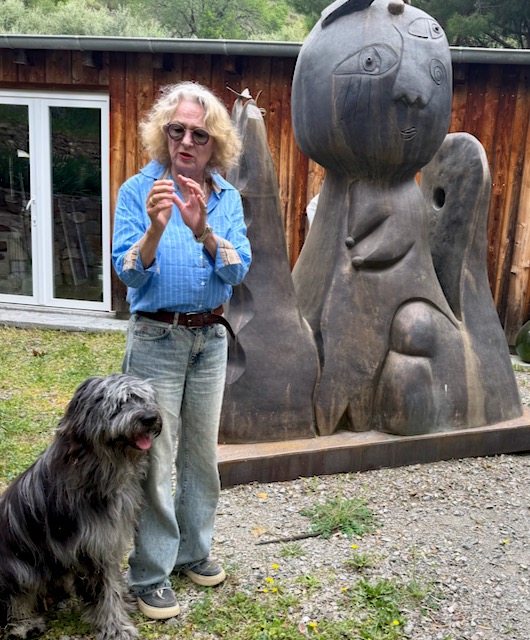
This is artist Carin Grudda’s world. Grudda is a master of sculpture, painting, graphic art, collage and more. Her works have been exhibited throughout the world. She was represented at the Venice Biennale in 2011.
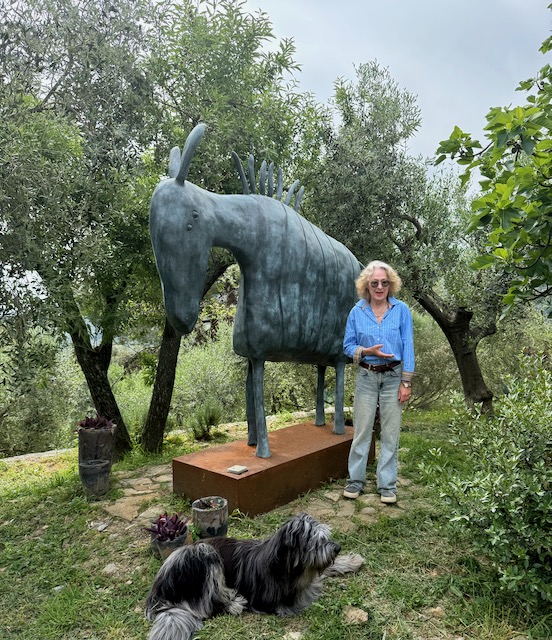
“Here Somewhere Else.” Zebra sculpture, Carin and Joshy.
My small group visit began with “Here Somewhere Else,” a bronze zebra which Carin calls her symbol. She had a commission to do a huge painting on Namibia. Never having been to the African nation, she launched into research and came across a photo of a tiny drawing on rocks featuring a zebra in a precarious place.
“I was thrilled. I felt his spirit.” He charged on. “He touched me by not being timid…Somewhere else is freedom.” The painting was a success. Two more were ordered. She decided the zebra needed to go big in bronze.
In addition to art and art history, Carin studied philosophy which, as with the zebra, plays a role in her creations. She summed up the thoughts, feelings and spirit guiding her works, borrowing a phrase from Nietzsche, “to light a star once a day.”
We follow her from sculpture to sculpture. Joshy, a big rambunctious canine, is the tour mascot. The 14-month-old Waeller, a new breed developed in Germany, fits right in. His antics bring smiles, as do many of the sculptures.
“Grande Donna” (above) is how small children see their mothers, she explains. “Isabella Koffer Schuh,” (Isabella Suitcase Shoe), another large, bronze female but with a suitcase for a foot, was created during the pandemic. We are all weighted down with baggage, the burdens of daily life, Carin says. “We are hindered from running away, but we must escape.”
Noisy, happy frogs in nearby ponds serenade us as we follow Carin up and down the three levels of the park. The views along the way are as inspiring as the sculptures — and Carin. She is exuberant, passionate, warm and delightful. No wonder these sculptures are so enchanting.
Tiny village of Lingueglietta in thedistance.
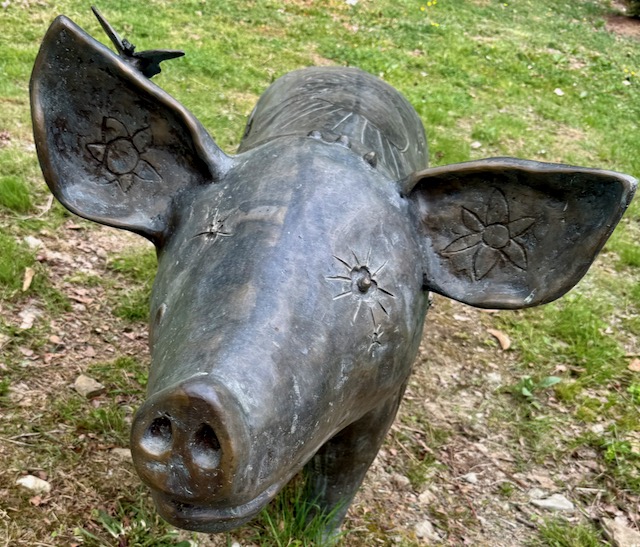
Some works are inspired by mythology, such as two representations of Phoenix, symbolizing birth and renewal. Bronze pigs, chickens, cats and sheep also reside in the park. The surfaces of many are imbedded with symbols. Everything has a meaning.
Each of her creations begins small, a miniature. After a year if she is still in love with it, it can grow into an immense sculpture in bronze, some weighing up to a thousand kilos.
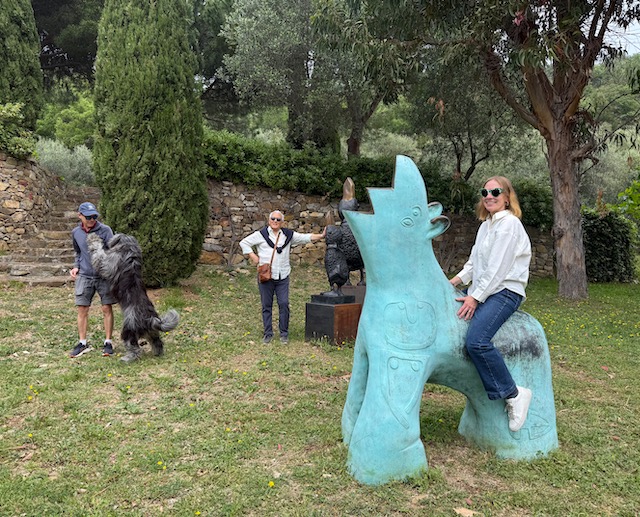
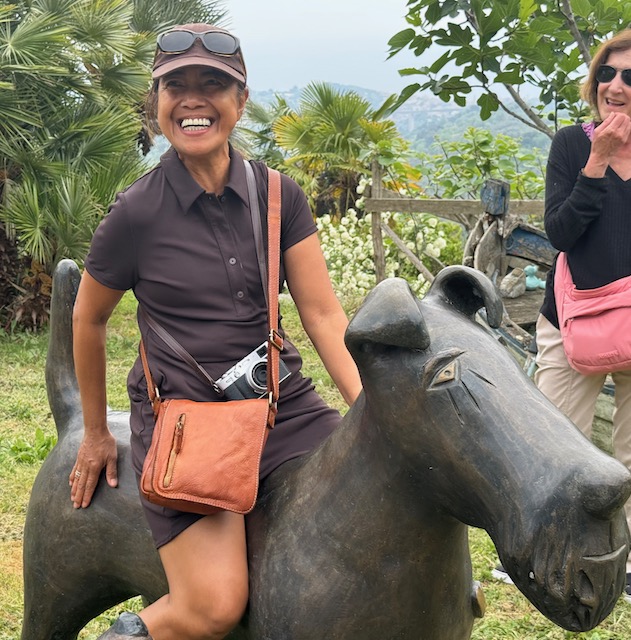
Hop on a sculpture for a ride. Her works are meant to be touched and enjoyed. Note symbols on sculpture… and playful Joshy in background.
Bronze casting is a monumental feat. The laborious process is explained on her web site. After making a prototype model, “a casting mold is made of sand mixed with resin, a container for the negative form of the model looking like a box you can open up. The model is taken out of this casting mold, leaving a cavity which the model – or rather its shape – has impressed into it.
“The casting mold is then closed up with a hole on top connected to the cavity. The liquid bronze is poured through this hole, filling out the cavity left by model.
“The casting of bronze is an exhausting occupation. This is why the next step after casting the liquid bronze is opening a bottle of beer. The time it takes to drink a beer is usually enough to cool down the bronze inside the casting mold.”
Carin works with foundries in Turin, Milan and Rome where her creations come to life in bronze. They may find their home in the park, but they will be on the move to exhibitions near and far.
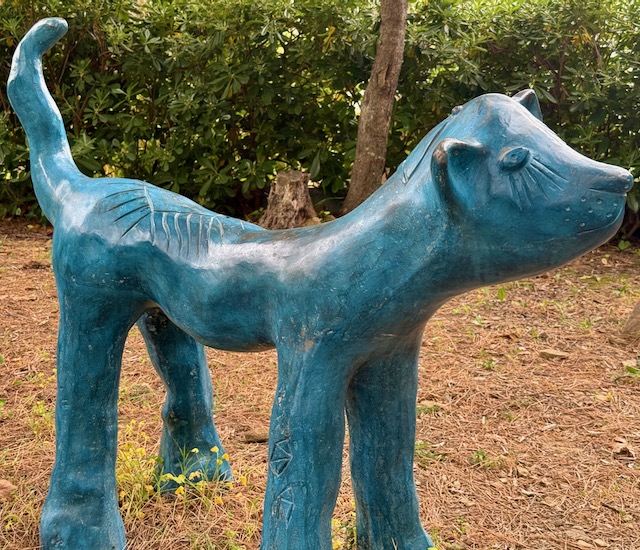
The Blue Cat is one of several like this now at home in other places. Carin is a cat lover. Her hefty black cat Mollie happily roams amidst the bronzes. “You can’t educate cats. You can’t correct them. They are free,” she says.
Carin was born in Gudensberg, Germany, in 1953. With her husband, Gunter, she has made her home in the Italian hills above the Ligurian coast since 2,000. “I had to have this park. At a certain point I didn’t know where to put all this stuff. I chose this place because it’s untouched nature.”
She’s happy she decided on Italy. “I have borrowed Italian identity. I feel so good here. It’s a chance to fly. It changed my life. ”
Ballo da sola
“Tra i Mondi” between the worlds, the park name, can refer to the different worlds of expats, in her case, Germany and Italy. But it can be much more, she says, an overall feeling that you don’t belong.
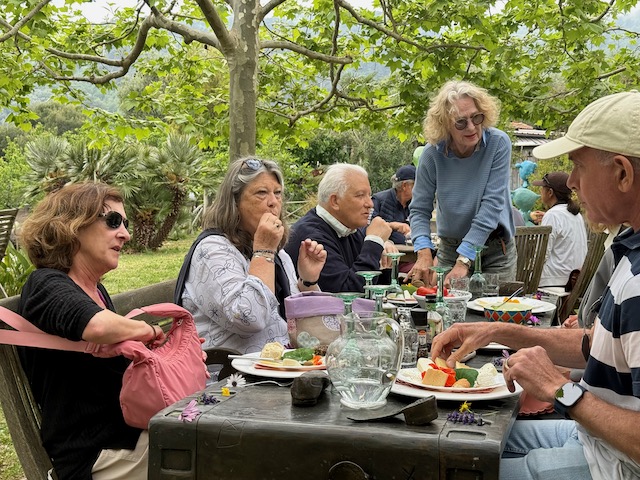
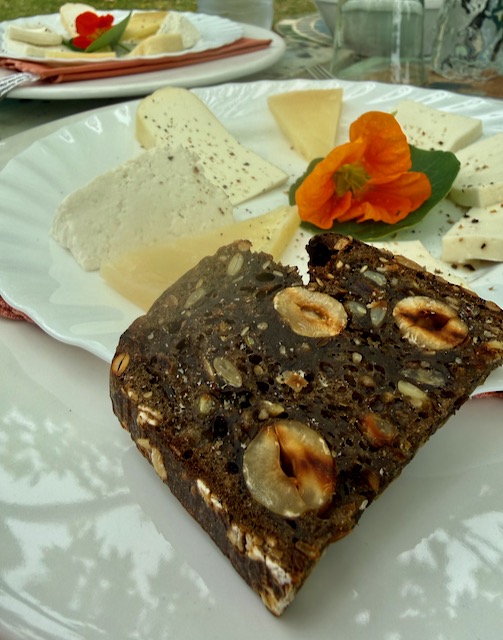
Our visit ended with lunch al fresco in the park, beginning with a selection of cheeses produced by neighboring farmers and a fabulous dark nut bread made by Carin. She gave me the recipe which I will attempt. She also made two delicious cakes for our dessert.
Cooking and baking, she says, “are the same for me as art, creative.”
The sculptures, surroundings, scenery and sounds make for an unforgettable and joyous afternoon. I hated to leave this happy place, which my friend Gerlinde called a “little paradise in the wilderness.”
Scroll down for more photos. And, please comment. I love feedback – good and bad. See below.
TODAY’s TASTE. I was hoping to post Carin’s yummy bread recipe, but I want to try it first. Meanwhile, try this, LECSO (Hungarian Ratatouille), a tribute to Hungary and its new pro-European prime minister, Peter Magyar. Yeah Hungary!
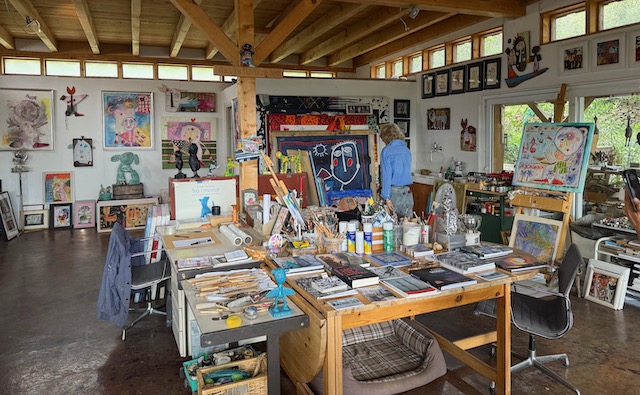
Carin is about much more than sculpture as seen during a visit to her studio. Many of her paintings are featured on her web site, http://www.carin-grudda.deSmall sculptures are available for purchase. Starting price about 200 euros .
If not a Tales and Travel follower, please sign up here. Trust me. It’s safe. Your address iskept private.


Please leave a comment . . .