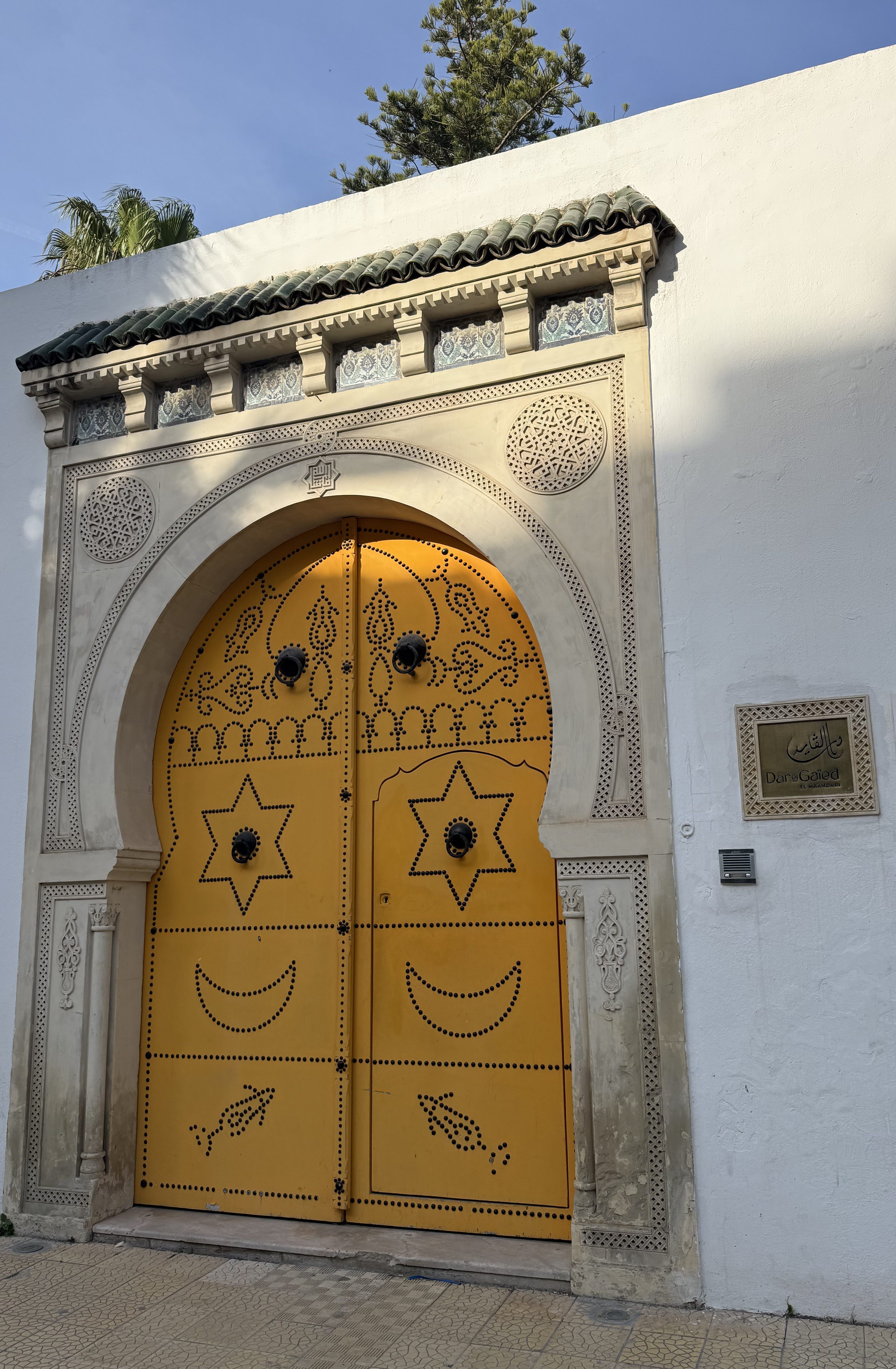
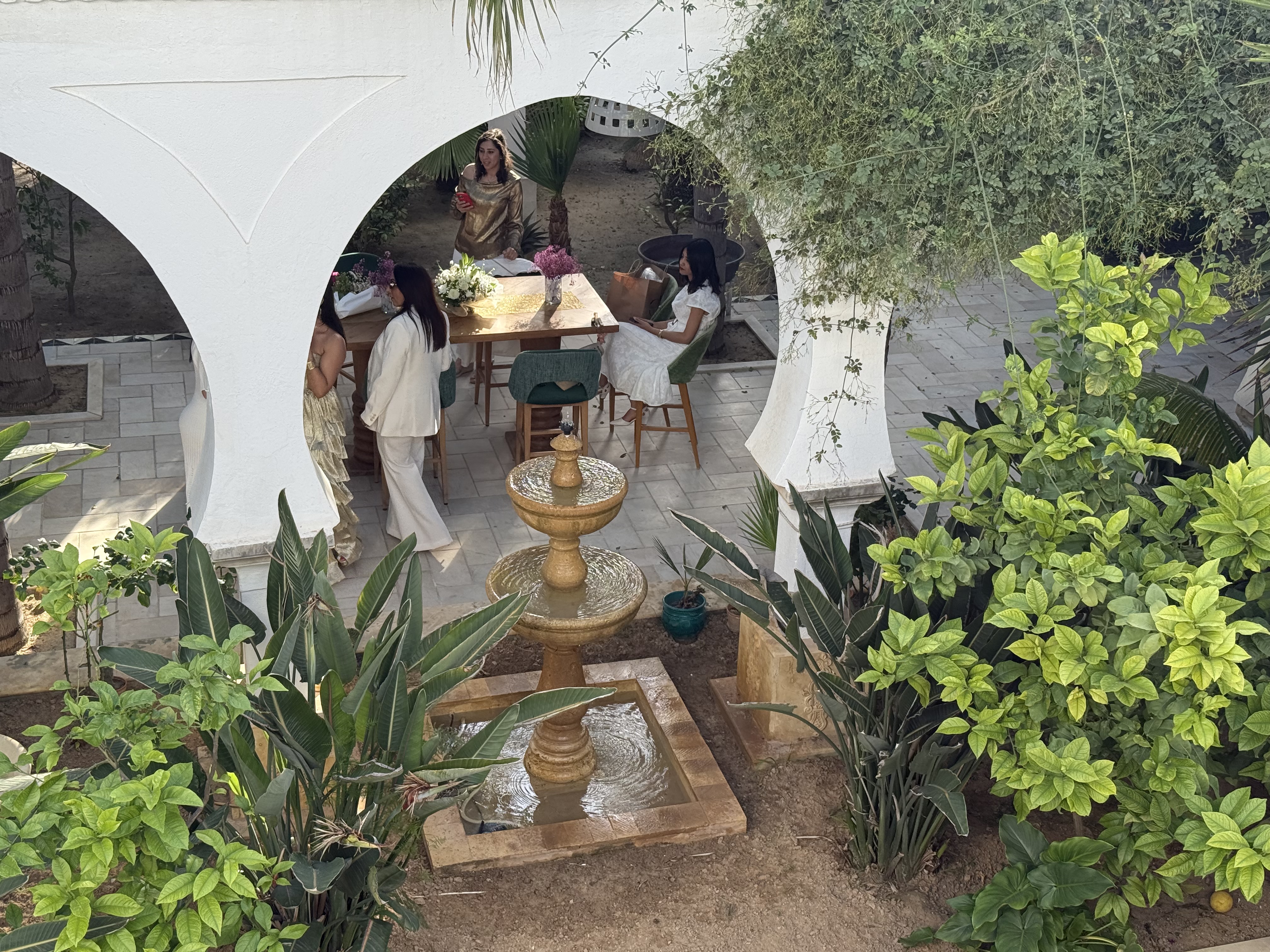
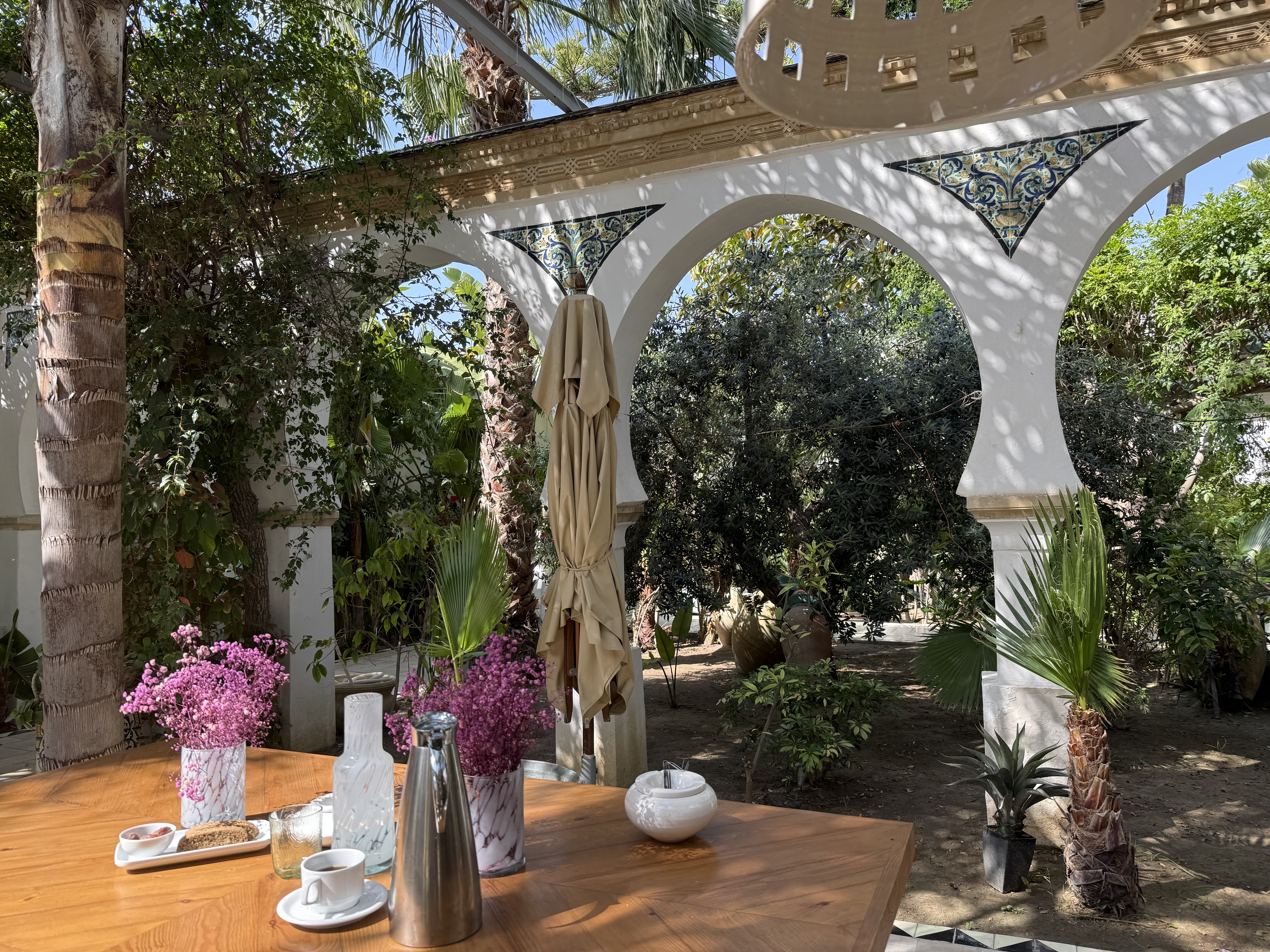
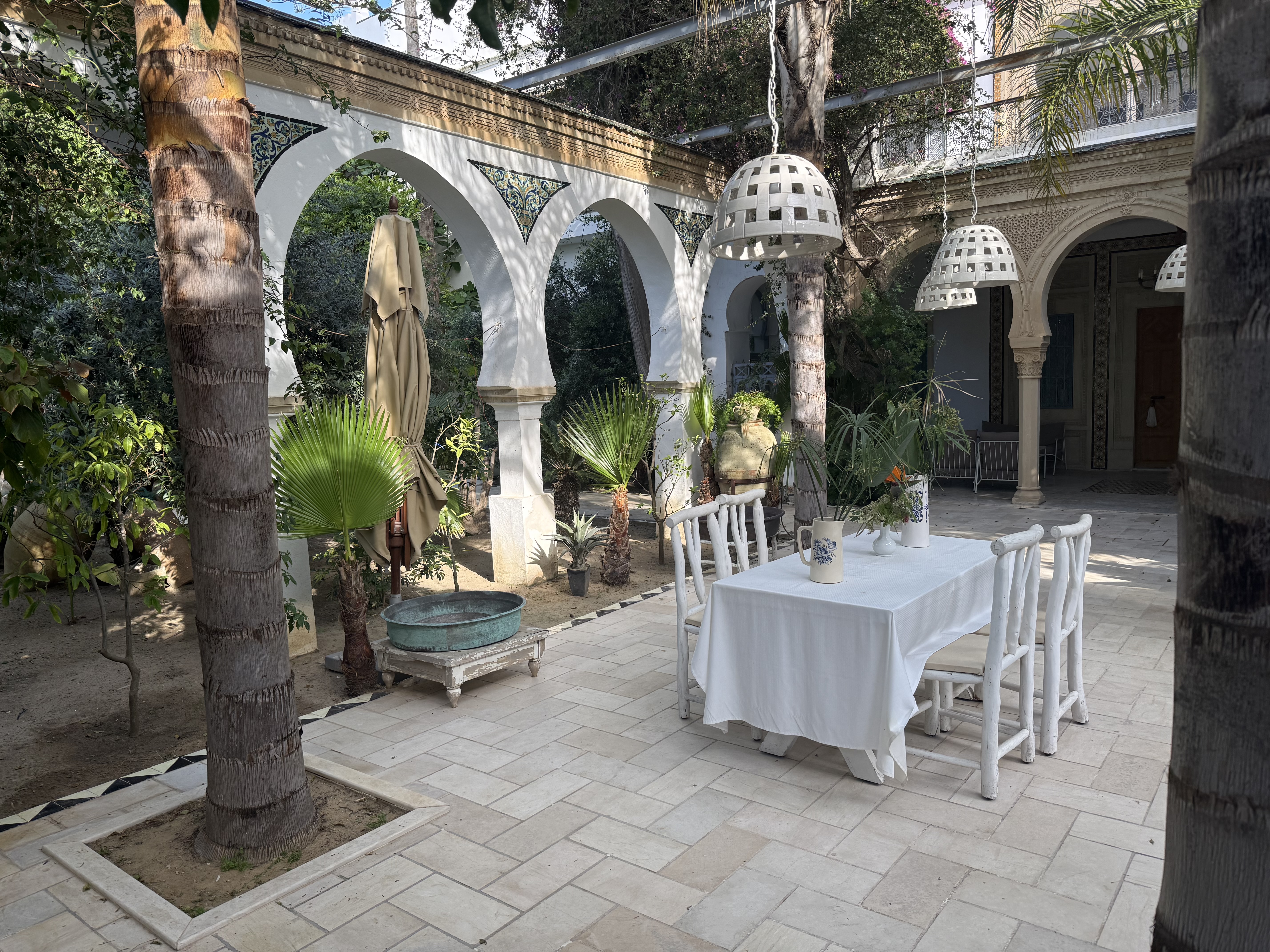
Beyond the golden door lies a wondrous world, a haven of calm, elegance, charm. Exotic plants, trees and blossoms, pools and fountains, ancient artifacts, corners for lounging …
The enchanting paradise is the courtyard of Dar El Gaied, a guesthouse in Nabeul, Tunisia, a very special guesthouse. A “dar” is a traditional Tunisian house constructed around an open courtyard with high walls to shield against the blazing Tunisian sun. Colorful tiles, plants and pools may add to the courtyard décor.
A Tunisian dar is similar to a riad in Morocco, and like riads, many dars offer guest accommodation. My two-day stay at Dar El Gaied was a delight, a trip highlight – one or those very special places you hope to return to.
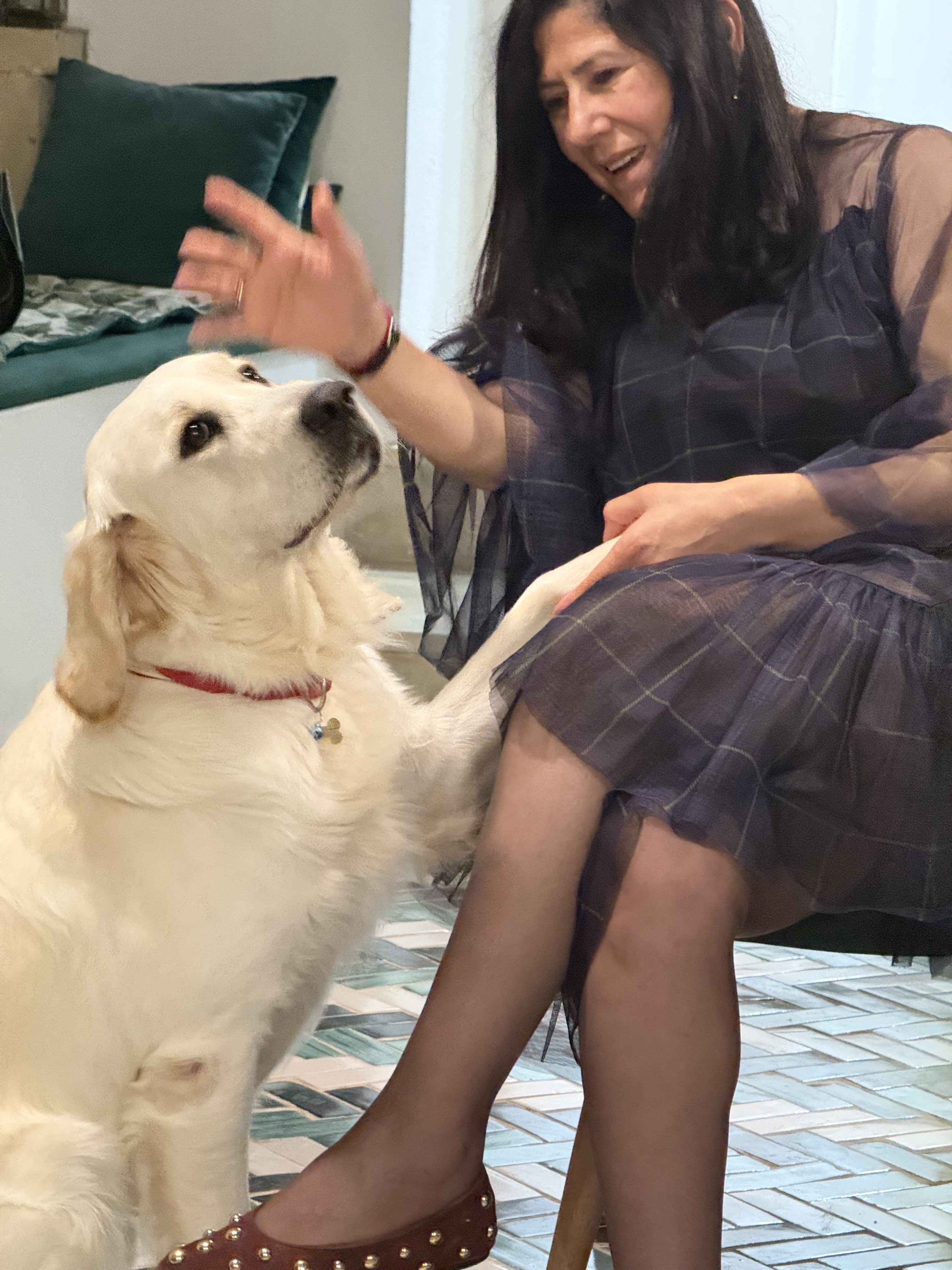
Donia Maamouri, who owns the dar with her husband, welcomed me with her two friendly dogs, Atos and Maya. She explained that Dar El Gaied was built at the end of the 19th century and was the family home of her husband’s grandfather. After 20 years of restoration, they opened it as a “maison d’hote” (guesthouse) in 2018.
“We had no choice” she says, “either abandon it or open a maison d’hote. It was not adapted to modern life. It was a challenge.”
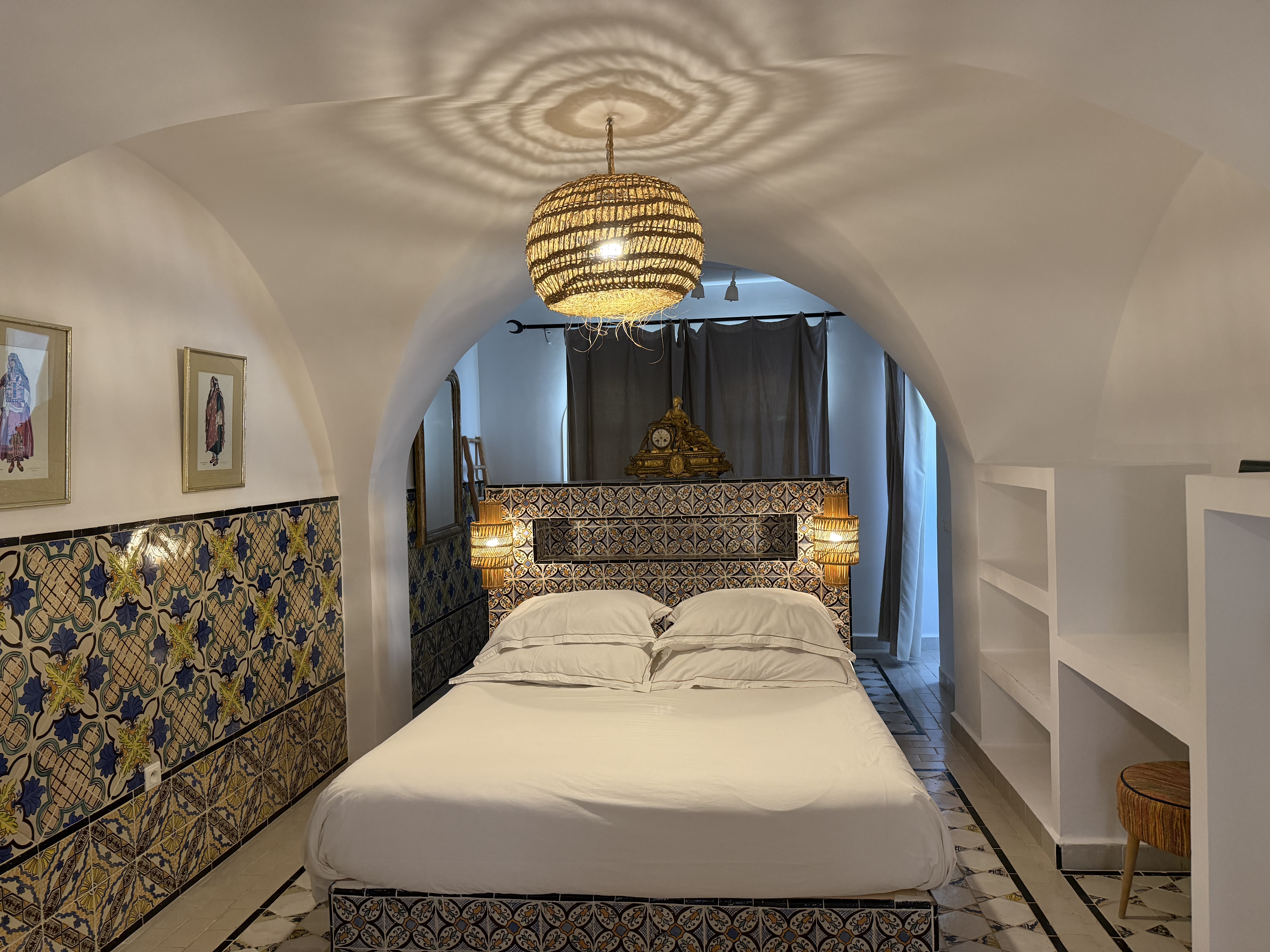
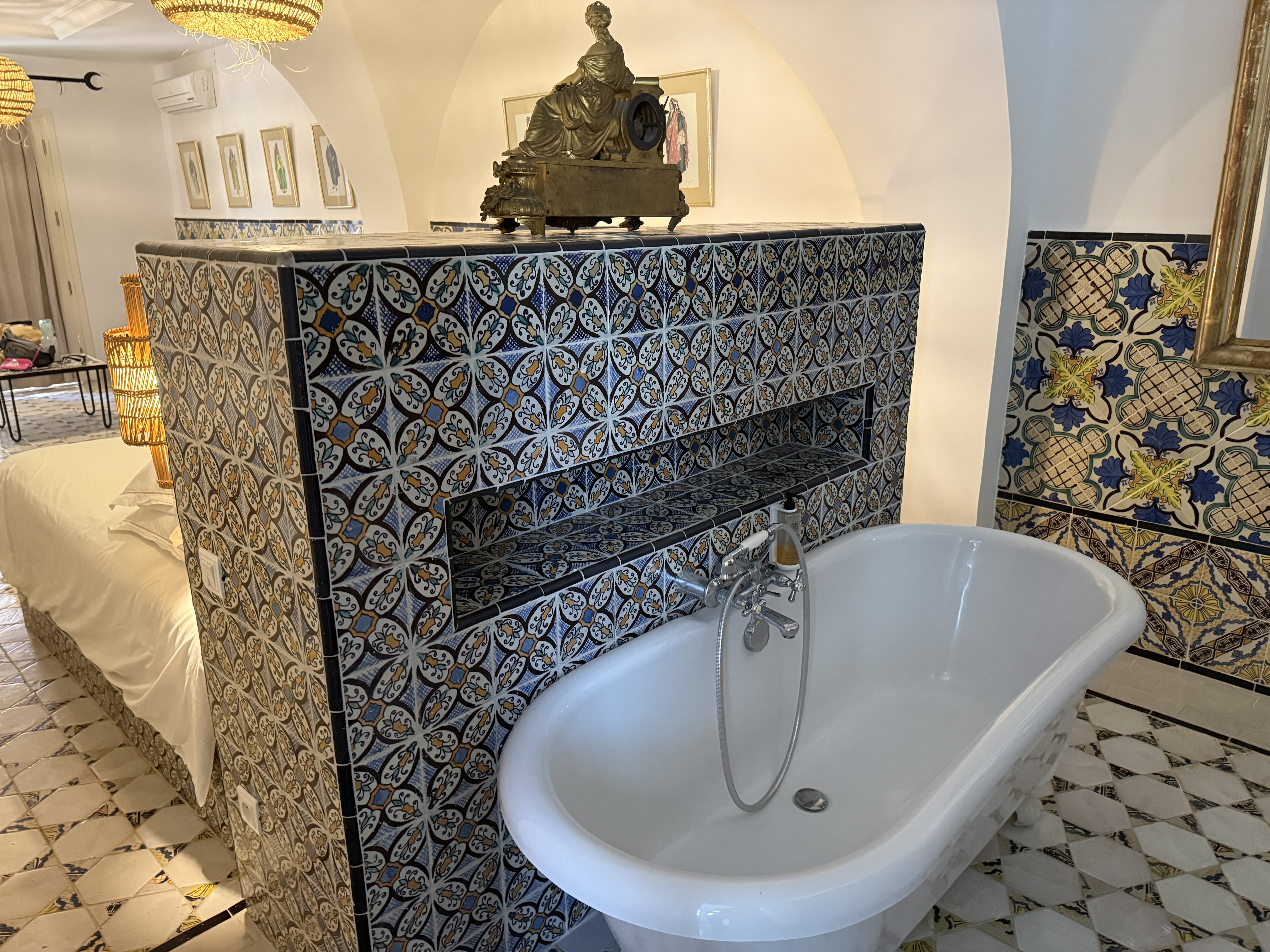
My room at Dar El Gaied. I passed on the bathtub and opted for a shower.
All guesthouse dars serve breakfast. Dar El Gaied also serves lunch and dinner by request. I had more than a fabulous dinner – a cooking class/demonstration as well.
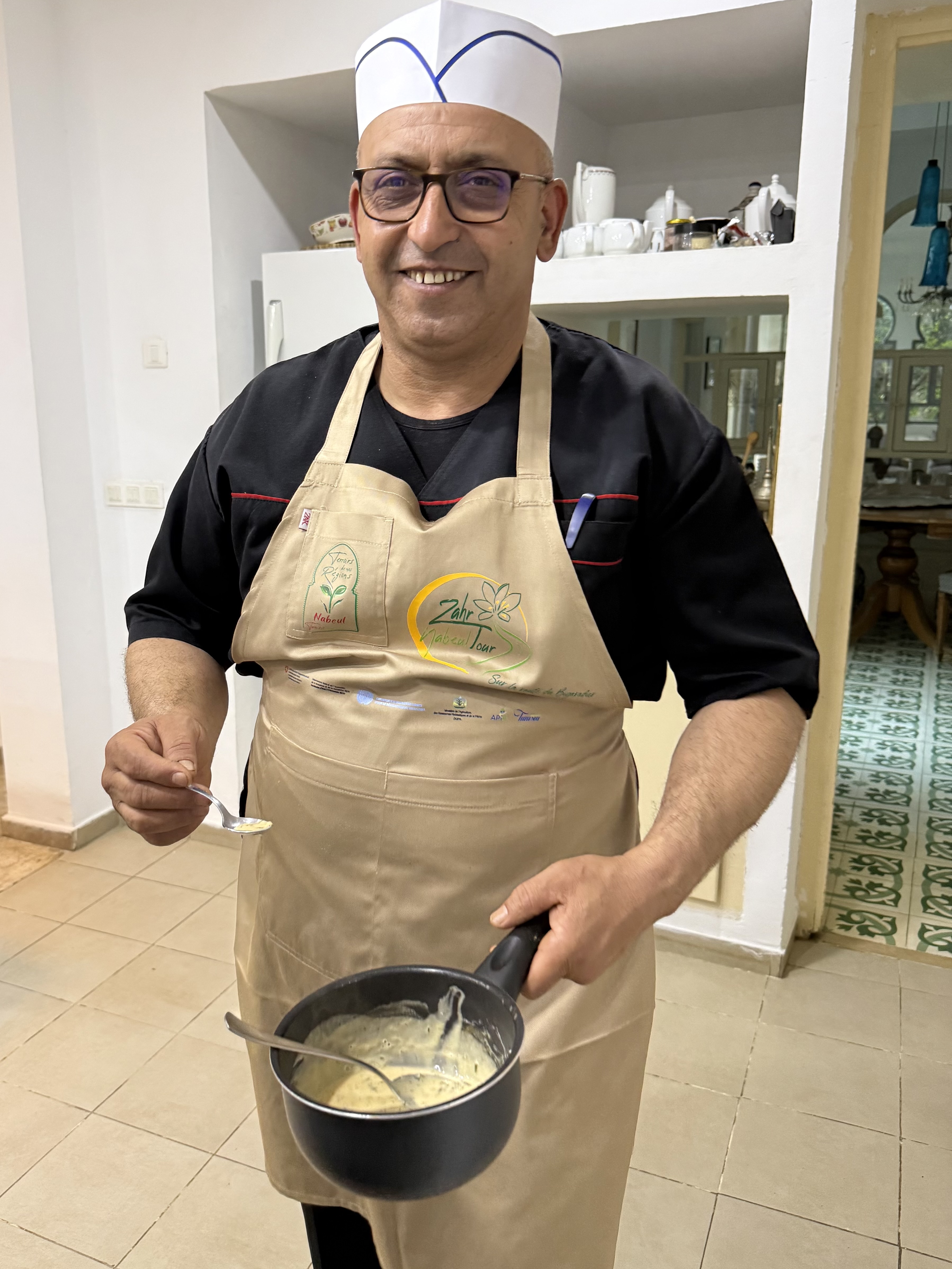
Jamel Ramadhani is the dar chef when needed. He has worked as a chef in many countries and is a master of numerous cuisines. French cuisine, he says, is his favorite.
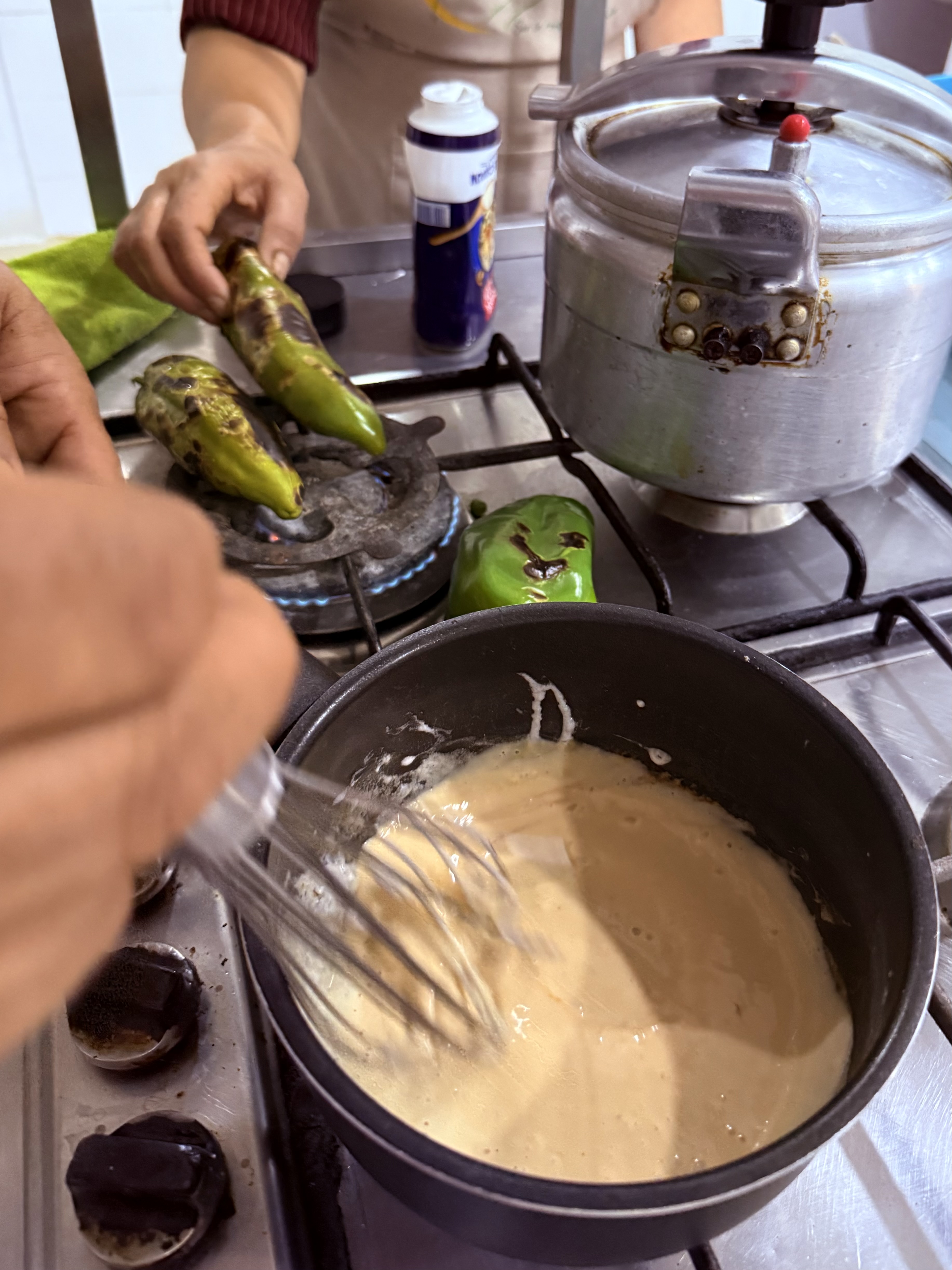
Grapefruit sauce for sea bass filet, right.
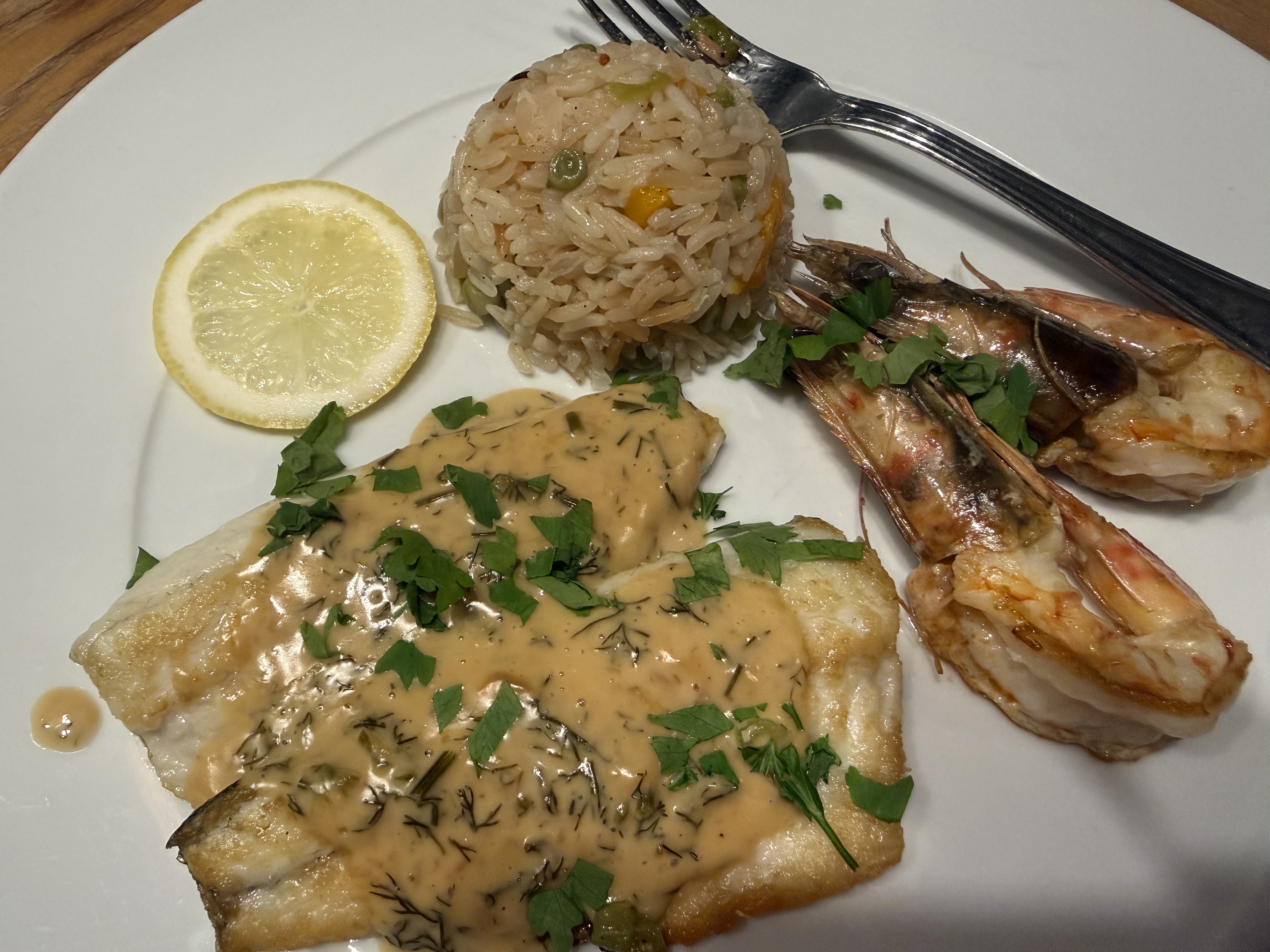
I love watching professional cooks – so speedy, efficient, organized (everything I am not). I observed and took notes as he whipped up an incredible multi-course dinner : soupe de legumes, salade Mechouia, brik au thon, filet de loup avec sauce agrumes aux pignons, riz piaf, fruits de saison, gateau Tunisien.
(Vegetable soup, Mechouia salad, brik with tuna, sea bass with citrus sauce and pine nuts, rice pilaf, seasonal fruits and Tunisian cake.)
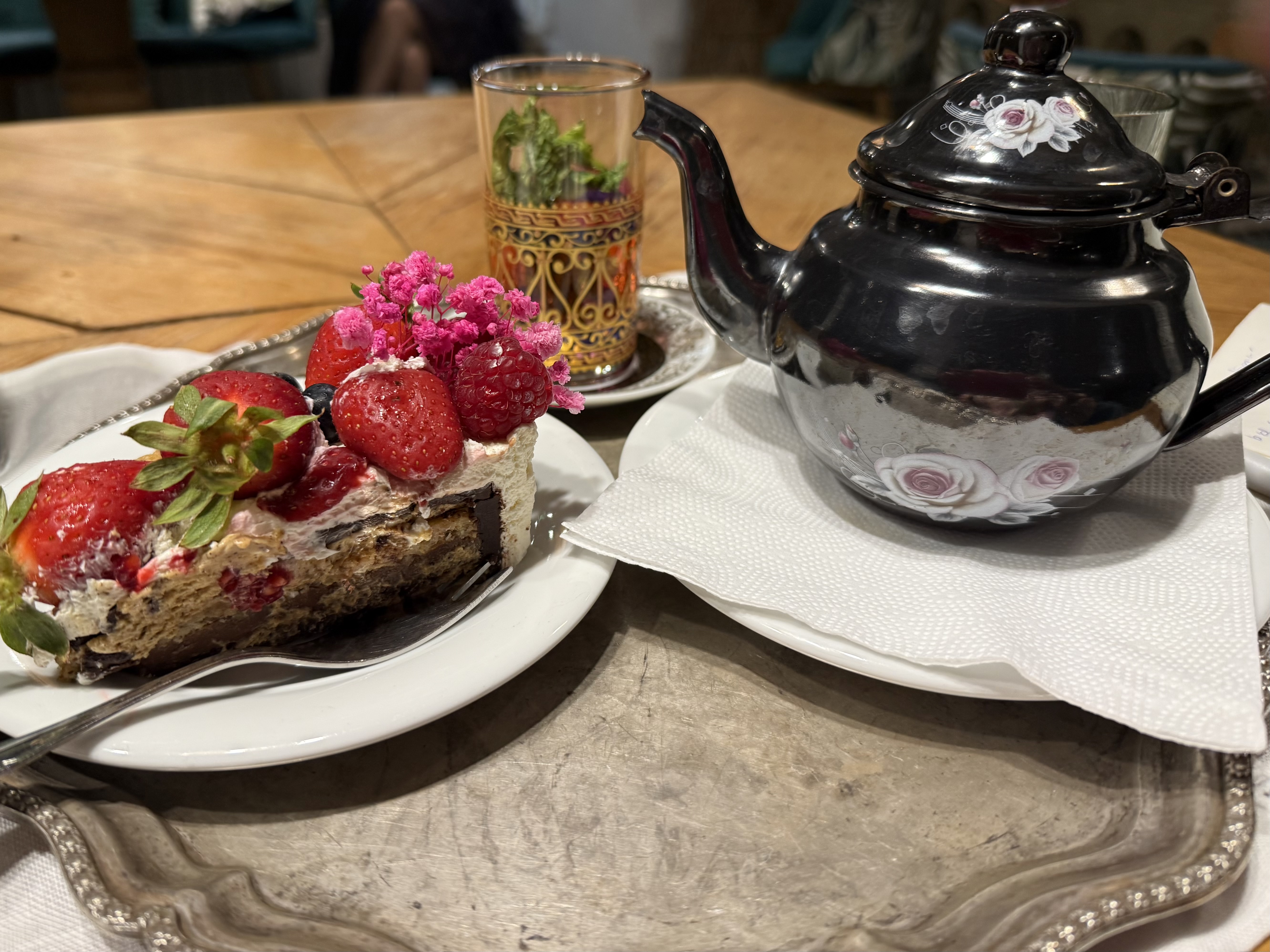
A decadent strawberry cake and mint tea for dessert.
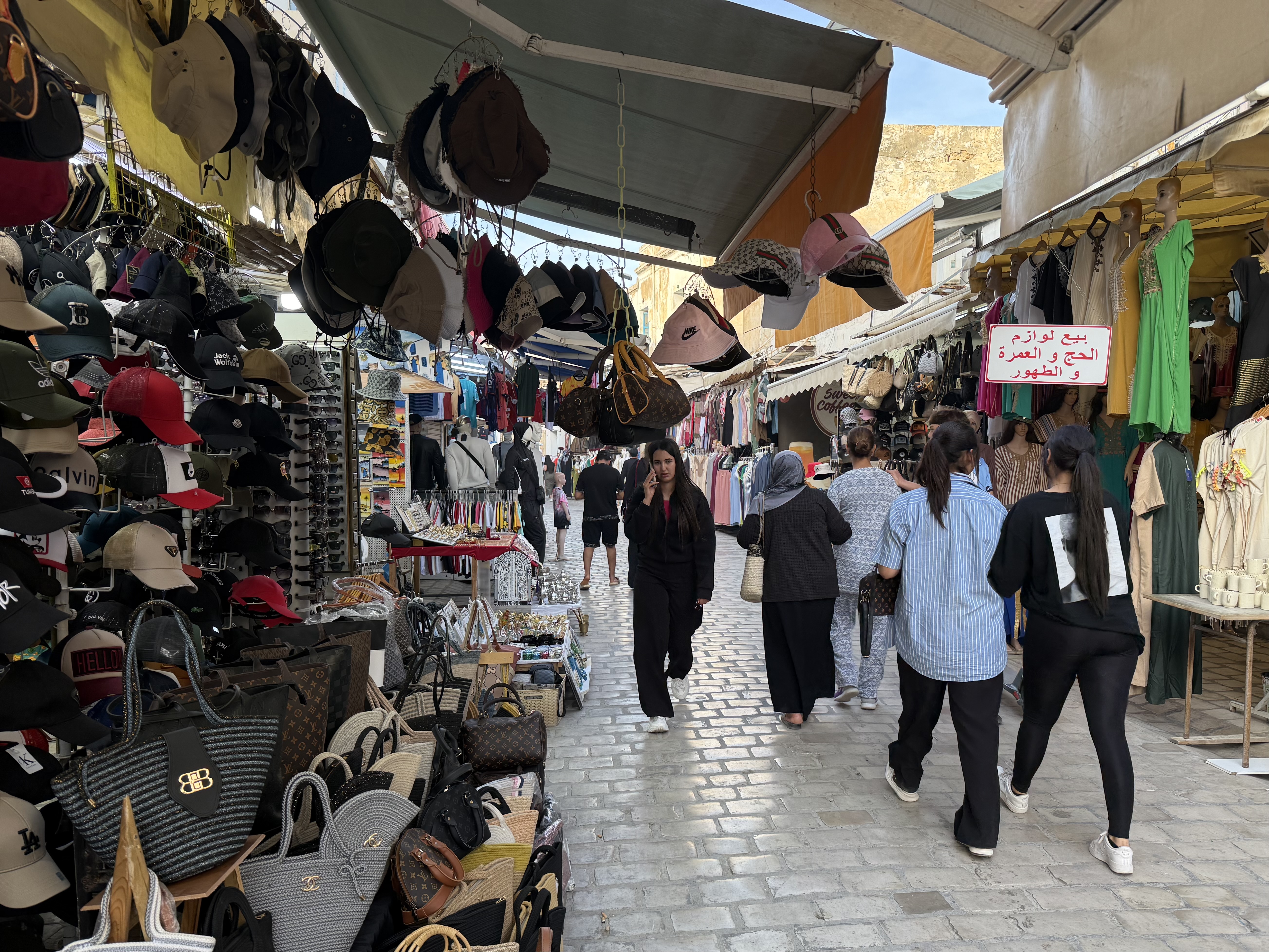
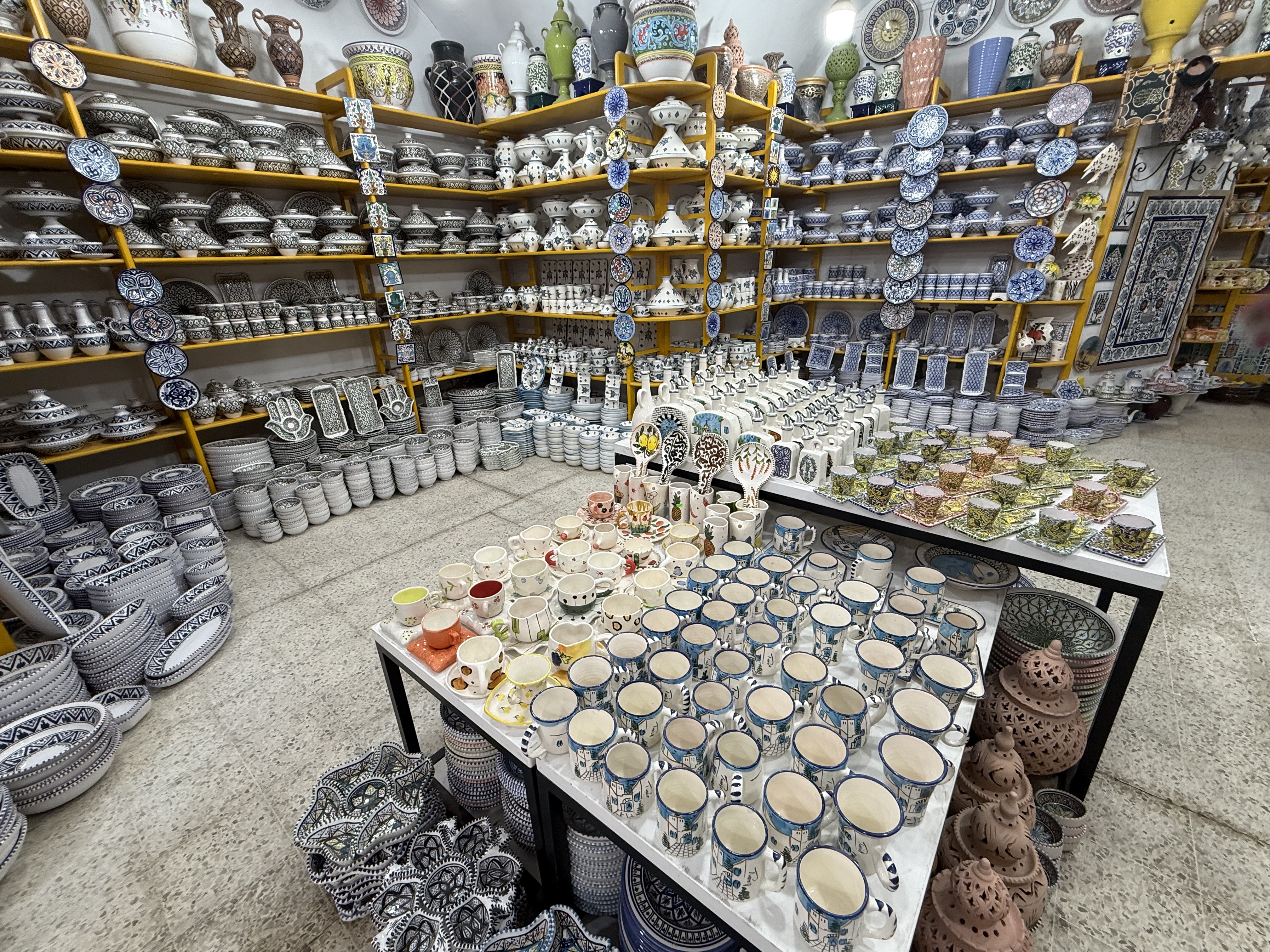
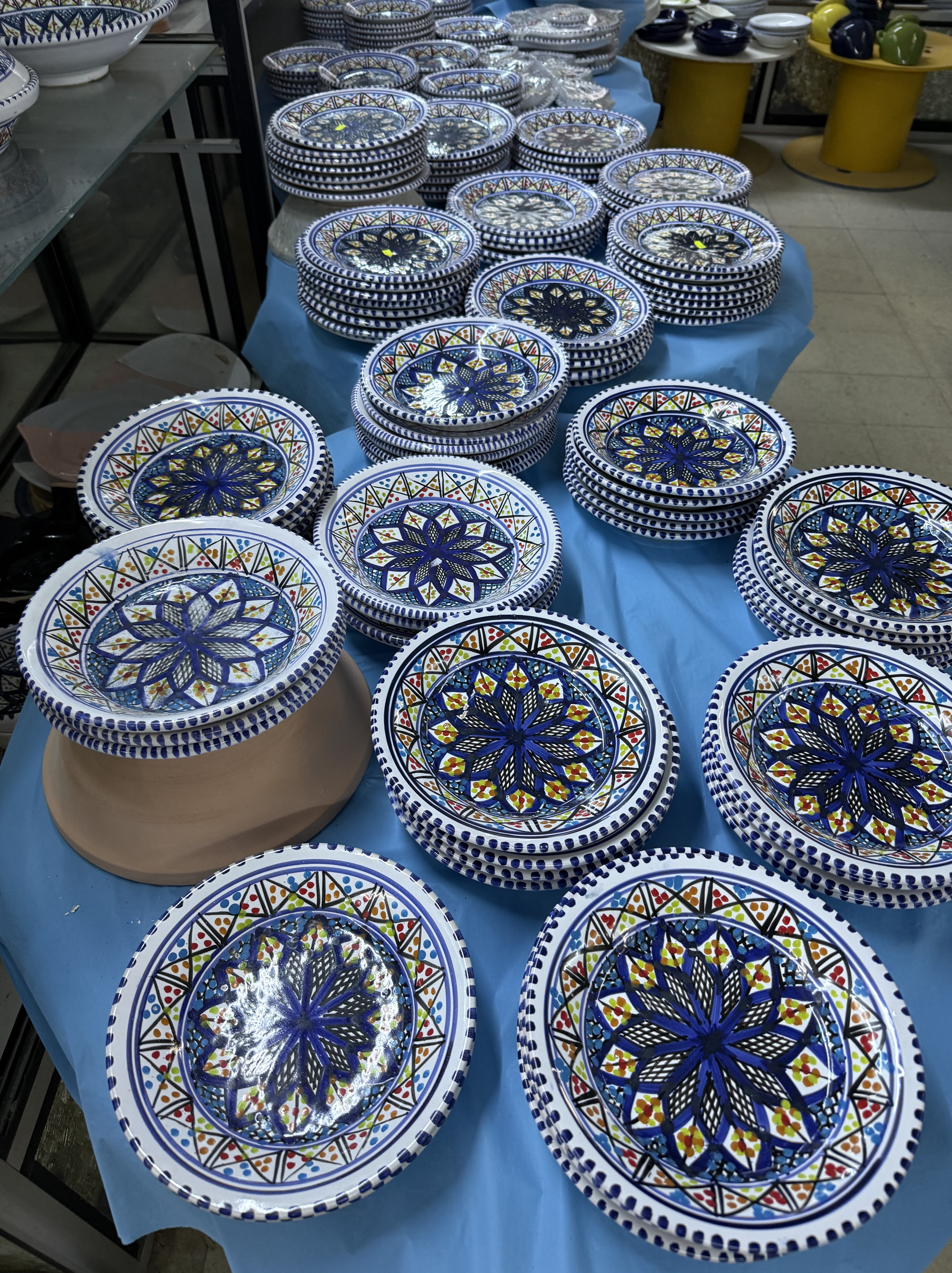
Dar El Gaied is on a quiet street at the edge of the Nabeul medina. I had fun browsing its many shops where ceramics, a noted product of Nabeul, are the star.
Colourful ceramics, the perfect souvenir.
Part II to this post coming soon – 2 easy recipes from my dinner at Dar El Gaied.
If not a Tales and Travel follower, please sign up here. Trust me. It’s safe. Your address iskept private.
And, please comment. See below.
I have been writing this blog for many, many years, detailing trips near and far to numerous fascinating destinations . If you seek info on a particular place, scroll down to the very bottom on your phone: Search. Type in your wish.
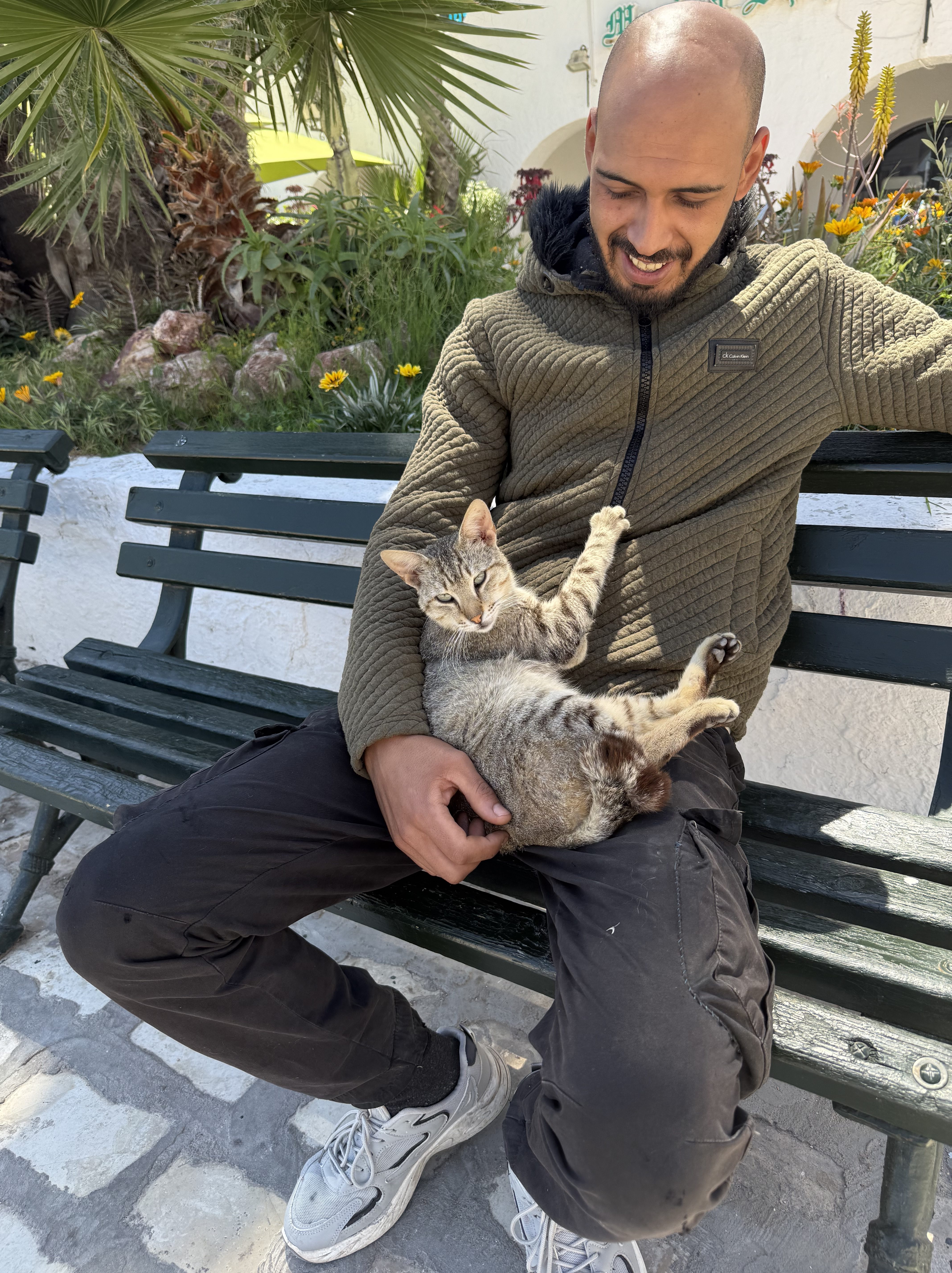
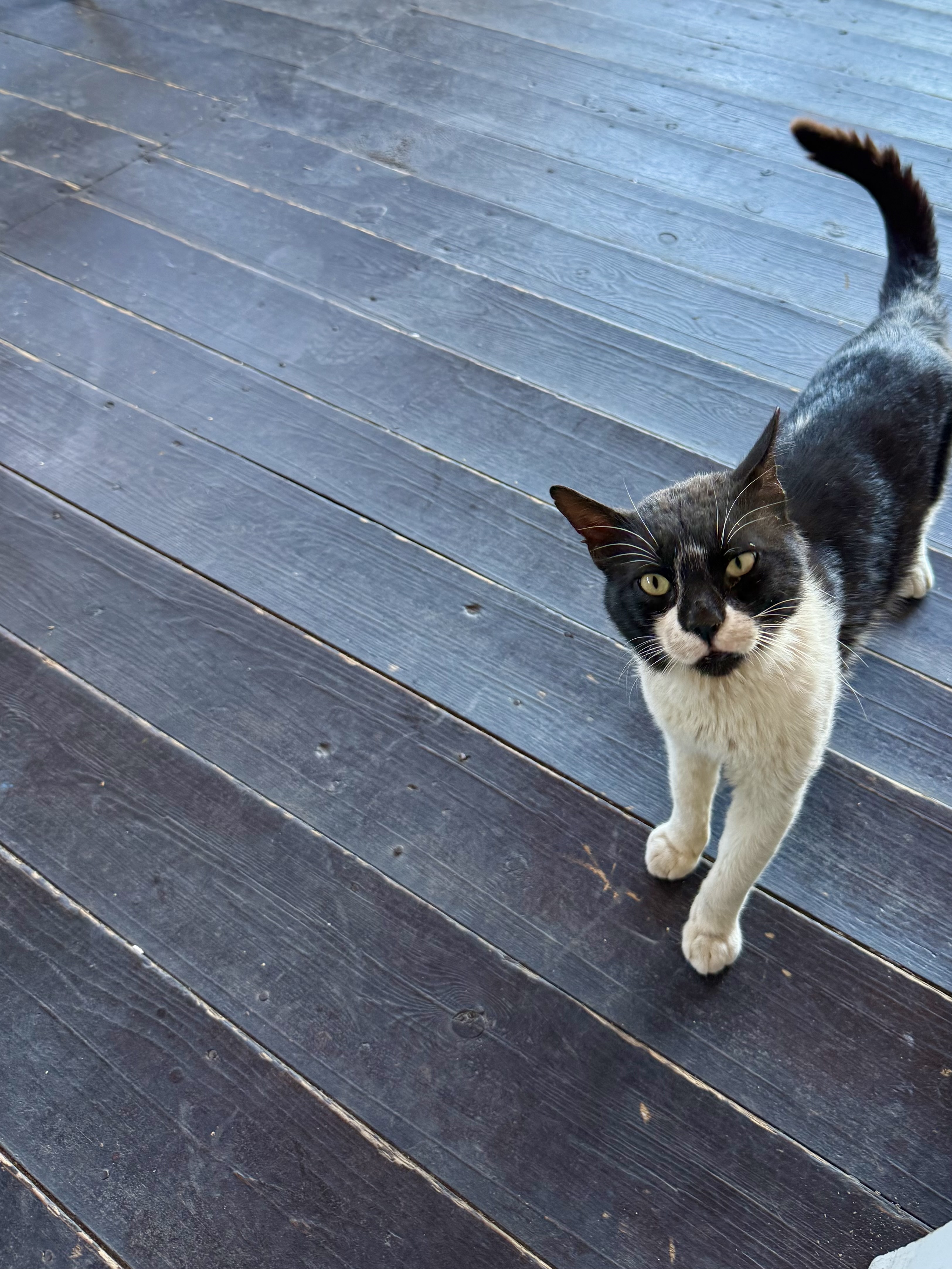
Today’s Tunisian cat photo. As a cat lover, I was happy to see that most Tunisian strays are fed — even loved.
I LOVE Tunisian food. Brik. Bambalouni. Couscous. Kafteji. Makrout. Mechouia. Mint Tea. Fabulous fish. And much, much more.
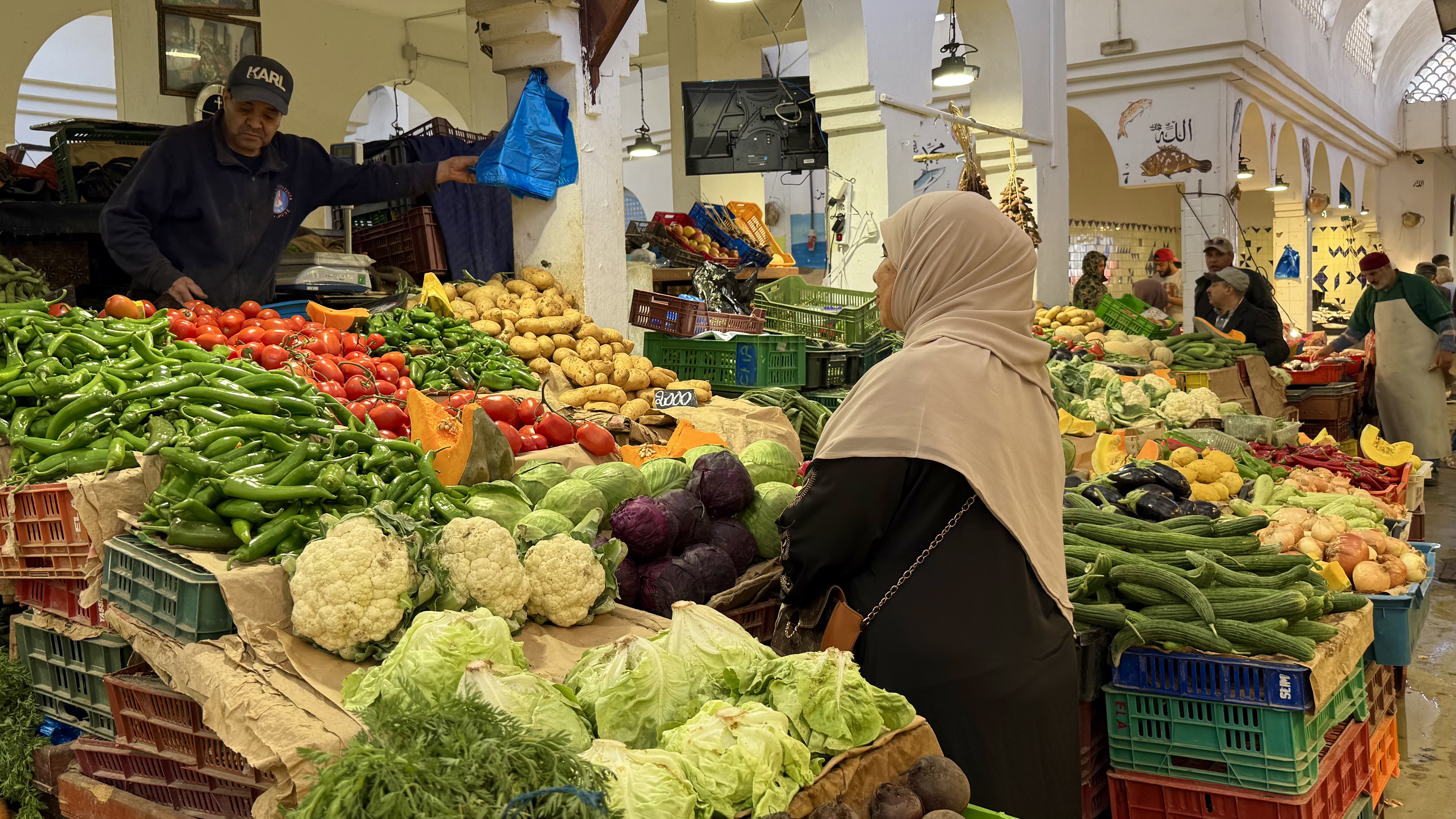
I love the vibrant markets, tasty street food, fancy and not-so-fancy restaurants. I loved my two cooking classes.
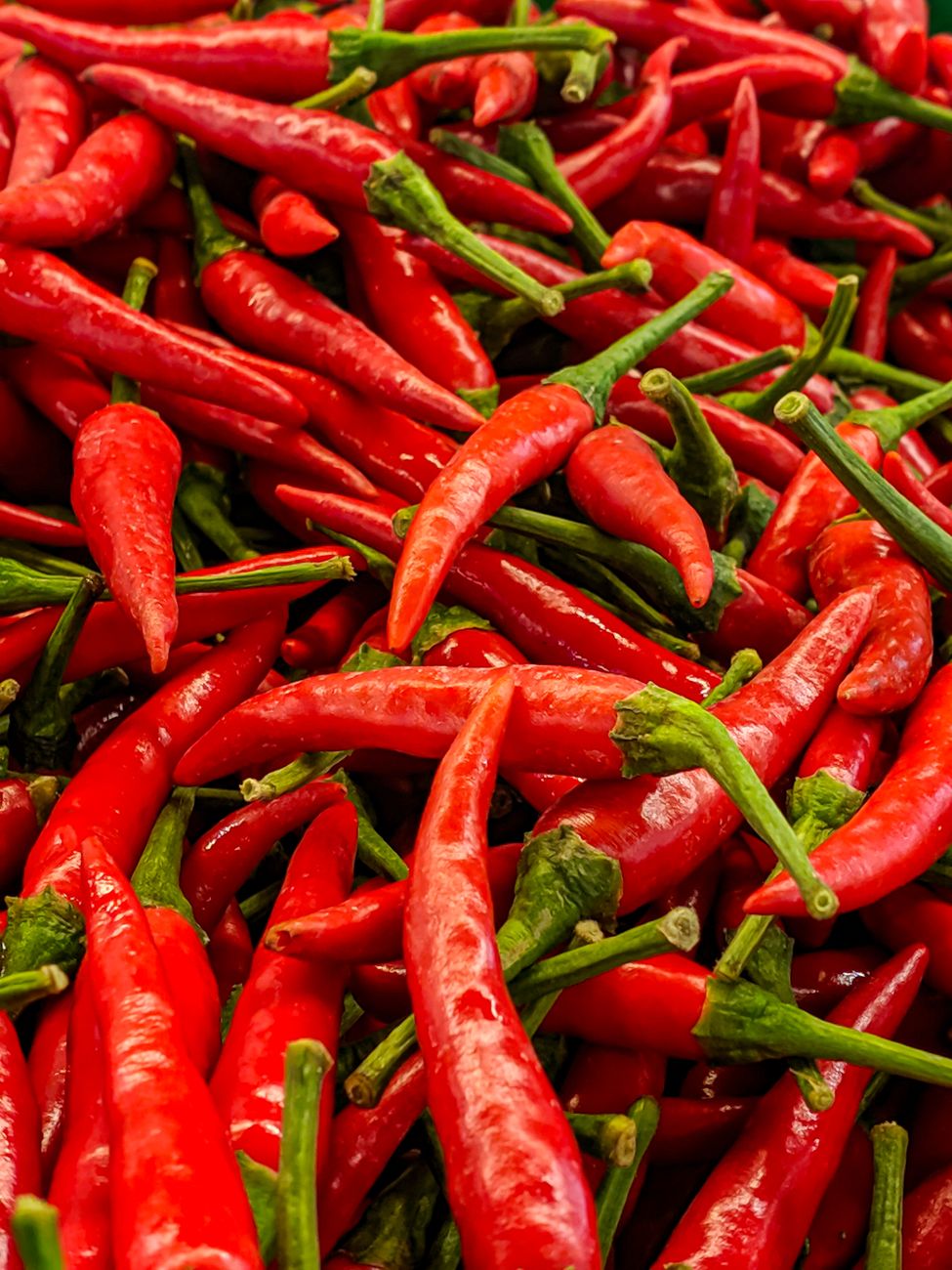
Red peppers. The ingredient of wicked harissa.
True Confessions. I do not love all Tunisian food. I HATE harissa, a scorching, blazing red sauce that is a mainstay in Tunisian cuisine. Fire food is not for me. I like to savor flavors, different tastes – not have them overpowered by heat. I know. I am outnumbered.
In many dishes harissa is served on the side – optional. In some, like couscous, it is usually a key ingredient. I learned. Just ask. “Hold the harissa.”
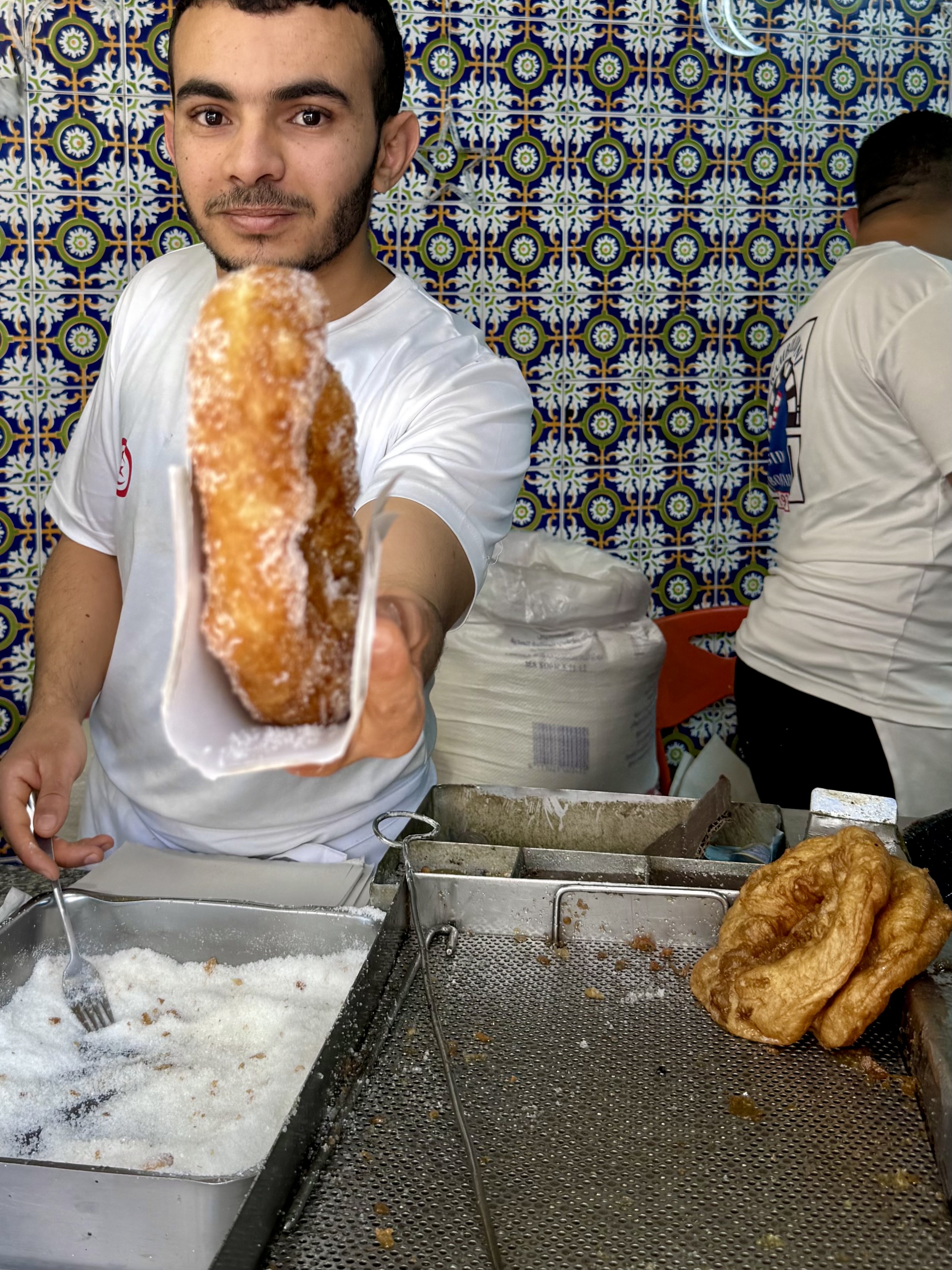
Harissa plays no role is one of my favorites: Bambalouni, a light, airy, crispy, deep-fried, large, donut like creation. It’s popular at street stands. It was a breakfast buffet selection at a hotel where I stayed. I’d like to begin every day with a Bambalouni and coffee. Heaven!
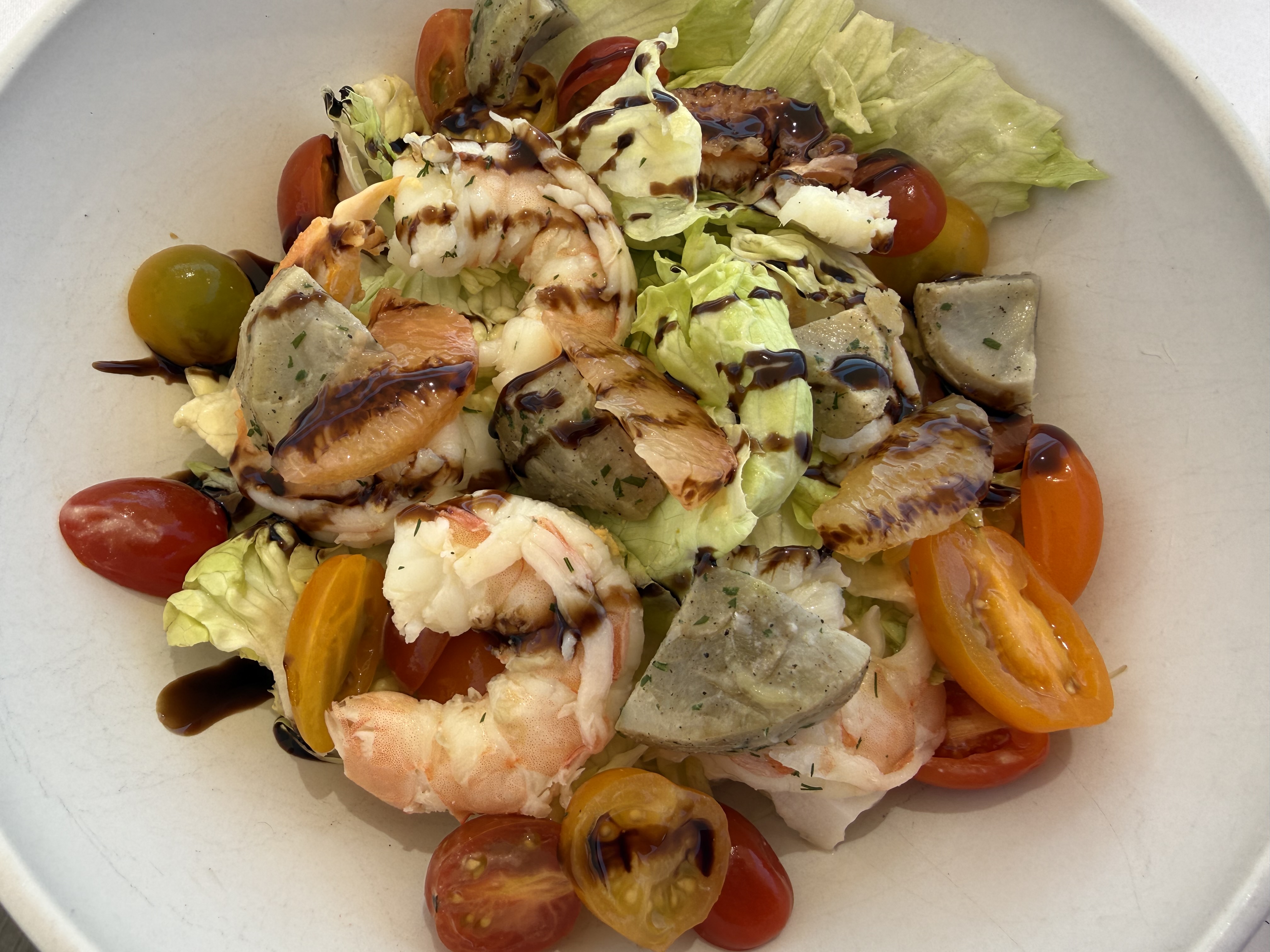
Tunisian salads – usually without harissa – are phenomenal. Above, a shrimp salad. Mechouia is a national favorite: green peppers, tomatoes, caraway, olive oil. Depending on the cook, other ingredients can be added. The secret is grilling the vegetables which gives a distinct, smokey enhancement.
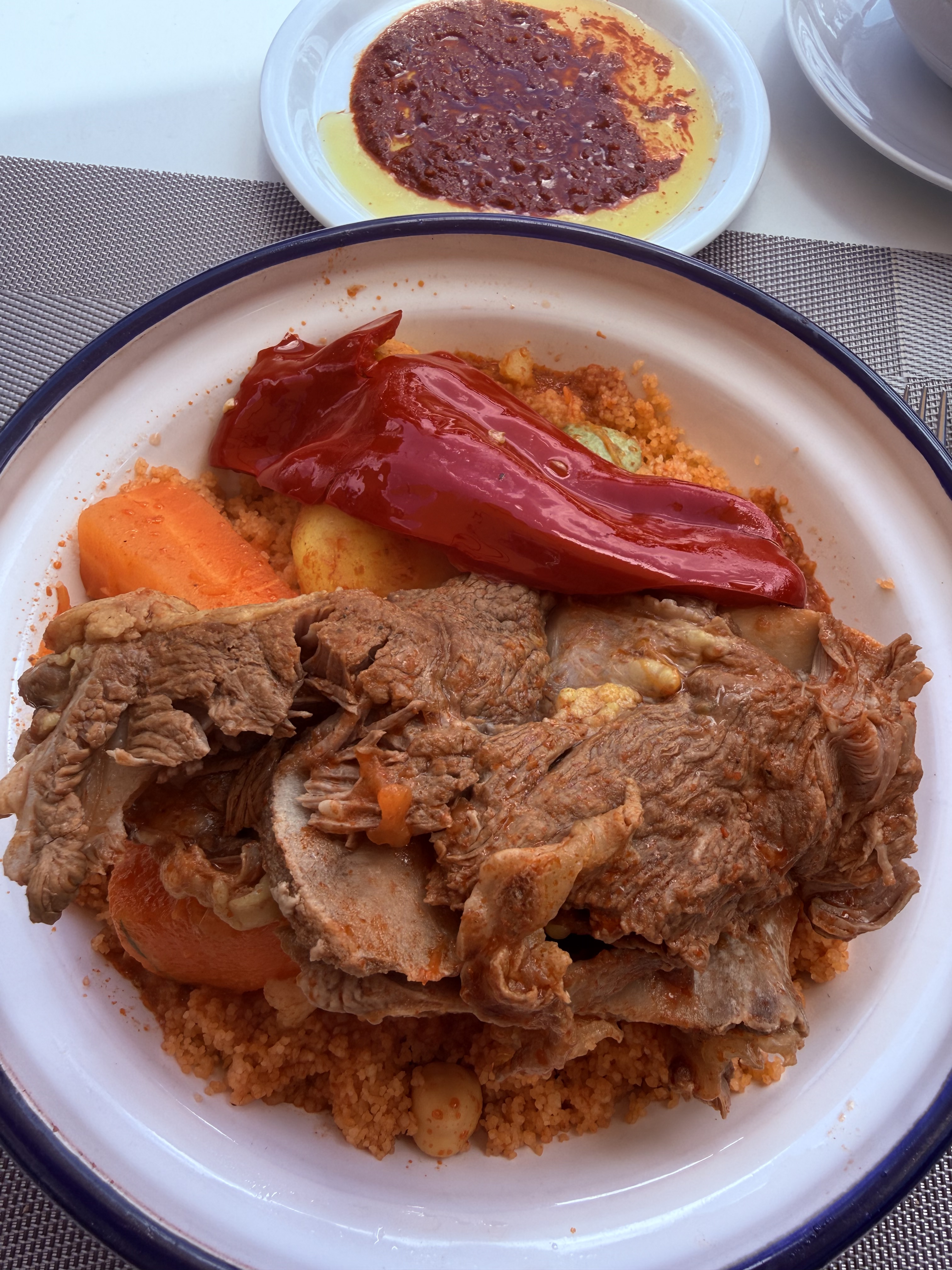
Couscous, above, is popular throughout the Maghreb, i.e. Morocco and Algeria too. It can be made with lamb (most traditional), beef, chicken or fish, added to steamed semolina and vegetables in a spicy sauce, normally including harissa. I ordered the lamb version for one of my first Tunisian meals. – delicious with harissa on the side. I tried a taste with fire — not for me. According to my guidebook, there are 300 different ways to prepare couscous.
Brik. So many versions. All so delicious. Very, very thin dough, like filo, is folded over a combo of ingredients, such as tuna, veggies, cheese, perhaps harissa, then deep fried until crisp and golden. In Tunisia you can buy packages of Brik dough. I may try with packaged filo. Bambalouni for breakfast and Brik for lunch — for me nothing could be better.
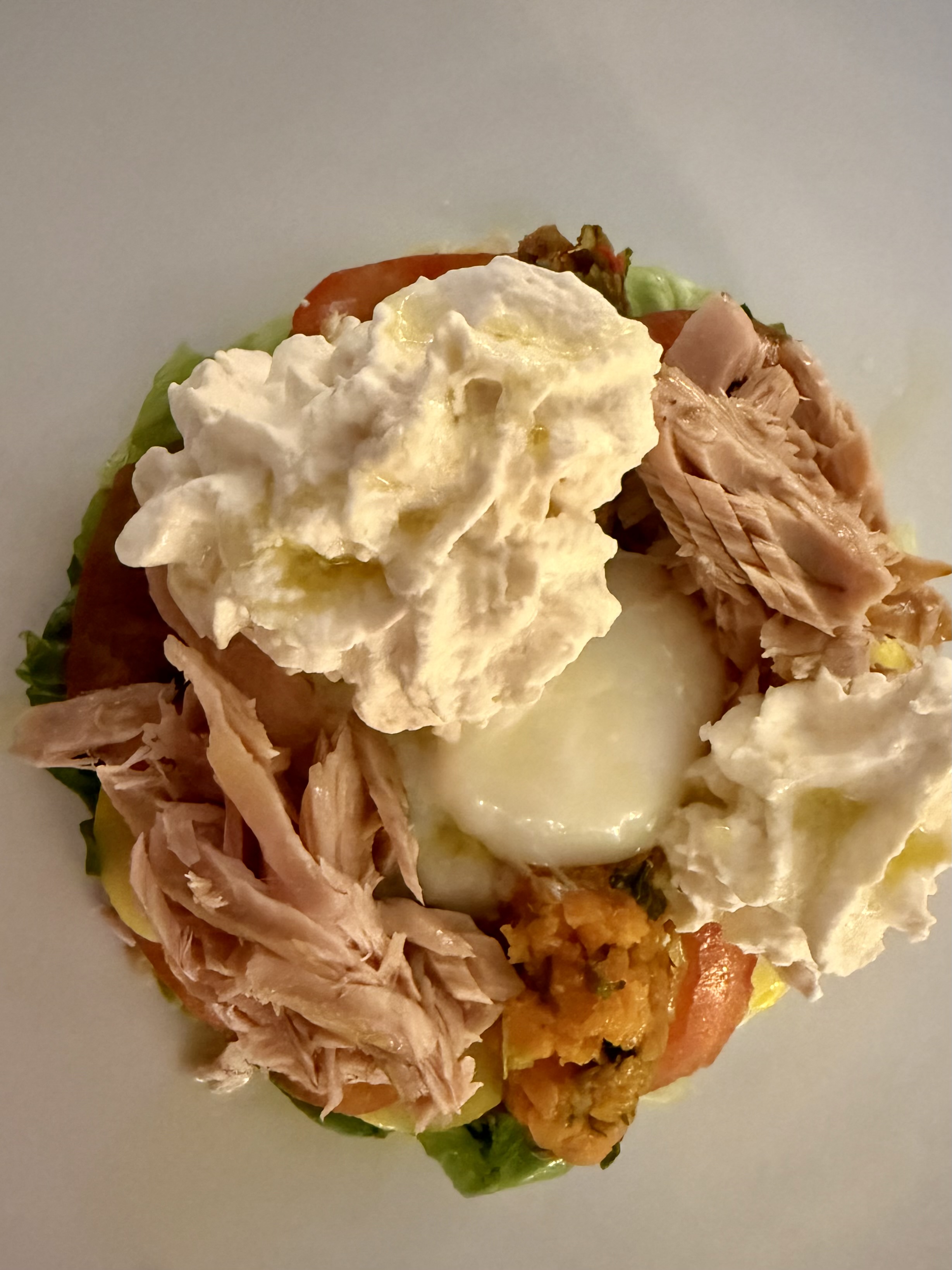
Tuna salad with poached egg, other goodies — and whipped cream. Delicious.
Canned tuna makes a frequent appearance in Tunisian cuisine — in innovative salads or sandwiches, combined with other goodies, and always a delight. An egg, usually soft boiled, is another frequent Tunisian ingredient. The gooey yellow is an added treat.
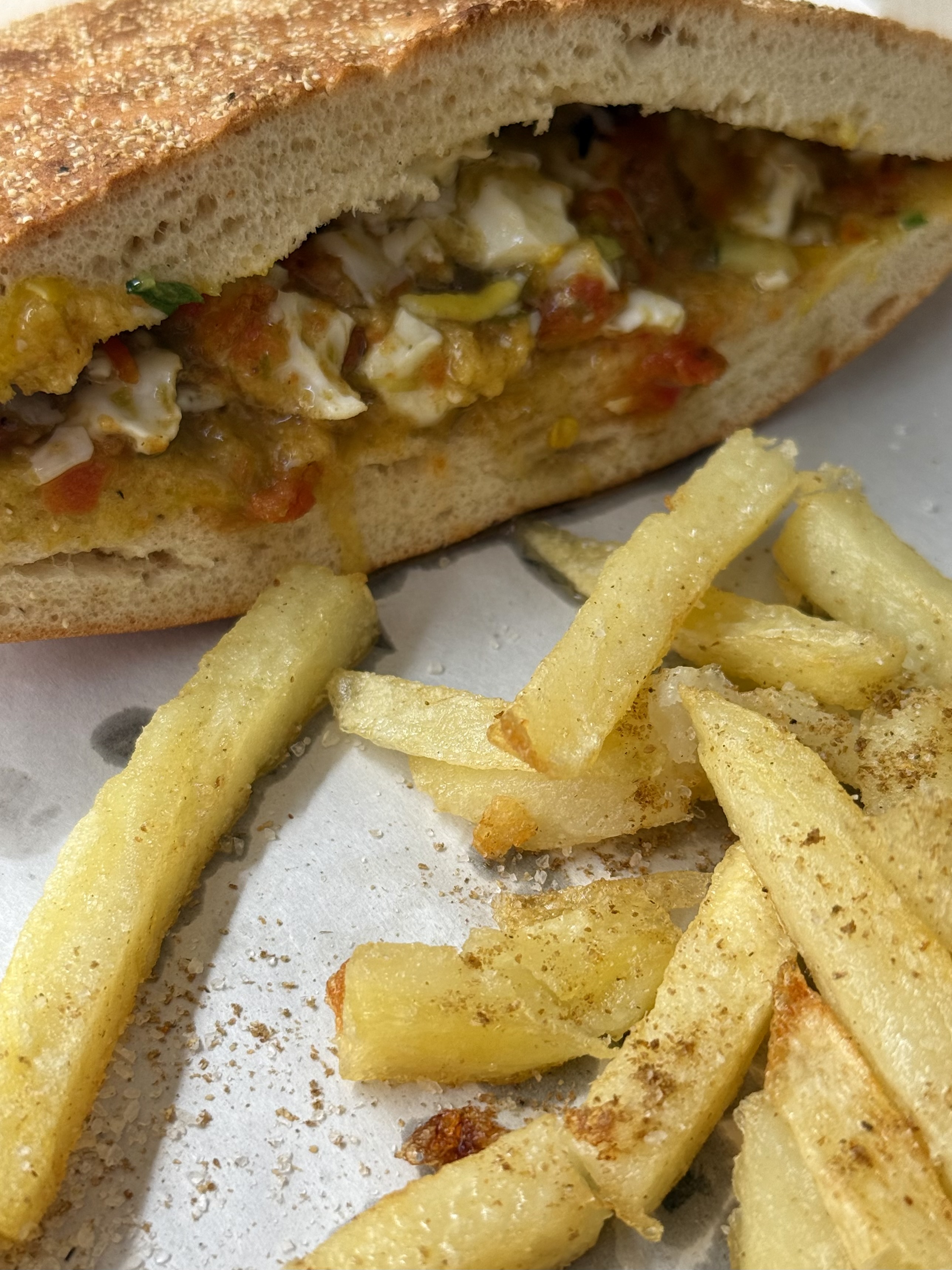
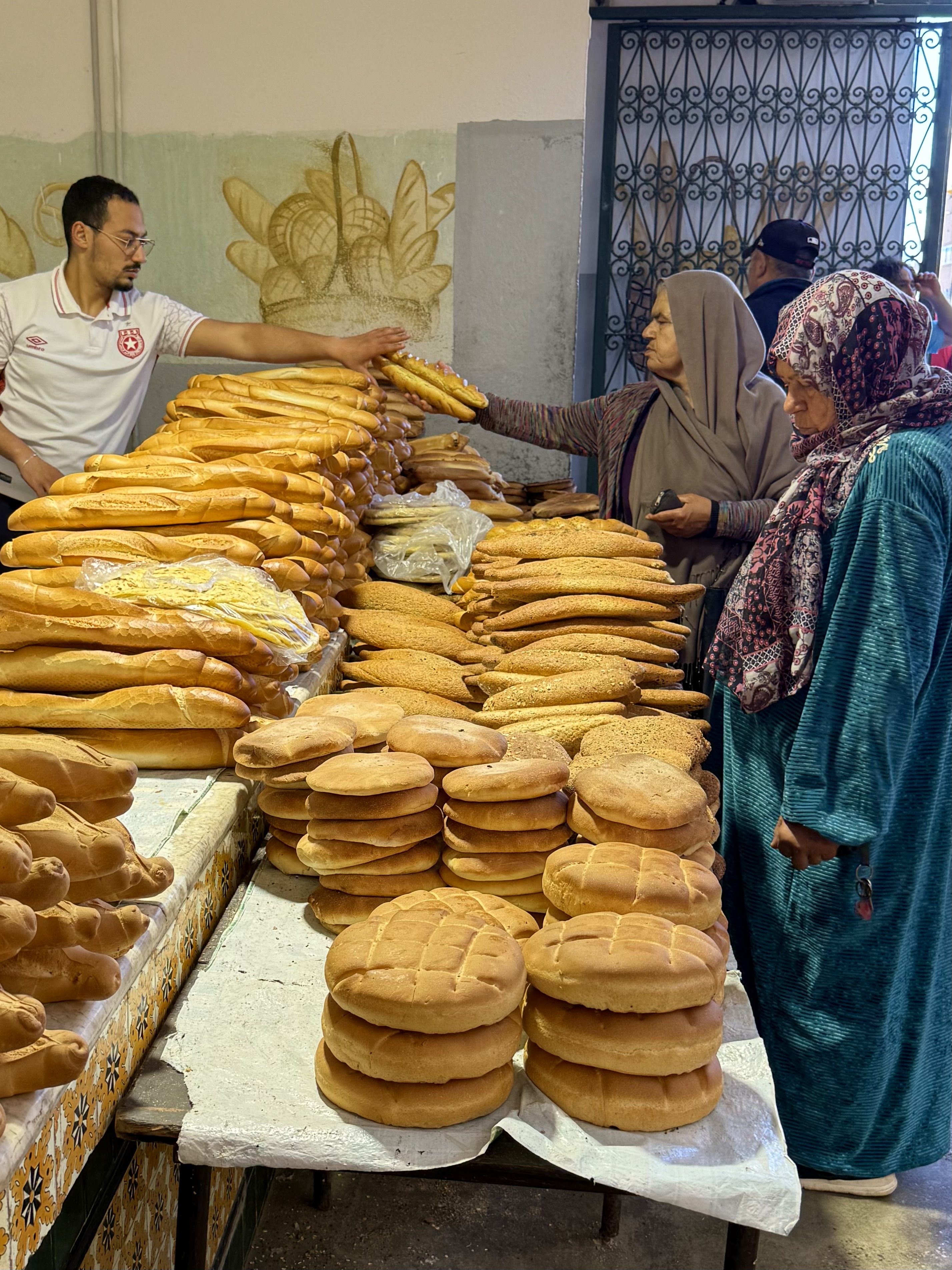
Kafteji sandwich, left. Tunisians eat bread with every meal . There are numerous varieties, including baguettes.
Kafteji Vegetables star in Tunisian cuisine. Here they are fried, finely chopped together, combined with an egg as mentioned above, harissa, and served alone or stuffed into a flatbread sandwich. They are another street food sensation with countless variations. You can “hold the harissa.”
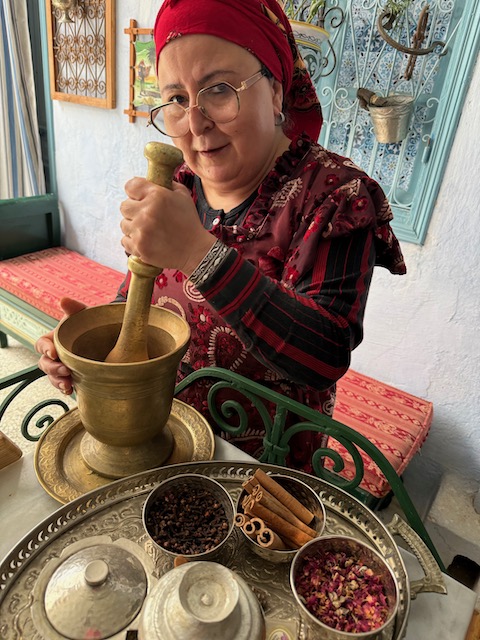
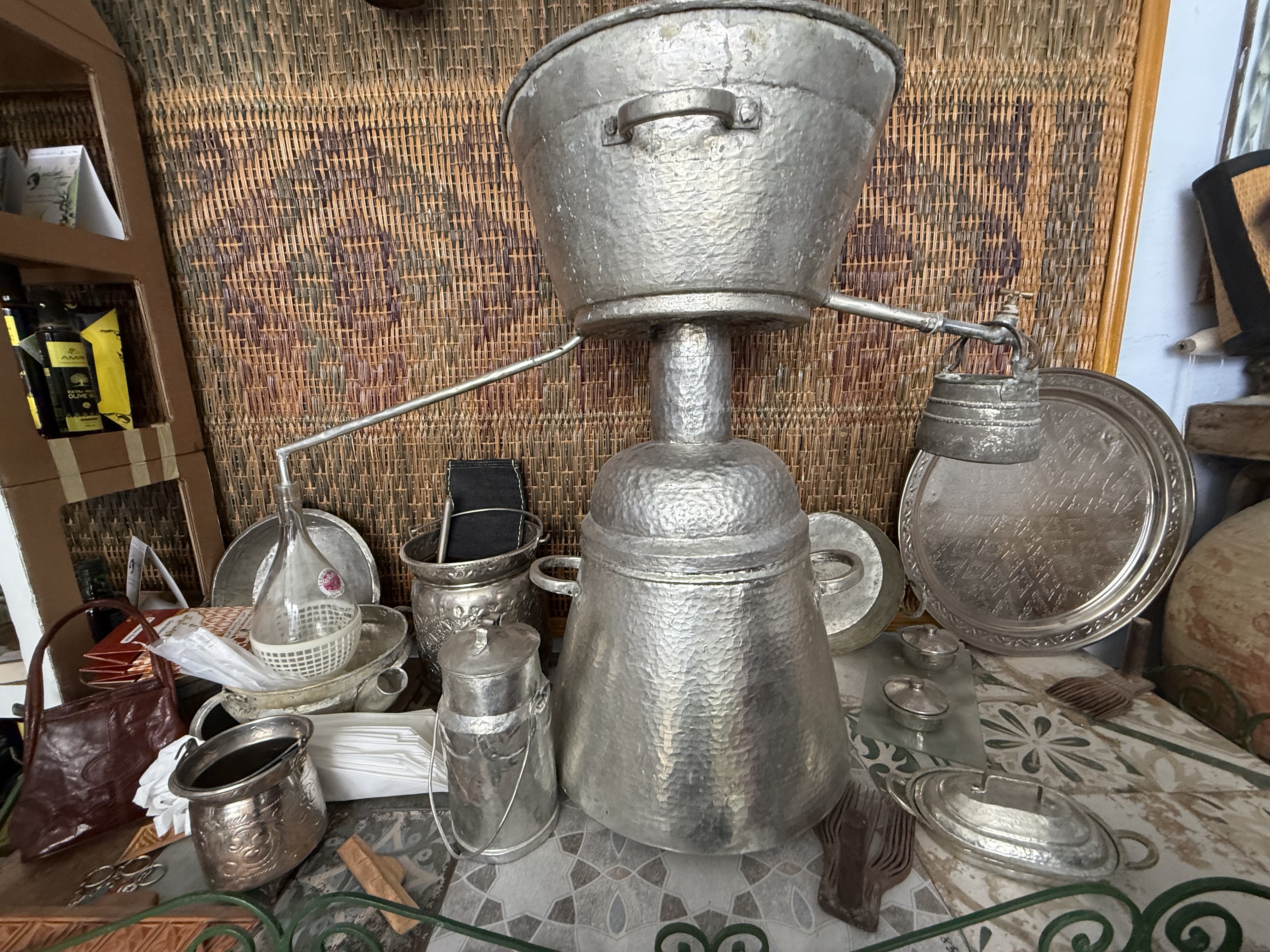
Makrout. Tunisians love pastry. This is THE national sweet, a deep-fried cookie made with semolina, flower water and filled with a date paste mixture. In the town of Kairouan, Mme. Halima offers a Makrout workshop in her home. I learned the preparation intricacies (see video above) and saw the amazing contraption, below, used for flower water distillation.
Mint Tea. Tunisia is a Moslem country, and most Moslems do not drink alcohol. Nonetheless the country produces both beer and wine. I indulge in both, but not on this trip due to the health crisis I suffered during my travels.(see previous post, The Trip that Almost Wasn’t) I did not miss the booze. I became addicted to mint tea which is served everywhere and better than any I can make at home. Must be the Tunisian mint.
A decadent strawberry cake and mint tea for dessert.
This is just a mini sampling of Tunisian food. For more on Tunisia, see previous post, In Awe of Tunisia. More food soon in a post about my stay at Dar El Gaied, an exquisite guest house where I had an at-home private cooking course…with harissa definitely on hold.
If not a Tales and Travel follower, please sign up here. Trust me. It’s safe. Your address iskept private.
More photos below :
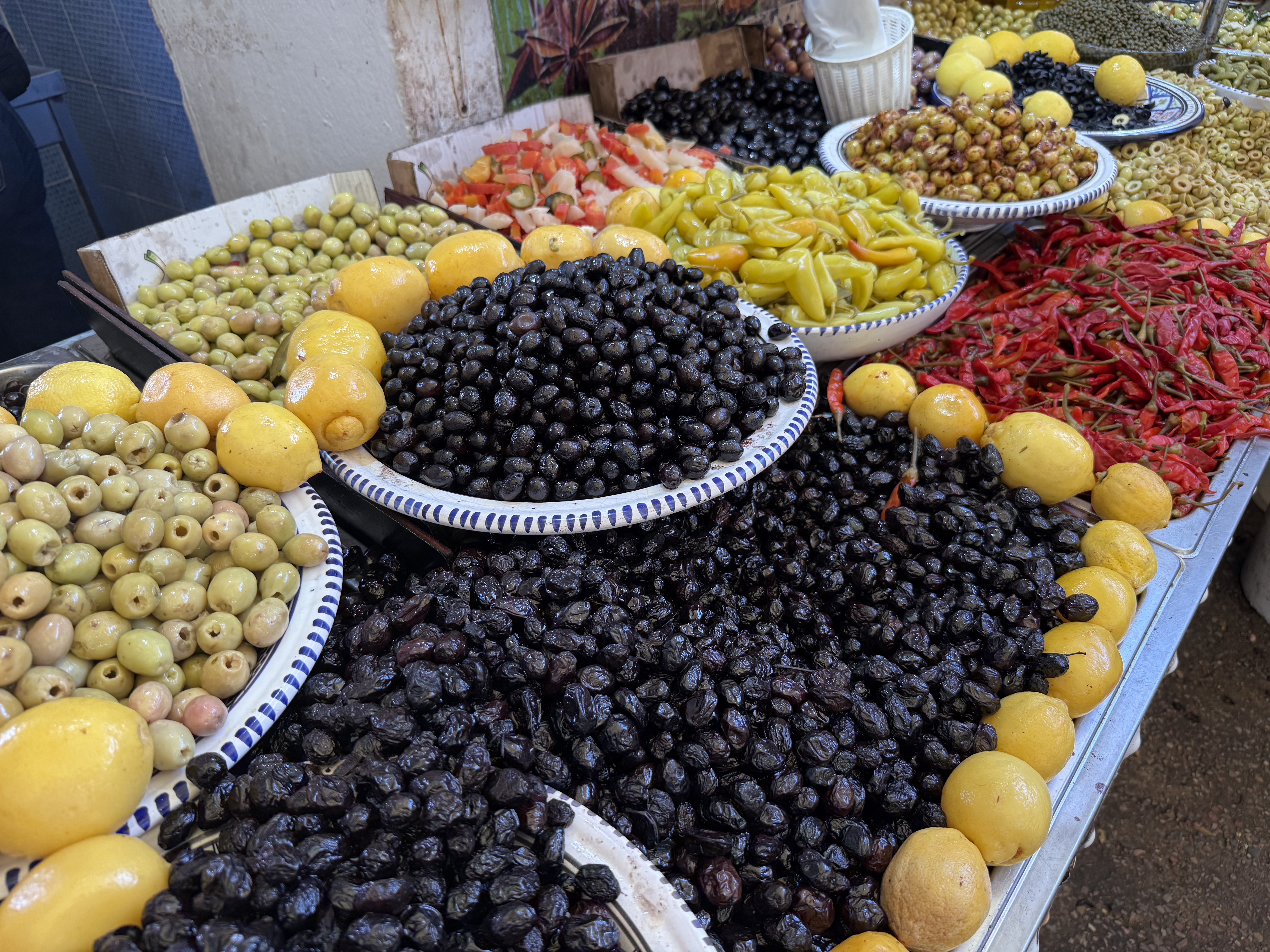
Tunisia is a major producer of olives.
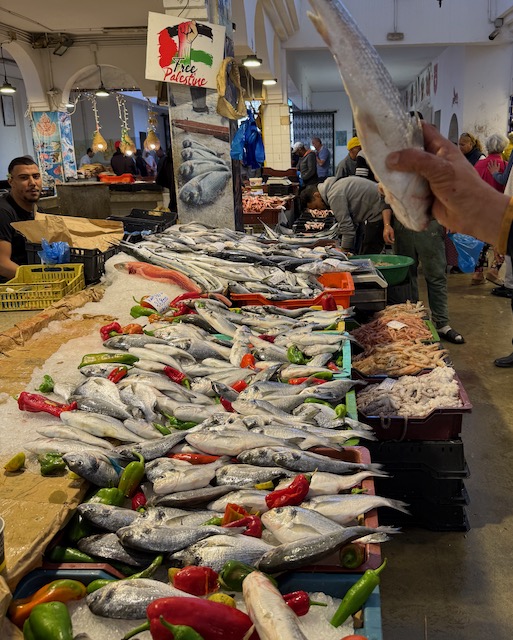
Fish — and Free Palestine.
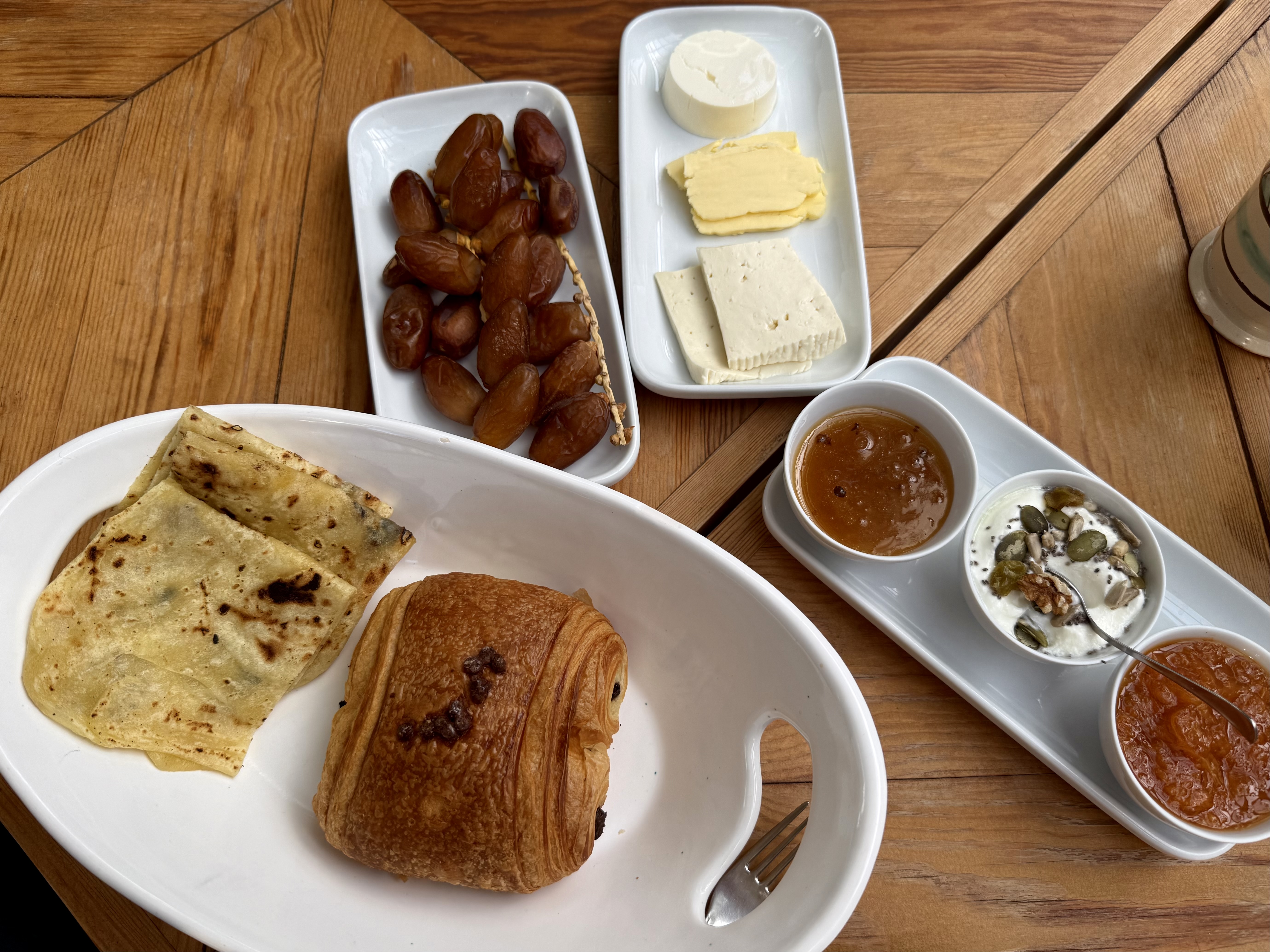
Tunisian breakfast: dates, cheese, pastry, jam and yogurt.
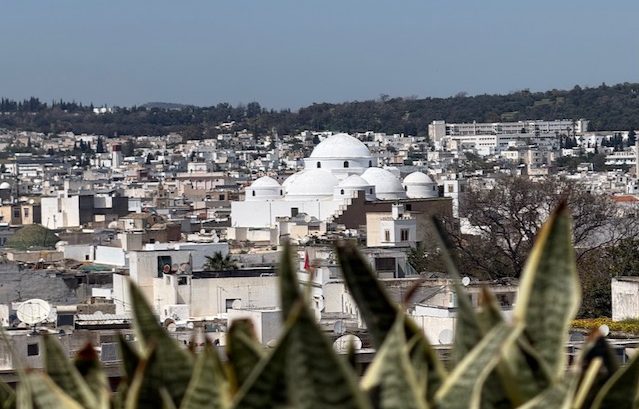
White, white — all the buildings white in Tunis, photo below.
All the white may seem bland, but Tunisia is not. This small North African country is dynamic, vibrant, and a treasure trove of colorful sights: mind-boggling mosaics; joyful, boisterous markets; majestic mosques; intriguing souks, and super friendly, kind, understanding folk. I was so impressed with the later, by the end of my 10-day journey, I thought about reading the Koran and taking up Islam.
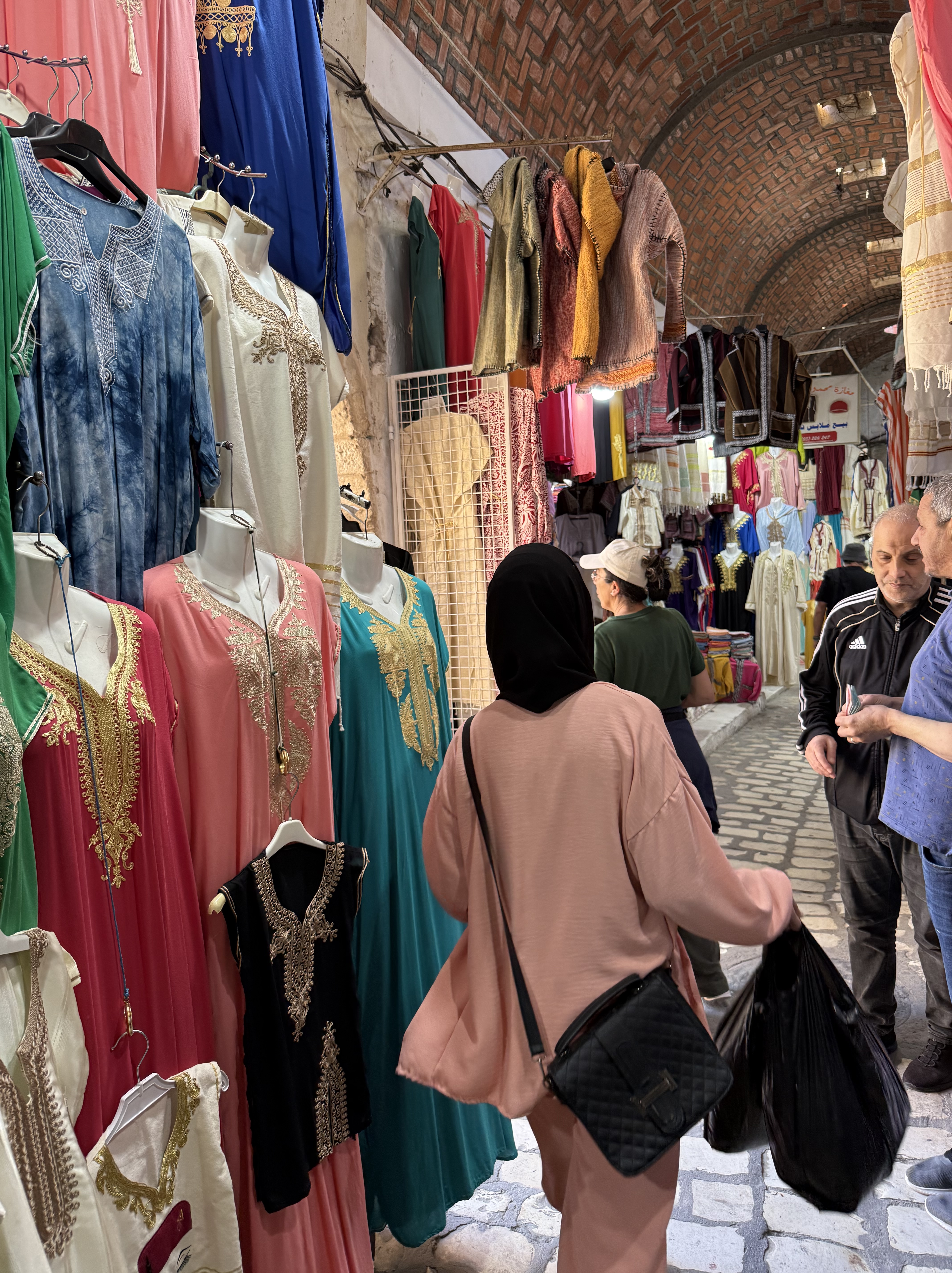
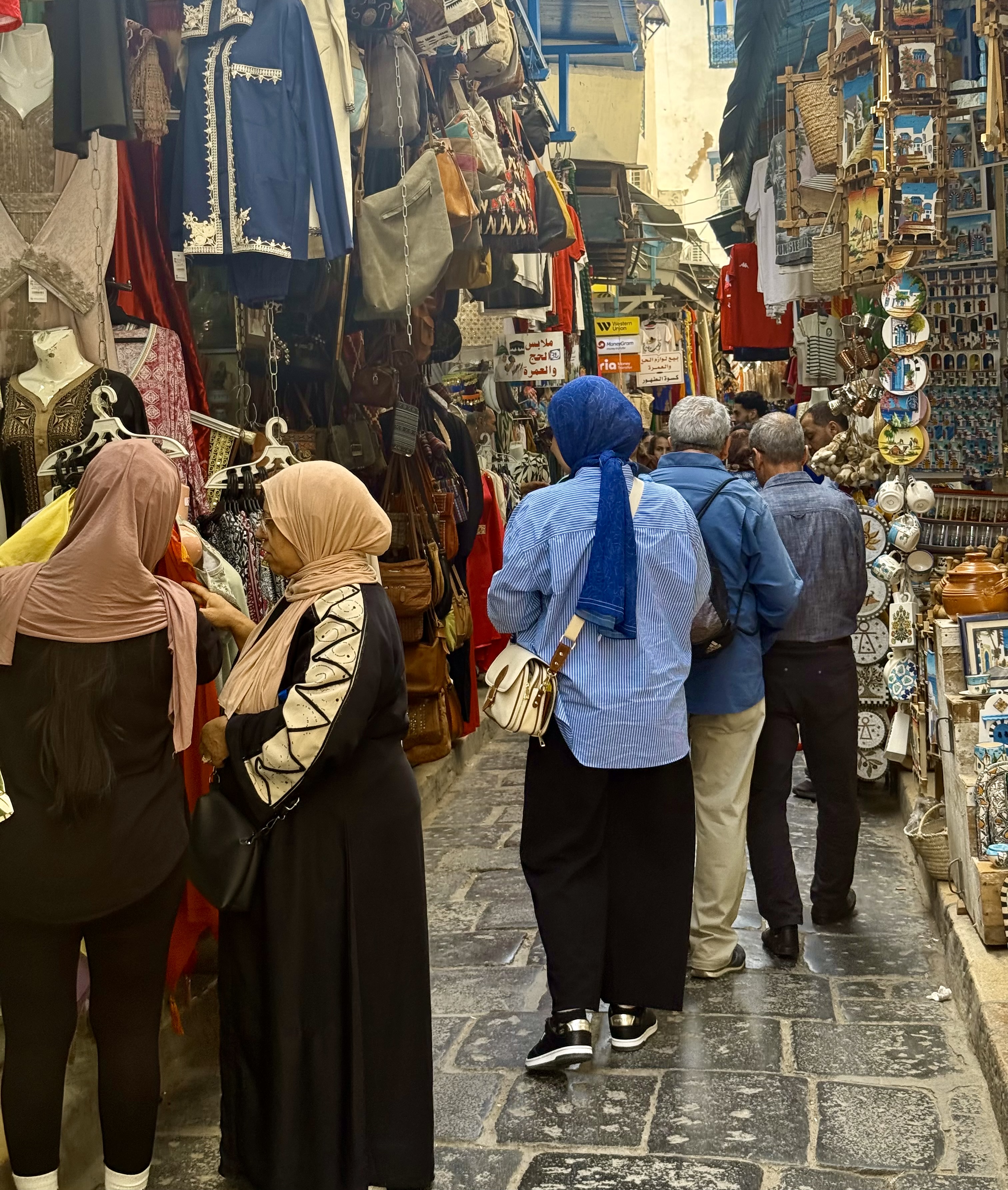
Souks, sinuous alleys with all kinds of merchandise, are endemic to Tunisia.
As the plane from Nice descended to Tunis, not much to see from the window except white buildings everywhere. Later from a roof top restaurant, more of the same. Somehow it seems spooky, but it’s the traditional architectural style and helps reflect the Mediterranean sun to keep interiors cool.
Plenty of color at the indoor market in Tunis.
People — their customs, way of life, beliefs — fascinate me most about travel. Tunisia is an Islamic country, mainly Sunni, but as driver Faouzi pointed out, “We have mosques, we have bars, we have discos.”
Tunisia is the birthplace of the Arab Spring in 2010. Protests led to the fall of the then president and his harsh regime, inspiring similar movements in the Arab world. Today however many Tunisians are more than disappointed. There are serious economic problems and unemployment. Corruption is rampant. Many young Tunisians want to leave the country for a better life in Europe.
As to religion, to each his or her own. It seemed to me that about 50% of the women cover their heads with the hijab. Guide Mondher maintains there is nothing in the Koran about the hijab. The Islamic belief is that the Koran was revealed to Mohammad over about 23 years. However, throughout `many years different scholars and traditions have developed different interpretations. His wife wears the hijab, his 20-something daughter does not. Both he and Faouzi are practicing Muslims. Neither drink alcohol.
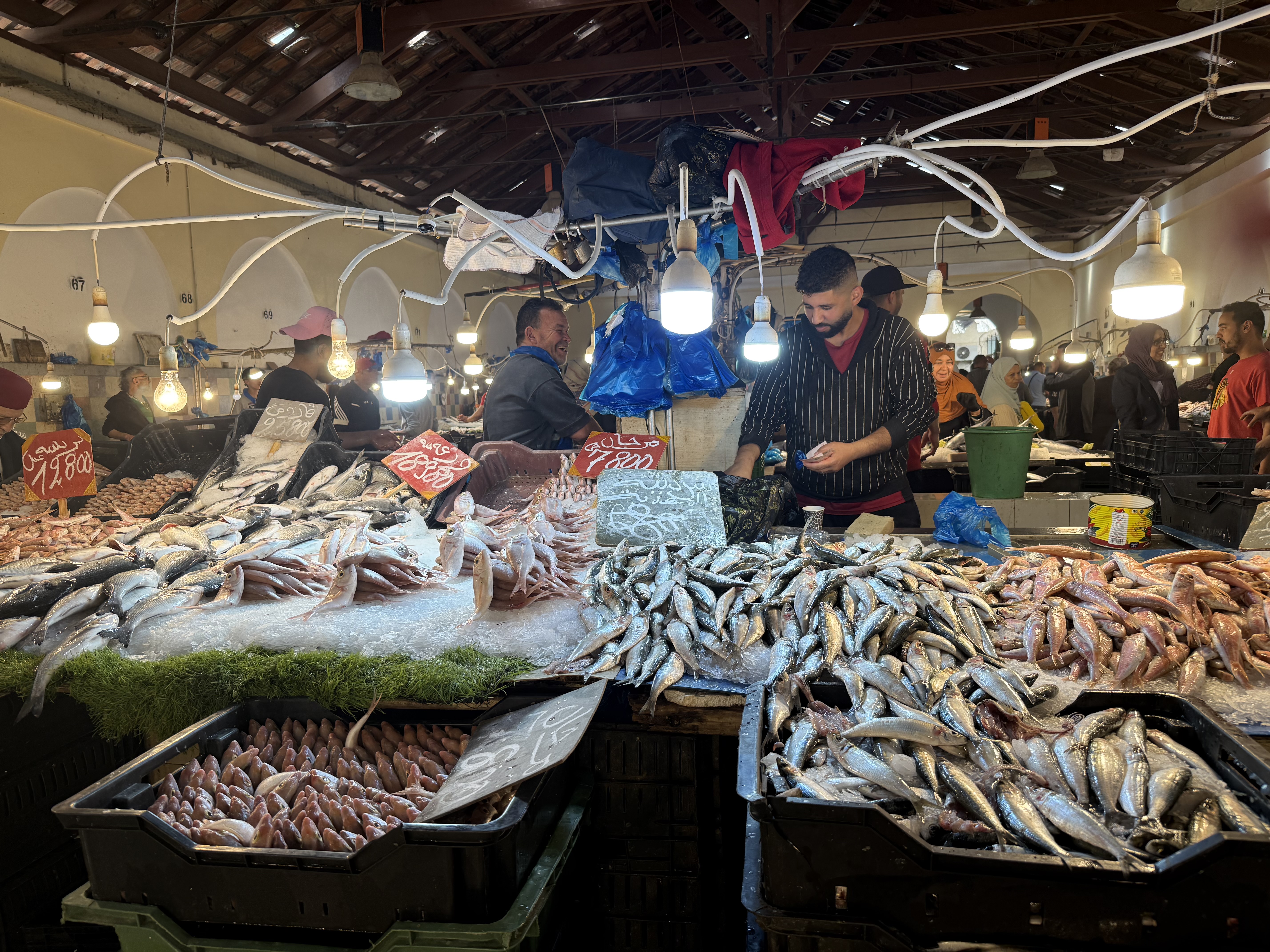
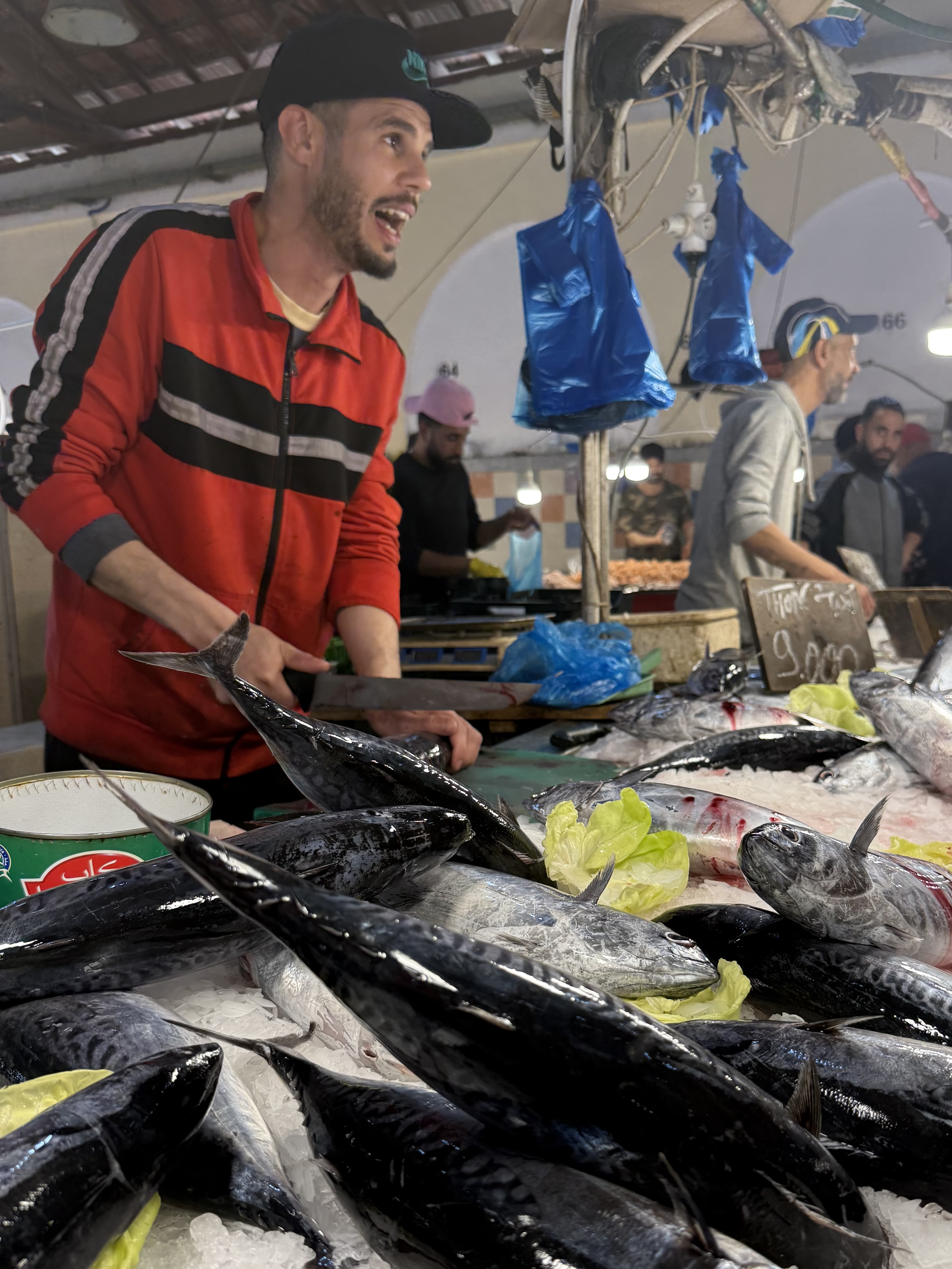
As a foodie, markets are a favorite for me. The fish market in Tunis is like no other, a giant party. Vendors shout, laugh, even sing -definitely a happy place. I was mesmerized and took far too many fish photos.
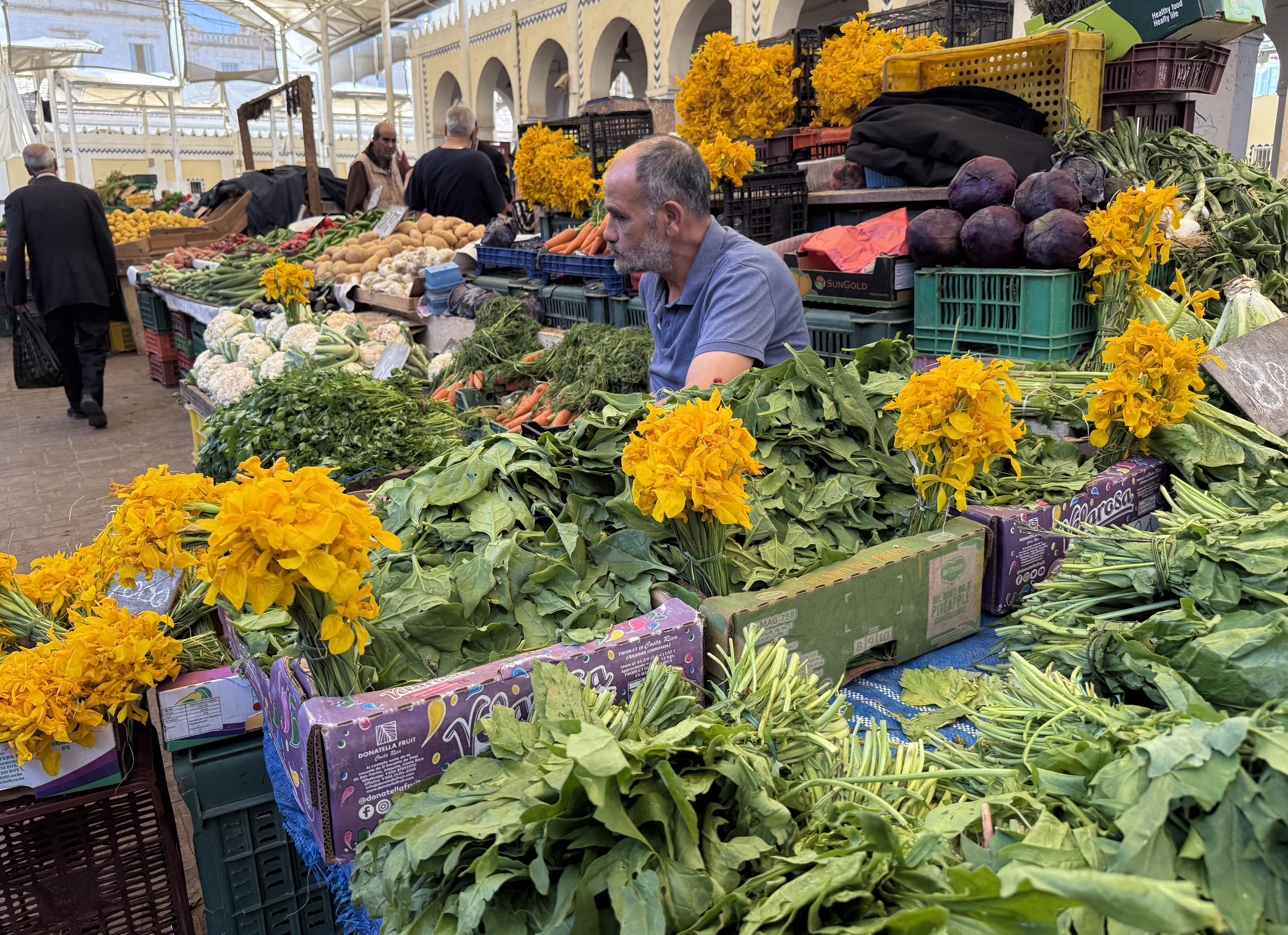
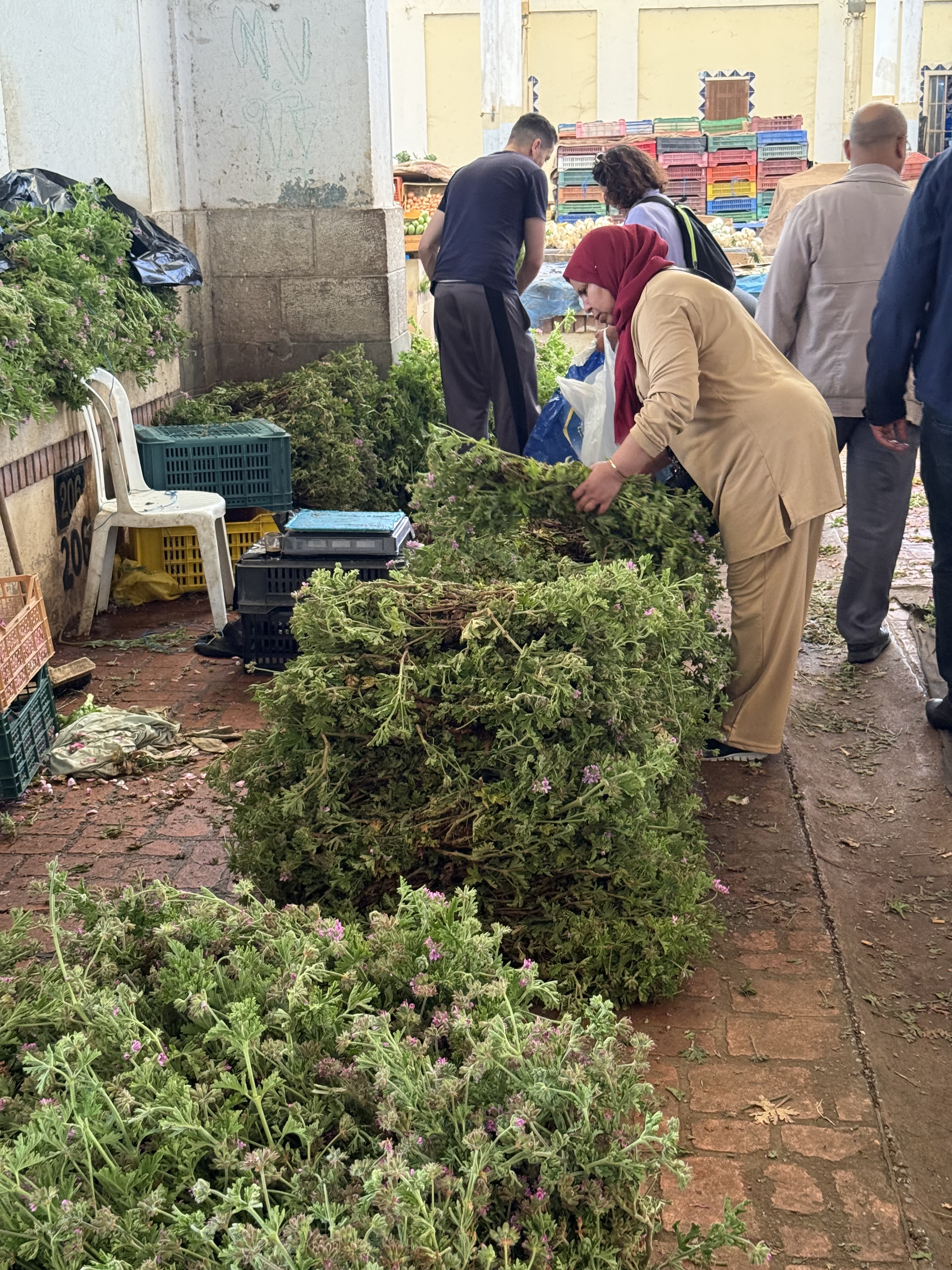
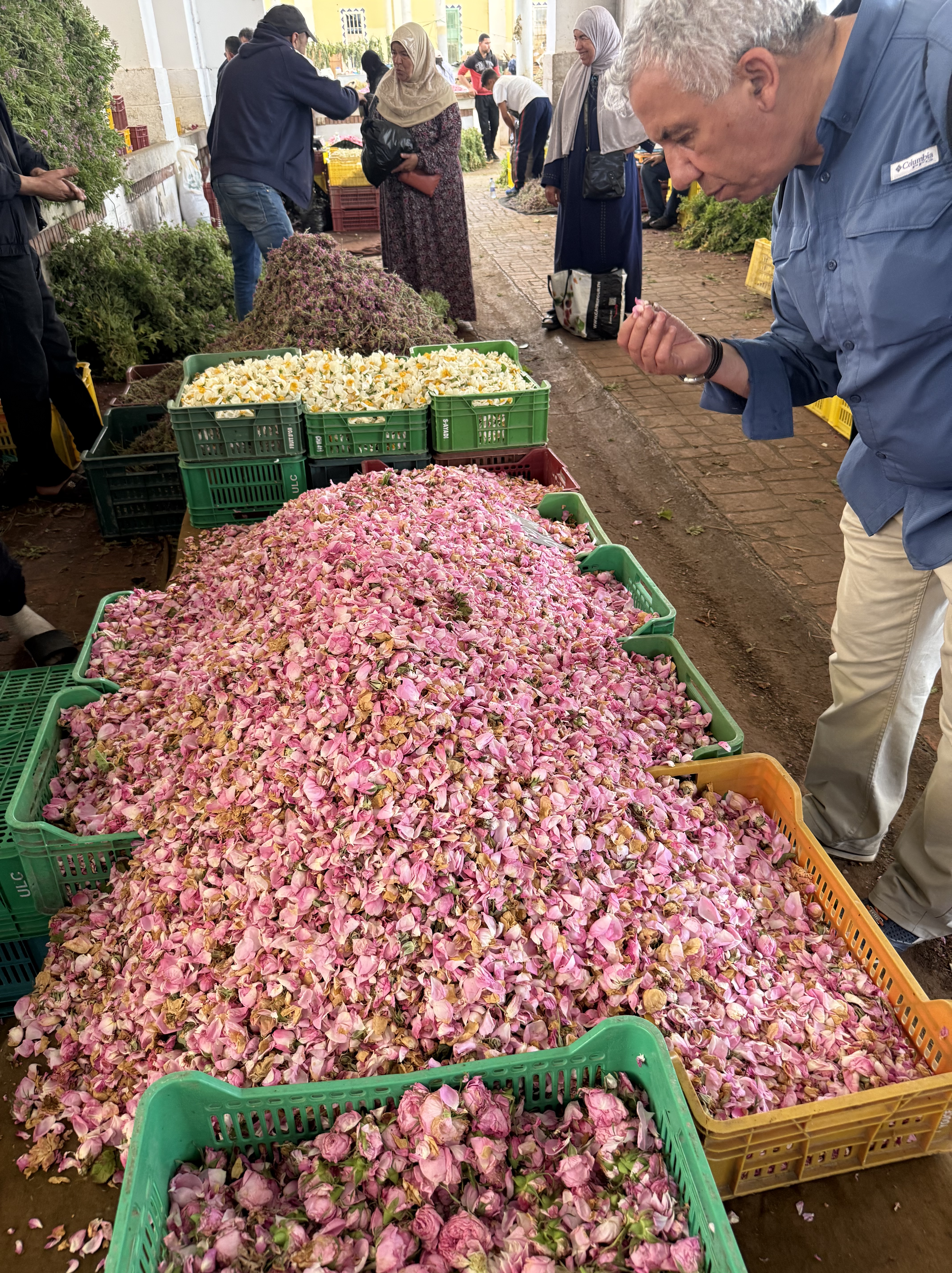
I did not want to leave the fun, uplifting ambience amidst the fish, but a guide steered me to another market section: flowers, but not bouquets for your loved one. Flowers for flower water, a must in every Tunisian household.
Most families have a large, complicated looking filter contraption in their home. The “machine” boils the petals. Filtered flower water, essential for Tunisian pastries and more, drips out. (More on flower water in a future post on Tunisian food and a pastry making session.)
Selecting flowers and petals for flower water
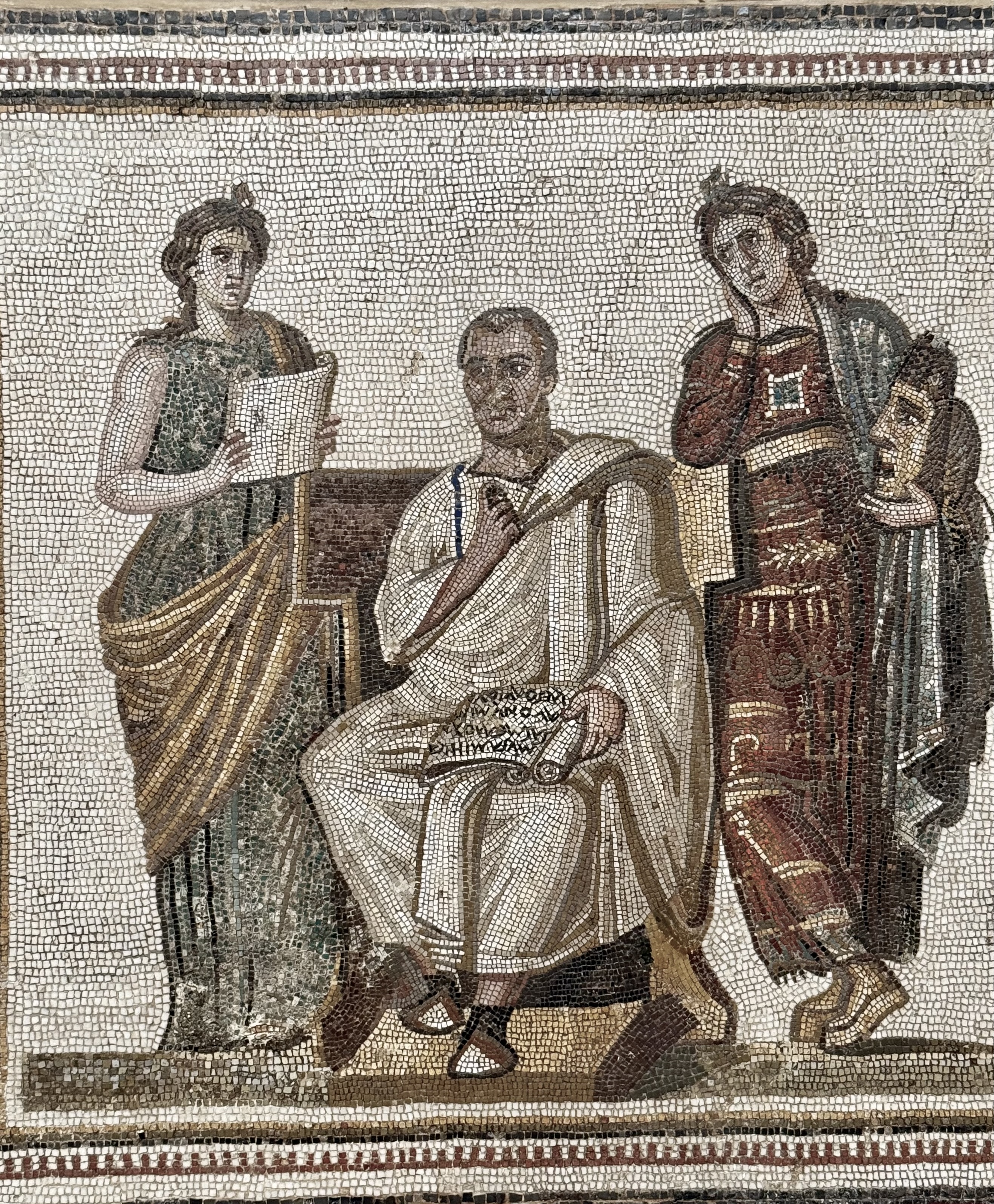
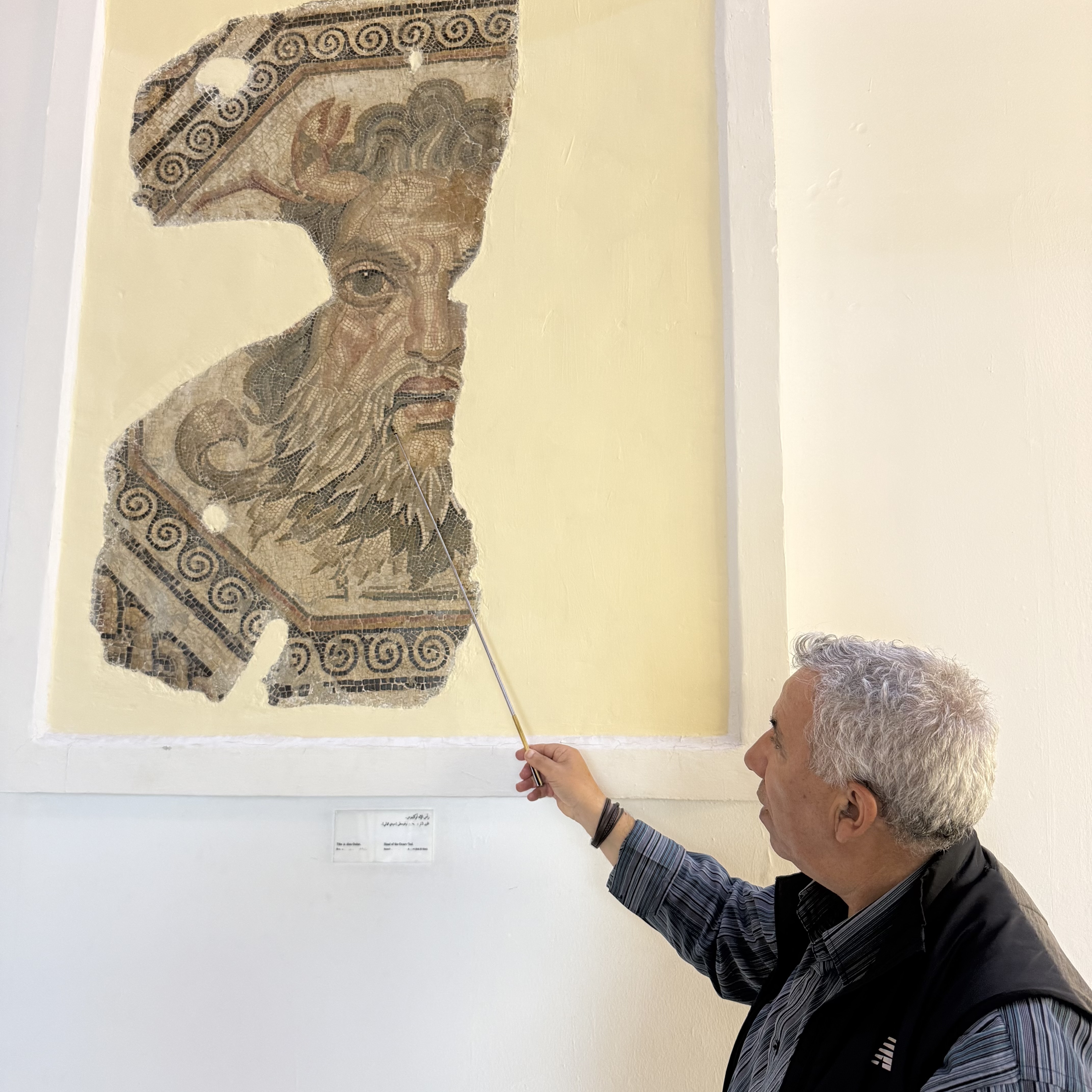
Ancient Roman mosaics are a major Tunisian attraction, thousands displayed in museums. I saw small parts of vast collections at the Bardo museum in Tunis and the archaeological museum in Sousse. Many are in excellent condition, despite being 2,000 years old. At the time, North Africa was part of the Roman Empire, but the artists who made the mosaics were Africans, not Romans, a proud Tunisian pointed out. The mosaics were buried under sand which preserved them. Best visit with a guide who will lead you to the best and provide fascinating explanations.
400 ancient mosaics are displayed in the Bardo Museum in Tunis.
Due to an unexpected hospital stay (see previous post, The Trip that Almost Wasn’t) my travel itinerary was altered. Instead of heading south, I stayed in the north. Towns visited: Tunis, Carthage, Sidi Bou Said, Sousse, Kairouan, Hammamet, Nabeul – all lively and thriving. Less thriving are some of the dusty country villages.
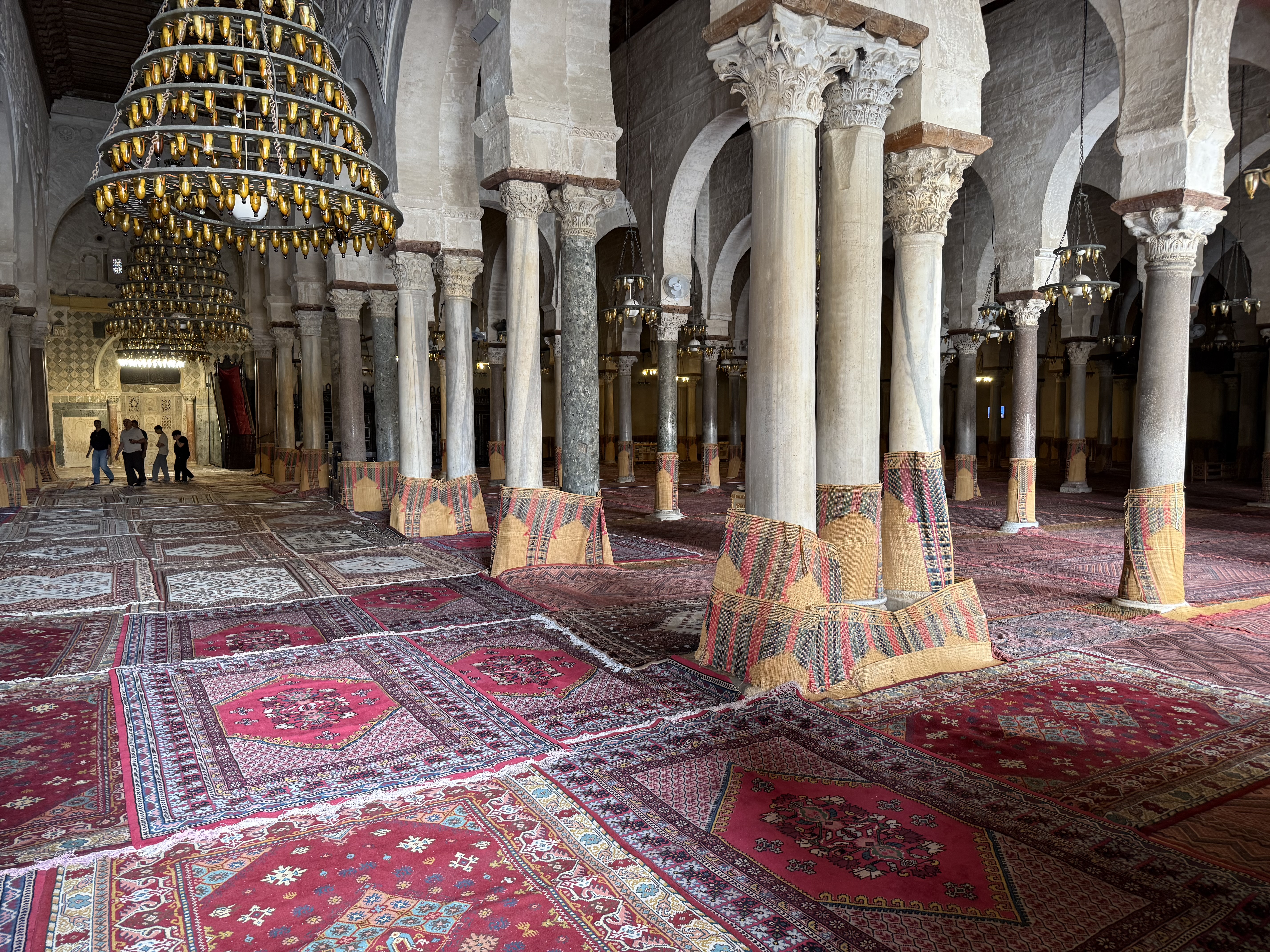
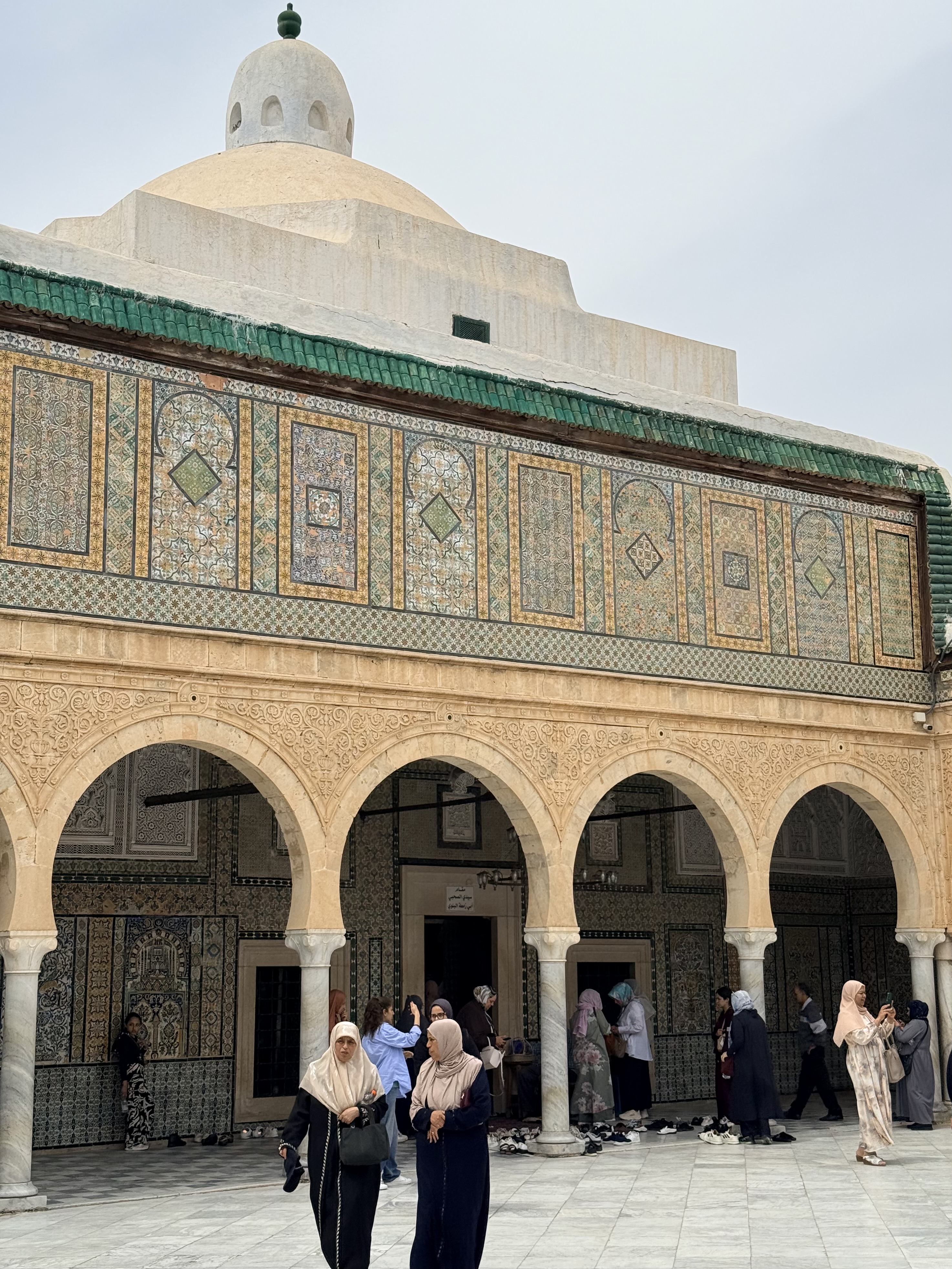
Only Muslims can enter mosques, but at the Grand Mosque in Kairouan, a guard happily takes visitors cell phones for indoor photos from the entrance. You can also peek through bars covering windows of this major Islamic monument whose origins date to the 9th century.
Interior of Grand Mosque with handmade prayer rugs
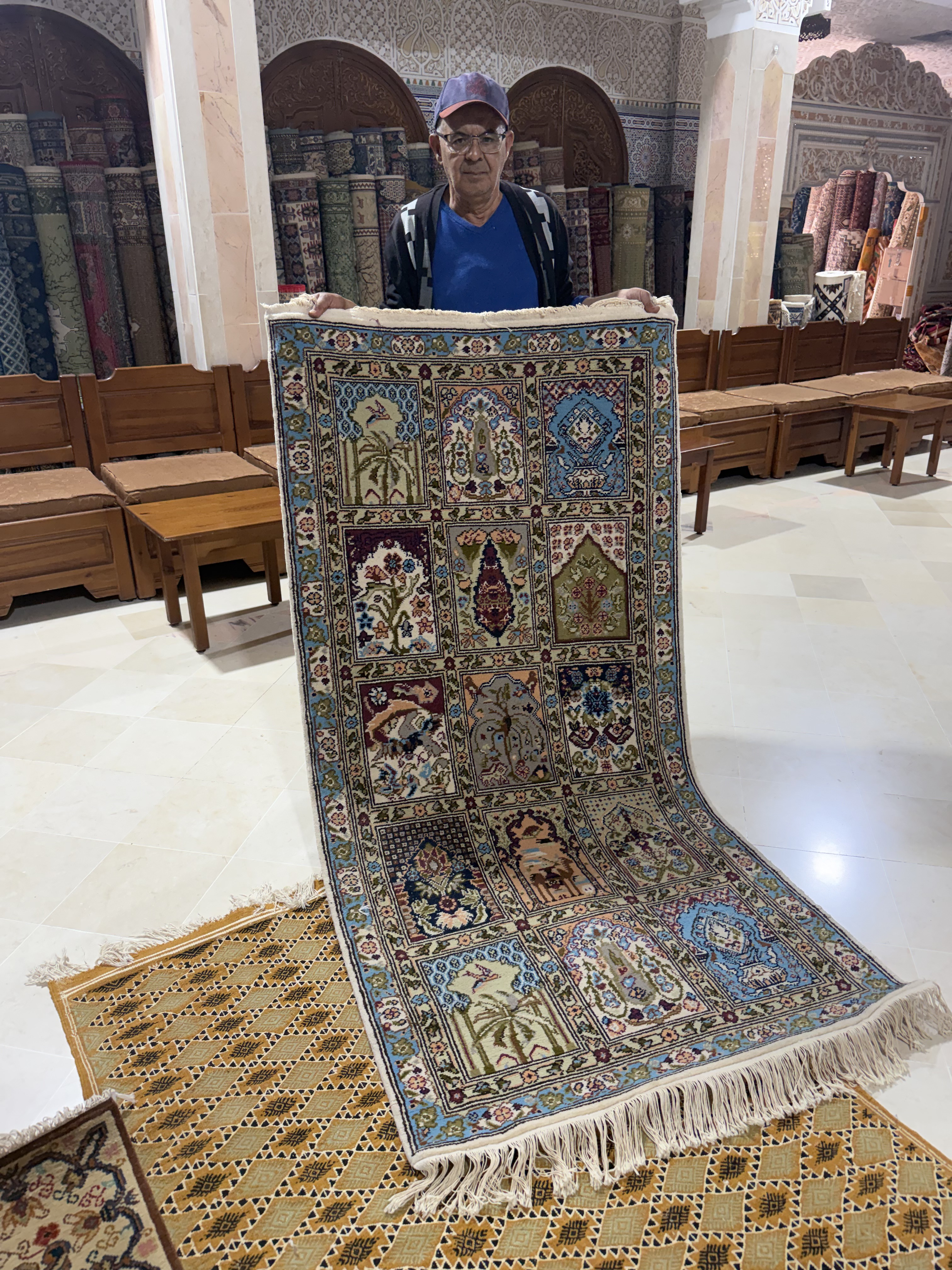
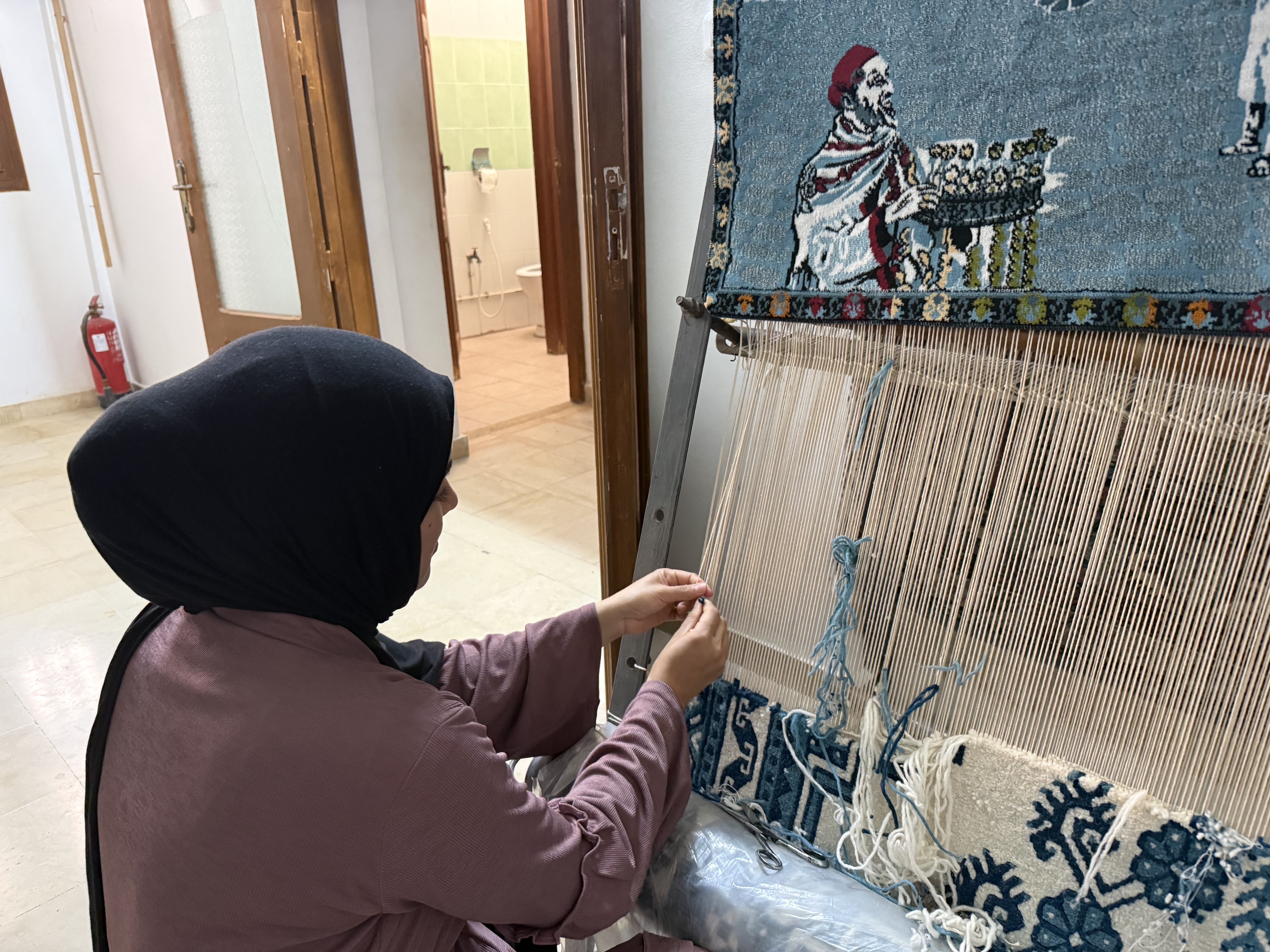
The interior is enormous, covered with carpets, beautiful handmade carpets for which the town is famous. I visited a carpet shop and learned that even today women make the rugs at home and offer them to the mosque. And, sell them to shops where they are a hot item for tourists.
Carpet making is tedious, hand tying thousands of knots and can take many months for one carpet. Cost for a 7’by 5′ carpet from 9,000 euros.
Roads around major Tunisian cities are impressive — in many places five lanes in each direction. Country drives lead through vast areas of green hills and past fields and fields of olive trees, much smaller and younger than the olive trees around me in southern France. Mondher said Tunisian olive oil is renowned and great quantities are exported to Spain where it is sold as Spanish olive oil. Fact or fiction?
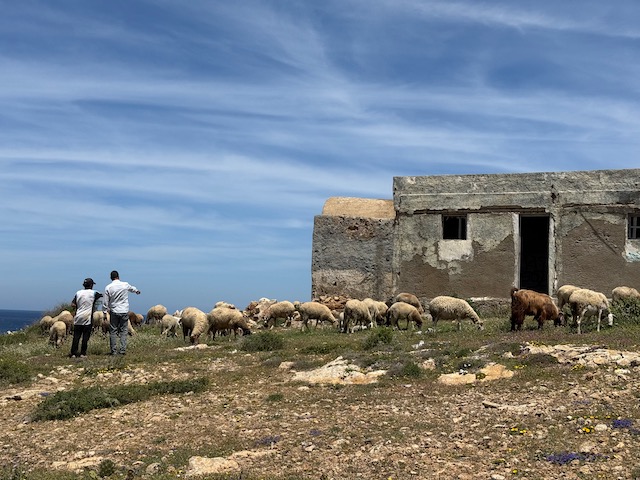
Where were all the sheep? Tunisians eat lots of lamb, but I had not seen the animals – until I was on a drive around Cap Bon and the northern tip of the country. Voilà- a shepherd and his flock on hillside. We stopped. Mondher got out and had a lengthy conversation with the shepherd, inspecting the beasts.
Eid-al-Adha, the Festival of Sacrifice, was approaching. It commemorates the prophet Ibrahim about to sacrifice his son to God, until God intervenes and substitutes a ram. Muslims in Tunisia celebrate the feast and many slaughter a lamb/sheep on that day.
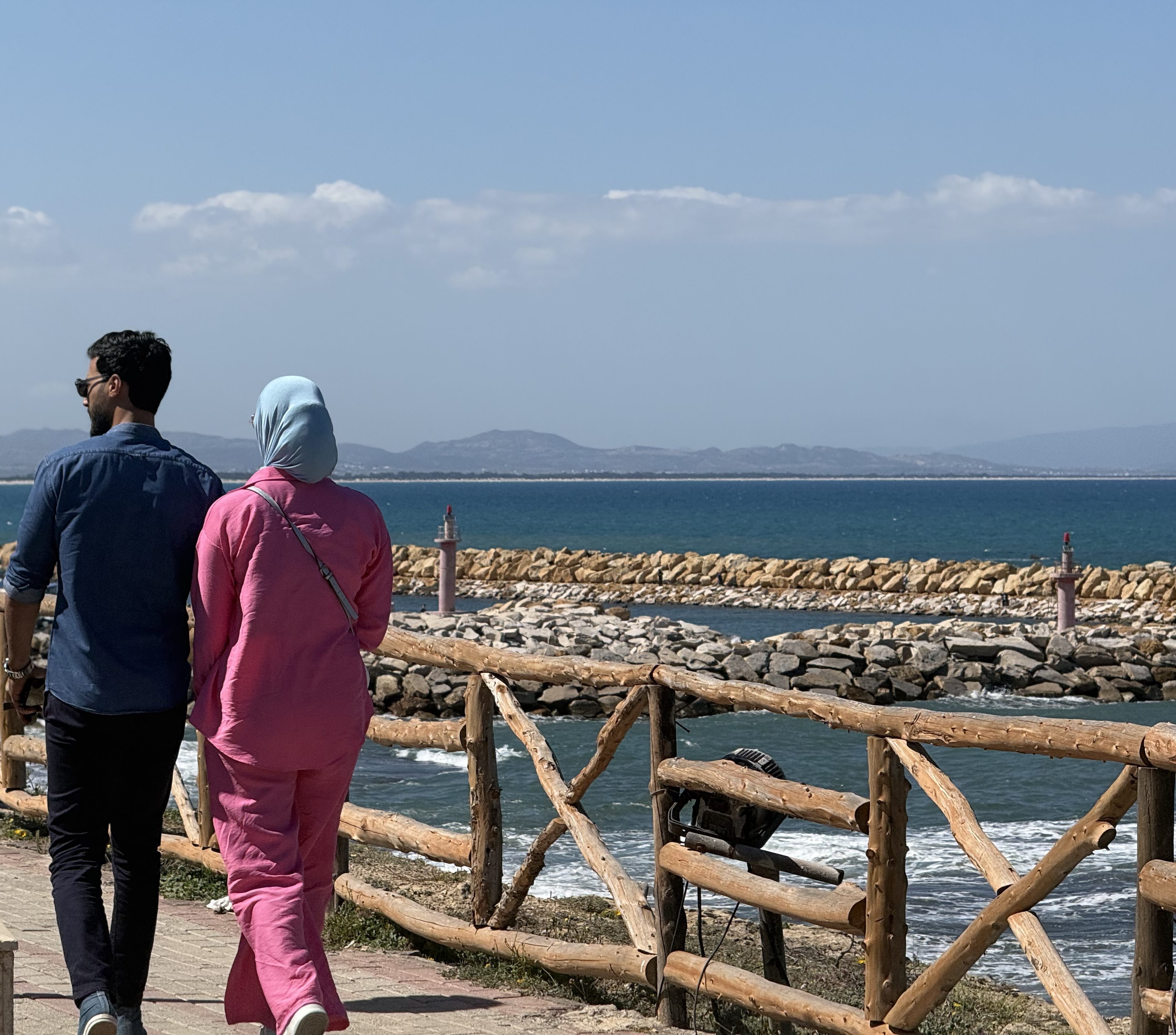
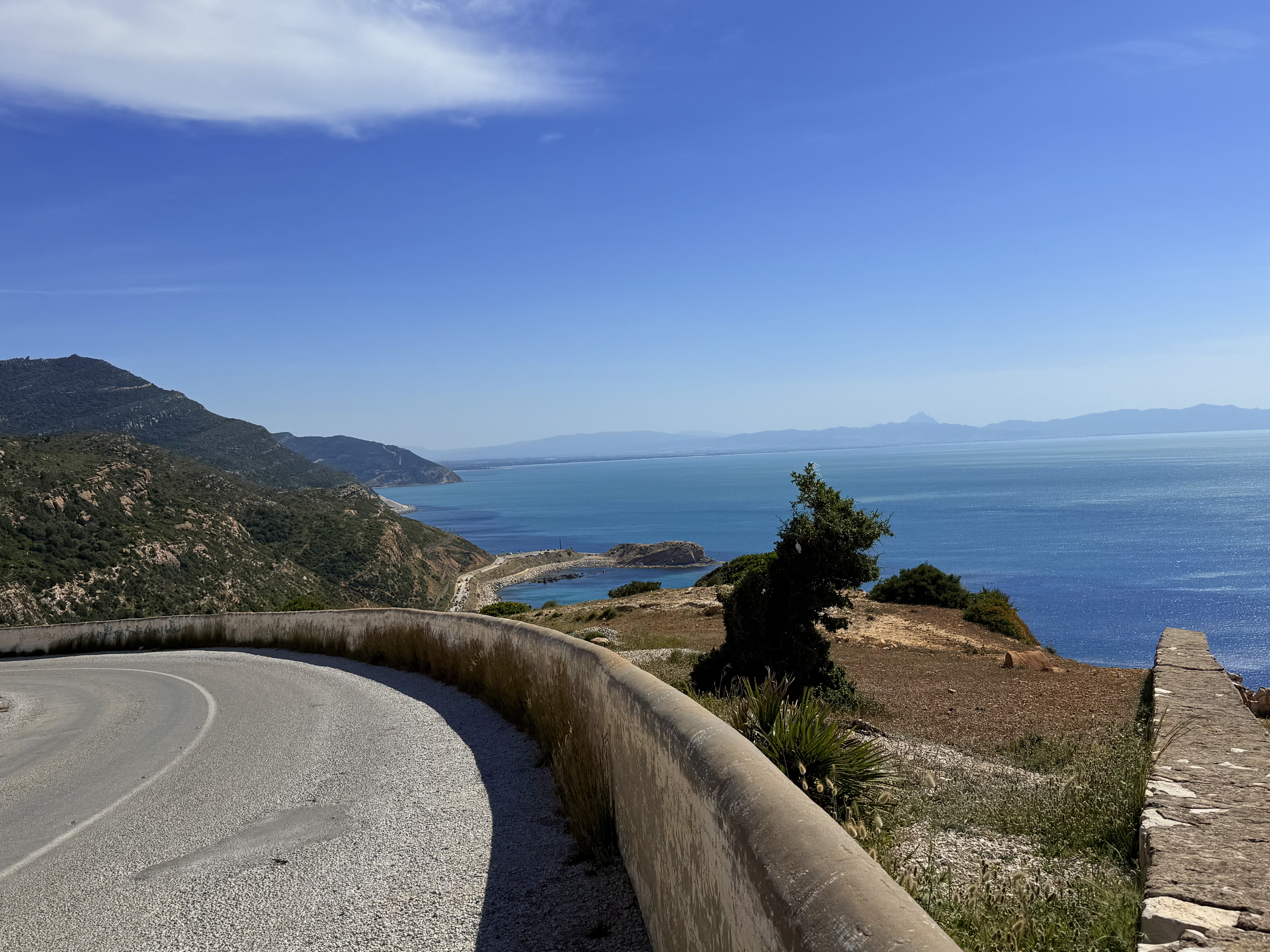
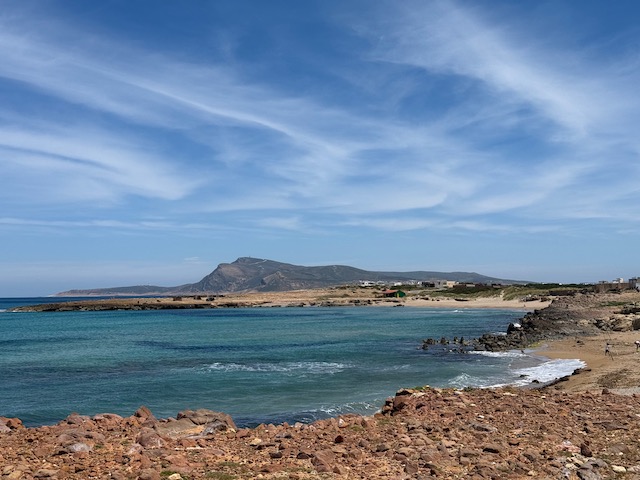
Cap Bon, Tunisia’s northern coast, just 140-160 kilometers from Sicily.
Mondher, who intended to kill a lamb on the holy day, reported that these sheep were too expensive (Fortunately – we did not have to take one home), but the meat would be “good quality.” Too gruesome for me — and driver Faouzi who said he had never killed a sheep, and never would.
On another drive we stopped at a special butcher so Faouzi could buy camel meat, not, however, for the above feast. He says it’s much less expensive than lamb, but good for a family couscous.
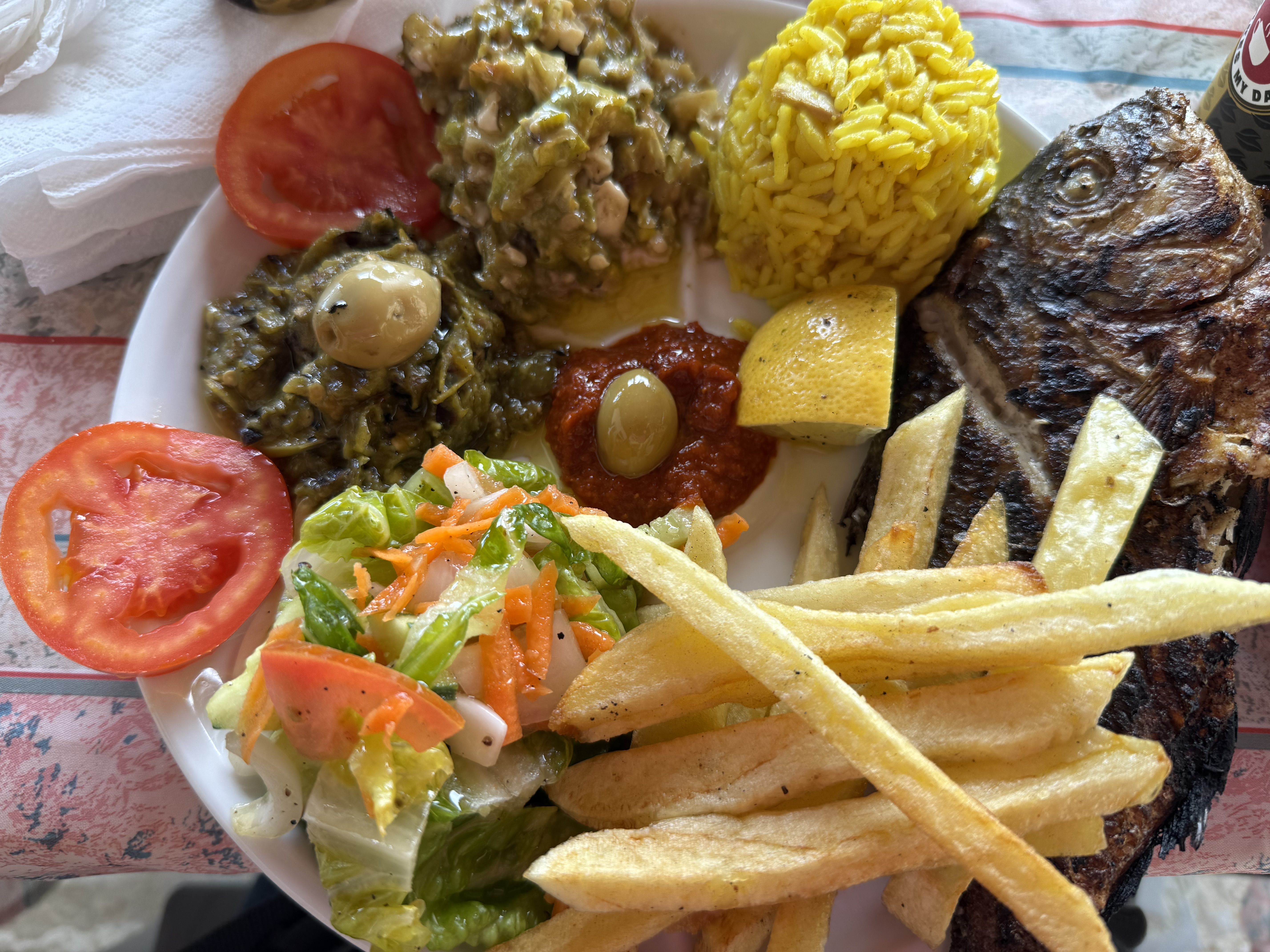
I found restaurant meals reasonable. Grilled fish, fries and more — all for about 9 euros or $1020.
Tunisians spend from 25-35% of their wages on food. Sample costs for meat:
Beef: 45 Tunisian dinar (TND) per kilo (13,5 euros or $15,30).
Lamb: 55-60 TND per kilo ( 16,5 euros or $20.40)
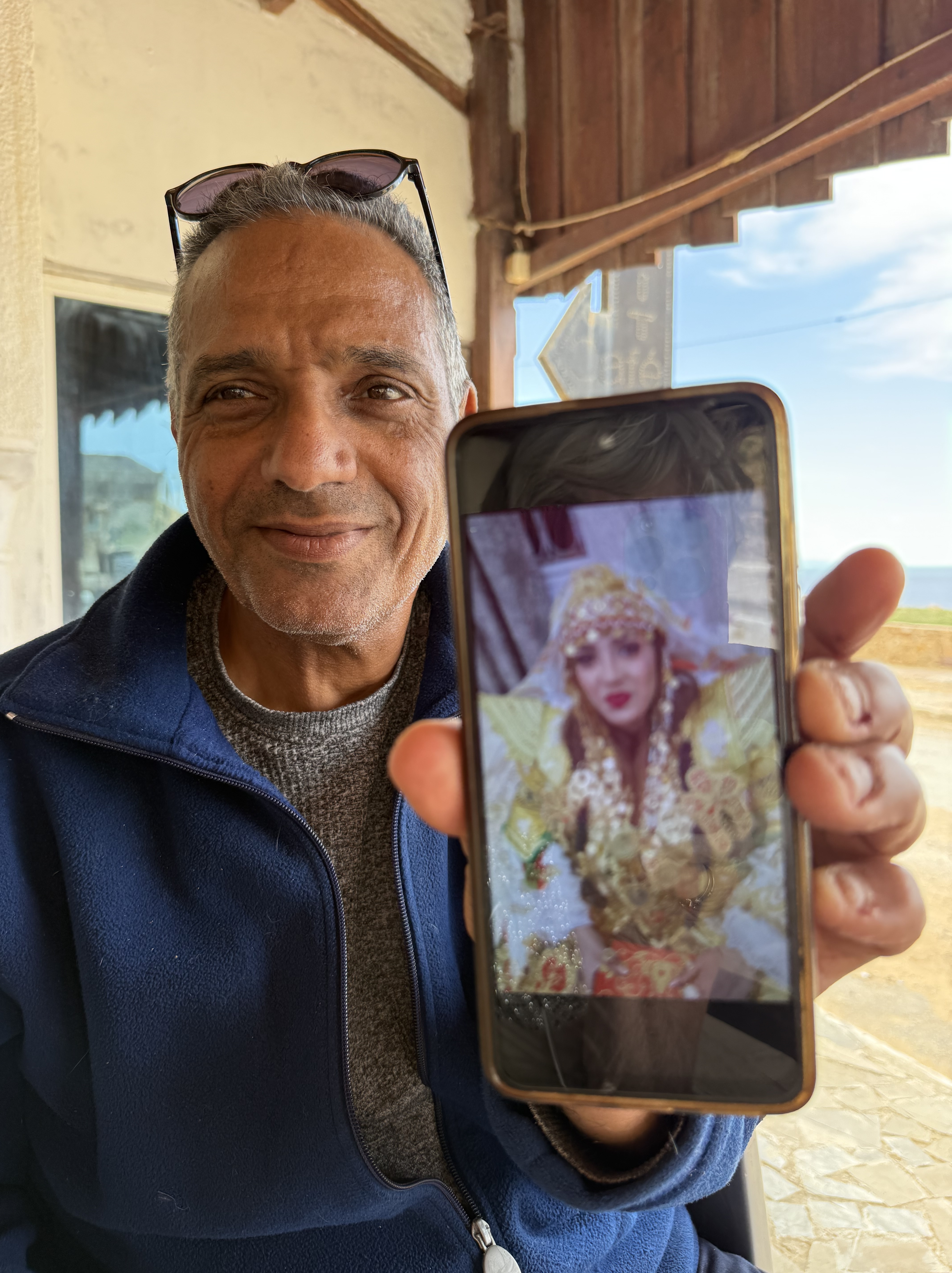
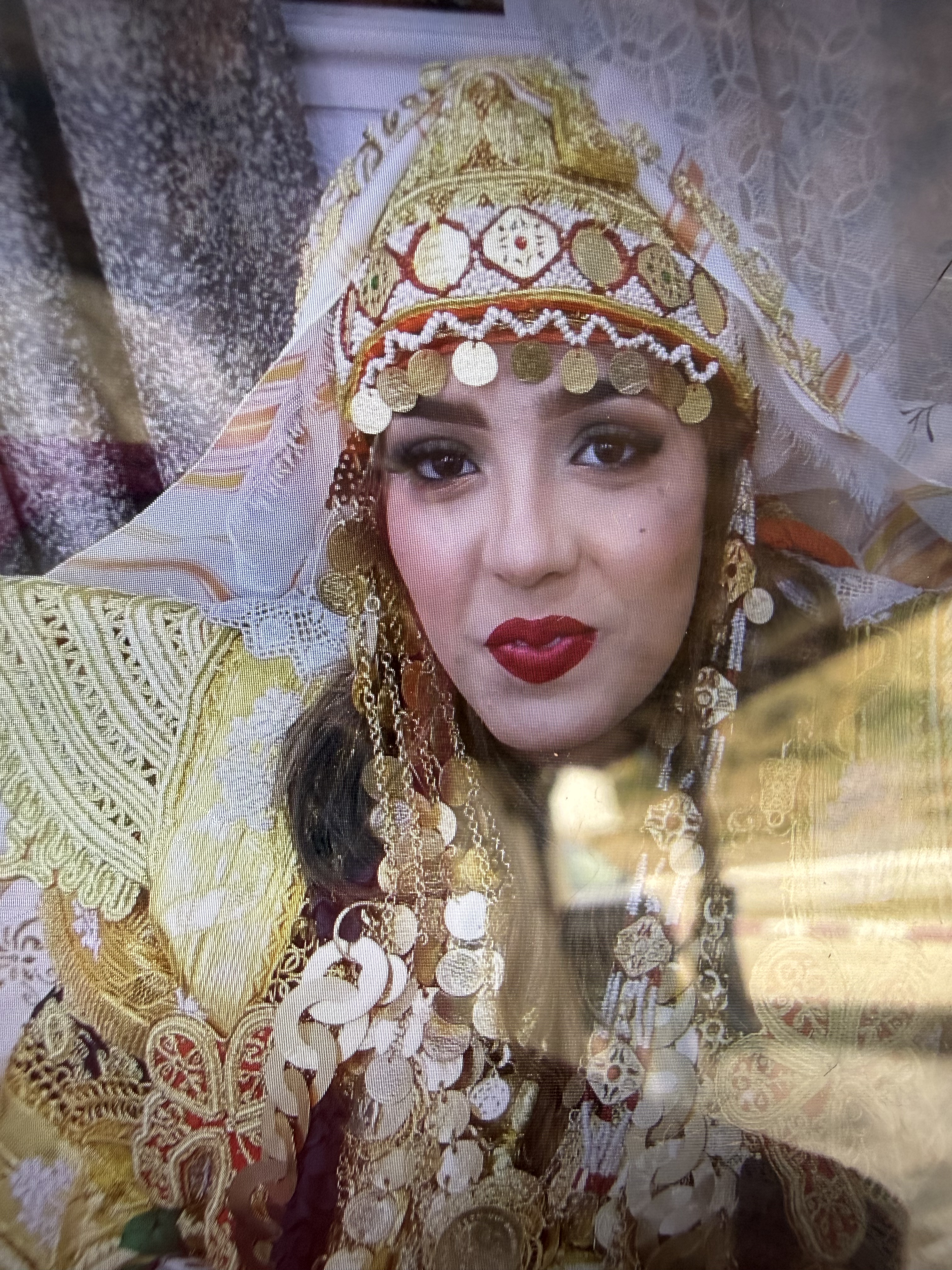
Faouzi proudly shows his daughter’s wedding picture. Tunisian weddings are multi-day events with hundreds of guests.
I am in awe of Tunisia. In Shallah, I will return to discover what I missed in the south. Scroll down for more photos .
Tunisian food (fabulous ) coming soon. If not a Tales and Travel follower, please sign up here. Trust me. It’s safe. Your address iskept private.
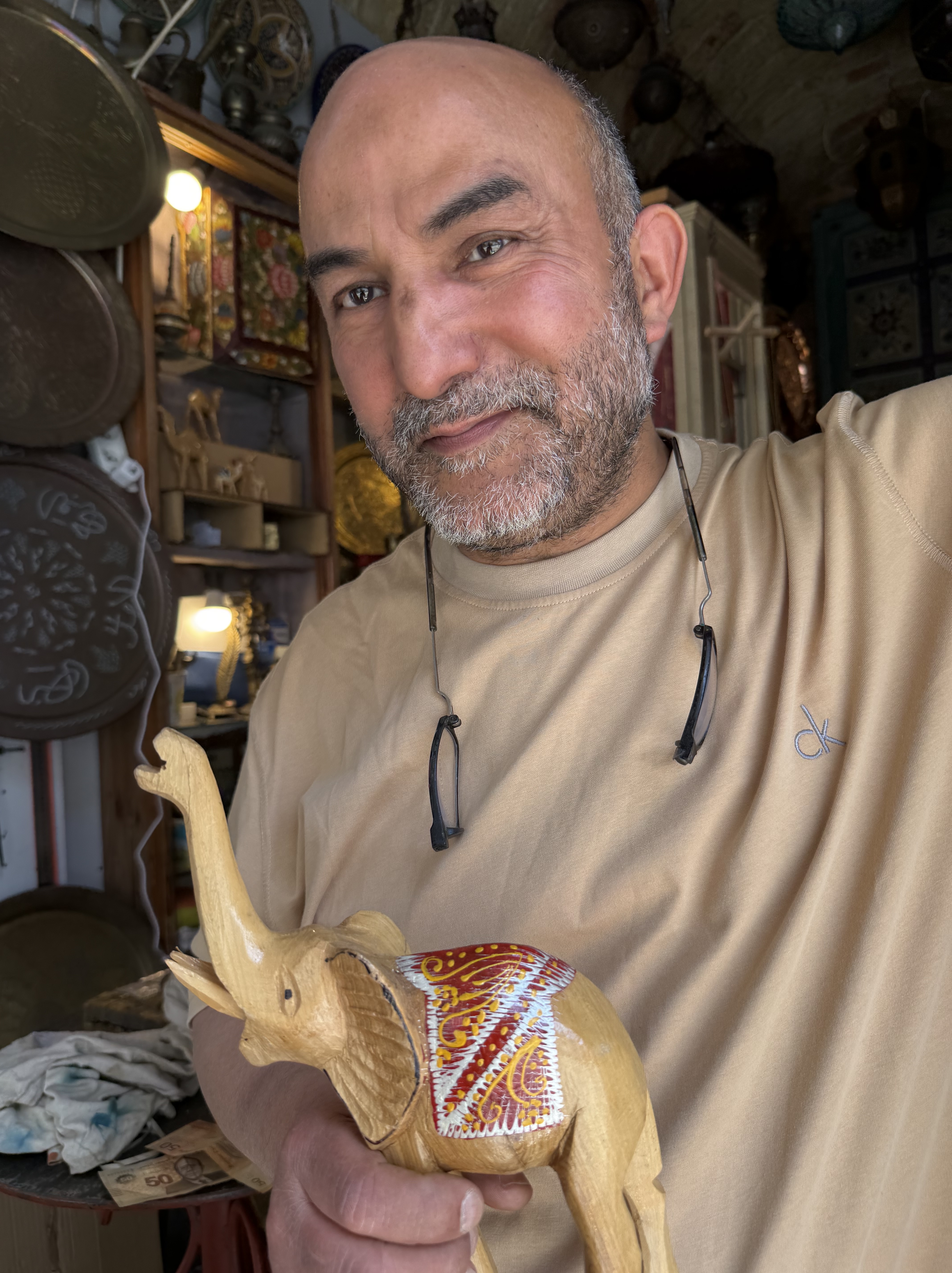
My Tunisian souvenir: Hannibal the elephant His namesake, Hannibal the legendary warrior from Carthage, led his army and elephants from Phoenicia across Spain and France, over the Alps to attack Rome, 218 BC. There are no elephants in Tunisia today.
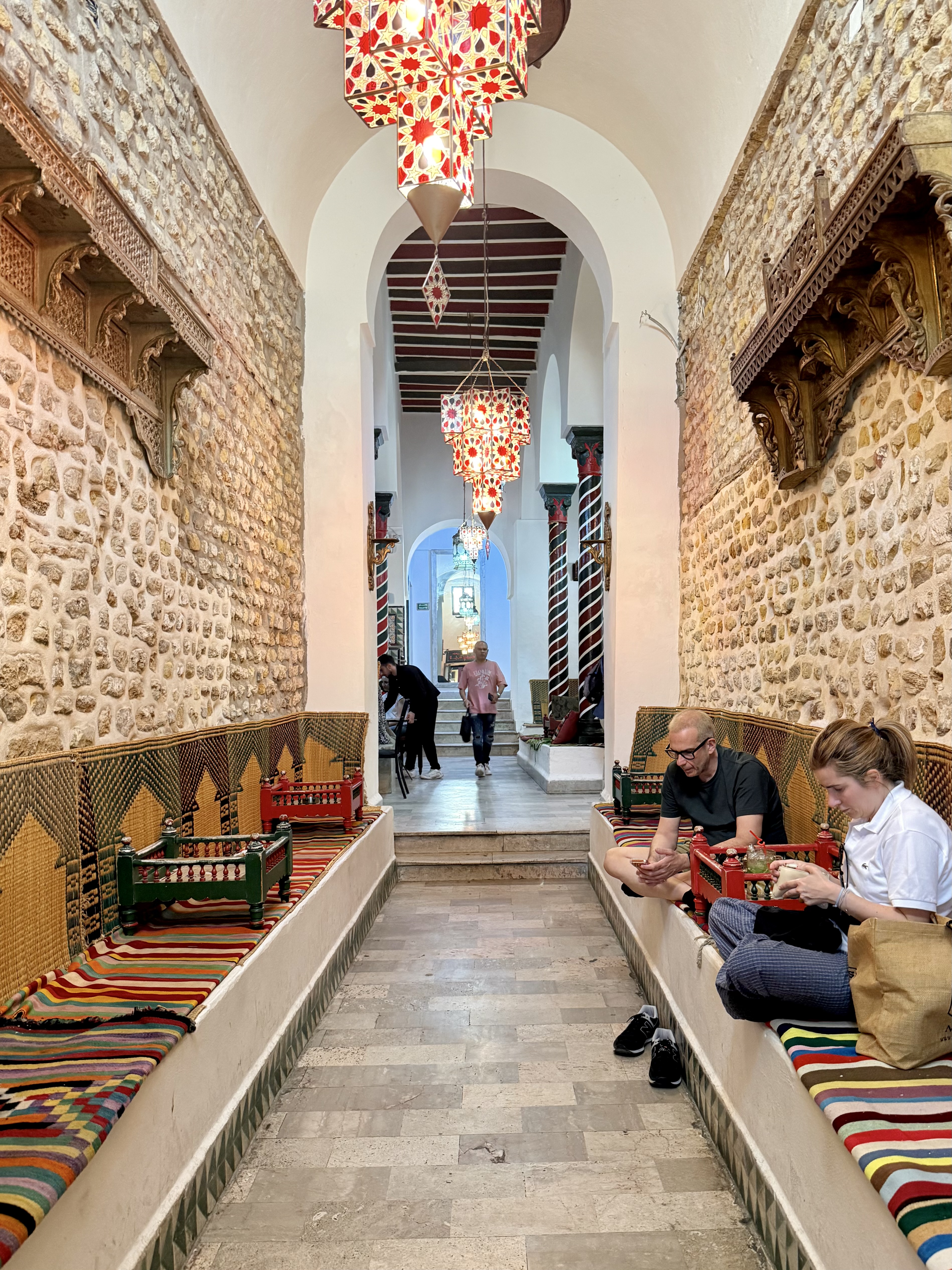
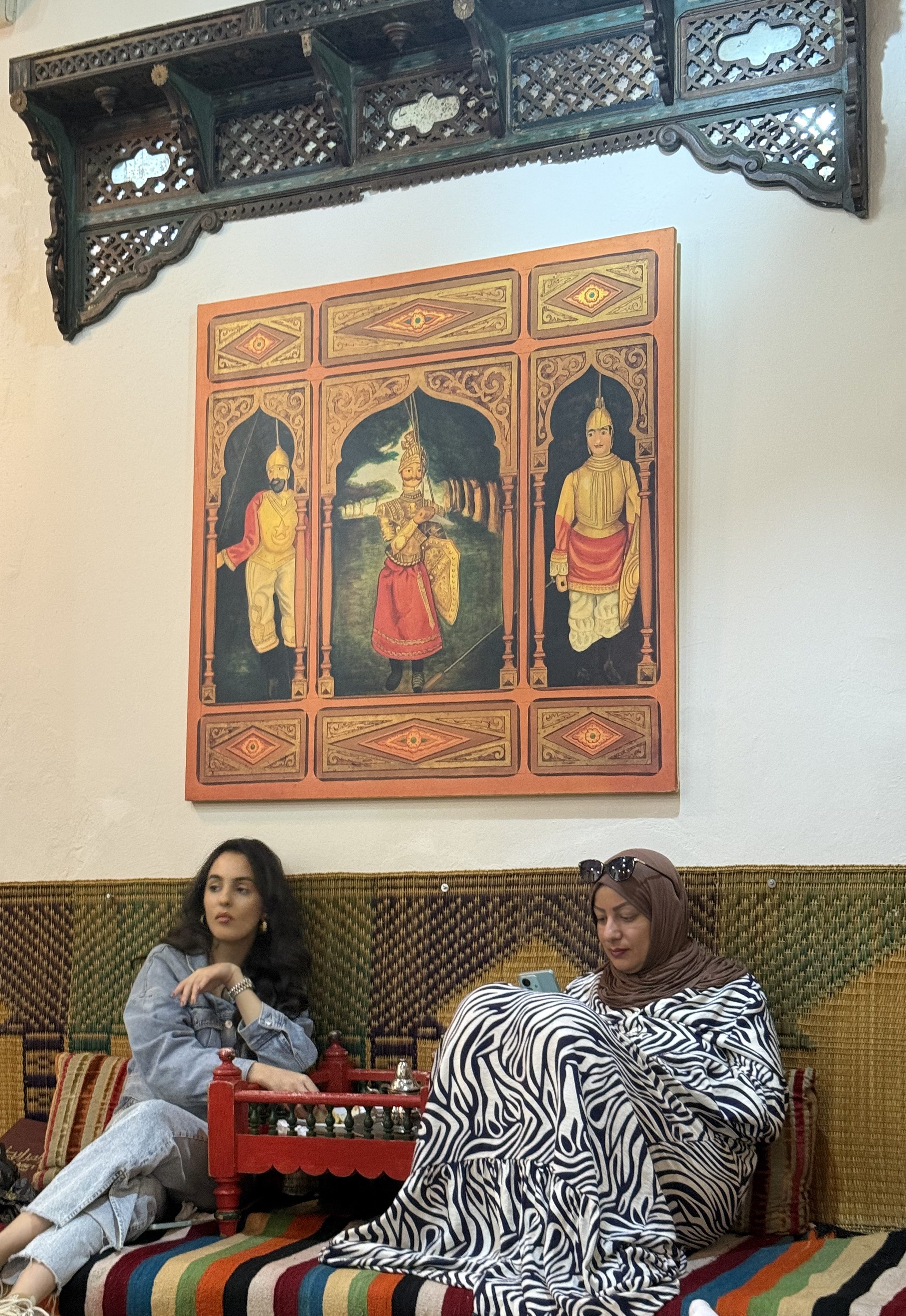
Many Tunisian cafes are ideal for hanging out, relaxing.
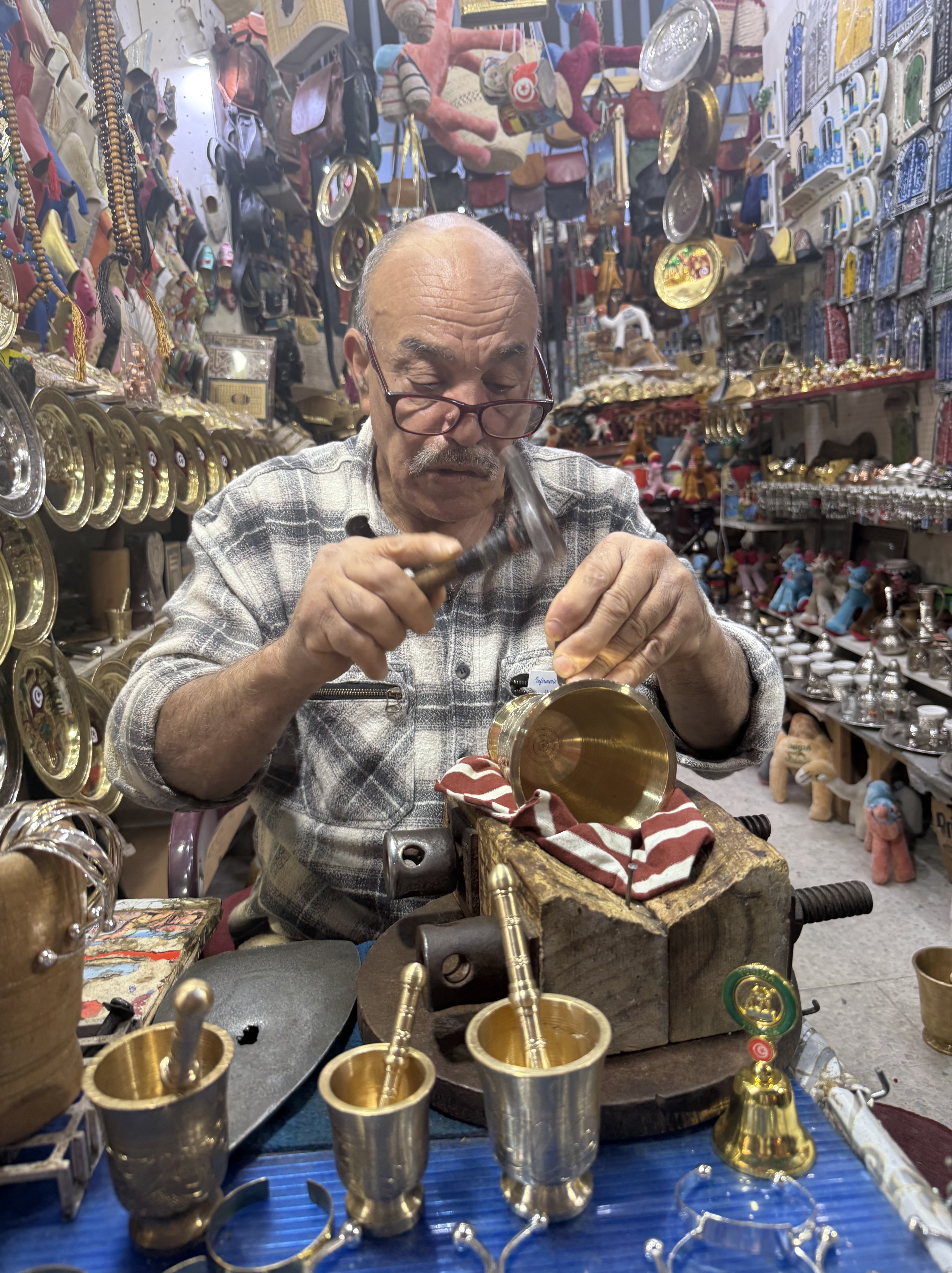
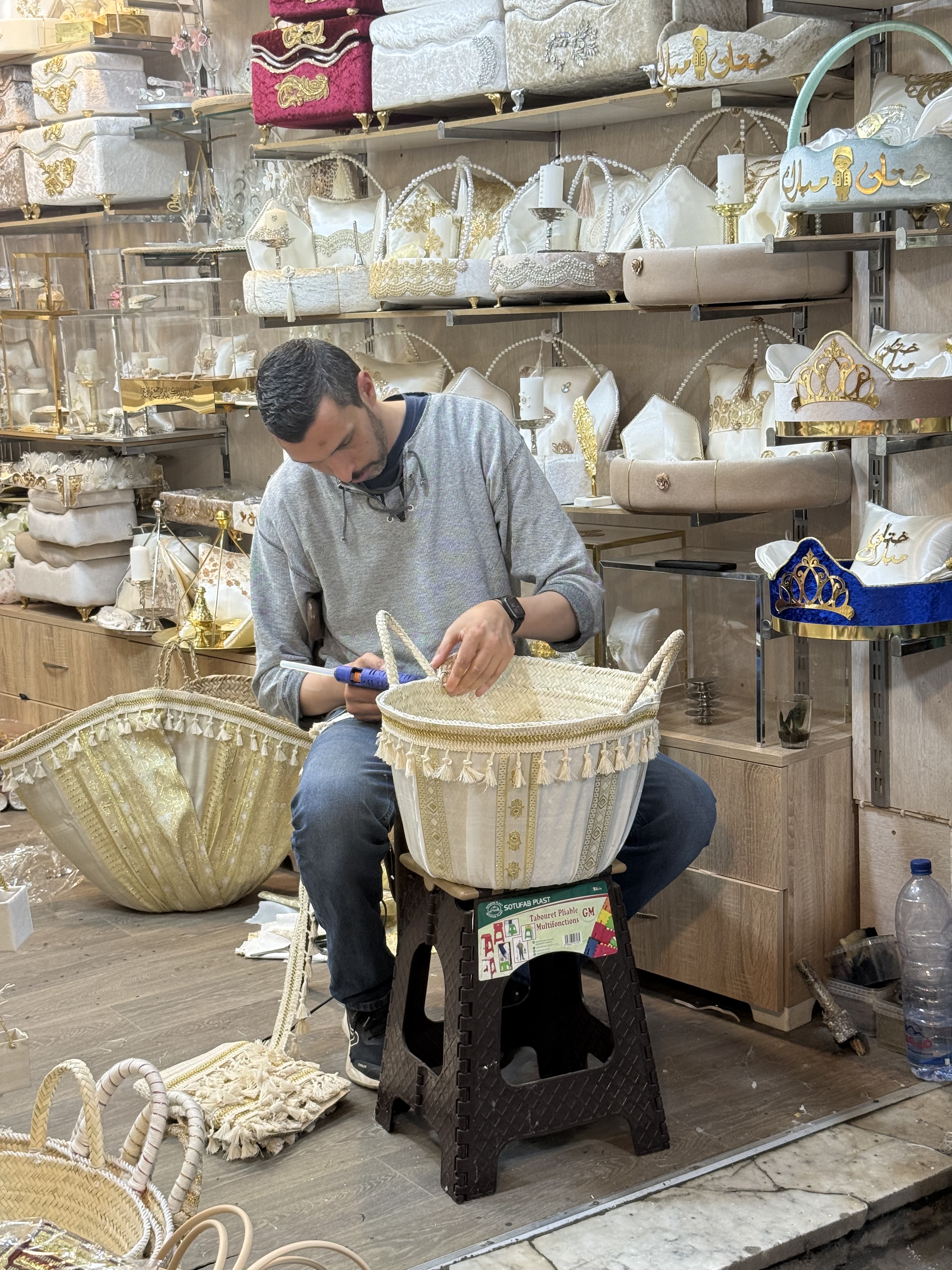
Craftsmen at work in the souks
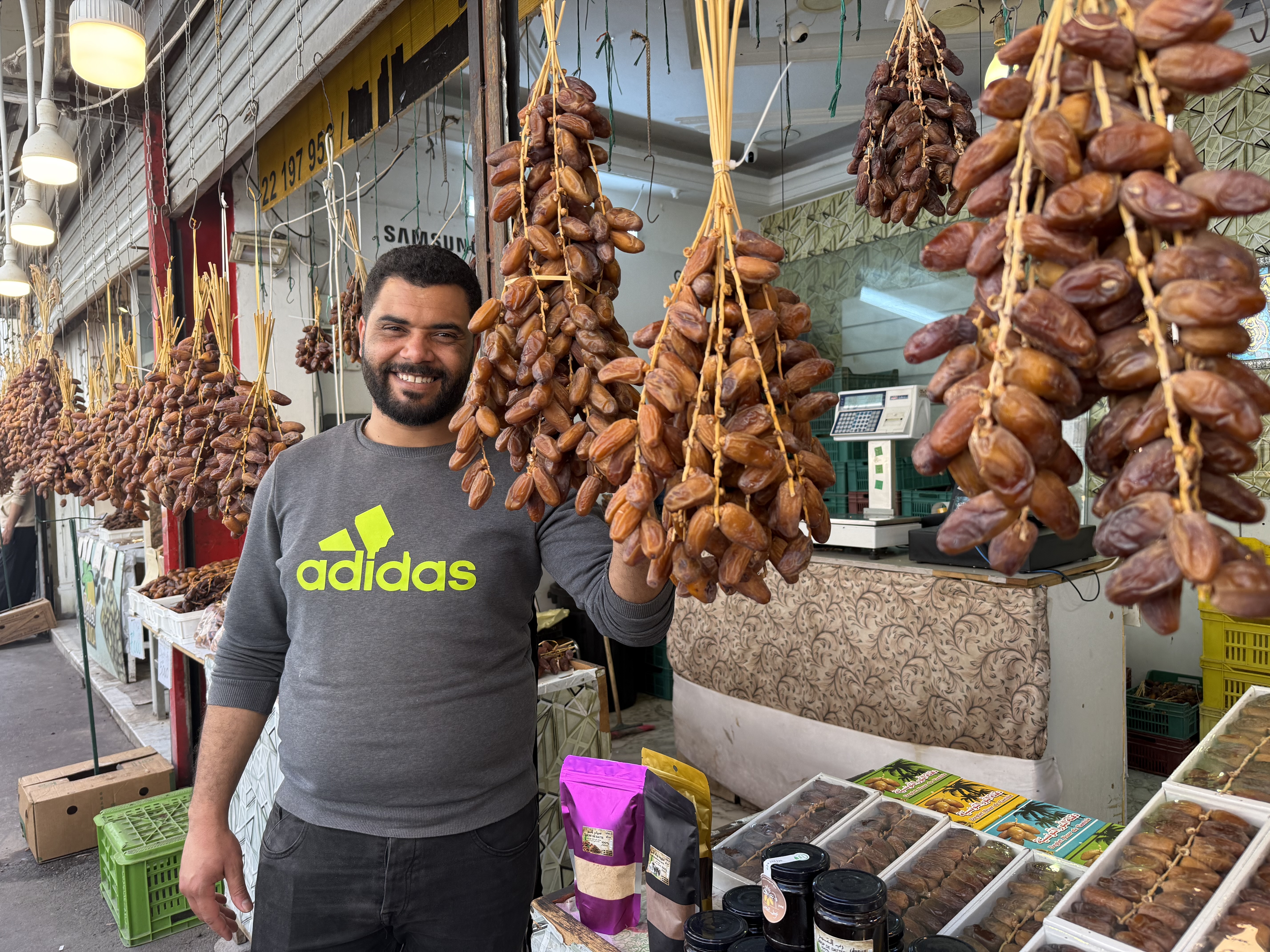
Dates anyone?
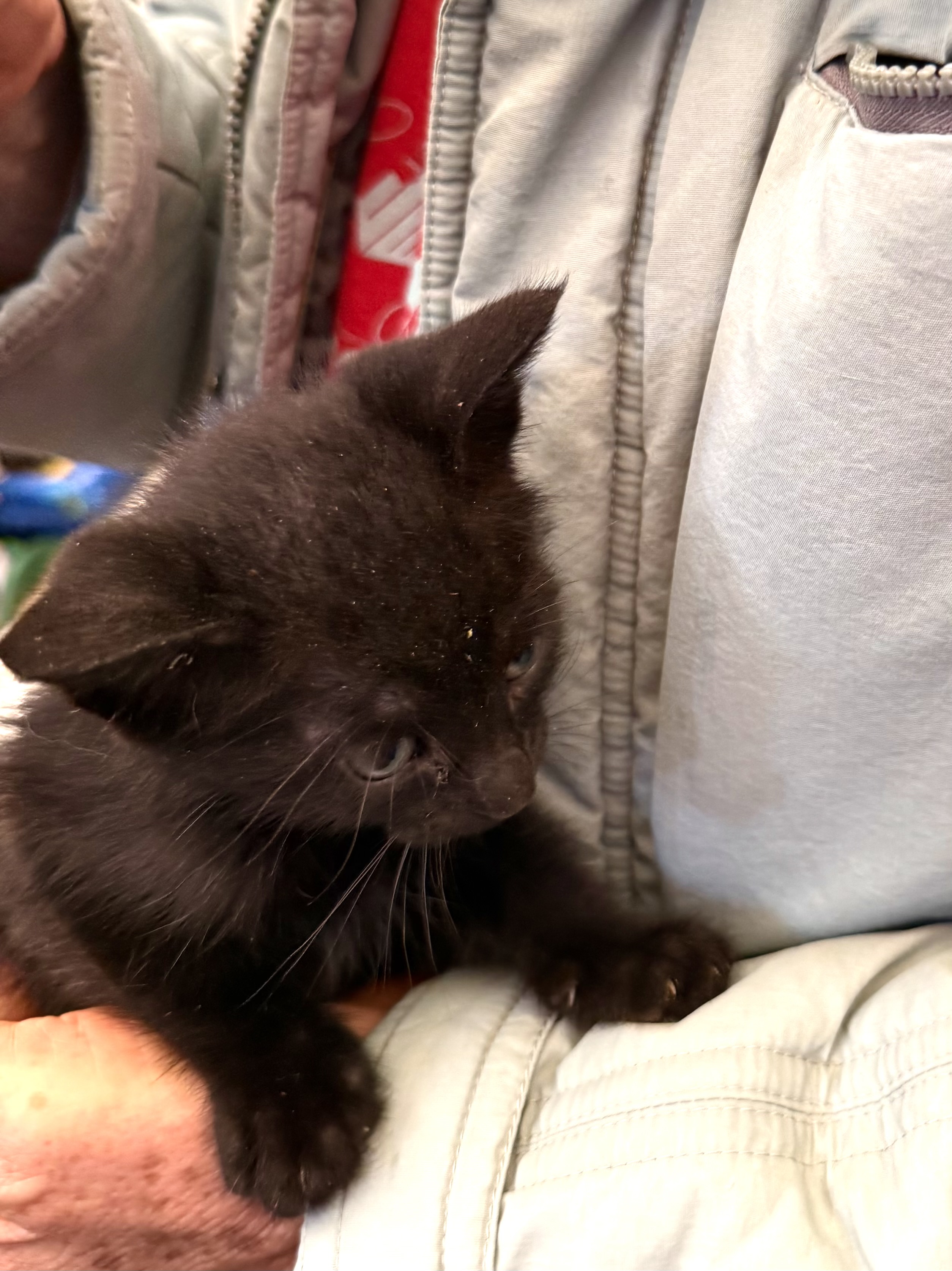
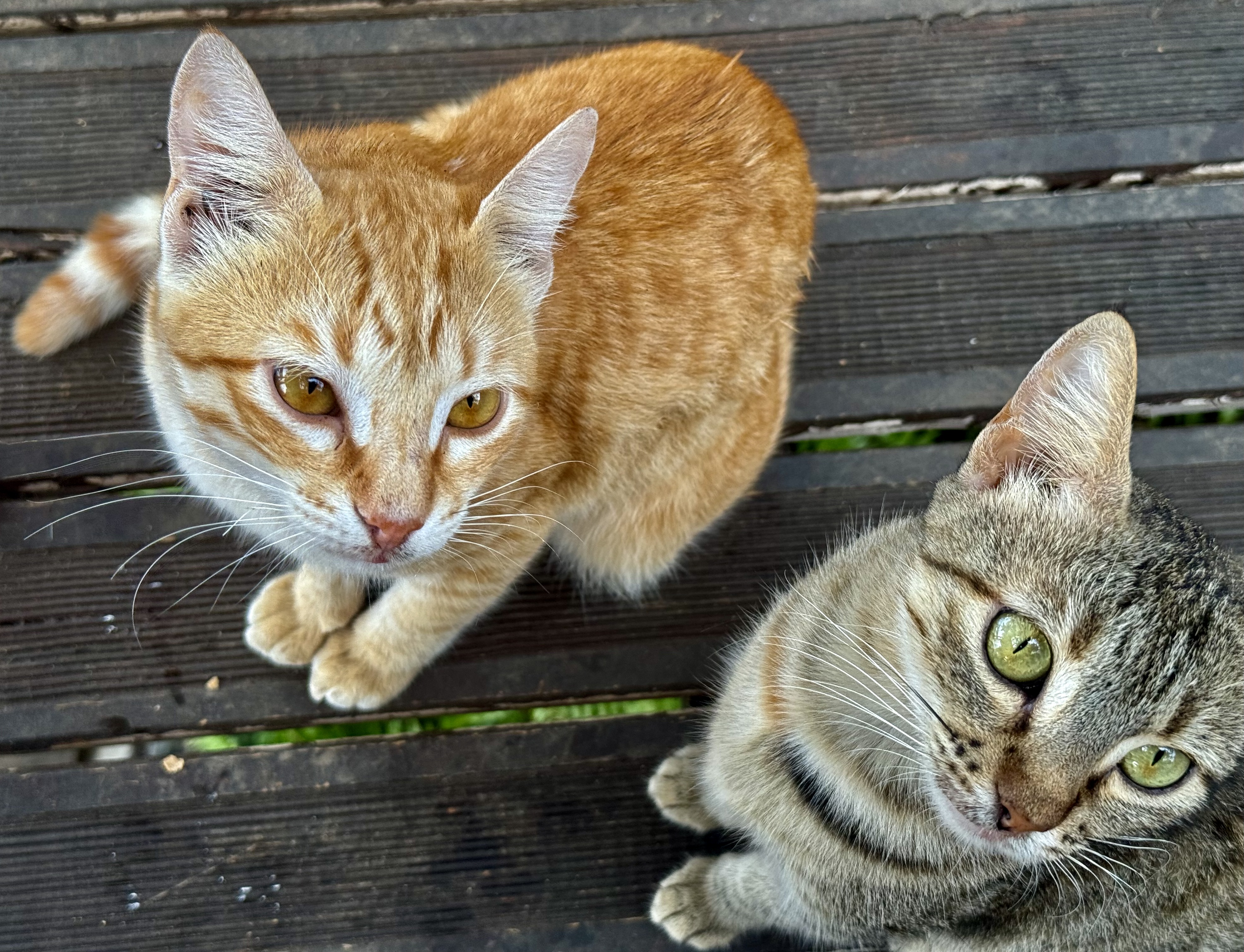
Tunisian felines. They are everywhere. I wanted to adopt them all.
Food is a hot topic in travel these days. More and more destinations offer food tours with samplings of tasty street goodies.
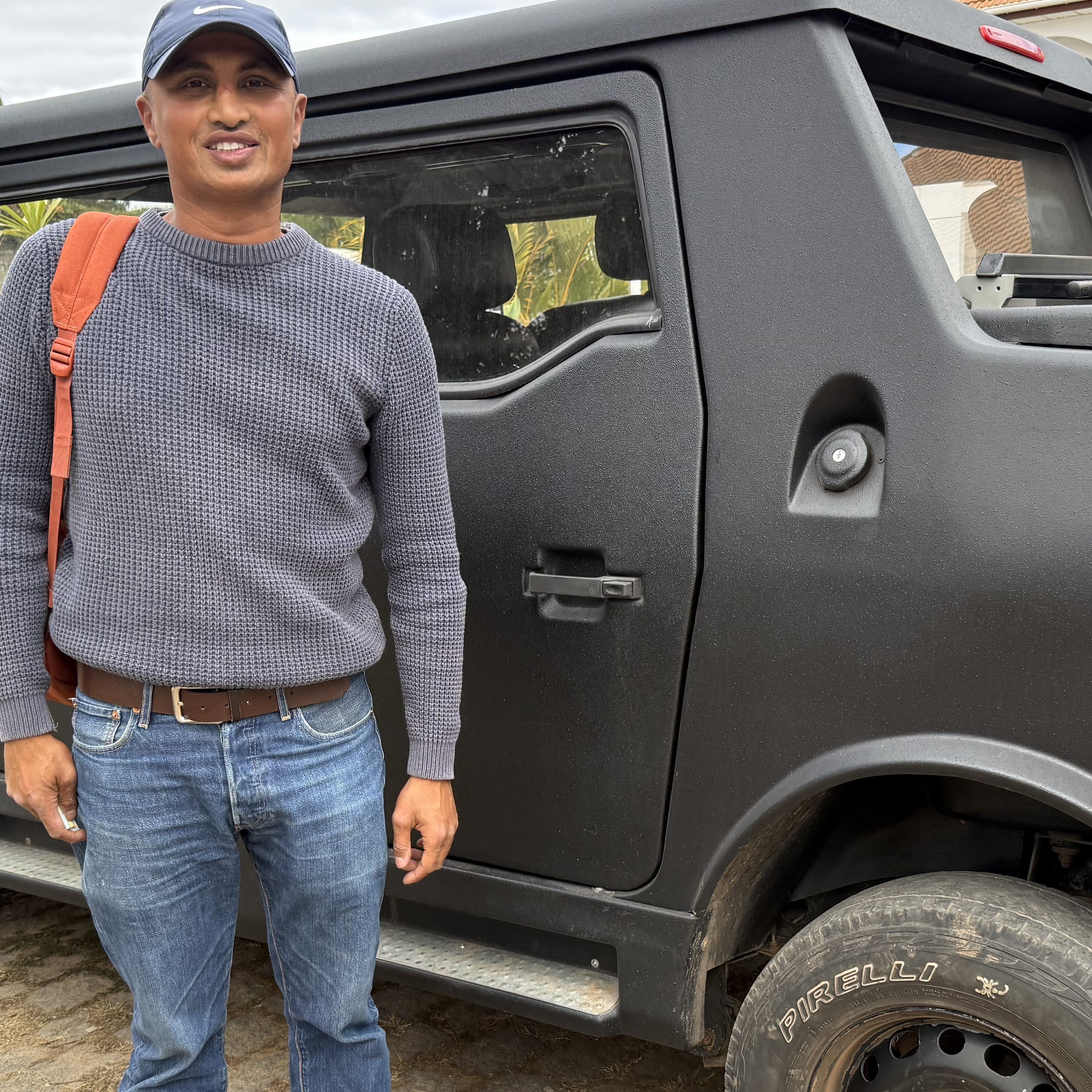
Being a dedicated foodie, upon arrival in Madagascar (Mada) last summer, I naively inquired about a food tour. “Not here,” announced Ravi, a guide and driver. “People get sick. They reuse the cooking oil.”
Forget street food, as well as haute cuisine and Michelin star restaurants. I did, however, enjoy some delicious dining during my stay in the country, the fifth poorest in the world.
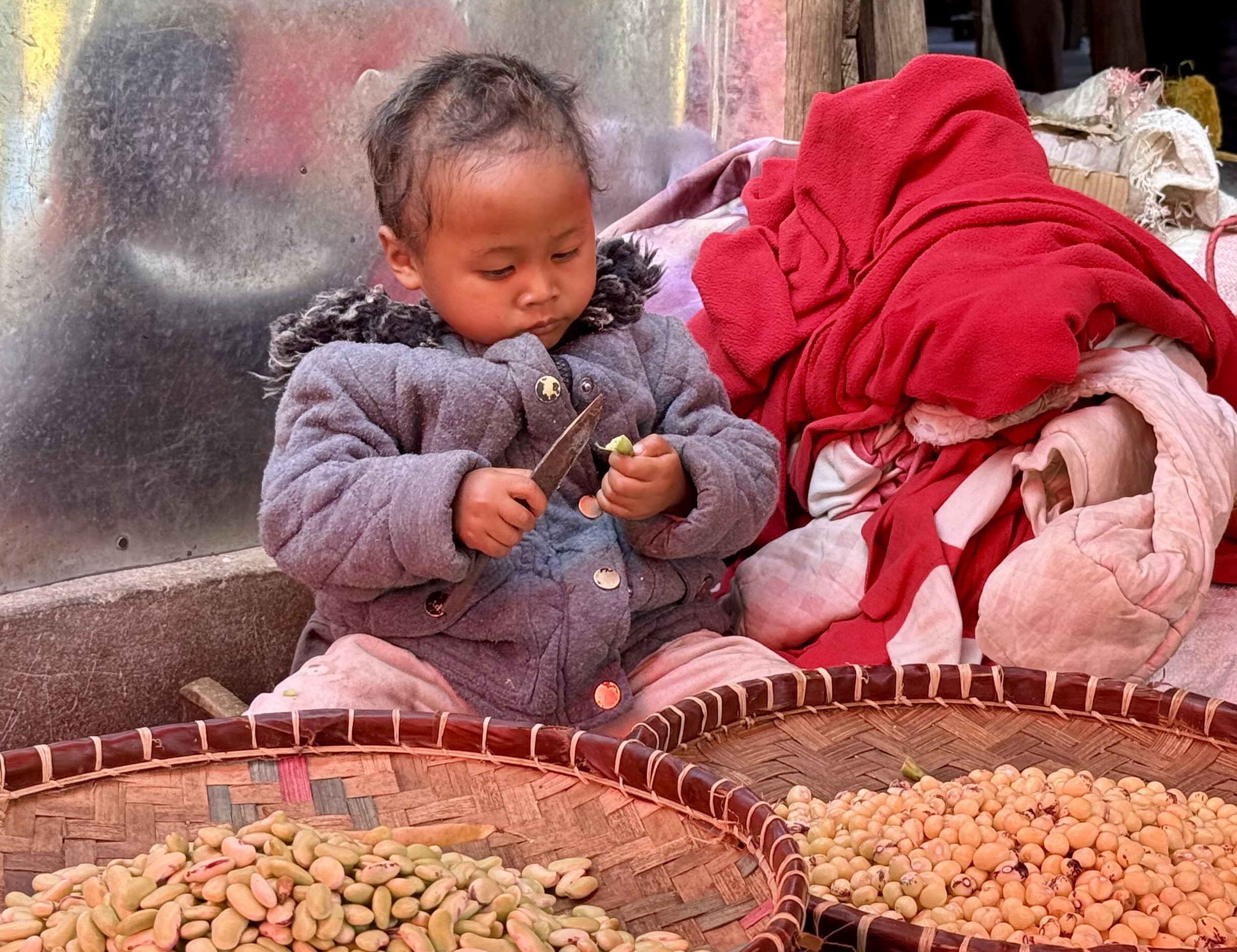
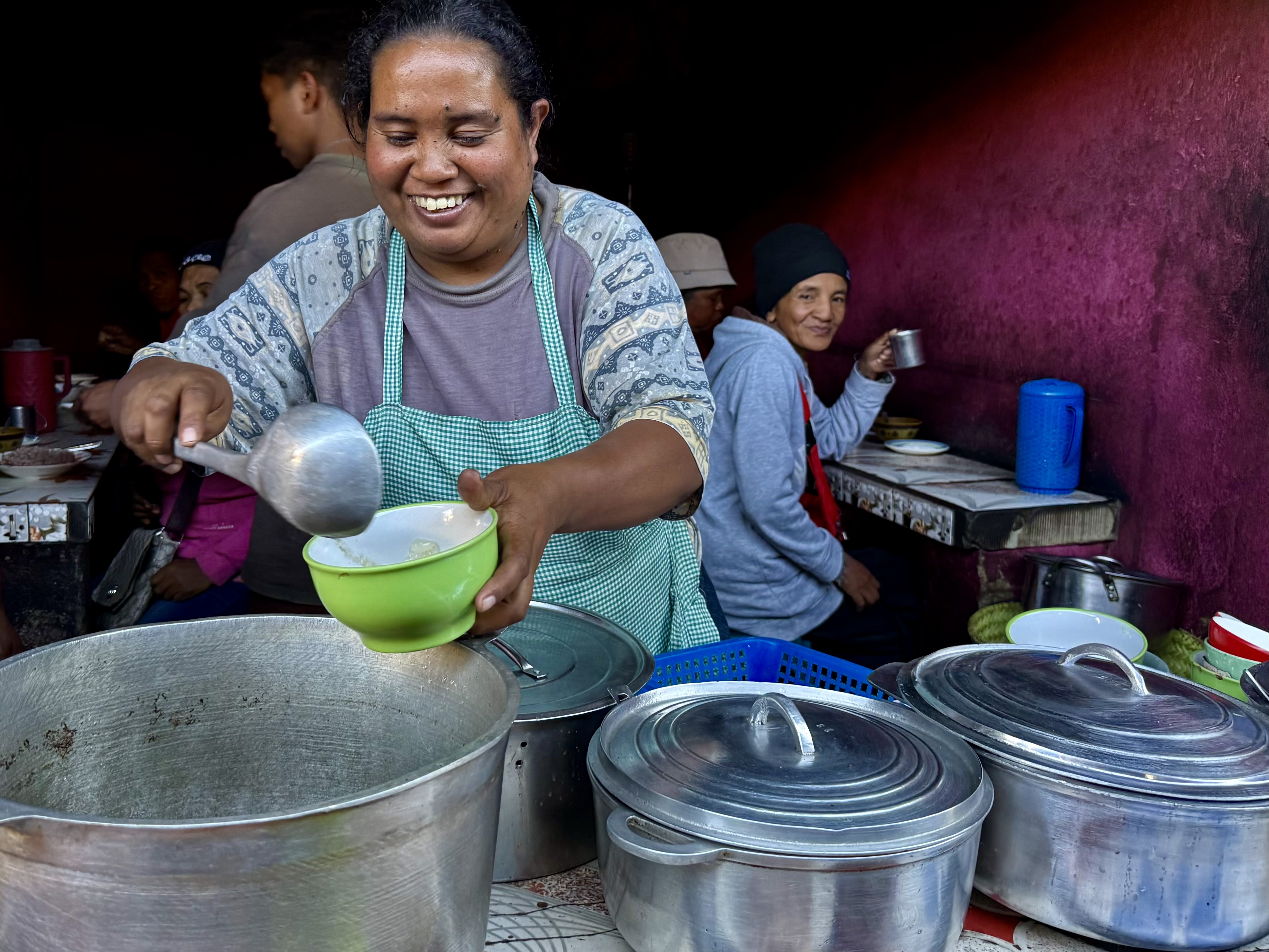
Food prep starts early in Madagascar
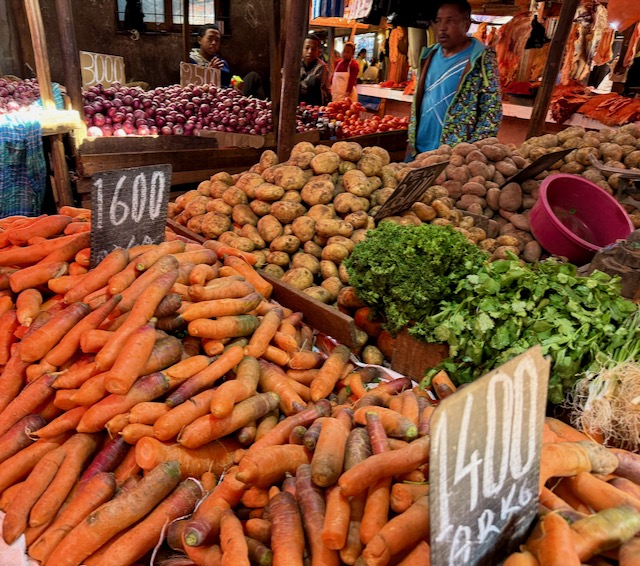
I loved visiting the markets, taking photos of the friendly vendors, and learning about Mada food.
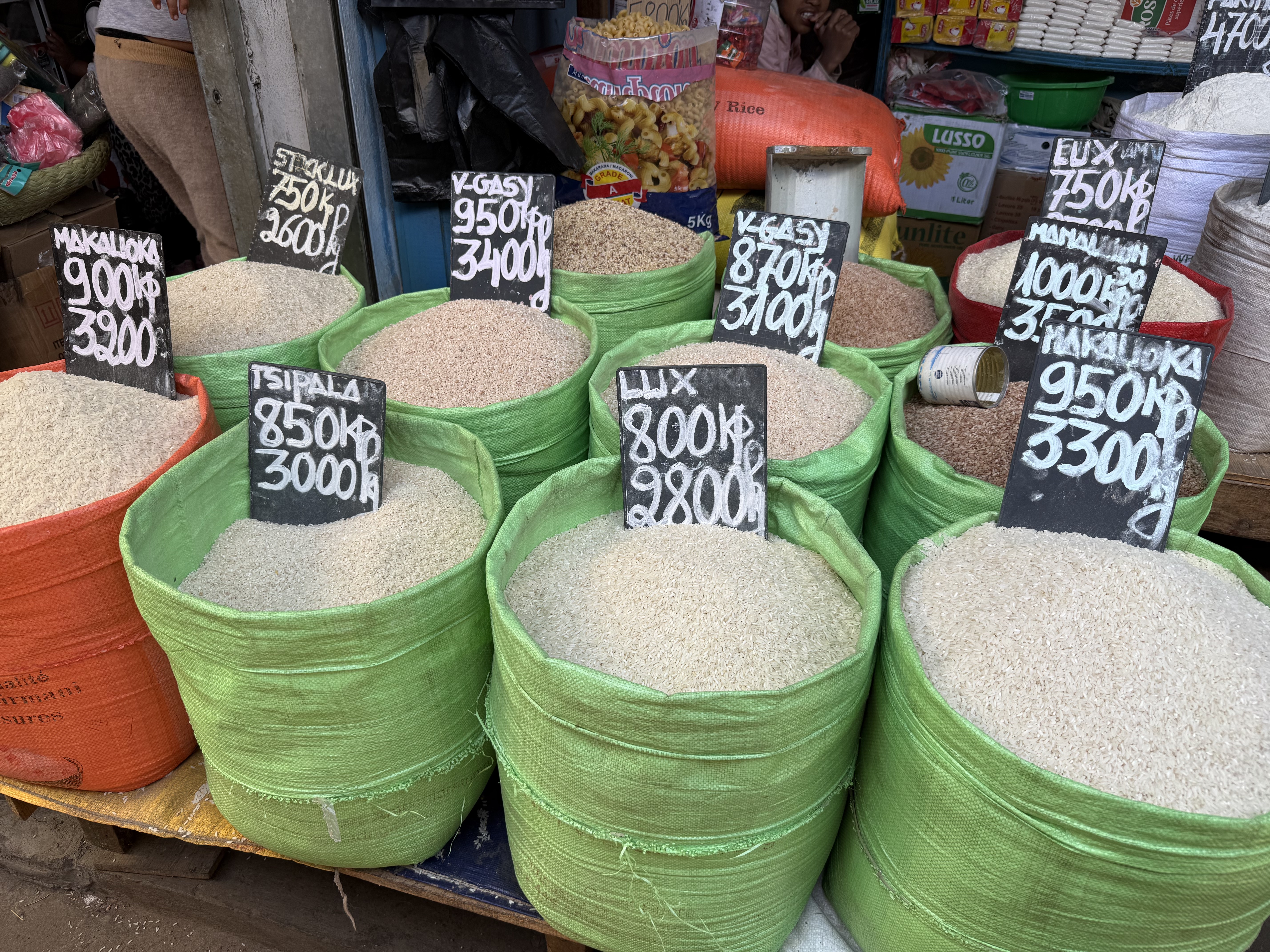
Let’s start with rice. “We must eat rice three times per day,” declared Emanuel, my guide at a market in Antananarivo (Tana), the country capital. We passed numerous rice stands with numerous kinds of rice. “But this is not enough. We also import rice from China and India,” he added.
Hard to believe. During my first excursion in Mada, to a lemur park about 25 kilometers from Tana, we passed miles of rice paddies. However, on another excursion we passed brick factories on the river banks. Bricks replaced rice; I was told. “You can make more money with bricks.”
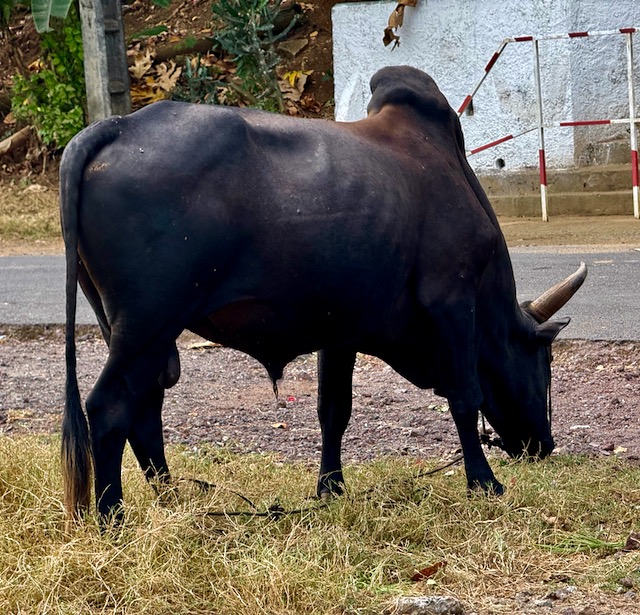
Zebu
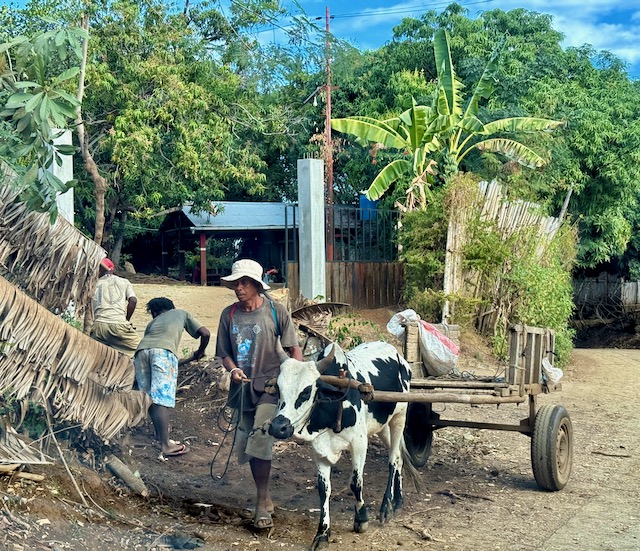
Zebu are to Madagascar what reindeer are to Norway. The island’s domestic cattle originally came from South Asia. They serve as a source of meat, as well as a beast of burden. The humped cattle are a symbol of wealth and status, and play an essential role in ceremonies and sacrificial rituals (see previous post, Madagascar’s Intriguing Ancestor Rituals) Popular souvenirs – jewelry, salad tongs, bowls, decorative objects – are made of zebu horns. The color and grain of the horns vary, so each piece has a distinct pattern.
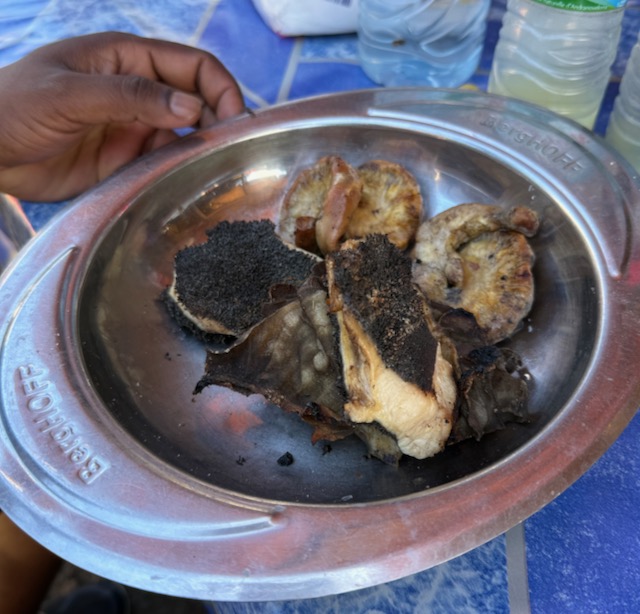
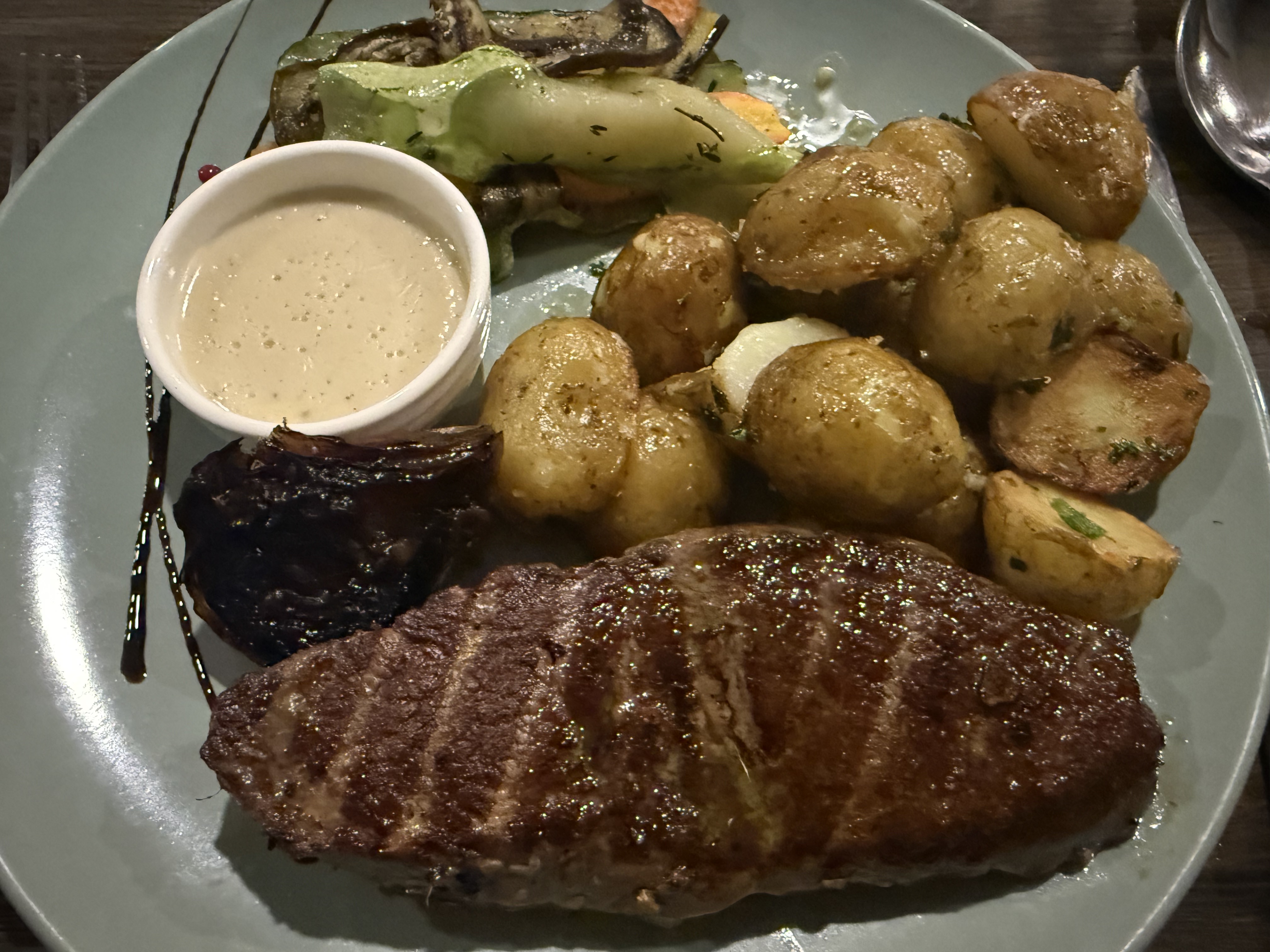
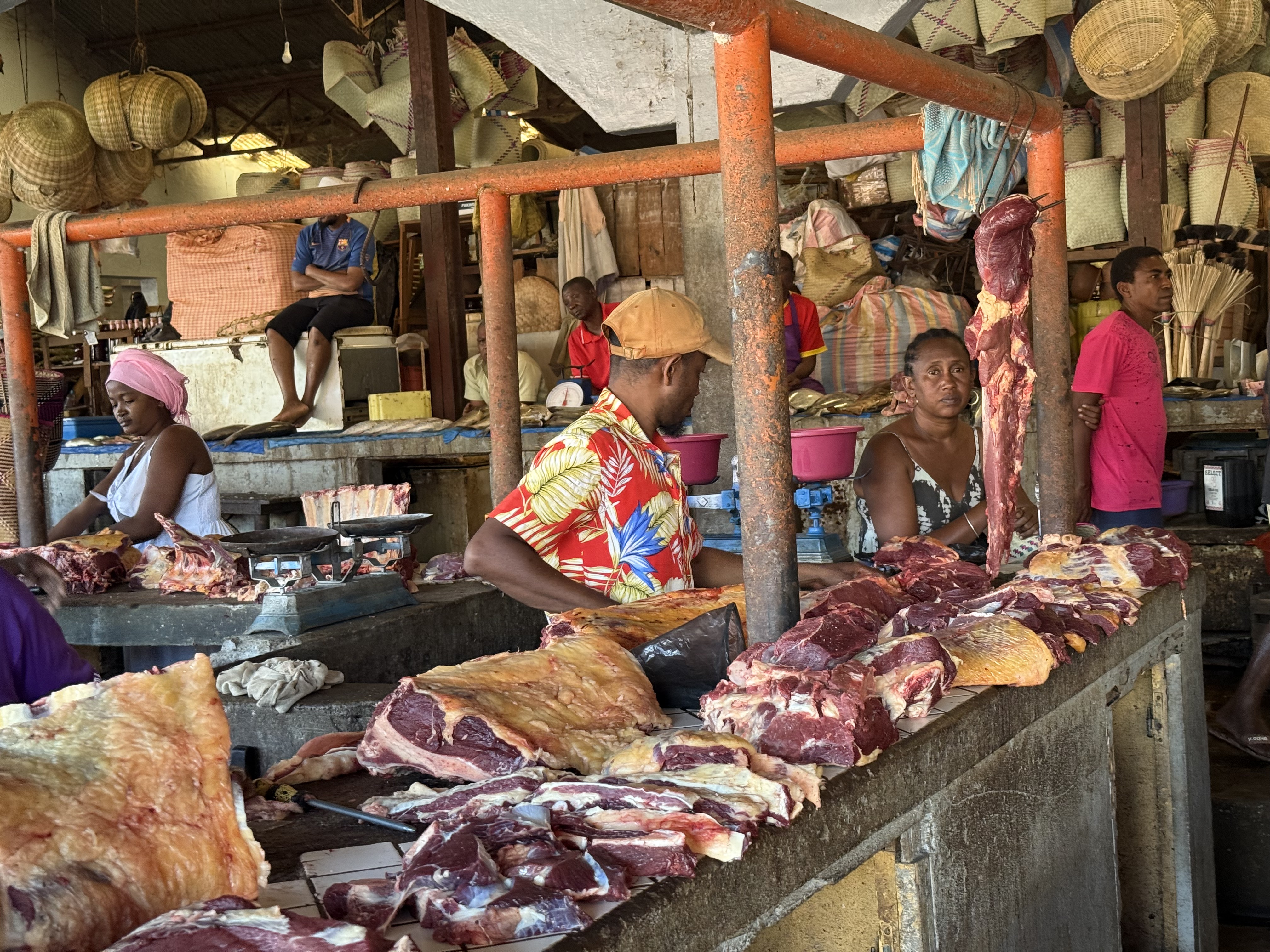
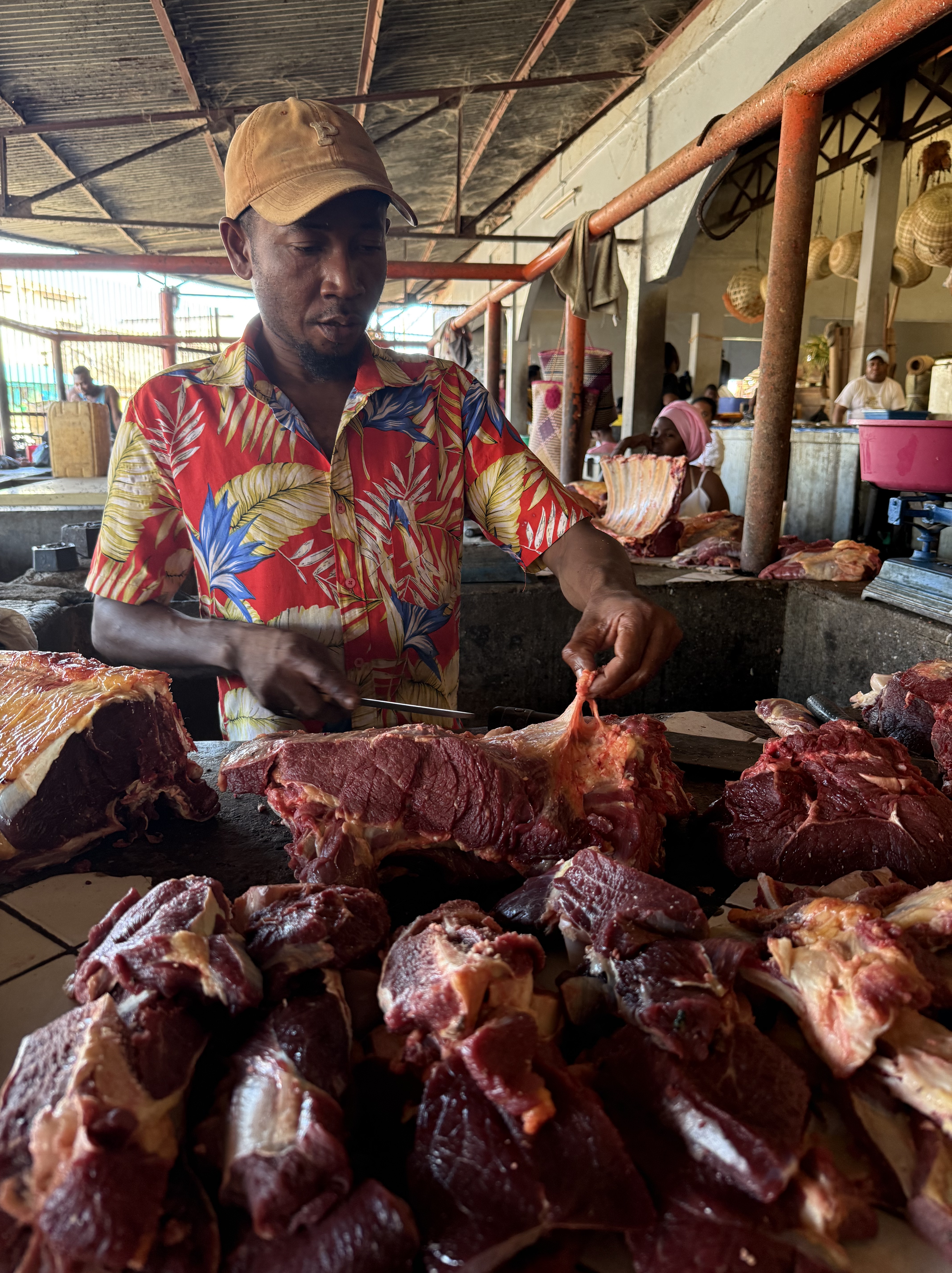
I am not a hearty meat eater, but twice I savored zebu filet. Exquisite. Filet is not on the menu at market food stalls, but zebu stomach and feet are, both considered delicacies.
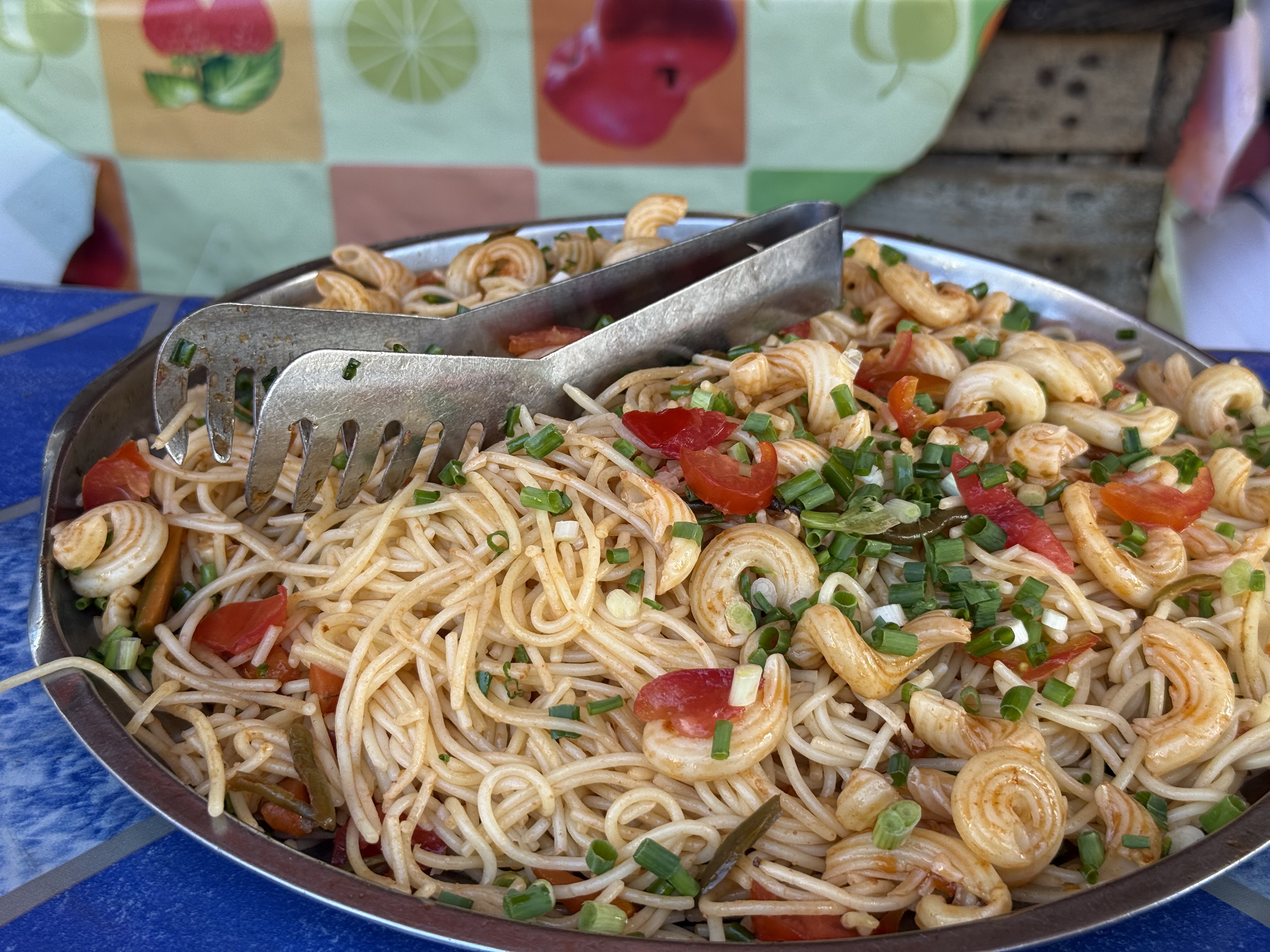
Many market stands are “fast food” depots, offering a variety of prepared dishes at reasonable prices. Shoppers stop for a meal at the markets. “We like to eat here. It’s easier than going home to cook,” I was told.
Zebu feet and stomachTempting melange
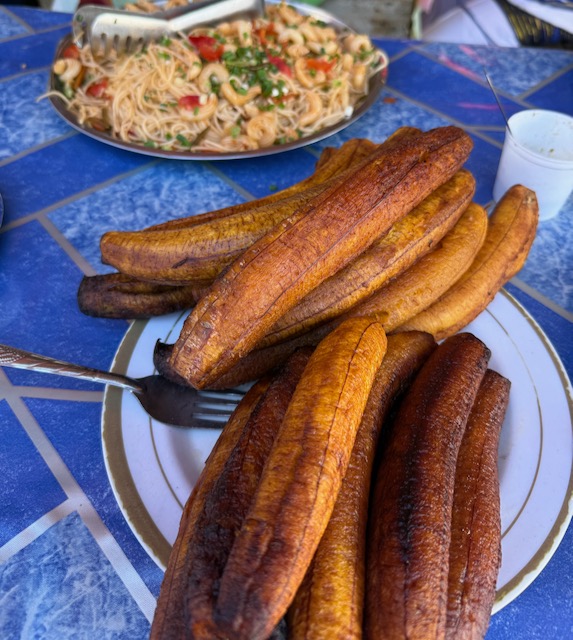
My guide went for the stomach and feet. I was tempted by a colorful concoction of pasta and veggies.
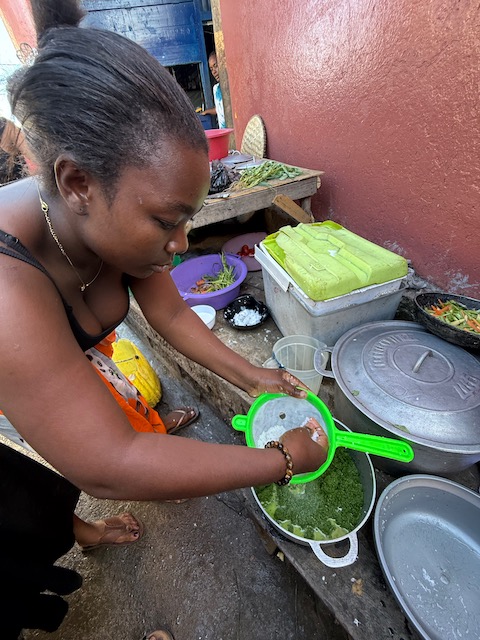
Cassava leaves are an essential ingredient in many Malagasy dishes, especially the national favorite, ravitoto. Leaves can be purchased pre ground at the market.
I watched as women mixed the leaves with coconut milk, grated coconut, water, and then squeezed it all dry, before mixing it with meat and vegetables for cooking. This was one of many ready-to-eat offerings at the market.
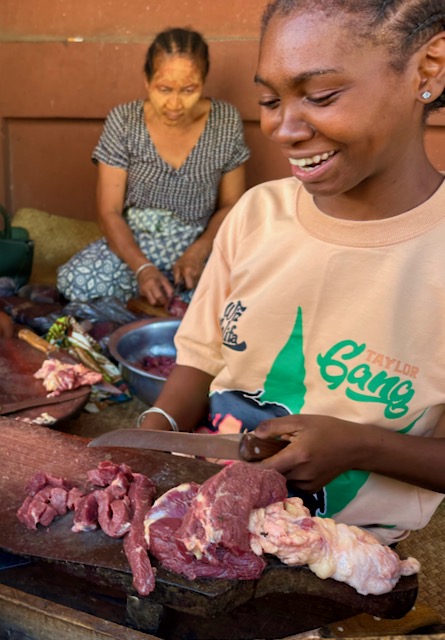
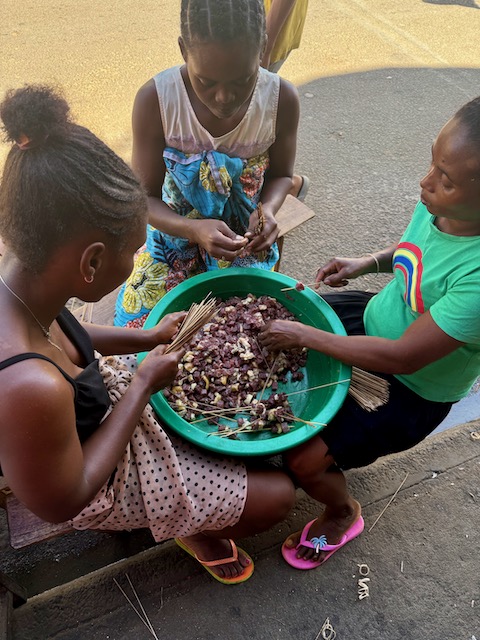
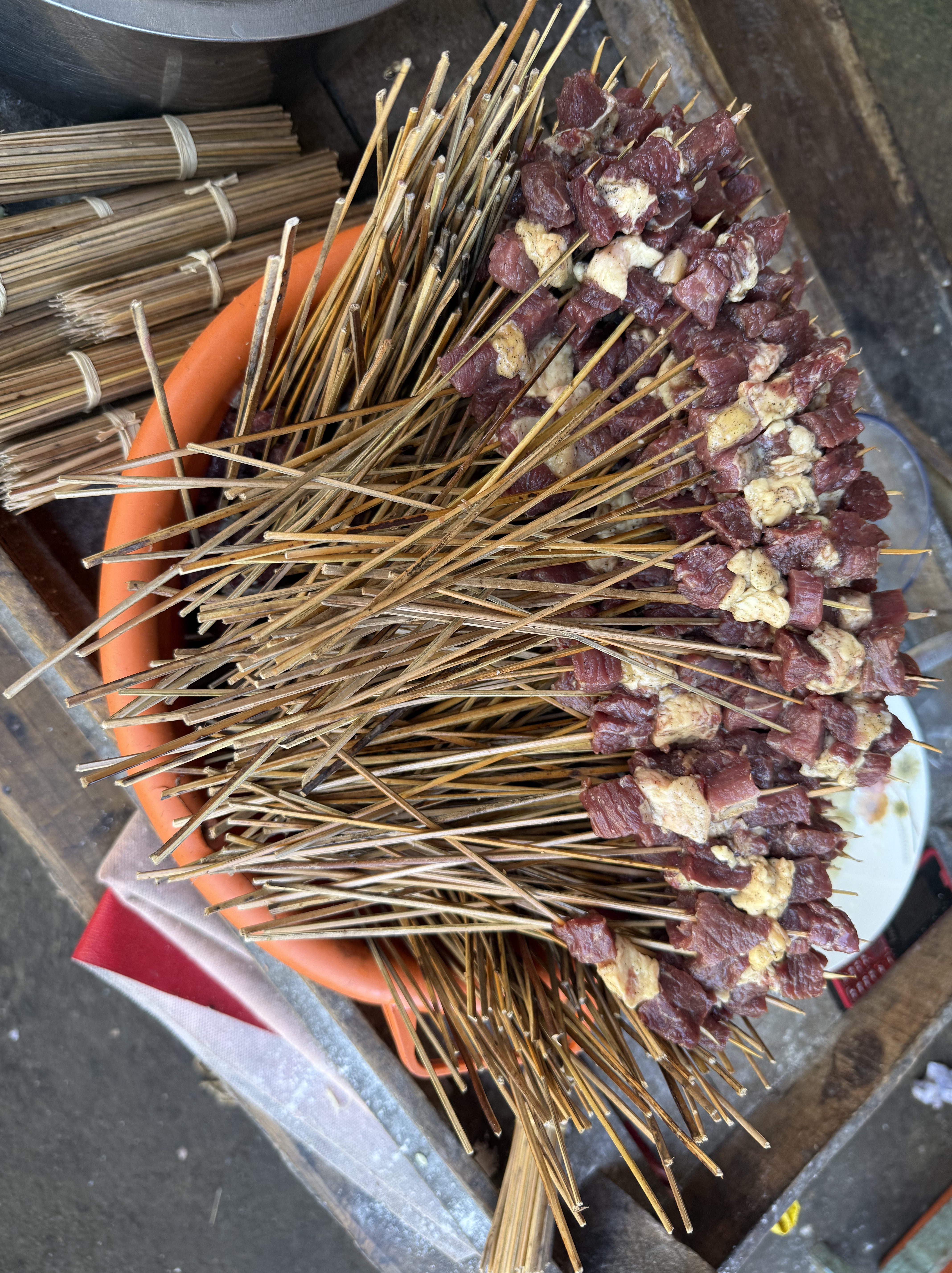
In Nosy Be, the Mada resort town where I spent several days, a brochette stand is a sensation. Customers line up in the evening for take-home brochettes, about 11 US cents each. The tiny stand was started by the mother of some of the workers years ago. It’s grown into a thriving family business, employing daughters, granddaughters and cousins, all at work cutting up 25 kilos of zebu every day, then assembling the brochettes with the meat, green papaya, and more.
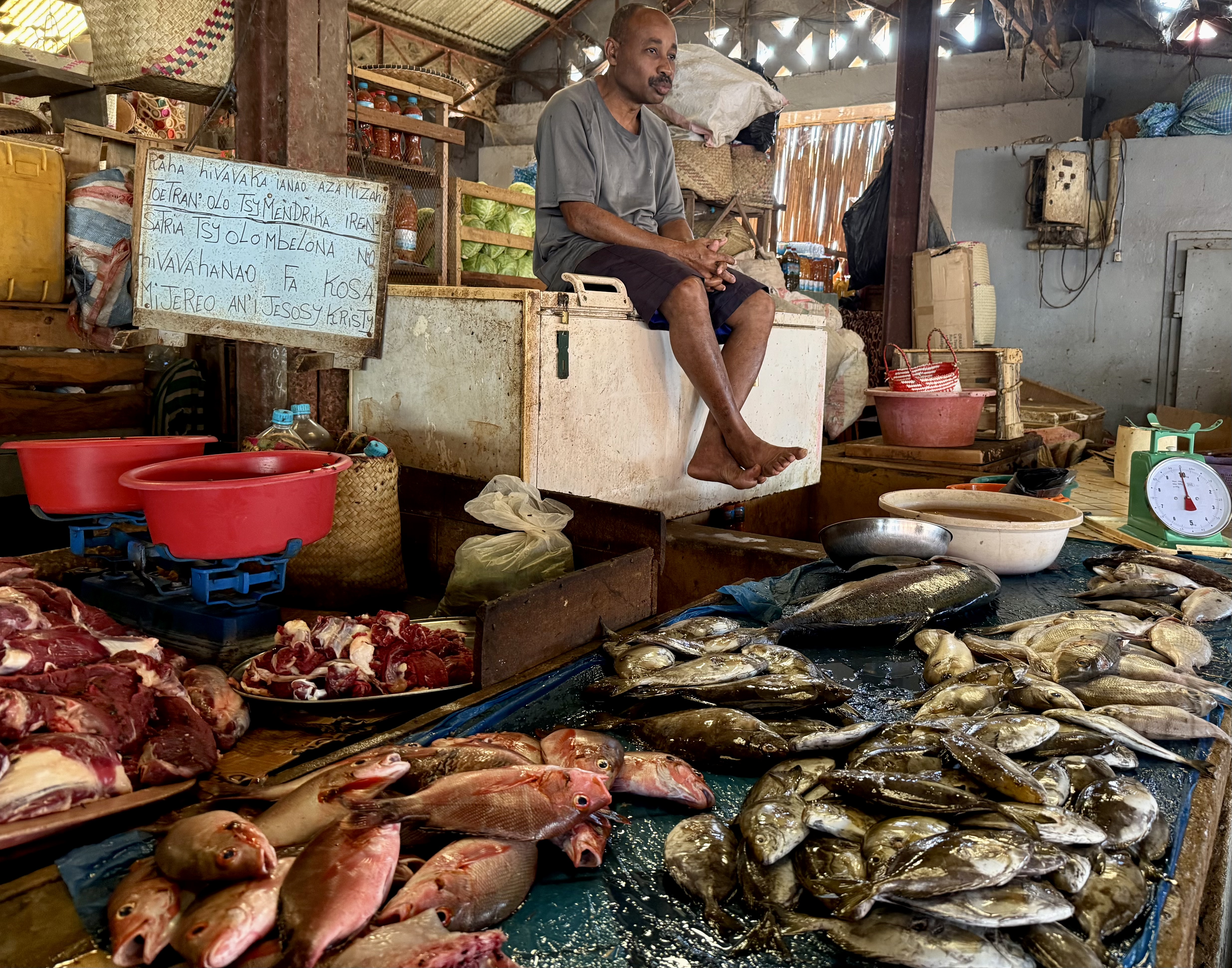
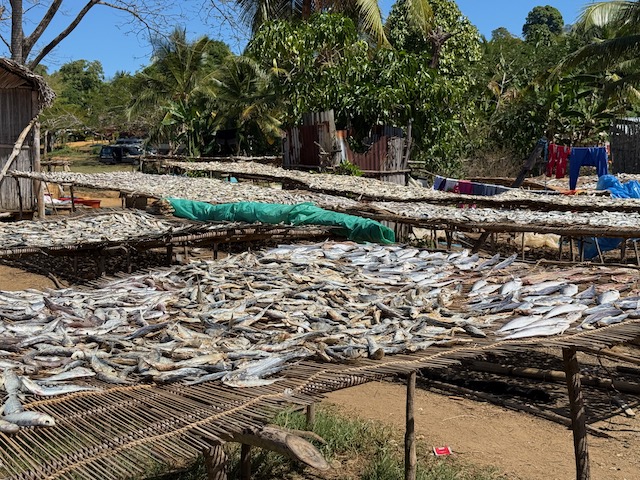
As an island nation, Madagascar offers a variety of fish and other sea creatures for the dinner plate. I visited a fishing village where thousands of sardines were drying in the sun.
Fish at the market
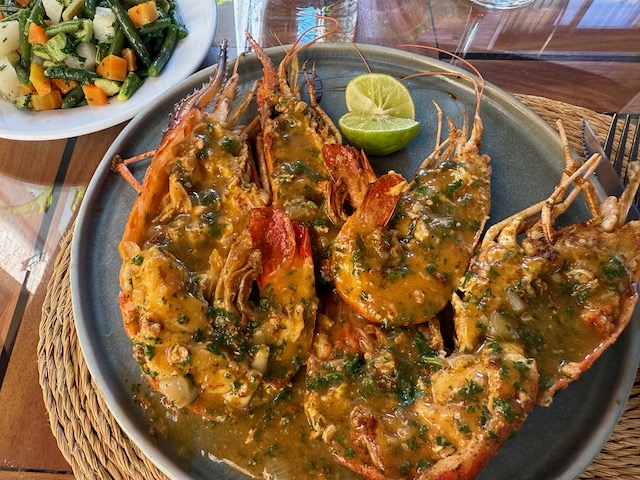
My all time favorite seafood in Mada: camarons, a type of large gamba from the waters of nearby Mozambique. To die for, along with zebu filet.
This was my last night treat at the Sakamanga (blue cat) hotel in Tana. The menu selections there were several notches up from restaurant food I had elsewhere. The restaurant was bustling. Reservations a must.
CamaronsZebu filet
The hotel itself could be a tourist attraction, its walls decorated with framed old newspaper front pages and photos, and hallways filled with ancient Malagasy treasures.
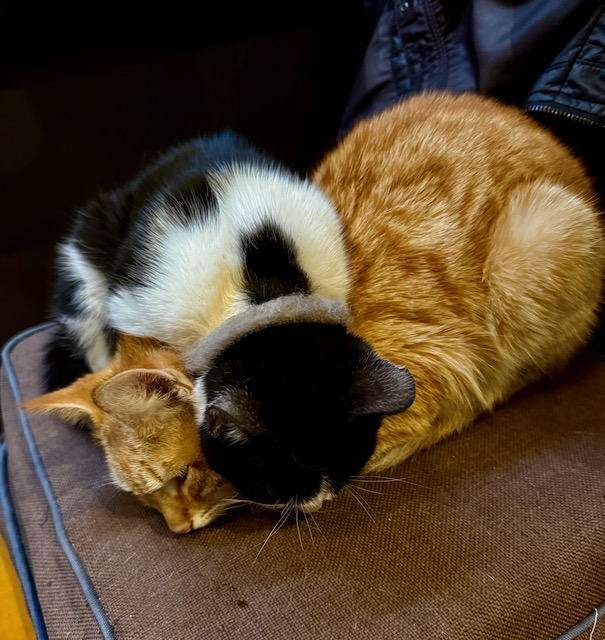
Why the hotel name meaning blue cat? No one could tell me. As a childless cat lady, I was delighted to spot two curled up kitties on an office chair, as well as other cats during my travels. Malagasy like felines, I learned.
If not a Tales and Travel follower, please sign up here. Trust me. It’s safe. Your address is not shared.
Malagasy John Delmas organizes and guides visits to Madgascar. John was my guide/driver for two days. He was super, taught me lots. Contact his company. https://www.mada-discovery-travels.com
I booked my African adventure, South Africa (Kruger) and Madagascar, with Worldwide Quest, http://www.worldwidequest.com
Today’s Taste. No new recipe, but one from the past, CHICKEN MAFE. It’s not a Malagasy recipe, but a West African speciality. I have made it several times for African dinner parties and it’s always a hit. Peanuts are the secret ingredient. For more tasty recipes, click here.
Scroll down for more Mada photos and for Comments. I’d love to know your thoughts.
Zebu is a market favorite.
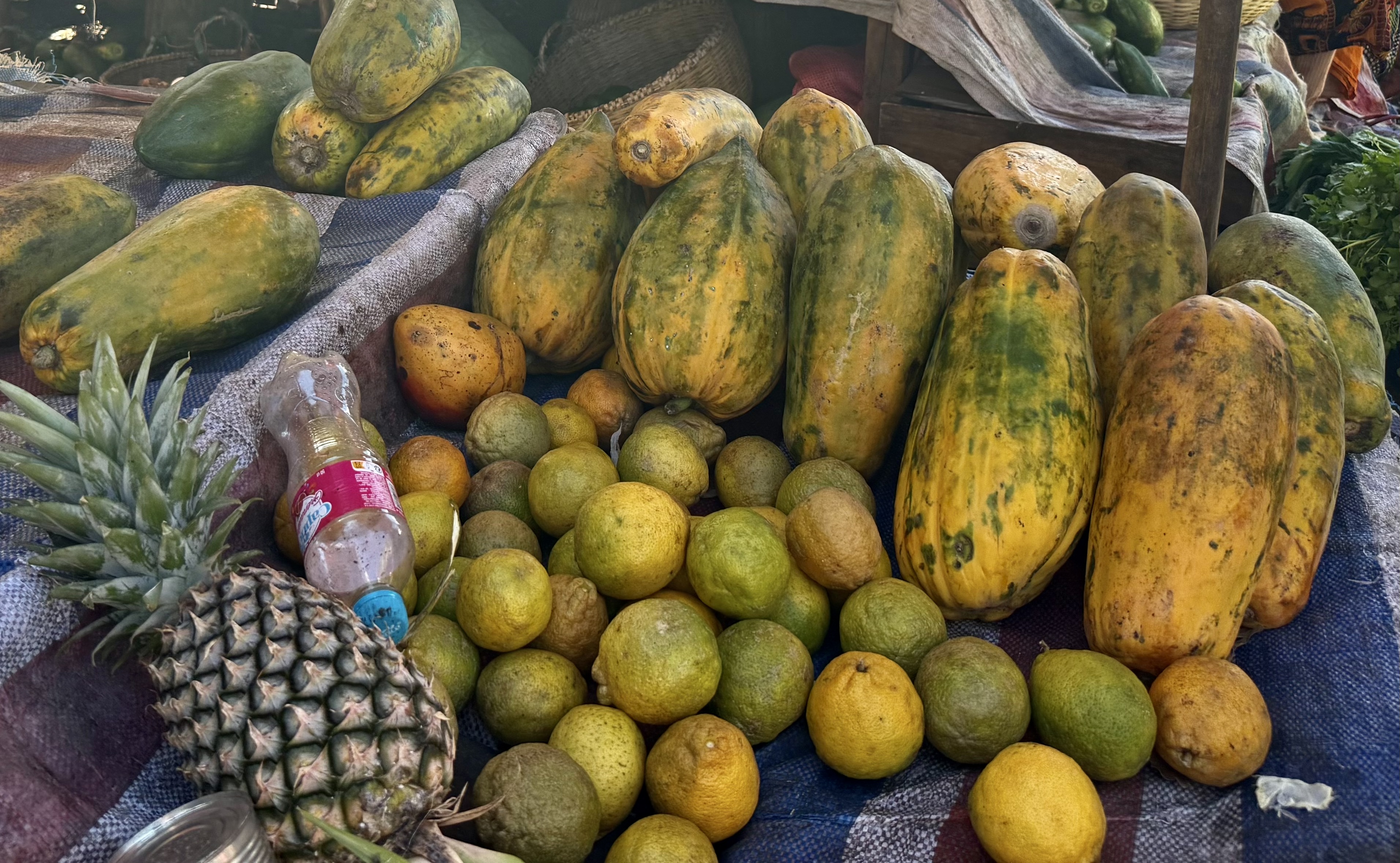
Mada produces several kinds of bananasSardines drying
“Madame, vous êtes à la fin, » (Madame, you are at the end (of life), she announced as she massaged my ancient body. I had to chuckle, thinking to myself, “Yes, I know. But did you need to remind me?”
I had treated myself to a massage at an upscale hotel in Nosy Be, Madagascar, Part II of my solo voyage to South Africa and Madagascar (Mada), the world’s fifth poorest country.
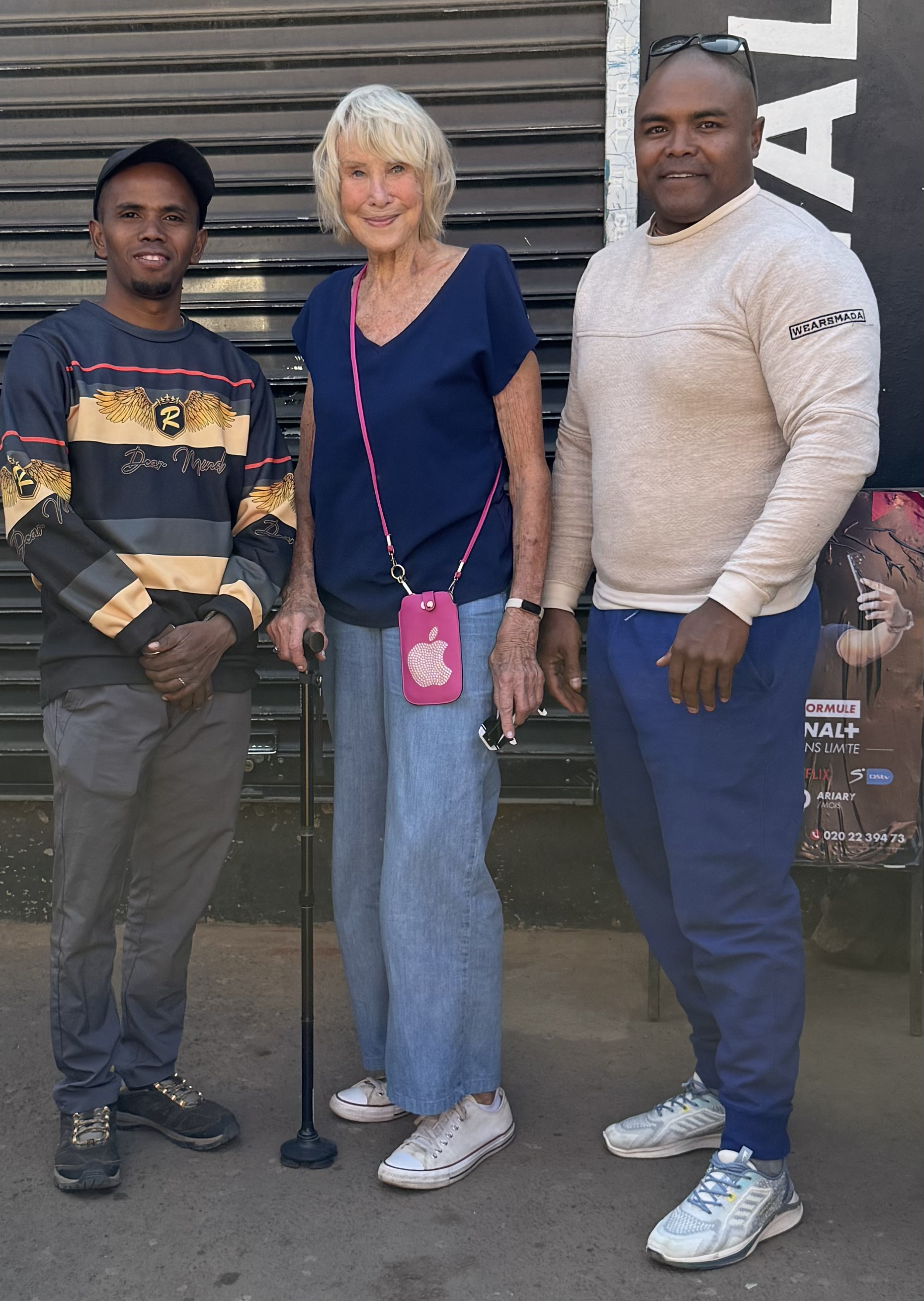
With guides Emanuel and John
Why would a handicapped old lady traveling alone (me) come to Madagascar? It was obvious those I met on the journey were surprised, if not baffled. I did not fit the profile of the typical Mada tourist.
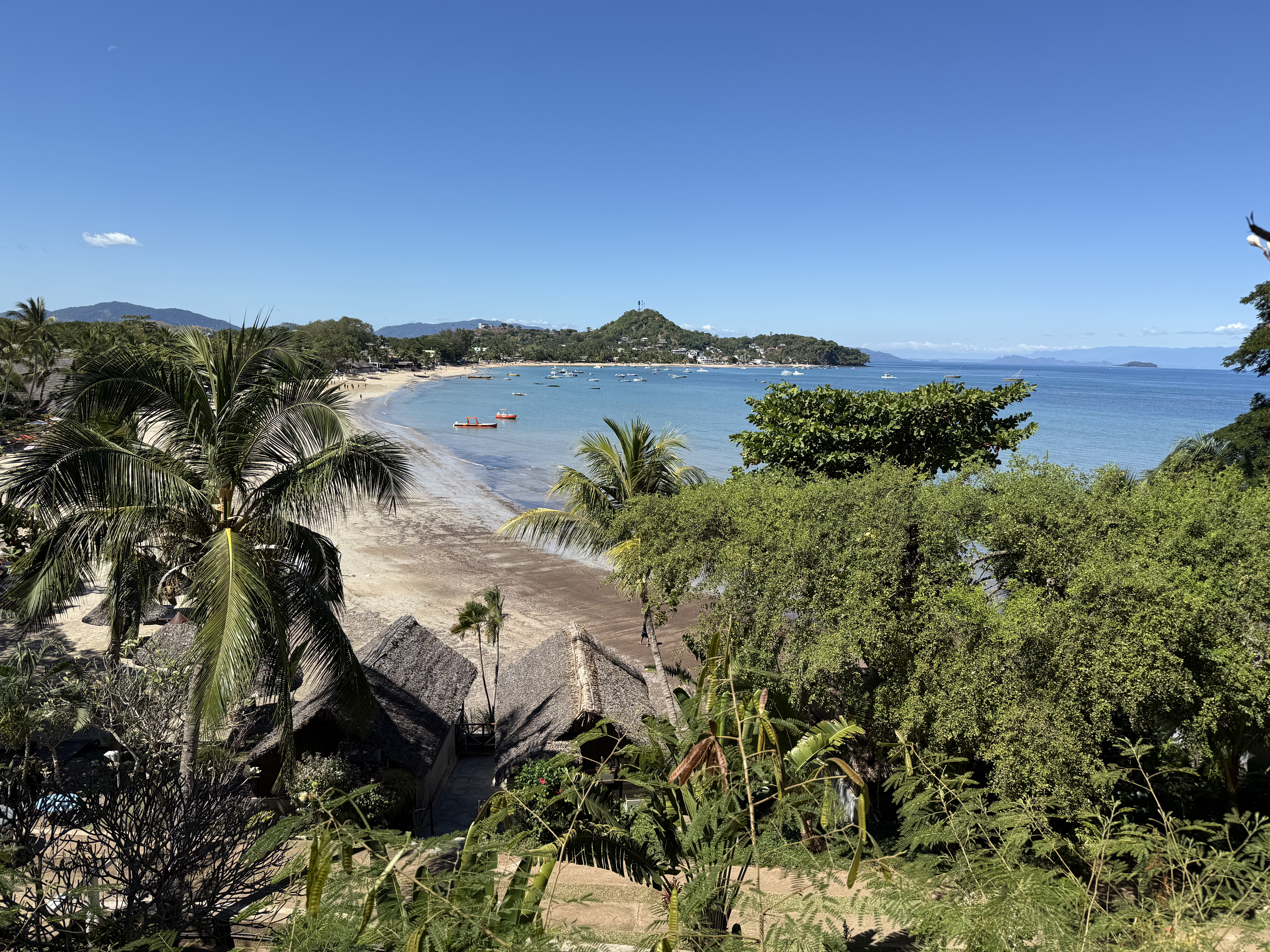
Nosy Be, Madagascar
Madagascar is a fascinating, gorgeous country, but crime ridden and poor – very poor. Most visitors are young and fit or older and fit, exploring Mada’s rich biodiversity and incredible landscapes which involve long, rigorous journeys over mainly dirt roads. Mada is huge, the world’s fourth largest island. Distances are great. Due to my disability, my excursions were near cities and mainly on paved roads with a private driver/guide – nonetheless challenging at times.
I was apprehensive, if not nervous, prior to departure. Had I taken a step too far? I was petrified of falling again. But I charged ahead.
Madagascar is home to 112 species of lemur, all endangered.
A woman I met my first night at a hotel in Mada gave me some words of wisdom. She is a health care worker who has a daughter with disabilities. “You need to push yourself, test your boundaries. Use it or lose it.’’
I reflected on those words many times in Mada – when faced with uneven, stony or dirt terrain to navigate, steep steps with no railings, hills with no steps. “You can do it. Slowly. Carefully,” I told myself.
Steps were often challenging..
Travel has been my lifelong passion. I relish learning about different lands, cultures, traditions. I love talking to locals. You learn so much. It is enriching. It can change who you are. Travel adds perspective to life and understanding of the world.
My late husband Bob shared my passion for travel and adventure. We traveled near and far. After several difficult years suffering from Alzheimer’s, he passed way two years ago. About the same time, I had a horrendous fall – a complicated femur break and a broken shoulder. Despite numerous surgeries, I have limited mobility and need a cane to walk. And, I don’t have full motion of my left arm following the injury.
Bob and Leah in the Oman desert
I am à la fin, handicapped, but still alive. I can walk, albeit slowly. I no longer have a travel partner. What to do? Sit on the couch, watch TV ad wait to die?
NO. NO. Get up. Get going. Get back on the road again. I did. It was invigorating. I felt alive again. I loved it.
As Saint Augustine said, “The world is a book, and those who do not travel read only one page.” I want to read all the pages.
If not a Tales and Travel follower, please sign up here. Trust me. It’s safe. Your address is not shared. Don’t miss out. More about my travels in future posts: Sensational wildlife in South Africa, the mysteries of Madagascar.
See below for a new recipe just in time for all those ripe tomatoes.




Please leave a comment . . .