Aiming (and failing) to Cook like a Chef

I am passionate about food and cooking. Cookbooks – I must have 100s.   I love trying new recipes, experimenting with exotic ingredients.  Over the years I have been to many a cooking course, often during travels to learn about ethnic cuisines.

We moved to southern France several years ago, yet I had never attended a cooking course in France.  Shame!  The mother of all cooking schools, Le Cordon Bleu, is French with headquarters in Paris.  It is legendary. My idol, Julia Child, got her start at Cordon Bleu Paris.

On a recent trip to Paris to see our American dentist, I set a day aside for Cordon Bleu.  I was overwhelmed.   This is indeed the Harvard of cooking schools, like no other.


This article, a post for my foodie fans, appeared on the web site: travelsquire.com


“The Art of Cooking like a Chef,” was the title of my all-day course, three hours of demonstration in the morning, followed by an afternoon cooking workshop.cb.3

Twenty-five of us from 11 different countries watched and listened as our teacher, Chef Guillaume Siegler, prepared three different and demanding dishes in the professional kitchen classroom.  He spoke French, but a translator stood by to explain all in English.

First course:  Pineapple and green zebra tomatoes, creamy burrata, basil, olive oil, pomegranate red pesto.

First step:  Peel the tomatoes.  “The skin is disagreeable to the mouth,”  said Siegler. He is right, but at home I usually skip this step — never again if I want to cook like a chef.

The tangy red pesto was a mixture of raspberries, tomato pulp, pomegranate juice, olive oil, pomegranate molasses and green Tabasco, all mixed in a food processor.

chef.blogAs he moved from tomatoes to pomegranates, Siegler, who has worked in many famous Parisian restaurants as well as his own restaurant in Tokyo,  spewed out more words of culinary wisdom: “To cook well, you must think about what you are serving.”

“Respect all products and work only with excellent products.” He put this into practice when he was about to put the finishing touches on the tomato-pomegranate-burrata concoction.  He rejected the basil on hand —  too wilted. — and sent an assistant to the school roof garden to pluck some fresh basil.

The finished dish was food-photo perfect – almost too beautiful to eat.  It went into the frig and he moved on to the main course:  Roasted rack of lamb with parsley crust, pearled jus with rosemary, and summer vegetable tian.

Lamb is one of my favorites, and I have always been in awe of a rack of lamb with the bones parading perfectly to crown the roast.  Even though I adore cooking, this is not something I would ever attempt.

cb2

As I observed, deboning that hunk of meat is no day at the beach.  With skill, precision and speed, he cut away, explaining the intricacies of the task.”Remove some of the skin, but not too much… Get rid of the nerve which is attached to the bone…. Make careful incisions to free the meat from the bones.”

The summer vegetable tian came next.  Rows of sliced vegetables (eggplants, tomato and zucchini) were attractively layered on top of a bed of sautéed onions. I have sautéed onions zillions of times, and have never given much thought to it.  That will change.  There is professional approach to even this simple task.

“Sweat the onions.  Add a bit of salt.  Don’t color them.  Mix vigorously.  Taste.  Salt and pepper.”

He used a mandolin to get perfect, even slices of the veggies.  He showed how to use this dangerous tool and save your fingers.  Start out holding the chunk of vegetable down with your knuckles, as it get smaller, switch to the palm of your hand.   Having recently sliced off about a ¼ of a finger tip as I tried to slice potatoes with a mandolin,  I will surely heed this.cb7

By now I was starving, and all those heavenly aromas had not helped.  Alas, we were all given small portions of his creations to sample.  “Where’s the wine?” someone asked.  No wine, but each dish was delectable.

The afternoon workshop was held in the state-of-the art, stainless-steel and white teaching kitchen where each student had his own work station. After we donned our Cordon Bleu aprons and chef’s hats, we were each presented with a lamb rib roast.

cb.2Oh No!  The GPS on my phone sent me in the wrong direction when leaving the metro.  I  missed the first 15 minutes of  the morning intro class.  I knew we would be cooking during the workshop, but had not realized we would each get our own chunk of lamb.  So, I had not paid that close attention to the somewhat complicated instructions.  Instead I focused on photography, figuring this was one part of Cooking Like a Chef I could skip.  If I wanted a rack of lamb, I would order the meat prepared from a butcher.

I felt dumb and humiliated, and sought assistance. Alisa, a bubbly young Russian woman whose work station was next to mine, guided me through the initial attack of the lamb.  She in turn sought help from a Russian doctor next to her.  They had met the day before at another Cordon Bleu course.  The doctor was exceptional, applying her knowledge of human anatomy to the lamb, making precise incisions.

I could not expect Alisa to do all my work, nor Chef Siegler who raced from work station to work station, guiding, critiquing, encouraging.  I was too embarrassed to reveal my total ignorance of his instructions.

“Five more minutes to finish the lamb,” he announced.  We had to move on to the jus, crust and veggies. Tension was mounting.cb.4
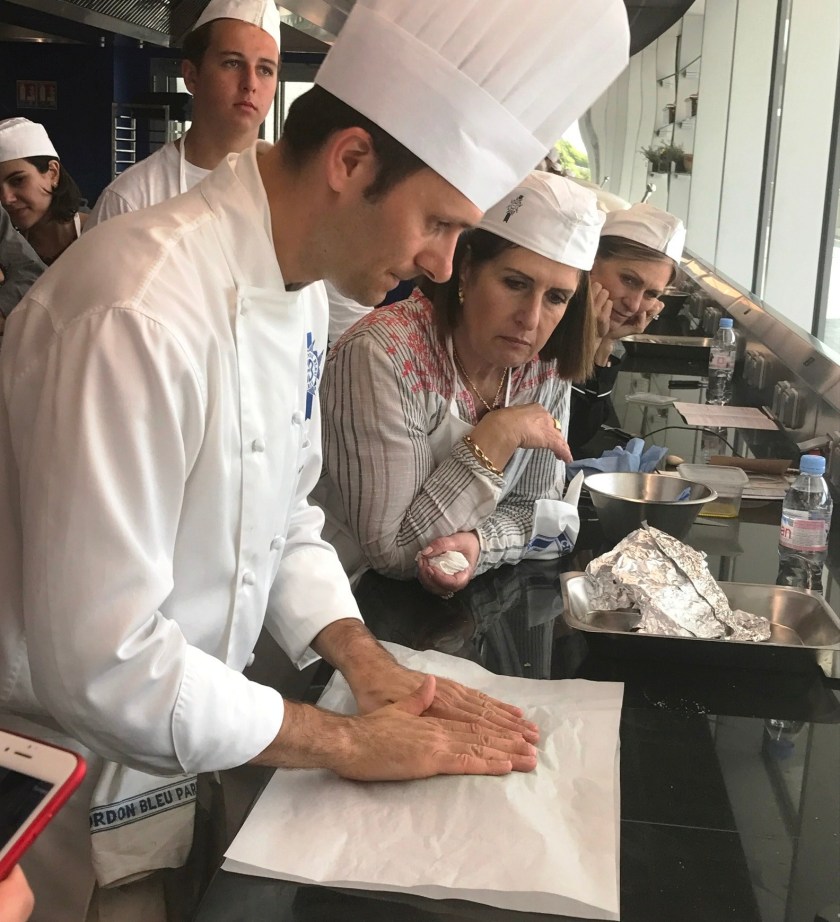
“I love to cook.  I love to share, with customers and students.  But I prefer students,” Siegler  told me.  “I need to have my eyes on everything here.  Some people have never held a knife.”

My classmates, however,  appeared to have advanced far beyond wielding a knife. The dedicated chef  came around to inspect each student’s lamb.  Star of the class, Anze from Slovenia, managed to perfectly duplicate Siegler’s demonstration lamb.   All were in awe, even Siegler.  The doctor’s efforts were also impressive.  Others, while perhaps less perfect, were acceptable.

Unfortunately not mine.  When he looked at my massacred meat, he pronounced: “You will have a filet instead of a rack of lamb,”   then proceeded with Formula I speed to show me how to remove the bones and fat from the lamb, leaving a filet.

At least I was not alone in failure. Lorraine from Shanghai also ended up with a filet. “We don’t cook like this in China,” she said.

Time was limited, so tasks were divided as we moved on. I opted for chopping and sautéing onions for the tian, figuring I could not screw this up.  And, I remembered his instructions.

We each were given an aluminum container to assemble our own tians with the onions and other veggies which we had sliced. These, and the racks of lamb (and filets) went into the ovens.  The reward:  We each had a tian and our lamb to take home.  My husband and I had rented an airbnb apartment.  I called ahead.  “Get a bottle of good red wine. I am  bringing dinner.”cb.1

I may not have had the perfect rack of lamb, but the filet was superb.  The tian: delicious. Definitely a three-star dinner.  The day had been fun, enjoyable, and educational. I picked up many chef techniques which I have been putting into practice.   Next visit to Paris, I will definitely schedule another Cordon Bleu course… along with our visit to the dentist. And, I will arrive on time and pay close attention to all.

Put on the apron and get out the rolling pin.  Time for Christmas cookies.  See Today’s Taste, above right, and my recipe for Greek Crescents,  a winner of a cookie.

If not already a Tales and Travel follower, sign up (upper right). Your address is kept private and never shared. 

Please feel free to comment.  Click below, scroll down to bottom of article, Leave a Reply and add your thoughts.

makeread2


SEPTEMBER IN GERMANY

6,500-kilometers from our home in southern France to the top of Germany, back down to the bottom with many stops in between, then home through the French Alps.

blog.oldenwald
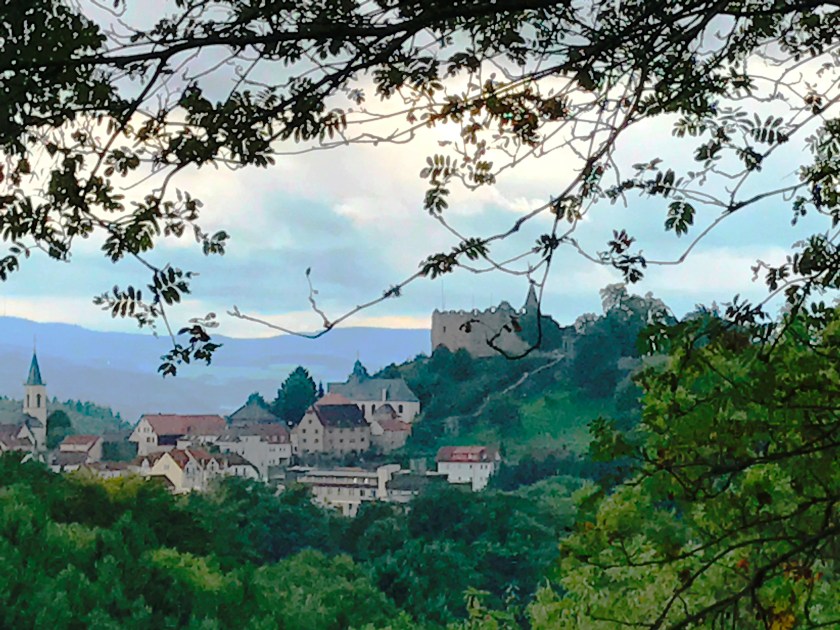
Lindenfels in the Odenwald, an old favorite.

We were happy to be back in Deutschland where we lived and worked for many, many years.  We saw old friends.  We made new friends. We visited old haunts and new places. And, we enjoyed culinary favorites – great beer and wurst.

OLYMPUS DIGITAL CAMERA
German pretzel, bratwurst and sauerkraut — the best!
blog.rain
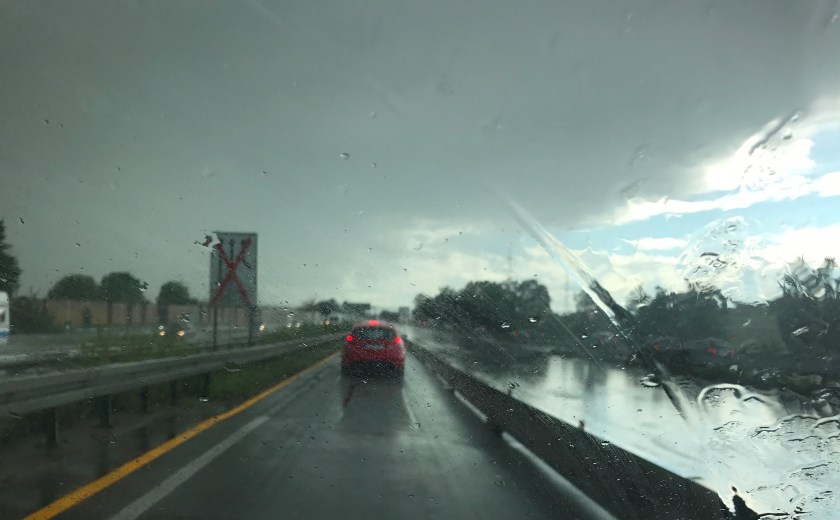
Too many days like this.

The down side:  weather (mainly gray) and traffic.  We moved to France for sunshine, and after a month of mainly depressing, grim weather, I think we made the right decision—despite sweltering last summer.  On those legendary autobahns with sections where there is no speed limit, we encountered too many “staus” (traffic jams).

blogtraffic
No speeding on this autobahn.

First stop: two towns in northern Germany from whence my ancestors hailed long ago:  Cloppenburg and Vechta.  We were not overwhelmed with either.  We could not even find a Gasthaus for a beer and bratwurst in Cloppenburg, only pizzerias and all manner of ethnic restaurants. Unfortunately this seems to be the trend throughout the country.

OLYMPUS DIGITAL CAMERA
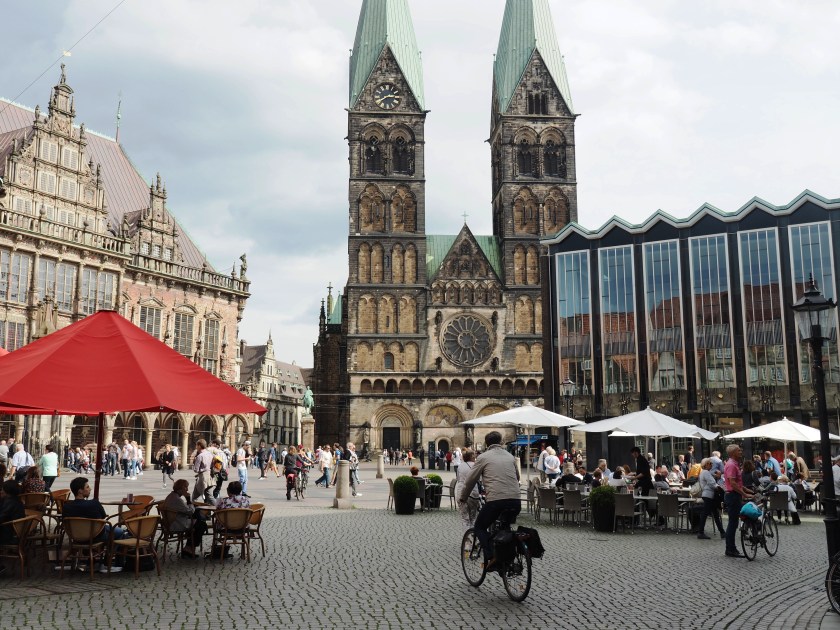
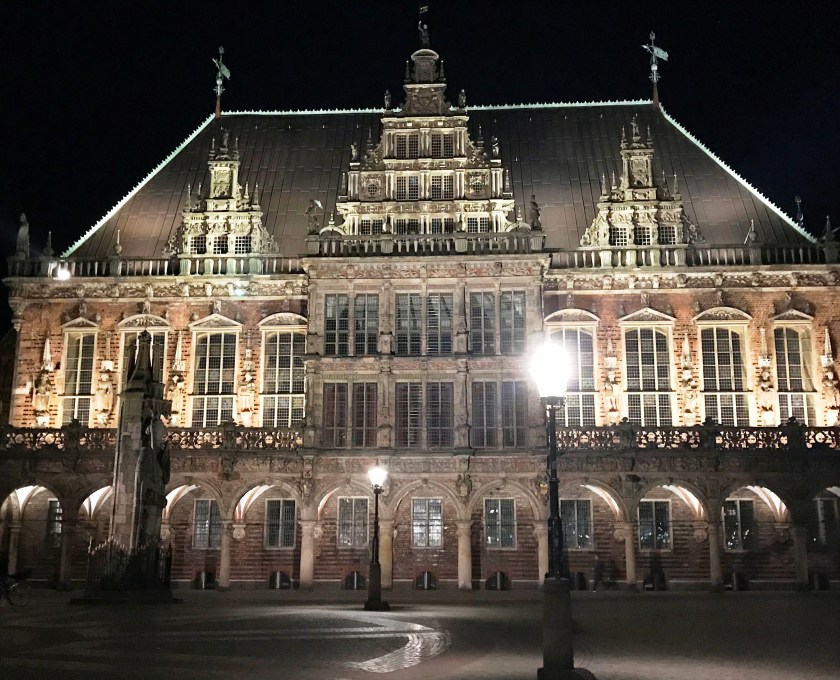
Bremen’s historic market place, above, and the Town Hall, below, sparkling at night.

blog.bremenOn to Bremen which is overwhelming with its fairytale perfect Markt Platz.  We stopped in Bremerhaven to check out its famous Emigration Center and fascinating museum.  We used their computers for some ancestor research. One could spend hours, days, on this project.

OLYMPUS DIGITAL CAMERA
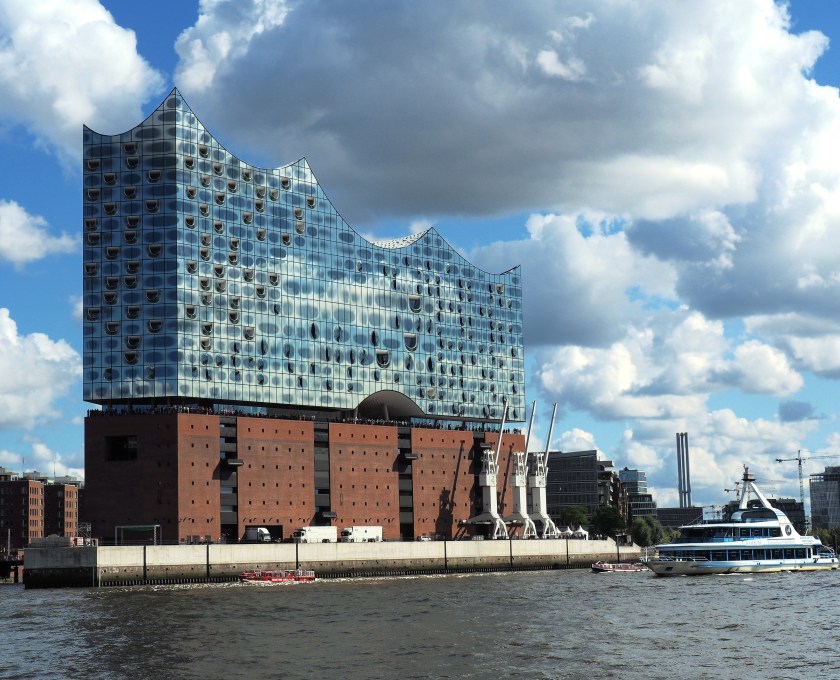
The 110-meter high glass façade of the Elbphilharmonie tops the brick block of an historic quayside warehouse.

We moved on to Hamburg which has grabbed headlines worldwide with its glittering new landmark, the Elbphilharmonie, an astonishing structure which has been in the works for more than 13 years, grossly surpassed cost estimates with a final price tag of $843 million, and has sold out the 2,150 seats for each performance in its Grand Hall for more than a year.

OLYMPUS DIGITAL CAMERA

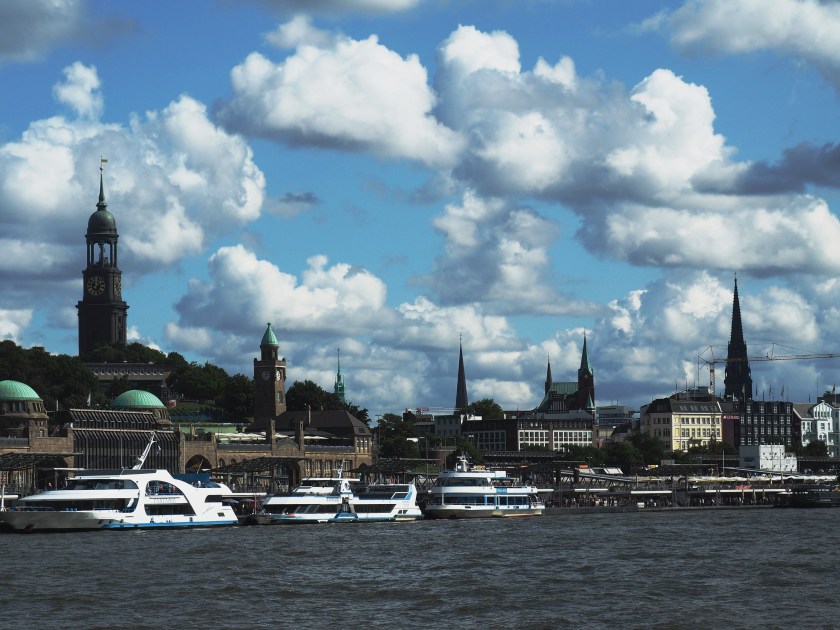
Hamburg, Germany’s second largest city and largest port, is all about water. The open waters of the North Sea are 65 miles from the maritime city, but it’s water that imbues the city with a distinctive, enticing flair.  We took a harbor cruise, and a cruise on the city’s two lakes, the Binnenalster (Inner Alster) and Aussenalster. (Outer Alster).blog.nsea3

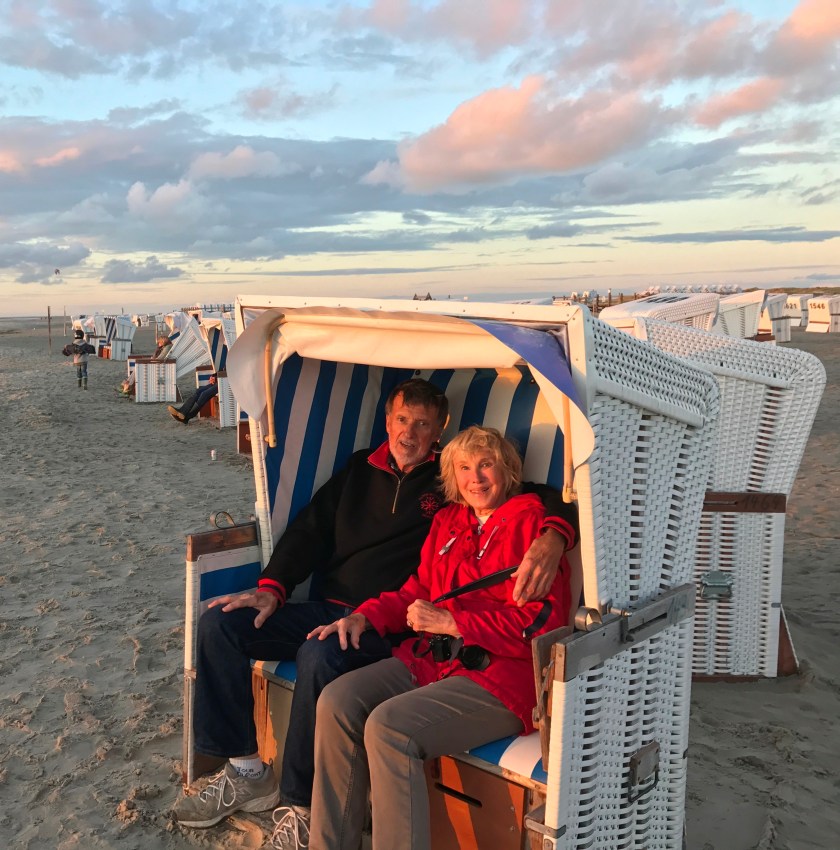
To experience the North Sea, we traveled on to the coastal resort, St. Peter Ording.  I had hoped we could bike along the dikes.  Rain.  Downpours. No biking for us. However, between the deluges we managed a few invigorating beach walks.  The North Sea winds make the Mistral seem like a gentle breeze.

OLYMPUS DIGITAL CAMERA

Wismar and Stralsund, two cities on the Baltic in the state of Mecklenburg-Vorpommern (part of the former East Germany), were next on our agenda.  Both are medieval treasures which were about to crumble before reunification.  They are now restored

Architectural treasures in Stralsund.

jewels.  “But, it is thanks to our (western German) money,” a friend in Stuttgart reminded me.   Wismar’s ancient churches are a marvel.  Stralsund has a wonderful new Ozeaneum musem, in addition to its antique structures.

OLYMPUS DIGITAL CAMERA
Wismar’s gabled facades are popular with filmmakers.

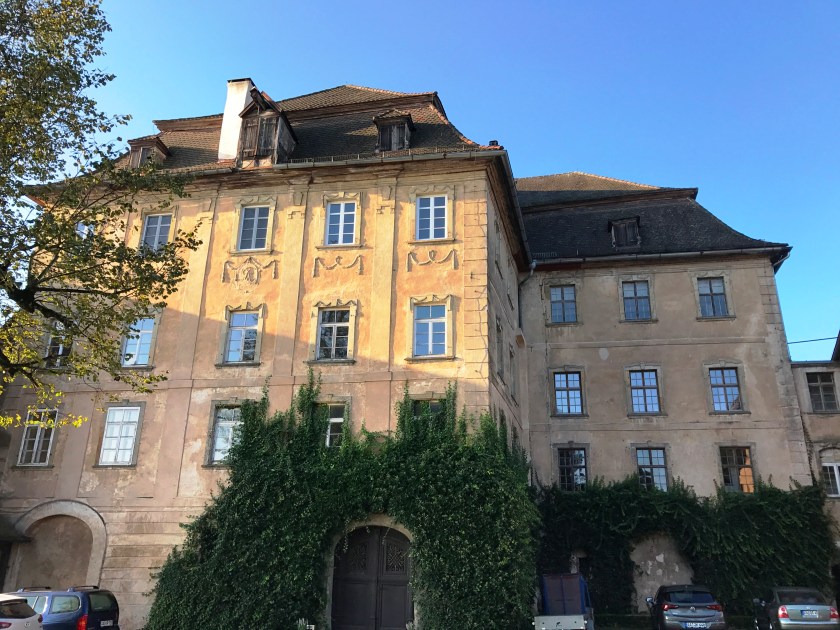
I will be writing articles for the magazine German Life on many of the places we visited, including an article, “Lodging in Noble Homes.”  These are homes still occupied by royalty, friendly nobles whom you can meet, even dine with.  We stayed at three such homes/castles, and had delightful times with the owners, all of whom encounter monumental expenses to keep their royal residences intact.  Income from tourists helps with expenses.

blogcastle1a
Schloss Luehburg in northern Germany, Mecklenburg-Vorpommern. After reunification, the castle which had been seized by the East German government, was purchased by a private owner. Below, Mrs. Calsow (von Bassewitz) bought back the home of her ancestors in 2010. More info: http://www.schloss-luehburg.de
castlle1b
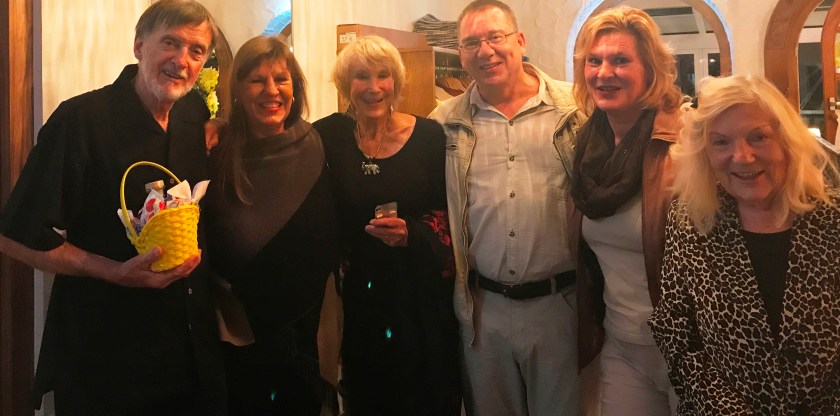
Luehburg Schloss owners Wolf Christian and Dorothee Calsow (Duchess von Bassewitz) with faithful friends. She gave up the title when she married.
OLYMPUS DIGITAL CAMERA
Schloss Ludwigseck near Bad Hersfeld in central Germany (Hessen), has been in the von Gilsa family since the 15th century. More info: http://www.schloss-ludwigseck.de
blogcastle2a
Duchess Tanja and Duke Thilo von und zu Gilsa live in Schloss Ludwigseck with their four children, two castle dogs and cats.
castle3
Schloss Hohenstadt, east of Stuttgart, has been in the von Adelmann family for almost 500 years.  More info:  http://www.GrafAdelmann.de
castle3
American Duchess Anne von Adelmann gained her title when marrying Duke Reinhard. Here with their two  young daughters.  They also have two castle dogs.

More photos from Germany below:

blog.stutt21
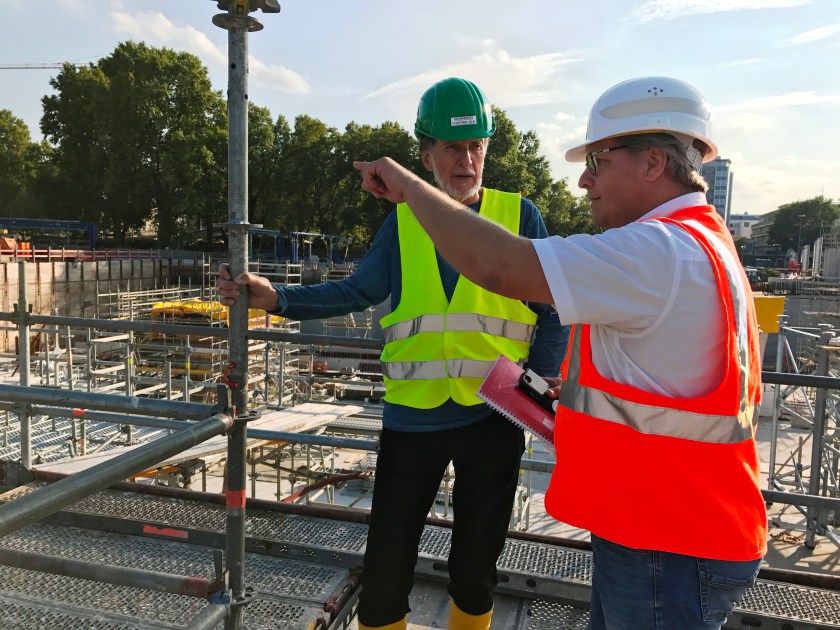
We had a tour of Stuttgart’s controversial, monumental building site: Stuttgart 21 which aims to put the city’s train tracks underground.
OLYMPUS DIGITAL CAMERA
Distant relatives in Stralsund?  Koester is my maiden name.  The owner was not impressed.
blog.nsea2
Strandkorb (beach basket) offers refuge from those fierce North Sea winds.
OLYMPUS DIGITAL CAMERA
Hamburg’s city hall.
blog.darmstadt
Visiting old friends in Darmstadt.
blog.auerbach
And old friends in Auerbach.
blog.nsea
Plenty of interesting photo opps on the North Sea

Coming soon, the Maldives and more on Germany’s noble families and castles. If not already a Tales and Travel follower, sign up (upper right). Your address is kept private and never shared. 

Please feel free to comment.  Click below, scroll down to Leave a Reply and add your thoughts.  

makeread2

Adventure Abu Dhabi

OLYMPUS DIGITAL CAMERA

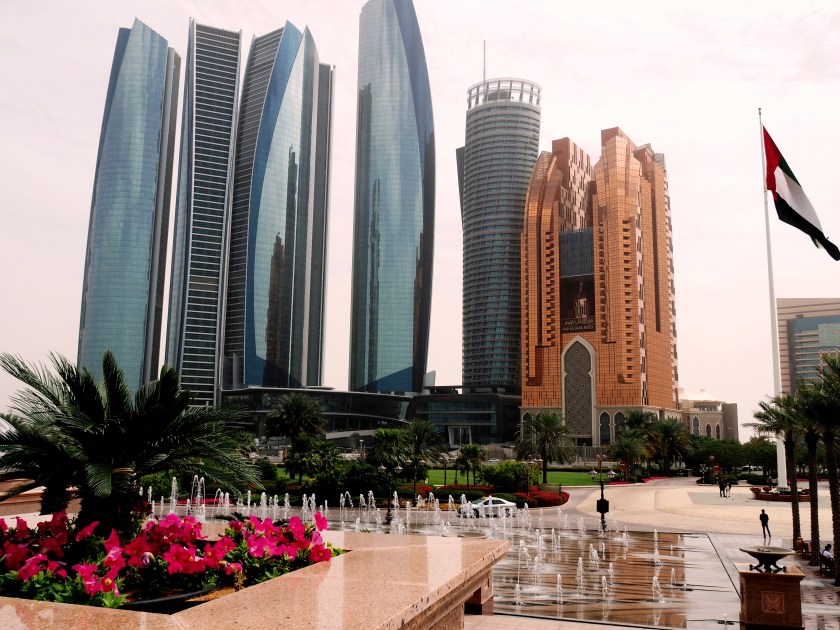
I was wooed by those classy commercials on CNN.  Stunning desert landscapes.  Futuristic, fantastic architecture. Glamorous hotels.

Abu Dhabi.  We had to change planes there en route to  Sri Lanka.  Let’s break up the long journey and check out the capital, the largest and wealthiest of the seven emirates that make up the United Arab Emirates.

It is indeed intriguing, interesting.  Bob and I had visited Dubai many years ago, long before most people had even heard of it. Like Dubai back then, and now, construction and progress are everywhere in Abu Dhabi.

“For a time, both emirates seemed locked in a battle to build the most glittering skyline,” notes an article in Global Traveler.  “But lately, Abu Dhabi has deliberately repositioned itself as New York to Dubai’s Los Angeles.  Abu Dhabi serves as the commercial and cultural heart of the U.A.E., while Dubai remains more populist, with an economy centered on tourism and real estate.”ad,4

Nonetheless Abu Dhabi has its share of tourist attractions. The Emirates Palace, billed as a “7* luxury hotel,” is high on the  list. We wandered through the cavernous public areas of the $3 billion hotel, looking up and around at an abundance of  gold leaf and marble.  We had an expensive coffee amidst the posh surroundings. I asked where the gold bar vending machine ad.3was (mentioned in an NYT article), only to be told it had been removed.  Pity – that was my souvenir choice!
Fortunately taxis are reasonable in Abu Dhabi. There was nothing of interest within walking distance of our hotel, supposedly in a central location, and distances are vast.   Taxi driver Mohammed, an Indian from Kerala, took us to the sights.

He is one of 65 percent of Abu Dhabi residents who are foreigners, he told us. Fifty percent of the foreigners are Indians, and most, like Mohammed, are from Kerala in the southern part of the country.

Markets are my passion.  I asked him to show us the fish market. This was not the collection of stalls with fishermen selling their catches as I had envisioned, but  a huge warehouse with aisle after aisle of all sizes, shapes and varieties of sea creatures.  Mohammed knew many of the workers, all from Kerala.  We continued to the date market – another vast structure with nothing but dates – numerous different kinds. There too he had chums from Kerala.  One gave us a sample of chocolate covered dates – exquisite.OLYMPUS DIGITAL CAMERA

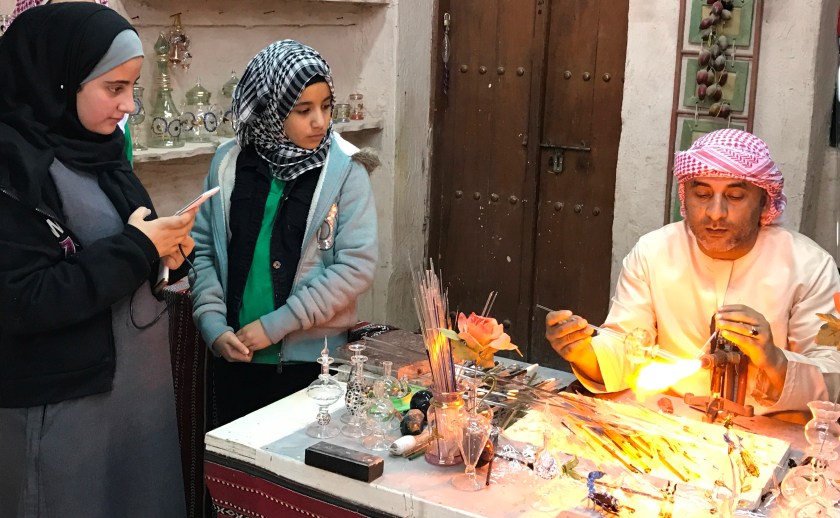
We continued to Heritage Village, an old fortress where the Abu Dhabi of bygone days with Bedouin tents and old stone houses has been recreated.  Artisans are at work in many enclosures.  I zeroed in on a purse in the leather workshop and tried to bargain with the shopkeeper, attired in the long traditional Muslim robe. I assumed he was a native.  No, he too was from India.

ad.7
Admiring glass creativity at Heritage Village

Foreign workers come to Abu Dhabi where earnings are good, work for several years, save and then return home, a Nigerian taxi driver explained.  He has a degree, but no jobs in Nigeria.

ad.6
Foreign workers on break at the fish market.

Abu Dhabi’s piece de resistance is the Sheikh Zayed Grand Mosque, a dazzling edifice of domes, minarets, reflecting pools, crystal, marble…. materials from all corners of the globe. Elements of Moroccan, Persian and Arab styles blend in this monumental beauty.  Non-Muslim visitors are welcome. Like all female visitors, I was given a blue abaya to wear.OLYMPUS DIGITAL CAMERA

We wandered around with numerous other visitors all taking photos while Mohammed took time out to pray.ad.8

Other Abu Dhabi attractions include the Galleira, a luxury shopping mall, and Yas Waterworld, an amusement park with watery rides. We passed on both, but did ask to see the Yas Marina Circuit that hosts the Abu Dhabi Formula I Grand Prix. I had read that when races were not taking place you could experience the circuit at high speed as a race car passenger.  Yes, but arrangements must be made far in advance. I failed.

ad.15Instead Mohammed took us to nearby Ferrari World. We were content to amble around the mall and admire cars, although had we paid the expensive entrance fee we could have experienced high speed simulation drives.

Future Abu Dhabi visitors will enjoy major attractions on Saadiyat Island,  a $27 billion project that will include the first outpost of the Louvre outside of France, scheduled to open at the end of this year, a Frank Gehry designed Guggenheim museum, and much more.

ad.10
Family visit to Grand Mosque

The fall in the price of oil has delayed completion of these showpieces. Abu Dhabi has about a tenth of the world’s oil reserves which accounts for its wealth.   But, the reserves will decline and the emirate is preparing for life without oil.   Masdar City, a $22 billion project currently under construction, aims to create the world’s first carbon-neutral city powered almost entirely by solar and other renewable energy sources.ad.9

Abu Dhabi is worth a short visit, especially if you want to break up a long flight to Asia.  We found the people, namely foreign workers, all very friendly and helpful. Most speak English.  Because it is a Muslim country, alcoholic beverages are only served in international hotels.  All manner of ethnic restaurants abound.  We tried Thai, Italian, French , a British pub, but the favorite was Café Arabia with Lebanese, Syrian, Moroccan specialties and more.  I relished Palestinian Shakshuka, a spicy tomato, egg and feta combo.  See Today’s Taste, column upper right, for a recipe.

Please feel free to comment – just scroll down and add your thoughts.   Don’t miss future posts. If not already a Tales and Travel follower, sign up (upper right). Your address is kept private and never shared.  makeread2

INTRIGUING INDIA: RELIGION

sikh.11
Golden Temple at Amritsar

Hindus, Muslims, Buddhists, Sikhs, Christians – all are found in Incredible India.

“In religion, all other countries are paupers, India is the only millionaire,” wrote Mark Twain in Following the Equator.

sikh.19
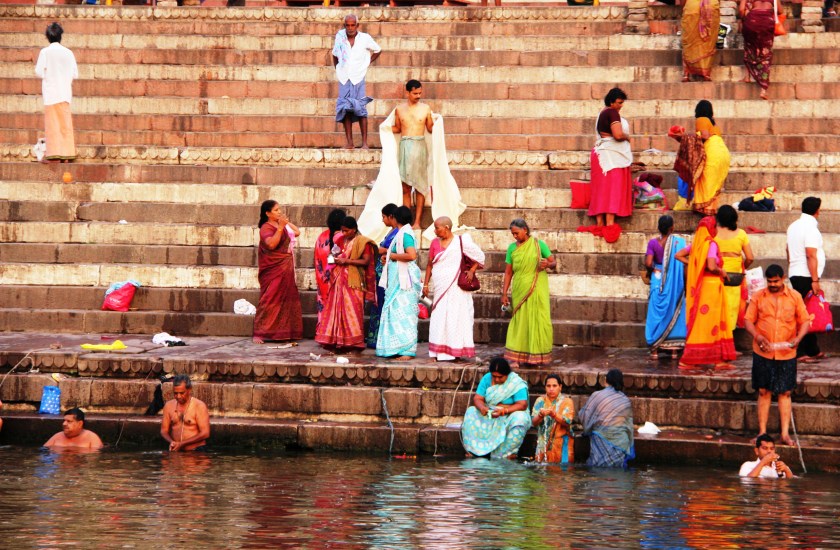
Bathing in the sacred Ganges.

The majority, 80 percent, are Hindus. In Varanasi on the banks of the Ganges we witnessed the early morning Hindu bathing ritual, hundreds plunging into the non-too clean water which they believe is holy and will wash away all sins. At night, the banks of the river are a smoldering mass, fires and smoke from cremations. Many come to die in Varanasi. Death in the holy city is said to free one from the cycle of birth and death.

sikh.18
Cremations on the banks of the Ganges at Varanasi.

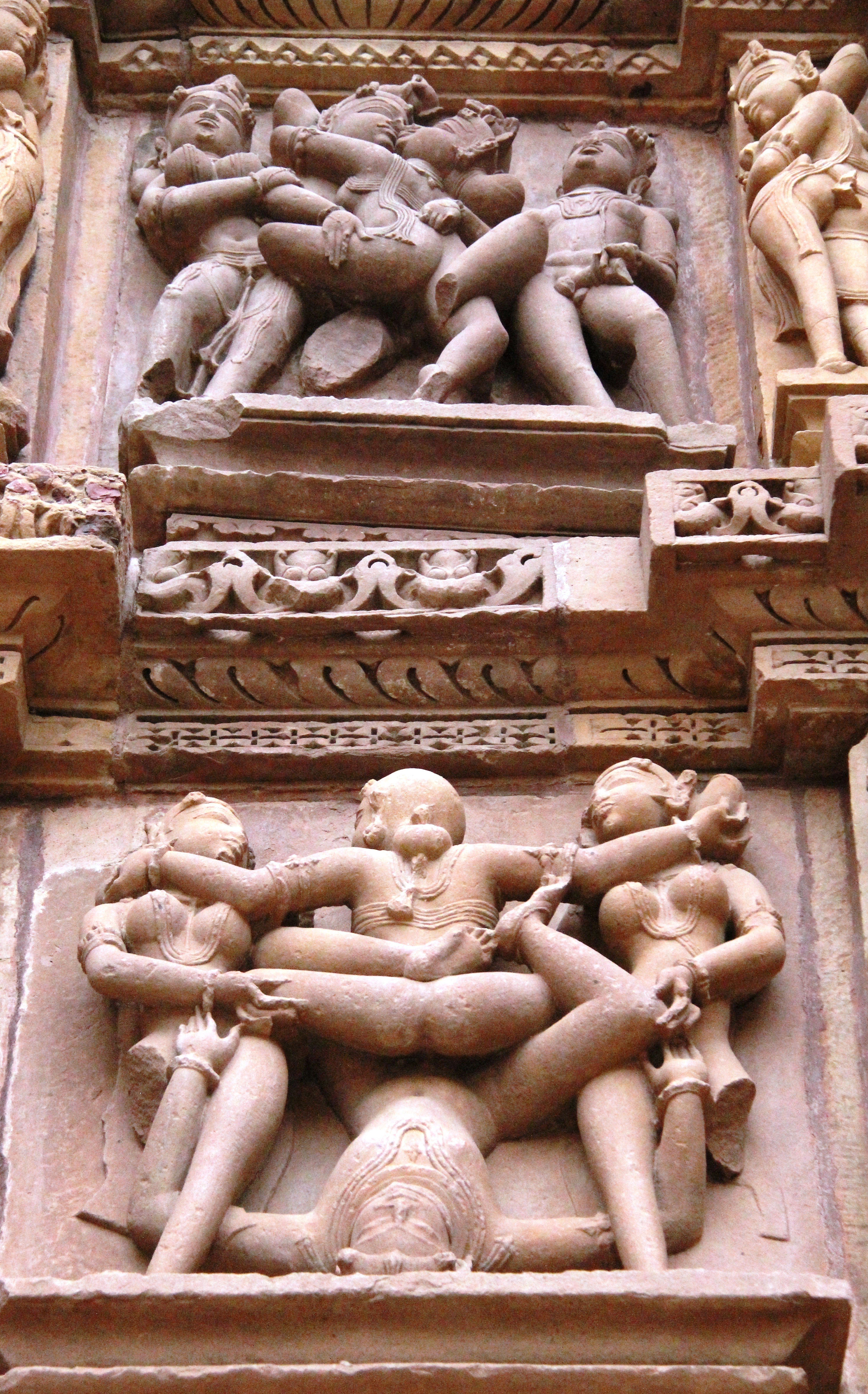
Khajuraho, a wondrous place with numerous Hindu temples, is a popular site, more for the erotic sculptures on one of its temples than the stunning temple architecture.

khajuraho.1
Khajuraho, site of many temples, is one of the “seven wonders” of India.

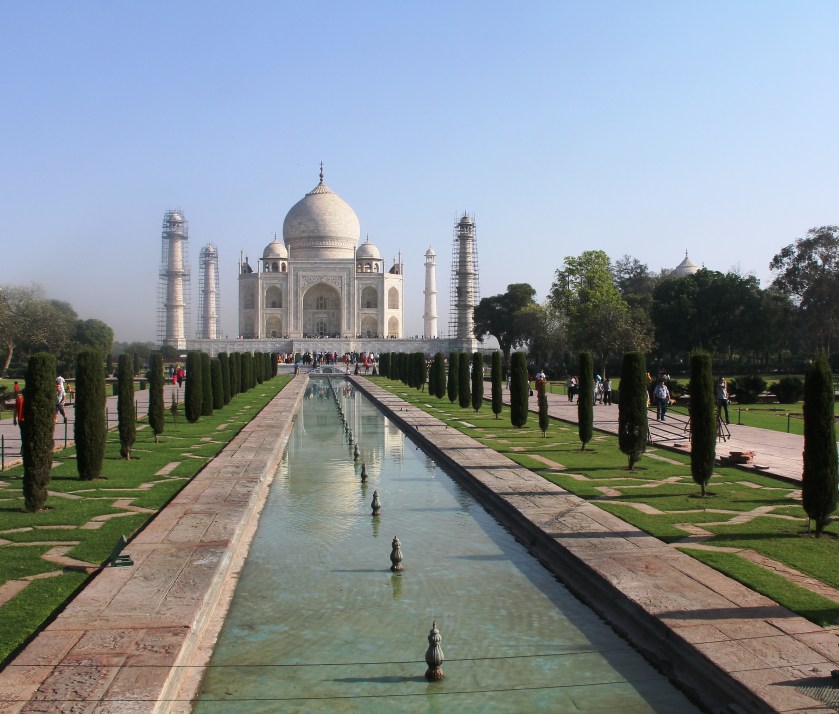
The Taj Mahal – India’s architectural treasure, the dazzling white marble mausoleum built by Emperor Shah Jahan for his second wife who died in childbirth in 1631, is a Muslim monument decorated with carefully inlaid Koranic verses.sikh.taj2

And Amritsar, home to the Golden Temple, the spiritual and cultural center for the Sikh religion, is yet another fascinating religious shrine. Sikhs compose only two percent of the Indian population, yet Sikhism is the fifth largest among the world’s major religions.

sikh.2
Sikhs congregate at the Golden Temple day and night.

The religion was founded in the early 16th century by Guru Nanak and gurus who followed him. Nanak preferred the pool at Amritsar (“Pool of Nectar” in Punjab and Sanskrit) for his meditation and teaching. The site in northern India, today not far from the Pakistan border, became a pilgrimage center where a great temple was built. Perhaps more than the temple, it is the Holy Book, Guru Granth Sahib, the sacred scriptures of the Sikhs, enshrined inside which draws many pilgrims today.

Flowers cover the holy cook.
Flowers cover the holy book.

Twice per day an amazing ceremony focused on the book takes place at the temple. Thanks to guide Alok, we witnessed the lively and curious evening ceremony when the book is carried to its bedroom. Behind golden doors, it spends its night on a bed under an elaborate canopy.

We joined others in a long waiting line to view the book before the evening procession. While waiting, I had the chance to talk to a friendly Sikh who moved from Amritsar to London 17 years ago. London, where the gentleman has a fish and chips shop, has a large community of Sikhs. He was with his son. They, like many others, had a gift to lay near the book where a holy man, surrounded by other holy men sitting cross-legged on the floor, reads sacred verses.

sikh.12
Evening procession transferring the book to its bedroom for the night.

After viewing the book, worshipers, all singing, line up behind ropes to view the ceremonial procession. The book, much like statues in Christian processions, is carried on a golden platform festooned with garlands of flowers.  A group of holy men follows behind, chanting. A trumpet blower announces the arrival of the book. There are stands where worshippers can take communion. It is a joyous, festive spirituality.

At 4 a.m. the same ceremony is repeated when the book is taken from its bedroom back to the temple.

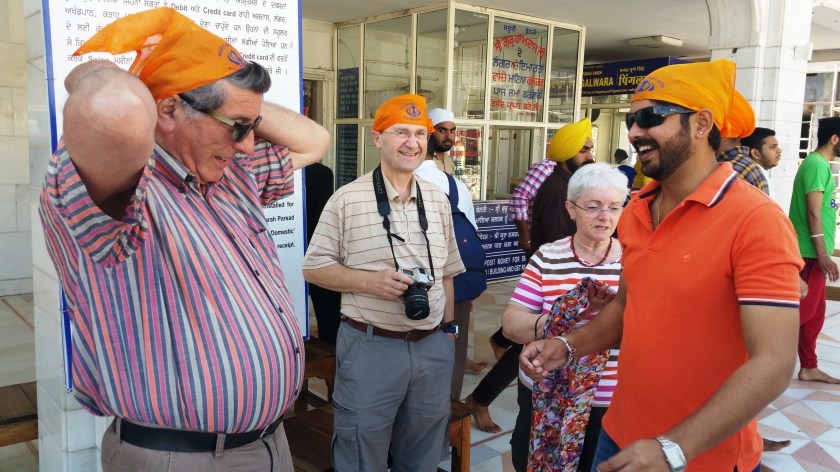
We returned to the holy site the following day and were free to wander around this mystical place after leaving our shoes near the entrance and covering our heads. Vendors sell souvenir bandanas. Sikh men are not permitted to cut their hair and are easily recognized by their beards and colorful turbans. Sikh women wear either a turban or cover their head with a scarf.

sikh.13
Heads must be covered at the Golden Temple. Mini scarves can be purchased.

Before entering the sacred grounds, feet are washed by wading through a shallow pool.

sikh.3
All are welcome to a free meal at the Golden Temple.

The complex is large. It’s a delight to slowly stroll and enjoy the scene, the people, the peaceful ambience, the shimmering golden temple. Selfie photos in front of the temple are popular. Families walk around the lake, taking pictures of one another. Some tired souls just lie down and rest in shady spots. An underground spring feeds the sacred lake where some pilgrims immerse themselves to cleanse their souls. The complex also includes enormous pilgrims’ dormitories and dining halls where all, irrespective of race, religion, gender, are lodged and fed for free.

Feeding the hungry is a tradition among people of many faiths, but Sikhs may get first prize for generosity. The Golden Temple serves 80,000

80,000 free meals are served every day.

simple vegetarian meals every single day of the year – all paid for by donations. Anyone can partake.   Volunteers cook, serve meals and wash the dishes.

Groups sit on the floor rolling dough for naans (Indian flatbread). Nearby other groups smoother naans with a type of butter. Enormous vats of various concoctions simmer on stoves.

Some who eat at the temple volunteer to help out to “pay” for the food and assist the permanent volunteers. Sikhs who live in other countries often come and stay at the temple for several months to help in the kitchen.

Volunteers do all the food prep.

The Golden Temple’s past is not all peace and love. In June 1984, Indian Prime Minister Indira Gandhi ordered an attack on armed Sikh militants holed up there. Over 500 people were killed in the ensuing firefight. Sikhs around the world were outraged at the desecration of their holiest site. Four months after the attack, Gandhi was assassinated by her two Sikh bodyguards, leading to a massacre in which thousands of Sikhs lost their lives.

Most of the damage has been repaired by the Sikhs themselves who refused to allow the central government to take on the task.sikh.14

More on India soon—Dharamshala and the Tibetan refugees.  If not already a Tales and Travel follower, sign up (upper right) so you will not miss this and future posts. Your address is kept private and never shared.

sikh.20
Foreground:  Ganges bather. Background:  Yoga session.

Like my blog? Tell your friends.   I love to know what my readers think about my posts – feedback is welcome. makeread

Erotic sculptures at Khajuraho.

It’s summer and melon season – perfect time for a light, refreshing dessert. I brought Chilled Melon with Lime and Ginger to a recent pot luck. All loved it. Click HERE for recipe and scroll down for more of my tried and true recipes.


Follow Tales and Travel on Facebook:  http://www.facebook.com/talesandtravel

Follow me on twitter: @larkleah


A Tale of Twin Toyotas –and WOE

Tcar.2
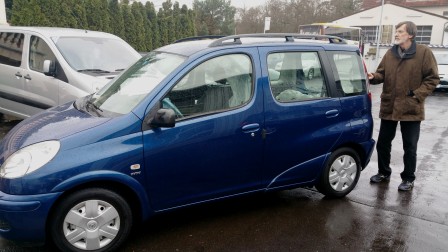
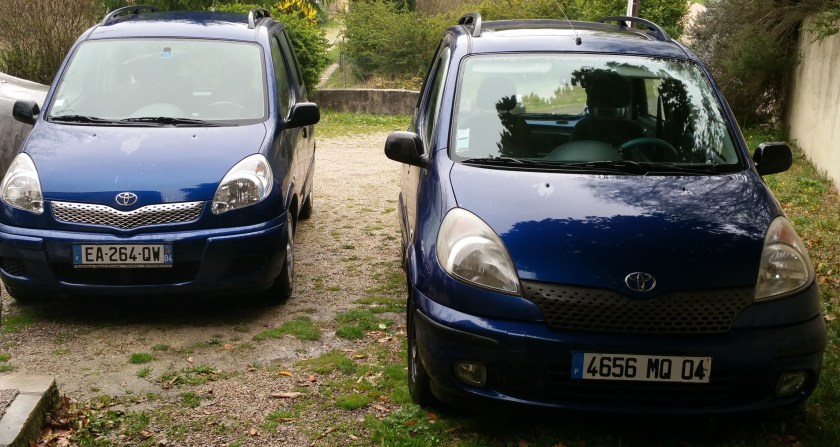
Toyotas I and II


Two Americans living in southern France set off to Germany to buy a car. Not a Porsche (pity). Not a Mercedes. Not a BMW. Not even an Audi. But — a Toyota! No, not a new model, but a very old Toyota (2004).

Crazy? Bizarre?   Idiotic?

Perhaps a bit of all. Here’s the story. Two years before moving to France from Germany 12 years ago, we bought a royal blue Toyota Yaris Verso. The back seats of this minivan collapse and slide under the front seats, leaving lots of rear space, enough for two bicycles standing up. That was the selling factor. We could park the car anywhere with the bikes chained and locked inside.  And, it was easier to put them inside the car instead of on the roof.

Back then we did lots of pedaling. The bikes went with us on cycling trips all over Germany, Austria, Switzerland and France. All l that space was also practical when making large purchases: washing machine, mattress, cases of wine.

Not our car.
Not our car.

We love this car. It has been reliable, trouble free. It now has some 255,000 km, but has had only minor repairs. We knew it could not last forever and were getting worried.   No reason to spend big bucks on a new car at our age. Besides, Toyota no longer makes this model and we found no others with the same features and known reliability.

Bicycle Bob (BB) dove into Internet research on used Toyotas. He claims he could not find any in France. No wonder. I later learned that all his Toyota finds were coming from a German web site. He said he would feel better buying a used car from a German rather than a Frenchman. Those neighbors to the north treat their cars with over-the-top TLC, like rare endangered species.  Check out the cars in parking lots in France. Dents. Dirt. Rust.

The cars he was finding were old, but there were many with far fewer kilometers than ours. We had to see a car before buying it, and probably look at more than one car before purchase. That meant a train trip to Germany, hotel and meal expenses etc. The price tag was climbing.

toyota.14
More to Germany than cars.

No matter. We could do more in Germany than look at cars: Satisfy cravings for good beer and hearty cuisine, visit friends, perhaps even see some new sights. He found versions of the desired Toyota all over Germany – Leipzig, Zweibrucken, Hamburg, Munich. We had to narrow our selection lest we spend weeks canvassing the entire country.

Schweinhaxe and sauerkraut.

So, one dreary day in February we hopped aboard the TGV (fast train) from Aix to Frankfurt, then another train to nearby Erlensee where a friendly car salesman met us and took us to see the first selection. It looked just like our car, same bright blue, just two years younger (2004) but with a mere 134,000 km.

toyota.4
This one looked good.

Promising, but we had another car to see in Kulmbach, three autobahn hours away. We rented a car for that trip. It rained. It poured for the entire drive. We checked out the second Toyota .   Both cars were in immaculate condition. Each car had had just one owner, elderly folks like us.

The blue Toyota owner had been male; the silver Toyota had been in the possession of a female. We test drove both cars. “There is something I don’t like about the clutch in this car,” BB said of the silver one, knowing it had had a woman owner. He maintains women drivers often ride the clutch. A sexist view, in my opinion.  “I think this car could have a problem,” he insisted. I found nothing wrong with it, but he makes the car decisions. Besides, the silver color was wimpish . And, the salesman was anything but accommodating. Our salesman in Erlensee, a Jordanian, was terrific, helpful.

toyota.5
Trying different brews in Kulmbach.

We spent the rest of the day and an overnight in Kulmbach before returning to claim the blue baby. The rain never stopped, but great beer made up for it. Kulmbach is noted for its beer. We visited an artisanal brewery, bought beer to bring home, toured a beer and bread museum – all wunderbar.

We figured it would be a multi-step procedure to finalize the sale and get the car temporarily registered and insured for the trip back to France. Never underestimate the Germans.   Our salesman took us to a trailer type office in a parking lot where, within a half hour, all was complete, including temporary plates on the car.

toyota.12
Seeking solace from German rain.

We set off in our new old car south to Darmstadt to visit old friends, enjoy more beer and hearty food, and then on to Basel, where we were married 26 years ago. The nostalgia visit to this Swiss city was more than moist. The rain, six days of it in Germany, followed us to Switzerland. We spent a day indoors, visiting some interesting museums, before coming home to France where we did find sunshine, but also frustration, headaches, obstacles.

toyota.8
Giacometti at Fondation Beyeler in Basel.

I knew car registration in France would never be the smooth and easy process it was in Germany, however…. We started the process after our return, Feb. 15. On March 22, 36 days later, it was finally finished…or so I thought.

We began the ordeal with a visit to the mayor’s office in Reillanne, our town. Then the tax office in Manosque (1/2 hour away). We had to go there twice since we did not have one of the required documents the first time.  From there we were sent to Digne, a city about 1 ½ hours away and the seat of our region’s “prefecture,” the folks who could make our car legal in France. We thought we had all the required documents.

toyota.7
Dubuffet at Fondation Beyeler in Basel

At the tax office in Manosque we had been given a list of requirements: six documents. The woman in Digne gave us a  longer list: 10 different documents. Sacre Bleu! We did not have the “Certificat de conformite,” a document which could only come from Toyota. And, we were told the safety inspection document we had from Germany would not fly. It was several months old. So, we had to make an appointment and have the car inspected in France and get yet another document.

Off we went to our nearest Toyota dealer, 1/2 hour away. A young man filled out a form requesting all sorts of technical details on the car. We sent that form and a check for 150 euro to Toyota headquarters in France — fortunately not in Japan. A week later we had the form. We were making progress.

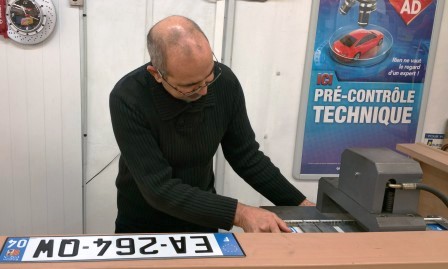
On our second trip to Digne, miracle of miracles, we had all the correct papers. We received a temporary registration. We went to a nearby garage and had plates made – instantly. We were overwhelmed. The French are efficient at something.

Tcar.4
The French have mastered instant license plates.

Only insurance left to conquer. We have our cars insured with a bank in the town of Pertuis (45 minutes away), but we arranged for temporary insurance by phone, and followed up with a visit to the bank last week to sign the form.

We were elated. Finally all finished. Not quite. Today I received a letter from the prefecture in Digne. They need the original car registration from Germany immediately.   I checked our thick folder of documents on this car. We do not have it. I am certain we turned it in with all the other papers to the woman in Digne. ???

Will they cancel the registration without it? Seize the car? Insist we contact the German registration office and get a new ”original” on a car that was registered 12 years ago?

Moral of the story: If you live in France, buy a car in France.

toyota.3
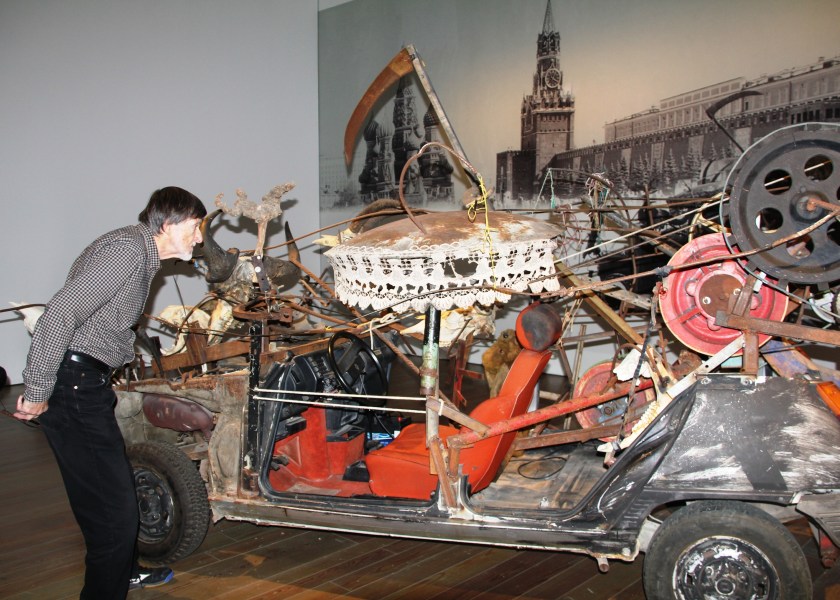
No, not our old Toyota, but a Tinguely creation at the Tinguely Museum in Basel.


Like my blog? Tell your friends.  Please leave a comment – if you can’t see the Recent Comments list below, use the link on the right-hand menu (below “Recipes”). Feedback is welcome. I love to know what my readers think about my posts.

tcar.3
The twins

Follow Tales and Travel on Facebook:  http://www.facebook.com/talesandtr

If not already a Tales and Travel follower, sign up (upper right) so you will not miss future posts. Your address is kept private and never shared.