Savoring Switzerland

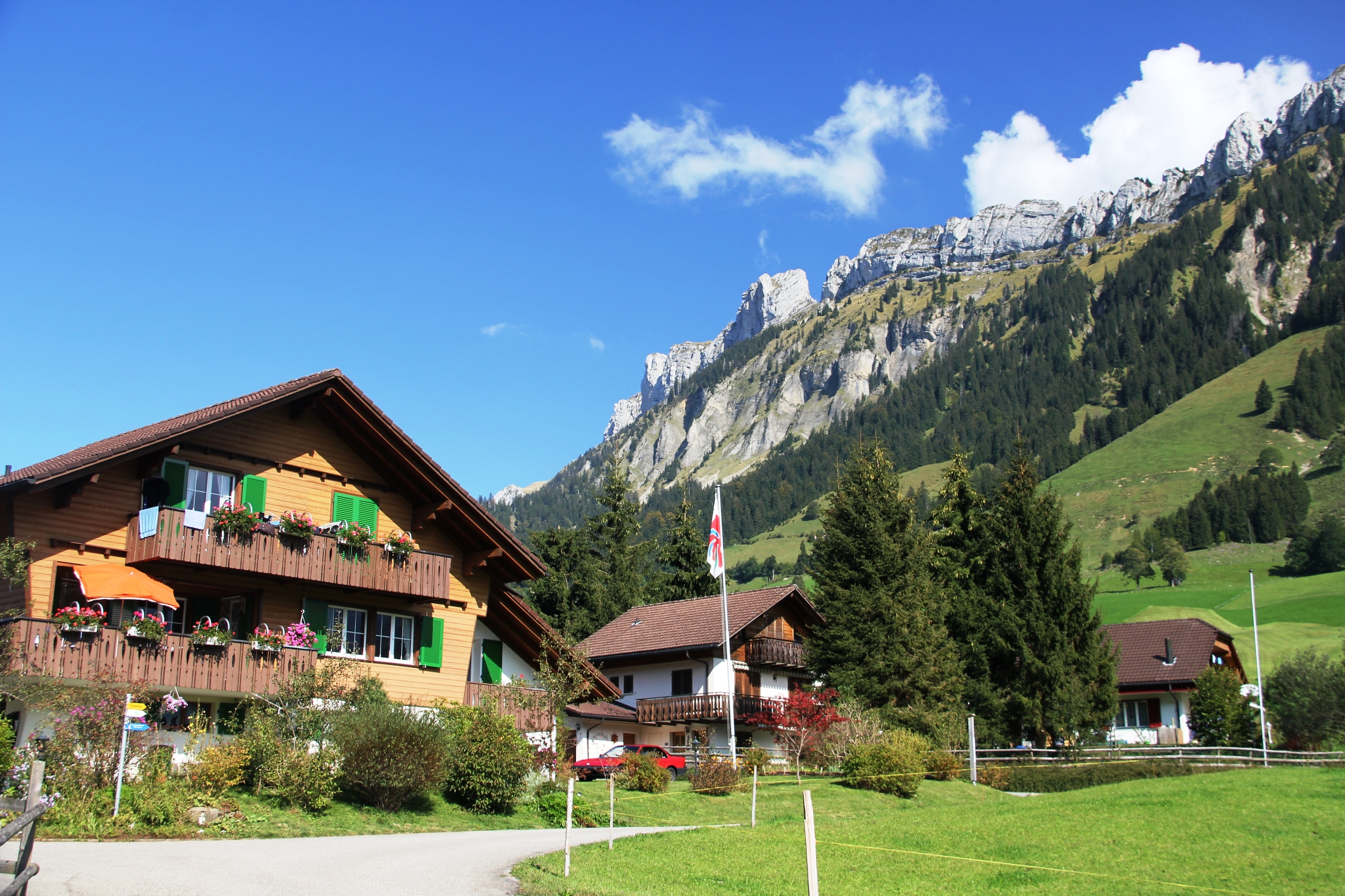
Thank God for digital photography.  I can’t imagine a trip to Switzerland with an old fashioned film camera.  The film costs would break the budget as a gorgeous photo opp beckons wherever you look.
Switzerland may just be my favorite country.  I’ve hiked its demanding mountain trails, skied its endless slopes, and pedaled six of its nine challenging national bike routes across the country.  This time I was on an “agroturismo” press trip. 

Hiking, wine tasting, visiting farms, joining festivals, savoring local cuisine  – we (a group of eight journalists plus a Swiss guide) did it all. 

It got off to a delicious start in Ticino, southern Switzerland where Italian is spoken and the ambience seems more la dolce vita than Swiss efficiency.  We stayed at a small hotel in the vineyards, Fattoria L’Amorosa (www.amorosa.ch)  Ticino is known for excellent wines, especially Merlot.  One of the courses of the welcome dinner featured risotto, a Ticinese favorite replacing pasta.  (See recipe at right for Spinach Risott0)

We toured a winery which, in addition to grapes, grows rice – the world’s northernmost rice plantation. It’s called Loto rice and is used for risotto.  After purchasing  packages of Loto at the shop, where  the farm’s wines are also for sale, we tasted some excellent vintages.  www.terreniallamaggia.ch

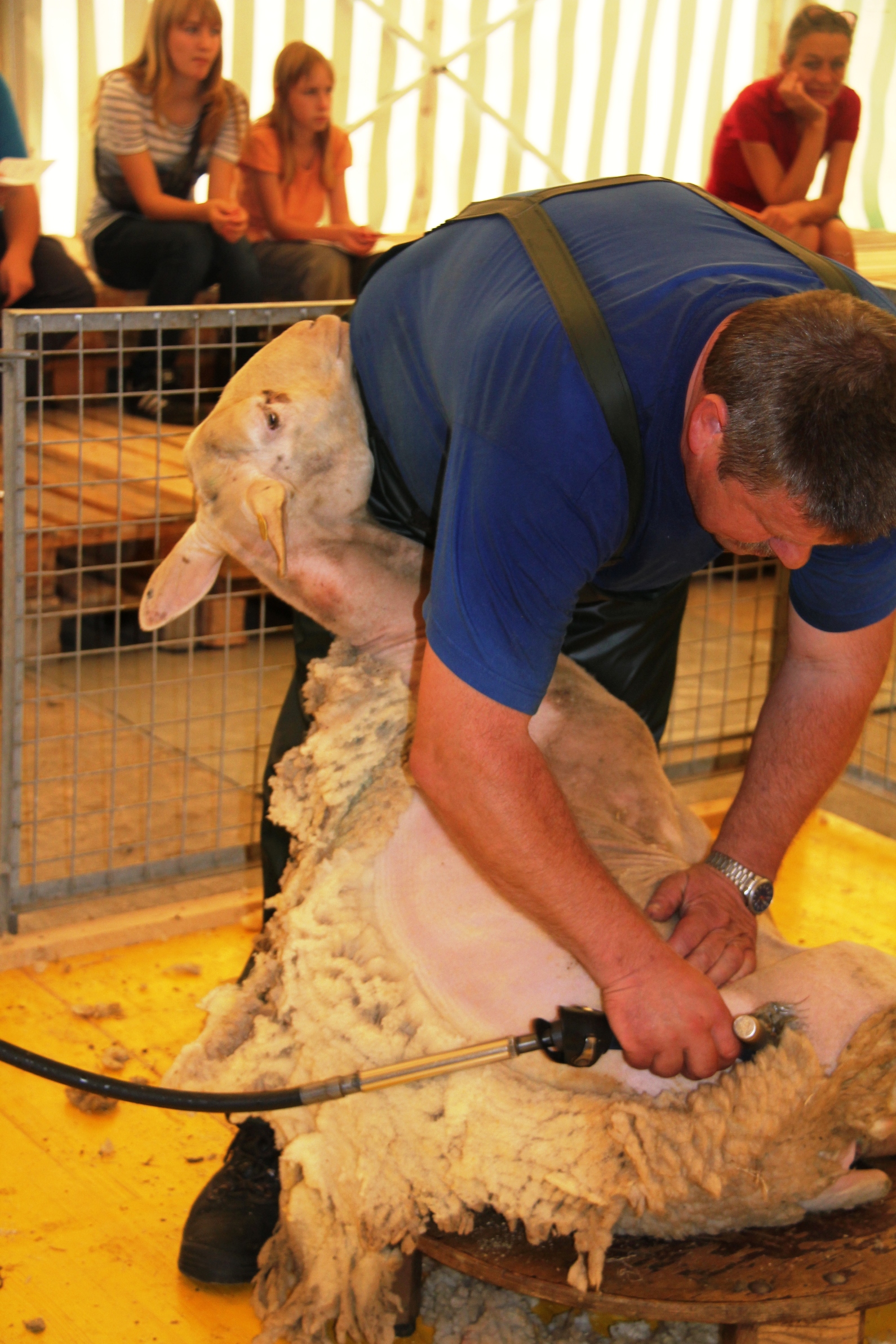
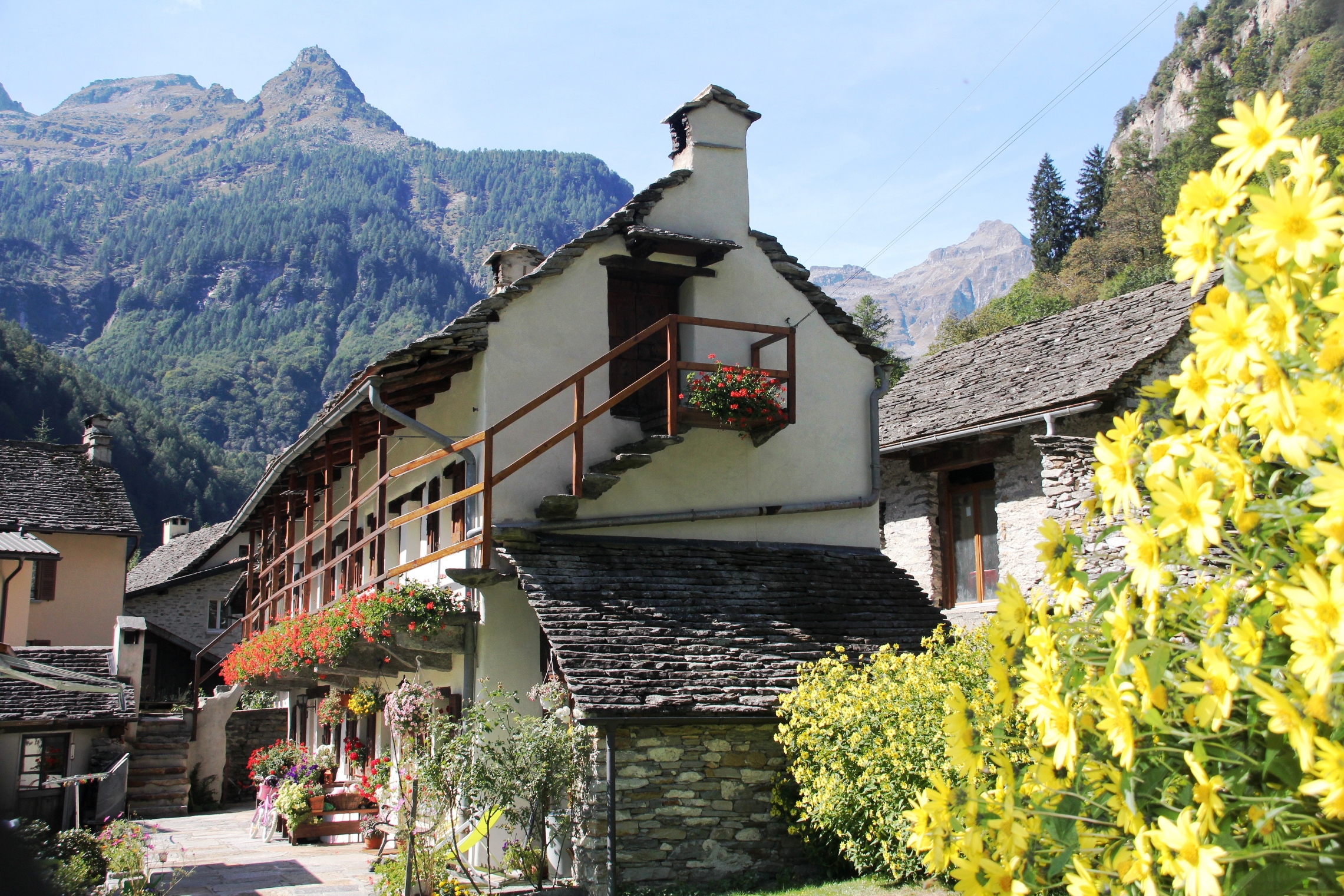
 A bus took us up a narrow, windy mountain road in the Verzasca Valley high above a surging mountain river where tiny villages perched on nearby mountain sides: the stereotype image of beautiful Switzerland.  Our destination was the village of  Sognogno where more photo musts awaited.  Here wool shorn from local sheep is spun and dyed (using only natural products for color), then made into wooly articles such as sweaters and scarves. 

Hiking in the Alps is what draws many to Switzerland.   We did not do any all-day treks to the high peaks, but we did enjoy several scenic shorter hikes. The Chestnut Trail from the village of Vezio in Ticino led us through groves of these magnificent trees.   We learned that chestnuts have been a food staple in the area for centuries. We shared the trail in places with numerous entertaining goats — a pair of bucks even staged a battle for us. 
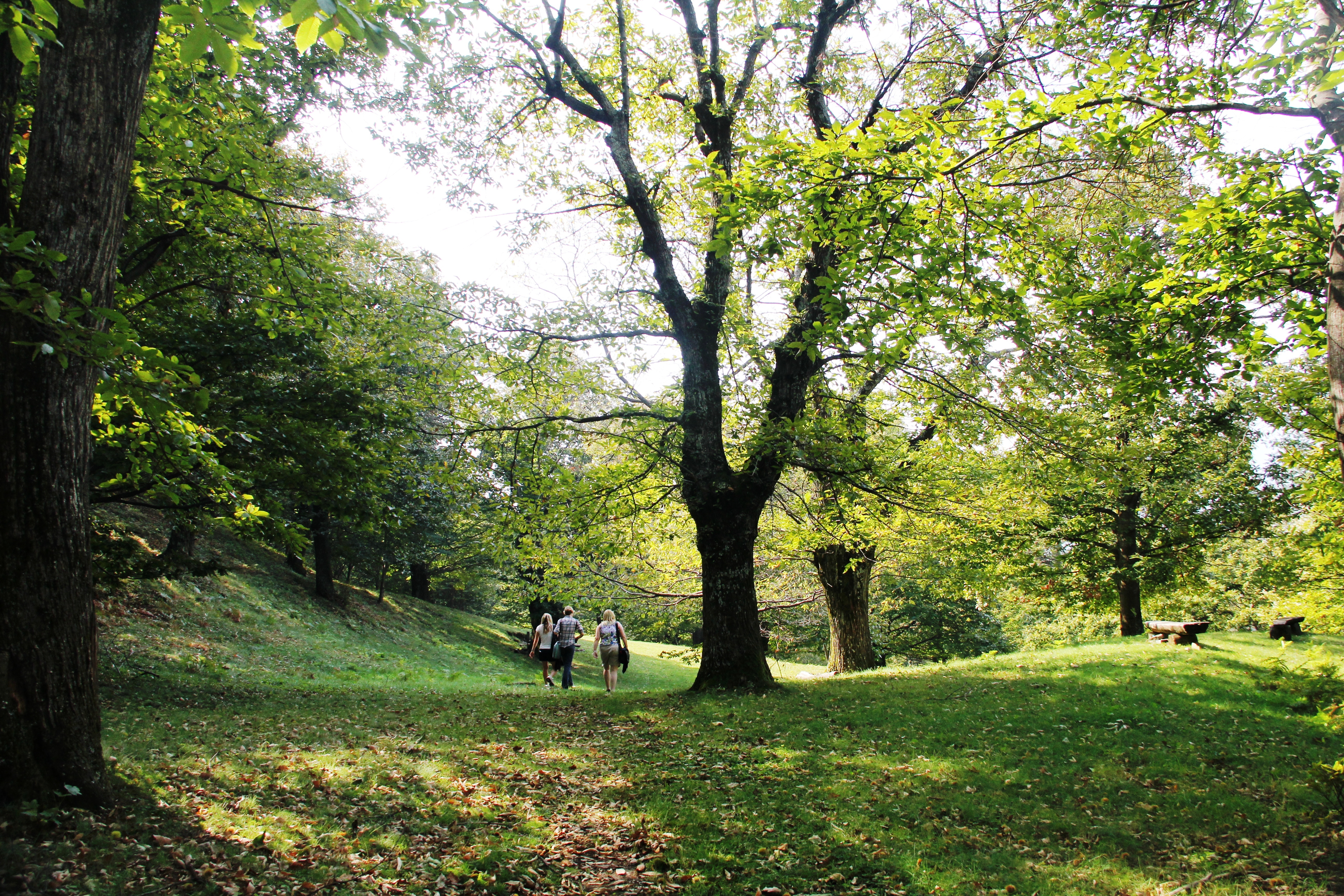
In central Switzerland (where German is spoken) we hiked up in the hills from the village of Flühli.  The trail took us to several  Kneipp stations.  Kneipp is a type of “kur” therapy based on water, mainly very cold water.  We walked like storks, prancing up and down around a water walkway in a freezing mountain pond.  Then, we moved on to a station with a hose for spraying your face with the ice bath.  Finally a place for submerging arms.  A guide provided explanations and instructions of proper technique, but you could easily give it a go on your own.  It’s chilly, but refreshing and said to do wonders for your health.  www.fluehli-wasser.ch 

Our final hike was an educational experience in the Moorlands, the UNESCO Biosphere Entlebuch near Luzern.  Barefoot, we followed a guide  off the trail back into the swampy landscape. We sank in the squishy mud as he provided fascinating info on the terrain, its insects and plant life. We saw carnivorous plants, an ant hill whose ants don’t bite (actually they do bite, but the bite is not supposed to penetrate human skin,  however one with a mighty chopper got me), a tiny frog and more.  www.biosphaere.ch 

We had fun at two local festivals during our week-long journey. In Mendrisiotto near the Italian border we joined  locals at a jovial wine fest:  music, singing, all kinds of tempting food, and plenty of wine.  Revelers crowded the narrow streets and courtyards where vintners had their stands. We tasted the wine along with roast suckling pig that had been turning on a spit above an open fire. www.mendrisiottoturismo.ch

Cows were the  focus of the festival, the Alpabfahrt, in Schuepfheim in central Switzerland.  Crowds congregate along the village streets to watch the parade of beasts as they come back to the valley after spending the summer in high mountain pastures.  It’s a jolly event with the cows all decked out in flower wreaths, their massive bells clanging as they tread by,  spectators cheering and jostling for the best photo opps — and lots of cheese and wurst stands for the hungry. 

One night during our travels we stayed on a farm , a large one with many rooms for guests. Toilet and shower facilities are shared.  For extra economy, you can opt to “sleep in the straw” – a room with a plank of straw and pillows. During our visit, a father with two young boys spent the night in the hay.  They loved it. You need a sleeping bag.  The farm dinner that night included a buffet with 23 different kinds of local cheese.  www.berggasthaus-salwideli.ch

A wake-up call at 5:30 a.m. got us off to an early start on our next to last day. We took a short walk to the cheese dairy farm Gerschnialp where cows were being milked.  Milking is all done by machine, but we had the opportunity to try the hand method – very easy to get squirted with a stream of milk as I found out.  We watched and helped with the numerous steps in the cheese-making process.  And, we tasted the final products that had been aging on shelves in temperature-controlled rooms.

Yet another walk as the sun was edging over the peaks and basking the mountains in a rosy glow –past fields of cows now back in their pastures with their bells clanging  as they munched on grass, then through the woods to a cable car station for the scenic ride up to Mount Titlis (3,020 meters elevation) above the town of Engleberg.  The viewing terrace at the top is camera heaven.  A popular attraction is a spooky walk through a dark glacier grotto.  A ride on the Ice Flyer, a chair lift that takes you down over glacier crevasses, then back up, is spectacular.

My very favorite part of the Titlis visit was on the way down.  Instead of riding the cable car to the bottom, we got off at the Gerschnialp station and hopped on Trotti bikes (like scooters),  You stand on the bike platform, then head down a mountain lane at top speed, soaring around curves, faster and faster.  It’s thrilling. I wanted to go again.  www.titlis.ch; www.engleberg.ch

Our trip ended in Lucerne, that Swiss gem that is a must for visitors to this land of mountains, lakes, cheese, chocolate — and endless photos. www.luzern.com;  www.MySwitzerland.com

See below for more photos.  Click on photo to see full size.  And, try some delicious risotto.  Click on Spinach Risotto under recipes at right.  Comments — and subscribers — welcome


The City of New Orleans

Crabmeat cheesecake with meuniere sauce.   Lamb sliders with tomato chutney and herbed goat cheese. Fried alligator with chili garlic aioli. Rabbit livers with pepper jelly toast. Pan roasted oysters with rosemary cream sauce.   Banana mascarpone strudel with banana caramel and Mexican chocolate ice cream….

Bob and I indulged in all – and more — during our May visit to New Orleans.
The city is a died-and-gone-to-heaven kind of place for foodies.  There’s Cajun food, Creole food, gourmet French cuisine, soul food, even African and Vietnamese food. There are famous chefs and restaurants and simple neighborhood eateries.  And, cocktails for which the city is legendary.

Eating is just one of the many pleasures this wonderful city has to offer. Food, drink and music are the city’s three muses, we learned, and we experienced them all.

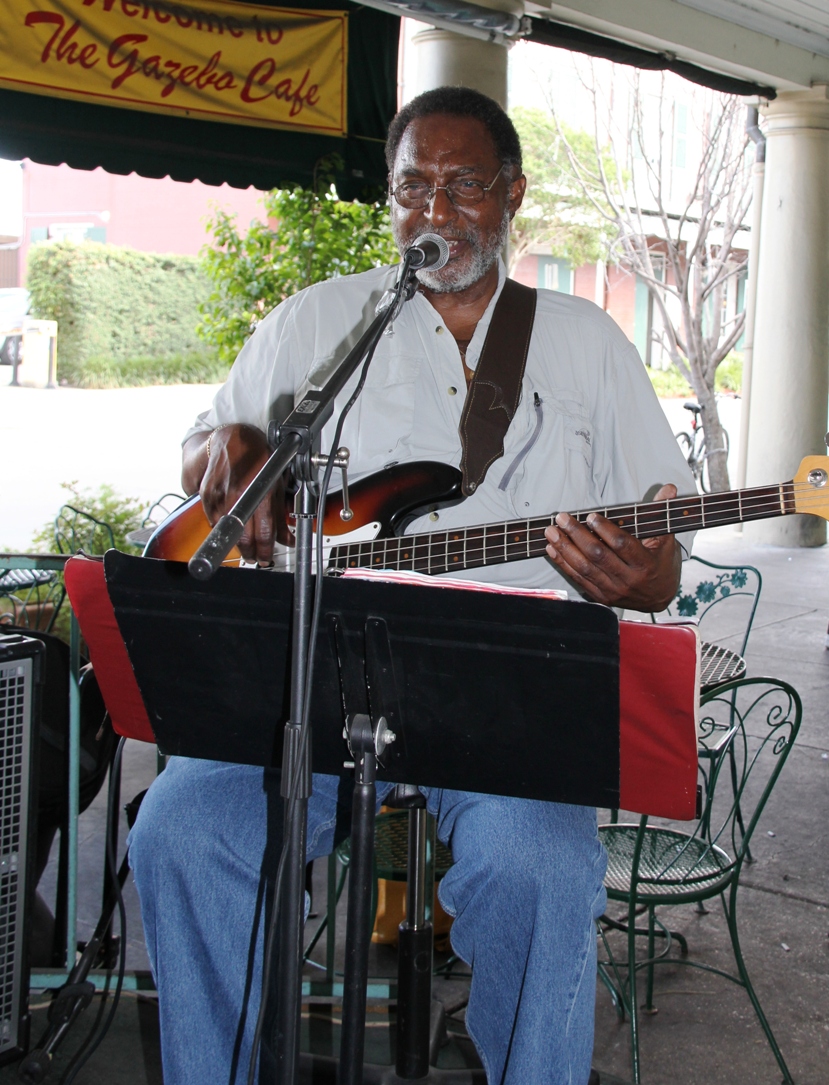
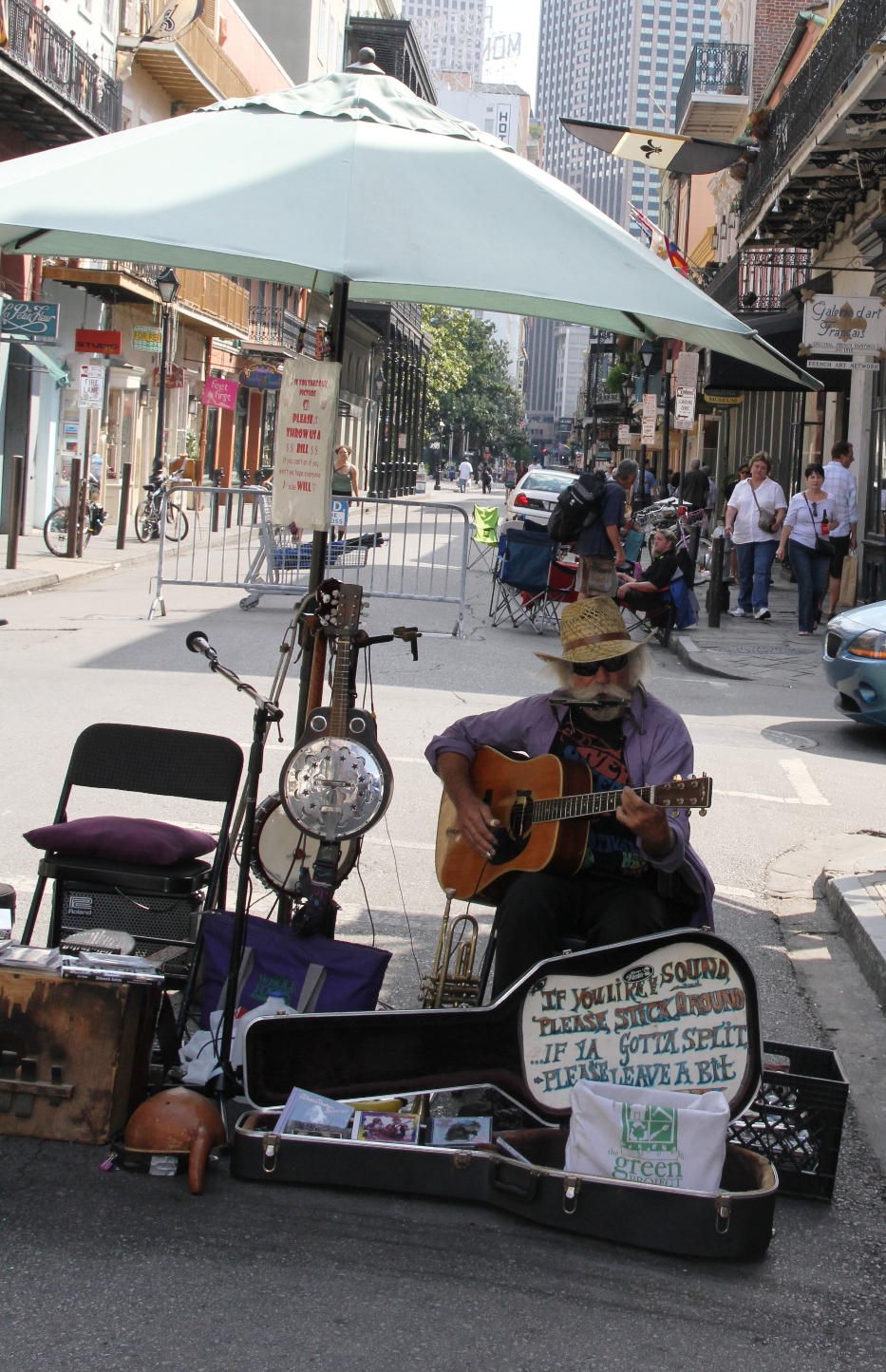
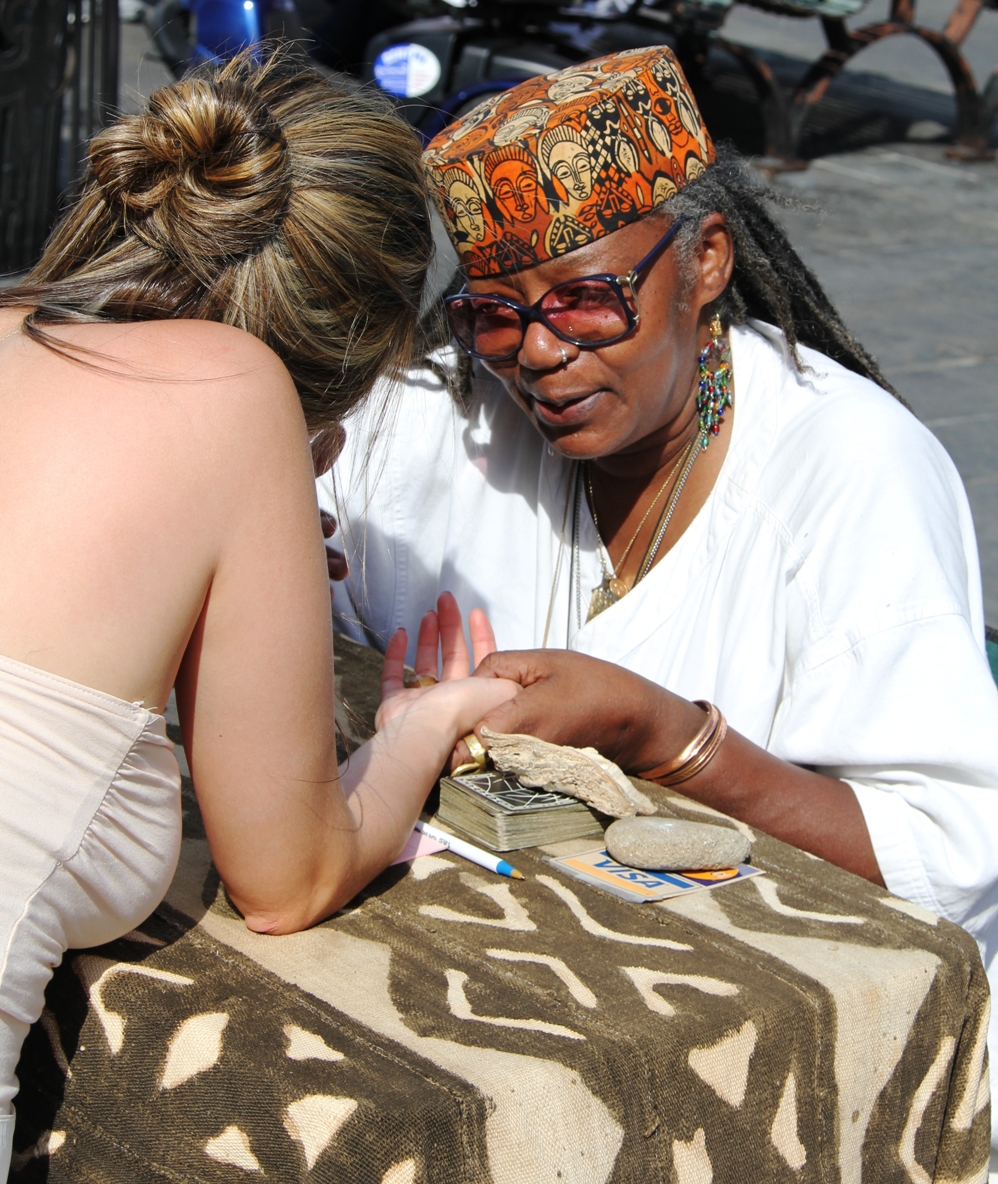
After checking into our hotel, we walked through the French Quarter, past charming buildings with ivy spilling over cast iron balustrades,  bejeweled fortune tellers looking for customers, and street musicians.  We stopped for an outdoor lunch: a hefty Po Boor sandwich (overloaded with shrimp) and a cold beer, and were serenaded by more live jazz.  I was smitten.  My kind of place, New Orleans.

It’s fun, funky, fabulous.  The devastation of hurricane Katrina in August 2005 has left serious scars. But, the vibes in the French Quarter are heady.

In addition to trying different restaurants (famous and not-so-famous), we listened to jazz (on the streets and in clubs), took two bicycle tours, a Katrina tour, an airboat swamp tour, and rode the St. Charles streetcar.

I asked Cassady Cooper , one of our bike tour leaders, what he felt makes New Orleans so special.  “The things you hate about New Orleans are also the things you love,” he said.  “Time doesn’t work here as it does in the outside world.  There’s always something going on here, anytime day or night.  The city is made of artists.  There are more writers here than in any other part of the country.  I love the culture.”

Part of that culture involves alcohol. Where else can you find drive-in Daiquiri stands?  Jeff Shyman, our other bike tour leader, enlightened us.  “Drinking is a big part of this city,” he said.  “We are a drinking culture.  We drink all day, but we don’t drink to stupidity.  We don’t overdo it.  New Orleanians don’t drink to get drunk like the tourists on Bourbon Street.”

We’d heard about Bourbon Street, the place we assumed  was famous for jazz clubs.  No more.  It’s crowded, loud and trashy.  Those seriously interested in music now flock to Frenchman Street where, within a two-block radius, there are eight different venues for 1930s swing jazz.  We liked the Spotted Cat and d.b.a.

For one of our two wheel adventures, we chose the Culinary Bike Tour. We did more eating than cycling, with stops at four eateries to try different delicacies.  Our tour leader explained the difference between Creole and Cajun food.  The latter, he said, is associated with country folk from the swamp lands.  “Table cloths were replaced with newspaper…it’s big dish food, from the field to the table.” Animal parts, such as liver and tail, are savored.  The restaurant best known for Cajun food is Cochon.  Bob and I went there on our own.  It’s both entertaining and delicious.  You can sample numerous bizarre concoctions, all served in small portions.

Creole food embodies the influences of New Orleans’ early Spanish and French settlers.  It’s more refined, and sauces are foremost.

Gumbo is a New Orleans staple.  On our last tour stop we tried this hearty stew of sausage, seafood, chicken, all heavily spiced, (“everyone uses cayenne for seasoning here,” noted Cassady) at Liuzza’s By the Track, a simple but inviting place.  As I am a passionate cook, I asked our tour leader how to make gumbo. I envisioned serving it at a future dinner party. I’ve reread my notes – page after page.  This is not a 1-2-3 step dish.  I must have had too many beers.   Preparing the roux (the base and essence of gumbo) is a daunting challenge.  And, you need the secret ingredient, file, the powdered leaves of the sassafras tree.  On my last afternoon, I went from store to store in the French Quarter, not known for grocery stores, searching for the treasured file.  I tracked it  down…..  Maybe on a cold winter’s day, I’ll attempt a genuine New Orleans gumbo.

Our swamp tour was a major disappointment.  I had envisioned seeing monstrous killer alligators lurking in the bayous.  The few alligators we saw were pathetically puny.

Another story was the Katrina Tour: mind boggling.  Instead of taking an organized bus tour, we hired taxi driver Sidney Farrell to dive us through the parts of the city that had been annihilated.  “Imagine, this was under eight to twelve feet of water,” he said as we drove past a used car lot, Discount Donuts and a motel.  “It’s all coming back, little by little.”

We drove by houses that have been rebuilt, often next door to houses still in ruin.  Block after block.  The Lakeview area of exclusive homes was “all under water,” he said as he pointed out empty lots where half-million dollar homes once stood.  He took us to St. Bernard Parish, a devastated area where Brad Pitt’s Make It Right Foundation Rebuilding New Orleans has financed the construction of ultra modern homes with innovative designs to replace those that were destroyed.

“Ten thousand homes were demolished in three years, but there are still another 45,000 that need to be torn down. The recovery will take another 15 years,” he said. “The city population before Katrina was 500,000.  Now it’s 350,000. Many have never come back.  There’s nothing to come back to.”

The saga is tragic, not just the frightening forces of  nature unleashed and the obliteration left behind, but the foiled bureaucracy and rampant crime that followed.
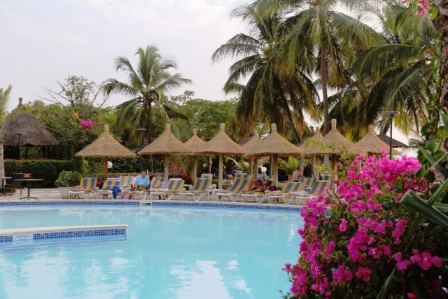
However, those who have come back, and those who stayed, infuse New Orleans with a gusto that is contagious.

Take a bike tour in New Orleans:  http://confederacyofcruisers.com 

See below for more photos.  Click on the photo to see full size.  Check out the recipe column on the right for a tasty vegetarian dish,  Southeast Asian Squash Curry.


Fort Buoux: A Discovery in the Hinterlands

This post comes with a new look, the beautiful header across the top.  Friend and photographer David Regan (A Fishy Tale)  created it using my photos.  As you click on different parts of the blog, you’ll see other examples of his skill and creativity.  And, recipes are back, now listed alphabetically on the right below “Recent Posts.” For the latest treat, try “Watermelon Salad” at the end of the list.

There’s no shortage of interesting places to visit in these parts. Even though I’ve lived in Provence for seven years, I’m still discovering new attractions.  This spring I visited two for the first time: Fort Buoux and the archeological site of Glanum (see future blog post for Glanum).

Buoux was thanks to our friends Lynne and Larry from Germany who rented our guest apartment (www.les-rosiers.com) in April.  Lynne found Fort Buoux in a Rick Steves guidebook.  Off they went and returned ecstatic with the discovery.

I’d been to a restaurant in Buoux, a tiny place of no more than a few houses, but I knew nothing about the fort.  When my cousin Stewart’s son Tom and wife Melissa came to visit, I decided it was time to explore this place.

Tom and Melissa had GPS, but even with this high tech gadget, it was not easy to find. After a few wrong turns and backtracking, we arrived at the parking lot, then followed   signs for a long walk down a shady road, under a “baume,” (a  natural cave beneath overhanging cliffs), then a climb up a rocky path to the entrance. Fort Buoux is definitely “off the beaten track.”

There were warning signs:  Visit at your own risk.  Watch children.

What kind of place was this?  After paying admission, we set out up a set of treacherous  steps carved in the rock.  Up and Up.  We climbed past piles of ruins, deep trenches,  cisterns, all numbered with their identification provided in a pamphlet we had been given at the entrance. The views of the surroundings –ravines, rock outcrops, cliffs and distant hills — are splendid.  We even saw rock climbers attempting to conquer a rock face.

The brochure explained that caves in this area, the AiguebrunValley, have been occupied since earliest antiquity. The fort is of the 12th century, built on the site of a Roman settlement. It  was obviously built for defense and was important during the Middle Ages.  During the religious wars (1562-98), the fort served as a refuge for the persecuted ProtestantWaldensians,  members of a Christian movement of the late Middle Ages who were considered heretical.  Later, Protestant families settled in the region. In 1660, Louis XIV, who feared rising religious independence, ordered the fort destroyed.

The brochure identifies  37 different sets of ruins.  Following the path which leads to them can be challenging.  The terrain is stoney.  The trail climbs. You need sturdy shoes – and no fear of heights.  Sheer drop offs plunge from the edge of the cliffs.  As this is France, there are no ropes or barriers.  While children enjoy scrambling amid the ruins, they need a tight rein lest they run too far.

One place, the “Hidden Stairs” had an extra warning: “Not advisable for elderly people, pregnant women and little children.”   Melissa and I stayed back, but Tom  charged down the crumbling stairs for more discovery.

Among the ruins are those of a 13th century church, houses, a cistern, towers and defense walls. Exploring them all is an exhilarating adventure.

Fort Buoux is located on a winding minor road,  D113, 8 km from Apt.  The fort is not in the town of Buoux (population 125), but in the surrounding hinterlands.

Bella Venezia

Venice is one of my very favorite places.  It’s beautiful, unique, fascinating… how can you not fall it love with this wondrous place where streets are streams of water? Venice29

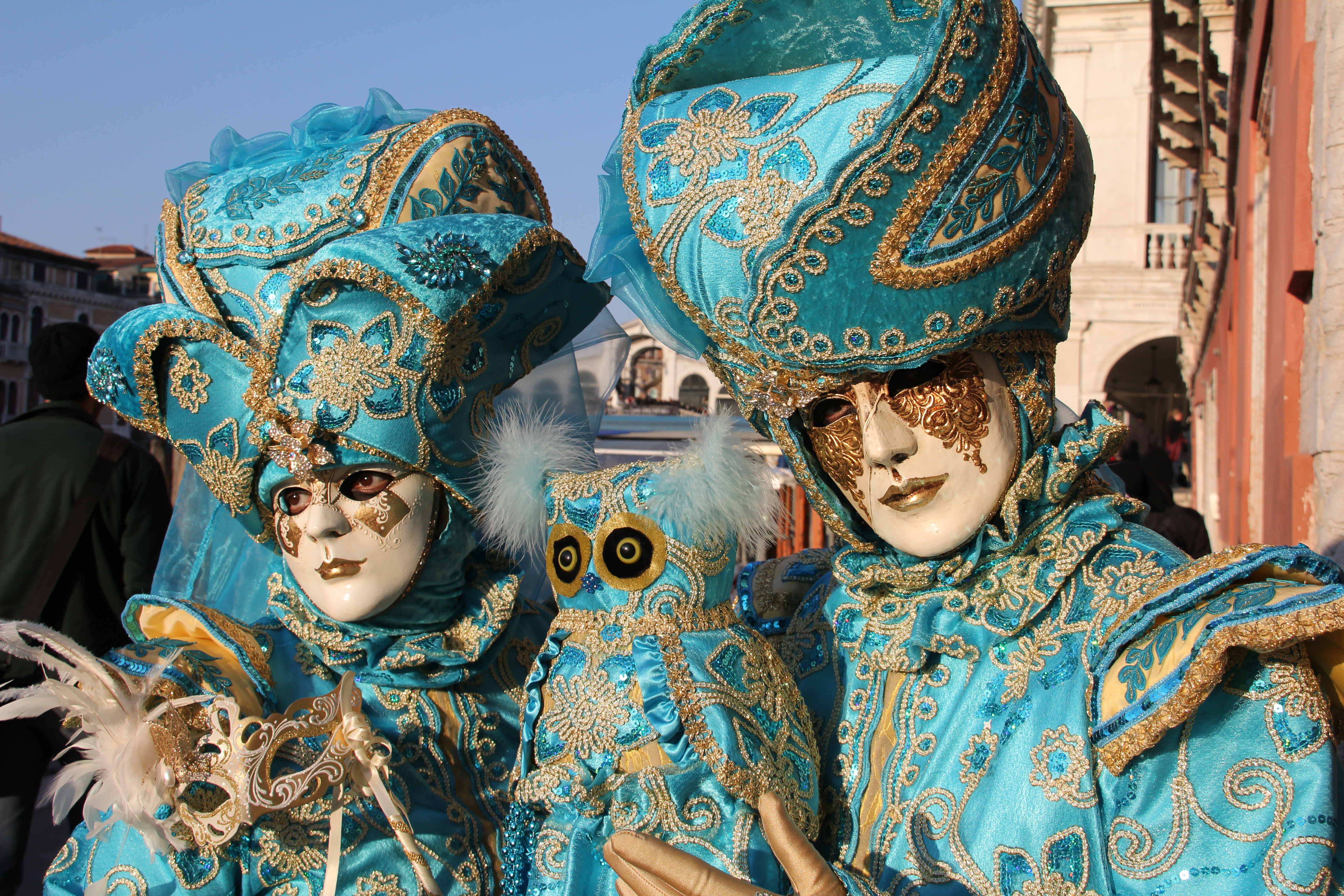
Venice is a collection of 118 islands, intersected by more than 150 canals and joined by some 400 bridges – all resting in the heart of 200 square miles of partially navigable salt march.  I’ve been several times, most recently in March for a few days.  We arrived on the last day of Carnevale. This is an amazing spectacle.  Gorgeously costumed posers wander throughout the city, stopping by monuments, on bridges, in front of churches, happily pausing for tourists to snap the obligatory photo.

This was our second time in Venice for Carnival, but this time was somewhat disappointing as we did not see as many costumed revelers.  As the festivities go on for two weeks, perhaps many were tired and had packed up and headed home by the last day. 

Venice, however, was not disappointing. Our friend Noel Parks, an American we know from our days in Germany, is now retired and lives about an hour from the magical city which he visits frequently.  He adores Venice, and knows it inside and out. 

Venice17  Noel and friends had rented a house in Venice for the Carnival period.  A friend of theirs, obviously a gifted seamstress, had made the group lavish costumes so they could fully participate in this marvelous event. 

After serving us a Bellini (delicious Venetian cocktail made with sparkling wine and peach puree),  Noel gave us his Venice tour.  We followed him down skinny alleys,  along picture-book canals, across bridges.  The city is labyrinthine, but Noel never consulted a map.  He knew every turn and guided us to numerous hidden treasures most tourists probably miss.  His commentary at the sites was lively and entertaining.  We were mesmerized. 

I asked Noel to send me the text (14 pages) – his extensive research on Venice.  Following are some of the highlights which he pointed out during our tour. 

Our guide led us through a Sotoportego, a passage under a building and explained that Venice is a challenge to get around as there are numerous dead-end alleys.  They were designed on purpose to confuse anyone who might invade. Venice14

Piazza San Marco (St. Mark’s Square) was called “the finest drawing room in Europe” by Napoleon.  This is the place to sit in an outdoor café and people watch, but be prepared to pay for the popular seats in these pricey places.  Noel told us this is the only “piazza” in Venice as the other squares are all called by different names, “campo, piazetta ,”etc. 

San Marco, the famous church depicted in the favorite Venice postcard, is the third church built on the spot.  It is said that every ship returning to Venice had to bring a treasure for the church.  The mind-boggling ornate interior is a collection of these objects which accumulated over the centuries. 


The campanile (church bell tower) was built in the  beginning of the 20th century as a replacement for the original which collapsed in 1907.  The city is built on pilings that were driven into the mud to support the weight of the buildings.  When rebuilding the campanile, they figured they best check the pilings since they had been in the ground for about 1,000 years.  Upon examination, the pilings proved to be in perfect condition as they were in an anoxic environment.  They were simply driven back into the mud.
 Venice19

Our visit to the ghetto where Venetian Jews were forced to live until the time of Napoleon was haunting.  Jews in the ghetto were rounded up and deported to extermination camps.  The Holocaust Memorial is a series of bronze reliefs depicting Jews who faced the gas chambers and other forms of Nazi brutality. 

A highlight of the excursion was our lunch break at one of Noel’s favorite restaurants, Sempione.  He helped us order.  We started with a glass of Prosecco, the popular Italian bubbly.  I went for a tasty seafood pasta creation.  We topped the meal with a glass of the luscious Italian lemon liquor, limoncello, and then a wonderfully decadent concoction, Sgroppino, a creamy mixture of lemon and plain ice cream and lemon Vodka.  Magnifico!   Venice11

On our last day we took the vaporetto (water bus) to the island of Murano, the glass island.  The trip by water offered spectacular views of the city.  I was in pursuit of a whimsical chandelier,  a curious creation I had seen at an Italian restaurant in the mountains during a ski vacation.  I was told it came from Venice. 

In Murano all the glass factories have show rooms with displays of their merchandise.  Vases, chandeliers, glasses, bowls, jewelry….We visited them all.  The main street along a canal is lined with shop after shop offering more of the same.  We perused them all – but no chandelier like the one I craved to be found.   Nonetheless, we enjoyed Murano.  It was quiet and calm, a contrast to the bustle of Venice.  And, even if I did not find my prize, I enjoyed looking at all the fabulous, colorful glass objects. 

There’s so much to see and visit in Venice.  This was a short trip.  No time to visit the interiors of museums, churches and palazzi.  We’ll go back for sure. 

For more photos of Venice, click on the Photo Album, center column. We ate lots of wonderful seafood in Venice. I was inspired to serve a shrimp salad at my most recent dinner party.  It was a winner.  See recipe in far left column.  And, please feel free to comment.  Click Comment below.

Surprising Senegal

  We wanted a winter vacation. Since my days on the ski slopes are about over due to decaying knees, the sun and sand were appealing. A young woman at a travel agency suggested Senegal.  Senegal? We’d never have thought of this African country, but it’s in former French West Africa (Senegal became independent in 1960), and its beaches are popular with the French.

We just returned from two glorious weeks full of leisurely days at the beach, fascinating excursions, challenging bike rides, and the grand finale: attendance at a local wedding. 

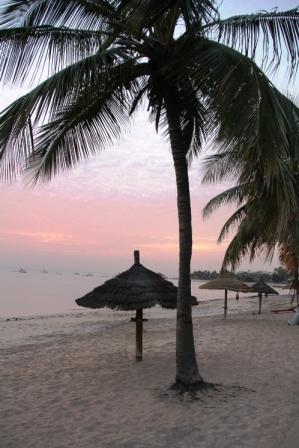
This was a charter package trip, and it got off to a rough start with numerous flight delays and arrival at the chaotic Dakar airport in the middle of the night. A bus took us from Dakar to our beach resort in Saly, about a 1 ½ hour trip.  Arrival time: 3 a.m. The hassles of  the voyage were quickly forgotten later that morning when we awoke to a paradise of sunshine, palm trees and bougainvillea.   Breakfast (as well as all meals) was served pool side.  

During our sojourn, I especially loved the beach and long swims in the calm Atlantic. Bob only went into the water once during our entire stay, and then only briefly. Water temperature varied from 20 to 23 degrees Centigrade, too cold for my delicate husband. 

We wanted to experience more of Senegal than pristine beaches and the comforts of our lovely hotel compound. The contrast between the hotel world and real Senegal (Third World Africa) is mind boggling.  Our first outing was to Dakar and the island of Gorée. For this we opted to take a taxi with a guide/driver instead of hopping on a tour bus.  It may have been a mistake. 

We learned a bit about the culture talking to Demba, our driver. Most Senegalese speak French, in addition to their principal native language, Wolof.  There are also five different ethnic languages. 

 Demba, 31, has three children and a fourth on the way.   He is Muslim, as are most Senegalese.  “It’s our obligation to have lots of children,” he said.  He only has one wife, but when he has more money, he plans to take a second.  Muslims are permitted to have four wives. “There are too many women in Senegal,” he said.  “If a man has only one wife, too many women will be left alone.” 

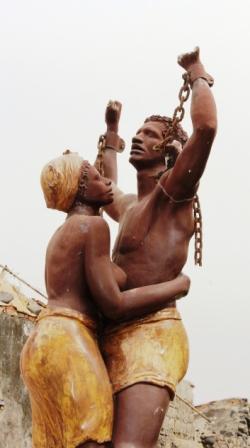
From Dakar, we took a ferry to Gorée, the “slave island,” where we visited the remaining Slave House (originally there were 29 such  houses) which has been preserved as a poignant reminder of Goree’s role as the center of the West African slave trade.  Thousands were chained and held in small cells in these houses before being loaded on ships for the voyage to the New World.  A local guide provided grisly details of their captivity and treatment. It was haunting.

Back in Dakar, Demba plunged his ancient white Nissan into the thick of city traffic to drive us past monuments and important buildings. You would not want to drive in this city. It’s a free for all, truly a mad house with salesmen and women peddling everything from glass bowls, sunglasses, socks and clocks to monopoly games and antennas as they circulate among the creeping cars displaying their merchandise.  A crazy highway bazaar. 

The ride back to Saly was even crazier.  First, there was a flat tire.  Then the car overheated. No problem. Demba fixed these annoyances, but not for long.  Soon more steam was pouring from the engine.  Another stop.  This time after his tinkering the engine spewed out a geyser of hot, green antifreeze.  Demba sought assistance and once again it appeared all was well.  Not for long. Yet again the old motor rebelled.  We wondered if we’d ever make it back.  En shalla, we did.  

After that misadventure, we were happy to join the organized tourist excursions on  buses.  But, we weren’t always on buses.  There are some modern highways in Senegal, but more common are dirt/sand roads full of ruts and holes.  Several of our outings were in vehicles called “6 x 6”,  big open trucks with rows of seats under a roof.  We were jostled, bounced, and bumped through the bush.

Highlights of our trips included several visits to isolated villages where residents live in clusters of  thatched huts.  Women live in huts separate from their husbands.  Seemingly the husband summons the wife of choice to his bedside when he so desires.  

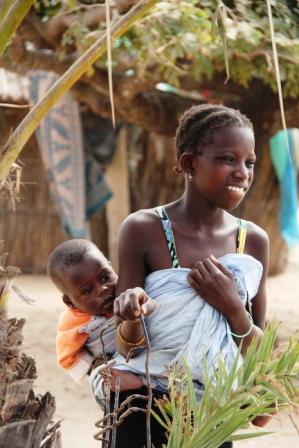
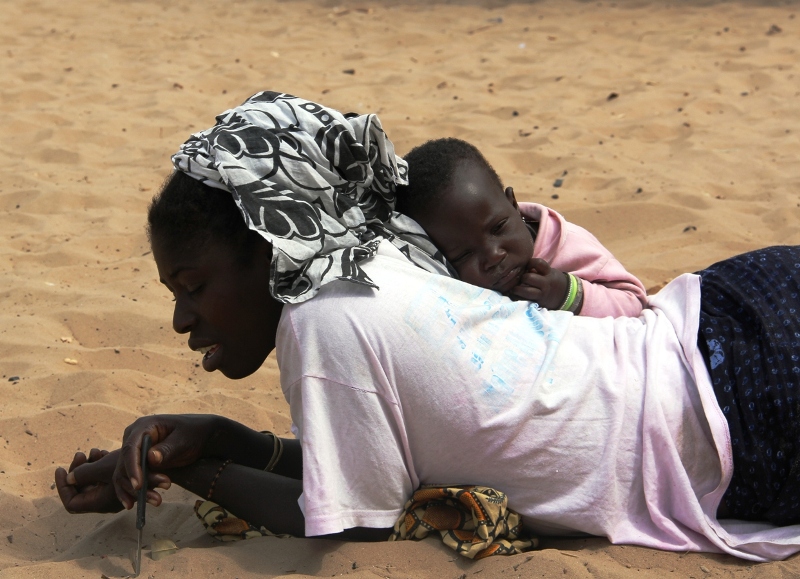
The men go off and work in the fields or nearby towns during the day, while the women tend to the children and food preparation.  Children are numerous.  Babies are wrapped to their mothers’ backs. 

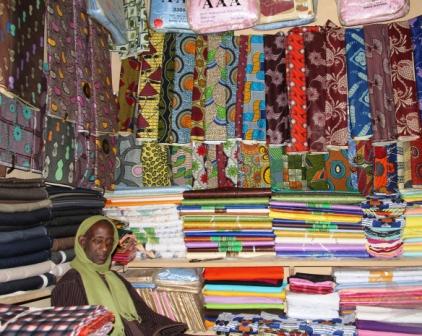
Wherever we went, even in these remote villages, we were accosted by those selling all manner of Senegalese souvenirs.  Carved wooden figures are especially popular.  It’s a mistake to ask a price unless you really want to buy.  Bargaining is to be expected, but the persistent Senegalese won’t let you get away if they think they can make a sale.  They follow, pester, and relate sob stories about numerous mouths to feed.  Obviously they are poor and depend on sales, but you can’t buy from everyone.  However, we did our part. 

Bob (Bicycle Bob) is not into water sports, but he is a fanatic about cycling.  We tracked down rental bikes at a nearby hotel where we joined a guide, Abou, for three different treks. We often had to pedal on roads of sand (tough) and through massive jams of people, horse carts and vehicles in towns.

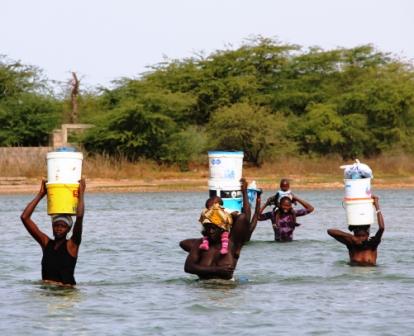
Our favorite trip was to the coastal city of Mbour, a fishing port where we watched  the boats come in. It was an amazing sight of activity with men wading through the water with containers of fish on their heads, women in their brightly colored garb transferring the loads to their heads, then proceeding to a type of warehouse full of enormous piles of fish. 

Another day we pedaled to a coastal lagoon where we took a boat ride and saw lots of water fowl, as well as a sacred baobab tree.  The tree is a symbol of Senegal, and can live for thousands of years.  Baobabs have very shallow roots, but huge trunks which store water.  In Senegal, the hollow interiors of the trunks were often used as burial grounds for members of a religious cult, but this practice has been outlawed. During our visit, the dry season, most of the trees had no leaves, but stood out as bare skeletons silhouetted against a blue sky.

 Our last night in Senegal was special thanks to Abou who invited us to his wedding. See my next blog for an account of this remarkable event. 

  For a tasty Senegalese specialty, see my recipe in the far right column for Chicken Yassa.