Cooking with a View

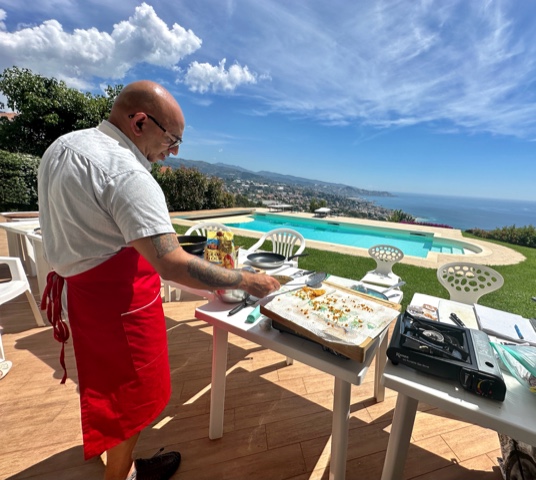
This was a cooking class like no other –and I have been to many.  The setting: 
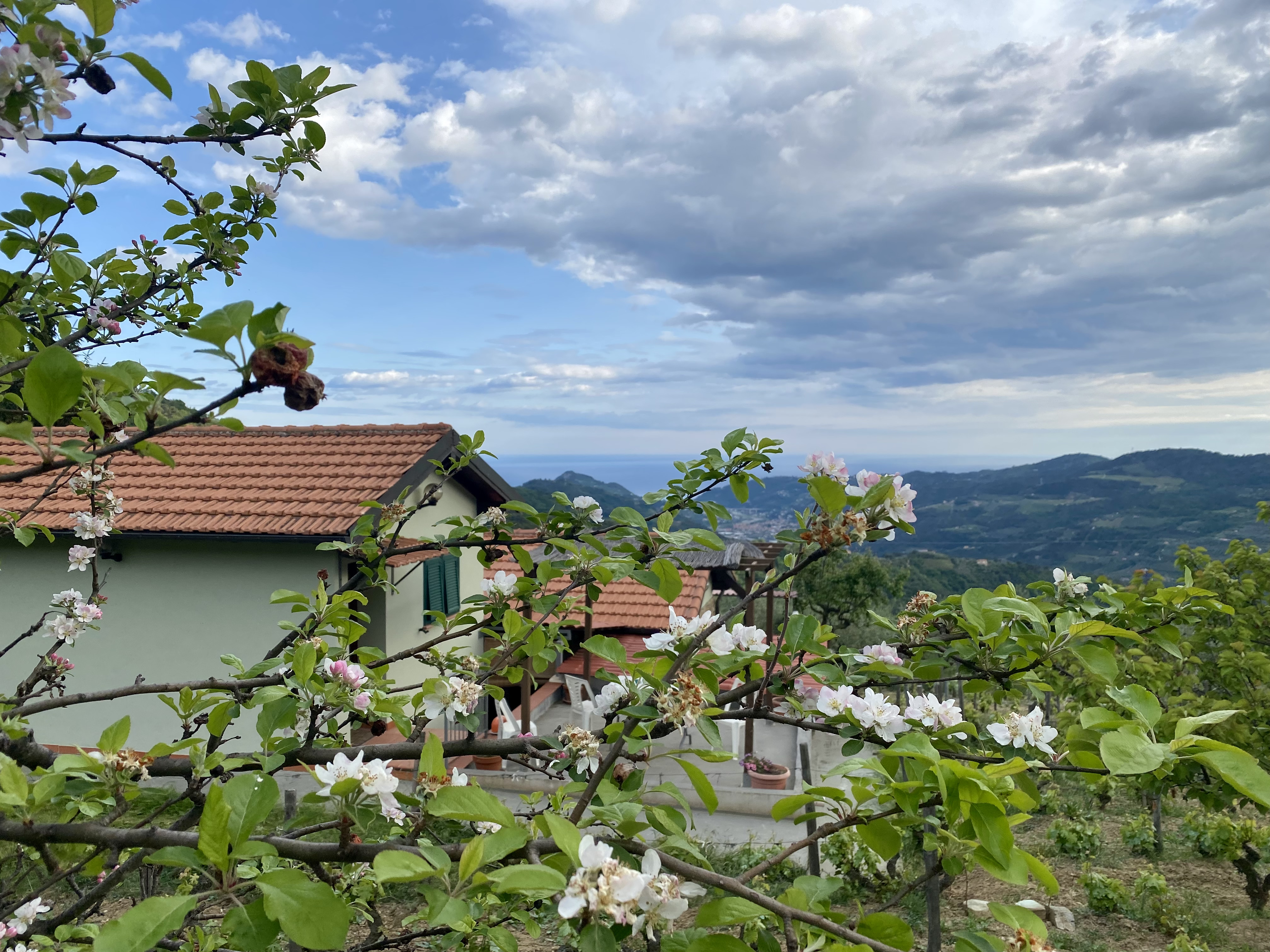
A precise row of seven white plastic tables and chairs on a terrace overlooking a sumptuous pool with the Mediterranean and the Italian town of San Remo below. Breathtaking.  How was I supposed to concentrate on dicing garlic in this seductive ambiance?  I wanted to stroll around, sink my feet into the thick grass blanketing the hillside, explore the gardens, take photos.  A swim would have been a delight, too.

But we, myself and five others, came to conquer Indian cooking, that is several specialties of this spicy cuisine.  We were at the home of Jeryl, the American founder of the Benvenuto Club of San Remo which sponsored the event.

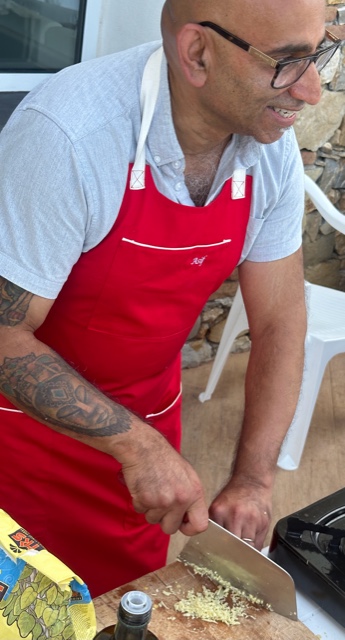
Our teacher: energetic Asif who calls himself “Anglo, Afro, Asian.”  He was born in Tanzania of Indian parents, but as a child moved with his family to England.  He and his Italian wife Cinzia, a yoga and dance teacher, now live in Italy where they work together on events.  He also teaches drums, in addition to “vegan cooking,” often with Cinzia. 

The day began with chai, tasty tea with milk and the distinctive flavors of cinnamon and cardamom. “I will give you the skills, showing how to chop… We will move forward from there,” he said, as we enjoyed our morning chai. 

“Cooking is smelling, tasting and feeling.  Also, memory.  Food creates memories.” As the day wore on, we did lots of tasting.

We prepared five different dishes, beginning with potato pakoras, a common street food in India, and tamarind chutney.  Most were favorites of his “Mum, ” and he often referred to her techniques. 

He mixed up the pakora batter using gram flour which is made from black chickpeas, and water, whisking until ribbons formed.  He then added cumin and garam masala.

We each had a potato to peel and slice very thin.  He demonstrated the way to position the knife, tip pointed downward.  “Let the knife do the work.”  My slices were not that skinny.   I compared them to those of my friend Kate at the table next to me.  Hers looked perfect. Damn.

Ludovica, center, and her mother Jeryl watch pakora preparation.

Asif heated a large frying pan half full with oil.  “Don’t let it smoke,” he cautioned.   

The fun, messy part –dipping each potato slice in the gooey batter to thoroughly coat.  We used his batter to coat our slices, which also coated our hands, then one by one dropped the slices into the hot oil. 

Make a double batch, he suggested.  They are so good you will eat them as they are cooked.  We couldn’t resist, taking  one then another from the finished batch. When all were cooked, we moved on to tamarind chutney. 

This requires a jar of concentrated tamarind paste, available in Asian stores.  The prep is simple.  Just add water, salt, sugar and chili powder to the paste in a pan and bring to simmer. Stir and taste until you have a perfect balance of sweet and sour.  Here is where tasting is essential.  You may need more sugar.  You may want to turn up the heat (as in taste). 

Before moving on to curry, we took a break to savor more pakoras with the chutney.  The combo was a delicious hit with all.

Ginger and garlic are the base of curry, Asif told us.  We had to dice both as well as an onion.  He demonstrated nifty techniques to simplify the procedures.  Sharp knives are essential.  We had been told to bring chopping knives, a peeler and a large frying pan.  He used his steel to fine tune our knives.  Unfortunately, mine needed more serious sharpening.  I’ll add that to my never-ending to-do list.

He emphasized the importance of a very fine (tiny) dice of garlic and ginger lest you come across a chunk when eating the curry. Again, Kate outdid me with miniscule bits of garlic and ginger.  I was jealous.  What is her secret?

She explained that her husband cooks and she does the prep. Dicing and slicing are tasks which she has perfected. I have never had the patience for perfection, nor did I think a piece of ginger or garlic would be so bad.

Cooks at work

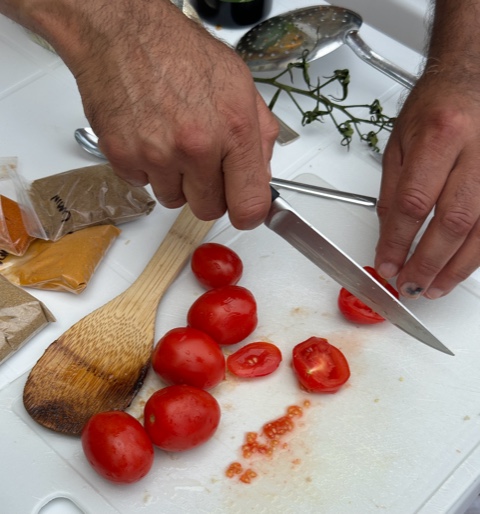
We each had a portable gas stove with one burner on our table. We were given pots to cook the curry which began with caramelizing the onions in oil.  To prevent burning, small amounts of water were added as needed.  Then came the ginger and garlic which cooked briefly before adding cut up tomatoes — and spices.

We had been given five small plastic bags, each containing a different spice:  garam masala, coriander, cumin, basaar (an extra hot Pakistani curry powder) and turmeric.

“In Italian cooking you get amazing flavors with four ingredients.  In Indian cooking you can use 13 or 14 different spices,” Asif noted.

After the curry mixture simmered for what seemed like a long time, chopped spinach and chickpeas were added for more simmering, this time with the pot lid on.  Throughout the process, we tasted, ours and the curry of others. Seasoning was adjusted accordingly.

Kate gives her curry the taste test.

While the simmering continued, we struggled with chapatis (flatbread):  mixing the dough, kneading until clumps formed, breaking off chunks, forming into small balls, and, with a rolling pin, flattening the balls into circles.  Our dynamic teacher showed us an easy method to roll and obtain perfect circles.  Kate mastered it. I failed. My chapati looked like amoeba on steroids. 

Asif then showed us how to cook the circles (or giant amoeba) in oil in our frying pans.  He also prepared rice, sharing his secrets for a perfect result.

 It had been a long day of cooking. We were hungry. We sat around a large round table and enjoyed our culinary creations: spinach and chickpea curry with rice and chapati. There were ample portions of curry to take home.

I was not the star of the class, but I had an enriching, delightful day.  I picked up some helpful tips and relished the ambiance.

Back at home, since I am neither a vegan nor vegetarian, I added pieces of sauteed chicken breast to my curry mixture. Shame!  It was tasty, and Asif was right. The curry tasted better the second day.  The flavors of all those spices had mellowed 

“Food to me is joy,” he said.  “It brings smiles to people’s faces.”

We were all smiles after a fun day of learning, tasting, and eating, especially with that spectacular view for inspiration.

Cooks’ view: San Remo and the Mediterranean

For more recipes and how-to demos, see Asif and Cinzia on You Tube.

Another cooking adventure: Read about my experience at Cordon Bleu

If not a Tales and Travel follower, please sign up here. Don’t miss future posts.

Check out my recipes here

Up on the farm

Agriturismo L’Oasi del Rossese

Way, way up:  A precarious auto journey slowly, cautiously climbing a skinny, twisty road.  We passed a few houses clinging to the hillsides, others hiding below the road down treacherously steep lanes.  Lots of overgrown vegetation all around.  More curves, hairpin turns, and more of each  

This was rough, remote terrain in Italy’s Liguria region above the Mediterranean.  I was driving, and hoping we would not meet a car coming in the opposite direction. I am not skilled at driving in reverse, and this road was barely wide enough for two vehicles.   How much farther?  I was nervous.  Did we miss it?

Alas, a small sign.  “ L’Oasi del Rossese,” our destination, an agriturismo above the town of Dolceacqua.  Agriturismo is a combination of the word for “agriculture” and “tourism” in Italian.  Agriturismi (plural) offer farm stay vacations and are very popular in Italy.  In addition to lodging, most offer meals featuring local specialties, often made with products from the farm.

Bob, Steve and Yoshie.

Farm hostess Marinella greeted us and showed  us to our rooms.  My brother Steve and sister-in-law Yoshie from Colorado were with us. First order of business was a welcome  coffee and cookies on the terrace overlooking deep green valleys, mountains and the Mediterranean in the distance.  Sadly, we had no sun to enhance the views.  Even with overcast clouds, it was splendid.

We heard English at a long table under a wall of balloons.  A group was celebrating a birthday.  I got up to take a photo and one of the gentlemen stopped me.  “I think I know you.  Are you a member of BA (British Association of Menton)”?   Yes.  We sat with Wayne and his wife Veronique, who was celebrating her 60th birthday, at a BA luncheon not long ago.   It was Veronique who told me about this agriturismo.  They have a farm nearby.

Marinella, husband Nino and son Stefano harvest grapes and olives on their 7,000 square meters of terrain.  The main farm product is wine, Rossese, hence the name, Oasis of Rossese, the noted red wine of Dolceacqua which we enjoyed with dinner.

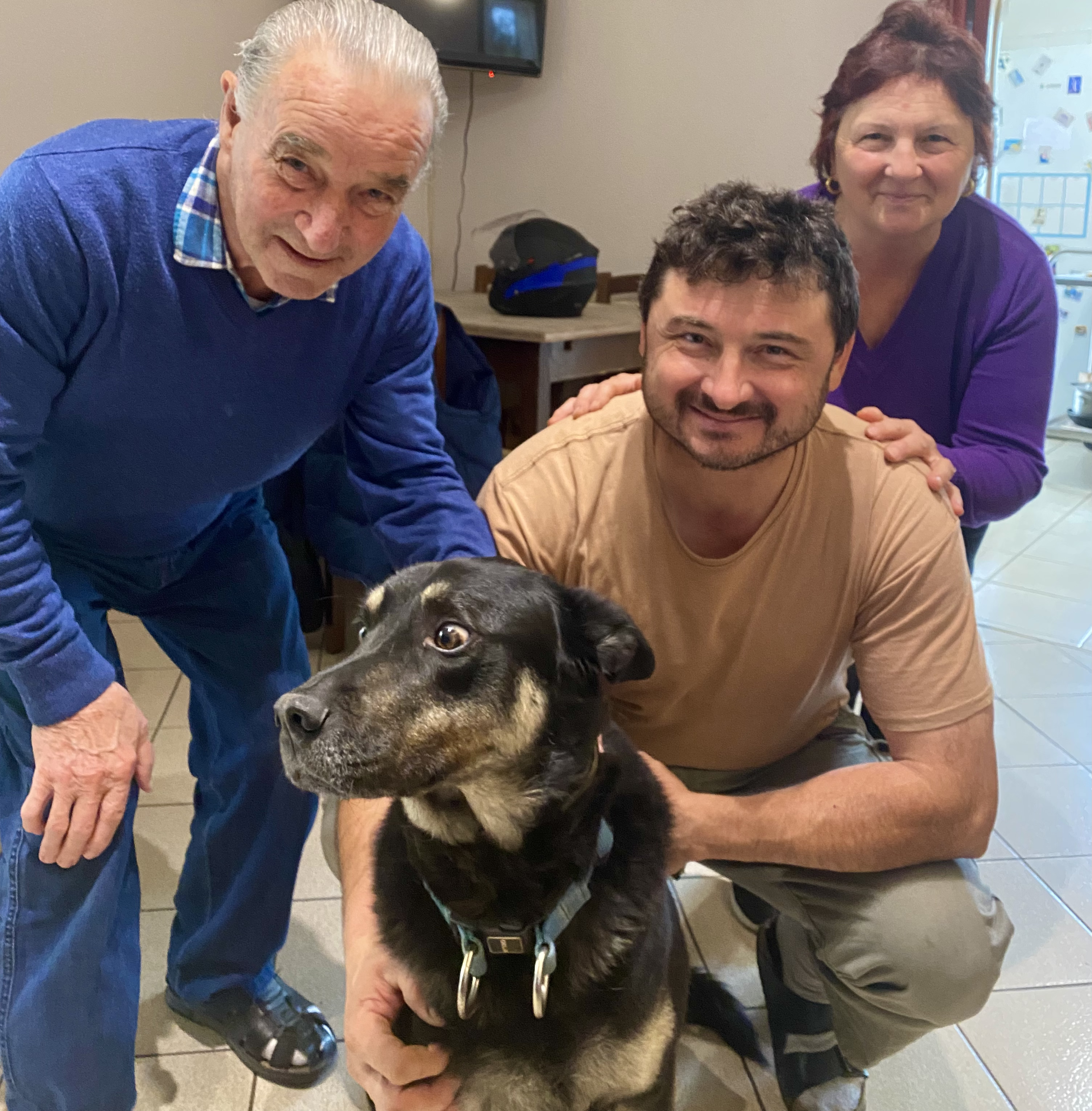
Nino, Jordan (named after Michael Jordan), Stefano and Marinella.

We were hoping to see farm animals.  Their livestock consists of chickens and rabbits.  I did venture down to the chicken coop and rabbit hutch. The bunnies were big and beautiful.  I hated to think of their future.

Rabbit, Coniglio alla Liguria, is a local special and often served here.  Steve announced he would not eat it if it was to be our dinner. Luckily it was not, although I would have indulged.  The French are also fond of rabbit, and I prepare it occasionally. 

Yoshie and Steve hiked to the village of Perinaldo.

Food is a big attraction at agriturismi.  Our dinner was a never-ending, multi course feast.  Italian meals begin with antipasti. One after another, Marinella served us five different antipasti dishes:  Tomatoes with fresh sheep cheese, a slice of bruschetta, a frittata of zucchini and peas, stuffed zucchini flowers, and a tasty a slice of torte made with tiny fish from the Med.  This was followed by the pasta course, ravioli burro e salvia (ravioli stuffed with sage) – all homemade.  Instead of rabbit, for the main course we had both roast pork and goat with fagioli (white beans). The latter was our favorite. Dessert:  a strawberry tarte.  Plus, a bottle of Rossese.

Rossese (red wine) display in Dolceacqua

Marinella cooks, all from scratch. Nino lends a hand, stuffing the ravioli. They have a large vegetable garden, in addition to the chickens and rabbits, to supply the products for her cooking.  Stefano and Nino care for the grapevines and olive trees.  Stefano also makes the wine. Their production of both olive oil and wine is limited.  They only sell to guests and a few local clients.  

“People are happy here,” said Marinella.  She did admit that the first time is difficult due to the seemingly endless, challenging trek up the mountain. It is only seven kilometers, but they are long and very slow.  Many French come for the day from Nice just to eat, she said.   In August they have guests from Sweden, Denmark and Germany.

Dolceacqua, photo by Yoshie.

Agriturismo began in Italy in the 1960s when small farmers were struggling to make a profit.  Some abandoned their farms and went off to work in cities.  However, agricultural traditions are sacred in Italy.  In 1973 an official agriturismo farmhouse designation was created to help prevent farmers from abandoning their farms, and to offer tourists a farm stay so they could learn about rural life.

In some regions, but not all, farmers need a license to take part in agriturismo. We have visited nearby Dolceacqua many times.  Every time it seems there are more “agriturismo” signs on houses in the village.   What do they have to do with farms and agriculture?

Steve explores the Dolceacqua old town.

According to a spokesperson at the Dolceacqua tourist office, to be considered agriturismo they must show documents to prove they have land and crops.  Of course, many may have such up in the hills. But all of them?

Marinella tells me that today many agriturismo are just Bed and Breakfast accommodations and have nothing to do with agriculture.  I asked Arabella, my Italian friend with whom I study Italian. 

“E una giungla,” (It’s a jungle), she explained.  In Italian the expression refers to situations when laws are not respected, everyone does whatever he/she wishes  … a bit like Italian drivers.

Agriturismo breakfast — Bob, me and Yoshie. No one looks very happy, but we were very happy. The farm and surroundings are a treat.

AZ Agrituristica, L’Oasi del Rossese de Zullo Stefano, Loc Morghe, 18035 Dolceacqua, Italy, Tel. xx 39 347 8821298.

http://www.agriturismo.farm/en/farm-holidays/liguria/loasi-del-rossese-dolceacqua/33419 Double rooms with breakfast, 60 euro per night. Multi course meal with wine, 30 euro per person.

Siesta in Dolceacqua

If not a Tales and Travel follower, please sign up here. Don’t miss future posts.

Feel free to comment. Click on link below.

My Take on Costa Rica

Arenal Volcano

I may be one of few who is not overwhelmed with Costa Rica. I did not dislike the beautiful country. The beaches are grand. The people are delightful. The food is good. But, I have been to too many other places that are more “me.” I had hopes of sighting interesting critters in the jungle on “safari” treks. I spotted few.

Beach near Manuel Antonio park

The critters are there. I suspect too many tourists have been tromping through the jungle, following guides with telescopes, sending the animals deep into the bush in search of peace and quiet.

While husband Bob spent two weeks with his daughter Kellie who has a holiday home in Costa Rica, I toured – on my own but with pre-arranged transportation between destinations. I joined guided tours through parks and to noteworthy sights during my visit last January

Too many tourists ?

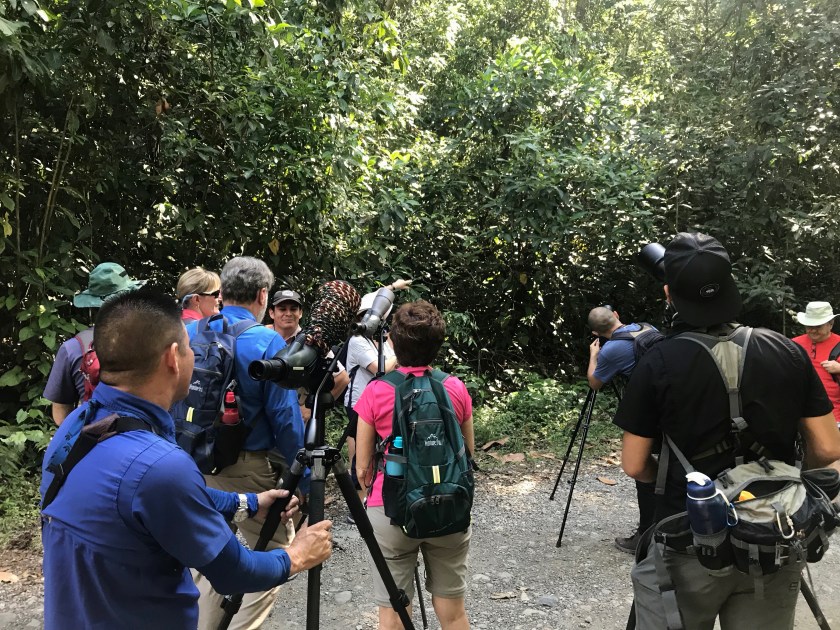
The Manuel Antonio National Park is Costa Rica’s most popular national park and where I joined my first guided hike. Groups like ours, all dutifully following a guide with a large telescope on a tripod, crowded the trails. Word spread quickly of a sighting. Instantly more guides, telescopes and tourists appeared.

Souvenir cell phone photo thanks to guide’s telescope.

Excitement was high at the sighting of a sloth hidden high in dense tree foliage. With the naked eye it was impossible to see anything but leaves. Those with gigantic zoom lenses (there were many) did manage to spot the creature. The rest of us relied on the guide’s telescope. Yet, even with high powered vision, all I could see was a tuft of fur.

This ritual was repeated time after time. The guide, with trained eyes and jungle experience, would spot a creature– various kinds of birds, lizards, sloths – camouflaged in the dense growth. Each of her followers then had a turn for a telescope view. And then, a keepsake photo with their cell phone camera which the guide placed, one by one, on the telescope.

Find the sloth.

It was steamy humid. I grew impatient and bored. I kept thinking of Africa where majestic creatures are often easy to spot. The tour ended on a beach where hundreds of monkeys frolicked. Monkeys may not be exotic, but they are fun and easy to see. I loved them.

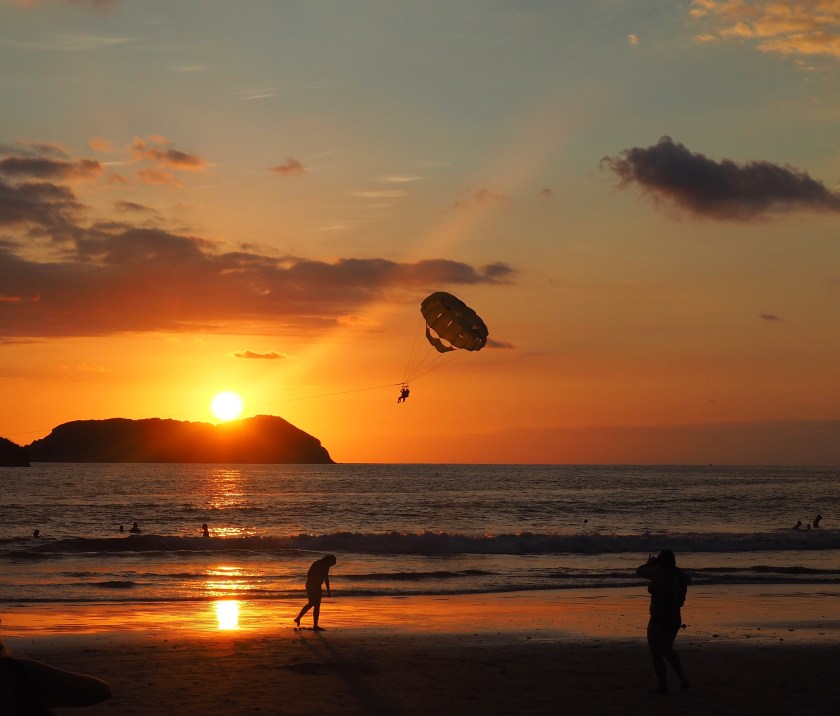
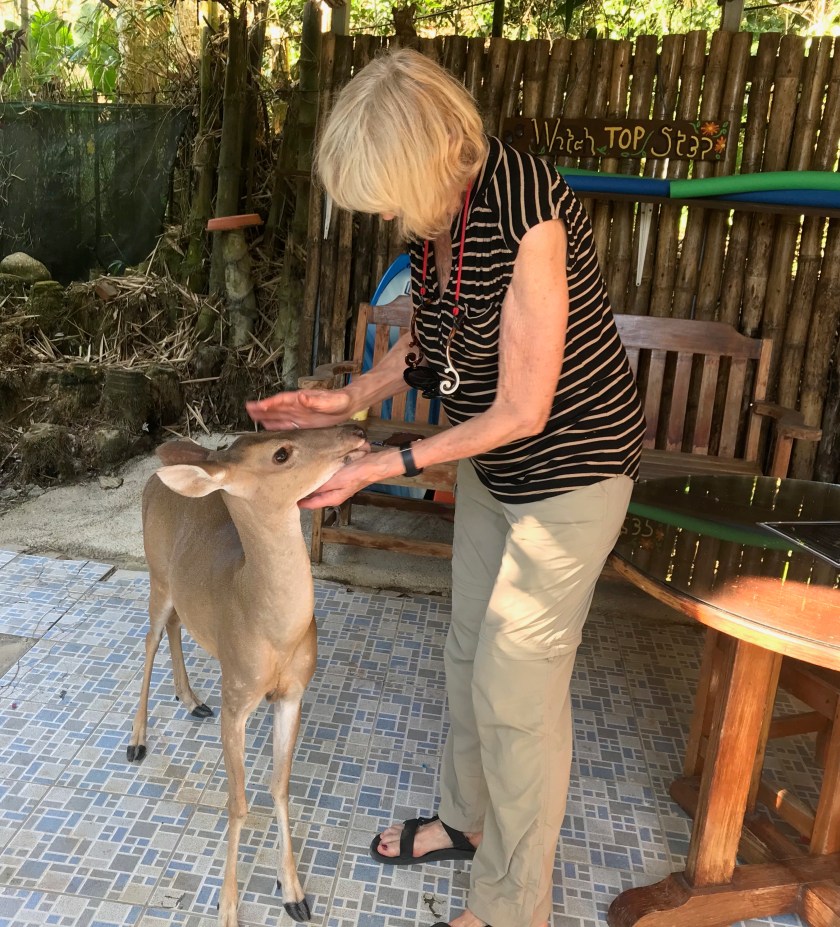
More monkeys, iguanas, a rare lizard, all kind of birds, a deer – I saw them all on the grounds of the Posada Jungle Hotel adjacent to Manuel Antonio park where I spent four nights.  This was better than a guided safari, and at my doorstep.   The beach near the hotel was fabulous, for swimming and sunset viewing.  I spent several evenings aiming for the perfect sunset shot while sipping a mojito.  

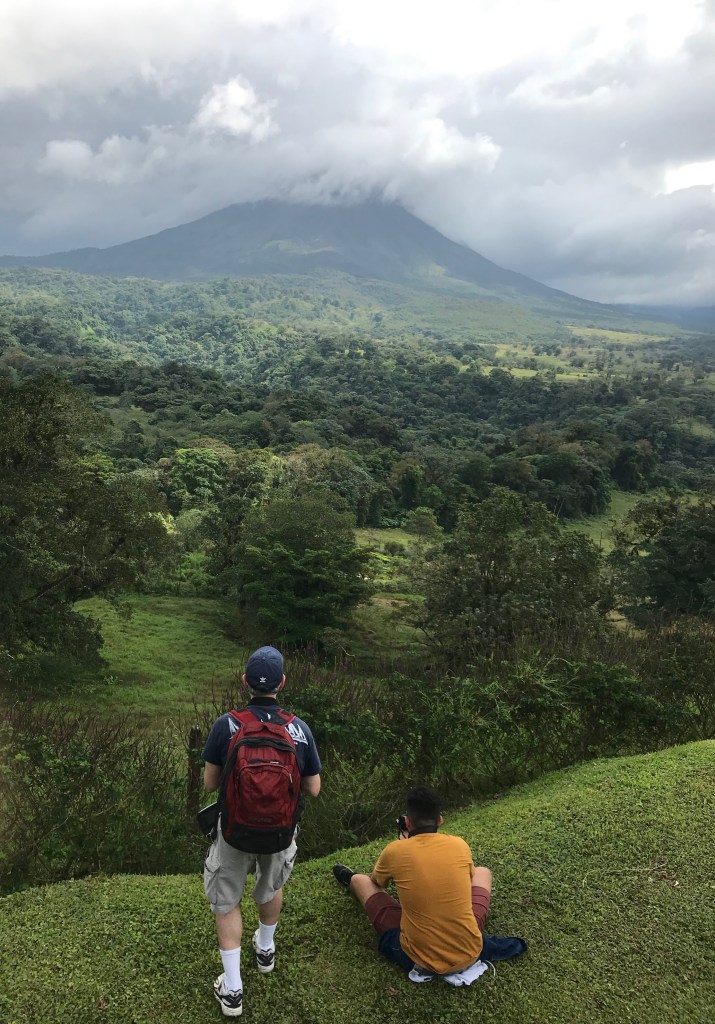
Costa Rica’s Arenal Volcano is a stunning sight. I was lucky. It is often hidden in clouds, but I saw it in all its glory. There have been no regular volcano eruptions since 2010. The surrounding region is popular for hiking and all sorts of rugged,extreme adventure. I opted for gentle adventure, a hanging bridge hike and another hike near the volcano.

Hanging bridges are common in the Costa Rican jungle. I was intrigued. It is exciting, even a tinge scary,  to walk high above gorges  on these structures which gently sway as you cross.

After the near-the-volcano hike, we set off to the Tobacon Hot Springs, a jungle wonderland of hot springs, pools, waterfalls, streams – all a bit kitschy, but crazy fun.


Rio Frio near the Nicaraguan border

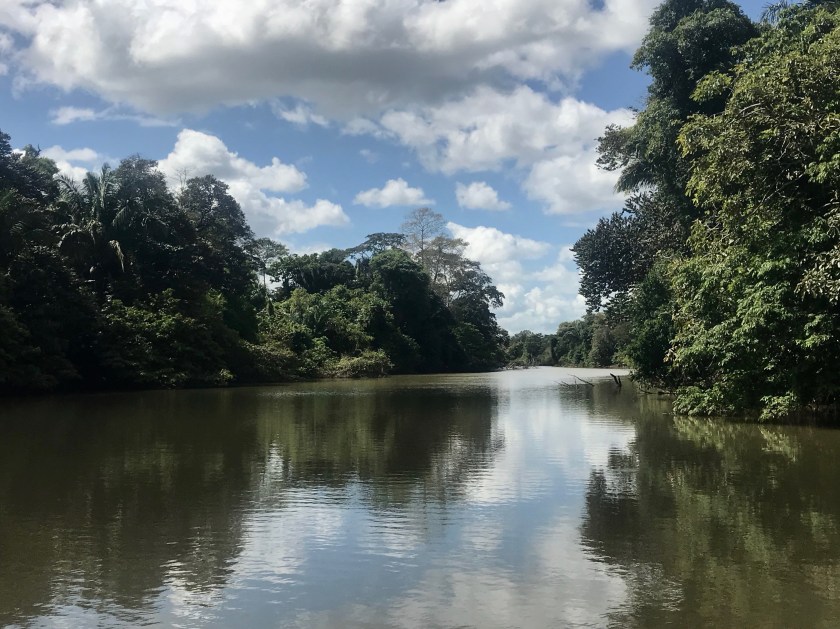
Birds were the star attraction during my relaxing boat tour of the Cano Negro Wildlife Refuge near the Nicaraguan border. The guide entertained us with interesting facts about Costa Rica, as well as river wildlife, as we

drifted past lush rainforest and wetlands. In addition to the birds, we saw bats, a few crocodiles, a lizard… but nothing that thrilled me.  I am spoiled.  It’s  hard to beat being up close and personal with mountain gorillas. (See previous post, “Gorillas in our Mist” Dec. 2015)

I was underwhelmed – and freezing – on the Monteverde Cloud Forest guided hike. This time it was cold and rainy. We learned a lot about various kinds of trees and vines, but – even with the telescope – spotted no exciting wildlife.

The van rides from one destination on my itinerary to the next were often long. The scenery, sometimes spectacular, and chatting with other passengers made the trips interesting. I met folks from the US, Canada, Scotland, England and Israel, including several young female backpackers en route to yoga retreats. Costa Rica is big with the yoga set. There were serious hikers and surfers. Costa Rica is also popular with surfers.

However, I did not come to Costa Rica to surf, nor to soothe my soul during a yoga retreat. Unfortunately I am too old for zip lining and canyoning. Spotting an illusive creature through a telescope did not thrill me. Granted, the beaches are super, but I do not need to travel so far for a fabulous beach

So, Costa Rica does not rank among my favorites, yet I am glad I experienced the country. And, tasted Costa Rican ceviche – a memorable culinary delight. Kellie shared her recipe. Click on photo top right.

Comments welcome.  Click below, then scroll down and Leave a Reply.

If not a talesandtravel follower, please sign up, upper right.  Your address is kept private and not shared.  More on Norway coming soon.  Do not miss it.

See below for  more Costa Rica.

Church at La Fortuna with cloud-covered Arenal.

This sloth was spotted in a roadside tree by a van driver. We stopped for photos.

Spicy Sri Lanka


food.moi
Banana leaves are used as wraps.

“Add a pinch of chili powder,” Iran instructed, then explained that Sri Lankans would add far more, at least 3 teaspoons. That would definitely pack a punch.  But then, Sri Lankan food is not for sissies. It is HOT.  Well, we thought so.


Happy New Year.  Happy Travels. May 2018 be filled with joy, good health, serenity and discovery. 


Chef Iran prepared seven different dishes for us at his home near Ella in the Sri Lankan hills where he gives cooking lessons.  We helped…and learned.food,21

He adjusts the spices, i.e. the heat factor, to western palates, he explained.  We had a fabulous meal of all his delicacies which we found tasty and just right on the heat scale.

During our two-week tour of the country, we frequently stopped at simple restaurants where buffets of numerous different dishes are the norm. Nimal, our trusty guide and driver, checked with the kitchen staff, then told us which concoctions to avoid — the ones with a fire factor of at least four hot peppers. There were many.  Even some of the supposedly mild ones were too much for us….maybe we are sissies.

Hotel restaurants which cater to international visitors offer both Sri Lankan favorites and western fare.  Sometimes the Sri Lankan specials are toned down, but not always.  I love to try new and different things.  But, after setting my mouth aflame more than once, I learned to start with tiny tastes.

OLYMPUS DIGITAL CAMERA
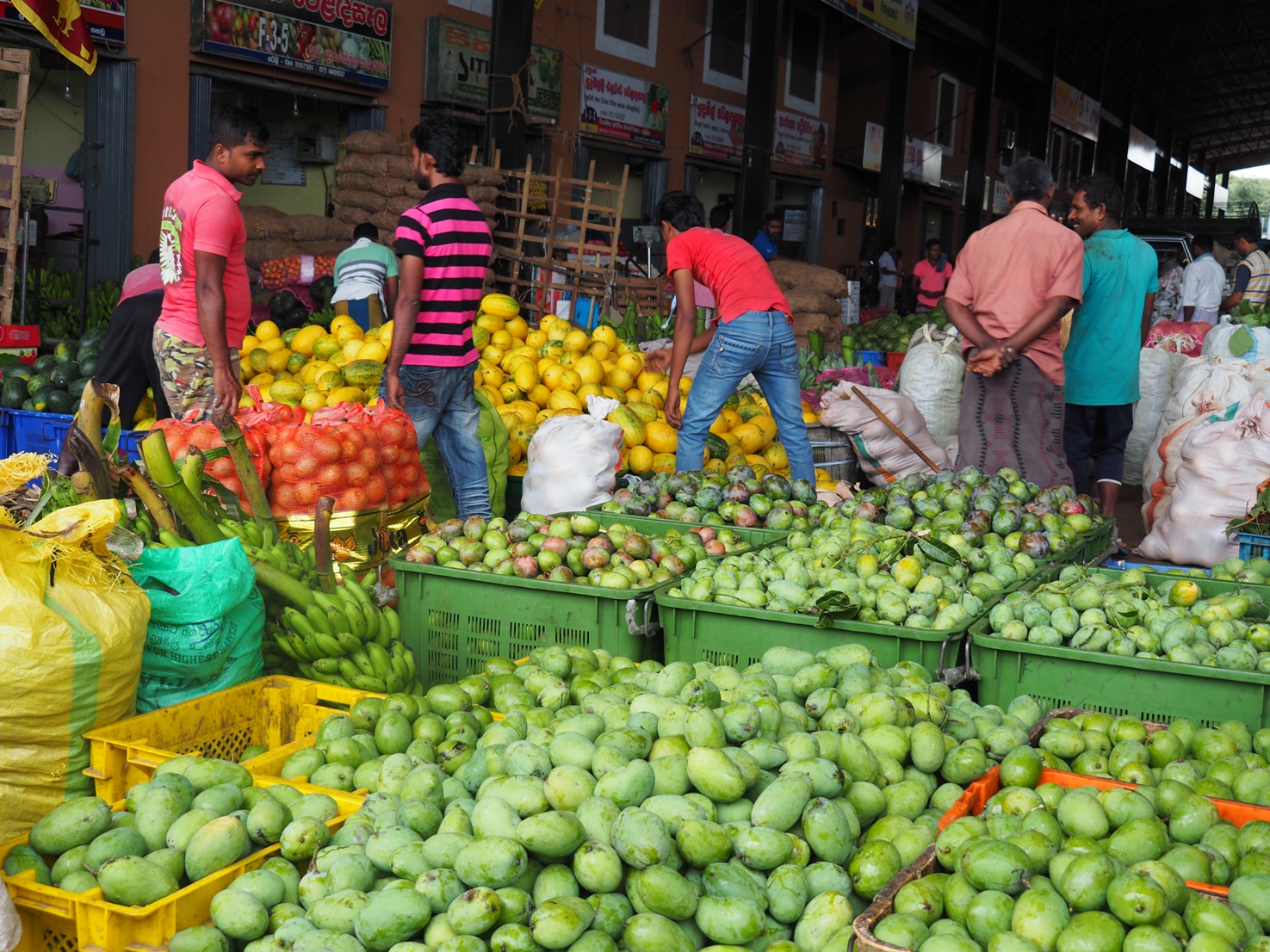
Fruit salad anyone?

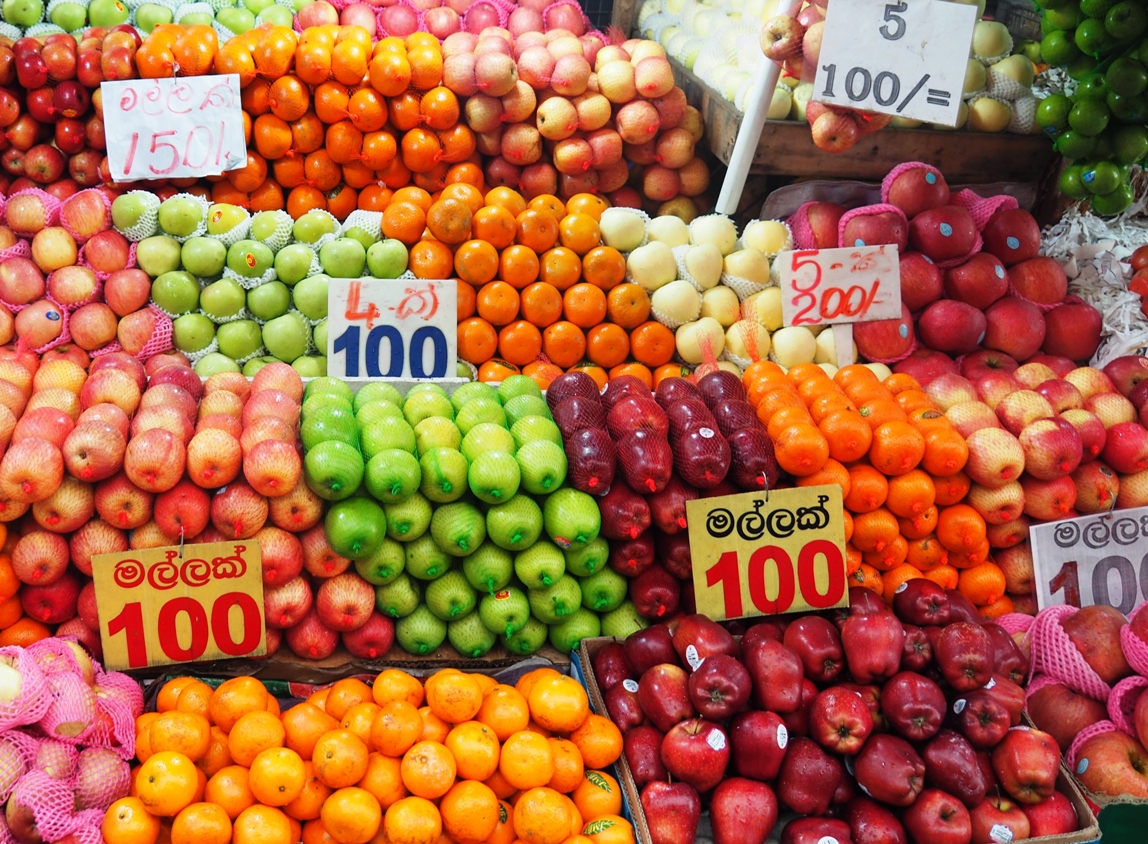
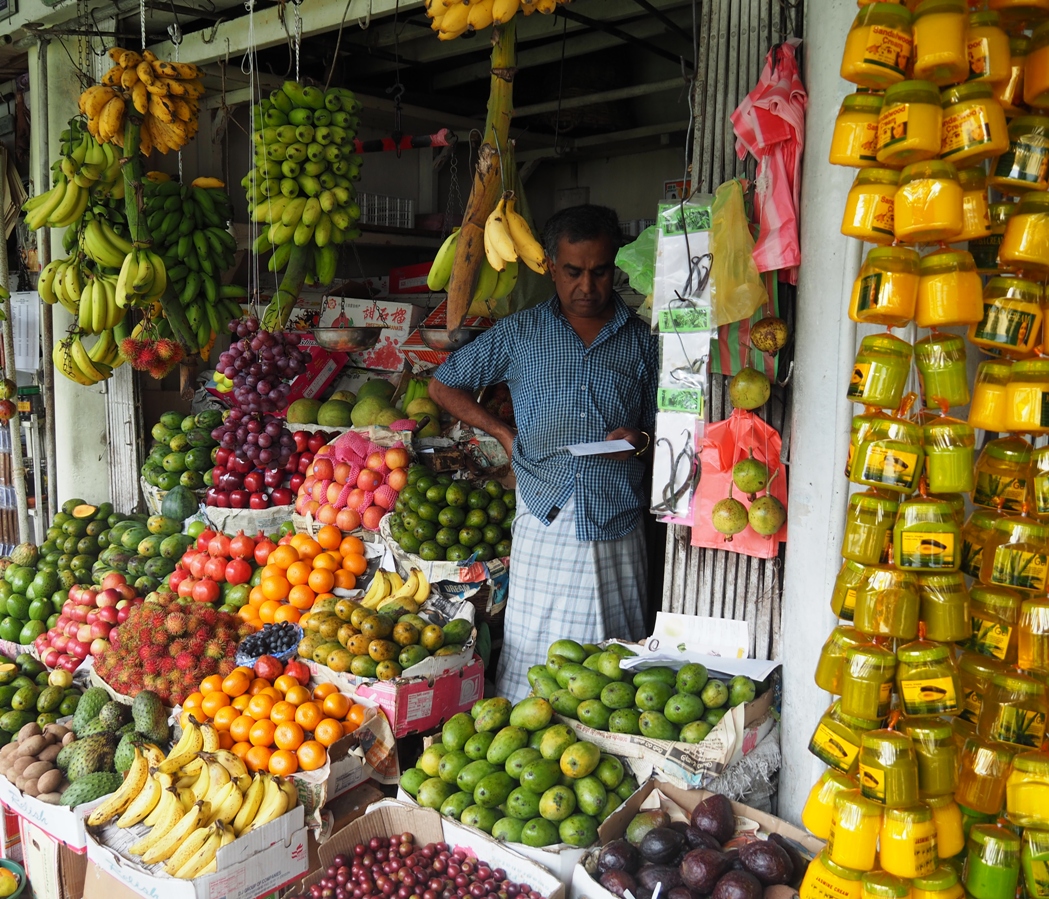
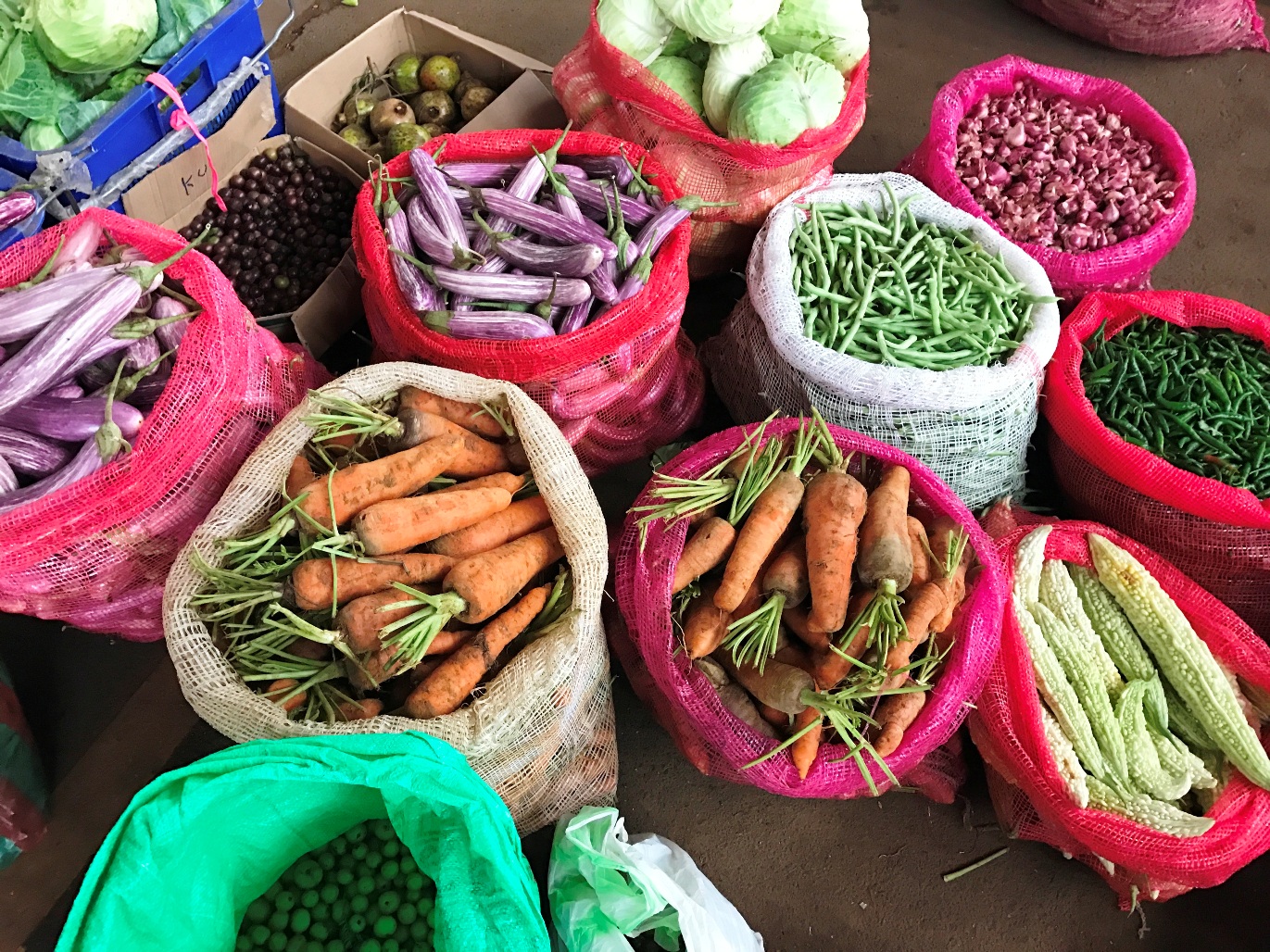
The island nation offers an abundance of fish, exotic fruits, including 20 different kinds of bananas, all manner of vegetables — and spices. Cloves, cardamom, cinnamon, pepper, nutmeg, mace, tamarind and vanilla are among the Spice Island’s noted products. They grow in abundance all over the island in fertile and diverse soil types and varying temperature conditions, and are important export products.

OLYMPUS DIGITAL CAMERA
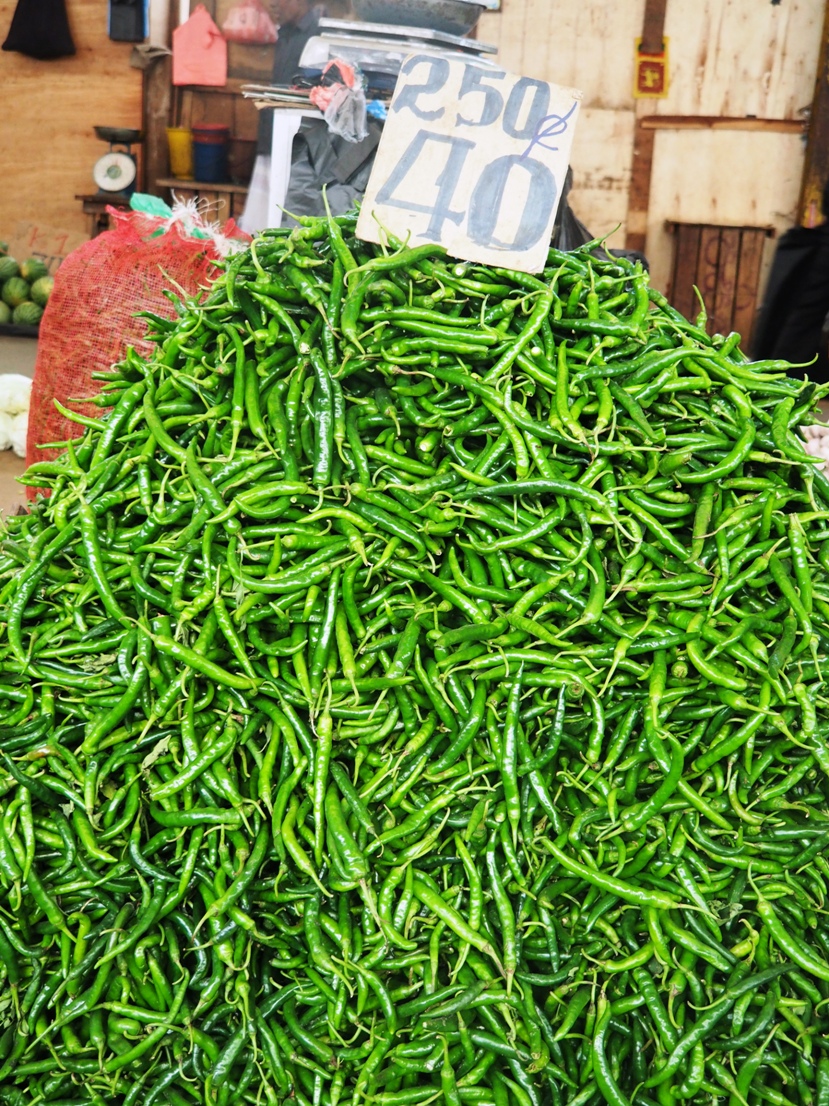
Chilies — a Sri Lankan staple

Yet it is chilies which are the most consumed spice and a key ingredient in the national dish, rice and curry, which Sri Lankans eat three times per day.  The curry can be made with vegetables, meat or fish, usually coconut milk, plus a blend of spices which enhance the dish with intense and exotic flavors.

OLYMPUS DIGITAL CAMERA
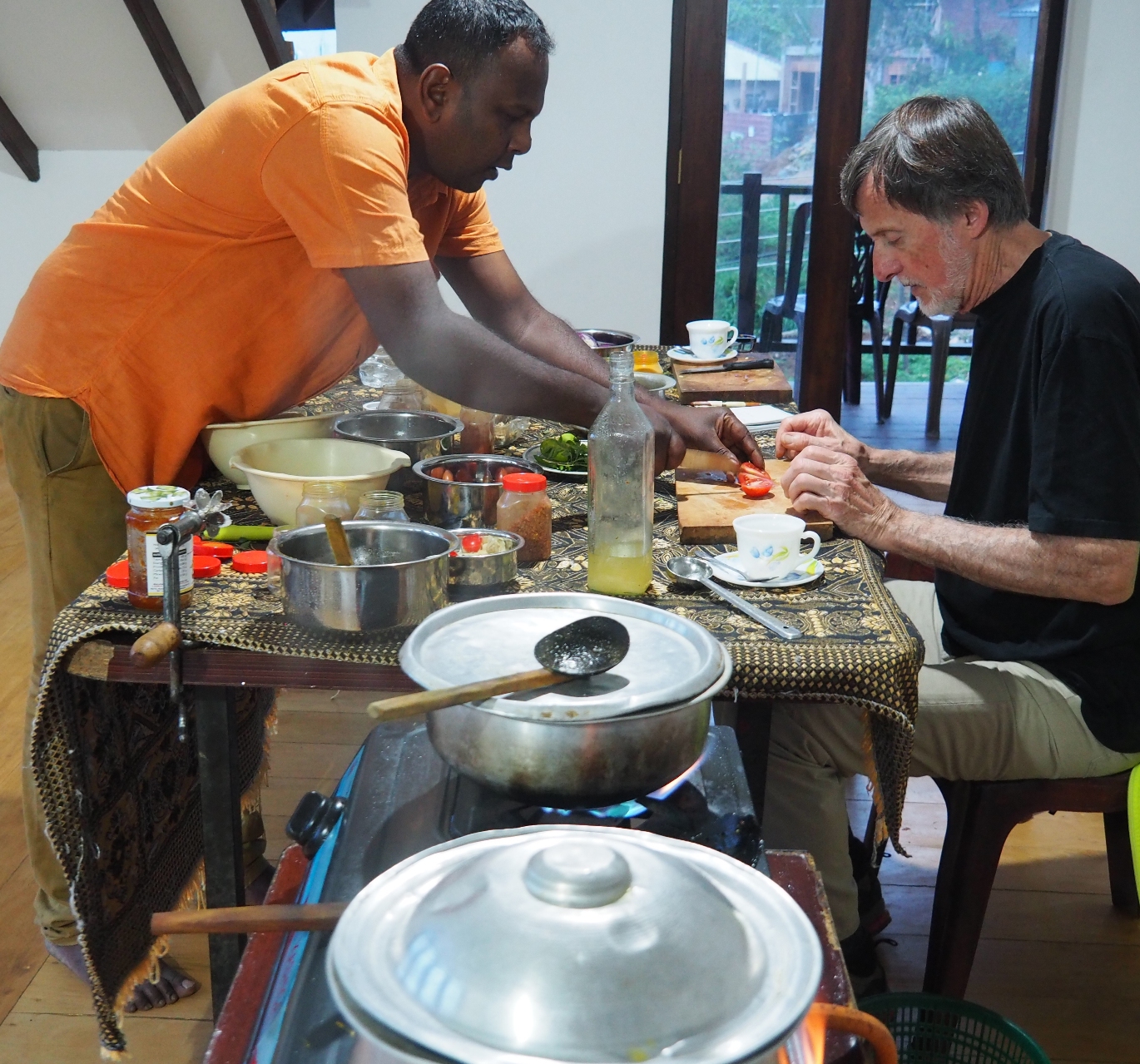
Bob gets slicing  instructions.

We helped Iran dice and chop to prepare three curries: bean, dahl (lentils) and chicken.  He also made aubergine moju, deviled potato and fresh coconut sambol. The latter is a condiment made from ingredients pounded with chili.

OLYMPUS DIGITAL CAMERA
These chilies have plenty of fire power.

His classroom is simple, a table and two gas burners.  He cooks in coconut oil and makes his own curry powder, a blend of coriander, cumin seeds, curry leaves and cinnamon. He roasts both curry powder and chili powder to give a smoky taste to certain dishes.

His mother taught him to cook, he says, and he is delighted to pass on her knowledge, skills and secrets to eager visitors, like us, from around the world.  Not all take cooking lessons.   “Guides bring guests here for a homemade meal, traditional food.  Sometimes there are groups of 15 or 16.”

Sri Lankans eat their main meal at lunch.  While restaurants offer numerous dishes, “at home we only have rice, one vegetable and one meat, not five or six different ones,” Iran said. When eating, Sri Lankans usually mix all the different preparations together on their plate, resulting in a mush which would not qualify for a Facebook food photo.   They drink alcoholic beverages before the meal, not with it.food.20

Sri Lanka is a land of many religions. Buddhists, Hindus, Muslims and Christians are even known to visit the same pilgrimage sites. Many are vegetarians, although not necessarily due to religious restrictions.  Nimal said his family does not eat beef.  “Cows are gentle animals and give us milk.  No need to eat them.”  They also reject pork because “pigs are dirty animals.”

OLYMPUS DIGITAL CAMERA

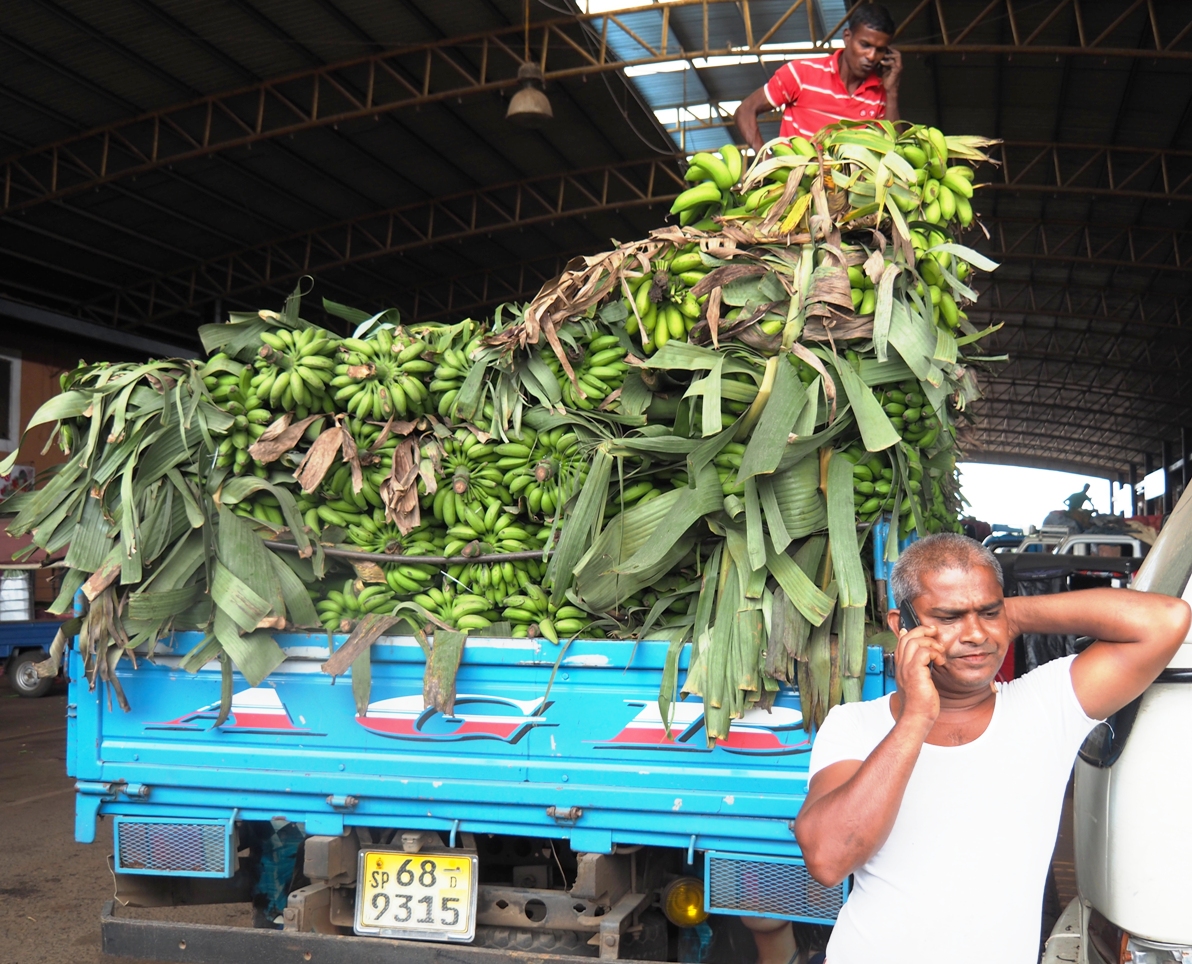
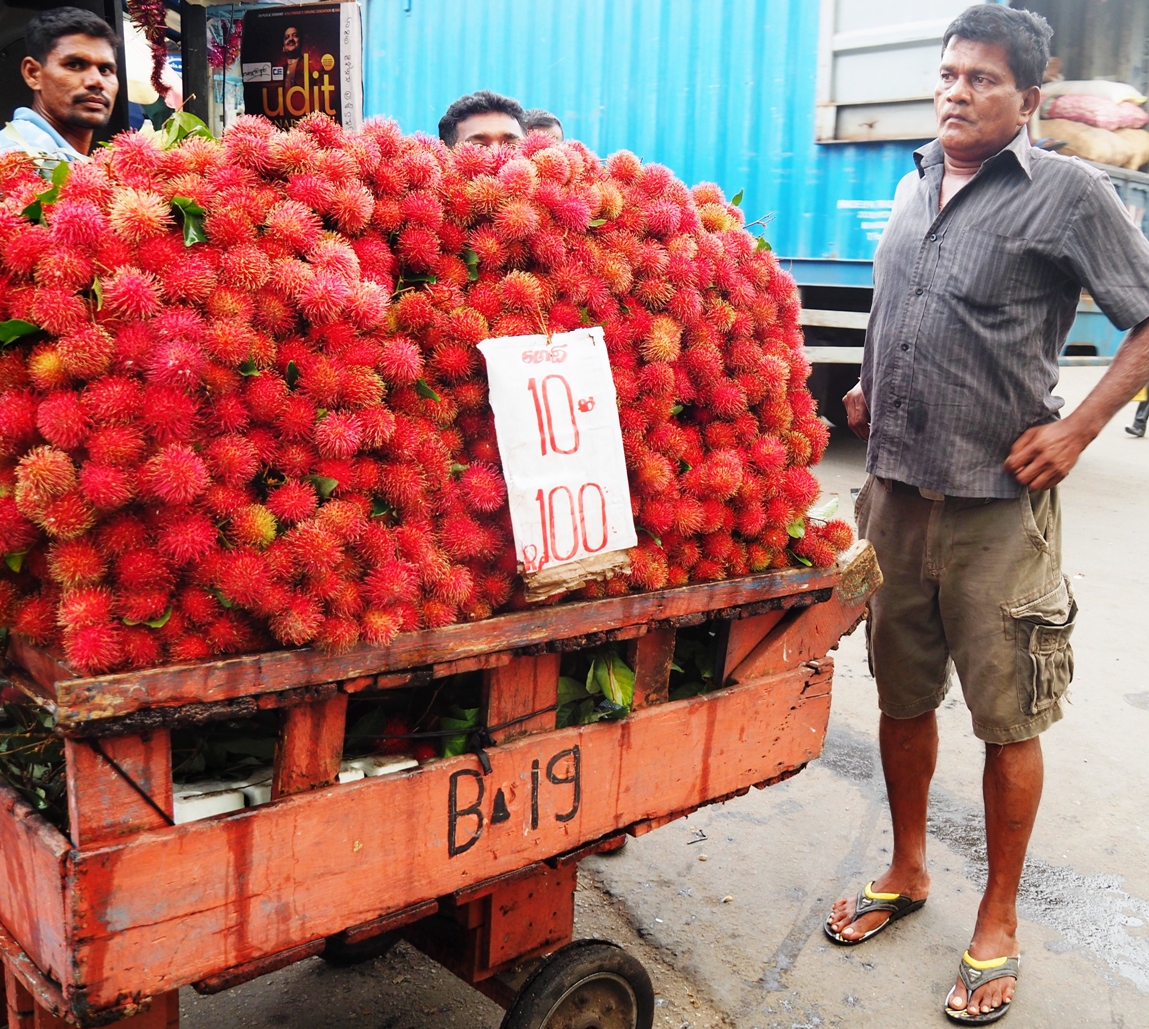
The best places to experience the bounty of Sri Lanka are its markets. During our travels we visited several, all scenes bursting with vibrant color and hectic activity.  At the Pettah markets in Colombo huge trucks overloaded with produce drive through lanes crowded with shoppers.

OLYMPUS DIGITAL CAMERA

The Dambulla Produce market, a vast wholesale market, is the place to see an incredible variety of produce – and to stay out of way of the frantic workers.  A vendor at the market in Kandy gave us samples of fruits we were not familiar with — mangosteen and red bananas. There I purchased spices, for myself and friends.

OLYMPUS DIGITAL CAMERA

Iran gave us several of his recipes.  I tried his chicken curry.  Yummy.  See recipe, top right. food.17

In addition to offering cooking classes and home cooked meals, Iran rents several rooms in his home to guests.  He gets lots of kudos on Trip Advisor.  Contact him at irankarannagoda@gmail.com

OLYMPUS DIGITAL CAMERA

For more on Sri Lanka, see previous posts: Wonders of Sri Lanka and Sri Lanka: Wondrous Wildlife.

OLYMPUS DIGITAL CAMERA

Nimal De Silva, (ndsilva67@gmail.com and info@dsltours.com) chauffeured us around his country, made hotel arrangements, arranged local guides at many places — and taught us much about this fabulous country.  He is a delight, very patient and accommodating.

OLYMPUS DIGITAL CAMERA
Dried fish find their way into many dishes.

If not already a Tales and Travel follower, sign up (upper right). Your address is kept private and never shared. 

OLYMPUS DIGITAL CAMERA

Please feel free to comment.  Click below, scroll back down to Leave a Reply and add your thoughts.  

makeread2

Aiming (and failing) to Cook like a Chef

I am passionate about food and cooking. Cookbooks – I must have 100s.   I love trying new recipes, experimenting with exotic ingredients.  Over the years I have been to many a cooking course, often during travels to learn about ethnic cuisines.

We moved to southern France several years ago, yet I had never attended a cooking course in France.  Shame!  The mother of all cooking schools, Le Cordon Bleu, is French with headquarters in Paris.  It is legendary. My idol, Julia Child, got her start at Cordon Bleu Paris.

On a recent trip to Paris to see our American dentist, I set a day aside for Cordon Bleu.  I was overwhelmed.   This is indeed the Harvard of cooking schools, like no other.


This article, a post for my foodie fans, appeared on the web site: travelsquire.com


“The Art of Cooking like a Chef,” was the title of my all-day course, three hours of demonstration in the morning, followed by an afternoon cooking workshop.cb.3

Twenty-five of us from 11 different countries watched and listened as our teacher, Chef Guillaume Siegler, prepared three different and demanding dishes in the professional kitchen classroom.  He spoke French, but a translator stood by to explain all in English.

First course:  Pineapple and green zebra tomatoes, creamy burrata, basil, olive oil, pomegranate red pesto.

First step:  Peel the tomatoes.  “The skin is disagreeable to the mouth,”  said Siegler. He is right, but at home I usually skip this step — never again if I want to cook like a chef.

The tangy red pesto was a mixture of raspberries, tomato pulp, pomegranate juice, olive oil, pomegranate molasses and green Tabasco, all mixed in a food processor.

chef.blogAs he moved from tomatoes to pomegranates, Siegler, who has worked in many famous Parisian restaurants as well as his own restaurant in Tokyo,  spewed out more words of culinary wisdom: “To cook well, you must think about what you are serving.”

“Respect all products and work only with excellent products.” He put this into practice when he was about to put the finishing touches on the tomato-pomegranate-burrata concoction.  He rejected the basil on hand —  too wilted. — and sent an assistant to the school roof garden to pluck some fresh basil.

The finished dish was food-photo perfect – almost too beautiful to eat.  It went into the frig and he moved on to the main course:  Roasted rack of lamb with parsley crust, pearled jus with rosemary, and summer vegetable tian.

Lamb is one of my favorites, and I have always been in awe of a rack of lamb with the bones parading perfectly to crown the roast.  Even though I adore cooking, this is not something I would ever attempt.

cb2

As I observed, deboning that hunk of meat is no day at the beach.  With skill, precision and speed, he cut away, explaining the intricacies of the task.”Remove some of the skin, but not too much… Get rid of the nerve which is attached to the bone…. Make careful incisions to free the meat from the bones.”

The summer vegetable tian came next.  Rows of sliced vegetables (eggplants, tomato and zucchini) were attractively layered on top of a bed of sautéed onions. I have sautéed onions zillions of times, and have never given much thought to it.  That will change.  There is professional approach to even this simple task.

“Sweat the onions.  Add a bit of salt.  Don’t color them.  Mix vigorously.  Taste.  Salt and pepper.”

He used a mandolin to get perfect, even slices of the veggies.  He showed how to use this dangerous tool and save your fingers.  Start out holding the chunk of vegetable down with your knuckles, as it get smaller, switch to the palm of your hand.   Having recently sliced off about a ¼ of a finger tip as I tried to slice potatoes with a mandolin,  I will surely heed this.cb7

By now I was starving, and all those heavenly aromas had not helped.  Alas, we were all given small portions of his creations to sample.  “Where’s the wine?” someone asked.  No wine, but each dish was delectable.

The afternoon workshop was held in the state-of-the art, stainless-steel and white teaching kitchen where each student had his own work station. After we donned our Cordon Bleu aprons and chef’s hats, we were each presented with a lamb rib roast.

cb.2Oh No!  The GPS on my phone sent me in the wrong direction when leaving the metro.  I  missed the first 15 minutes of  the morning intro class.  I knew we would be cooking during the workshop, but had not realized we would each get our own chunk of lamb.  So, I had not paid that close attention to the somewhat complicated instructions.  Instead I focused on photography, figuring this was one part of Cooking Like a Chef I could skip.  If I wanted a rack of lamb, I would order the meat prepared from a butcher.

I felt dumb and humiliated, and sought assistance. Alisa, a bubbly young Russian woman whose work station was next to mine, guided me through the initial attack of the lamb.  She in turn sought help from a Russian doctor next to her.  They had met the day before at another Cordon Bleu course.  The doctor was exceptional, applying her knowledge of human anatomy to the lamb, making precise incisions.

I could not expect Alisa to do all my work, nor Chef Siegler who raced from work station to work station, guiding, critiquing, encouraging.  I was too embarrassed to reveal my total ignorance of his instructions.

“Five more minutes to finish the lamb,” he announced.  We had to move on to the jus, crust and veggies. Tension was mounting.cb.4

“I love to cook.  I love to share, with customers and students.  But I prefer students,” Siegler  told me.  “I need to have my eyes on everything here.  Some people have never held a knife.”

My classmates, however,  appeared to have advanced far beyond wielding a knife. The dedicated chef  came around to inspect each student’s lamb.  Star of the class, Anze from Slovenia, managed to perfectly duplicate Siegler’s demonstration lamb.   All were in awe, even Siegler.  The doctor’s efforts were also impressive.  Others, while perhaps less perfect, were acceptable.

Unfortunately not mine.  When he looked at my massacred meat, he pronounced: “You will have a filet instead of a rack of lamb,”   then proceeded with Formula I speed to show me how to remove the bones and fat from the lamb, leaving a filet.

At least I was not alone in failure. Lorraine from Shanghai also ended up with a filet. “We don’t cook like this in China,” she said.

Time was limited, so tasks were divided as we moved on. I opted for chopping and sautéing onions for the tian, figuring I could not screw this up.  And, I remembered his instructions.

We each were given an aluminum container to assemble our own tians with the onions and other veggies which we had sliced. These, and the racks of lamb (and filets) went into the ovens.  The reward:  We each had a tian and our lamb to take home.  My husband and I had rented an airbnb apartment.  I called ahead.  “Get a bottle of good red wine. I am  bringing dinner.”cb.1

I may not have had the perfect rack of lamb, but the filet was superb.  The tian: delicious. Definitely a three-star dinner.  The day had been fun, enjoyable, and educational. I picked up many chef techniques which I have been putting into practice.   Next visit to Paris, I will definitely schedule another Cordon Bleu course… along with our visit to the dentist. And, I will arrive on time and pay close attention to all.

Put on the apron and get out the rolling pin.  Time for Christmas cookies.  See Today’s Taste, above right, and my recipe for Greek Crescents,  a winner of a cookie.

If not already a Tales and Travel follower, sign up (upper right). Your address is kept private and never shared. 

Please feel free to comment.  Click below, scroll down to bottom of article, Leave a Reply and add your thoughts.

makeread2