I felt I should have been reporting for Bon Appétit magazine. It was one of those fabulous food and people spreads – a multi-course meal in the huge, homey kitchen of a 500-year-old house in a tiny Italian village shared by Italians and Americans. And, I was lucky enough to be part of it. Too good to be true.
Thanks to our friends Noel and Carol, whom husband Bob and I know from our days together in Germany, we were included in this memorable feast which went on for five fun-filled hours. Noel and Carol have retired to northern Italy where they enjoy la dolce vita. We were their houseguests.
Carol and Noel
The lunch hosts: Fabio and his American wife Victoria. Fabio is a vintner (www.policreti.it) with a passion for precious gems as well as grapes. He has been trading in gem stones since the age of 18, worked for the up market jeweler Bulgari in New York as well as in Italy, and is also dedicated to restoring his
Fabio
family’s ancient home, Palazzo Policreti Negrelli in Aviano, which has 47 rooms and has been in his family for more than 200 years. The original owner, engineer Luigi Negrelli , played a significant role in the construction of the Suez Canal.
Fabio met his warm and gracious wife Victoria in California. She is employed by a German construction company as a translator and much more. “I am lucky to have an American wife,” says Fabio. “Italian women often have headaches or give you headaches.”
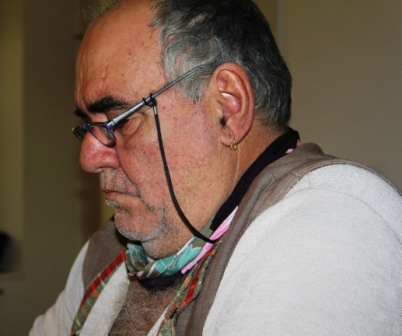
The guests: In addition to me and Bob, Noel and Carol, seated at the table were Riccardo and Zeta, two jolly Italian characters who have known each other since the age of 3, met Fabio in Los Angeles years ago, and call themselves “professional travelers.” Riccardo said he “doesn’t belong to one place,” while Zeta calls himself “a man of the planet.” ”We can’t retire, we don’t work,” explained burly Riccardo, who says he has four wives, each in a different country, and claims his only possessions are “an old car and a bicycle.”
Riccardo
Zeta, a chef, does work six months out of the year at his brother’s restaurant in Greenville, S. C. “When Zeta visits us the first question is ‘what’s on the menu?’ His creations are famous at our hose,” says Fabio. “Instead of making a grocery list, he just looks in the refrigerator and his imagination begins to spin. He can literally put together a feast by using all the various items which have been abandoned in our frig. Needless to say, I like to work around him as there is always something to learn or a new taste to discover.”
Zeta
The food: Zeta was the coach, Fabio the student who made a big patch of Ligurian pesto with guidance from the chef. They wanted to share their creation with friends, hence the lunch party.
The French are obsessed with food — Italians perhaps even more so. Most Italian men cook, Fabio told us, as he checked the boiling pasta for texture. “A big part of the day is based on food,” he said. And, it is essential that ingredients be of top quality, he explained. He claims that Victoria is “thankful to me for showing her the true secrets of Italian cooking improvisation.”
A refreshing cocktail, a combination of Campari, white wine, Prosecco, and Schweppes, got the afternoon of to a festive start.
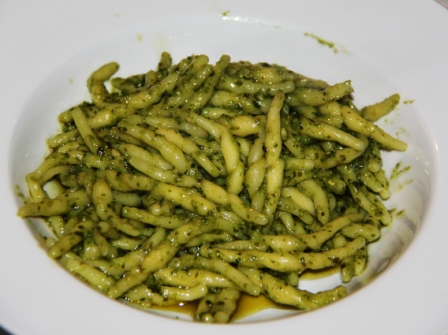
The meal began with fresh ricotta, so creamy and delicate, served with homemade mango chutney and caramelized figs with balsamic vinegar. The cheese was locally produced, and it was exquisite with the tangy chutney and figs. There was a platter of prosciutto from the local butcher who cures it himself, we learned. And a salad — greens, tomatoes and luscious mozzarella di Bufala with pungent olive oil from Puglia and black salt from Cypress. The main course: trofiette, a Ligurian pasta, with the pesto which had been prepared with pecorino. “Never use parmesan,” insisted Fabio.
This was followed by a bowl of spaghettini with the same pesto. The flavor of the pesto changes with the different type of pasta, we learned. It seemed hard to believe, but it was true. I preferred the pesto on trofiette, others liked the spaghettini version. This initiated an animated discussion of the difference between trofiette and trennette, another type of pasta… Food is definitely serious business in Italy.
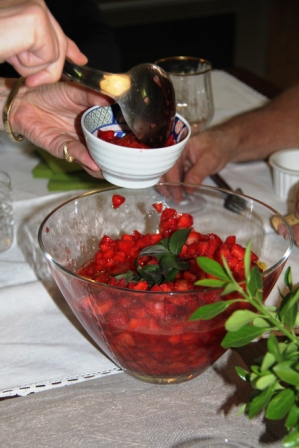
For dessert, aged Sardinian pecorino and pears. “It’s hard to get good pears…these are organic from Trentino… Never tell a farmer he has good cheese. Then he will eat it all, ” said Riccardo. The cheese was knock-your-socks- off strong. I loved it, but it was too much for Bob. He had several helpings of the perfectly diced fresh strawberries that followed. This prompted Fabio to tell of his grandmother’s fantastic crop of strawberries in 1986, the year of the Chernobyl disaster. A boost from radiation?
He went on to relate more engaging tales of his grandmother, a remarkable woman who “was a very special person to me.” She lived through two great wars, suffered the tragic deaths of several family members, but was always a positive and smiling person, Fabio recalled. “She was the oldest car rally driver in 1996 at the age of 95. I was the only person brave enough to be her co-pilot.”’
Fabio and his grandmother in 1996.
We drank Fabio’s Pinot Grigio, followed by a strong red wine called Stroppolatini, then a Sud Tyrol Kerner as an after dinner wine. Some indulged n a rare 45-year–old herb Grappa to top off the meal. There were also chocolates, courtesy of Riccardo who brought them from a special shop in the Dolomites.
All the ingredients for a magical afternoon: lively ambience, fascinating personalities, excellent food and amusing, entertaining, educational conversation covering everything from religion and politics, to the economy, movies — and food of course.
“Italians lose interest in politics,” Victoria said. “That’s the problem. They’d rather discuss food.”
Just in time for summer picnics, Super Slaw. See recipe in column at right. Comments on blog post and recipes are welcome. See “Leave a Reply” below under Comments. Subscribers also welcome. Don’t miss future posts. Click on Email Subscription at top right
My article on Marseille which follows was recently published in the newspapers Stars and Stripes and the Houston Chronicle. A slightly different version will soon appear on the dynamite travel web site: www.travelsquire.com Check it out for a wealth of travel info. Marseille is hot — this year named a European Capital of Culture. Read on — and plan a visit.
It’s a tiny place, all decked out with souvenirs of the sea: shells and stuffed fish in nets dangling from the ceiling, a bench with bold orange life vests as cushions around a big corner table, a wall plastered with small sardine cans. Perfect décor for La Bôite à Sardine, a popular Marseille eatery. A few regulars down pastis, the licorice flavored drink of Provence, at a mini bar while chef Celine is busy on the other side with lunch preparations.
Outside proprietor Fabian arranges freshly caught fish on a sidewalk table. Another display of creatures that had been swimming in the Mediterranean a few hours earlier greets us at the entrance.
My husband and I had come to Marseille from our home in northern Provence to savor treats from the sea for which this port city is famous.
We were charmed with La Bôite à Sardine — and even more so when Fabian sat us at a table with two friendly women, Jeanne Feutren, 68, and her mother, Claire Gilormini, 93, who live nearby.
”We come here because the fish is fresh. It’s delivered every morning. That’s rare. We know,” said Feutren, who, like her mother, was born in France’s second city, is a retired English teacher, and, like most natives, a diehard fan of this fascinating city, the oldest in France.
They, and many others, began their meal with platters of oysters. I asked for Fabian’s recommendations, and he suggested we split an order of calamari, then move on to sole for the main course. “It’s the season for sole,” he explained. “They are full of eggs. The taste is the best.” The squid were in a tasty sauce with a side dish of panisse, a local specialty made with chickpea flour. The sole, lightly fried, was exquisite. Fabian made sure we did not miss the cheeks, the minute and delicate portion of flesh under the fish’s eyes.
“I love Marseille. It’s so cosmopolitan,” said Feutren. “You can meet the whole world here. We have the sea, the sand, hills, the calanques (dramatic coastline cliffs). People are so exuberant.” Her mother interjected. “It’s a wonderful town. We have sun year round. It’s January, but look at the weather.” (It was glorious. Marseille has 300 days of sunshine, the highest number of sunny days in France.)
Now is the time to visit. Marseille is the European Capital of Culture for 2013 with a wealth of activities on the agenda this year. The New York Times rated Marseille second in its list of “46 places to visit in 2013.”
Crime, drugs, violence, the Mafia – the city’s reputation was shrouded by all for years. Fortunately policing and public security have improved somewhat. Nonetheless, as in any big city, caution is advised.
What to See:
Vieux Port. The old port is the heart of this city that was founded by the Greeks six centuries before Christ. Every morning fishermen unload their catch at the tip of the port, the Quai des Belges, for the fish market where locals survey the specimens and tourists take photos. “Soles vivantes,” fish still flapping in a shallow pool of water, were a hot item recently, no doubt because it was the sole season as we had learned from Fabian. On one table, an octopus slithered back and forth in a tray. The 17th century Hotel de Ville, the centuries-old home of the city government, is on the right side of the quai facing the water.
New at the Vieux Port is Norman Foster’s Ombrière, a giant mirror hanging above the repaved waterfront. Slender columns hold a thin sheet of polished steel aloft. Reflected are all those passing underneath, from gnarled fishermen to strolling pedestrians.
Pavilion M. This temporary structure of wood and glass erected for Marseille 2013 in the Place Bargemon near the Vieux Port has exhibits on the city and its people. Visit the tourist office on the upper floor for information about special events this year. Tickets for events are also on sale here.
Chateau d’If. Take a boat from the Vieux Port to his legendary castle, France’s Alcatraz. King Francois I had it built in the 16th century as a fort outside the harbor. It never saw battle, but became a prison. Its most illustrious inmate was Edmond Dantès whom Alexandre Dumas immortalized in The Count of Monte Cristo.
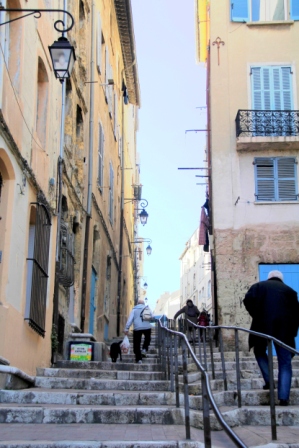
Le Panier. Steep steps from the Vieux Port climb the hills of this district whose narrow, cobbled alleys are reminiscent of ancient Mediterranean cities like Naples and Lisbon. The Place des Moulins was once the home of 15 windmills where flour was milled. The name “panier” (basket) is thought to come from the baskets used to carry bread. Check out the boutiques on rue du Petit-Puits. The whimsical ceramics at number 7, Serge Mautarlier, are a delight.
Vielle Charité. This striking architectural masterpiece in Le Panier was a home for the city’s poor in the 17th century when Louis XIV decided poor folks on the streets were bad news. It housed up to 1,000 needy residents. The noted architect Le Corbusier recognized its beauty in the 1950s which led to renovation. The complex of columned arcades includes a Baroque domed chapel.
Notre Dame de la Garde. A golden statue of the “Bonne Mère” tops this Romanesque-Byzantine basilica at the highest point of the city, 500 feet above the harbor, majestically watching over Marseille’s 860,000 inhabitants. Hike up the hill, or take bus number 60 from the old port, and enjoy the best views of the city and nearby islands.
La Canebière. The grand boulevard of Marseille which leads from the Vieux Port. A bit shabby, the Champs Élysée it is not, although it was modeled after the Parisian avenue. Some of the buildings are worth admiring, such as the one with caryatides housing the store C&A at number 53
Calanques/Beaches. Sightseeing boats from the Vieux Port opposite the Hotel de Ville offer coastal tours to admire the stunning cliffs and deep fiord-like inlets between Marseille and Cassis. Marseille has 16 beaches along its 57 kilometers of coastline. The Plage des Catalans offers golden sand, while soft gravel covers the Plage du Prado. Both are crowded in summer.
Markets. In addition to the fish market, this vibrant city has numerous morning markets offering everything from clothing to spices, fruits and vegetables to hardware. The merchandise for sale reflects the diversity of the city’s population which includes 200,000 Italians, 150,000 Corsicans, and
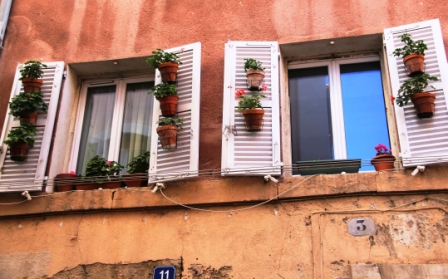
Facade in Le Panier.
400,000 Muslims (mostly from Algeria). Arab specialties are found at the Marché les Noailles on side streets to the right at the end of Canebière just a few hundred meters from the Vieux Port, every morning except Sunday. Nearby is the Marché des Capucins for fruit and vegetables, also daily except Sunday. Everything imaginable is for sale at the huge Marché du Prado along the this main artery of the city. Tuesday through Saturday.
Bouillabaisse. Marseille is the capital of this legendary fisherman’s soup. It’s said to taste better there than anywhere else because of the variety and freshness of ingredients – several kinds of fish. It’s a hearty meal beginning with the fish broth served with aioli, garlic mayonnaise, and rouille, aioli with cayenne pepper. Smear the mayos on toast rounds which you submerge in the soup. Then comes a huge platter of the fish and potatoes. It’s a pricey dish, between 53 and 60 euros per person at these restaurants all known for authentic bouillabaisse: Le Rhul, chez Michel, Le Miramar and chez Fonfon. A less expensive but authentic version can be ordered ahead at Chez Madie Les Galinettes at the Vieux Port. Other restaurants along the Vieux Port also offer bouillabaisse for less, but it may not be the genuine version.
More new buildings to come. This area near the cathedral will house shops and restaurants.
New Attractions: Villa Méditerranée and Museum of European and Mediterranean Civilizations (MUCEM). Continue down the waterfront from the Vieux Port to an abandoned pier (J4) that is now all spiffed up and the site of avant-garde architecture. The Villa Méditerranée looks much like a supersized diving board with a vast exhibition hall jutting towards the sea and suspended above a pool of water. It will host exhibitions, but it is primarily a place to provide contact for all Mediterranean countries with the focus on cultural and artistic exchanges. There is no charge to enter and wander around, although there is a charge for exhibitions.
President Francois Hollande will inaugurate MUCEM on June 4. Doors open to the public on June 7. This striking structure, a squat glass building shielded from the harsh Mediterranean sun by a dark concrete filigree veil, echoes the architecture of North Africa. Exhibits from national museums will illustrate the theme of Mediterranean civilization.
The J4 area and the adjacent old Fort St. Jean are linked by a 130-meter walkway overlooking a dock. You can stroll in the public Mediterranean garden suspended on the heights of the Fort and lap up the stunning panoramic views over the sea and city.
Where to stay:
Hôtel Escale Oceania Marseille Vieux Port
The location does not get any better than this, just adjacent to the Vieux Port. The small (45 rooms) newly renovated hotel does not offer luxury, but it does have all you need, including free Internet access. Ask for a superior room with a balcony for superb views of the Vieux Port and Notre Dame de la Garde. 5 La Canebière, 04 91 90 61 61
Church tower and war monument at the upper end of La Canbiere.
Where to eat:
La Bôite à Sardine, fish restaurant as described in article, 7 Boulevard de la libération, 04 91 50 95 95, www.laboiteasardine.com
Le Café des Epices, gastronomic brasserie near the Vieux Port, a tiny but bustling place with innovative cuisine. There is a terrace in front of the restaurant for outdoor dining. Many of the customers are regulars who greet the talented chef with the obligatory air kiss on each cheek. 4 Rue du Lacydon, 04 91 91 22 69. Restaurant does not have a web site.
Facade in Le Panier
Pizzeria Jeannot. Much more than a pizzeria, this large restaurant offers all manner of seafood and grilled meats, in addition to a variety of pizzas. The location, tucked in a tiny fishing port just outside the heart of the city, is a delight. 129 Vallon des Auffes, 04 91 52 11 28. www.pizzeriachezjeannot.net
Chez Fonfon. If it’s authentic bouillabaisse you seek, try this well-known restaurant (mentioned in the article) located almost next door to Pizzeria Jeannot, but with a classy ambience on the second floor of a building with lovely views of the sea and the mini harbor full of boats. 140 Rue du Vallon des Auffes, 04 91 52 14 38, www.chez-fonfon.com
MORE MARSEILLE
For the best home made Italian ice cream, Le Glacier du Roi, 55/49 arret Place de Lenche, www.leglacierduroi.lesite.pro
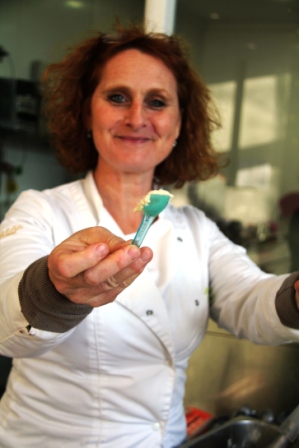
Florence Bianchi offers a taste of her luscious ice cream.
For the city’s famous traditional cookies (Navettes – flavored with orange flower water ), Navettes des Accoules, 68 Rue Caisserie, http://www.les-navettes-des- accoules.fr
Travel throughout the city by bus and/or metro (two lines). A one-day City Pass at 22 euros ($28.50) includes use of both bus and metro for 24 hours, a roundtrip boat trip to Chateau d’If, a ride on the tourist train to Notre Dame de la Garde or through the Old Town and Panier, entrance to all museums, a guided tour, plus some discounts. Tickets at Pavilion M, the city tourist office at the Vieux Port or at resamarseille.com
Marseille also has Hop-on-Hop Off buses running between April 1 and Oct. 31 which stop at 13 different locations. Tickets for one or two days from 18 euros ($23) can be purchased on board.
Sightseeing boat trip of the calanques: two hour trip: 22 euros. ($28.50) Details at www.visite-des-calanques.com. Boats run daily from April through October.
Comments on blog post are welcome. See “Leave a Reply” below under Comments. Subscribers also welcome. Don’t miss future posts. Click on Email Subscription at top right
Gloomy gray clouds shrouded the March sun. The waters of the Seine were dull and dismal. No flowers blooming in the Jardin du Luxembourg.
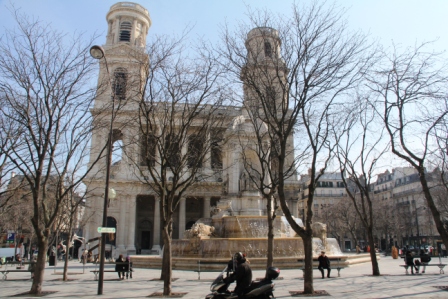
St.-Suplice — near our Paris chambre d’hote.
It was spring in Paris, the week before Easter. Hardy souls braved the chill and sat outdoors at sidewalk cafes, but bundled up in their winter wardrobes.
Like in much of Europe this year, winter in Paris was not about to make a timely exit. Never mind. For me, Paris is always fabulous. Even without the warmth and sparkle of sunshine, husband Bob and I enjoyed good food, museum visits, fun shopping, and meeting friends during our recent stay in my favorite city. And, we did have a few hours of glorious sun.
Arc de Triomphe
The reason for this trip was a watch. Not just any watch, but an antique enameled pocket watch my mother had given me years ago. She said it was worth ”thousands” and I should take it to a museum. It has been buried in a drawer for years. I decided I’d like to sell it and was advised to take it to a classy auction house in Paris. My dear mother suffered from visions of grandeur. Alas the precious watch was not even gold, and not of great worth – but that’s another saga, perhaps another blog.
Watch aside, we kept busy in Paris. Chagall is the focus of a popular exhibit now in the city until July 21, 2013. We set out to see “Chagall Between War and Peace” at the Musée du Luxembourg. Merde — long lines to get in. We are short on patience, but decided to wait it out. The exhibit is extensive and impressive. Unfortunately we found too many people crowded around the chef d’oeuvres. Many stop to photograph the paintings with their cell phones. All a bit claustrophobic, and a pity. I adore Chagall, but could not enjoy his masterpieces in that congested ambience.
The Musée d’Orsay is always a delight. Here too there were long lines for admittance. But, book tickets on line and you can waltz right by the crowds and in the door. We wandered around the second floor admiring magnificent art and Art Nouveau furnishings.
Long lines at Musee d’Orsay.
All very pleasant. Then up to the fifth floor to see the Impressionists. A mad house. Groups of school children sitting on the floor around paintings as teachers lectured. Hordes of on-lookers crowded around the famous works. We gave up.
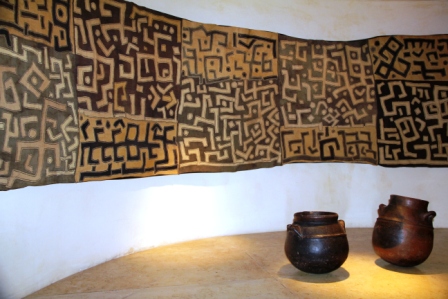
A tiny museum with no crowds recommended by a friend is the Musée Dapper with exhibits on African art. We enjoyed an exhibit on African design – strange
Musee Dapper
chairs and weird wooden head rests which serve as pillows. Interesting, but more so was the collection of large photographs of tribal kings and chiefs from all corners of Africa in all their colorful and amusing regalia. We had the museum to ourselves, and I found an unusual and striking necklace from Senegal in the gift shop.
What every cook needs — onion goggles.
The best trip souvenir, however, is the pair of Oniongoggles that Bob spotted in a kitchen shop. Brilliant. Chop away at onions and never shed a tear. I love them. Two musts for Paris shopping are La Grande Epicerie Paris, the
food hall next door to Le Bon Marché, and the basement of the BHV department store. Food products from all over the world can be found at the former where we head straight to the USA section. We were overjoyed. They stock canned pumpkin (two brands) as
American products at La Grande Epicerie Paris.
well as whole cranberry sauce. Bob goes for the cranberries. I use the pumpkin in numerous recipes. Of course, they stock other Ami favorites not available in French supermarkets. Beware: All cost far more than they would at Kroger’s.
The BHV basement is the mother of all hardware stores. They even have a shoe repair section where you can have belts
Super signs at BHV.
made, as well as shoes repaired. We like the large selection of off-the-wall signs.
Food is always at the top of our list. As Paris is very expensive, I did extensive research before departure to zero in on good but affordable eateries. Fancy Michelin starred restaurants are beyond our budget. There were winners and losers.
Our first meal this trip took us back to a favorite, Chez Fernand. We split an entrée of ravioli de Royan, tiny raviolis in a tasty chive cream sauce, then each had fish – one cod and one sea bass. Both prepared to perfection and served with spinach purée. A meal is not a meal without dessert for Bob. He ordered crème brulée. Tab with a half liter of wine: 80,50 euros. ($103)
The most amazing bargain was in the 13th arrondissement at Lao Lane Xang which specializes in Laotian, Vietnamese and Thai cuisines. A luncheon special of four different dishes plus a glass of wine: 10,80 euros. ($13.80) I chose Huong Lan, a Vietnamese combo: Pâtés impériaux au poulet, salade de papaye vietnamienne au bœuf sèche, poulet au caramel and riz blanc parfumé. Bob went for the Thai plateau with a main dish of poulet au lait de coco et curry rouge. For dessert he tried Mokeng coconut flan, a creamy green concoction that was excellent.
We love Italian food. Unfortunately in the area of Provence where we live, except for pizzerias, Italian restaurants do not exist. A Paris favorite in the 6th is Il Suppli, a tiny, cozy romantic spot on two levels. Here we split a mixed salad, then each had an excellent pasta creation. Bob’s dessert, Tiramisu, was a disappointment. But the wine, a bottle of Montepulciano, was good. This, plus two coffees: 87 euros. ($111)
Another bargain lunch awaited at Au Rocher de Cancale, a place dating back
The place for huge salads.
to the early 19th century that was mentioned in a New York Times article. We dined upstairs surrounded mainly by young Parisians, all indulging in enormous salads. The restaurant must have at least a dozen different salad combinations. We split an Italian salad (14,50 euros) then each had one of the specials of the day (14,60 euros each), cod with copious quantities of green beans and cauliflower purée. (We like fish). Here the dessert boy had to pass. He was stuffed. Total for above plus a half liter of wine and two coffees: 64,90 euros. ($83)
Most fun meal: A la Biche au Bois which was also recommended in my reading, including kudos from Patricia Wells, former food editor of the International Herald Tribune and one of my food idols. It is also close to the Gare de Lyon, so we could eat and then catch the train home.
The restaurant is a typical bustling Parisian bistro — crowded, noisy, with very good, basic bistro fare. Our waiter, Bernard, was chatty and helpful. He had lived in Canada and was happy to speak English. The price was right, four
Bernard knows his wine.
courses: entrée, main dish, cheese and dessert, 29.80 euro per person. The entrées were not that exciting – a poached egg creation for me and rillettes of salmon for Bob. For the main course, I ordered the daily special, partridge, and Bob went for a restaurant specialty, Coq au Vin. Both very good. Bernard recommended a wonderful white wine, Menetou-Salon, Domaine Phillipe Gilbert (near Sancerre). And, he gave us each a shot of cognac for a “bon voyage.” Two menus plus a bottle of wine: 84,10 euros. ($108)
Partridge- a delicious delicacy.
In our neighborhood, we tried two other restaurants, La Boussole and La Giara – neither worth a repeat.
We also had a very delicious (Osso Buco) and memorable meal chez friends Leonard and Claudine. Leonard is a former colleague of mine from the military
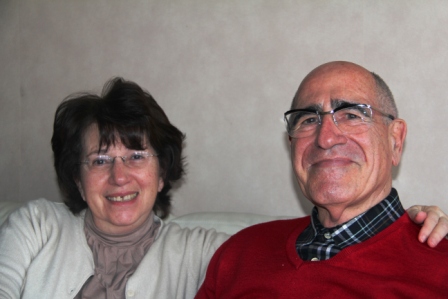
Claudine and Leonard
newspaper Stars and Stripes in Germany. He still lives in Darmstadt part time, and part time with Claudine in a lovely apartment on the 28th floor of a building in an area called Olympiades. The huge apartment windows offer great views of the sprawling city with Sacre Coeur on a distant hilltop.
My Japanese sister-in-law who lives in Boulder has a cousin in Paris whom she has never met. We met Sachie at a café and had a delightful chat. We hope she will come to visit us in Provence – and that my sister-in-law Yoshie will get to meet her charming cousin one day.
Bob, me and Sachie
Sun would have been welcome, but even without it, Paris was wonderful. Of course, it would have been even better if I could have peddled the watch for “thousands.”
For friend Jane’s birthday, I made Rum Cake. See recipe in Recipe column at right.Comments on blog post and recipes are welcome. See “Leave a Reply” below under Comments. Subscribers also welcome. Don’t miss future posts. Click on Email Subscription at top right.
More Information:
Dapper Museum, 35 rue Paul Valéry, Metro: Victor Hugo, www.dapper.com
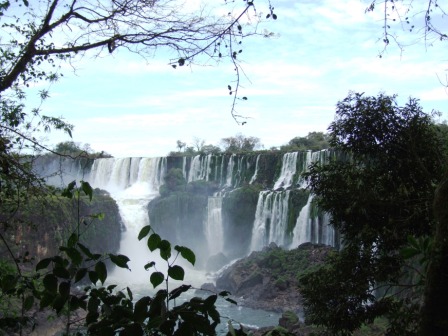
Not every trip is paradise perfect. I’ve had my share of travel mishaps. In Buenos Aires, three gold chains were ripped from my neck (my fault for wearing them). I missed out on an excursion to the Brazilian side of Iguaçu Falls because I did not have a Brazilian visa.
I never made it to the Brazilian side. No one told me I needed a visa.
The trip had been prepaid, but the travel operator failed to tell me that as an American I needed a visa, and there was no time to get one. $100 out the window. In New Zealand, I was so excited about the chance to swim with dolphins – something I’ve always wanted to do. Alas, I swam in frigid water, but nary a dolphin to be seen. (I’ve written about these catastrophes in previous posts. “Misadventures in New Zealand,” Apr.27, 2012; “Cry for me Argentina,” Oct. 30, 2010; “Iguaçu Falls,” Nov. 19, 2010 )
Last fall husband Bob and I had some frustrating experiences thanks to GPS. We are slow to get on the technical bandwagon, but finally decided to purchase a GPS gadget for this drive trip. All went well in Germany. Without it, we might still be driving around looking for some of those off-the- beat- and -track hotels I had booked.
When we got to northern Italy and were trying to find my friend Trina’s apartment on Lake Varese, another story. Suddenly we were crossing the border into Switzerland as directed by our GPS mentor. (She’s British, and her pronunciation of Italian, French and German street names is abominable, but good for a laugh.)
GPS got us to Bellagio on Lake Como, but failed us thereafter.
This can’t be right? What’s with this wacko woman directing us? What’s with GPS? We stopped at the nearest gas station, and were told she was all wrong. Reverse directions and go back to Italy. We eventually found Trina, but with a map.
After the Italian/Swiss mishap, I verified GPS instructions with a map. Until we were driving back to France on the autostrada in northern Italy, a stretch we had driven many times. I relaxed. All seemed well. Then out of the blue we ended up at the toll booth for the Frejus Tunnel, 39 euros, no turning back. Strange. We had not remembered going through this tunnel before. Perhaps our GPS genius knew a shorter route? We had no choice but to continue.
It’s a long, long tunnel. When we emerged, I checked the map. Holy S—! Where are we? We had driven far out of our way to get home. And, that GPS crackpot was leading us farther astray. So much for advanced technology.
Time for another gas station inquiry. I was obviously distraught, thinking about all those extra miles and hours lost. The kind woman in the gas station took pity on me and explained that we had two choices, one route via Grenoble, much longer but all on the speedy autoroute, and one over the Col du Galibier, a slow but scenic mountain pass. We opted for scenery. It was an adventure, up and up a twisty road into the wilds of mountain tops with no civilization in sight, but incredible views. It was getting dark and this was not a road for sissies, so we took no time to stop and ponder the surrounding beauty. But, it’s a drive to repeat. Sometimes bad leads to good.
Lots of gold shops in Singapore, but it was in a camera shop where I made my mistake..
And, sometimes, as with the jewelry theft in Argentina, you learn from the disasters. Such was the case in Singapore. I needed a few accessories for my new camera. This was the beginning of a long trip, so best make the purchases here. We paid a visit to a camera shop in Singapore’s Chinatown where a very eager and fast-talking salesman convinced me to buy, not only the needed accessories, but a few other items – including a very costly filter, which, he cleverly demonstrated, would do wonders for my photos. I was taken in and made the purchases – over $400 worth.
As we ate lunch, I pondered the purchase. Something did not seem right. Should they have been that expensive? I went back to the hotel and checked the items on Amazon. I had been royally ripped off—the total for the items at Amazon prices would have been no more than about $50. How stupid I was.
Not to be outdone, I printed out copies of all the Amazon data and marched back to the photo shop for a confrontation. I was all smiles and friendly and took photos of our chatty salesman before presenting the evidence of his deceit. I threatened to put his photo and the shop on Facebook with a warning if he did not give me a refund. The manager, another slick operator, appeared. He was wary and not about to risk bad publicity. I could have the refund, but first he wanted to delete the incriminating photos on my camera. I obliged, took my money and ran.
Back at the hotel, I related the experience to the desk clerk who had helped with the copies. Never do business in Chinatown, he said. And, never be so dumb and shell out big bucks for items if you have no idea of the going price.
Tour of the wondrous Sydney Opera House was a trip highlight. But, it was downhill after that.
No trip is without some minor aggravations. In Sydney, when we purchased our tickets for an opera house tour, we were given coupons for a free cup of coffee valid until 5 p.m. at the opera house café. We showed up at 4:40 pm. “Sorry. Too late. We had to close early today.” No big loss. Back to the hotel, but by bus as it was raining. We waited and waited. Finally bus number 53 came. We proceeded to pay the driver for our passage. ”Sorry. No tickets sold on buses after 5 p.m. “ They must be purchased ahead at a ticket office, he explained, but we weren’t about to track down the office, which, by then, probably would have been closed anyway. O.K. We’ll take a taxi. We wandered from street corner to street corner and hailed many a taxi. All full. Distressed and soaked, we gave up and trekked in the rain back to the hotel – a good hour’s walk.
Not our lucky day, but far worse could happen. It’s all part of the adventure that can make travel a challenge – and an educational experience.
Black Bean Pumpkin Soup was the overwhelming favorite at a lunch I recently prepared for friends. Several requested the recipe which is listed in the column at right.
Comments on blog post and recipes are welcome. See “Leave a Reply” below under Comments. Subscribers also welcome. Don’t miss future posts. Click on Email Subscription at top right
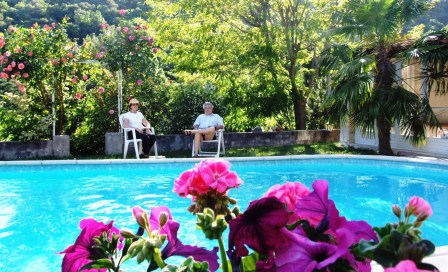
From Germany, Belgium, France, England, the U.S., Australia, Canada, Switzerland, Austria, the Czech Republic, Sweden, Wales, Northern Ireland, the Netherlands, Argentina — even Romania and the Ukraine — they’ve come. To spend a week, two weeks, or sometimes longer in the guest studio apartment (known as a “gite” in French) on the first floor of our home, Les Rosiers, that we rent to tourists in summer.
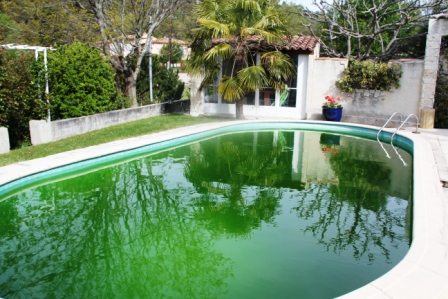
Les Rosiers pool.
It’s been fun and fascinating to meet and talk to our tenants. And, an experience.
Our first guests several years ago were a German couple, he a baker, who came for a week’s get away from their three young children. It was the end of February, but the Provence sun shone. They bundled up in blankets and lounged by the pool, which was all closed up, soaking up the rays.
We’ve found that Belgians and French, all from the north, especially like lounging by the pool in the summer. No doubt they already know the region, so they are content to chill out, relax, and hang out. Not so for most of our other guests who often set out for day-long excursions to sights – near and not-so-near.
Anne and Jean Luc from Brussels enjoy the sun.,
“We have really enjoyed our relaxing stay in your lovely gite, we loved this area of the Luberon and having this comfortable, quiet little home to come back to at the end of a day’s sightseeing just made the holiday.” – Pauline and John, N. Ireland, July 2010.
Last summer was the season of cyclists, starting with a couple from North Carolina who had top quality rental bikes delivered from a bike shop in Isle sur la Sorge – about an hour away. They rode every day. Then came a couple from Brugge, also dedicated riders. They brought their own bikes, and after a day’s outing, were happy to come back and cool off in the pool. Francis, a physical therapist, loved to practice his English, which was excellent.
Bethan from Wales in the Luberon.
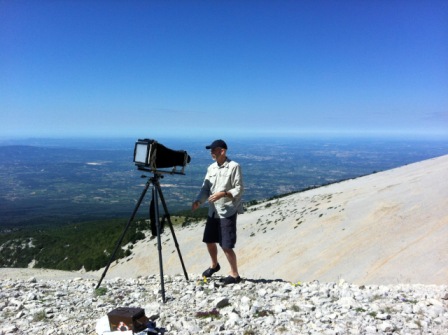
Aled, a Welshman, who came with his wife, Bethan, took the pedal prize. They come to Provence every year, and every year he pedals up Mount Ventoux. Last summer was his fifth ascent. He also intrigued us with his photography.
Aled is a professional who shoots with an Ebony (google it), an incredible large format camera. After their arrival, we heard them speaking and were intrigued. It was not English. They are among the 562,000 of a population of about three million who speak Welsh.
Close behind Aled for pedal prowess was Jakob from Prague. He did Ventoux for the third time. But, more amazing than his skill, was the family bicycle entourage. Jakob, wife Katarina, daughter Laura, 6, and baby Lukas, 1 ½, arrived with five bicycles (two for Jakob), plus a baby trailer, a baby bed and a baby carriage.
Super cyclists: Katarina, Lukas, Laura and Jakob from Prague.
And, they pedaled – often all day, the entire family. After Laura got tired, her bike could be attached to Jakob’s. Katarina towed Lukas in the baby trailer. As the terrain here is anything but Holland flat — lots of long and often steep climbs — their stamina and fitness were mind-boggling.
We’re looking forward to our most dedicated guests in June – Klaus and Eva from Graz, Austria. This will be their fourth summer with us, and they stay for a month. Klaus comes first, his car loaded down with plenty of food supplies and Austrian beer. He always brings us generous gifts of delicacies one can’t find here.
Klaus is a gourmet cook and often shares his creations with us. The first summer he gave me a list of supplies needed in the apartment kitchen, including a knife sharpener, kitchen timer, vegetable peeler. Other guests have also made special kitchen requests. The Brits wanted a tea kettle (we boil water in a regular pan). One French couple wanted espresso coffee cups, yet another requested bowls for their morning coffee. All items now in place.
Our apartment has two double beds. German couples always occupy both beds. Not so with French, Belgians and most other nationalities who prefer togetherness and cuddle together in one bed.
“Thank you for sharing your bit of paradise with us…. Your apartment is wonderfully equipped, definitely a home away from home. This was my seventh trip to Provence, but it was by far the most relaxing and satisfying.” Lynne, Columbia, MO, April, 2011.
We’ve been surprised to find how many of our guests comment on the peace and quiet of our surroundings. Many must live in or near big cities. They love the tranquility of Les Rosiers. But, last summer that quiet was scathed one dreadful night. The house across the street is also sometimes rented to vacationers. Last August there was an entire wedding party and a wedding celebration with loud, blasting rock music that went on until 5 a.m. I finally called the police, and the noise stopped soon after.
Our tenants at the time, Jean Luc and Anne from Brussels, were most understanding. We felt dreadful – mainly because that was not the only disaster to mar their stay. They were without television the first week – a problem that required a repairman who, because it was a holiday week, could not come immediately. Then the gas ran out in the kitchen, but we did remedy that in a timely fashion.
Nasty algae can wreck havoc with a pool.
We went off to the states in September, leaving our dear and trusty German friends Klaus and Marianne to house sit and mind Les Rosiers where a German couple, Detlef and Susanne from Hamburg, were staying. They became friends, and all was well until the pool turned green. It’s happened before – algae attack. Klaus, with the help of our friend Alan, got things back in order and our guests, again fortunately, were more than tolerant.
Detlef and Susanne from Hamburg.
“The whole set up here is warm, welcoming and comfortable…Loved the bright garden and rural setting. ..So much to see and do in this area of Provence, and Les Rosiers is an ideal base.” — Janeen and Jon, Australia, May, 2012.
The pool is a Les Rosiers highlight. But never has anyone enjoyed it as much as a German family with two young children who visited several years ago. They were in the water every minute they were not out visiting sights. Playing “fussball” — water soccer. Every time someone scored, the father, louder than the kids, yelled “Tor.” Children, we’ve found, seem to need to scream with delight when they are in the pool. We’re happy to see them have fun, but life is more peaceful with adults.
We love to invite our tenants for an apero, an evening drink and snacks, and a chance to get to know them. We’ve had stimulating and educational conversations with Belgians on the divisive politics in their country, a first-hand account of life behind the Iron Curtain from East Germans, and a lesson in political history from N. Irelanders. We also like to hear about their adventures in the area, the places they have visited, what they especially like. Our guests enjoy the lovely view of the Luberon hills from our balcony.
View of Luberon hills from our balcony.
As one guest wrote in our guestbook: “Leben wie Gott in Frankreich (live like God in France)..We experienced this here. We’ve found Eden with God as our neighbor.”
Comments on blog post and recipes are welcome. See “Leave a Reply” below under Comments. Subscribers also welcome. Don’t miss future posts. Click on Email Subscription at top right.
Bake a delicious cake. See recipe in column at right for Lemon Ginger Pound Cake.



 big part of the day is based on food,” he said. And, it is essential that ingredients be of top quality, he explained. He claims that Victoria is “thankful to me for showing her the true secrets of Italian cooking improvisation.”
 himself, we learned. And a salad — greens, tomatoes and luscious mozzarella di Bufala with pungent olive oil from Puglia and black salt from Cypress. The main course: trofiette, a Ligurian pasta, with the pesto which had been prepared with pecorino. “Never use parmesan,” insisted Fabio.
 believe, but it was true. I preferred the pesto on trofiette, others liked the spaghettini version. This initiated an animated discussion of the difference between trofiette and trennette, another type of pasta… Food is definitely serious business in Italy.
 grandmother’s fantastic crop of strawberries in 1986, the year of the Chernobyl disaster. A boost from radiation?
 n a rare 45-year–old herb Grappa to top off the meal. There were also chocolates, courtesy of Riccardo who brought them from a special shop in the Dolomites.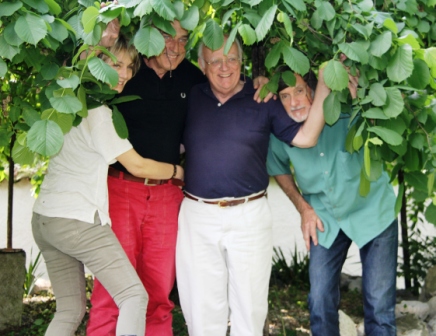



















 Tales and Travel