Discovering the marvels of MUD

Five days a week, beginning in the wee hours, Askit is on the job, filling buckets with deep brown, slimy, gooey mud. Therapeutic mud.
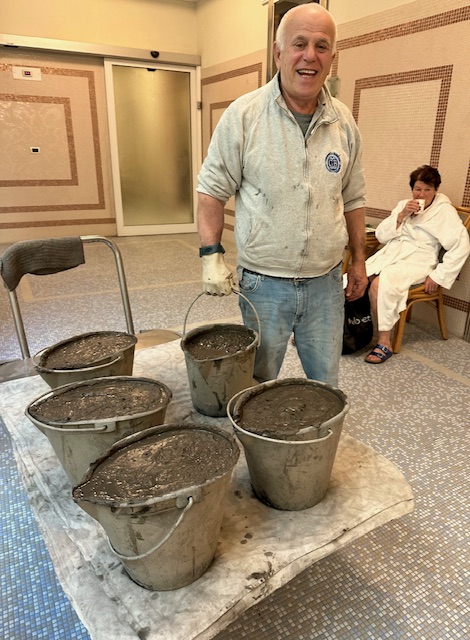
The husky, jovial native of Albania then pulls a cart with six heavy buckets of the yucky substance to the treatment area at the Hotel Residence, a spa hotel in Abano Terme, Italy.  He has been doing this for 30 years, he tells me with a hearty grin, then dumps a pail of mud onto a therapy bed.

Vanni, his Italian colleague, takes over, spreading the mud into one or more puddles on a bed in a small therapy room.  The room also has a shower for hosing off the mud and a deep tub for après-mud soaking in warm thermal water. 

Vanni motions me into the room.  I shed the hotel robe.  Mud treatments are not for the prudish.  This is naked body treatment, however miniscule thong “undies “of a gossamer-like paper are available.  

Vanni checks the soaking tub.

Vanni is a joy, always smiling.  I stop trying to cover my sagging boobs with my arm and follow his instructions to  lie on the bed, back positioned on the big puddle. He lathers me with mud, covers me in plastic, puts a blanket on top and disappears. The mud is hot initially, but soon deliciously warm. I stay that way for 20 minutes.  Vanni returns midway to wipe my face with a cool, moist cloth.

He started working at the hotel in 1979, he says, and now calls himself “fango meister,” German for mud master.  Many Germans previously patronized this spa hotel.  Vanni has mastered the language in addition to the mud.

I am a water rat.  The mud is pleasant, but I adored the soak in the hot, bubbling thermal water.   According to the Abano web site (abano.it), the water makes a long, underground journey from the pre-Alps.  Rain enriches it with mineral salts.  It is transformed and “classified as salted-bromide iodic hypothermal water.” 
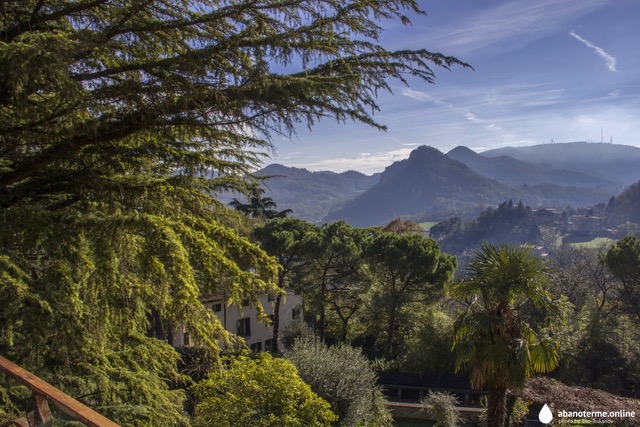
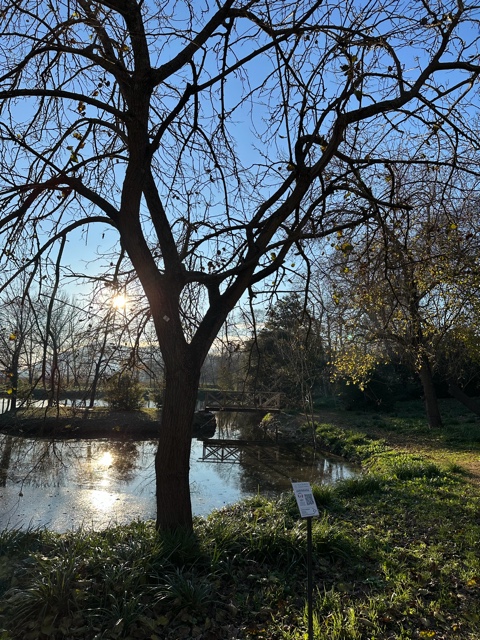
Euganean Hills, Abano Terme photo

The mineral rich water is the secret ingredient of the mud. Abano is at the feet of the Euganean Hills, a region of prehistoric volcanoes in northeastern Italy. Clay is extracted from lakes in the area, filtered and purified, then left to “ripen” for at least two months in special tanks with the hot thermal water.  Not just hot, but scalding water which emerges from the ground at 75-90 °C (167-194°F). For pool use, it travels through a piping system and is cooled to 30-35 °C (86-95°F). 

The final mud product is natural therapy with a healing, anti-inflammatory and analgesic action.  It is said to stimulate cartilage restoration, enhance the immune system, as well as restore vitality and a mineral balance of the body.

Pool at Hotel Residence

The tub soak is a delight, but even better are the thermal pools, large indoor-outdoor pools with warm thermal water and powerful water jets. They are not meant for swimming, just relaxing and enjoying the soothing water.  I could have spent hours at the pool, but learned from experience that was not a good idea.  The recommendation is for 30-40 minutes maximum per session.  Of course, I disobeyed the first time, and then was completely wiped out. 

Abano has been a wellness destination since ancient times.  According to legend, the first settlement in the territory was founded by Hercules who is said to have restored his strength and health here after his challenging feats.

Romans were fans of water treatments and appreciated the healing properties of hot springs and mud from the valley.  More than 2,000 years ago, they built villas and settlements whose ruins are still prevalent in the area.
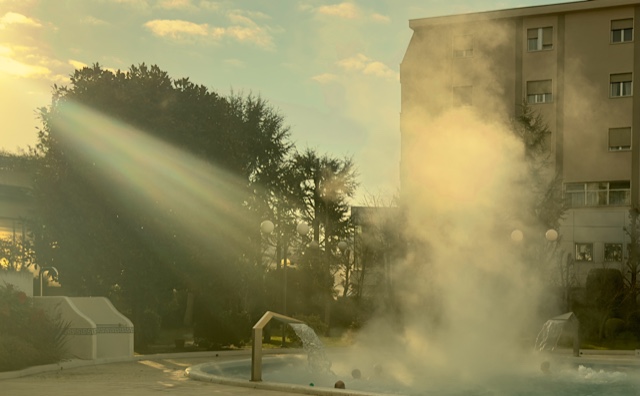
Sun beams and steam at hotel pool

This was my third visit to Abano. The first was in the summer (not recommended). See my previous blog, “Taking the waters – and the mud” for more details.

This past Christmas as well as Christmas 2023, I joined friend Angi for a 10-day visit to Abano.  Angi is a dedicated fan of the mud.  For years she lived in Rome and spent two weeks every year in Ischia, a volcanic island off the coast of Naples known for thermal springs and mud.  She had serious back pain following an auto accident which resulted in five fractured vertebrae.  The treatments “took away the pain and inflammation,” she says.

Friend Vera has been to Abano six times for “wellness, cooling out, relaxing… I enjoy it.  I enjoy the treatments,” she says.

I can’t say Abano made any difference with my numerous body infirmities following my disastrous fall and seven surgeries.   But it was sublime, a definite morale booster, a rewarding experience. For me, it did “restore vitality.”   I just may return next Christmas.

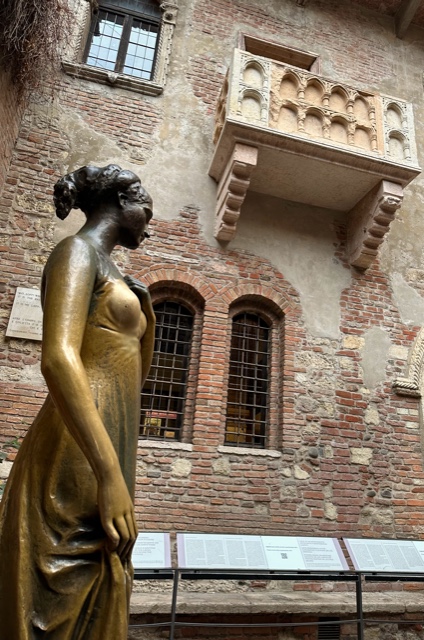
In addition to mud and water, I treated myself to massages and facials.  I spent an afternoon exploring nearby Verona.  I joined the excursion to Villa Selvatico, one of many villas, castles and abbeys in the surroundings.  I attended a church concert. And, I found bargains at the town’s weekly market. 

Food was another highlight – very good, varied, healthy.  Angi and I shared a table in the welcoming dining room. Fatima, an “angel” from Brazil, was our waitress. She brought us real cappuccino in the morning so we could skip the watery machine variety. She gave us advice on menu selections. Like most of the hotel staff, she was cheerful, helpful and fun to chat with.

Fatima

The town Abano Terme has a population of 20,000, but claims 250,000 visitors annually.  There are some 37 spa hotels of all categories offering pools and mud treatments, as well as other hotels and different accommodation possibilities.

My package included nine nights single room, three meals per day excluding drinks, unlimited pool and sauna use, plus bus transportation: 1,400 euros (about $1,500 at current exchange rate).  A doctor visit is required before beginning the program, 70 euros ($72). The doctor determines, recommends which treatments are best for each visitor.  I paid 35 euros ($36) for each mud wrap and tub soak; 70 euros ($72) for a heavenly detox facial; 75 euros ($77.50) for a 50-minute-deep tissue massage.   The latter were so exquisite, I had to have more — an anti-stress facial and another deep tissue massage.
Throughout the year, GB hotels, a group of five Abano spa hotels, organizes bus transportation from several  cities in southern France where I to Abano.

More information on Abano: www.abano.it.  More info on the four-star Hotel Residence and other Abano hotels at www.gbhotelsabano.it

If not a Tales and Travel follower, please sign up here. Trust me. It’s safe. Your address is not shared.

Check out my tried and true recipes — keep scrolling down on a phone, or, if on a /PC or tablet, up to the column on right then down to “Recipes.”  I will add new recipes soon.

Photos for your Easter Basket

 HAPPY EASTER. HAPPY PASSOVER. HAPPY SPRING

“A picture is worth a thousand words.

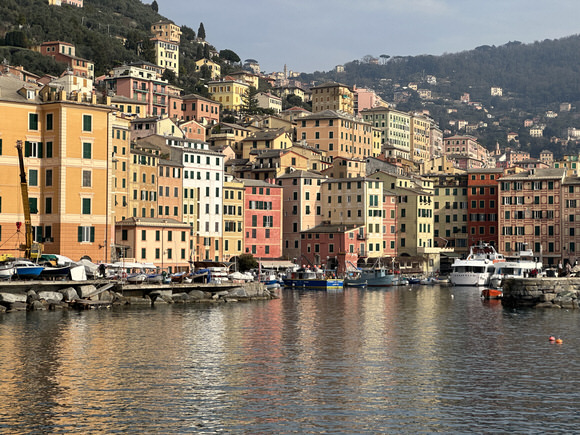
Camogli at sunset

I recently visited my friend Karen, who rents an adorable apartment above the town of Camogli on the Italian coast south of Genoa.  She was my guide for five days as we explored this bellissima region.  Following are photos which say it all.

View of Camogli from Karen’s balcony

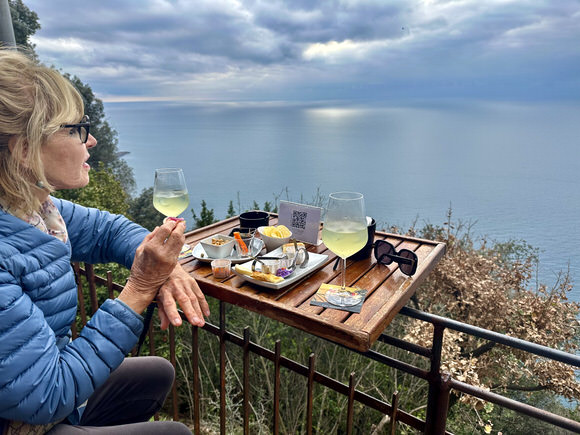
Karen at her favorite spot in San Rocco, about a half-hour walk from her apartment. Right, Camogli.

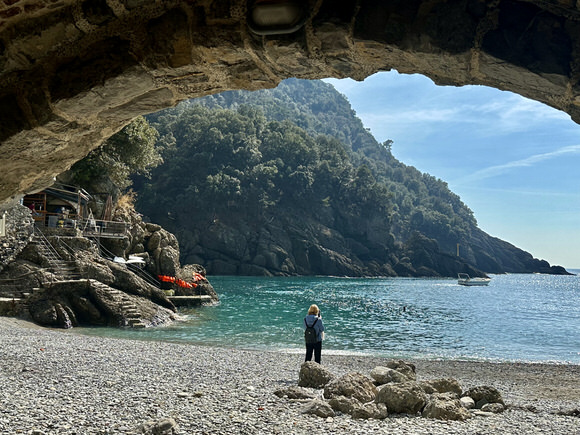
San Fruttuoso, a restored Romanesque abbey, can only be reached by boat from Camogli or on foot via a hiking trail. We opted for the boat.

We had several hours to wait for our return boat. The only restaurant had not yet opened for the season, but the beach was a delight for relaxation.

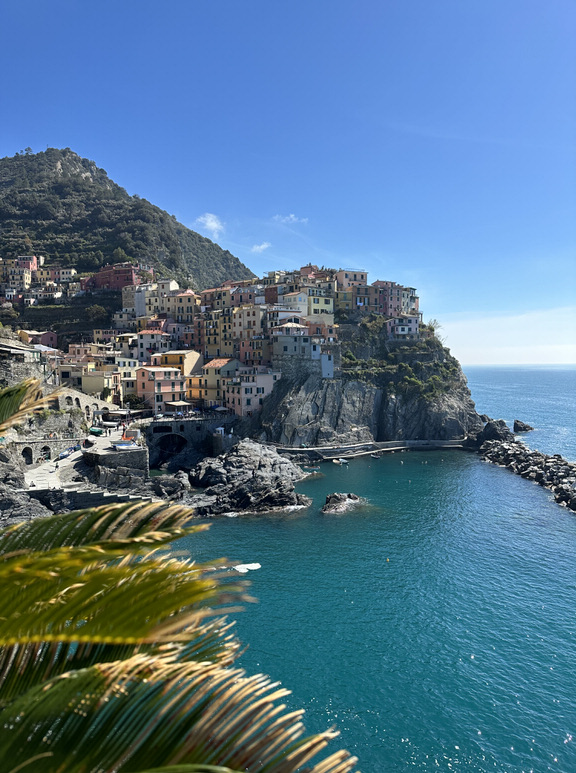
Manarola, above, is one of the five Cinque Terre villages perched and nestled along Italy’s rocky Ligurian coast. They are a magnet for tourists, especially Americans after travel writer Rick Steves touted their merits. Many years ago husband Bob and I hiked the trail between the villages. It was magnificent – not packed with the masses. At this writing, parts of the trail are closed for repairs. Karen and I visited four villages by train.

Manarola, one of the Cinque Terre villages

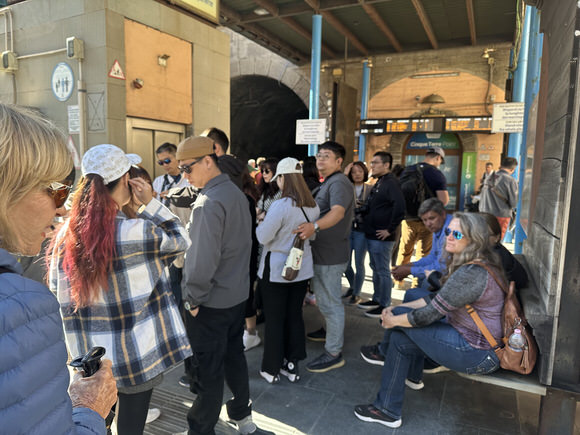
Lots of tourists, mainly Americans, visited Vernazza, the most popular village, in March, well before the tourist season.

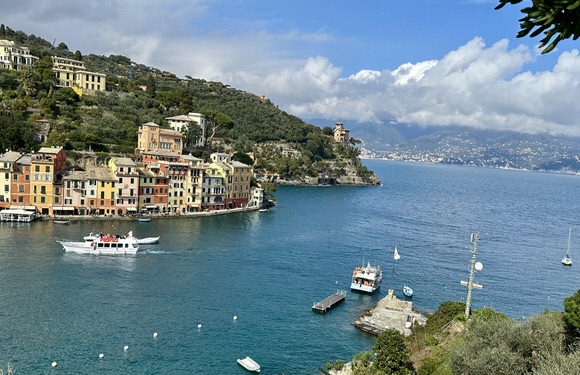
Portofino is another tourist hot spot.
Karen and I enjoyed a pricey lunch in Portofino.
Along the coast near Portofino

We followed the recommendation of a German tourist and hiked to the Portofino lighthouse. Right, another view of Portofino

Nino, a very affectionate and friendly cat, belongs to the owner of Karen’s apartment who lives below her. I thought Nino was one of those rare cats with two different coloured eyes. Not so, I learned. The blue eye minus the pupil is his souvenir of a cat fight he lost.
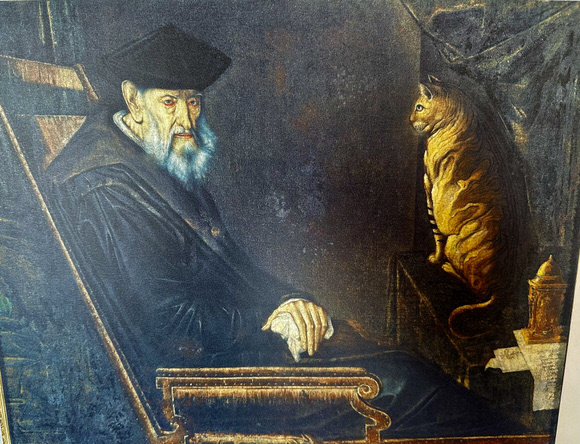
Was this cat an ancient ancestor of Nino?. This portrait of a monk and his cat hangs on the walls of San Fruttuoso.

Only in Italy: My hotel room window had a clothes line outside (left) — very practical. Clothes hanging out to dry decorate many buildings in Italy.

One more photo of Camogli

Albergo La Camogliese, a centrally located hotel in Camogli, is affordable with friendly, helpful staff. You even get a clothes line outside your window. http://www.lacamogliese.it

My other writing projects, Immigrants on the Italian border and Alzheimer- caregivers and victims, are on the burner.

If not a Tales and Travel follower, please sign up here. Don’t miss future posts.

Looking Ahead

A complicated tale of money, violence, crime, racism, lies, traffickers,  a story of misery, tragedy, heartbreak and death:  Immigrants on the Italian- French border.

I met this friendly young man from Guinea in Ventimiglia. He told me he fled his corrupt, poverty-ridden country by boat from Tunisia. He wanted to continue on to France where he hoped to find work since he speaks
French. He was very proud of his flashy red sport garb from Guinea where he was a “footballer” and also a sports reporter.

There are similarities to the dreadful situation on the Mexican-US border.  Thousands and thousands risking their lives to escape conflict, persecution, famine, death. The journeys are dangerous, often plagued with violence, theft, and hunger.   They only want a chance at life, to have food and shelter, to work, to live in peace.  They deserve that chance.  Will they get it?

Relier volunteers filling food sacks for the immigrants.

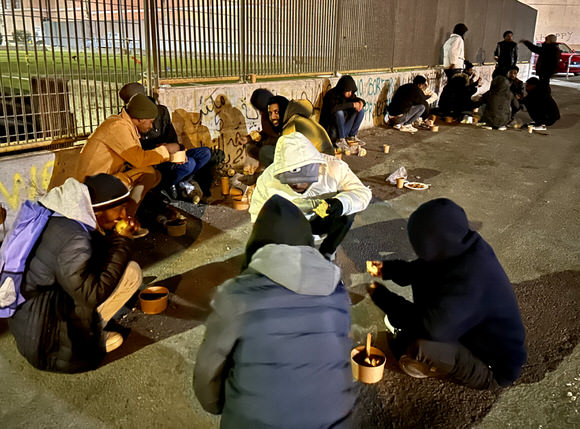
I live in France just 20 auto minutes from the French-Italian border.  I recently started  volunteering  with a French organization, Relier, offering assistance to the homeless immigrants in Ventimiglia, the Italian border town. The majority are young, black males  from dozens of different African countries .  Most want to enter France, perhaps proceed to other European countries.  In this part of France, they are not welcome.

Immigrants in Ventimiglia enjoying a free meal provided by Relier, a volunteer organization .

It is a complex topic. I plan to write a more extensive article/blog soon.  I need more time and research.  Watch this space.

Another topic I am very involved with is Alzheimer.  For four plus years I have watched this cruel disease slowly destroy my husband.  I will write more on that too, with a focus on the dedicated caregivers devoted to the lost and confused.

Bob Update

Bob brushes a rabbit at his new home. Rabbits, cats and dogs visit once a month to the delight of the residents.

I had hoped to post a blog on one of the above sooner,  but since that has not been possible, and it’s been so long since I have posted, I wanted to give a preview of what’s on my agenda.  And, an update on husband Bob since my last post:  Christmas without the Merry.

The helpers I mentioned in that post,  Kyle and Paola, were fabulous, although Paola quit after three days.  Apparently, it was too much for her.  I could not have survived without Kyle. He managed Bob with perfection and helped me keep my sanity. It was not easy for either of us.  The accident (fall and broken pelvis in several places) greatly accelerated the Alzheimer.  Bob was confined to a  hospital  bed in the living room.  He was difficult, especially  at night when he was very agitated and slept little. 

This restaurant at Les Citronniers, Bob’s home, is for the non Alz residents. I can accompany him there from time to time for a tasty meal, with wine of course.

After three weeks, Kyle and I, both exhausted,  came to the same conclusion.  We could not continue.  Fortunately, I found a place for Bob in a near-by EHPAD, a type of French medicalized senior citizen home.  He is in the Alzheimer unit with 14 others.  The staff are patient, caring.  The food is good, very French with four-course meals and a gouter (snack) in the afternoon. The ambience is pleasant–  bright, clean and spacious. He has never asked to leave, to come home.  I don’t think he remembers our apartment nor realizes where he is and why. That is sad, but probably a blessing. I visit daily. 

If not a Tales and Travel follower, please sign up here. Don’t miss future posts.

The Dolomites for Seniors

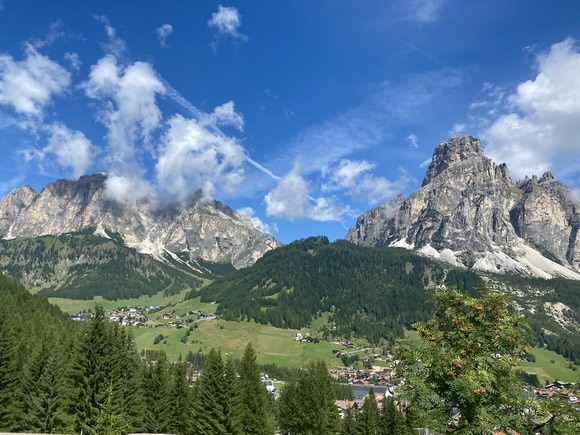
It  was hot  – too hot – in southern France, and much of the world this summer. Day after day.  Week after week.  I had to escape.  The mountains called.  I chose Italy’s Dolomites, about 650 kilometers (400 miles) from our abode in Roquebrune Cap Martin, France.  We made the drive in two days, less stress for seniors, with an overnight stop in Brescia. 

Brescia for an overnight stop and beer break. City cathedral in background,

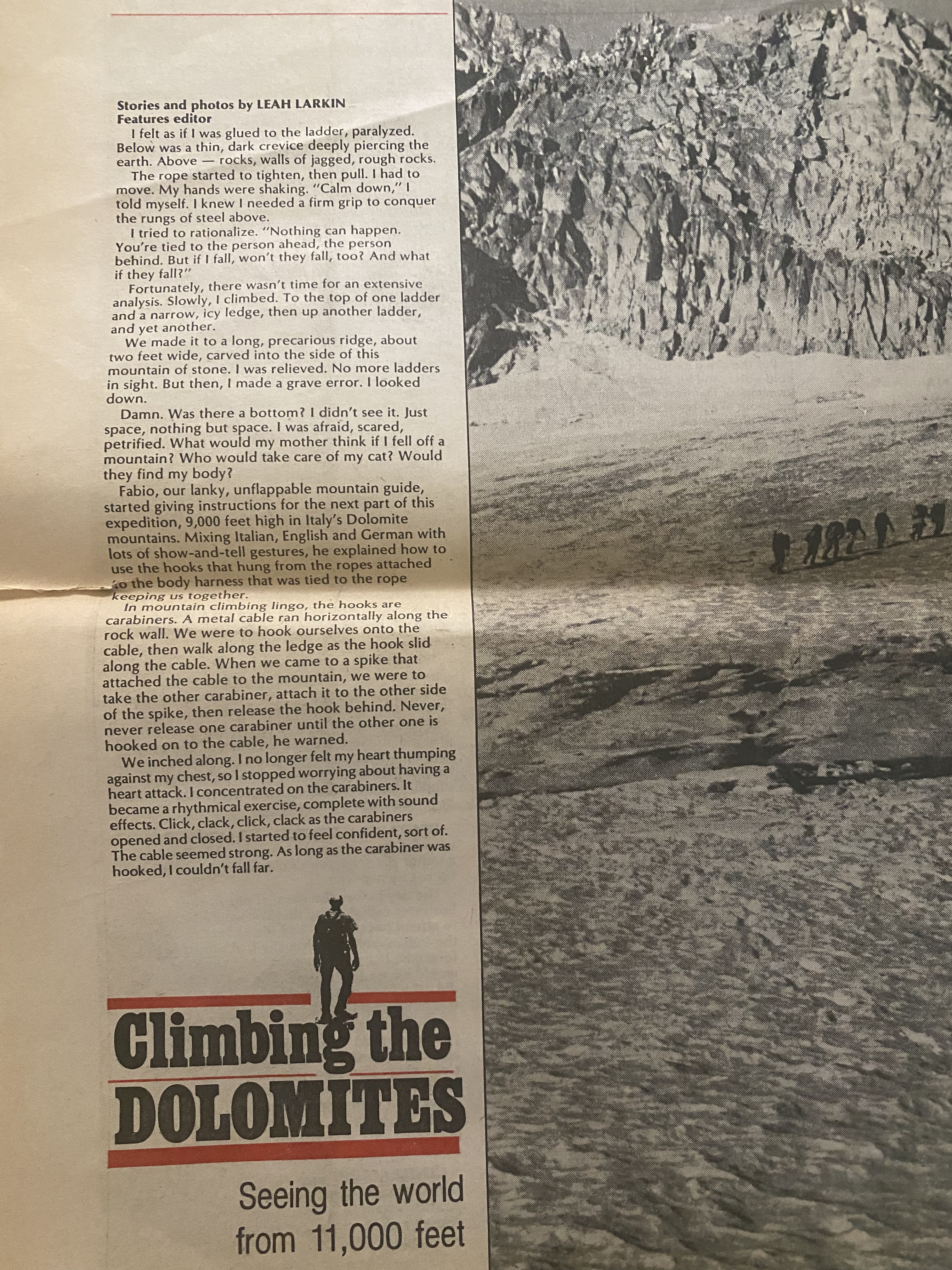
As a passionate skier (sadly those days are over), I knew some of the Dolomite’s famous slopes, including the renowned Sella Ronda, a 500 -kilometer ski circuit.  It stretches through four valleys around the Sella mountain which are also connected by road passes.   And, I remembered a challenging ascent to the Adamello, a 11,000-foot peak, many, many years ago.  I was eager to return to these mighty mountains – even without the challenges and excitement of bygone days.

This would be a Dolomites for Seniors trip. I am not as fit as I was in younger days, and husband Bob is struggling with Alzheimer. No overnights in mountain huts for us. No all-day killer hikes. Not even strenuous 1/2 day treks. Been there. Done that. We would take leisurely walks and drive – not hike -through the heights. Thanks to tips from friend Noel and his Italian buddy Fabio, we stayed in a lovely, if not luxurious, apartment in the town of La Villa.  My  friend Karen was with us.

Unlike us, Karen is a very fit senior and dedicated walker.  She set off every morning for two-hour hikes.  Bob does not move too quickly in the morning.  While Karen hiked, I got Bob up, dressed and breakfasted.  When she came back,  we were ready for adventure at a slow, senior pace.

My trusty new Suzuki Swift, Poppy, was the perfect mountain car.  Agile, responsive and fun.  She took those curves like a champ, and they were endless. Not quite like my beloved Porsche, but that too was a different era.

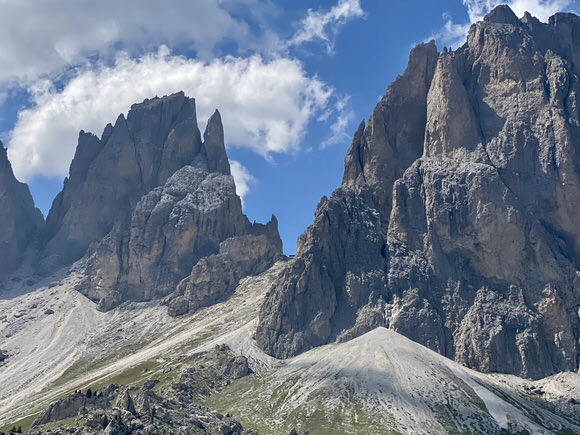
We drove the Sella Ronda route, up and down, switchback after switchback. Fortunately, there are places to pull off for photos.  During our week in these rugged mountains, I went photo crazy.   I could not resist.  Every view was a postcard.

While Bob and I are not up to strenuous treks, we figured we could try a gentle mountain walk.  We followed the advice of a local and set off on a trail  to  the hut/rifugio, Munt Pasciantado. The jaunt was not exactly senior flat as we had been led to believe. There is no such thing in the Dolomites.  Yet, it was pleasant and the goulash lunch at the rifugio was delicious. Goulash, not pasta, in Italy?

We were in South Tyrol, known as Sud Tyrol in German and Alto Adige in Italian.  The region borders Austria to the north, and was part of Austria-Hungary until it was annexed by Italy after World War I. There are three official languages:  Italian, German and Ladin. The latter is an ancient Rhaeto-Romance dialect derived from popular Latin and spoken by just four percent of the population. Ladin is also spoken in the Engadine Valley in Switzerland.

Most everyone in Sud Tyrol is  bilingual, and most Ladins are tri-lingual. We were in the southern part where more Italian than German is spoken, yet there is much that is Germanic, such as the  architecture and food.  

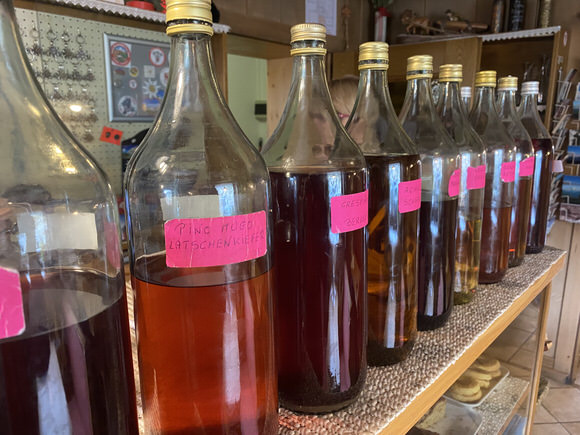
We had another fun and tasty rifugio interlude at Rifugio Valparola at the top of a mountain pass where  more German specials were on the menu: Bratwurst, potato salad and apple strudel. The cozy ambience was 100 % gemütlich, almost like being back in Germany. Hikers, bicyclists and motorcyclists savoured their accomplishments and replenished themselves after strenuous activity. We had not earned those calories, but we still enjoyed. I even went for the Italian finale:  Grappa.  The rifugio has 10 different flavors of this fiery brew, all homemade.  I followed the owner’s suggestion and went for Cirolo Zirm, delicious, although I have no idea what the flavor was.

The rifugio was on our route to Cortina d’Ampezzo, a ski resort that is part  of Dolomiti Superski, the largest ski area in the world.  We were disappointed. in the town, but the drive was spectacular.

We could not hike to the peaks, but we could ride.  From Corvara, just a few kilometers from our apartment in La Villa, we rode a gondola then a chairlift to a windblown, barren area with super views of surrounding mountains and endless photo opps. Getting off a moving chairlift with no boards attached to your feet and no snow on the ground can be tricky — at least for some seniors. We conquered, but with senior angst.

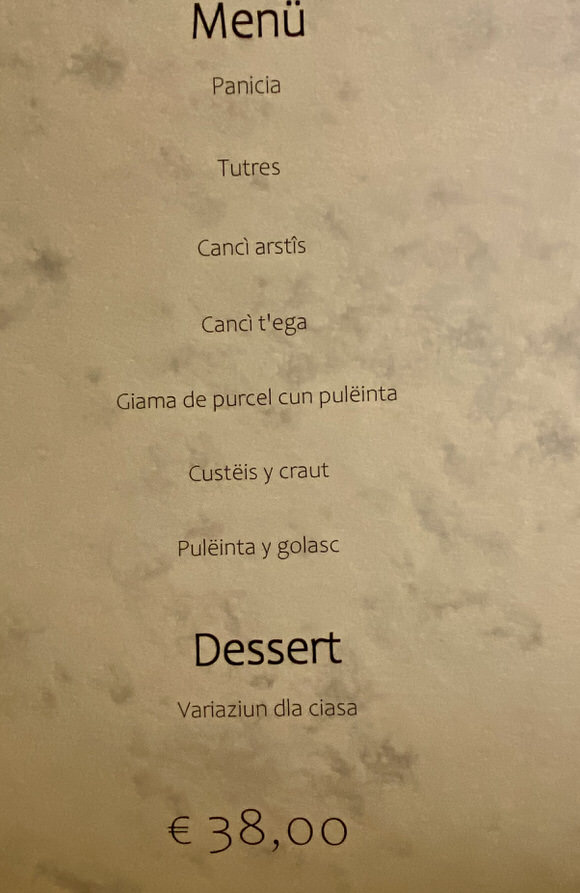
The part of Sud Tryol around the Sella Massif is Ladinia, the heart of the Dolomites where 30,000 Ladins live. In addition to their language,  they have their own culture, traditions and culinary specials.  Since food is a travel highlight for me,  I was eager to try  Ladin cuisine.

Claudine Saltuari, a manager at our apartment complex (www.dolomit.it), suggested an agriturismo, Maso Runch. We have been to many agriturismi over the years, usually rustic farms which offer simple local food and lodging.  This one was especially popular, and only with Claudine’s assistance could we get a reservation.

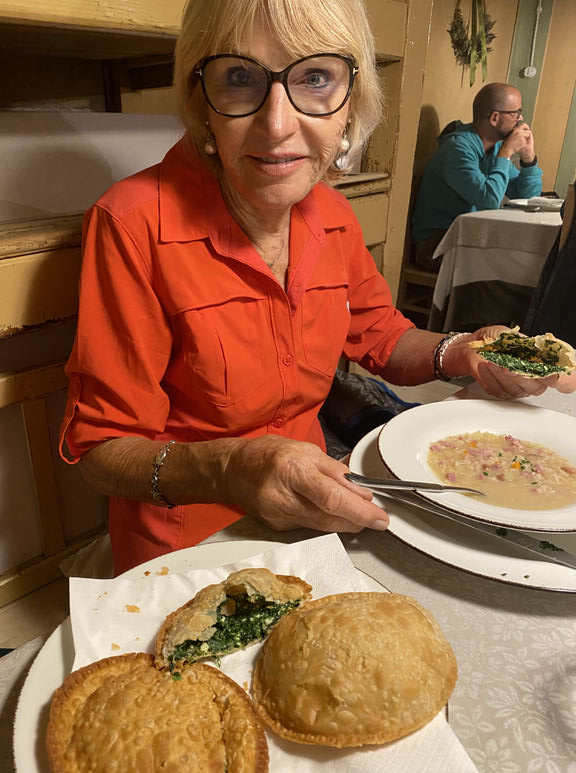
It was like no other agriturismo – china, crystal and fine wines – and more popular with seniors than the younger set. The food was copious, course after course.  Following a hearty barley soup, we tasted three different kinds of tutres, pastry filled with spinach, sauerkraut or potatoes. Both are popular in the Ladin kitchen.

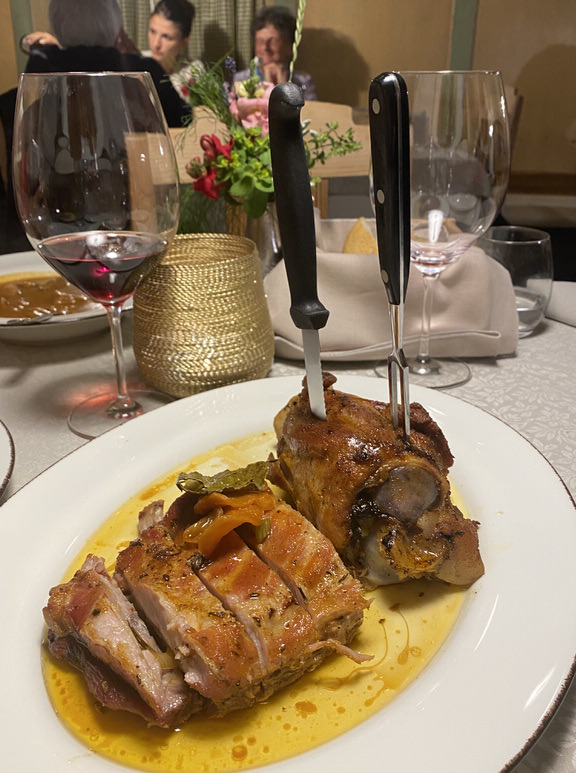
Next came a pasta course, ravioli filled with spinach.  And more — multiple platters with goulash, pork shank, polenta, sauerkraut, fried potatoes.   We were stuffed, but could not pass on the dessert: Apple fritters with ice cream.  After all that, a digestif Grappa was in order.    

For more about the Ladins, we visited the Museum Ladin Ciastel de Tor in the town of Badia – good senior activity. The informative and well-presented displays are housed in an ancient, restored castle.    For centuries Ladins lived somewhat isolated in this terrain of steep, rocky slopes.  They were poor, living off the harsh land.  Things began to change with more skiers and hikers discovering the attractions and beauty of the Dolomites.  Tourism brought opportunity for an easier life.  As they began to intermarry and intermingle, preserving the language became challenging. In Ladinia, children learn both German and Italian in school, and Ladin three times per week.

We found cool and delightful temperatures in the Dolomites – and much more.  No need to be a hardcore athlete to appreciate the Dolomites. Even old folks can enjoy this awesome region.

Scroll down for more photos.

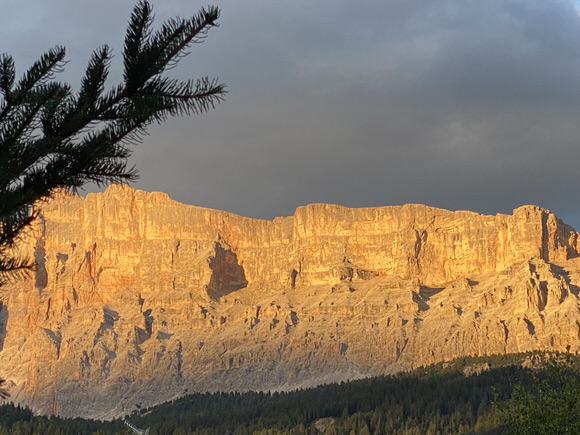
When the sun is shining, sunset in the Dolomites is magnificent.
Same mountain as above. Dolomite clouds can also be spectacular.
I had a fun chat in German with this gentleman at a local products market in the nearby town of San Cassiano, a cute and classy village.
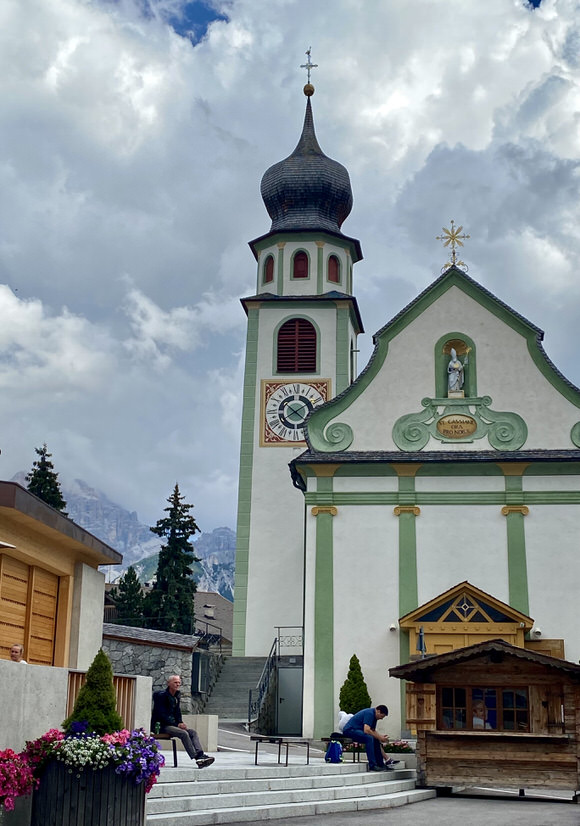
Church in San Cassiano
Apple Strudel. We could not get enough of this favorite which the French have not mastered. Several afternoons we did the German ritual, Kaffe und Kuchen (strudel). But, Italians not forgotten. Sometimes we opted for the Italian custom: Late afternoon apero with savoury snacks.

If not a Tales and Travel follower, please sign up here. Don’t miss future posts.

Up on the farm

Agriturismo L’Oasi del Rossese

Way, way up:  A precarious auto journey slowly, cautiously climbing a skinny, twisty road.  We passed a few houses clinging to the hillsides, others hiding below the road down treacherously steep lanes.  Lots of overgrown vegetation all around.  More curves, hairpin turns, and more of each  

This was rough, remote terrain in Italy’s Liguria region above the Mediterranean.  I was driving, and hoping we would not meet a car coming in the opposite direction. I am not skilled at driving in reverse, and this road was barely wide enough for two vehicles.   How much farther?  I was nervous.  Did we miss it?

Alas, a small sign.  “ L’Oasi del Rossese,” our destination, an agriturismo above the town of Dolceacqua.  Agriturismo is a combination of the word for “agriculture” and “tourism” in Italian.  Agriturismi (plural) offer farm stay vacations and are very popular in Italy.  In addition to lodging, most offer meals featuring local specialties, often made with products from the farm.

Bob, Steve and Yoshie.

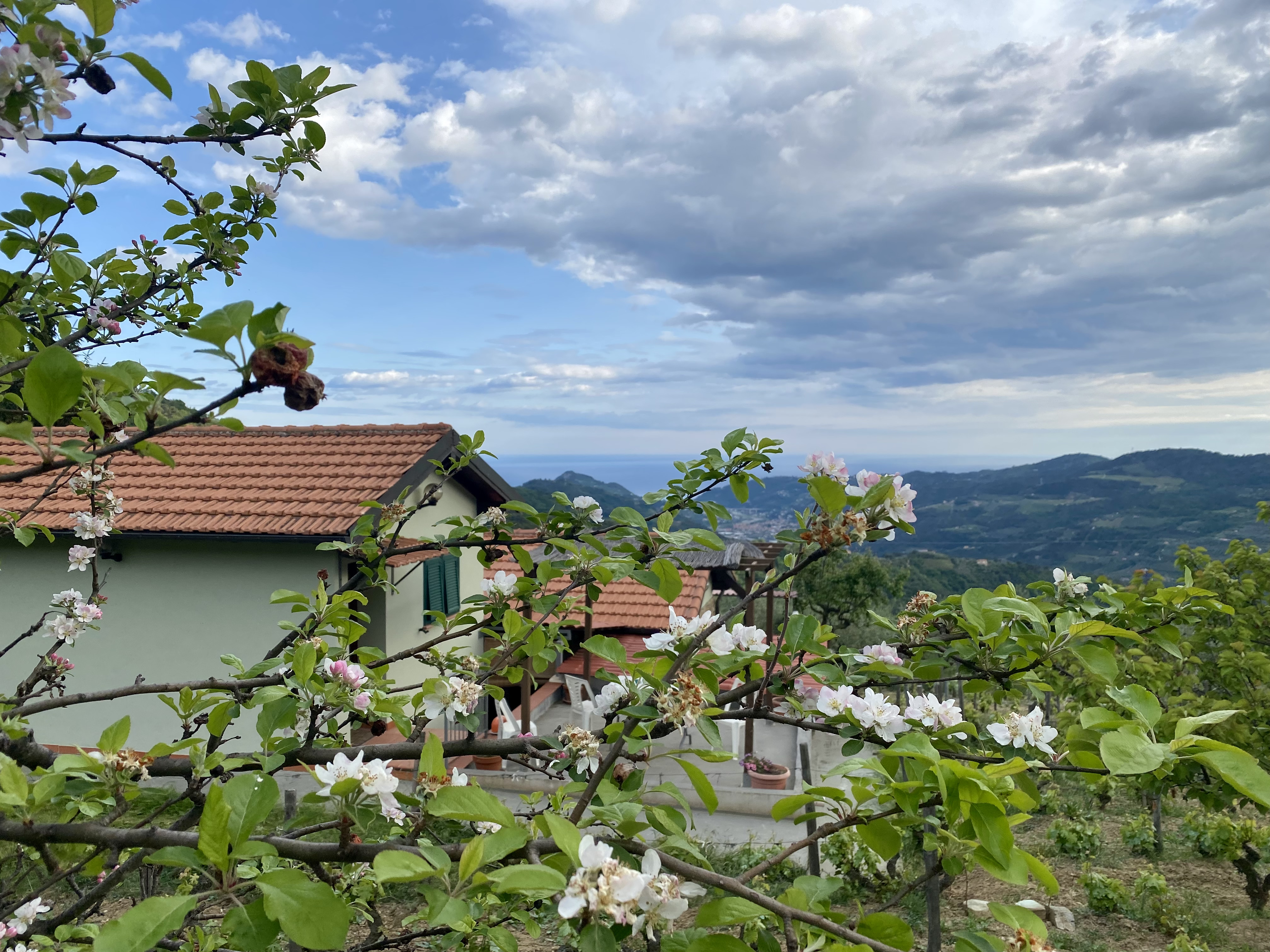
Farm hostess Marinella greeted us and showed  us to our rooms.  My brother Steve and sister-in-law Yoshie from Colorado were with us. First order of business was a welcome  coffee and cookies on the terrace overlooking deep green valleys, mountains and the Mediterranean in the distance.  Sadly, we had no sun to enhance the views.  Even with overcast clouds, it was splendid.

We heard English at a long table under a wall of balloons.  A group was celebrating a birthday.  I got up to take a photo and one of the gentlemen stopped me.  “I think I know you.  Are you a member of BA (British Association of Menton)”?   Yes.  We sat with Wayne and his wife Veronique, who was celebrating her 60th birthday, at a BA luncheon not long ago.   It was Veronique who told me about this agriturismo.  They have a farm nearby.

Marinella, husband Nino and son Stefano harvest grapes and olives on their 7,000 square meters of terrain.  The main farm product is wine, Rossese, hence the name, Oasis of Rossese, the noted red wine of Dolceacqua which we enjoyed with dinner.

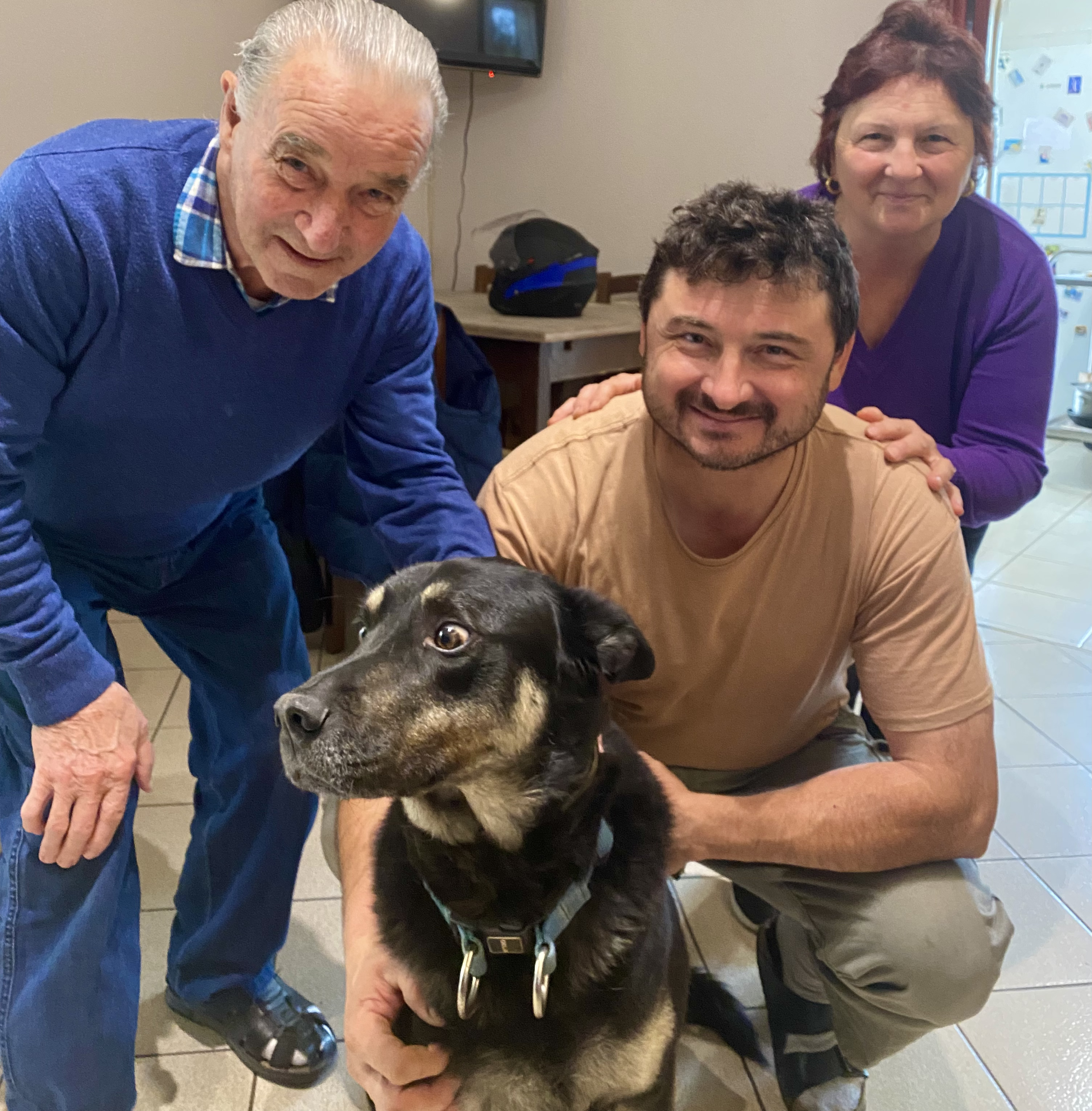
Nino, Jordan (named after Michael Jordan), Stefano and Marinella.

We were hoping to see farm animals.  Their livestock consists of chickens and rabbits.  I did venture down to the chicken coop and rabbit hutch. The bunnies were big and beautiful.  I hated to think of their future.

Rabbit, Coniglio alla Liguria, is a local special and often served here.  Steve announced he would not eat it if it was to be our dinner. Luckily it was not, although I would have indulged.  The French are also fond of rabbit, and I prepare it occasionally. 

Yoshie and Steve hiked to the village of Perinaldo.

Food is a big attraction at agriturismi.  Our dinner was a never-ending, multi course feast.  Italian meals begin with antipasti. One after another, Marinella served us five different antipasti dishes:  Tomatoes with fresh sheep cheese, a slice of bruschetta, a frittata of zucchini and peas, stuffed zucchini flowers, and a tasty a slice of torte made with tiny fish from the Med.  This was followed by the pasta course, ravioli burro e salvia (ravioli stuffed with sage) – all homemade.  Instead of rabbit, for the main course we had both roast pork and goat with fagioli (white beans). The latter was our favorite. Dessert:  a strawberry tarte.  Plus, a bottle of Rossese.

Rossese (red wine) display in Dolceacqua

Marinella cooks, all from scratch. Nino lends a hand, stuffing the ravioli. They have a large vegetable garden, in addition to the chickens and rabbits, to supply the products for her cooking.  Stefano and Nino care for the grapevines and olive trees.  Stefano also makes the wine. Their production of both olive oil and wine is limited.  They only sell to guests and a few local clients.  

“People are happy here,” said Marinella.  She did admit that the first time is difficult due to the seemingly endless, challenging trek up the mountain. It is only seven kilometers, but they are long and very slow.  Many French come for the day from Nice just to eat, she said.   In August they have guests from Sweden, Denmark and Germany.

Dolceacqua, photo by Yoshie.

Agriturismo began in Italy in the 1960s when small farmers were struggling to make a profit.  Some abandoned their farms and went off to work in cities.  However, agricultural traditions are sacred in Italy.  In 1973 an official agriturismo farmhouse designation was created to help prevent farmers from abandoning their farms, and to offer tourists a farm stay so they could learn about rural life.

In some regions, but not all, farmers need a license to take part in agriturismo. We have visited nearby Dolceacqua many times.  Every time it seems there are more “agriturismo” signs on houses in the village.   What do they have to do with farms and agriculture?

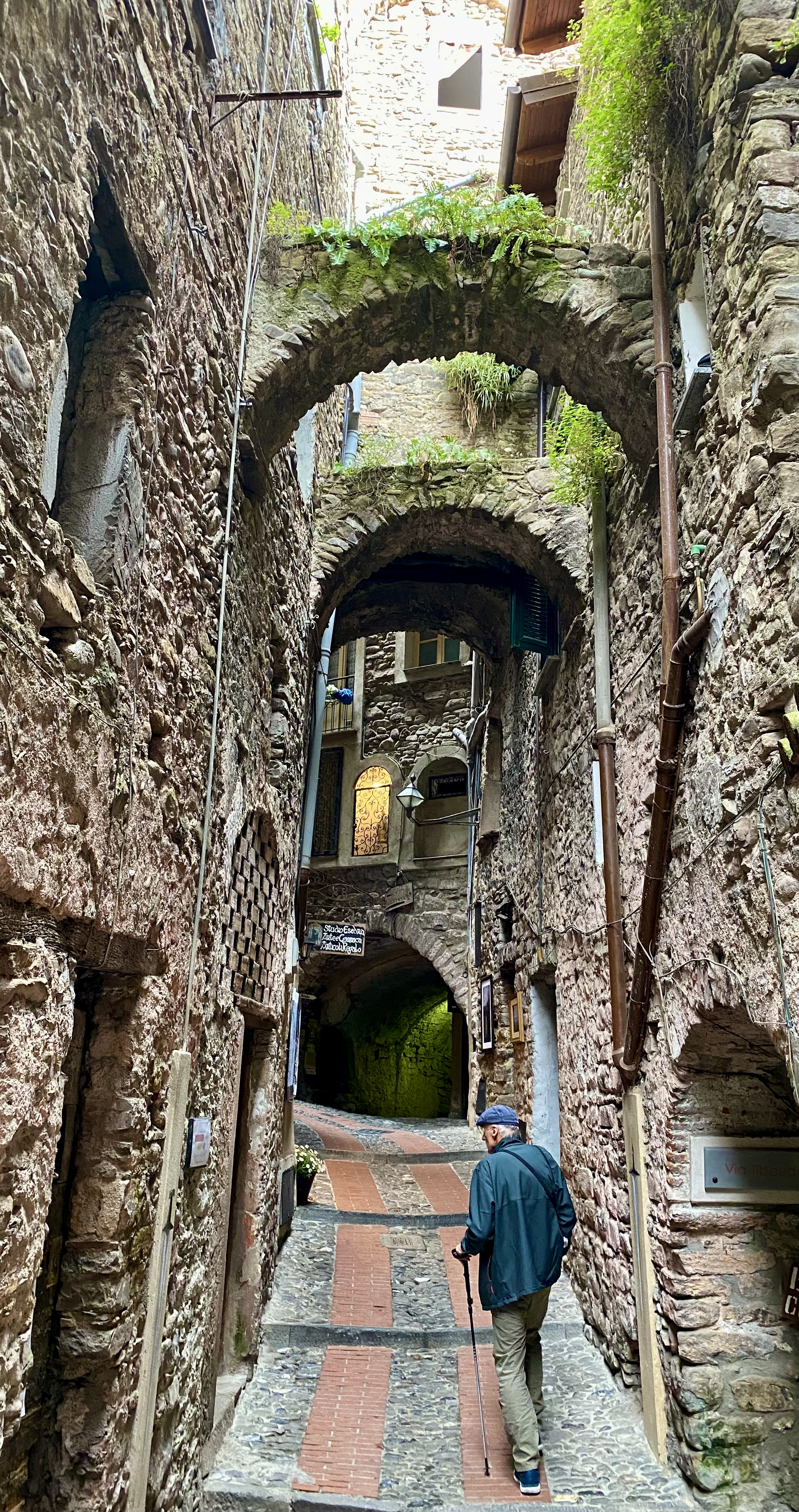
Steve explores the Dolceacqua old town.

According to a spokesperson at the Dolceacqua tourist office, to be considered agriturismo they must show documents to prove they have land and crops.  Of course, many may have such up in the hills. But all of them?

Marinella tells me that today many agriturismo are just Bed and Breakfast accommodations and have nothing to do with agriculture.  I asked Arabella, my Italian friend with whom I study Italian. 

“E una giungla,” (It’s a jungle), she explained.  In Italian the expression refers to situations when laws are not respected, everyone does whatever he/she wishes  … a bit like Italian drivers.

Agriturismo breakfast — Bob, me and Yoshie. No one looks very happy, but we were very happy. The farm and surroundings are a treat.

AZ Agrituristica, L’Oasi del Rossese de Zullo Stefano, Loc Morghe, 18035 Dolceacqua, Italy, Tel. xx 39 347 8821298.

http://www.agriturismo.farm/en/farm-holidays/liguria/loasi-del-rossese-dolceacqua/33419 Double rooms with breakfast, 60 euro per night. Multi course meal with wine, 30 euro per person.

Siesta in Dolceacqua

If not a Tales and Travel follower, please sign up here. Don’t miss future posts.

Feel free to comment. Click on link below.