Discovering the Unique Wonders of Madagascar

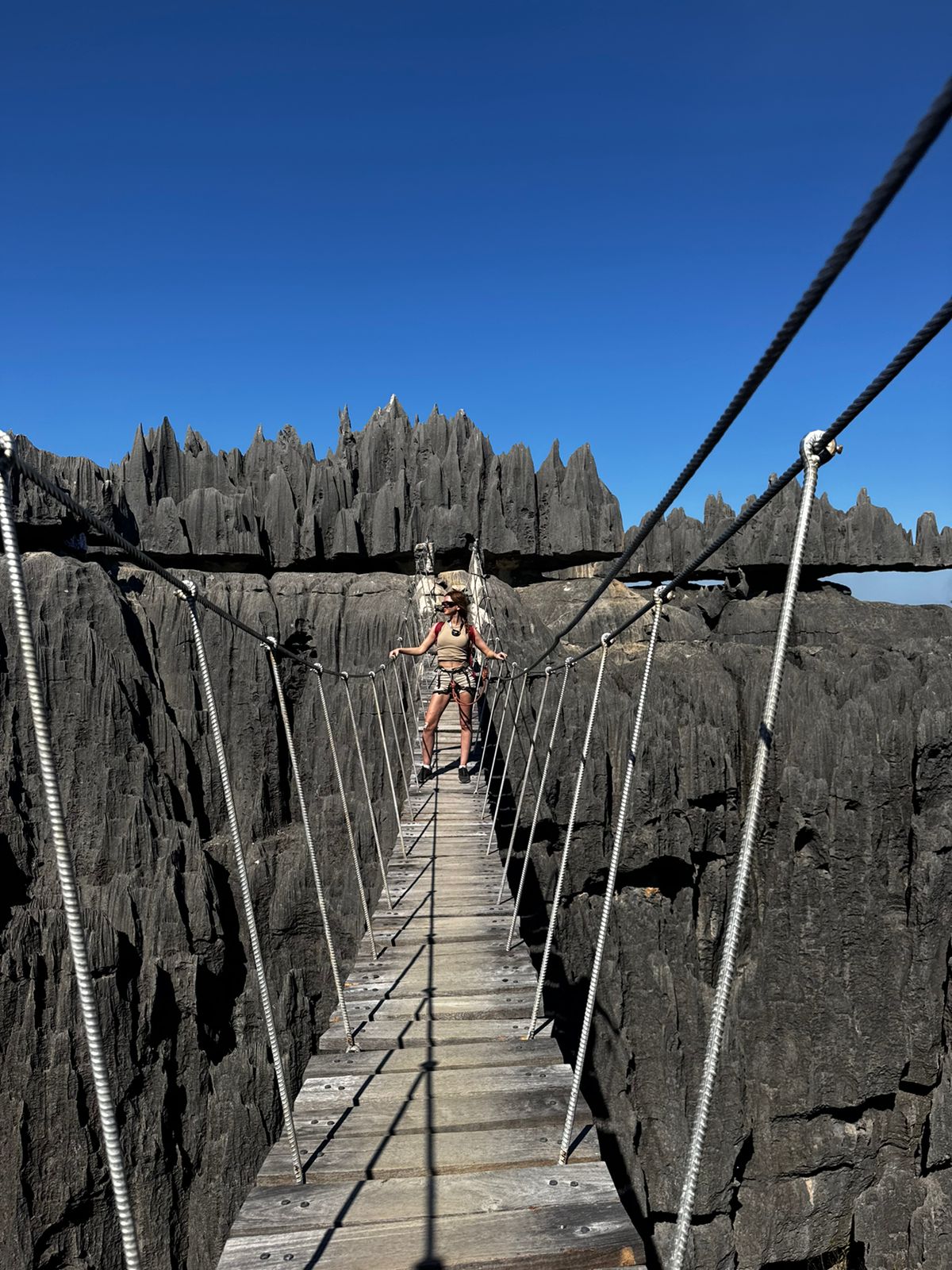
Red Tsingy is one of the many wonders of Madagascar.

I was not the typical Madagascar tourist.  Visitors come to this island nation to see its unique wildlife and admire dramatic landscapes: rainforests, deserts, canyons, lagoons, coral reefs. They come for adventure: rock climbing, kite surfing, scuba and snorkeling. They trek, backpack, camp.   It can be rough and demanding. Distances are vast.  Roads are poor.   Lodges can be remote with few amenities.

I doubt Rick Steves has been to Madagascar.  It’s probably not on many bucket lists. So why did I, an old, handicapped woman, come to Madagascar?  Folks wondered, and gave me puzzling glances.   
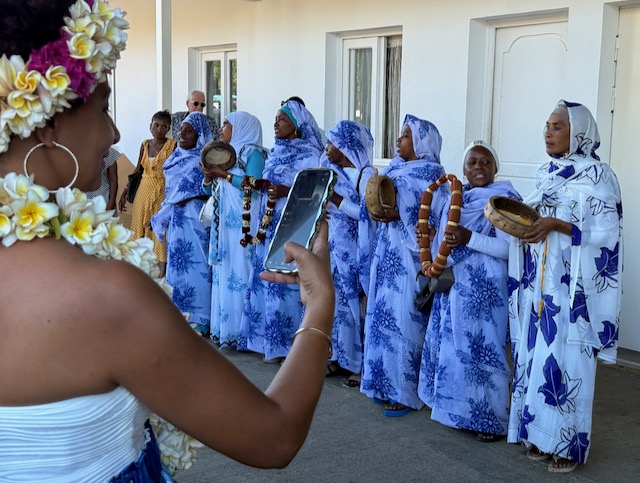
Welcoming committee at Nosy Be airport in Madagascar

I wanted to see the lemurs.  I wanted to escape mass tourism.  I wanted something different, off the beaten-track.  Madagascar checked all the boxes.

Because of my age and limited mobility, I had a private chauffeur guide, many different ones, during my visit. I was based at a comfortable hotel just outside of Nosy Be, Madagascar’s (Mada’s) popular beach resort. But I did not come to lounge on the beach. Nor did I come to trek or indulge in rigorous activity — however I did scuba dive. You don’t need the fitness of a marathon runner to enjoy Mada.

Cottages and pool at Nosy Be hotel.

Every day during my 6-day stay, a different adventure awaited:  a visit to a lemur park; snorkeling and swimming with huge turtles; visiting a fishing village, a sacred tree, markets, scuba.  My driver guides were terrific.  They taught me so much about this intriguing country

The island nation has a unique culture, a blend of Africa, Asia, (Indonesia) and the Middle East.  Madagascar consists of 22 regions with 18 dialects of the Malagasy language, although people generally understand one another.   French (Mada was a French colony until 1960) is spoken by many in the cities, as well as in government, business and education. English is not widely spoken, although it is common in tourist areas. Most of my guides spoke English, but some preferred to speak French, so we did.  

More magnificent scenery. Photos by John Delmas

What makes Mada so unparalleled is isolation. It split from India 88 million years ago, and has been isolated ever since, “a living laboratory of evolution.” The island in the Indian Ocean is about 250 miles off Africa’s east coast.  Land animals are locked in.  Its ecosystem is distinct, with most of its wildlife endemic (found nowhere else).

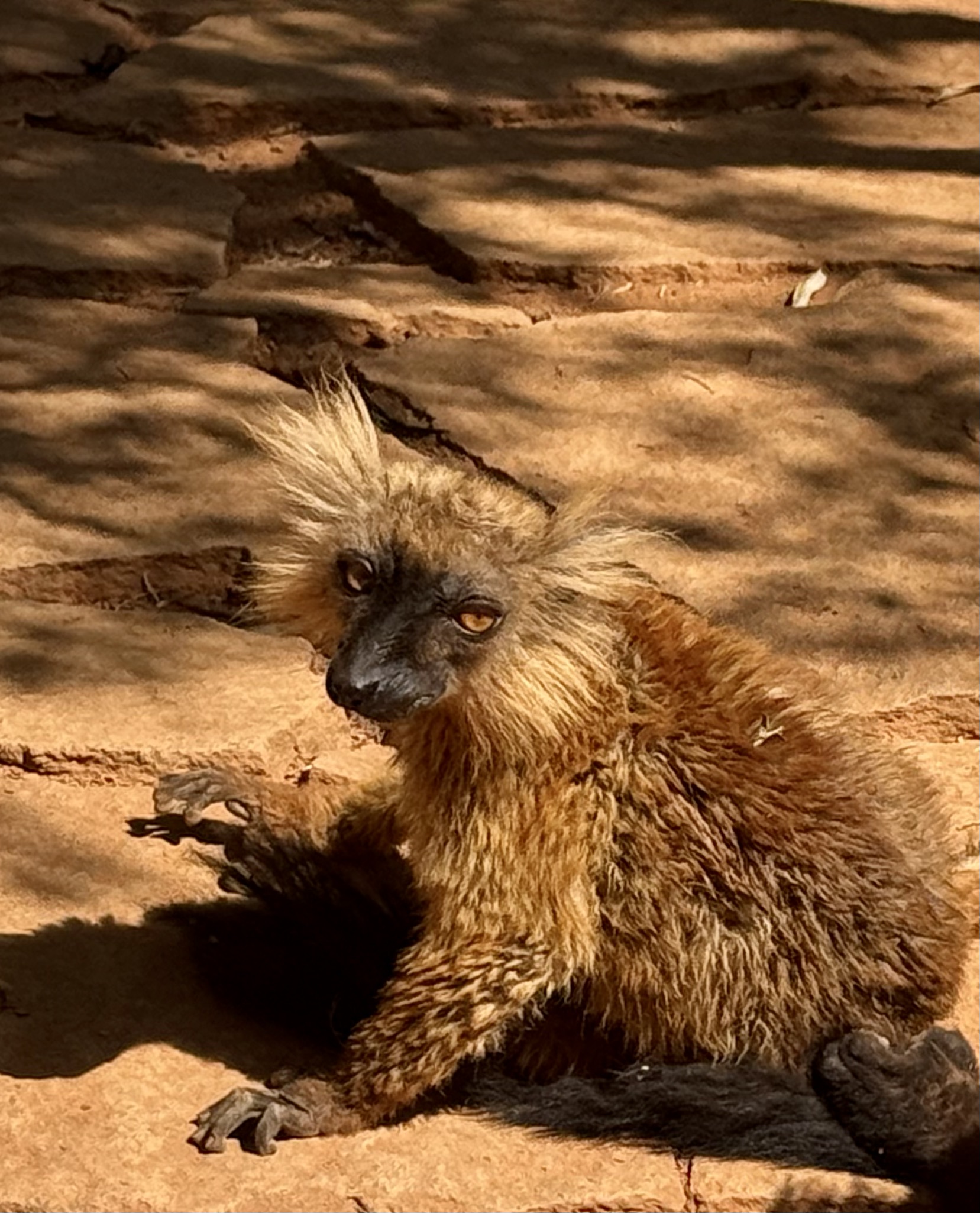
Including lemurs.  The park I visited is a private conservation reserve, home to 61 lemurs representing seven species.  Most have been rescued from various parts of the country.

Madagascar is home to 112 species of lemur, guide Femo told me.  All are endangered.  Their habitat is being destroyed by slash and burn agriculture, logging and mining.  People capture them for pets. And, eat them — not just the poor who are hungry, but well-to-do city dwellers who find the meat tasty and good for health.

“It’s a matter of education,” Femo said. “People don’t realize the lemurs are a national treasure.” 

Different species live in different parts of the huge country, and, rather than socialize with one another, they fight, Femo explained.  In the park, each species hangs out in its own territory. “Lemurs are not as intelligent as monkeys.  They don’t steal,” I learned.  

I saw dancing lemurs (they side hop), bamboo lemurs, gray mouse lemurs… plus ring-tailed lemurs which are the most common. They have 14 white and 14 black rings on their tails.  All are adorable and entertaining — jumping, swinging, dancing, hopping.                                                                                                                                                                                .                                                                                                                                                                                                 During our trek up and down the hills in the park and alongside the Katsaoka River, Femo pointed to a hill on the other side of the river.  It’s the site of a royal burial grounds, a place where people come to worship their ancestors and ask favors, he told me.  

Beyond the hill at right is a royal burial grounds, a popular place for worshipping the dead.

Mada is a land of spirits and taboos.  For Femo, eating onions and pork is taboo.  During the following days I learned much more about those spirits and taboos.

Madagascar’s baobab trees are among the most ancient on the planet, some thought to be more than 800 years old . Like much today, they are threatened by climate change and agriculture. Photo by John Delmas

AI labels Mada the “best bang-for-your-buck” destination.  It offers “good value.” Another AI quote: “Madagascar isn’t just another destination.  It’s one of the last places left where the world still feels bigger than us. Go before the rest of the world figures that out.”

I’m very happy I went to Madagascar. Please, don’t tell Rick Steves about this very special place.

Future posts will focus on Madagascar’s strange traditions and rituals, markets and food, and more. If not a Tales and Travel follower, please sign up here. Trust me. It’s safe. Your address is not shared.

For tasty recipes, click here. Christmas baking? Try this winner of a holiday cookie: Christmas Cookies: Cranberry Walnut Delights

Malagasy John Delmas, above, organizes and guides visits to Madgascar. John was my guide/driver for two days. He was super, taught me lots. Contact his company. https://www.mada-discovery-travels.com
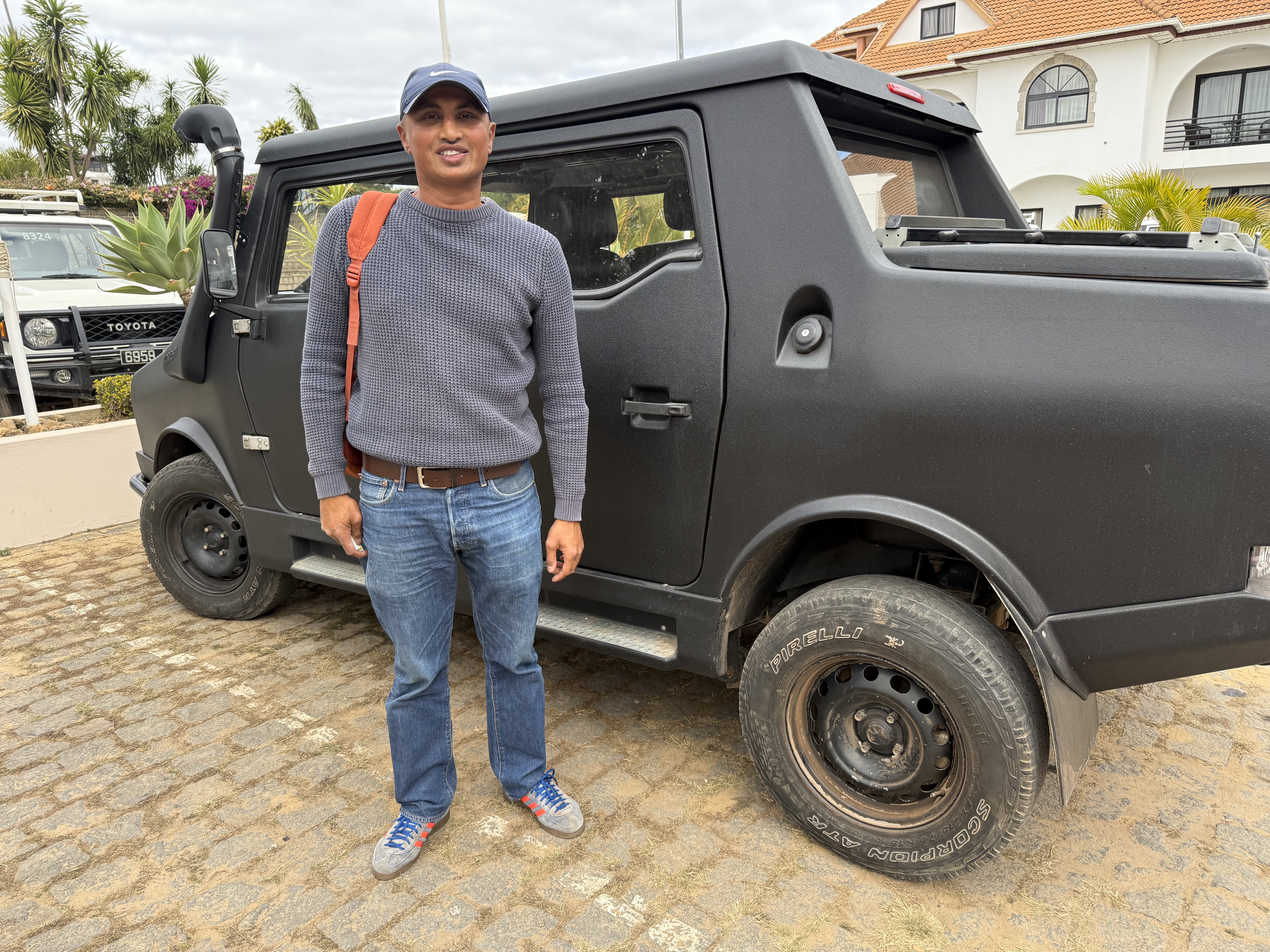
Ravi Matadeen rents made-in-Madagasar unique vehicles for self drive trips. http://www.selfdrivemadagascar.com


I booked my African adventure, South Africa (Kruger) and Madagascar, with Worldwide Quest, http://www.worldwidequest.com

.

5 responses to “Discovering the Unique Wonders of Madagascar”

  1. happily64dfa75244

    Just amazing, the story and the wonderful pictures, thanks so much for sharing 🙏

    Liked by 2 people

  2. Steve Koester

    OK, I want to go. The photos are great. It’s harder as you get older, but I’ve always found the best parts of traveling are the people you meet, the unexpected things that happen, and the challenges they present.

    So many primate species endangered or on the brink of extinction.

    Liked by 1 person

    1. You should go. You’d love Mada — and so would Tai. Most of the photos are by my fabulous guide John. I had fun times with guides, all so knowledgeable, understanding and patient.

      Like

  3. Karen Doyle

    I don’t think you will ever stop traveling to exotic adventure destinations, Leah. This one was a “must do” and it turned out to be the fascinating adventure you had hoped for. And, you got to see those adorable lemurs and so much more in Madagascar.
    Kudos to you!
    Karen

    Liked by 1 person

    1. I hope you are right, Karen. I love these adventures. There are still many places I want to explore.

      Like

Comments, please!

Your email address will not be published. Required fields are marked *

Cat Lover’s Adventure in South Africa

Childless cat lady – that’s me.  I have been passionate about felines all my life, and have always had a cat, or several cats, in my life.

My safari to South Africa last summer gave me the opportunity to observe big cats in the wild.  It was thrilling, and fascinating to learn more about these majestic creatures from the guides and trackers.  In many cases, they know the animals, and their backstories, well. 

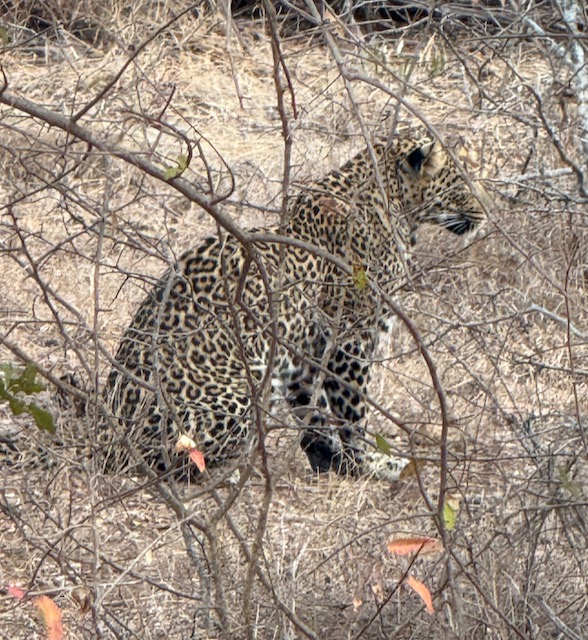
On the drive from the airport to my first safari lodge:  a leopard sighting. Driver Cheryl pointed out that the spotted feline was stalking a kudo, well camouflaged in the bush. Numerous cars had pulled over to observe.  Alas, we had to move on. Did the leopard succeed?  Or, did the kudo live another day?  

Eyes focused on a nearby kudo with hopes for a tasty lunch.

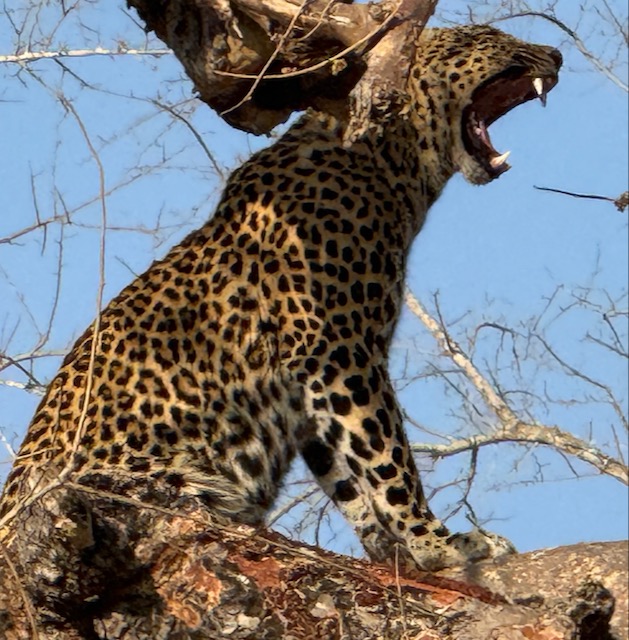
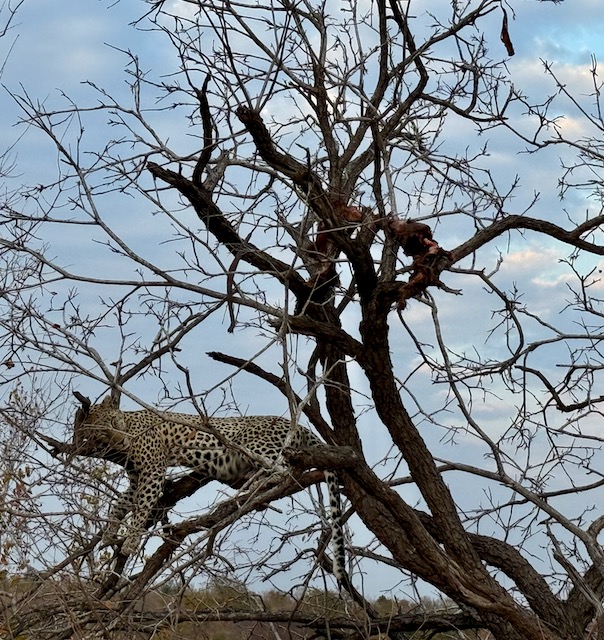
The next day on a safari trek, another leopard. This one was lounging near a tree with a hyena and a wildebeest not far off.   The partially-eaten carcass of an impala was lodged high up in the tree branches. We learned that leopards, excellent climbers, often drag their kill up trees to protect it from hungry predators.  

.

Hyena in the background in photo on the left.

Hyenas are scavengers– and ferocious. We were told they charge any animal, except a male lion.  A leopard would not likely charge a hyena – too risky, according to the guide.  In this instance, the hyena and wildebeest were waiting for the cat to return to the tree and have another go at the carcass, hoping some tasty morsels would fall to the ground.

The leopard, named Raven Scott, was well known to our crew. He, and other wildlife in this park, are regularly monitored and studied.

Raven Scott enjoys a siesta knowing his bounty, leftovers from lunch, is safe in the branches above.

Later our tracker zeroed in on lion tracks, but no lion to be found.  He did smell the pee of a leopard.  “It smells like popcorn,” he said.  The potent urine smell is used to signal reproductive status, mark territory, and communicate with other leopards.

During excursions from my next safari lodge in another part of Greater Kruger, lions stole the show. 

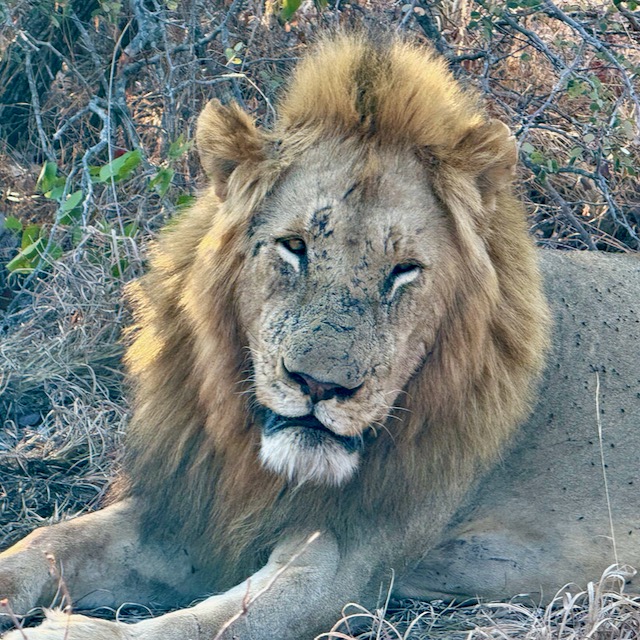
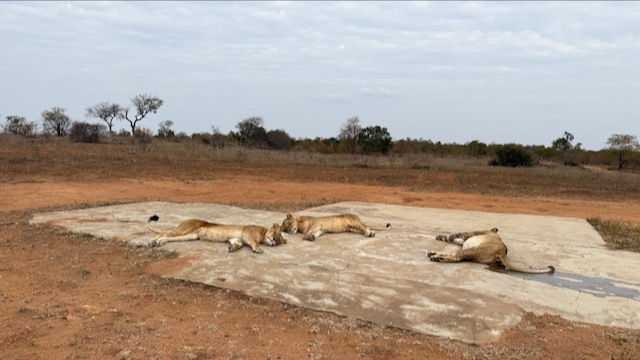
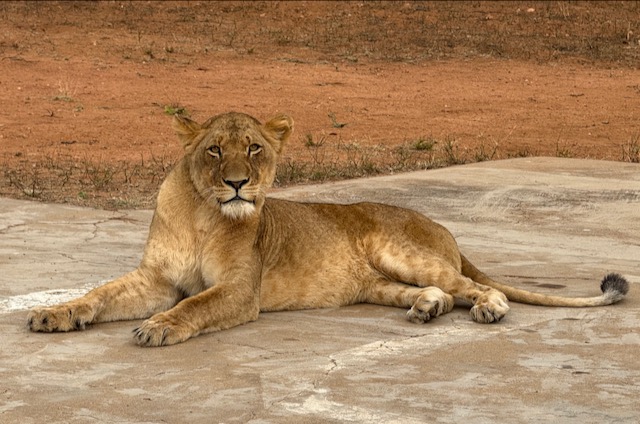
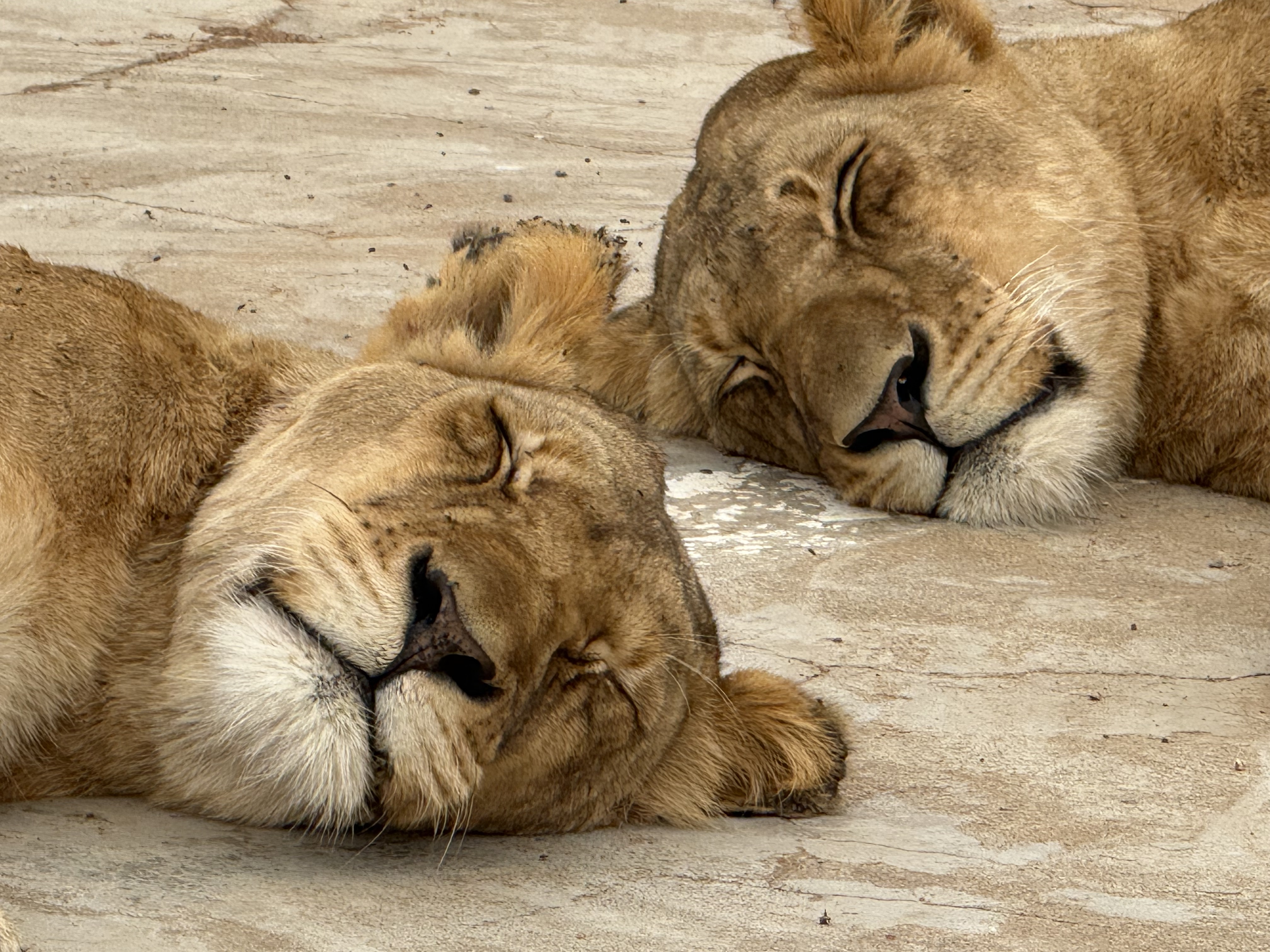
A family group lounging in the sun on an abandoned airport runway intrigued us.   The guide said the male had made a recent kill of a buffalo.  He and two lionesses were knocked out, digesting their feast.  We could see the lion’s bloated stomach. He obviously savored “a lion’s share” of that buffalo.

We later returned to the site. The lion had departed, but the “girls” were still enjoying R & R.    

Lions are the only social cat, we learned.  Family groups stay together.  Not so with the leopard and other cats who are solitary souls, only getting together to mate or raise cubs.

The following day our eagle-eye guide found the lion with his leftover kill.   Vultures hovering above and a strong putrid stench led us to him.  He was sacked out, a pause after yet another feast. Again, we could see his enlarged stomach.  The rotting carcass and zillions of flies were nearby.

Note remains of buffalo, at left behind sleeping lion.

We returned later.  He was awake and joined by his brother.  They shared the carcass until one got fed up and growled. The other took no chances.  He seized a hunk and moved away.

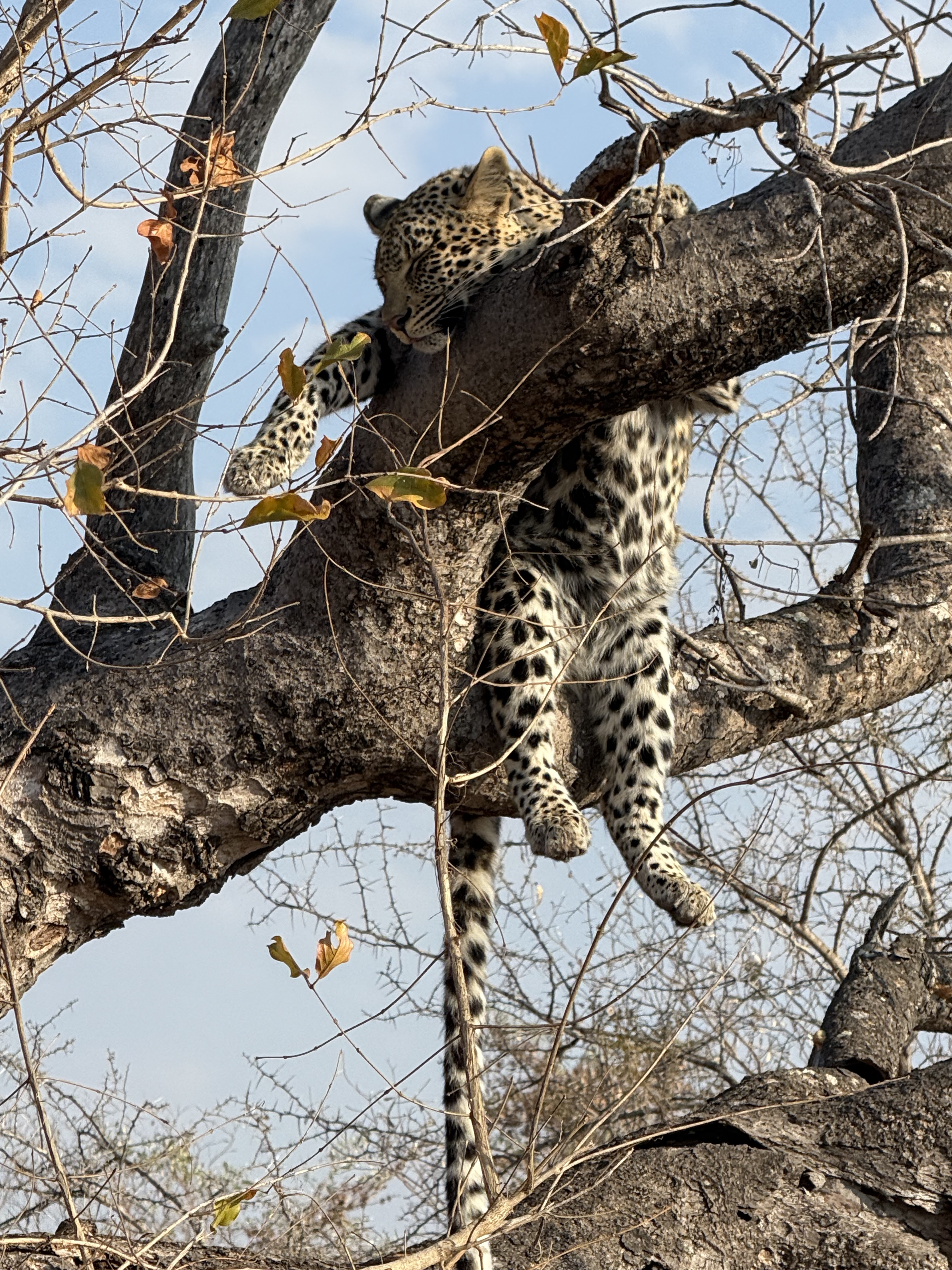
There was also a leopard sighting later that day– another beauty, this one snoozing in a tree in what seemed a most uncomfortable position. That fabulous signature tail dangled from the branches. Leopard tails, which are almost as long as the animal’s body, are used for balance while climbing.

I was elated with all the cat sightings.  For a cat lady, it was awesome. But, also good to come home to my Simba.

I booked my African adventure, South Africa (Kruger) and Madagascar, with Worldwide Quest, http://www.worldwidequest.com

If not a Tales and Travel follower, please sign up here. Trust me. It’s safe. Your address is not shared. Don’t miss out. Madagascar: mysteries and marvels, coming next.

Today’s Taste, a winner of a holiday cookie: Christmas Cookies: Cranberry Walnut Delights

For more recipes, click here.

10 responses to “Cat Lover’s Adventure in South Africa”

  1. Karen

    I loved all the cats, but Simba is the cutest!
    Karen

    Liked by 1 person

    1. Cutest and definitely the sweetest. She is my treasure.

      Like

  2. tsaidel

    Wow you really got to see a lot of the leopards….and you took beautiful photos! I’ve always been told leopards (in Africa) are pretty shy so I’ve only ever had brief glimpses. Your photos are a treat. You should come to India to see tigers since you’re so fond of cats (though maybe you’ve already done that…I know you’ve been to India). Where to next?

    Tobi

    Liked by 1 person

    1. Yes, those leopards were a sensation. Husband Bob and I did see tigers in Rajasthan, and one leopard there after a harrowing drive, but he was far, far away — up on a rocky mt side.
      Ethiopia and Brazil (was in the Peace Corps there eons ago) are on my bucket list. I can hope.

      Like

  3. Bravo, Leah! The photos are simply fab! Did you lug an entire line of camera equipment or ??? Thank you so much for documenting your intrepid travels to regions we may never see in person–Gayle

    Liked by 2 people

    1. Those days of tons of camera equipment are long gone. My camera is my iPhone 6 pro. Love it.
      I hope my days of intrepid travel are not over. My bucket list is long, too long, but must keep working on it.

      Liked by 1 person

  4. angelafronzi

    Awesome photos!- as a fellow cat lover-you surely saw some wonderful cats – in their natural habitat- relaxed and well nourished! – and that leopard had obviously learnt Yoga? -how uncomfortable!! Your photos and tales are so interesting so k- Whats Next?! x
    Liked by 2 people

    1. Grazie mille. We love those cats. I was mesmerized and could have observed them for hours. Yes, that leopard conquered advanced Yoga. There will be more adventure. It keeps me alive. Stay tuned.

      Like

      1. Ortrud Hundertmark

        Hallo Leah ich lese immerwieder gerne deine Artikel. Sie sind sehr spannend und lebendig zu lesen. Weiter so…… Bis später Liebe Grüße Ortrud

        Liked by 1 person

      2. Hallo liebe Ortrud. Ich bin sehr dankbar das mein Blog dir gefällt. LG

        Like

Comments, please!

Your email address will not be published. Required fields are marked *

Insights on South Africa: View from locals

Travel is more than the places you visit, the sights you see and the experiences you enjoy.   It’s also the people you meet:  guides, shop keepers, drivers, hotel personnel, other travelers. 

I relish talking to all. During my recent travels to South Africa and Madagascar, I asked folks about local customs, politics, food, travel and more.  

I found the South African marriage traditions intriguing.  Driver Stan filled me in. No matter where they live in the country, South Africans go back to their home village for matrimony.  But, before the big day a man must pay lobola to his fiancé’s family — at least five cows (about $500 each or more depending on the type and size of cow).    Stan has a fiancé, but so far only three cows. He’s lucky.  Educated brides go for much more, as many as 10 cows.

Cheryl, another driver, explained South African languages. The country has 11 official languages, mostly tribal languages, as well as English and Afrikaans, a Germanic language derived from Dutch. The Dutch were the original settlers in South Africa. Zulu is the most widely spoken tribal language.  Many South Africans, like Cheryl who speaks Xhosa, her tribal language and English, are multi lingual.

Politics is a topic I like to explore. What I learned about South Africa was surprising.  I talked to locals about life since the official end of apartheid in 1994.  Many were too young to remember the dark times, but knew all too well about the years of cruel segregation.

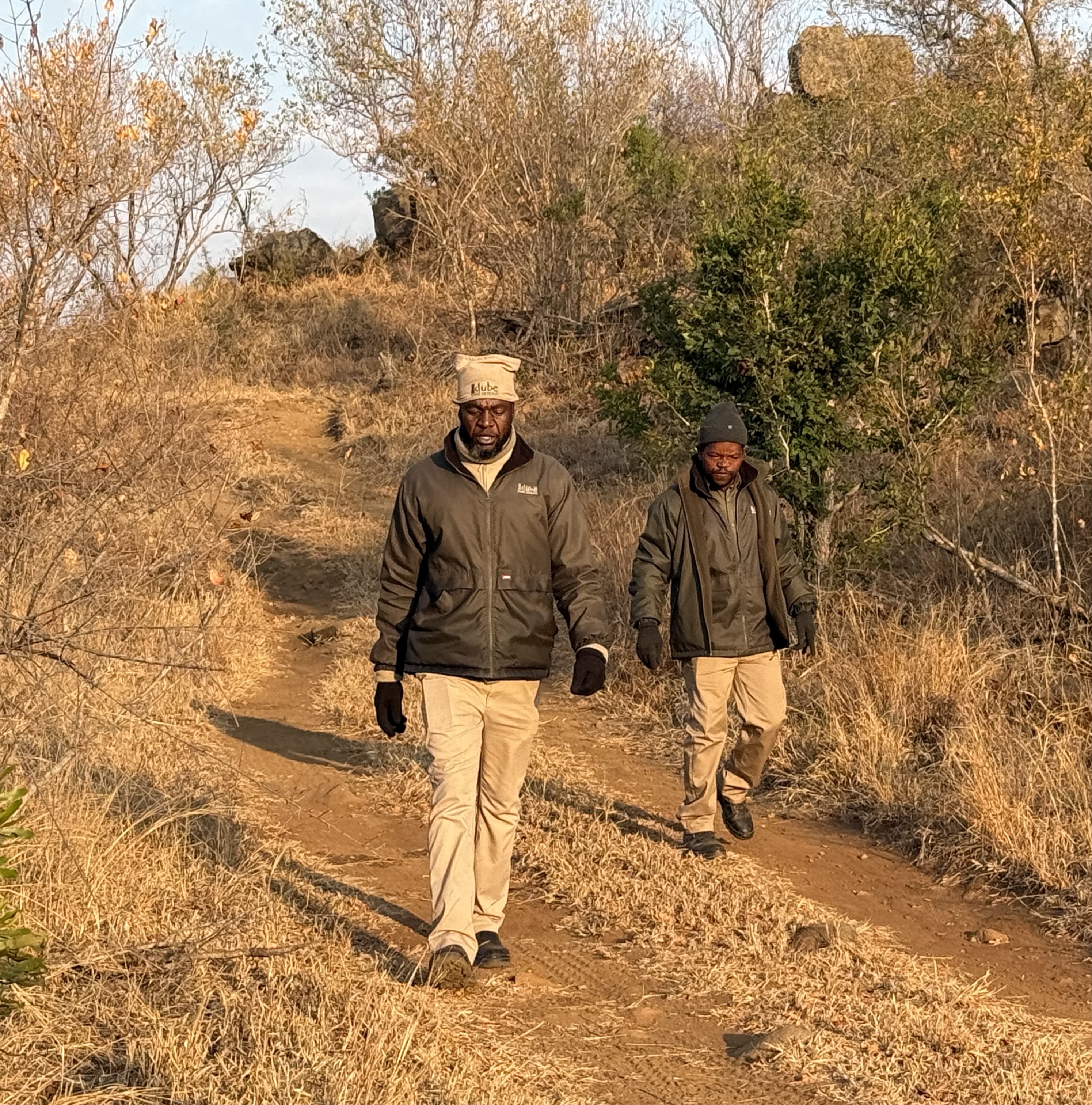
Safari driver and guide disembarked to follow tracks.

All those I spoke with lamented the crime, corruption and unemployment plaguing the country now.  Of course, it’s wonderful to be free, they said, but they claim that during apartheid these problems were not so drastic. 

“There’s nothing but corruption now,” said Jacky, an employee at a safari lodge. “The white government took better care of the people…. They (today’s government) promised us a new road four years ago.  Nothing has happened.    Now when it rains the road floods and the kids can’t go to school… the government promises everything but does nothing.” 

My contacts also said crime in the country has skyrocketed, especially in large cities.  There are places in Johannesburg where even South Africans do not venture.  “Yes, there’s crime,” said Jacky.  “But if people are unemployed and need to feed their children, what are they to do?” 

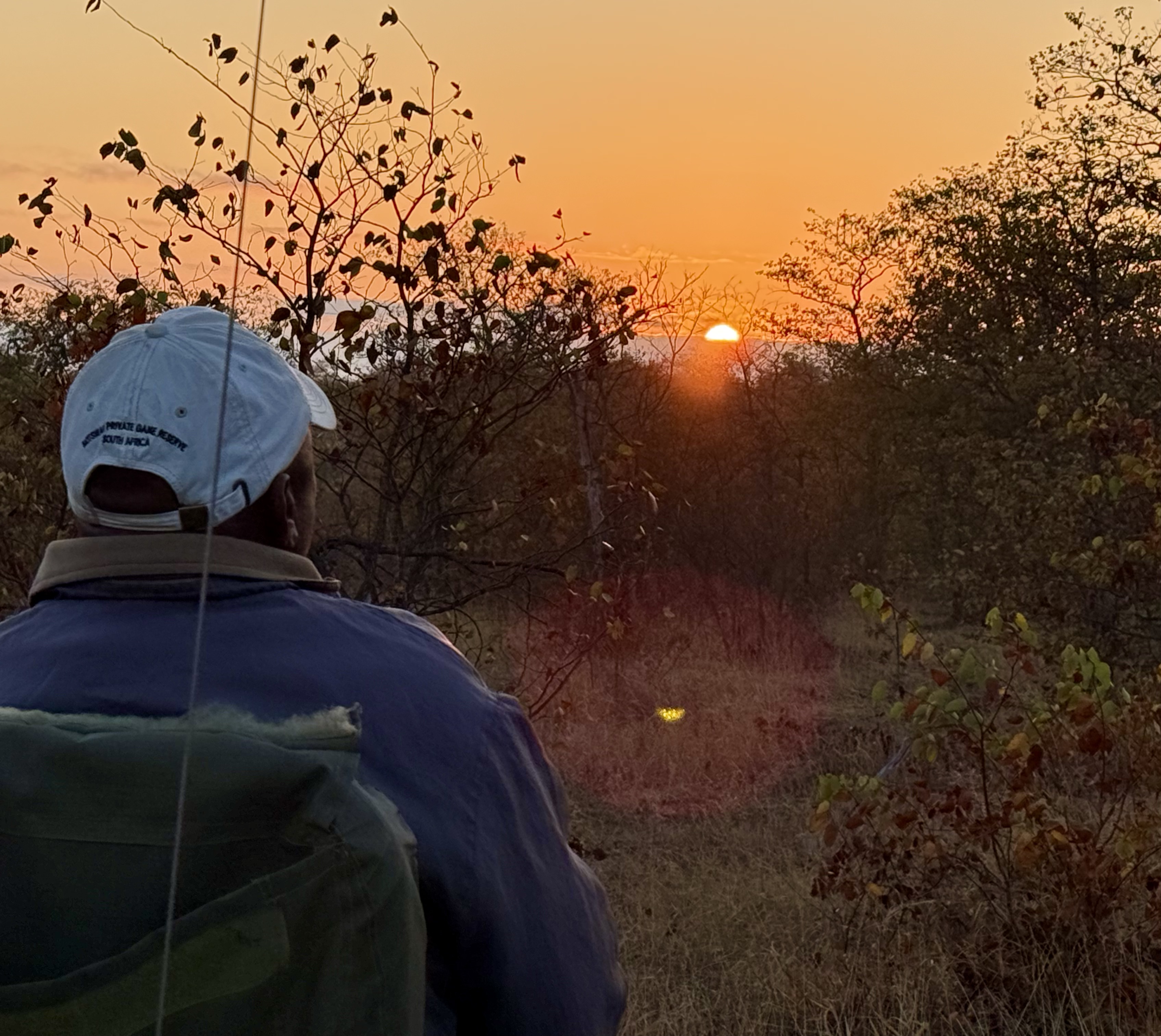
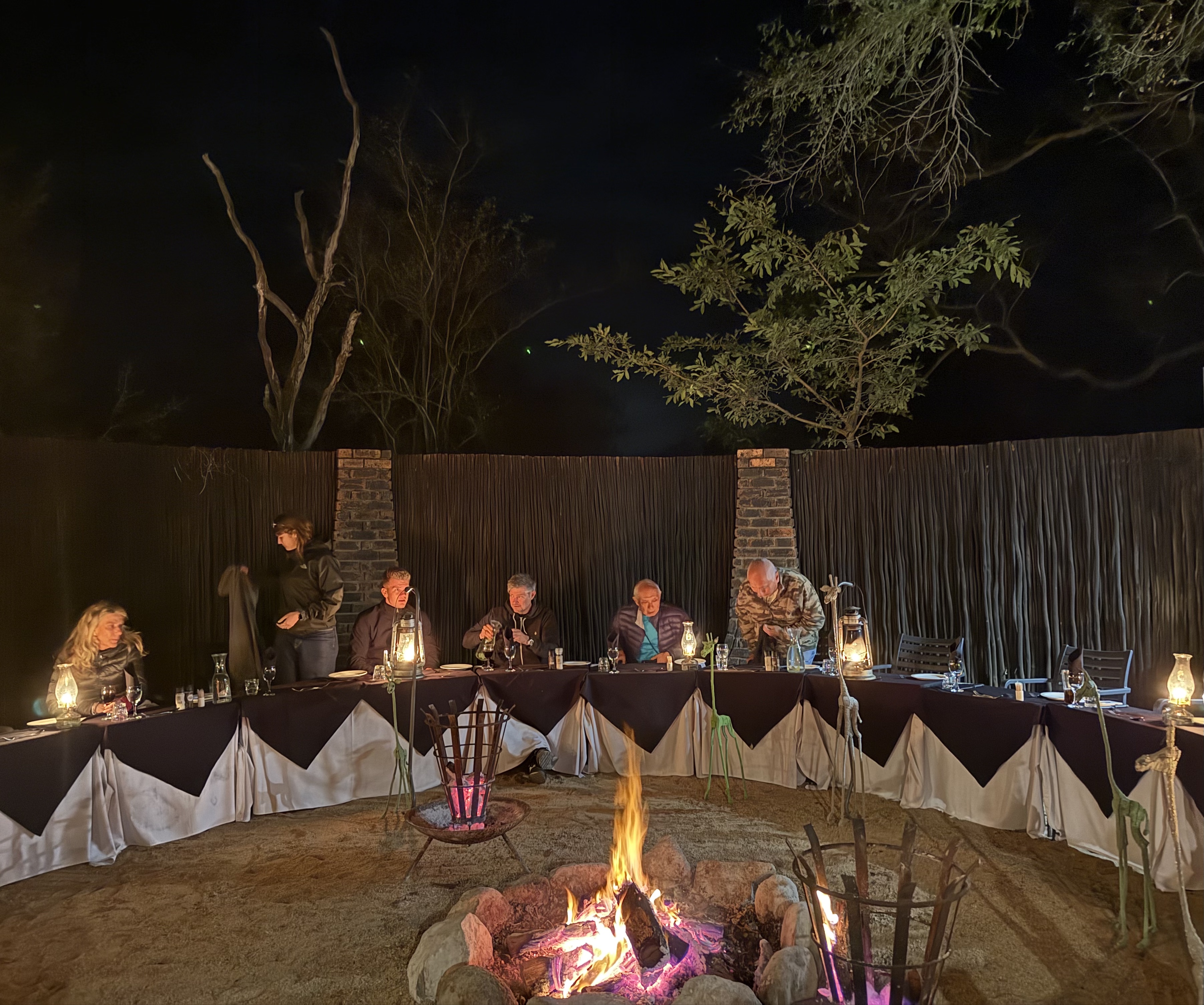
Apero break during afternoon game drive.

Andy, another lodge worker, does remember apartheid – separate toilets, long waits in line, always letting whites go ahead… “If I wanted to visit my father in Johannesburg, I had to apply for permission…  

“It’s difficult for me to say this as a South African,” he continued, “but the black rulers are corrupt. The older generation votes for them.  I hope in 10 years it will change. We (younger generation) need to take control.”

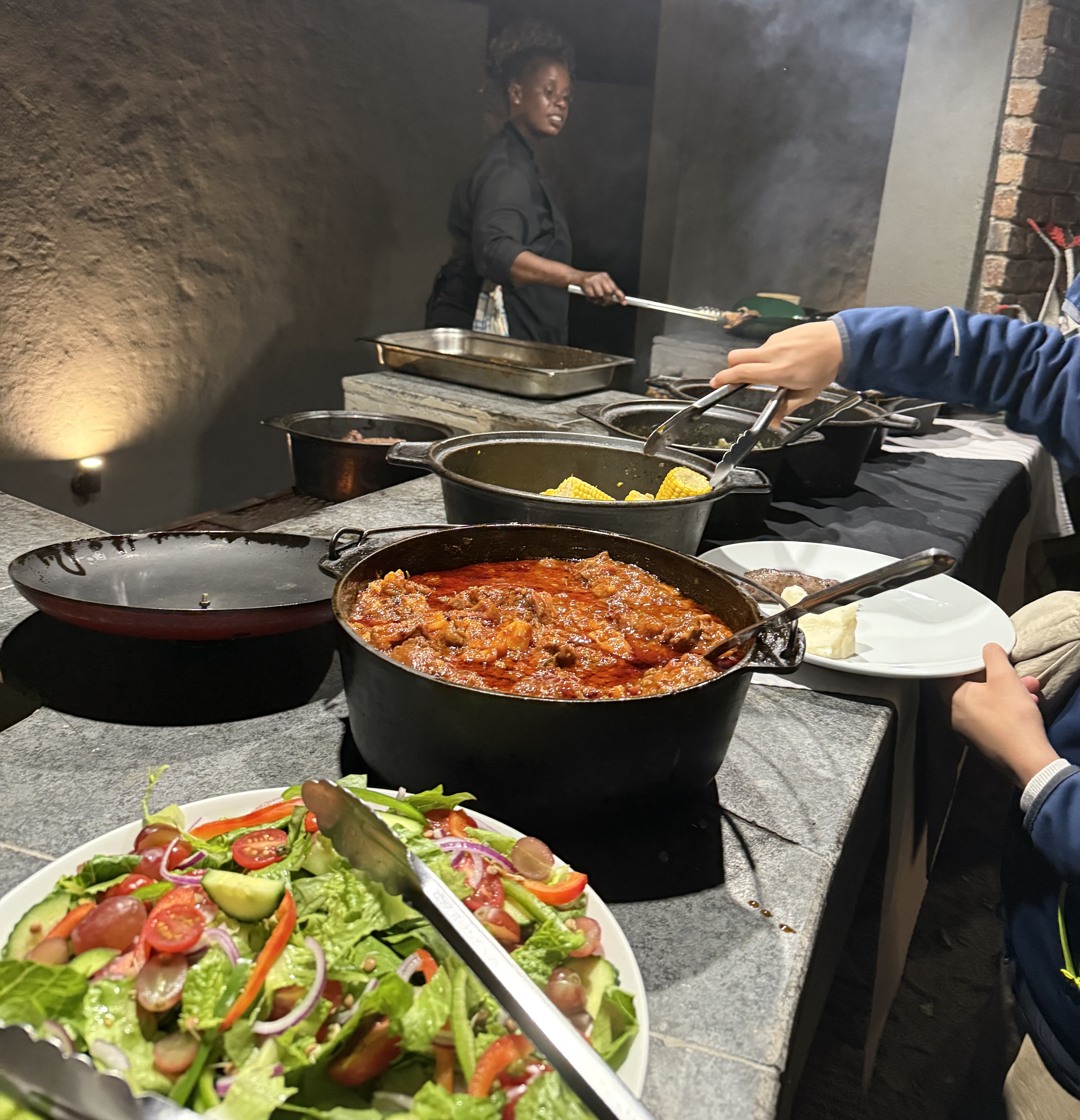
Food is another topic high on my list.  My meals at the safari lodges were all star quality and taste.  South African wildlife, I learned, is not just for tourists to admire. It’s also a good source of protein.  Popular game meat include impala, kudo, springbok, ostrich, etc. I was not overwhelmed with ostrich, but impala was delicious. 

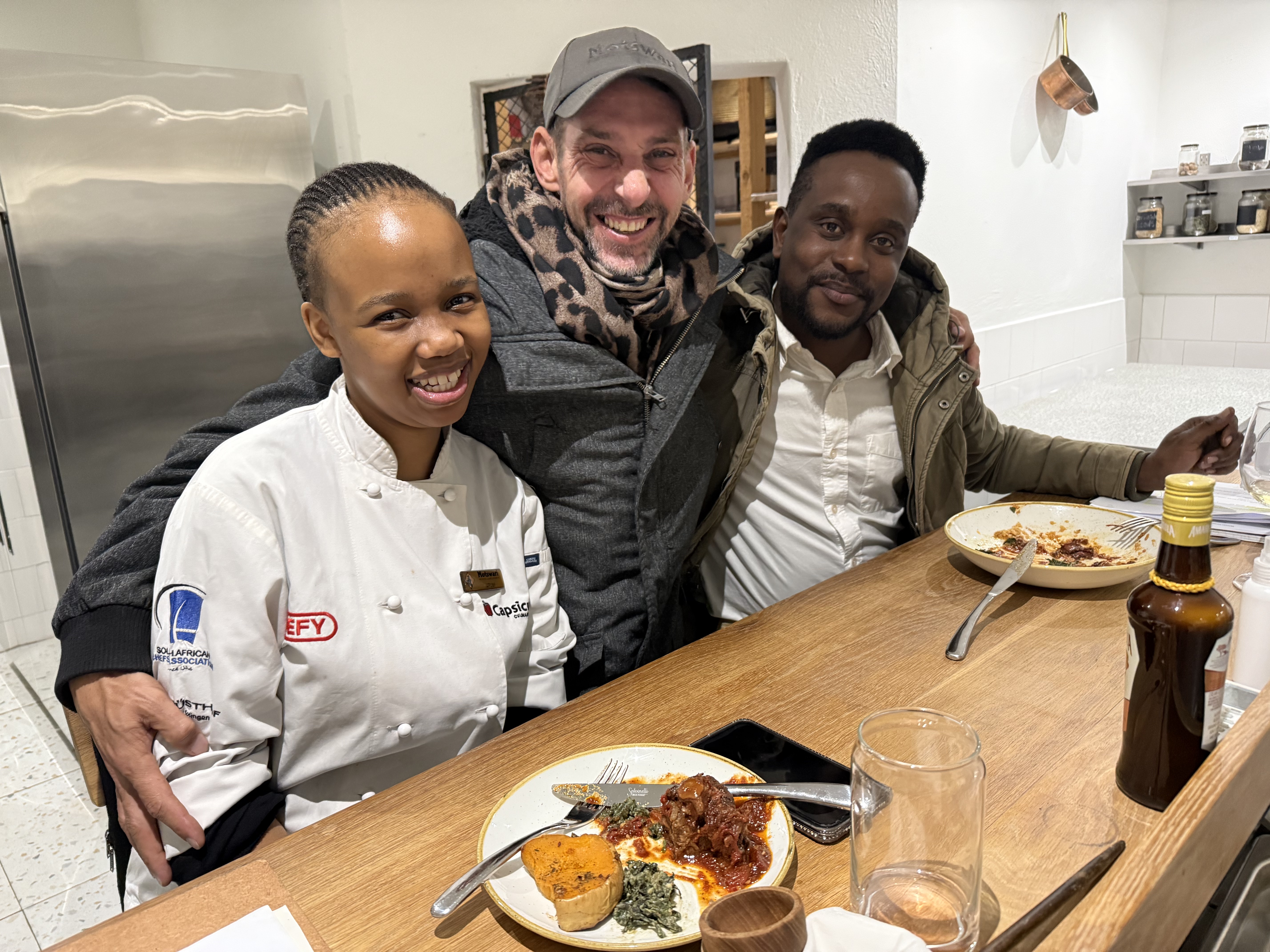
 One evening I had dinner with John, a food manager for several game lodges.  His oxtail stew was exquisite. I requested the recipe, although I am not sure I can find oxtail.  He assured me I could substitute beef, preferably chuck.  

John grew up in self-sustaining family. “My grandmother made the bread…We ate all animal parts.” His love of food and cooking took him to London where he worked as a chef in several restaurants.  He found it “stressful” and is happy to be back in South Africa, planning menus and ordering food for five different lodges.  

John, center, and kitchen staff at Motswari lodge.

Fellow travelers are also fun and interesting.  I was astonished at how well traveled so many of those I met were.  Working remotely gives folks the time and freedom to explore the world, and it appears many are doing just that. 

 At a hotel in Madagascar, I met a group of medical personnel and health workers en route to volunteer on the hospital ship Mercy docked on the country’s coast. It was fascinating to learn about their admirable work.  One volunteer from New Zealand, who has a handicapped daughter, gave me, a handicapped traveler, excellent advice.  “You need to push yourself, test your boundaries.  Use it or lose it.”

Favorite places visited was the topic of an after- dinner discussion at a safari lodge. This group had traveled far and wide. Thailand, Japan, South Korea, Brazil and Iceland were among favorite destinations.  

Fellow safari travellers with guide and tracker on the left.

 I asked about the most memorable travel experience.  My #1 unforgettable adventure was trekking to see the gorillas in Rwanda.  Canadian Christine, who had been to Rwanda and seen the gorillas, also put that on the top of her list, as did South African Matthew, although his gorilla trek was in Uganda.  

Australian John, whom I met at another lodge, was passionate about Africa and photography.  His high-tech gear was impressive.  It seemed he had been to most every African country, including Madagascar, my next destination.  He gave me some helpful advice.

Travel teaches us about different lands, cultures, religions… It enhances understanding and tolerance.  It is rewarding.  Talk to locals, listen and learn. It will enrich your journey.

I booked my African adventure, South Africa (Kruger) and Madagascar, with Worldwide Quest, http://www.worldwidequest.com

If not a Tales and Travel follower, please sign up here. Trust me. It’s safe. Your address is not shared. Don’t miss out. Big cats coming soon, plus the mysteries and marvels of Madagascar.

TODAY’S TASTE: Rum Raisin Carrot Cake

I recently invited friends for belated b’day cake. The Rum Raisin Carrot Cake is the one with the candle. It was yummy. Click on above title for recipe and for more recipes, click here.

4 responses to “Insights on South Africa: View from locals”

  1. We totally agree with your philosophy of travel. Interactions are a special part of being in another society. They can allow a traveler to make personal connections that can do much to counter prejudice, correct false conceptions of other people’s capabilities,, undo mistaken notions about the nature of their culture, and reduce unjustified arrogance about our own. Great blog!

    Liked by 1 person

    1. And a great comment. Thanks so much. The rewards and benefits of travel are transformative and immeasurable.

      Like

      1. hrector122

        Loved travel. Listening and absorbing places by osmosis. I am glad we travelled so much before the crowds of today. Cell phones and cruise ship. I loved Africa. Even when the baboons trashed our tent. Wonderful cheery people. Morocco was the best trip. But two safaris eere wonderful. Madagascar was somewhat of a bust. We got there on a small cruise ship. The staff arranging the land trips did a crap job. Yes we saw a few lemurs. And we were amazed by the empty spaces of the Indian Ocean. Glad you keep us informed. Travel on, Leah.

        Liked by 1 person

      2. We were fortunate to visit so many wonderful places before they were overrun with tourists. I still want to travel, but am seeking out the less popular, such as Madagascar. I am not ready to give up yet.

        Like

Comments, please!

Your email address will not be published. Required fields are marked *

ON SAFARI

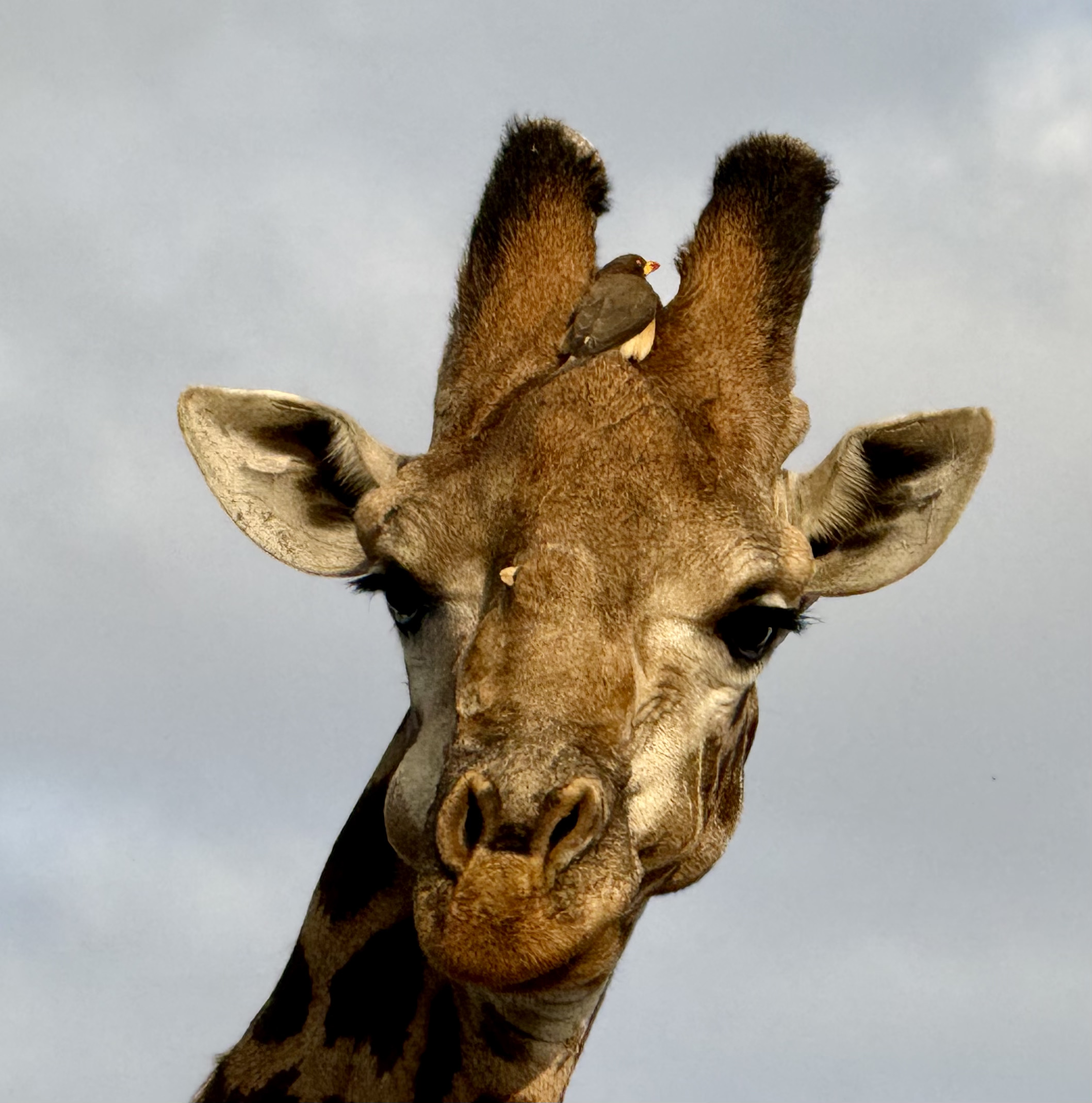
Elephants, giraffes, zebra, kudos, wildebeest, a hyena — I saw them all on my drive from the airport in Skukuza, South Africa, to the Idube safari lodge 3 1/2 hours away. I was excited and decided this was a good omen meaning lots more to come. I was right.

The highlight on the drive was a mother hyena with two tiny, lively puppies. Driver Cheryl said they were just a few days old, if that. Mom was worn out, sleeping soundly, not disturbed by one of her offspring who was chewing on her ear.

I spent the next two days at the Idube lodge and the following two days at the Motswari Game lodge. Both are vast private game reserves in Greater Kruger, an area with unfenced boundaries outside but adjacent to the Kruger National Park.

Game drives begin in the wee hours, about 6 a.m.  It was winter in South Africa, coal black and cold, freezing, at that hour.  Hot water bottles and blankets are provided, but still frosty until the sun pops up.  At 9 we returned to the lodge for a hearty breakfast, setting out again about 3 p.m. for an afternoon drive.

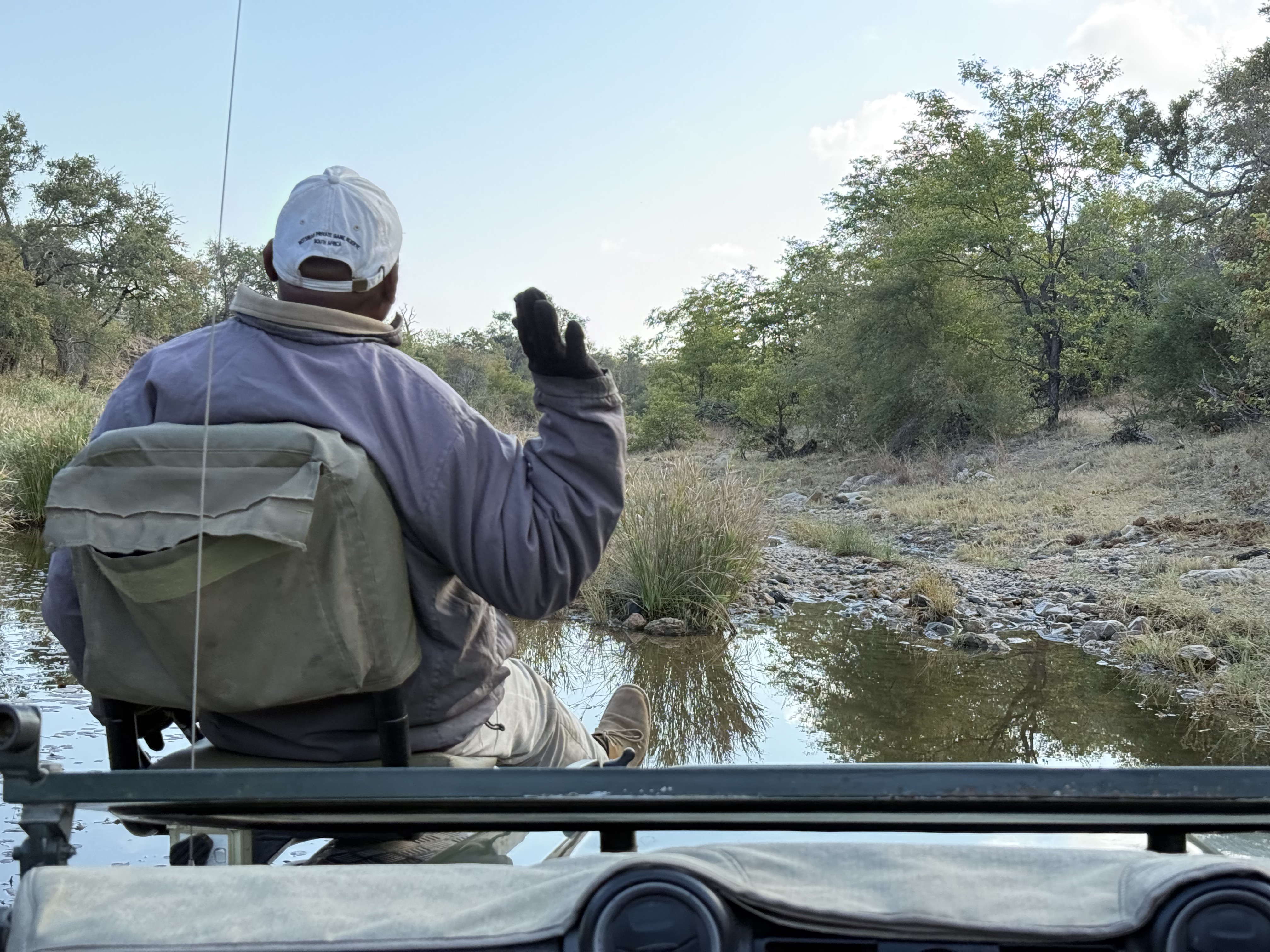
A tracker sits on a special elevated seat in the front of the safari vehicle, his eagle and trained eyes searching for tracks, movement, listening for sounds, any sign of animal life.  The driver/field guide is an encyclopedia of info, as well as a fearless driver, charging off road at Formula 1 speed to reach a site before the animal moves on. Duck under branches, bounce over bumps and ruts, hold onto your seat — more thrills than an amusement park ride.

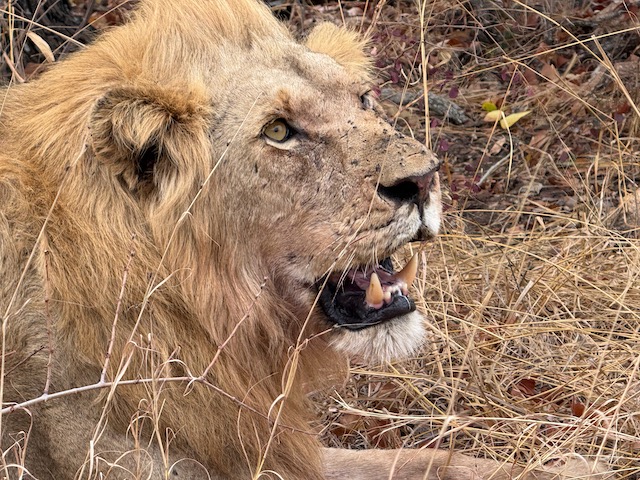
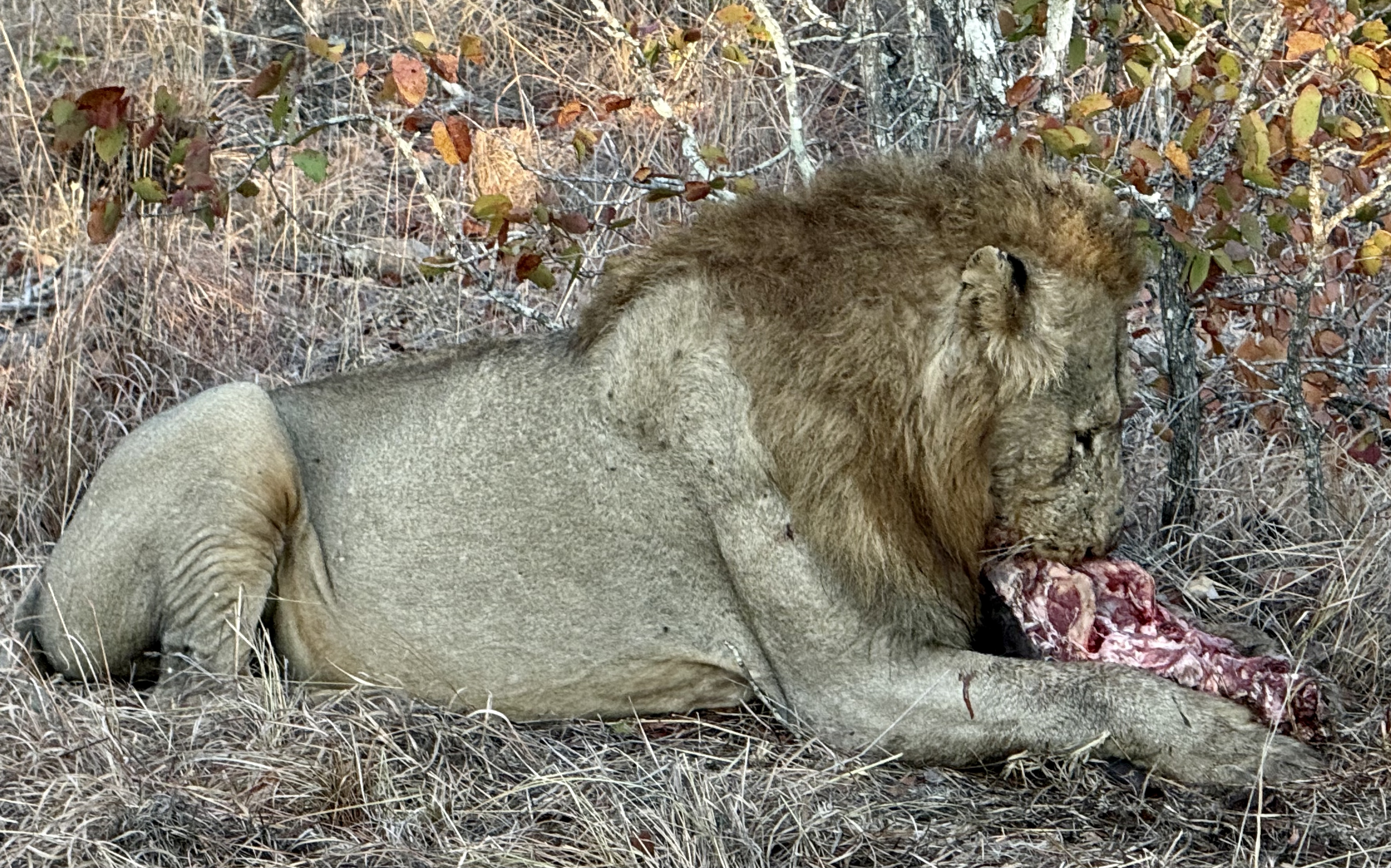
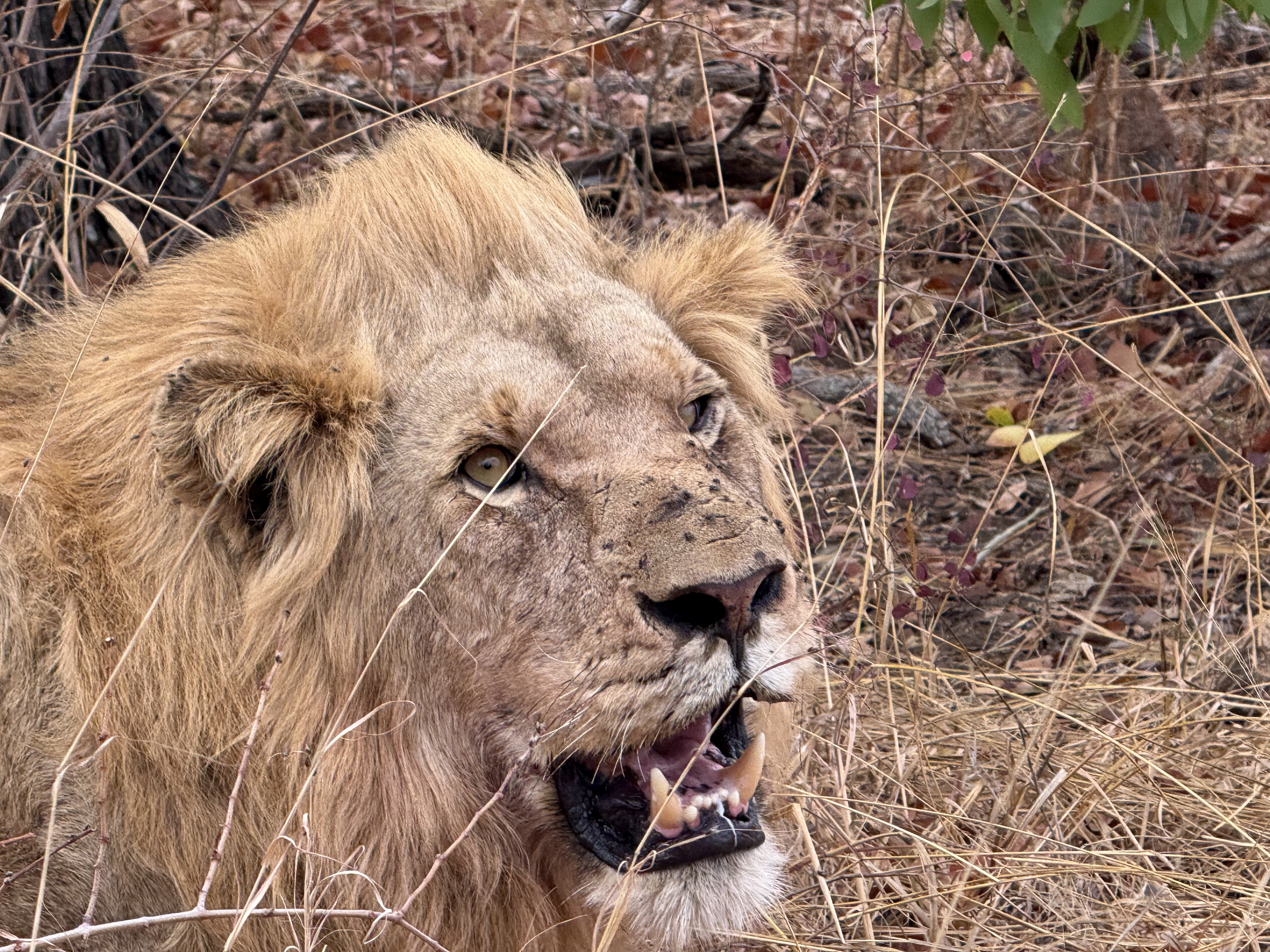
An abrupt halt. There — right in front of us — is the Lion King, gnawing on a bloody piece of carcass. A thrilling, awesome, incredible sight. You almost need to pinch yourself to be sure it’s real.

As in this instance, it is astonishing how close the vehicles get to the animals which completely ignore the visitors. They are accustomed to human intruders and definitely not camera shy. Even with a phone camera you can get decent photos (I used an I-phone 16 pro). For perfection, however, serious gear is best.

 Following are photos of my “sightings.” Since I am a “childless cat lady” who adores cats, large and small, I will devote a separate post to cats.  I saw many, all magnificent.  Watch this space.

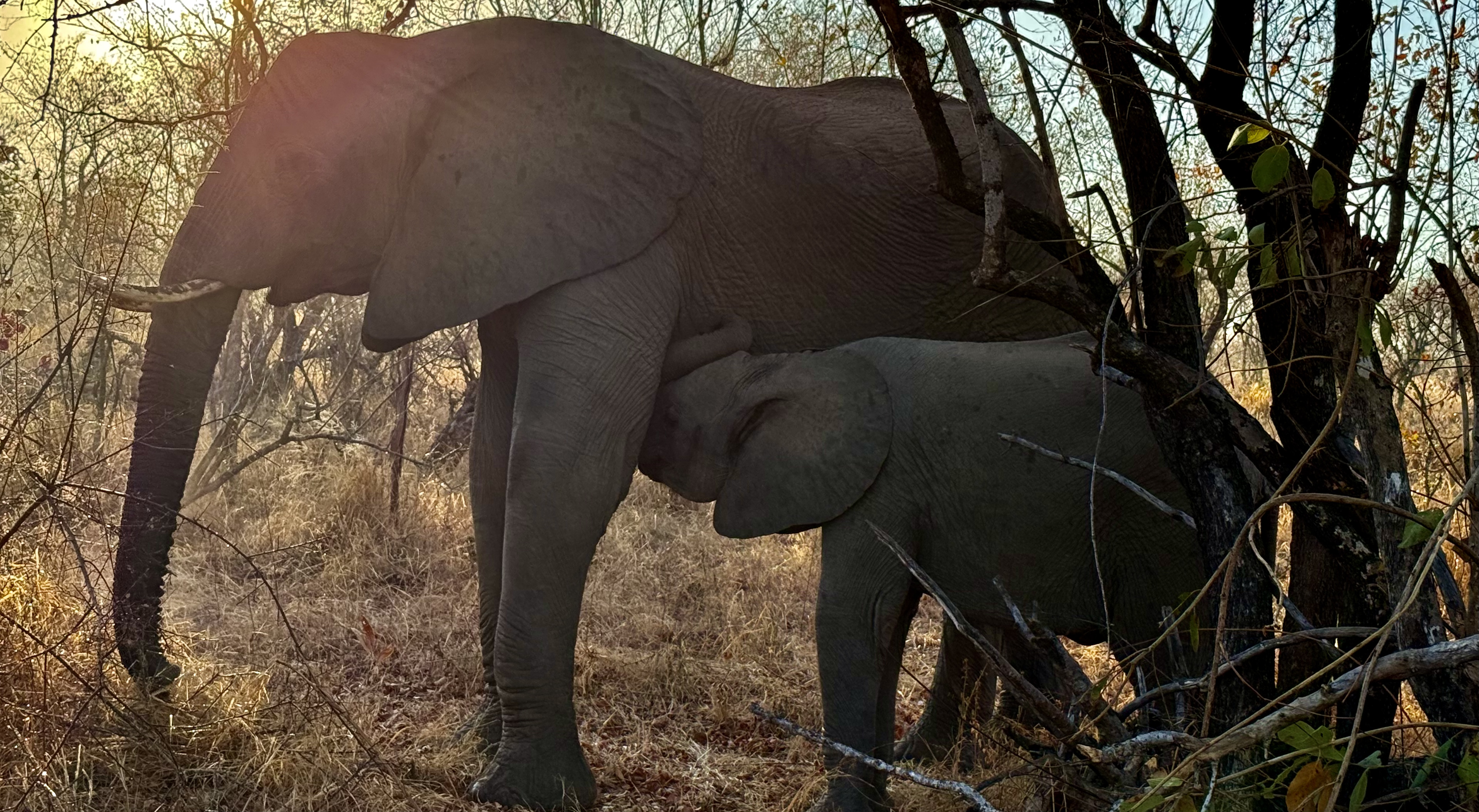
No shortage of elephants on the game drives: majestic males, families, youngsters. These mammoth creatures can live to be 60 to 80 years old. If they manage to survive that long, they die of starvation as their teeth wear out, making it impossible to chew food.  The elephant gestation period is 22 months and “babies” nurse for three to four years.  Elephants can eat for up to 18 hours per day. 

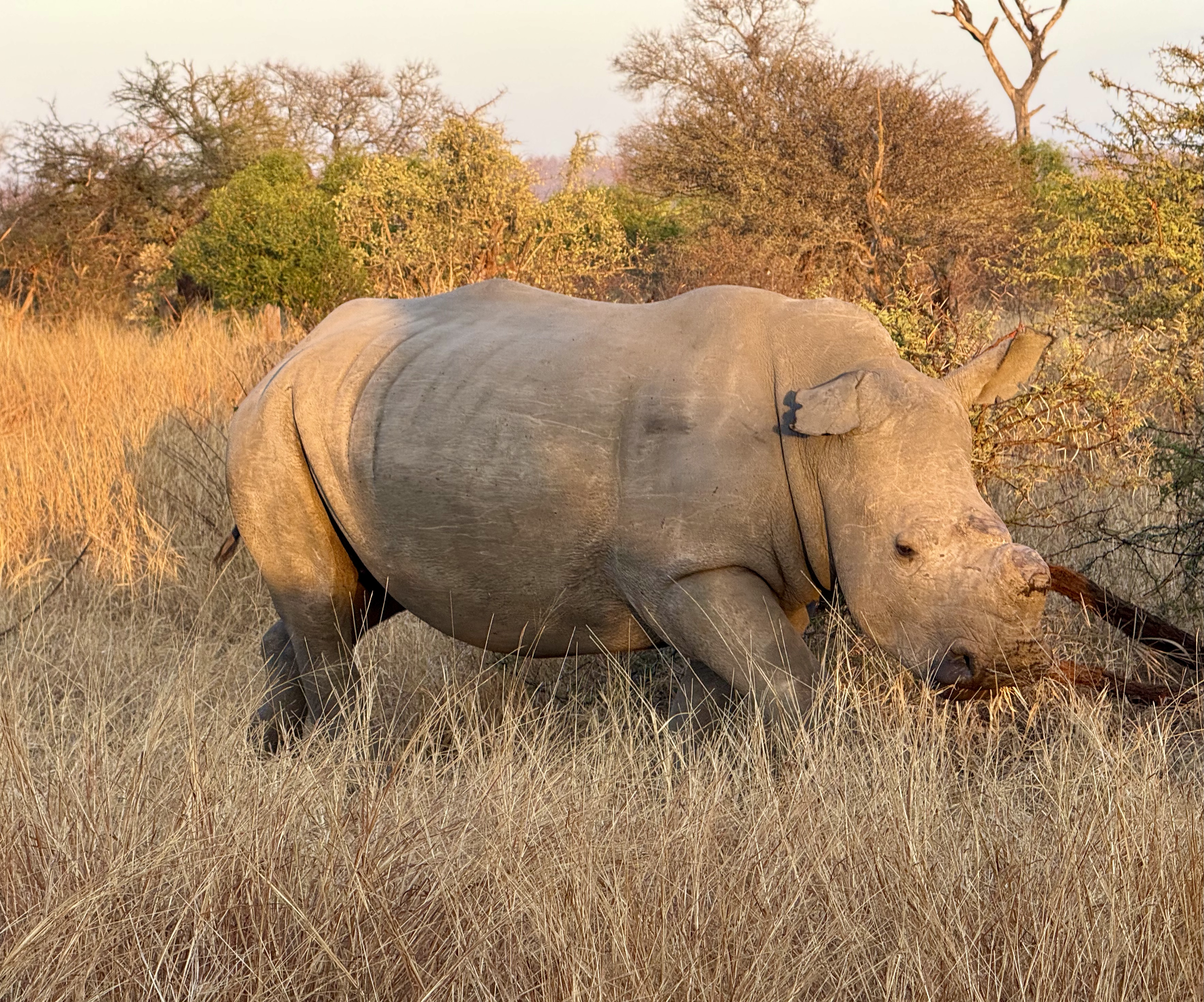
Rhinos, with and without horns.  The horns are treasured in many Asian countries for medicinal properties, although there is no scientific evidence that the horns have medicinal value. In some countries, namely Vietnam, the horns are a luxury item and status symbol.

Hence, poachers kill for the valuable horns.  In the Idube reserve, rhinos are de-horned at the age of two to dissuade the poachers.   Not so in the Timbavati private reserve where the Motswari lodge is located.      

There guide Landon told us that dehorned rhinos are defenseless against predators and in territorial disputes with other rhinos.  Poachers may still kill them to avoid tracking the same rhino again.  And, the dehorning procedure must be repeated every 12-24 months, expensive and labor intensive.  It can also alter natural behavior, leading to social disruption.  Rhinos in Timbavati keep their horns.

The buffalo, one of Africa’s most dangerous animals, is one of the Big Five of African wildlife (elephant, lion, leopard, rhino and Cape or African buffalo). We were lucky and saw not just a few of these aggressive beasts, but hundreds crossing a lake.  

Foreground, hippos.

We never spotted a hippo out of the water, but we did see lots of hippo heads up for air in various lakes.  Hippos can stay under water for six to seven minutes, we learned, and they eat grass not meat.

Ian, the guide in Idube, told us the hippo is the number two killer in South Africa, following malaria, number one.  Number three is the buffalo. Landon at Motswari disagreed on number two.  He said number two is the crocodile, not the hippo which is number three.  Both put malaria as the number one killer.

Male kudo

An African safari is a thrilling, rewarding, unforgettable experience. In addition to being awed by the wildlife, I was intrigued with the country and its citizens. I talked to South Africans about their languages, tribal customs, problems in the country and life since the official end of apartheid in 1994. A look beyond safari in the next post.

Below, more photos.

Another hyena mom with puppies, one with his neck in her mouth. Guide Landon said the adorable hyena puppies are his favorite baby animal.
Wild dog puppies. The guide said two nearby packs were having a territorial dispute. The fight did not interest the playful puppies, but our vehicle did.
These fellows, nyala and a wildebeest, hung out in the front yard of my room at Idube. All were very tame, including the wildebeest. I thought I could try to pet him, but suddenly I heard screams. I was warned that he might decide I was not so friendly and turn those horns on me. I retreated.
Impalas are more numerous than other African antelopes.

I booked my African adventure, South Africa (Kruger) and Madagascar, with Worldwide Quest, http://www.worldwidequest.com

If not a Tales and Travel follower, please sign up here. Trust me. It’s safe. Your address is not shared. Don’t miss out. More about my travels in future posts:   South Africa beyond safari, Big cats, the mysteries and marvels of Madagascar.

Big cats coming soon.

No new recipe this time. But, it’s not too late to take advantage of those summer tomatoes and try this delicious Savory Tomato Tarte Tatin. For more recipes, click here.

Comments, please!

Your email address will not be published. Required fields are marked *

New Zealand’s Extraordinary Fiordland

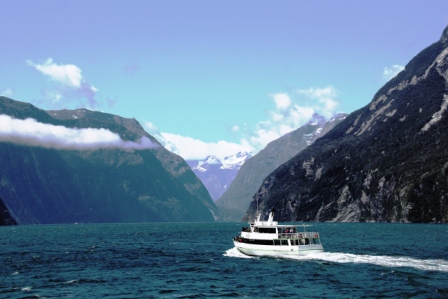
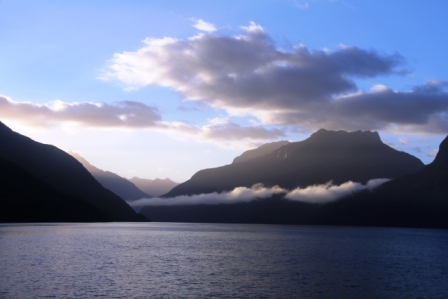
It’s all about scenery: dramatic, magnificent, mystical. We awoke on board a ship in Doubtful Sound, the largest of the area’s 14 fiords, to watch the sun creep over the towering cliffs which surrounded us, casting mirror images of the mountains on the sparkling water.  The only sound was a raging waterfall plunging from high above into the deep inlet. Waterfowl flew above.

We were in awe, mesmerized by the splendor of nature, the beauty all around in this desolate paradise.  Every day during our five-day visit to the region last November was filled with more overwhelming, spectacular sights.

On New Zealand’s South Island, Fiordland National Park is a World Heritage area and the country’s largest national park. The fiords, narrow inlets with steep sides carved by glacial activity, indent Fiordland’s West Coast.  In addition to exploring the fiords by boat, you can hike legendary trails in the mountains, trek through primeval forests and enjoy thrilling views from a seaplane.

Husband Bob and I did a bit of all.  We also enjoyed an exciting boat adventure in a Glowworm Cave through eerie darkness to a grotto where thousands of tiny glowworms glimmered on the walls. It was hard to believe this was a natural phenomenon and not an amusement park attraction.

Our Fiordland base was the town of Te Anau from where we set off for our first fiord excursion to Milford Sound. Early European settlers who were not familiar with fiords called them “sounds” which are actually river valleys flooded due to land sinking below sea level.

A bus trip on the Milford Road through the National Park leads to the Sound. There’s grandiose mountain scenery en route, with stops for photos.   And, once on board the ship sailing through the fiord’s National Geographic scenery, it’s hard to put the camera down.

On the way back to Te Anau, we stopped for a hike led by a guide to a summit.  We crawled under fallen logs en route, jumped over streams, through woods to open spaces above the tree line with superb views in every direction. By the time we reached the top it was raining. Our guide pulled out a thermos from his backpack and served us tea and cookies in the drizzle.

More hiking, but at a lower elevation, was on the next day’s agenda, a nature walk along Lake Te Anu through a dense beech forest.  The guide provided fascinating commentary on the flora and fauna, including the illusive kiwi, the country’s flightless nocturnal bird and national symbol.

Moss thrives in this dark green paradise and can be a meter deep. Step off trail and onto the lush carpet which is like a sponge, squishy strange to sink into.  Along the trail all sizes and varieties of forest ferns grow in abundance.  Kiwis (the people) are passionate about the environment and especially their bird population.  Our guide pointed out many species, including ducks which nest in tree tops.

Fiordland, we learned, has 200 rain days per year, dumping between six to eight meters of water each year. During our Doubtful Sound cruise, we experienced some of that rain. But it not dampen the spirits of those on board who wanted to try sea kayaking.  After our miserable failure with this sport which plunged us into the icy sea (see previous post: Misadventures in New Zealand), we stayed safe and dry on board.

During our cruise through this remote and romantic fiord, we saw penguins, seals and dolphins.  We marveled at haunting dark skies and fantastic cloud formations.

A different but exciting boat ride ended our Fiordland visit. We boarded a speedy jet boat on the Upper Waiau River to Lake Manapouri.  From our craft we boarded a float plane – tricky to get on this plane which was bobbing in the water – for a thrilling aerial view of the stunning countryside.

Rudyard Kipling called Milford Sound “the eighth wonder of the world” I think the same could be said for all of Fiordland.

For more on Fiordland, see http://www.fiordland.org.nz

Watch the slide show below for more outstanding scenery.  For summer grilling, try my old standby: Grilled Pork Tenderloin with Mustard Cream Sauce.  See the Recipe list on the right.

If you’d like to read more of my tales and adventures, click on “Email Subscription” at top right of post.  Comments are welcome.  Click “Leave a Reply” 

This slideshow requires JavaScript.