

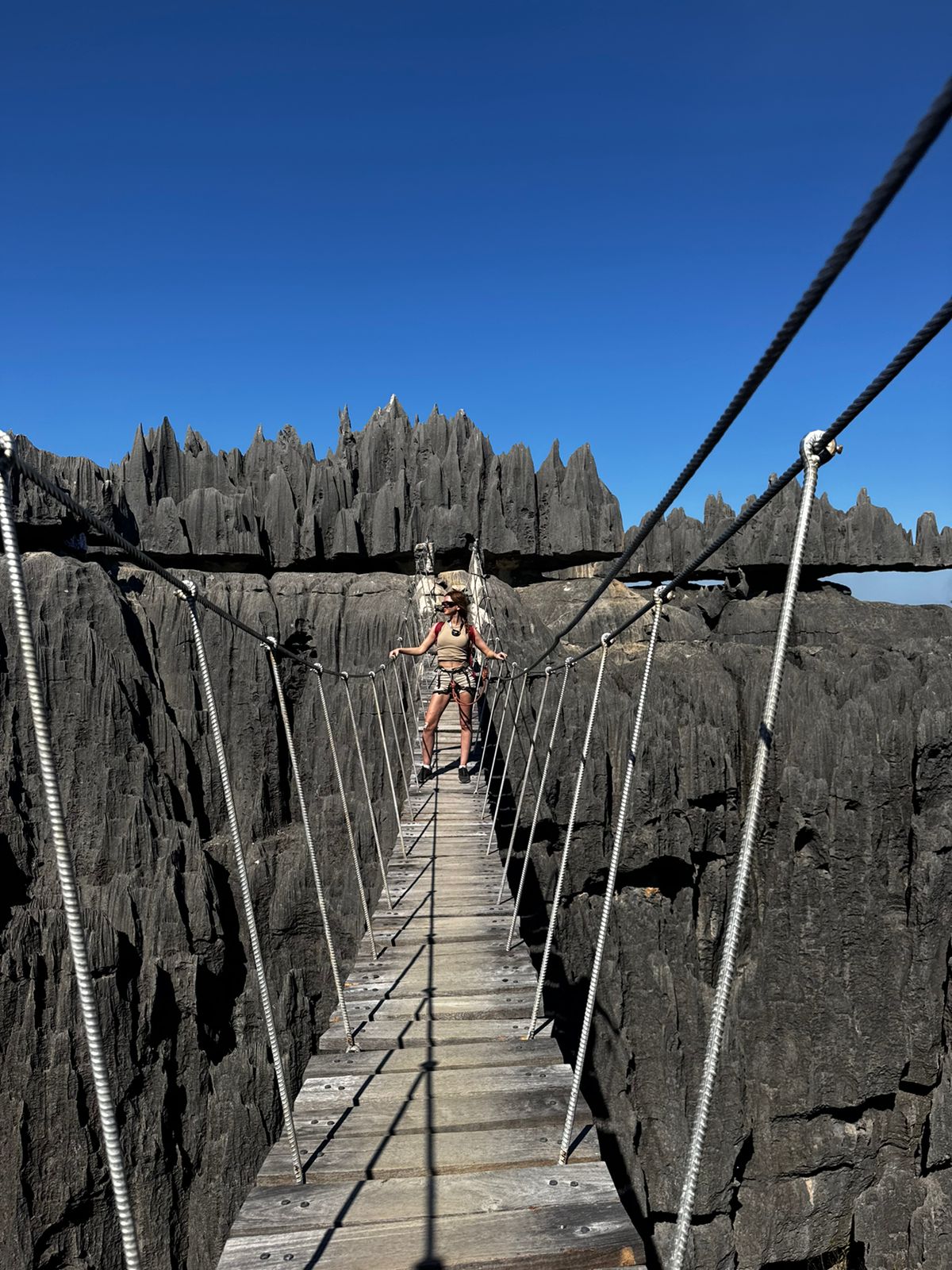
I was not the typical Madagascar tourist. Visitors come to this island nation to see its unique wildlife and admire dramatic landscapes: rainforests, deserts, canyons, lagoons, coral reefs. They come for adventure: rock climbing, kite surfing, scuba and snorkeling. They trek, backpack, camp. It can be rough and demanding. Distances are vast. Roads are poor. Lodges can be remote with few amenities.

I doubt Rick Steves has been to Madagascar. It’s probably not on many bucket lists. So why did I, an old, handicapped woman, come to Madagascar? Folks wondered, and gave me puzzling glances.
I wanted to see the lemurs. I wanted to escape mass tourism. I wanted something different, off the beaten-track. Madagascar checked all the boxes.

Because of my age and limited mobility, I had a private chauffeur guide, many different ones, during my visit. I was based at a comfortable hotel just outside of Nosy Be, Madagascar’s (Mada’s) popular beach resort. But I did not come to lounge on the beach. Nor did I come to trek or indulge in rigorous activity — however I did scuba dive. You don’t need the fitness of a marathon runner to enjoy Mada.


Cottages and pool at Nosy Be hotel.
Every day during my 6-day stay, a different adventure awaited: a visit to a lemur park; snorkeling and swimming with huge turtles; visiting a fishing village, a sacred tree, markets, scuba. My driver guides were terrific. They taught me so much about this intriguing country
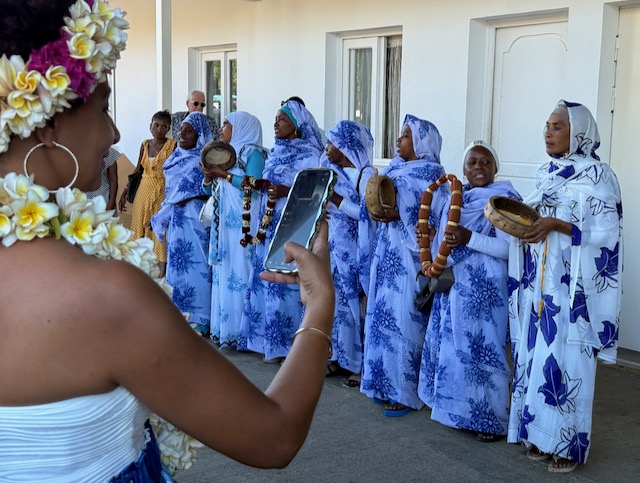
The island nation has a unique culture, a blend of Africa, Asia, (Indonesia) and the Middle East. Madagascar consists of 22 regions with 18 dialects of the Malagasy language, although people generally understand one another. French (Mada was a French colony until 1960) is spoken by many in the cities, as well as in government, business and education. English is not widely spoken, although it is common in tourist areas. Most of my guides spoke English, but some preferred to speak French, so we did.


More magnificent scenery. Photos by John Delmas
What makes Mada so unparalleled is isolation. It split from India 88 million years ago, and has been isolated ever since, “a living laboratory of evolution.” The island in the Indian Ocean is about 250 miles off Africa’s east coast. Land animals are locked in. Its ecosystem is distinct, with most of its wildlife endemic (found nowhere else).
Including lemurs. The park I visited is a private conservation reserve, home to 61 lemurs representing seven species. Most have been rescued from various parts of the country.


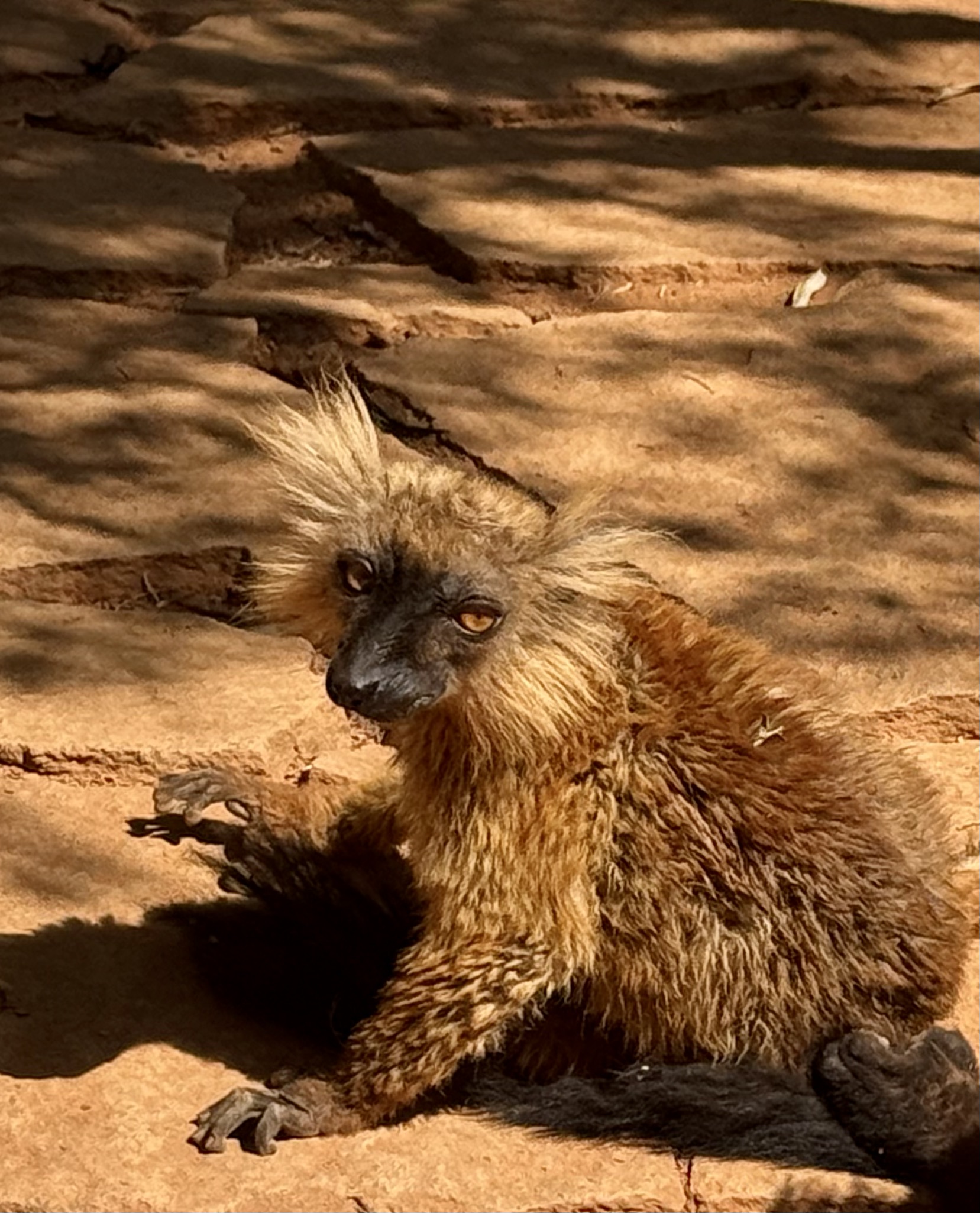
Madagascar is home to 112 species of lemur, guide Femo told me. All are endangered. Their habitat is being destroyed by slash and burn agriculture, logging and mining. People capture them for pets. And, eat them — not just the poor who are hungry, but well-to-do city dwellers who find the meat tasty and good for health.
“It’s a matter of education,” Femo said. “People don’t realize the lemurs are a national treasure.”
Different species live in different parts of the huge country, and, rather than socialize with one another, they fight, Femo explained. In the park, each species hangs out in its own territory. “Lemurs are not as intelligent as monkeys. They don’t steal,” I learned.

I saw dancing lemurs (they side hop), bamboo lemurs, gray mouse lemurs… plus ring-tailed lemurs which are the most common. They have 14 white and 14 black rings on their tails. All are adorable and entertaining — jumping, swinging, dancing, hopping. . During our trek up and down the hills in the park and alongside the Katsaoka River, Femo pointed to a hill on the other side of the river. It’s the site of a royal burial grounds, a place where people come to worship their ancestors and ask favors, he told me.

Mada is a land of spirits and taboos. For Femo, eating onions and pork is taboo. During the following days I learned much more about those spirits and taboos.

AI labels Mada the “best bang-for-your-buck” destination. It offers “good value.” Another AI quote: “Madagascar isn’t just another destination. It’s one of the last places left where the world still feels bigger than us. Go before the rest of the world figures that out.”
I’m very happy I went to Madagascar. Please, don’t tell Rick Steves about this very special place.

Future posts will focus on Madagascar’s strange traditions and rituals, markets and food, and more. If not a Tales and Travel follower, please sign up here. Trust me. It’s safe. Your address is not shared.
For tasty recipes, click here. Christmas baking? Try this winner of a holiday cookie: Christmas Cookies: Cranberry Walnut Delights

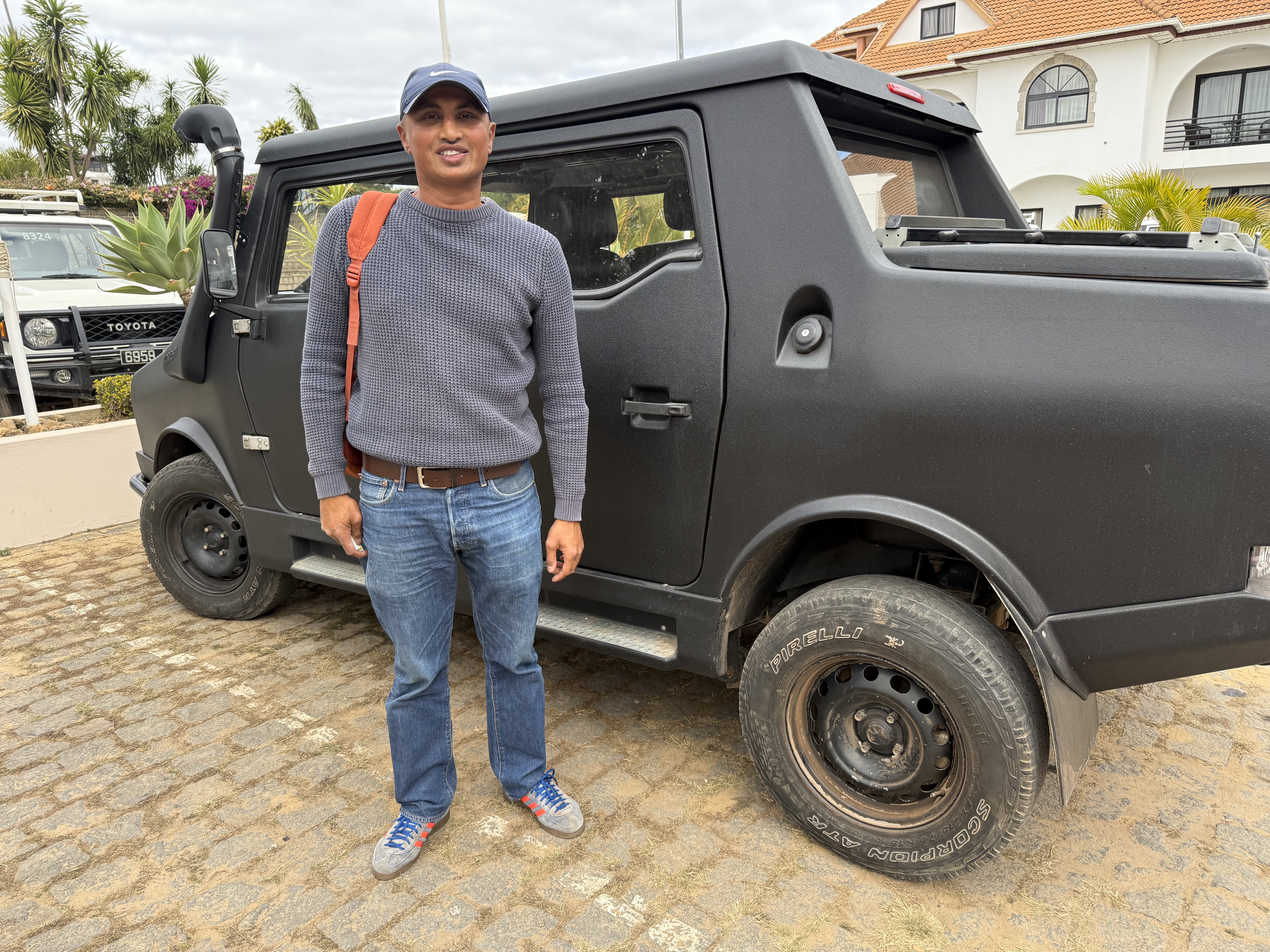
Malagasy John Delmas, above, organizes and guides visits to Madgascar. John was my guide/driver for two days. He was super, taught me lots. Contact his company. https://www.mada-discovery-travels.com
I booked my African adventure, South Africa (Kruger) and Madagascar, with Worldwide Quest, http://www.worldwidequest.com
.
7 responses to “Discovering the Unique Wonders of Madagascar”
-
Wonderful post as always. Thanks Leah. I have visited Madagascar and agree that it’s a very special place.
-
Thank you and Happy New Year, Tobi. Madagascar is very special and unique. I am very happy I visited.
-
-
Just amazing, the story and the wonderful pictures, thanks so much for sharing 🙏
-
OK, I want to go. The photos are great. It’s harder as you get older, but I’ve always found the best parts of traveling are the people you meet, the unexpected things that happen, and the challenges they present.
So many primate species endangered or on the brink of extinction.
-
You should go. You’d love Mada — and so would Tai. Most of the photos are by my fabulous guide John. I had fun times with guides, all so knowledgeable, understanding and patient.
-
-
I don’t think you will ever stop traveling to exotic adventure destinations, Leah. This one was a “must do” and it turned out to be the fascinating adventure you had hoped for. And, you got to see those adorable lemurs and so much more in Madagascar.
Kudos to you!
Karen-
I hope you are right, Karen. I love these adventures. There are still many places I want to explore.
-
 Tales and Travel
Leave a Reply to happily64dfa75244 Cancel reply