Back to Germany

Germany was my home for 28 years. Good times, wonderful memories – and fabulous friends.  Husband Bob and I recently returned to reconnect with many of those friends,  to visit old haunts, as well as other destinations that I will be writing about for the magazine German Life. (www.germanlife.com).

Maybe we’ve lived in the boondocks of rural France too long (since 2004).  Here life is tranquil, serene, quiet.  This time we found Germany a bit chaotic with monstrous traffic jams on the autobahns, construction sites  almost everywhere and  crowds of people in the city centers.  It’s hard to imagine that anyone could be unemployed in Deutschland with so much building in progress.

We spent several  nights with friends Klaus and Dagmar who live in Gerlingen just outside of Stuttgart. They urged us to take the U-bahn downtown to see the massive and controversial construction site for Stuttgart 21, the city’s  new railway and urban development project  which involves  57 kilometers of  new railways, including some 30 kilometers of  tunnels and 25 kilometers  of high-speed lines. Protesters still demonstrate at the site every Monday.  The project, which is estimated to  cost as much as six billion Euros, won’t be completed until 2020.  Another attraction adjacent to the site is the  new library, a modern and dazzling wonder in white by architect Eun Young Yi which has been likened to a Rubik’s cube puzzle.

Dagmar invited several of our friends for an excellent dinner, an antipasti of grilled vegetables, followed by  a  Swabian favorite,  stuffed breast of veal, all topped by  our very favorite German dessert, Rote Grϋtze, a yummy compote of red fruits.  Friend  Heti also entertained us with an amazing meal of Peruvian delicacies:  ceviche (fish  marinated in lime juice) and veggies, gallina picante parmesana (chicken with aji -hot yellow pepper), quinoa risotto with veggies, and for dessert, coconut flan and Tonka bean mousse.  All over the top.  More on those beans to follow.

Heti is an inspiration, and not just in the kitchen.  She recently lost 14 kilos on the Dukan diet combined with an hour of aqua jogging every day in the nearby Sindelfingen indoor pool.  When I lived  in the area, I frequently swam there year round.  There are also several outdoor pools for summer months.  Sadly, France is lacking in these first-class swimming facilities.

Klaus and Marianne, other friends from the Stuttgart area who frequently housesit for us in France, treated us to a delicious pasta lunch and a homemade Swabian apple pie at their new apartment.

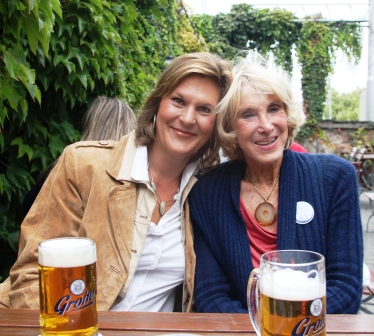
We took a trip north to the Darmstadt area to see more friends.  For years I worked for the military newspaper Stars and Stripes which was previously headquartered just outside the city.  A group of former colleagues met us at an Italian restaurant for a fun evening.  Special pal Andrea, whom I consider a surrogate step-daughter, and her husband Thiemo, joined us at Darmstadt’s famous brewery, Grohe, where we sat outside in the sunshine savoring the brew.  Another Darmstadt friend, Wilma, invited us for a delicious salmon dinner and stimulating conversation with her friend Erik.

Our travels also  took us to the Bergstrassee south of Darmstadt, Kaiserslautern, Augsburg, Munich and the Starnberg Lake district south of Munich.

For many years while I worked at Stars and Stripes, I lived in Jugenhiem at the northern end of the Bergstrasse in an apartment I called the “Treehouse.”  It was the top two floors of a former seniors’ home at the edge of a forest  and surrounded by tree tops.  We stopped for a visit, and it’s still the same – an idyllic hideaway in a jungle of green.

The best of the visit to the Bergstrasse, which extends 70 kilometers south from Darmstadt  to Heidelberg, and where many an ancient castle and castle ruins crown hilltops, was wine  The Bergstrasse wine region is divided into two parts, vines in the south in the state of Baden Württemberg, and those in the north in Hessen.  The former is Germany’s smallest wine region. German wines, as well as wines everywhere, have improved thanks to up-to-date knowledge and techniques, an expert told us.

For years German wines had a bad rep because “we exported the wrong wines, “ such as the  sweet Blue Nun, explained Maria Zimmermann of the regional tourist board.   Today German vintners are also well-educated, studying viniculture, not just learning the trade from their parents. We tasted some fine wines, and  Bob  made several purchases.

In the town of Weinheim, we toured a lovely garden followed by the best restaurant meal of the trip, an amuse bouche of scallops topping  a pumpkin salad sprinkled with mandarin oil, and a Hirsch (venison) medallion with an elderberry sauce and Steinpilze (boletus),  plus  parsley root puree. It was perfection.

Heppenheim is the quintessential Bergstrasee town with a market place of well-preserved half-timbered houses.  We joined an after-dark tour up and down the ancient streets and stairways, following a costumed story teller and her lantern carrying assistant.  Periodically they stopped with the story teller relating charming tales and fables of the region, most translated from old German into an English that rhymed.  Very impressive and a delightful, unusual experience.

The greatest number of Americans outside of the U.S., some 50,000 who are military or civilians working for the military, makes their home in the Kaiserslautern area. There I interviewed Wolfgang Tönnesmann, director of the Atlantic Academy, who had a life-size cardboard replica of Obama in his office. Like me, he is no doubt thrilled with the recent election results.

My quest to try local food specials in Kaiserslautern led us to the town’s only half-timbered building and the restaurant Spinnrädl. We were in the Rhineland Pfalz area and the restaurant served up  Pfälzer dishes written in the local dialect on the menu:  Brotworscht, Saumaa, Lewwer (Bloodwurst, potatowurst so named because it is stuffed into a pig’s stomach or Saumaa) and liverwurst. Hearty fare accompanied by Grumbeerstampes   (mashed potatoes).

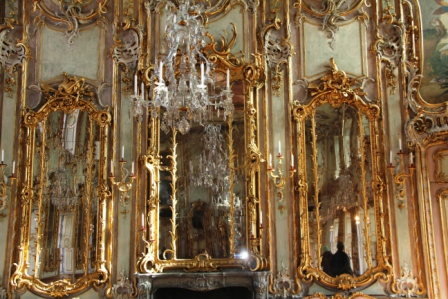
Jakob Fugger (1458 – 1525), a wealthy merchant (according to a guide, “he had more money than Bill Gates) put Augsburg on the map.  The Fugger family, in particular Jakob, was into finance and trade.  Jakob, known as the Empire’s banker, and  not unlike Bill Gates, had a social conscience.  He founded the Fuggerei, a section of the city for the town’s poor, the world’s oldest social housing which still exists with 140 apartments.  Rent is 1 euro per year.  We followed a fascinating tour of the area, and also visited a dazzling Rococo banquet hall, the Schaetzler Palais (1767), as well as other local attractions.

The Munich visit focused on food with visits to the city’s legendary outdoor market, the Viktualienmarkt, its classy food emporiums, Dallmayr and Käfer, as well as the food empire of Alfons Schuhbeck who has a collection of shops, including a Michelin starred restaurant, in the Platzl near the Hofbräuhaus.  Friend Heti clued me in on Schuhbeck who is huge on the German food scene.  It was at his incredible spice shop where she purchased the Tonka beans which come from South America for that exotic dessert.

Our visit wound up at the Starnberg Lake, one of several lovely lakes  south of Munich. All the sailboats which blanket the lakes in summer had been put to bed, but the region had plenty of charms for a fall visit.

A  must was a visit to the nearby Andechs Abbey above the Ammersee, another one of the regional lakes.  After admiring the Abbey’s church and its stunning Rococo stucco décor and frescoes,  we moved on to the terrace beer garden.  Monks have been brewing beer at Andechs since 1455.  These days seven different kinds of brew can be ordered, as well as Bavarian food favorites.

Other Starnberg highlights are the Baroque St. Mary’s Minister in the town of Diessen and  the lakeside Buchheim Museum noted for its collection of Expressionist works.  Last but not least, a wonderful bike ride following a cycle route along the Starnberg Lake with an outdoor lakeside lunch stop, as well as many breaks for postcard photos of the lake framed by distant Alpine peaks. (For more photos, see slide show to follow.  Comments are welcome. )

For more information:

www.diebergstrassse.de

www.augsburg-tourismus.de

www.munich-tourist.de

www.sta5.de

www.andechs.de

This slideshow requires JavaScript.

Family Fun in the US

Husband Bob’s family (he has eight brothers and sisters) was planning a big family reunion in Ohio this past summer.  Of course, we planned to attend.  What about my family?  Why couldn’t we also have a reunion?  I planted the idea with brother Steve who lives in Boulder, Colorado, a location which seemed the best for such a gathering.

Majestic Colorado scenery

He was not overly enthusiastic, but agreed.  Of course, brother Tom from San Francisco would attend.  Then we sent out word to cousins, many of whom I had not seen since we were children some 40 – 50 years ago.   From Florida, South Dakota, and New Mexico they came, as well as a nephew and his wife from Kentucky.  Unfortunately brother David, his wife Joan and son Dan from Kentucky could not join the party, nonetheless it was a smashing success with 22 in attendance.

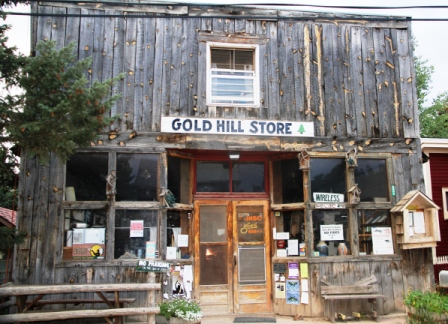
Everyone was in awe at the classy cocktail party cousin Sean and his partner Jerry hosted at their gorgeous home in Boulder. Another fun event was a chartered bus ride up in the mountains for dinner at the Gold Hill Inn in a funky old town by the same name.

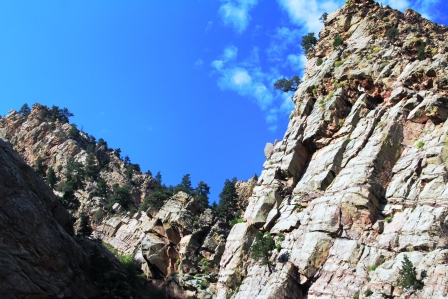
With Steve and his wife Yoshie and son Tai, some of us visited the Eldorado Canyon outside of Boulder where we watched climbers scale sheer walls of rock – a mind boggling spectacle.  We also toured Boulder and its farmers market.  For many (the Democrats in the group), an exciting bonus was attendance at an Obama speech at the University of Colorado.  Unfortunately it meant standing in line for hours before being admitted to the venue.  My new knee was not up to the wait, so Bob and I drove back into the mountains to the Rocky Mountain National Park.

On to Ohio for another remarkable event.  But first we spent a few days in Winchester, Virginia, where stepson Rob and his two children, Sam, 8, and Lang , 6, live.  Time there for me to do my Ami shopping (everything seems so much cheaper in the U.S.)   I always leave plenty of room in the suitcase for purchases.

Together we drove to Ohio.  We stayed with Bob’s brother, John, and sister-in-law Mickey, who always provide deluxe accommodations in their spacious and beautiful home in Wadsworth.  The reunion festivities got underway with a dinner at a restaurant Friday evening, followed by a slide show of the past.

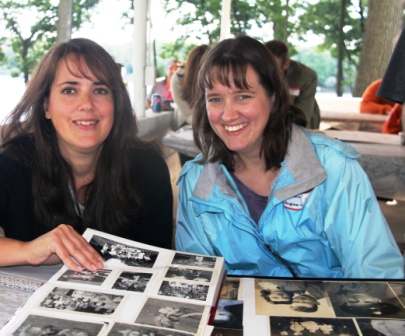
Cloudy, cool weather did not dampen the enthusiastic ambience for the main event the following day, a catered picnic at a lodge pavilion on the edge of a picturesque lake.  This was a major reunion with some 80 in attendance, many from California.  Some came with photo albums filled with memories.

Brothers, sisters, children, grandchildren, cousins – all ages.  It was amazing, and the pavilion was perfect with an adjacent playground for the kids, and plenty of space for the adults to wander around and chat with those they had not seen in years.  Thanks to diligent internet research, stepdaughter Kellie, who lives in New York City, tracked down some cousins who live in Pennsylvania.  They also came.

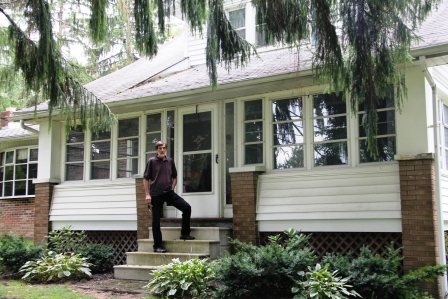
A visit to the family house where Bob and his brothers and sisters grew up was especially meaningful for the siblings.  Current residents were not home, but agreed that the family could walk around the property.  They toured the terrain, reminiscing about long gone chicken coops, fruit trees in the orchard, a small house still standing that Bob and his brother John had built.

We spent our last few days in the US in NYC with Kellie at her elegant apartment in Soho.  One can never tire of NYC.

It’s fun, gratifying and simply wonderful to reconnect with the past, to relive old memories, to become reacquainted with childhood companions.  Bravo for reunions!

See the photo album below for more reunion photos, and more of the US.  For a dip with a kick, see the recipe, “Spicy Peanut Dip,”  in the column at right.  If you’d like to read more of my tales and adventures, click on “Email Subscription” at top right of post.  Comments are welcome.  Click “Leave a Reply” 
This slideshow requires JavaScript.

New Zealand’s Extraordinary Fiordland

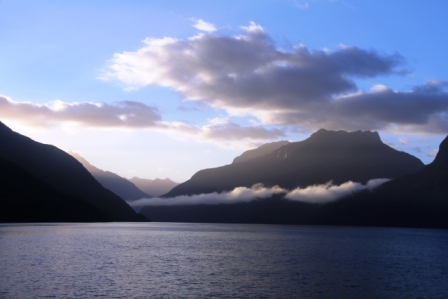
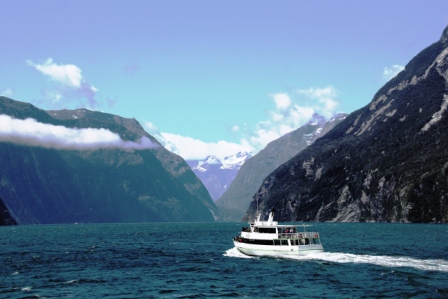
It’s all about scenery: dramatic, magnificent, mystical. We awoke on board a ship in Doubtful Sound, the largest of the area’s 14 fiords, to watch the sun creep over the towering cliffs which surrounded us, casting mirror images of the mountains on the sparkling water.  The only sound was a raging waterfall plunging from high above into the deep inlet. Waterfowl flew above.

We were in awe, mesmerized by the splendor of nature, the beauty all around in this desolate paradise.  Every day during our five-day visit to the region last November was filled with more overwhelming, spectacular sights.

On New Zealand’s South Island, Fiordland National Park is a World Heritage area and the country’s largest national park. The fiords, narrow inlets with steep sides carved by glacial activity, indent Fiordland’s West Coast.  In addition to exploring the fiords by boat, you can hike legendary trails in the mountains, trek through primeval forests and enjoy thrilling views from a seaplane.

Husband Bob and I did a bit of all.  We also enjoyed an exciting boat adventure in a Glowworm Cave through eerie darkness to a grotto where thousands of tiny glowworms glimmered on the walls. It was hard to believe this was a natural phenomenon and not an amusement park attraction.

Our Fiordland base was the town of Te Anau from where we set off for our first fiord excursion to Milford Sound. Early European settlers who were not familiar with fiords called them “sounds” which are actually river valleys flooded due to land sinking below sea level.

A bus trip on the Milford Road through the National Park leads to the Sound. There’s grandiose mountain scenery en route, with stops for photos.   And, once on board the ship sailing through the fiord’s National Geographic scenery, it’s hard to put the camera down.

On the way back to Te Anau, we stopped for a hike led by a guide to a summit.  We crawled under fallen logs en route, jumped over streams, through woods to open spaces above the tree line with superb views in every direction. By the time we reached the top it was raining. Our guide pulled out a thermos from his backpack and served us tea and cookies in the drizzle.

More hiking, but at a lower elevation, was on the next day’s agenda, a nature walk along Lake Te Anu through a dense beech forest.  The guide provided fascinating commentary on the flora and fauna, including the illusive kiwi, the country’s flightless nocturnal bird and national symbol.

Moss thrives in this dark green paradise and can be a meter deep. Step off trail and onto the lush carpet which is like a sponge, squishy strange to sink into.  Along the trail all sizes and varieties of forest ferns grow in abundance.  Kiwis (the people) are passionate about the environment and especially their bird population.  Our guide pointed out many species, including ducks which nest in tree tops.

Fiordland, we learned, has 200 rain days per year, dumping between six to eight meters of water each year. During our Doubtful Sound cruise, we experienced some of that rain. But it not dampen the spirits of those on board who wanted to try sea kayaking.  After our miserable failure with this sport which plunged us into the icy sea (see previous post: Misadventures in New Zealand), we stayed safe and dry on board.

During our cruise through this remote and romantic fiord, we saw penguins, seals and dolphins.  We marveled at haunting dark skies and fantastic cloud formations.

A different but exciting boat ride ended our Fiordland visit. We boarded a speedy jet boat on the Upper Waiau River to Lake Manapouri.  From our craft we boarded a float plane – tricky to get on this plane which was bobbing in the water – for a thrilling aerial view of the stunning countryside.

Rudyard Kipling called Milford Sound “the eighth wonder of the world” I think the same could be said for all of Fiordland.

For more on Fiordland, see http://www.fiordland.org.nz

Watch the slide show below for more outstanding scenery.  For summer grilling, try my old standby: Grilled Pork Tenderloin with Mustard Cream Sauce.  See the Recipe list on the right.

If you’d like to read more of my tales and adventures, click on “Email Subscription” at top right of post.  Comments are welcome.  Click “Leave a Reply” 

This slideshow requires JavaScript.

Down Under Delights – and Disappointments

“Be sure to climb the Sydney Bridge.  It’s amazing,” friends advised.  So, on our visit Down Under last November, we did —and are $524 Australian dollars poorer.  (The Australian dollar is about at par with the U.S. dollar.)

Yes, $212 per person for this “once in a lifetime” experience.   Who could afford to do it twice?

Our conclusion: A rip off.  Not that the experience was without thrilling moments.  And, the views are dynamite.  But, think of the gourmet meals that $524 could have purchased.

We joined a group of 12 others for the 3 ½ hour adventure.  The first hour was spent getting attired:  a loose fitting protective body suit with a belt from which a carabiner dangled, a head set, a baseball cap. Then, practice. We had to climb and descend a ladder, attaching and releasing the carabiner to a cable.  For security, climbers are attached to a cable throughout the climb.  We listened to safety briefings, warnings etc.  The adrenalin was in high gear.

At last we were off – a single file behind the guide who kept up a commentary heard on the head set. The first part in the guts of the mammoth steel structure was not too exciting, just lots of steps and long stretches across cat walks.  Once we started climbing outdoors, precariously  on the edge of the bridge,  a strong wind whipped around  us.  We were so high, it seemed as if we could touch the sky, and the water below appeared to be miles and miles away.  It was all  exhilarating with spectacular views in every direction.

We stopped for photos.  But, not with our cameras.  Personal cameras are not permitted – too dangerous.  An official bridge photographer was on the scene.  Each couple or individual was photographed with the appropriate spectacular background. This took time, too much time. There were five of these stops, each with a slightly different background.  And, we usually had to wait for the group ahead to finish before our group moved up to the perfect photo slot.

Plenty of time to ponder the scenery, and to look down. The Sydney Harbour Bridge, at 440 feet from top to water, is the world’s tallest steel arch bridge.  That’s a huge drop, and scary to view. The guide added to the fright factor with tales of those who plunged to their deaths.  Sixteen workers died during construction which was completed in 1932. The sight that amazed me during the climb was a lonely bird in his nest built on steel beams that had to be higher than any tree.

The finale of the “climb of your life” was aggravating.  After we had changed back into our street clothes, we proceeded to a room with pretty young girls sitting behind computer monitors.  Here’s where we could get those photos, we thought.  We were right.  Give your name and your individual photos pop up on the screen. For a mere extra $25.95 per photo, you could purchase a picture souvenir.  We passed, content with the one complimentary group shot.

Others in the group (the elderly gentleman from Chicago, the honeymoon couple, the couple celebrating a birthday…) eagerly parted with the extra cash for the pricey souvenirs.  They all seemed happy with their costly climb.  Perhaps we’re jaded?

After the experience, we headed to a nearby pub for a much needed beer.  We related our disappointment to the bartender.  “I wouldn’t do it.  You can walk across the bridge for free.  It’s not worth it,” he said.  We agree.

While the bridge climb left us somewhat underwhelmed, we were overwhelmed with the Sydney Opera House.  During a guided tour, we learned the fascinating background to this iconic structure. Both inside and out, it seems so ultra modern.  Yet, it was constructed between 1959 and 1973.  Glass for the gigantic windows came from France.  The ceramic tiles on the exterior are from Sweden.  Its exotic shape of undulating sails permits self-cleaning by the rain.  The acoustics in the large auditoriums are such that no microphones are needed….

Danish architect Jorn Utson designed the incredible structure.   Building costs far exceeded original projections.  In 1966 due to a conflict over finances with a new minister of public works, Utson resigned, vowing never to return to Australia.  He died in 2008 without seeing his completed masterpiece, which was declared a UNESCO World Heritage site in 2007.

Other delights of the Sydney visit included the city’s bustling fish market, a ferry excursion to Manly where we watched surfers – and our reasonable room ($135 per night) with an exceptional harbor view at the Macleay Apartment Hotel (www.themacleay.com).

We found Sydney – actually all of Australia – expensive.  Here we had a mini kitchen so we could save on meal costs.  The hotel location in Potts Point was ideal with both delis and a super market nearby for purchase of take-home, ready-to-eat meals.

Well-traveled friends also advised that we visit the Great Barrier Reef during our sojourn in Australia. Many, many year ago, I took the required course and earned scuba diver certification.  I’ve only been on a few dives, but as the Great Barrier is said to be one of the world’s best diving sites, I had to experience it.

We flew from Sydney to Cairns where we rented a car for a 1 ½ hour drive north to Port Douglas, an inviting seaside town of restaurants, quaint shops – and excursion boats to the Great Barrier Reef.  Husband Bob is not a diver, but he joined the party, 80 tourists, on the dive/snorkel boat.

I was nervous since I had not been diving in so long.  I joined a “beginners” group and once in the water, my confidence returned.  The coral formations were intriguing, even mystifying.  But, they were dull — beige and bland in color.  A far cry from the vivid colors of the postcards.  And, the fish were not as plentiful as the postcards depict.  I did see a gigantic clam, a ray glued to the bottom, some bright yellow fish.    I submerged three different times, but each time returned to the surface a bit disillusioned.

I was not the only one.  Several on board expressed the same feelings.  One diver said there were too many of us.  We scared the fish away.  Later someone said the coral had been killed by El Nino. (According to an article on the web, El Nino bleaches the coral.)   Jakob, the friendly proprietor of our Port Douglas hotel, said you need to get accustomed to the underwater surroundings, to adjust your eyes, and then you will see color.  “All those postcard photos are made with strobe lights,” he explained.

I am still happy I had the chance to dive again, but what really made me happy was a swim in an idyllic pool at the Mossman Gorge in the Daintree National Park not far from Port Douglas.  For me, swimming is right up there after skiing.  This body of clear, cool water with huge granite boulders along the sides, as well as in the middle, surrounded by lush jungle, was a bit of paradise.  The pool is in a section of the Mossman River, touted as  “without crocodiles.”  But, there were lots of birds, including a wild turkey poking among the picnickers along the shore.

We saw more feathered friends at Habitat, a fun place where you can dine in a large enclosed area among birds, small and large and brightly colored,  who fly above, prance around on the ground, squeak, chirp, sing, and screech.  A caretaker walks by and gladly perches a bird on your shoulder.  Habitat also has more wildlife: kangaroos, koalas, wallabies, crocodiles.

We rented bikes for the trip to Habitat, just outside of Port Douglas, and rode back along the beach, which, except for a jogger or two, was deserted, even though it was a hot, sunny day.  Jelly fish, we learned.

The Palm Villas, our home in Port Douglas, was ideal – reasonable, excellent location, lovely pool, helpful proprietor.  We paid about $95 per night for a spacious studio apartment with kitchen and balcony on a quiet street. www.palmvillas.com.au

In case you’re tempted, more on Sydney Bridge climb at www.bridgeclimb.com  More on diving excursions in the Great Barrier Reef: www.poseidonpcruises.com.au

Have you been to Australia, climbed the bridge, been diving at the Great Barrier Reef?  Share your views. Click on “Leave a Reply” after the slideshow below.

If you’d like to read more of my tales and adventures, click on “Email Subscription” at top right of post.    New Zealand’s magnificent Fiordland  coming soon.  And, a new recipe appears with each new post.

Learn about the famous melons of Provence.  Try a tasty melon salad.   See “Melon Salad with Feta and Pine Nuts” under recipes at right.


This slideshow requires JavaScript.


Bicycling with Battery Power

Press a button on the bicycle handlebar.  Whee…, you soar full speed ahead.  It’s like magic, a thrilling sensation.

The power of electric bicycles.  I was excited.  Husband Bicycle Bob (BB), a hardcore macho cyclist, less so. Yet, we enjoyed our recent all-day excursion on these fun bicycles in the Luberon hills of France’s Provence.

Electric bicycling seems to be surging in popularity.  Baby boomers getting too old and out-of-shape for demanding pedaling?  More folks wanting a bicycle excursion without stress and sweat?   Serious cyclists who want to cover many miles, including some steep ascents where a power boost would be welcome?

Whatever the reasons, electric bicycles offer an enjoyable and easy alternative to conventional pedaling.  We rented these sturdy monsters for a day in the Provence town of Gordes with the company Sun-E-Bike which just started renting the bikes, valued at 1,300 euros each, at Easter.

Florian Machayekhi, who spoke English, gave us a briefing. You must pedal for the motor to be in operation, he explained.   There are three settings for different levels of motor power.  For steep hills, for example, you may wish to select the highest.  When going downhill, or in the flats, you can press a button to switch off the motor and pedal as with a regular bike.  Sun-E-Bikes have seven speeds.

We have done a lot of bicycling and did not intend to pedal with auxiliary power all the time.  However, these bikes are heavy, 25 kilos, therefore not quite like your bike back home.  I always shut the power off for downhills, and, lest being a real wimp, tried to keep it off in the flats. But, as this is Provence where the winds often blow, I was happy to press the power button to offset those nasty gusts produced by the Mistral.  And, I was no martyr in the hills, loving the easy and effortless climbs.  BB, of course, had to do it the hard way most of the time.  For the first time on cycle trips, I beat him to the top.  So, I cheated…it was still fun being first.

Florian had given us a map with a 40-kilometer itinerary through some Provence highlights: Fontaine de Vaucluse, Saumane de Vaucluse, Isle sur la Sorgue…  He suggested we have lunch at the latter where we could exchange the batteries.  The bike battery will last for 35 kilometers.  When we arrived at Les Terrasses du Bassin, the restaurant/battery exchange point, our batteries still registered full – all four battery lights still glowing.

We enjoyed lunch on the restaurant terrace where the river forms a large pool of crystal water popular with hungry ducks, but did not bother to get a new battery.  Almost a mistake.  Several hours later when we neared Gordes, the quintessential perched village and our destination, my bike was down to one battery light.  And, the last part was five kilometers all up hill.  I kept the motor setting on the lowest, thus using less power, and said a prayer that it would get me all the way back to the rental station.  I did not want to pedal that weighty bike up this killer ascent.  Luck was with me.  I made it back under battery power.

We cycled on May 8, a holiday in France, so the walkway through the forest to the scenic source of the Sorgue River at Fontaine de Vaucluse was crowded with strollers.  Riding became too risky, so we pushed the bikes up the path along the raging river.  Not easy, but the sounds and sights of the water below charging over rocks and boulders detracted from the effort.

Isle sur la Sorgue, known as the Venice of Provence, is a pleasant spot for a lunch break.  The Sorgue River splits into numerous streams flowing through the town not unlike Venetian canals.    Pedestrian bridges decorated with flower boxes and mossy waterwheels add to the picturesque ambience.

Between the towns on our itinerary we cycled past acres of vineyards, orchards, fields ablaze with wildflowers and weathered stone farm houses, all with the Luberon hills as a backdrop.

Pascal Hernoult welcomed us and the bikes back in Gordes.  The new electric bike venture is “encouraging,” he said.  “People return with big smiles.  They say it’s ‘formidable.’  They are not tired.”

Count me among those happy electric bicyclists.  Even BB admitted he was glad for the battery power to get back up that last long hill.

Watch the slideshow below for more photos.  Enjoy a tasty treat of the season: Hsin’s  Strawberry Cake.  See recipe in column at right.   Next blog post to focus on French health care — a first person account based on my upcoming knee replacement surgery.  Don’t miss it.  Click on “Email Subscription” at top of right column.

This slideshow requires JavaScript.

Sun-E-Bike has 200 electric bicycles for rent at three different sites in Provence: Gordes, Bonnieux and Lauris.  Cost for rental per day is 35 euros which includes a helmet and yellow safety vest.  Half-day rental (9 a.m. to 1 p.m. or 2:30 p.m. to 7 p.m): 22 euros.  Insurance: 2 euros per day.  A deposit of 200 euros or an ID card such as passport or driver’s license is required. Maps with suggested itineraries and battery exchange points are provided. Baby seats, baby trailers and panniers can be rented for an extra charge.

SuneE-Bike also offers bike rental for longer periods with hotel overnights and luggage transfer provided.  See the web site for details: www.sun-e-bike.com