INTRIGUING INDIA: RELIGION

sikh.11
Golden Temple at Amritsar

Hindus, Muslims, Buddhists, Sikhs, Christians – all are found in Incredible India.

“In religion, all other countries are paupers, India is the only millionaire,” wrote Mark Twain in Following the Equator.

sikh.19
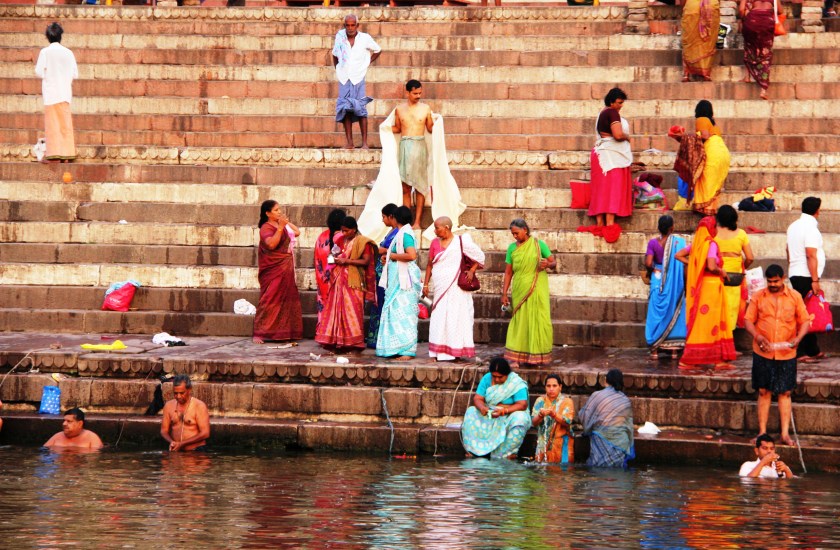
Bathing in the sacred Ganges.

The majority, 80 percent, are Hindus. In Varanasi on the banks of the Ganges we witnessed the early morning Hindu bathing ritual, hundreds plunging into the non-too clean water which they believe is holy and will wash away all sins. At night, the banks of the river are a smoldering mass, fires and smoke from cremations. Many come to die in Varanasi. Death in the holy city is said to free one from the cycle of birth and death.

sikh.18
Cremations on the banks of the Ganges at Varanasi.

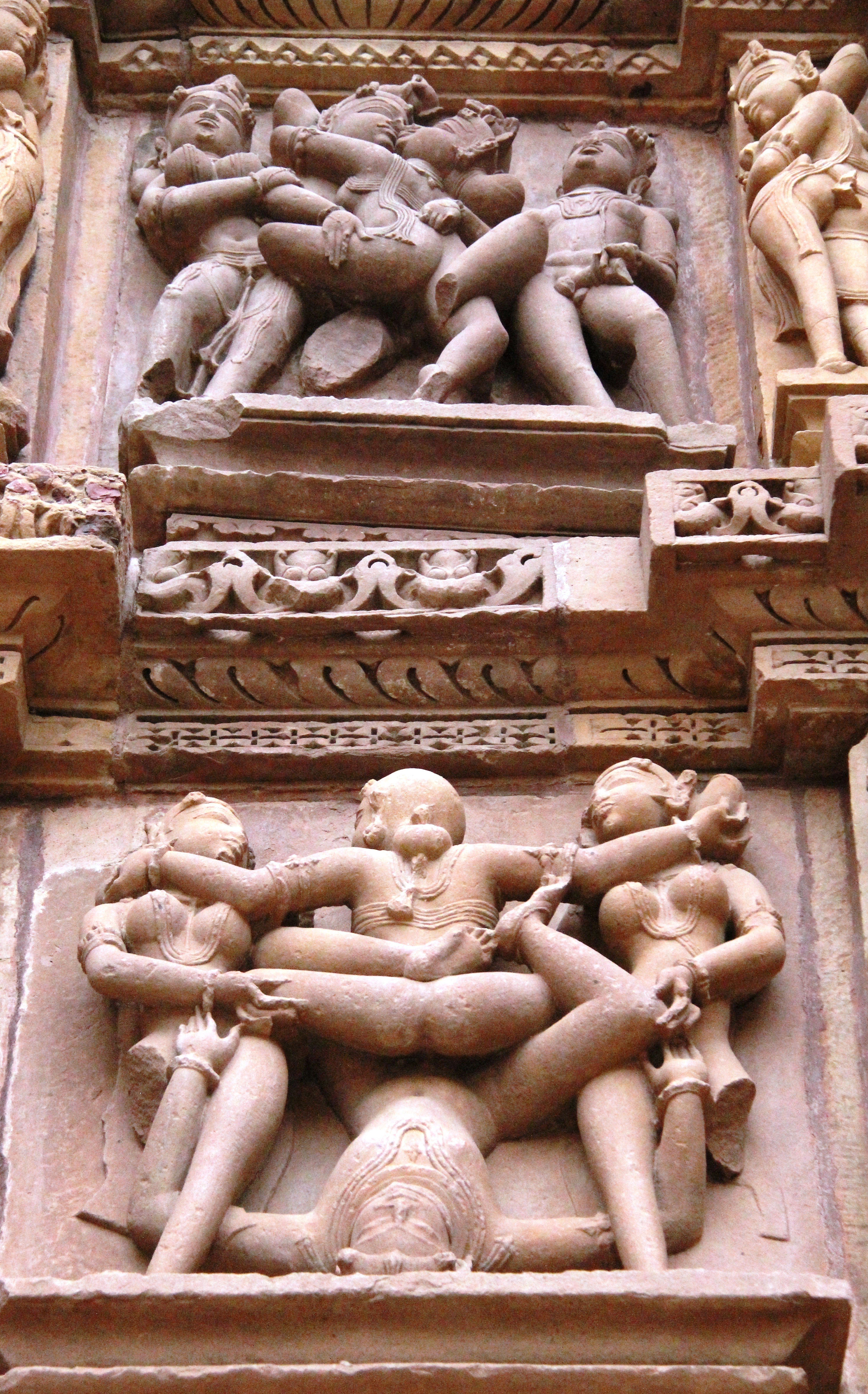
Khajuraho, a wondrous place with numerous Hindu temples, is a popular site, more for the erotic sculptures on one of its temples than the stunning temple architecture.

khajuraho.1
Khajuraho, site of many temples, is one of the “seven wonders” of India.

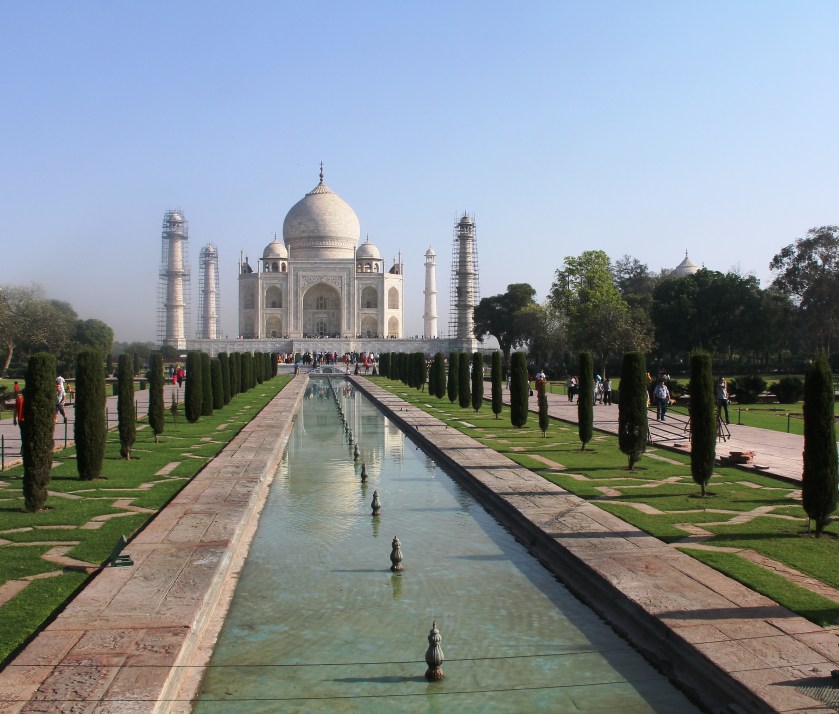
The Taj Mahal – India’s architectural treasure, the dazzling white marble mausoleum built by Emperor Shah Jahan for his second wife who died in childbirth in 1631, is a Muslim monument decorated with carefully inlaid Koranic verses.sikh.taj2

And Amritsar, home to the Golden Temple, the spiritual and cultural center for the Sikh religion, is yet another fascinating religious shrine. Sikhs compose only two percent of the Indian population, yet Sikhism is the fifth largest among the world’s major religions.

sikh.2
Sikhs congregate at the Golden Temple day and night.

The religion was founded in the early 16th century by Guru Nanak and gurus who followed him. Nanak preferred the pool at Amritsar (“Pool of Nectar” in Punjab and Sanskrit) for his meditation and teaching. The site in northern India, today not far from the Pakistan border, became a pilgrimage center where a great temple was built. Perhaps more than the temple, it is the Holy Book, Guru Granth Sahib, the sacred scriptures of the Sikhs, enshrined inside which draws many pilgrims today.

Flowers cover the holy cook.
Flowers cover the holy book.

Twice per day an amazing ceremony focused on the book takes place at the temple. Thanks to guide Alok, we witnessed the lively and curious evening ceremony when the book is carried to its bedroom. Behind golden doors, it spends its night on a bed under an elaborate canopy.

We joined others in a long waiting line to view the book before the evening procession. While waiting, I had the chance to talk to a friendly Sikh who moved from Amritsar to London 17 years ago. London, where the gentleman has a fish and chips shop, has a large community of Sikhs. He was with his son. They, like many others, had a gift to lay near the book where a holy man, surrounded by other holy men sitting cross-legged on the floor, reads sacred verses.

sikh.12
Evening procession transferring the book to its bedroom for the night.

After viewing the book, worshipers, all singing, line up behind ropes to view the ceremonial procession. The book, much like statues in Christian processions, is carried on a golden platform festooned with garlands of flowers.  A group of holy men follows behind, chanting. A trumpet blower announces the arrival of the book. There are stands where worshippers can take communion. It is a joyous, festive spirituality.

At 4 a.m. the same ceremony is repeated when the book is taken from its bedroom back to the temple.

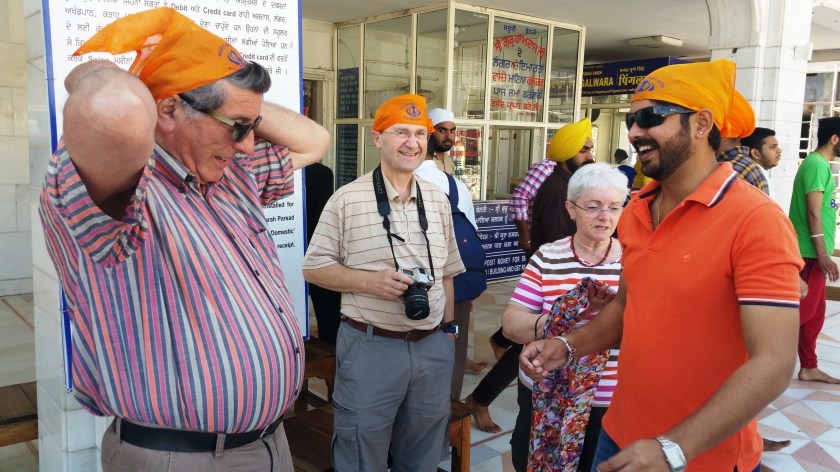
We returned to the holy site the following day and were free to wander around this mystical place after leaving our shoes near the entrance and covering our heads. Vendors sell souvenir bandanas. Sikh men are not permitted to cut their hair and are easily recognized by their beards and colorful turbans. Sikh women wear either a turban or cover their head with a scarf.

sikh.13
Heads must be covered at the Golden Temple. Mini scarves can be purchased.

Before entering the sacred grounds, feet are washed by wading through a shallow pool.

sikh.3
All are welcome to a free meal at the Golden Temple.

The complex is large. It’s a delight to slowly stroll and enjoy the scene, the people, the peaceful ambience, the shimmering golden temple. Selfie photos in front of the temple are popular. Families walk around the lake, taking pictures of one another. Some tired souls just lie down and rest in shady spots. An underground spring feeds the sacred lake where some pilgrims immerse themselves to cleanse their souls. The complex also includes enormous pilgrims’ dormitories and dining halls where all, irrespective of race, religion, gender, are lodged and fed for free.

Feeding the hungry is a tradition among people of many faiths, but Sikhs may get first prize for generosity. The Golden Temple serves 80,000

80,000 free meals are served every day.

simple vegetarian meals every single day of the year – all paid for by donations. Anyone can partake.   Volunteers cook, serve meals and wash the dishes.

Groups sit on the floor rolling dough for naans (Indian flatbread). Nearby other groups smoother naans with a type of butter. Enormous vats of various concoctions simmer on stoves.

Some who eat at the temple volunteer to help out to “pay” for the food and assist the permanent volunteers. Sikhs who live in other countries often come and stay at the temple for several months to help in the kitchen.

Volunteers do all the food prep.

The Golden Temple’s past is not all peace and love. In June 1984, Indian Prime Minister Indira Gandhi ordered an attack on armed Sikh militants holed up there. Over 500 people were killed in the ensuing firefight. Sikhs around the world were outraged at the desecration of their holiest site. Four months after the attack, Gandhi was assassinated by her two Sikh bodyguards, leading to a massacre in which thousands of Sikhs lost their lives.

Most of the damage has been repaired by the Sikhs themselves who refused to allow the central government to take on the task.sikh.14

More on India soon—Dharamshala and the Tibetan refugees.  If not already a Tales and Travel follower, sign up (upper right) so you will not miss this and future posts. Your address is kept private and never shared.

sikh.20
Foreground:  Ganges bather. Background:  Yoga session.

Like my blog? Tell your friends.   I love to know what my readers think about my posts – feedback is welcome. makeread

Erotic sculptures at Khajuraho.

It’s summer and melon season – perfect time for a light, refreshing dessert. I brought Chilled Melon with Lime and Ginger to a recent pot luck. All loved it. Click HERE for recipe and scroll down for more of my tried and true recipes.


Follow Tales and Travel on Facebook:  http://www.facebook.com/talesandtravel

Follow me on twitter: @larkleah


Intriguing India


lede

In April I joined my friend Wilma and 11 other German tourists for a 15-day tour of northern India and Kashmir. The advertising campaign touts the country as “Incredible India.” It is – as well as intriguing. Following are some aspects I found incredibly intriguing during my travels.cow.2

PEOPLE: My favorite part of India. They are the friendliest, kindest, gentlest, most open and talkative folk. Indians often approach and start a conversation. Where are you from? Do you like India? They ask to have their photo taken with you, and they eagerly pose for photos.   On a train, they share their food. In Kashmir, I was invited to join a picnic. When I had a nasty crash during one of my solitary escapades in the boondocks of Kashmir (details in future post) two young men came to my aid, offered comfort and a ride.

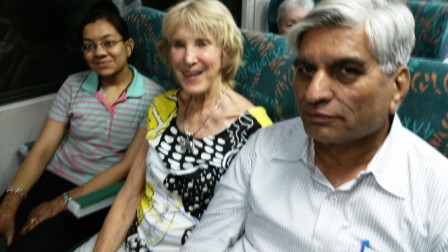
My seat mates on our train ride to Agra were delightful: A retired gentleman and a recently-married young woman, Shruti. We chatted non-stop.   I learned a lot about India.

people.5
Train companions

Poverty in the country is overwhelming. There are beggars. At the tourist sites, the souvenir sales crew do pester. But, if you reply with a firm NO, they usually back off. Many have mastered salesmanship. “You look like a movie star,” a crafty fellow at the

people.4

Khajuraho temple known for its erotic sculptures told me. My hair was a disaster. I was hot, sweaty, tired and felt like an ancient hag. He won. I bought the bronze bowl with the sexy etchings which I really did not want, but now I am glad I have this bizarre treasure which brings back fun memories.

Despite the body-to-body throngs in many places, I felt safe in India. I was careful and cautious with my purse and camera, but never felt that someone would accost me and grab my valuables.

Many of my German travel companions were on their fourth or fifth trip to India. “People” is one of the major reasons they keep returning to India, they said. “The people are so friendly. They have so little but they seem satisfied. They have lebensfreude (joie de vivre, zest for life). It fascinates me,” observed Sepp.

marriage.1
Celebrants at a country wedding.

MARRIAGE: Some seventy percent of marriages in India are arranged. Shruti, 27, showed me pictures on her phone of her December wedding with 1,000 guests in attendance. She had spent a mere 10-minutes with her husband-to-be before the wedding. They asked each other questions about what kind of life they wanted, what they wanted in a mate. His answers matched her desires. She is obviously happy with her new life and man, and glowed when talking about him.   She said some of her friends had married for “love,” but she preferred to honor her parents’ wishes and let them find her a husband. For India, she married late, but “I told my father not to find me a husband until I finished school,” she explained.

marriage.2
The bridal couple

As is the custom in India, she now lives with her husband and his mother. Once married, daughters live with their husband and in-laws. This is old age insurance for the parents, assuring that they will always be taken care of. However, problems between daughters-in-law and mothers-in-law are legendary and the brunt of numerous jokes.

Shruti has no problems with her mother-in-law, but, unlike most married women in India, she is not in the kitchen cooking with her mother-in-law all day. She has a career and works in a bank. According to guide Rajesh, 70 percent of Indian women are housewives who spend six hours per day in food preparation. Indian cuisine is labor intensive.

My other train companion has two daughters, both married. He had a hard time finding a husband for one of the two as she is overweight, he said. She found a husband on her own.

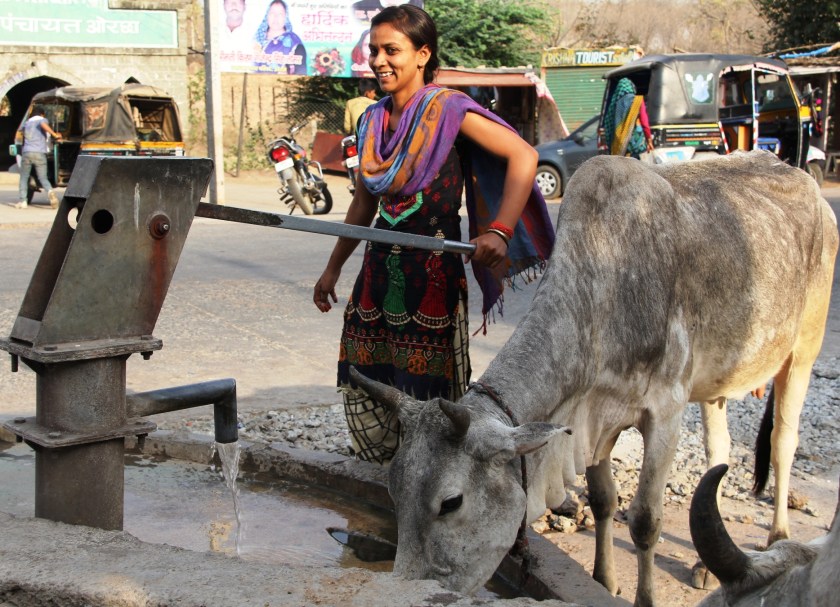
COWS: Yes, they are sacred. They are everywhere — and perhaps not too bright. Now I understand the German expression: blöde Kuh (stupid cow). Hindus, 80 percent of the Indian population, are vegetarians. Cows are never slaughtered. Thanks to their milk, they are viewed as maternal figures, and are raised for dairy products, as well as plowing the fields. Cow manure is used as fertilizer and fuel.cow.1

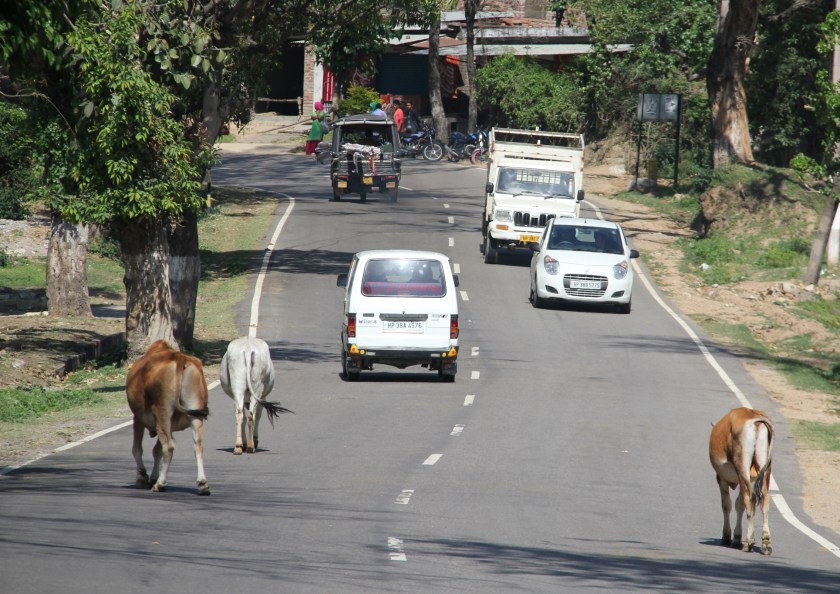
So, what happens when a cow is too old to give milk or work the fields? The beasts are turned loose and wander freely everywhere, often in the thick of roads clogged with cars, trucks, rickshaws, motorcycles, tuk-tuks . Horns blast. Drivers shout. The gentle beasts are oblivious to all. Traffic comes to a standstill. No one wants to hit a cow. There are other places to roam, but India’s cows seem to prefer to be in the midst of the melee.

They thrive on garbage, and there is plenty in India. In Varanasi where we witnessed numerous cremations on the banks of the Ganges, cows – and dogs — munched on the debris around the places where bodies had been burned.

Some lucky cows end up in cow retirement centers, Gaushalas.   India has 3,000 of these, but, according to animal husbandry statistics: 45,150,000 cows. Most meander ubiquitously throughout the cities and countryside.cows.4

Being an animal lover, I wanted to pet the poor fellows. The guide warned: Don’t touch. If hungry, they might be mean, buck with their horns, he said. I doubt the ones I saw would have had the energy. I obeyed nonetheless. I think these crazy cows add a puzzling, calming charm to India’s  chaotic ambience.

TRAFFIC: Cows do complicate the snarling masses of all sorts of vehicles as named above, plus pedestrians often in the midst. How could anyone even think of driving in this madness? The noise is more than incredible. Every driver seems to have his hand plastered on his horn. Who is honking at whom?   No way to know. Who has the right of way, other than the bovines? Survival of the fittest. Just plunge ahead and hope for the best.

Hats off to the drivers. We each had a rickshaw for our ride from the hotel to the riverbank in Varanasi. The traffic was abominable, but my skillful rickshaw driver kept his cool, pedaled his vehicle with aplomb, weaving around cars, trucks, motorcycles, etc. There were many close calls, making the ride more thrilling than the wildest of roller coasters.cows.5

We had frequent long journeys on a comfortable, roomy bus. In India, the bus driver is in a separate glassed in compartment with his assistant sitting next to him. The assistant is de rigueur. Four eyes are needed to watch ahead and to the sides for all-too-frequent obstacles. Our bus assistant also served bottled water, and, in our case, often stopped to purchase bananas for his passengers.

traffic.6
Bus driver assistant purchases bananas for passengers.

We rode on rutted roads through the countryside and small villages, and on super highways as good as any in the developed world.

Alok told us there are 2,000 traffic deaths per day in India. Many drive without a driver’s license, but a license can be purchased – no test required.dogs.2

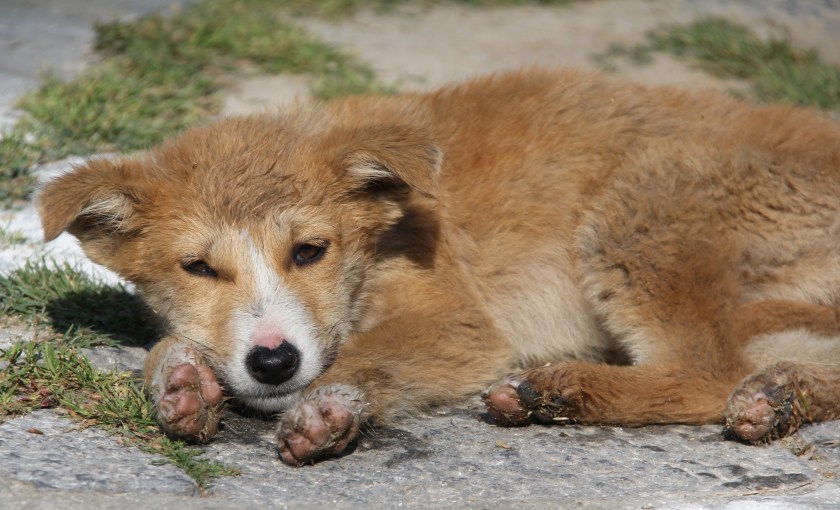
DOGS: There may be as many homeless dogs as there are cows. These canines are not pets, never were. They all are similar in appearance: medium size, short, beige/ tan fur. They wander freely everywhere, but most seem to have enough sense to stay away from auto traffic. They, too, thrive on garbage. None I saw looked malnourished, and they were not vicious. Yet I resisted the urge to pet. Unlike the docile cows, I feared one could bite. After experiencing India’s stray dogs, I came across this article, “The World is Full of Dogs without Collars”: http://www.nytimes.com/2016/04/19/science/the-world-is-full-of-dogswithout-collars.html?_r=0   It’s an interesting read for animal people.

dogs.3
I wanted to rescue this poor baby.

What about cats? I only saw two during the entire trip. No wonder. With all those hungry dogs, they would end up as dog food.

people.7
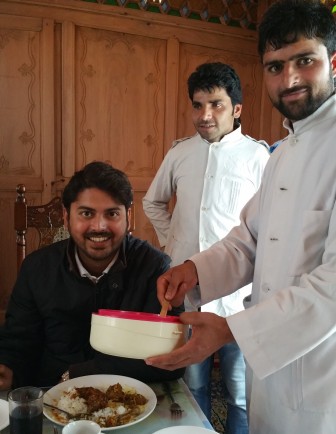
Alok enjoying dinner in Kashmir.

CONTRASTS: The poverty, filth, garbage, noise and pollution are all mind-boggling. On our last day, Alok wanted us to see the new state-of-the art metro in Delhi. It, too, was mind-boggling: futuristic, spotless, sleek, quiet, fast.

Intriguing. Incredible. That’s India. More to come in future posts: Amritsar and the Sikhs, Dharamshala and Tibetan refugees, Kashmir.

marriage.2
Weddings merit big celebrations. We came upon one in a small town during our travels. The groom was in costume  on horseback.

If not already a Tales and Travel follower, sign up (upper right) so you will not miss future posts. Your address is kept private and never shared.

Like my blog? Tell your friends.  Please leave a Reply below. Feedback is welcome. I love to know what my readers think about my posts.

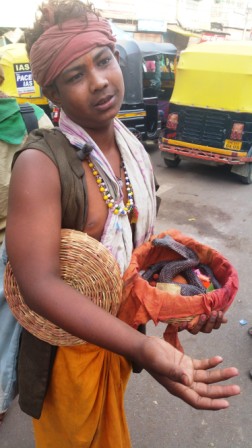
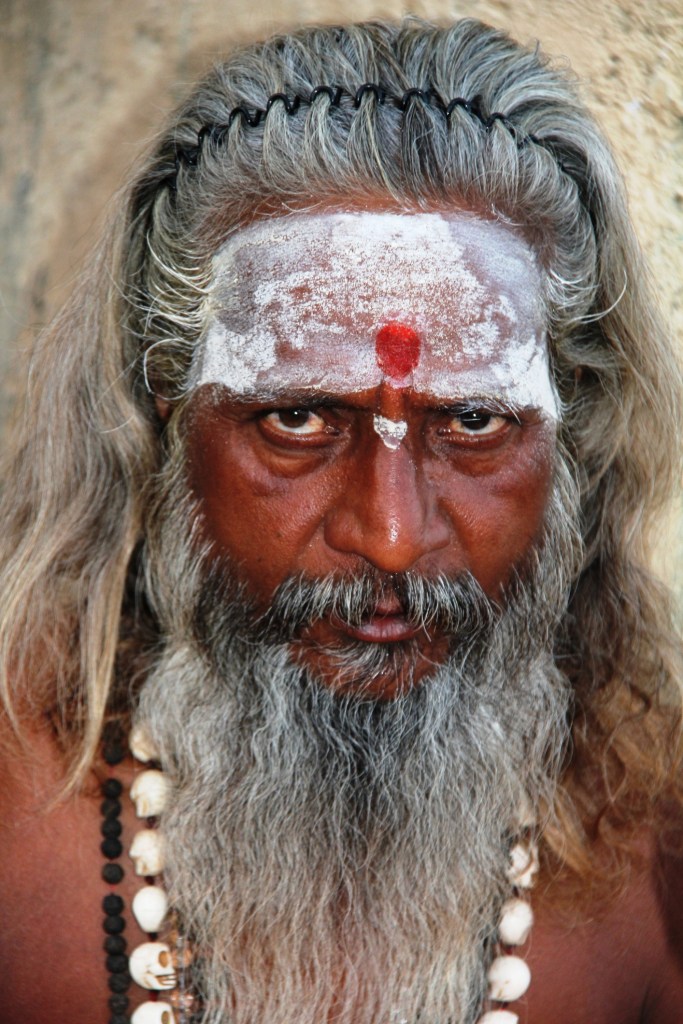
No Indian recipe this time, but how about tasty Thai – sort of in the same neighborhood? See recipe column at right for Thai-Style Asparagus Beef Curry. Add some spice to spring asparagus. Click on above photo for recipe.people.4Holy Man.  Religion is another most intriguing aspect in India.  These “holy men” often pose near tourist sites, hoping for a donation.

Follow Tales and Travel on Facebook:  http://www.facebook.com/talesandtravel

Follow me on twitter: @larkleah
 

Adventure Africa: The People – and Polygamy

Women’s lib. Not in Zimbabwe. It’s a man’s world in this African country, our safari group learned during a “Learning and Discovery” session. Polygamy is widely practiced there as it is in many African countries. To tell us all about it: Mafuka, 74, who has three wives and 10 children.

Mafuka, 74, three wives, 10 children

“Our wives never say they have a headache,” the jolly Zimbabwean told us. He went on to describe his family life. We were mesmerized. It was entertaining, fascinating – and somewhat unbelievable.

Mafuka, a burly sort with an infectious smile, has been a safari guide for some 50 years, often away from his village and wives for months at a time. He has a farm, grows tobacco and corn; and has livestock, chicken, cows, etc.  The wives and children work the fields and tend to the animals.

Family at town market

He explained that his first wife requested a second wife to help with the chores. “She invited her cousin, a beautiful girl. I agreed.” For five years, he had just two wives.

As he tells it, the two decided a third wife was needed. He took a third wife, but they did not like her. “They teamed up against her,” he said. “Women in our society are very strong. I got rid of her,” he announced matter-of-factly. Some time later, he found a replacement. New wife number three is a nurse, but it’s the first wife who is always in charge.people.e

According to Mafuka, whose grandfather had 15 wives, before taking a wife, a man must prove his manhood and impregnate a woman. The baby stays with the mother and her family, but the father may later adopt the child. If a wife cannot conceive, she arranges for a sister or cousin to bear her husband’s child which she will raise. If a man has later difficulties (infertility), he secretly asks a brother or cousin to impregnate his wife.

It was all a bit much for us to comprehend. Was he putting us on? Change and progress have come to Africa, and certainly this scenario does not apply to all?

people.1
Women basket makers at a co-op in Botswana

I wanted to know more. “After long periods away from home, how do you satisfy all these women?” I asked.

“I drink a root preparation,” he proclaimed, beaming. “It makes me very strong. I go home with rhino horns.”

What if one of his wives would decide to take another man? ”I would kill him,” he boasted.

Mafuka went on to proudly relate that three of his ten children have degrees. He wanted to send one of his daughters to the university, “but she eloped as the fourth wife of a guy still in college… He hasn’t paid me in cows yet. I am going to go after him.”people.h

The family is of utmost importance in Africa, and big families are common.    At our camp in Zambia, there was a booklet with staff bios. One man had 12 children with two wives. Several had nine children each. Mafuka told us about the upcoming family reunion that he was organizing. He expected 1,000 guests.

people.iWhile there are many families like Mafuka’s, monogamy is gaining followers. Sally, a young married woman working at our camp, said she would not accept sharing her husband with another wife.   “It’s a controversial subject,” she said. “A man may have just one wife, but many mistresses. I think it will change. Women are getting stronger.”

Another woman told me that Africa is changing.   “Women now wear pants, but they still sit on the floor.”

Village huts in background. Our food gifts, center.

That was the case when we visited a family home in a village. All the women sat on the floor, the men — and we — in chairs.

The village/family visit was another Learning and Discovery event.   The village, Bhangale, was actually a homestead of 434 people who live in a cluster of huts with a communal outhouse and outdoor shower.   Our hosts, Fransica Lambani and her husband Philippe, are the homestead owners. They live in a cement house which was a gift from their children. “They are lucky,” our guide Abiot said. “They have two sons working in South Africa. They had the money for the house.”

people.14Prior to visiting the village, we went to a nearby town where we visited a supermarket and bought food supplies to offer the villagers as a gift. They welcomed us with song and dance, proudly showed us their homes – all neat and tidy. A woman gave a demonstration of how they carry heavy loads on their heads.

More song greeted us as we arrived to visit a Catholic primary school which has about 800 pupils. The school is in a rural area, and most all the children walk to school, from three to 10 kilometers one way.

Children welcomed us with a song.

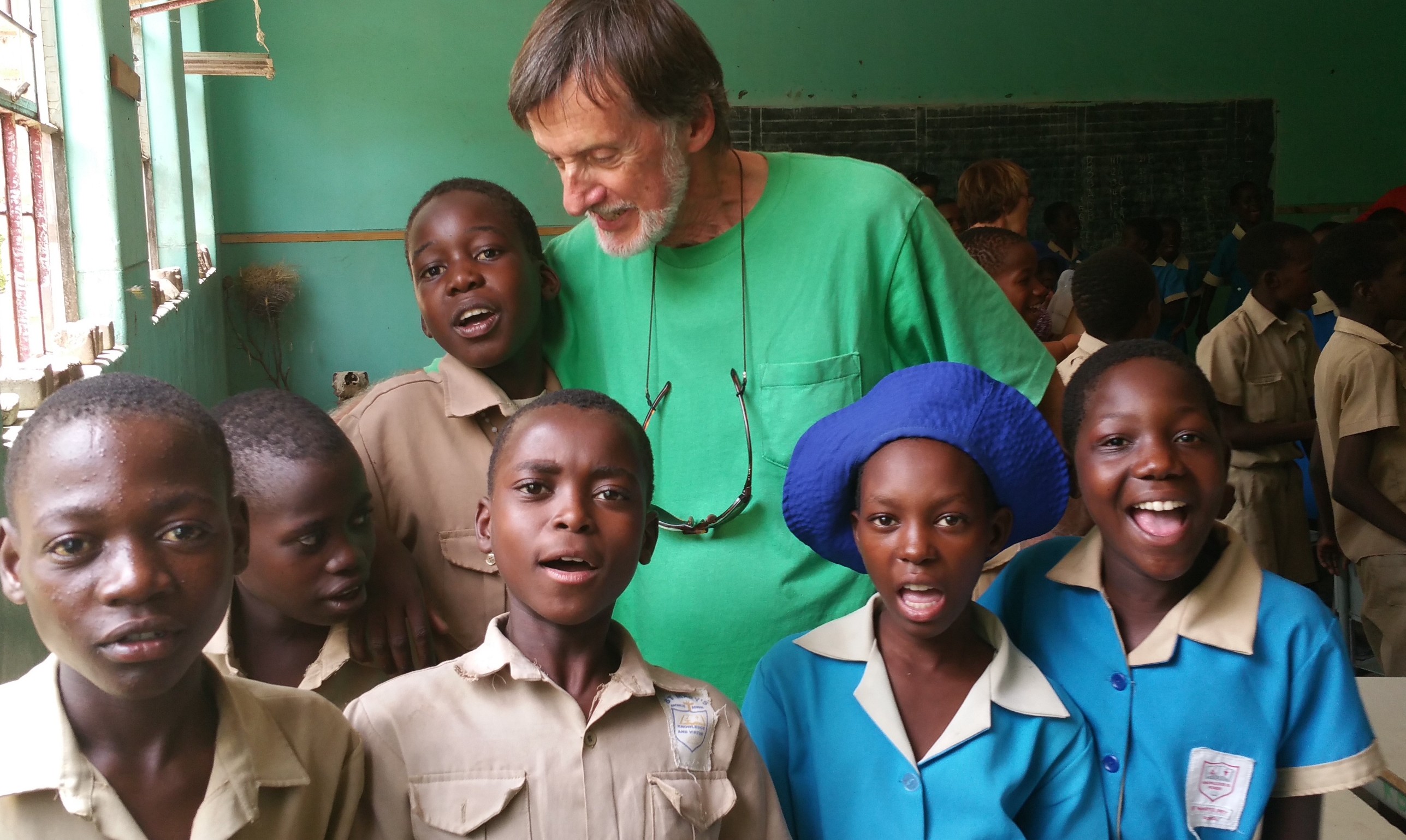
The principal led us to a sixth grade classroom where we had a chance to talk to the youngsters. They are taught 12 different subjects, including agriculture and HIV/AIDS, their teacher told us. An 11-year old told me he wanted to study world economics.   All were eager to pose for photos, and then see the photos on the camera or phone screens.

Kids were happy to pose for us.

Education in Zimbabwe used to be free, but now parents must pay $45 per child per year.   Education is considered essential and Zimbabwean are considered among the best educated in Africa. According to Zimbabwean Abiot, who pays school tuition for four of his nieces and nephews, Zimbabwe has the highest literacy rate in Africa.

Bob and friends.
Bob and friends.

While this school was Catholic, not all the children are Catholic. Religion is very important in the African countries we visited: Catholicism and many different evangelical religions. As we drove into the town of Hwange, we people.jpassed church after church, one after another, each representing a different evangelical sect. “Going to church” was listed as “favorite pastime “on many of those staff bios I read at the Zambian camp.

We stayed at four different safari camps, two in Botswana, and one each in Zambia and Zimbabwe.   All were run by an African company, Wilderness Safaris, whose staff are terrific. From the guides to the cooks, all were caring, helpful, knowledgeable …and fun. They danced and sang for us, entertained us with stories about close encounters with wildlife, life back in their villages and much more.

Staff performed a farewell dance for us.

Our 16-day safari was organized by Overseas Adventure Travel, www.oattravel.com We paid $4,495 each for the all-inclusive package (lodging, all meals, most tips, land and air transport within Africa). For more on our trip, see previous posts:  Adventure Africa: The Animals and Adventure Africa: A Day on Safari

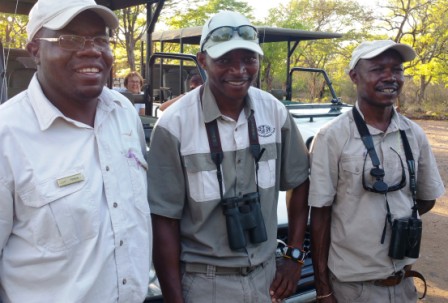
Abiot, center, with fellow guides in Zimbabwe

Like my blog? Tell your friends.  Please leave a comment – if you can’t see the Leave a Reply block and or Recent Comments list below, use the link on the right-hand menu (below “Recipes”). Feedback is welcome. I love to know what my readers think about my posts.

Guide Idos in Zambia


For a taste of Africa, try the recipe for Mafe, a chicken-veggie-peanut-concoction which was a hit at my African dinner party. Click here for the recipe.

Follow Tales and Travel on Facebook:  http://www.facebook.com/talesandtr

If not already a Tales and Travel follower, sign up (upper right) so you will not miss future posts. Your address is kept private and never shared.


Adventure Africa: The Animals

animal.1The Big Five – almost. The leopard, the most secretive and elusive of cats, escaped us, however we were hot on a leopard trail more than once. Sightings of lions, elephants and Cape buffalo were plentiful. We even saw one rhino. Impala, giraffes, zebra, various antelopes, crocodiles, warthogs, hyenas and lots of birds were also captured on our cameras.

Birds eat blood-sucking parasites found on may animals.

(A previous post was devoted to gorillas in Rwanda, “Gorillas in our Midst,” truly the most outstanding animal experience during our African adventures.) Subsequent visits to Botswana, Zambia and Zimbabwe were nonetheless rich, rewarding, often exciting, and always educational. Following are highlights of our animal encounters.

For more, see previous post, "Gorillas in our Midst."
For more, see previous post, “Gorillas in our Midst.”

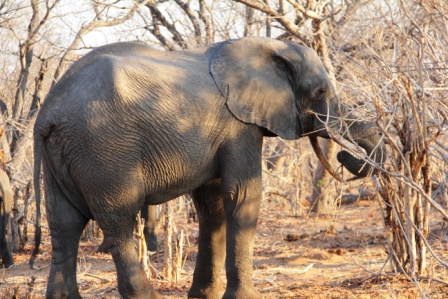
ELEPHANTS: These massive creatures are a source of wonder. We spotted them in all three countries, and learned much about them. Botswana, specifically Chobe National Park, is home to 65,000 elephants. They eat 18 hours per day, as much as 150 kilos of food per day. In Chobe, most all the trees are bare, stripped clean by hungry elephants. During a Learning and Discovery session, we were told that one elephant requires about one square kilometer of space.

Elephants strip the trees bare.

Chobe encompasses 11,000 square kilometers – clearly not enough for such a large elephant population. It is a dilemma. Sterilization or translocation is too expensive for the country. Furthermore, translocation does not usually work as elephants, no matter how far from their original home, will head back. Culling has been considered but would generate negative publicity that would surely cut down on tourism. “What can we do?” our lecturer asked. Anyone have any ideas?

Super large elephants with gigantic tusks are rare. Most have been taken out by poachers and/or hunters. In Botswana, guards “shoot to kill” poachers. The country has fewer poaching problems than many other countries, and has banned safari hunting.animal.17We marveled at solitary elephants munching on trees, large groups marching to rivers and mothers with babies in tow. Elephants can communicate for great distances with a rumbling sound, and other sounds not audible to humans. They can run at speeds up to 25 mph. If you happen to be charged by an elephant, do not run. “Stop and clap and shout.”

animal.10
The lion is not the King of Beasts as he is easily killed by elephants, Cape Buffalo, even Honey Badgers.

LIONS: None of our safari group was charged by an elephant , but one angry lion did charge an open safari vehicle. The driver saved the day and raced away at great speed. We had numerous lion sightings – magnificent, astonishing, brutal, gruesome. More than once we witnessed lion sex . No wonder. They are champion copulators, we learned, — up to 100 times in 24 hours. A male and female can be at it more or less nonstop for three to five days – without Viagra.

Lions have no need of Viagra.

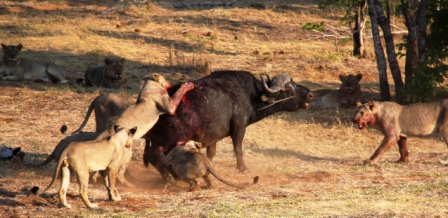
“This is National Geographic stuff,” our guide Abiot commented after we had watched a mating couple. Later that day, more National Geographic – too much for some. The Kill. Along the side of a road, a group of eight female lions was in the process of attacking and eating a live Cape Buffalo. It was bloody. It was fascinating. It was agonizing.

The poor beast struggled to stand up, only to fall down and groan in pain. The killer team took turns. A few would lunge and bite, while others rested and observed. We watched and photographed for at least 20 minutes, but had to move on to our next camp. We later learned from the bus driver who passed the scene many times that the buffalo’s suffering went on for three hours before he succumbed.animal.7“This is a training session,” Abiot said. “These lionesses are young. They are not skilled at killing.”

I had naively assumed that when killing lions went for the jugular to put the prey out of its misery. That is far too dangerous with Cape Buffalo due to the horns. For this reason, Cape Buffalo, considered the most dangerous of African animals, are rarely attacked by lions.

He looks sweet, but the Cape Buffalo is the most dangerous of African animals.

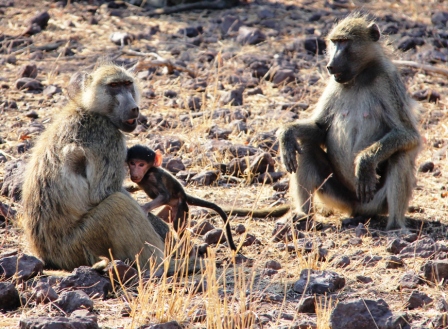
Elephants are also not normally targets for lions. “Most lions are afraid of elephants,” a guide said. Even lions have enemies. Honey badgers – small but fierce – can kill a mighty lion. “They are very clever. They go for the private parts. If you ever encounter one, back off,” we were warned. We did see one along a safari track. The driver floored for a close-up view. The petite creature stopped and bared his teeth at us, as if daring us to get any closer.animal.18A group of baboons can also kill a lion. They have very sharp teeth. They are also mischievous. Several broke into the tent of a couple in our group. No real damage was done, but all their belongings were helter skelter.

Hippos can stay submerged for six minutes.

HIPPOS: It is rare to see more than the heads of these giants which spend most of their days submerged. They do emerge from the water at night in search of food, eating up to 45 kilos per night. During the day they must stay under water because the sun cracks their skin, and they have no sweat glands. They are fast and can run at speeds up to 34 mph.   Because of the weight of the male, hippos mate under water. Babies are born in shallow water and stay with their mother for up to eight years.   A canoe guide in Zambia where we spotted hippos on a game viewing boat excursion complained that business was down due to an erroneous report on Facebook that hippos are the most dangerous animal in Africa. Not true — the Cape Buffalo as mentioned above.

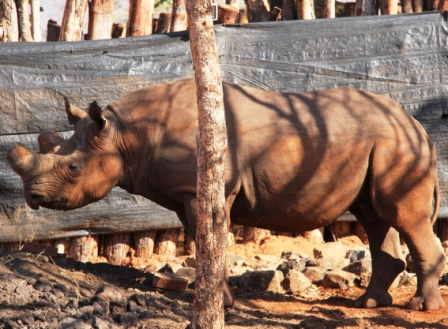
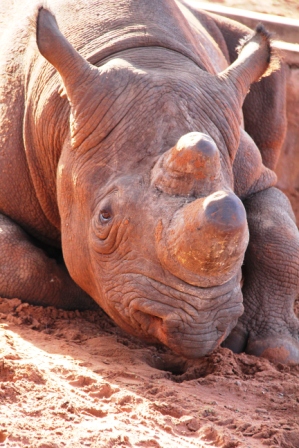
RHINOS: It was at a private game reserve in Zimbabwe where we saw one rhino. Three rhinos were introduced to the reserve in 2000 and six more animal.11have been born since. The reserve has an anti-poaching team who live on the grounds.   Rhinos are dehorned every two to three years to discourage poachers, but they are often killed nonetheless. Poachers don’t want to waste time tracking a rhino only to learn it has no horns, so they eliminate all. Horns do grow back.animal.5

Horns are sold to powerful criminal syndicates who ship them to Asian countries, including Vietnam and China where their weight is valued at more than gold due to the erroneous belief that Rhino horn can cure everything from cancer to hangovers.

It’s a thrill viewing these creatures up close and leaning so much about them. As fascinating and wonderful as the animals are the people. Coming soon:  Adventure Africa: The People.  If not already a Tales and Travel follower, sign up (upper right) so you will not miss future posts. Your address is kept private and never shared.

Our 16-day safari was organized by Overseas Adventure Travel, www.oattravel.com We paid $4,495 each for the all-inclusive package (lodging, all meals, most tips, land and air transport within Africa).animal.25Like my blog? Tell your friends.  Please leave a comment – if you can’t see the Recent Comments list below, use the link on the right-hand menu (below “Recipes”). Feedback is welcome. I love to know what my readers think about my posts.

Follow Tales and Travel on Facebook:  http://www.facebook.com/talesandtravel


Adventure Africa: A day on safari

safari.23Three countries. Lots of animals. Fantastic people. Delicious food. “Ultimate Africa,” our 16-day safari to Botswana, Zambia and Zimbabwe, surpassed our expectations. We shared this fun and enriching adventure with 12 other travelers from the US.safari.24

After the sensational gorilla experience in Rwanda (see previous posts: Gorillas in our Midst and Remarkable Rwanda) we flew to Johannesburg to begin this journey which proved to be much more than African animals. Of course, they were the focus and we were lucky enough to witness some incredible happenings, including a grisly lion kill in action, lions mating, giraffes courting, elephants on the march and more. My next post will be devoted to animals.

Safari "tent"
Safari “tent”

During our travels we stayed in comfortable safari camps, most located in vast national parks. Each couple or single traveler had a tented room with shower safari.9and toilet. Days began with a 5 a.m. wake up call. In Botswana, it was the sounds of a drum beating outside our door.  Animals are best sighted early in the morning or late in the day.   They and we need to escape the blazing afternoon sun and intense temperatures.

After breakfast (usually fruit, toast and/or homemade muffins, porridge and sometimes eggs) we climbed into two safari vehicles, seven passengers, a guide and a driver each. Off we’d go into the bush, bouncing over rutted dirt tracks. Often we’d be deep in the wilderness in the midst of jungle growth. “Branches” called out the driver, so each passenger behind could lean in and escape bodily harm. Lee, a retired diplomat from Colorado, was named trip “Branch Manger.” He had a very distinct and aristocratic manner, like a Brit educated at Oxford, to warn those behind of “branches.”

?

“It’s time to read my morning paper,” a guide announced as we rolled out of one camp. He carefully surveyed the ground, his “newspaper,” looking for tracks to determine which beasts may be in the area. Our camps were not in fenced-in enclosures, but in the open where animals, big and small, were free to roam. At night when it was time to go back to our individual tents, we were accompanied by a guide with flash light and usually a gun. At our tent home in the Lufupa Camp in Zambia’s Kafue National Park, monkeys chased one another on the roof, Bushbuck munched on grass in the back yard and hippos splashed and snorted in the river which flowed right outside our front door. Fortunately we never saw lions lurking nearby.

Travel in the bush
Travel over a bush bridge

During the morning game drive, we’d stop for a coffee break at a place deemed safe by the guides. They’d clap and scout out an area for those in need “to mark their territory.”

?

Brunch, back at camp at about 11 a.m. served buffet style, was an array of tasty casseroles, salads and fruit – a copious feast. Then rest time. November, when we traveled, was supposedly the beginning of the rainy season. Instead of rain, we encountered scorching heat, often temperatures above 100 degrees Fahrenheit. Our tents had ceiling fans, but lying down for an afternoon nap was like lying on a heating pad. Several camps had plunge pools for a welcome relief.

The British influence in food and lifestyle was evident in all our camps. Before gaining independence in the 1960s, Botswana and Zambia were British protectorates. Zimbabwe was formerly a British colony known as Southern Rhodesia. Thus, high tea was de rigueur, and almost yet another meal with something sweet, often cake, and something savory, such as mini pizzas or wraps. Learning and Discovery, lectures and discussions by locals, followed tea. The session on polygamy (widely practiced in Africa) was the overall favorite and mind boggling. It deserves its own post, or at least a good part of one. Stay tuned.

?
We loved those sundowners.

At about 5 p.m. we headed out for the afternoon game drive. A regular and delightful part of these excursions was the “sundowner”  when we stopped to watch the sunset and enjoy liquid refreshment and snacks.   “I’ve been on many safaris, but I have never had a day like this,” commented Lee, who had served at posts in many different African countries during his career, as we marveled at a parade of elephants coming to drink at the banks of a river with the setting sun in the background. Heads of hippos popped up from the water to complete this National Geographic scene.   That morning we had seen lions mating, a group of hyenas, and a pride of lionesses attacking and eating a live Cape Buffalo

Elephants and hippos at sunset

This was indeed our lucky day. There are no guarantees of animal sightings on a safari. There were several days when we did not find any exciting wildlife, but the game drives were nonetheless fascinating. Guides shared their wealth of

No need to go thirsty in the bush

knowledge on the terrain, climate, vegetation and more. We learned about safari survival. Many plants are edible. Certain branches if cut yield a liquid to quench thirst. Others can be fashioned into rope. Tree roots can be used to brush teeth. The leaves of one tree act as mosquito repellent. Those of another act as a laxative for elephants.

The most exciting discovery one afternoon for guide Victor was elephant excrement, obviously from an elephant in desperate need of those leaves. “I’ve never seen elephant poop like this,” he said. He asked the driver to stop at a tall brown mound for a closer look.   “He must have been constipated for a very long time,” he said. It was such a sensation, Victor insisted on returning to measure the “poop.”

TJ helps Victor measure the "most amazing elephant poop."
TJ helps Victor measure the “most amazing elephant poop.”

Between countries and camps, we flew on small aircraft (a max of about eight passengers each). For half of those flights, a woman was the pilot.

We had been issued obligatory duffle bags for the trip.
No big suitcases, but obligatory duffel bags for the trip.

The majority of our travel companions were older and retired – like us. Three exceptions: Darcie, a nurse traveling with her aunt Raedeen, a Red Cross worker who had lived all over the world; Maia, a psychologist traveling with her dad, Charles, a retired veterinarian who celebrated his 79th birthday during the trip,

Bob and Charles celebrating Charles' b'day.
Bob and Charles celebrating Charles’ b’day.

and TJ, an IT specialist also traveling with his father, Ted, a retired professor. Two Southern belles, Tootsie, 84 and Marlene, 82, were an inspiration. Lois, a retired teacher, was on her 9th trip with Overseas Adventure Travel (OAT), our tour operator.  Retired US Post Office employees Helen and Bob were close behind – their 8th OAT trip. Like us, Lee was on his first trip with this tour operator. The repeat business is no surprise. Every aspect of the trip rated A+.

In the background, Lee and Maia. Foreground, Tootsie and Marlene

Abiot, our leader from Zimbabwe who accompanied us throughout the journey, deserves A+++. He was thoughtful, caring, knowledgeable, and many times went beyond the call of duty. Abiot comes from a large family in the hinterlands of his country. Between assignments, he drives 20 hours to reach his village which has no electricity. Yet, all have cell phones, he said. While at home he works the land, farming corn. Education in Zimbabwe is no longer free – about $20 per semester. He pays for four of his young cousins to attend school — and feeds 15 family members.

Abiot, our hero, who definitely deserves "tour leader of the year" award.
Abiot, our hero, who definitely deserves “tour leader of the year” award.

Prior to working for OAT, Abiot told us he worked for a luxury safari company which charged about $1,000 per day per person. He quit. “That was not Africa,” he said. “It was too much like America.” He much prefers OAT which he feels offers a genuine African experience.

Safari lounge
Safari lodge lounge

We, and all in our group, felt we had indeed experienced — and leaned so much — about “ultimate Africa.”

Refreshing moist washcloths awaited as we returned from hot game drives.
Refreshing moist towelettes awaited as we returned from hot game drives.

For more on Overseas Adventure Travel: www.oattravel.com We paid $4,495 each for our all-inclusive 16-day safari (lodging, all meals, most tips, land and air transport within Africa)

Much More Adventure Africa to come in future posts: Animals, People, Learning and Discovery… If not already a Tales and Travel follower, sign up (upper right) so you will not miss future posts. Your address is kept private and never shared.safari.6

Recipes — no new recipe this time but check out the column at right for many tasty concoctions.  I recently had an African dinner party and served Spicy Peanut Dip with raw veggies for an “apero” snack.  It was a hit.  Christine asked for the recipe.  It’s up there, under Appetizers.

 Like my blog? Tell your friends.  Please leave a Reply below. Feedback is welcome. I love to know what my readers think about my posts.

In the stiffeling heat, the plunge pool was perfect for cooling off.
The plunge pool was perfect for cooling off.

Follow Tales and Travel on Facebook:  http://www.facebook.com/talesandtravel

Follow me on twitter: @larkleah

safari.25
More on this in next post… not a happy ending. Don’t miss it. Sign up above and follow talesandtravel.