Paris in December

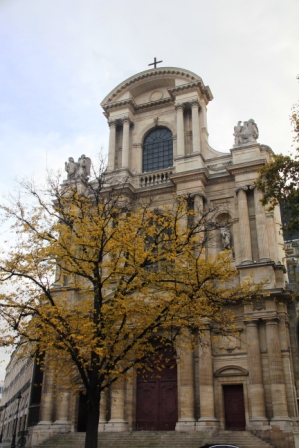
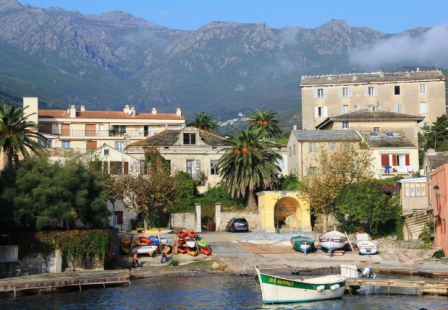
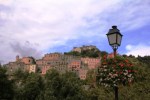
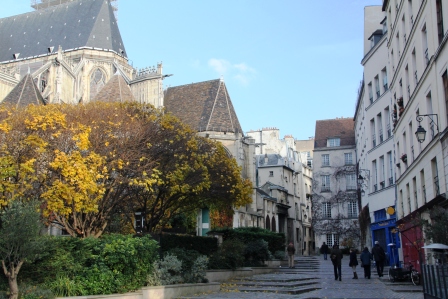
Place des Vosges, Marais

We went to Paris to visit the dentist, but not just any dentist. An American dentist, fabulous Dr. Jane. Sure, there are plenty of dentists in Provence. But, the profession of dental hygienist does not exist in France.  Here cleaning is merely detartrage, scrapping the tartar off the teeth, a procedure carried out by the dentist which takes all of 10 minutes or less.paris.14b

Not good enough for Americans who have been brainwashed about the importance of a thorough cleaning by a hygienist every six months.  In Germany where we previously lived most dentists have hygienists. After moving here, we’d trek back to Germany once a year for a proper cleaning. (Since it was such a long journey, we made due with one cleaning per year.)  Fellow American and friend Lynne came to the rescue. She found Dr. Jane in Paris.  Our teeth have never been so clean.

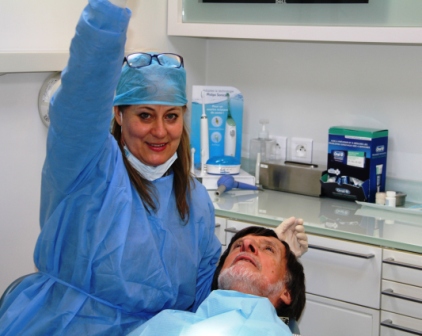
Dr. Jane Matkoski, who hails from New York State, does high tech teeth cleaning, first with ultra sound followed by a special process called Air Flow.  She covers your eyes with a cloth, then puts goggles on top of the cloth and air polishes the teeth. “Today’s flavor is cassis,” she told me.  I like cassis, but this was salty and none too pleasant. BB likened the procedure to sand blasting.  Whatever, it does the job par excellence.

One fourth of Dr. Jane’s  patients are Americans.  She also has many international patients who are used to a real teeth cleaning.  “The French just don’t get it,” she said.

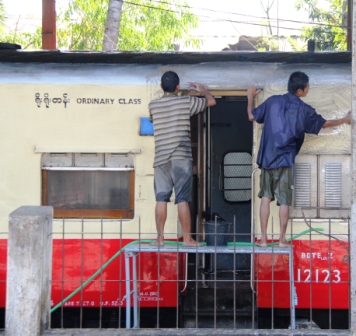
While teeth were the main reason for the trip, it was a good excuse to visit my favorite city. We had time to see friends, to visit Le Café des Chats, to tour the Marais district with a Paris Greeter, to apply for visas for our upcoming trip to Myanmar – and to check out the Christmas lights in the City of Light.Paris16b

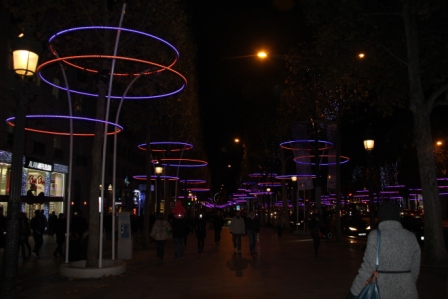
On a previous trip to Paris in December, I found the holiday illumination on the Champs Elysees  spectacular.  This time I was underwhelmed.  Perhaps it’s a sign of age, but lots of colors and flashing lights are not my cup of tea. This year giant hula hoops that change from blue to red encircle the bare trees lining the legendary boulevard.  Tacky – in my opinion.paris.4

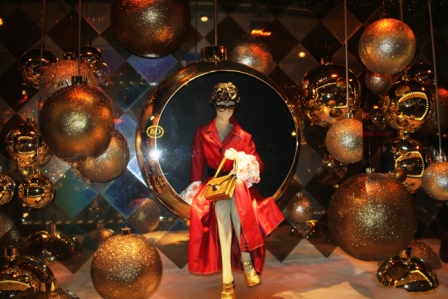
There’s nothing tacky, however, about the wondrous windows at Galeries Lafayette.  Amazing, moveable scenes, five from the tale Beauty and the Beast. Mesmerizing for both children and their parents.  The classy windows at Au Printemps, this year sponsored by Prada, are also dazzling.Paris.15b

Thanks to Satié, the cousin of my Japanese sister-in-law Yoshie, we did not miss these Parisian holiday highlights.  Satié lives in Paris. After dinner together, she suggested we stroll by the windows.

BB and Satie
BB and Satie

As a cat lover, I had to visit Le Café des Chats which opened in September, modeled after a cat café in Tokyo. Cats, 12 of them, all colors and sizes, lounging in windows, on chairs, benches, and in kitty beds.  Some are sociable, but many were soundly sleeping, the favorite pastime of felines.paris.2b

Upon entering rules are recited by the café host: Don’t feed the cats.  Don’t let the cats drink from your cup or glass.  Don’t disturb the cats if they are sleeping. Photos allowed, but no flash.  Before entering the rooms with the cats, you must disinfect your hands – a dispenser is on the counter.paris.1

The two-level cozy café in Paris’ third district was packed during our visit.  The café has generated a lot of publicity and is popular with locals as well as tourists. Reservations are a must.  Coffee, teas, wine, desserts, salads and tartes can be savored while watching cats. It was fun but frustrating. My pathetic photo skills required flash in the poor light. So, no super kitty pictures.  The food was good –a seafood salad for BB and a tarte with caramelized onions, blue cheese, cranberries and pecans for me.

A blog (http://aixcentric.wordpress.com)  led me to Paris Greeters, an organization of volunteers who give guided tours of their neighborhoods.  There is no charge but you are requested to give a donation. Sign up on line before visiting Paris, specifying your interests, and you are matched with a greeter.

Claudine in front of her favoirte tea shop, Mariage Freres, a must for tea aficionadas.

Claudine Chevrel, who has lived in the Marais since 1972, led us through this beautiful district.  Historic buildings, her favorite shops, churches and monuments were on the tour.

Le Marais, literally “the swamp,” was mostly farmland in the Middle Ages, producing vegetables for the city on the Seine.  By the 16th century, the nobility and upper middle class bought up the land and built great estates. For the next  couple of centuries,  family palaces and grand buildings found their home in the Marais.paris.9b

The arrondissement (administrative district), which is now very expensive and chic, was not that way when she moved there many years ago, Claudine said.  “I prefer the Maris 10 years ago. It used to be a real neighborhood.”   There were lots of local shops and groceries, she explained.  Many have been replaced by expensive boutiques and art galleries.  “Everyone knew everyone.  Now lots of foreigners who don’t live here year round have bought apartments.”

Hotel de Sens, Marais

The Marais has both a large  Jewish community and one of the largest Gay communities in Europe.  We especially liked the Jewish area. Numerous shops tout that they offer the “best falafel.”   Claudine says the best is at the restaurant Chez Marianne  which also has a bakery where BB bought a thick slice of nut strudel – they offer 12 different kinds for 3 euros per slice.

St. Gervais and famous elm tree

“I always meet interesting people who want to see Paris in a different way,” says Claudine.  “Americans prefer this type of tour. They like to meet Parisians.  They ask lots of questions, about everyday life, taxes, schools.”

After the two-hour plus tour we set off to find her favorite restaurant, Le Louis Philippe,  which we had passed during our walk.  En route we came across Caruso.  As we have a weakness for all things Italian and there are few Italian restaurants in Provence, it was our lunch stop.  Buonissimo! Exquisite pasta,  and BB’s dessert, Cassata Siciliana, was deliciously decadent, cake smothered in a mascarpone-cream-candided fruit-alcoholic combination.  I found several recipes on line and will try to duplicate it soon.

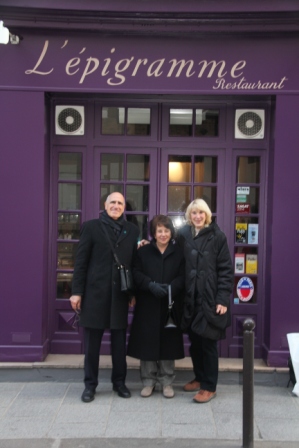
Leonard, Claudine et moi

Before boarding the TGV for a fast train ride back to Provence, we met friendsLeonard and Claudine for lunch at L’Epigramme, a restaurant in the 6th district which is included in “Best Restaurants Paris.” I had a very juicy and tender piece of beef.  The others went for dorade, a popular fish in France.  All were happy.

Next visit to Dr. Jane, we’ll go back there, and to Caruso, and tour another neighborhood with a Paris Greeter.

Happy Holidays to all Tales and Travel readers!Paris16.b

Dr. Jane Matkoski,  12 rue Saint-Julien-le-Pauvre (5ème), 01 46 34 56 44 drjane@orange.fr

Le Café des Chats, 16 rue Michel Le Comte (3ème).  Metro: Rambuteau or Arts et Metiers.  Make a reservation at reservation@lecafedeschats.fr

Paris Greeters, www.parisgreeters.fr

Caruso,  3 Rue de Turenne (4 ème). Metro : St. Paul, www.ristorantecaruso.fr

L’Epigramme, 9 rue de l’Eperon (6 ème).  Metro : Odeon,  01 44 41 00 09

Hotel de Ville
Hotel de Ville

I love to hear from readers.  Please post a comment. See “Leave a Reply” below under Comments. Subscribers also welcome.  Don’t miss future posts.  Click on Email Subscription at top right.

 If  you have suggestions for Paris restaurants, please pass them on.  I have not posted any recipes lately, but for your holiday cooking, check on Holiday Fruitcake and Holiday Pork Roast in the recipe column at right.

Wild and Wonderful Corsica

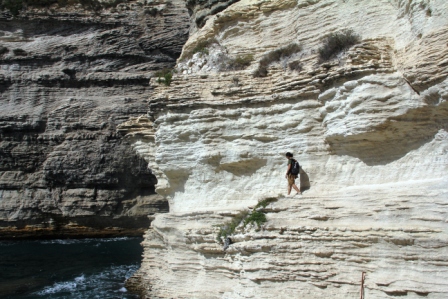
Bonifacio ,
Bonifacio
,

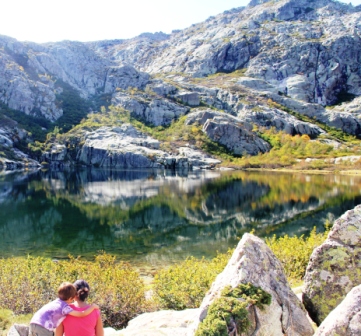
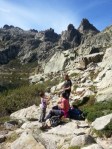
According to the sign posted at the beginning of the hiking trail in the Corsican mountains, it was a one-hour trek to Lac de Melu.  Piece of cake, I figured, and a good test for my new knee.corsica.55,

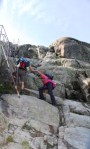
Two hours later we were still huffing and puffing, scrambling over rocks —   even a few times on all fours for me.  No lake in sight. We had conquered the challenging, extra steep sections of chains and ladders.  But, the trail of all rocks went on and on, up and up.  At times it was frustrating to figure out which way to proceed over this stony sea.  The trail was marked by yellow slashes on the rocks, but often they were hard to spot.

Find the yellow slash -- the trail marker.
Find the yellow slash — the trail marker.

I was about to give up when we encountered a group on their way down.  “How much farther?” I asked.  “It’s not that far.  Will you make it?  If you want I can accompany you,” answered the mountain guide who was leading the others.   I must have looked near death, which is about the way I felt, but there was no way I would ask for assistance.  Now I was more determined than ever to conquer this trail.

After two hours and 10 minutes we reached the lovely lake.  How could anyone make it here in one hour?   We are old, but not decrepit. That sign was meant for Himalayan sherpas.corsica.36b

Getting down was no easy task.  The rocks, all sizes, were demanding.  You had to keep your eyes on the trial below at all times to figure out where to put your foot next, on top of which boulder, into which crevice.  I was petrified of falling, of breaking a leg, screwing up my knee.  How would I be rescued?  No helicopters could land anywhere near this surface of rugged rocks. I did fall once, but fortunately I had given my camera to BB (husband Bicycle Bob) who was more steady a foot.  I ended up with a badly bruised leg, but nothing broken, including my precious camera.

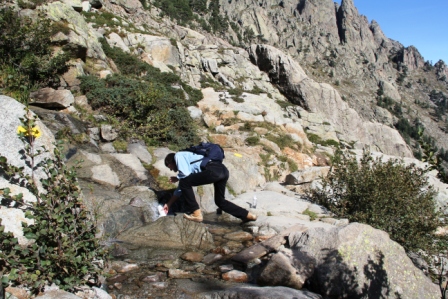
Refilling the water bottles.

In our younger days, BB and I did some long and tough mountain hikes in the Swiss Alps – several days on the trail with backpacks.  We loved it.  This was different.  “Most hikes are strenuous, but enjoyable,” he remarked. “This was work, labor intensive.”

What a relief to get the work over with, to reach the hut at the bottom – and to enjoy that satisfying sense of accomplishment after conquering a mountain.  O.K.  This was just a lake, not a mountain, and we were slow.  But, we did it.  My knee passed the test.corsica.14b

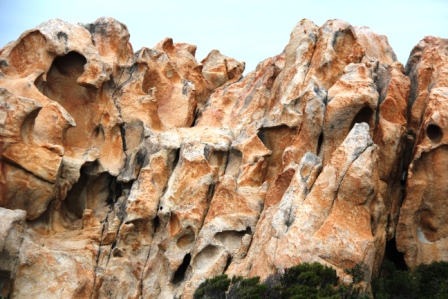
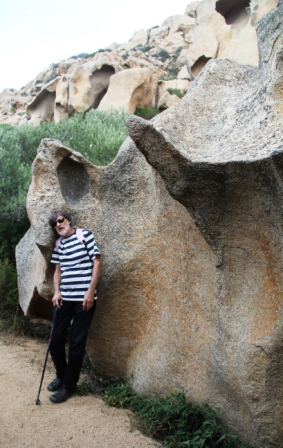
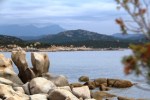
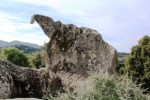
Rocks abound in Corsica—not just on mountain trails.  Along the coast.  On the beaches.  In the sea.  Rocks in the shape of animals, human faces, surrealistic

Natural rock.
Natural rock.

sculptures.

Not long after we disembarked from our all-night ferry ride to this island in the Med (Toulon to Ajaccio); we stopped to visit the archeological site, Filitosa, on our way south.  Incredible rocks there. We followed the path through the site where artifacts dating to as early as 3,300 have been found.  Ancient civilizations lived in caves here.  During the megalithic period they erected menhir statues, granite monoliths, carved to represent human faces or entire figures.  They are intriguing, as are the natural rock formations in the area.

Menhir
Menhir

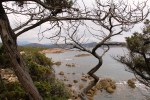
Onward to the coast and the tiny town of Tizzano for five nights at the Hotel du Golfe, which advertises that it has its feet in the sea. The Mediterranean waters were right below the balcony of our room.  Awake to the soothing sounds of the sea gently slapping the rocks. The hotel beach is just a miniscule patch of sand surrounded by those rocks. Getting in and out of the sea was a bit tricky maneuvering over the hurdles, but the water was perfect. I swam and swam and swam with no one in sight.

Mini beach on a windy day --too dangerous to swim
Mini beach on a windy day –too dangerous to swim

During our October visit to this island utopia we enjoyed still warm weather and mostly blue skies – and tranquility.  The tourist season was over.  On the plus side, no crowds anywhere and the highways to ourselves.  On the down side, many shops, hotels and restaurants had already closed for the season.  All four of the restaurants in Tizzano were boarded shut.

There is just one winding road down the mountain from the inland town of Sartène leading to our mini burg and the sea. Winter Tizzano population:

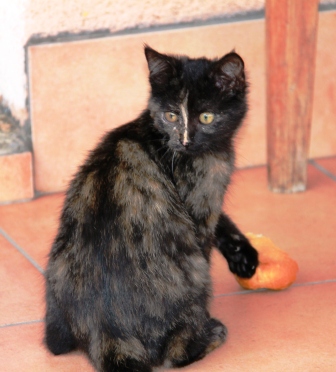
Chopinette, my favorite Corsican,

30 humans and lots of felines.   In the summer:  3,000 tourists.  In October:  us, the locals, a few other tourists and the friendly cats.  I was in heaven.

Since BB is not a swimmer and we wanted to see more than Tizzano, we set out on excursions every day, to Ponte Vecchio on the eastern coast, to Bonifacio in the far southwestern corner of the island, and on foot one day for a hike along corsica.15bthe shore.  No leisurely stroll along a sandy beach was this, but a demanding trek through coastal bush –and yet more boulders.  The scenery was splendid with more fantastic rock formations to photograph.

Ponte Vecchio is basically a resort town with lots of sailboats in the harbor, narrow streets with cute boutiques (most closed) and restaurants (also most closed).  Not too exciting.  Bonifacio is different, a two-level, lively town.  The haute ville, an amazing sight, perches precariously atop a cliff on a thin peninsula.  Skinny streets twist past ancient buildings, including numerous churches.   We followed the advice of the woman in the tourist office and set off to the Escalier du Roi d’Aragon – 187 steps from a corner of the town’s citadel plunging to the sea.  Scary, steep steps. Descending them is an exhilarating adventure.  They plummet straight down and at times involve big jumps – one step where there should be two.corsica.20b

The winds were ferocious on the day of our Bonifacio visit. Mammoth waves roared and crashed into the rocks. We had been told the best view of the city is from the water, but due to the wind velocity, tourist boats were not running.

So, let’s splurge on lunch. Food is always a highlight of our travels.  Since so many restaurants were closed, our choices were limited.  We had few memorable meals in Corsica, including one we’d like to forget — the $98 (72 euro) fish at a harbor restaurant in Bonifacio.  We like fish and craved a fresh Mediterranean corsica.26catch.  The waiter brought out a tray of specimens and recommended a “Sar.”  We had never heard of this fish, but were game to try, not bothering to ask the price.  Bad move. The astronomical bill  –the fish had been priced at nine euros per 100 grams –was a  shock.   Our Sar was a big fellow, tasty, perhaps not that tasty, but it did come with some veggies and potatoes.

Corte's citadel
Corte’s citadel

Cap Corse, the island finger at the northern tip, was our destination for three days before boarding the ferry in Bastia for the trip back to Toulon.  En route we spent a night at the interior town of Corte so we could do the lake hike.  Hiking is just one of numerous outdoor activities offered in Corsica – all kinds of water sports plus mountain adventures:  canyoning, rock climbing, zip line etc.corsica.3

The drive through the interior is spectacular – miles and miles of rugged nature over excellent roads.   Although Corsica is a vacation paradise, it has not been scarred by mass tourism.  There are vast pristine sections in both the interior and along the coast — no towns, no hotels, no commerce.

Erbalunga
Erbalunga

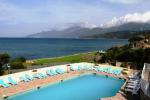
Our hotel in the coastal town of Erbalunga was not on the beach, but it did have a large heated pool — my private pool – no other swimmers.

We drove along the Cap coast with many photo stops.  We drove through the middle of the peninsula over roads that averaged more than a dozen curves per kilometer.  Along the route:  stops for wine tasting and buying.  Wine is the island’s principal export.  According to my guidebook bible, Lonely Planet corsica.38bCorsica, the wines “are not necessarily the most distinguished of wines.”   Some of the grape varieties (Niellucciu for one) are unique to Corsica.  As BB seems to like wine more than bicycles these days, we bought a supply.

corsica.47Bastia, a town of crumbling splendor, is fun to explore: a busy harbor, imposing citadel, intriguing hillside park, ancient churches – and shops that were open.  Throughout the trip I had been searching for stores where I could purchase Corsican delicacies – cheese, sausage, honey, jams.  No luck. In Bastia’s thriving shopping district, I found my treasures at last.corsica.48b

I hope to return to Corsica, but in late September before so much shuts down for winter.  And, I’d go back to Tizzano and the Hotel du Golfe.  Gil Chopin, the hotel proprietor, told me he was born in the town but moved on to work in Paris and other cities.  “I missed nature, the sea.”  He came back.  “We live in harmony with nature here.  Each day is different.  Each day I am astonished.  For me, this is paradise.”  It was paradise for me, too.

Hotel du Golfe,Tizzano.  A perfect coastal retreat. The simple but comfortable rooms all have balconies above the Med.  Idyllic location. http://www.hoteldugolfetizzano.com
On the terrace at Hotel du Golfe

Hotel Castel Brando, Erbalunga, Cap Corse. Spacious accommodations including rooms with private terraces, lovely garden for breakfast  (ample, including do-it-yourself eggs and pancakes) and a super heated pool.  http://www.castelbrando.com

I’m happy to hear from readers. See “Leave a Reply” below under Comments. Followers also welcome. Don’t miss future posts. Click on Email Subscription at top right.


Discovering Fine Wines in the Gard

gard.10According to the French proverb, “A day without wine is a day without sunshine.”  There’s no lack of liquid sunshine in our lives, nor in the lives of most of the French, as wine is an essential part of life here.   Not far from our abode in the Luberon area of Provence are numerous wineries.  BB (husband Bicycle Bob) and I enjoy treks to visit and taste and buy.

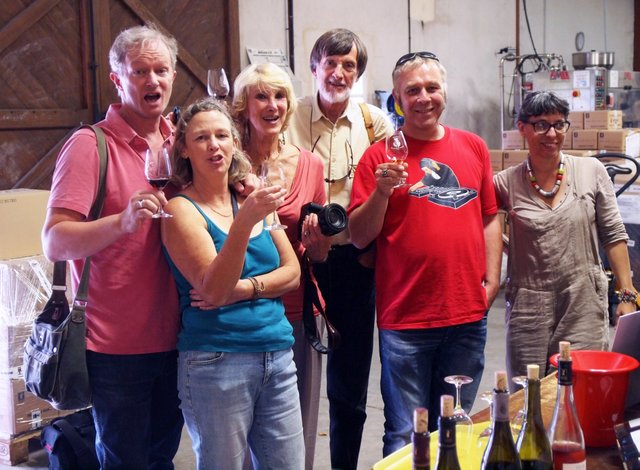
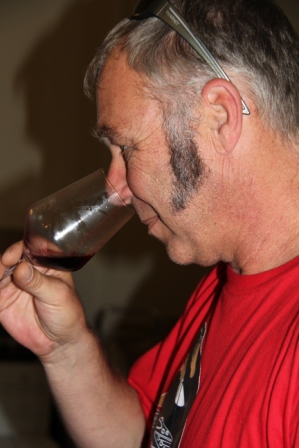
Last week’s all-day excursion to sample  Côtes du Rhône wines in the department of the Gard northwest of Avignon was over-the-top.  Four wineries, lots of delicious reds and whites – plus the famous Tavel Rosé.

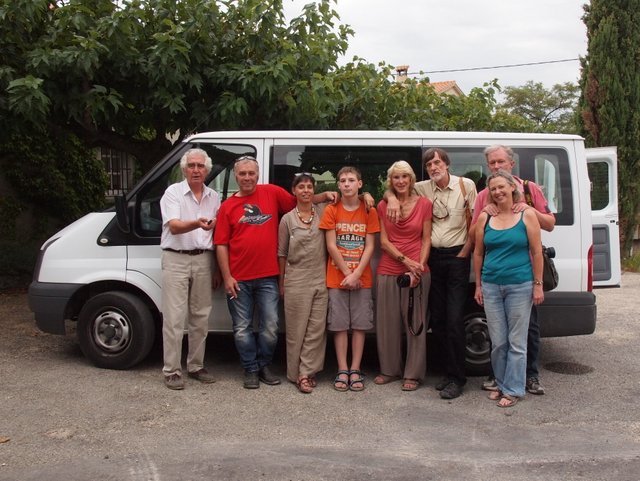
Happy Wine Tasters--photo by David Regan
Happy Wine Tasters–photo by David Regan

French friends Anne and Pascal organized the jaunt, rented a van, and invited us, plus our friends David, Martine and George. (David’s wife Mollie was sick and had to miss the event.)    Pascal hails from the region, and is a fan of its red wine.  He had prepared documentation on the area, as well as each of the wineries we would visit.  Very impressive and professional.

Pascal, Gard wine afficionado

The Gard, as opposed to other wine areas we have visited, is relatively flat.  Vines grow on level ground in chalky soil covered by layers of flat stones which act as heat storage – similar to the terrain of the prestigious Châteauneuf- du- Pape vineyards.   Winters are warm and dry. Spring is warm and wet, while summers, very hot and dry, precede warm and rainy autumns. Mistral winds blow away the risk of disease.  It all makes for excellent wine.

Chartreuse de Valbonne,  an ancient monastery founded in 1203 with its own vineyards, www.chartreusedevalbonne.com was our first stop.  Pascal’s mother was a teacher there, teaching the children of the doctors who worked at the hospital for lepers formerly housed in the monastery.  His mother’s family moved gard,1from northern France to the Gard, which was a Zone Libre (free zone), during World War II.

We sipped three reds and two whites.  Martine and I, both fans of white wine, especially liked Terrasse de Montalivet, Côtes du Rhône Village 2011, 100% Viognier.   Pascal said he prefers the white wines of Burgundy, but for red wine, these Côtes du Rhône are his favorites.  He explained that the combination of the terrain and the expertise of the vintners in the region who blend different grapes result in “wines with a special character.”   And, the price is right, not as expensive as other, better known Côtes du Rhône.

gard.6The wine connoisseur chose the perfect lunch stop:  Goudargues, “Venice Gardoise,” a delightful town with a canal bordered by giant Plane trees right gard.8smack in its middle.  We sat outdoors above the clear water where we’d spot an occasional trout.  Moules (mussels) were a restaurant special.  I chose the version in curry sauce, while BB opted for mussels with a chorizo sauce.  Both served with frites and scrumptious.

Delicious (photo by David).

George and David are serious, professional photographers. Martine, Anne and I also like taking photos.  We all found plenty of photo opps in this pretty, pleasant  town.

Martine gets the perfect grape shot.

More wine awaited at Domaine Pélaquié,  www.domaine-pelaquie.com, a family winery dating back to the 16th century with 85 hectares of vineyards. Some of its wines have the appellation Côtes du Rhône Village Laudun.

Laudun is one of about 20 villages that are permitted to add their names to the Côtes du Rhone Villages appellation.  These vineyards are noted to produce higher-quality wines distinctive of the regional style. Wines with the Côtes du Rhône Village appellation are a step up in quality from those of the Côtes du Rhône title.

Serious tasters BB and David

The winery brochure states that from father to son, generation after generation, the secrets and knowledge of the soil and the grape vines have been passed on.  But each generation makes its own discoveries to create elegant wines with the distinctive character of this domaine.

My wine of choice here was the white Côtes du Rhône Villages Laudun 2012, a blend of Grenache blanc, Clairette, Viognier and Roussanne grapes,  € 8.50 per bottle.  BB liked the Luc Pélaquié Côtes du Rhône 2010, a red wine, 100 % Mourvèdre, at € 13 per bottle.

Anne is not a big fan of wine, but she loved that grape juice.

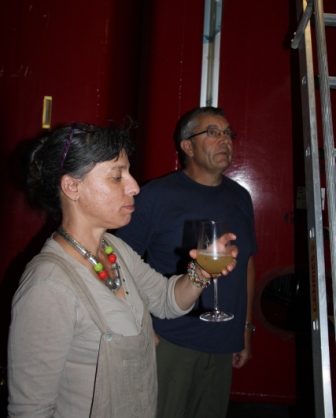
Proprietor Luc Pélaquié led us back into the “cave” to taste grape juice.  He filled our glasses from a 6,000 liter steel tank containing liquid from grapes that had been pressed only a few days prior and was just beginning to ferment.   All rated it very tasty and refreshing.

There was plenty of action to observe at the next stop, a co-op winery, Caves des Vins de Cru de Lirac, www.cavelirac.fr  The commune of Lirac has 715 hectares of vineyards producing wines, predominantly red, of an exceptional quality.

Grape harvest was in full swing in the region.  Truck after truck pulling trailers brimming with grapes arrived at the co-op to dump their contents into a vat where they were instantly crushed by revolving blades.  The aromas,  musty and  fruity,  were heavenly.gard.15

Christiane Bouzige, the winery’s “chef d’exportation,” explained that 60 vintners bring their grapes to the co-op.  Harvest lasts about three weeks when all involved in the business of wine production work seven days a week, almost round the clock.  She predicts that this year’s wine in the Gard will be “very good, but with a small harvest…The grapes are very small…It was very cold in April.”  The co-op sells 36 different wines, ranging in price from € 4 to € 37,50 per bottle.

At Domaine Lafond, www.roc-epine.com, our last stop, we got to taste a Châteauneuf- du- Pape 2009/2010 as this winery has vineyards in the Châteauneuf -du- Pape region.  gard.9The wine’ s  name dates back to 1305 when  the Pope moved to Avignon.   Clement V,  pontiff at the time, was an avid wine lover.    We all relished  the pope’s wine (80% Grenache, 10% Syrah, 10% Mourvèdre),   but at € 25.50 per bottle, a bit too pricey for our budgets.

We also tasted a Tavel Rosé, which vintner Pascal Lafond said is a “very different style of rosé than the rosé of Provence.  You can drink it year round, not just in summer around the pool.”

Lafond, another old family wine estate, produces “bio” wines.   Pascal Lafond mans the winery while his 83-year-old father Jean-Pierre keeps the books.  “I have to check to see if he has made any mistakes, “ said Jean-Pierre.

To our surprise, we began our tasting here with a red wine, followed by the rosé, then the white.  We had assumed the order  should be the reverse, but Pascal explained that in this order the true flavors of the white wine are appreciated.  We did appreciate his excellent white, Lirac Blanc 2012, € 9,20 per bottle.

Wines of southern France are richer and more complex in taste, he said.gard.17

Some of Lafond’s wines are aged in oak barrels for several months.  He proudly showed us his “cave” with long rows of beige colored  barrels which looked new.  He prefers French and Russian oak for his wine storage.  American oak, he finds, gives “too much taste.”

On our way out we walked past stacks of boxes ready for shipping.  Several were labeled “Cascher” (Kosher).  Two rabbis work at the winery in the production of this special wine which is shipped to Jewish communities in France as well as in the US.

Photo by David
Photo by David

That was a healthy dose of delectable sunshine. All returned with several boxes of wine to be assured of sunny days in the winter ahead.  Merci,  Pascal and Anne.OLYMPUS DIGITAL CAMERA

            I’m  happy to hear from readers.  See “Leave a Reply” below under Comments. Followers also welcome.  Don’t miss future posts.  Click on Email Subscription at top right.

A recipe to try:  Duck Breasts in Balsamic Vinegar. It’s very good and very easy and comes from my Australian friend Meg. Scroll down recipe column at right.


Villa Augustine: Fine French dining, turn-of-the-century elegance

“Everywhere you look; it’s a feast for the eyes.  It’s a magical place.”villa.12

We were sitting around the fireplace in a stylish salon of exquisite furnishings enjoying an apero when a friend made that comment.  It was our first time at the Villa Augustine shortly after it opened in April 2012.villa9a

The turn-of-the- century mansion in the Vaucluse city of Apt, the capital of the Luberon, was originally owned by a wealthy family, proprietors of ochre mines.  Their fortune plunged in the 1930s. villa.3 The splendid home was abandoned for many years and in a dreadful state. Along came two Parisians, Guy and Christophe, to rescue the magnificent structure.   Restoration took three years.  Tracking down the furnishings and objets d’art took even longer. villa.11 Guy and Christophe, both fans of  20th century arts décoratifs, combed France and neighboring countries to find original Art Nouveau pieces to enhance the interior in keeping with the period. Signed objects by Majorelle, Ruhlmann, Leuleu, Royere and others are among the treasures.

Today Villa Augustine is a sanctuary of calm and beauty in the midst of busy Apt just above the river Calavon.  There are five chambres d’hote (B&B) rooms and gorgeous gardens planted with Italian inspiration.  A more than 200-year-old cedar of Lebanon, classified as one of the most beautiful trees in the Luberon, is the pièce de resistance amidst flowers, cypress and olive villa.7trees.  An inviting pool on a terrace above the villa is a delightful surprise offering stunning views of Apt and the Luberon hills.  Not to forget – food, which is Guy’s realm.  The ex-banker has always been passionate about cooking.  Here he has the opportunity to indulge in his favorite pastime and prepare gourmet cuisine several evenings per week.  His cuisine, he says, is influenced by his Spanish origins and Algeria, where he was born.  And, the flavors of Provence, of course. There is a set menu, and reservations are a must as he can serve no more than 20 diners, but up to 40 for special events.  During warm weather months, the spacious terrace in front of the villa is often a venue for the latter – concerts, fashion shows, art and photo exhibits.villa.8

During our first visit we had a complete tour and admired each unique bedroom with adjoining baths, many delightfully retro.  A mirror from a buffet is the headboard for the double bed in one room.  One bedroom is done in the style of the ‘50s, and another reflects the ‘40s.villa.10

Dinner – either outdoors under trellises on the terrace where huge pots of plants in bloom create an upscale  ambience of greenery, or indoors in the dining room with its precious décor, is special.villa.1  So is the food.  Our first dinner in 2011 featured Noix de Saint-Jacques a l’artichaut et l’andouillette, jus de
crustaces, (scallops à l’ artichoke and sausage with the juice of crustaceans).

Last week we savored an excellent meal – a belated birthday treat for step-daughter Kellie and her friend Luka visiting from New York City.  It began with  a “mise en bouche”  (pre-starter), a healthy gamba with a puree of mango villa.14and a mini glass filled with chantilly (whipped cream) of chevre (goat cheese).  The entrée, carpaccio of tuna with a spinach sauce, was very flavorful – my favorite.villa.15  Cod with ratatouille creatively stuffed in mini peppers accompanied the perfectly cooked fish surrounded by a coulis of tomato and juice of palourde (tomato sauce made with the juice of the clam perched on top of the cod).  villa.16Dessert:  roasted figs in fig liqueur with vanilla ice cream.  Wine:  a bottle each of an excellent Burgundy white and a Burgundy red suggested by Christophe.  A fitting birthday meal in a magical place!villa.18

Guy and Christophe, who  had the distinction of being the first gay couple married in Apt after the recent change in French law which now legalizes gay marriage, are overjoyed with the success of their endeavor.

Guy, left, and Christophe

“We are very happy with the speed in which we have succeeded to develop a faithful clientele,” says Guy.  The chambre d’hote has been fully booked since April this year, he added.  “Normally this would take four or five years.”villa.4

Rooms range in price from 100 to 150 euros per night.  Three course dinners with two mise-en-bouches  at 40 euros per person. Villa Augustine is open from mid March through the end of October. More information at www.lavillaaugustine.comvilla.13

Have you dined at Villa Augustine?  Share your view.  I love to hear from readers.  See “Leave a Reply” below under Comments. Followers also welcome.  Don’t miss future posts.  Click on Email Subscription at top right.

A recipe to try:  Linguine with Shrimp, Tomatoes and Feta Sabraw.  Scroll down recipe column at right.

Antwerp: A Gem of a City

Antwerp’s City Hall dominates the Grote Markt.

Thanks to the generosity of my step-daughter Kellie who gave us tickets for a Leonard Cohen concert in Antwerp,  BB and I recently hopped on the fast train (TGV) for a trip to that lovely city. A shorter version of the following appeared in the newspaper Stars and Stripes, www.stripes.com

It could have been a scene from a James Bond movie. Two shiny black limousines crept down the narrow street.  Then came a monster white armored truck, followed by a smaller version of the same, and then more limos. Several  stern, black-suited men walked alongside the vehicles.  It was all very eerie, mysterious.

The white truck stopped in front of a non-descript building.  Three hulks (you would not want to fool with these brutes) jumped out.  A woman with a wad of papers surveyed the scene, as well as more of those ominous looking men and a small crowd of curious on-lookers.  The muscled trio dashed to the back of the truck, opened it, and rapidly tossed out large canvas bags, at least a dozen.   These were rushed inside the building.

I wanted to take pictures but was firmly warned, “No photos.”  I asked the woman about the contents of the bags. “Diamonds” — obviously millions of the precious gems.  Wow! I asked the value of the contents.  No answer.  She remained silent to that and my many other questions.

An everyday delivery in Antwerp’s diamond district where Jewish men, wearing long, black coats  and wide-brimmed black hats, rush up and down the heavily guarded streets, many with cell phones to their ears.Antwerp.3

Antwerp, Belgium’s second city, has been associated with diamonds since the 15th century. “By 2007 more than half of the world’s consumption of rough as well as polished industrial diamonds is traded in Antwerp realizing an annual turnover of $42 billion,” explained Sylvie Van Craen of the city’s tourist office.  She said 1,800 diamond companies have their headquarters in the city, including four diamond exchanges, special diamond banks, security and transport firms, brokers and consultants.  While the business of the glittering stones was originally associated with the Jewish community, today it’s run by people of numerous nationalities, including Jews, with Indians in the majority.

I did not come to Antwerp to purchase a diamond, although shops whose windows are brimming with diamond rings, bracelets, necklaces, earrings and more abound.  Husband Bob and I came to attend the Leonard Cohen concert (amazing), visit the city and my Irish friend Isabel who lives there with her Dutch husband, Carlo.  She was our guide extraordinaire.

Jackie, Isabel and Carlo.

“You’re seeing Antwerp at its absolutely worse,” Isabel  lamented as we strolled by café after café whose outdoor tables were deserted.  “Normally at this time of year people are sitting outside.”  It was mid-June, and like in much of Europe, summer had yet to appear.  It was cool, dreary, rainy, but the weather did not dampen her enthusiasm for the city.  “We like Antwerp,”  she said.  “It has culture.  There’s always a holiday atmosphere.  The Belgians enjoy food and drink.”  Antwerp is the capital of Flanders, the part of Belgium where Flemish, a language much like Dutch, is spoken.

We walked down the main shopping street, the bustling Meir, with a quick glance inside the Stadsfeestzaal (Festival Hall), a luxurious indoor shopping mall with a glass iron vault, marble staircase, gold leaf décor and a champagne bar.  Antwerp.8Then a mouth watering stop next door at one of Antwerp’s numerous chocolate shops,  The Chocolate Line in the Paleis op de Meir which offers chocolate pralines with 60 different fillings:  wasabi, Sake, cabernet-sauvignon, Earl  Grey

You can even find Chocolate Pills at the Chocolate Line.

tea,  cannabis,  to name a few.   For 45 euros you can buy a “Chocolate Shooter,” a snifter with three different flavors of cocoa powder to shoot up your nose for a nonaddictive jolt to “maximize the chocolate experience.”

One of Isabel’s favorite Antwerp nooks is the Botanical Garden  Plantentuin, a small but lush patch of green in the midst of the city with unusual plants, blossoms, and a pond where over-sized, colorful carp swim.  A park regular stopped to chat with us– another Antwerp plus.  “It’s easy to get into a conversation with people here, having lunch, sitting on a bench.  They are very chatty,”   Isabel said.

And generous, as we found out at our next stop.  In the food realm, Belgium is noted, not just  for chocolate, but also waffles.  I have never been a waffle fan, but BB loves them and misses those U.S. waffle houses.  In that case, we must go to the “only place to eat waffles,”  Isabel insisted,  Désiré de Lille.  And, we Antwerp.30must order a Wafel warme Noorse Krieken (cherry waffle).  “I bring everyone who visits here.  You have to have a waffle if you come to Belgium.”

If every waffle was like this light, luscious confection with a mound of cherries and whipped cream, I’d be a waffle convert.  Exquisite.  And, there was more.  An elderly woman sat next to us and was served a large bowl of donut balls dusted with powdered sugar.  We eyed them with envy.  She graciously offered us each one – another tasty treat called Smoutebollen.

Back to sightseeing and  the Grote Markt,  a triangular public space that is the Antwerp.27heart of the city with its restored gabled guildhalls dating to the 16th and 17th centuries and the flamboyant renaissance town hall.  For fair weather days, there are plenty of cafes with terraces where you can relax surrounded by the stunning architecture.

Nearby is the city’s architectural pièce de résistance, the Cathedral of Our Lady, a gothic temple whose towering spire dominates the city skyline.  Inside are awe-inspiring masterpieces by Antwerp’s most famous son, Peter Paul Rubens, and other noted artists of the  16th and 17th centuries.

Workers restore  a statue in the cathedral.
Workers restore a statue in the cathedral.

Waffles and chocolate…but what about beer and frites (French fries), two other Belgian specialties?  In the same ancient square as the cathedral, Handschoenmarkt,  is Abbey No 8, a beer store with “100 of the best beers out of 2,400 brewed in Belgium,” boasted salesman John. The shop also has 100 different kinds of beer glasses, as every beer demands its own type of glass. The most popular Antwerp beer is De Koninck, an amber colored brew  served in  a Antwerp.14bolleke, a goblet shaped glass.  According to Isabel, the best frites in the city are to be had at Fritkot Max, easy to spot with a large replica of fries in front.

We met Isabel’s husband for lunch at their favorite restaurant, Dock’s Café.  Antwerp,  located on the  River Schelde just 50 miles from the North Sea, is known for fish and seafood dishes, both of which are favorites at Dock’s.   I relished six scrumptious oysters, followed by very fresh flounder.

Next on our tour guide’s agenda was the city’s newest sensation, the Mas, a striking and unusual edifice along the river which houses a five-story museum  illustrating the story of the city, the port, and their  connection to the rest of the world. Bad  luck for us – closed on Monday, the day we were in Antwerp. There is a boulevard walkway around the building to the top where the views are said to be “extraordinary.”  It too was closed.Antwerp.1

However, we found “extraordinary”   views in the nearby Schipperskwartier (Seamen’s Quarter), the red light district where sex goddesses ply their trade (prostitution is tolerated in Belgium), posing in doorways and windows with little covering their bodies.  Men “shoppers” stroll by, stopping now and then to converse, perhaps  negotiate a price.

The district’s church, St. Paul’s,  owes the salvage of some of its treasures to the prostitutes.  During a huge fire in 1968 which destroyed much of the structure, the ladies of the night helped save valuable paintings.  The church is a treasure trove of the latter,  50 paintings by notables such as Rubens and Van Dyck .Antwerp.13  We were lucky during our visit.  A volunteer guide provided  fascinating facts and insights on the church and its masterpieces.  The adjacent Calvary Garden is intriguing, if not bizarre, enticing visitors to put their cameras to work.

Rear facade of the elegant Rubens house fom the gardens.
Rear facade of the elegant Rubens house from the gardens.

We saved Antwerp’s most popular attraction, the Rubens house, until  last.The prolific artist obviously did well.  His home for 24 years (1616-1640) is an elegant palatial residence with a lovely garden, room after room where his paintings hang, and a few pieces of exquisite furniture.  Rent the head set to learn more about the artist and his work.

Our visit to Antwerp ended where it had begun, at the city’s impressive central train station which was constructed in 1902 and recently renovated.  Newsweek called it “the fourth most beautiful station in the world.”Antwerp.20

“I went to several cities looking for a place for a business,”’ a young Nepalese woman named Beauty told me.  She now has a shop in the city where she sells crafts from Nepal.  “I liked Antwerp.  It’s not too big, not too small. It has a cozy feeling and nice people.”  And,   interesting sights to admire, good food, great beer.  I, too, like Antwerp.

TRAVEL TIPS

Park Inn by Radisson, ideal location adjacent to the train station.  Ample Antwerp.28breakfast buffet.  Rates vary depending on season and promotions available.  Doubles from 89 euros.  www. parkinn.com/hotel-antwerpen

The Chocolate Line, Meir 50, www.thechocolateline.be  (Fun place to visit – in the back you can watch chocolates being made.  However, I was disappointed with the expensive box of exotic chocolates I purchased.)

Désiré de Lille, Schrijnwerkersstraat 16, www.desiredelille.be

Friktot Max, Groenplaats 12.  While Isabel recommended this, she confesses she does not eat fries.  Some Trip Advisor followers gave it a poor review.   One said the best fries are at Frituur Kattekwaad, Verbondstraat 112.Antwerp.2

Abbey No 8, Handschoenmarkt 8, www.belgianbeersandbrews.be

Dock’s Café, Jordaenskaai 7, Two course lunch special, 18 euros. www.docks.be

COMING IN SEPTEMBER:  Red Star Line Museum opening Sept. 28 will tell the story of this shipping company which carried some 2.6 million fortune hunters, businessmen, and wealthy travelers to America between 1873 and 1935. Museum located at the Rijnkaai next to where the ships used to dock.  www.redstarlineorg.

Masterpieces by Rubens abound in Antwerp.

Antwerp.18I love to hear from readers. Please share your views. See  “Leave a Reply” below under Comments. Subscribers also welcome.  Don’t miss future posts.  Click on Email Subscription at top right.