Cat Lover’s Adventure in South Africa

Childless cat lady – that’s me.  I have been passionate about felines all my life, and have always had a cat, or several cats, in my life.
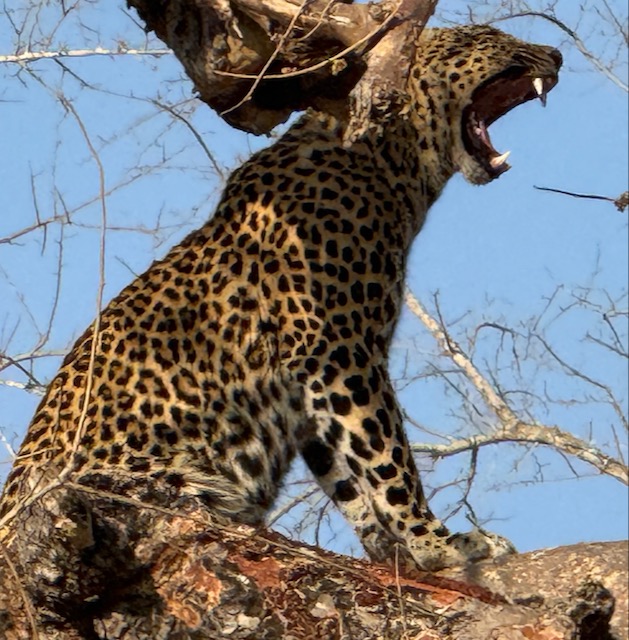
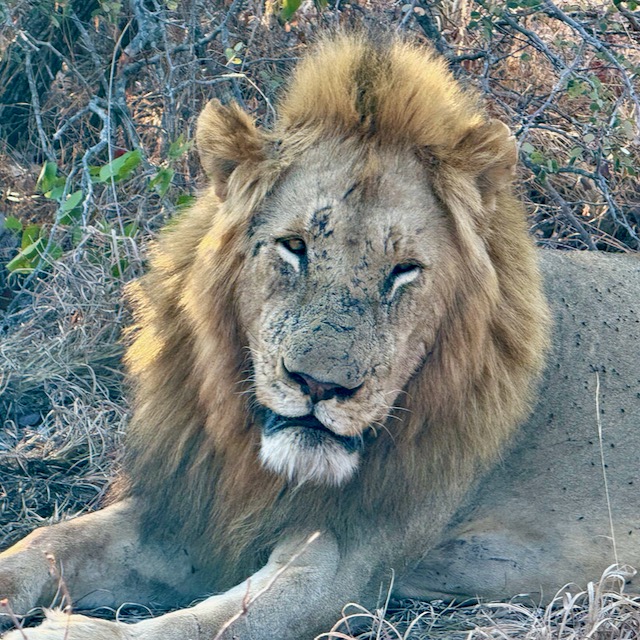
My safari to South Africa last summer gave me the opportunity to observe big cats in the wild.  It was thrilling, and fascinating to learn more about these majestic creatures from the guides and trackers.  In many cases, they know the animals, and their backstories, well. 

On the drive from the airport to my first safari lodge:  a leopard sighting. Driver Cheryl pointed out that the spotted feline was stalking a kudo, well camouflaged in the bush. Numerous cars had pulled over to observe.  Alas, we had to move on. Did the leopard succeed?  Or, did the kudo live another day?  
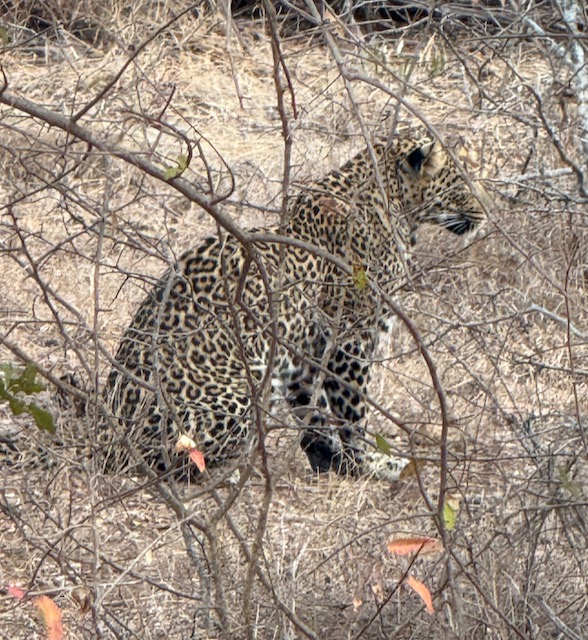
Eyes focused on a nearby kudo with hopes for a tasty lunch.

The next day on a safari trek, another leopard. This one was lounging near a tree with a hyena and a wildebeest not far off.   The partially-eaten carcass of an impala was lodged high up in the tree branches. We learned that leopards, excellent climbers, often drag their kill up trees to protect it from hungry predators.  

.

Hyena in the background in photo on the left.

Hyenas are scavengers– and ferocious. We were told they charge any animal, except a male lion.  A leopard would not likely charge a hyena – too risky, according to the guide.  In this instance, the hyena and wildebeest were waiting for the cat to return to the tree and have another go at the carcass, hoping some tasty morsels would fall to the ground.

The leopard, named Raven Scott, was well known to our crew. He, and other wildlife in this park, are regularly monitored and studied.
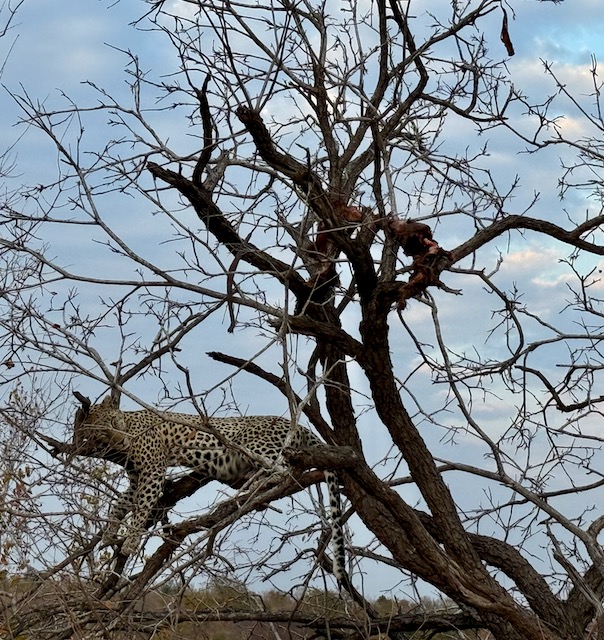
Raven Scott enjoys a siesta knowing his bounty, leftovers from lunch, is safe in the branches above.

Later our tracker zeroed in on lion tracks, but no lion to be found.  He did smell the pee of a leopard.  “It smells like popcorn,” he said.  The potent urine smell is used to signal reproductive status, mark territory, and communicate with other leopards.

During excursions from my next safari lodge in another part of Greater Kruger, lions stole the show. 

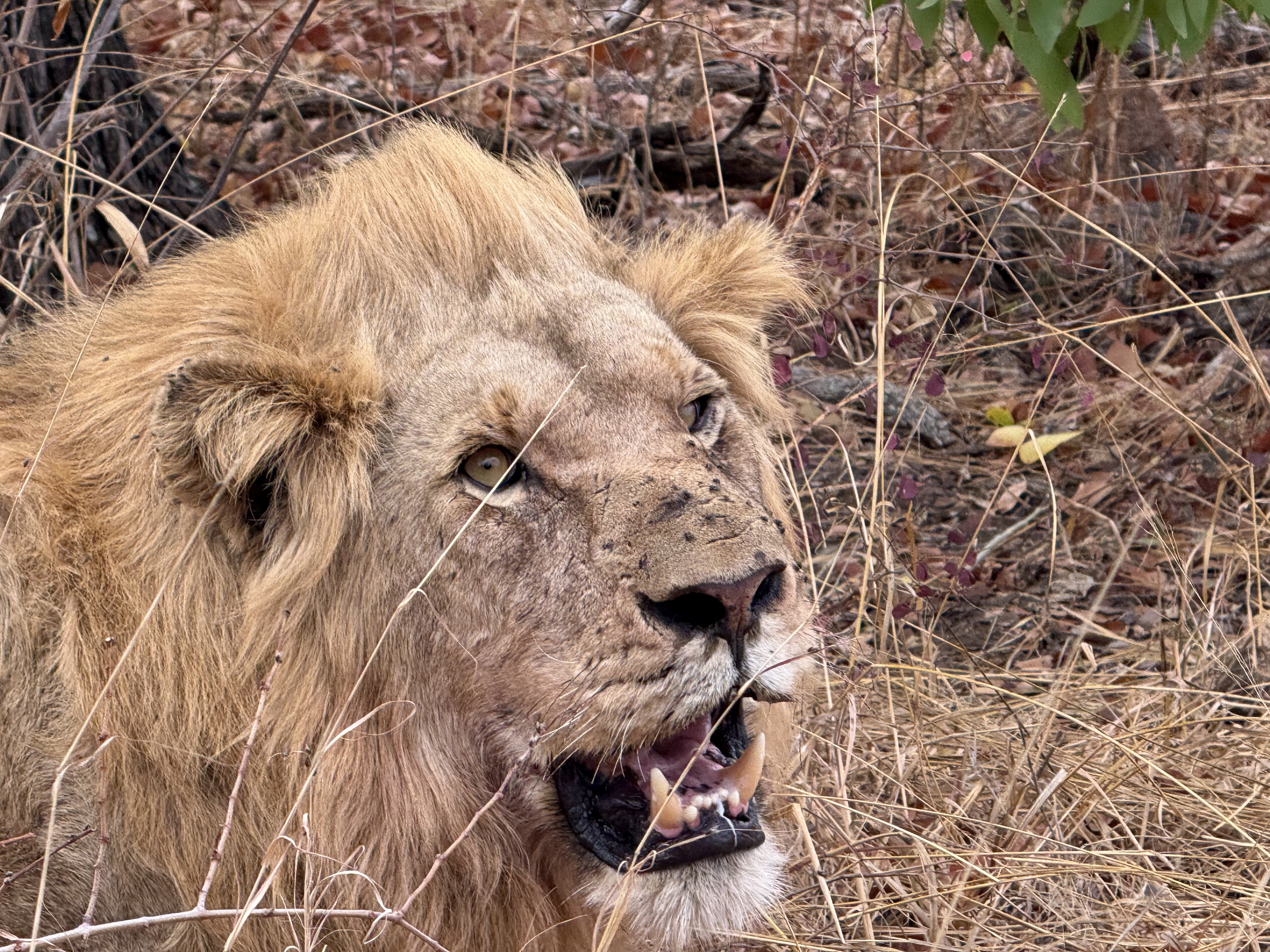
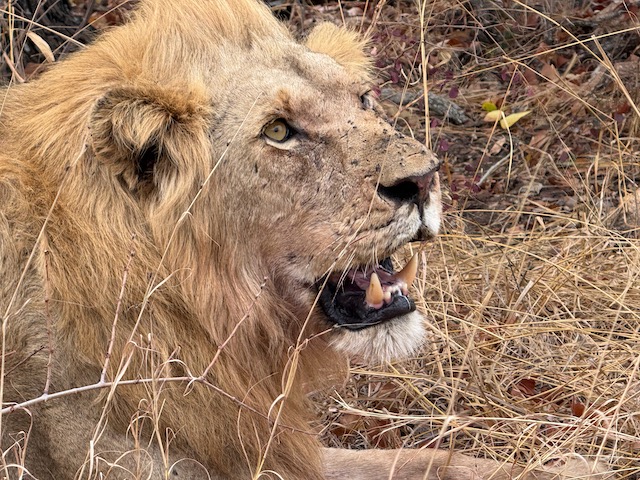
A family group lounging in the sun on an abandoned airport runway intrigued us.   The guide said the male had made a recent kill of a buffalo.  He and two lionesses were knocked out, digesting their feast.  We could see the lion’s bloated stomach. He obviously savored “a lion’s share” of that buffalo.
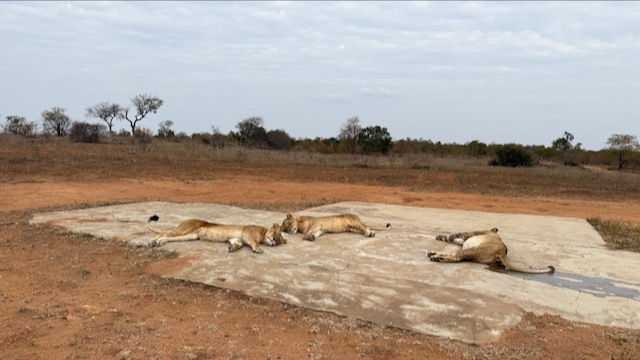
We later returned to the site. The lion had departed, but the “girls” were still enjoying R & R.    

Lions are the only social cat, we learned.  Family groups stay together.  Not so with the leopard and other cats who are solitary souls, only getting together to mate or raise cubs.
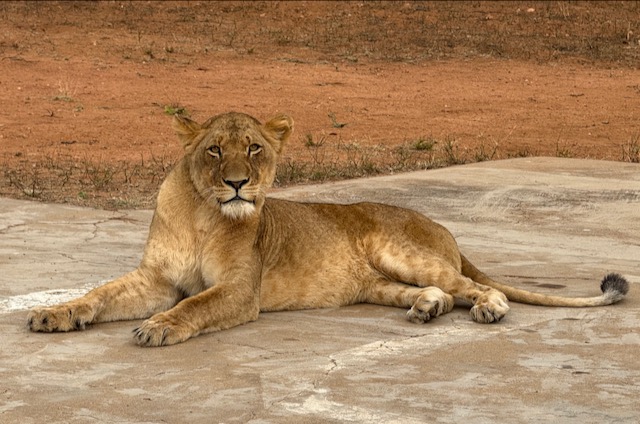
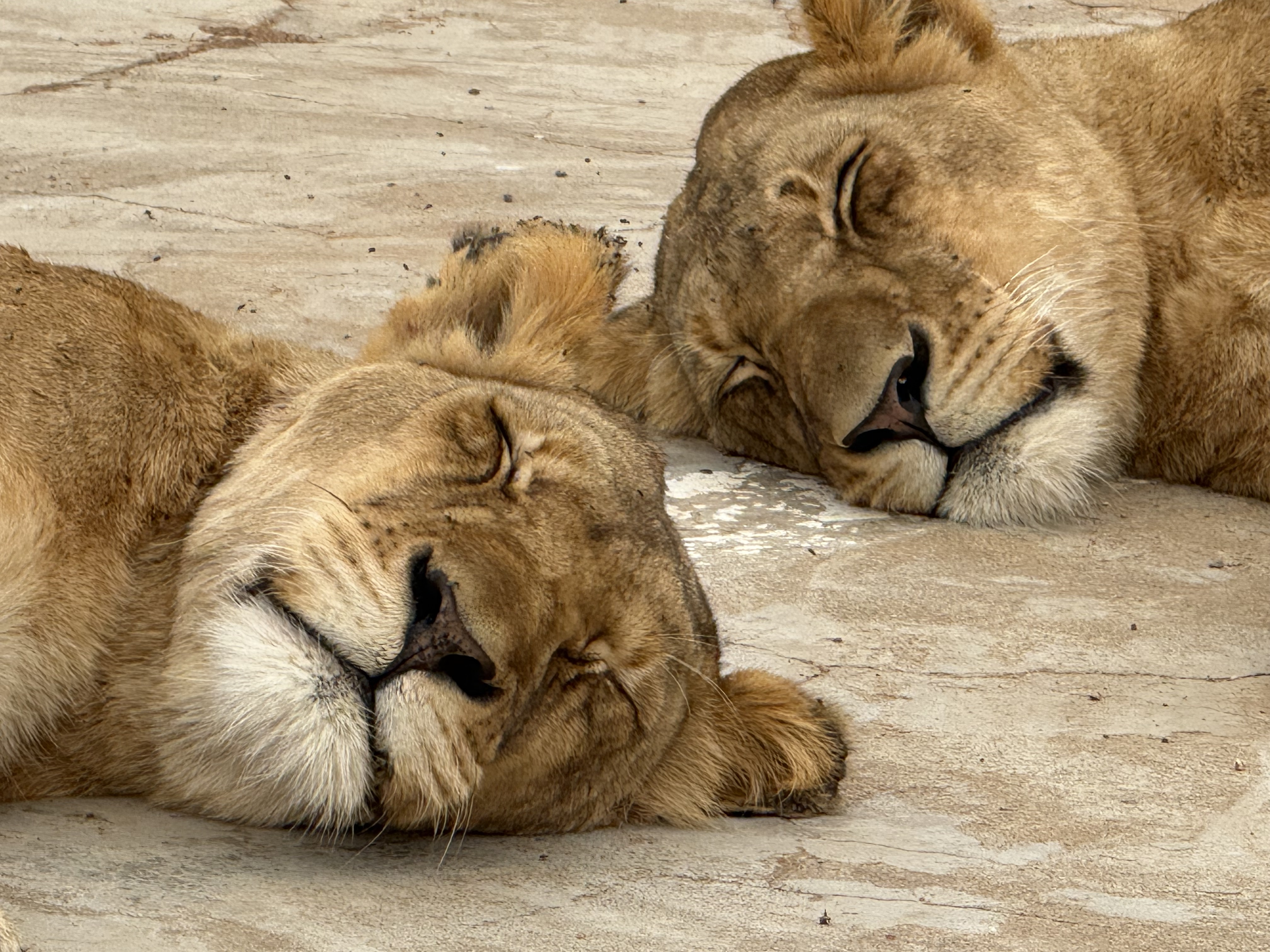
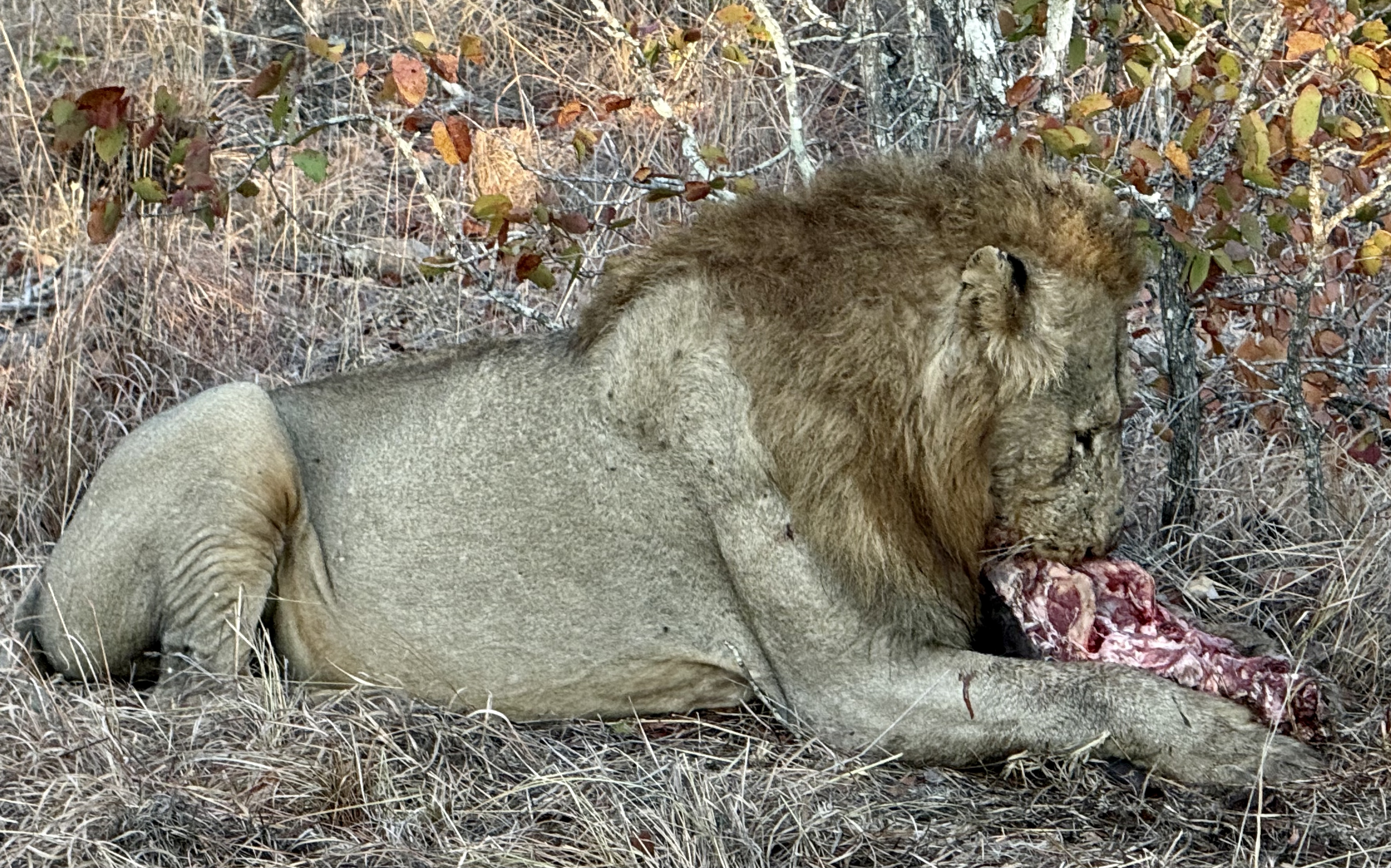
The following day our eagle-eye guide found the lion with his leftover kill.   Vultures hovering above and a strong putrid stench led us to him.  He was sacked out, a pause after yet another feast. Again, we could see his enlarged stomach.  The rotting carcass and zillions of flies were nearby.

Note remains of buffalo, at left behind sleeping lion.

We returned later.  He was awake and joined by his brother.  They shared the carcass until one got fed up and growled. The other took no chances.  He seized a hunk and moved away.

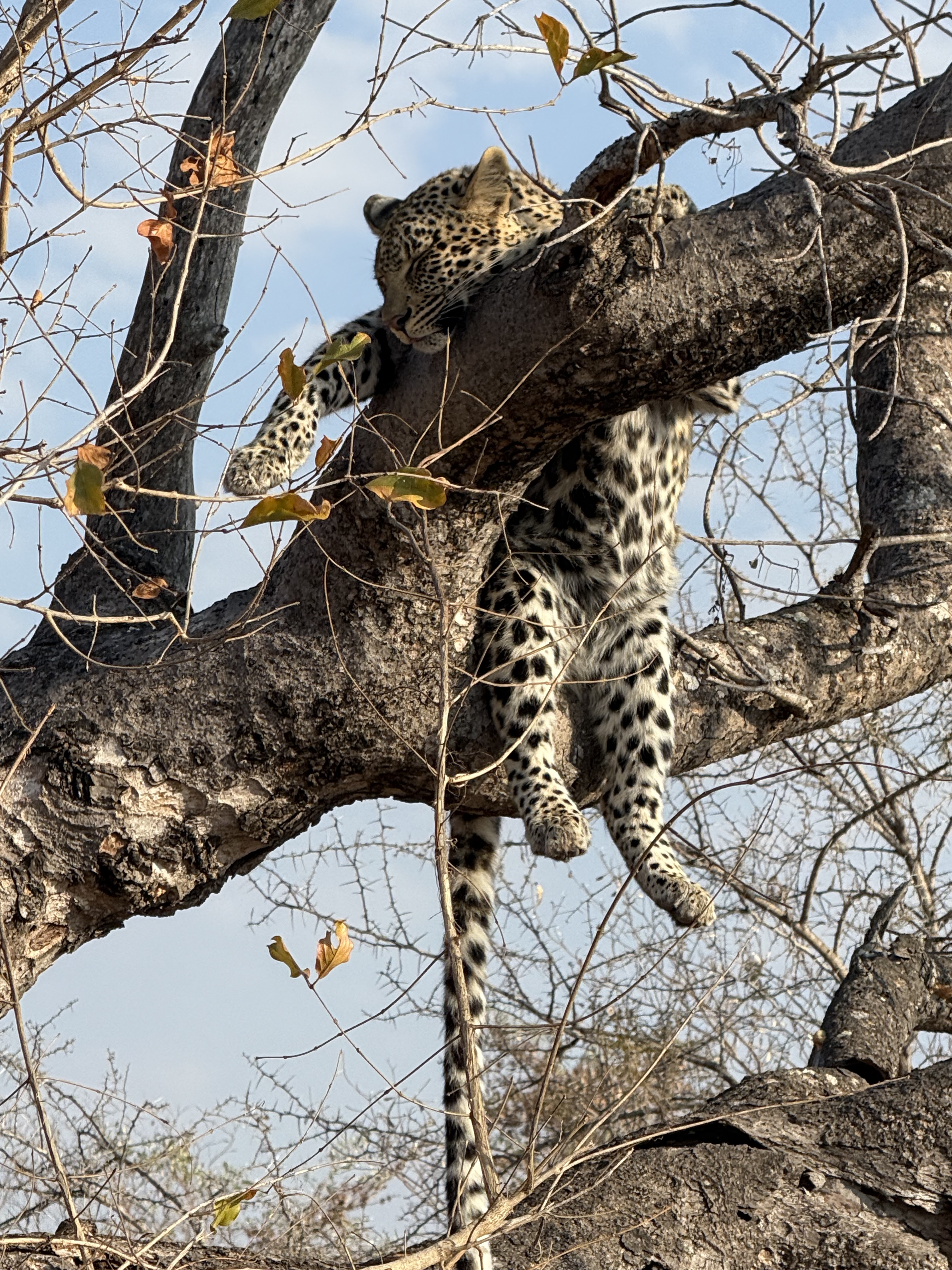
There was also a leopard sighting later that day– another beauty, this one snoozing in a tree in what seemed a most uncomfortable position. That fabulous signature tail dangled from the branches. Leopard tails, which are almost as long as the animal’s body, are used for balance while climbing.

I was elated with all the cat sightings.  For a cat lady, it was awesome. But, also good to come home to my Simba.

I booked my African adventure, South Africa (Kruger) and Madagascar, with Worldwide Quest, http://www.worldwidequest.com
If not a Tales and Travel follower, please sign up here. Trust me. It’s safe. Your address is not shared. Don’t miss out. Madagascar: mysteries and marvels, coming next.

Today’s Taste, a winner of a holiday cookie: Christmas Cookies: Cranberry Walnut Delights

For more recipes, click here.

10 responses to “Cat Lover’s Adventure in South Africa”

  1. Karen

    I loved all the cats, but Simba is the cutest!
    Karen

    Liked by 1 person

    1. Cutest and definitely the sweetest. She is my treasure.

      Like

  2. tsaidel

    Wow you really got to see a lot of the leopards….and you took beautiful photos! I’ve always been told leopards (in Africa) are pretty shy so I’ve only ever had brief glimpses. Your photos are a treat. You should come to India to see tigers since you’re so fond of cats (though maybe you’ve already done that…I know you’ve been to India). Where to next?

    Tobi

    Liked by 1 person

    1. Yes, those leopards were a sensation. Husband Bob and I did see tigers in Rajasthan, and one leopard there after a harrowing drive, but he was far, far away — up on a rocky mt side.
      Ethiopia and Brazil (was in the Peace Corps there eons ago) are on my bucket list. I can hope.

      Like

  3. Bravo, Leah! The photos are simply fab! Did you lug an entire line of camera equipment or ??? Thank you so much for documenting your intrepid travels to regions we may never see in person–Gayle

    Liked by 2 people

    1. Those days of tons of camera equipment are long gone. My camera is my iPhone 6 pro. Love it.
      I hope my days of intrepid travel are not over. My bucket list is long, too long, but must keep working on it.

      Liked by 1 person

  4. angelafronzi

    Awesome photos!- as a fellow cat lover-you surely saw some wonderful cats – in their natural habitat- relaxed and well nourished! – and that leopard had obviously learnt Yoga? -how uncomfortable!! Your photos and tales are so interesting so k- Whats Next?! x

    Liked by 2 people

    1. Grazie mille. We love those cats. I was mesmerized and could have observed them for hours. Yes, that leopard conquered advanced Yoga. There will be more adventure. It keeps me alive. Stay tuned.

      Like

      1. Ortrud Hundertmark

        Hallo Leah ich lese immerwieder gerne deine Artikel. Sie sind sehr spannend und lebendig zu lesen. Weiter so…… Bis später Liebe Grüße Ortrud

        Liked by 1 person

      2. Hallo liebe Ortrud. Ich bin sehr dankbar das mein Blog dir gefällt. LG

        Like

Comments, please!

Your email address will not be published. Required fields are marked *

Insights on South Africa: View from locals

Travel is more than the places you visit, the sights you see and the experiences you enjoy.   It’s also the people you meet:  guides, shop keepers, drivers, hotel personnel, other travelers. 

I relish talking to all. During my recent travels to South Africa and Madagascar, I asked folks about local customs, politics, food, travel and more.  

I found the South African marriage traditions intriguing.  Driver Stan filled me in. No matter where they live in the country, South Africans go back to their home village for matrimony.  But, before the big day a man must pay lobola to his fiancé’s family — at least five cows (about $500 each or more depending on the type and size of cow).    Stan has a fiancé, but so far only three cows. He’s lucky.  Educated brides go for much more, as many as 10 cows.

Cheryl, another driver, explained South African languages. The country has 11 official languages, mostly tribal languages, as well as English and Afrikaans, a Germanic language derived from Dutch. The Dutch were the original settlers in South Africa. Zulu is the most widely spoken tribal language.  Many South Africans, like Cheryl who speaks Xhosa, her tribal language and English, are multi lingual.

Politics is a topic I like to explore. What I learned about South Africa was surprising.  I talked to locals about life since the official end of apartheid in 1994.  Many were too young to remember the dark times, but knew all too well about the years of cruel segregation.

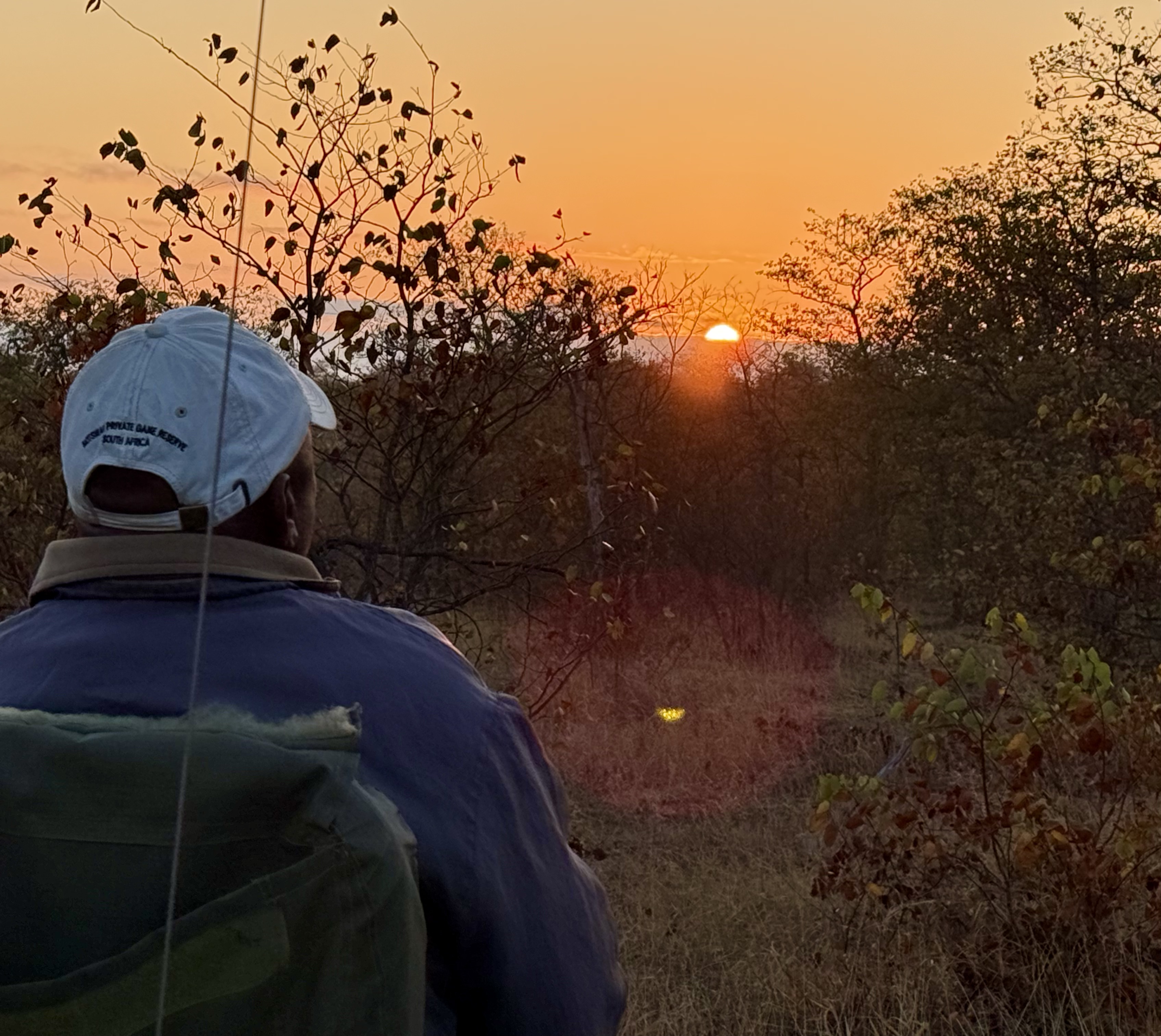
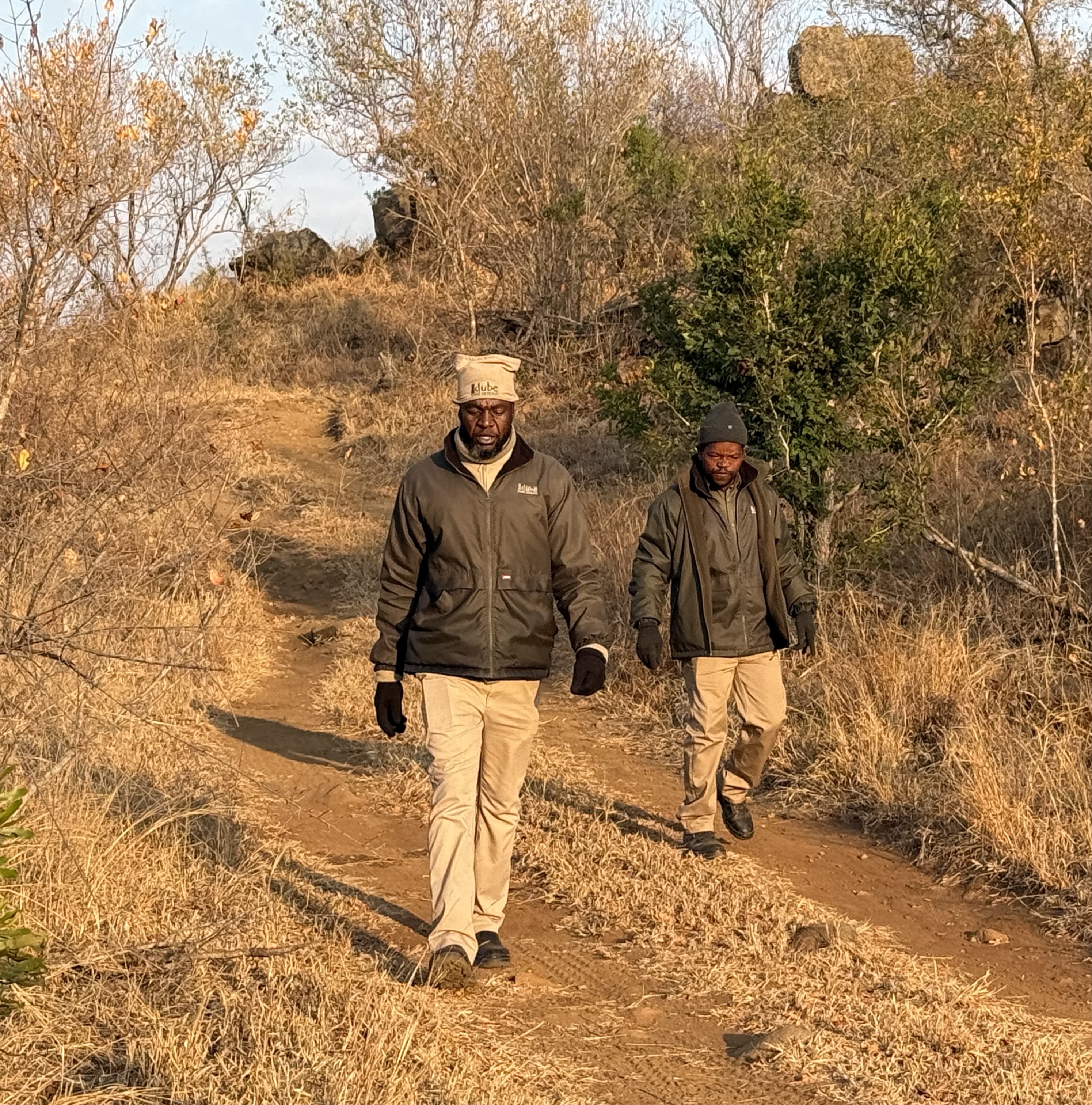
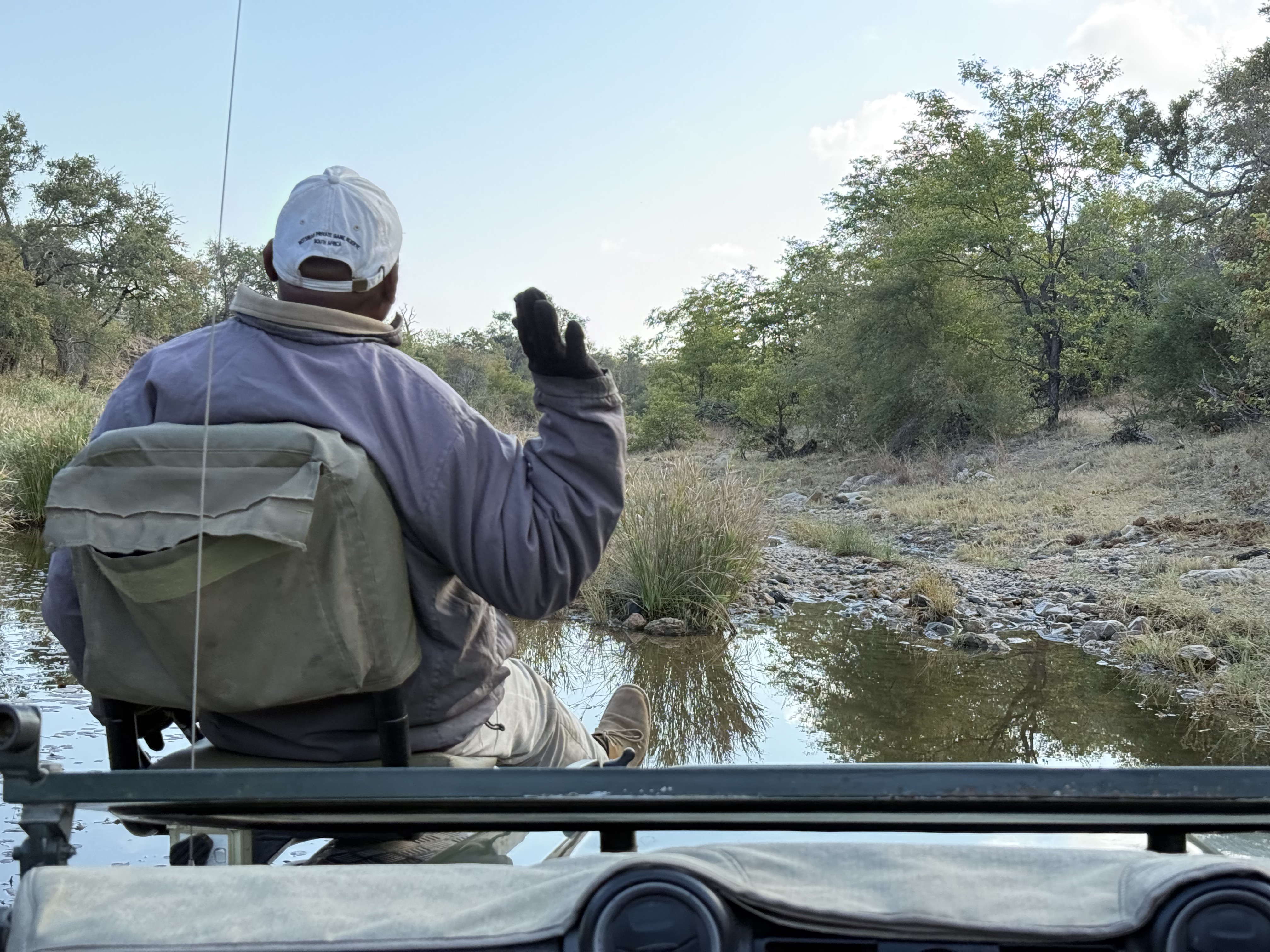
Safari driver and guide disembarked to follow tracks.

All those I spoke with lamented the crime, corruption and unemployment plaguing the country now.  Of course, it’s wonderful to be free, they said, but they claim that during apartheid these problems were not so drastic. 

“There’s nothing but corruption now,” said Jacky, an employee at a safari lodge. “The white government took better care of the people…. They (today’s government) promised us a new road four years ago.  Nothing has happened.    Now when it rains the road floods and the kids can’t go to school… the government promises everything but does nothing.” 

My contacts also said crime in the country has skyrocketed, especially in large cities.  There are places in Johannesburg where even South Africans do not venture.  “Yes, there’s crime,” said Jacky.  “But if people are unemployed and need to feed their children, what are they to do?” 

Apero break during afternoon game drive.

Andy, another lodge worker, does remember apartheid – separate toilets, long waits in line, always letting whites go ahead… “If I wanted to visit my father in Johannesburg, I had to apply for permission…  

“It’s difficult for me to say this as a South African,” he continued, “but the black rulers are corrupt. The older generation votes for them.  I hope in 10 years it will change. We (younger generation) need to take control.”

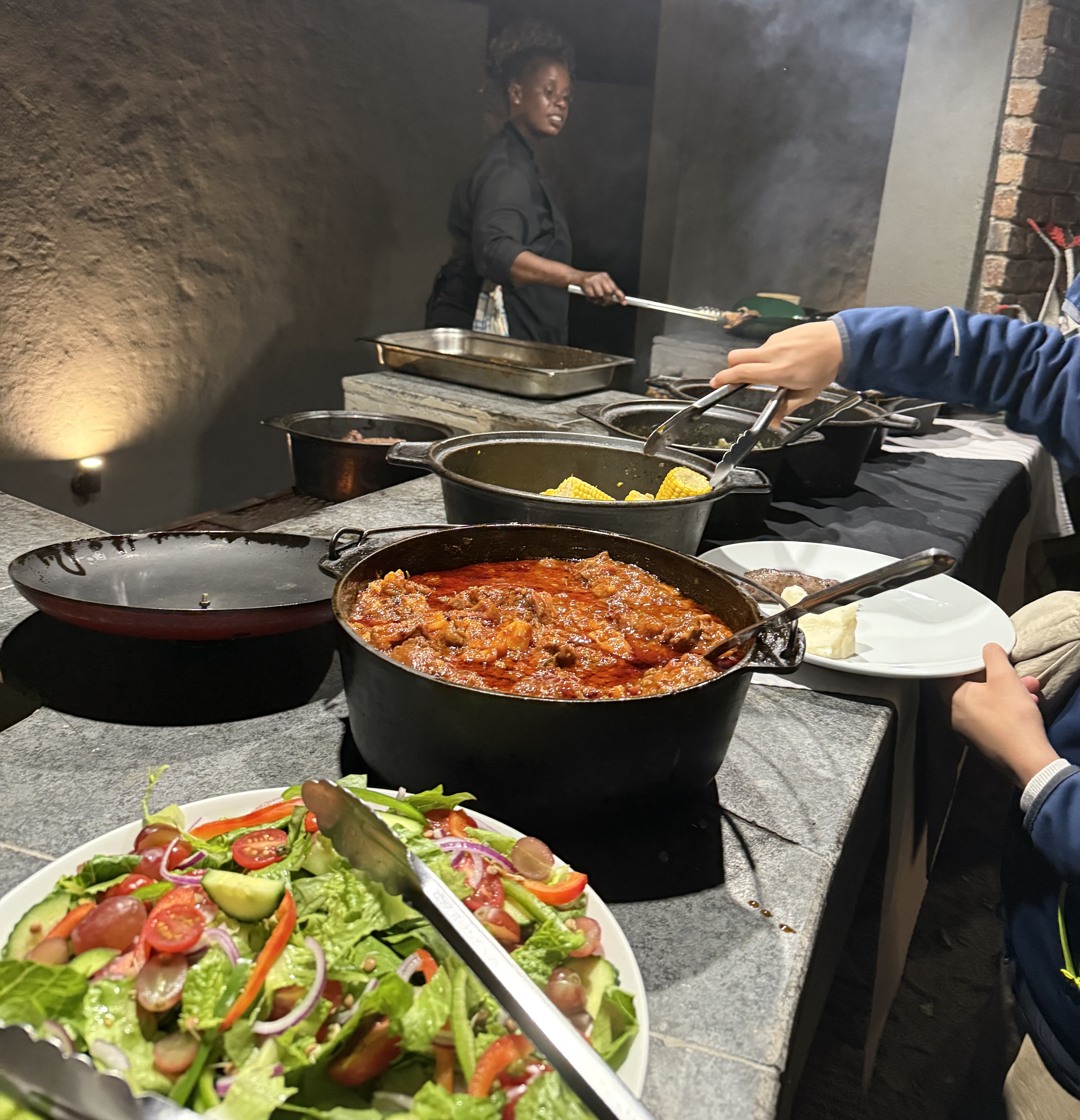
Food is another topic high on my list.  My meals at the safari lodges were all star quality and taste.  South African wildlife, I learned, is not just for tourists to admire. It’s also a good source of protein.  Popular game meat include impala, kudo, springbok, ostrich, etc. I was not overwhelmed with ostrich, but impala was delicious. 

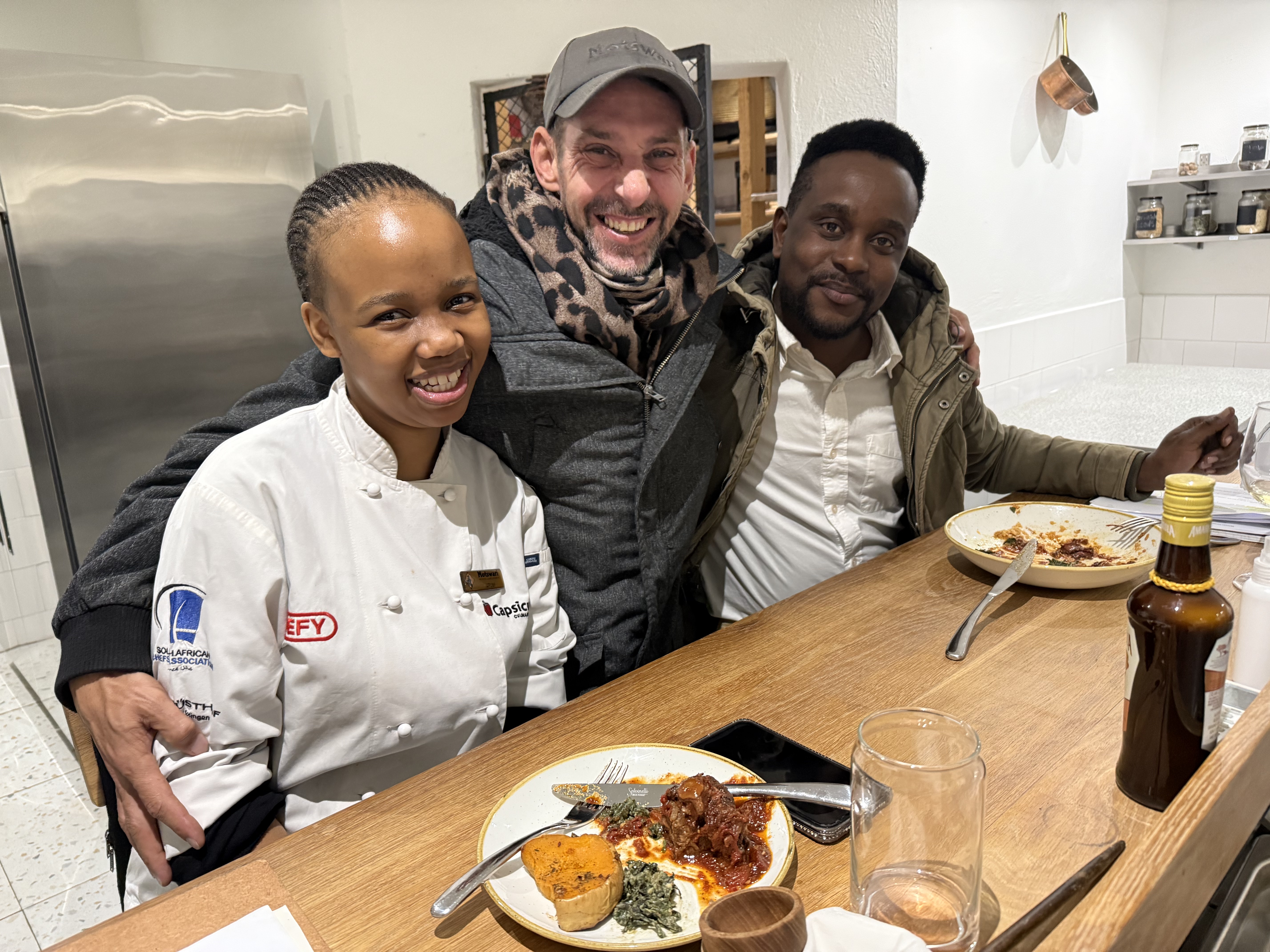
 One evening I had dinner with John, a food manager for several game lodges.  His oxtail stew was exquisite. I requested the recipe, although I am not sure I can find oxtail.  He assured me I could substitute beef, preferably chuck.  

John grew up in self-sustaining family. “My grandmother made the bread…We ate all animal parts.” His love of food and cooking took him to London where he worked as a chef in several restaurants.  He found it “stressful” and is happy to be back in South Africa, planning menus and ordering food for five different lodges.  

John, center, and kitchen staff at Motswari lodge.

Fellow travelers are also fun and interesting.  I was astonished at how well traveled so many of those I met were.  Working remotely gives folks the time and freedom to explore the world, and it appears many are doing just that. 

 At a hotel in Madagascar, I met a group of medical personnel and health workers en route to volunteer on the hospital ship Mercy docked on the country’s coast. It was fascinating to learn about their admirable work.  One volunteer from New Zealand, who has a handicapped daughter, gave me, a handicapped traveler, excellent advice.  “You need to push yourself, test your boundaries.  Use it or lose it.”

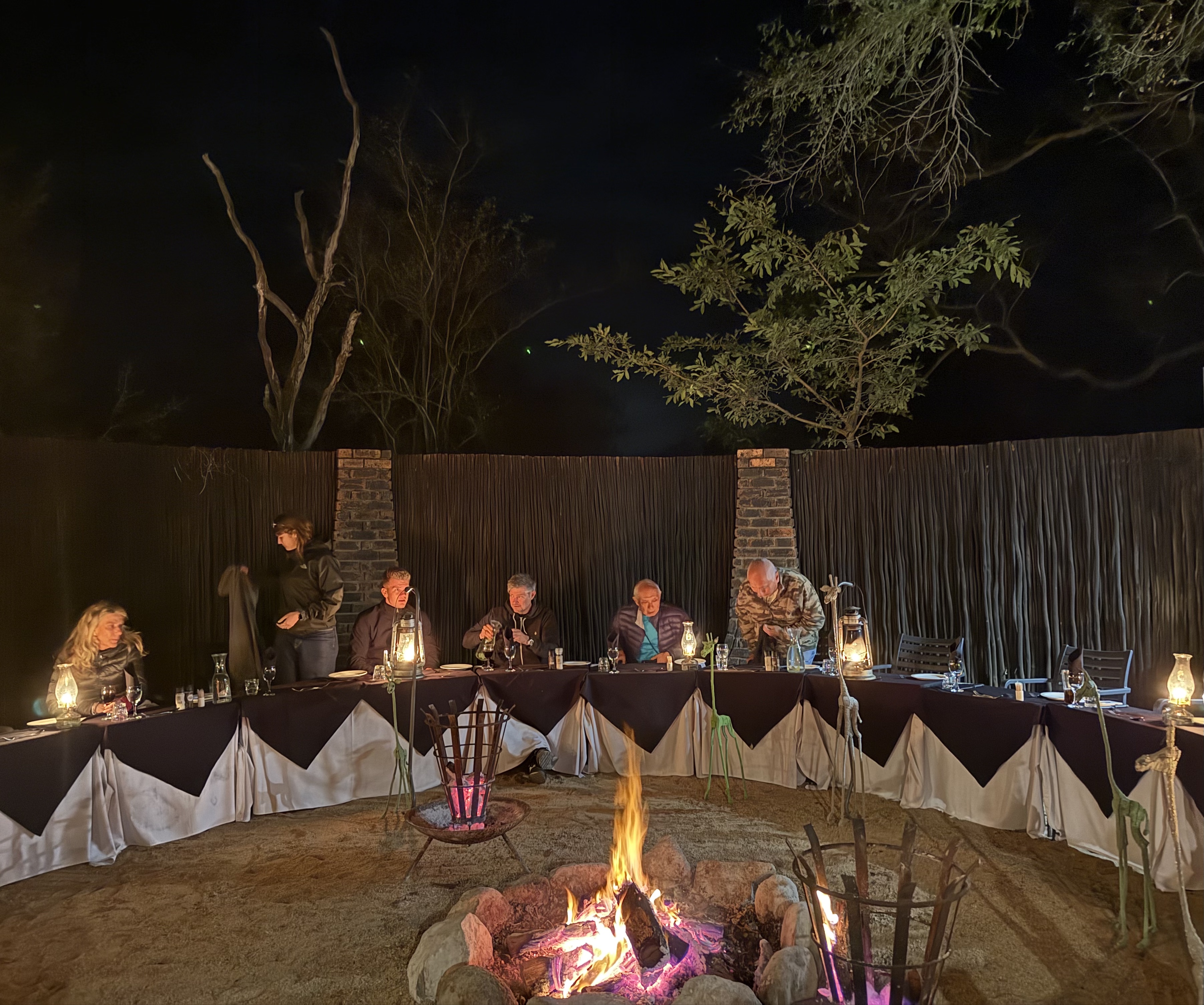
Favorite places visited was the topic of an after- dinner discussion at a safari lodge. This group had traveled far and wide. Thailand, Japan, South Korea, Brazil and Iceland were among favorite destinations.  

Fellow safari travellers with guide and tracker on the left.

 I asked about the most memorable travel experience.  My #1 unforgettable adventure was trekking to see the gorillas in Rwanda.  Canadian Christine, who had been to Rwanda and seen the gorillas, also put that on the top of her list, as did South African Matthew, although his gorilla trek was in Uganda.  

Australian John, whom I met at another lodge, was passionate about Africa and photography.  His high-tech gear was impressive.  It seemed he had been to most every African country, including Madagascar, my next destination.  He gave me some helpful advice.

Travel teaches us about different lands, cultures, religions… It enhances understanding and tolerance.  It is rewarding.  Talk to locals, listen and learn. It will enrich your journey.

I booked my African adventure, South Africa (Kruger) and Madagascar, with Worldwide Quest, http://www.worldwidequest.com

If not a Tales and Travel follower, please sign up here. Trust me. It’s safe. Your address is not shared. Don’t miss out. Big cats coming soon, plus the mysteries and marvels of Madagascar.

TODAY’S TASTE: Rum Raisin Carrot Cake

I recently invited friends for belated b’day cake. The Rum Raisin Carrot Cake is the one with the candle. It was yummy. Click on above title for recipe and for more recipes, click here.

4 responses to “Insights on South Africa: View from locals”

  1. We totally agree with your philosophy of travel. Interactions are a special part of being in another society. They can allow a traveler to make personal connections that can do much to counter prejudice, correct false conceptions of other people’s capabilities,, undo mistaken notions about the nature of their culture, and reduce unjustified arrogance about our own. Great blog!

    Liked by 1 person

    1. And a great comment. Thanks so much. The rewards and benefits of travel are transformative and immeasurable.

      Like

      1. hrector122

        Loved travel. Listening and absorbing places by osmosis. I am glad we travelled so much before the crowds of today. Cell phones and cruise ship. I loved Africa. Even when the baboons trashed our tent. Wonderful cheery people. Morocco was the best trip. But two safaris eere wonderful. Madagascar was somewhat of a bust. We got there on a small cruise ship. The staff arranging the land trips did a crap job. Yes we saw a few lemurs. And we were amazed by the empty spaces of the Indian Ocean. Glad you keep us informed. Travel on, Leah.

        Liked by 1 person

      2. We were fortunate to visit so many wonderful places before they were overrun with tourists. I still want to travel, but am seeking out the less popular, such as Madagascar. I am not ready to give up yet.

        Like

Comments, please!

Your email address will not be published. Required fields are marked *

ON SAFARI

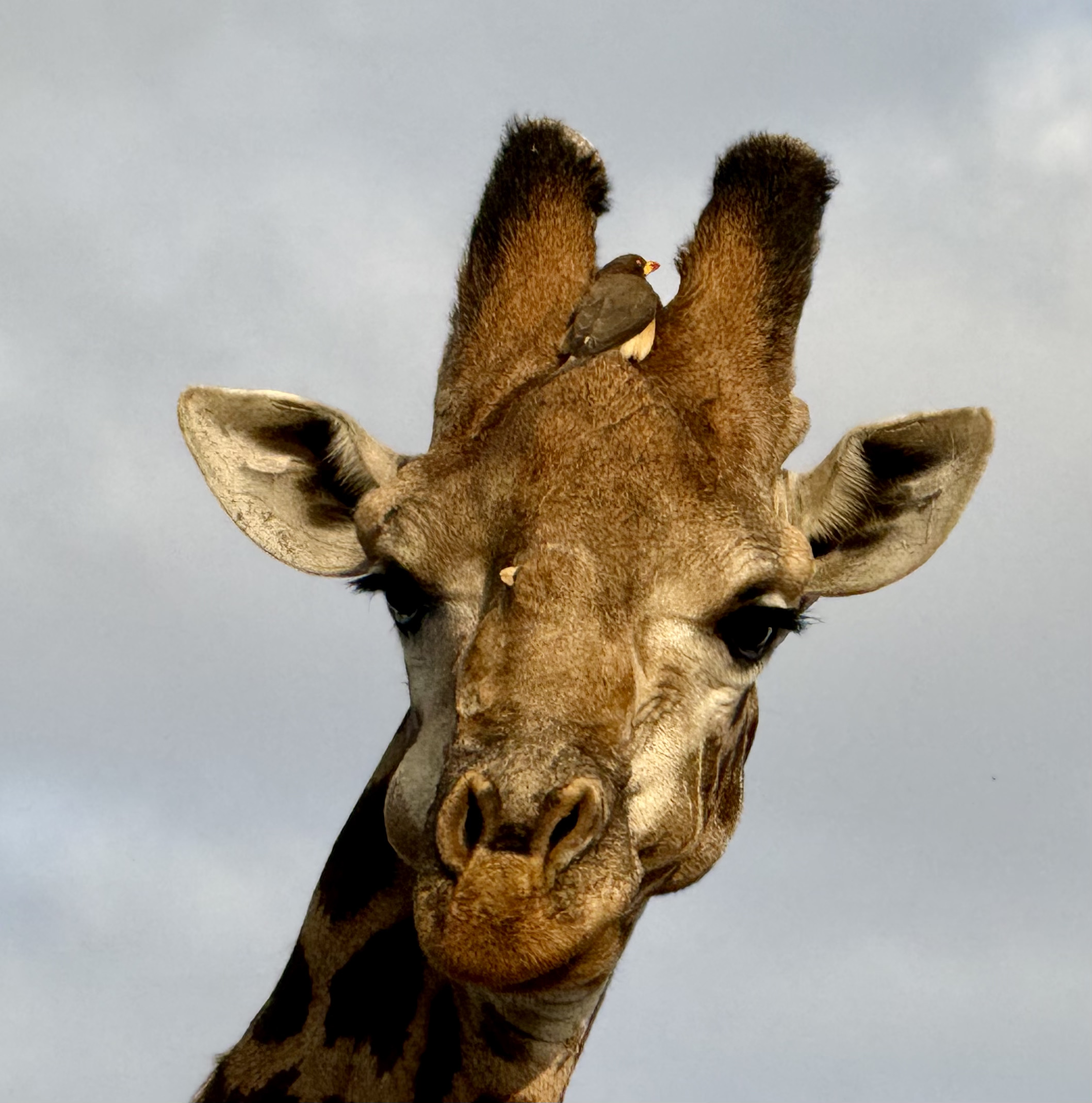
Elephants, giraffes, zebra, kudos, wildebeest, a hyena — I saw them all on my drive from the airport in Skukuza, South Africa, to the Idube safari lodge 3 1/2 hours away. I was excited and decided this was a good omen meaning lots more to come. I was right.

The highlight on the drive was a mother hyena with two tiny, lively puppies. Driver Cheryl said they were just a few days old, if that. Mom was worn out, sleeping soundly, not disturbed by one of her offspring who was chewing on her ear.

I spent the next two days at the Idube lodge and the following two days at the Motswari Game lodge. Both are vast private game reserves in Greater Kruger, an area with unfenced boundaries outside but adjacent to the Kruger National Park.

Game drives begin in the wee hours, about 6 a.m.  It was winter in South Africa, coal black and cold, freezing, at that hour.  Hot water bottles and blankets are provided, but still frosty until the sun pops up.  At 9 we returned to the lodge for a hearty breakfast, setting out again about 3 p.m. for an afternoon drive.

A tracker sits on a special elevated seat in the front of the safari vehicle, his eagle and trained eyes searching for tracks, movement, listening for sounds, any sign of animal life.  The driver/field guide is an encyclopedia of info, as well as a fearless driver, charging off road at Formula 1 speed to reach a site before the animal moves on. Duck under branches, bounce over bumps and ruts, hold onto your seat — more thrills than an amusement park ride.

An abrupt halt. There — right in front of us — is the Lion King, gnawing on a bloody piece of carcass. A thrilling, awesome, incredible sight. You almost need to pinch yourself to be sure it’s real.

As in this instance, it is astonishing how close the vehicles get to the animals which completely ignore the visitors. They are accustomed to human intruders and definitely not camera shy. Even with a phone camera you can get decent photos (I used an I-phone 16 pro). For perfection, however, serious gear is best.

 Following are photos of my “sightings.” Since I am a “childless cat lady” who adores cats, large and small, I will devote a separate post to cats.  I saw many, all magnificent.  Watch this space.

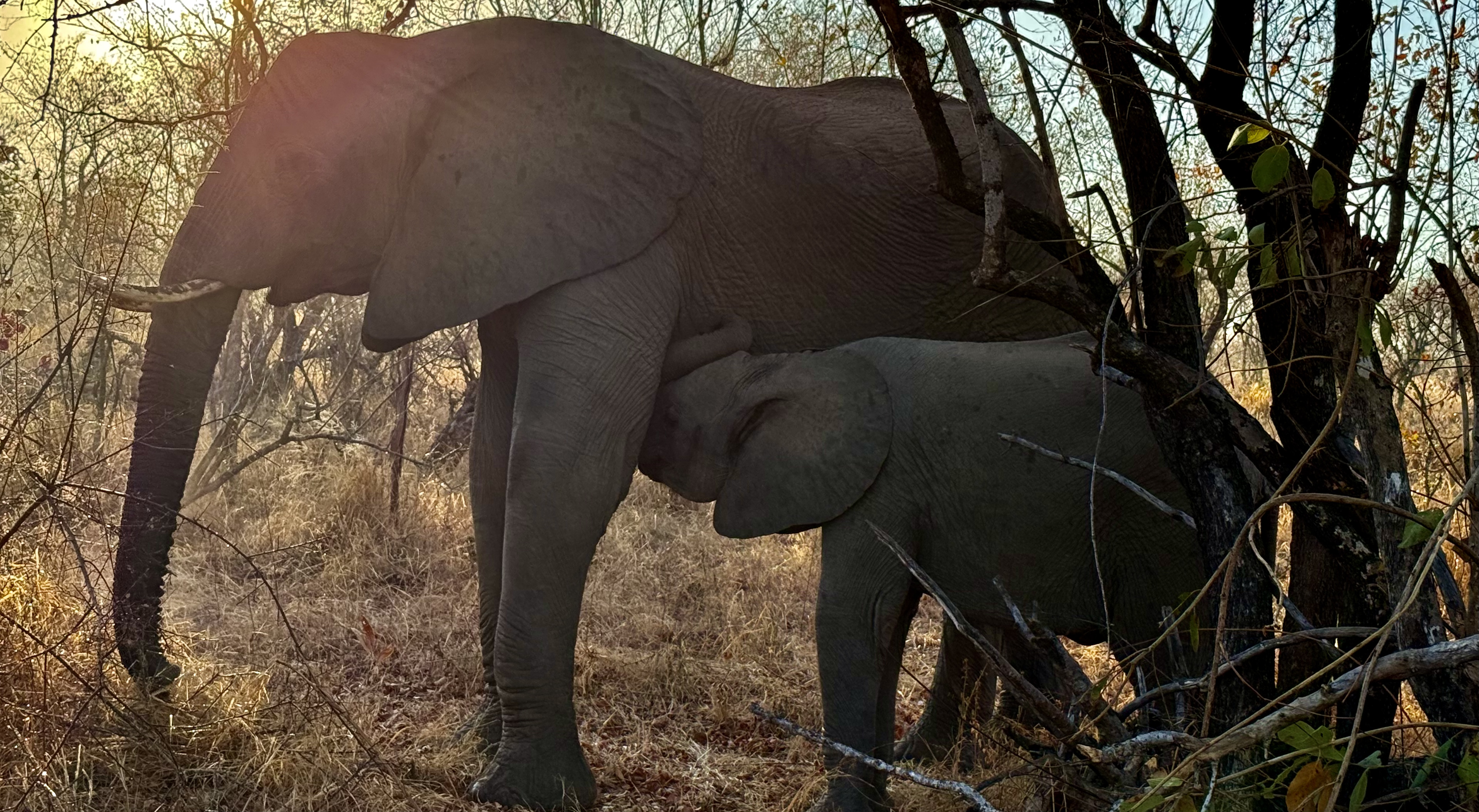
No shortage of elephants on the game drives: majestic males, families, youngsters. These mammoth creatures can live to be 60 to 80 years old. If they manage to survive that long, they die of starvation as their teeth wear out, making it impossible to chew food.  The elephant gestation period is 22 months and “babies” nurse for three to four years.  Elephants can eat for up to 18 hours per day. 

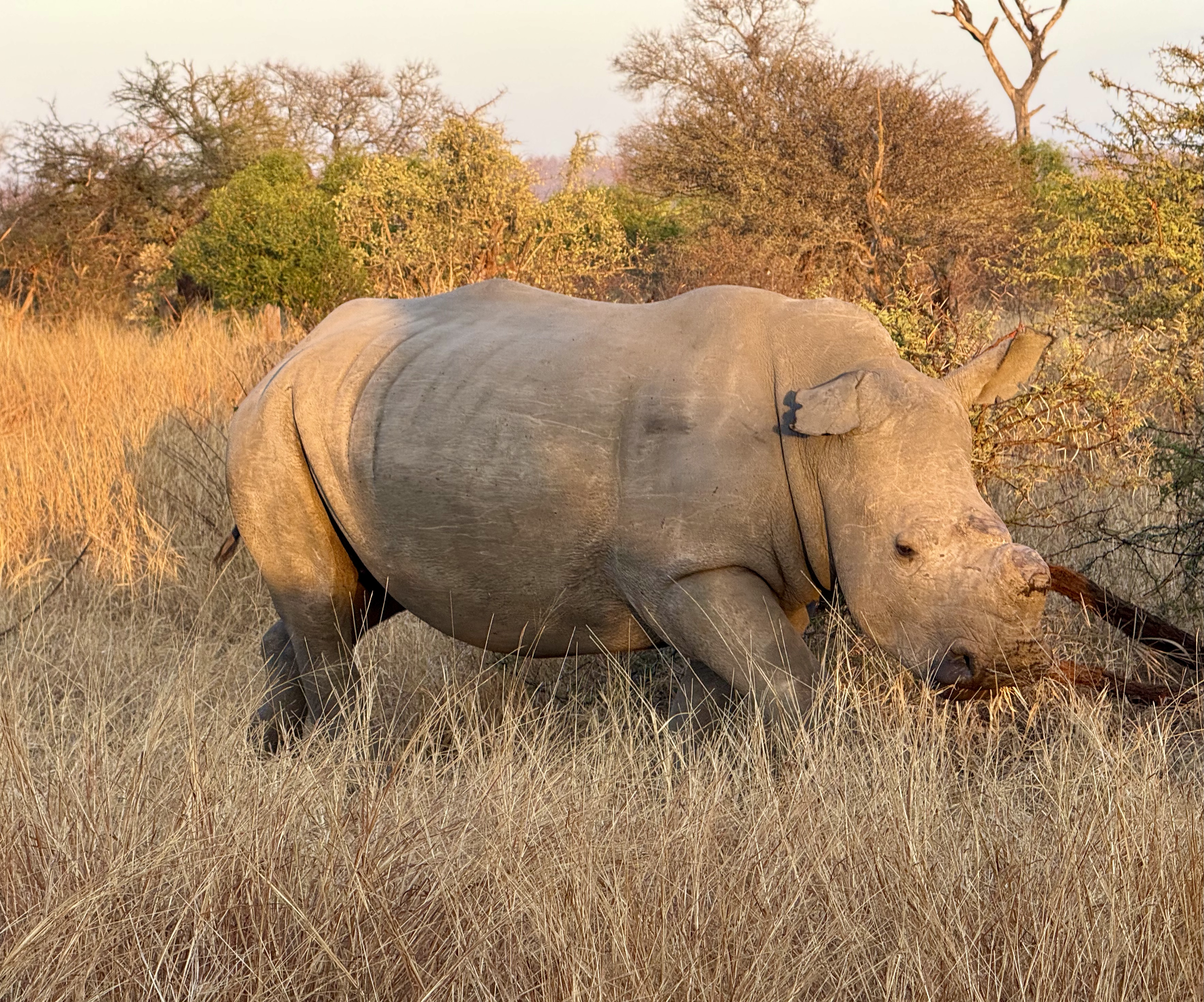
Rhinos, with and without horns.  The horns are treasured in many Asian countries for medicinal properties, although there is no scientific evidence that the horns have medicinal value. In some countries, namely Vietnam, the horns are a luxury item and status symbol.

Hence, poachers kill for the valuable horns.  In the Idube reserve, rhinos are de-horned at the age of two to dissuade the poachers.   Not so in the Timbavati private reserve where the Motswari lodge is located.      

There guide Landon told us that dehorned rhinos are defenseless against predators and in territorial disputes with other rhinos.  Poachers may still kill them to avoid tracking the same rhino again.  And, the dehorning procedure must be repeated every 12-24 months, expensive and labor intensive.  It can also alter natural behavior, leading to social disruption.  Rhinos in Timbavati keep their horns.

The buffalo, one of Africa’s most dangerous animals, is one of the Big Five of African wildlife (elephant, lion, leopard, rhino and Cape or African buffalo). We were lucky and saw not just a few of these aggressive beasts, but hundreds crossing a lake.  

Foreground, hippos.

We never spotted a hippo out of the water, but we did see lots of hippo heads up for air in various lakes.  Hippos can stay under water for six to seven minutes, we learned, and they eat grass not meat.

Ian, the guide in Idube, told us the hippo is the number two killer in South Africa, following malaria, number one.  Number three is the buffalo. Landon at Motswari disagreed on number two.  He said number two is the crocodile, not the hippo which is number three.  Both put malaria as the number one killer.

Male kudo

An African safari is a thrilling, rewarding, unforgettable experience. In addition to being awed by the wildlife, I was intrigued with the country and its citizens. I talked to South Africans about their languages, tribal customs, problems in the country and life since the official end of apartheid in 1994. A look beyond safari in the next post.

Below, more photos.

Another hyena mom with puppies, one with his neck in her mouth. Guide Landon said the adorable hyena puppies are his favorite baby animal.
Wild dog puppies. The guide said two nearby packs were having a territorial dispute. The fight did not interest the playful puppies, but our vehicle did.
These fellows, nyala and a wildebeest, hung out in the front yard of my room at Idube. All were very tame, including the wildebeest. I thought I could try to pet him, but suddenly I heard screams. I was warned that he might decide I was not so friendly and turn those horns on me. I retreated.
Impalas are more numerous than other African antelopes.

I booked my African adventure, South Africa (Kruger) and Madagascar, with Worldwide Quest, http://www.worldwidequest.com

If not a Tales and Travel follower, please sign up here. Trust me. It’s safe. Your address is not shared. Don’t miss out. More about my travels in future posts:   South Africa beyond safari, Big cats, the mysteries and marvels of Madagascar.

Big cats coming soon.

No new recipe this time. But, it’s not too late to take advantage of those summer tomatoes and try this delicious Savory Tomato Tarte Tatin. For more recipes, click here.

Comments, please!

Your email address will not be published. Required fields are marked *

India’s Big Cats

fullsizeoutput_9ec
Beautiful Bhamsa

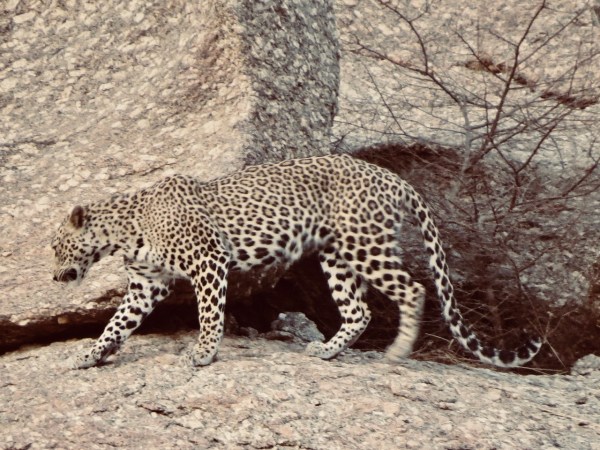
Wow! There he was, lounging high up on the rocks. Magnificent. Gorgeous. Bhamsa, a 3-year-old male leopard. On a previous safari in Africa, then one in Sri Lanka, I had hopes of a leopard sighting. No luck. These cats are secretive, elusive.

PHOTO-2018-05-08-15-58-37We were in the rugged countryside near Narlai, a rural village in Rajasthan, India. Just us, a guide and the jeep driver. First we bounced around the back country near our hotel, off roads, into fields, through bush, stopping frequently to scour the landscape. A few peacocks. Antelope. Errant cows. Nary a leopard. I was more than disappointed, certain this would be yet another failed mission.
Abruptly the driver turned around, backtracked through the village, on to a major road, racing like police on a chase. Hold on! A sharp turn onto a dirt track through rugged, barren terrain. The chase intensified.

As we approached a range of rocky slopes, the vehicle came to a speedy halt. “There, up there, a leopard.” Leopard? Where? I had a hard time finding him. Those spots and the beige coat blend in with the background. The guide gave me his binoculars. Yes. There he was. Awesome.

fullsizeoutput_9eaWe watched Bhamsa, mesmerized. He stared at us. My Olympus lens was not long enough for photos, but the guide took many with his Canon Power Shot and sent them to me on Whats App.
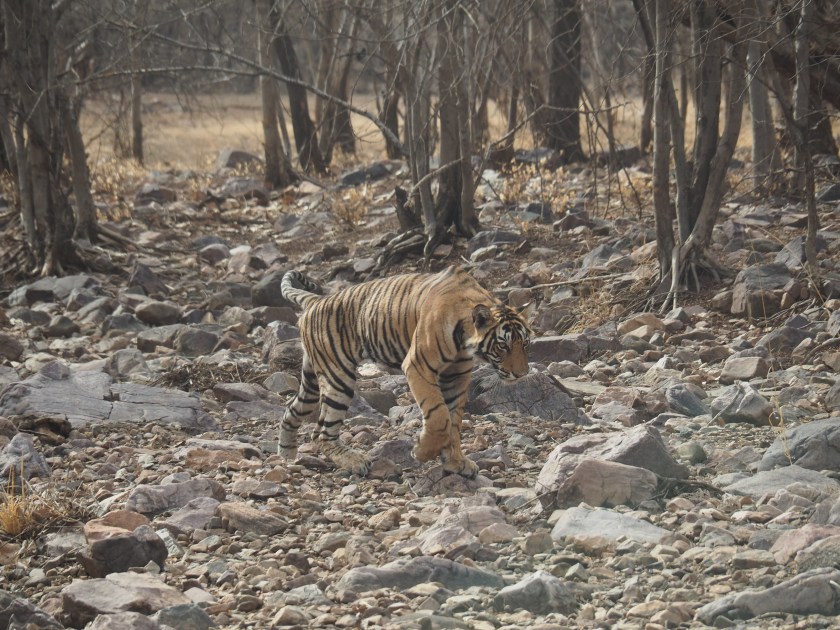
As we marveled at our leopard, out of nowhere appeared a young man with masala tea (an Indian special with spices), sandwiches and cookies. Also awesome.

We learned that eight leopards make their home in this region which is not on the popular Rajasthan tourist trek. Each leopard has his own territory of about 14 kilometers.

fullsizeoutput_9e8
Life expectancy for leopards is between 15-18 years. They weigh in between 70 -80 kilos, smaller than tigers which can weigh up to 200 kilos.

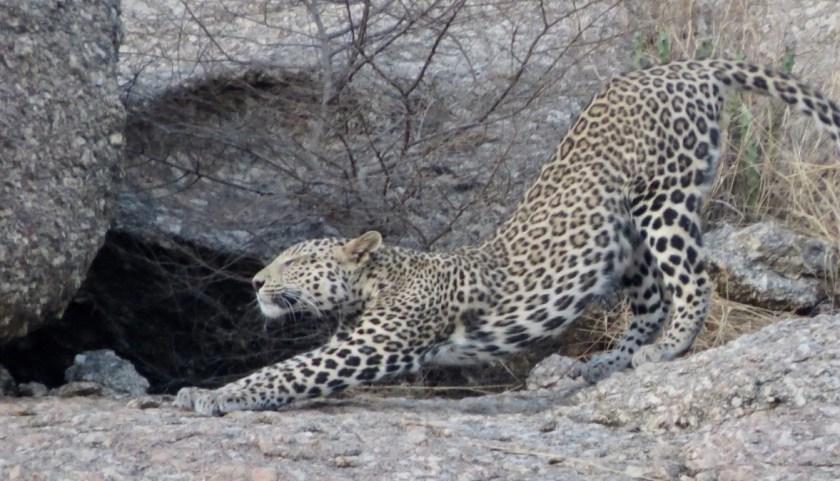
Bhamsa grew bored watching us, slowly stood up, stretched his long, lean beautiful body and moved on, jumping onto rocks out of our sight.

The excitement, the thrill of viewing wild beasts — be they gorillas, elephants, lions, leopards — in their natural habitat is like no other. I can’t get enough.

OLYMPUS DIGITAL CAMERA
According  to the last census (2014) there are 2,226 tigers in India which has 50 tiger reserves.

India rewarded us – not just with one leopard, but two tigers. We joined a group safari in Ranthambore National Park, a vast wildlife reserve in Rajasthan and home to 68 tigers. This time we were in a jeep with four others, some of whom had been on many tiger safaris and had interesting tales to tell.

On our morning trek we saw the imposing 10th century Ranthambore Fort up on a hillside, as well as the ubiquitous peacocks and antelope. Leopards also make their home in the park, but it is the tigers for which it is known.

OLYMPUS DIGITAL CAMERA
Due to shrinking habitats in India, leopards and tigers sometimes enter villages, killing livestock.  Humans have also been attacked.

After several boring hours, a tiger was spotted. That is, someone spotted a tiger. Again I failed to see it. This feline was sleeping in the brush, well camouflaged. All that was visible was the head. We drove around to another spot for a better view, soon followed by vehicle after vehicle. Word had spread fast.

OLYMPUS DIGITAL CAMERA

We, and at least 12 other vehicles filled with eager eyes, waited and waited. My patience was dwindling. I had seen enough of the tiger’s head. The guide knew best. The tiger would wake up.

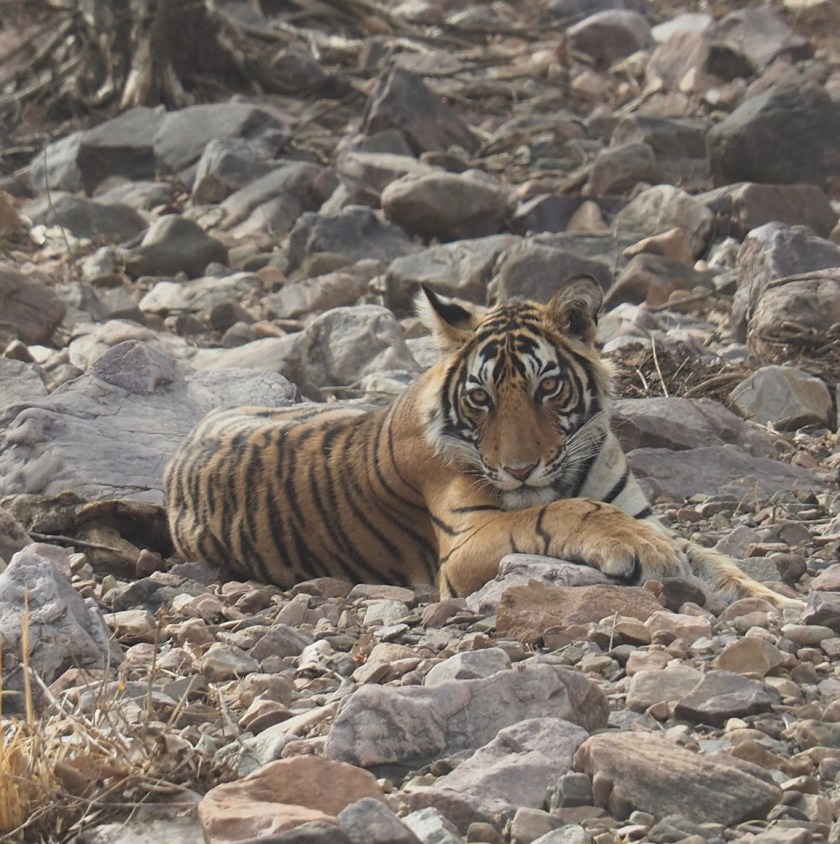
It did. He sat up for awhile, taking in the conglomeration of vehicles, perhaps hoping we would disappear. No way. Not concerned, after a bit he headed in our direction, closer and closer. Even my Olympus could handle this. Ranthambore tigers are obviously accustomed to an audience.

OLYMPUS DIGITAL CAMERA

And, not far behind, another stunning tiger. They were brother and sister, 1½ year old cubs, we learned. They paraded by, the female following her brother, remarkably close to the safari jeeps.

Too close for comfort was the tiger which jumped in front of a resident at our lodging, Khem Villas, located in the wilderness on the edge of the park. The gentleman from London decided to take an early morning stroll (5 a.m.) and was standing by the pool when the tiger jumped from a wall. He froze. The tiger went her way. All was well. We later learned that a few days earlier another resident had spotted the tiger drinking at the pond on the property. I was not so lucky, but I was overwhelmed with the footage of the same tiger, a mother with two precious 2-month old cubs dutifully following behind, that had been captured by the hotel motion camera.

According to the staff, the tiger has left the park in search of new territory to protect her babies from a sex-hungry male. The latter are known to kill the cubs of a female if they want to mate. Khem Villas advises residents not to stray from the complex. Barriers are erected at night.

One of our vehicle mates, a young man from Mumbai, knew more about tigers than the guides. He had been all over India on tiger safaris. I was fascinated with the story of Machli,a famous Ranthambore tiger, “the most photographed tiger in the world” who died at the age of 20 in 2016. She had seven liters of cubs and is legendary for killing a huge crocodile. Google her. There are pictures of the crocodile kill, and her funeral.

Our fascinating 11-day tour of Rajasthan was organized by Wild Frontiers. www.wildfrontiers.co.uk

After returning from India about a month ago, we launched into house sale, a big project which has left me no time for blogging.   We must downsize and hope to move close to the Med. I have missed blogging and have much more to tell about India, and Egypt,  and where we may move.  So stay tuned.

fullsizeoutput_9d0.jpeg
It will be sad to leave, but now is the time.

If not already a talesandtravel follower, sign up, upper right. It is safe. Your address is kept confidential and not shared.

Comments welcome.  Click below: “Leave a Reply,” then scroll down to end of post and add your thoughts.

makeread2


Sri Lanka: Wondrous Wildlife

As a cat lover (big and small), I was hell-bent on a leopard sighting. This solitary, secretive feline had eluded us on two different safari trips in Africa. Sri Lanka had to be the place.
Sloth bear

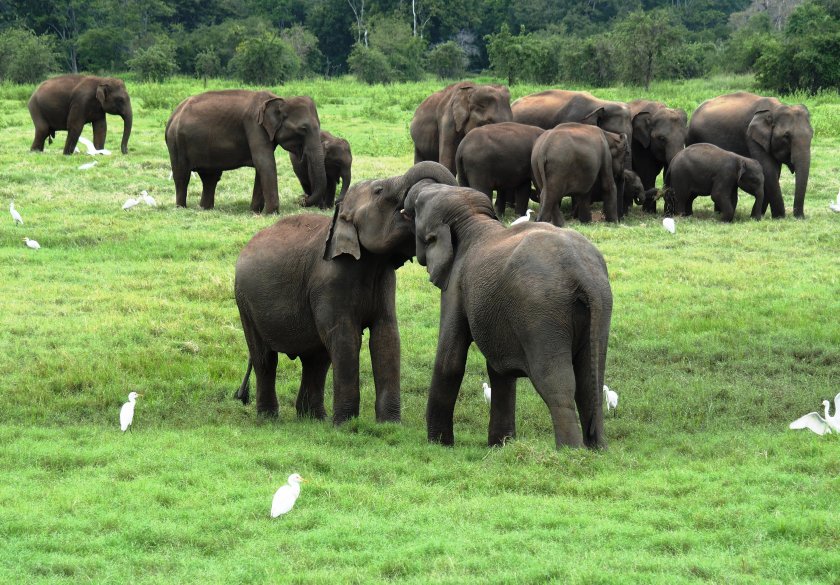
Sri Lanka’s Yala National Park is said to be home to at least 25 of these beauties. During our February tour of the island nation, we visited that park as well as two others. Sadly, no leopard showed his spots to us. We did see elephants, rabbits, a spotted deer, one wild boar, a mongoose, turtles, lots of birds including numerous peacocks. And, a sloth bear, a rare sighting according to the guide.

Mongoose

“Most tourists don’t see the leopard,” a guide later told me. However, we did learn that the day prior to our visit to Yala and the day after, lucky tourists did spot the evasive cat. We felt cheated.

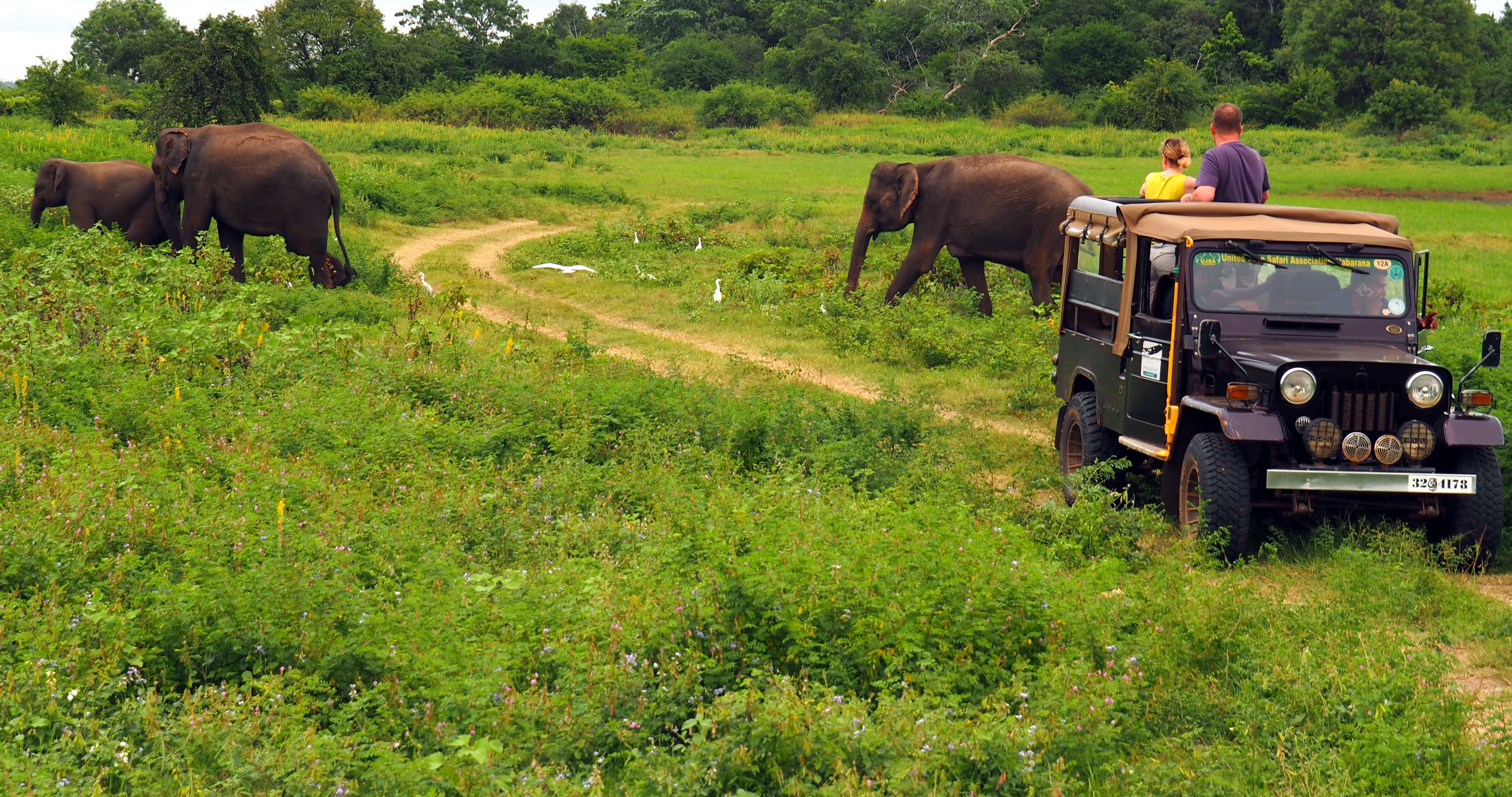
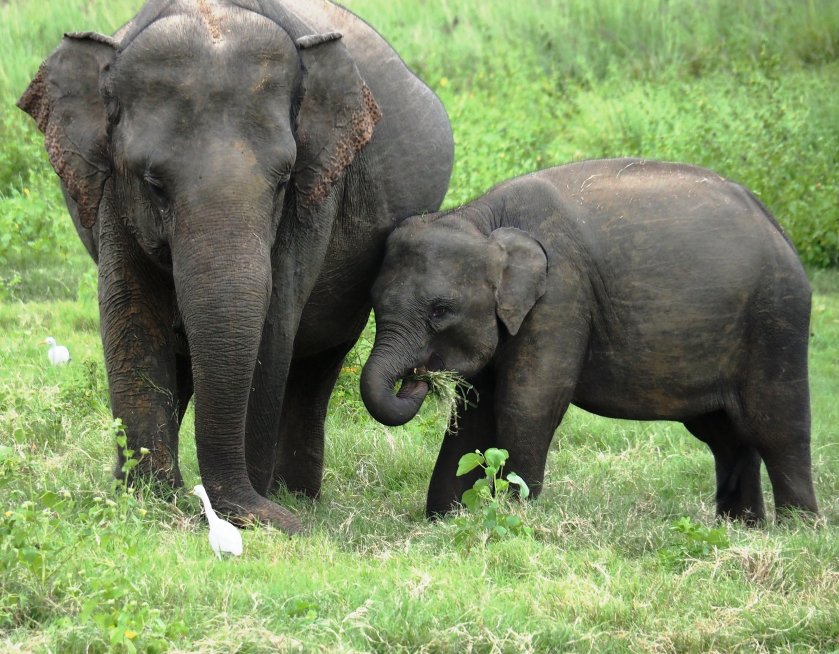
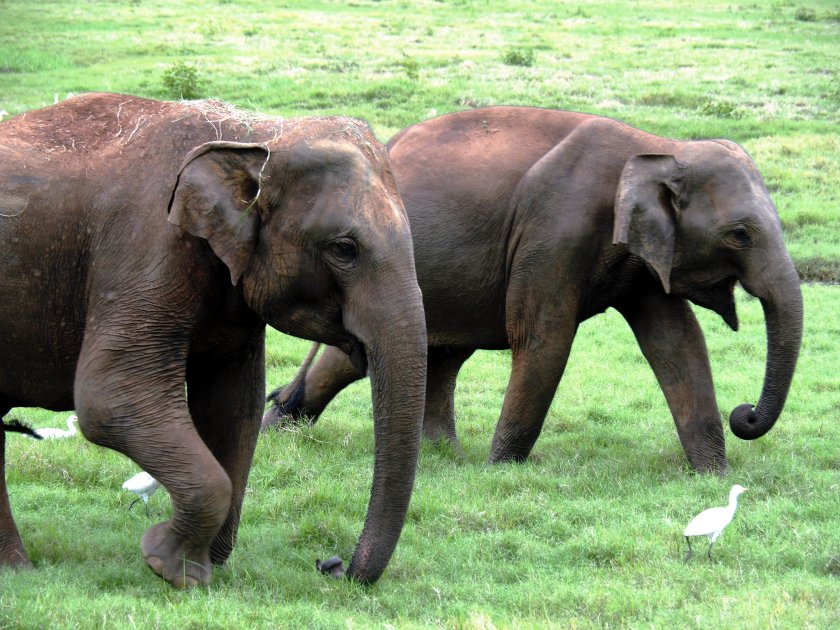
No leopard, but lots of magnificent elephants. Some 4,000 Asian elephants, an endangered species, make their home in the tiny nation. Herds of 200 or more are a common sight in August and September in Minneriya National Park. The herds we saw in that park were much smaller, 25 to 30, but fascinating. The pachyderms are obviously accustomed to tourists and come very close to the safari vehicles. Guides know many of them by name.ff.41

I was intrigued, touched, with a mini-family grouping. A crippled mother and two offspring, one four years old and the other eight years old, were alone, apart from the herd. The guide explained that the mother, about 40 years old, had been hit by a train. She was left with a bad limp, forcing her to move very slowly. She could not keep up with the herd. Her two offspring stay with her to protect her, he explained.

Elephants need about five square kilometres each to support their 200 kilograms per day appetites. Deforestation and over development in Sri Lanka have diminished their habitat. As in Africa, they encroach on farmland. As in Africa, it’s elephants vs. humans, a challenging conflict.
White birds hang around the elephants we saw. We learned that the elephants, grazing on grass, shake the stuff before eating it. Worms fall out – a tasty meal for the birds.

Painted stork (I think)

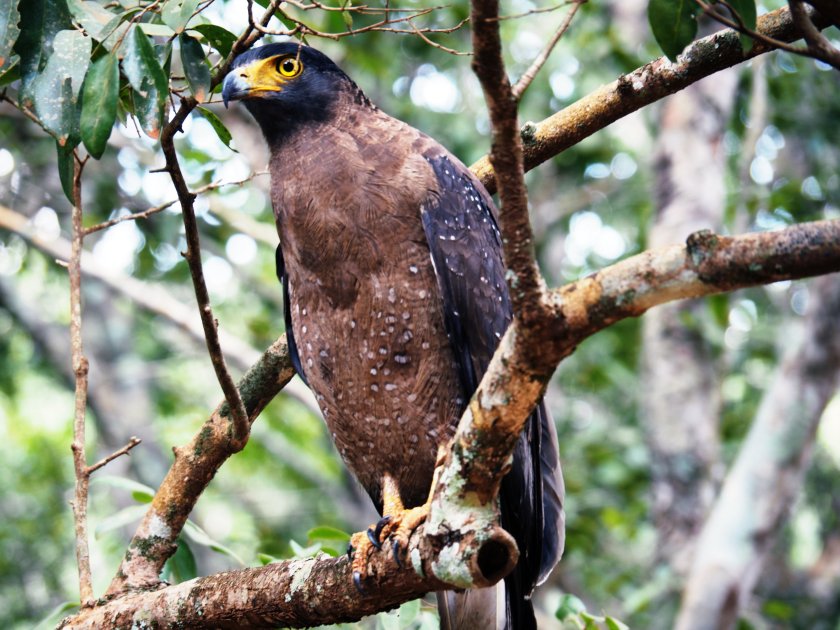
Serpent Eagle?

Sir Lanka is a paradise for birders with 400 different species, 26 of which are unique to the country. We saw many on our safaris.

On a visit to a turtle hatchery we learned about the island’s sea turtles which lay their eggs along the coast. Eggs not collected by poachers (turtle egg omelettes are popular) hatch after several weeks and hundreds of baby turtles make their perilous way to the sea. Few survive. Many are devoured by fish and birds. At turtle hatcheries, eggs are collected and hatched in an incubator. After just one day, they are released into the sea at night. Even with this method, only one in 100 survive, about the same as in nature.

The conservation benefits of the hatcheries are limited, but the tiny turtles are adorable. Adult turtles of varying sizes also swim in hatchery tanks. Many have been injured and would not survive in the sea.

The hatchery we visited had been started by the owner’s father in 2000. He died shortly thereafter and his sister took over. She, another sister, their children and his mother all perished in the devastating tsunami which ravaged Sri Lanka in 2004, killing roughly 40,000 of its citizens. The owner and his surviving brother refurbished and reopened the hatchery.

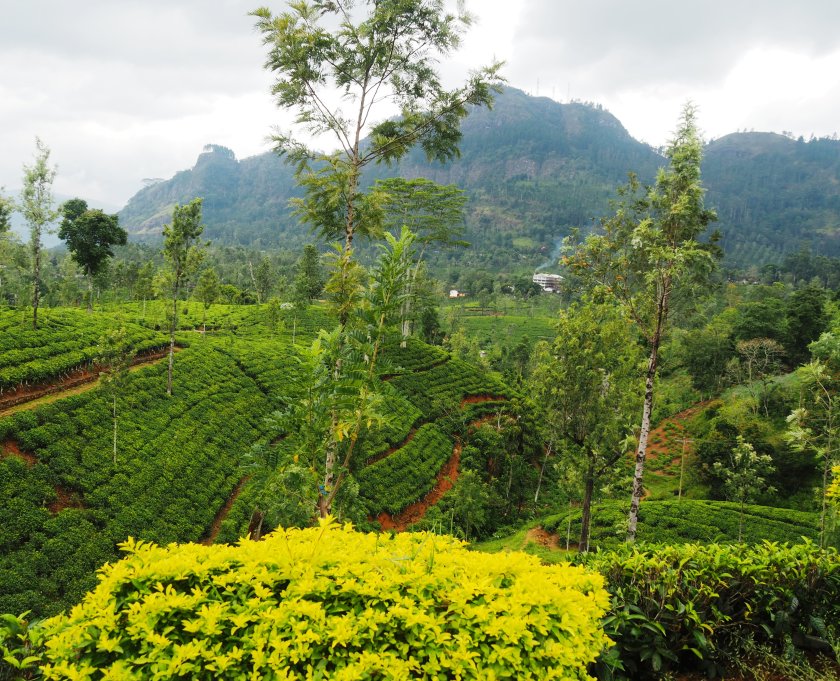
No doubt more popular than its animals and safari parks are Sri Lanka’s beaches. They are grand, but the mountainous interior was my favorite. We spent two nights in the hills above Ella, a picturesque area of tea plantations with splendid views, hiking trails and cooler temperatures…a paradise.

For more on Sri Lanka, see previous post: Wonders of Sri Lanka.

Nimal De Silva, (ndsilva67@yahoo.com and info@dsltours.com)  chauffeured us around his country, made hotel arrangements, arranged local guides at many places — and taught us much about this fabulous country.  He is a delight, very patient and accommodating. We were happy with all.

More photos of Sri Lanka follow.

Unique tree in Peradeniya Botanical Garden in Kandy.

No wonder they call them street dogs,  There are not as many of these homeless dogs in Sri Lanka as in neighboring India, but still too many, and sad.

Only five percent of Asian elephants have tusks. They can live to be 65 years old.

ff40

OLYMPUS DIGITAL CAMERA

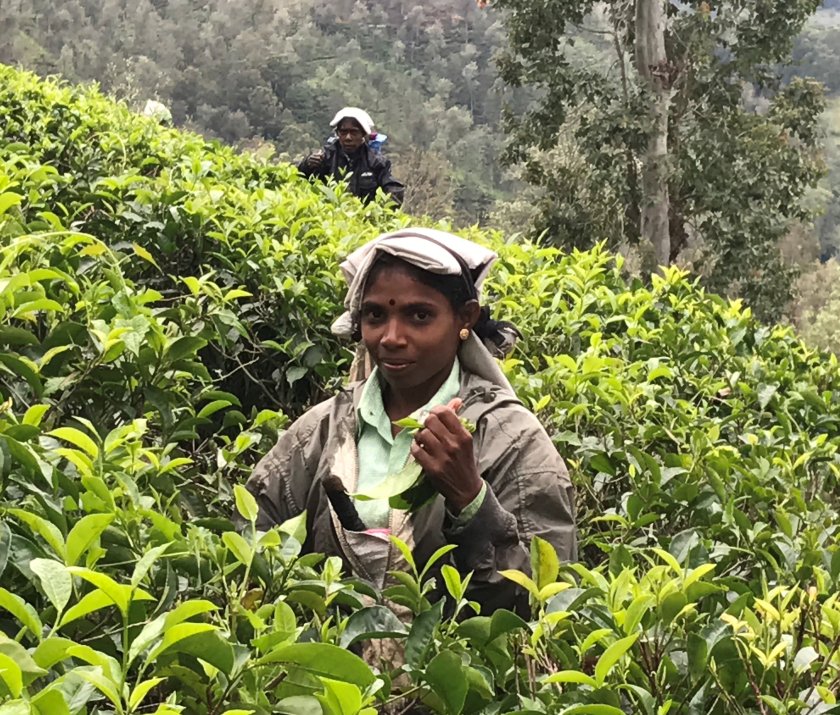
Sri Lankan tea is famous worldwide. Tea, first planted by the British, thrives in the hill country.

ff38

At last, a new recipe and just in time for those summer blackberries.  Click on photo of berries, upper right, for recipe, and scroll down for more recipes.

If not already a Tales and Travel follower, sign up (upper right). Your address is kept private and never shared. 

Please feel free to comment.  Click below, scroll down to Leave a Reply and add your thoughts.