Table of Happiness

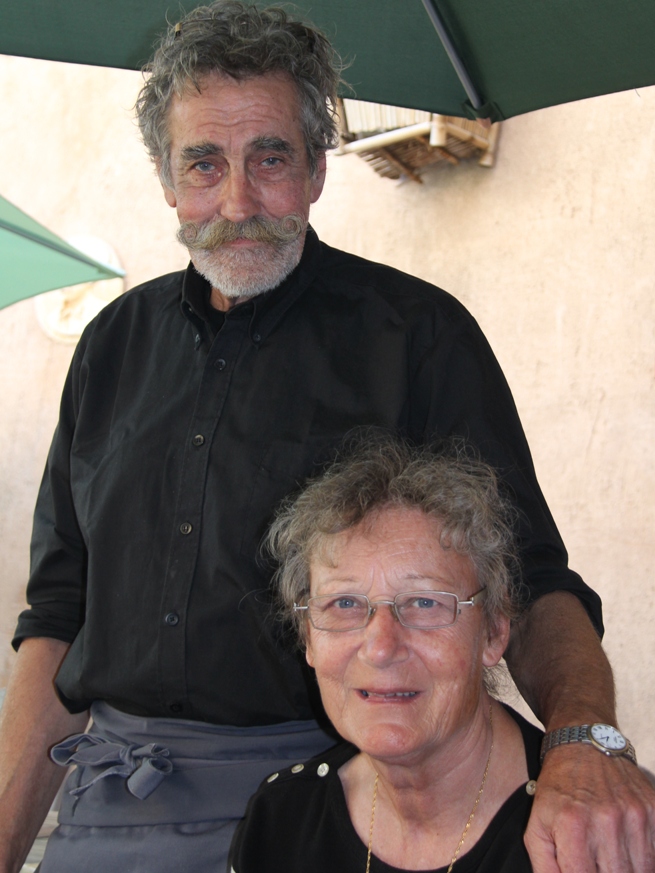
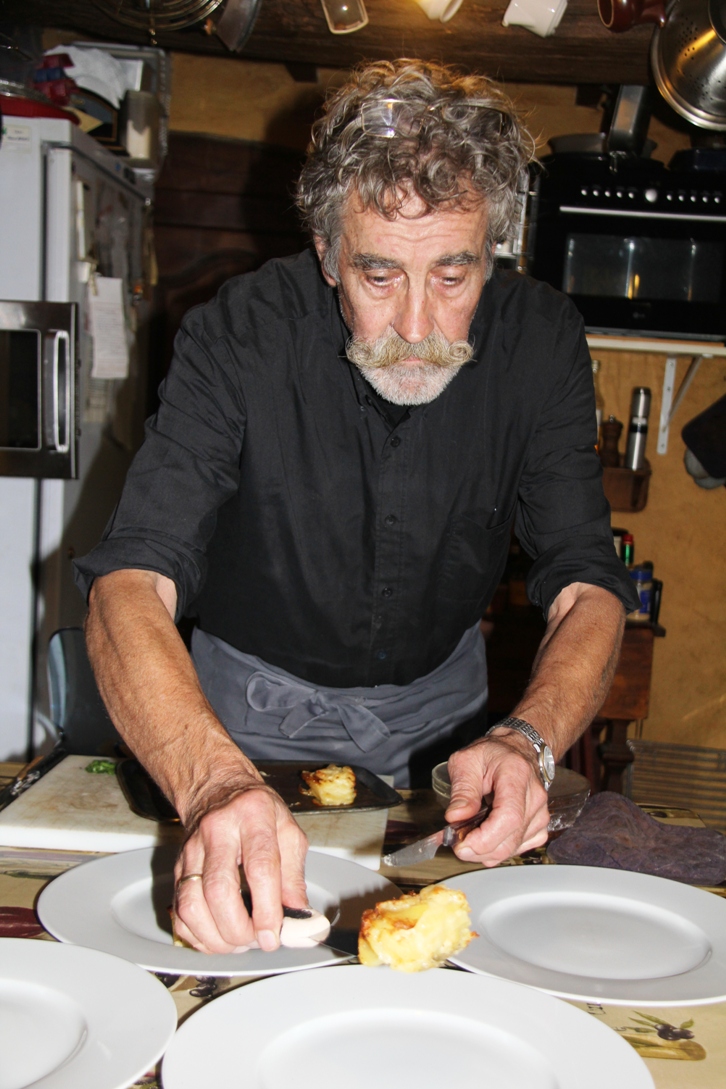
The name is perfect:  La Table du Bonheur (Table of Happiness).   The culinary creations prepared by chef Hans would make anyone happy. 

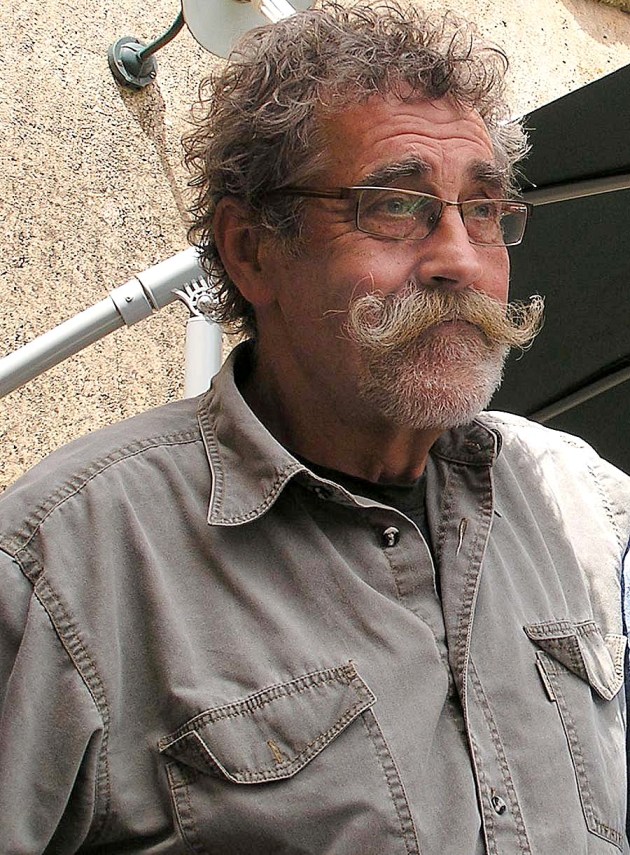
“The main reason I cook is to make people feel good, to feel happy. I like to give them something nice to remember,” says Hans, who sports a perfect

Photo by Gail Polack

handlebar mustache and speaks five languages.  With his wife Tiny assisting, this chef extraordinaire creates over-the-top meals for guests at his Bed and Breakfast home, where he also rents a vacation apartment.  And, sometimes he cooks for lucky friends. 

Thanks to Ben, a Dutchman who was in my French class, I heard about Hans and Tiny, who are also Dutch.  Ben wrangled an invitation for me and Bob.  We’ve been back many times since, and I’ve  even gotten up enough courage to invite them to dinner. 

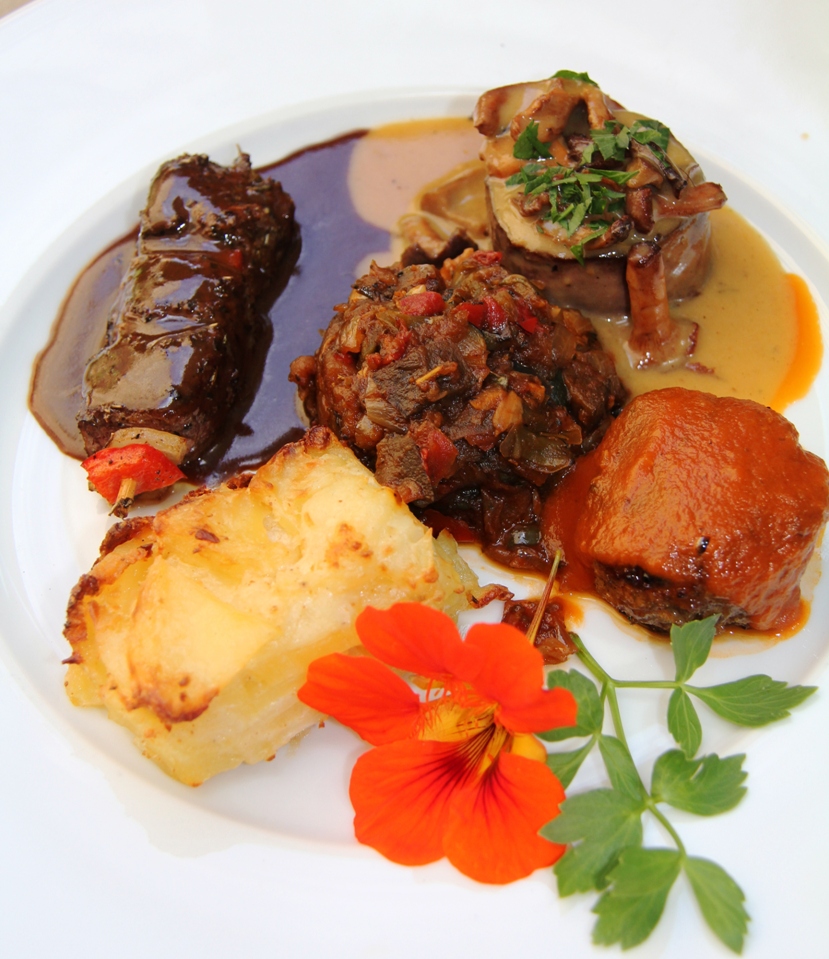
A recent dinner chez Hans and Tiny began with smoked wild salmon (he smokes the salmon himself) and  wild salmon tartare. This was followed by cepe bouillon, then an incredible main course,  a trio of succulent lamb: filet,   brochette and a lamb burger with tomato sauce accompanied by ratatouille and a gratin of potatoes  For décor: an edible nasturtium blossom.  Then a beautiful cheese course, a blanched apricot split and filled with layers of fresh goat cheese all smothered with warm lavender honey. Dessert: lemon custard pie with homemade raspberry sherbet and whipped cream.   We were indeed happy. 

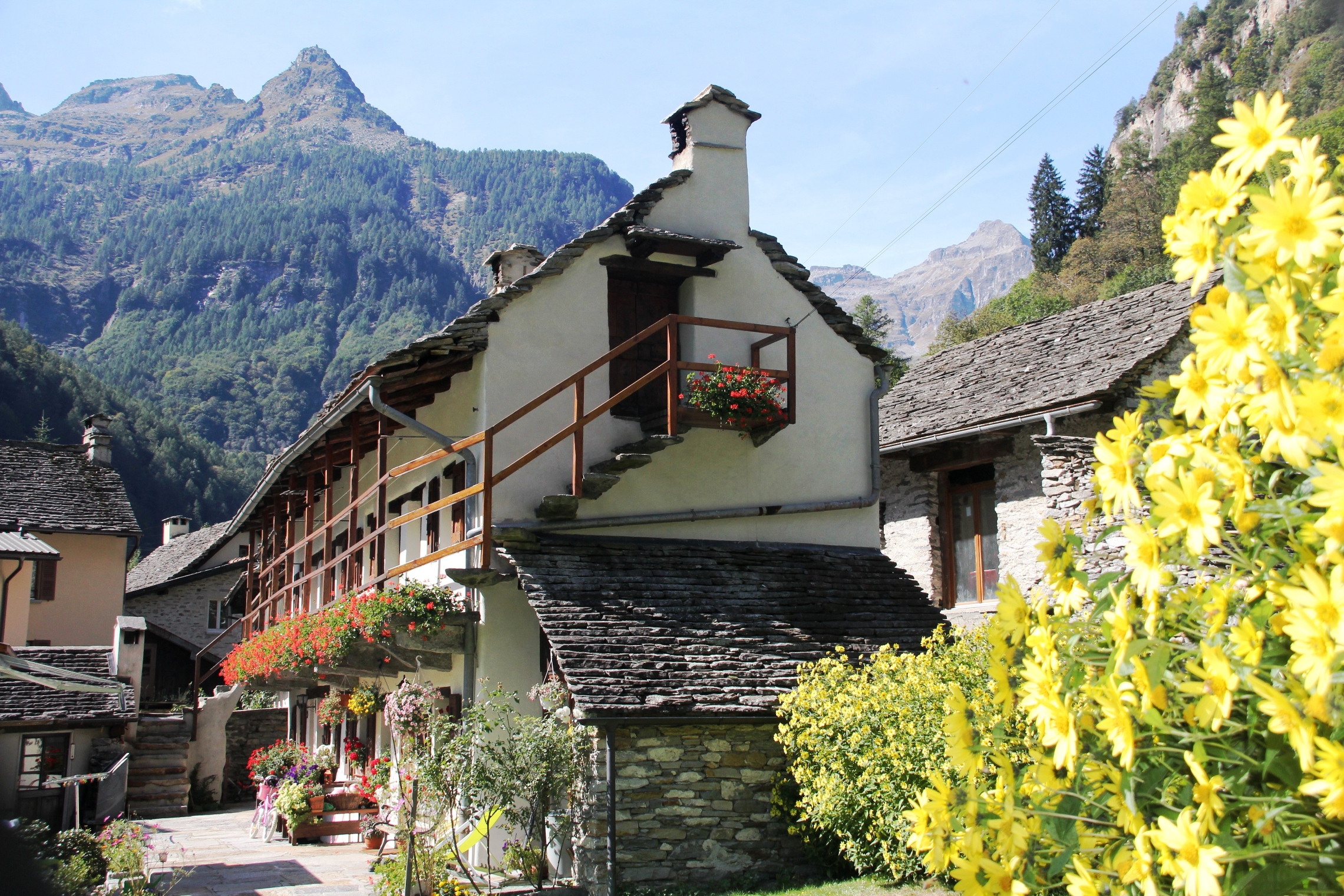
 Table du Bonheur is high in the hinterlands of Provence, up a narrow windy road, then down a rutted dirt road to a cluster of no more than six buildings. Remote.  Off-the-beaten-track. At the end of the world. 

Which is just the way Hans and Tiny like it.  “The only way you’ll get me out of here is in a coffin,” says Hans. 

For 18 years, he ran a Michelin two-star restaurant in Belgium. “It was very difficult.  Twenty-six people on the payroll.  One hundred forty places.  I felt like a slave,” he recalls. 

His restaurant career started when he was 22 and went to work as a waiter.  He knew he wanted to move up, so he earned a wine diploma.  “I wanted to be creative,” he says, so he began working as an apprentice with restaurant chefs, including Les Freres Troisgros who have a Michelin three-star restaurant in Roanne,France.  

At the age of 27 he started his own restaurant which, after 18 years,  he was happy to give up and move back to Holland and embark on something  smaller.  “Most people want their career to get bigger and bigger.  I want smaller and smaller….I said at the age of 55 I would give this up.”  For years, he and Tiny and two of their sons (they have three children) ran a small but very popular restaurant with an open kitchen in Holland. “It was great to have people around me,” he says. 

They loved France and spent every vacation touring the country by motorcycle.  They knew they wanted to end up settling here.  One summer when they were looking for a vacation  apartment to rent, he told the real estate agent he wanted someplace so isolated that he could cook naked.  The agent took him to a nudist colony — not what he had in mind. 

However, he could no doubt cook naked at Table du Bonheur. They discovered their home in the boondocks on a trip in 2000.  They rented the house which dates back to the 1500s. The isolated location was ideal, and the house had all the room they needed. The owner, however, would not sell.  They came back every year for seven years before they succeeded in purchasing the home.  Hans was 56, one year past his age 55 deadline. 

They’ve done major renovation, but the kitchen has kept plenty of old world charm.  So much so you wonder how Hans can turn out such fabulous food in a simple, relatively small, space – the antithesis of a modern kitchen.  The dining room/living room, with beams, exposed stone walls and a fireplace, is cozy  — the perfect ambiance on a cold winter’s day.  In summer a small terrace area with worn wooden tables and lots of potted flowers all around is an ideal setting for savoring fine cuisine.

 Hans has local sources for all his supplies – one farmer for pork, another for lamb, yet another for beef, and one for poultry. Cheese from a local producer.  Fish from the market in Carpentras. In the fall he puts on dinners for the local hunting club whose members provide him with tasty game. 

“Everyday is an adventure.” he says, with a twinkle in his vivid blue eyes.   “I love to cook.  I love the creativity of it.” 

And, we’re happy to devour his creations!

Check out the recipe in the column at right , Goat Cheese Mousse with Mint Pesto — a winning appetizer.

The City of New Orleans

Crabmeat cheesecake with meuniere sauce.   Lamb sliders with tomato chutney and herbed goat cheese. Fried alligator with chili garlic aioli. Rabbit livers with pepper jelly toast. Pan roasted oysters with rosemary cream sauce.   Banana mascarpone strudel with banana caramel and Mexican chocolate ice cream….

Bob and I indulged in all – and more — during our May visit to New Orleans.
The city is a died-and-gone-to-heaven kind of place for foodies.  There’s Cajun food, Creole food, gourmet French cuisine, soul food, even African and Vietnamese food. There are famous chefs and restaurants and simple neighborhood eateries.  And, cocktails for which the city is legendary.

Eating is just one of the many pleasures this wonderful city has to offer. Food, drink and music are the city’s three muses, we learned, and we experienced them all.

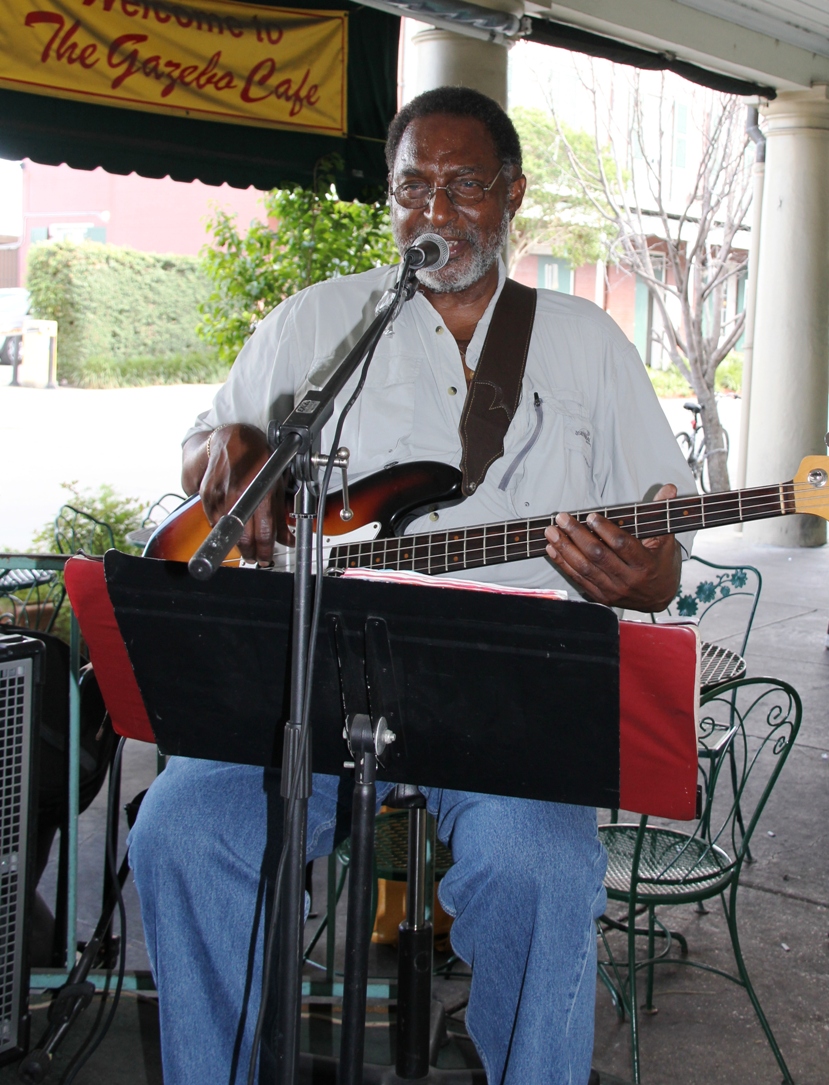
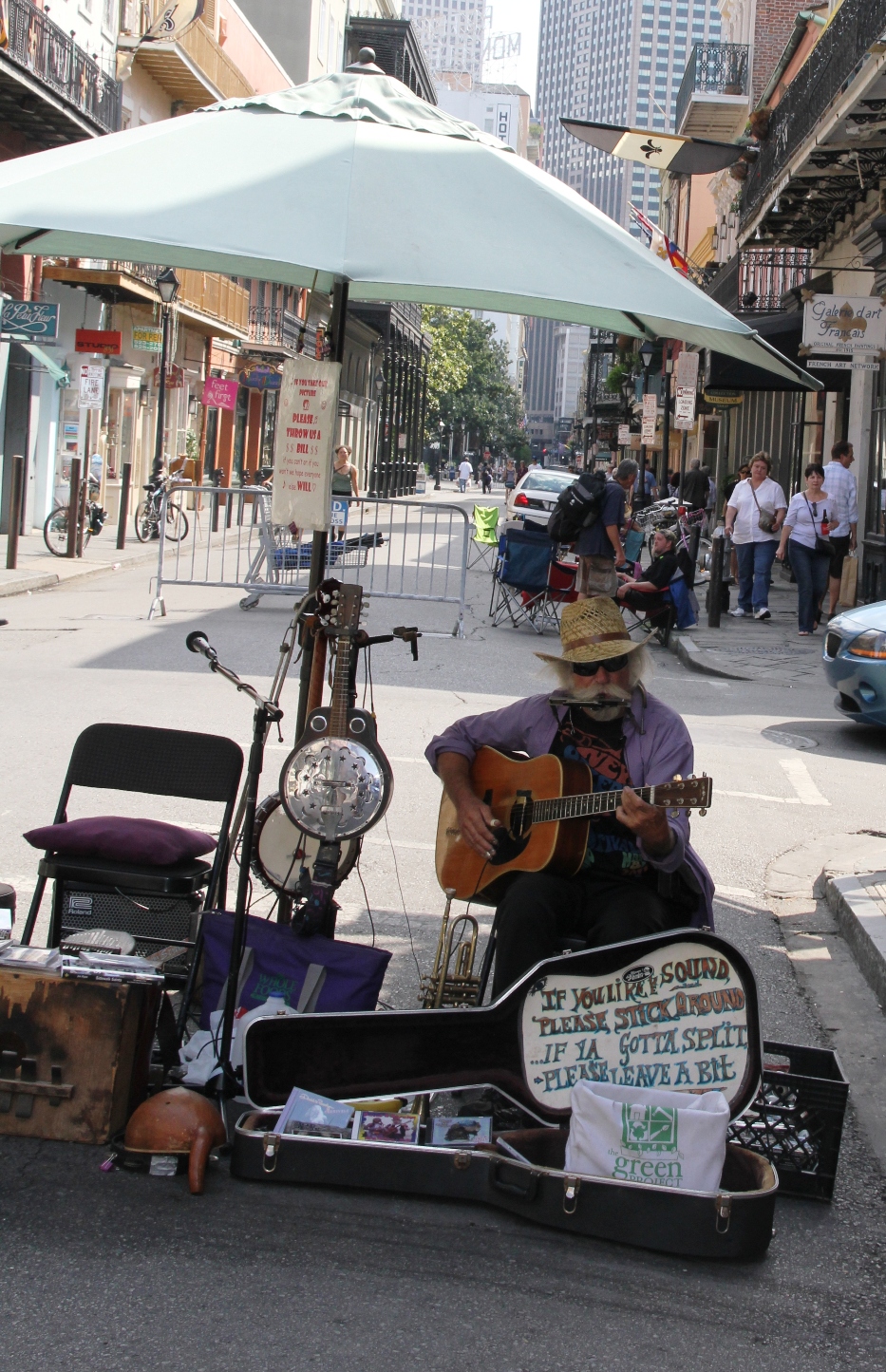
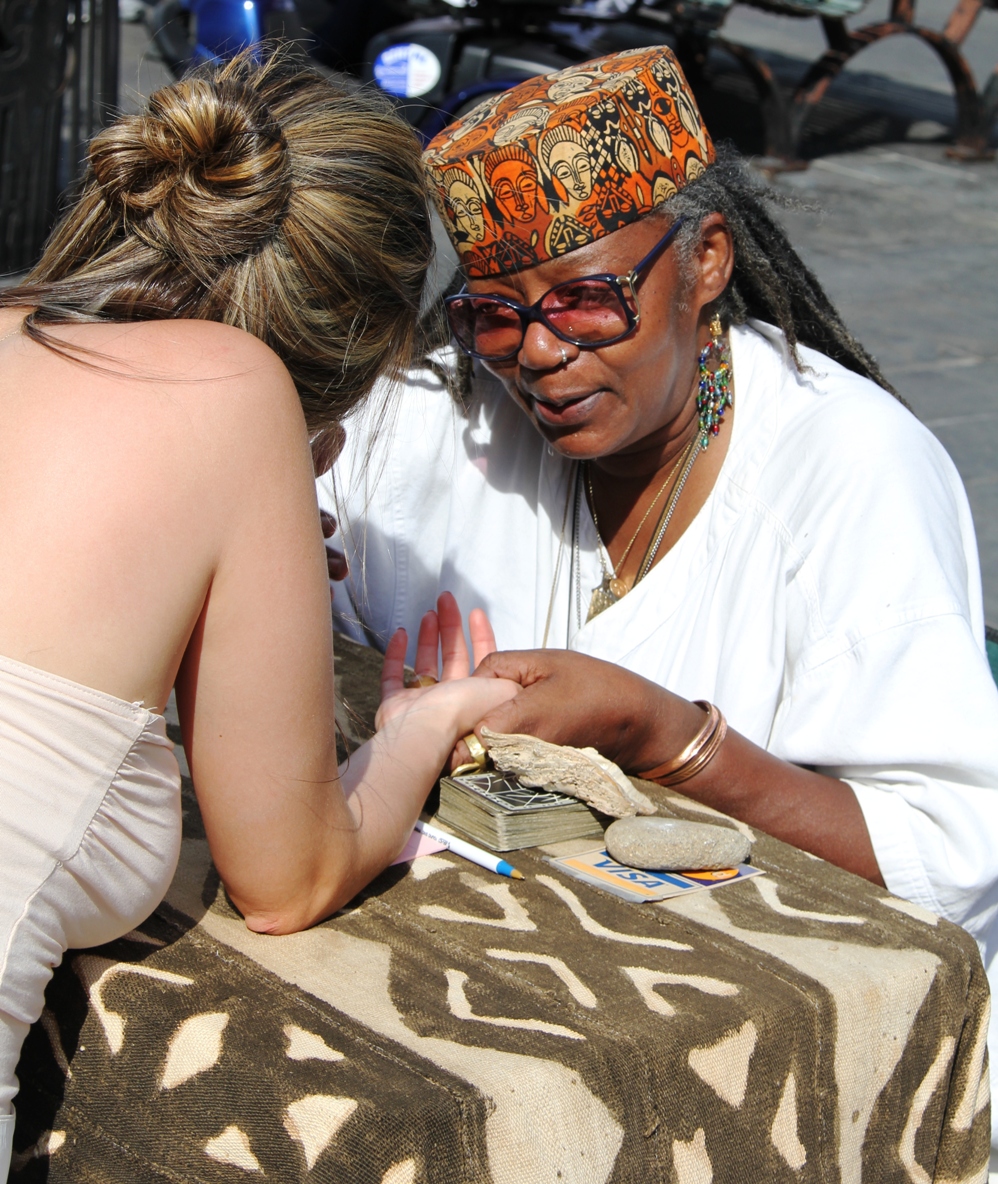
After checking into our hotel, we walked through the French Quarter, past charming buildings with ivy spilling over cast iron balustrades,  bejeweled fortune tellers looking for customers, and street musicians.  We stopped for an outdoor lunch: a hefty Po Boor sandwich (overloaded with shrimp) and a cold beer, and were serenaded by more live jazz.  I was smitten.  My kind of place, New Orleans.

It’s fun, funky, fabulous.  The devastation of hurricane Katrina in August 2005 has left serious scars. But, the vibes in the French Quarter are heady.

In addition to trying different restaurants (famous and not-so-famous), we listened to jazz (on the streets and in clubs), took two bicycle tours, a Katrina tour, an airboat swamp tour, and rode the St. Charles streetcar.

I asked Cassady Cooper , one of our bike tour leaders, what he felt makes New Orleans so special.  “The things you hate about New Orleans are also the things you love,” he said.  “Time doesn’t work here as it does in the outside world.  There’s always something going on here, anytime day or night.  The city is made of artists.  There are more writers here than in any other part of the country.  I love the culture.”

Part of that culture involves alcohol. Where else can you find drive-in Daiquiri stands?  Jeff Shyman, our other bike tour leader, enlightened us.  “Drinking is a big part of this city,” he said.  “We are a drinking culture.  We drink all day, but we don’t drink to stupidity.  We don’t overdo it.  New Orleanians don’t drink to get drunk like the tourists on Bourbon Street.”

We’d heard about Bourbon Street, the place we assumed  was famous for jazz clubs.  No more.  It’s crowded, loud and trashy.  Those seriously interested in music now flock to Frenchman Street where, within a two-block radius, there are eight different venues for 1930s swing jazz.  We liked the Spotted Cat and d.b.a.

For one of our two wheel adventures, we chose the Culinary Bike Tour. We did more eating than cycling, with stops at four eateries to try different delicacies.  Our tour leader explained the difference between Creole and Cajun food.  The latter, he said, is associated with country folk from the swamp lands.  “Table cloths were replaced with newspaper…it’s big dish food, from the field to the table.” Animal parts, such as liver and tail, are savored.  The restaurant best known for Cajun food is Cochon.  Bob and I went there on our own.  It’s both entertaining and delicious.  You can sample numerous bizarre concoctions, all served in small portions.

Creole food embodies the influences of New Orleans’ early Spanish and French settlers.  It’s more refined, and sauces are foremost.

Gumbo is a New Orleans staple.  On our last tour stop we tried this hearty stew of sausage, seafood, chicken, all heavily spiced, (“everyone uses cayenne for seasoning here,” noted Cassady) at Liuzza’s By the Track, a simple but inviting place.  As I am a passionate cook, I asked our tour leader how to make gumbo. I envisioned serving it at a future dinner party. I’ve reread my notes – page after page.  This is not a 1-2-3 step dish.  I must have had too many beers.   Preparing the roux (the base and essence of gumbo) is a daunting challenge.  And, you need the secret ingredient, file, the powdered leaves of the sassafras tree.  On my last afternoon, I went from store to store in the French Quarter, not known for grocery stores, searching for the treasured file.  I tracked it  down…..  Maybe on a cold winter’s day, I’ll attempt a genuine New Orleans gumbo.

Our swamp tour was a major disappointment.  I had envisioned seeing monstrous killer alligators lurking in the bayous.  The few alligators we saw were pathetically puny.

Another story was the Katrina Tour: mind boggling.  Instead of taking an organized bus tour, we hired taxi driver Sidney Farrell to dive us through the parts of the city that had been annihilated.  “Imagine, this was under eight to twelve feet of water,” he said as we drove past a used car lot, Discount Donuts and a motel.  “It’s all coming back, little by little.”

We drove by houses that have been rebuilt, often next door to houses still in ruin.  Block after block.  The Lakeview area of exclusive homes was “all under water,” he said as he pointed out empty lots where half-million dollar homes once stood.  He took us to St. Bernard Parish, a devastated area where Brad Pitt’s Make It Right Foundation Rebuilding New Orleans has financed the construction of ultra modern homes with innovative designs to replace those that were destroyed.

“Ten thousand homes were demolished in three years, but there are still another 45,000 that need to be torn down. The recovery will take another 15 years,” he said. “The city population before Katrina was 500,000.  Now it’s 350,000. Many have never come back.  There’s nothing to come back to.”

The saga is tragic, not just the frightening forces of  nature unleashed and the obliteration left behind, but the foiled bureaucracy and rampant crime that followed.

However, those who have come back, and those who stayed, infuse New Orleans with a gusto that is contagious.

Take a bike tour in New Orleans:  http://confederacyofcruisers.com 

See below for more photos.  Click on the photo to see full size.  Check out the recipe column on the right for a tasty vegetarian dish,  Southeast Asian Squash Curry.


Fort Buoux: A Discovery in the Hinterlands

This post comes with a new look, the beautiful header across the top.  Friend and photographer David Regan (A Fishy Tale)  created it using my photos.  As you click on different parts of the blog, you’ll see other examples of his skill and creativity.  And, recipes are back, now listed alphabetically on the right below “Recent Posts.” For the latest treat, try “Watermelon Salad” at the end of the list.

There’s no shortage of interesting places to visit in these parts. Even though I’ve lived in Provence for seven years, I’m still discovering new attractions.  This spring I visited two for the first time: Fort Buoux and the archeological site of Glanum (see future blog post for Glanum).

Buoux was thanks to our friends Lynne and Larry from Germany who rented our guest apartment (www.les-rosiers.com) in April.  Lynne found Fort Buoux in a Rick Steves guidebook.  Off they went and returned ecstatic with the discovery.

I’d been to a restaurant in Buoux, a tiny place of no more than a few houses, but I knew nothing about the fort.  When my cousin Stewart’s son Tom and wife Melissa came to visit, I decided it was time to explore this place.
Tom and Melissa had GPS, but even with this high tech gadget, it was not easy to find. After a few wrong turns and backtracking, we arrived at the parking lot, then followed   signs for a long walk down a shady road, under a “baume,” (a  natural cave beneath overhanging cliffs), then a climb up a rocky path to the entrance. Fort Buoux is definitely “off the beaten track.”

There were warning signs:  Visit at your own risk.  Watch children.

What kind of place was this?  After paying admission, we set out up a set of treacherous  steps carved in the rock.  Up and Up.  We climbed past piles of ruins, deep trenches,  cisterns, all numbered with their identification provided in a pamphlet we had been given at the entrance. The views of the surroundings –ravines, rock outcrops, cliffs and distant hills — are splendid.  We even saw rock climbers attempting to conquer a rock face.

The brochure explained that caves in this area, the AiguebrunValley, have been occupied since earliest antiquity. The fort is of the 12th century, built on the site of a Roman settlement. It  was obviously built for defense and was important during the Middle Ages.  During the religious wars (1562-98), the fort served as a refuge for the persecuted ProtestantWaldensians,  members of a Christian movement of the late Middle Ages who were considered heretical.  Later, Protestant families settled in the region. In 1660, Louis XIV, who feared rising religious independence, ordered the fort destroyed.

The brochure identifies  37 different sets of ruins.  Following the path which leads to them can be challenging.  The terrain is stoney.  The trail climbs. You need sturdy shoes – and no fear of heights.  Sheer drop offs plunge from the edge of the cliffs.  As this is France, there are no ropes or barriers.  While children enjoy scrambling amid the ruins, they need a tight rein lest they run too far.

One place, the “Hidden Stairs” had an extra warning: “Not advisable for elderly people, pregnant women and little children.”   Melissa and I stayed back, but Tom  charged down the crumbling stairs for more discovery.

Among the ruins are those of a 13th century church, houses, a cistern, towers and defense walls. Exploring them all is an exhilarating adventure.

Fort Buoux is located on a winding minor road,  D113, 8 km from Apt.  The fort is not in the town of Buoux (population 125), but in the surrounding hinterlands.

A Fishy Tale

But, this one is real, genuine.

It’s well known that folks go to extremes and spend big bucks on their pets.  Cats, Dogs, Horses, Birds, Guinea Pigs….but goldfish?  Read on. 

It all started some years ago when friends Mollie and David, who restored a 17th century house near here, decided to buy a few goldfish for their “bassin” (spring-fed basin).  Shortly thereafter they noticed huge herons swooping down on the bassin.  The fish were nowhere to be found.  They figured they had become bird food.  So, they bought a few more, only later to discover the original fishies had just been in hiding.

 All survived and multiplied  — in profusion. They even named some of the fish: Mister Gold, Mister Silver, Chocolate Drop. Many quadrupled (or more) in size and grew into beautiful, multi-colored specimens.  Mollie and David became attached to their underwater pets and proudly showed them off to visitors.

All was not well, however, as it appeared the bassin was losing water.  Not great amounts at first.  So, they just refilled.

This summer the small leaks grew to rivers of escaping water.   The water level was descending at a rapid level.  The precious fish were in danger of asphyxiation.  No problem.  They’d buy an inflatable swimming pool and transfer the fish to a temporary home while they repaired the leaks.

Inflating the pool and filling it were challenging, time-consuming tasks.   Meanwhile, water continued to escape from the bassin, so they kept refilling. It was a hectic race to keep the fish underwater.  Nerves were on edge.  Tension soared.  The fight for the fish was grueling.

Once the temporary fish pool was ready, the monumental task of catching the critters was underway. They called in reinforcements to assist, friends Dee and Alan. David got in the bassin and scooped with a net – over and over, then passed the net with his catch to the others who dumped it into the temporary fish pond. There were always those that got away. How many fish were there?  The supply seemed endless, mind-boggling.  Finally, at a count of 226, they had rescued all the fish. (Happy goldfish obviously have an active sex life.)

At last the fish were safe and they could take a breather and repair the bassin. Or, so they thought. After the trauma and nerve wracking tasks of fighting leaks and catching fish, David was about to enjoy a soothing shower.

Mollie and David are not just fish fanciers.  They also have three cats and a dog.  Prudence, a big gray feline, came streaking into the house drenched — looking like she stepped out of a cartoon.  She was soaked.  Mollie quickly realized she had tried to go fishing and fallen into the swimming pool/fish pond.  But, how did she get out?  Using her razor sharp claws of course, to grab onto the pool’s inflatable rim.

David was diverted from the shower and they raced to the fish pool.  Sure enough, it was punctured with tiny holes and water was gushing out.  They got the repair kit that came with the pool and started patching – all this long after the sun had gone down. They kept re-pumping the pool. They could not get all the holes sealed.  It seemed to be a losing battle. Water was still escaping – overflowing as the pool deflated.  Both wet to the bone, they worked furiously until midnight.

Every few hours that night David got up to re-inflate the pool and add more water. Thanks to his diligence, there were no dried fish for breakfast next morning.

Next day they took on the repair of the bassin.  It was an all day job, and of course they continually had to refill and re-inflate the swimming pool fish pond to keep the fishes submerged.  More stress. More anxiety.  Exhaustion.  All this to save some goldfish?

As if the fish fiasco was not enough, they had another battle to rage.  Droves of nasty wasps had taken up residence under their roof.  They dared not go near their swimming pool (a real one for humans).  Wasps love to drink swimming pool water and beware if you are in their way. They had to have a crew of men wearing space-like suits come to eradicate the wasps.

The wasps are dead. The pampered fish are alive and well and back in their bassin home – all 226 of them. And, Mollie and David are enjoying a well deserved rest.

Photos by David Regan

Gourmet Escapade in the Vineyards

 It was a bit of paradise, a perfect combination: trekking  though spring vineyards with stops en route to sip wine and savor gourmet delicacies.  I could not pass this one up – the 12th Escapade des Gourmets in the vine covered slopes surrounding Rasteau, a town well known for its fine Côtes-du-Rhône wines.

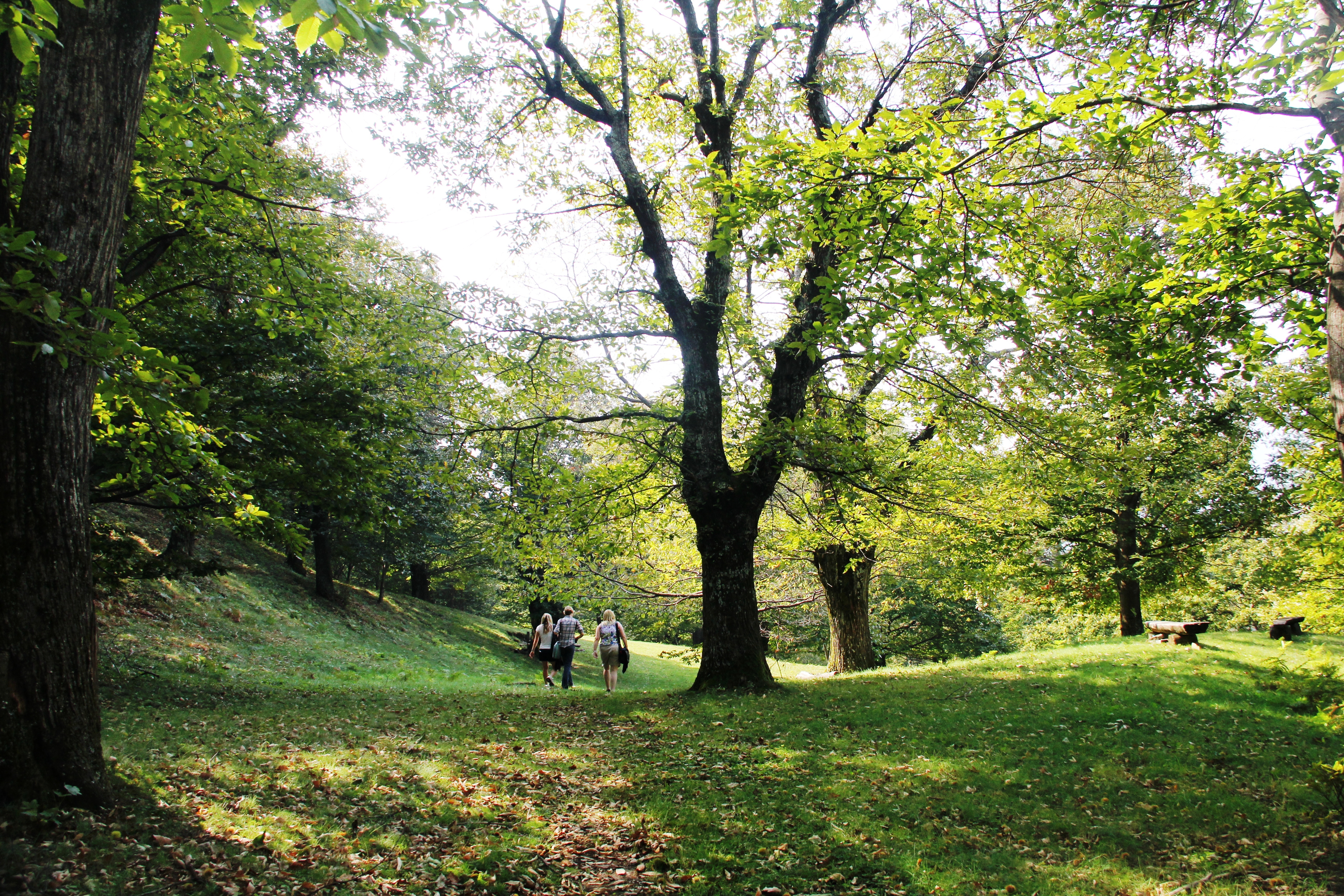
Hiking in the vineyards

This jolly and tasty event was attended by some 2,500 participants who, with dogs and children in tow, hiked up and down the picturesque hillsides.  The scenery and views were splendid. But, the star attractions were wine and food – and entertainment.

The six-kilometer (four hours with stops) jaunt featured six stops along the route, each offering a different culinary treat and numerous wines to sample that best accompanied the food offered.

After paying 36 euros , each participant was given a bib with a glass, and a card marked with the six different stops and the list of wines offered at each.  Participants were also given numbers which assigned them to groups for departure purposes lest all set out at once creating chaos on the hillsides.  Our group was initially accompanied by a farmer in vintage attire who was followed by an obedient flock of geese, two goats, and a dog pulling a baby goat attached to a leash. A jovial entourage.

As you entered each stop, your card was checked.  Then you could proceed to the food and wines – several wines at each stop which you could rate in case you wanted to make purchases later.

First stop, mise en bouche,  hearty snacks,  where three different vintages of Côtes-du Rhône blanc could be sampled. We moved on to my favorite, foie gras.  Here three sweet wines, Vin doux naturel doré, were offered.

Best not go overboard on the wine – many kilometers ahead.  And, the terrain became more demanding with short climbs up a hill into the woods. Along the way were views of the distant peak of Mt.Ventoux, and vineyards stretching mile after mile.  Lots of photo opps.

 At the Feuilleté stop, yummy pastry treats filled with cheese awaited, as well as three different Côtes-du-Rhône rosés.  At this stop and many, a guitarist played.  Some featured singers. Many in the crowd joined in singing folk songs, cabaret tunes, pop… At one stop a male choir performed in a vineyard chapel.  By the last stop, gateaux chocolat,  (chocolate cake) many were so moved by the wine and music, they danced.


The main course of this progressive meal was Daube Provencale (beef stew)  –— served hot in the hinterlands buffet style. Hats off to the Rasteau volunteers, some 120 dedicated souls who manned the stands, served the food and wine, and overcame many an obstacle to transport both cuisine and drink to these remote locales.  Portable toilets with sawdust had even been constructed.

Wine aficionados had a field day at the Daube stop where no less than 10 Rasteau Côtes-du Rhône Villages rouge wines were offered.  What’s a French meal without cheese?  That was next where another five Côtes-du Rhône Villages reds could be tasted.

The finale, Gateaux chocolat, was   paired with two different sweet wines, Vin doux naturel rouge.


This is one not to miss.  Next year’s Escapade will take place on May 13.  Details at www.terres-de-lumiere.com

More to come on Tales and Travels, including new recipes and more photos in the photo gallery. You’re welcome to subscribe to future posts, and comments are also welcome.

                                                              ###