Au Revoir Buddy

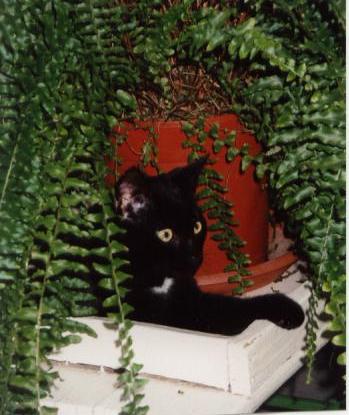
I miss you so much, Buddy Boy.  And, I am so sorry we had to say Good-bye.  But, the tumor in your throat was growing.  There was no hope.  The vet said you would suffocate – a horrible death.  I wanted to spare you that.  You were such a loyal, loveable companion, indeed my special buddy. 

Buddy was put to sleep on Oct 20, a peaceful, painless death.  He was 11 years old, and during those years he went through most of his nine lives.  He owes those years to several guardian angels who rescued him. 

Chris, an assistant to the military vet in Stuttgart, Germany, trapped Buddy’s mother with seven kittens (including Buddy).  They were feral, the mother having been abandoned by a military family who moved back to the states.  This is the fate of too many cats on military installations.  Chris rescued many starving felines.    Buddy and his brothers and sisters, about three months old, were wild, fearful and ferocious.  Chris’ mission was to tame them.  Wearing extra heavy gloves, she forced the kittens to eat out of her hand, thus becoming accustomed to human contact.  It took patience, dedication and time. 

Chris knew I had been considering getting another cat to be a companion to my cat Molly.   She felt Buddy was special.  She wanted him to have a good home.  She offered him to me when he was ‘ready” for adoption.  He quickly adapted to his new home, becoming affectionate and loving. I was smitten. 

Buddy’s second brush with death came just a few months after I got him.  We lived in a second floor apt, with a large balcony/terrace adjacent to a giant pine tree.  Molly would climb down the tree for outdoor excursions.  Buddy did the same, but shortly after his first foray, he did not return.  I searched the neighborhood, called, put up signs. 

After a lapse of several days, he tried to make his way back up the tree.  I was on the balcony and was overjoyed. But, he didn’t make it.  A hind leg was dangling from his body.  He fell back down and ran away.  We spotted him hiding in the backyard, but he wouldn’t let us near him.  It was as if he had become feral again.  We put a dish of food out and after several tries, managed to throw a blanket over him while he was eating.  His leg had been broken, probably caught in a fence, according to the vet. 

After that, Buddy became an indoor cat.  He had many endearing habits.  His favorite pose was lying on his back, his front paws curled up.  He loved to get on my lap and knead, cat fashion.  And, as a special sign of affection, he liked to chew my hair. He was also a glutton.  Buddy devoured all food.  He always hung around in the kitchen when I was cooking, and I often spoiled him with bits of meat or fish.  He especially loved licking the almost-empty containers of crème fraiche, yogurt, and the bowl after I had whipped cream. He’d end up with a white face. 

Buddy’s remarkable and miraculous rescue came many years after his second brush with death.  I took him to Sigrid Ruckaberle, the cat lady of Stuttgart, because we were preparing to go on a vacation.    Sigrid, like Chris, trapped and rescued many feral cats in military housing areas.  She had more than 20 cats herself, all rescues, but she also boarded cats.

I got out of the car in front of her house (about a 1 ½ hour drive from our home) and picked up Buddy’s cage.  He pushed the door open, bolted and sped like lightning up the street. The door had obviously not been fastened securely. My heart sank.  I knew I would never catch him, and he was so far from home.

Sigrid was also upset, but, she was confident she could catch him.  I could not go on vacation knowing that Buddy was wandering in the wilderness, so far away.  We canceled the trip, and every day, for 10 days, I drove back to Sigrid’sneighborhood, walked all around, calling Buddy.  I knew he would not come, but I thought if he heard my voice he would meow and I could at least locate him.  I asked all the neighbors time and time again if they had seen a back cat with a white mark on his chest.  They got sick of seeing me, and finally one neighbor got nasty and told me to stop coming on his property.  I gave up my search, but continued to be plagued by worry and sorrow. 

Sigrid, meanwhile, had been putting out food dishes in several neighborhood locations.  The food always disappeared, but any number of cats or wild creatures could have been eating it.  She also set cat traps.  She caught a hedgehog, but not Buddy. 

After six weeks, I had given up hope and set off on a short trip with a friend, still thinking too often about Buddy.  When I came home, husband Bob told me to sit down; he had some good news and bad news.  I was certain the bad news was that Buddy’s body had been found.

“The good news is that I have a cat outside in a cage.   The bad news is that I don’t know if it’s Buddy,” he said.  I raced to the cage.  It was my Buddy.  Sigrid, after all this time and tireless efforts, had caught my baby.  I was thrilled, overjoyed, and ecstatic. 

Yet, one more time Buddy escaped.  We had gone on a vacation and left a young neighbor in charge of feeding Buddy and Molly.  I told her she could let Molly out, but not Buddy.  When we came home after a week, no Buddy.  I quizzed her.  She said I had told her that Molly could go out so she left the balcony door open for her.   ???  How could she have not realized that Buddy would go out too? Again, I was frantic.  

I consulted Sigrid who assured me that he would not venture far. We put food out, it disappeared.  After about a week, we saw him.  But he always ran from us. Again, he reverted to his feral past. We monitored the food dish.  And, we used the blanket trick again.  While he was eating, we threw a blanket over him.  He was wild. He scratched and bit me.  But, once we got him in the apartment, he was his old self again. 

Some years later we moved to a rural area of southern France.  Here the neighborhood is safe with lots of territory for cats to roam.  Buddy was permitted outdoors.  He never ventured far, but obviously enjoyed his freedom.  He knew the sound of the car.  Whenever I returned home after an outing, he would be waiting for me at the edge of the driveway. 

Now he’s gone….no friendly cat to welcome me.  I miss you, Buddy. 

Buddy was the third male cat I have lost to cancer at the age of 11.  Molly lived to be 17 ½.  I have two young female cats I rescued as kittens from a shelter to replace Molly, but they are completely “sauvage” as the French say.  Real outdoor cats that only  appear to eat.   

As this is Christmas time, this story needs a happy ending.  Welcome Sam, a big, sturdy gray tomcat who has been living in the streets of nearby Cereste. Friends Martin and Jessica have been feeding him, but they already have four cats and now a new baby, a beautiful girl named Sam. They could not adopt another cat.  Sam (I named him), who is very affectionate and loves to be caressed, needed a home.  He’s my Christmas present.

For a tasty holiday dinner, see Holiday Pork Roast under Recipes in the far right column. 

HAPPY HOLIDAYS TO ALL

Savoring Switzerland

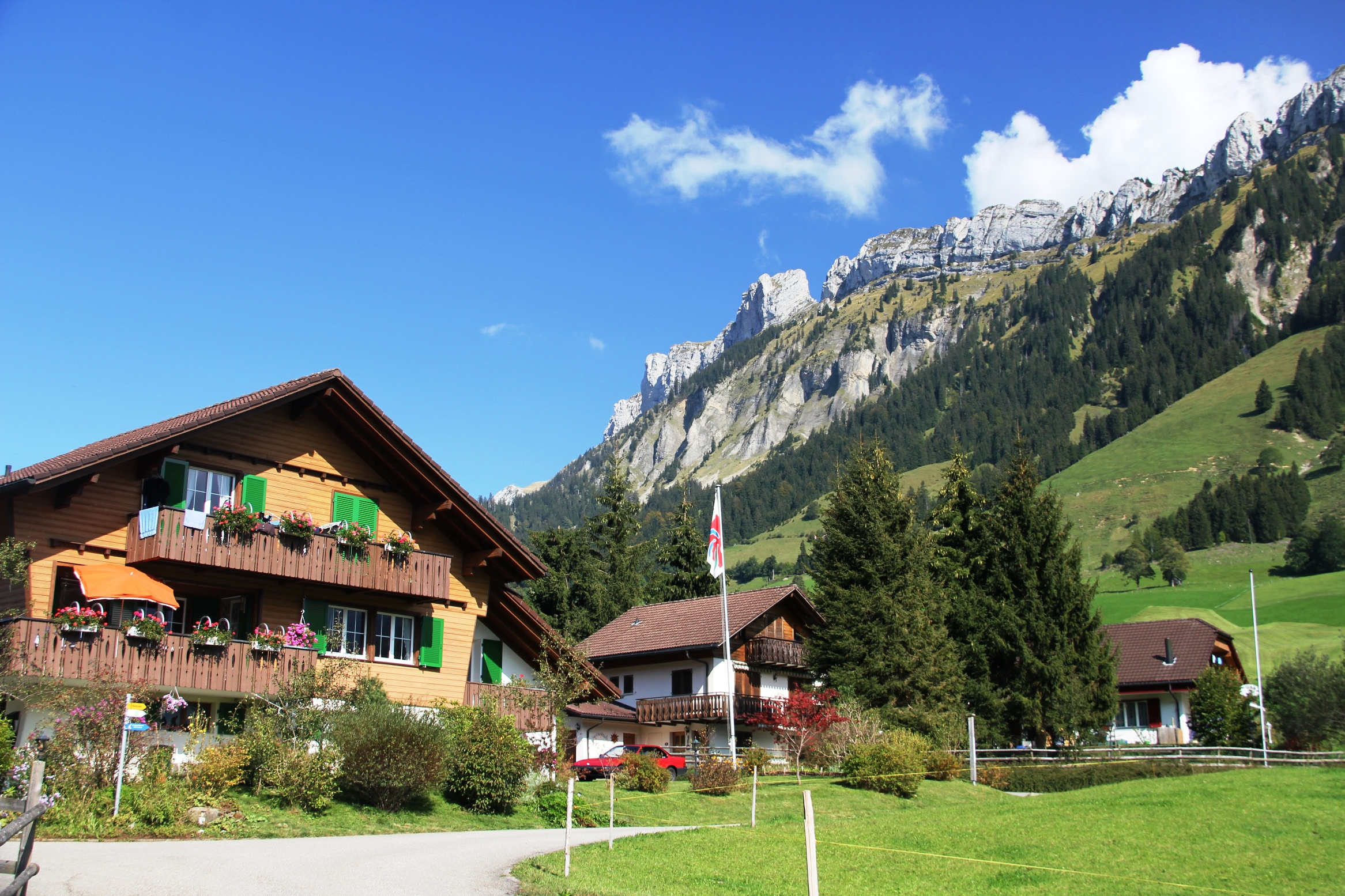
Thank God for digital photography.  I can’t imagine a trip to Switzerland with an old fashioned film camera.  The film costs would break the budget as a gorgeous photo opp beckons wherever you look.

Switzerland may just be my favorite country.  I’ve hiked its demanding mountain trails, skied its endless slopes, and pedaled six of its nine challenging national bike routes across the country.  This time I was on an “agroturismo” press trip. 

Hiking, wine tasting, visiting farms, joining festivals, savoring local cuisine  – we (a group of eight journalists plus a Swiss guide) did it all. 

It got off to a delicious start in Ticino, southern Switzerland where Italian is spoken and the ambience seems more la dolce vita than Swiss efficiency.  We stayed at a small hotel in the vineyards, Fattoria L’Amorosa (www.amorosa.ch)  Ticino is known for excellent wines, especially Merlot.  One of the courses of the welcome dinner featured risotto, a Ticinese favorite replacing pasta.  (See recipe at right for Spinach Risott0)

We toured a winery which, in addition to grapes, grows rice – the world’s northernmost rice plantation. It’s called Loto rice and is used for risotto.  After purchasing  packages of Loto at the shop, where  the farm’s wines are also for sale, we tasted some excellent vintages.  www.terreniallamaggia.ch

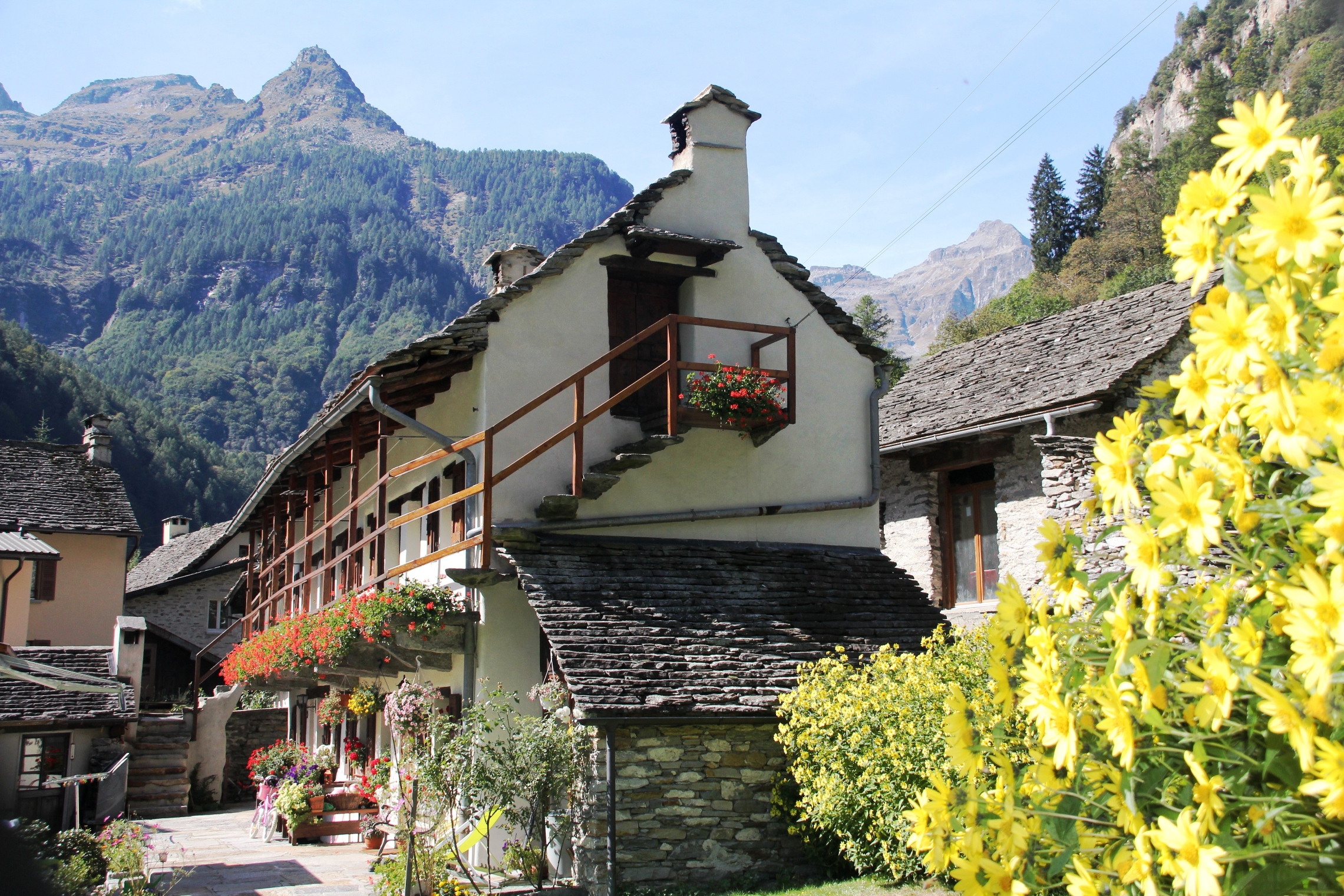
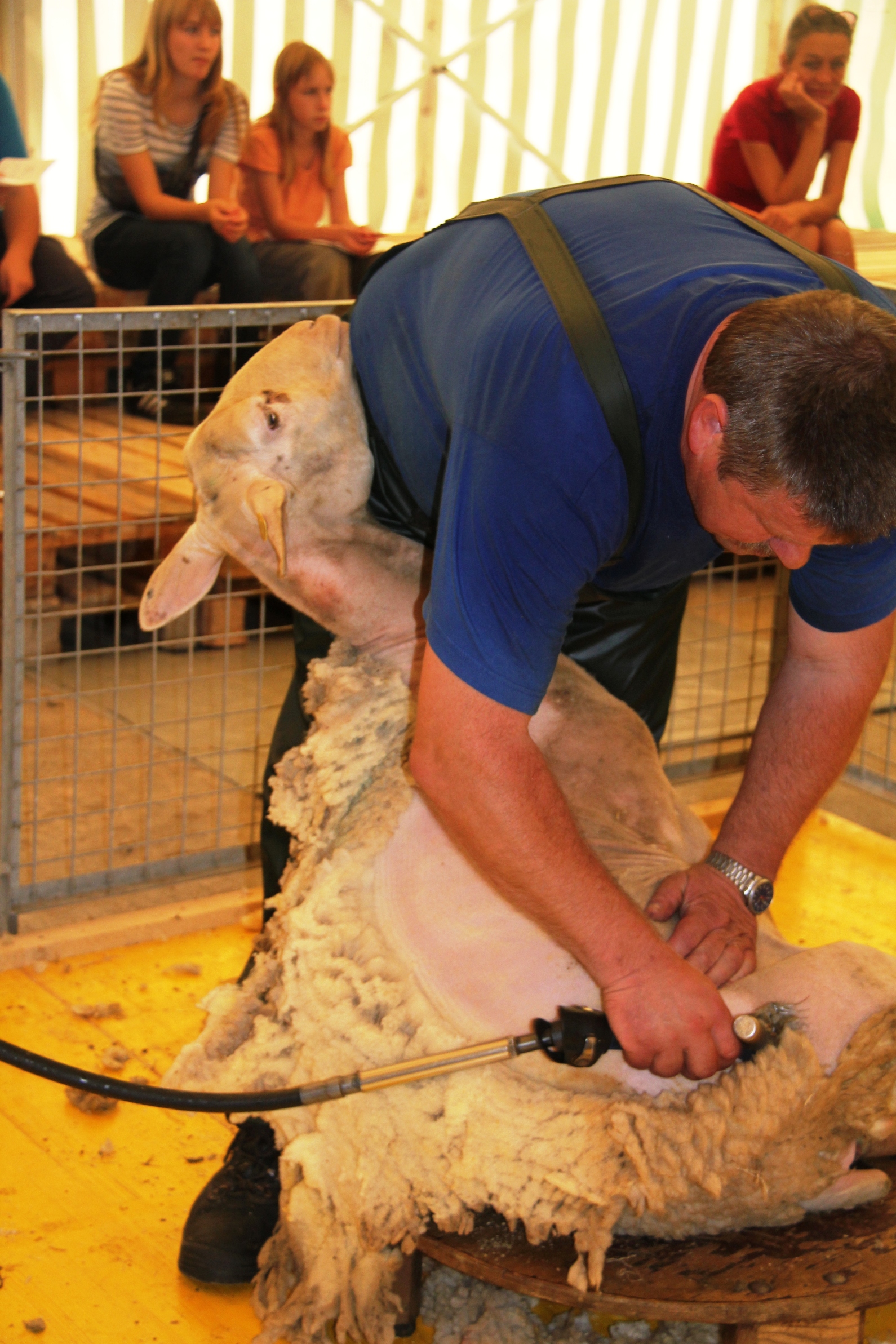
 A bus took us up a narrow, windy mountain road in the Verzasca Valley high above a surging mountain river where tiny villages perched on nearby mountain sides: the stereotype image of beautiful Switzerland.  Our destination was the village of  Sognogno where more photo musts awaited.  Here wool shorn from local sheep is spun and dyed (using only natural products for color), then made into wooly articles such as sweaters and scarves. 

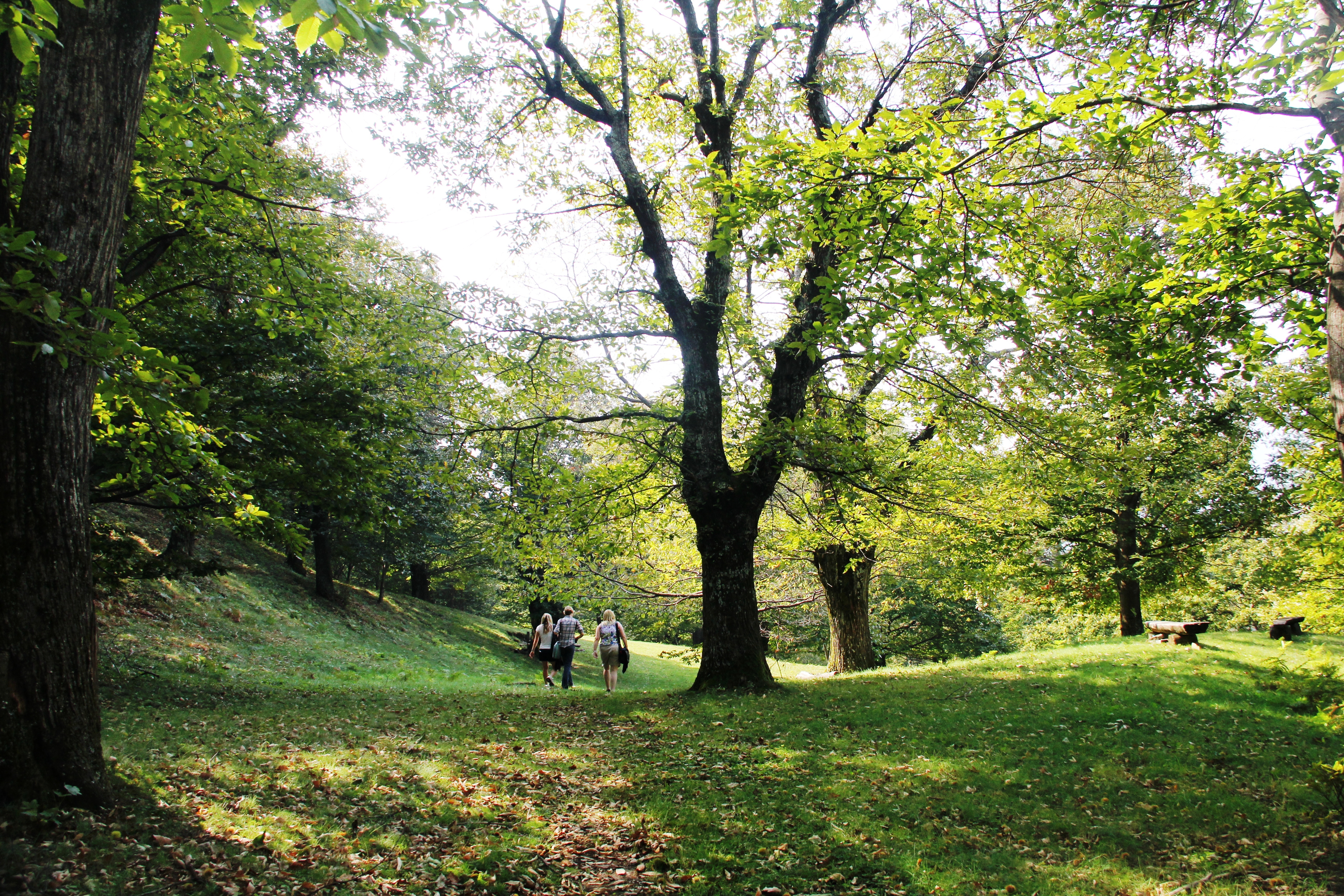
Hiking in the Alps is what draws many to Switzerland.   We did not do any all-day treks to the high peaks, but we did enjoy several scenic shorter hikes. The Chestnut Trail from the village of Vezio in Ticino led us through groves of these magnificent trees.   We learned that chestnuts have been a food staple in the area for centuries. We shared the trail in places with numerous entertaining goats — a pair of bucks even staged a battle for us. 

In central Switzerland (where German is spoken) we hiked up in the hills from the village of Flühli.  The trail took us to several  Kneipp stations.  Kneipp is a type of “kur” therapy based on water, mainly very cold water.  We walked like storks, prancing up and down around a water walkway in a freezing mountain pond.  Then, we moved on to a station with a hose for spraying your face with the ice bath.  Finally a place for submerging arms.  A guide provided explanations and instructions of proper technique, but you could easily give it a go on your own.  It’s chilly, but refreshing and said to do wonders for your health.  www.fluehli-wasser.ch 

Our final hike was an educational experience in the Moorlands, the UNESCO Biosphere Entlebuch near Luzern.  Barefoot, we followed a guide  off the trail back into the swampy landscape. We sank in the squishy mud as he provided fascinating info on the terrain, its insects and plant life. We saw carnivorous plants, an ant hill whose ants don’t bite (actually they do bite, but the bite is not supposed to penetrate human skin,  however one with a mighty chopper got me), a tiny frog and more.  www.biosphaere.ch 

We had fun at two local festivals during our week-long journey. In Mendrisiotto near the Italian border we joined  locals at a jovial wine fest:  music, singing, all kinds of tempting food, and plenty of wine.  Revelers crowded the narrow streets and courtyards where vintners had their stands. We tasted the wine along with roast suckling pig that had been turning on a spit above an open fire. www.mendrisiottoturismo.ch

Cows were the  focus of the festival, the Alpabfahrt, in Schuepfheim in central Switzerland.  Crowds congregate along the village streets to watch the parade of beasts as they come back to the valley after spending the summer in high mountain pastures.  It’s a jolly event with the cows all decked out in flower wreaths, their massive bells clanging as they tread by,  spectators cheering and jostling for the best photo opps — and lots of cheese and wurst stands for the hungry. 

One night during our travels we stayed on a farm , a large one with many rooms for guests. Toilet and shower facilities are shared.  For extra economy, you can opt to “sleep in the straw” – a room with a plank of straw and pillows. During our visit, a father with two young boys spent the night in the hay.  They loved it. You need a sleeping bag.  The farm dinner that night included a buffet with 23 different kinds of local cheese.  www.berggasthaus-salwideli.ch

A wake-up call at 5:30 a.m. got us off to an early start on our next to last day. We took a short walk to the cheese dairy farm Gerschnialp where cows were being milked.  Milking is all done by machine, but we had the opportunity to try the hand method – very easy to get squirted with a stream of milk as I found out.  We watched and helped with the numerous steps in the cheese-making process.  And, we tasted the final products that had been aging on shelves in temperature-controlled rooms.

Yet another walk as the sun was edging over the peaks and basking the mountains in a rosy glow –past fields of cows now back in their pastures with their bells clanging  as they munched on grass, then through the woods to a cable car station for the scenic ride up to Mount Titlis (3,020 meters elevation) above the town of Engleberg.  The viewing terrace at the top is camera heaven.  A popular attraction is a spooky walk through a dark glacier grotto.  A ride on the Ice Flyer, a chair lift that takes you down over glacier crevasses, then back up, is spectacular.

My very favorite part of the Titlis visit was on the way down.  Instead of riding the cable car to the bottom, we got off at the Gerschnialp station and hopped on Trotti bikes (like scooters),  You stand on the bike platform, then head down a mountain lane at top speed, soaring around curves, faster and faster.  It’s thrilling. I wanted to go again.  www.titlis.ch; www.engleberg.ch

Our trip ended in Lucerne, that Swiss gem that is a must for visitors to this land of mountains, lakes, cheese, chocolate — and endless photos. www.luzern.comwww.MySwitzerland.com

See below for more photos.  Click on photo to see full size.  And, try some delicious risotto.  Click on Spinach Risotto under recipes at right.  Comments — and subscribers — welcome


Table of Happiness

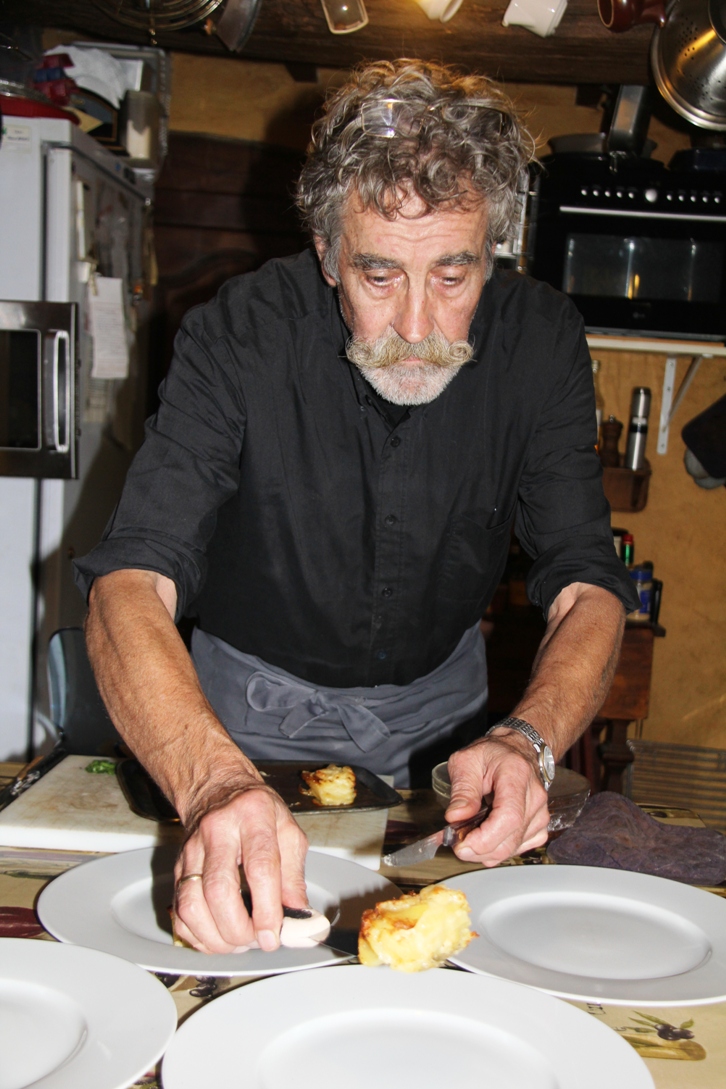
The name is perfect:  La Table du Bonheur (Table of Happiness).   The culinary creations prepared by chef Hans would make anyone happy. 

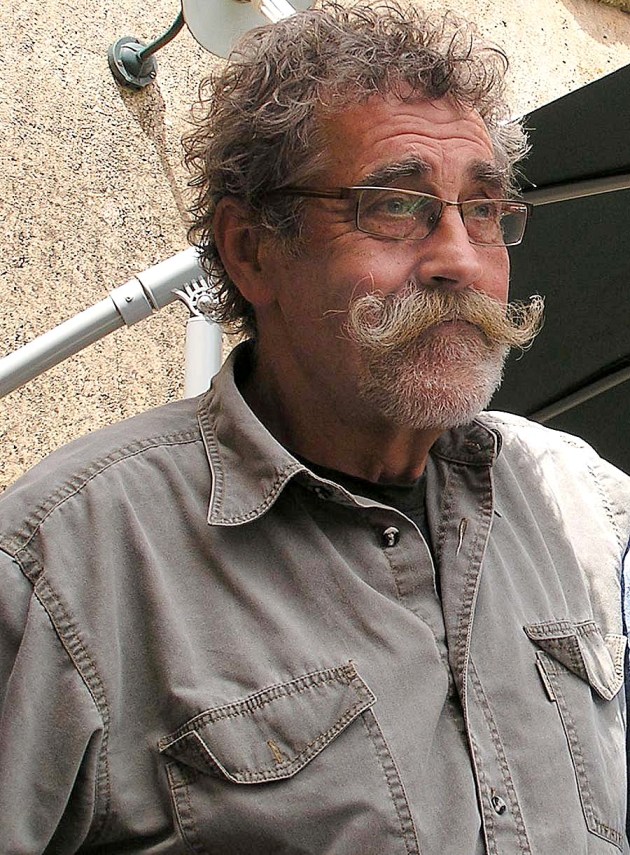
“The main reason I cook is to make people feel good, to feel happy. I like to give them something nice to remember,” says Hans, who sports a perfect

Photo by Gail Polack

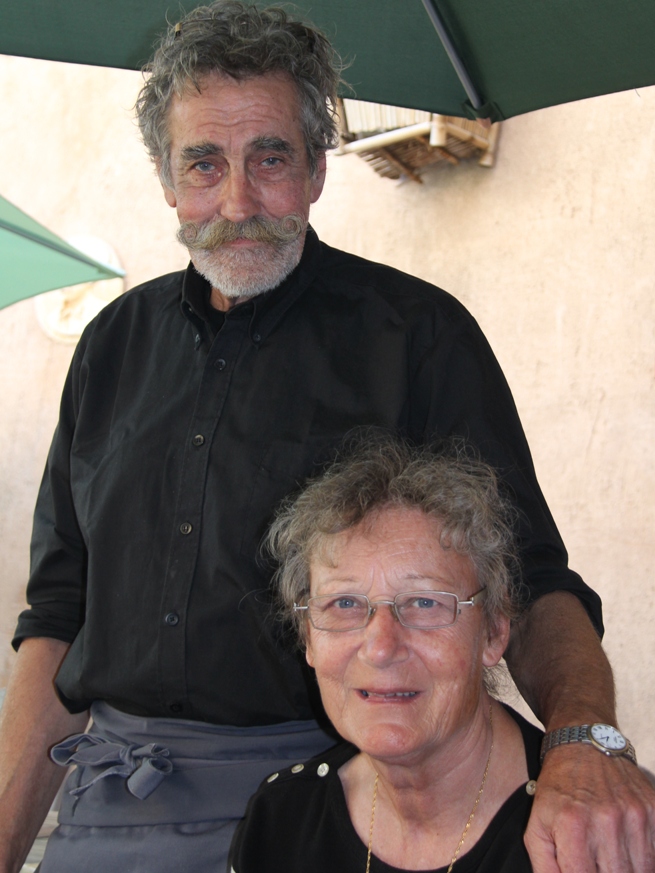
handlebar mustache and speaks five languages.  With his wife Tiny assisting, this chef extraordinaire creates over-the-top meals for guests at his Bed and Breakfast home, where he also rents a vacation apartment.  And, sometimes he cooks for lucky friends. 

Thanks to Ben, a Dutchman who was in my French class, I heard about Hans and Tiny, who are also Dutch.  Ben wrangled an invitation for me and Bob.  We’ve been back many times since, and I’ve  even gotten up enough courage to invite them to dinner. 

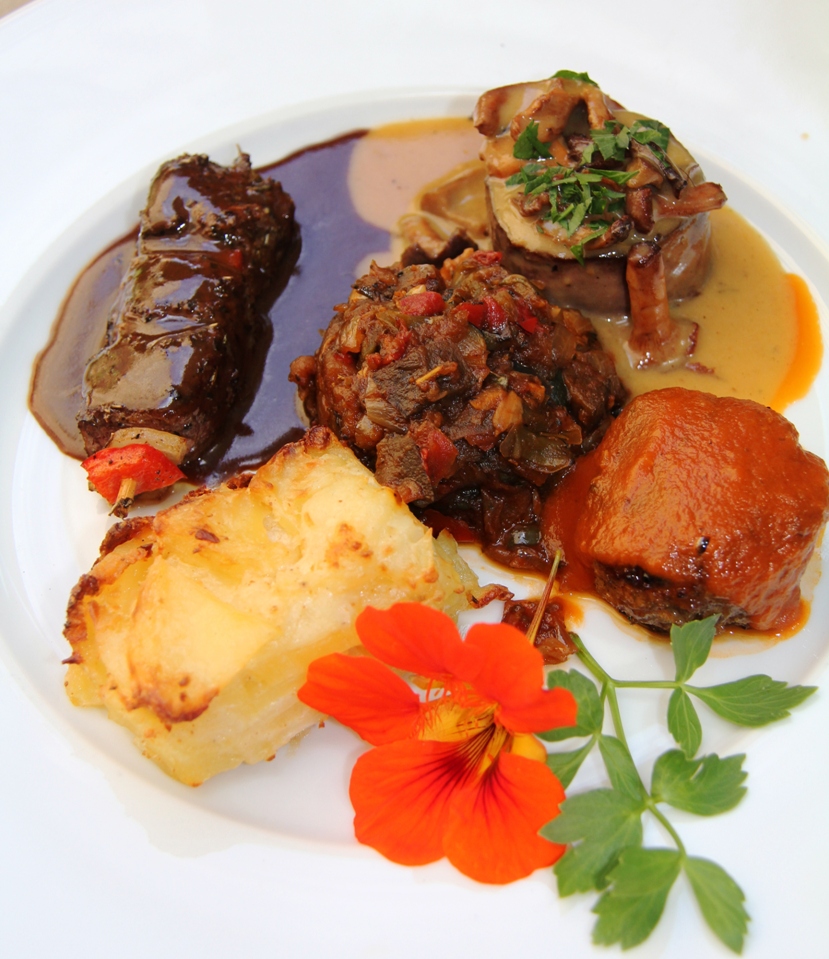
A recent dinner chez Hans and Tiny began with smoked wild salmon (he smokes the salmon himself) and  wild salmon tartare. This was followed by cepe bouillon, then an incredible main course,  a trio of succulent lamb: filet,   brochette and a lamb burger with tomato sauce accompanied by ratatouille and a gratin of potatoes  For décor: an edible nasturtium blossom.  Then a beautiful cheese course, a blanched apricot split and filled with layers of fresh goat cheese all smothered with warm lavender honey. Dessert: lemon custard pie with homemade raspberry sherbet and whipped cream.   We were indeed happy. 

 Table du Bonheur is high in the hinterlands of Provence, up a narrow windy road, then down a rutted dirt road to a cluster of no more than six buildings. Remote.  Off-the-beaten-track. At the end of the world. 

Which is just the way Hans and Tiny like it.  “The only way you’ll get me out of here is in a coffin,” says Hans. 

For 18 years, he ran a Michelin two-star restaurant in Belgium. “It was very difficult.  Twenty-six people on the payroll.  One hundred forty places.  I felt like a slave,” he recalls. 

His restaurant career started when he was 22 and went to work as a waiter.  He knew he wanted to move up, so he earned a wine diploma.  “I wanted to be creative,” he says, so he began working as an apprentice with restaurant chefs, including Les Freres Troisgros who have a Michelin three-star restaurant in Roanne,France.  

At the age of 27 he started his own restaurant which, after 18 years,  he was happy to give up and move back to Holland and embark on something  smaller.  “Most people want their career to get bigger and bigger.  I want smaller and smaller….I said at the age of 55 I would give this up.”  For years, he and Tiny and two of their sons (they have three children) ran a small but very popular restaurant with an open kitchen in Holland. “It was great to have people around me,” he says. 

They loved France and spent every vacation touring the country by motorcycle.  They knew they wanted to end up settling here.  One summer when they were looking for a vacation  apartment to rent, he told the real estate agent he wanted someplace so isolated that he could cook naked.  The agent took him to a nudist colony — not what he had in mind. 

However, he could no doubt cook naked at Table du Bonheur. They discovered their home in the boondocks on a trip in 2000.  They rented the house which dates back to the 1500s. The isolated location was ideal, and the house had all the room they needed. The owner, however, would not sell.  They came back every year for seven years before they succeeded in purchasing the home.  Hans was 56, one year past his age 55 deadline. 

They’ve done major renovation, but the kitchen has kept plenty of old world charm.  So much so you wonder how Hans can turn out such fabulous food in a simple, relatively small, space – the antithesis of a modern kitchen.  The dining room/living room, with beams, exposed stone walls and a fireplace, is cozy  — the perfect ambiance on a cold winter’s day.  In summer a small terrace area with worn wooden tables and lots of potted flowers all around is an ideal setting for savoring fine cuisine.

 Hans has local sources for all his supplies – one farmer for pork, another for lamb, yet another for beef, and one for poultry. Cheese from a local producer.  Fish from the market in Carpentras. In the fall he puts on dinners for the local hunting club whose members provide him with tasty game. 

“Everyday is an adventure.” he says, with a twinkle in his vivid blue eyes.   “I love to cook.  I love the creativity of it.” 

And, we’re happy to devour his creations!

Check out the recipe in the column at right , Goat Cheese Mousse with Mint Pesto — a winning appetizer.

The City of New Orleans

Crabmeat cheesecake with meuniere sauce.   Lamb sliders with tomato chutney and herbed goat cheese. Fried alligator with chili garlic aioli. Rabbit livers with pepper jelly toast. Pan roasted oysters with rosemary cream sauce.   Banana mascarpone strudel with banana caramel and Mexican chocolate ice cream….

Bob and I indulged in all – and more — during our May visit to New Orleans.
The city is a died-and-gone-to-heaven kind of place for foodies.  There’s Cajun food, Creole food, gourmet French cuisine, soul food, even African and Vietnamese food. There are famous chefs and restaurants and simple neighborhood eateries.  And, cocktails for which the city is legendary.

Eating is just one of the many pleasures this wonderful city has to offer. Food, drink and music are the city’s three muses, we learned, and we experienced them all.

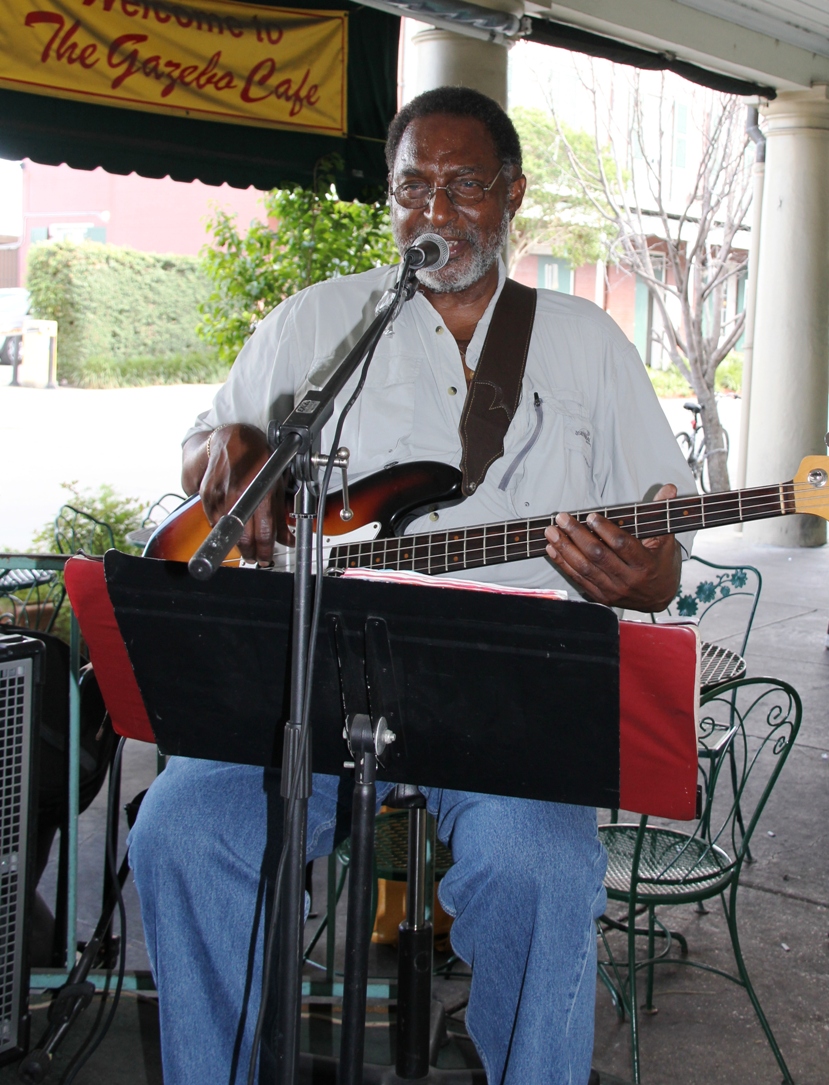
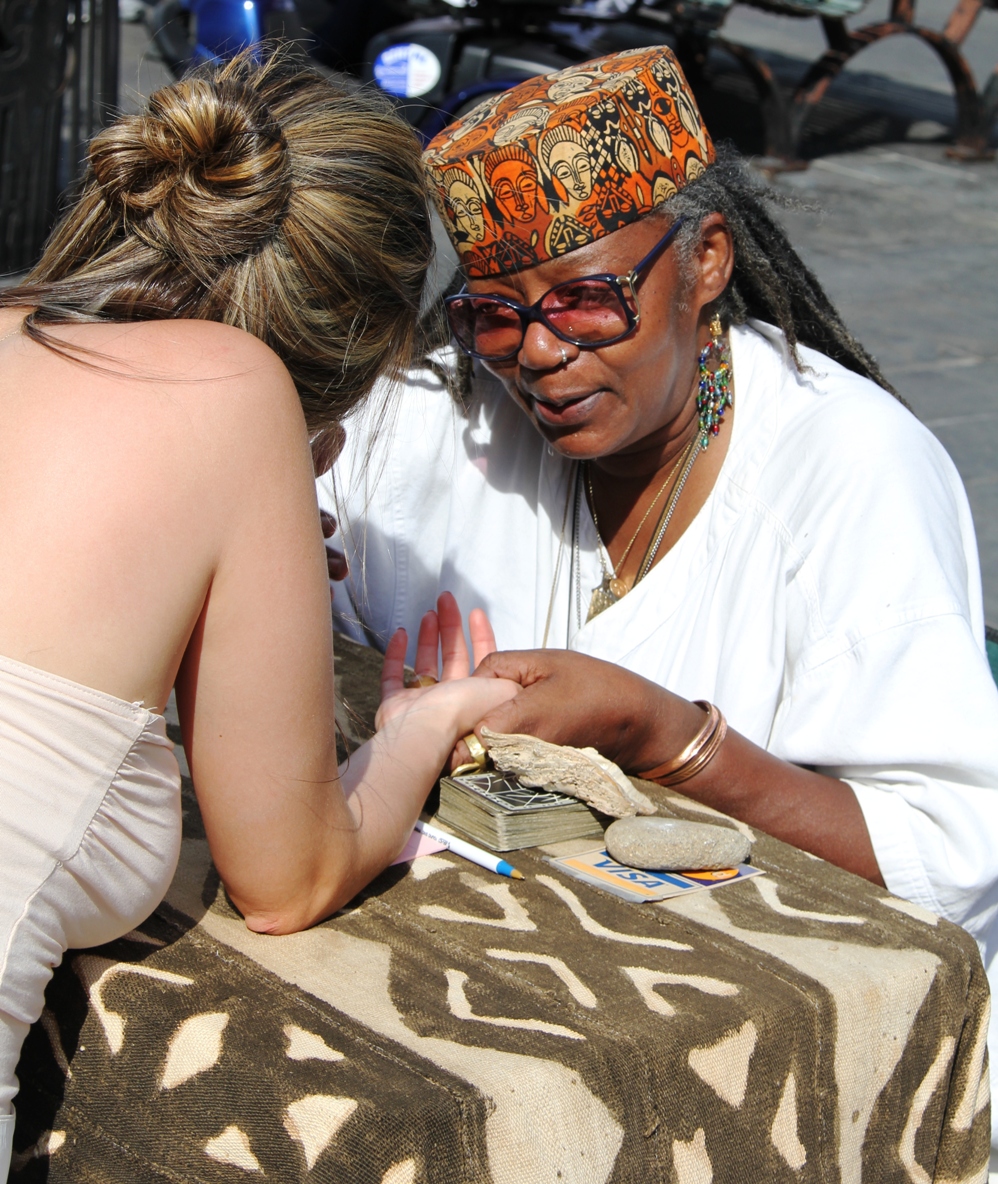
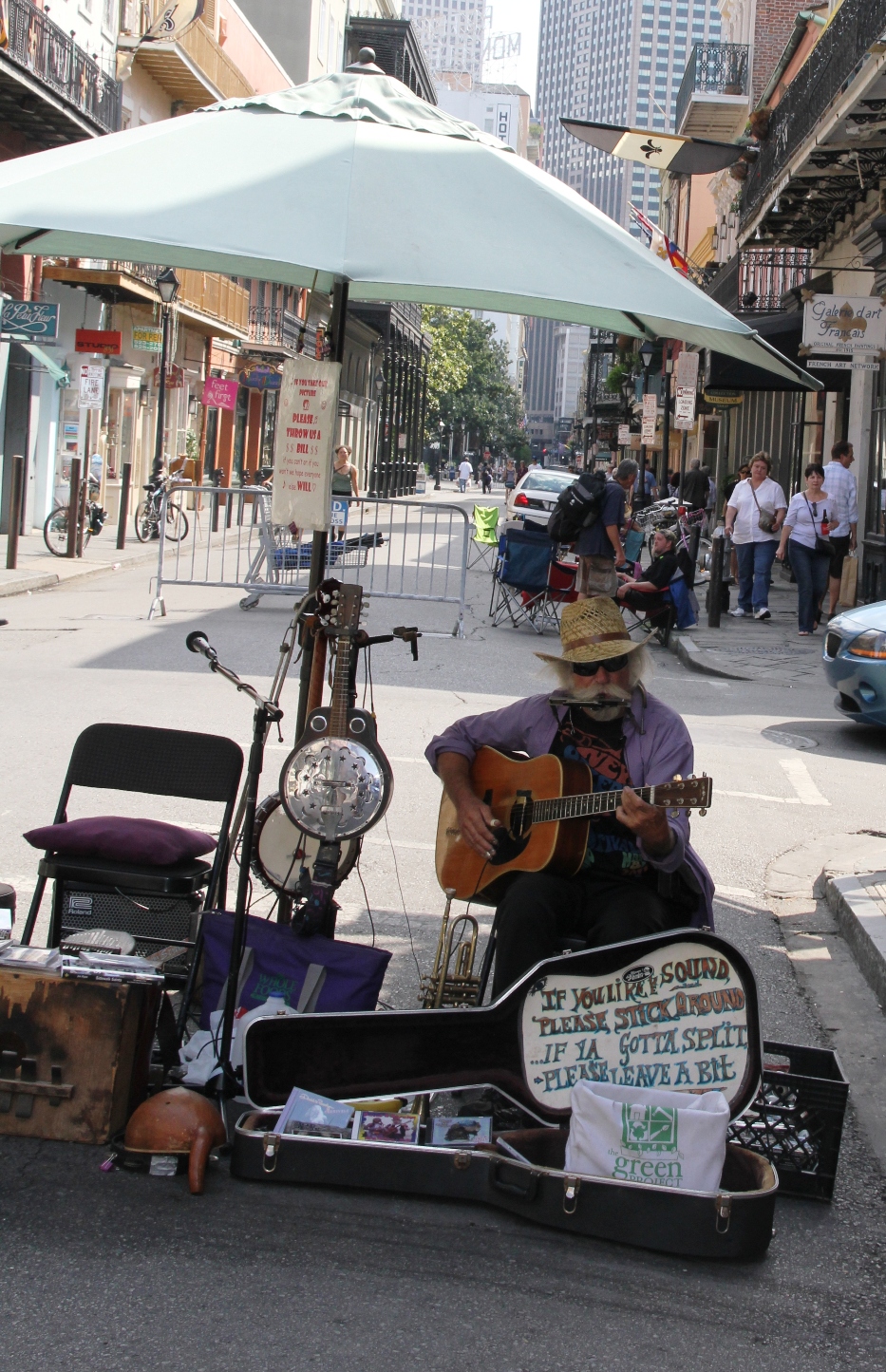
After checking into our hotel, we walked through the French Quarter, past charming buildings with ivy spilling over cast iron balustrades,  bejeweled fortune tellers looking for customers, and street musicians.  We stopped for an outdoor lunch: a hefty Po Boor sandwich (overloaded with shrimp) and a cold beer, and were serenaded by more live jazz.  I was smitten.  My kind of place, New Orleans.

It’s fun, funky, fabulous.  The devastation of hurricane Katrina in August 2005 has left serious scars. But, the vibes in the French Quarter are heady.

In addition to trying different restaurants (famous and not-so-famous), we listened to jazz (on the streets and in clubs), took two bicycle tours, a Katrina tour, an airboat swamp tour, and rode the St. Charles streetcar.

I asked Cassady Cooper , one of our bike tour leaders, what he felt makes New Orleans so special.  “The things you hate about New Orleans are also the things you love,” he said.  “Time doesn’t work here as it does in the outside world.  There’s always something going on here, anytime day or night.  The city is made of artists.  There are more writers here than in any other part of the country.  I love the culture.”

Part of that culture involves alcohol. Where else can you find drive-in Daiquiri stands?  Jeff Shyman, our other bike tour leader, enlightened us.  “Drinking is a big part of this city,” he said.  “We are a drinking culture.  We drink all day, but we don’t drink to stupidity.  We don’t overdo it.  New Orleanians don’t drink to get drunk like the tourists on Bourbon Street.”

We’d heard about Bourbon Street, the place we assumed  was famous for jazz clubs.  No more.  It’s crowded, loud and trashy.  Those seriously interested in music now flock to Frenchman Street where, within a two-block radius, there are eight different venues for 1930s swing jazz.  We liked the Spotted Cat and d.b.a.

For one of our two wheel adventures, we chose the Culinary Bike Tour. We did more eating than cycling, with stops at four eateries to try different delicacies.  Our tour leader explained the difference between Creole and Cajun food.  The latter, he said, is associated with country folk from the swamp lands.  “Table cloths were replaced with newspaper…it’s big dish food, from the field to the table.” Animal parts, such as liver and tail, are savored.  The restaurant best known for Cajun food is Cochon.  Bob and I went there on our own.  It’s both entertaining and delicious.  You can sample numerous bizarre concoctions, all served in small portions.

Creole food embodies the influences of New Orleans’ early Spanish and French settlers.  It’s more refined, and sauces are foremost.

Gumbo is a New Orleans staple.  On our last tour stop we tried this hearty stew of sausage, seafood, chicken, all heavily spiced, (“everyone uses cayenne for seasoning here,” noted Cassady) at Liuzza’s By the Track, a simple but inviting place.  As I am a passionate cook, I asked our tour leader how to make gumbo. I envisioned serving it at a future dinner party. I’ve reread my notes – page after page.  This is not a 1-2-3 step dish.  I must have had too many beers.   Preparing the roux (the base and essence of gumbo) is a daunting challenge.  And, you need the secret ingredient, file, the powdered leaves of the sassafras tree.  On my last afternoon, I went from store to store in the French Quarter, not known for grocery stores, searching for the treasured file.  I tracked it  down…..  Maybe on a cold winter’s day, I’ll attempt a genuine New Orleans gumbo.

Our swamp tour was a major disappointment.  I had envisioned seeing monstrous killer alligators lurking in the bayous.  The few alligators we saw were pathetically puny.

Another story was the Katrina Tour: mind boggling.  Instead of taking an organized bus tour, we hired taxi driver Sidney Farrell to dive us through the parts of the city that had been annihilated.  “Imagine, this was under eight to twelve feet of water,” he said as we drove past a used car lot, Discount Donuts and a motel.  “It’s all coming back, little by little.”

We drove by houses that have been rebuilt, often next door to houses still in ruin.  Block after block.  The Lakeview area of exclusive homes was “all under water,” he said as he pointed out empty lots where half-million dollar homes once stood.  He took us to St. Bernard Parish, a devastated area where Brad Pitt’s Make It Right Foundation Rebuilding New Orleans has financed the construction of ultra modern homes with innovative designs to replace those that were destroyed.

“Ten thousand homes were demolished in three years, but there are still another 45,000 that need to be torn down. The recovery will take another 15 years,” he said. “The city population before Katrina was 500,000.  Now it’s 350,000. Many have never come back.  There’s nothing to come back to.”

The saga is tragic, not just the frightening forces of  nature unleashed and the obliteration left behind, but the foiled bureaucracy and rampant crime that followed.

However, those who have come back, and those who stayed, infuse New Orleans with a gusto that is contagious.

Take a bike tour in New Orleans:  http://confederacyofcruisers.com 

See below for more photos.  Click on the photo to see full size.  Check out the recipe column on the right for a tasty vegetarian dish,  Southeast Asian Squash Curry.


Fort Buoux: A Discovery in the Hinterlands

This post comes with a new look, the beautiful header across the top.  Friend and photographer David Regan (A Fishy Tale)  created it using my photos.  As you click on different parts of the blog, you’ll see other examples of his skill and creativity.  And, recipes are back, now listed alphabetically on the right below “Recent Posts.” For the latest treat, try “Watermelon Salad” at the end of the list.

There’s no shortage of interesting places to visit in these parts. Even though I’ve lived in Provence for seven years, I’m still discovering new attractions.  This spring I visited two for the first time: Fort Buoux and the archeological site of Glanum (see future blog post for Glanum).

Buoux was thanks to our friends Lynne and Larry from Germany who rented our guest apartment (www.les-rosiers.com) in April.  Lynne found Fort Buoux in a Rick Steves guidebook.  Off they went and returned ecstatic with the discovery.

I’d been to a restaurant in Buoux, a tiny place of no more than a few houses, but I knew nothing about the fort.  When my cousin Stewart’s son Tom and wife Melissa came to visit, I decided it was time to explore this place.
Tom and Melissa had GPS, but even with this high tech gadget, it was not easy to find. After a few wrong turns and backtracking, we arrived at the parking lot, then followed   signs for a long walk down a shady road, under a “baume,” (a  natural cave beneath overhanging cliffs), then a climb up a rocky path to the entrance. Fort Buoux is definitely “off the beaten track.”

There were warning signs:  Visit at your own risk.  Watch children.

What kind of place was this?  After paying admission, we set out up a set of treacherous  steps carved in the rock.  Up and Up.  We climbed past piles of ruins, deep trenches,  cisterns, all numbered with their identification provided in a pamphlet we had been given at the entrance. The views of the surroundings –ravines, rock outcrops, cliffs and distant hills — are splendid.  We even saw rock climbers attempting to conquer a rock face.

The brochure explained that caves in this area, the AiguebrunValley, have been occupied since earliest antiquity. The fort is of the 12th century, built on the site of a Roman settlement. It  was obviously built for defense and was important during the Middle Ages.  During the religious wars (1562-98), the fort served as a refuge for the persecuted ProtestantWaldensians,  members of a Christian movement of the late Middle Ages who were considered heretical.  Later, Protestant families settled in the region. In 1660, Louis XIV, who feared rising religious independence, ordered the fort destroyed.

The brochure identifies  37 different sets of ruins.  Following the path which leads to them can be challenging.  The terrain is stoney.  The trail climbs. You need sturdy shoes – and no fear of heights.  Sheer drop offs plunge from the edge of the cliffs.  As this is France, there are no ropes or barriers.  While children enjoy scrambling amid the ruins, they need a tight rein lest they run too far.

One place, the “Hidden Stairs” had an extra warning: “Not advisable for elderly people, pregnant women and little children.”   Melissa and I stayed back, but Tom  charged down the crumbling stairs for more discovery.

Among the ruins are those of a 13th century church, houses, a cistern, towers and defense walls. Exploring them all is an exhilarating adventure.

Fort Buoux is located on a winding minor road,  D113, 8 km from Apt.  The fort is not in the town of Buoux (population 125), but in the surrounding hinterlands.