All about Life in France

The Germans have a saying, Leben wie Gott in Frankreich, (Live like God in France). After living and working in Germany for more than 25 years, I moved to southern France eight years ago to see just how God lived.  Not too shabby.  Life is good, very good, but not quite paradise.  Read on for my observations.

Topping off the list of pluses is Health Care.  Americans can criticize socialized medicine all they want, but I’m thrilled with the French system, universal care, which even covers home visits, taxi trips to doctors for those unable to drive, weeks in a rehab facility after some surgeries and much more.  For details, see my previous blog post,  “My New French Knee, “ all about my recent experience with knee replacement surgery.

Filing Taxes. My husband does ours.  Since our retirement income comes from the U.S., we file and pay U.S. taxes.  There is a reciprocal agreement between the U.S. and France, so we pay no income tax here. Nonetheless, as residents in France, we must fill out French tax forms.  My husband spent many long days on the computer, fighting with form after form, to file the U.S. taxes.   The French form, even for citizens, is short and simple.  I did it in minutes.

Elections.  During the French presidential campaign this spring, there were televised debates among candidates, as well as spot commercials.  But, each candidate was given the same amount of air time.  No matter how much money a candidate had, he/she could not buy extra television time.    The issues, the candidates’ positions and record, determined the outcome – not their wallet.

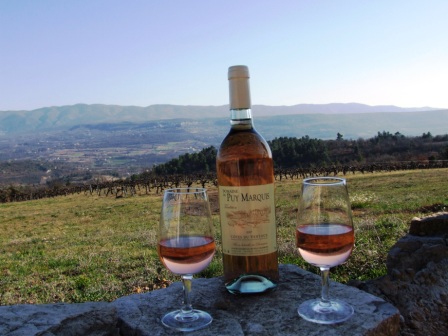
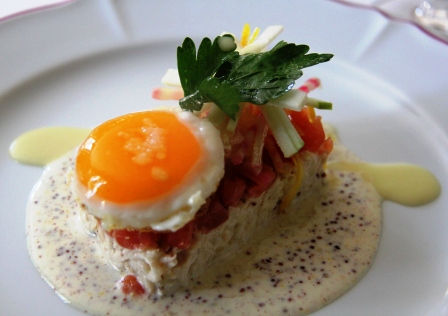
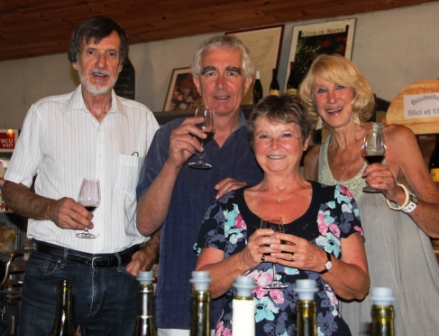
Food/Wine.   Both hard to beat.  Crusty baguettes, flaky croissants, sinful pastries… and, my downfall, all the fabulous cheeses.   Restaurant meals are generally excellent, and the wine is reasonable and good.  A glass of wine at our neighborhood café, 3 Euros, ($3.65).   As my husband and I like to imbibe with dinner at home, we buy table wine in five-liter boxes (almost seven bottles), from 13 Euros or $16 per box.  And, we love to visit the numerous wineries in these parts for tasting and purchasing.

Tips Included.  No need to get out your calculator and figure out what 15 or 20 percent of the total is for your tip.  Service is included in French restaurants.  If you are happy with the meal and service, you can leave a few extra Euros.

Politeness.  The French, including children, are extremely polite and courteous.  When entering a shop, a doctor’s waiting room, an office… they greet everyone with a “Bonjour Mesdames, Monsieurs.”   They also kiss a lot, but more on that to follow.

Laissez-Faire.   Life here is not over regulated.  If you visit a tourist site at the edge of a high cliff, for example, there will be no fences or walls at the edge obstructing your view and keeping you from falling. It’s up to you to use caution and control your children.

Leisurely meals. The French appreciate good food and conversation.  Meals, which consist of several courses, are not eat and run affairs. They can go on for hours.  It’s enjoyable and relaxing.

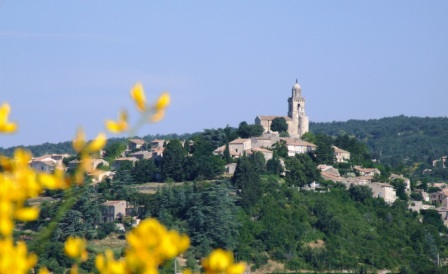
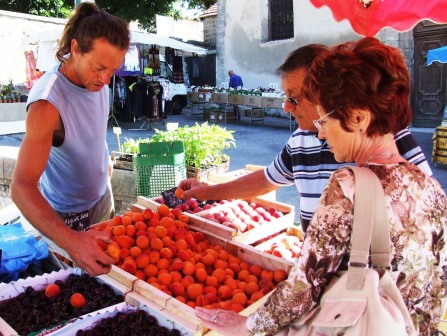
There’s more I love about life here: the beautiful view of the Luberon hills from our balcony, the bounteous markets, colorful local festivals in the summer, poppies in the spring, lavender and sunflowers in the summer, the sunshine, the pool…

But, not all is perfect.  At the top of my list of pet peeves are Business Hours  which drive me crazy.  Every shop, office, restaurant… has its own schedule.  You need a spread sheet to keep track of it all, but be prepared for changes.

Here in southern France, almost everything closes for a long lunch hour, but how long? The bakery and grocery store in my small village are closed every afternoon between 12:30 and 4 p.m. The post office only closes between noon and 1:30 p.m. The pharmacy is closed from 12:30 to 3 p.m., plus Saturday afternoon and Monday morning.  Restaurants are usually closed one or two days a week, but that varies with seasons.  How to remember which one is closed which day during which season.?

What really gets me is “Fermeture Exceptionelle” (exceptional closing). Too often  I have  made a special trip to the bank in a nearby town only to see this sign at the door.  No explanation. Go home and come back another day.

Driving Expenses.   Gasoline is very expensive here – about 1.6 Euros per liter (about $7.80 per gallon). Tolls on the autoroute are also expensive.  But this can be an advantage.  Only during peak travel seasons (certain summer weekends for example) are there traffic jams on these super highways.  You can usually sail along at a maximum speed of 130 km per hour, just over 80 mph.

Hunting Dogs.  As an animal lover, it grieves me to see how these dogs are neglected and abused.  Hunting is a popular sport in these parts, and most dedicated hunters keep several hunting dogs penned up year round. They are not treated as pets and are only released for the hunt.  Many get lost and end up homeless.  We once found a lost, friendly hunting dog wandering along a country road. We put him in the car and called the number on the collar it was wearing, then  met the owner in a nearby town.  Instead of being happy to see the animal, he grabbed it by the collar and tossed it into the back of his pick-up with several other sorry beasts.  I was devastated,  and regretted returning the poor dog to a miserable existence.

Punctuality.  This is strange.  If you invite French to your home, they generally show up on time.  But, go to an event, be it a concert, a performance, or a community dinner, and be prepared to sit and wait at least a half hour, and more often up to an hour, before the show gets on the road.   If it’s a performance, you may need to stay an extra half an hour for curtain calls.  The French are overly enthusiastic and reward performers with endless clapping and cheering.

Much about the French lifestyle is neither bad nor good, but  curious to an American.  I’ll start with la bise (the kiss).  It’s known that the French greet one another with an air kiss on the check, usually both cheeks, and sometimes more depending on which region of France they live in.  I live in the department of Les Alpes de Haute Provence,  just 20 minutes from the border of the department of Vaucluse. On our turf, it’s one kiss on each cheek.  But, in Vaucluse, it’s three kisses, both cheeks, then back to the starting point for a final kiss.  I invariably forget when I visit friends in Vaucluse and pull away after two kisses, only to have the friend, cheek turned, waiting for number three.  Then there’s dilemma of which side first.  How many times have I knocked heads with someone as we both turned in the same direction and crashed?  The good ole American hug is easier.

August This is a mystery to me, but it seems everyone, and not just folks with school aged children, takes a vacance  (vacation) in this hot summer month. Doctors’ offices are often closed for the month.  Many businesses and offices, including the electric company, close during August.  For those of us in the sunny south, August, as well as July, means an invasion:  Parisians, Dutch, Belgians.  Too many drive huge campers which clog the two-lane roads in this hilly region. Parking places in towns are at a premium. Lines at the bakery snake out the door and  down the sidewalk.  We’re happy when these tourists go home and life settles back to quiet normalcy.

Apero,  short  for aperitif and the French preferred way of entertaining.   They often invite guests for apero, which can be potato chips, peanuts, and several glasses of wine or pastis (the favored anise drink of Provence) or an array of elaborate snacks which can be a meal.   In general, dinner parties are for close friends and family.

I could ramble on, but suffice it to say that God could do worse, much worse.

If you’d like to read more of my tales and adventures, click on “Email Subscription” at top right of post.  Comments are welcome.  Click “Leave a Reply” 

What to do with all that summer produce?  Check out my recipe for Great Gazpacho, my summer favorite.  Scroll down the recipe column at far right.

New Zealand’s Extraordinary Fiordland

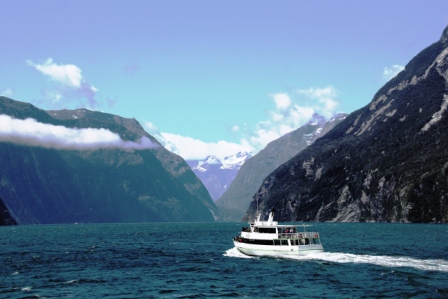
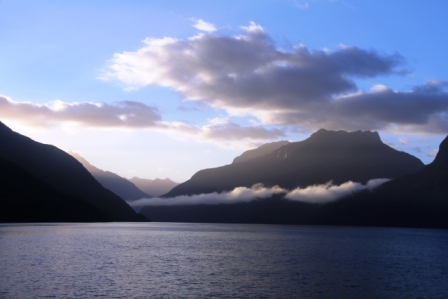
It’s all about scenery: dramatic, magnificent, mystical. We awoke on board a ship in Doubtful Sound, the largest of the area’s 14 fiords, to watch the sun creep over the towering cliffs which surrounded us, casting mirror images of the mountains on the sparkling water.  The only sound was a raging waterfall plunging from high above into the deep inlet. Waterfowl flew above.

We were in awe, mesmerized by the splendor of nature, the beauty all around in this desolate paradise.  Every day during our five-day visit to the region last November was filled with more overwhelming, spectacular sights.

On New Zealand’s South Island, Fiordland National Park is a World Heritage area and the country’s largest national park. The fiords, narrow inlets with steep sides carved by glacial activity, indent Fiordland’s West Coast.  In addition to exploring the fiords by boat, you can hike legendary trails in the mountains, trek through primeval forests and enjoy thrilling views from a seaplane.

Husband Bob and I did a bit of all.  We also enjoyed an exciting boat adventure in a Glowworm Cave through eerie darkness to a grotto where thousands of tiny glowworms glimmered on the walls. It was hard to believe this was a natural phenomenon and not an amusement park attraction.

Our Fiordland base was the town of Te Anau from where we set off for our first fiord excursion to Milford Sound. Early European settlers who were not familiar with fiords called them “sounds” which are actually river valleys flooded due to land sinking below sea level.

A bus trip on the Milford Road through the National Park leads to the Sound. There’s grandiose mountain scenery en route, with stops for photos.   And, once on board the ship sailing through the fiord’s National Geographic scenery, it’s hard to put the camera down.

On the way back to Te Anau, we stopped for a hike led by a guide to a summit.  We crawled under fallen logs en route, jumped over streams, through woods to open spaces above the tree line with superb views in every direction. By the time we reached the top it was raining. Our guide pulled out a thermos from his backpack and served us tea and cookies in the drizzle.

More hiking, but at a lower elevation, was on the next day’s agenda, a nature walk along Lake Te Anu through a dense beech forest.  The guide provided fascinating commentary on the flora and fauna, including the illusive kiwi, the country’s flightless nocturnal bird and national symbol.

Moss thrives in this dark green paradise and can be a meter deep. Step off trail and onto the lush carpet which is like a sponge, squishy strange to sink into.  Along the trail all sizes and varieties of forest ferns grow in abundance.  Kiwis (the people) are passionate about the environment and especially their bird population.  Our guide pointed out many species, including ducks which nest in tree tops.

Fiordland, we learned, has 200 rain days per year, dumping between six to eight meters of water each year. During our Doubtful Sound cruise, we experienced some of that rain. But it not dampen the spirits of those on board who wanted to try sea kayaking.  After our miserable failure with this sport which plunged us into the icy sea (see previous post: Misadventures in New Zealand), we stayed safe and dry on board.

During our cruise through this remote and romantic fiord, we saw penguins, seals and dolphins.  We marveled at haunting dark skies and fantastic cloud formations.

A different but exciting boat ride ended our Fiordland visit. We boarded a speedy jet boat on the Upper Waiau River to Lake Manapouri.  From our craft we boarded a float plane – tricky to get on this plane which was bobbing in the water – for a thrilling aerial view of the stunning countryside.

Rudyard Kipling called Milford Sound “the eighth wonder of the world” I think the same could be said for all of Fiordland.

For more on Fiordland, see http://www.fiordland.org.nz

Watch the slide show below for more outstanding scenery.  For summer grilling, try my old standby: Grilled Pork Tenderloin with Mustard Cream Sauce.  See the Recipe list on the right.

If you’d like to read more of my tales and adventures, click on “Email Subscription” at top right of post.  Comments are welcome.  Click “Leave a Reply” 

This slideshow requires JavaScript.

Down Under Delights – and Disappointments

“Be sure to climb the Sydney Bridge.  It’s amazing,” friends advised.  So, on our visit Down Under last November, we did —and are $524 Australian dollars poorer.  (The Australian dollar is about at par with the U.S. dollar.)

Yes, $212 per person for this “once in a lifetime” experience.   Who could afford to do it twice?

Our conclusion: A rip off.  Not that the experience was without thrilling moments.  And, the views are dynamite.  But, think of the gourmet meals that $524 could have purchased.

We joined a group of 12 others for the 3 ½ hour adventure.  The first hour was spent getting attired:  a loose fitting protective body suit with a belt from which a carabiner dangled, a head set, a baseball cap. Then, practice. We had to climb and descend a ladder, attaching and releasing the carabiner to a cable.  For security, climbers are attached to a cable throughout the climb.  We listened to safety briefings, warnings etc.  The adrenalin was in high gear.

At last we were off – a single file behind the guide who kept up a commentary heard on the head set. The first part in the guts of the mammoth steel structure was not too exciting, just lots of steps and long stretches across cat walks.  Once we started climbing outdoors, precariously  on the edge of the bridge,  a strong wind whipped around  us.  We were so high, it seemed as if we could touch the sky, and the water below appeared to be miles and miles away.  It was all  exhilarating with spectacular views in every direction.

We stopped for photos.  But, not with our cameras.  Personal cameras are not permitted – too dangerous.  An official bridge photographer was on the scene.  Each couple or individual was photographed with the appropriate spectacular background. This took time, too much time. There were five of these stops, each with a slightly different background.  And, we usually had to wait for the group ahead to finish before our group moved up to the perfect photo slot.

Plenty of time to ponder the scenery, and to look down. The Sydney Harbour Bridge, at 440 feet from top to water, is the world’s tallest steel arch bridge.  That’s a huge drop, and scary to view. The guide added to the fright factor with tales of those who plunged to their deaths.  Sixteen workers died during construction which was completed in 1932. The sight that amazed me during the climb was a lonely bird in his nest built on steel beams that had to be higher than any tree.

The finale of the “climb of your life” was aggravating.  After we had changed back into our street clothes, we proceeded to a room with pretty young girls sitting behind computer monitors.  Here’s where we could get those photos, we thought.  We were right.  Give your name and your individual photos pop up on the screen. For a mere extra $25.95 per photo, you could purchase a picture souvenir.  We passed, content with the one complimentary group shot.

Others in the group (the elderly gentleman from Chicago, the honeymoon couple, the couple celebrating a birthday…) eagerly parted with the extra cash for the pricey souvenirs.  They all seemed happy with their costly climb.  Perhaps we’re jaded?

After the experience, we headed to a nearby pub for a much needed beer.  We related our disappointment to the bartender.  “I wouldn’t do it.  You can walk across the bridge for free.  It’s not worth it,” he said.  We agree.

While the bridge climb left us somewhat underwhelmed, we were overwhelmed with the Sydney Opera House.  During a guided tour, we learned the fascinating background to this iconic structure. Both inside and out, it seems so ultra modern.  Yet, it was constructed between 1959 and 1973.  Glass for the gigantic windows came from France.  The ceramic tiles on the exterior are from Sweden.  Its exotic shape of undulating sails permits self-cleaning by the rain.  The acoustics in the large auditoriums are such that no microphones are needed….

Danish architect Jorn Utson designed the incredible structure.   Building costs far exceeded original projections.  In 1966 due to a conflict over finances with a new minister of public works, Utson resigned, vowing never to return to Australia.  He died in 2008 without seeing his completed masterpiece, which was declared a UNESCO World Heritage site in 2007.

Other delights of the Sydney visit included the city’s bustling fish market, a ferry excursion to Manly where we watched surfers – and our reasonable room ($135 per night) with an exceptional harbor view at the Macleay Apartment Hotel (www.themacleay.com).

We found Sydney – actually all of Australia – expensive.  Here we had a mini kitchen so we could save on meal costs.  The hotel location in Potts Point was ideal with both delis and a super market nearby for purchase of take-home, ready-to-eat meals.

Well-traveled friends also advised that we visit the Great Barrier Reef during our sojourn in Australia. Many, many year ago, I took the required course and earned scuba diver certification.  I’ve only been on a few dives, but as the Great Barrier is said to be one of the world’s best diving sites, I had to experience it.

We flew from Sydney to Cairns where we rented a car for a 1 ½ hour drive north to Port Douglas, an inviting seaside town of restaurants, quaint shops – and excursion boats to the Great Barrier Reef.  Husband Bob is not a diver, but he joined the party, 80 tourists, on the dive/snorkel boat.

I was nervous since I had not been diving in so long.  I joined a “beginners” group and once in the water, my confidence returned.  The coral formations were intriguing, even mystifying.  But, they were dull — beige and bland in color.  A far cry from the vivid colors of the postcards.  And, the fish were not as plentiful as the postcards depict.  I did see a gigantic clam, a ray glued to the bottom, some bright yellow fish.    I submerged three different times, but each time returned to the surface a bit disillusioned.

I was not the only one.  Several on board expressed the same feelings.  One diver said there were too many of us.  We scared the fish away.  Later someone said the coral had been killed by El Nino. (According to an article on the web, El Nino bleaches the coral.)   Jakob, the friendly proprietor of our Port Douglas hotel, said you need to get accustomed to the underwater surroundings, to adjust your eyes, and then you will see color.  “All those postcard photos are made with strobe lights,” he explained.

I am still happy I had the chance to dive again, but what really made me happy was a swim in an idyllic pool at the Mossman Gorge in the Daintree National Park not far from Port Douglas.  For me, swimming is right up there after skiing.  This body of clear, cool water with huge granite boulders along the sides, as well as in the middle, surrounded by lush jungle, was a bit of paradise.  The pool is in a section of the Mossman River, touted as  “without crocodiles.”  But, there were lots of birds, including a wild turkey poking among the picnickers along the shore.

We saw more feathered friends at Habitat, a fun place where you can dine in a large enclosed area among birds, small and large and brightly colored,  who fly above, prance around on the ground, squeak, chirp, sing, and screech.  A caretaker walks by and gladly perches a bird on your shoulder.  Habitat also has more wildlife: kangaroos, koalas, wallabies, crocodiles.

We rented bikes for the trip to Habitat, just outside of Port Douglas, and rode back along the beach, which, except for a jogger or two, was deserted, even though it was a hot, sunny day.  Jelly fish, we learned.

The Palm Villas, our home in Port Douglas, was ideal – reasonable, excellent location, lovely pool, helpful proprietor.  We paid about $95 per night for a spacious studio apartment with kitchen and balcony on a quiet street. www.palmvillas.com.au

In case you’re tempted, more on Sydney Bridge climb at www.bridgeclimb.com  More on diving excursions in the Great Barrier Reef: www.poseidonpcruises.com.au

Have you been to Australia, climbed the bridge, been diving at the Great Barrier Reef?  Share your views. Click on “Leave a Reply” after the slideshow below.

If you’d like to read more of my tales and adventures, click on “Email Subscription” at top right of post.    New Zealand’s magnificent Fiordland  coming soon.  And, a new recipe appears with each new post.

Learn about the famous melons of Provence.  Try a tasty melon salad.   See “Melon Salad with Feta and Pine Nuts” under recipes at right.
 

This slideshow requires JavaScript.


My new French knee

Ah, quelle belle cicatrice!”  (Oh, what a beautiful scar/incision!).  Every time a nurse came to change the bandage, it  was the same remark,  both at  the hospital in Marseille (2 ½  hours away) where I had total knee replacement surgery on May 14, then later at the rehabilitation hospital where I spent 2 ½ weeks.

Are they crazy, I wondered?  Nothing beautiful about this long (8 inches) red and puffy line on my hugely swollen knee.  When it was first uncovered, I was horrified.  It seemed enormous.   Then they showed me an x-ray of my new knee – more panic.  It, too, seemed gargantuan.  How would I ever walk with those chunks of metal (titanium) inserted in my leg?  A plastic substance (the knee cap) is between the two  pieces of titanium.

It did not take long to realize I could walk.  The day after surgery, a therapist had me on my feet walking (limping) up and down the hall on crutches.  He, too, admired the “beautiful”  incision.

It was the work of Dr. Jean-Pierre Franceschi, Marseille’s famous orthopedic surgeon who is the team doctor for the city’s soccer team.  One nurse referred to him as “a star.”  Tall, dark and handsome, he looks as if he belongs in Hollywood,  not bent over an operating table inserting new knees and hips in France’s second city.

When I finally made the decision to proceed with this drastic operation, I wanted the best doctor, a surgeon whose proficiency would get me back on the ski slopes.  It had to be the celebrated Franceschi.  The surgery report I received after the operation stated that the duration of the procedure was a mere 35 minutes.  Amazing, but I hope the renowned doctor did not rush.

Franceschi’s skills are in demand, so it takes months to get on his surgery schedule.  I made the May appointment in early January, and fretted off and on from then until the operation.     What if I ended up worse instead of better?

It’s been a month since surgery, and, according to medical personnel, I am doing very well.  I can bend the new knee leg to an angle of 120 degrees.   A therapist at the rehab hospital told me 130 degrees is what they aim for.  I am almost there.

I’ve also been fortunate as I have had very little serious knee pain.  Discomfort, yes, but that’s to be expected.  The dreadful part for me has been headaches and insomnia, said to be nasty effects from the anesthesia, but that’s another story.

Fabulous French health insurance

I feel very fortunate to live in France and be covered by the French national health insurance.  My husband and I also have a supplemental insurance since the national insurance does not cover everything 100%.  For both, we pay €4,520 (about $5,650) per year.    

The benefits may make some Americans cry.  My 11-day stay in the Marseille orthopedic hospital,  the surgeon’s and anesthetist’s  basic fees,  a transfer by ambulance to the rehabilitation hospital in Forcalquier (about  1 ½ hours from Marseille),  2 ½ weeks at the live-in rehabilitation hospital, all medications, plus 20 follow up sessions of physical therapy now that I am home – all completely covered.

Not covered:  Dr. Franceschi’s additional fee (you pay for his fame) €500 (about $625), and the extra charge for a private room at the hospital in Marseille, €75 per day or $94.   Some of this may be reimbursed by the supplemental insurance.

In France, the standard fee paid by the national insurance to the surgeon for knee replacement is between €400 and €500 ($500 – $625).    According to the July 2012 issue of Consumer Reports, a knee replacement in the U.S. costs between  $17,800 and $42,750.  These figures  also include the anesthetist’s fee and hospitalization, nonetheless they indicate that medical costs in the states are clearly over the top.  An American friend who lives in Aix en Provence recently paid €140 (about $175) for an MRI of his back.  Consumer Reports states than an MRI in the U.S. costs between $504 and $2,520.  Yet many Americans still vehemently oppose mandatory national health insurance?

Hospital Stay

Care at the Marseille hospital was fine. The food was not great, but perhaps a bit better than standard hospital fare.  Lots of healthy fish and spinach. One fish dish with a tomato/caper sauce was excellent , and I plan to try and duplicate it.

The French are fanatics about pre-surgery disinfection. Both the night before the surgery, and again the morning of the operation, you have to take a shower washing with a special red disinfectant.  There are even instructions in the shower as to how to proceed to disinfect the entire body – including hair.  Husband Bob (dubbed Mr. Clean by one of his daughter’s previous boyfriends as he is obsessed with order and cleanliness) was horrified when he saw that the tiles on the lower part of the shower were black with mold.  How sanitary can that be?

Shower mold aside, the room was spacious with an extra bed for a family member to spend the night with the patient if desired.  Mr. Clean is a dedicated husband, but I dared not ask to him to spend nights in the hospital with me.  However, my days were long and lonely as Marseille was too far for most friends to visit.

Every morning therapist Philippe, a jovial type who liked to kid, came to put my new knee leg on a contraption which bends the leg. Each day he increased the bend angle.  I also walked the hall several times a day –and in the middle of the night when sleep escaped me.

I had a favorite nurse: Monika Kiss, an angel from Hungary who was extra kind and caring.  She and her husband, a builder, are out to see the world.  They have lived and worked in Russia, Austria, the Netherlands, England and now France.  Monika speaks at least five languages, and is now studying Spanish as she hopes for a job in Spain next.  Her favorite job was at the Cambridge University  Hospital in England where she termed working  conditions “the best.”

Vanessa, a perky nurse’s aide in training, loved to talk about the U.S.  She’s never been, but dreams of visiting  ”California, New York,  Brooklyn.”   She says most everyone in France thinks Americans are crazy, but her father reminds her, “If it weren’t for the Americans, we’d be Germany today.”

The ambulance ride (my first)  to the rehab hospital was an amusing experience.  A bossy, chatty, 51-year-old woman sat next to me (I was on a stretcher).  Between shouting orders to the driver and talking on her cell phone, she told me her life story:  born in Portugal, six children, divorced, lives with boyfriend.  I heard about the problems with the ex, some of the children, her philosophy of life…    I had mentioned that I was a journalist.  “I’ve been looking for a journalist to write the story of my life. It’s very interesting.”  I did not volunteer.

Rehabilitation

When I arrived at the  Saint Michel rehabilitation hospital in Forcalquier, I thought I had entered paradise.  The hospital is  surrounded by green, with spectacular views of the chapel, Notre Dame de Provence (1875), atop a hill above the town.  Spotlessly clean (no mold in bathroom), a large room which I shared with another patient, a huge window next to my bed offering a lovely view, and an adjoining balcony.  Friend Lynne who visited several times called it   “your hotel.”

There I had lunch and dinner in a dining room with other patients, an entertaining group with whom it was interesting to trade stories about  surgeries, doctors, hospitals, etc.   Gilles, a retired chef, brought his own jars of sauces and condiments to season the food.  Jacques, a retired baker, was used to getting up in the wee hours and also had trouble sleeping.   Fanny, a rail thin woman with a tan that would put Coppertone to shame, sported cute mini dresses and claimed she was born with skin this amazing color.  Suzanne, who often dominated the table conversation,  told us this surgery, hip replacement, was her 17th operation.  Michelle, an artist, spent her days painting the surrounding scenery.

The food was much better than that in Marseille, including an excellent seafood paella and a tasty lamb tagine.  In French fashion, each meal was several courses:  entrée, main course, cheese and dessert.  I had heard that wine was also served with dinner at this hospital, but unfortunately that practice had been discontinued.  The nurse who admitted me explained that  “too many patients were getting drunk.”

Therapy, both morning and afternoon sessions, was excellent.  My first therapist, Carlos from Spain,  liked to chat and joke with those in the therapy room.  The lively conversation took my mind off the pain of bending the knee back and forth.  Carlos went off to another job and was replaced by Sara, a gorgeous young woman, also from Spain.  By my last week at the hospital, the “beautiful “  incision had healed and the stitches had dissolved.  I could join others in the therapy pool for water exercise.  Sara taught me numerous pool exercises which I am continuing in our pool.

There I was closer to home, so I did enjoy visits from friends, as well as their gifts of magnificent  flowers .

The rehabilitation facility was better than I ever expected, but, after almost four weeks of hospitalization, it’s wonderful to be home.

My discharge papers from Forcalquier described the “beautiful” incision as “perfect.”  I hope the new knee will be perfect, too.

Comments welcome.  Please share your thoughts.  Click on “Leave a Comment” at beginning of article.

For a taste of Provence, try the recipe just added in column at right, Chevre Au Gratin (Baked Goat Cheese), a delicious and easy spread for bread or crackers.

More photos follow in the slide show.

This slideshow requires JavaScript.

Bicycling with Battery Power

Press a button on the bicycle handlebar.  Whee…, you soar full speed ahead.  It’s like magic, a thrilling sensation.

The power of electric bicycles.  I was excited.  Husband Bicycle Bob (BB), a hardcore macho cyclist, less so. Yet, we enjoyed our recent all-day excursion on these fun bicycles in the Luberon hills of France’s Provence.

Electric bicycling seems to be surging in popularity.  Baby boomers getting too old and out-of-shape for demanding pedaling?  More folks wanting a bicycle excursion without stress and sweat?   Serious cyclists who want to cover many miles, including some steep ascents where a power boost would be welcome?

Whatever the reasons, electric bicycles offer an enjoyable and easy alternative to conventional pedaling.  We rented these sturdy monsters for a day in the Provence town of Gordes with the company Sun-E-Bike which just started renting the bikes, valued at 1,300 euros each, at Easter.

Florian Machayekhi, who spoke English, gave us a briefing. You must pedal for the motor to be in operation, he explained.   There are three settings for different levels of motor power.  For steep hills, for example, you may wish to select the highest.  When going downhill, or in the flats, you can press a button to switch off the motor and pedal as with a regular bike.  Sun-E-Bikes have seven speeds.

We have done a lot of bicycling and did not intend to pedal with auxiliary power all the time.  However, these bikes are heavy, 25 kilos, therefore not quite like your bike back home.  I always shut the power off for downhills, and, lest being a real wimp, tried to keep it off in the flats. But, as this is Provence where the winds often blow, I was happy to press the power button to offset those nasty gusts produced by the Mistral.  And, I was no martyr in the hills, loving the easy and effortless climbs.  BB, of course, had to do it the hard way most of the time.  For the first time on cycle trips, I beat him to the top.  So, I cheated…it was still fun being first.

Florian had given us a map with a 40-kilometer itinerary through some Provence highlights: Fontaine de Vaucluse, Saumane de Vaucluse, Isle sur la Sorgue…  He suggested we have lunch at the latter where we could exchange the batteries.  The bike battery will last for 35 kilometers.  When we arrived at Les Terrasses du Bassin, the restaurant/battery exchange point, our batteries still registered full – all four battery lights still glowing.

We enjoyed lunch on the restaurant terrace where the river forms a large pool of crystal water popular with hungry ducks, but did not bother to get a new battery.  Almost a mistake.  Several hours later when we neared Gordes, the quintessential perched village and our destination, my bike was down to one battery light.  And, the last part was five kilometers all up hill.  I kept the motor setting on the lowest, thus using less power, and said a prayer that it would get me all the way back to the rental station.  I did not want to pedal that weighty bike up this killer ascent.  Luck was with me.  I made it back under battery power.

We cycled on May 8, a holiday in France, so the walkway through the forest to the scenic source of the Sorgue River at Fontaine de Vaucluse was crowded with strollers.  Riding became too risky, so we pushed the bikes up the path along the raging river.  Not easy, but the sounds and sights of the water below charging over rocks and boulders detracted from the effort.

Isle sur la Sorgue, known as the Venice of Provence, is a pleasant spot for a lunch break.  The Sorgue River splits into numerous streams flowing through the town not unlike Venetian canals.    Pedestrian bridges decorated with flower boxes and mossy waterwheels add to the picturesque ambience.

Between the towns on our itinerary we cycled past acres of vineyards, orchards, fields ablaze with wildflowers and weathered stone farm houses, all with the Luberon hills as a backdrop.

Pascal Hernoult welcomed us and the bikes back in Gordes.  The new electric bike venture is “encouraging,” he said.  “People return with big smiles.  They say it’s ‘formidable.’  They are not tired.”

Count me among those happy electric bicyclists.  Even BB admitted he was glad for the battery power to get back up that last long hill.

Watch the slideshow below for more photos.  Enjoy a tasty treat of the season: Hsin’s  Strawberry Cake.  See recipe in column at right.   Next blog post to focus on French health care — a first person account based on my upcoming knee replacement surgery.  Don’t miss it.  Click on “Email Subscription” at top of right column.

This slideshow requires JavaScript.

Sun-E-Bike has 200 electric bicycles for rent at three different sites in Provence: Gordes, Bonnieux and Lauris.  Cost for rental per day is 35 euros which includes a helmet and yellow safety vest.  Half-day rental (9 a.m. to 1 p.m. or 2:30 p.m. to 7 p.m): 22 euros.  Insurance: 2 euros per day.  A deposit of 200 euros or an ID card such as passport or driver’s license is required. Maps with suggested itineraries and battery exchange points are provided. Baby seats, baby trailers and panniers can be rented for an extra charge.

SuneE-Bike also offers bike rental for longer periods with hotel overnights and luggage transfer provided.  See the web site for details: www.sun-e-bike.com