Myanmar’s Astonishing Sights

blog3.6

Reclining Buddha

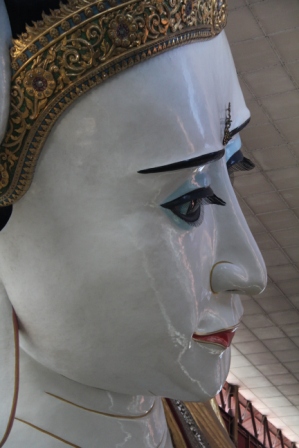
It is huge, bizarre, unreal.  We were flabbergasted.  “Incredible,” we uttered.  “You say ‘incredible’, but this is only the fifth largest Buddha in Myanmar,” our guide Min explained. This big Buddha in the city of Yangon was the first of blog3.25numerous touristic sites on our 13-day  tour of this fascinating country.  During that tour, we saw much more that can only be described as “incredible.”

The Reclining Buddha, 235 feet long,  was originally built in 1907,  but destroyed by the British and Japanese during World War II. It took five years (1952-1957) to make a new Buddha.  “It took two years just to make the glass eye,” Min said.    I was perplexed by Buddha’s face – eye make up, lipstick?  Isn’t Buddha a man?  “We want Buddha to look pretty like a woman,” Min explained.blog3.26

Buddha’s enormous feet were another mystery, each with 108 squares. Each square represents Buddha’s past life before he became Buddha.

Schwedagon Pagoda

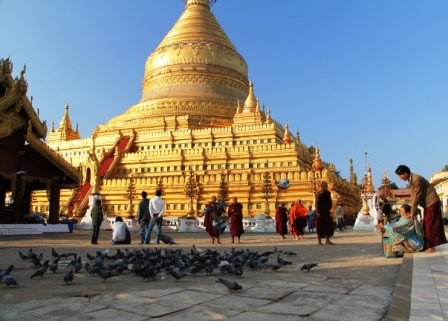
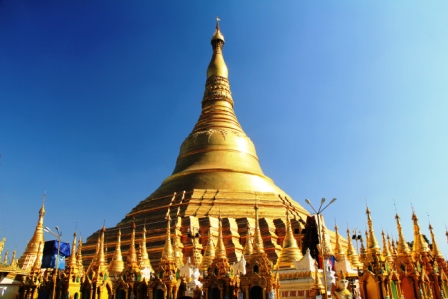
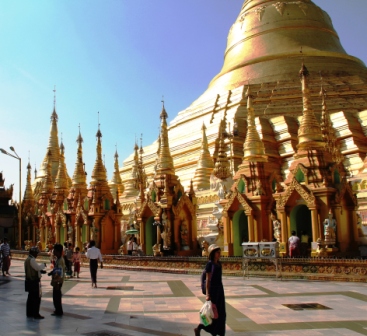
Another mind-boggling spectacle, this gilded temple complex in Yangon is the county’s most–visited sight, as well as a pilgrimage site.   Sixty-four lesser pagodas and numerous shrines are clustered around the golden dome (three tons of gold) which rises 322 feet above its base.    According to a legend, it is 2,500 years old. Archeologists, however, think it dates to sometime between the 6th and 10th centuries, but was rebuilt numerous times in succeeding years.  At the top of the dome is a diamond orb, a golden sphere studded with 4,351 diamonds.  And, at the very top, a 76-carat diamond.blog3.3

Min told us that eight hairs of Buddha are enshrined in the dome.  During our trip, we visited many other temples which are also said to preserve sacred Buddha hairs.blog3.1

I found people watching at the pagoda as interesting as the mammoth religious monument. Some kneeling in prayer at different shrines.  Others pouring  water on many of the countless Buddha statues. Yet others offering flowers to Buddhas.  And, many just sauntering around the complex, taking photos, laughing, even sitting in groups on the floor while enjoying snacks.   Definitely not a holy place of silent meditation.

Golden Rock

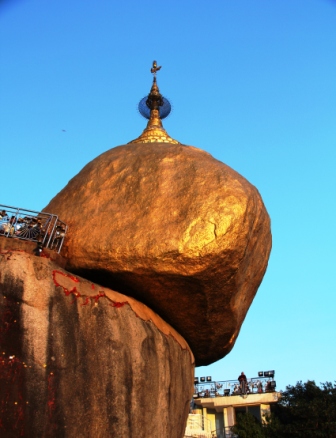
This giant boulder at the edge of a cliff (Mt. Kyaiktiyo), part of its base extended over the chasm below, seems as if it could come crashing down the mountain at any minute. And, like most religious monuments in Myanmar, it is golden.  We visited in time to watch the sun sink on the horizon and bathe the rock and surroundings in a pale pink glow.  Just like saints, Buddha gets credit blog3.24for many miracles.  This one could make you a believer.  According to Min, there have been many earthquakes in the area, but the rock has never moved.

Golden Rock is an important pilgrimage site for Myanmar Buddhists who burn incense, light candles, make offerings, and pray at the site. Men are permitted to approach the rock and affix gold leaf squares to its surface. Not unlike the scene at Schwedagon, the atmosphere on the surrounding terrace is more party than prayer.  Many of the pilgrims have traveled a  long way and come with mats to roll out for eating picnic style and sleeping at the site.

Getting to the rock on the mystical  mountain is an uncomfortable, yet griping blog3.4adventure.  Some pilgrims may hike the seven miles from the base camp to the top, but most, as well as tourists, climb in the back of huge open trucks which have hard wooden slats for benches.  Every inch of space must be filled before the trucks depart for the bumpy, bouncy ascent over a rutted dirt road at what seems are Formula I  speeds around hairpin turns through the jungle terrain.  Better than any roller coaster.

As mentioned in a previous post,  Myanmar is marching ahead on the path of progress. Work on paving the road to the top of the Rock was underway during our visit. It was dark when we left the site and walked down a path to a hotel where we spent the night.  The route is lined with souvenir stands, behind which the sellers and their families live in primitive shelters.  All had electricity and television —  new developments, Min said.

Baganblog3.5

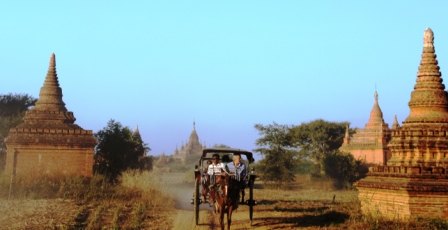
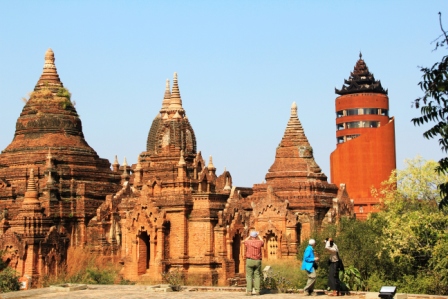
It has been called the Angor Wat of Myanmar,  a wonder of some 3,000 temples scattered across the plains of Bagan.  In every direction domes of the ancient temples dot the skyline.  Most were built between the 11th and 13 centuries and have been reconstructed.  Therein lies a major problem.  UNESCO stepped in to assist with reconstruction after major damage during an earthquake in 1975.  blog3.15According to Sai, our guide in Bagan, Myanmar’s military government kicked UNESCO out in 1989 and took over temple reconstruction, using cheap material and not adhering to archeological guidelines.  UNESCO called the fruit of their efforts a “Disney-style fantasy version of one of the world’s great religious and historical sites.”  For this reason Bagan is not on the UNESCO list of World Heritage sites.blog3.8

But, it should be seen.  The temples are in various states of decay and reconstruction.  Many can be entered, Buddha statues admired, chambers explored.  Some even have traces of ancient wall paintings.  Sai took us to Schwezigon Pagoda, considered the most important of Bagan’s temples, in the early morning when the sun’s rays were still soft, workers were busy sweeping the grounds and monks arrived to worship.  Few tourists to tarnish the mystical ambience.blog3.9

Tourists, however,  are important to the economy, especially in Bagan which thrives on visitors. Ox cart drivers offer rides through the plains past dozens of temples.  Boat drivers take passengers on excursions on the Irrawaddy River.   Souvenir hawkers abound.blog3.22

Sai led us to a temple popular for Bagan sunset viewing, a tourist must.  We climbed and climbed steps in dark, narrow, crumbling  passageways to reach the crowded rooftop where all had cameras ready.  A bridal couple even managed the ascent to have a professional photographer capture them with the temples and sunset in the background.blog3.10

I asked Sai to take me to a temple I had read about in Lonely Planet, Dhammayangyi Pahto.  He was reluctant, but agreed.  The temple has mysterious, bricked up passages.  Hundreds of bats cling to its ceiling.  That, plus its brutal  history, make a visit an eerie experience.  King Narathu had the temple built in the 12th century to atone for smothering his brother and father to death and executing one of his wives.  He ordered the brickwork to fit so tightly that not even a pin could pass between two bricks.  Those who failed at the task had their arms chopped off. Thus, it is believed the temple has bad karma and is probably why it never underwent major restoration.  And, perhaps why some guides prefer not to visit?

Pindaya Cavesblog3.18

Thousands of golden Buddhas  hidden in the inner depths of a massive limestone cavern. Definitely incredible!   It was another long and arduous climb up steps  to the entrance of the Shwe Oo Min Natural Cave Pagoda which shelters  approximately 8,700 Buddhas, many left centuries ago by pilgrims. New statues continue to be added by worshippers.  We followed a narrow path into the 460 foot long cave where Buddhas sit in crevices and crannies in the rock walls.  Tiny Buddhas. Buddhas draped in cloth. Buddhas made of alabaster, teak, brick, cement. Buddhas off in dark corners.  Buddhas under spotlights.  We walked  on and on and on through the maze of Buddha-lined passageways. Our guide for this part of the trip, Hein,  showed us a hole where a monk was supposed to have entered but never returned.blog3.19

I don’t suffer from claustrophobia, but it got to be too much.  I needed an escape to fresh air.  And, a chance to photograph the giant spider near the cave entrance.  According to a legend, seven princesses took refuge in the cave during a storm. An evil spirit, a “nat” in the form of a spider, imprisoned them. Along came a prince who heard their cries, killed the spider with an arrow, and freed the lovely princesses. “Myanmar is a golden land of legends,”  our guide said.  We heard many throughout the trip.

Inle Lakesights.2a

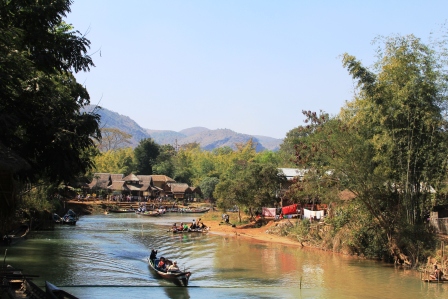
This is another tourist favorite in Myanmar.  We stayed at a hotel whose many buildings were all on stilts in the lake which is 13.5 miles long, seven miles wide and three meters deep.  Our tourist boat, a type of motorized canoe, took us to lakeside towns where we visited a market, monastery, and — more temples of sights.1acourse.   We saw floating gardens and stilt house villages. Hein told us that one third of the lake is comprised of these gardens, and that 80 percent of the tomatoes sold in Myanmar come from the floating gardens where rice, other vegetables and flowers thrive.  Incredible gardening!

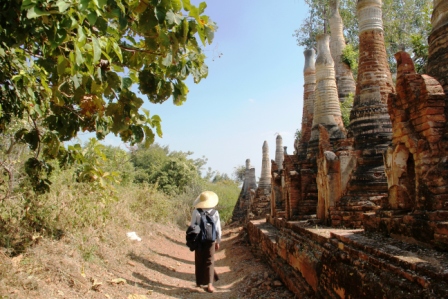
blog3.20We visited the Inn Thein Pagoda complex where some 1,054 small stupas are overgrown with moss and greens.  Most date from the 16th to 18th centuries and have decayed with age and encroaching vegetation.  Theft has been another problem. Gold and other precious valuables are often sealed inside Buddha statues.  Thieves destroy the Buddhas to recover the goods

More Myanmar to come. Don’t miss the next post, 10 blissful days at Ngapali Beach.  Add your email address at top right to receive future posts. And, please add a comment.  I love to learn what readers think about my posts.blog3.21
Military gov't built ugly tower in Bagan, closed temples with rooftop views and charged admission to the tower.Temples have been reopened Military gov’t built ugly tower in Bagan, closed temples with rooftop views and charged admission to the tower. Temples have been reopened


Burma Background

Is it Burma or Myanmar?  You will hear both.  Since 2011 the official name has been the Republic of the Union of Myanmar. The military junta changed the name from Burma, the name used since the mid 19th century, to Myanmar in 1989.  Rangoon became Yangon, and several other place names were also changed  — all in an effort to rid the country of British era colonial names.

U Bein teak bridge, 200 yrs. old, Mandalay.

During our travels, we inquired.  Which name did citizens prefer?  The answer we always got was “Myanmar.”

Schwedagon Pagoda, Yangon.

Following is a brief history lesson – important to understanding Myanmar today.

Burma was a British protectorate from 1885 until 1948 when it gained independence.  Civil war among minority groups followed until 1962 when General Ne Win took control and set up the world’s longest running military dictatorship. Industries were nationalized. Tourist visas were limited to one week.  Foreign books and magazines were not permitted in the country.  Burma was isolated.  The economy was in shambles.2blog.14

In 1988 peaceful protesters took to the streets.  Their leader was Aung San Suu Kyi, head of the National League for Democracy (NLD).   Military violence quashed the protests,  and in 1989 Suu Kyi was placed under house arrest. (She was released in 1995, but put under house arrest twice again.)  An election was held in 1990 with the NLD as the winner.  However, the military would not relinquish power and many politicians were jailed.2blog.8

The US and Canada imposed an investment ban on Myanmar in 1997, and in 2000, the EU intensified economic sanctions citing human rights abuses.

Protests broke out again in 2007, with monks taking a leading role. Thousands were arrested, 31 killed including a monk who was beaten to death.  In 2008, 2blog.7the country was ravaged by Cyclone Nargis which left 138,000 dead.  Shortly thereafter, in wake of criticism following botched up relief efforts, a long promised referendum on constitutional reform was held with the goal of creating  a “discipline-flourishing democracy.”

Inn Thein pagoda complex where hundreds of stupas are overgrown with vegetation and crumbling.

Elections took place in 2010, boycotted by the NLD, with the military-backed party the winner.  In 2011 a former general, Thein Sein, takes the helm as president and embarks on a series of reforms to direct the country toward democracy.  Suu Kyi was released from house arrest. A human rights commission was established.  Press censorship was relaxed. Political prisoners were released.  And, the door was open to tourists, as well as western companies for investment opportunities.

Those, and other changes that we witnessed, are encouraging. The real proof of democratic progress will come with elections in 2015.  According to the current constitution Suu Kyi, the national heroine,  is prohibited from running in the presidential contest because her late husband was British.  However, the constitution is supposed to be amended to permit her to run.

Dress restrictions for entering religious sites.

Since her party won in bi-elections in 2012, Suu Kyi is a member of parliament.  She is adored, revered by the people of Myanmar.  Those we spoke to said she could easily win the presidential contest.  Their hopes and aspirations lie with her.   Will the constitution be amended?  If so, will there be a fair election?

Aung San Suu Kyi
Aung San Suu Kyi

According to political commentary, Myanmar has gone too far to turn back the clock. Even without a constitutional amendment and Suu Kyi at the helm, economic progress marches on at a rapid pace. There are no Starbucks and Golden Arches yet in Yangon, but they are sure to come.  In this frenzied metropolis, there are clean, modern restaurants serving western food, a few fancy five-star hotels and more to come, multi-lane highways.   We found Wi-Fi everywhere we went in Myanmar– usually in the hotel rooms.  Construction sites abound.  Roads, even in remote areas, are undergoing improvement.  More and more tourist sites are installing modern, much appreciated, toilet facilities.

Women often work at construction sites.

Of course, all is far from golden like the country’s thousands of Buddhas.  Ethnic violence between Muslims and Buddhists plagues the western part of the country. According to a United Nations investigation, at least 40 Rohingya Muslims, the persecuted minority group, were massacred in January.  The government continues to deny the killings.   Guides talked of corruption, a lack of education and opportunities for the poor.2blog.5

“Before 2010, a Toyota (the car of choice in Myanmar) cost $22,000.  Now it costs $10,000.  But for the majority, $10,000 is still too much,” said one guide. (Guides did not want their names mentioned in conjunction with quotes. There is still a lingering fear of Big Brother.)2blog.1
The influx of tourists is helping with more jobs — working in hotels, on construction of tourist facilities, as guides, drivers.  That can only get better.

“Before 2011, there were between 700,000 and 800,000 visitors per year to Myanmar,” another guide said.  “In 2011 there were 1.05 million tourists, and in 2012, 1.5 million.  We expect 3.5 million this year.”

 We are glad we got in before the rush.  Our trip was booked with Asian Trails (www.asiantrails.info) During our 13-day sightseeing tour we had four different

Guide and Bob at Golden Rock.
Guide Min and Bob at Golden Rock.

guides and drivers, different ones for different regions. We flew from Yangon to Bagan, from Mandaly to Inle Lake, then to Ngapali Beach and back to Yangon. After the tour, we spent 10 blissful days at Ngapali, Myanmar’s unspoiled beach resort.  Cost per person: $3,335, which included all transportation, ground and air,  within Myanmar, all hotels, two meals per day (except at the beach where only breakfast was included), guide services and admission charges. 

The guides all spoke English and were extremely knowledgeable. They pointed out the best places for photos and made sure we got sunset shots. Both guides and drivers were polite, courteous and obliging – often taking us to places that were not on the pre set itinerary.

Bagan, amazing site of thousands of temples

The cars were comfortable and air-conditioned, with bottles of water and handi-wipes provided.  The latter were indeed handy to clean dirty feet after barefoot treks through temples. We were delighted with our visit and Asian Trails.

Guide Hain
Guide Hein

Next Myanmar installment:   Myanmar’s Super Sights.  Don’t miss it.  If you are not already a Tales and Travel follower, sign up by entering your email address at top right. WordPress will email you the link to new posts. Comments welcome.  See below, “Leave a Reply.”

Tales and Travel has a new look thanks to the creative talents of friend David Regan.  We like it — hope you do, too. 2blog.10


Off to Myanmar

We took off our shoes at least 565 times.  We climbed 6,899 steps.  We admired 22,576 Buddhas.

I made up the numbers, but they may not be far off.  A trip to Myanmar, a fascinating land in the throes of long overdue changes, is much about about temples (you cannot enter wearing shoes), all adorned with countless statues of Buddha.    And, many of those temples are accessed only by long climbs up steep steps.blog.lede

“This is Burma.  It is quite unlike any place you know about,” wrote poet and novelist Rudyard Kipling after a visit to the county more than a century ago. Today the country is known as Myanmar, but his words still echo true.blog.3

During our travels we were overwhelmed with mind boggling sights: a cave with 8,700 Buddha statues, a giant golden rock miraculously clinging to the edge of a chasm . . .

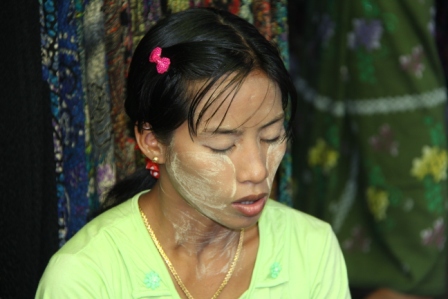
blog.2. . . parades of monks draped in burgundy colored robes lined up to receive food offerings, women whose faces appeared to be smeared with mud….  We visited big, chaotic cities (Yangon and Mandalay).Women smear their faces with a paste made from logs. It acts as a sun block and moisturizer.

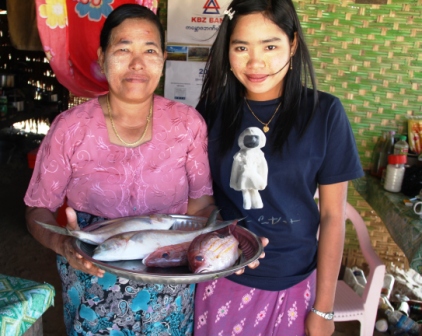
Women smear their faces with a paste made from logs. It acts as a sun block and moisturizer.

During drives through the countryside we witnessed the simple, primitive way of life of farmers, and often suffered bouncing over rutted roads.   We chilled out at a perfect beach resort, not yet spoiled by hordes of tourists.  I loved the colorful markets, the tasty food, and learning about the people and their staunch devotion to Buddha.  More about all will follow in several blogs.

blog.4

First, a word about the shaky start of this incredible voyage.  Facebook Friends have seen posts on what follows, but many Tales and Travel readers are not on FB.

Crisis Number One: Before landing in Frankfurt where we boarded the plane for the long flight to Singapore, I asked BB (husband Bicycle Bob and long suffering travel companion) if he had the credit card.  We had agreed that only one of us needed to take a card.  “No, you have it,” he said. “No, you are supposed to have it,” I answered.  Major misunderstanding. Bottom line:  No credit card and not an auspicious beginning to a five-week long trip.  Panic.  Stress.  Anger. We only had a brief layover in Frankfurt, but we had plenty of time between planes in Singapore before flying on to Yangon.  We made numerous calls back to our friends and house sitters, Dee and Allan, in France.  They researched methods of getting a credit card to us.  French Chronopost came to the rescue.  Other services, such as DHL, would not deliver to Myanmar.   That was on Friday.  Monday afternoon in Yangon we had the card. A miracle!  Cost for this amazing service, just 58 euros.blog.7

We were fine at the onset of the trip without the card.  Cash, new US dollars (issued after 2006) and not folded, is currently the recommended currency for travelers in Myanmar.  Some places do take credit cards, but charge a hefty fee.  We had an ample supply of dollars ordered from our bank, so even without the plastic, we could enjoy meals without washing dishes.  But, we would need the card before the end of the trip. We were saved by Dee and Allan and Chronopost.

Crisis Number Two:  My tooth.  The day the credit card arrived, I woke up with a toothache.  Surely it will go away, I thought.  No such luck. It only got worse, and worse, and my cheek began to look as if I had a tennis ball in my mouth.  Our guide took me to a dentist recommended by our first rate tour blog.5company, Asian Trails.   He spoke some English, and his office appeared clean.  He wore gloves, a mask, and had many pretty and very young assistants. He said it was a wisdom tooth, gave me pain pills and antibiotics, and cautioned me to avoid the “odors of hot oils” ??  If it did not get better, I could come back and he would extract the tooth.

The medication helped for one day only. However, I had fears of letting this dentist pull my tooth, especially when the guide told me the dentist had told him it would be better to wait and have the tooth extracted when I got back to France as complications could arise.  He obviously did not want the job.  Our return to France  was five weeks down the road.  I could not live with this pain for five weeks.

As mentioned, I had posted our troubles on Facebook.  One friend wrote that the trip was “doomed.”  World travelers Dee and Allan advised not to have a tooth extracted in Myanmar where hygiene and sanitary conditions are dicey.  A young woman I met, a 21-year-old pediatric dental assistant in Connecticut traveling with a group of Jehovah Witnesses for a conference,  said I definitely needed to get rid of the tooth.  It is probably infected, she said, and the infection would only spread… and could even lead to death.  Sacre Bleu!  If a Jehovah Witness advises a medical procedure, you know action is required.

Now what?  Perhaps the trip was doomed. I was a wreck and could not enjoy the sights.   Fortunately in the middle of the night I had a bright idea:  Call the

BB waits in dentist office number 2. Shoes must come off, but instead they covered his. Fear of stinky feet? BB waits in dentist office number 2. Shoes must come off, but instead they covered his. Fear of stinky feet?

American Embassy.  They recommended Dr. Aung Myint who saved the trip, and, who knows,  maybe my life. I was relieved just entering his classy office with certificates from Denmark and  Paris posted on the walls of the waiting room where  copies of Fortune, Newsweek and Reader’s Digest were offered as reading material.  His equipment was  state of the art  –far more up to date than many dentist offices I have seen in southern France.

We had been to our dentist before departing as a security check.  No problems.   Why did this tooth suddenly go bad?  Could be stress, the super dentist replied.  Aha — blame it all on the forgotten credit card.    He pulled the tooth and all was well.  X-ray, tooth extraction and stitches:  $70. We found many more bargains during our travels, but that was the winner.

As mentioned,  food in Myanmar is  good and different.  We had many versions of a delicious avocado salad. See recipe column on right for the versison made at the cooking school we attended while at the beach. 

The Cordon Bleu is was not -- our The Cordon Bleu it was not — our “cooking school” kitchen.
Don’t be put off by appearances. Food was delicious.

Following,  a photo gallery of Myanmar as a preview of coming blog posts.

Comments are appreciated.  So are new subscribers.  Don’t miss coming Myanmar blogs. Click on Email Subscription, top right or the “Follow” button at the bottom of the screen.

Souvenir sellers on the beach where mother of pearl items are popular. Souvenir sellers on the beach where mother of pearl items are popular.
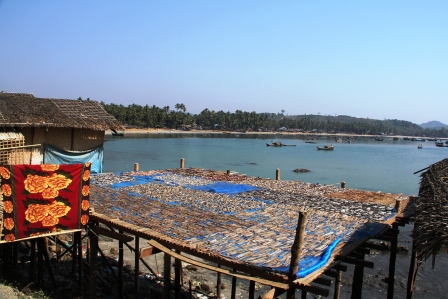
Inle Lake Inle Lake
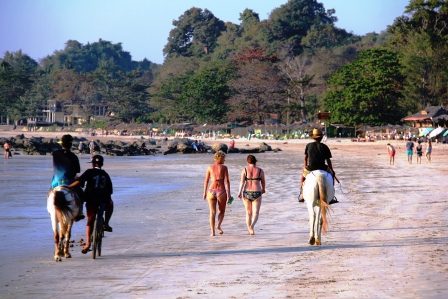
Ngapali Beach Ngapali Beach

gallery.21

At work in the fields. At work in the fields.
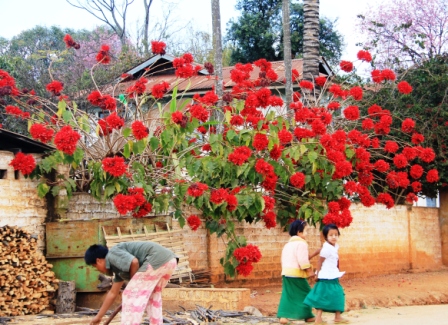
Poinsettia blooming along the road. Poinsettia blooming along the road.

gallery.18

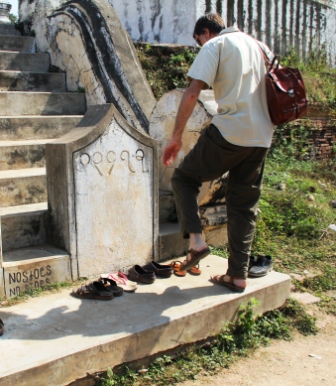
Shoes -- and socks-- must come off before entering temples. Shoes — and socks– must come off before entering temples.
Buddha statues are often golden. Buddha statues are often golden.
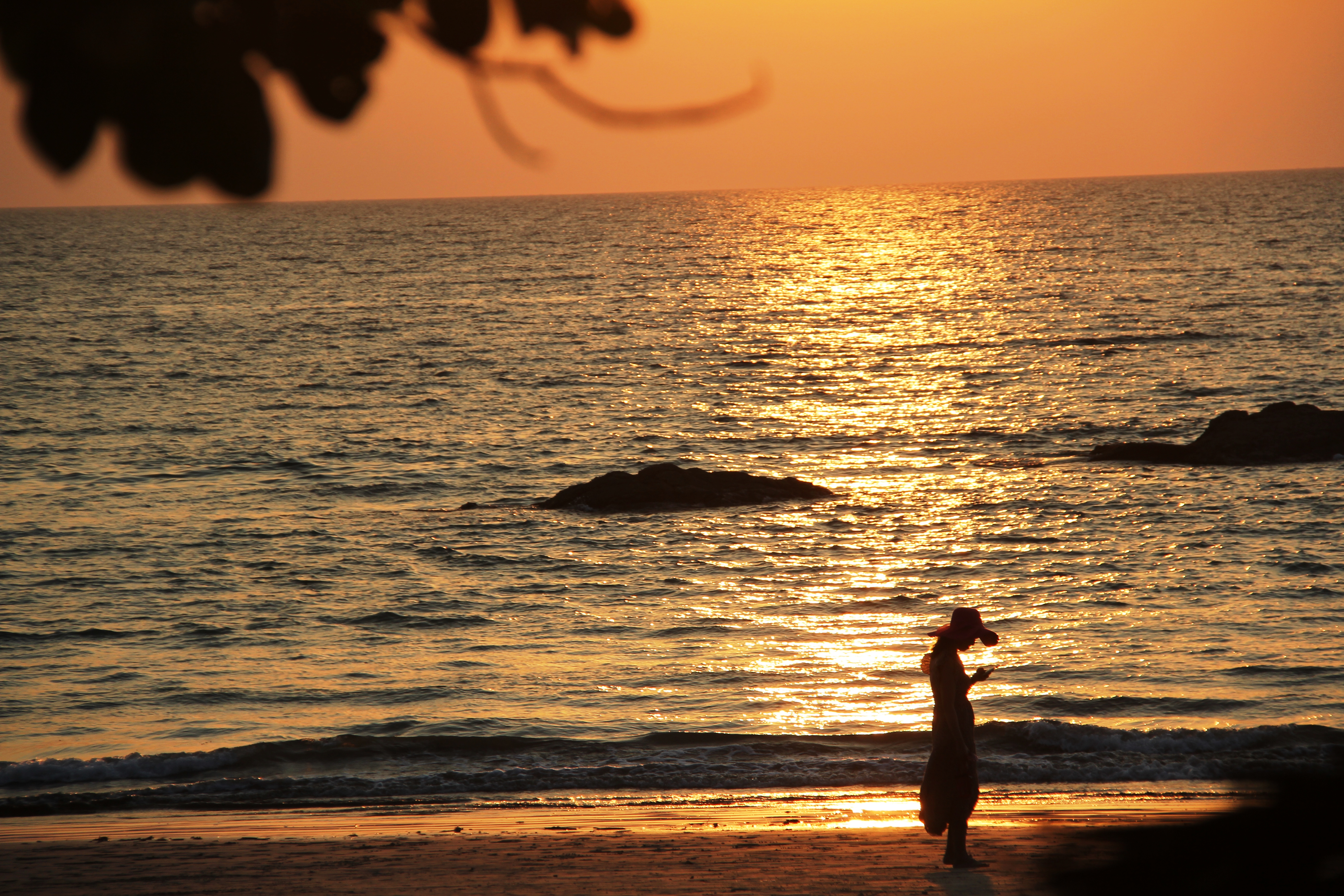
Sunset on Irrawaddy River. Sunset on Irrawaddy River.
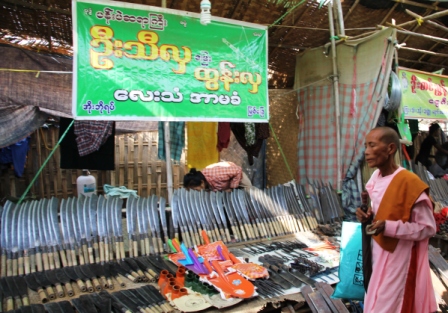
Nuns, seen here at market knife stand, wear pink. Nuns, seen here at market knife stand, wear pink.
Temple in Bagan, the Angkor Wat of Myanmar. Temple in Bagan, the Angkor Wat of Myanmar.
Temple decor Temple decor
Too many homeless dogs in Myanmar. Most all look like this fellow. Too many homeless dogs in Myanmar. Most all look like this fellow.
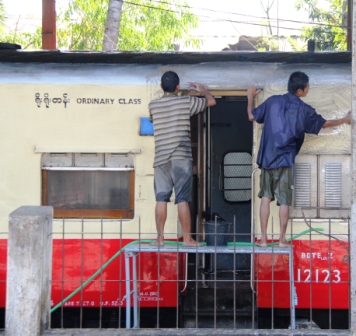
Cleaning a train car at Yangon station. Cleaning the “ordinary class”  train car at Yangon station.
Monks and Buddha. Monks and Buddha.
Temple workers take a siesta break under the watchful eyes of Buddhas. Temple workers take a siesta break under the watchful eyes of Buddhas.
Reclining Buddha. 235feet long. Reclining Buddha. 235 feet long.


Wild and Wonderful Corsica

Bonifacio ,
Bonifacio
,

According to the sign posted at the beginning of the hiking trail in the Corsican mountains, it was a one-hour trek to Lac de Melu.  Piece of cake, I figured, and a good test for my new knee.corsica.55,

Two hours later we were still huffing and puffing, scrambling over rocks —   even a few times on all fours for me.  No lake in sight. We had conquered the challenging, extra steep sections of chains and ladders.  But, the trail of all rocks went on and on, up and up.  At times it was frustrating to figure out which way to proceed over this stony sea.  The trail was marked by yellow slashes on the rocks, but often they were hard to spot.

Find the yellow slash -- the trail marker.
Find the yellow slash — the trail marker.

I was about to give up when we encountered a group on their way down.  “How much farther?” I asked.  “It’s not that far.  Will you make it?  If you want I can accompany you,” answered the mountain guide who was leading the others.   I must have looked near death, which is about the way I felt, but there was no way I would ask for assistance.  Now I was more determined than ever to conquer this trail.

After two hours and 10 minutes we reached the lovely lake.  How could anyone make it here in one hour?   We are old, but not decrepit. That sign was meant for Himalayan sherpas.corsica.36b

Getting down was no easy task.  The rocks, all sizes, were demanding.  You had to keep your eyes on the trial below at all times to figure out where to put your foot next, on top of which boulder, into which crevice.  I was petrified of falling, of breaking a leg, screwing up my knee.  How would I be rescued?  No helicopters could land anywhere near this surface of rugged rocks. I did fall once, but fortunately I had given my camera to BB (husband Bicycle Bob) who was more steady a foot.  I ended up with a badly bruised leg, but nothing broken, including my precious camera.

Refilling the water bottles.

In our younger days, BB and I did some long and tough mountain hikes in the Swiss Alps – several days on the trail with backpacks.  We loved it.  This was different.  “Most hikes are strenuous, but enjoyable,” he remarked. “This was work, labor intensive.”

What a relief to get the work over with, to reach the hut at the bottom – and to enjoy that satisfying sense of accomplishment after conquering a mountain.  O.K.  This was just a lake, not a mountain, and we were slow.  But, we did it.  My knee passed the test.corsica.14b

Rocks abound in Corsica—not just on mountain trails.  Along the coast.  On the beaches.  In the sea.  Rocks in the shape of animals, human faces, surrealistic

Natural rock.
Natural rock.

sculptures.

Not long after we disembarked from our all-night ferry ride to this island in the Med (Toulon to Ajaccio); we stopped to visit the archeological site, Filitosa, on our way south.  Incredible rocks there. We followed the path through the site where artifacts dating to as early as 3,300 have been found.  Ancient civilizations lived in caves here.  During the megalithic period they erected menhir statues, granite monoliths, carved to represent human faces or entire figures.  They are intriguing, as are the natural rock formations in the area.

Menhir
Menhir

Onward to the coast and the tiny town of Tizzano for five nights at the Hotel du Golfe, which advertises that it has its feet in the sea. The Mediterranean waters were right below the balcony of our room.  Awake to the soothing sounds of the sea gently slapping the rocks. The hotel beach is just a miniscule patch of sand surrounded by those rocks. Getting in and out of the sea was a bit tricky maneuvering over the hurdles, but the water was perfect. I swam and swam and swam with no one in sight.

Mini beach on a windy day --too dangerous to swim
Mini beach on a windy day –too dangerous to swim

During our October visit to this island utopia we enjoyed still warm weather and mostly blue skies – and tranquility.  The tourist season was over.  On the plus side, no crowds anywhere and the highways to ourselves.  On the down side, many shops, hotels and restaurants had already closed for the season.  All four of the restaurants in Tizzano were boarded shut.

There is just one winding road down the mountain from the inland town of Sartène leading to our mini burg and the sea. Winter Tizzano population:

Chopinette, my favorite Corsican,

30 humans and lots of felines.   In the summer:  3,000 tourists.  In October:  us, the locals, a few other tourists and the friendly cats.  I was in heaven.

Since BB is not a swimmer and we wanted to see more than Tizzano, we set out on excursions every day, to Ponte Vecchio on the eastern coast, to Bonifacio in the far southwestern corner of the island, and on foot one day for a hike along corsica.15bthe shore.  No leisurely stroll along a sandy beach was this, but a demanding trek through coastal bush –and yet more boulders.  The scenery was splendid with more fantastic rock formations to photograph.

Ponte Vecchio is basically a resort town with lots of sailboats in the harbor, narrow streets with cute boutiques (most closed) and restaurants (also most closed).  Not too exciting.  Bonifacio is different, a two-level, lively town.  The haute ville, an amazing sight, perches precariously atop a cliff on a thin peninsula.  Skinny streets twist past ancient buildings, including numerous churches.   We followed the advice of the woman in the tourist office and set off to the Escalier du Roi d’Aragon – 187 steps from a corner of the town’s citadel plunging to the sea.  Scary, steep steps. Descending them is an exhilarating adventure.  They plummet straight down and at times involve big jumps – one step where there should be two.corsica.20b

The winds were ferocious on the day of our Bonifacio visit. Mammoth waves roared and crashed into the rocks. We had been told the best view of the city is from the water, but due to the wind velocity, tourist boats were not running.

So, let’s splurge on lunch. Food is always a highlight of our travels.  Since so many restaurants were closed, our choices were limited.  We had few memorable meals in Corsica, including one we’d like to forget — the $98 (72 euro) fish at a harbor restaurant in Bonifacio.  We like fish and craved a fresh Mediterranean corsica.26catch.  The waiter brought out a tray of specimens and recommended a “Sar.”  We had never heard of this fish, but were game to try, not bothering to ask the price.  Bad move. The astronomical bill  –the fish had been priced at nine euros per 100 grams –was a  shock.   Our Sar was a big fellow, tasty, perhaps not that tasty, but it did come with some veggies and potatoes.

Corte's citadel
Corte’s citadel

Cap Corse, the island finger at the northern tip, was our destination for three days before boarding the ferry in Bastia for the trip back to Toulon.  En route we spent a night at the interior town of Corte so we could do the lake hike.  Hiking is just one of numerous outdoor activities offered in Corsica – all kinds of water sports plus mountain adventures:  canyoning, rock climbing, zip line etc.corsica.3

The drive through the interior is spectacular – miles and miles of rugged nature over excellent roads.   Although Corsica is a vacation paradise, it has not been scarred by mass tourism.  There are vast pristine sections in both the interior and along the coast — no towns, no hotels, no commerce.

Erbalunga
Erbalunga

Our hotel in the coastal town of Erbalunga was not on the beach, but it did have a large heated pool — my private pool – no other swimmers.

We drove along the Cap coast with many photo stops.  We drove through the middle of the peninsula over roads that averaged more than a dozen curves per kilometer.  Along the route:  stops for wine tasting and buying.  Wine is the island’s principal export.  According to my guidebook bible, Lonely Planet corsica.38bCorsica, the wines “are not necessarily the most distinguished of wines.”   Some of the grape varieties (Niellucciu for one) are unique to Corsica.  As BB seems to like wine more than bicycles these days, we bought a supply.

corsica.47Bastia, a town of crumbling splendor, is fun to explore: a busy harbor, imposing citadel, intriguing hillside park, ancient churches – and shops that were open.  Throughout the trip I had been searching for stores where I could purchase Corsican delicacies – cheese, sausage, honey, jams.  No luck. In Bastia’s thriving shopping district, I found my treasures at last.corsica.48b

I hope to return to Corsica, but in late September before so much shuts down for winter.  And, I’d go back to Tizzano and the Hotel du Golfe.  Gil Chopin, the hotel proprietor, told me he was born in the town but moved on to work in Paris and other cities.  “I missed nature, the sea.”  He came back.  “We live in harmony with nature here.  Each day is different.  Each day I am astonished.  For me, this is paradise.”  It was paradise for me, too.

Hotel du Golfe,Tizzano.  A perfect coastal retreat. The simple but comfortable rooms all have balconies above the Med.  Idyllic location. http://www.hoteldugolfetizzano.com

On the terrace at Hotel du Golfe

Hotel Castel Brando, Erbalunga, Cap Corse. Spacious accommodations including rooms with private terraces, lovely garden for breakfast  (ample, including do-it-yourself eggs and pancakes) and a super heated pool.  http://www.castelbrando.com

I’m happy to hear from readers. See “Leave a Reply” below under Comments. Followers also welcome. Don’t miss future posts. Click on Email Subscription at top right.


Super Summer 2013

The pool at Les Rosiers, our home, did not turn ghoulish green as it has in past summers.  None of the precious roses died. We had wonderful tenants in our rosiersstudio rental apartment, plus fun family visits.  The crumbling pergola was replaced (but that’s another story, see previous post, “Pergola –or State Park Picnic Shelter”).  We enjoyed a terrific visit to Antwerp, tasty meals at local festivals and parties with friends.  Summer 2013 was better than good: Super

It kicked off in June with the arrival of Klaus, an Austrian from Graz.  He and his wife Eva have been staying in our gite (French for vacation rental) for a month every year since 2010.   Klaus arrives first, by car, roof rack loaded with supplies, including Austrian beer and food staples. On the way home, a large supply of wine takes the place of those goodies.    Eva is a legal secretary.  She comes by plane a week after Klaus arrives.

Klaus
Klaus

They know the area well, have friends here, enjoy revisiting favorite places and hanging out poolside.  Klaus loves to cook.  He brought his own knife sharpener this year.  The one I supplied was not up to snuff.  And, he loves to grill – lamb and sausages are his favorites. This year his grilling almost led to disaster.  The morning after a previous day’s use of the grill, he emptied the ashes which he assumed were dead in the wooded area of dried leaves behind and adjacent to our house.  That afternoon I was in the pool.  I noticed smoke, but I assumed he was grilling again.  Suddenly BB (husband Bicycle Bob) came flying down the steps from our balcony.  He had seen flames.   Indeed, the ashes had sprung to life and a fire had started.  It was frightening.  But, all to the rescue with hose and buckets of water.  Catastrophe was averted.

Filippo kept our tenants entertained.

Eva is a walker, often up at 7 a.m., setting out on a trek in the area for two to three hours. Klaus also hikes and gathers herbs and berries (juniper) and other treasures from the forests and fields.  He left me with a supply of bay leaves which I have dried. Another of his favorite pastimes is visiting flea markets.  During summers here, there are many on the agenda.  He always finds interesting bargains.

Lang and Samuel
Lang and Samuel

Stepson Rob and his boys, Samuel and Lang, followed Klaus and Eva. The boys, both swimmers, loved the pool, as well as jaunts on foot to the bakery every morning with their dad.  They could not get their fill of croissants.  According to Rob, Samuel still asks when he can come back and get more of those croissants, which he called “amazing.”

Bob, Samuel, Lang and Rob

The Gorges du Verdon, the Abbey of Senanque and Colorado Provencal were highlights for Jean and Alex, a charming couple who stayed for a week.  He is French, lives and works in Colmar.  She is German, originally from Leipzig, and now working for an international organization in Geneva.  They both are multi-lingual, and, like many of our visitors, especially enjoyed the “calm” at Les Rosiers.

They were followed by a couple we felt were a bit strange, if not unpleasant. He always had a scowl on his face, never a smile,  and once complained that the refrigerator was not cold enough (easy to fix – just turn up the dial.)  They went off sightseeing and came back to lounge by the pool, but barely said a word to us.  I assumed they were not happy with our rosesaccommodations.  I dared not ask them to write in our guest book.  Wonders never cease.  They did write:  “Thanks to your hospitality we have discovered the pleasures of Haute Provence…we have appreciated the coolness of your gite, the refreshing swimming pool and the calm of the surroundings.”

Roberto and Francoise from Fribourg, Switzerland, are fantastic. She is a teacher for handicapped adults – and a cat lover .  She was smitten with Filippo, my rambunctious male cat. Roberto, originally from Uruguay, came with hisbicycle.

Roberto and Francoise

Unfortunately Francoise fell in our new pergola/State Park Picnic Shelter (SPPS) and broke her foot. They took it in stride, did not complain, and continued their stay.

As her mobility was limited after the accident, Francoise was content to sit in the yard, often with Filippo at her side, and read while Roberto rode his bike.   Like Klaus, she was into wild herbs:  garlic, fennel, rosemary, thyme.  And oils – lavender, almond and olive. She gave me instructions on treatments using lavender oil.

Elaine and Paul
Elaine and Paul

Time for the British, Elaine and Paul from southeast London, who kept on the move and visited sites near and far (Arles, Pont du Grad, Gorges du Verdon, Bonnieux, Gordes).  Elaine is an assistant for children with special needs at a secondary school. Paul is a quantity surveyor for a construction company. They also enjoyed Filippo’s shenanigans.  Paul said Les Rosiers is “the quietest place we’ve ever been to.”

Elizabeth and Igor from Normandy stayed two weeks.  They overwhelmed us with dinner invitations. Igor also likes to grill. While I was away, he invited Bob for grilled sausages. When I returned we were invited for grilled beef.  And, yet again for an apero.  We expected the usual chips- nuts- and- olives apero.  But this was an “apero dinotoire,” something new to us,   a multi-course meal:  crackers and tomatoes, then grilled lamb with a rice/tuna salad, a potato salad, and fruit.

Igor and Elizabeth
Igor and Elizabeth

Igor arrived with easel and paints.  He set up in the yard and created lovely scenes. We received one as a going-away present.  He is a financial consultant in Paris, and commutes home to Rouen on weekends.  Elizabeth, who was recovering from breast cancer surgery, said she came to the Luberon to “relax.”  They did visit some neighboring towns.  “We like typical, tranquil, original villages,” she said, mentioning nearby Viens and Vacheres.  They also raved about an attraction we have yet to visit, the Ganogobie Abbey.gite.3

Summer wound down with the visit of stepdaughter Kellie.  She gave BB a chance to live up to his name.  They bicycled a few times before her boyfriend arrived for a week.  We all set off to Marseille together and were in awe of the new architectural masterpieces.mrs.5

It’s still warm in Provence, but the pool waters have chilled. We’ll put the pool to bed for winter soon.  But, I can look forward to starting swimming early next spring.  We’ve purchased a heat pump for the pool.   Summer 2014 may top summer 2013.

For more about Les Rosiers, see www.les-rosiers.com

I’m  happy to hear from readers.  See “Leave a Reply” below under Comments. Followers also welcome.  Don’t miss future posts.  Click on Email Subscription at top right.