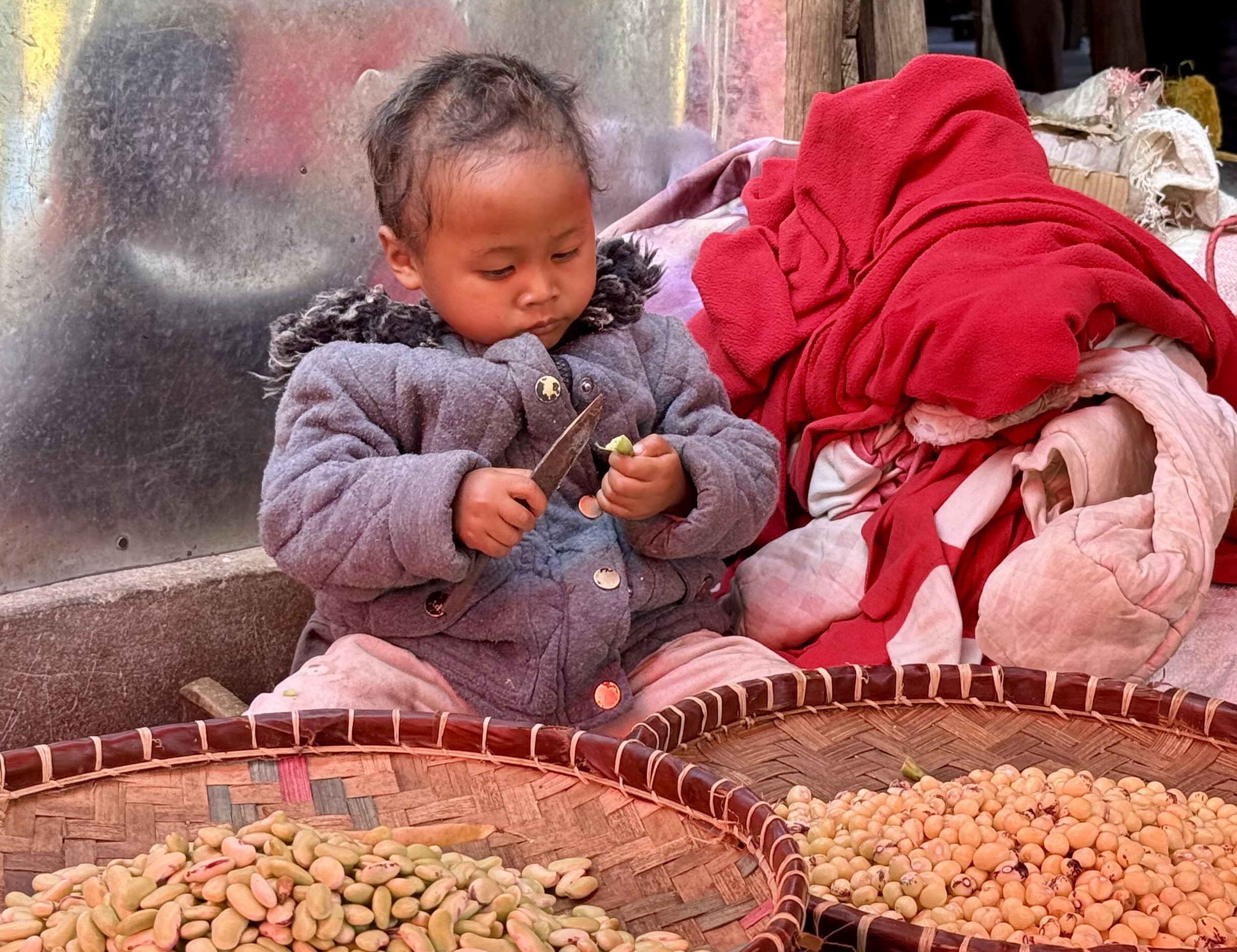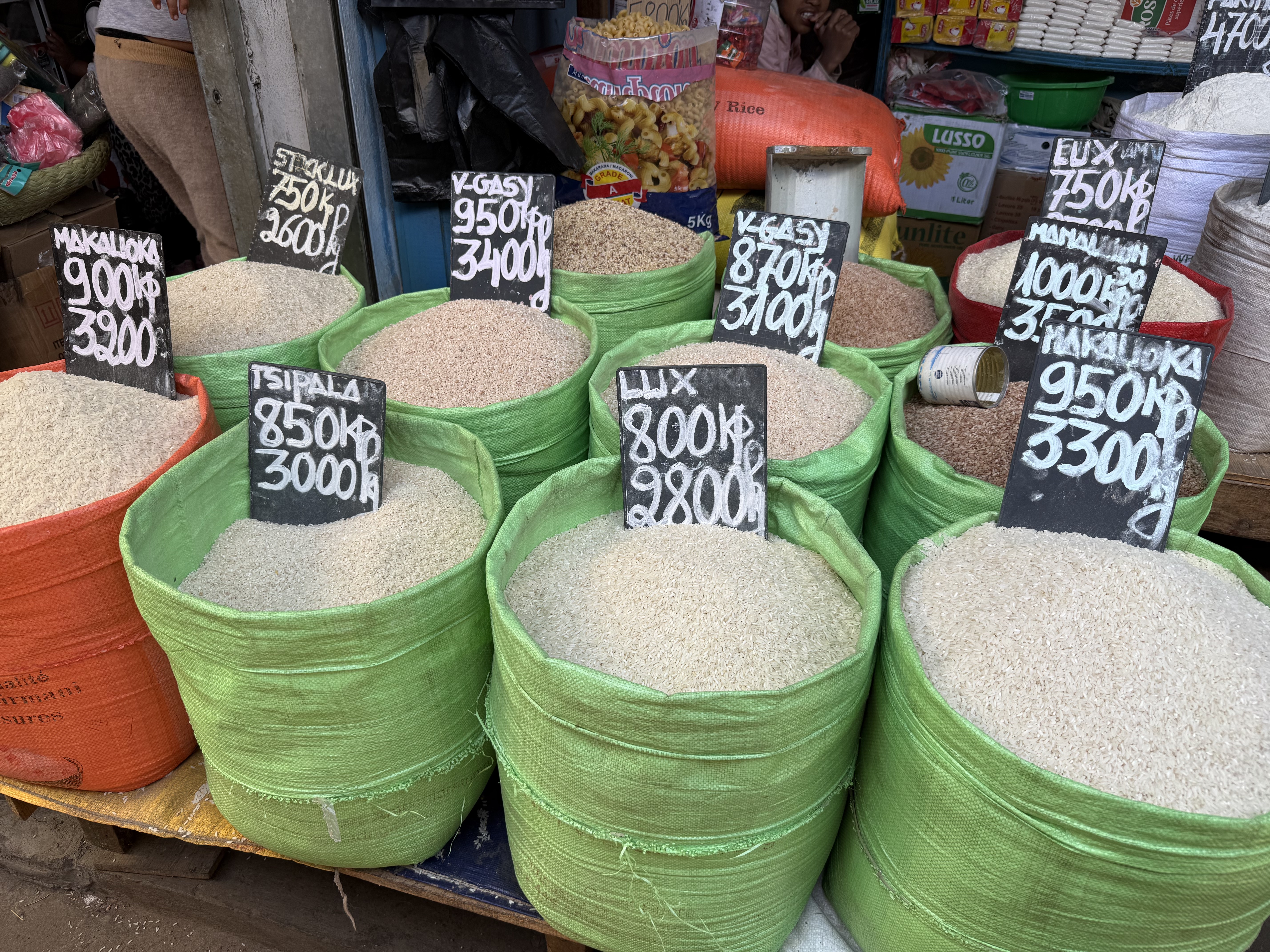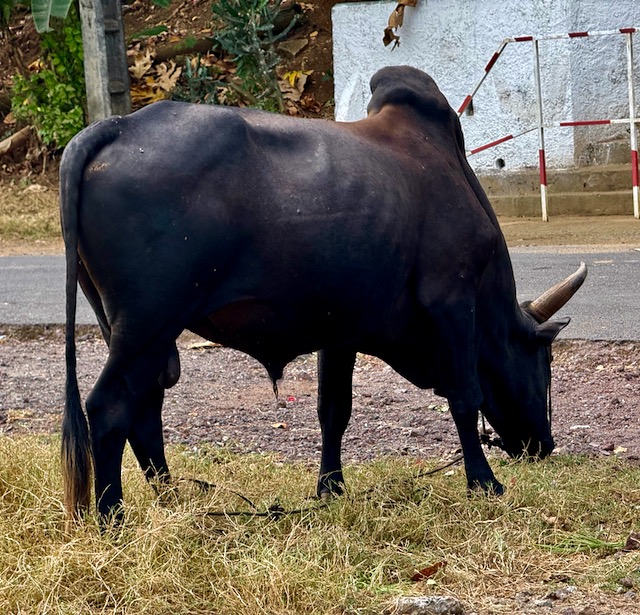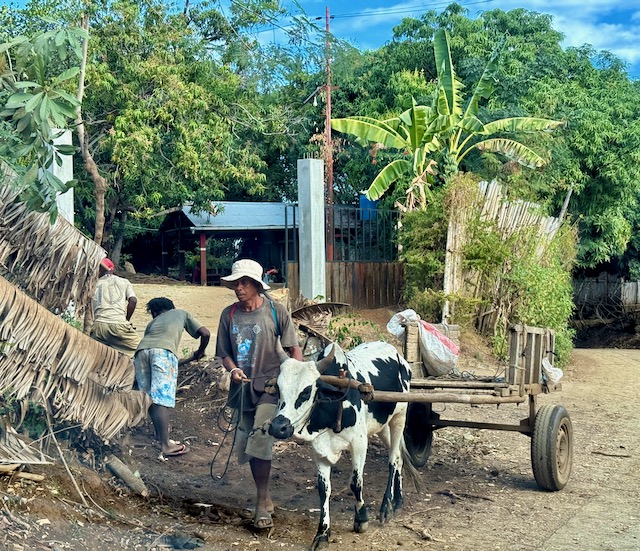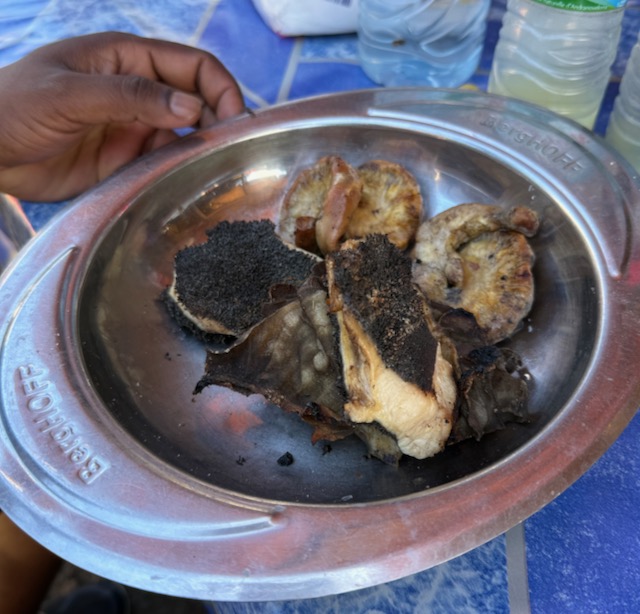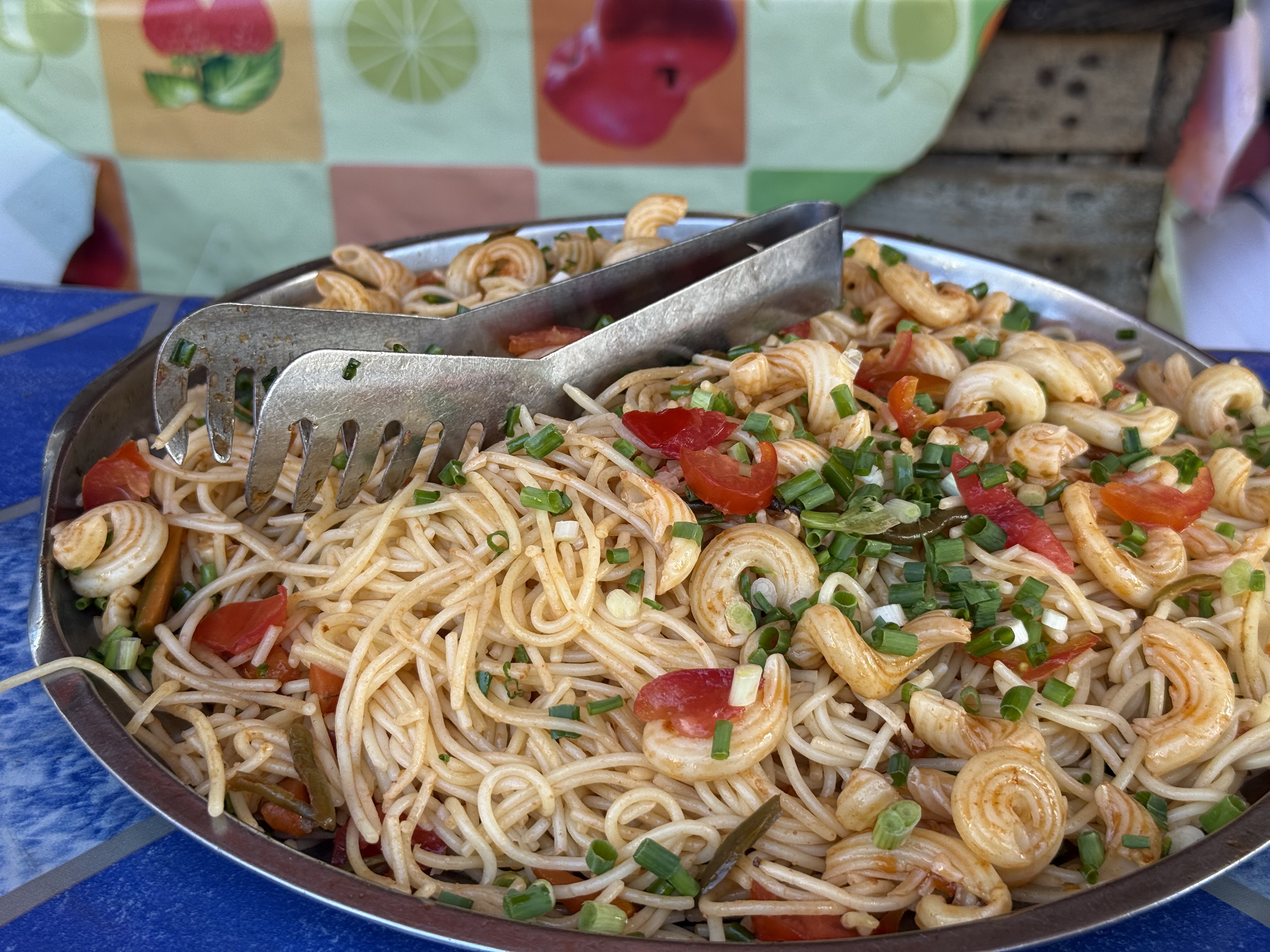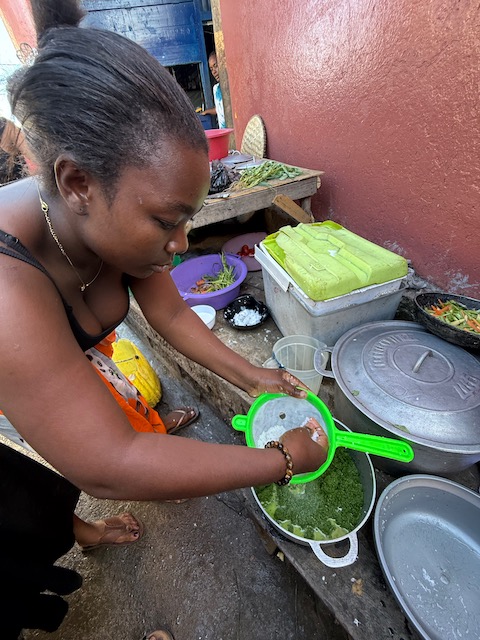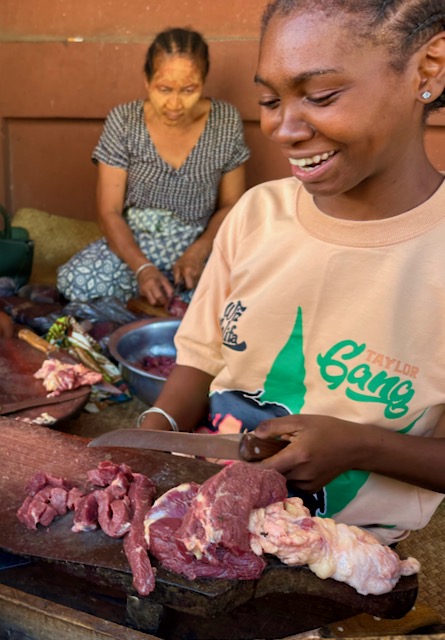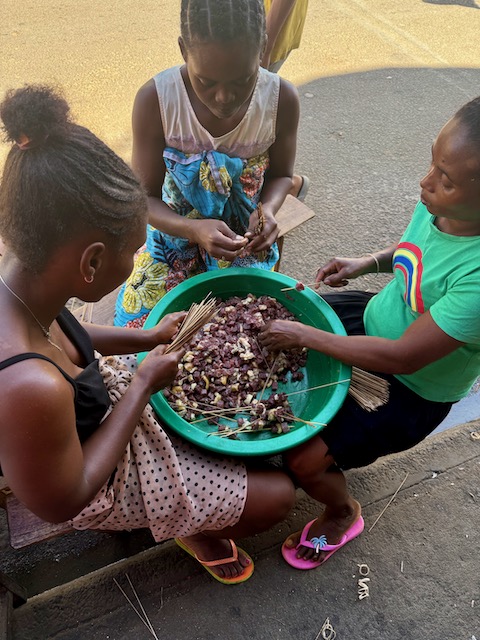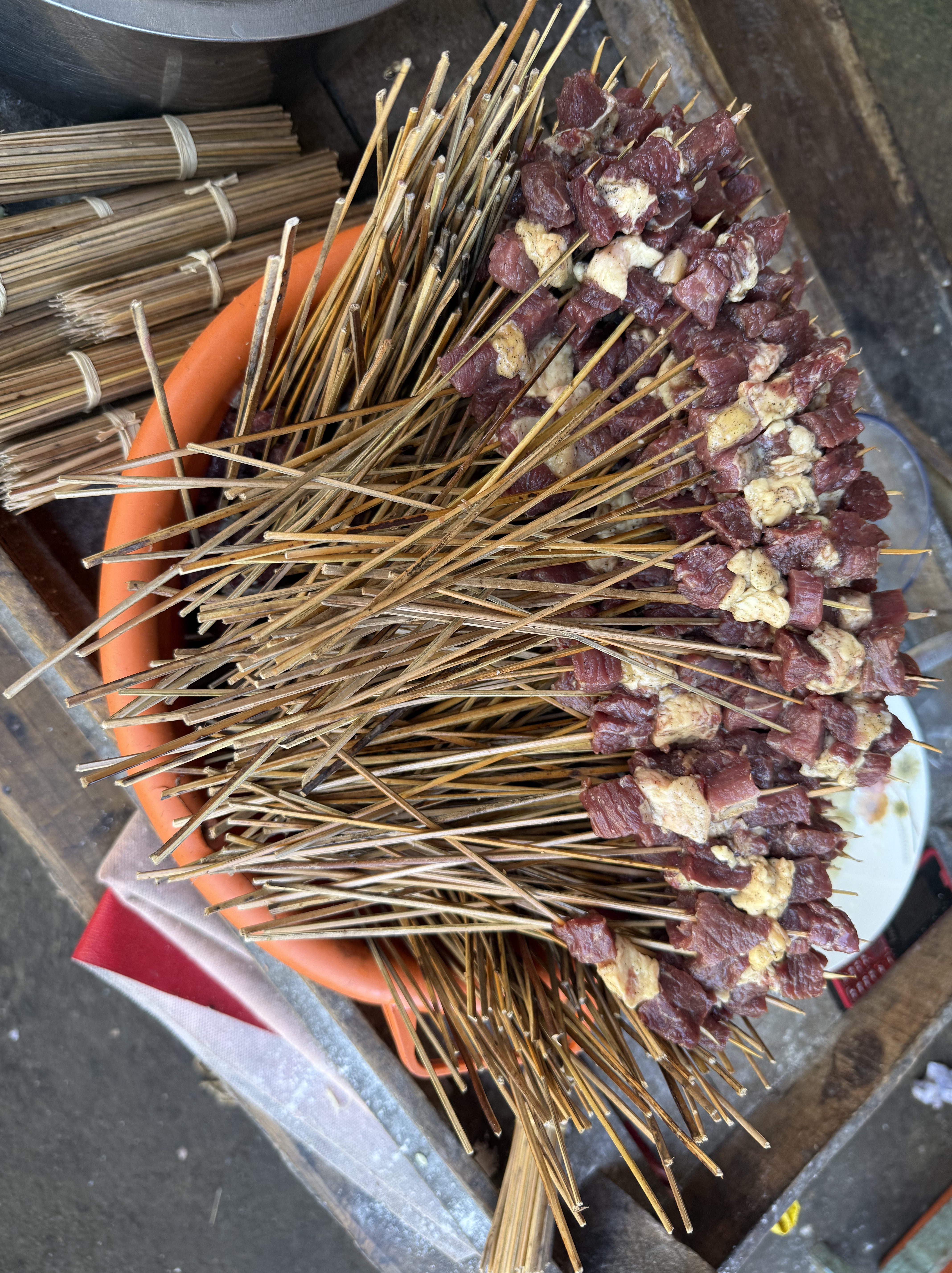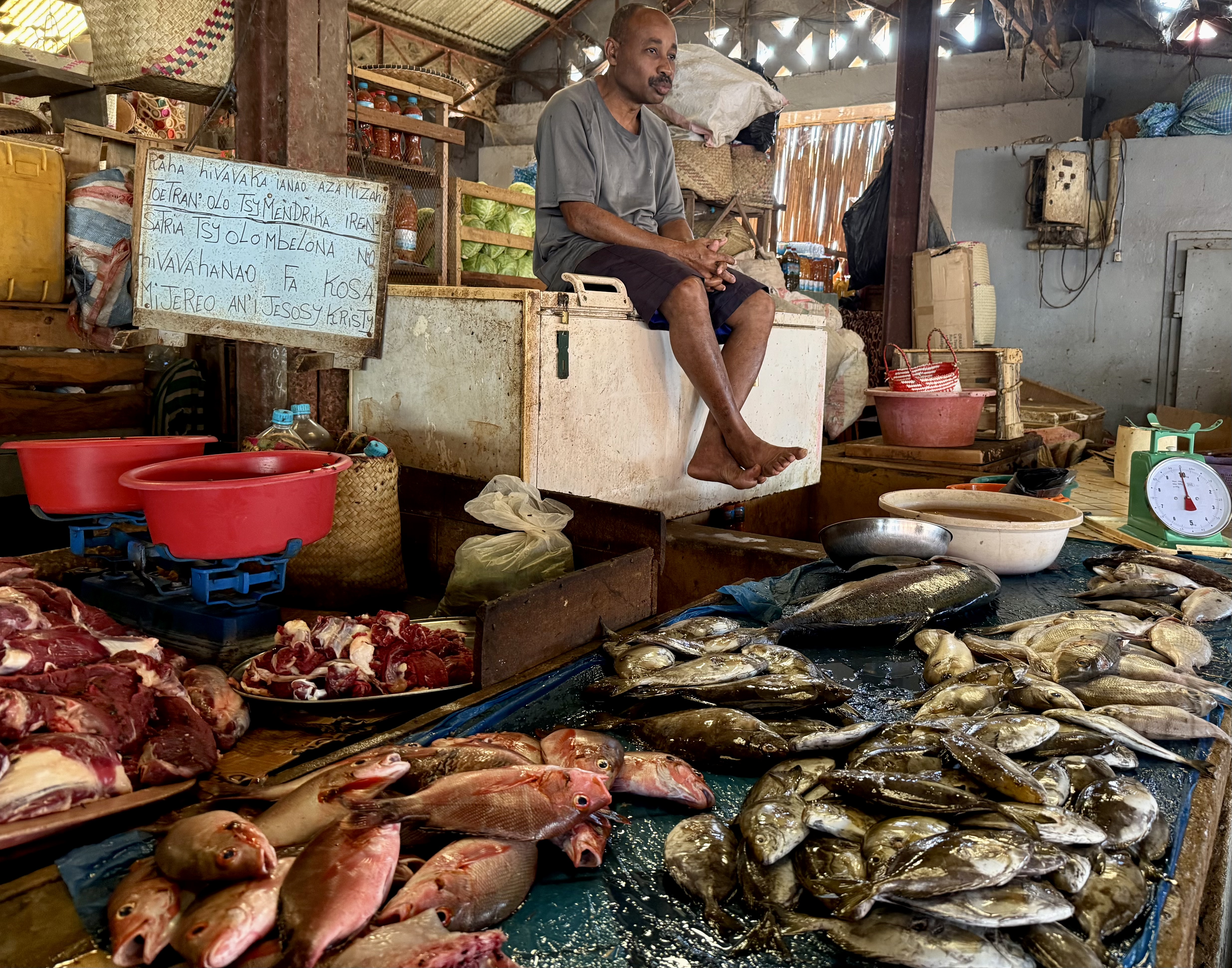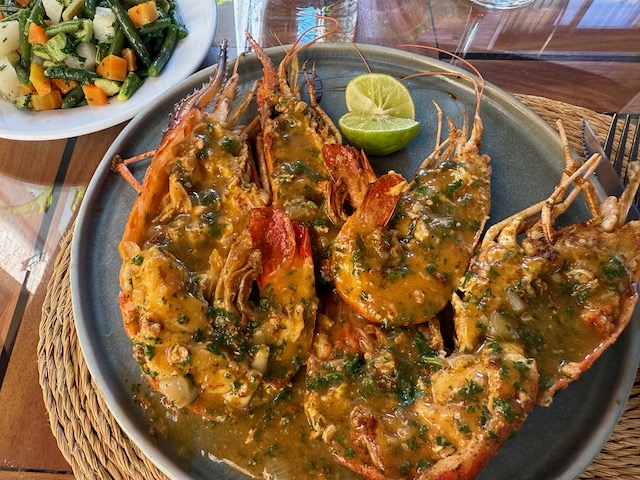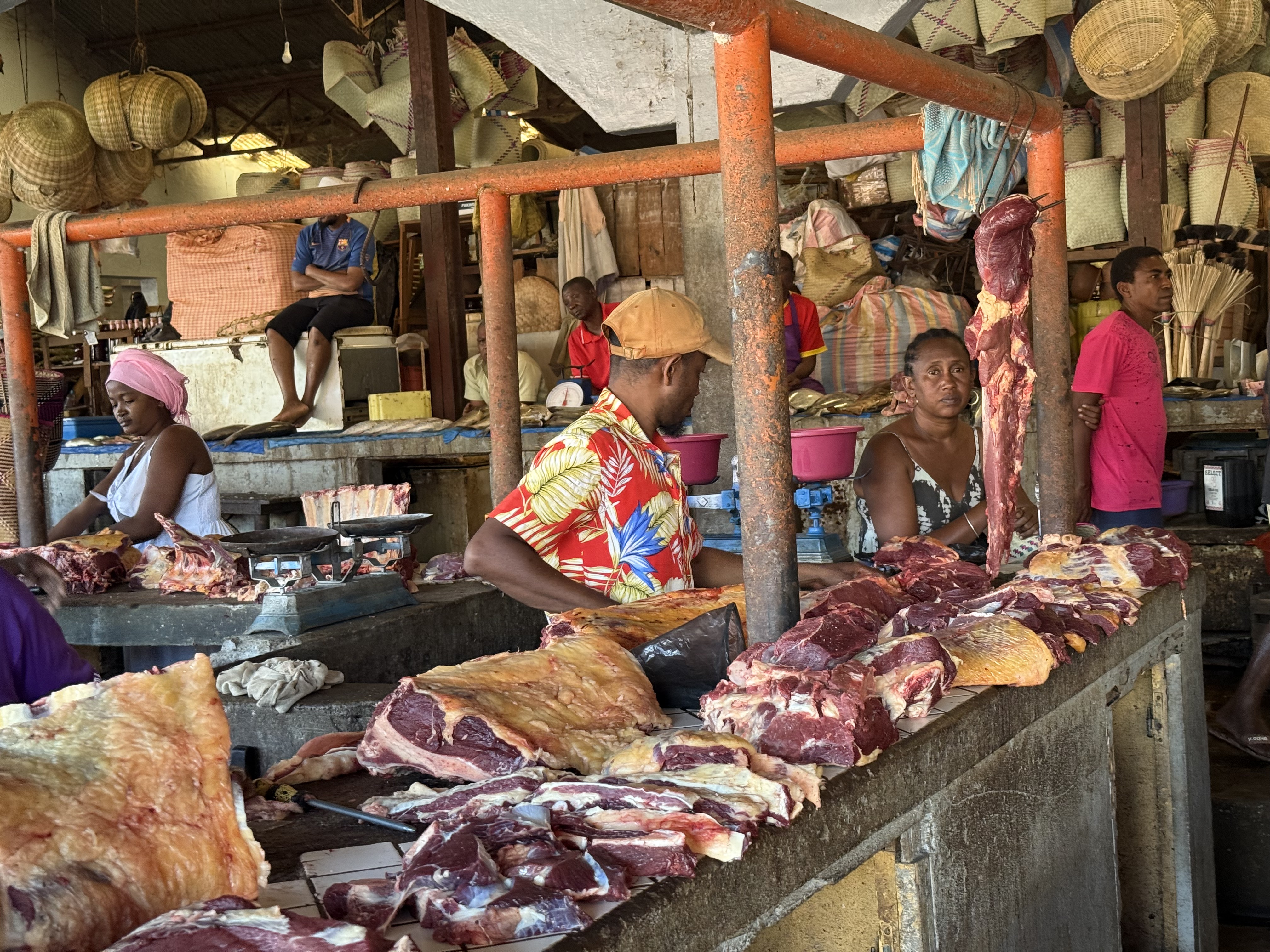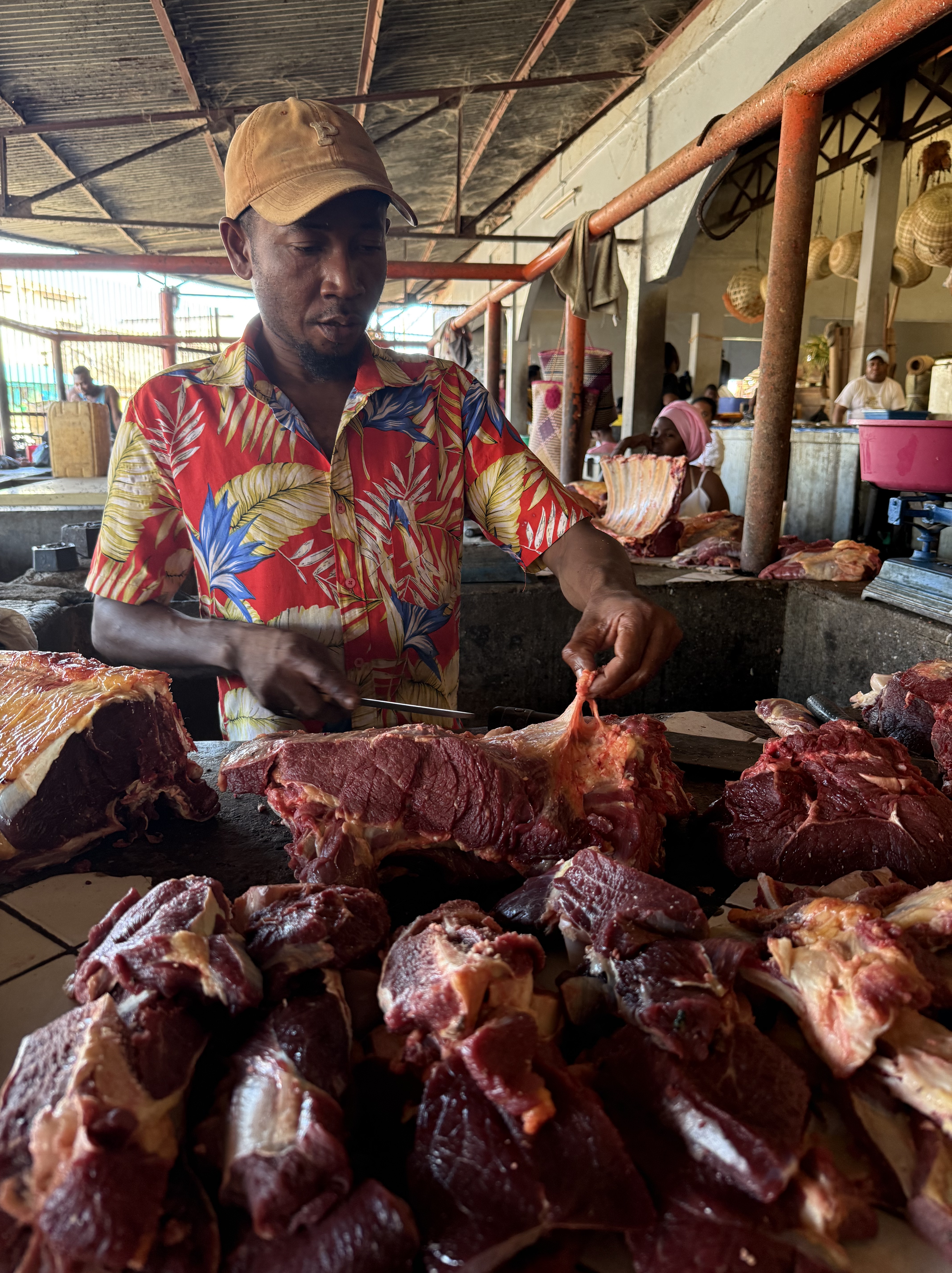
“Madame, vous êtes à la fin, » (Madame, you are at the end (of life), she announced as she massaged my ancient body. I had to chuckle, thinking to myself, “Yes, I know. But did you need to remind me?”
I had treated myself to a massage at an upscale hotel in Nosy Be, Madagascar, Part II of my solo voyage to South Africa and Madagascar (Mada), the world’s fifth poorest country.
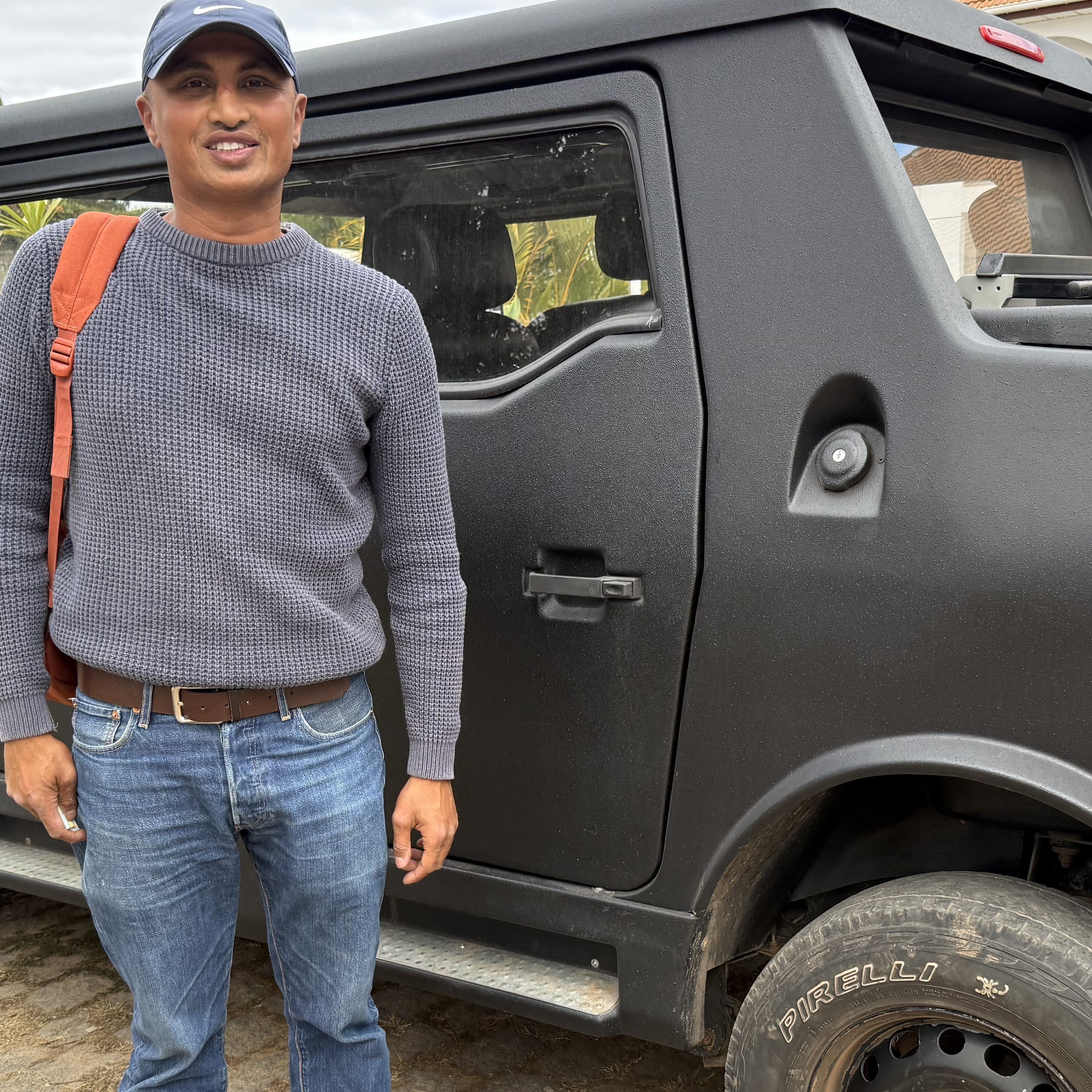
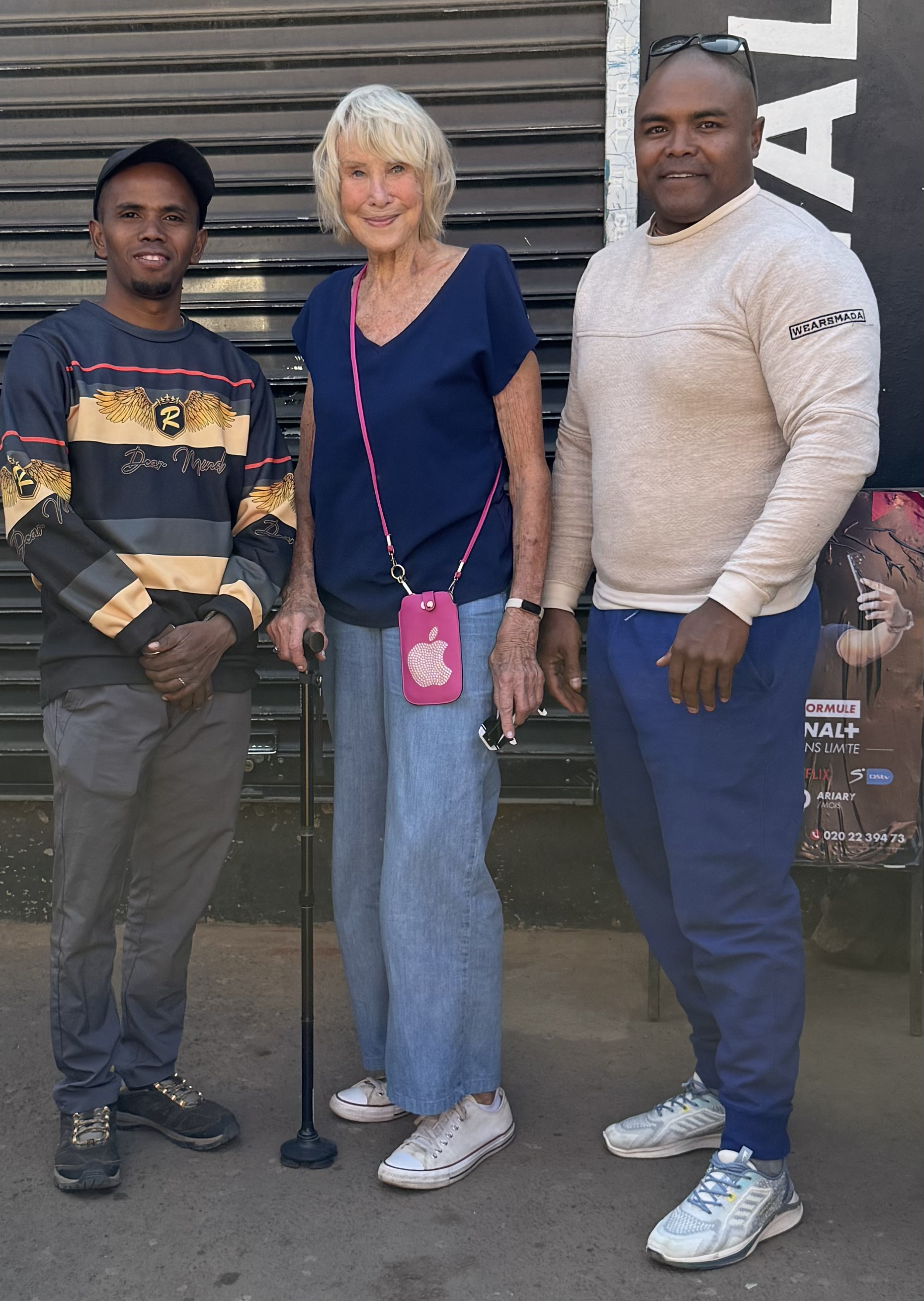
With guides Emanuel and John
Why would a handicapped old lady traveling alone (me) come to Madagascar? It was obvious those I met on the journey were surprised, if not baffled. I did not fit the profile of the typical Mada tourist.
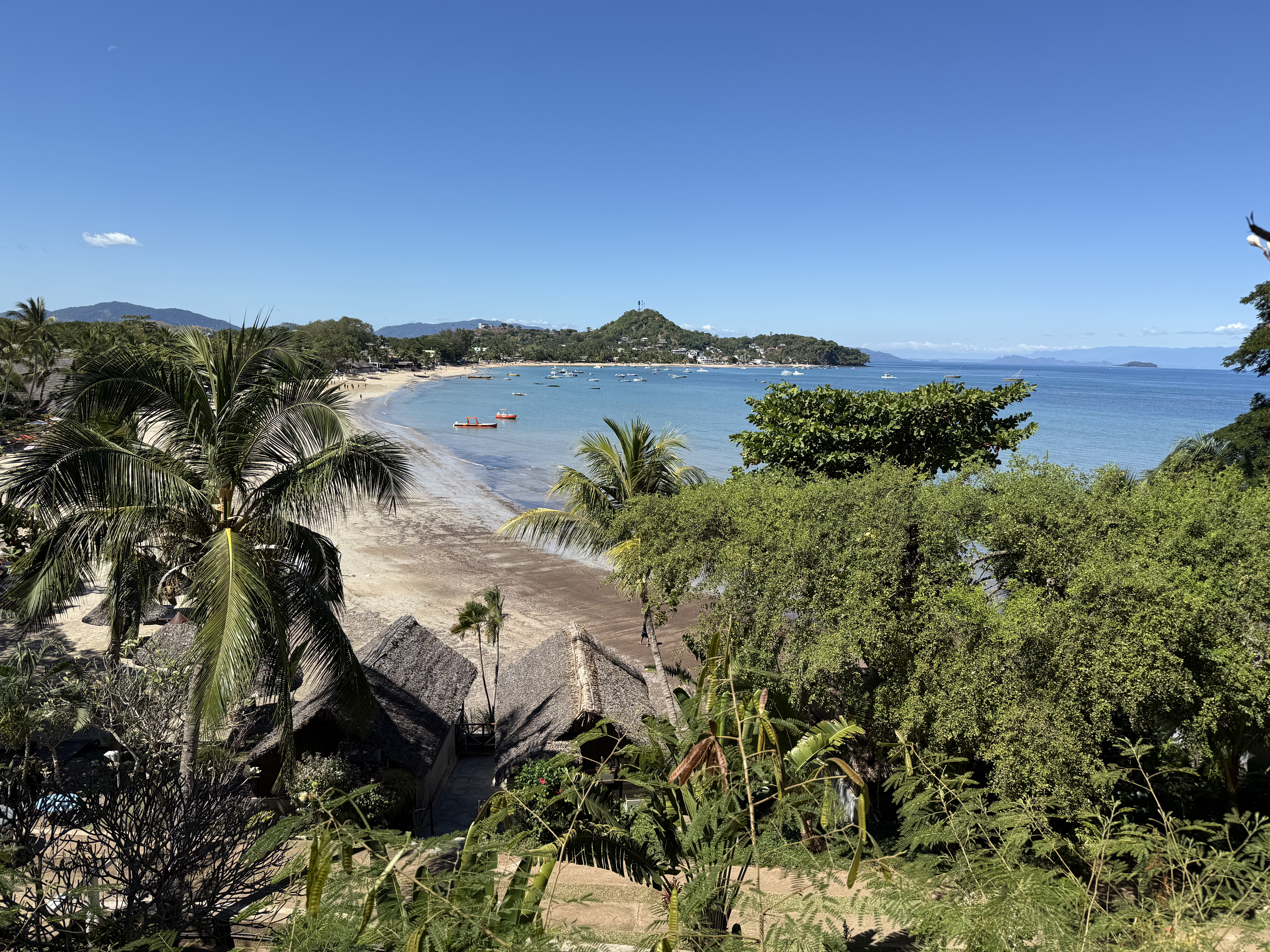
Nosy Be, Madagascar
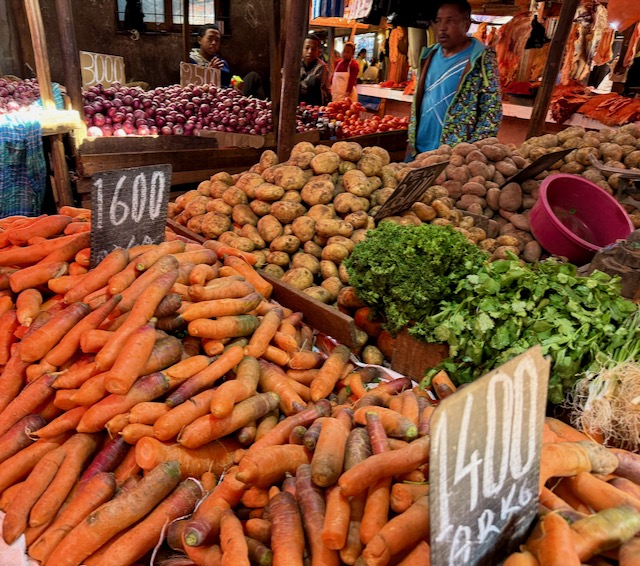
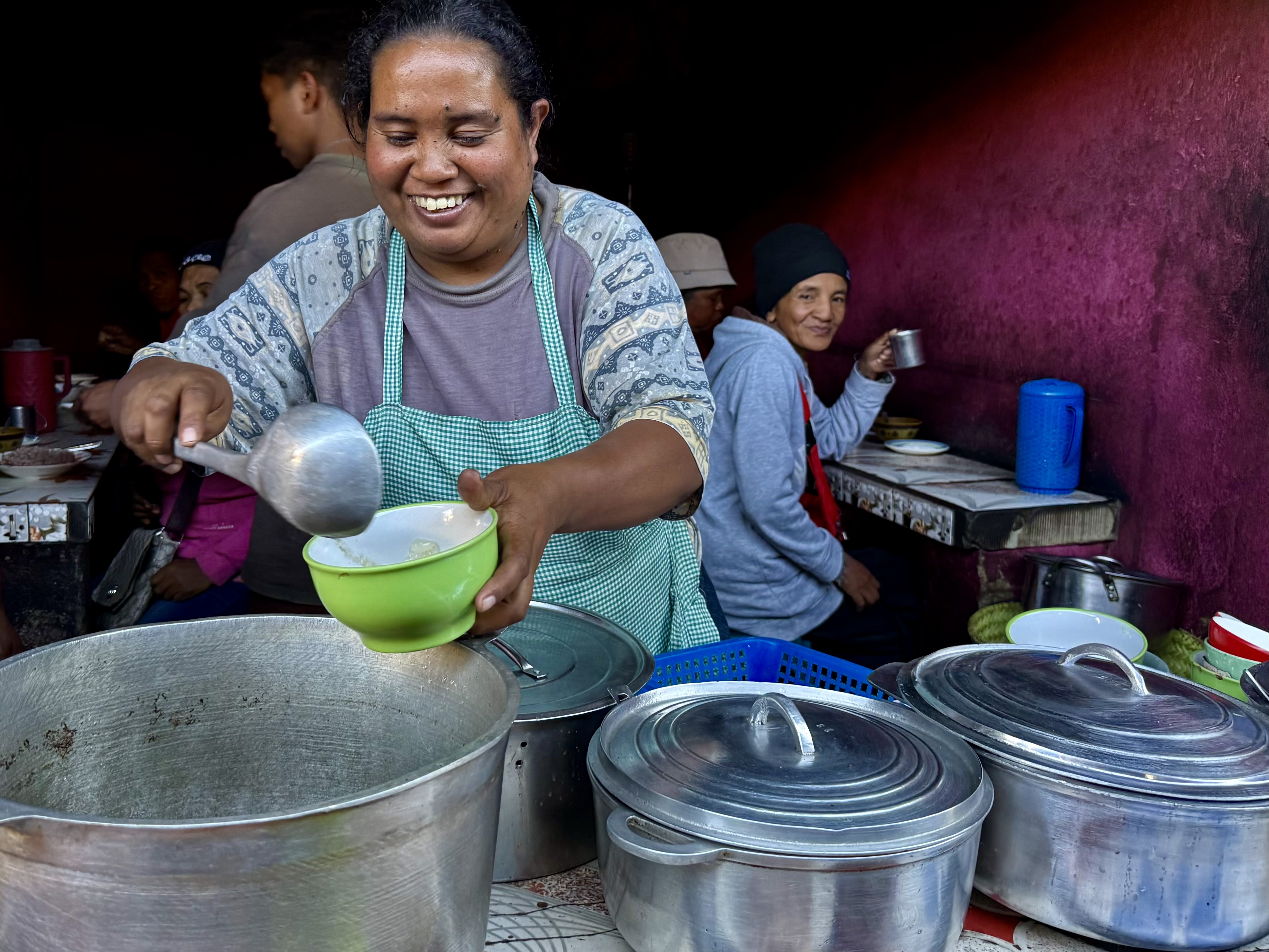
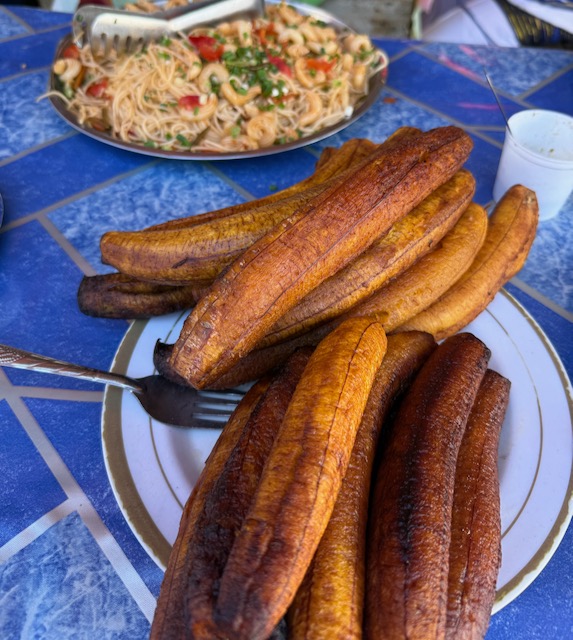
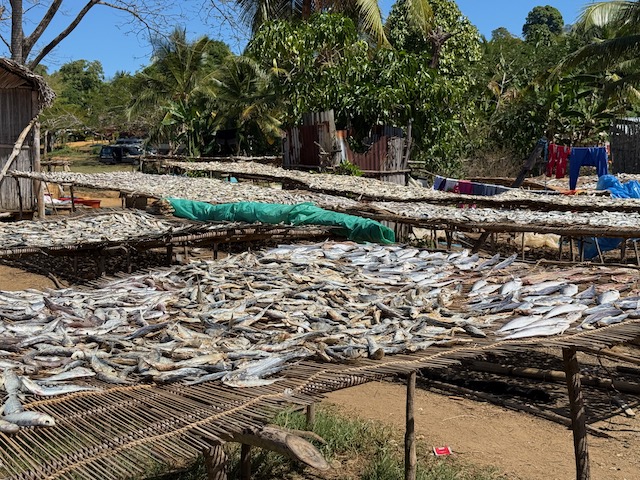
Madagascar is a fascinating, gorgeous country, but crime ridden and poor – very poor. Most visitors are young and fit or older and fit, exploring Mada’s rich biodiversity and incredible landscapes which involve long, rigorous journeys over mainly dirt roads. Mada is huge, the world’s fourth largest island. Distances are great. Due to my disability, my excursions were near cities and mainly on paved roads with a private driver/guide – nonetheless challenging at times.
I was apprehensive, if not nervous, prior to departure. Had I taken a step too far? I was petrified of falling again. But I charged ahead.
Madagascar is home to 112 species of lemur, all endangered.
A woman I met my first night at a hotel in Mada gave me some words of wisdom. She is a health care worker who has a daughter with disabilities. “You need to push yourself, test your boundaries. Use it or lose it.’’
I reflected on those words many times in Mada – when faced with uneven, stony or dirt terrain to navigate, steep steps with no railings, hills with no steps. “You can do it. Slowly. Carefully,” I told myself.
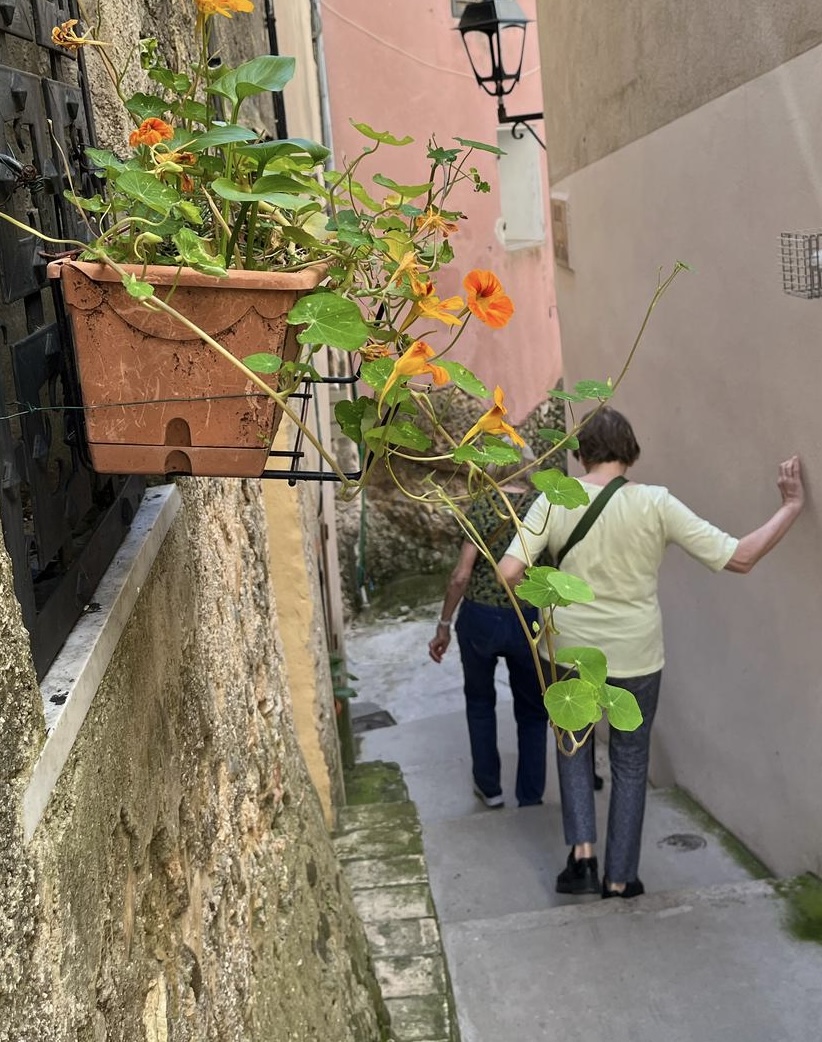
Steps were often challenging..
Travel has been my lifelong passion. I relish learning about different lands, cultures, traditions. I love talking to locals. You learn so much. It is enriching. It can change who you are. Travel adds perspective to life and understanding of the world.
My late husband Bob shared my passion for travel and adventure. We traveled near and far. After several difficult years suffering from Alzheimer’s, he passed way two years ago. About the same time, I had a horrendous fall – a complicated femur break and a broken shoulder. Despite numerous surgeries, I have limited mobility and need a cane to walk. And, I don’t have full motion of my left arm following the injury.
Bob and Leah in the Oman desert
I am à la fin, handicapped, but still alive. I can walk, albeit slowly. I no longer have a travel partner. What to do? Sit on the couch, watch TV ad wait to die?
NO. NO. Get up. Get going. Get back on the road again. I did. It was invigorating. I felt alive again. I loved it.
As Saint Augustine said, “The world is a book, and those who do not travel read only one page.” I want to read all the pages.
If not a Tales and Travel follower, please sign up here. Trust me. It’s safe. Your address is not shared. Don’t miss out. More about my travels in future posts: Sensational wildlife in South Africa, the mysteries of Madagascar.
See below for a new recipe just in time for all those ripe tomatoes.
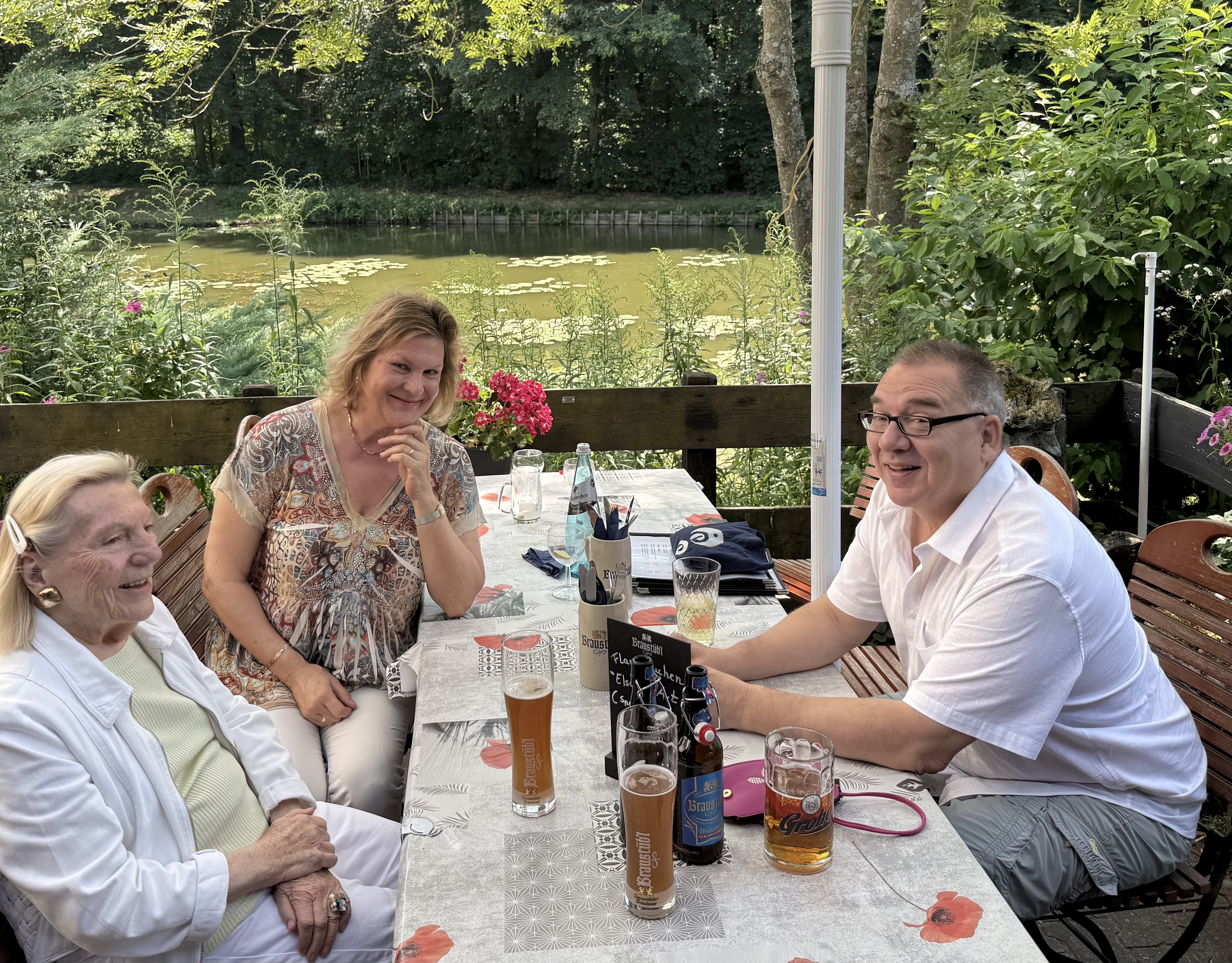
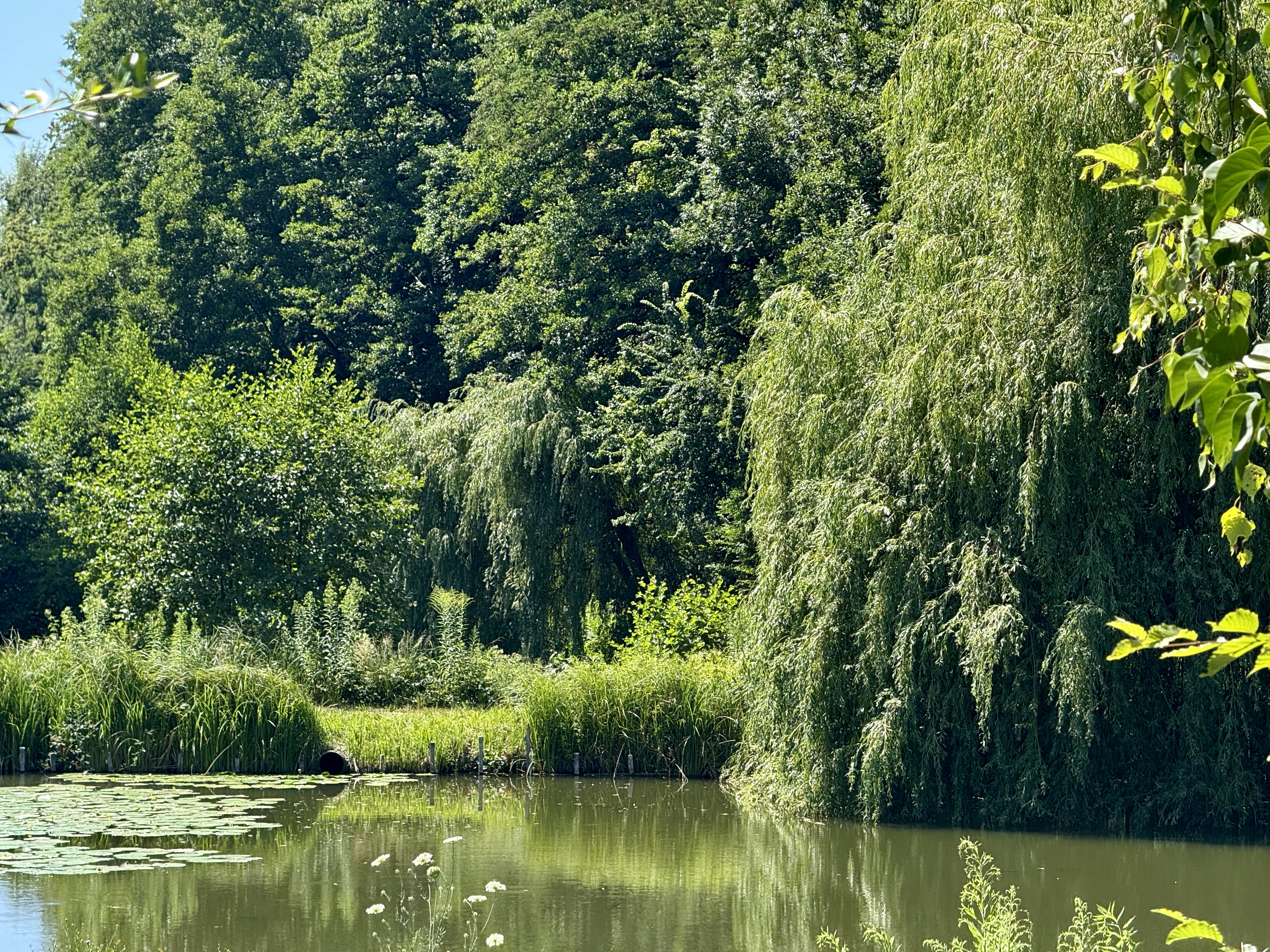
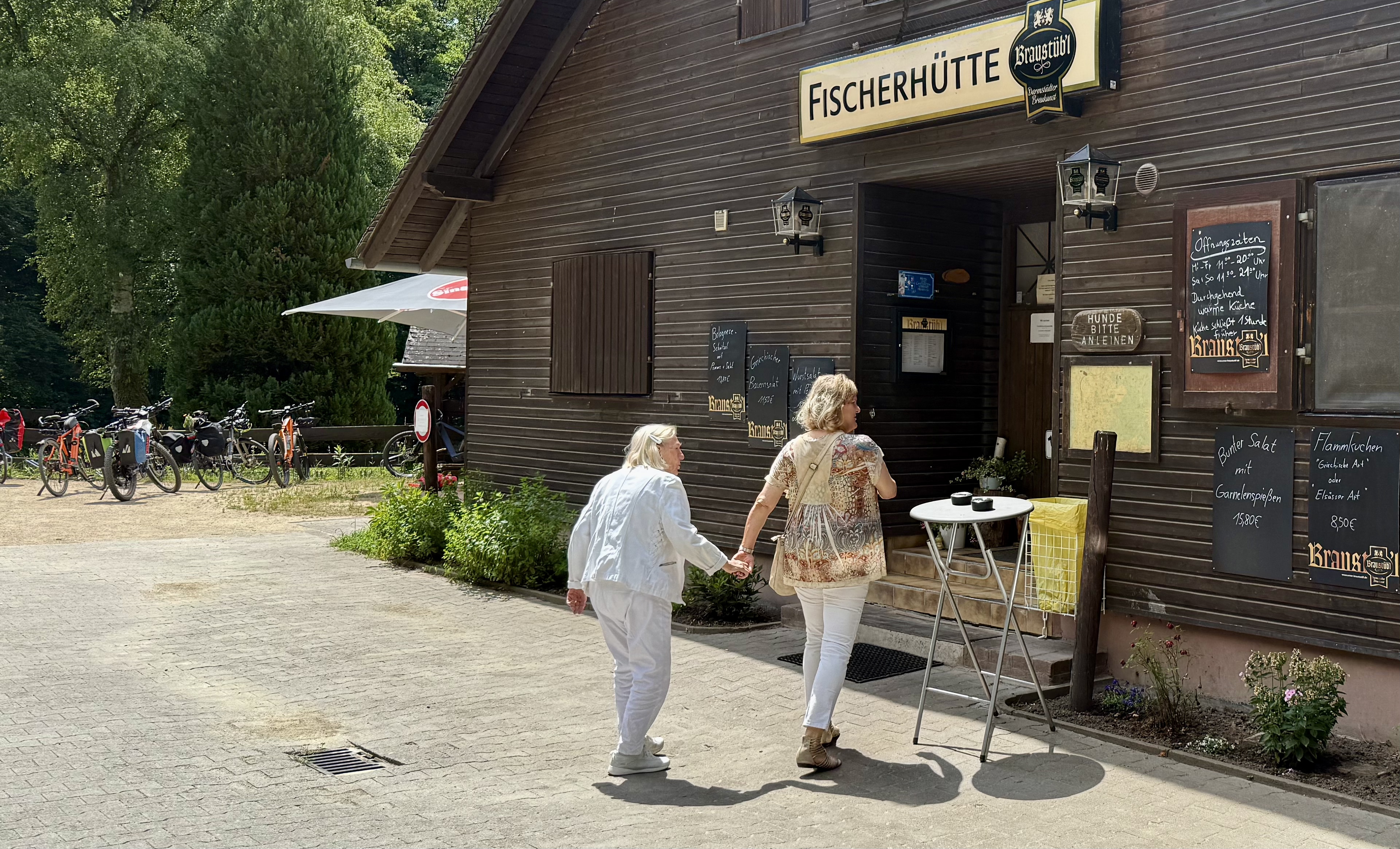
Like I remembered. Idyllic. We were surrounded by green, pure nature, at the Fischerhütte near Darmstadt, Germany.
Thekla, Andrea and Thiemo at the Fischerhuettte
Many, many years ago when I worked as a journalist at the newspaper Stars and Stripes, I lived not so far away. I remember hikes to the hütte in the forest. I remember treks to secret places in that forest in search of the coveted steinpilze (boletus, cepes, porcini – whatever the name, the king of mushrooms). I remember the tranquility, the beauty of those woods.
It was wunderbar to return to Germany after so many years. I have missed Deutschland – old friends, favorite foods, the lush forests.
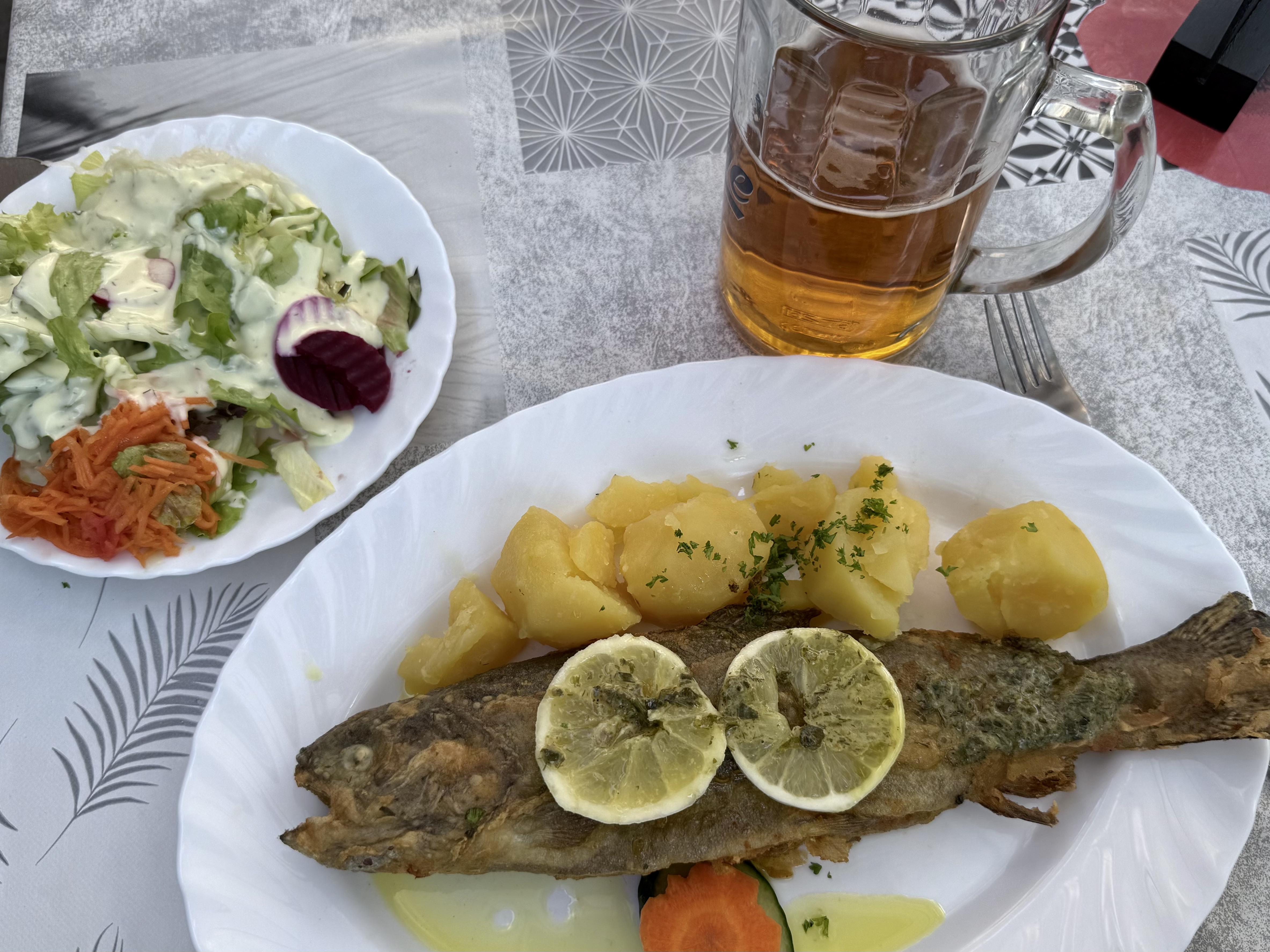
Trout for lunch at the Fischerhuette, and the best German beverage, beer.
Andrea, the daughter of an old friend, her husband Thiemo and her sweet mother, Thekla, led me down memory lane, not just to the Fischerhütte, but other special spots. It was magical.
Many more memories were rekindled with friends in the Stuttgart area where I lived with husband Bob (RIP) for many years.
Gerlinde and ice cream prep
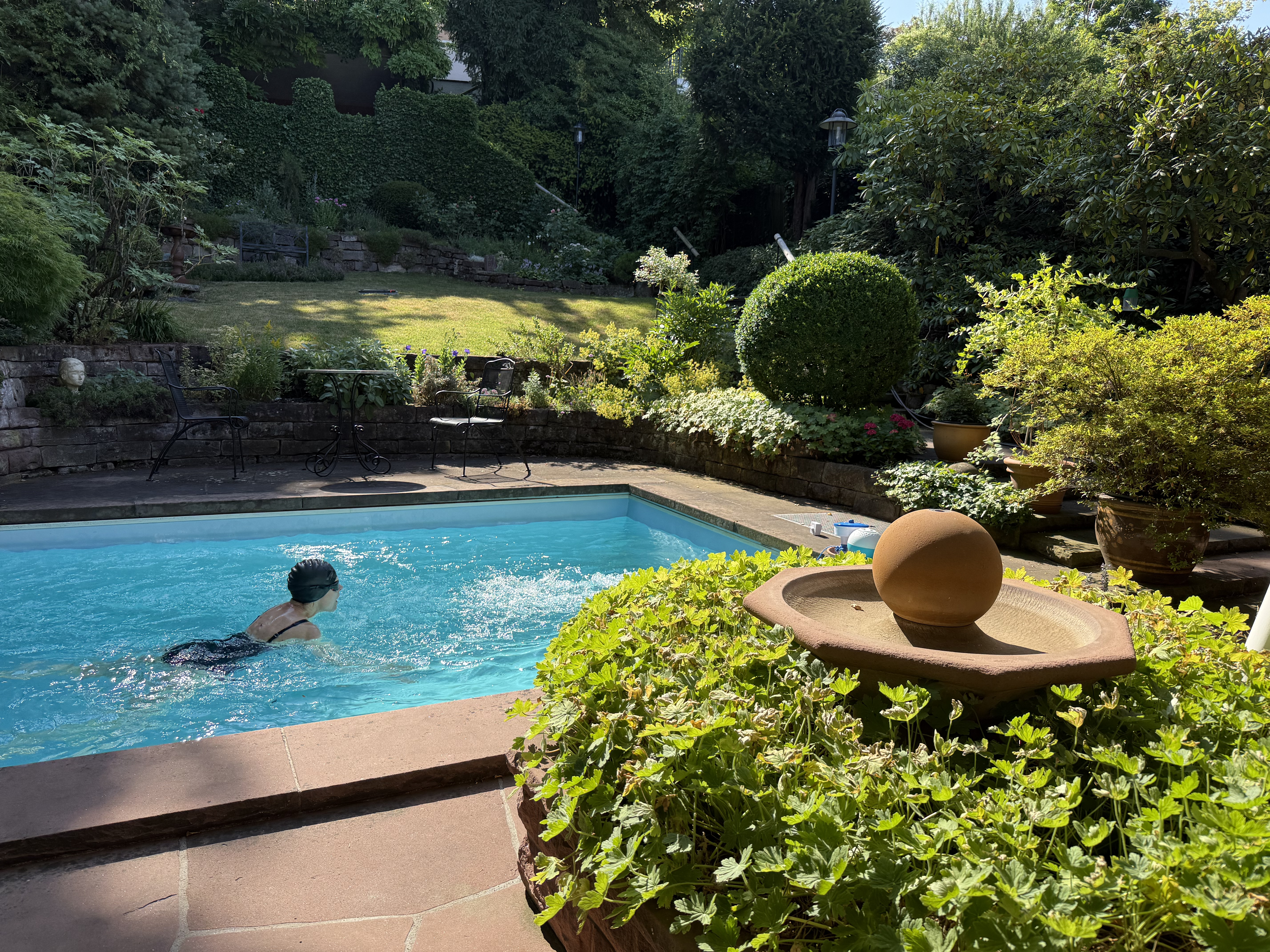
Gerlinde welcomed me in her Stuttgart home. Like many of my friends, she is a foodie par excellence, even making her own yogurt and ice cream. She is also devoted to fitness and swims against the jet stream in her pool for 20 minutes every day. I just swam, minus the jet stream.
Gerlinde swims daily against a powerful water jet — Impressive.
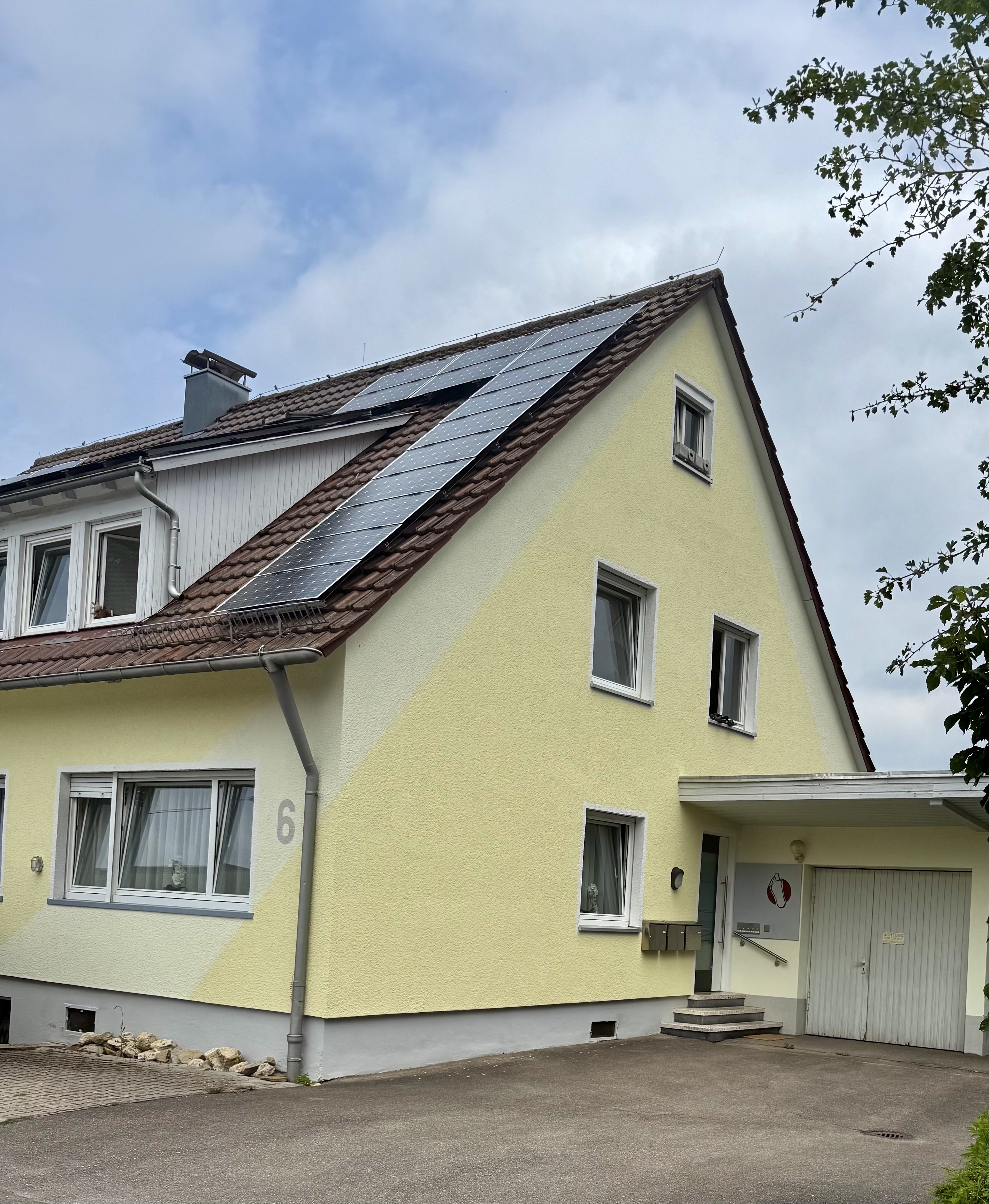
We drove to Steinenbronn, past the apartment where Bob and I lived for 11 happy years. At a nearby restaurant, I indulged in my very favorite Swabian special, Zwiebelrostbraten (onion steak) with homemade Spaetzle.
Our spacious apt was on the 2nd floor.Zwiebelrostbraten
I can’t complain about food on the Mediterranean coast where I now live, yet there is a shortage of ethnic eateries.
Not so in Germany where, among others, Turkish restaurants abound. I miss those, too. Marianne treated me to lunch at her friendly neighborhood Turkish restaurant. I wanted to bring those flavors back to France.
Then, that de rigeur German ritual, afternoon Kaffee und Kuchen (coffee and cake) at her apartment.
Fun conversation and memories of good times enhanced all those luscious tastes.
Marianne and Turkish delight
My friends indeed lavished me with generous and delicious hospitality. Dagmar invited me and other friends to her home for a tasty lunch with a scrumptious raspberry cream dessert. And, Heti invited us to a multi-course dinner of exquisite delicacies, each worthy of a magazine photo (photos below). This was especially remarkable as she had fallen and broken her wrist the day before.
Heti, Christina, Dagmar and Gerlinde
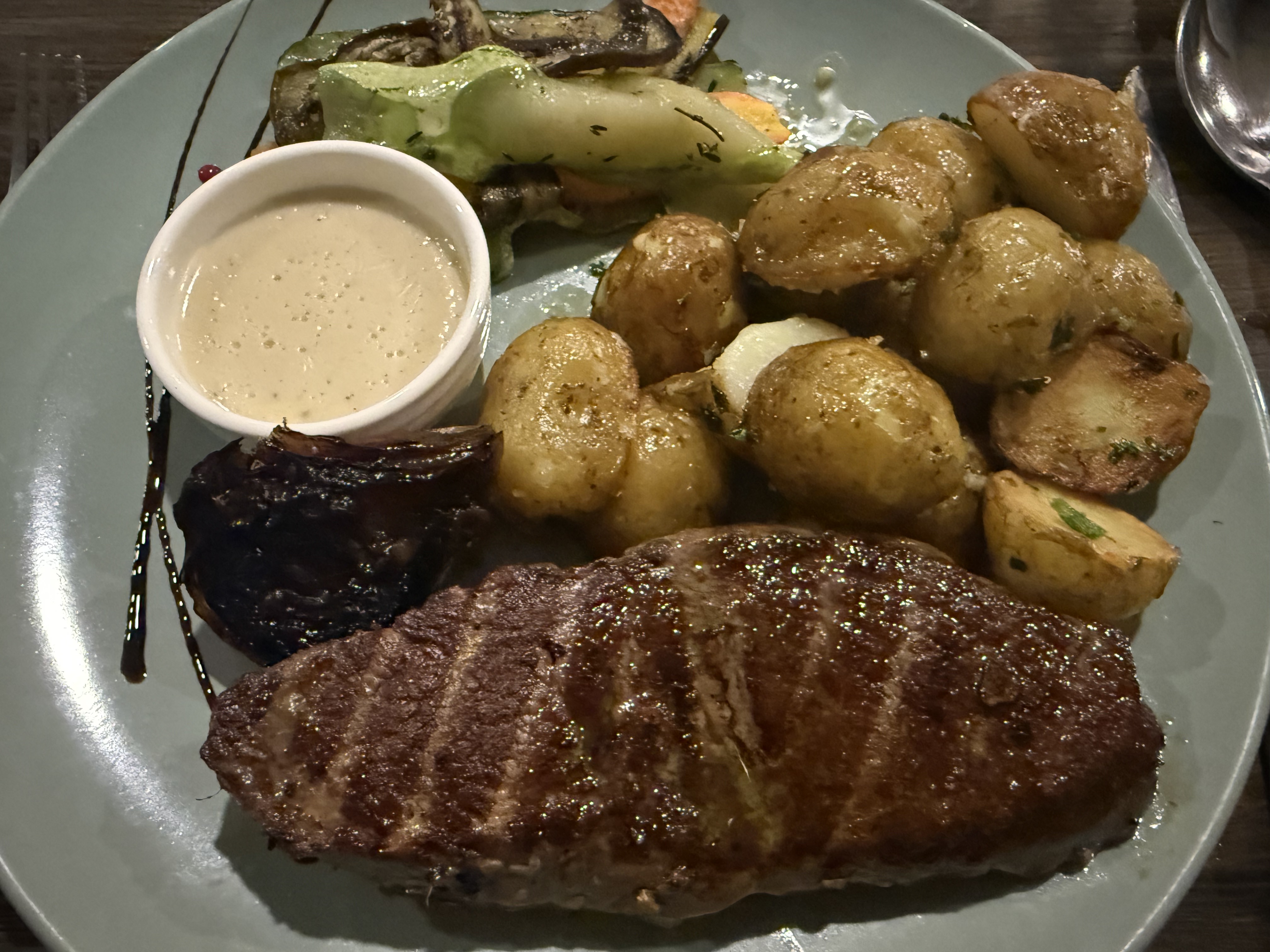
On my last day we met in Bebenhausen. Bob and I were avid cyclists. We liked to pedal from Steinenbronn to this tiny burg with an ancient monastery and an excellent restaurant. It is still charmingly picturesque. My last treat before heading home, another German delicacy: Rehrücken filet (venison filet). Delectable.
BebenhausenRehruecken filet
Living on the Mediterranean coast, I have the sea, palm trees, the Maritime Alps, tropical gardens – but no dense, enchanting forests. I had not realized that I was forest deprived. I was in awe of all the fabulous German greenery.
I mentioned this to Andrea, so we visited yet more. “I’ve never been to so many forests in one day,” she said. Gerlinde told me that Stuttgart has more green space than any other German city.
A stroll in the Rosenhoehe, DarmstadtA pause for apple wine at a gemuetlich hut on the edge of another forest
“The woods are lovely, dark and deep…,” and a treasure.
Thank you, dear friends, I loved my return to Germany –especially seeing all of you.
Below: Heti’s superb creations. Each was mouthwatering.
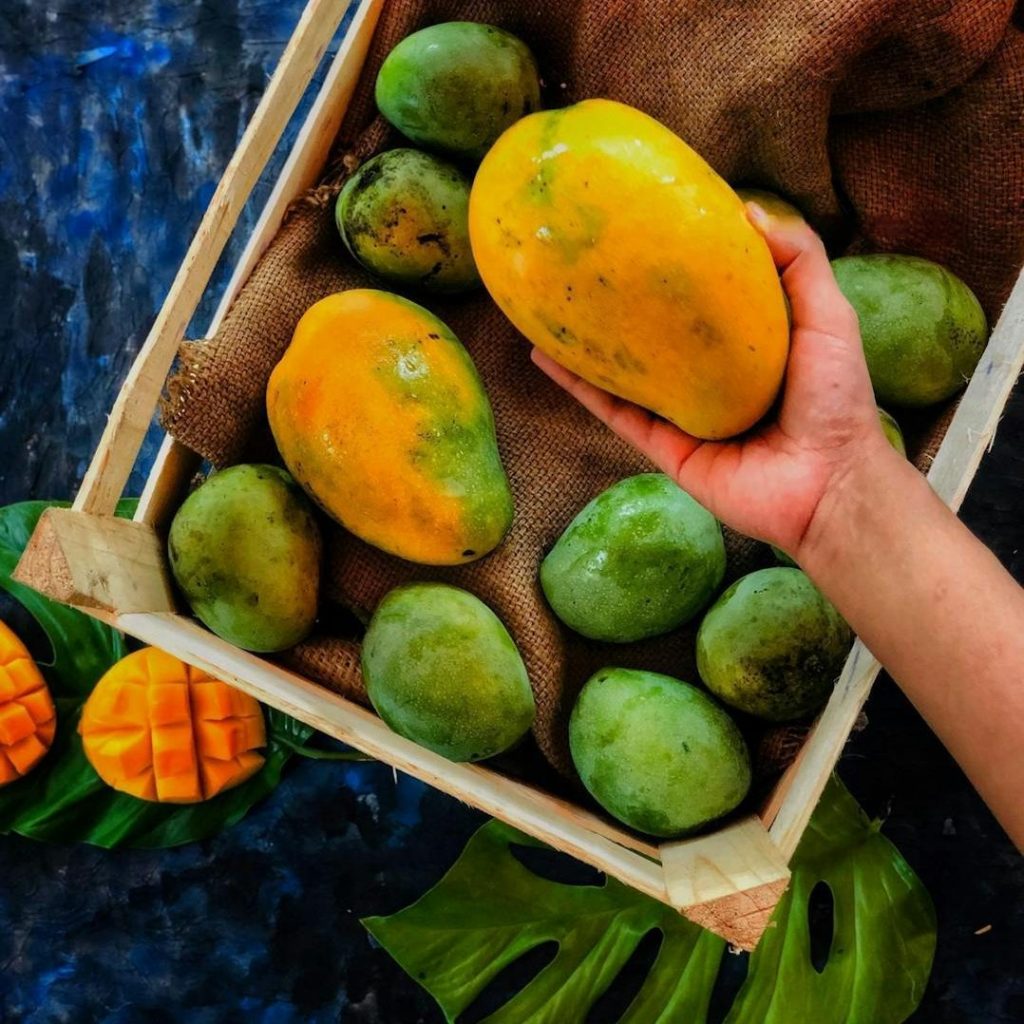
I will add a new recipe next time. Meanwhile, for an easy, tasty dessert, try my recent discovery, RUM-SOAKED MANGOES. Sinfully delicious.
If not a Tales and Travel follower, please sign up here. Trust me. It’s safe. Your address is not shared. Don’t miss out. Thrilling adventure coming: South Africa, Madagascar and Mauritius.
Comments welcome. Scroll down and share your thoughts.To read previous comments, scroll way down.
Emmy and Anne came to visit. They are sisters, my cousins whom I have not seen in too many years.
Cousins then: me, Emmy, Anne
Emmy is a year older than Anne. Anne is 5 days older than I. As children, we saw each other frequently. With time and moves, all that changed. (Thank you, Emmy, for above photo. )
And cousins now: Anne, me and Emmy. We celebrated Derby Day with mint juleps. As a young reporter I worked for the Louisville Courier-Journal and was assigned to cover the elegant Derby “balls.”
Neither cousin had been to my turf in southern France. I wanted to show them my favorites and the must-sees of the area. We were on the move during their week-long visit, rambling along the Riviera.
I asked them to send me impressions, comments, etc. after their return. Continue reading for photo highlights and their comments.
First stop was the old village of Roquebrune, a quick, but steep drive from my abode. Gorgeous views and an ancient olive tree.Lots off skinny passages and challenging steps in the village.
We ventured up in the hills on day #2 of their visit, a stop for meditation and reflection at the place where my Bob’s ashes have been dispersed. Husband Bob and I were avid cyclists. He loved challenging climbs. We attacked this road and its numerous hairpin turns many times.
Pilgrimage chapel along the road between Sospel and Moulinet where I dispersed Bob’s ashes.
“I loved seeing the remote and serene place where you gave Bob a final resting place. What a beautiful place to commune with nature and to be part of a sacred pilgrimage like so many before us,” Anne said.
We were on the border with Italy. I felt they should have a taste of my preferred country, so we continued up the mountain and returned to the coast via Italy. Bob and I had cycled some – but not all of this terrain. It was a long, long way down.
Anne’s comment: “You complained about the day with the too long drive but that was one of my favorite days. You are a fearless driver! The hairpin turns, the cyclists, the sheer drop offs were terrifying to me but didn’t seem to faze you.” …Driving in the Mediterranean hinterland is not for the faint of heart.
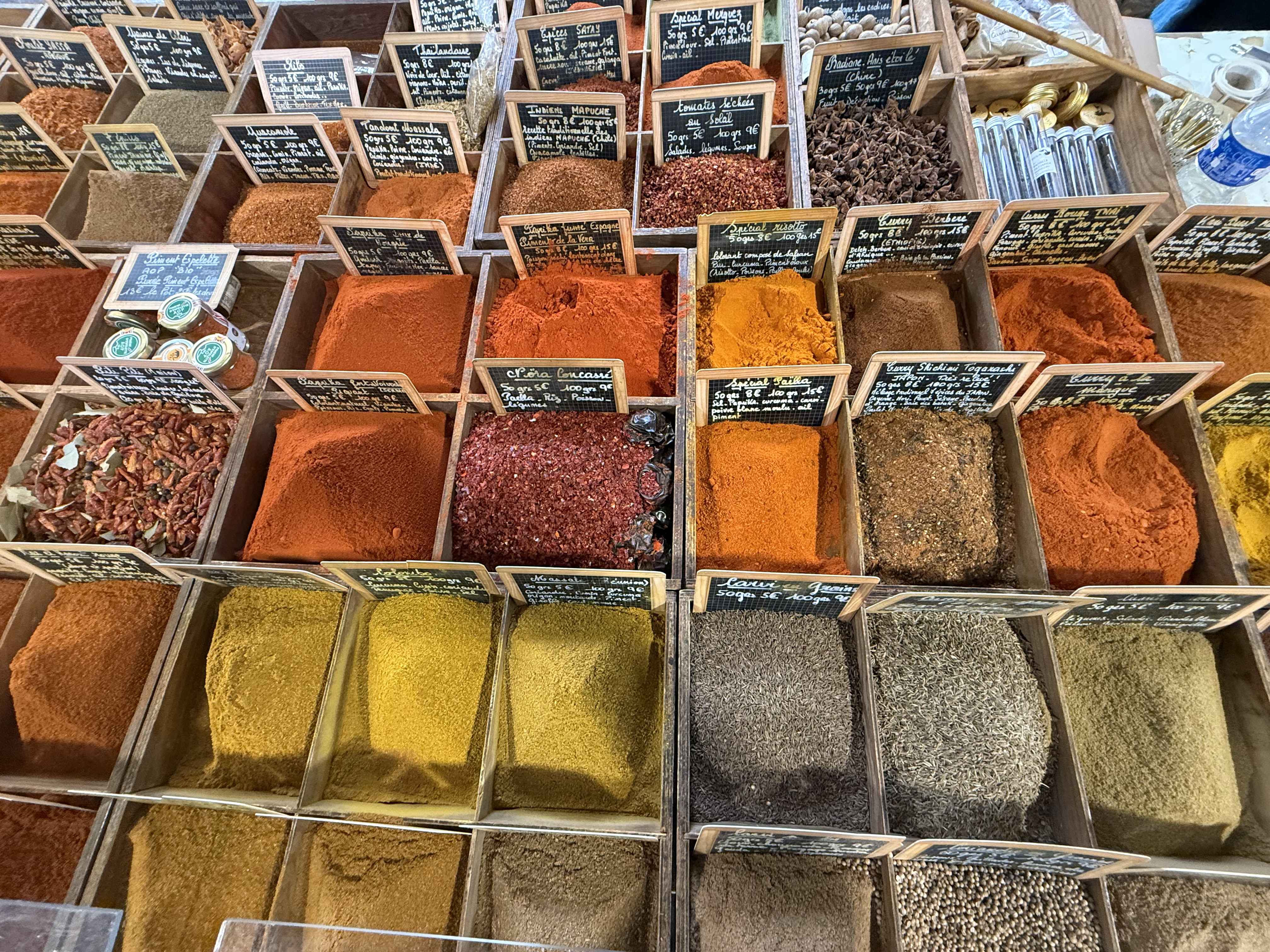
Veggies at Menton marketSpices at Antibes market
Markets are de rigueur around here. The Saturday morning market in nearby Menton is enticing with clothes (Italian bargains) in addition to tempting produce. Cousins were impressed, and each found a garment souvenir. “The market in Menton was lots of fun,” noted Emmy.
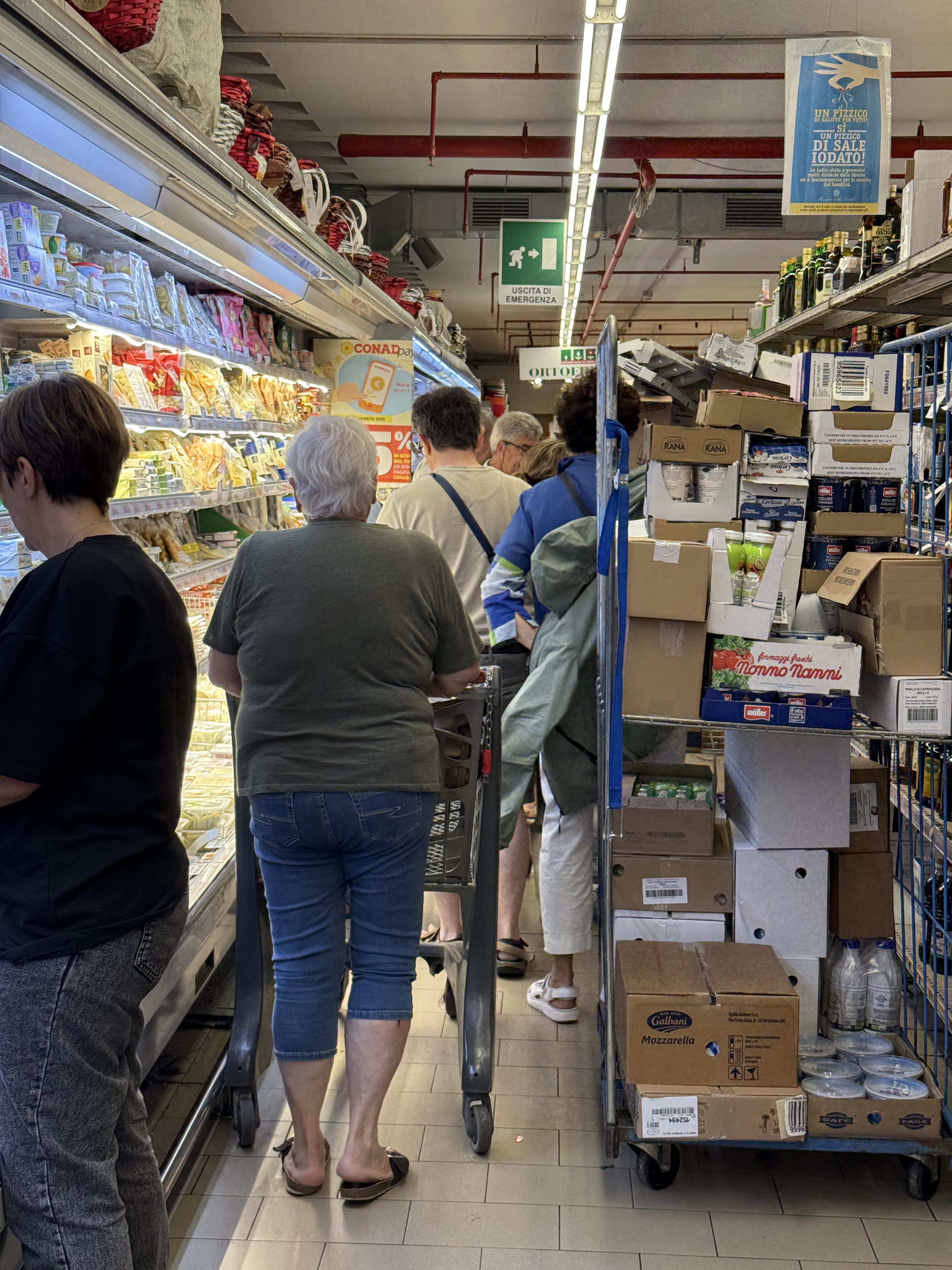
A market of a different sort was also high on their list of favorites. Conad, an Italian supermarket on the border, is like no other, the antithesis of a sanitized, huge, beautiful American supermarket. It’s cluttered, chaotic, always crowded. French love the cheaper prices. I love the prices too, but mostly the crazy ambiance and the Italian products.
Patience and skill required to negotiate the aisles at Conad.Zucchini blossoms at Conad.
For Anne, this was her “upfront favorite experience… both disorienting and fascinating.” Emmy commented that she was glad she had the experience “in the store with anything and everything one might want. ” Pots and pans, socks and underwear, plants and flowers — all are stuffed in those narrow Conad aisles.
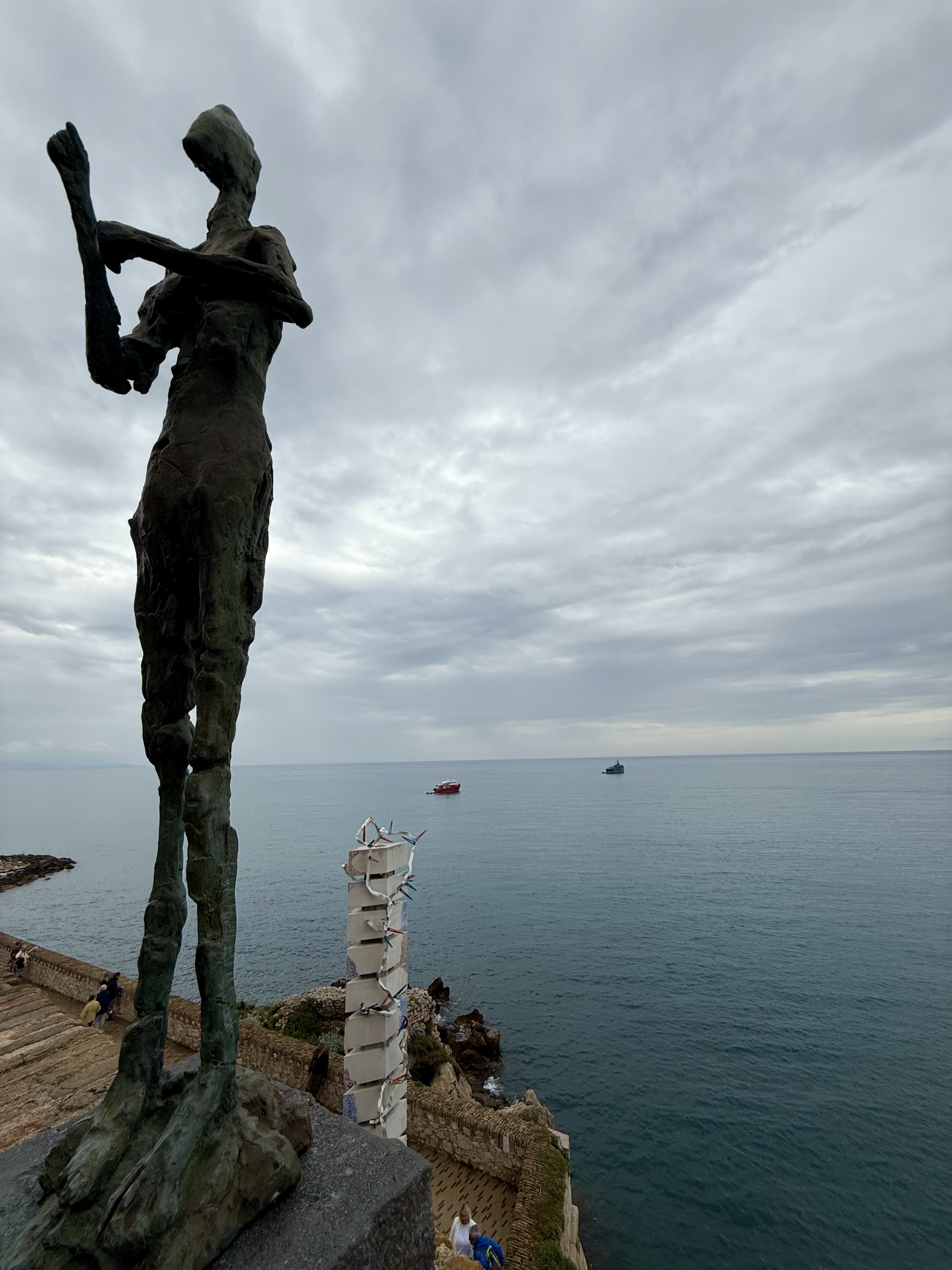
Outstanding art museums are a major attraction on the Riviera, including the Picasso museum in Antibes where I found lots of photo opps.
Miro sculpture on the terrace of the Picasso museum.Another shot on the terrace.
But for me the museum piece de resistance is the Fondation Maeght in St. Paul de Vence. On my first trip to the Riviera moons ago, I visited the Fondation. I was overwhelmed then and overjoyed recently with our visit. The art museum on a hill overlooking the medieval town features a superb collection of modern art including large sculptures in gardens and on terraces.
Alexander Calder sculpture in the garden.Indoor gallery with Chagall and Calder mobile.
Since we were in the area, we stopped to visit the Matisse chapel in nearby Vence. A nun inspired the artist to create the chapel whose vibrant colors are dazzling.
Prop for photo opp in St. Paul de VenceMatisse chapel in Vence
Emmy summed up her take on the trip: ” I loved each and every excursion. Was especially intrigued by Dolceacqua with its historic bridge and unique and ancient tunnel structure leading up to the castle. Loved the trip to Eze with its beautiful gardens perched on the hilltop.”
Dolceaqua with its castle and ancient bridge
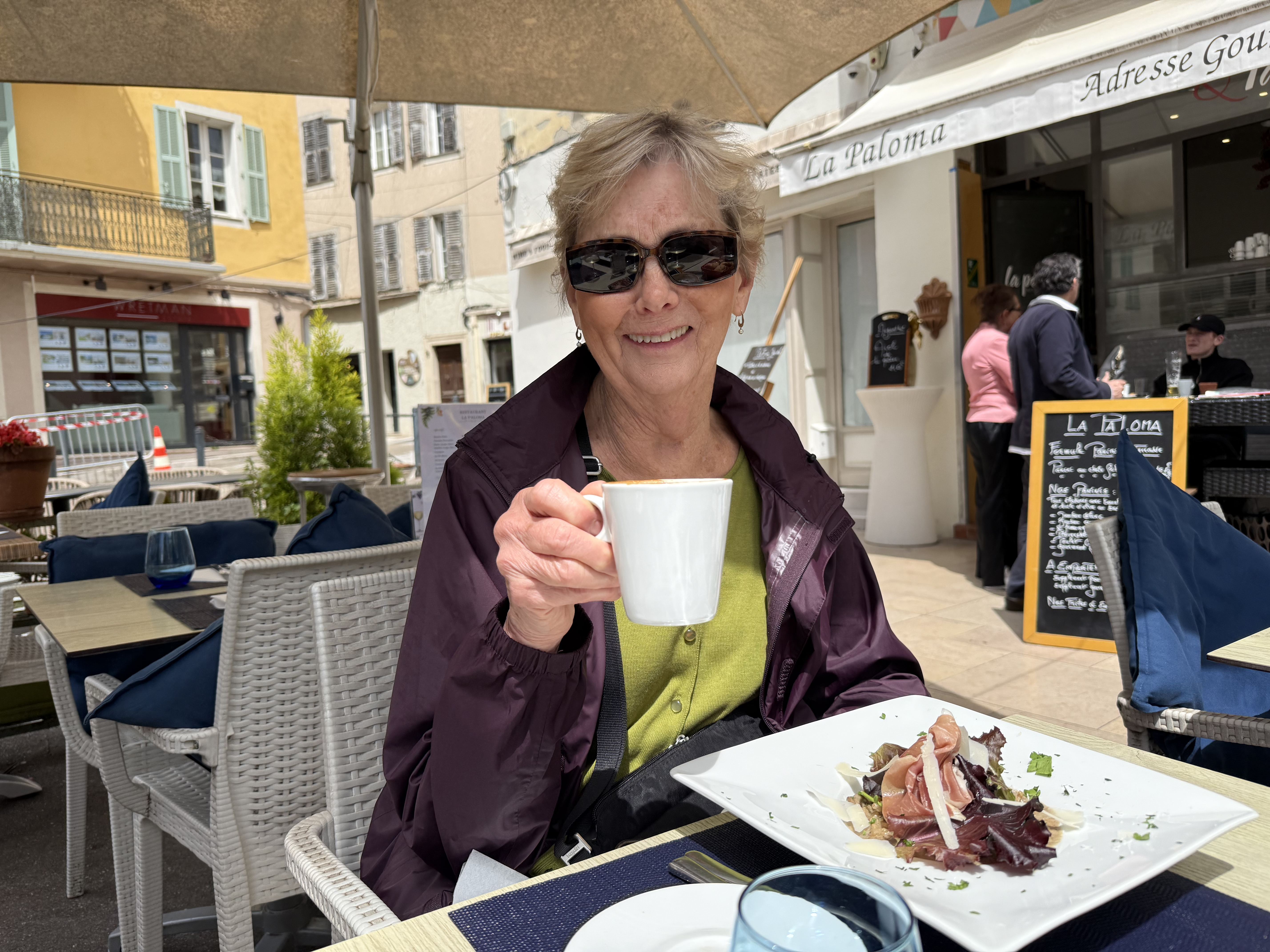
Food is a travel highlight. My dear cousins are easy to please and liked everything. We avoided expensive eateries. Sitting outdoors at a Vence resto, Anne ordered coffee as her lunch beverage. I explained that in France coffee is a breakfast drink, definitely not ordered as liquid refreshment with a noon or evening meal. However, after the meal, a “petit ” espresso is in order. It was all in fun. One can drink whatever whenever, but I thought they should learn a bit about the local customs.
Anne with her coffee americano
“One of my favorite moments was when I ordered coffee at lunch and you gave me a startled look and told me that was a gauche thing to do. Or perhaps I am gauche, your country bumpkin, too-American cousin! That struck me as so amusing, so familial in a way,” she recalled. BTW: Anne is delightful, definitely not gauche.
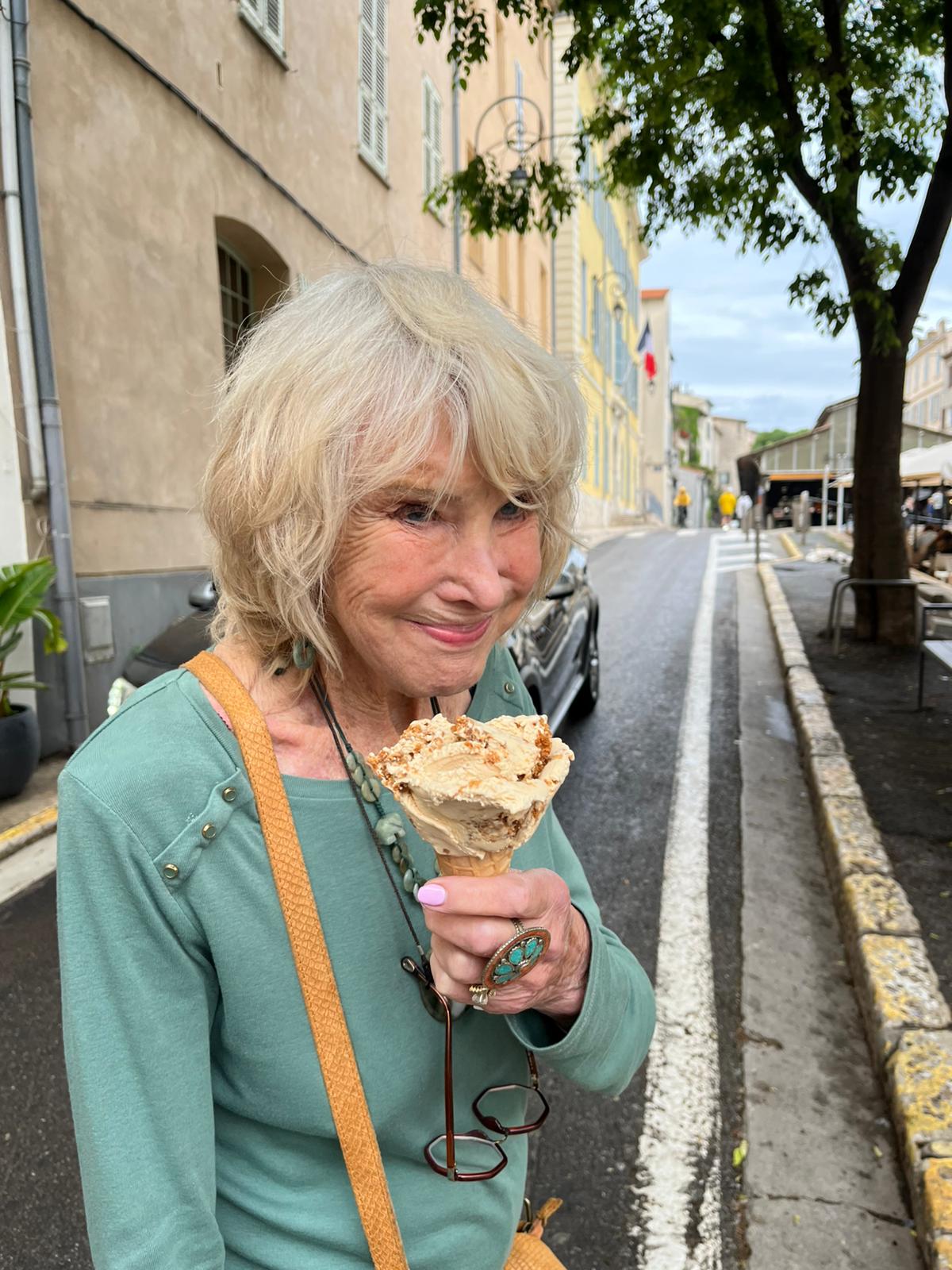
Welcome dinner, Shakshuka.We found the best ice cream in Antibes.
Because we were on the move, I did not prepare at- home dinners, except for their arrival, my all-time favorite, Shakshuka. Click for the recipe. I had made a rum carrot cake in advance of their arrival. We had a slice every day — too much and it wore thin (but not on the waistline). We never did finish it.
It was heartwarming, fun and gratifying to reunite with my cousins. A few months ago my nephew visited – his first time in Europe. We had a “blast.” Read about that adventure: Intro to Europe 101.
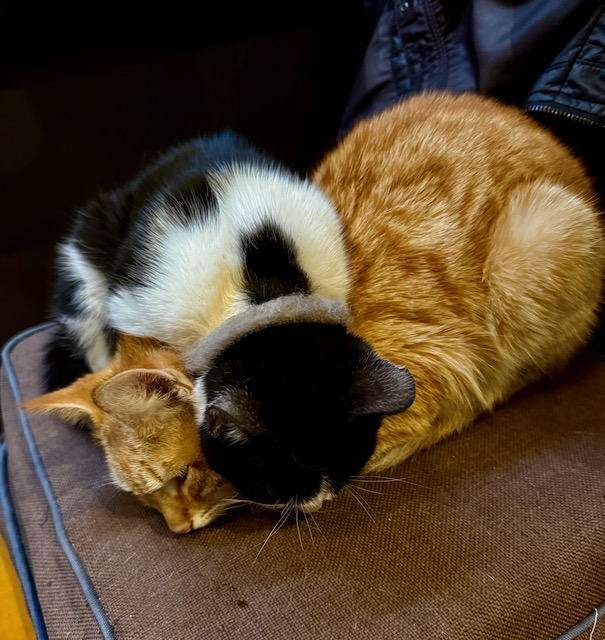
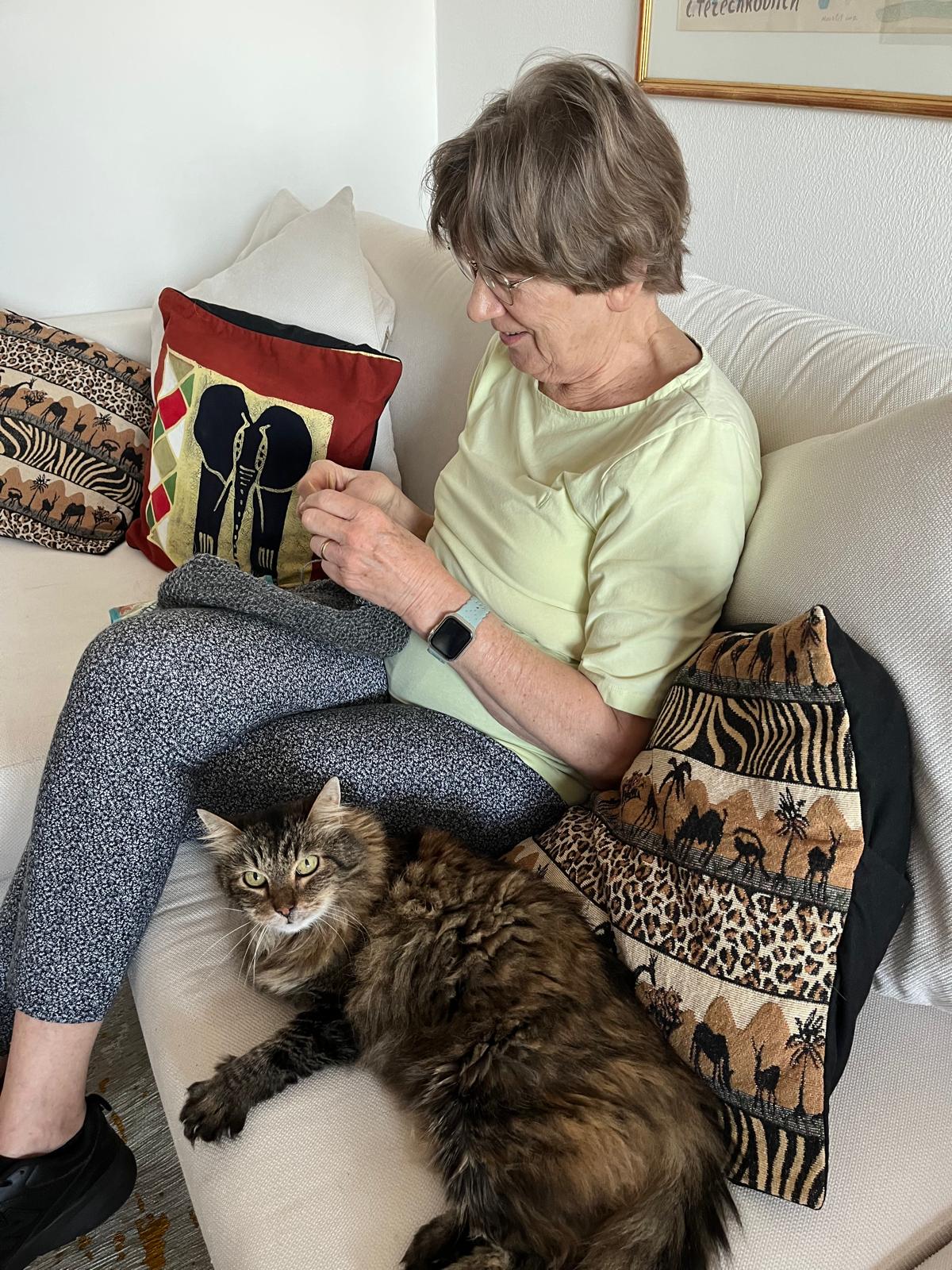
I hope all my kin will come back. And, so does Simba who bonded with Emmy.
Emmy knits. Simba cuddles.
If not a Tales and Travel follower, please sign up here. Trust me. It’s safe. Your address is not shared. Comments welcome. Scroll down and share your thoughts. For Today’s Taste and recipes, keep scrolling.
Following is a guest blog with photos by Swedish friend Lars who recently journeyed to his home country to celebrate his sister’s birthday. It was more than an over-the-top birthday party: the Julbord, a holiday overdose of food – and akvavit (a popular and strong Scandinavian spirit. See below for more on this beverage). The Julbord is a must at Christmas, but can be repeated during the festive season including on New Year’s Day. The eating can go on all day, Lars says. “It’s supposed to be drawn out. It’s an orgy. You need time to recover.” He recalls that housewives used to “slave for two weeks” to prepare the food, but many now celebrate in restaurants.
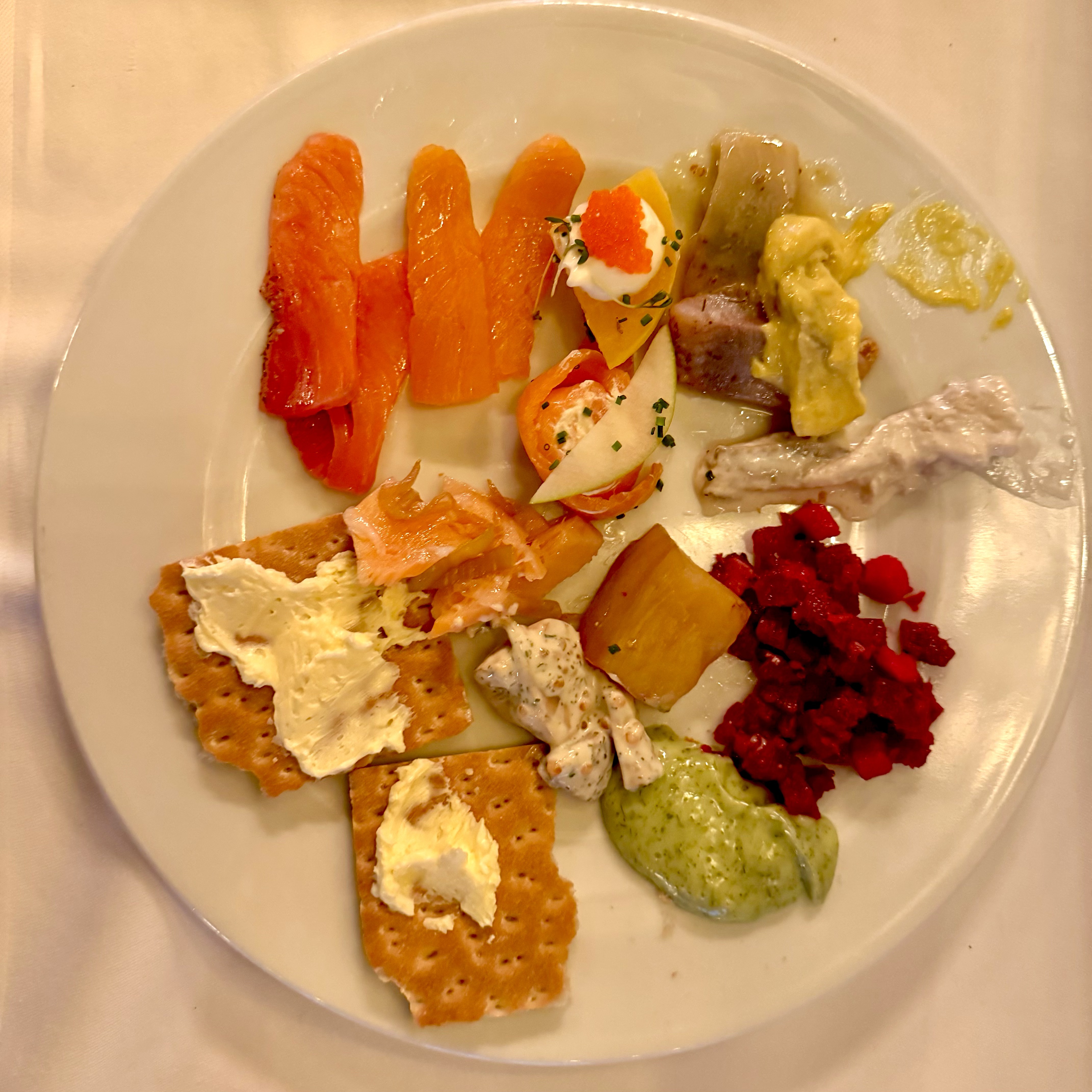
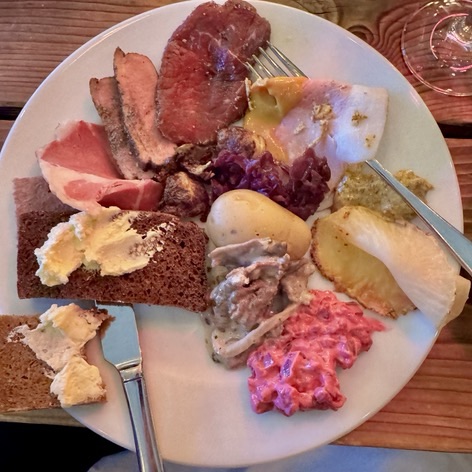
A small section of the Julbord
By Lars Sjöström
On the topic of Christmas food traditions, Sweden is in a league of its own when it comes to sheer opulence embodied in the institution of the Julbord, which is a king-sized jumbo version of the famous “smorgasbord” with extra bells and whistles and a bow on top.
The canonical way of eating your way through a Julbord is to start with a plate of cured salmon, several varieties of smoked salmon, and at least three — preferably 5-7 — different kinds of pickled herring , mackerel, smoked eel and various sauces eaten together with boiled potatoes and “special Christmas edition” crisp bread.
The first of several shots of akvavit is consumed in conjunction with communal singing of a snapsvisa — an often humorous ditty extolling the virtues of (heavy) drinking. There will be many more of these and they become naughtier as the evening progresses…
Next up is assembling a plateful of cold cuts, where the glazed ham is the centerpiece. There should be a minimum of ten, but usually many more different dishes ranging from sausages, patées and meats in jelly, to smoked reindeer and smoked lambs leg and whatever else is traditional in various parts of the country.
Another shot, another drinking song, and a swig of either Christmas ale orjulmust, a nonalcoholic soft drink only available at Christmas time.
The third round consists of hot dishes, and here is where the famous Swedish meatballs enter the scene. There should also be tiny hot dogs made from premium ingredients, spare ribs, different kinds of stews often based on game such as deer, moose or reindeer. At this point vegetables like red, green and brown cabbage, cauliflower and Brussel sprouts are introduced.
Another shot, another song— you know the drill.
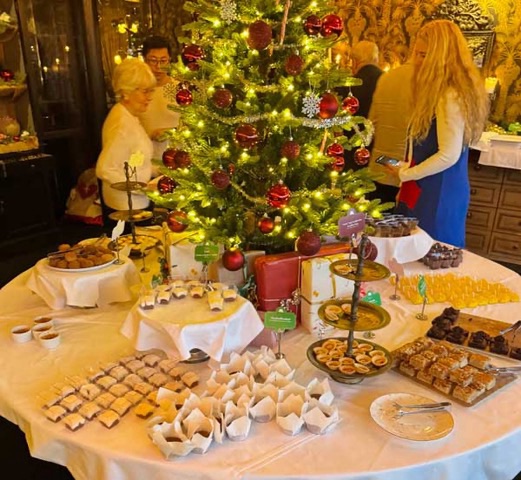
There is a cheese round, a dessert round and a Christmas sweets round, all with songs and shots.
If you are still able to function after all this, you can enjoy Julgröt — porridge made from rice boiled in milk and flavoured with cinnamon. There should be a single peeled almond hidden inside, and if you happen to find it, it will bring you luck in the new year.
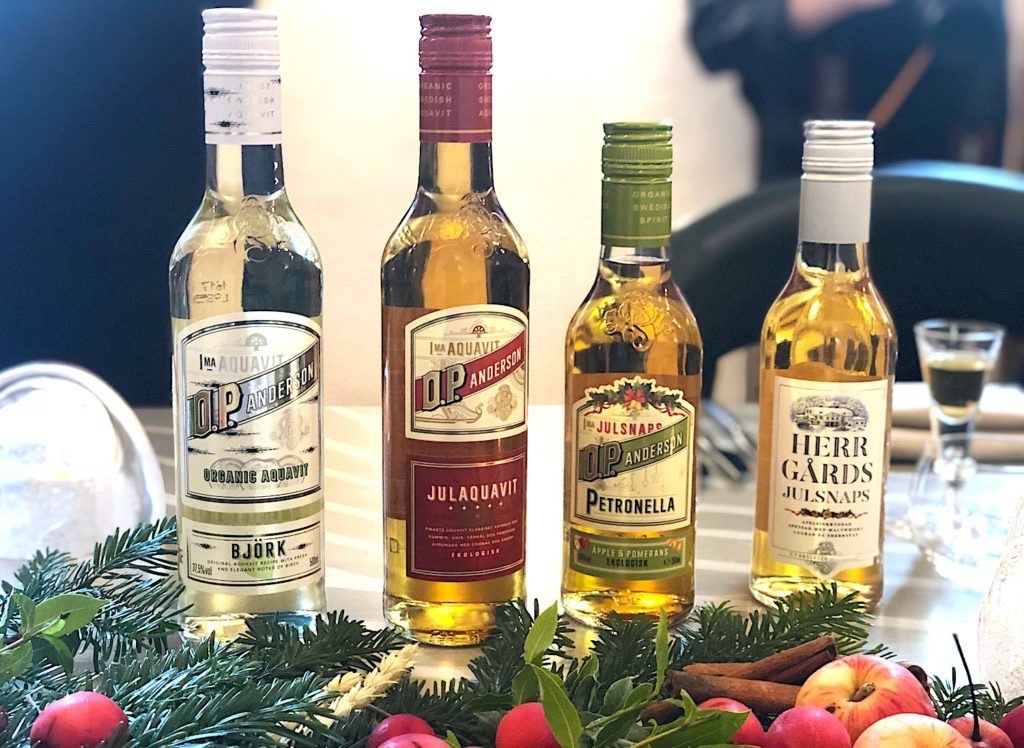
Lars and his sister Anna.Akvavit/Aquavit is a distilled spirit (at least 37.5 % in alcohol strength) produced in Scandinavia from grain or potatoes and flavoured with spices, especially caraway. Dill is also used in the Swedish version. The obligatory toast, Skål, precedes each shot.
Happy New Year! Let’s hope that the devastating wars ragging in too many parts of the world will come to an end. I especially grieve for Gaza that has and continues to be destroyed by US bombs, with some 45,000 lives lost. This has to stop. Let’s try to be optimistic and hope that somehow sanity and morality will prevail in the U.S.
If not a Tales and Travel follower, please sign up here. Trust me. It’s safe. Your address is not shared.
Check out my tried and true recipes — keep scrolling down on a phone, or, if on a /PC or tablet, up to the column on right then down to “Recipes.” I will add new recipes soon.
Forget the tree and presents. Of course, they are important. For foodies like me, however, it’s food that makes the holidays especially tantalizing, delicious, rewarding.
An overload of Christmas desserts in Portugal.
Eggnog, Christmas cookies, fruit cake, turkey, standing rib roast and baked ham are among American holiday treats. What about other countries? What do their citizens savour during the holidays? I asked several non-American friends about their Christmas food traditions.
Thiemo serves the salmonAndrea’s roasted no salmon and potatoesAndrea and her mother Tekla
GERMANY : “It must always be fish on the 24th,” says my German friend Andrea. She prefers salmon and roasted potatoes. Andrea, an excellent cook, seasons the fish with salt, pepper, rosemary, a bit of wine, and rubs it with oil, then roasts it. Delicious, and not a lot of work. Her father went for carp on Christmas Eve.
On the 25th, it’s venison goulash with priselbeeren (similar to cranberries) and dumplings for Andrea, husband Thiemo and her mother, Tekla. In many German households, roast goose is the Christmas highlight. When I lived in Germany, I tried it. Good, but tricky. It can easily dry out. The array of German holiday sweets is almost decadent: Stollen, homemade cookies galore, gorgeous cakes. Lebkuchen, a type of gingerbread cookie, are ubiquitous.
In FRANCE where I now live, the Christmas Eve Réveillon is the meal extraordinaire. It could begin with champagne and oysters, although these are popular throughout the holiday season. If not oysters, perhaps a mixture of shellfish or smoked salmon.
My Réveillon table – many years ago
Foie gras is also de rigeur, although controversial. Geese or ducks are force -fed during the last weeks of their lives to yield extra-large livers.
I love animals, but I also love foie gras. Many years ago, for article research I spent a day working at a goose farm. The geese did not resist the force feeding. Their owner insisted it was not cruel. This was a beautiful farm. The geese were free ranging until their last days. However, not all geese and duck farms are like this.
The French love champagne and oysters during the festive season.French Christmas dessert: Bouche de Noel Controversial foie gras is popular in France at this time of year.
I even took a foie gras cooking course and learned to prepare the delicacy which I did for Christmas guests. Those days are over. Now I feel guilty eating foie gras, but I do indulge in a wee bit at Christmas.
Turkey, or another bird such as capon or guinea fowl, can take the spotlight at the Reveillon dinner. A Buche de Noel (Christmas log), a fancy cake in the shape of a log, caps off the meal.
In ITALY, Cinzia tells me, after midnight mass on the 24th, all return home to open presents and enjoy Panettone, the Italian holiday cake, with a glass of sweet wine.
Cinzia loves her mother’s Christmas lasagna.
As in many countries, the customs can vary with regions. She hails from Piedmont, the north, where Christmas lunch on the 25th is the major event. As this is Italy, there’s a pasta course which, at Christmas, is usually homemade stuffed pasta, such as tortellini or cannelloni. Her favorite is her mother’s lasagna. “Now people eat it all the time,” she says, but formerly it was reserved for Christmas and special occasions. Roasted lamb, beef or the holiday special, zampone (stuffed pig’s feet) follow the pasta.
For Cinzia, the Christmas meal represents “the fact of feeling part of a family which was there for you year after year, the (illusory) idea that, no matter what would come, every year the family tradition of eating what she was cooking would perpetuate, it’s about a sense of belonging and ‘safety'”
Arabella (back to camera unfortunatley) leads her pupils in Christmas carols
Like Cinzia, Italian Arabella says her favorite is Panettone. But, at her house the major feast is on Christmas Eve featuring some type of meat. That’s fine for her husband and daughter. But, she’s a vegetarian and will also prepare ravioli stuffed with spinach and ricotta. She is also a big fan of an Italian Christmas chocolate, Cri Cri, with hazelnuts and praline.
PanettoneCinzia, left, and her friend Karine
ROMANIA: Romanian Florin remembers childhood Christmases in his country where carnati (smoked sausage) is a holiday must. Preparation in country villages begins on December 18 when neighbors gather outdoors to kill a pig, then cover it with hay and set it afire. Gruseome! Florin even remembers killing the pig once. The cooked beast is divided into parts. All work together to turn out the tasty sausage.
Slaughtered pig is covered in hay and set afire.Pig is butchered with some parts used to make holiday sausage.
Killing the pig is illegal today, but Florin says it probably continues in some areas. Those who are not up to the carnati labor, not to mention killing a pig, can purchase the ready-made sausage. Other Romanian Christmas musts are sarmale (stuffed cabbage) and cozona, a light “puffy” holiday bread.
PORTUGAL:“We eat a lot at Christmas and Easter, a lot of different things,” PortugueseCatarina says. “We have a full table of food. It’s too much. We don’t eat it all.” For Christmas Eve dinner, potatoes, carrots, the famous Bacalhau (boiled, dried salted cod), and more fill the table. Her favorite, however, follows the next day, roasted octopus at lunch. She hails from northern Portugal where roasted goat is also common on the 25th.
Roast goat takes center stage on many a holiday table in Portugal.
But it’s the desserts that shine – many, many different treats. She admits they are very rich and sweet, and she is not fond of all. “But I love to see and smell them. That’s Christmas.”
For Portuguese Christmas Eve: boiled cod and vegetables.Catarina and nephew DanyRoast octopus is a Christmas delicacy in Portugal.
She’s right. It’s not just the taste, but the enticing aromas and beautiful presentations that enhance holiday food and make it special. And — friends and family. “Christmas is to be at the table with family,” Catarina adds. Enjoy.
Happy Holidays and Bon Appetit to all.
Scroll down for more holiday photos
My German holiday decorations.
I’m old and so is this treasured Christmas recipe. Long ago I clipped recipes from newspapers and magazines. This one is a winner. Read my scribbled notes. I always go for recipes with a bit of booze. Rum makes this cake.
Smoked eel (exquisite) was a treat at one of my long-ago holiday dinner parties.British friends brought “crackers” and hats to this holiday dinner years ago.
My poinsettia
Coming soon, a guest blog by Swedish friend Lars on the Julbord, “the king-sized jumbo version of the famous smorgasbord.” It’s a food orgy, a mind-boggling, lavish assortment of tastes -and plenty of vodka. Don’t miss it.
If not a Tales and Travel follower, please sign up here. Trust me. It’s safe. Your address is not shared.
Check out my tried and true recipes — keep scrolling down on a phone, or, if on a /PC or tablet, up to the column on right then down to “Recipes.” I will add new recipes soon.
Comments, please!