Swiss Slopes Welcome Journalists

blog.ledeThey came, they skied, they raced, they partied – 210 journalists from 31 countries on the Swiss slopes above the charming town of Champéry. The ski terrain is part of the incredible Portes du Soleil ski region with interconnecting slopes in both Switzerland and France.blog.8

The 61st meeting of the Ski Club of International Journalists (SCIJ) had a serious side, too. Jean Claude Biver, president of the upscale Swiss watch manufacturer, Hublot, gave a fascinating presentation on the “Swiss model” and the history of watch making in the country. A panel of experts discussed climate change and the threat to mountains. Another panel talked about “swissness.”blog.27

But, it’s skiing that is foremost during these meetings, once each year in a different country. I’ve been a member for many years and, in addition to joining meets on European slopes, I’ve had the fortune to ski in Japan, the U.S., Argentina, Turkey and Morocco.

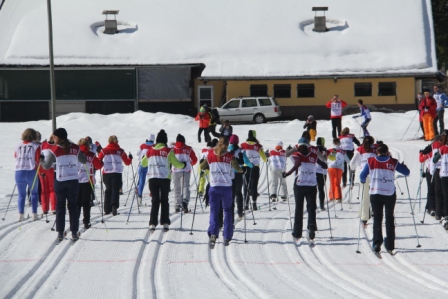
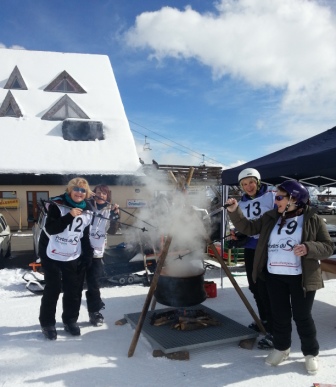
Races are de rigueur, both giant slalom and cross country. This was my first time back in the starting gates with my new knee. My times were slow, but I

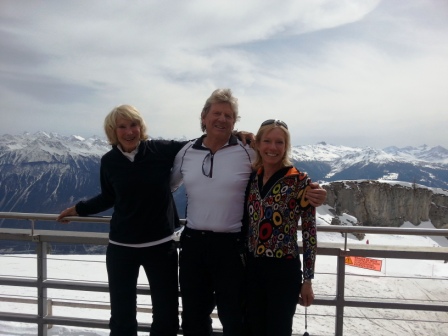
American teammate Risa Wyatt et moi.

competed. This was also my first time skiing in about four years. The bionic knee is a wonder, performing well beyond my expectations.

Even though SCIJ races are for fun, many take them seriously. It’s hard not to get pre-race jitters before the competitions. Races aside, skiing at Portes du Soleil, which claims to be the largest ski area in the world, is fabulous with slopes for all levels.blog.15

I joined friends for a trek over the mountains to Avoriaz and beyond in France. We had snow the first few days of our stay, so the off-piste skiers were in heaven, most skiing on freeride skis.   The more adventurous, equipped with  avalanche beacons and shovel, followed a guide to ski back country.

British table at Nations Night

Nations Night is a favorite on the après-ski agenda. Members bring delicacies (food and beverages, usually alcoholic) from their countries to share with others. There were just three Americans this time, myself, Risa Wyatt and Peter Schroeder, both from N. California. We had a Kentucky table. (Peter hails from Louisville and I got my journalism start at the Louisville Courier-Journal many, many years ago.)  We offered mint juleps, ham and corn bread. There was no blog.1reasonable way to get Kentucky ham to Switzerland, so we settled on a Swiss smoked variety which was delicious. I baked and lugged five heavy batches of corn bread in a backpack, in addition to a weighty suitcase, on the train from France. A major mistake!  Corn bread, I learned, is best eaten the day it is baked, not three days later. Although it had been enveloped in plastic wrap and then foil, it was hard, dry, dreadful. It all ended up in the garbage. (But — it was yummy the day it was baked, warm from the oven smeared with butter. See recipe in column at right.)

The week ended with a “White Party,” when all were asked to wear white. Bulgarian doctors and nurses joined sheiks and others clad in snow white for a fun and festive evening. blog.12

I went on to join a small group for a post trip to slopes in Crans Montana, another top Swiss ski resort. In addition to skiing in the sunshine, we enjoyed a tasting of wines from the Valais, Switzerland’s largest wine producing area. We also had the opportunity to savor diffferent Swiss wines at Champéry. Excellent, but unfortunately since limited quantites are produced, the thirsty Swiss drink most and little is exported.

Thank you, SCIJ Switzerland, for a super meeting!blog.26 SCIJ USA is looking for new members. If you know an American journalist who skis, tell him/her to check out the web site, www.scij.info , and/or contact me.

More about Champéry at www.champery.ch

More about Portes du Soleil, http://www.portesdusoleil.com

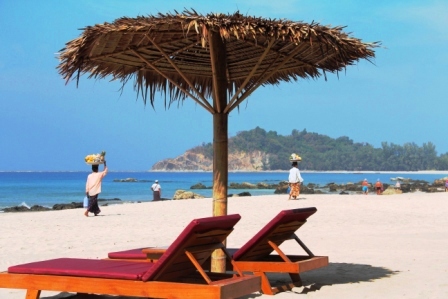
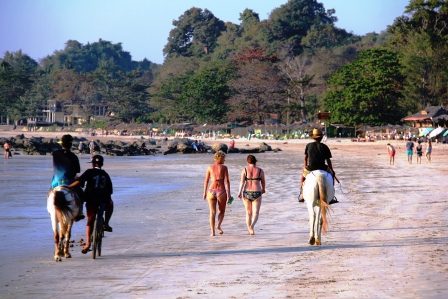
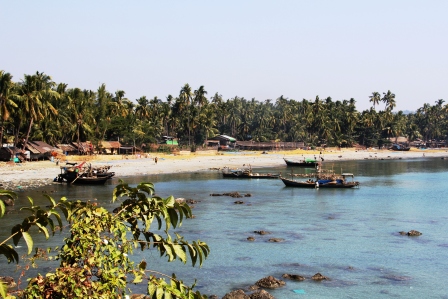
Share your thoughts…comments are welcome.  See “Leave a Reply” below. And, sign up, top right,  to see future posts.  More Myanmar coming soon, Blissful Days at Nagapali Beach.

 More SCIJ  photos follow:

Tatiana from Russia at a wine tasting in Crans Montana.


Some toured the Morand Distillery where tasting was tops.


Koos from Holland, the man behind the traditional pea soup served after cross country  race.
Koos from Holland, the man behind the traditional pea soup served after cross country race.


Czech beer after the cross country race was a hit.
Peter from Denmark
Peter from Denmark
Me, Peter and Risa at Crans Montana,
A cozy place for a warm up and rest.
And the winners are...
And the winners are…
A hearty Swiss soup followed the GS race.
Uros from Slovenia and friend.
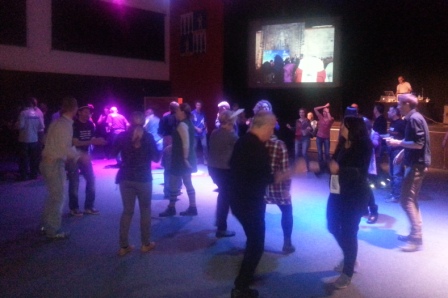
Some danced until the wee hours.


Cliona and Isabel from Ireland with Gill from Great Britain.

Myanmar’s Astonishing Sights

blog3.6

Reclining Buddha

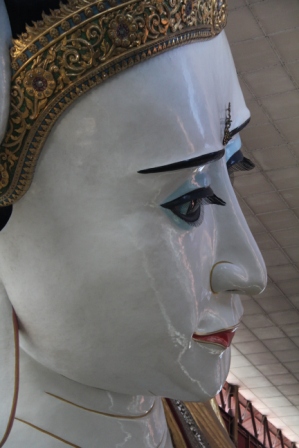
It is huge, bizarre, unreal.  We were flabbergasted.  “Incredible,” we uttered.  “You say ‘incredible’, but this is only the fifth largest Buddha in Myanmar,” our guide Min explained. This big Buddha in the city of Yangon was the first of blog3.25numerous touristic sites on our 13-day  tour of this fascinating country.  During that tour, we saw much more that can only be described as “incredible.”

The Reclining Buddha, 235 feet long,  was originally built in 1907,  but destroyed by the British and Japanese during World War II. It took five years (1952-1957) to make a new Buddha.  “It took two years just to make the glass eye,” Min said.    I was perplexed by Buddha’s face – eye make up, lipstick?  Isn’t Buddha a man?  “We want Buddha to look pretty like a woman,” Min explained.blog3.26

Buddha’s enormous feet were another mystery, each with 108 squares. Each square represents Buddha’s past life before he became Buddha.

Schwedagon Pagoda

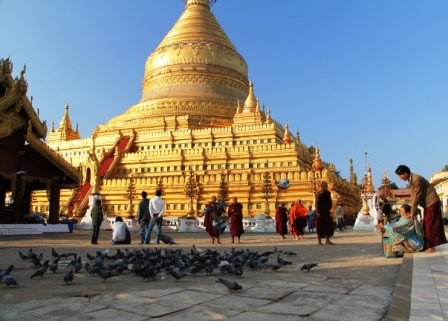
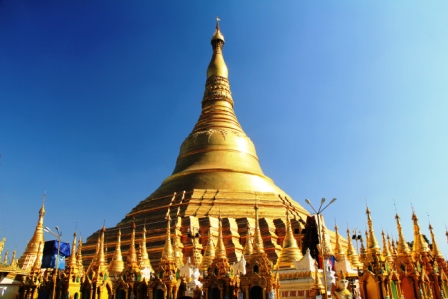
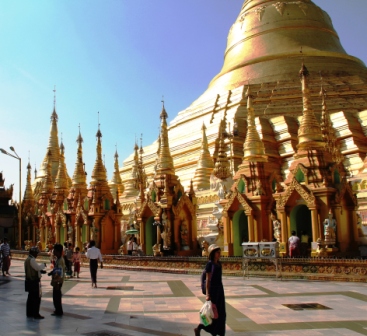
Another mind-boggling spectacle, this gilded temple complex in Yangon is the county’s most–visited sight, as well as a pilgrimage site.   Sixty-four lesser pagodas and numerous shrines are clustered around the golden dome (three tons of gold) which rises 322 feet above its base.    According to a legend, it is 2,500 years old. Archeologists, however, think it dates to sometime between the 6th and 10th centuries, but was rebuilt numerous times in succeeding years.  At the top of the dome is a diamond orb, a golden sphere studded with 4,351 diamonds.  And, at the very top, a 76-carat diamond.blog3.3

Min told us that eight hairs of Buddha are enshrined in the dome.  During our trip, we visited many other temples which are also said to preserve sacred Buddha hairs.blog3.1

I found people watching at the pagoda as interesting as the mammoth religious monument. Some kneeling in prayer at different shrines.  Others pouring  water on many of the countless Buddha statues. Yet others offering flowers to Buddhas.  And, many just sauntering around the complex, taking photos, laughing, even sitting in groups on the floor while enjoying snacks.   Definitely not a holy place of silent meditation.

Golden Rock

This giant boulder at the edge of a cliff (Mt. Kyaiktiyo), part of its base extended over the chasm below, seems as if it could come crashing down the mountain at any minute. And, like most religious monuments in Myanmar, it is golden.  We visited in time to watch the sun sink on the horizon and bathe the rock and surroundings in a pale pink glow.  Just like saints, Buddha gets credit blog3.24for many miracles.  This one could make you a believer.  According to Min, there have been many earthquakes in the area, but the rock has never moved.

Golden Rock is an important pilgrimage site for Myanmar Buddhists who burn incense, light candles, make offerings, and pray at the site. Men are permitted to approach the rock and affix gold leaf squares to its surface. Not unlike the scene at Schwedagon, the atmosphere on the surrounding terrace is more party than prayer.  Many of the pilgrims have traveled a  long way and come with mats to roll out for eating picnic style and sleeping at the site.

Getting to the rock on the mystical  mountain is an uncomfortable, yet griping blog3.4adventure.  Some pilgrims may hike the seven miles from the base camp to the top, but most, as well as tourists, climb in the back of huge open trucks which have hard wooden slats for benches.  Every inch of space must be filled before the trucks depart for the bumpy, bouncy ascent over a rutted dirt road at what seems are Formula I  speeds around hairpin turns through the jungle terrain.  Better than any roller coaster.

As mentioned in a previous post,  Myanmar is marching ahead on the path of progress. Work on paving the road to the top of the Rock was underway during our visit. It was dark when we left the site and walked down a path to a hotel where we spent the night.  The route is lined with souvenir stands, behind which the sellers and their families live in primitive shelters.  All had electricity and television —  new developments, Min said.

Baganblog3.5

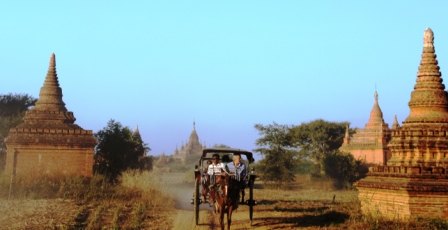
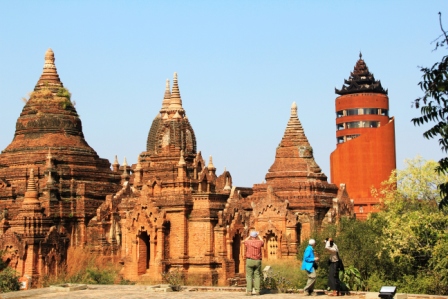
It has been called the Angor Wat of Myanmar,  a wonder of some 3,000 temples scattered across the plains of Bagan.  In every direction domes of the ancient temples dot the skyline.  Most were built between the 11th and 13 centuries and have been reconstructed.  Therein lies a major problem.  UNESCO stepped in to assist with reconstruction after major damage during an earthquake in 1975.  blog3.15According to Sai, our guide in Bagan, Myanmar’s military government kicked UNESCO out in 1989 and took over temple reconstruction, using cheap material and not adhering to archeological guidelines.  UNESCO called the fruit of their efforts a “Disney-style fantasy version of one of the world’s great religious and historical sites.”  For this reason Bagan is not on the UNESCO list of World Heritage sites.blog3.8

But, it should be seen.  The temples are in various states of decay and reconstruction.  Many can be entered, Buddha statues admired, chambers explored.  Some even have traces of ancient wall paintings.  Sai took us to Schwezigon Pagoda, considered the most important of Bagan’s temples, in the early morning when the sun’s rays were still soft, workers were busy sweeping the grounds and monks arrived to worship.  Few tourists to tarnish the mystical ambience.blog3.9

Tourists, however,  are important to the economy, especially in Bagan which thrives on visitors. Ox cart drivers offer rides through the plains past dozens of temples.  Boat drivers take passengers on excursions on the Irrawaddy River.   Souvenir hawkers abound.blog3.22

Sai led us to a temple popular for Bagan sunset viewing, a tourist must.  We climbed and climbed steps in dark, narrow, crumbling  passageways to reach the crowded rooftop where all had cameras ready.  A bridal couple even managed the ascent to have a professional photographer capture them with the temples and sunset in the background.blog3.10

I asked Sai to take me to a temple I had read about in Lonely Planet, Dhammayangyi Pahto.  He was reluctant, but agreed.  The temple has mysterious, bricked up passages.  Hundreds of bats cling to its ceiling.  That, plus its brutal  history, make a visit an eerie experience.  King Narathu had the temple built in the 12th century to atone for smothering his brother and father to death and executing one of his wives.  He ordered the brickwork to fit so tightly that not even a pin could pass between two bricks.  Those who failed at the task had their arms chopped off. Thus, it is believed the temple has bad karma and is probably why it never underwent major restoration.  And, perhaps why some guides prefer not to visit?

Pindaya Cavesblog3.18

Thousands of golden Buddhas  hidden in the inner depths of a massive limestone cavern. Definitely incredible!   It was another long and arduous climb up steps  to the entrance of the Shwe Oo Min Natural Cave Pagoda which shelters  approximately 8,700 Buddhas, many left centuries ago by pilgrims. New statues continue to be added by worshippers.  We followed a narrow path into the 460 foot long cave where Buddhas sit in crevices and crannies in the rock walls.  Tiny Buddhas. Buddhas draped in cloth. Buddhas made of alabaster, teak, brick, cement. Buddhas off in dark corners.  Buddhas under spotlights.  We walked  on and on and on through the maze of Buddha-lined passageways. Our guide for this part of the trip, Hein,  showed us a hole where a monk was supposed to have entered but never returned.blog3.19

I don’t suffer from claustrophobia, but it got to be too much.  I needed an escape to fresh air.  And, a chance to photograph the giant spider near the cave entrance.  According to a legend, seven princesses took refuge in the cave during a storm. An evil spirit, a “nat” in the form of a spider, imprisoned them. Along came a prince who heard their cries, killed the spider with an arrow, and freed the lovely princesses. “Myanmar is a golden land of legends,”  our guide said.  We heard many throughout the trip.

Inle Lakesights.2a

This is another tourist favorite in Myanmar.  We stayed at a hotel whose many buildings were all on stilts in the lake which is 13.5 miles long, seven miles wide and three meters deep.  Our tourist boat, a type of motorized canoe, took us to lakeside towns where we visited a market, monastery, and — more temples of sights.1acourse.   We saw floating gardens and stilt house villages. Hein told us that one third of the lake is comprised of these gardens, and that 80 percent of the tomatoes sold in Myanmar come from the floating gardens where rice, other vegetables and flowers thrive.  Incredible gardening!

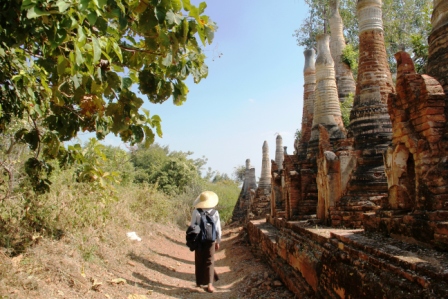
blog3.20We visited the Inn Thein Pagoda complex where some 1,054 small stupas are overgrown with moss and greens.  Most date from the 16th to 18th centuries and have decayed with age and encroaching vegetation.  Theft has been another problem. Gold and other precious valuables are often sealed inside Buddha statues.  Thieves destroy the Buddhas to recover the goods

More Myanmar to come. Don’t miss the next post, 10 blissful days at Ngapali Beach.  Add your email address at top right to receive future posts. And, please add a comment.  I love to learn what readers think about my posts.blog3.21

Military gov't built ugly tower in Bagan, closed temples with rooftop views and charged admission to the tower.Temples have been reopened Military gov’t built ugly tower in Bagan, closed temples with rooftop views and charged admission to the tower. Temples have been reopened

Burma Background

Is it Burma or Myanmar?  You will hear both.  Since 2011 the official name has been the Republic of the Union of Myanmar. The military junta changed the name from Burma, the name used since the mid 19th century, to Myanmar in 1989.  Rangoon became Yangon, and several other place names were also changed  — all in an effort to rid the country of British era colonial names.

U Bein teak bridge, 200 yrs. old, Mandalay.

During our travels, we inquired.  Which name did citizens prefer?  The answer we always got was “Myanmar.”

Schwedagon Pagoda, Yangon.

Following is a brief history lesson – important to understanding Myanmar today.

Burma was a British protectorate from 1885 until 1948 when it gained independence.  Civil war among minority groups followed until 1962 when General Ne Win took control and set up the world’s longest running military dictatorship. Industries were nationalized. Tourist visas were limited to one week.  Foreign books and magazines were not permitted in the country.  Burma was isolated.  The economy was in shambles.2blog.14

In 1988 peaceful protesters took to the streets.  Their leader was Aung San Suu Kyi, head of the National League for Democracy (NLD).   Military violence quashed the protests,  and in 1989 Suu Kyi was placed under house arrest. (She was released in 1995, but put under house arrest twice again.)  An election was held in 1990 with the NLD as the winner.  However, the military would not relinquish power and many politicians were jailed.2blog.8

The US and Canada imposed an investment ban on Myanmar in 1997, and in 2000, the EU intensified economic sanctions citing human rights abuses.

Protests broke out again in 2007, with monks taking a leading role. Thousands were arrested, 31 killed including a monk who was beaten to death.  In 2008, 2blog.7the country was ravaged by Cyclone Nargis which left 138,000 dead.  Shortly thereafter, in wake of criticism following botched up relief efforts, a long promised referendum on constitutional reform was held with the goal of creating  a “discipline-flourishing democracy.”

Inn Thein pagoda complex where hundreds of stupas are overgrown with vegetation and crumbling.

Elections took place in 2010, boycotted by the NLD, with the military-backed party the winner.  In 2011 a former general, Thein Sein, takes the helm as president and embarks on a series of reforms to direct the country toward democracy.  Suu Kyi was released from house arrest. A human rights commission was established.  Press censorship was relaxed. Political prisoners were released.  And, the door was open to tourists, as well as western companies for investment opportunities.
Those, and other changes that we witnessed, are encouraging. The real proof of democratic progress will come with elections in 2015.  According to the current constitution Suu Kyi, the national heroine,  is prohibited from running in the presidential contest because her late husband was British.  However, the constitution is supposed to be amended to permit her to run.

Dress restrictions for entering religious sites.

Since her party won in bi-elections in 2012, Suu Kyi is a member of parliament.  She is adored, revered by the people of Myanmar.  Those we spoke to said she could easily win the presidential contest.  Their hopes and aspirations lie with her.   Will the constitution be amended?  If so, will there be a fair election?

Aung San Suu Kyi
Aung San Suu Kyi

According to political commentary, Myanmar has gone too far to turn back the clock. Even without a constitutional amendment and Suu Kyi at the helm, economic progress marches on at a rapid pace. There are no Starbucks and Golden Arches yet in Yangon, but they are sure to come.  In this frenzied metropolis, there are clean, modern restaurants serving western food, a few fancy five-star hotels and more to come, multi-lane highways.   We found Wi-Fi everywhere we went in Myanmar– usually in the hotel rooms.  Construction sites abound.  Roads, even in remote areas, are undergoing improvement.  More and more tourist sites are installing modern, much appreciated, toilet facilities.

Women often work at construction sites.

Of course, all is far from golden like the country’s thousands of Buddhas.  Ethnic violence between Muslims and Buddhists plagues the western part of the country. According to a United Nations investigation, at least 40 Rohingya Muslims, the persecuted minority group, were massacred in January.  The government continues to deny the killings.   Guides talked of corruption, a lack of education and opportunities for the poor.2blog.5

“Before 2010, a Toyota (the car of choice in Myanmar) cost $22,000.  Now it costs $10,000.  But for the majority, $10,000 is still too much,” said one guide. (Guides did not want their names mentioned in conjunction with quotes. There is still a lingering fear of Big Brother.)2blog.1

The influx of tourists is helping with more jobs — working in hotels, on construction of tourist facilities, as guides, drivers.  That can only get better.

“Before 2011, there were between 700,000 and 800,000 visitors per year to Myanmar,” another guide said.  “In 2011 there were 1.05 million tourists, and in 2012, 1.5 million.  We expect 3.5 million this year.”

 We are glad we got in before the rush.  Our trip was booked with Asian Trails (www.asiantrails.info) During our 13-day sightseeing tour we had four different

Guide and Bob at Golden Rock.
Guide Min and Bob at Golden Rock.

guides and drivers, different ones for different regions. We flew from Yangon to Bagan, from Mandaly to Inle Lake, then to Ngapali Beach and back to Yangon. After the tour, we spent 10 blissful days at Ngapali, Myanmar’s unspoiled beach resort.  Cost per person: $3,335, which included all transportation, ground and air,  within Myanmar, all hotels, two meals per day (except at the beach where only breakfast was included), guide services and admission charges. 

The guides all spoke English and were extremely knowledgeable. They pointed out the best places for photos and made sure we got sunset shots. Both guides and drivers were polite, courteous and obliging – often taking us to places that were not on the pre set itinerary.

Bagan, amazing site of thousands of temples

The cars were comfortable and air-conditioned, with bottles of water and handi-wipes provided.  The latter were indeed handy to clean dirty feet after barefoot treks through temples. We were delighted with our visit and Asian Trails.

Guide Hain
Guide Hein

Next Myanmar installment:   Myanmar’s Super Sights.  Don’t miss it.  If you are not already a Tales and Travel follower, sign up by entering your email address at top right. WordPress will email you the link to new posts. Comments welcome.  See below, “Leave a Reply.”

Tales and Travel has a new look thanks to the creative talents of friend David Regan.  We like it — hope you do, too. 2blog.10


Off to Myanmar

We took off our shoes at least 565 times.  We climbed 6,899 steps.  We admired 22,576 Buddhas.

I made up the numbers, but they may not be far off.  A trip to Myanmar, a fascinating land in the throes of long overdue changes, is much about about temples (you cannot enter wearing shoes), all adorned with countless statues of Buddha.    And, many of those temples are accessed only by long climbs up steep steps.blog.lede

“This is Burma.  It is quite unlike any place you know about,” wrote poet and novelist Rudyard Kipling after a visit to the county more than a century ago. Today the country is known as Myanmar, but his words still echo true.blog.3

During our travels we were overwhelmed with mind boggling sights: a cave with 8,700 Buddha statues, a giant golden rock miraculously clinging to the edge of a chasm . . .

blog.2. . . parades of monks draped in burgundy colored robes lined up to receive food offerings, women whose faces appeared to be smeared with mud….  We visited big, chaotic cities (Yangon and Mandalay).Women smear their faces with a paste made from logs. It acts as a sun block and moisturizer.

Women smear their faces with a paste made from logs. It acts as a sun block and moisturizer.

During drives through the countryside we witnessed the simple, primitive way of life of farmers, and often suffered bouncing over rutted roads.   We chilled out at a perfect beach resort, not yet spoiled by hordes of tourists.  I loved the colorful markets, the tasty food, and learning about the people and their staunch devotion to Buddha.  More about all will follow in several blogs.

blog.4

First, a word about the shaky start of this incredible voyage.  Facebook Friends have seen posts on what follows, but many Tales and Travel readers are not on FB.

Crisis Number One: Before landing in Frankfurt where we boarded the plane for the long flight to Singapore, I asked BB (husband Bicycle Bob and long suffering travel companion) if he had the credit card.  We had agreed that only one of us needed to take a card.  “No, you have it,” he said. “No, you are supposed to have it,” I answered.  Major misunderstanding. Bottom line:  No credit card and not an auspicious beginning to a five-week long trip.  Panic.  Stress.  Anger. We only had a brief layover in Frankfurt, but we had plenty of time between planes in Singapore before flying on to Yangon.  We made numerous calls back to our friends and house sitters, Dee and Allan, in France.  They researched methods of getting a credit card to us.  French Chronopost came to the rescue.  Other services, such as DHL, would not deliver to Myanmar.   That was on Friday.  Monday afternoon in Yangon we had the card. A miracle!  Cost for this amazing service, just 58 euros.blog.7

We were fine at the onset of the trip without the card.  Cash, new US dollars (issued after 2006) and not folded, is currently the recommended currency for travelers in Myanmar.  Some places do take credit cards, but charge a hefty fee.  We had an ample supply of dollars ordered from our bank, so even without the plastic, we could enjoy meals without washing dishes.  But, we would need the card before the end of the trip. We were saved by Dee and Allan and Chronopost.

Crisis Number Two:  My tooth.  The day the credit card arrived, I woke up with a toothache.  Surely it will go away, I thought.  No such luck. It only got worse, and worse, and my cheek began to look as if I had a tennis ball in my mouth.  Our guide took me to a dentist recommended by our first rate tour blog.5company, Asian Trails.   He spoke some English, and his office appeared clean.  He wore gloves, a mask, and had many pretty and very young assistants. He said it was a wisdom tooth, gave me pain pills and antibiotics, and cautioned me to avoid the “odors of hot oils” ??  If it did not get better, I could come back and he would extract the tooth.

The medication helped for one day only. However, I had fears of letting this dentist pull my tooth, especially when the guide told me the dentist had told him it would be better to wait and have the tooth extracted when I got back to France as complications could arise.  He obviously did not want the job.  Our return to France  was five weeks down the road.  I could not live with this pain for five weeks.

As mentioned, I had posted our troubles on Facebook.  One friend wrote that the trip was “doomed.”  World travelers Dee and Allan advised not to have a tooth extracted in Myanmar where hygiene and sanitary conditions are dicey.  A young woman I met, a 21-year-old pediatric dental assistant in Connecticut traveling with a group of Jehovah Witnesses for a conference,  said I definitely needed to get rid of the tooth.  It is probably infected, she said, and the infection would only spread… and could even lead to death.  Sacre Bleu!  If a Jehovah Witness advises a medical procedure, you know action is required.

Now what?  Perhaps the trip was doomed. I was a wreck and could not enjoy the sights.   Fortunately in the middle of the night I had a bright idea:  Call the

BB waits in dentist office number 2. Shoes must come off, but instead they covered his. Fear of stinky feet? BB waits in dentist office number 2. Shoes must come off, but instead they covered his. Fear of stinky feet?

American Embassy.  They recommended Dr. Aung Myint who saved the trip, and, who knows,  maybe my life. I was relieved just entering his classy office with certificates from Denmark and  Paris posted on the walls of the waiting room where  copies of Fortune, Newsweek and Reader’s Digest were offered as reading material.  His equipment was  state of the art  –far more up to date than many dentist offices I have seen in southern France.

We had been to our dentist before departing as a security check.  No problems.   Why did this tooth suddenly go bad?  Could be stress, the super dentist replied.  Aha — blame it all on the forgotten credit card.    He pulled the tooth and all was well.  X-ray, tooth extraction and stitches:  $70. We found many more bargains during our travels, but that was the winner.

As mentioned,  food in Myanmar is  good and different.  We had many versions of a delicious avocado salad. See recipe column on right for the versison made at the cooking school we attended while at the beach. 

The Cordon Bleu is was not -- our The Cordon Bleu it was not — our “cooking school” kitchen.
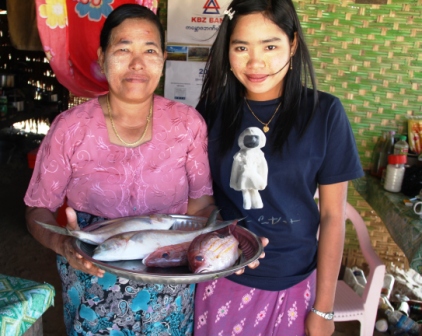
Don’t be put off by appearances. Food was delicious.

Following,  a photo gallery of Myanmar as a preview of coming blog posts.

Comments are appreciated.  So are new subscribers.  Don’t miss coming Myanmar blogs. Click on Email Subscription, top right or the “Follow” button at the bottom of the screen.

Souvenir sellers on the beach where mother of pearl items are popular. Souvenir sellers on the beach where mother of pearl items are popular.
Inle Lake Inle Lake
Ngapali Beach Ngapali Beach

gallery.21

At work in the fields. At work in the fields.
Poinsettia blooming along the road. Poinsettia blooming along the road.

gallery.18

Shoes -- and socks-- must come off before entering temples. Shoes — and socks– must come off before entering temples.
Buddha statues are often golden. Buddha statues are often golden.
Sunset on Irrawaddy River. Sunset on Irrawaddy River.
Nuns, seen here at market knife stand, wear pink. Nuns, seen here at market knife stand, wear pink.
Temple in Bagan, the Angkor Wat of Myanmar. Temple in Bagan, the Angkor Wat of Myanmar.
Temple decor Temple decor
Too many homeless dogs in Myanmar. Most all look like this fellow. Too many homeless dogs in Myanmar. Most all look like this fellow.
Cleaning a train car at Yangon station. Cleaning the “ordinary class”  train car at Yangon station.
Monks and Buddha. Monks and Buddha.
Temple workers take a siesta break under the watchful eyes of Buddhas. Temple workers take a siesta break under the watchful eyes of Buddhas.
Reclining Buddha. 235feet long. Reclining Buddha. 235 feet long.


Réveillon 2013

My German Christmas treasures.

Joyeux Noel!  In France, the main holiday event is the Réveillon, “un grand festin,” the big feast on Christmas Eve.

I invited British friends Mollie and David with their daughter Jenny and her partner Chris who had arrived from England at 3 a.m. on Christmas Eve after a long and harrowing drive.OLYMPUS DIGITAL CAMERA

The house is appropriately festive, decorated with some of my favorite treasures.  David and Chris took these outstanding photos.  I had to concentrate on cooking.

Food – a bit of a challenge as David and Jenny are vegetarians and Mollie, recovering from recent surgery, has certain dietary restrictions.  I scoured the Web for some new recipes, and also relied on some old favorites.

Our meal, with a few exceptions, was more like an American Thanksgiving, BB’s favorite. Since I was in the hospital this Thanksgiving (nothing serious), he missed out.  So, turkey it was with plenty of trimmings.OLYMPUS DIGITAL CAMERA

In France oysters and shell fish are the standard first course of this repast.  Instead, we had smoked salmon and smoked eel, both ordered from a fishery in Denmark.  The eel (cute fellow) had to be skinned and sliced.  I delegated that task to BB.  According to the instructions that came with the Scandinavian delicacy it is best  consumed with a shot of icy akavavit.  None in our liquor supply, so we drank champagne supplied by our guests.   The vegetarians had baked camembert with pears.  All were happy.???????????????????????????????

The next course would most likely be foie gras in France.  I love it and usually prepare my own rather than buying the ready- to- eat version.  It can be a culinary challenge.  I took the easy road and served Harvest Bisque, a Christmassy butternut squash soup served with a scoop of vanilla ice cream.  It is usually a hit.  The recipe is listed under recipes in column on right.

Harvest Bisque and family heirloom:  Great grandmother's Haviland (Limoges) china.
Harvest Bisque and family heirloom: Great grandmother’s Haviland (Limoges) china.

Next the bird.  No Butterballs in France. My friend Lynne, cook extraordinaire, xmas2013.8turned me on to brining the turkey several years ago.   The result: a moist turkey.

We had numerous (perhaps too many) side dishes:

Creamed  Spinach and Parsnips (recipe from Food & Wine web site)

Broccoli and Cheddar Casserole with Leeks (another Food & Wine recipe)

Red Cabbage with Ginger (combination of a German recipe and the recipe of my friend food writer Sharon Hudgins, www.sharonhudgins.com).  Germans serve this with Christmas goose.  David  tells me the British also serve it with goose. ???????????????????????????????It’s not found on the French table, but  I like it and it goes well with turkey, too.

Mashed Potatoes with Horseradish (an old Bon Appetit recipe – but his time the potatoes came out too runny)

Helen’s Brandied Sweet Potatoes (my mother’s recipe – a family tradition).  This is also listed under Recipes in the column on right.

Classic Sage and Onion Stuffing (Web recipe from The Kitchen).  I usually make stuffing with dried fruit and/or sausage. Those would not do this year.  This concoction did not send me.xmas2013.9

Gravy

Preiselbeeren (German/Austrian berry, like a tiny cranberry). Austrians Klaus and Eva who rent our guest apartment for a month every summer, always bring us a jar of this treat.  They gather the berries in the forest and then preserve them.

David and Mollie brought a magnum of an excellent red wine, Gigondas 2011, La Font Boissière, and a white, Laure, Côtes du Rhône 2012, Domaine Rabasse Charavin.   BB added an American vintage, Gnarly Head Old Vine Zinfandel 2006.bb_wine-001

Desserts:  Tiramisu au Pain D’Epices (spice bread).  I frequently watch a French morning show, Télé Matin.  The recipe was given during a food segment last week.  Tiramisu is always a winner. With the spice bread, I thought it would be perfect for Noel.   A disaster.  It was tiramisu soup. The taste was not bad, but texture, a miserable failure.   I should have relied on Sharon Hudgins’ excellent recipe, my tiramisu favorite.

Pumpkin Pie. I know.  It’s usually a Thanksgiving dessert, but BB craves it.  It was interesting to see the British reaction to this all American favorite.  Irish friend Martine once said she “just did not get it.’  Chris said it was not sweet enough.  David liked it. Jenny – not sure.

Cookies – Five different kinds I baked the week before Christmas.

The finale:  Christmas crackers and hats
The finale: Christmas crackers and hats

Not only did they bring the champagne and wine, but our guests came with Christmas crackers (not edible).  For the British, a Christmas meal is not Christmas without the crackers, paper gizmos with two ends.  You pull one end and the person next to you pulls the other.  Pop!  It explodes and a small Christmas present falls out.???????????????????????????????

For those of you who still have a holiday meal to savor, Bon Appetit. And, Happy New Year to all.  Tales and Travel will take a break until February.  We’re off on an exciting adventure to Myanmar soon, followed by a return to the paradise we discovered in Bali two years ago.  See previous post, A Dentist and his Jungle

My childhood Christmas stocking and  a prized gift from my mother, a Santa trimmed with mink.
My childhood Christmas stocking and a prized gift from my mother, a Santa trimmed with mink.

Haven, Feb. 14, 2012.

Comments are always welcome.  Tell us about your holiday meal. See “Leave a Reply” below under Comments. Subscribers also welcome. Don’t miss future posts. Click on Email Subscription at top right.