Hotel California

Welcome to the Hotel California, but it’s a hospital, not a hotel. Nonetheless I instantly thought of that Eagles hit song from 1977 when I entered this bizarre place.

Helio Marin in Vallauris, Francé, aka Hotel California in this post

„This could be heaven or this could be hell“

…And she showed me the way

There were voices down the corridor

Thought I heard them say

…”And I was thinkin to myself

Welcome to the Hotel California

Such a lovely place. Such a lovely place.“

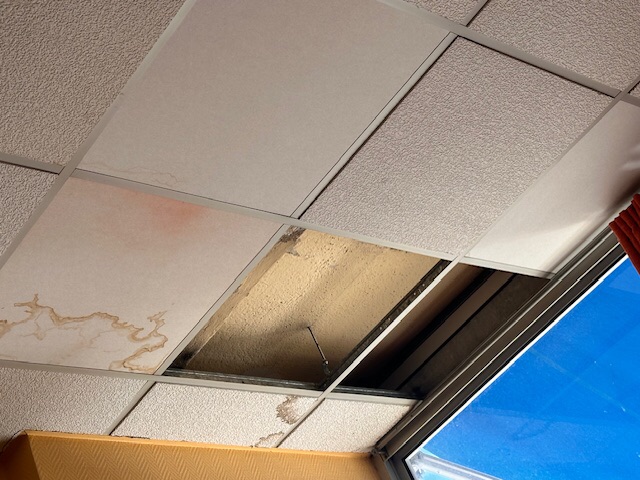
My room: Old, shabby, paint chipped walls, a big hole in the ceiling. Ahh— but the view from the 4th floor balcony is splendid with the Mediterranean Golfe-Juan in one direction, and the Bay of Cannes in the other. “A postcard view,” as a visitor said.

I am here for therapy following my third femur surgery since my great fall last June (see a previous post, My Sorry Story). Helio Marin, this facility, has a sterling reputation as a rehabilitation center, although as I looked around that seemed hard to fanthom. I was seduced by the view and figured I could tolerate the depressing room — until I pulled back the plastic curtain and glanced into the minuscule bathroom. NO TOILET.

View from my balcony. Golfe-Juan

I completely freaked out. “ There is no toilet in the bathroom,“ I shouted to the aide who had led me to my new home. That is true, she said, but there is a toilet down the hall. What? This is 2024 and the rooms do not have toilets. I was incredulous, thinking back to student days traveling with “Europe on $5 day.” That was then — some 60 years ago. I am old, too old for down-the-hall bathroom treks.

“I cannot stay here.“ I was upset, angry, bewildered. “ I will call the „Cadre“ (big boss),“ the aide said. Madame Cadre (MC) appeared. Medium length, straight dark red hair. Glasses. Stern demeanor. No welcome smile, but a piercing stare meant to instill fear.

I was adamant. I insisted that I needed a room with a toilet, that I could not make the trips down the hall. “Why not? You can walk.“

An attelle supports my broken femur.

“Lady, I am in a wheelchair. I can’t walk. That’s why I am here.”

She stated that this was the only room available. Take it or leave it, but she could put me on the waiting list for a better room with toilet.

I was frantic. I called the hospital where I had the recent surgery. They had arranged for me to come here. Please find me a room somewhere else, I pleaded. The woman in social services insisted this was the best place for my recuperation. Just be patient. You will get a better room, she said. The other facility she had recommended had no rooms.

I was stuck. It was either stay here or go home. I knew I was in no condition to go home and take care of myself.

I did not unpack, hoping I would have a better room in a few days. I gazed into the bathroom one more time. No shower either. That too is down the hall. Nothing to do but retreat to the balcony and let the view soothe my troubled soul.

Bay of Cannes

Not for long. MC returned. “What are you doing out there? It’s dangerous, forbidden,“ she screamed. „Get in here.“ I dutifully wheeled myself back inside. This was too much, like a bad dream.

I later learned the balcony, a wide structure with the rooms opening onto it, is like everything here: Old. It is wooden, rotting and in danger of collapse. You can tread lightly at your own risk, but only on the initial portion. The area near near the edge is off limits. When MC departed, I disobeyed and ventured to the edge, the best place for photos. I was not the only one.

The next day I wanted to take a shower and wash my hair, yet there was a problem. I had neither towel nor wash cloth. You are expected to bring your own. How was I to know? During previous hospital experiences, they had been provided. Someone scrounged up a towel for me. I asked an aide if I could have a disposable wash cloth. I know they come in packages of 100. Hospitals use them.

„I have to ask the Cadre“ he replied. Madame’s answer: NO! I was not entitled to a disposable wash cloth. I obviously had not endeared myself to MC. I would be punished.

Originally a plaque supported my broken femur. It too broke and has been replaced by a rod.

According to the Helio Marin welcome brochure, for a fee you can have laundry service.  I asked my friendly morning nurse team about it.  They only knew of a washing machine and dryer for the use of patients.  But, they would ask the Cadre.  I told them not to bother, that she did not like me. 

“Don’t worry.  She does not like anyone.”

Bottom line.  Brochure lied.  There is no laundry service. The washer and dryer only work with payment by credit card.  When I checked in, I had been advised to leave valuables (cash, jewelry, credit cards ) with the office for safe keeping.  I did.  

Now I had to go back and sign out a credit card to do my laundry.  What about detergent?

You can buy it at “Snack”, I was told. Wrong. Snack has no detergent for sale. My dirty clothes had to wait for my friend Karen to bring me detergent.

Continue reading “Hotel California”

Picture Budapest

Dynamic, bustling, beautiful.  Old architectural wonders.  Luxurious thermal baths.  Trendy boutiques. Innovative eateries.  A lively after-dark scene.  Friendly, helpful folk -many speaking English.

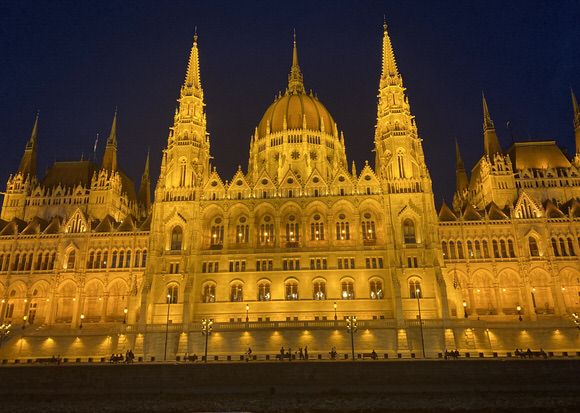
Budapest’s Parliament is one of the largest parliament buildings in the world. It was inaugurated in 1902.

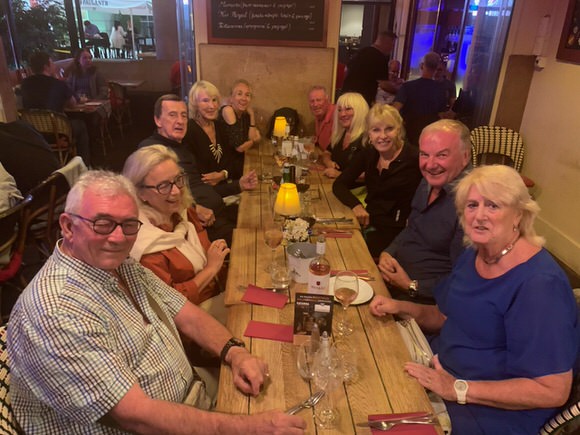
Budapest, the “Paris of the East,” is a fun and interesting place to visit.  Husband Bob and I recently joined a group of eight from the British Association in Menton, France (near where we live) for  a cheap Whiz Air flight from Nice to Budapest.  All was grand until our return flight was canceled due to the air traffic controller’s strike in France. Getting home was complicated – a day waiting at the airport, an evening flight to Milan where we spent the night, then train and taxi. Nonetheless, we all survived and are happy we experienced this exciting city. 

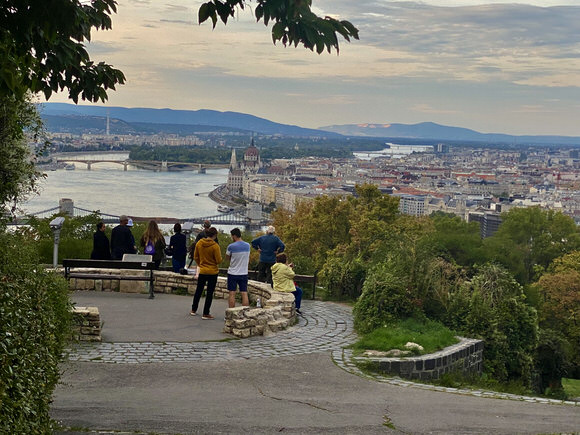
Overlooking the city on the Danube

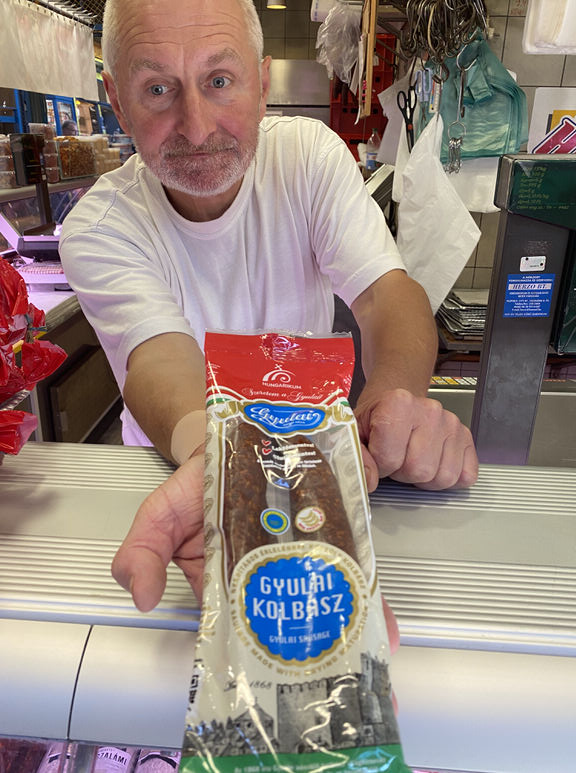
Following are photos of our visit.  I will be writing more soon:  A post featuring the views of Hungarians on their far-right Prime Minister Viktor Orban,  and another on food.  As an American journalist, I was curious to learn why Orban, a buddy of Donald Trump and chummy with Vladimir Putin, is so popular at home. As a passionate foodie, I was intrigued with the history of Hungarian cuisine and its specials (more than goulash).  Stay tuned.

If not a Tales and Travel follower, please sign up here. Don’t miss future posts.

The Parliament – encore.
The Great Market Hall, a major attraction, was built in 1897. It has three floors of goodies, from fruits and veggies to souvenirs, pickles and paprika.
We enjoyed an evening dinner cruise on the Danube with serenading musicians.
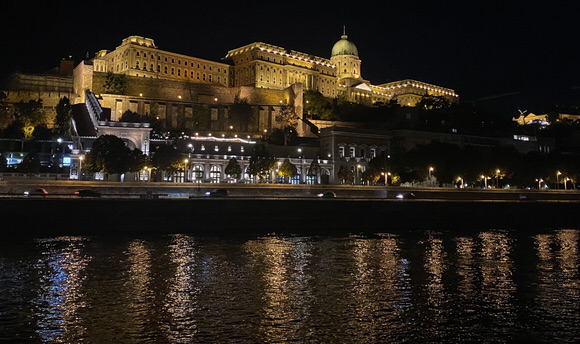
Budapest is a wonder of treasures from important eras of European architectural history. The Parigi Palace, above, is from the early 20th century.
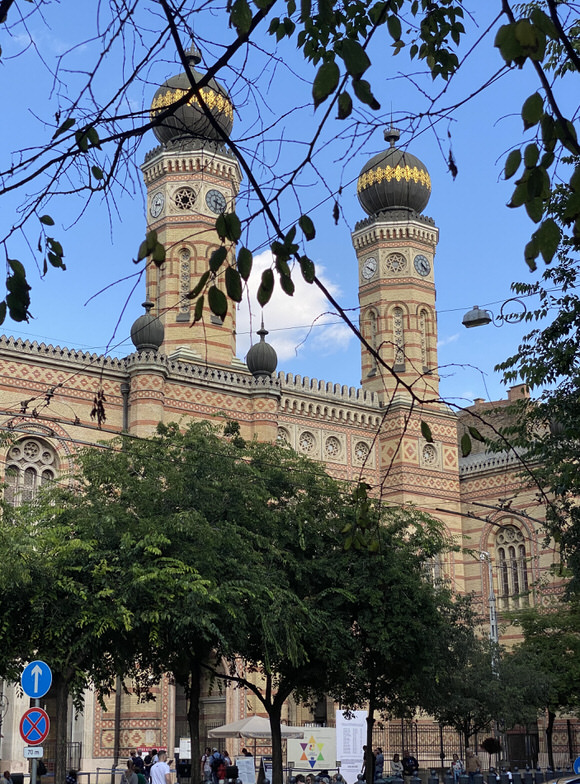
The Dohany Street Synagogue (1854-’59), Europe’s largest synagogue, is a blend of Neo-Morrish, folkloristic Hungarian and Jewish styles.
Classy Old World cafes are a Budapest delight.
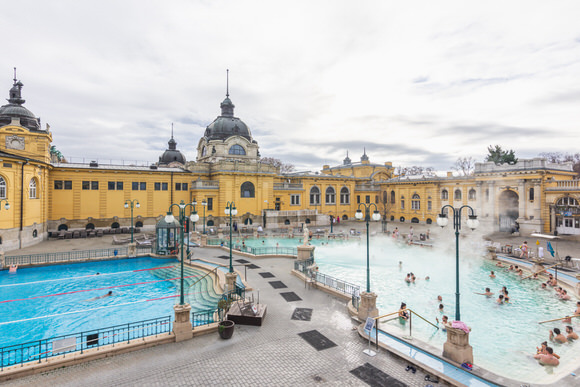
Many in our group spent a day at Szechenyi Baths, just one of many in the city often called “The City of Spas.” BudapestBand/Bartha Dorka
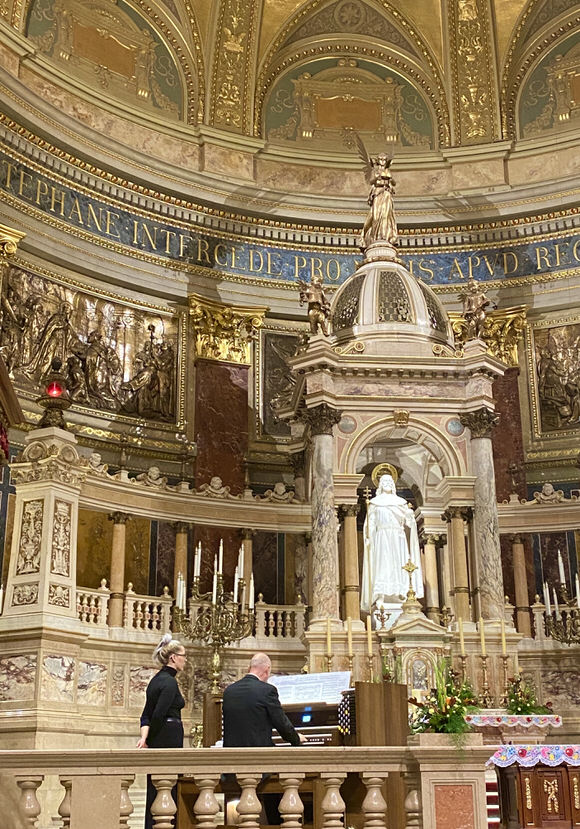
We attended a fabulous organ concert at St. Stephen’s Basilica, named after Hungary’s first king.
The Neo-Renaissance Hungarian State Opera House (1884) has recently been renovated.
interesting building decor.
Our group in Budapest

More coming soon, including – at long last recipes.

If not a Tales and Travel follower, please sign up here. Don’t miss future posts.

Croatia Calling

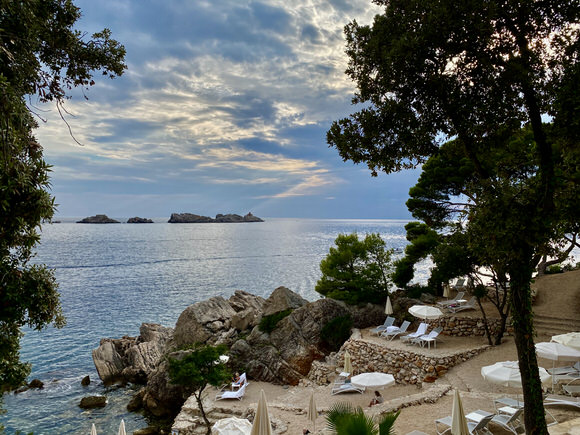
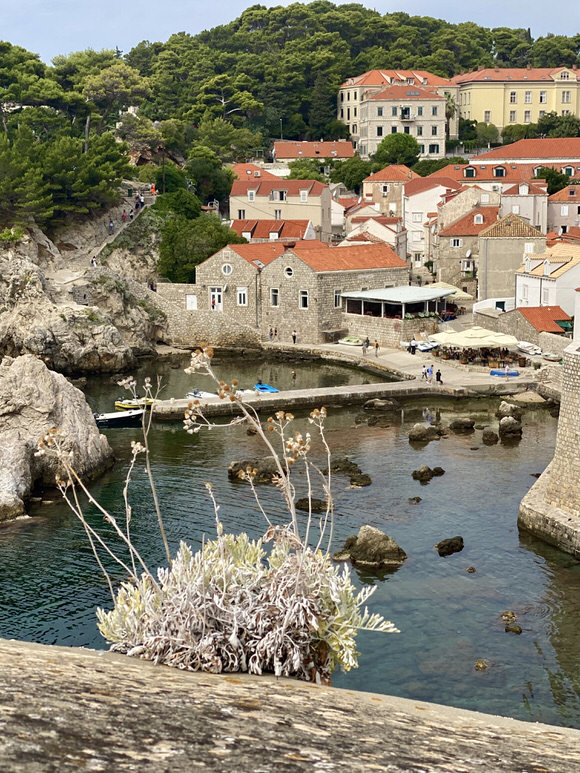
Terraced beach on the Dalmatian coast near Dubrovnik

 Last September I had the good fortune to accompany my friend Karen to her apartment on the Croatian island of Milna.  She insisted on doing all the driving, about 1,200 kilometres or 750 miles. I felt like chauffeured royalty.

Port at Milna

 En route we detoured to Varenna along Lake Como in northern Italy for a two-day break.  (See a previous post, “Bellissimo Lago di Como,” with many photos of the stunning area.) 

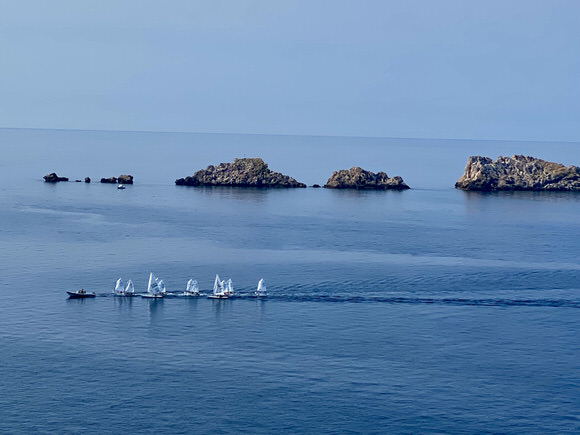
Serenity on the Dalmatian coast

The island of Mljet. There is a National Park on the western part of the island.

The journey from Varenna to Milna was long. We waited in a line of cars for almost two hours to cross the border from Slovenia into Croatia. When we reached Split after a day and half of driving from Varenna, my dedicated driver finally had a rest. We boarded our first ferry for the trip to her island. 

Sunset on the Adriatic

Ferries, all sizes,  are the mode of transport  among the Croatian islands. The country claims more than 1,000 islands, but most are small and uninhabited. Some ferries transport cars and people. Some are for passengers only.  Backpackers, families with kids and dogs in tow, old and young – all aboard.  We rode many during our week’s stay.

Karen’s apartment sits atop a hill not far from the ferry stop in Milna.  This was her last visit. She had recently sold the apartment which she had owned for 13 years.  The long trips to reach Milna were getting to be too much.

During our stay we visited other islands, swam in sparkling waters at idyllic beaches, and ate very well. Croatia is paradise for fish and seafood lovers.  We savored  monk fish with truffle sauce, black risotto with shrimp, fettucine with seafood, mussels, calamari, and scrumptious seafood platters. 

I was keen to visit Dubrovnik where I had been many, many  years ago on assignment for the newspaper Stars and Stripes. I remembered those monumental city walls.

Le Stradun, main artery in the old city of Dubrovnik

Instead of staying in the city, we splurged on a luxurious  coastal hotel.    A bus took us to town where we joined numerous other visitors to walk atop the walls which are considered one of the best-preserved medieval fortification systems in Europe. Wall statistics:  1,940 meters long encompassing five forts, 16 towers and bastions. And steps: 1,080.

A Dubrovnik must: A walk/climb on the ancient walls around the town
Get your exercise climbing 1,080 steps on Dubrovnik’s walls.

More steps, a grand total of 4,343, are within the city perimeter. And cats.  Everywhere. As a  cat lover, I was thrilled and spent too much time trying to get the perfect feline photo.  The kitties  are accustomed to all the attention and seem to pose for photos as they lounge in the middle of plazas, take a cat nap on restaurant chairs, curl up in flower pots, saunter through cobbled alleys.

Dubrovnik cats are considered its oldest citizens.  Their ancestors helped fight the bubonic plague carried by rats.  The plague ravaged the city in the 14th century when Dubrovnik, known as Ragusa, was a main trading hub between Europe and the Ottoman Empire.  Trading boats, coming from all around the Mediterranean,  brought goods to the city, ship cats who disembarked — and the plague.   The cats were welcomed and treated well for their help in fighting the disease.

12th century cathedral of Saint Tryphon in Kotor

Even more cats wander freely in Kotor, a coastal town in neighboring Montenegro.  I had read about the country’s spectacular coast and wanted to visit since it was so close  We set off to Kotor with scenery photo opps the entire way. Those travel articles did not exaggerate.  Kotor, like Dubrovnik, has a medieval old town, lively squares and twisty streets.

A stop for a stroll in Perast on the Bay of Kotor, Montenegro

The Kotor cat is a symbol of good luck.  As in Dubrovnik, cats originally arrived via ships. They helped control the rat population, as well as snakes and other nasty critters from  nearby mountains. Today the cat also contributes to the Kotor economy.   Cat shops selling feline souvenirs and cat paraphernalia are popular.  There is a cat museum. As one blogger wrote, Kotor is for “cat-o-holics” (me).

Before we returned to Milna, we spent a day lounging at our hotel, marveling at the beauty of the surroundings, swimming in the clear water, and taking too many photos.  We did not want to leave.

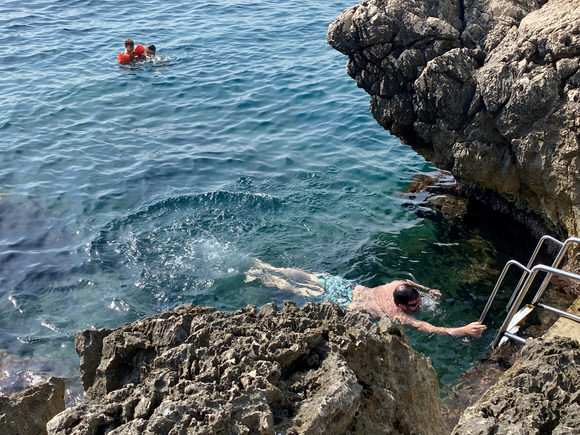
I loved swimming in these waters, but was too chicken to jump from the rocks.

Croatia rates three Michelin stars plus – definitely “worth  a visit.” Croatians are friendly folk, and English is widely spoken.

 Thank you, Karen, guide extraordinaire, for sharing your  swansong journey with me.

More photos follow.

If not a Tales and Travel follower, please sign up here. Don’t miss future posts.

Croatia is a Mecca for sailors and their boats. In Milna we met a Texan with his boat.
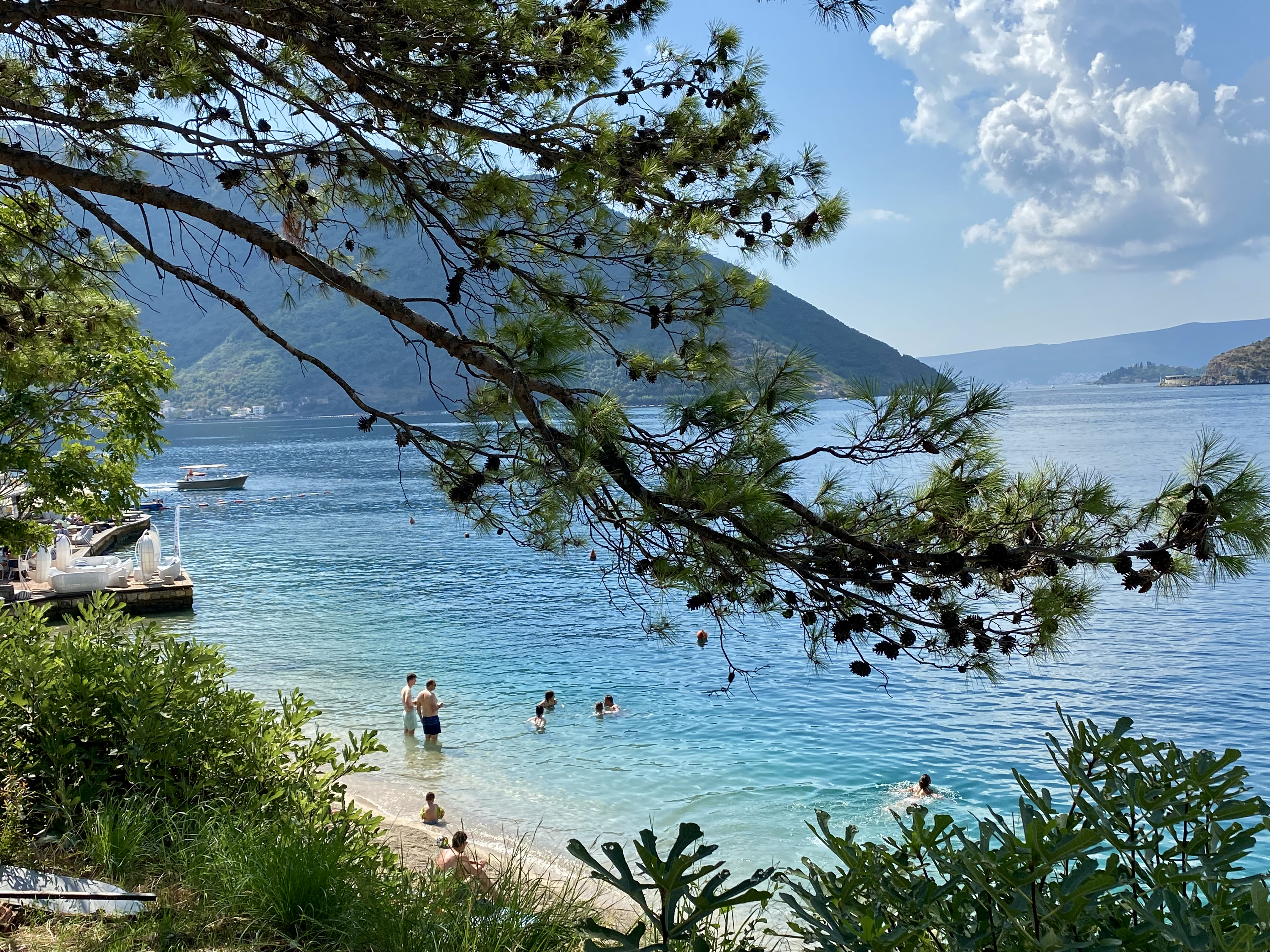
Blissful beach in Montenegro
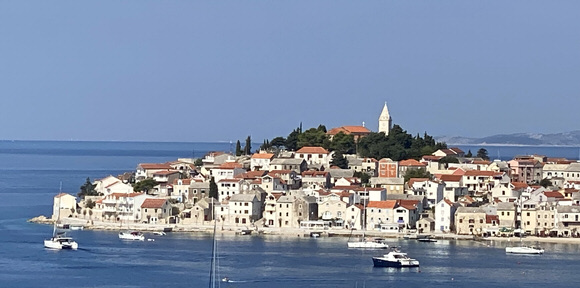
Primosten, a village and municipality on the Adriatic coast

On to Venice and Padua

I had visions of an empty Venice, like those I had seen during the lockdown. Deserted alleys and waterways. No gondolas on the canals. No lines to enter attractions, such as San Marco (St. Mark’s Basilica). A dolphin or two frolicking in the Grand Canal.

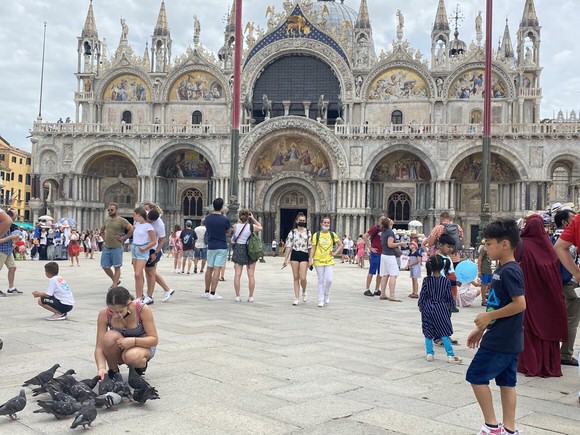
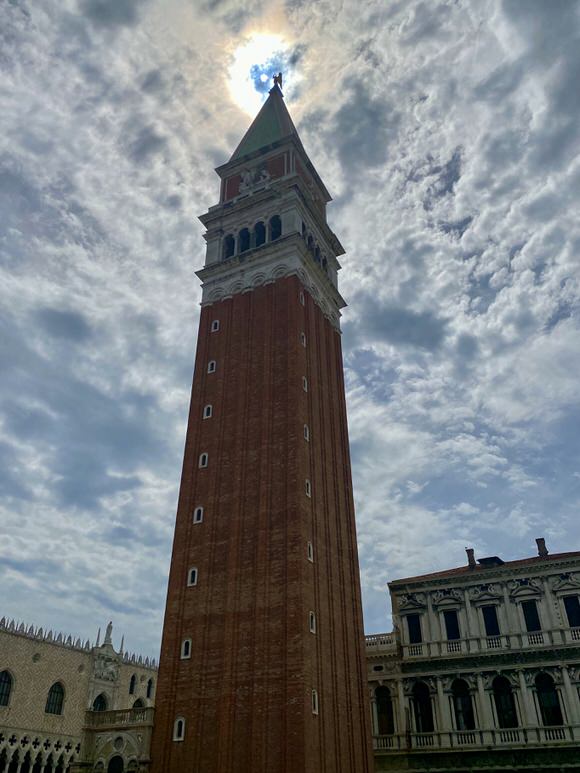
That was then. Fast forward to early July when I visited. Even though travel restrictions were in place, tourists had returned to Venice. Long, long lines to climb the campanile (bell tower) of the Basilica. Gondolas aplenty gliding through the canals. Happy crowds feeding pigeons on the Piazza San Marco.

And, it was hot, much too hot. But, I adore Venice. I was spending a week at Abano Terme, about an hour from the city. (See previous post, “Taking the waters – and the mud”) I could not pass up a visit, especially after a conversation with a staff member at the spa. 

“I love Venice,” she said. “You must visit.” She planned an all-day itinerary for me. “Don’t schedule any treatments on the day you visit Venice. You will need all your energy for Venice.”

More energy than I had. I followed her recommendations, took the train to Venice, then hired a water taxi to take me to the Piazza San Marco, under the Rialto Bridge, past magnificent centuries-old palaces. There was no shortage of boats of all sizes on the Grand Canal. No dolphins in sight. 

Campanile (bell tower) of the San Marco Basilica

I was surprised and disappointed to see the lines, both to enter San Marco and climb the campanile. I decided against both, instead opted for a very expensive cappuccino (11 euro) at one of the many cafes lining the piazza. The pricey cafes had few customers. However, the legendary San Marco pigeons happily soared above, then landed and soaked up attention from tourists who were happy to fed them and pose for photos.

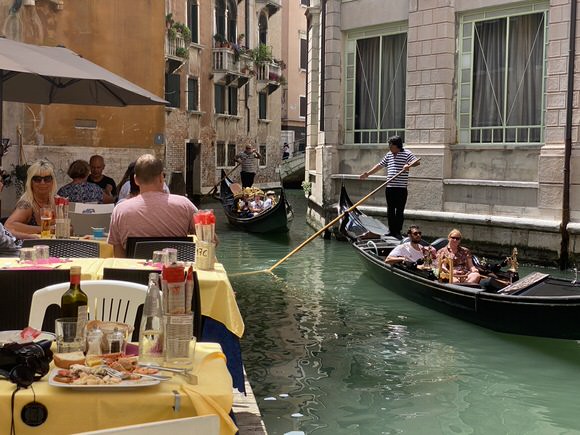
Even though the waiter at the cafe complained of little business, restaurants I passed during my wanderings were not lacking for customers. Gondolas seemed to be in high demand, yet a young gondolier also complained. “It’s very quiet. There are not a lot of people. Normally in July and August, it’s crazy. You can’t walk around here.”

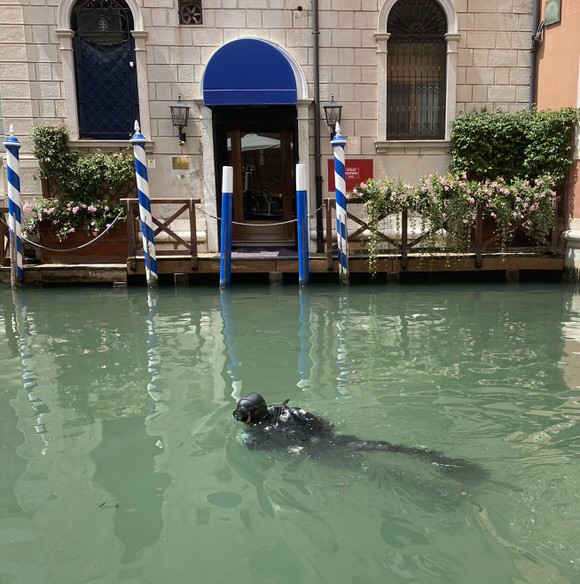
Perhaps I was lucky after all. I could walk without being pushed by throngs. I found a quiet restaurant adjacent to a canal and enjoyed a fascinating lunch. A government building stood on the opposite side of the canal. A police boat arrived. Two scuba divers jumped off and quickly disappeared under water. Looking for underwater explosives? It was intriguing. I also wondered about the wisdom of being immersed in this water which I assumed was dreadfully polluted. Then I noticed fish. I mentioned this to the restaurant proprietor. He threw some bread in the water. More fish appeared. The dolphins have not returned, but, at least for now, fish are thriving.

Police diver on a secret mission?

Thanks to a recent ruling by the Italian government to ban cruise ships from approaching Venice’s lagoon, things could be looking up for those fish, not to mention the foundations of the city.

Cruise ship opponents argue that the massive ships which can transport more than 5,000 passengers each are responsible for waves and pollution that damage the delicate fabric of the city. Work is underway to construct a cruise terminal outside the lagoon. 

The Wall Street Journal quoted Gianluigi Rizo, a porter at the Piazza San Marco, who summed up the sentiments of those whose business depends on tourists. “It’s good that tourists are back, but the real money comes from the cruise ships with the Americans and the well-off Asians. They spend big in a short time, before sailing out.”

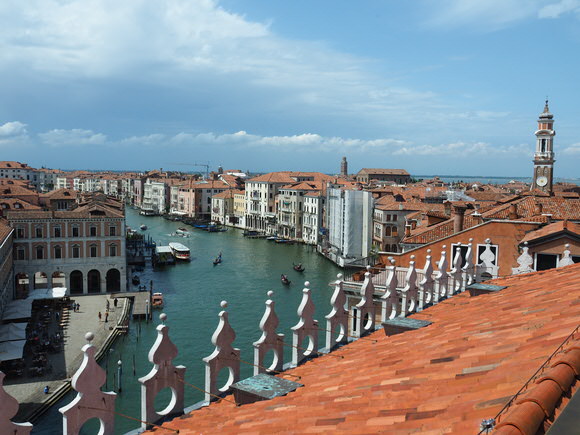
View of Venice from the Terrazza Panoramica, a new observation deck a top a multi level. upmarket shopping gallery.

Even with the tourists and the heat, I was happy to return to Venice. I love to meander, discovering intriguing alleys and passageways, off the beaten tourist track, usually getting lost. However, since I had a train to catch this time, I dared not be too adventurous. 

The trek to the station was longer than anticipated. I panicked, walking faster and faster so as not to miss my train. I made it, exhausted and perspiration drenched.

That excursion should have been enough. Perhaps best to stay and relax at the spa.? No, I needed to see Padua, again urged on by my mentor. She raved about the city’s star attractions, the Scrovegni Chapel with frescoes by Giotto and the Basilica of St. Anthony.

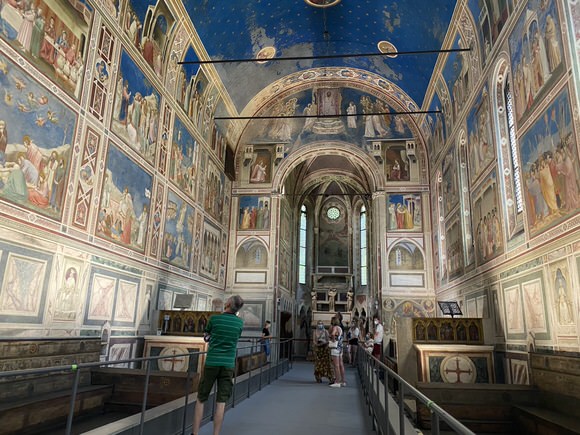
Scrovegni chapel with Giotto frescoes.

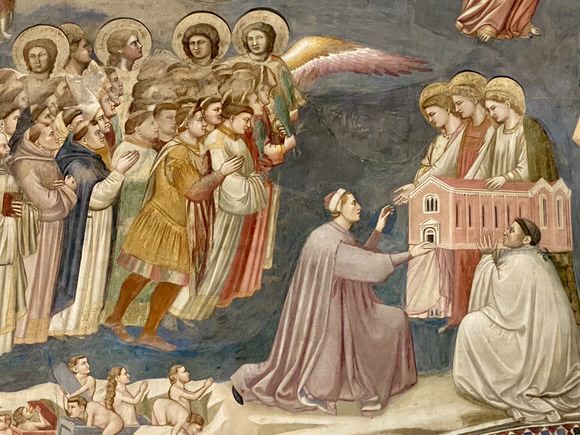
Giotto, an Italian painter of the late Middle Ages, and his team covered the walls of the entire chapel with frescoes illustrating the life of the Virgin and life of Christ. Their work, completed in 1305, is considered a masterpiece of the early Renaissance. It is mind boggling.

St. Anthony’s Basilica with Byzantine-style domes and art treasures was a must for me. St. Anthony played a role in my Catholic upbringing. My mother was a fan of the saint, the patron of lost items. Whenever she or we lost something, “Pray to Saint Anthony,” she urged. Often he came through. 

St. Anthony’s tomb.

The church shelters the saint’s grandiose tomb. Worshippers place hands on the tomb and pray. St. Anthony holy cards are available for free. I gave a donation, took a few, and mailed one of each of my three brothers.

Praying at St. Anthony’s tomb.

I passed up relaxing days and therapeutic treatments at the spa for Venice and Padua. I have no regrets.

Statue of St. Anthony.

Please scroll down and comment. I love to hear from readers.

Another monumental church in Padua: Basilica of Saint Giustina

We recently returned to Marseille, one of my favorites. It merits a blog post. And, soon I will off for Adventure Croatia with friend Karen.

Don’t miss out. If not a Tales and Travel follower, sign up. Your address is kept private –not shared.

Giotto’s Last Judgment fresco.

Taking the waters – and the mud

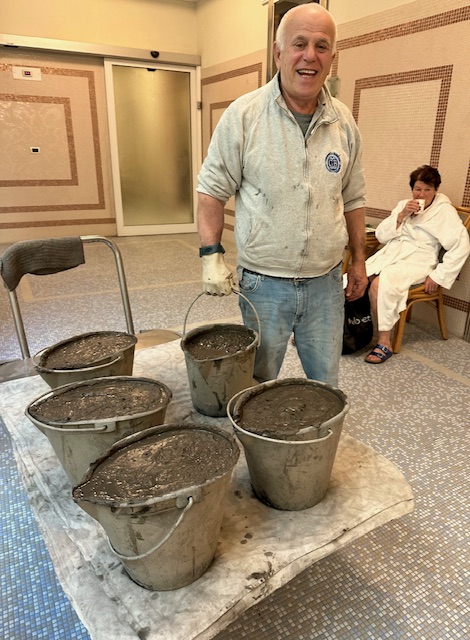
Volcanic mud is the attraction at Abano.

Hot! It was sweltering. The pool waters were warm. Taking a walk left me drained, clothes and hair glued to my body. Even lounging in the shade was unpleasant.

I blew it. Yes, I needed a week of R and R. Life as an Alzheimer’s caregiver is stressful. But a thermal spa is not the place to go in July when temperatures soar.

Unfortunately I had no choice on the timing. I wanted to take advantage of the July visit from Bob’s son and two grandsons who could take over care of grandpa. I should have opted for a cool mountain resort. Instead, I chose to spend a week at Abano Terme, a spa town in northeastern Italy recommended by friends. I have never been that enamored of spas, but I figured it would be good for my decaying body and uplifting for the spirit.

Not all was negative. Just being in Italy, where joie de vivre is in the air, is therapeutic for me. I enjoyed speaking my broken Italian, chatting with the super friendly spa staff, and learning what a terme is all about.

Soaking in thermal waters supposedly does wonders for the body.

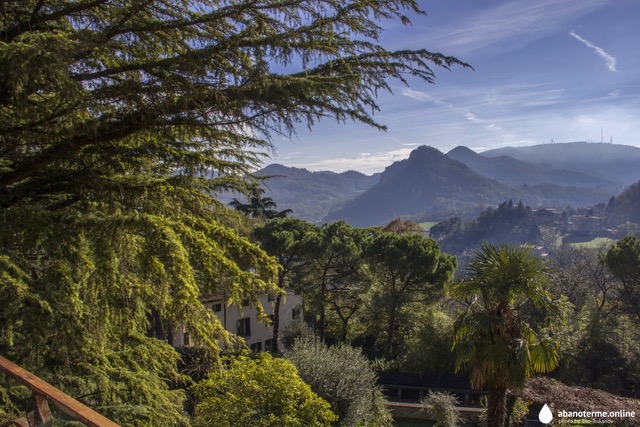
The entire town and numerous hotels are all geared to take advantage of thermal waters and volcanic mud from the surrounding Euganean hills. Hotels offer packages which include room and board and treatments. 

Fango, or pure mineral-rich volcanic ash, forms the basis of the mud which is said to have anti-inflammatory properties. It is recommended for  strained joints and muscles, arthritis, rheumatism, as well as the stress of everyday life.

First step: Visit to the hotel/spa doctor. Before undergoing the mud treatments, a doctor must give the OK. He was a jolly chap who spoke four languages. After examining me and studying my MRI and X-rays, he asked questions. “Do you do Yoga?” No. “Are you a vegetarian?” No. “Thank God.” 

He said I was fit for mud, and advised I eat more protein, take vitamin D, drink more water and build muscle mass. He failed to provide details on the latter. Weight lifting?

He wrote a prescription for the type of treatments that would help my arthritic body. Next came a visit to Zoia, the charming and effervescent spa manager. She checked my package plan and the doctor’s rec’s, then devised a schedule for me which included gentle massages, mud, a fruit peeling facial.

Mud relaxation

I was a bit leery of the mud. I feared it would be more intense heat. Fortunately it was pleasantly warm, but I found the odor anything but pleasant. Carmela slathered a huge slab of mud on a bed which I then lain on. She smeared mud on my arms and legs, then wrapped me in plastic and covered me with a sheet. I was a mummy for 15 long minutes. The first time was annoying. I had an itch on my nose which was driving me crazy. My arms and hands were cemented to my body. For future sessions, I requested my hands be kept free to scratch if needed. 

About half way through the treatment, Carmela returned, delicately wiped my face with a cool scented cloth. After the allotted time, she returned again to unwrap me. I stepped into a shower and she hosed me down, washing away all the stinky mud. This was followed by a 10-minute soak in a tub of warm bubbling thermal water scented with therapeutic oil. I liked it all.

Aqua gym was intense

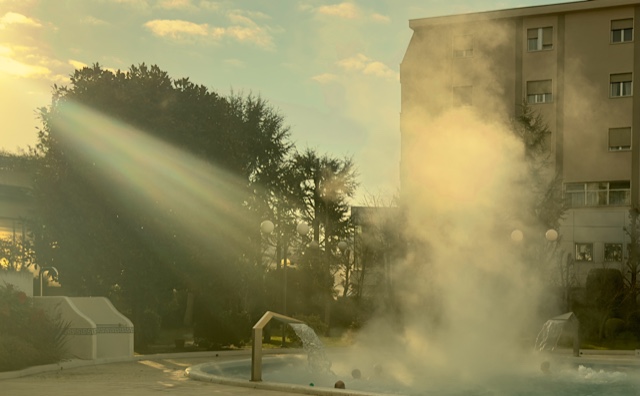
Water – thermal water – is also an essential part of the Abano experience. My hotel had five different outdoor pools, plus a large indoor pool. The most popular pool had all sorts of water jets and bubbling fountains. Since this is thermal water, it was warm – too warm for me. I preferred the lap pool, cooler water, not thermal, thus no healing benefit. 

Few swimmers in the lap pool.

Again I blew it. To get full advantage of the mud I should have spent leisurely days soaking in the waters. Not me. I spent a day trekking, wilting, through nearby Venice, another day slogging through Padua, and a half day hiking to and shopping at the market in Abano. None were relaxing. All were exhausting. But, I did see the sights and added some bargain Italian fashion to my wardrobe. More about those escapades in an upcoming post.

In between my sightseeing, in addition to the mud treatments, I enjoyed “gentle” massages from Joanna, another delightful staff member. We chatted as she massaged. “Only speak Italian while your are here,”she advised.

Hotel provides bathrobes, white to wear to the pools and blue for the treatment area..

According to Zoia, Abano is especially popular with Germans and Austrians, many who come two to three times per year. Italians are among the clientele, however, they “don’t spend so much on the treatments. They come for relaxation, the pools.” The British? “It’s not in their culture,”she said. 

My hotel, the Metropole, was less than half full during my stay – not due to Covid, but the heat. This was not spa season, but “the cheapest time.” Fall and spring are the ideal times for the terme, she said. Russians love it during the holidays, staying at the five-star hotels. The Metropole rates four stars. There are Americans who patronize Abano, but, like the Russians, they go for five stars. 

Classy dining at the Metropole.

My friend, Angi, British, is an exception to Zoia’s take on the Brits. Angi swears by volcanic mud, but that on the island of Ischia, just off the coast from Naples, where she spends two weeks every fall. She claims it does wonders for her aches and pains. Abano did nothing for mine, but I have myself to blame. Maybe I should try Ischia sometime, take both the water and the mud – minus sightseeing and shopping.

Red berry smoothie for a healthy terme treat.
Desserts were not for those on a diet. Masks are required indoors in Italy – strictly enforced at the hotel.

If not a Tales and Travel follower, sign up. Your address is kept private –not shared

Comments welcome. Scroll down.

Coming soon: Venice and Padua.