Turkey: from Istanbul to the ski slopes

Masses of people. Pouring through the squares. Walking four and five abreast on the sidewalks. Strolling almost body to body on the popular, wide pedestrian street, Istiklal Avenue, on a Saturday evening.

Istanbul 2012, home to 17 million and booming. I’d been to the city twice before, but long ago. The changes, the vibrant pulse of round the clock activity, choking traffic, five-star hotels and designer shops –all overwhelming.

My recent visit was with the Ski Club of International Journalists (SCIJ, www.scij.info). We were en route to our annual meeting, this year held on the slopes towering above the city of Erzurum in far eastern Turkey. Some 200 skiing journalists from 30 countries met to ski, race, party, and learn about this dynamic country from distinguished speakers.

Some of the facts:

• Fifty percent of the Turkish population of 75 million is under 30.

• There are more than 25 universities in Istanbul.

. • One million people visited Turkey last year – the country ranks 7th in the world in number of visitors.

• Turkey has been a model for the Arab Spring, a secular democracy with a Muslim population.

• In 1980, the country’s exports totaled $3 billion. Last year that figure was $130 billion.

• Turkey is the sixth largest economy in Europe, 16th largest in the world.

The  media are thriving with some 1,000 daily newspapers, 100 television channels and two billion Internet users.

• But, all is not rosy. Freedom of the press is a hot issue.  Between 50 and 100 journalists are said to be in jail for being critical of the government.

• 69 percent of the population wants Turkey to join the EU.

As one of our speakers said, “Turkey is the new kid in town.”

I arrived in Istanbul a day early and spent an afternoon at the Grand Bazaar, a shopper’s Mecca with hundreds of shops and stands offering gleaming gold jewelry, silver jewels, carpets, scarves, ceramics and more.  Before setting off to the mountains, the group  visited Istanbul’s star attractions: Hagia Sophia  Museum, the Blue Mosque and Topkapi Palace.  A Bosphorus  cruise is a must

On the Bosphorus.

for an Istanbul visit.  We were blessed with warm sunshine for our boat trip on this 30-kilometer stretch of water which connects the Black Sea and the Marmara Sea and separates Europe from Asia.

We savored excellent cuisine. Turkish  Meze, small plates served as appetizers, are different and delicious, often seasoned cold vegetables, such as eggplant, zucchini, peppers… as well as stuffed grape leaves, cheese and a yogurt-garlic sauce for dipping.   Kebabs of beef or lamb are a frequent main course.  Baklava is a favorite dessert.
Not only a fabulous dinner, but over-the-top entertainment,  was a highlight when we dined beneath the streets of Istanbul in an ancient cistern which was constructed in the 5th century and is now used as a venue for special events.  A well-known Turkish clarinet player and his band played non-stop for more than an hour and a half – an incredible performance.  Then came the country’s famous belly dancer, Asena, whose sexy slithering  and amazing body movements were mind boggling.

For me, the best of Istanbul was the hamman or Turkish bath,  a soothing multi-step ritual which leaves you feeling ultra clean and relaxed.   For the bath, we visited the historic Hurrem Sultan that dates back to the 16th century but was restored in the 1950s.  There are separate sections for men and women.

The surroundings are opulent – all white marble under a  domed ceiling pierced with tiny windows to let in light.  Each bather is assigned an attendant who first pours warm water over your naked body.  The water is scooped from a basin under bronze faucets into embossed bowls –very classy.    This goes on for some time, then you are led to a large room where bodies lie on towels in a circle under the grandiose ceiling.  The attendants whirl a large cloth bag though the air, then, starting at the top of the bag, squeeze it until soap suds come out the  open end at the bottom— mountains of white foam.  The bodies soon look like mummies buried under mounds of cotton candy.  The attendant  gently massages the suds into the body from head to toe.  It’s glorious.  This is followed by an entire body scrub down with a rough mitt to  remove dead skin.  Then, more pouring of water, all ending with relaxation in a chaise lounge and a glass of rose hip tea.  I liked it so much, I went for a repeat performance at our hotel in the mountains.  There the surroundings were not quite as posh, but the experience was equally as  heavenly.

For most of our group, the best part of the trip was no doubt the skiing – and theobligatory races (giant slalom and cross country). But, as I have a knee which is worn out  (replacement surgery scheduled for May), I spent almost no time on the slopes.  I had relaxing days at the hotel, and, in addition to the hamman, took advantage of the swimming pool.

Nation’s Night is a SCIJ tradition.  Participants bring delicacies from their countries to share with the others.  Airline restrictions make this more and more challenging, nonetheless the variety of food and drink offered is a tribute to the determination and innovation of these skiing journalists.  Foie Gras from France.  Raclette from Switzerland.  Pasta from Italy… and Thanksgiving turkey  for a meeting in Turkey from the US.

The turkey was the idea of the U.S. team captain, Risa Wyatt.  Customs regulations prevented bringing turkey from the U.S., but the hotel did a commendable job of roasting two large birds.  I made and brought cranberry chutney to serve with it.  The beverage:  Wild Turkey.   It was a sensation.

We even had one bird leftover which we served at the end of the cross-country race, along with the legendary Dutch pea soup,  the latter a popular tradition prepared every year, with much difficulty, on site by our colleagues from Holland.

Unfortunately the trip ended on a sad note for my  Irish friend and roommate Isabel who broke her arm on a bad fall the last afternoon.  She had to have surgery in the hospital in Erzurum. The Turkish organizers of our meet, the hospital staff and Turkish Airlines treated her like royalty.  But,  now that she’s back home in Belgium, she has learned that mistakes were made during the operation and it must be redone.

She’s depressed and says she won’t ski again.  Skiing has been my passion, and  I am worried that a new knee may not permit me to get back on the slopes.  I told Isabel we must both give it a try – maybe sticking to the gentle slopes.  Next year SCIJ will celebrate its 60th anniversary in the Italian Dolomites – something not to miss.

For more on Turkey, see www.goturkey.com.  For more on the Ski Club of International Journalists, see www.scij.info.    See  “Poached Chicken Breasts with Arugula Pesto Sauce” for  a chicken recipe with a bit of green for St. Patrick’s Day.    Watch the slide show to follow.

This slideshow requires JavaScript.

Fine Dining à la Française

One of the reasons we were happy to move to France is food.  The cuisine here is hard to beat.  When we lived in Germany and were both working, hence a better income, we loved to make eating excursions to nearby Alsace.  The dollar was stronger back then, too.  Sometimes we would splurge and eat in a Michelin starred restaurant.

Since moving here and living on a fixed income, we’ve been happy with local restaurants, most of which are reasonable.  But, since the dollar is faring better these days, and since it was Valentine’s Day, I wanted to try a Michelin one-star restaurant, La Petite Maison, in nearby Curcuron.  I called and learned they had a special multi-course menu for Valentine’s Day – 120 euros ($159) per person.  That did include wine and champagne, but nonetheless way beyond our budget.  On regular days they offer a three-course menu for 46 euros ($61) per person, excluding wine.

We decided to celebrate Valentine Day’s in a more economical fashion, but try La Petite Maison a few days later.  On February 14 we lunched at the restaurant at Lycée des Métiers Louis Martin Bret in the town of Manosque.  This is a professional school with a department where aspiring chefs and restaurant personnel are trained.  Several days per week at the school restaurant they offer lunches and dinner.  The menu is fixed – few choices—but good and reasonable.  The ambience is pleasing – fresh roses on the table, the young waiters and waitresses all looking spiffy in black jackets and pants, white shirts and baby-blue ties.  This time there were two choices offered for each course.  We chose the following.  Our average rating on a scale of 1 – 10 (10 is tops)  follows.

First course: Profiteroles à la mousse de foie gras sur roquette.  Three rounds of chou pastry, each filled with a different type of foie gras mousse, attractively arranged around a mound of arugula, with threads of spun sugar on top for added flair.  One was decorated with stripes of chocolate sauce. The others were accompanied by tiny mounds of chutneys. Yummy.  In my opinion, you can never go wrong with foie gras.  Rating: 8.5

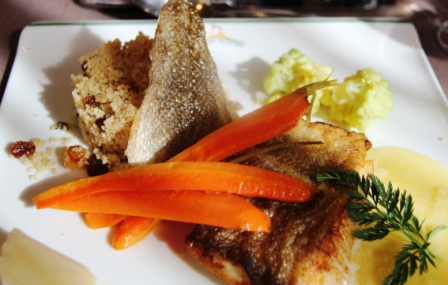
Main course: Dos de cabillaud, semoule aux raisins, carrots fanes glacées.  A slice of cod with a piece of the fried skin as decoration, served with a semolina/raisin mixture and glazed carrots. Tasty, but unfortunately we found the fish overcooked, which is too often the case with fish. Rating: 5.25

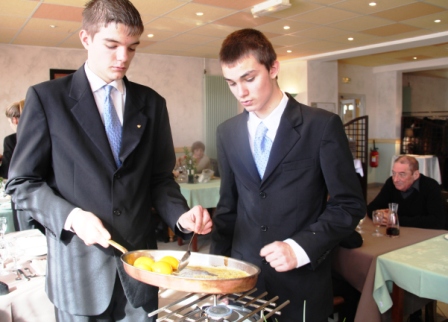
Dessert:  Pêches flambêes sur glaces. Flambéd peaches served on ice cream.  It was fun watching our young waiters, Nicolas, 15,(left)  and Jimmy, 15, undertake the flaming procedure. They handled it like pros, and the result was delicious – the vanilla ice cream full of flavor and obviously homemade. Rating; 7.5

We began the meal with an ”apéro,”  a before dinner drink that is de rigeur in France.   We ordered the cocktail of the day, a concoction of rum, orange juice, coconut milk and sugar.  With the meal, we drank a half liter of open white wine.  After dessert, we each had a coffee.  Total tab for two: 40 euros ($53).

Two days later we went for broke and had lunch in Curcuron at the renowned La Petite Maison with our friends Gayle and Ralph.  We economized on the apéro – a pre-dinner drink at the village café next door.  For two glasses of champagne, a beer and a Pastis, the bill was 14 euros ($18.50)  La Petite Maison charges the same for one glass of champagne.

Two fixed menus were offered, at 46 and 68 euros each. We all selected the less expensive one. Beef was the main course. Bob is not big on beef, so he was permitted to substitute fish.

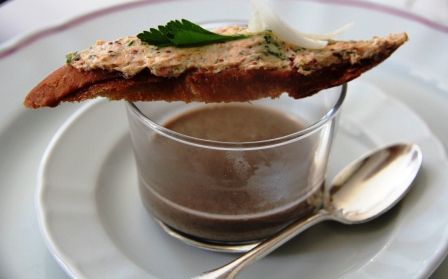
At this classy place, we were given an amuse-bouche ( appetizer )  a velouté de lentil et une tartine avec rillette de saumon.  A creamy lentil soup topped with a toasted wedge of bread spread with a salmon pâté.   Gayle thought it was outstanding.  I wasn’t that overwhelmed. Rating: 7.8

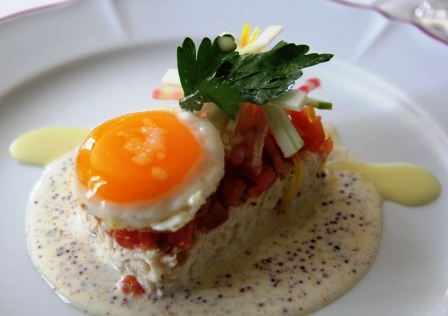
First course:  Céleri et pomme verte rémoulade rehaussé de dés de saumon fumé, oeuf au plat coulant.  A colorful combination of diced celery and green apple topped with tiny morsels of smoked salmon, all crowned with the yellow of an egg.   Definitely a work of art to admire, and it was good, but perhaps not as flavorful as it looked. Rating: 6.5

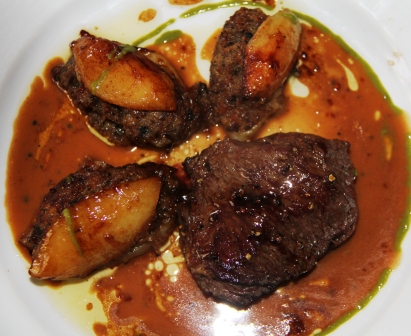
Main course;  Pièce de filet de boeuf d’origine européenne poêlée au poivre, pommes de terre fondantes.  Filet of beef ( European origin)  pan fried with pepper and served with interesting potatoes. (fondant means ‘‘melted,” but there was nothing melted about these potatoes.  Maybe this is just fancy restaurant vocabulary).  We were not asked how we wanted the beef cooked. It was served rare, a tad on the bloody side. This is the way French gourmets prepare beef.  I love beef, and this is just the way I like it, so I was happy.  Bob, who went for the fish substitute, was horrified at the bloody meat and very glad he chose monkfish served on a mousse of cauliflower.  Sharing the plate with the beef were sliced potatoes topping a tasty crumb melange which reminded Gayle of turkey stuffing. She noted that this dish would have been better with an added portion of vegetable – perhaps something green for color.  Rating: 7.4

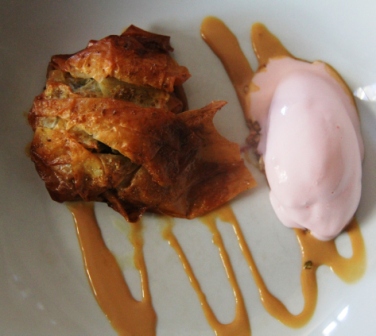
Dessert:  Croustade aux pommes et figues aux parfums d’orient, glace à la rose. A crusty concoction of phyllo pastry filled with Oriental flavored apples and figs  next to a scoop of rose ice cream.  Bob is a dessert fan and this was his favorite.  I thought it was good, although I did not detect any Oriental flavors and the rose ice cream did not send me.  Rating: 7.75

With the dessert a plate of small pots of a lemony-creamy liquid surrounded by mini cakes was placed on the table for us to share.  A nice touch.

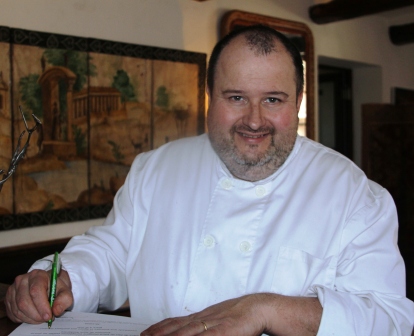
The restaurant is in an old house in the center of a charming village opposite a pond.  The dining room, all wood-paneled, is a bit on the bare side – no décor, just tables with white table cloths. Our waitress, all dressed in black, was pleasant – she even corrected my French.  That I appreciated.  Chef and owner, Eric Sapet, has impressive credentials in the world of cuisine.

We ordered the cheapest bottle of red wine on the menu: a 2007 Vin de Pays de Vaucluse, Domaine Hugues, Vendage des Chefs, 35 euros ($46).  Total cost per couple, about $144.

Moral of the story: Forget the stars and save your money. We all agreed that we’ve had better food at la Table du Bonheur (see previous blog, “Table of Happiness”) for much less money.

www.lyc-bret.ac-aix-marseille.fr

www.lapetitemaisondecurcuron

A Dentist and his Jungle Haven

He’s known as the “jungle dentist.” Danish oral surgeon Peter Bloch began coming to Bali 43 years ago. During visits he realized the need for his skills among the local population living in rural areas.  He equipped a boat to be a dental clinic on water, then sailed around the island, making stops at remote villages and offering his services to those in need.

“Having a toothache is the worst pain,” says the dedicated dentist.  “You can’t sleep.  You can’t eat. You can only cry.”  Without dental care, decayed teeth can become infected.  Sepsis can set in and can lead to death, he explained.  ”It’s a common way of death here.”

Bloch, who had a practice in Fort Myers, Fla., for 19 years, as well as a part-time practice in Denmark, would spend two to three months a year as a volunteer “jungle dentist,” seeing as many as 60 – 70 patients per day.  “We used an upside down canoe as a dental chair,” he says.

He now lives at his magnificent resort, Tanah Merah (red earth), four kilometers outside of the Bali town of Ubud, but still practices jungle dentistry several months of the year.  He also gets patients from Ubud where he operates under the slogan “No Pain, No Pay.”

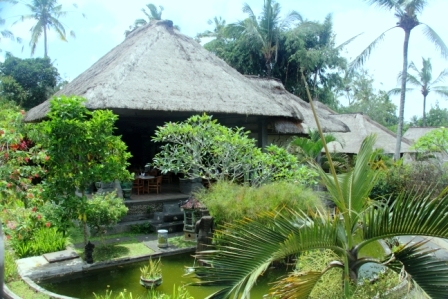
But these days most of his energies are directed to Tanah Merah, a secluded paradise in a luxuriant tropical setting.  Our stay there was the highlight of our recent six-week trip which took us on to Australia and New Zealand.

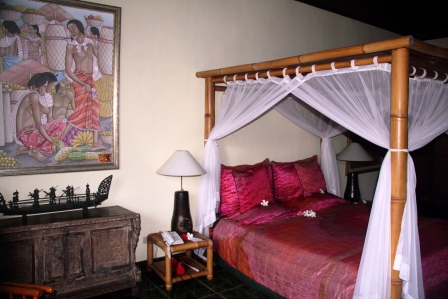
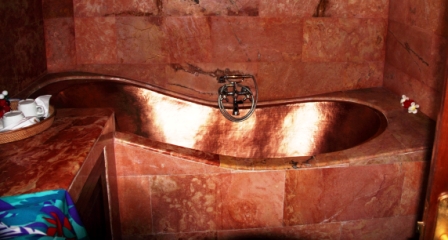
Bloch bought the land on a hillside above the Petanu River and began construction in 2000.  There are now 17 rooms, including some individual cottages and luxurious villas.  The latter have private plunge pools, some even with waterfalls.  We had a deluxe studio with a canopied bed, private terrace and enormous bathroom with a giant, gleaming copper bathtub.  We visited several other rooms and villas.  Bloch, who designed all the rooms himself, did not stint on the bathrooms – all lavish and spacious.  Fascinating art objects and paintings from his private collection add elegance to the guest rooms.

Collecting these treasures is the jovial Dane’s passion.  “I am constantly collecting.  It’s terrible. It’s a disease,” he says. Because of his work on Bali and his hobby of collecting, Bloch is well known on the island.  Owners of palaces who are in need of funds contact him when they have treasures to sell.  Museum directors also know he is interested in art objects.

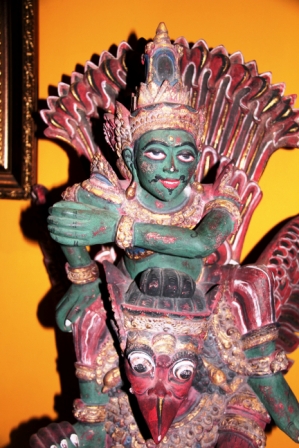
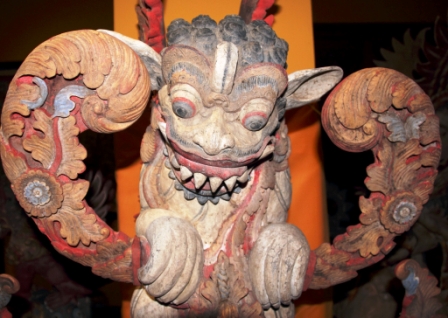
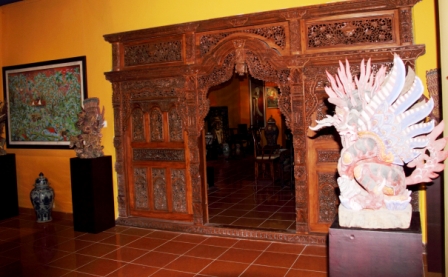
He recently opened a museum at the resort, nine rooms, each behind heavy, elaborately carved wooden doors, and all underground in a temperature-controlled environment.  The contents —  priceless, amazing and unusual objects — include paintings, weavings, objects of gold, daggers, masks and carved furniture.

One room features a large collection of Chinese porcelain from the Yuan dynasty (1271 – 1368) all recovered from a shipwreck.  The star attraction in another room is gigantic tusks.  According to Bloch, the former president of Indochina, Suharto, wanted a set of tusks from a mammoth. He got them from Russia and sold them to Bloch after he lost his presidency and was in financial need.  The tusks have been tested and are said to be 28,000 years old.

The highlight of the Bali room is a 400-year-old Indonesian structure which he had reassembled.  From Europe, there’s his mother’s dining room recreated from furnishings from the family home in Denmark, complete with a lavish table setting.

“It’s fun.  It’s a beautiful atmosphere.  I like to sit here and read’’ he says of the museum.

He also likes to wander the grounds of his resort.  Steps lead up and down the verdant hillside with its colorful blossoms and lush foliage.  There’s an infinity

pool at the edge of a cliff with fabulous views of the surroundings.  Exotic birds live in cages around the area of the individual cottages.  Noisy frogs thrive in a spring-fed pond adjacent to one of the resort’s three restaurants.

A staff member told me Bloch likes to get up early and make the rounds of the bird cages, talking to his feathered friends. He might be accompanied by his dogs, three very friendly Rottweilers.

The resort complex is large so you rarely see other guests.  On most occasions I had the pool to myself. Even husband Bob, a non-swimmer who normally avoids pools, could not resist a dip in the inviting water. For a jungle experience, you can trek down to the river and swim in a pool under a waterfall.  Unfortunately I saved this for our last day when it rained, making the descent to the river too slippery.

The many stone statues of gods and spirits throughout Tanah Merah add to the almost mystical, enchanting ambience of this romantic resort.  Young Balinese women clad in vibrant sarongs place fresh offerings of flowers at the statues each morning.  I’m not a big fan of massages, but I indulged at Tanah Merah for the best massage of my life.  The breakfasts, the English version with eggs and meat, as well as fresh fruit and croissants, are the perfect way to start the day at the open restaurant Petanu, half way down the hillside amidst the jungle greenery.

The town of Ubud with shops, restaurants and a thriving market, is about a 15-minute drive from the resort.  Tanah Merah offers guests free shuttle service to town, but if the resort cars are not available, you can hop on the back of a staff member’s motorcycle for a fun trip.

Bloch likes to mingle with his guests and can communicate in numerous languages: Danish, English, French, German, Swedish, Swahili, Indonesian and Balinese.  He has lived in Singapore, and Africa where he opened a dental clinic in Nairobi.  He is divorced with two children and a grandchild who live in the U. S.   In addition to dentistry and collecting art works, he writes and is especially proud of his recently published book, “Mads Lange, The Bali Trader and Peacemaker,” the story of this Danish expatriate who lived in Bali in the 19th century and was influential in the island’s history.

Before leaving, I decided to ask the jungle dentist about a dental problem and related headaches.  He invited me to his private villa at the resort where I lay on a couch on the porch with lots of pillows behind my head.  His houseboy held a surgical light above my mouth while the dentist took a look at my teeth and gave his advice which I’ve since heeded with good results.

Our deluxe studio at Tanah Merah in October was $100 per night, including breakfast.  For more on the resort, see   www.tanahmerahbali.com

Hungry for Tex Mex?  In the recipe column at far right, see “Enchilada Pie.”

Savoring Switzerland

Thank God for digital photography.  I can’t imagine a trip to Switzerland with an old fashioned film camera.  The film costs would break the budget as a gorgeous photo opp beckons wherever you look.

Switzerland may just be my favorite country.  I’ve hiked its demanding mountain trails, skied its endless slopes, and pedaled six of its nine challenging national bike routes across the country.  This time I was on an “agroturismo” press trip. 

Hiking, wine tasting, visiting farms, joining festivals, savoring local cuisine  – we (a group of eight journalists plus a Swiss guide) did it all. 

It got off to a delicious start in Ticino, southern Switzerland where Italian is spoken and the ambience seems more la dolce vita than Swiss efficiency.  We stayed at a small hotel in the vineyards, Fattoria L’Amorosa (www.amorosa.ch)  Ticino is known for excellent wines, especially Merlot.  One of the courses of the welcome dinner featured risotto, a Ticinese favorite replacing pasta.  (See recipe at right for Spinach Risott0)

We toured a winery which, in addition to grapes, grows rice – the world’s northernmost rice plantation. It’s called Loto rice and is used for risotto.  After purchasing  packages of Loto at the shop, where  the farm’s wines are also for sale, we tasted some excellent vintages.  www.terreniallamaggia.ch

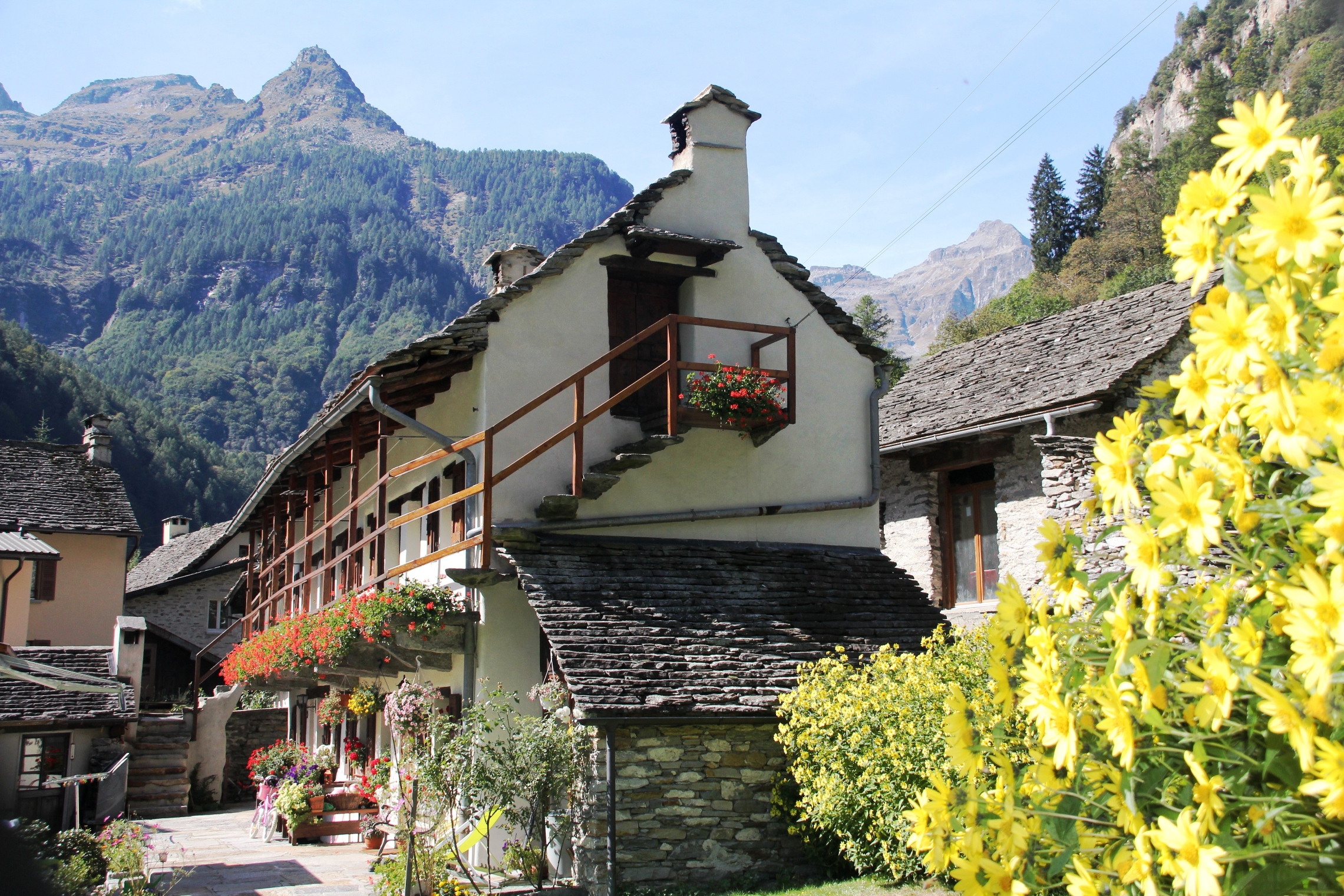
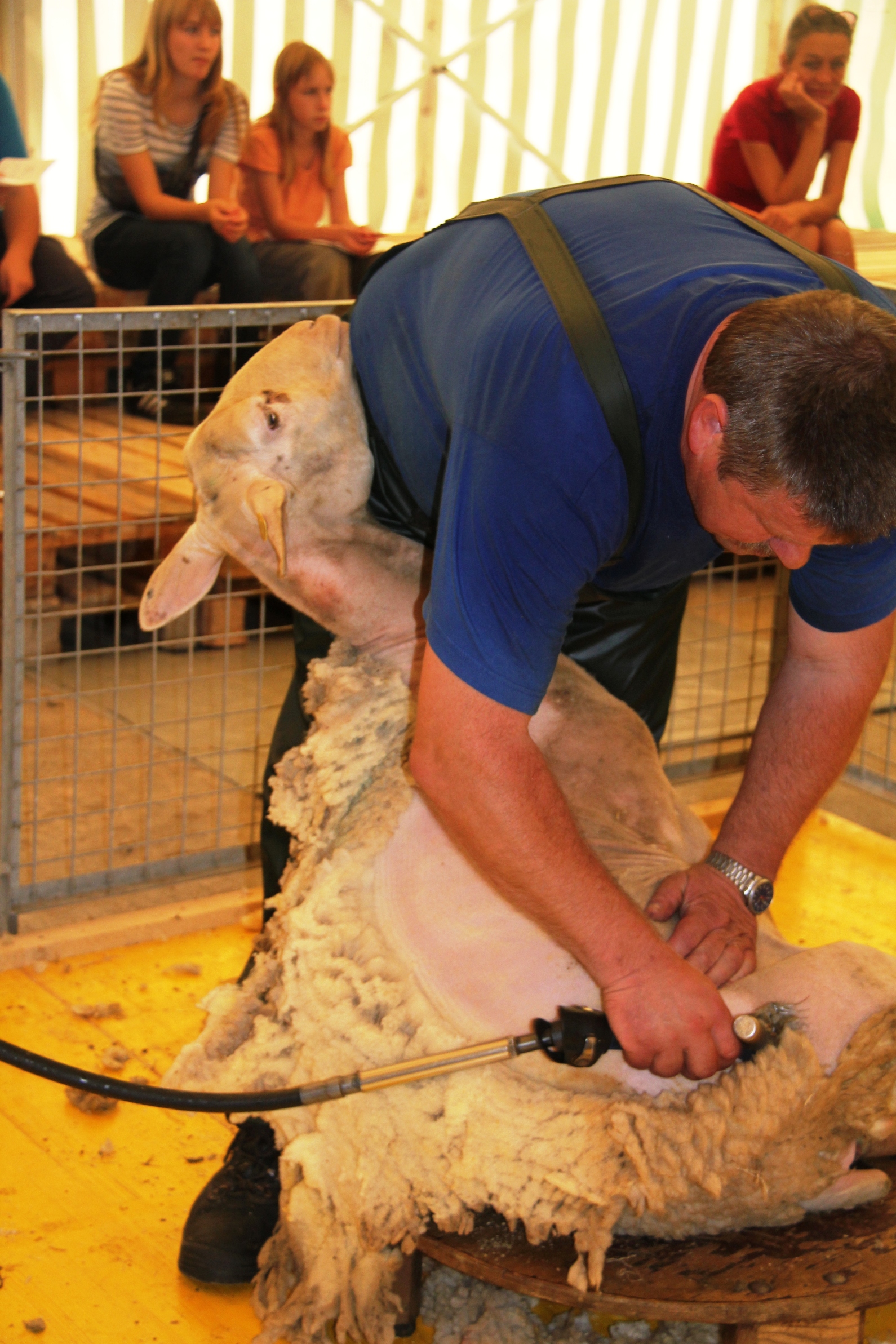
 A bus took us up a narrow, windy mountain road in the Verzasca Valley high above a surging mountain river where tiny villages perched on nearby mountain sides: the stereotype image of beautiful Switzerland.  Our destination was the village of  Sognogno where more photo musts awaited.  Here wool shorn from local sheep is spun and dyed (using only natural products for color), then made into wooly articles such as sweaters and scarves. 

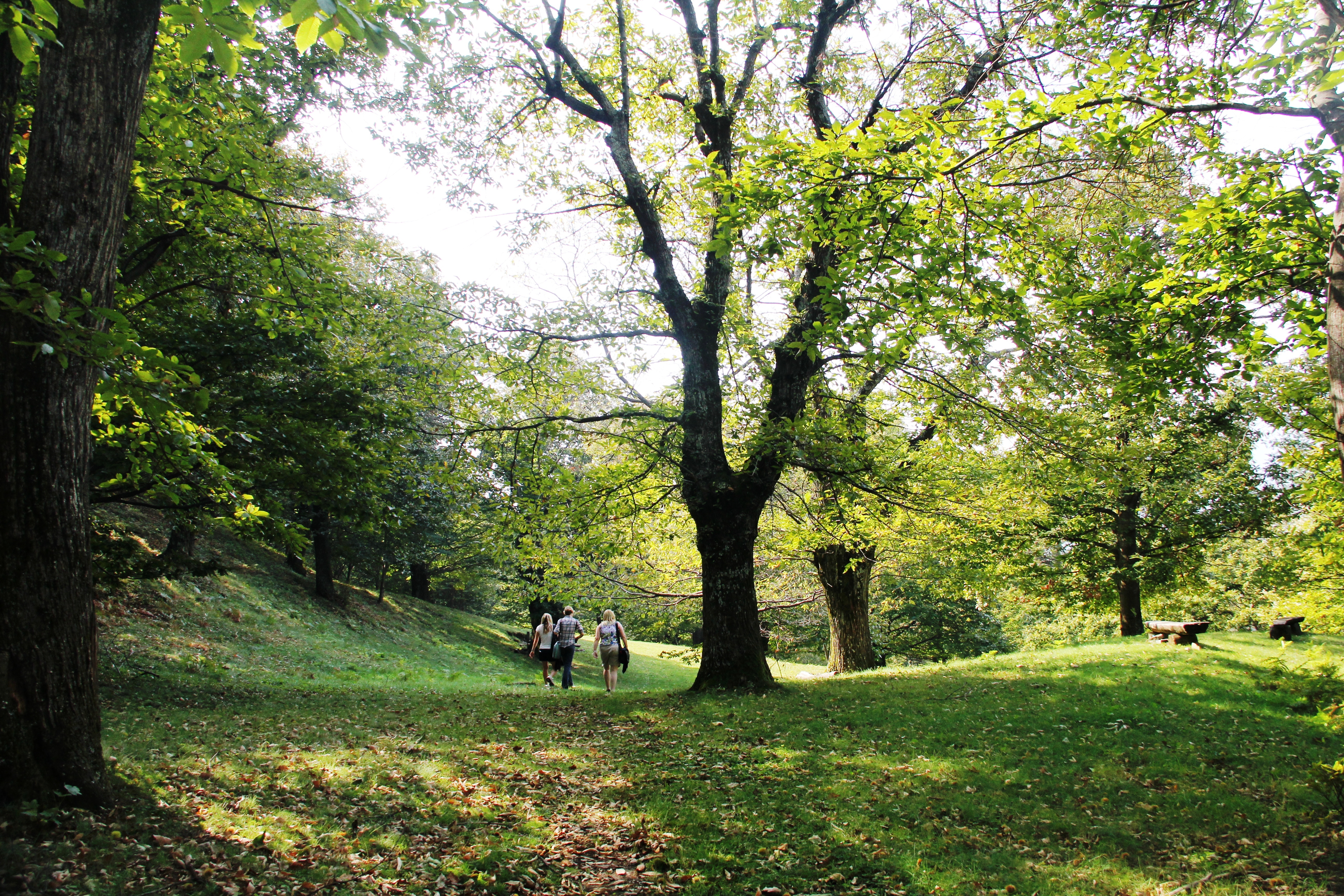
Hiking in the Alps is what draws many to Switzerland.   We did not do any all-day treks to the high peaks, but we did enjoy several scenic shorter hikes. The Chestnut Trail from the village of Vezio in Ticino led us through groves of these magnificent trees.   We learned that chestnuts have been a food staple in the area for centuries. We shared the trail in places with numerous entertaining goats — a pair of bucks even staged a battle for us. 

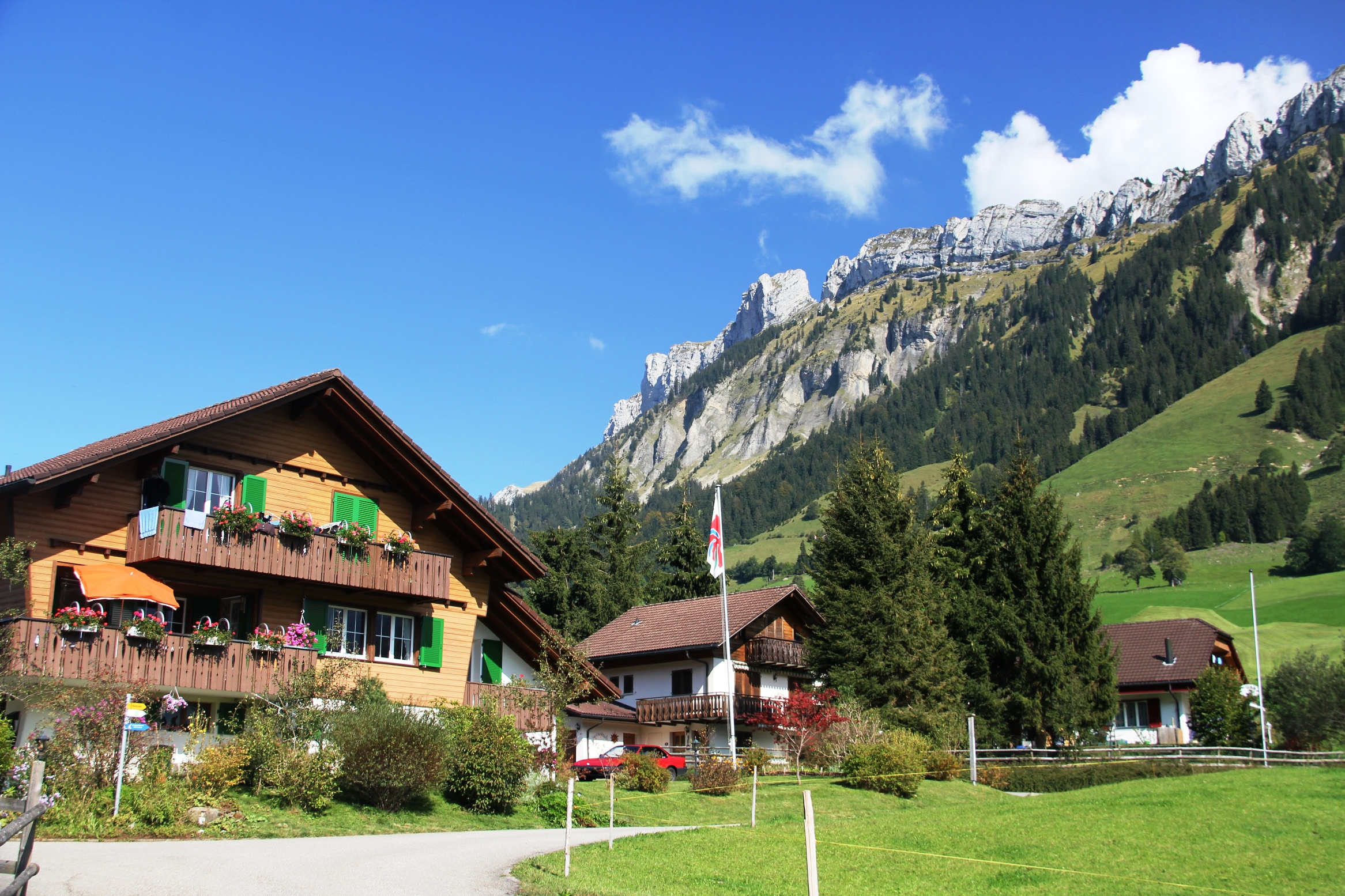
In central Switzerland (where German is spoken) we hiked up in the hills from the village of Flühli.  The trail took us to several  Kneipp stations.  Kneipp is a type of “kur” therapy based on water, mainly very cold water.  We walked like storks, prancing up and down around a water walkway in a freezing mountain pond.  Then, we moved on to a station with a hose for spraying your face with the ice bath.  Finally a place for submerging arms.  A guide provided explanations and instructions of proper technique, but you could easily give it a go on your own.  It’s chilly, but refreshing and said to do wonders for your health.  www.fluehli-wasser.ch 

Our final hike was an educational experience in the Moorlands, the UNESCO Biosphere Entlebuch near Luzern.  Barefoot, we followed a guide  off the trail back into the swampy landscape. We sank in the squishy mud as he provided fascinating info on the terrain, its insects and plant life. We saw carnivorous plants, an ant hill whose ants don’t bite (actually they do bite, but the bite is not supposed to penetrate human skin,  however one with a mighty chopper got me), a tiny frog and more.  www.biosphaere.ch 

We had fun at two local festivals during our week-long journey. In Mendrisiotto near the Italian border we joined  locals at a jovial wine fest:  music, singing, all kinds of tempting food, and plenty of wine.  Revelers crowded the narrow streets and courtyards where vintners had their stands. We tasted the wine along with roast suckling pig that had been turning on a spit above an open fire. www.mendrisiottoturismo.ch

Cows were the  focus of the festival, the Alpabfahrt, in Schuepfheim in central Switzerland.  Crowds congregate along the village streets to watch the parade of beasts as they come back to the valley after spending the summer in high mountain pastures.  It’s a jolly event with the cows all decked out in flower wreaths, their massive bells clanging as they tread by,  spectators cheering and jostling for the best photo opps — and lots of cheese and wurst stands for the hungry. 

One night during our travels we stayed on a farm , a large one with many rooms for guests. Toilet and shower facilities are shared.  For extra economy, you can opt to “sleep in the straw” – a room with a plank of straw and pillows. During our visit, a father with two young boys spent the night in the hay.  They loved it. You need a sleeping bag.  The farm dinner that night included a buffet with 23 different kinds of local cheese.  www.berggasthaus-salwideli.ch

A wake-up call at 5:30 a.m. got us off to an early start on our next to last day. We took a short walk to the cheese dairy farm Gerschnialp where cows were being milked.  Milking is all done by machine, but we had the opportunity to try the hand method – very easy to get squirted with a stream of milk as I found out.  We watched and helped with the numerous steps in the cheese-making process.  And, we tasted the final products that had been aging on shelves in temperature-controlled rooms.

Yet another walk as the sun was edging over the peaks and basking the mountains in a rosy glow –past fields of cows now back in their pastures with their bells clanging  as they munched on grass, then through the woods to a cable car station for the scenic ride up to Mount Titlis (3,020 meters elevation) above the town of Engleberg.  The viewing terrace at the top is camera heaven.  A popular attraction is a spooky walk through a dark glacier grotto.  A ride on the Ice Flyer, a chair lift that takes you down over glacier crevasses, then back up, is spectacular.

My very favorite part of the Titlis visit was on the way down.  Instead of riding the cable car to the bottom, we got off at the Gerschnialp station and hopped on Trotti bikes (like scooters),  You stand on the bike platform, then head down a mountain lane at top speed, soaring around curves, faster and faster.  It’s thrilling. I wanted to go again.  www.titlis.ch; www.engleberg.ch

Our trip ended in Lucerne, that Swiss gem that is a must for visitors to this land of mountains, lakes, cheese, chocolate — and endless photos. www.luzern.comwww.MySwitzerland.com

See below for more photos.  Click on photo to see full size.  And, try some delicious risotto.  Click on Spinach Risotto under recipes at right.  Comments — and subscribers — welcome


Table of Happiness

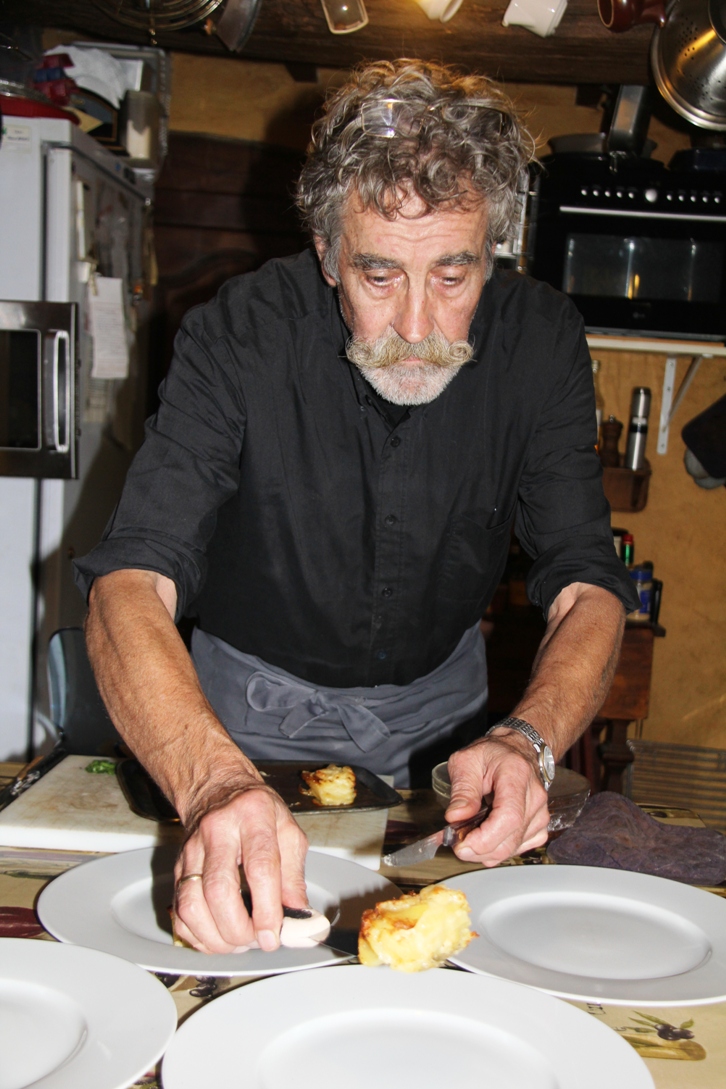
The name is perfect:  La Table du Bonheur (Table of Happiness).   The culinary creations prepared by chef Hans would make anyone happy. 

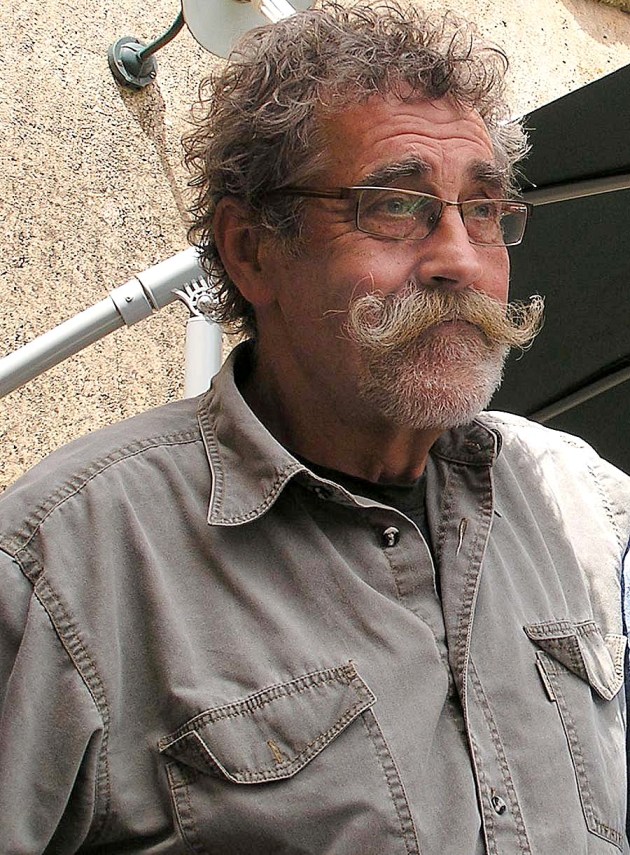
“The main reason I cook is to make people feel good, to feel happy. I like to give them something nice to remember,” says Hans, who sports a perfect

Photo by Gail Polack

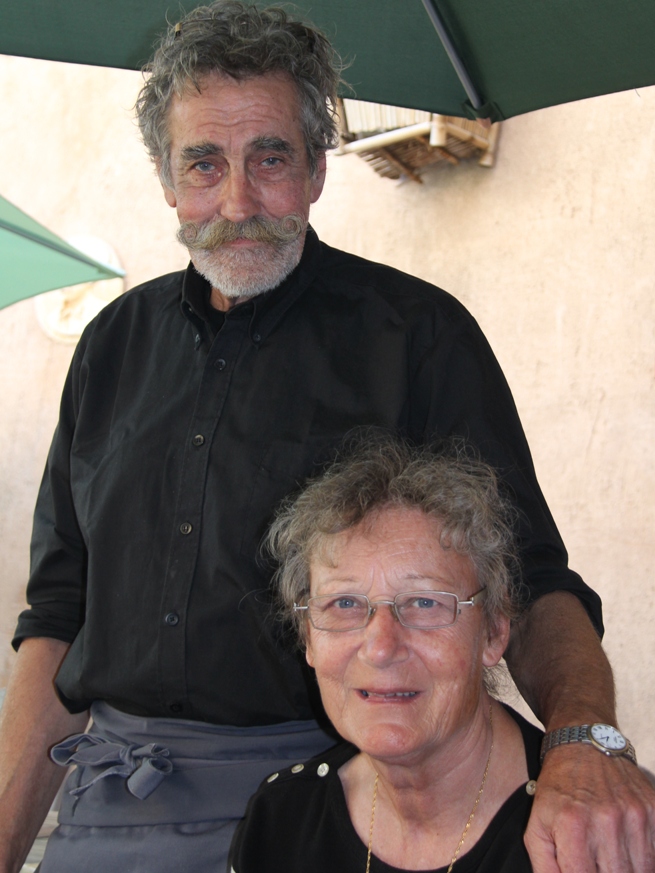
handlebar mustache and speaks five languages.  With his wife Tiny assisting, this chef extraordinaire creates over-the-top meals for guests at his Bed and Breakfast home, where he also rents a vacation apartment.  And, sometimes he cooks for lucky friends. 

Thanks to Ben, a Dutchman who was in my French class, I heard about Hans and Tiny, who are also Dutch.  Ben wrangled an invitation for me and Bob.  We’ve been back many times since, and I’ve  even gotten up enough courage to invite them to dinner. 

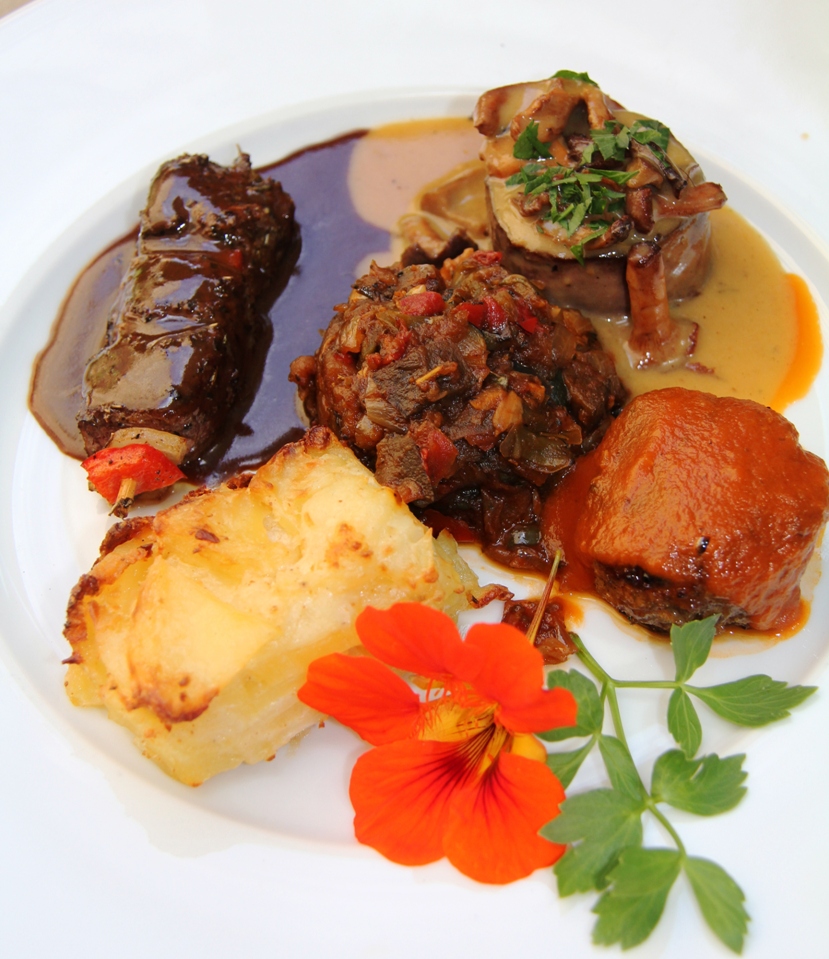
A recent dinner chez Hans and Tiny began with smoked wild salmon (he smokes the salmon himself) and  wild salmon tartare. This was followed by cepe bouillon, then an incredible main course,  a trio of succulent lamb: filet,   brochette and a lamb burger with tomato sauce accompanied by ratatouille and a gratin of potatoes  For décor: an edible nasturtium blossom.  Then a beautiful cheese course, a blanched apricot split and filled with layers of fresh goat cheese all smothered with warm lavender honey. Dessert: lemon custard pie with homemade raspberry sherbet and whipped cream.   We were indeed happy. 

 Table du Bonheur is high in the hinterlands of Provence, up a narrow windy road, then down a rutted dirt road to a cluster of no more than six buildings. Remote.  Off-the-beaten-track. At the end of the world. 

Which is just the way Hans and Tiny like it.  “The only way you’ll get me out of here is in a coffin,” says Hans. 

For 18 years, he ran a Michelin two-star restaurant in Belgium. “It was very difficult.  Twenty-six people on the payroll.  One hundred forty places.  I felt like a slave,” he recalls. 

His restaurant career started when he was 22 and went to work as a waiter.  He knew he wanted to move up, so he earned a wine diploma.  “I wanted to be creative,” he says, so he began working as an apprentice with restaurant chefs, including Les Freres Troisgros who have a Michelin three-star restaurant in Roanne,France.  

At the age of 27 he started his own restaurant which, after 18 years,  he was happy to give up and move back to Holland and embark on something  smaller.  “Most people want their career to get bigger and bigger.  I want smaller and smaller….I said at the age of 55 I would give this up.”  For years, he and Tiny and two of their sons (they have three children) ran a small but very popular restaurant with an open kitchen in Holland. “It was great to have people around me,” he says. 

They loved France and spent every vacation touring the country by motorcycle.  They knew they wanted to end up settling here.  One summer when they were looking for a vacation  apartment to rent, he told the real estate agent he wanted someplace so isolated that he could cook naked.  The agent took him to a nudist colony — not what he had in mind. 

However, he could no doubt cook naked at Table du Bonheur. They discovered their home in the boondocks on a trip in 2000.  They rented the house which dates back to the 1500s. The isolated location was ideal, and the house had all the room they needed. The owner, however, would not sell.  They came back every year for seven years before they succeeded in purchasing the home.  Hans was 56, one year past his age 55 deadline. 

They’ve done major renovation, but the kitchen has kept plenty of old world charm.  So much so you wonder how Hans can turn out such fabulous food in a simple, relatively small, space – the antithesis of a modern kitchen.  The dining room/living room, with beams, exposed stone walls and a fireplace, is cozy  — the perfect ambiance on a cold winter’s day.  In summer a small terrace area with worn wooden tables and lots of potted flowers all around is an ideal setting for savoring fine cuisine.

 Hans has local sources for all his supplies – one farmer for pork, another for lamb, yet another for beef, and one for poultry. Cheese from a local producer.  Fish from the market in Carpentras. In the fall he puts on dinners for the local hunting club whose members provide him with tasty game. 

“Everyday is an adventure.” he says, with a twinkle in his vivid blue eyes.   “I love to cook.  I love the creativity of it.” 

And, we’re happy to devour his creations!

Check out the recipe in the column at right , Goat Cheese Mousse with Mint Pesto — a winning appetizer.