“Madame, vous êtes à la fin, » (Madame, you are at the end (of life), she announced as she massaged my ancient body. I had to chuckle, thinking to myself, “Yes, I know. But did you need to remind me?”
I had treated myself to a massage at an upscale hotel in Nosy Be, Madagascar, Part II of my solo voyage to South Africa and Madagascar (Mada), the world’s fifth poorest country.
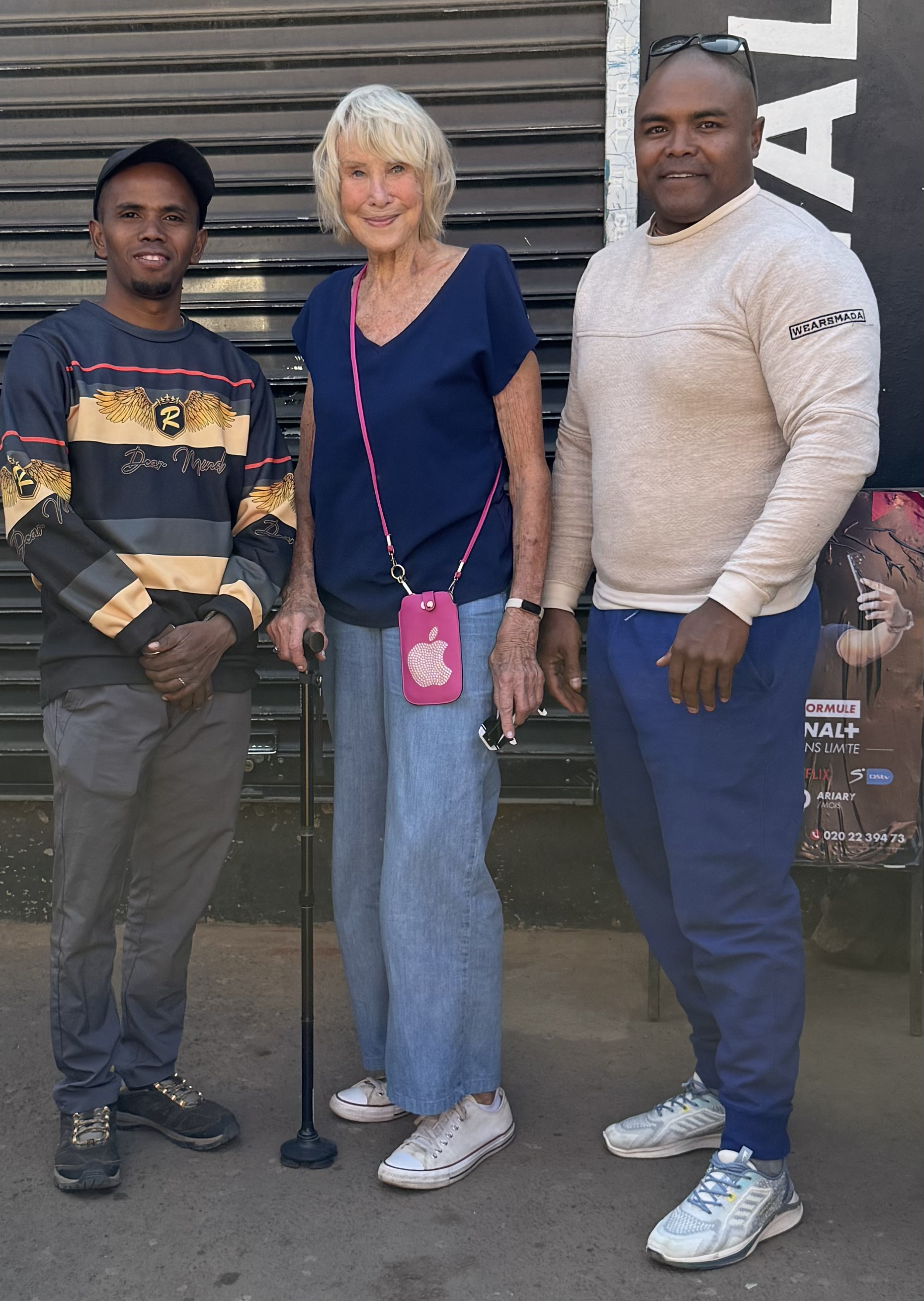
With guides Emanuel and John
Why would a handicapped old lady traveling alone (me) come to Madagascar? It was obvious those I met on the journey were surprised, if not baffled. I did not fit the profile of the typical Mada tourist.
Nosy Be, Madagascar
Madagascar is a fascinating, gorgeous country, but crime ridden and poor – very poor. Most visitors are young and fit or older and fit, exploring Mada’s rich biodiversity and incredible landscapes which involve long, rigorous journeys over mainly dirt roads. Mada is huge, the world’s fourth largest island. Distances are great. Due to my disability, my excursions were near cities and mainly on paved roads with a private driver/guide – nonetheless challenging at times.
I was apprehensive, if not nervous, prior to departure. Had I taken a step too far? I was petrified of falling again. But I charged ahead.
Madagascar is home to 112 species of lemur, all endangered.
A woman I met my first night at a hotel in Mada gave me some words of wisdom. She is a health care worker who has a daughter with disabilities. “You need to push yourself, test your boundaries. Use it or lose it.’’
I reflected on those words many times in Mada – when faced with uneven, stony or dirt terrain to navigate, steep steps with no railings, hills with no steps. “You can do it. Slowly. Carefully,” I told myself.
Steps were often challenging..
Travel has been my lifelong passion. I relish learning about different lands, cultures, traditions. I love talking to locals. You learn so much. It is enriching. It can change who you are. Travel adds perspective to life and understanding of the world.
My late husband Bob shared my passion for travel and adventure. We traveled near and far. After several difficult years suffering from Alzheimer’s, he passed way two years ago. About the same time, I had a horrendous fall – a complicated femur break and a broken shoulder. Despite numerous surgeries, I have limited mobility and need a cane to walk. And, I don’t have full motion of my left arm following the injury.
Bob and Leah in the Oman desert
I am à la fin, handicapped, but still alive. I can walk, albeit slowly. I no longer have a travel partner. What to do? Sit on the couch, watch TV ad wait to die?
NO. NO. Get up. Get going. Get back on the road again. I did. It was invigorating. I felt alive again. I loved it.
As Saint Augustine said, “The world is a book, and those who do not travel read only one page.” I want to read all the pages.
If not a Tales and Travel follower, please sign up here. Trust me. It’s safe. Your address is not shared. Don’t miss out. More about my travels in future posts: Sensational wildlife in South Africa, the mysteries of Madagascar.
See below for a new recipe just in time for all those ripe tomatoes.
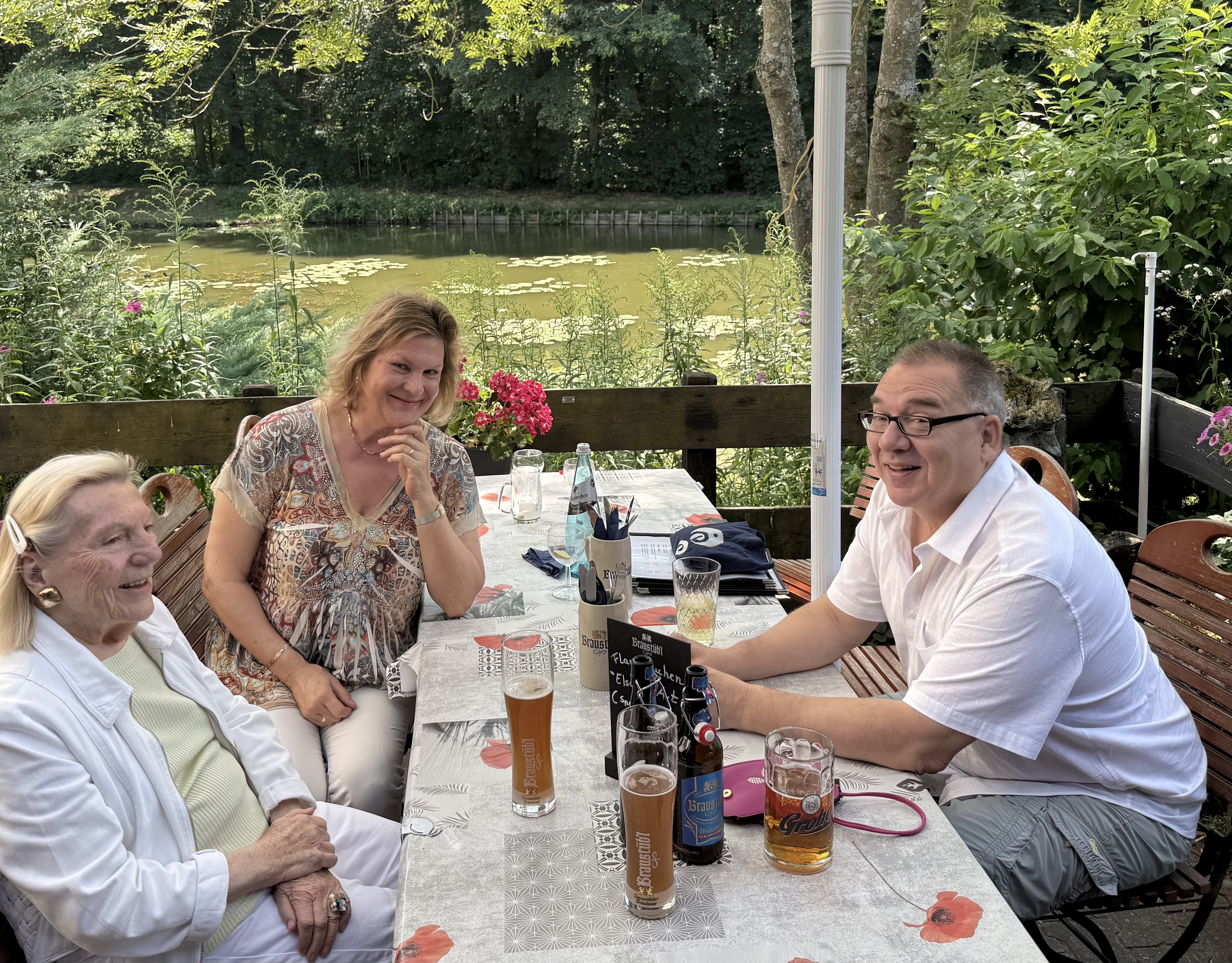
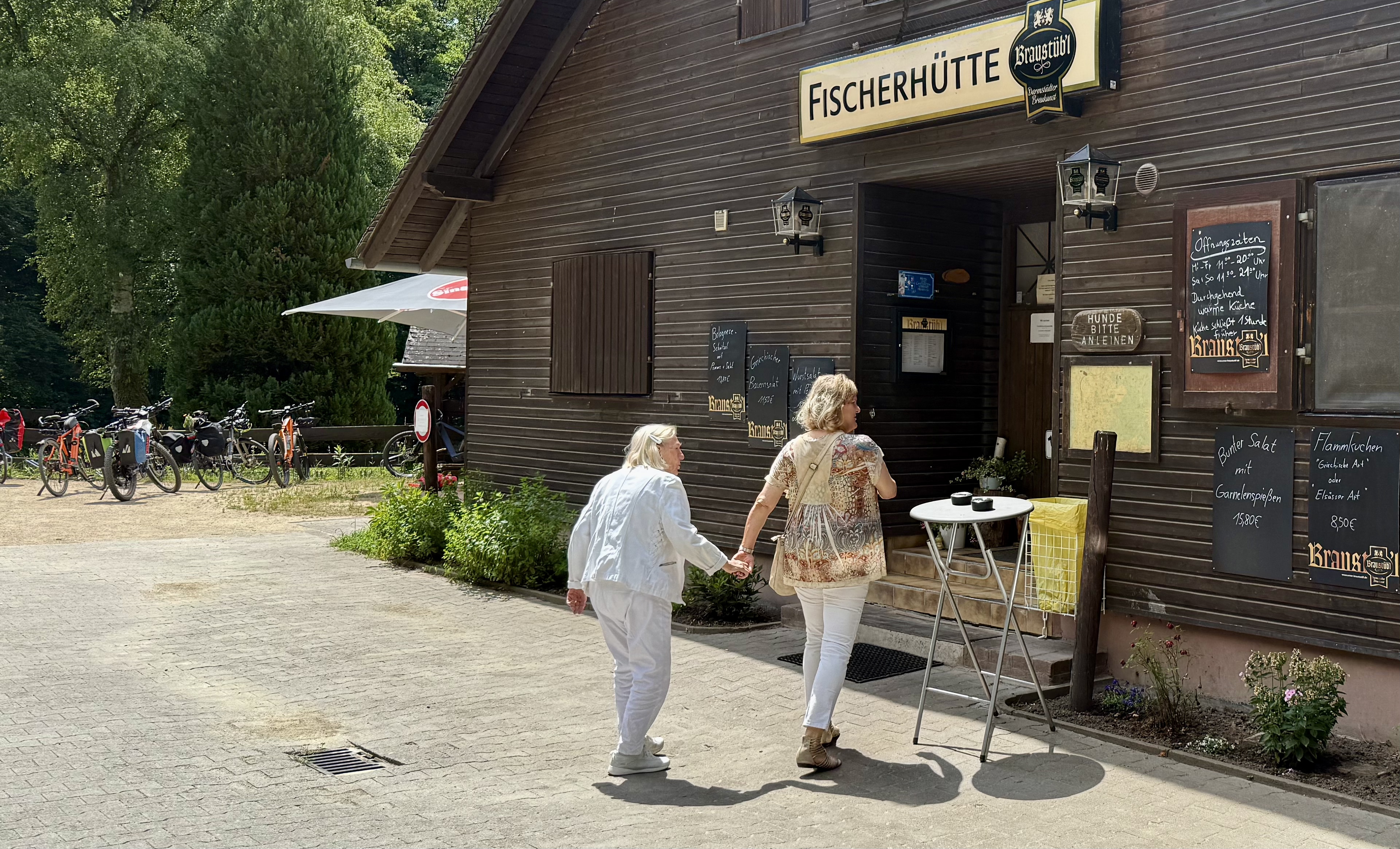
Like I remembered. Idyllic. We were surrounded by green, pure nature, at the Fischerhütte near Darmstadt, Germany.
Thekla, Andrea and Thiemo at the Fischerhuettte
Many, many years ago when I worked as a journalist at the newspaper Stars and Stripes, I lived not so far away. I remember hikes to the hütte in the forest. I remember treks to secret places in that forest in search of the coveted steinpilze (boletus, cepes, porcini – whatever the name, the king of mushrooms). I remember the tranquility, the beauty of those woods.
It was wunderbar to return to Germany after so many years. I have missed Deutschland – old friends, favorite foods, the lush forests.
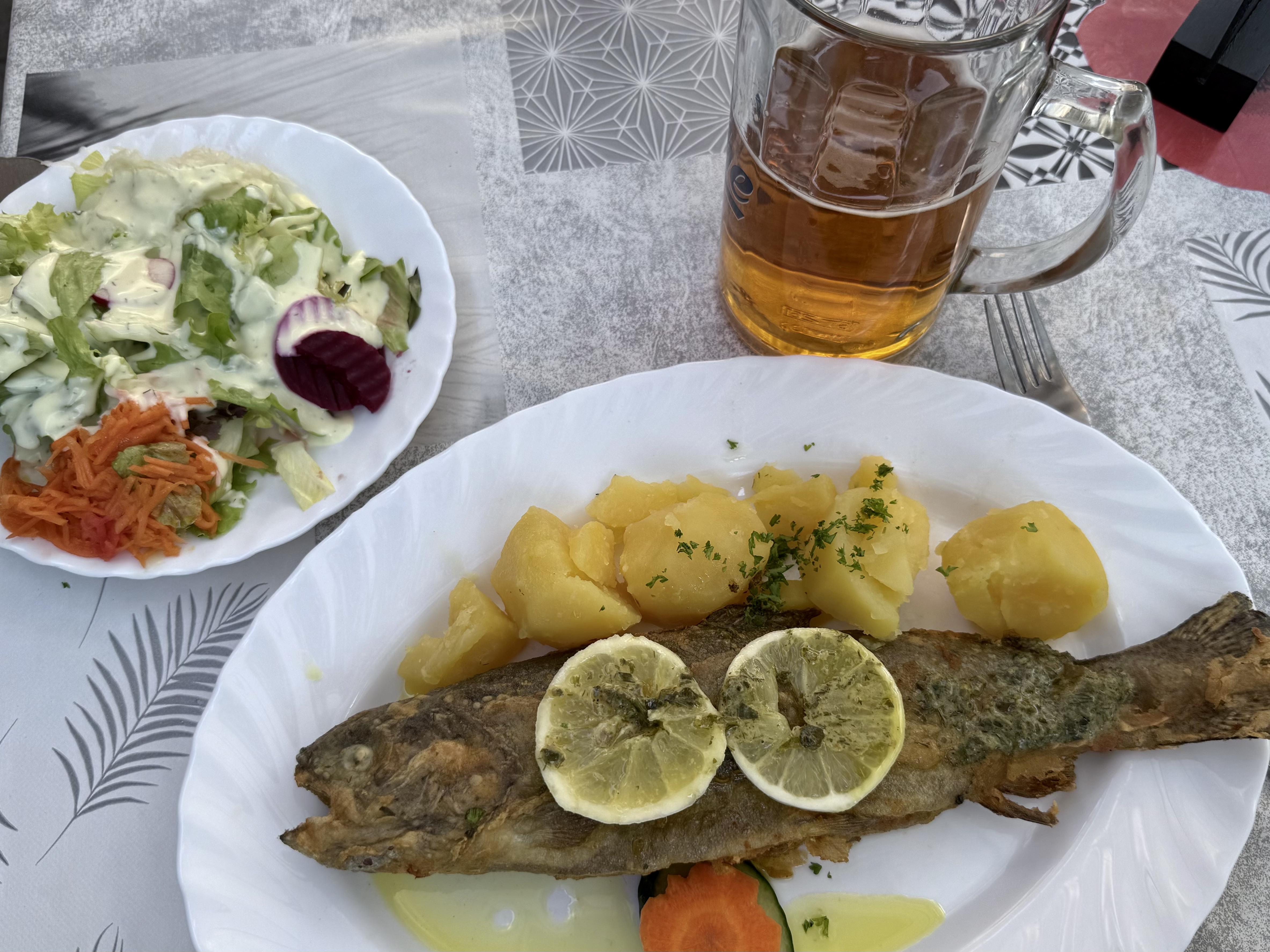
Trout for lunch at the Fischerhuette, and the best German beverage, beer.
Andrea, the daughter of an old friend, her husband Thiemo and her sweet mother, Thekla, led me down memory lane, not just to the Fischerhütte, but other special spots. It was magical.
Many more memories were rekindled with friends in the Stuttgart area where I lived with husband Bob (RIP) for many years.
Gerlinde and ice cream prep
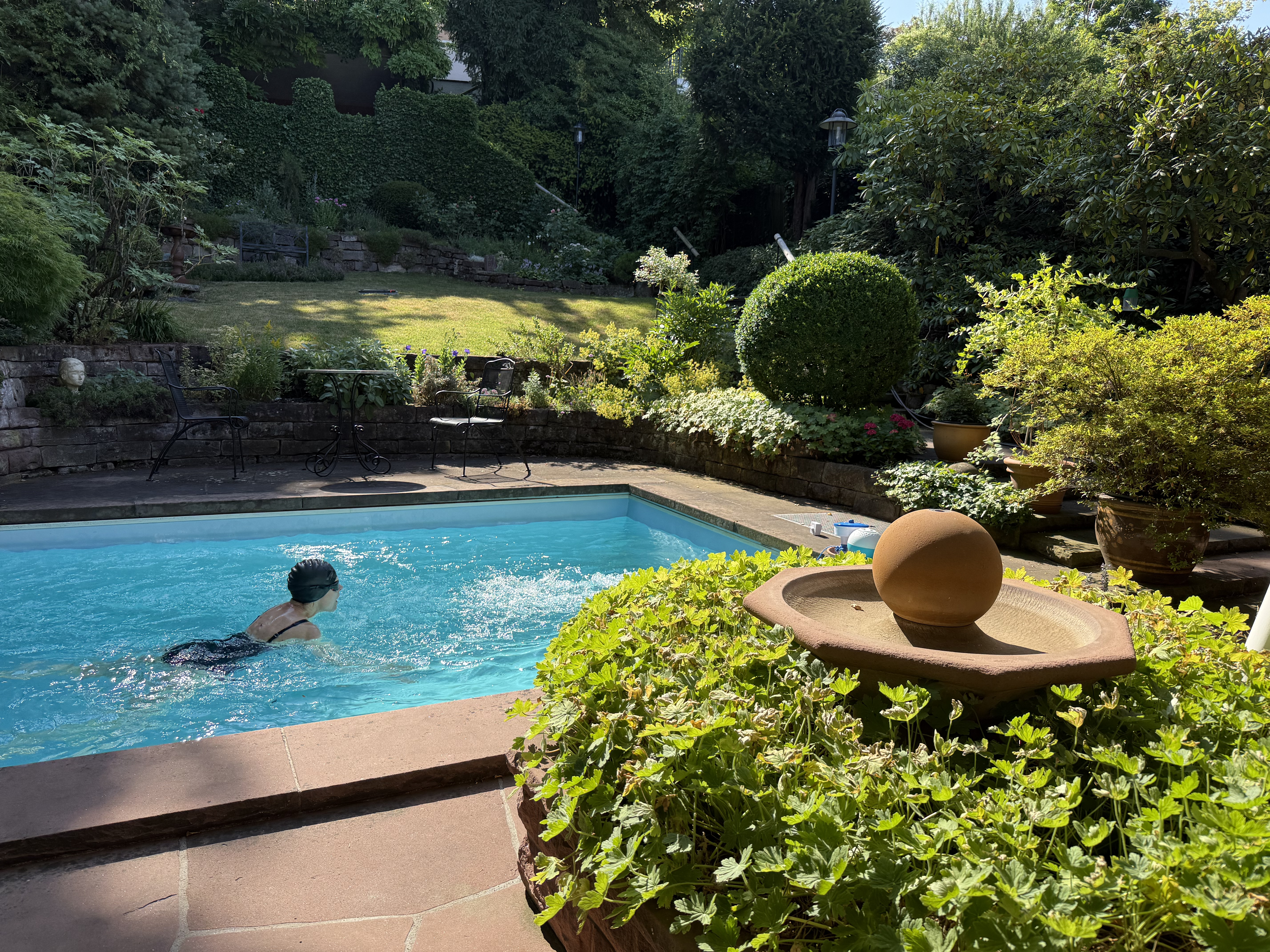
Gerlinde welcomed me in her Stuttgart home. Like many of my friends, she is a foodie par excellence, even making her own yogurt and ice cream. She is also devoted to fitness and swims against the jet stream in her pool for 20 minutes every day. I just swam, minus the jet stream.
Gerlinde swims daily against a powerful water jet — Impressive.
We drove to Steinenbronn, past the apartment where Bob and I lived for 11 happy years. At a nearby restaurant, I indulged in my very favorite Swabian special, Zwiebelrostbraten (onion steak) with homemade Spaetzle.
Our spacious apt was on the 2nd floor.Zwiebelrostbraten
I can’t complain about food on the Mediterranean coast where I now live, yet there is a shortage of ethnic eateries.
Not so in Germany where, among others, Turkish restaurants abound. I miss those, too. Marianne treated me to lunch at her friendly neighborhood Turkish restaurant. I wanted to bring those flavors back to France.
Then, that de rigeur German ritual, afternoon Kaffee und Kuchen (coffee and cake) at her apartment.
Fun conversation and memories of good times enhanced all those luscious tastes.
Marianne and Turkish delight
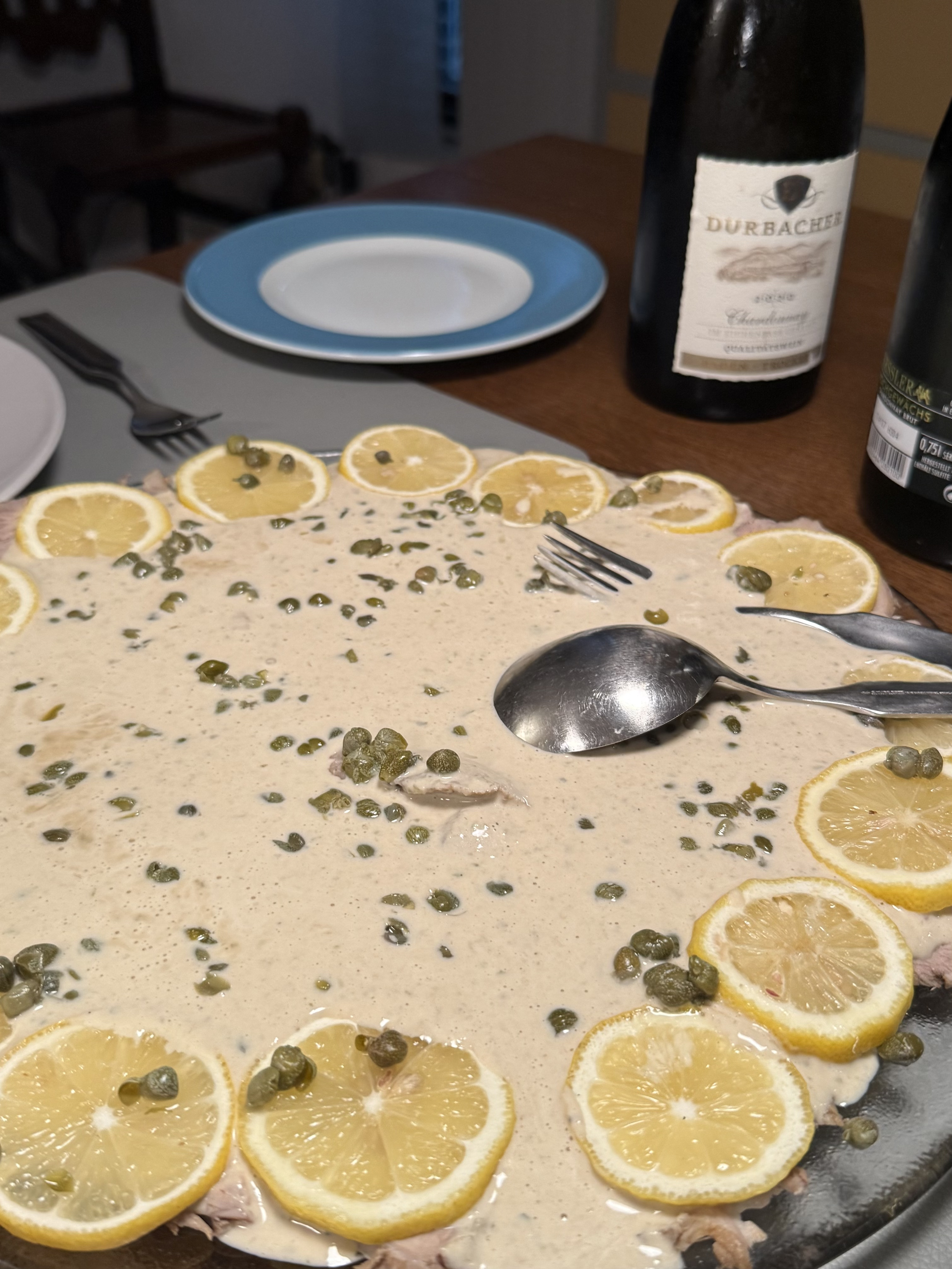
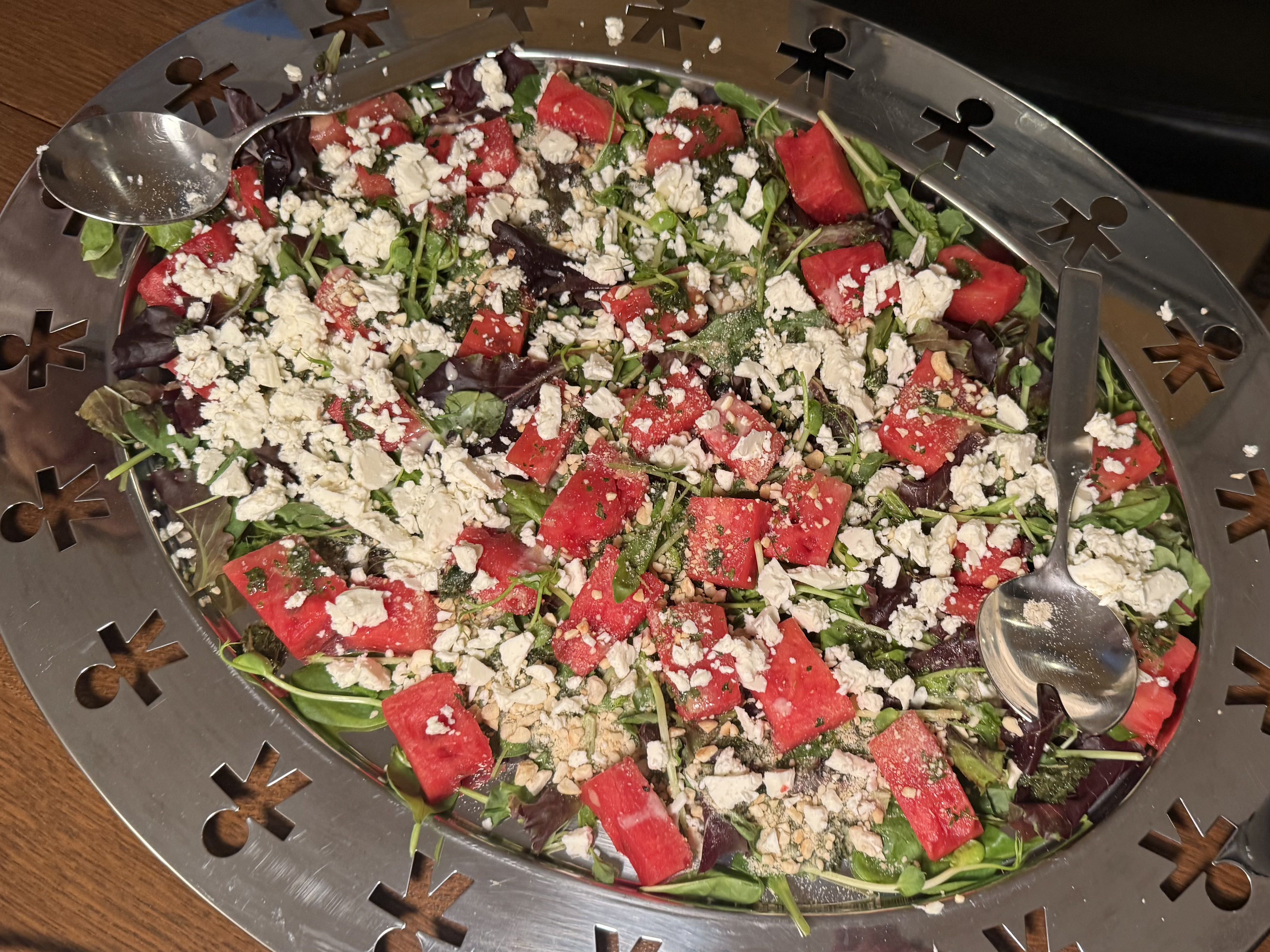
My friends indeed lavished me with generous and delicious hospitality. Dagmar invited me and other friends to her home for a tasty lunch with a scrumptious raspberry cream dessert. And, Heti invited us to a multi-course dinner of exquisite delicacies, each worthy of a magazine photo (photos below). This was especially remarkable as she had fallen and broken her wrist the day before.
Heti, Christina, Dagmar and Gerlinde
On my last day we met in Bebenhausen. Bob and I were avid cyclists. We liked to pedal from Steinenbronn to this tiny burg with an ancient monastery and an excellent restaurant. It is still charmingly picturesque. My last treat before heading home, another German delicacy: Rehrücken filet (venison filet). Delectable.
BebenhausenRehruecken filet
Living on the Mediterranean coast, I have the sea, palm trees, the Maritime Alps, tropical gardens – but no dense, enchanting forests. I had not realized that I was forest deprived. I was in awe of all the fabulous German greenery.
I mentioned this to Andrea, so we visited yet more. “I’ve never been to so many forests in one day,” she said. Gerlinde told me that Stuttgart has more green space than any other German city.
A stroll in the Rosenhoehe, DarmstadtA pause for apple wine at a gemuetlich hut on the edge of another forest
“The woods are lovely, dark and deep…,” and a treasure.
Thank you, dear friends, I loved my return to Germany –especially seeing all of you.
Below: Heti’s superb creations. Each was mouthwatering.
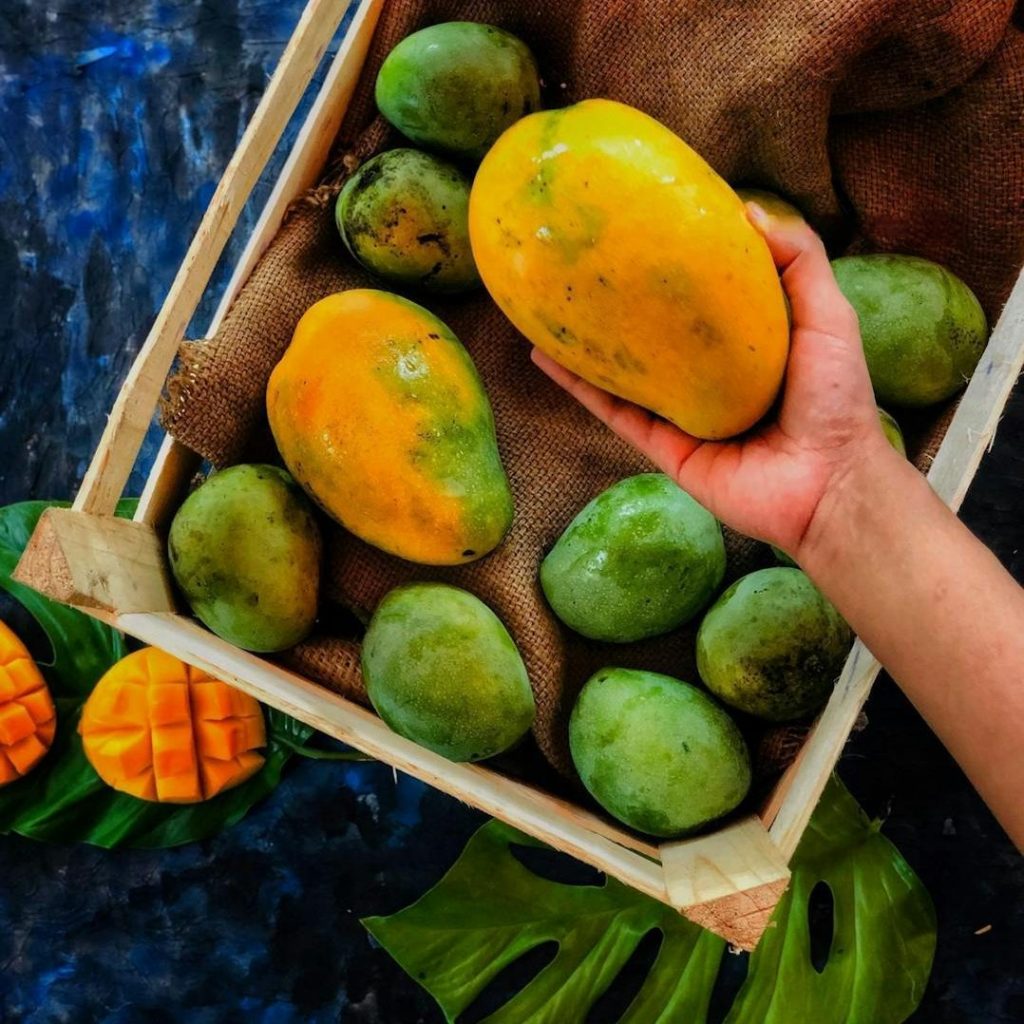
I will add a new recipe next time. Meanwhile, for an easy, tasty dessert, try my recent discovery, RUM-SOAKED MANGOES. Sinfully delicious.
If not a Tales and Travel follower, please sign up here. Trust me. It’s safe. Your address is not shared. Don’t miss out. Thrilling adventure coming: South Africa, Madagascar and Mauritius.
Comments welcome. Scroll down and share your thoughts.To read previous comments, scroll way down.
Emmy and Anne came to visit. They are sisters, my cousins whom I have not seen in too many years.
Cousins then: me, Emmy, Anne
Emmy is a year older than Anne. Anne is 5 days older than I. As children, we saw each other frequently. With time and moves, all that changed. (Thank you, Emmy, for above photo. )
And cousins now: Anne, me and Emmy. We celebrated Derby Day with mint juleps. As a young reporter I worked for the Louisville Courier-Journal and was assigned to cover the elegant Derby “balls.”
Neither cousin had been to my turf in southern France. I wanted to show them my favorites and the must-sees of the area. We were on the move during their week-long visit, rambling along the Riviera.
I asked them to send me impressions, comments, etc. after their return. Continue reading for photo highlights and their comments.
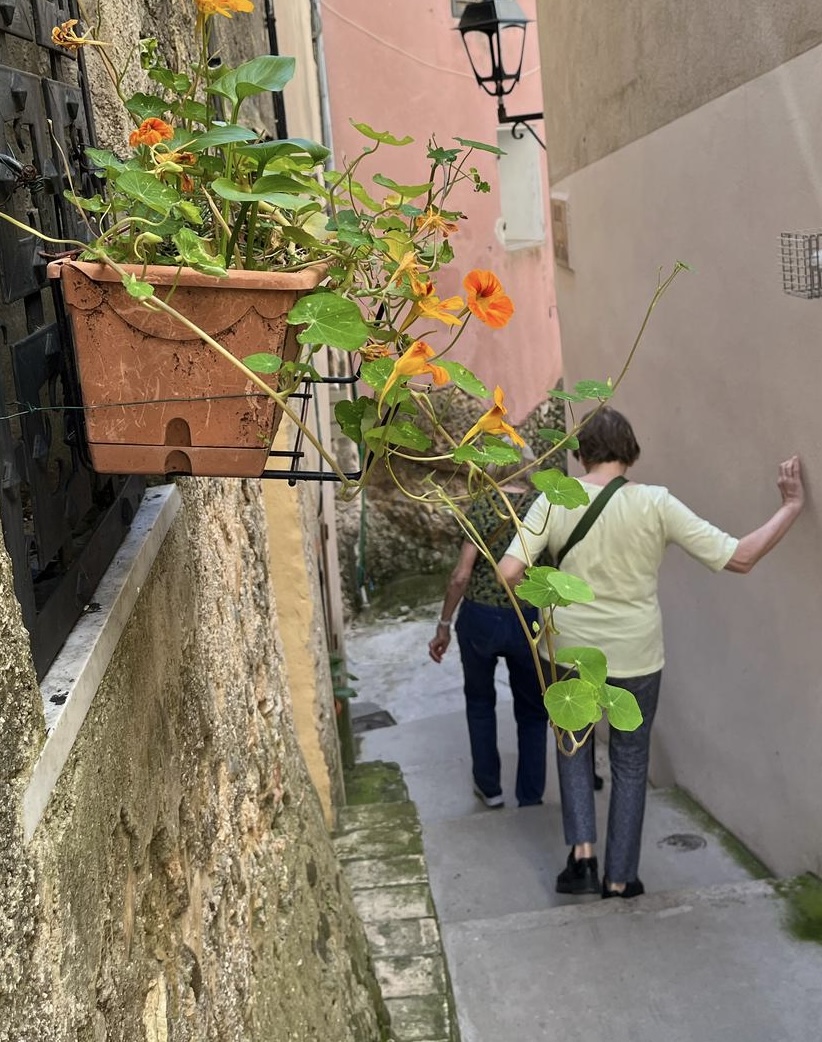
First stop was the old village of Roquebrune, a quick, but steep drive from my abode. Gorgeous views and an ancient olive tree.Lots off skinny passages and challenging steps in the village.
We ventured up in the hills on day #2 of their visit, a stop for meditation and reflection at the place where my Bob’s ashes have been dispersed. Husband Bob and I were avid cyclists. He loved challenging climbs. We attacked this road and its numerous hairpin turns many times.
Pilgrimage chapel along the road between Sospel and Moulinet where I dispersed Bob’s ashes.
“I loved seeing the remote and serene place where you gave Bob a final resting place. What a beautiful place to commune with nature and to be part of a sacred pilgrimage like so many before us,” Anne said.
We were on the border with Italy. I felt they should have a taste of my preferred country, so we continued up the mountain and returned to the coast via Italy. Bob and I had cycled some – but not all of this terrain. It was a long, long way down.
Anne’s comment: “You complained about the day with the too long drive but that was one of my favorite days. You are a fearless driver! The hairpin turns, the cyclists, the sheer drop offs were terrifying to me but didn’t seem to faze you.” …Driving in the Mediterranean hinterland is not for the faint of heart.
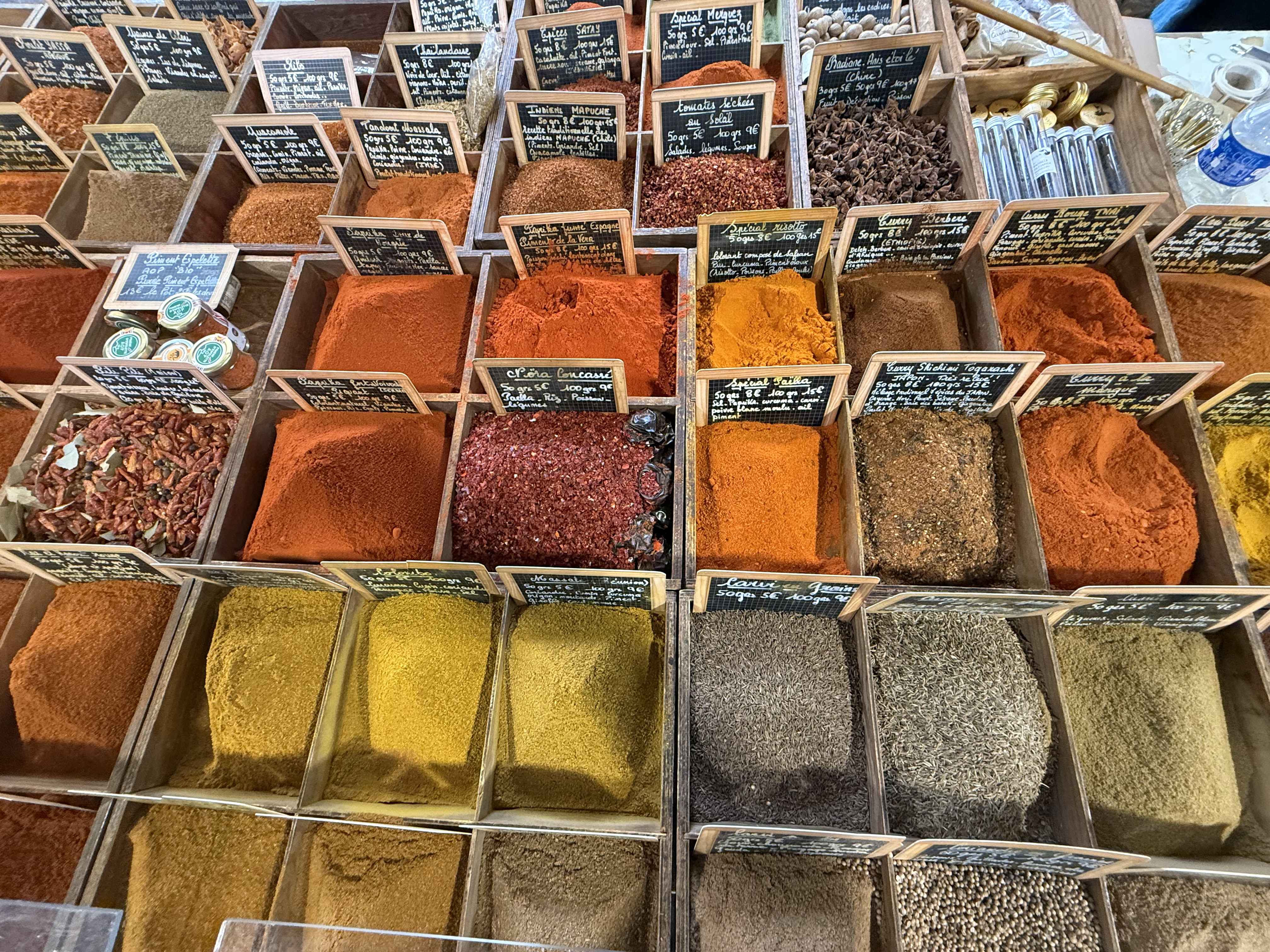
Veggies at Menton marketSpices at Antibes market
Markets are de rigueur around here. The Saturday morning market in nearby Menton is enticing with clothes (Italian bargains) in addition to tempting produce. Cousins were impressed, and each found a garment souvenir. “The market in Menton was lots of fun,” noted Emmy.
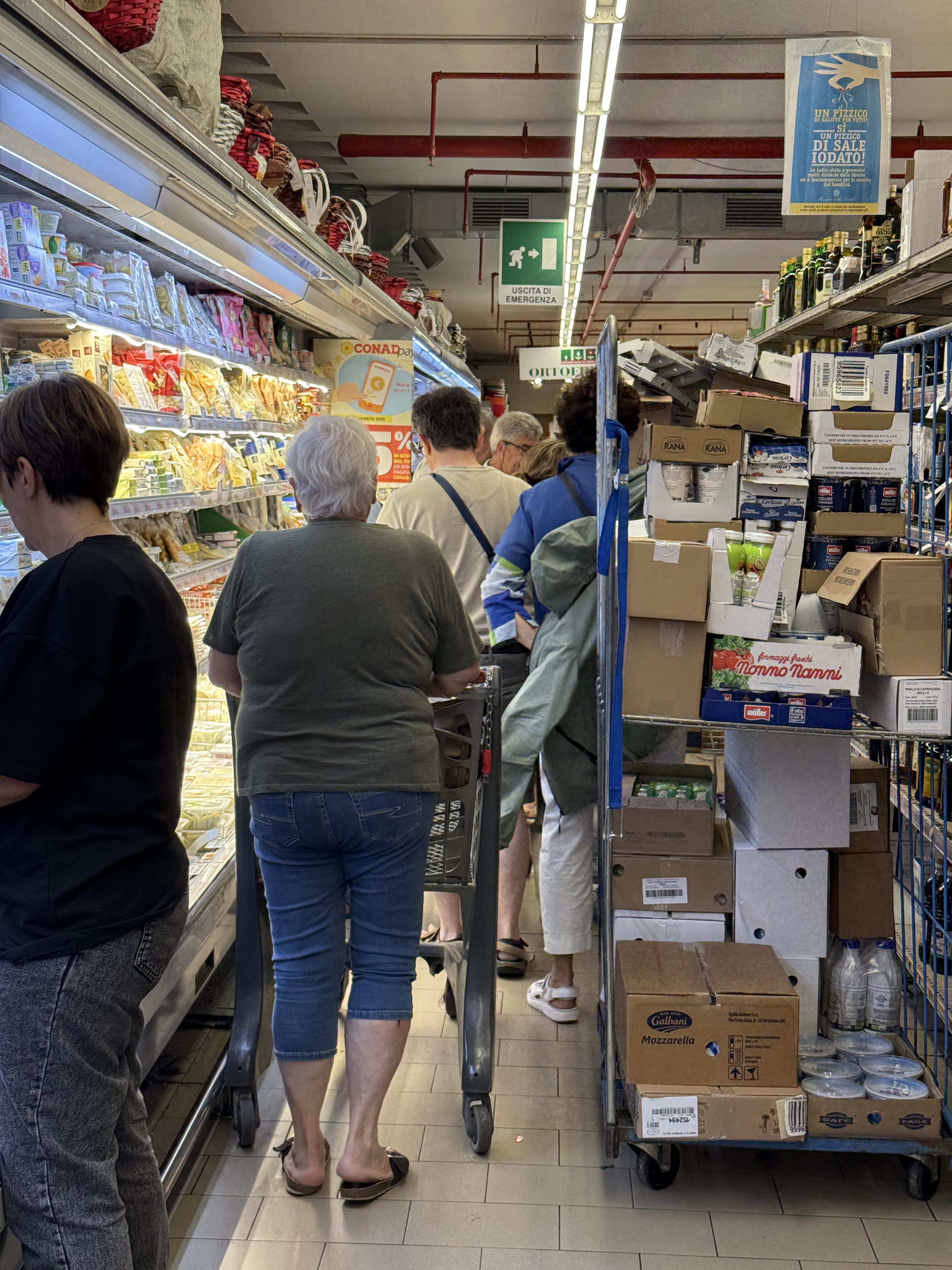
A market of a different sort was also high on their list of favorites. Conad, an Italian supermarket on the border, is like no other, the antithesis of a sanitized, huge, beautiful American supermarket. It’s cluttered, chaotic, always crowded. French love the cheaper prices. I love the prices too, but mostly the crazy ambiance and the Italian products.
Patience and skill required to negotiate the aisles at Conad.Zucchini blossoms at Conad.
For Anne, this was her “upfront favorite experience… both disorienting and fascinating.” Emmy commented that she was glad she had the experience “in the store with anything and everything one might want. ” Pots and pans, socks and underwear, plants and flowers — all are stuffed in those narrow Conad aisles.
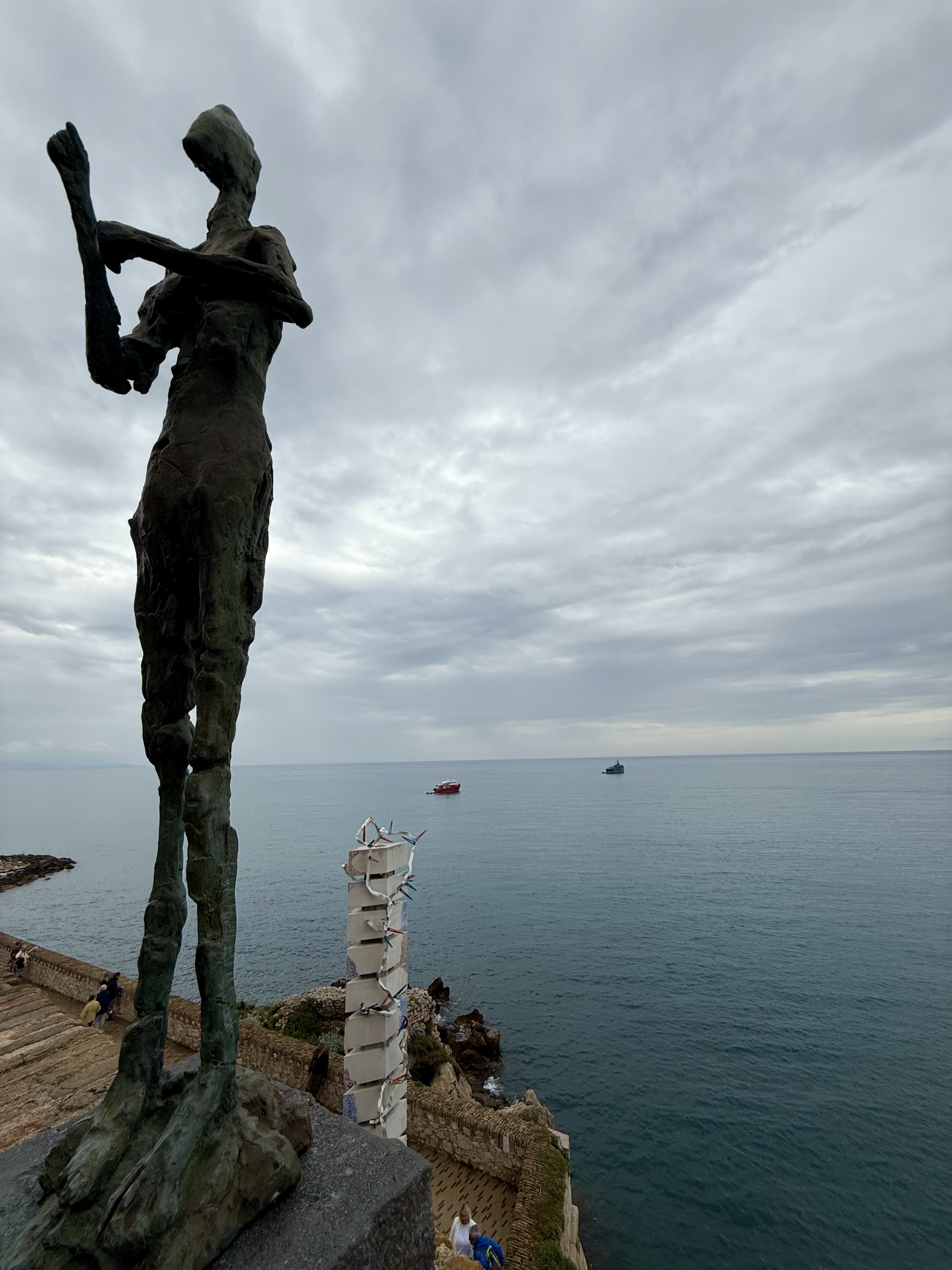
Outstanding art museums are a major attraction on the Riviera, including the Picasso museum in Antibes where I found lots of photo opps.
Miro sculpture on the terrace of the Picasso museum.Another shot on the terrace.
But for me the museum piece de resistance is the Fondation Maeght in St. Paul de Vence. On my first trip to the Riviera moons ago, I visited the Fondation. I was overwhelmed then and overjoyed recently with our visit. The art museum on a hill overlooking the medieval town features a superb collection of modern art including large sculptures in gardens and on terraces.
Alexander Calder sculpture in the garden.Indoor gallery with Chagall and Calder mobile.
Since we were in the area, we stopped to visit the Matisse chapel in nearby Vence. A nun inspired the artist to create the chapel whose vibrant colors are dazzling.
Prop for photo opp in St. Paul de VenceMatisse chapel in Vence
Emmy summed up her take on the trip: ” I loved each and every excursion. Was especially intrigued by Dolceacqua with its historic bridge and unique and ancient tunnel structure leading up to the castle. Loved the trip to Eze with its beautiful gardens perched on the hilltop.”
Dolceaqua with its castle and ancient bridge
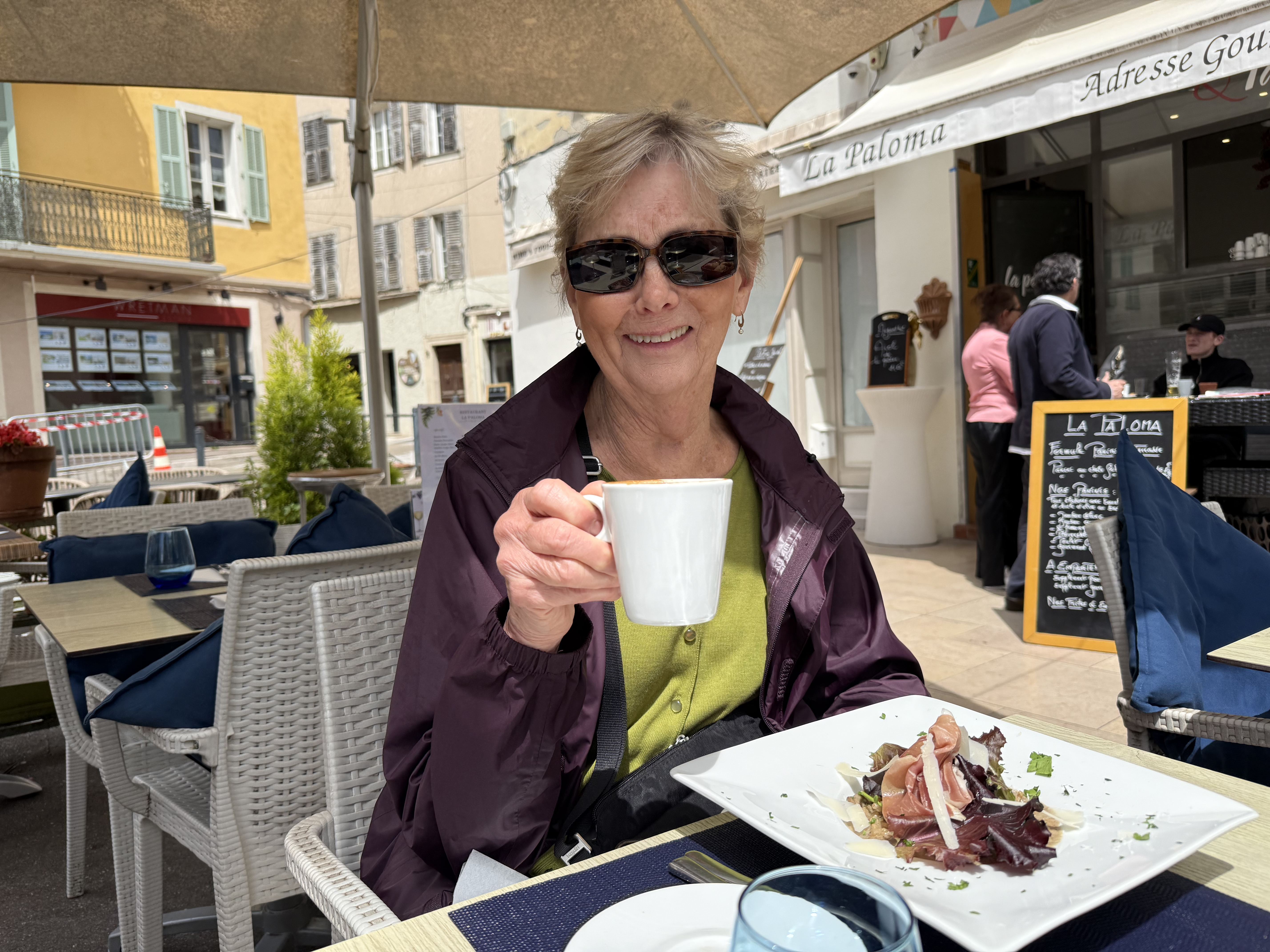
Food is a travel highlight. My dear cousins are easy to please and liked everything. We avoided expensive eateries. Sitting outdoors at a Vence resto, Anne ordered coffee as her lunch beverage. I explained that in France coffee is a breakfast drink, definitely not ordered as liquid refreshment with a noon or evening meal. However, after the meal, a “petit ” espresso is in order. It was all in fun. One can drink whatever whenever, but I thought they should learn a bit about the local customs.
Anne with her coffee americano
“One of my favorite moments was when I ordered coffee at lunch and you gave me a startled look and told me that was a gauche thing to do. Or perhaps I am gauche, your country bumpkin, too-American cousin! That struck me as so amusing, so familial in a way,” she recalled. BTW: Anne is delightful, definitely not gauche.
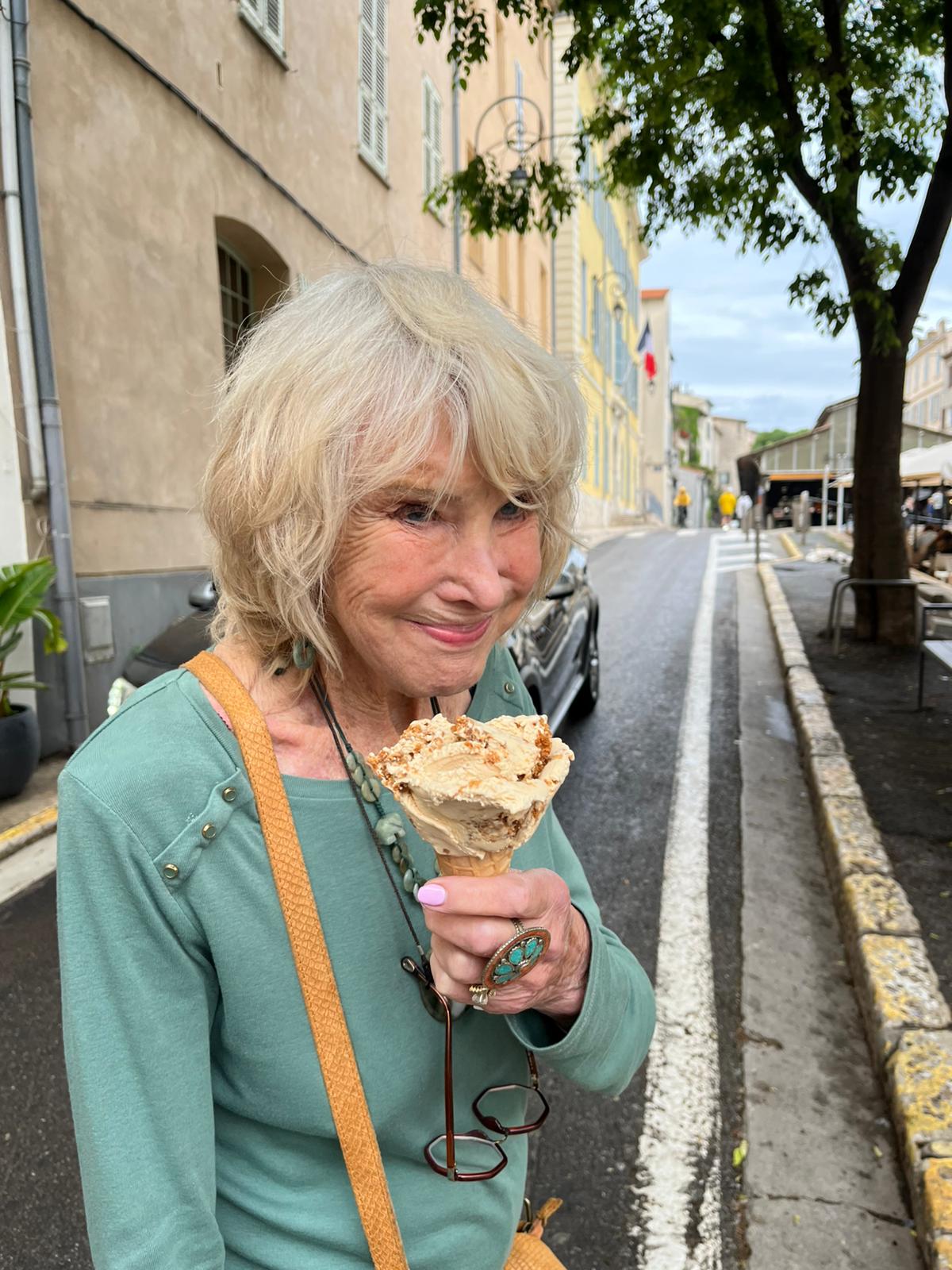
Welcome dinner, Shakshuka.We found the best ice cream in Antibes.
Because we were on the move, I did not prepare at- home dinners, except for their arrival, my all-time favorite, Shakshuka. Click for the recipe. I had made a rum carrot cake in advance of their arrival. We had a slice every day — too much and it wore thin (but not on the waistline). We never did finish it.
It was heartwarming, fun and gratifying to reunite with my cousins. A few months ago my nephew visited – his first time in Europe. We had a “blast.” Read about that adventure: Intro to Europe 101.
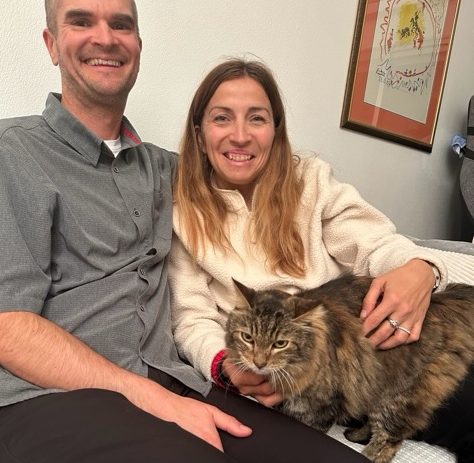
I hope all my kin will come back. And, so does Simba who bonded with Emmy.
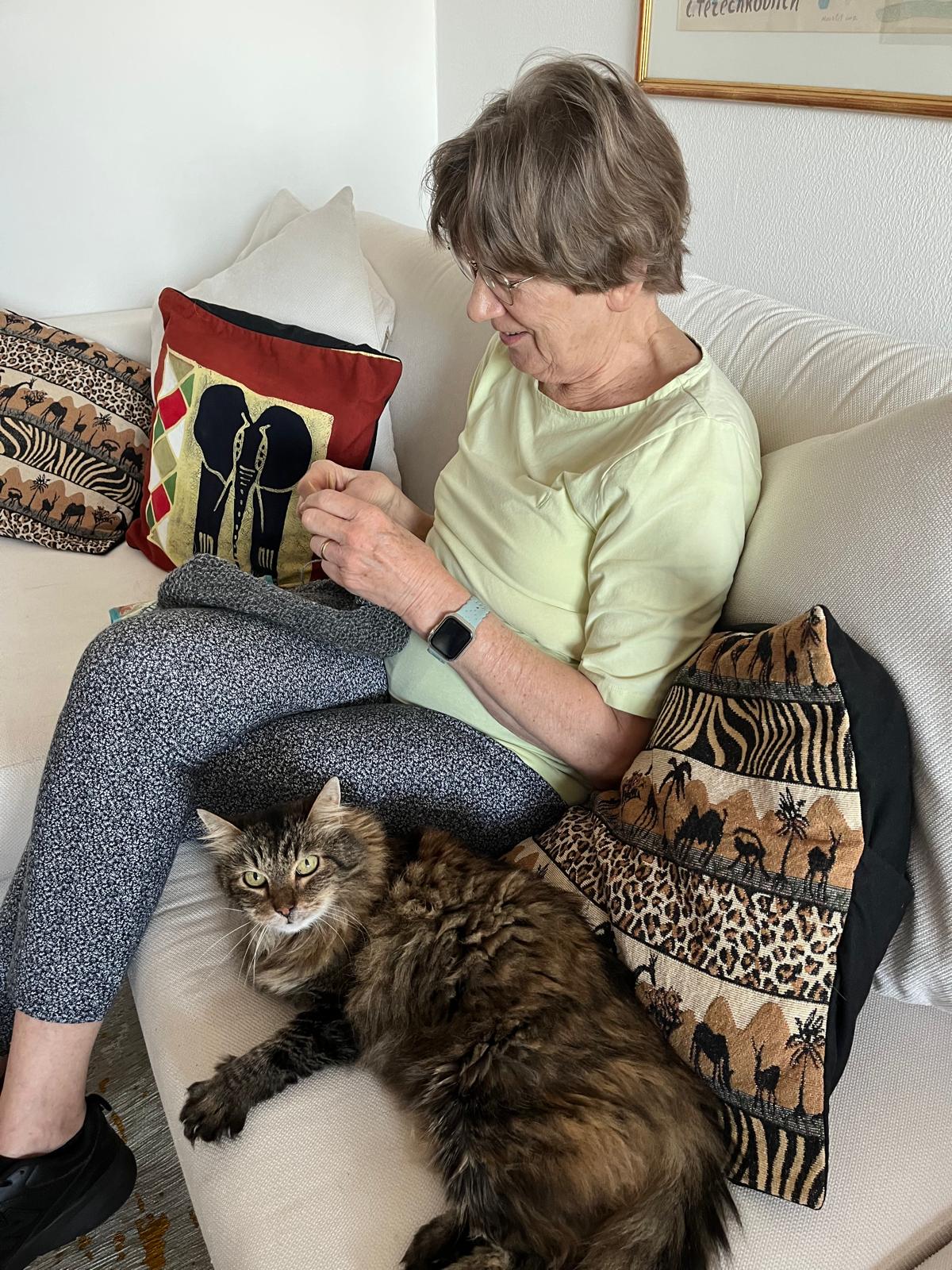
Emmy knits. Simba cuddles.
If not a Tales and Travel follower, please sign up here. Trust me. It’s safe. Your address is not shared. Comments welcome. Scroll down and share your thoughts. For Today’s Taste and recipes, keep scrolling.
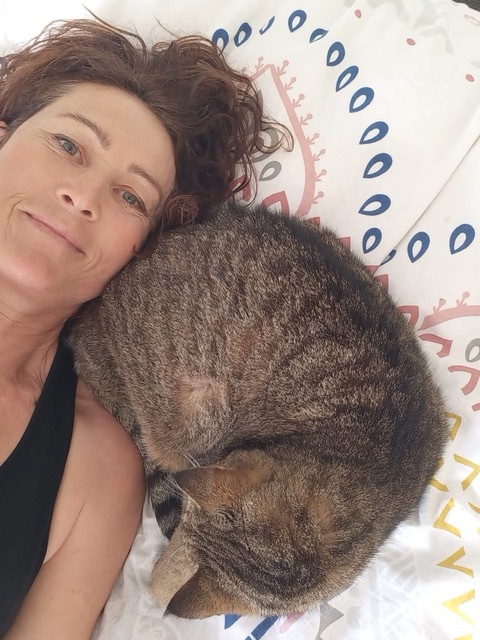
I call her the “cat whisperer.” Pet sitter Bridget rescued, rehabilitated, my two precious felines, Simba and Oprah. And, she saved me.
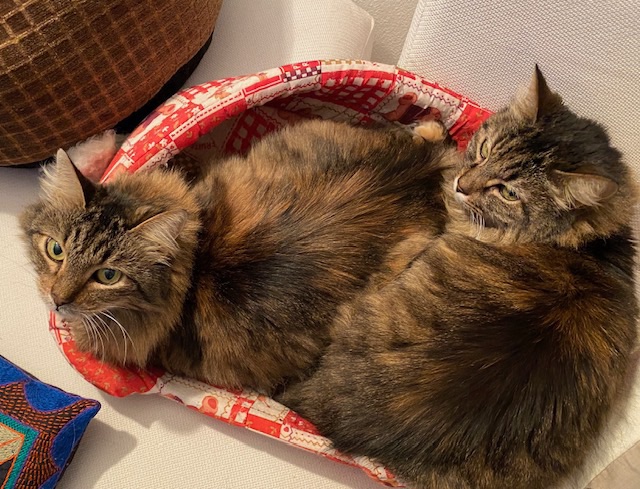
Simba and Oprah
I had a serious accident requiring multiple surgeries, a long hospital stay then two months at a rehab facility in southern France where I live. I was transported to the hospital asap with no way to arrange care for my beloved kitties.
My remarkable apartment gardien and friends stopped by to refill the food bowl and empty the litter box. Simba and Oprah were both very shy and distrustful of strangers. They stayed hidden and had no human contact for a month.
Trusted House Sitters (THS), a noted pet sitting organization, came to the rescue. I am a member of THS. So is Bridget, the phenomenal sitter who worked a miracle with my traumatized, petrified cats. Both are long-haired rescue cats. Their fur was seriously matted. With love and patience, Bridget coaxed them out of hiding. She brushed them, petted them, showered them with TLC. By the time I came home, they were back to normal.
Bridget has become a friend, as have several trusted sitters. Thanks to THS, I can take off on trips knowing my cats (Now only cat Simba. Oprah succumbed to cancer last year) are safe and happy.
Meet some of my fabulous trusted sitters:
Trusted sitter Bridget has found that pets, like Milo, are generally very happy with their sitters.
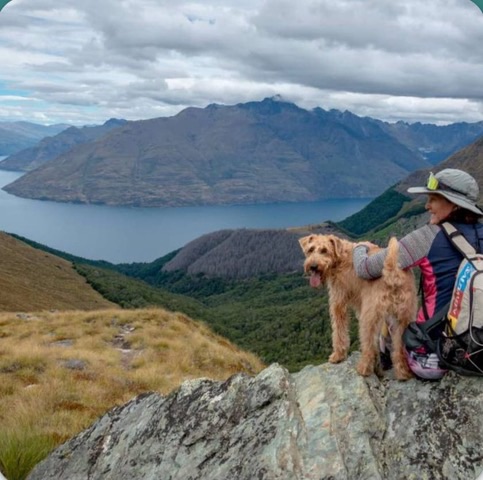
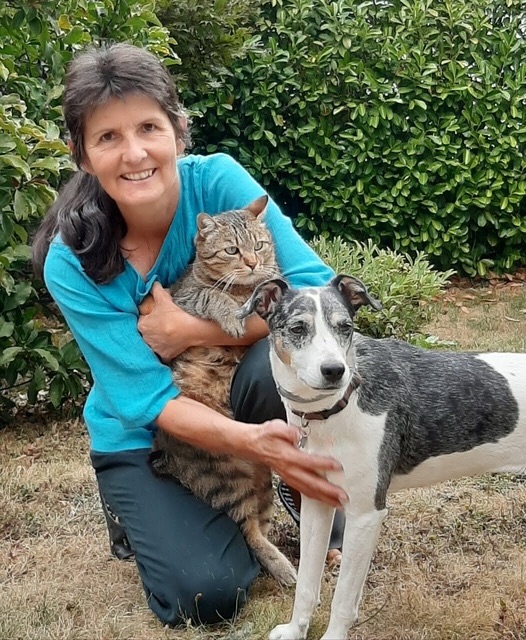
Bridget, raised on a farm in New Zealand, has been a sitter for many years. Her animal charges in New Zealand, where she lives six months each year, often include pigs, sheep, horses, cows, and chickens, in addition to cats and dogs.
“I miss having animals myself,” she says. “I love having the company of beautiful animals… and I love providing security, giving people peace of mind, helping them to enjoy their trip and come back to a clean house. I like to help make a difference.”
Bridget with pooch Fred in New Zealand where she pet sits during our winter months.
She does make a difference, and not just for the pet owners. “People think their animals are pining away for them, meanwhile they are generally sitting on my knee, purring away or sleeping in bed with me…. It’s so much better than a kennel or cattery which are a shock and high stress for pets.”
Erika with my Simba who loves tummy rubs.
Erika, a sitter from Switzerland, spent several months with Simba after I had to have more surgery and return to a rehab facility for three months. Like Bridget, she has many years of pet sitting experience and sterling reviews on the THS site. And, like some other sitters, she has no fixed home. She is in demand, and can usually move from one sit to another. Many of her “clients” have invited her to come back and stay between sits if she is in need of a “home.”
With Bailey in California…and dog Bea and cat Grant in Luxembourg.
“I love animals. I like to travel and see new places,” she says. “People are very friendly. Many are very thankful that I was there and watched the pets, the plants and the house.” Erika has even had sits minus pets, just plants and a house to care for.
Clarissa and a contented cat
Clarissa and son Pierre from Geneva, Switzerland, were my most recent sitters when I went off to Paris. Clarissa, who has three cats of her own, is a devoted, zealous cat lover.
She has used THS for her own cats when she traveled. One sitter, she recalls, left her home in better condition than she had left it. I returned to find my apartment in tip top shape, plus a magnificent bouquet of roses to welcome me home.
Like many sitters, Clarissa can work remotely and enjoy sits in distant places. Son Pierre, when not in school, joins her. Another son lives at home and cares for her kitties when she is off on a sit.
Pierre cuddles pet cat.
Clarissa only sits for cats. “I am not comfortable with dogs,” she says. “I have met such nice people…I would never put my cats in a shelter.” She is happy to help others travel and avoid upsetting their cats.
Pumpkin, the pet pig. He liked to cuddle between Rose and Sebastien on the couch.
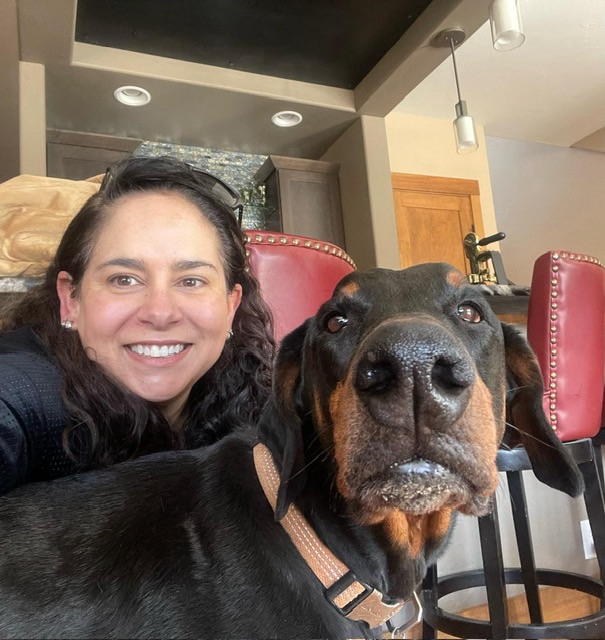
Rose and husband Sebastien from Colorado are remote workers who have sat, not just for cats and dogs, but also a parrot, rabbits, goats, horses, chickens, even a python and a pet pig. The snake, she recalled, had recently eaten so they did not need to worry about him. But Pumpkin the pig, a 200-pound beast, liked to crawl up on the couch and cuddle with them. “He loved bananas,” she said.
Rose and Sebastien, like many sitters, have repeat customers. This Doberman is a favorite, “the meltiest Doberman,” a pet they often sit for in Colorado.
Like most sitters, Rose and Sebastien began with local sits “to get a feel for it.” And, like Bridget, they prefer to have a Facetime call with pet owners before committing to a sit. “You have to think of your own requirements and what you are comfortable with.”
“It’s reciprocal. It’s an exchange,” Rose says. “Both get something out of it. It’s beyond vacation travel. It’s rewarding.”
Rose and Sebastien have also cared for Rex bunnies… and a Banana Bald python.
Magdalene and Brian live in Krakow, Poland. She is Polish. He is Canadian. They too are remote workers and have had pet sits in numerous countries. Magdalene is “passionate about animals” but with their lifestyle does not think it’s fair to have pets of their own. “I like this experience. It feels like home with a pet.”
Brian and Magdalene with Simba
She previously worked as a nurse and remembers a sit when that experience saved a dog. The owners had not told her the dog was a diabetic. He got very sick, but she knew what to do.
A few years ago, I was able to convince my brother Steve and his wife Yoshie to try THS. Their cat Zippy is difficult, only likes them. Yoshie was very reluctant to have a stranger stay in their home in Boulder.
They had been paying $40 per night to board Zippy in a kennel, but it was stressful for them, as well as Zippy. He sensed that they were leaving, would hide, pee in the cage. “I was exhausted,” said Yoshie. Zippy cried at night for several days after their return. THS has replaced the kennel and all are happy.
Trusted House Sitters was founded in the UK in 2010 and now has 230,000 members. It operates in 180 countries. Pet owners pay a fee to join, from $129 per year, fill out the required forms detailing their pets and required care, as well as information about themselves. When they plan a trip, they post an announcement on the site with dates of travel. Owners do not pay sitters who pay their own transportation to the pet owner’s home.
A sitter entertained Filippo (now in cat. heaven) with videos.
Sitters pay approximately $250 for a year’s membership. To join, they fill out required forms. THS verifies their ID and contact info. Once accepted as a trusted sitter, they see the announcements of those needing sitters, and then apply to those that interest them.
Both sitters and pet owners are reviewed by the prospective parties. The reviews are published on the site. You can read what others have to say about their experiences.
If you choose to sign up with THS, please mention me, Leah Larkin, as a referral. I get brownie points.
If not a Tales and Travel follower, please sign up here. Trust me. It’s safe. Your address is not shared. Comments welcome. Scroll down and share your thoughts.
It’s time for asparagus. See below for link to a recipe for this seasonal favorite.
The tragic, depressing news is everywhere: Ukraine, Gaza, the West Bank, Sudan, Myanmar, the Congo, Trump’s tariffs, Trump’s persecution and deportation of immigrants, Trump’s crack down on universities and free speech. The list seems endless. But it’s the war in Gaza that tears at my heart.
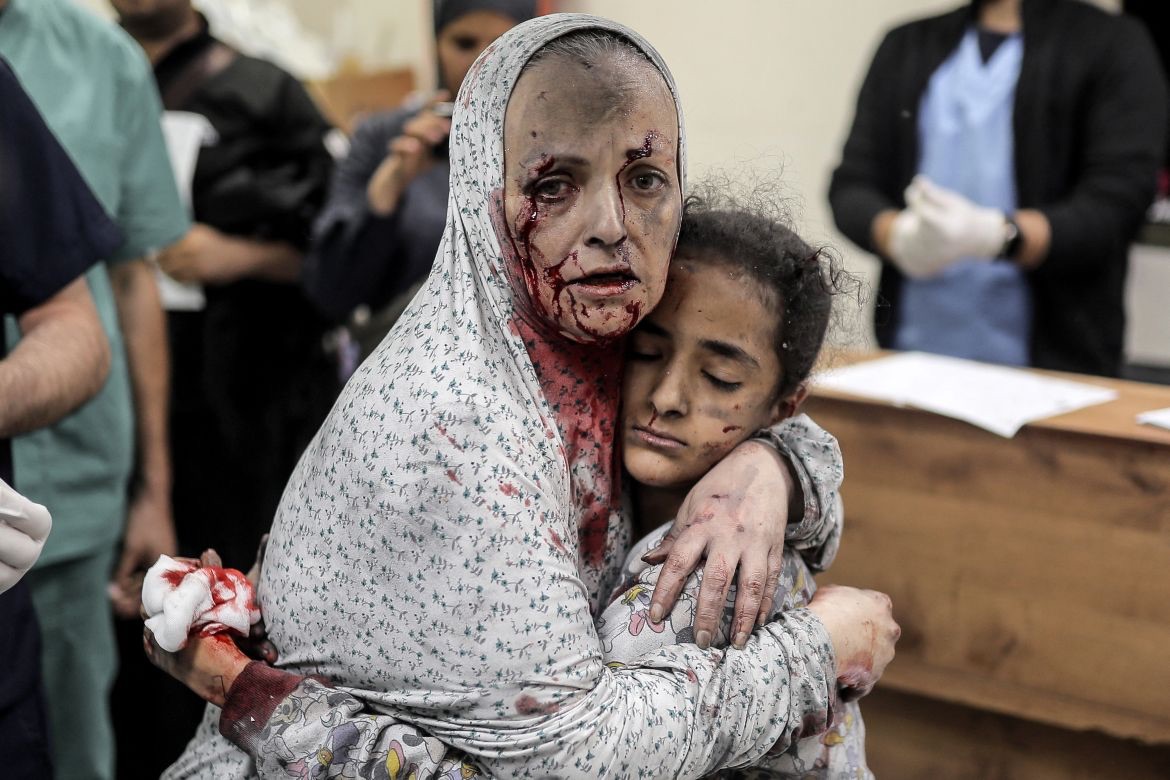
Photo by Mohammed Abubakr
Some 52,000 slaughtered in the past 18 months. At least another 14,222 trapped under the rubble and presumed dead, according to the Gaza Information Office. All are primarily innocent civilians, including women, children, 173 journalists and media workers, and at least 412 aid workers including 291 UN staff. Injured: 115,729, including many, many children who will be disabled for life. Gaza has the highest number of child amputees per capita, and is incapable of taking care of them.
Palestinians evacuate the area following an Israeli airstrike on the Sousi mosque in Gaza City on October 9, 2023. . (Photo by Mahmud HAMS / AFP)
Since the first stage of the cease fire collapsed on March 18, nearly 1,600 Palestinians have been killed.
“Gaza is a killing field, and civilians are in an endless death loop,” said António Guterres, secretary general of the United Nations.
October 7 was horrific. 1,200 innocent Israelis were murdered. Hamas, which governs Gaza, is responsible. The remaining hostages captured by Hamas on October 7 must be released. Yet this war has dragged on for 18 months, and the crisis only intensifies. Hamas survives. IDF (Israeli Defense Forces) continues to kill with US supplied weapons. The US, both under the Biden administration and now even more so under Trump, has given Israel carte blanche to continue the massacre. More and more Palestinians perish.
Israeli Prime Minister Benjamin Netanyahu and his right-wing coalition seem intent on making Gaza unlivable.
M“Israel has succeeded in its goal to make Gaza inhabitable,” said Gavin Kelleher, an aide worker with the Norwegian Refugee Council. The humanitarian needs are extreme, he said. People are continually displaced, living in constant fear of military violence. “The goal is to force Palestinians to leave Gaza as soon as they are able.”
This is the goal and hope, not just of Netanyahu, but also of Donald Trump who wants to turn the “prime real estate” into the Riviera of the Middle East.
This infuriates me. What about the people? It’s their land. Arabs have occupied the territory for centuries.
The history and background of Palestine are complicated. In the late 19th century Zionists sought to establish a home for the Jewish people in Ottoman-controlled Palestine. In 1917, the British government issued the Balfour Declaration, endorsing the idea. Jewish immigrants, mostly from eastern Europe, began moving to the area.
After World War II and the Holocaust, in 1948 the State of Israel was officially declared. The Arab-Israel war broke out, forcibly displacing the majority of the local Arab population. And, they’re still being displaced.
Since the creation of the State of Israel, human rights experts note that violations of international law and lack of accountability have been the norm, rather than the exception.
More than two-thirds of Gaza is now either under active displacement orders or designated as “no-go” zones, states the UN Office for the Coordination of Humanitarian Affairs.
The West Bank with Gaza makes up the State of Palestine. It is now divided between Israeli settlements and Palestinian enclaves. Although Hamas is not in charge in the West Bank, reportedly tens of thousands of Palestinians have been expelled from their homes there. The international community considers the West Bank settlements illegal under international law.
Both the West Bank and Gaza have been under Israeli military occupation. The Israeli army determines what Palestinians can and cannot do. They have been deprived of freedom, of their human rights.
The continued occupation has led to hopelessness and despair which has fostered violence. Palestinians want to establish their own independent state. Israel wants to defend its borders and control the West Bank.
The atrocities continue.
• March 2. Israel closed the borders into Gaza. No more food, medical supplies, fuel and water can enter. They remain closed.
• March 23. Fifteen aid workers in a clearly marked ambulance were mowed down when Israeli troops opened fire on them. They, and their ambulance, were buried in mass graves. Autopsies show that several were shot in the head.
• April 13. An Israeli air strike destroyed the last fully functional hospital in Gaza City. Hospitals are supposed to be protected by international law, yet Israel has targeted them, some multiple times. Hamas is accused of using the hospitals as command-and-control centers and/or cover. In the case of the Gaza City hospital, no evidence of such has been provided.
• April 13. Six brothers and a friend, all soup kitchen volunteers, were killed when their car was hit.
• As I write, Israel is bombing tents where the displaced now live They were given a warning to evacuate, but where to? There are no safe zones. They live amongst filth, rubble, garbage. There is no sanitation. People are sick, on the verge of starvation, especially children.
A UN organization states that Israel’s actions show “an utter disregard for human life.”
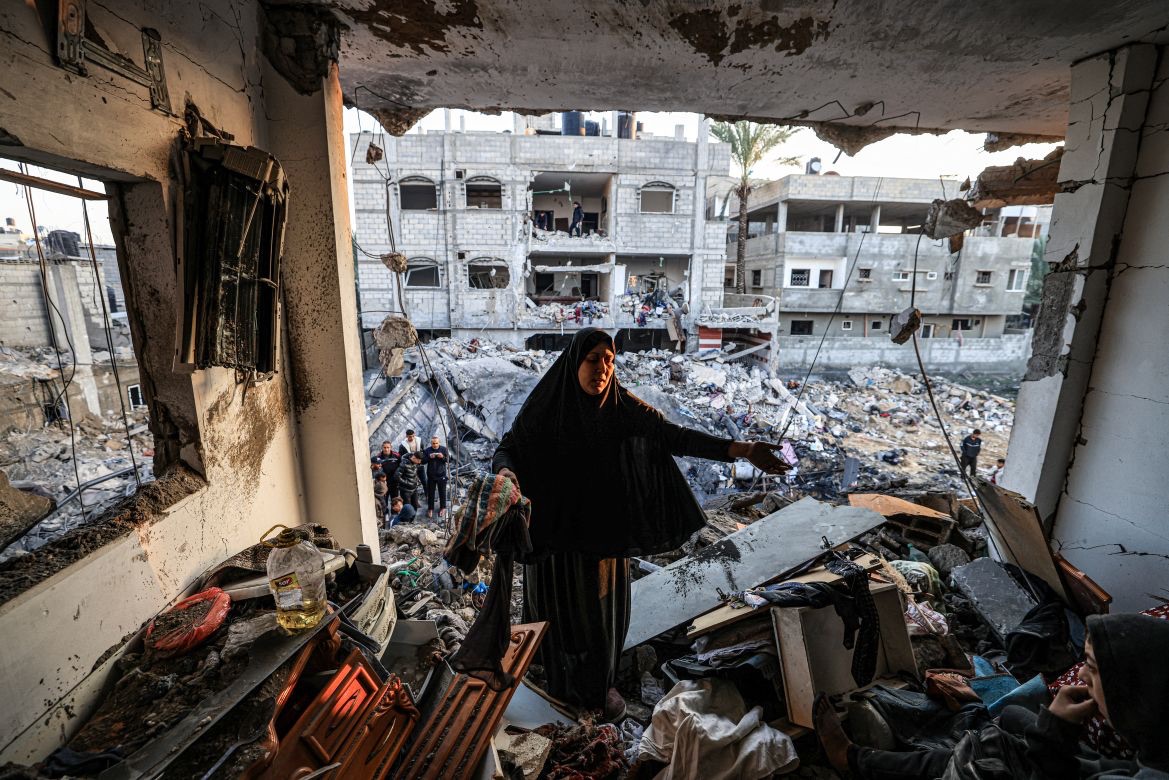
It’s heartbreaking to see the destruction, the rubble in Gaza where its citizens once lived, the schools where kids once learned now leveled, hungry children lining up for food, body bags carried through the streets, wounded lying on the floors of hospitals which have no more beds, the West Bank farmer pointing to land where his olive groves which had been in his family for ages once flourished — but are no more.
When will it stop? Is there no humanity in the world?
It appears Israel, at least the right wing government, has taken a page from the Nazi playbook. The Nazis termed the Jews “untermenschen,” subhuman, vermin, thus justifying the need to eliminate them. One can assume Netanyahau and his cronies feel much the same about Palestinians whom they do not consider as human beings — best to eliminate them. How else can this continue?
Photo by Omar Ramadan
And, much of the rest of the world turns a blind eye to the slaughter. Martin Griffiths, executive director of Mediation Group International, cites a lack of international condemnation
“Whatever outrage there is, and there is appallingly little, has not led to action.” He calls this “a terrible stain on our conscience.”
Griffiths pointed out that it is not only Israel doing “these deplorable and illegal things but also states responsible for international humanitarian law and the Geneva conventions.” They should speak out, he said, because they are legally obligated to do so. Instead, they are silent.
“The only thing necessary for the triumph of evil is for good men to do nothing,” Edmund Burke.
(Information above is from numerous sources, including The New York Times, Le Monde, France 24, The Guardian and Aljazeera. Sadly, since this writing, the numbers have no doubt climbed.)
If not a Tales and Travel follower, please sign up here. Trust me. It’s safe. Your address is not shared.
10 responses to “A “Killing Field”: Genocide in Gaza”
Anne
Thank you Leah for writing this terribly troubling piece about the plight of the Palestinians. It was good, but difficult, for me to read your summary of the murder of thousands of people, many of them children. Yes, we need to speak out. Yes, we need to do something!
It’s beyond belief, and the situation in Gaza only gets worse as Israel intensifies its attacks and blocks all aid. It’s blatant genocide, ethnic cleansing. How long will the world stand by and let this slaughter continue? The US is especially guilty.
I’ve enjoyed reading your posts, Leah. Your writing style is clear and direct, informative and engaging. I admire your intrepid reporting and the breadth of topics you focus on.
Thanks for daring to write about Gaza, probably one of the most volatile and grisly subjects on earth—and in turn, for prompting this discussion.
For what it’s worth, I think there’s way too much fear and prejudice as well as hatred and extreme violence by all opposing parties in the Middle East. To think of Gaza as a tragedy seems like an understatement. It’s a veritable mountain of tragedies.
And too, with all of its cultural wars, ugly rhetoric and power grabs, I’m afraid that America itself may soon go down a similar path.
A friend of mine, who lost ancestors in the Holocaust, supports all aspects of Israel’s response to the Hamas terrorist massacre and hostage abductions, including the IDF’s relentless bombing campaign on Gaza. She tells me we need to confront ‘evil with evil,’ and anything short of that is naive.
I agree with her that kindness won’t defeat evil. I’m certainly not a pacifist. I believe military force is needed in such situations. But there are ‘proportionate’ responses to an enemy’s aggression, and an aggrieved nation like Israel has a duty under international law to take all reasonable precautions to protect civilian noncombatants, especially children.
The Geneva Conventions of 1949, ratified by most all nations after the horrific excesses of World War II, set out the rules of war. I’m not convinced that Israel took adequate precautions in Gaza. Its bombing campaign has struck me as far too reckless and expedient. And I believe the United States (under both Biden and Trump) should’ve taken greater steps to reign in Israel’s retaliation.
I’ll admit that it gets complicated fast, especially when terrorists take shelter amongst civilians or operate command-and-control centers under schools or hospitals. But that’s what leadership is all about. Once we provided Israel with weapons for its retaliation, we had a moral obligation to influence its targeting and the way its bombing campaign was conducted.
Then again, it’s not easy.
Israel retaliated, and Hamas kept holding onto most of its hostages. Israel bombed some more. Hamas kept holding on.
I think you asked a couple of wonderful questions in your piece — something like: When will this stop? and, Isn’t there any humanity any more?
Not easy questions to answer. With any luck, things will get better.
Thank you, Jimmy. I appreciate your thoughtful and incisive remarks. You are so right. There is too much hatred, fear, prejudice, violence. Not just in Gaza, but in too many parts of the world. All, especially world leaders, need to follow the example and inspiration of Pope Francis.
Best wishes for a successful trip. I’d love to hear about it upon your return.
Heartbreaking. I am so embarrassed by the USA and UN. And now we cannot openly criticize Israel or risk being called anti-semetic. Innocent people in the USA are being arrested and deported for even criticizing baby killer bibi. I blame Biden for supporting Israel with weapons. Now our horrible administration talks about building a resort on gaza land. The genocide continues. Horrible.
I agrée with you. I am Angy about the US. I think the UN has tried, but is powerless. The US abstains from all votes to condemn Israël. I can’t understand. Why was Biden such a wimp? He caved in, supporting Israël in spite of the clear évidence of genocide, continuing to supply US bombs to massacre the innocents. Horrific,
And, if in the US or Germany?, you support or demonstrate for the Palestinian cause, you can be deported or hassled or fired for abetting a terrorist cause, detrimental to American foreign interests. And, Or labeled anti-semantic.
I just read THE MESSAGE by Ta-Nehisi Coates. In it he likens the Israeli treatment of Palestinians to apartheid and American Jim Crow. The book has changed me.
I agree. Equating opposition to the Gaza war and sympathy with Palestine to antisemitism is insane and infuriating. I live in France and ordered the Coates book via Amazon. After months , told not available. Censorship?
This is a very important piece, Leah. Not only is it factual, but it is also written with great heart and humanity. Gaza is indeed a killing field but there is comparatively little outrage, especially in the United States regarding this holocaust. The only explanation is racism against Arabs and most especially against Palestinians whose lives are held in contempt. Even images of deliberately murdered children haven’t made a difference. Imagine if the tables were turned!
Thank you Lynne. You are right. Racism plays a big role. It’s time for the world, especially US which supplies the bombs, to wake up and stop supporting and/or ignoring Israel’s blatant genocide and ethnic cleansing.






























 Tales and Travel
Comments, please!