CARS: The marvels of Mulhouse

Following is a shorter version of an article I wrote for the magazine German Life. I am not as enamored of cars as BB/VR, but I was enamored of this museum.car.8

On both the French autoroute and the German autobahn drivers whiz by the exit to Mulhouse, an Alsatian city in northeastern France.

Germany is next door to the east and Basel, Switzerland, just 30 auto minutes to the south. Why stop in Mulhouse which is an industrial hub?

Museums — that’s why. After Paris museums, the museums in Mulhouse are the most frequented in France. Here visitors come to admire cars and trains, not masterpieces from the art world. The car museum is to cars what the Louvre is to art, states the museum literature.

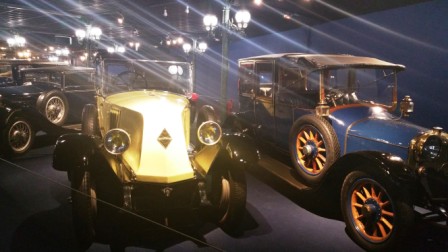
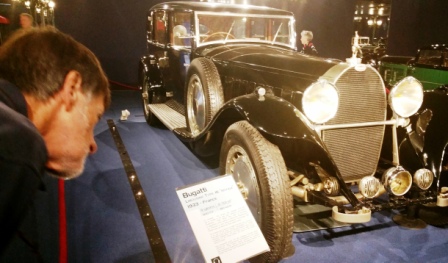
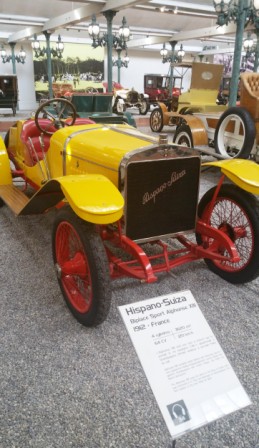
The Cite de l ‘Automobile or National Museum Schlumpf Collection is the largest automobile museum in the world with more than 400 shiny, spectacular vehicles on display, 125 of which are Bugattis.car.7

The prestigious automobile was an obsession of two brothers, Hans and Fritz Schlumpf, born in 1904 and 1906 respectively to a Swiss father and a mother who was from Mulhouse where they lived. Their story is as intriguing as the museum which houses their collection.

Mulhouse was a center of textile firms. Fritz initially worked as a wool broker while Hans worked for a bank.

They began buying shares in spinning mills, and then acquired various companies, including a textile factory in 1957. Fritz, who had a Bugatti, began buying vintage cars. Hans joined in and together over a 20 year period they amassed a secret collection of classy cars, including two of only six Bugatti Royales, the masterpieces of Ettore Bugatti.

Bugatti Royale
Bugatti Royale

Rumors circulated in the auto world about the mysterious collection. Some said the brothers were out to buy every Bugatti in the world with intentions of destroying them all to prevent them from ending up in the hands of the “wrong people.” A newspaper article in 1965 revealed the size of the hidden collection. The Schlumpfs were silent. They maintained the cars were for their personal purposes and of no business to others. However, they did take steps to prepare part of the collection for display.

In 1976 their world crashed. The textile industry in Mulhouse was dying. The Schlumpfs were broke. All their money had been spent on cars. Workers at the textile mill went on strike. They were infuriated at learning where much of the factory profits had been spent.

“I was earning 1400 francs a month, and now see where the rest of it went,” wrote an angry worker on the grill of a racing car.car.6

The brothers tried to sell the factory, but there were no buyers. It was closed in 1976.   Fritz and Hans fled to Switzerland and never returned to France, leaving behind the priceless car collection — 427 cars in mint condition including 122 Bugattis, and another 150 cars in workshops awaiting restoration.

Fritz Schlumpf had part of a factory warehouse refurbished where the cars were stored and which he had planned to open for exhibition. In 1977 trade unions occupied the warehouse, called it the “Workers Museum,” and opened it to the public.

The
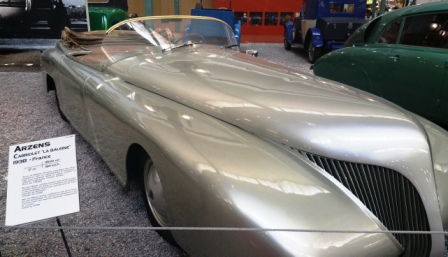
The “whale,” Arzens 1938 convertible

The French government listed the collection as an historic monument in 1978. It was purchased by the National Motor Museum Owner’s Association in 1981, and opened as the National Motor Museum in 1982. Culturespaces, a private organization managing French monuments and museums, took over management of the collection in 1999.

The museum is vast, an area of four hectares. Audio guides are provided with plenty of detail on many of the 437 cars representing 97 different car manufacturers that are on display.

There are three main sections to visit: Motor Car Experience, Motor Racing and Motorcar Masterpieces. For a quick overview, hop on the museum “train,” which makes stops at some of the most noteworthy cars while the driver provides informative commentary. Then, wander at leisure.car.3

The piece de resistance is no doubt the Bugatti Royale which Ettore Bugatti designed for his mother in 1933. She loved luxury, hence velvet seats. She wanted to be able to see the stars at night, hence a glass roof and the first car to have a panoramic roof, according to the guide. The car is valued at 40 million euros.

Check out some bizarre cars, such as the Arzens convertible, a car from 1938 nicknamed the “whale,” due to its size, seven meters in length, and shape. The “tank,” a Bugatti race car from 1923, indeed looks as if it belongs on a battlefield, not a race track. Yet, it was clocked at 189 km per hour in the 1923 tours Grand Prix.

?

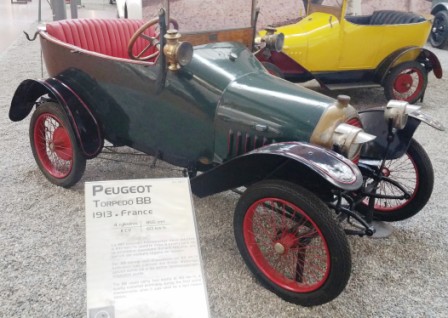
The oldest car in the museum is a Jacquot from 1878 with a steam engine. It needed two hours to heat 40 liters of water so it could travel seven kilometers. The audio guide provides a surprising fact on the 1913 Peugeot Torpedo BB, 3,000 of which were produced, including one for a customer in China.

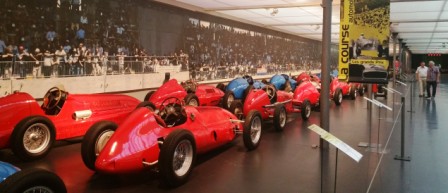
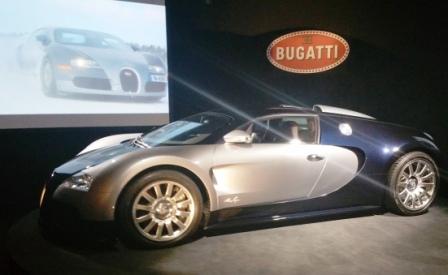
A long avenue lined with race cars, from a 1908 Panhard-Levassor two seater, to numerous Mercedes, Maseratis, Porsches, and Bugattis, gives a fascinating view of the changes in these speed machines over the years. Wind up the visit with the latest from Bugatti, the mind boggling 16.4 Veyron, displayed on a moving pedestal which slowly turns as spotlights highlight the beauty.

car.5 A large screen behind shows details and the car in action. It is the fastest car in the world with a top speed of 407 km per hour. Experts in the fields of aeronautics and astronautics have produced an incredible braking system. From a speed of 400 km per hour, the Veyron will come to a complete stop in just 10 seconds when the brakes are applied. It takes three weeks and eight technicians to make a Veyron, only one or two are made per week, and there are just 300 in existence.

You could spend an entire day admiring — and learning — about all these fascinating vehicles with a break at one of the museum’s lovely restaurants, including the gourmet, L’Atalante, for fine French cuisine.

But, don’t neglect trains. After a morning of cars and a tasty French lunch, we went on to the Cite du Train (French Railway Museum), another marvel of a museum in Mulhouse. Here you can see some 100 trains all displayed on 1,350 meters of track. And, here too, an audio guide provides background information and facts.

Museum entrance
Museum entrance

For more on the car museum, see www.citedelautomoible.com; for the train museum, www.citedutrain.com

A delightful and convenient place to stay in the city: Guest house Mondrian, www.maison-mondrian.fr

Alsatian cuisine and ambiance: Auberge au Vieux Mulhouse, Place de la Reunion, Tel. (00) (33) 3 89 45 84 18

If not already a Tales and Travel follower, sign up (upper right) so you will not miss future posts. Your address is kept private and never shared.

Like my blog? Tell your friends.  Please leave a Reply below. Feedback is welcome. I love to know what my readers think about my posts.

Follow Tales and Travel on Facebook:  http://www.facebook.com/talesandtravel

Follow me on twitter: @larkleah

Les Rosiers: Summer 2015

blog.lesrosiers

In a word, it was HOT. Week after week of temperatures in the upper 90s (Fahrenheit), even reaching 100 and above a few times. My roses, geraniums and petunias had to be watered continually. The grass (what little we have) turned brown. The pool water has never been so warm – too warm for me, but finally warm enough for delicate BB/VR* who was brave enough to jump in. This was only the fifth time he has been in the pool in the 10 years we have lived here. (Thanks to my dear mother who insisted my brothers and I all learn to swim at an early age, I am  a swimmer and love the water.  BB was not so lucky.)blog.pool2

Fall arrived too soon and too abruptly – for me… One will never be content.

Despite the heat, we enjoyed some fun activities and the wonderful folks who rented our guest apartment at Les Rosiers.

Klaus and Eva
Klaus and Eva

The season kicked off with the arrival of Klaus from Austria, his car loaded with Austrian delicacies and beer. He always brings us a generous gift of goodies, too. This was the fifth season that Klaus and his wife Eva have spent a month in our rental studio. She is still working as a legal secretary in Graz, arrives a week later by plane and only spends two weeks here. Klaus likes to cook and grill – lamb is his favorite. They know the area well, take long walks, swim, and visit friends and flea markets.  They have become friends, and it’s always a delight to have them here.

Patrick, Chantal and their bikes

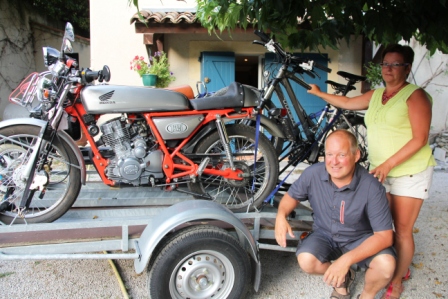
Then came the Belgians, Patrick and Chantal, with two motorcycles and two bicycles towed behind their car. We were amazed. Due to the heat, they spent most of their time on the motorcycles. One of the bicycles was electric, but since the terrain here is anything but flat, they preferred their motorcycles. They took long excursions, almost every day during their two-week sojourn.

Chantal said they have been vacationing in southern France every summer, but always camping. They especially enjoyed the tranquility at Les Rosiers. Camp sites can be very noisy, she said. And, they loved our town, Reillanne.

Sunday market in Reillanne

“It’s an authentic village, not a Disney village like so many in the Luberon,” said Patrick. “There are not that many tourists, not that much traffic.” They like to visit the village cafes and talk to the locals. And, they especially liked the Bar restaurant de la Place where they dined many times.

?
Czech cyclists: Lara, Katarina, Luka and Jakub

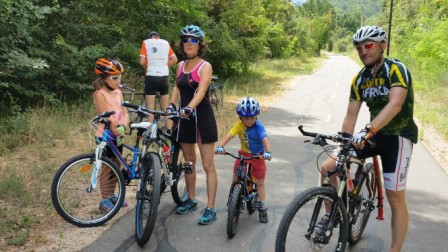
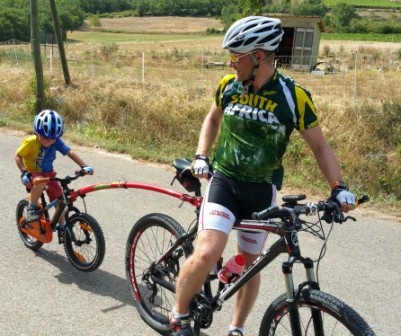
More bicycles next – a Czech family of four with five bikes. Jakub and Katarina and children Lara, 9, and Luka, 5, were back for the second time. We were overwhelmed with their bicycle prowess two years ago when they set out day after day, all day on bikes, albeit Katarina towing Luka in a carriage and Lara’s bike sometimes attached to her father’s bike. Lara now rides on her own, and Luka rides the bike that can be attached to Jakub’s . We rode with them one day – lots of fun.

Jakub and Luka
 Luka behind Daddy Jakub

They arrived a day late after participating in an orientation competition in the Jura where Jakub took first place in one category. Here he conquered Mont Ventoux for the fifth time. That was the reason for five bikes – a super bike for the challenging climb.

“We always like to come back to Provence, the terrain, the living historic villages that are not just for tourists,” said Jakub.   We were happy to have them back.

The hardy cyclists enjoyed the pool after those rides in the blazing Provence sun.

Wine was the focus for Patricia and Serge, visitors who come from Brittany. They traveled far and wide to buy Provence wine, driving 1,700 kilometers in the region, visiting six wineries and ending up with 14 cases of wine to take home.

Serge and Patricia
Serge and Patricia

Each evening when they returned from a buying trek they shared their adventures and raved about places they visited – some we had not known about.   Serge says they always buy the wine of the regions they visit. They live in an area of vineyards near the Loire where he helps harvest the grapes.

Serge's bounty
Serge’s Provence souvenirs

They presented us with a bottle of Grand Reserve Muscadet Sevre et Maine sur Lie which we tasted when they invited us to a super fish dinner Patricia prepared. She served the fish with beurre blanc, a well known sauce for fish in Brittany. She shared her recipe which I have tried to master. Mine could not hold a candle to hers, but I will keep trying. When I am successful, we will open the precious bottle of Muscadet.

Niki from Athens
Niki came to visit from Athens.  We met on a student ship 50 years ago!.

We visited the US this summer (see previous post, “USA: Summer 2015,” July14) and the Mediterranean coast (previous post: “Cannes: Far from the Madding crowd,” Aug. 20).

We recently went back to the coast for a gala evening at the Hotel Belles Rives in Juan les Pins/Antibes. Our Finnish friends, Terttu and Mikko, have a rental apartment which they generously offered us. In addition to dining and dancing, I swam in the Med which sure beats a pool, and we took a short but scenic hike around Cap d’Antibes.

?
La Dolce vita.
The Med at Juan les Pins

We are not sorry the heat has subsided, but sorry that summer is over.  The days are getting too short.  Some restaurants will soon close for the season.  No more concerts and village festivals.  Winter can be bleak here, and it’s  a long wait for spring.

Photos of other summer activities follow.

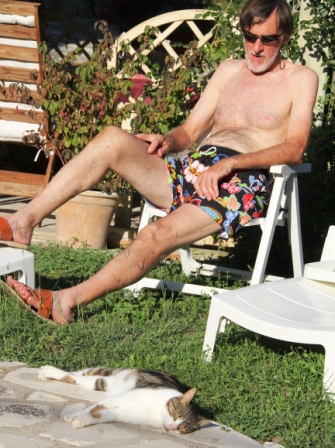
BB/VR and Filippo chill out poolside.
BB/VR* and Filippo chill out poolside.

*Bicycle Bob/Vino Roberto

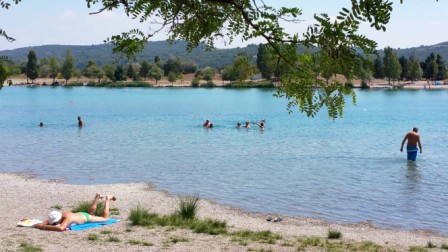
Lake Vannades near Manosque where I enjoyed a real swim
Lake Vanades near Manosque where I enjoyed a real swim
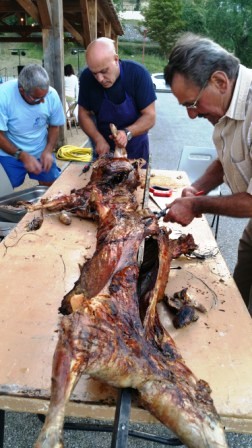
 A Bastille Day Mechoui-- lamb grilled on an open fire.

A Bastille Day Mechoui– lamb grilled on an open fire.

If not already a Tales and Travel follower, sign up (upper right) so you will not miss future posts. Your address is kept private and never shared.

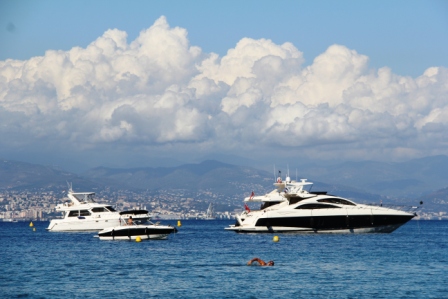
The Med at Cap d'Antibes
The Med at Cap d’Antibes

Like my blog? Tell your friends.  Please leave a Reply below. Feedback is welcome. I love to know what my readers think about my posts.

The lavender must like the heat. The color was especially vibrant this summer.

Follow Tales and Travel on Facebook:  http://www.facebook.com/talesandtravel

Follow me on twitter: @larkleah
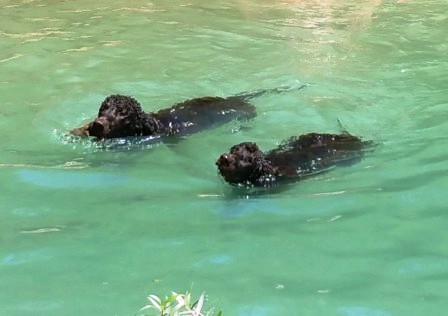
Champion swimmers, Koa and Nai'a, friend Lynne's Irish water spaniels. We swim together at Lake Ste. Croix
Champion swimmers, Koa and Nai’a, friend Lynne’s Irish water spaniels. We swim together at Lake Ste. Croix

Wunderschön Times in Germany

The previous post, Humanity is Lost, was my attempt to reblog a post of a bloger I follow.  If you click on the title, you should be able to open and read the post. 

Along the Moselle
Along the Moselle

201 kilometers of pedaling in four days. Certainly nothing to brag about. But, we are no longer young and it’s been a few years since we have done any serious cycling. We were also biking with our panniers – worth a few extra Brownie points. The cycling was mainly on flat terrain following bike routes along the Saar and Moselle rivers in Germany: pleasant, easy, scenic.

We made it -- back to the car in Merzig where it all began.
We made it — back to the car in Merzig where it all began.

The bike excursion was a highlight of our spring trip back to Germany where we lived for many, many years before moving to France. We love going back, seeing friends, drinking the world’s best beer, enjoying our favorite German foods — and discovering more of Germany. Wines in Baden, hikes in the Black Forest, sights in Saarbrücken– add all that to bicycling and it makes for a wunderschön  (wonderful) trip.

It wouldn't be Germany without a bit of rain.
It wouldn’t be Germany without a bit of rain.

Google led me to a blog post,”A Bicycle Ride along the Saar and Moselle Rivers.” Perfect for us, I decided. We cut short the part on the Saar, pedaling only from the town of Merzig to Konz where we picked up the Moselle Bike Route and followed it to Bullay.

A break from the bikes to enjoy the scenery.

The Saar section was serene, sublime. Few people. Few major towns. Trees, the river and vineyards. We stopped to chat with a couple from northern Germany who were taking a break from the bikes and lounging in the grass. “We’ve never be to Saarland. It’s beautiful and not so touristic,” she said.

Trier: Porta Nigra
Trier: Porta Nigra

Along the Moselle we pedaled past lots more vineyards, through more towns, and encountered more cyclists. We felt we needed to see the major sight in Trier, the Porta Nigra, but biking through the congested city was not pleasant. However, tasting wine in the town of Graach where Mythos Mosel, a Riesling wine tasting event was underway, was very pleasant.

BB/VR gets a taste of Moselle wine.

Be it in Germany, Austria, Switzerland, France—wherever, biking along marked cycle routes is usually a joy. For the most part you encounter few cars. Unfortunately this was not entirely the case for us this ride. As navigator, I am to blame.

Instead of carefully consulting the bikeline guidebook when leaving one town, I chose the wrong side of the river for our ride. We were on a bike path, but not the right one. The trail deteriorated, leading us onto a muddy track bordered by thick vegetation. No way to ride this, so we pushed the bikes through the swamp. The worst was not over. We followed the path out of the mud and up a hill, only to be faced with a busy major and narrow highway. Cars sped by much too close for comfort. Add to that: rain.

Postcard villages surrounded by vineyards abound on the Mosaelle.
Postcard villages surrounded by vineyards abound on the Moselle.

I don’t frighten easily, but this was very scary. I feared we may have missed the one bridge that would lead us to the other side and the correct bike route. I used all my energy to pedal as fast as I could, hoping we would find the bridge before being crushed by a car.

We survived and were relieved to arrive in Trittenheim and find the welcoming home of Marlene Bollig, a guest house where we had booked a room. I told her about our adventure. “No one rides on that side of the river,” she said. “Well now you have an adventure to write about. “ One adventure I could have done without.

Hikers learn about wild herbs
Hikers learn about wild herbs.

Our adventure in the Black Forest was problem free, fun and interesting. We joined a guided group hike, Wild herbs: Multitalent. “My passion is to delve into nature and gather herbs. I learned from my grandmother,” guide Heidi announced. The trek was easy with numerous stops where she plucked a plant or flower, then explained its use in the kitchen and its nutritional, as well as medicinal, value.

Butter mixed with wild herbs-- delicious on bread.
Butter mixed with wild herbs– delicious on bread.

The forests and fields are indeed rich in edible treasure, but don’t try to eat all.   “No, you can’t eat that,” she announced as one of the group pointed to some lovely yellow flowers. “Not even cows will eat that. The stomach won’t tolerate it.” She treated us to a wild herb snack which our stomachs tolerated with pleasure, bread smeared with tasty herb butter made from plants of the forest.

We followed guide Rolf Wein on another hike, uphill to the Genuss Platz (Pleasure Place), a scenic spot with benches he and friends had made long ago. His treat, wild plum schnapps which he had made.

Rolf Wein led us to his favorite spot in the Black Forest.

“This is my home,” Rolf said as he looked below to the town Baiersbronn surrounded by forests. “I enjoy outings with guests, to show it off. It is wunderschön here in the black Forest. I would never move away.”

Baiersbronn is a wunderschön town, especially for foodies. Its restaurants have a total of eight Michelin stars, quite amazing for a town of 14,500. I had the privilege of interviewing three-star chef Claus-Peter Lumpp at the Hotel Bareiss, one of the town’s five-star hotels.

3* Chef Claus-Peter Lumpp in his kitchen
3* Chef Claus-Peter Lumpp in his kitchen.

“It’s hard work,” he said of his profession, but “good.”   “There is nothing better than to see happy people when they are satisfied. Guests are the most important for me.”

Zwiebel Rostbraten with Spaetzle -- also wunderschoen.
Zwiebel Rostbraten with Spaetzle — very wunderschoen.

Dining at the three star restaurant was beyond our budget, but we enjoyed the tastes of Germany at the hotel’s gemütlich Dorfstuben where I indulged in my all-time German favorite: Zwiebel Rostbraten (Onion Beef). During our travels we savored other German favorites, such as Sauerbraten, Bratwurst, Sauerkraut and red cabbage.

Sauerbraten, Rotkohl and Bratkartoffeln (Sauerbraten with red cabbage and fried potatoes). Makes me hungry.

And, German wines. Although the Moselle is a noted German wine region, except for our one tasting along the bike route, we had no time for serious wine discovery there. We made up for it in Baden, part of the state of Baden-Wurttemberg in southwestern Germany. The Black Forest is part of this state. The Baden section borders both France and Switzerland and is Germany’s warmest and sunniest region. Baden produces more red than white wine, which is rare for Germany, a country known best for its white wines, especially Riesling.

Vineyards in Baden.
Vineyards in Baden.

Bicycle Bob (BB) is known more as VR (Vino Roberto) these days since his passion for wine now exceeds his love of his bicycle. We not only tasted our way through many Baden wineries, VR bought a supply, too.

With Heti and Heinz.

Our friend Heinz gave us a delicious souvenir to take home – six bottles of his favorite Baden white, Oberrotweiler Grauer Burgunder.  Heinz and Heti live in Sindelfinen adjacent to Stuttgart, not far from where we used to live. We stayed at their beautiful home and had the chance to reunite with many of our friends from those days at a fun evening, a pot luck dinner they arranged.  Danke Heti and Heinz.  Alles wunderschön.

We'd never been to Saarbruecken. It's worth a visit. Ludwig's, Church is a Baroque masterpiece.
We’d never been to Saarbruecken. It’s worth a visit. Ludwig’s Church is a Baroque masterpiece.

TRAVEL TIPS

Bicycling in Saarland: www.radfahren.saarland.de

The Moselle: www.mosellandtouristik.de

Baiersbronn: www.baiersbronn.de

Hotel Bareiss: www.bareiss.com

Viller0y & Boch, http://www.villeroy-boch.com

Wine fests abound in Baden, for more on Baden wine and a list of wines fests dates and places: www.badischerwein.de

Don’t miss Today’s Taste in column at right: ASIAN CHICKEN SALAD, tangy and terrific

Villeroy & Boch makes its home in Mettlach in the Saarland. A visit to its ceramics museum -- and outlet store -- is enticing.
Villeroy & Boch makes its home in Mettlach in the Saarland. A visit to its ceramics museum — and outlet store — is enticing.

If not already a Tales and Travel follower, sign up (upper right) so you will not miss future posts. Your address is kept private and never shared.

Visit to my angel cat savior Sigrid Ruckaberle and house where
Visit to my angel cat savior Sigrid Ruckaberle and house where “the maternal great grandfather of the fifth generation of Barack Obama” was born in 1729. Her hometown. Besigheim, is proud.

Like my blog? Tell your friends.  Please leave a Reply below. Feedback is welcome. I love to know what my readers think about my posts.

Saarschleife, a bend in the Saar River near Mettlach.

Follow Tales and Travel on Facebook:  http://www.facebook.com/talesandtravel

Follow me on twitter: @larkleah

Cannes: Far from the Madding crowd

The crowds are fierce in this Riviera hot spot in August. And, of course during its famous film festival when the world focuses on all the stars who pose on the red carpet at the Palais des Festivals.

View from the ferry
Cannes viewed  from the ferry

But, you can escape the masses and find tranquility amidst Mediterranean splendor just a short boat ride (20 minutes) away. We visited Cannes again this year to watch outstanding fireworks which are part of an international competition held every summer in Cannes. Fireworks are shot from numerous boats in the harbor and synchronized to music. Worth a trip!

?

So too is a visit to the off shore islands (Îsles de Lérins): Île Sainte Marquerite and Île Saint Honorat. Last summer we hiked around Ste. Marquerite, the larger island, and savored an excellent lunch on the shore. This time, Saint Honorat, the monks’ island.cannes,14

Splendid. The tiny island has no cars, no hotels, just one restaurant, two shops –and monks. In 410 AD, Honoratus, a Roman noble who became saintly and sought isolation, is said to have chosen the island, then full of snakes and scorpions and thought to be haunted, as an ideal retreat. Visitors followed. A monastic order was established.

11th century fortress was connected to the original abbey by a tunnel.

The monastery grew to become one of the most powerful in Christendom. Alas, peace and quiet did not last. Raids by Saracens and pirates in the 8th century took their toll, then later attacks by Spaniards. The monastery was closed in 1788, but reborn in 1859 when Cistercians took it over.

Today 20 monks live on Saint Honorat. In addition to praying, they cultivate grapes, eight hectares of vineyards, five for red wine, and three for white.

The monks' grapes were looking good.,
Monastery grapes are looking good.

We followed the mostly shaded trail along the island’s craggy coastline, past rocky coves, ancient chapel ruins, an 11th century fortress and cannonball ovens. These curious structures were used in the 18th century to heat cannonballs so they would wreck further destruction on the ships they hit.

VR inspects a cannonball oven.

Signs along the way remind you to keep quiet and to respect the religious ambience – no bare chests. Mediterranean vegetation – pines, herbs, eucalyptus – borders the trail and makes for interesting photos. Other paths lead through the island interior, past the vineyards.

Monks have been living here for 16th centuries. REspect
Respect the monks and their silence.  Be decently attired.  T-shirts and shorts obligatory.

It is truly another world: beautiful, peaceful and quiet. It was hard to fathom that those noisy masses on La Croisette, Cannes renowned boulevard, were not far away.cannes.5

We stopped to visit the current abbey church and the shop which sold mainly wine. According to a brochure on the island wine, it is “full of spirituality.” All the vintages are named after saints, but you will pay dearly for spiritual wine.   The cheapest we found was 26 euro, but most were far more expensive.

No wine bargains here.

At La Tonnelle , the island restaurant, we each ordered a glass of the monk’s brew to accompany our lunch. A glass of Sainte Cesaire (Chardonnay) for me at 8 euro; a glass of Saint Honorat (Syrah) for VR at 11.80 euro. I found my wine too oaky and too Chardonnay. Vino Roberto’s was good, very robust. To take a bottle home: 33 euro. VR reasoned he could buy several good bottles back in the Luberon for that amount.canes.15

The lunch (we each ordered fish) was delicious.   People watching at this seaside eatery also gets high marks. Pleasure boats cast anchor off shore. A tender ferries passengers to the restaurant, a constant parade of the yachting crowd.cannes.8

Travel Tips:

Trip Advisor led me to the Hotel l’Olivier in Cannes, a small, family-run (22 rooms) hotel on a hillside overlooking the Med.   Our room was tiny, but our terrace with a superb view was perfect. The hotel personnel were all very warm, welcoming and helpful. It was a bit of a walk to the town center, but good exercise. The hotel has a small pool, flowered terrace for al fresco breakfast, and it’s quiet – a great escape from the chaos of La Croisette. A beach is also nearby. http://www.hotelolivier.com

Beach near the hotel

Another Trip Advisor find, the Bistrot Saint-Sauveur in Le Cannet, a town above Cannes, where we had an excellent lunch. www.bistrotsaintsauveur.fr

La Tonnelle, restaurant on the island, www.tonnelle-abbayedelerins.com

A leisurely saunter around the island takes about 1 ½ hours. Boats to both islands run about every hour during summer months. Round-trip ticket to Saint Honorat, 14 euro (price for seniors). More information www.cannes-ilesdelerins.com

Island olive tree
Island olive tree

Don’t miss Today’s Taste in column at right: DILLY POTATO SALAD, my favorite potato salad.

If not already a Tales and Travel follower, sign up (upper right) so you will not miss future posts. Your address is kept private and never shared.

Like my blog? Tell your friends.  Please leave a Reply below. Feedback is welcome. I love to know what my readers think about my posts.

Follow Tales and Travel on Facebook:  http://www.facebook.com/talesandtravel

Follow me on twitter: @larkleah