
INDIA’S “LITTLE TIBET”

dhar.2a
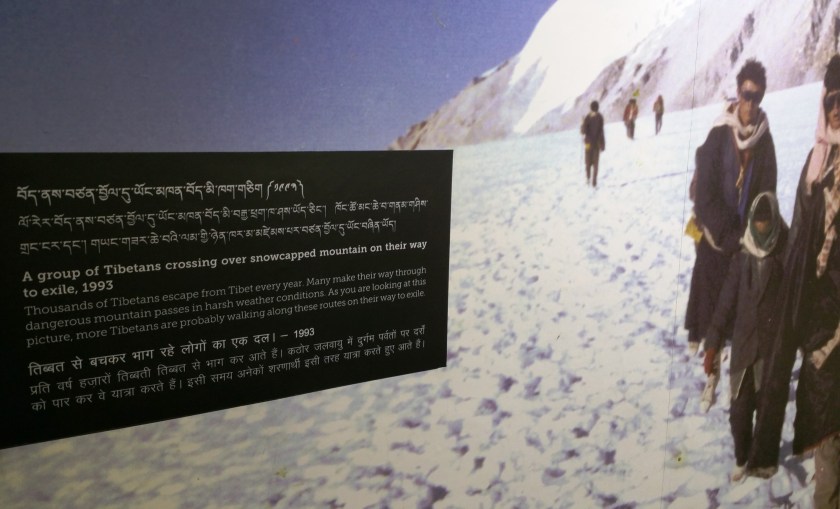
Photo at Tibet Museum in Dharamsala

They trudged, climbed over the rugged, mighty Himalayas, scrambling over rocks, through snow and ice, at night. A group of 28, including 10 children, they set out from their homeland, Tibet, to escape the severe Chinese regime which has occupied their country since 1950.

Over a million Tibetans perished in the mass genocide which followed the occupation. In 1959, the 14th Dali Lama, Tenzin Gyatso, led his people into exile. Since then some 100,000 Tibetans, like the group mentioned above, have made this arduous journey to escape Chinese persecution.

dhar.7
Kalsang escaped from Tibet over the Himalayas in 2006.

During the treacherous 36-day trek, “one of my friends died, two were lost,” Kalsang, who fled in 2006, tells me. He was lucky. “Since 2008, the borders are heavily controlled.”

Kalsang now works as a guide at the Norbulingka Institute, a trust under the chairmanship of the Dalai Lama, the spiritual and temporal leader of the Tibetan people. The Institute, which is dedicated to the preservation of Tibetan culture, is headquartered in Dharamsala in northern India, the center of the Tibetan government in exile.

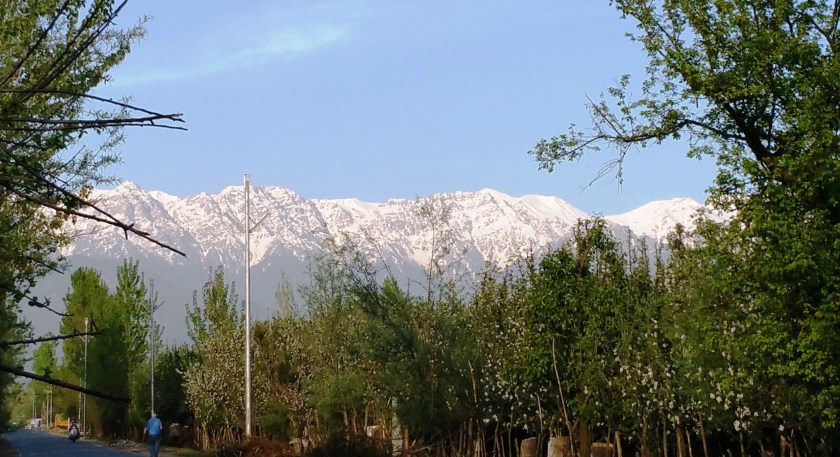
A visit to the town, a former British hill station perched high on a steep slope under the shadow of the snow-capped Dhauladhar mountain range, is fascinating, if not heart breaking. Several thousand Tibetan exiles, including the Dali Lama, live in the town, most in McLeodGanj, the upper part of the town where the institute and the Dali Lama’s home are located. The stories of escape and hope are astonishing, tragic.

“We have hope. One day we will go back,” a young woman said.

The institute sits on a hillside surrounded by lush vegetation and

Monk at Norbulingka Institute

blossoms. Strings of small, colorful prayer flags add a festive note. Well-fed, friendly dogs wander about. In contrast to the dusty, dirty, noisy, rundown surroundings, it seems like a tiny paradise.

dhar.5
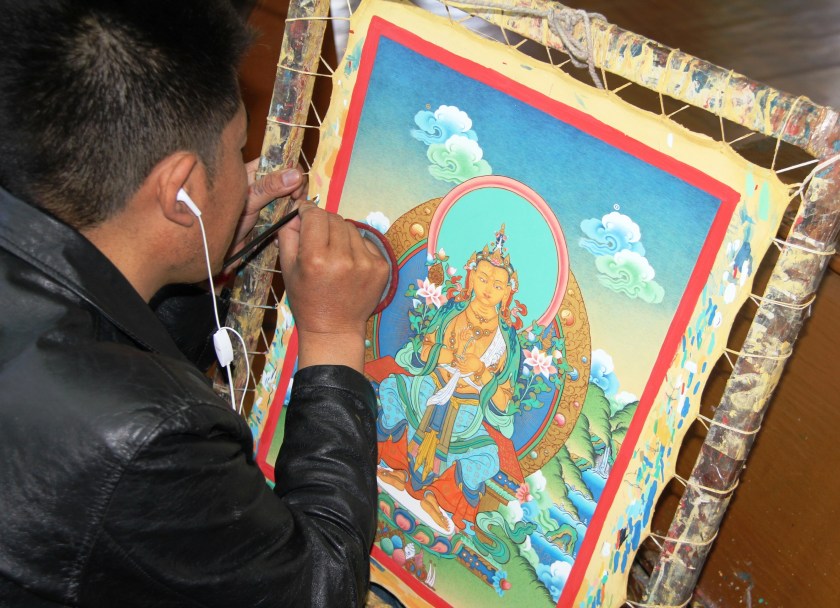
At the Norbulingka Institute, Tibetan refugees learn traditional  crafts.

Our tour group visited the Dali Lama’s Buddhist temple. Although at the time His Holiness was in residence, he was not seeing visitors, we were told. We visited workshops where young Tibetans in exile were learning and practicing traditional Tibetan crafts, (scroll painting, embroidery, metalwork, wood carving etc.) Many of their works are for sale at the institute gift shop.

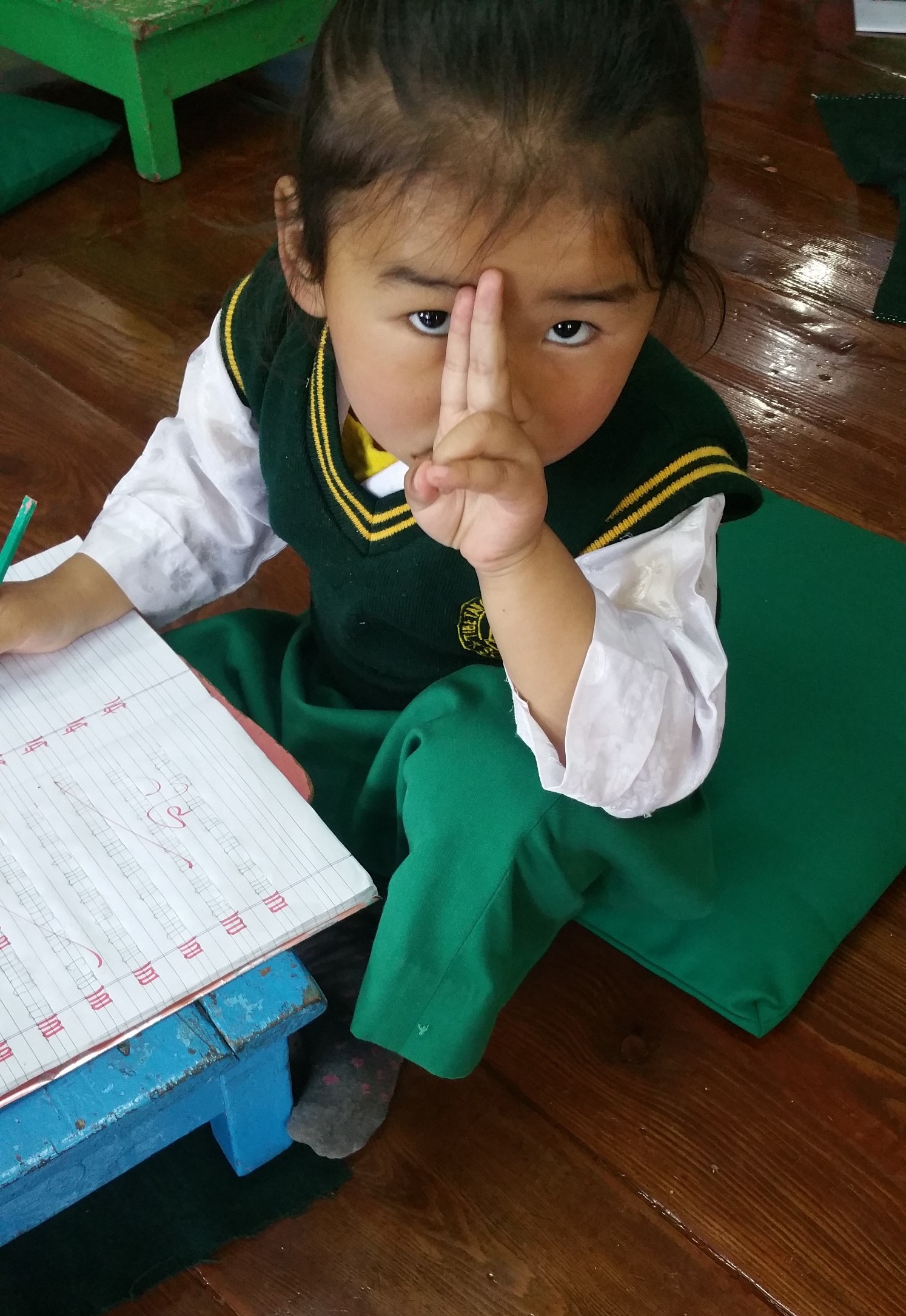
We met many younger Tibetans at the Tibetan Children’s Village (TCV). dhar.10The Dali Lama directed that a center be established for the thousands of orphans and destitute children ravaged by war. Today 1,700 Tibetan children live and study at this village. Most have been smuggled over the mountains from Tibet where the Tibetan culture and language are suppressed, where parents see no hope, no future for their children.  They pay for their children’s escape to freedom, knowing they may never see them again.

The children in the village live in small, family groups with foster parents. They are taught both the Tibetan language and English. There are four other villages for Tibetan children, as well as schools and vocational centers in India, under the umbrella of TCV.dha.4a

A visit to remote Dharamsala is an undertaking. Our group of 12 had to abandon our small bus and ride in three four-wheel drive vehicles for the climb over skinny, scary roads to the shabby town of ugly structures and tacky souvenir shops – but with a breathtaking backdrop, when visible. Having been intrigued about the fabulous Himalayas for years, I was eager for some to-die-for views and photo opps. Not to be. If and when the clouds vanished, it was only for seconds. These mountains have mastered hide and seek, excelling at hiding.

dhar.5a
Views of the Himalayas like this were rare and lasted only seconds.

The Tibet Museum in the town is the place to learn more about Tibet, the Chinese occupation and the present situation. Documentation and photographs detail the invasion, treacherous escapes, human rights abuses and present-day realities.

dhar.16
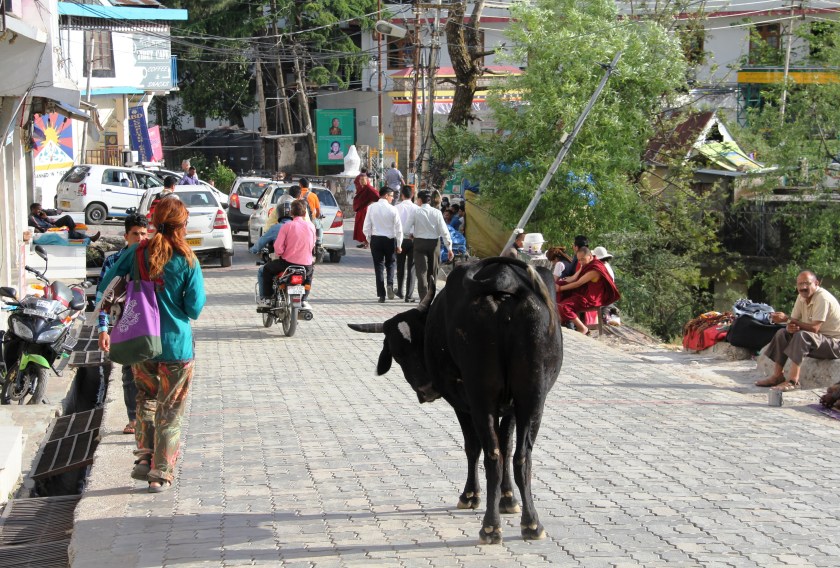
Main street in Dharamsala

The town’s bazaar, a collection of shops and stalls along the steep main street, is the place to bargain for souvenirs: jewelry, trinkets, scarves and more.

Dharamsala is popular as a center for meditation, yoga and other esoteric retreats. It also attracts those interested in serious mountain trekking and rock climbing.

dhar.17
Construction site in Dharamsala

A writer in the Guardian called the town, known as “Little Tibet,”  a “unique place with its mix of Indian hill people, Tibetan exiles and ‘spiritual’ tourists.” It is well worth the effort to visit this unique and alluring place, to experience first-hand the plight and tragedy of Tibet.

For more on the Tibetan Children’s Village, see www.tcv.org.in

Tibetan Children's Village
Tibetan Children’s Village


More on India coming soon: Captivating Kashmir.  If not already a Tales and Travel follower, sign up (upper right) so you will not miss this and future posts. Your address is kept private and never shared.

Like my blog? Tell your friends.  Please leave a Reply below. Feedback is welcome. I love to know what my readers think about my posts.

makeread


dhar.14.
Indian construction worker

Follow Tales and Travel on Facebook:  http://www.facebook.com/talesandtravel

Follow me on twitter: @larkleah

dhar.15
Cows are at home on Dharamsala’s main street.


INTRIGUING INDIA: RELIGION

sikh.11
Golden Temple at Amritsar

Hindus, Muslims, Buddhists, Sikhs, Christians – all are found in Incredible India.

“In religion, all other countries are paupers, India is the only millionaire,” wrote Mark Twain in Following the Equator.

sikh.19
Bathing in the sacred Ganges.

The majority, 80 percent, are Hindus. In Varanasi on the banks of the Ganges we witnessed the early morning Hindu bathing ritual, hundreds plunging into the non-too clean water which they believe is holy and will wash away all sins. At night, the banks of the river are a smoldering mass, fires and smoke from cremations. Many come to die in Varanasi. Death in the holy city is said to free one from the cycle of birth and death.

sikh.18
Cremations on the banks of the Ganges at Varanasi.

Khajuraho, a wondrous place with numerous Hindu temples, is a popular site, more for the erotic sculptures on one of its temples than the stunning temple architecture.

khajuraho.1
Khajuraho, site of many temples, is one of the “seven wonders” of India.

The Taj Mahal – India’s architectural treasure, the dazzling white marble mausoleum built by Emperor Shah Jahan for his second wife who died in childbirth in 1631, is a Muslim monument decorated with carefully inlaid Koranic verses.sikh.taj2

And Amritsar, home to the Golden Temple, the spiritual and cultural center for the Sikh religion, is yet another fascinating religious shrine. Sikhs compose only two percent of the Indian population, yet Sikhism is the fifth largest among the world’s major religions.

sikh.2
Sikhs congregate at the Golden Temple day and night.

The religion was founded in the early 16th century by Guru Nanak and gurus who followed him. Nanak preferred the pool at Amritsar (“Pool of Nectar” in Punjab and Sanskrit) for his meditation and teaching. The site in northern India, today not far from the Pakistan border, became a pilgrimage center where a great temple was built. Perhaps more than the temple, it is the Holy Book, Guru Granth Sahib, the sacred scriptures of the Sikhs, enshrined inside which draws many pilgrims today.

Flowers cover the holy cook.
Flowers cover the holy book.

Twice per day an amazing ceremony focused on the book takes place at the temple. Thanks to guide Alok, we witnessed the lively and curious evening ceremony when the book is carried to its bedroom. Behind golden doors, it spends its night on a bed under an elaborate canopy.

We joined others in a long waiting line to view the book before the evening procession. While waiting, I had the chance to talk to a friendly Sikh who moved from Amritsar to London 17 years ago. London, where the gentleman has a fish and chips shop, has a large community of Sikhs. He was with his son. They, like many others, had a gift to lay near the book where a holy man, surrounded by other holy men sitting cross-legged on the floor, reads sacred verses.

sikh.12
Evening procession transferring the book to its bedroom for the night.

After viewing the book, worshipers, all singing, line up behind ropes to view the ceremonial procession. The book, much like statues in Christian processions, is carried on a golden platform festooned with garlands of flowers.  A group of holy men follows behind, chanting. A trumpet blower announces the arrival of the book. There are stands where worshippers can take communion. It is a joyous, festive spirituality.

At 4 a.m. the same ceremony is repeated when the book is taken from its bedroom back to the temple.

We returned to the holy site the following day and were free to wander around this mystical place after leaving our shoes near the entrance and covering our heads. Vendors sell souvenir bandanas. Sikh men are not permitted to cut their hair and are easily recognized by their beards and colorful turbans. Sikh women wear either a turban or cover their head with a scarf.

sikh.13
Heads must be covered at the Golden Temple. Mini scarves can be purchased.

Before entering the sacred grounds, feet are washed by wading through a shallow pool.

sikh.3
All are welcome to a free meal at the Golden Temple.

The complex is large. It’s a delight to slowly stroll and enjoy the scene, the people, the peaceful ambience, the shimmering golden temple. Selfie photos in front of the temple are popular. Families walk around the lake, taking pictures of one another. Some tired souls just lie down and rest in shady spots. An underground spring feeds the sacred lake where some pilgrims immerse themselves to cleanse their souls. The complex also includes enormous pilgrims’ dormitories and dining halls where all, irrespective of race, religion, gender, are lodged and fed for free.

Feeding the hungry is a tradition among people of many faiths, but Sikhs may get first prize for generosity. The Golden Temple serves 80,000

80,000 free meals are served every day.

simple vegetarian meals every single day of the year – all paid for by donations. Anyone can partake.   Volunteers cook, serve meals and wash the dishes.

Groups sit on the floor rolling dough for naans (Indian flatbread). Nearby other groups smoother naans with a type of butter. Enormous vats of various concoctions simmer on stoves.

Some who eat at the temple volunteer to help out to “pay” for the food and assist the permanent volunteers. Sikhs who live in other countries often come and stay at the temple for several months to help in the kitchen.

Volunteers do all the food prep.

The Golden Temple’s past is not all peace and love. In June 1984, Indian Prime Minister Indira Gandhi ordered an attack on armed Sikh militants holed up there. Over 500 people were killed in the ensuing firefight. Sikhs around the world were outraged at the desecration of their holiest site. Four months after the attack, Gandhi was assassinated by her two Sikh bodyguards, leading to a massacre in which thousands of Sikhs lost their lives.

Most of the damage has been repaired by the Sikhs themselves who refused to allow the central government to take on the task.sikh.14

More on India soon—Dharamshala and the Tibetan refugees.  If not already a Tales and Travel follower, sign up (upper right) so you will not miss this and future posts. Your address is kept private and never shared.

sikh.20
Foreground:  Ganges bather. Background:  Yoga session.

Like my blog? Tell your friends.   I love to know what my readers think about my posts – feedback is welcome. makeread

Erotic sculptures at Khajuraho.

It’s summer and melon season – perfect time for a light, refreshing dessert. I brought Chilled Melon with Lime and Ginger to a recent pot luck. All loved it. Click HERE for recipe and scroll down for more of my tried and true recipes.


Follow Tales and Travel on Facebook:  http://www.facebook.com/talesandtravel

Follow me on twitter: @larkleah


Intriguing India


lede

In April I joined my friend Wilma and 11 other German tourists for a 15-day tour of northern India and Kashmir. The advertising campaign touts the country as “Incredible India.” It is – as well as intriguing. Following are some aspects I found incredibly intriguing during my travels.cow.2

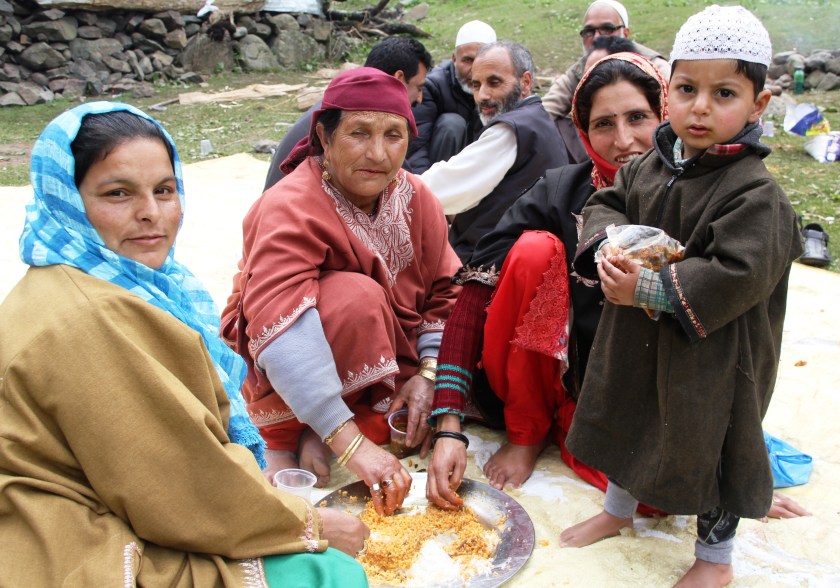
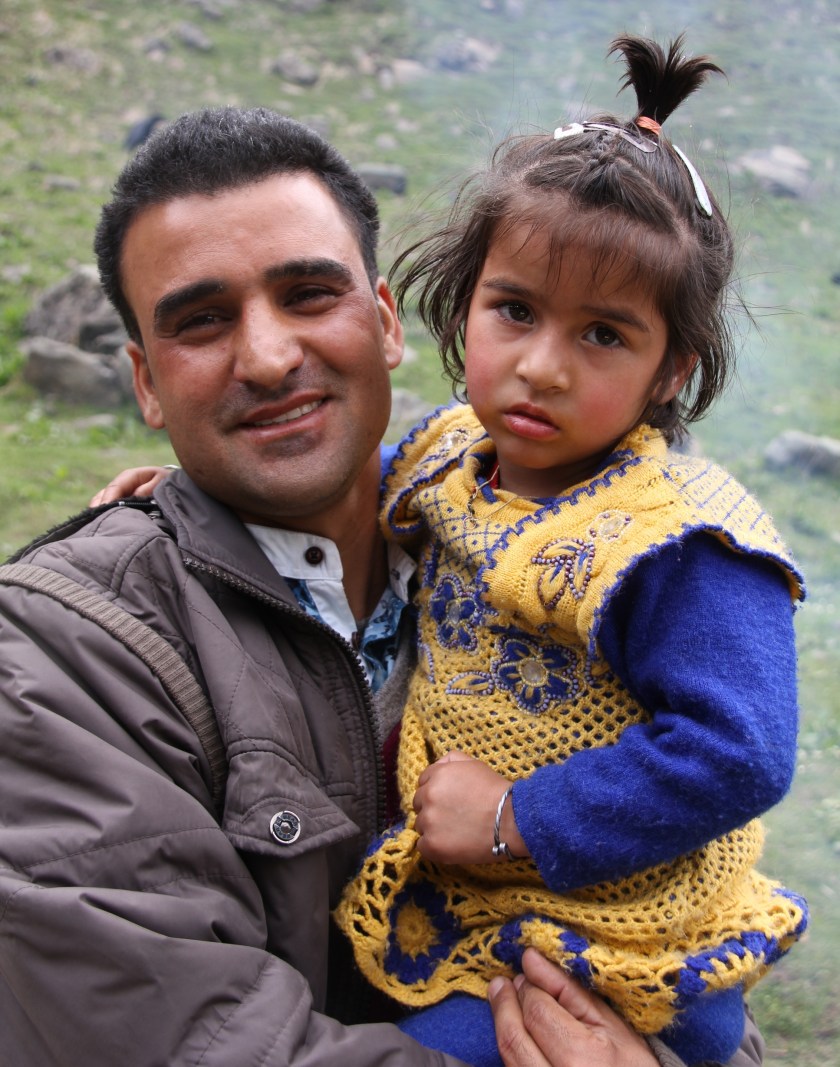
PEOPLE: My favorite part of India. They are the friendliest, kindest, gentlest, most open and talkative folk. Indians often approach and start a conversation. Where are you from? Do you like India? They ask to have their photo taken with you, and they eagerly pose for photos.   On a train, they share their food. In Kashmir, I was invited to join a picnic. When I had a nasty crash during one of my solitary escapades in the boondocks of Kashmir (details in future post) two young men came to my aid, offered comfort and a ride.

My seat mates on our train ride to Agra were delightful: A retired gentleman and a recently-married young woman, Shruti. We chatted non-stop.   I learned a lot about India.

people.5
Train companions

Poverty in the country is overwhelming. There are beggars. At the tourist sites, the souvenir sales crew do pester. But, if you reply with a firm NO, they usually back off. Many have mastered salesmanship. “You look like a movie star,” a crafty fellow at the

people.4

Khajuraho temple known for its erotic sculptures told me. My hair was a disaster. I was hot, sweaty, tired and felt like an ancient hag. He won. I bought the bronze bowl with the sexy etchings which I really did not want, but now I am glad I have this bizarre treasure which brings back fun memories.

Despite the body-to-body throngs in many places, I felt safe in India. I was careful and cautious with my purse and camera, but never felt that someone would accost me and grab my valuables.

Many of my German travel companions were on their fourth or fifth trip to India. “People” is one of the major reasons they keep returning to India, they said. “The people are so friendly. They have so little but they seem satisfied. They have lebensfreude (joie de vivre, zest for life). It fascinates me,” observed Sepp.

marriage.1
Celebrants at a country wedding.

MARRIAGE: Some seventy percent of marriages in India are arranged. Shruti, 27, showed me pictures on her phone of her December wedding with 1,000 guests in attendance. She had spent a mere 10-minutes with her husband-to-be before the wedding. They asked each other questions about what kind of life they wanted, what they wanted in a mate. His answers matched her desires. She is obviously happy with her new life and man, and glowed when talking about him.   She said some of her friends had married for “love,” but she preferred to honor her parents’ wishes and let them find her a husband. For India, she married late, but “I told my father not to find me a husband until I finished school,” she explained.

marriage.2
The bridal couple

As is the custom in India, she now lives with her husband and his mother. Once married, daughters live with their husband and in-laws. This is old age insurance for the parents, assuring that they will always be taken care of. However, problems between daughters-in-law and mothers-in-law are legendary and the brunt of numerous jokes.

Shruti has no problems with her mother-in-law, but, unlike most married women in India, she is not in the kitchen cooking with her mother-in-law all day. She has a career and works in a bank. According to guide Rajesh, 70 percent of Indian women are housewives who spend six hours per day in food preparation. Indian cuisine is labor intensive.

My other train companion has two daughters, both married. He had a hard time finding a husband for one of the two as she is overweight, he said. She found a husband on her own.

COWS: Yes, they are sacred. They are everywhere — and perhaps not too bright. Now I understand the German expression: blöde Kuh (stupid cow). Hindus, 80 percent of the Indian population, are vegetarians. Cows are never slaughtered. Thanks to their milk, they are viewed as maternal figures, and are raised for dairy products, as well as plowing the fields. Cow manure is used as fertilizer and fuel.cow.1

So, what happens when a cow is too old to give milk or work the fields? The beasts are turned loose and wander freely everywhere, often in the thick of roads clogged with cars, trucks, rickshaws, motorcycles, tuk-tuks . Horns blast. Drivers shout. The gentle beasts are oblivious to all. Traffic comes to a standstill. No one wants to hit a cow. There are other places to roam, but India’s cows seem to prefer to be in the midst of the melee.

They thrive on garbage, and there is plenty in India. In Varanasi where we witnessed numerous cremations on the banks of the Ganges, cows – and dogs — munched on the debris around the places where bodies had been burned.

Some lucky cows end up in cow retirement centers, Gaushalas.   India has 3,000 of these, but, according to animal husbandry statistics: 45,150,000 cows. Most meander ubiquitously throughout the cities and countryside.cows.4

Being an animal lover, I wanted to pet the poor fellows. The guide warned: Don’t touch. If hungry, they might be mean, buck with their horns, he said. I doubt the ones I saw would have had the energy. I obeyed nonetheless. I think these crazy cows add a puzzling, calming charm to India’s  chaotic ambience.

TRAFFIC: Cows do complicate the snarling masses of all sorts of vehicles as named above, plus pedestrians often in the midst. How could anyone even think of driving in this madness? The noise is more than incredible. Every driver seems to have his hand plastered on his horn. Who is honking at whom?   No way to know. Who has the right of way, other than the bovines? Survival of the fittest. Just plunge ahead and hope for the best.

Hats off to the drivers. We each had a rickshaw for our ride from the hotel to the riverbank in Varanasi. The traffic was abominable, but my skillful rickshaw driver kept his cool, pedaled his vehicle with aplomb, weaving around cars, trucks, motorcycles, etc. There were many close calls, making the ride more thrilling than the wildest of roller coasters.cows.5

We had frequent long journeys on a comfortable, roomy bus. In India, the bus driver is in a separate glassed in compartment with his assistant sitting next to him. The assistant is de rigueur. Four eyes are needed to watch ahead and to the sides for all-too-frequent obstacles. Our bus assistant also served bottled water, and, in our case, often stopped to purchase bananas for his passengers.

traffic.6
Bus driver assistant purchases bananas for passengers.

We rode on rutted roads through the countryside and small villages, and on super highways as good as any in the developed world.

Alok told us there are 2,000 traffic deaths per day in India. Many drive without a driver’s license, but a license can be purchased – no test required.dogs.2

DOGS: There may be as many homeless dogs as there are cows. These canines are not pets, never were. They all are similar in appearance: medium size, short, beige/ tan fur. They wander freely everywhere, but most seem to have enough sense to stay away from auto traffic. They, too, thrive on garbage. None I saw looked malnourished, and they were not vicious. Yet I resisted the urge to pet. Unlike the docile cows, I feared one could bite. After experiencing India’s stray dogs, I came across this article, “The World is Full of Dogs without Collars”: http://www.nytimes.com/2016/04/19/science/the-world-is-full-of-dogswithout-collars.html?_r=0   It’s an interesting read for animal people.

dogs.3
I wanted to rescue this poor baby.

What about cats? I only saw two during the entire trip. No wonder. With all those hungry dogs, they would end up as dog food.

people.7
Alok enjoying dinner in Kashmir.

CONTRASTS: The poverty, filth, garbage, noise and pollution are all mind-boggling. On our last day, Alok wanted us to see the new state-of-the art metro in Delhi. It, too, was mind-boggling: futuristic, spotless, sleek, quiet, fast.

Intriguing. Incredible. That’s India. More to come in future posts: Amritsar and the Sikhs, Dharamshala and Tibetan refugees, Kashmir.

marriage.2
Weddings merit big celebrations. We came upon one in a small town during our travels. The groom was in costume  on horseback.

If not already a Tales and Travel follower, sign up (upper right) so you will not miss future posts. Your address is kept private and never shared.

Like my blog? Tell your friends.  Please leave a Reply below. Feedback is welcome. I love to know what my readers think about my posts.

No Indian recipe this time, but how about tasty Thai – sort of in the same neighborhood? See recipe column at right for Thai-Style Asparagus Beef Curry. Add some spice to spring asparagus. Click on above photo for recipe.people.4Holy Man.  Religion is another most intriguing aspect in India.  These “holy men” often pose near tourist sites, hoping for a donation.

Follow Tales and Travel on Facebook:  http://www.facebook.com/talesandtravel

Follow me on twitter: @larkleah


A Tale of Twin Toyotas –and WOE

Tcar.2
Toyotas I and II


Two Americans living in southern France set off to Germany to buy a car. Not a Porsche (pity). Not a Mercedes. Not a BMW. Not even an Audi. But — a Toyota! No, not a new model, but a very old Toyota (2004).

Crazy? Bizarre?   Idiotic?

Perhaps a bit of all. Here’s the story. Two years before moving to France from Germany 12 years ago, we bought a royal blue Toyota Yaris Verso. The back seats of this minivan collapse and slide under the front seats, leaving lots of rear space, enough for two bicycles standing up. That was the selling factor. We could park the car anywhere with the bikes chained and locked inside.  And, it was easier to put them inside the car instead of on the roof.

Back then we did lots of pedaling. The bikes went with us on cycling trips all over Germany, Austria, Switzerland and France. All l that space was also practical when making large purchases: washing machine, mattress, cases of wine.

Not our car.
Not our car.

We love this car. It has been reliable, trouble free. It now has some 255,000 km, but has had only minor repairs. We knew it could not last forever and were getting worried.   No reason to spend big bucks on a new car at our age. Besides, Toyota no longer makes this model and we found no others with the same features and known reliability.

Bicycle Bob (BB) dove into Internet research on used Toyotas. He claims he could not find any in France. No wonder. I later learned that all his Toyota finds were coming from a German web site. He said he would feel better buying a used car from a German rather than a Frenchman. Those neighbors to the north treat their cars with over-the-top TLC, like rare endangered species.  Check out the cars in parking lots in France. Dents. Dirt. Rust.

The cars he was finding were old, but there were many with far fewer kilometers than ours. We had to see a car before buying it, and probably look at more than one car before purchase. That meant a train trip to Germany, hotel and meal expenses etc. The price tag was climbing.

toyota.14
More to Germany than cars.

No matter. We could do more in Germany than look at cars: Satisfy cravings for good beer and hearty cuisine, visit friends, perhaps even see some new sights. He found versions of the desired Toyota all over Germany – Leipzig, Zweibrucken, Hamburg, Munich. We had to narrow our selection lest we spend weeks canvassing the entire country.

Schweinhaxe and sauerkraut.

So, one dreary day in February we hopped aboard the TGV (fast train) from Aix to Frankfurt, then another train to nearby Erlensee where a friendly car salesman met us and took us to see the first selection. It looked just like our car, same bright blue, just two years younger (2004) but with a mere 134,000 km.

toyota.4
This one looked good.

Promising, but we had another car to see in Kulmbach, three autobahn hours away. We rented a car for that trip. It rained. It poured for the entire drive. We checked out the second Toyota .   Both cars were in immaculate condition. Each car had had just one owner, elderly folks like us.

The blue Toyota owner had been male; the silver Toyota had been in the possession of a female. We test drove both cars. “There is something I don’t like about the clutch in this car,” BB said of the silver one, knowing it had had a woman owner. He maintains women drivers often ride the clutch. A sexist view, in my opinion.  “I think this car could have a problem,” he insisted. I found nothing wrong with it, but he makes the car decisions. Besides, the silver color was wimpish . And, the salesman was anything but accommodating. Our salesman in Erlensee, a Jordanian, was terrific, helpful.

toyota.5
Trying different brews in Kulmbach.

We spent the rest of the day and an overnight in Kulmbach before returning to claim the blue baby. The rain never stopped, but great beer made up for it. Kulmbach is noted for its beer. We visited an artisanal brewery, bought beer to bring home, toured a beer and bread museum – all wunderbar.

We figured it would be a multi-step procedure to finalize the sale and get the car temporarily registered and insured for the trip back to France. Never underestimate the Germans.   Our salesman took us to a trailer type office in a parking lot where, within a half hour, all was complete, including temporary plates on the car.

toyota.12
Seeking solace from German rain.

We set off in our new old car south to Darmstadt to visit old friends, enjoy more beer and hearty food, and then on to Basel, where we were married 26 years ago. The nostalgia visit to this Swiss city was more than moist. The rain, six days of it in Germany, followed us to Switzerland. We spent a day indoors, visiting some interesting museums, before coming home to France where we did find sunshine, but also frustration, headaches, obstacles.

toyota.8
Giacometti at Fondation Beyeler in Basel.

I knew car registration in France would never be the smooth and easy process it was in Germany, however…. We started the process after our return, Feb. 15. On March 22, 36 days later, it was finally finished…or so I thought.

We began the ordeal with a visit to the mayor’s office in Reillanne, our town. Then the tax office in Manosque (1/2 hour away). We had to go there twice since we did not have one of the required documents the first time.  From there we were sent to Digne, a city about 1 ½ hours away and the seat of our region’s “prefecture,” the folks who could make our car legal in France. We thought we had all the required documents.

toyota.7
Dubuffet at Fondation Beyeler in Basel

At the tax office in Manosque we had been given a list of requirements: six documents. The woman in Digne gave us a  longer list: 10 different documents. Sacre Bleu! We did not have the “Certificat de conformite,” a document which could only come from Toyota. And, we were told the safety inspection document we had from Germany would not fly. It was several months old. So, we had to make an appointment and have the car inspected in France and get yet another document.

Off we went to our nearest Toyota dealer, 1/2 hour away. A young man filled out a form requesting all sorts of technical details on the car. We sent that form and a check for 150 euro to Toyota headquarters in France — fortunately not in Japan. A week later we had the form. We were making progress.

On our second trip to Digne, miracle of miracles, we had all the correct papers. We received a temporary registration. We went to a nearby garage and had plates made – instantly. We were overwhelmed. The French are efficient at something.

Tcar.4
The French have mastered instant license plates.

Only insurance left to conquer. We have our cars insured with a bank in the town of Pertuis (45 minutes away), but we arranged for temporary insurance by phone, and followed up with a visit to the bank last week to sign the form.

We were elated. Finally all finished. Not quite. Today I received a letter from the prefecture in Digne. They need the original car registration from Germany immediately.   I checked our thick folder of documents on this car. We do not have it. I am certain we turned it in with all the other papers to the woman in Digne. ???

Will they cancel the registration without it? Seize the car? Insist we contact the German registration office and get a new ”original” on a car that was registered 12 years ago?

Moral of the story: If you live in France, buy a car in France.

toyota.3
No, not our old Toyota, but a Tinguely creation at the Tinguely Museum in Basel.


Like my blog? Tell your friends.  Please leave a comment – if you can’t see the Recent Comments list below, use the link on the right-hand menu (below “Recipes”). Feedback is welcome. I love to know what my readers think about my posts.

tcar.3
The twins

Follow Tales and Travel on Facebook:  http://www.facebook.com/talesandtr

If not already a Tales and Travel follower, sign up (upper right) so you will not miss future posts. Your address is kept private and never shared.


Adventure Africa: The People – and Polygamy

Women’s lib. Not in Zimbabwe. It’s a man’s world in this African country, our safari group learned during a “Learning and Discovery” session. Polygamy is widely practiced there as it is in many African countries. To tell us all about it: Mafuka, 74, who has three wives and 10 children.

Mafuka, 74, three wives, 10 children

“Our wives never say they have a headache,” the jolly Zimbabwean told us. He went on to describe his family life. We were mesmerized. It was entertaining, fascinating – and somewhat unbelievable.

Mafuka, a burly sort with an infectious smile, has been a safari guide for some 50 years, often away from his village and wives for months at a time. He has a farm, grows tobacco and corn; and has livestock, chicken, cows, etc.  The wives and children work the fields and tend to the animals.

Family at town market

He explained that his first wife requested a second wife to help with the chores. “She invited her cousin, a beautiful girl. I agreed.” For five years, he had just two wives.

As he tells it, the two decided a third wife was needed. He took a third wife, but they did not like her. “They teamed up against her,” he said. “Women in our society are very strong. I got rid of her,” he announced matter-of-factly. Some time later, he found a replacement. New wife number three is a nurse, but it’s the first wife who is always in charge.people.e

According to Mafuka, whose grandfather had 15 wives, before taking a wife, a man must prove his manhood and impregnate a woman. The baby stays with the mother and her family, but the father may later adopt the child. If a wife cannot conceive, she arranges for a sister or cousin to bear her husband’s child which she will raise. If a man has later difficulties (infertility), he secretly asks a brother or cousin to impregnate his wife.

It was all a bit much for us to comprehend. Was he putting us on? Change and progress have come to Africa, and certainly this scenario does not apply to all?

people.1
Women basket makers at a co-op in Botswana

I wanted to know more. “After long periods away from home, how do you satisfy all these women?” I asked.

“I drink a root preparation,” he proclaimed, beaming. “It makes me very strong. I go home with rhino horns.”

What if one of his wives would decide to take another man? ”I would kill him,” he boasted.

Mafuka went on to proudly relate that three of his ten children have degrees. He wanted to send one of his daughters to the university, “but she eloped as the fourth wife of a guy still in college… He hasn’t paid me in cows yet. I am going to go after him.”people.h

The family is of utmost importance in Africa, and big families are common.    At our camp in Zambia, there was a booklet with staff bios. One man had 12 children with two wives. Several had nine children each. Mafuka told us about the upcoming family reunion that he was organizing. He expected 1,000 guests.

people.iWhile there are many families like Mafuka’s, monogamy is gaining followers. Sally, a young married woman working at our camp, said she would not accept sharing her husband with another wife.   “It’s a controversial subject,” she said. “A man may have just one wife, but many mistresses. I think it will change. Women are getting stronger.”

Another woman told me that Africa is changing.   “Women now wear pants, but they still sit on the floor.”

Village huts in background. Our food gifts, center.

That was the case when we visited a family home in a village. All the women sat on the floor, the men — and we — in chairs.

The village/family visit was another Learning and Discovery event.   The village, Bhangale, was actually a homestead of 434 people who live in a cluster of huts with a communal outhouse and outdoor shower.   Our hosts, Fransica Lambani and her husband Philippe, are the homestead owners. They live in a cement house which was a gift from their children. “They are lucky,” our guide Abiot said. “They have two sons working in South Africa. They had the money for the house.”

people.14Prior to visiting the village, we went to a nearby town where we visited a supermarket and bought food supplies to offer the villagers as a gift. They welcomed us with song and dance, proudly showed us their homes – all neat and tidy. A woman gave a demonstration of how they carry heavy loads on their heads.

More song greeted us as we arrived to visit a Catholic primary school which has about 800 pupils. The school is in a rural area, and most all the children walk to school, from three to 10 kilometers one way.

Children welcomed us with a song.

The principal led us to a sixth grade classroom where we had a chance to talk to the youngsters. They are taught 12 different subjects, including agriculture and HIV/AIDS, their teacher told us. An 11-year old told me he wanted to study world economics.   All were eager to pose for photos, and then see the photos on the camera or phone screens.

Kids were happy to pose for us.

Education in Zimbabwe used to be free, but now parents must pay $45 per child per year.   Education is considered essential and Zimbabwean are considered among the best educated in Africa. According to Zimbabwean Abiot, who pays school tuition for four of his nieces and nephews, Zimbabwe has the highest literacy rate in Africa.

Bob and friends.
Bob and friends.

While this school was Catholic, not all the children are Catholic. Religion is very important in the African countries we visited: Catholicism and many different evangelical religions. As we drove into the town of Hwange, we people.jpassed church after church, one after another, each representing a different evangelical sect. “Going to church” was listed as “favorite pastime “on many of those staff bios I read at the Zambian camp.

We stayed at four different safari camps, two in Botswana, and one each in Zambia and Zimbabwe.   All were run by an African company, Wilderness Safaris, whose staff are terrific. From the guides to the cooks, all were caring, helpful, knowledgeable …and fun. They danced and sang for us, entertained us with stories about close encounters with wildlife, life back in their villages and much more.

Staff performed a farewell dance for us.

Our 16-day safari was organized by Overseas Adventure Travel, www.oattravel.com We paid $4,495 each for the all-inclusive package (lodging, all meals, most tips, land and air transport within Africa). For more on our trip, see previous posts:  Adventure Africa: The Animals and Adventure Africa: A Day on Safari

Abiot, center, with fellow guides in Zimbabwe

Like my blog? Tell your friends.  Please leave a comment – if you can’t see the Leave a Reply block and or Recent Comments list below, use the link on the right-hand menu (below “Recipes”). Feedback is welcome. I love to know what my readers think about my posts.

Guide Idos in Zambia


For a taste of Africa, try the recipe for Mafe, a chicken-veggie-peanut-concoction which was a hit at my African dinner party. Click here for the recipe.

Follow Tales and Travel on Facebook:  http://www.facebook.com/talesandtr

If not already a Tales and Travel follower, sign up (upper right) so you will not miss future posts. Your address is kept private and never shared.