
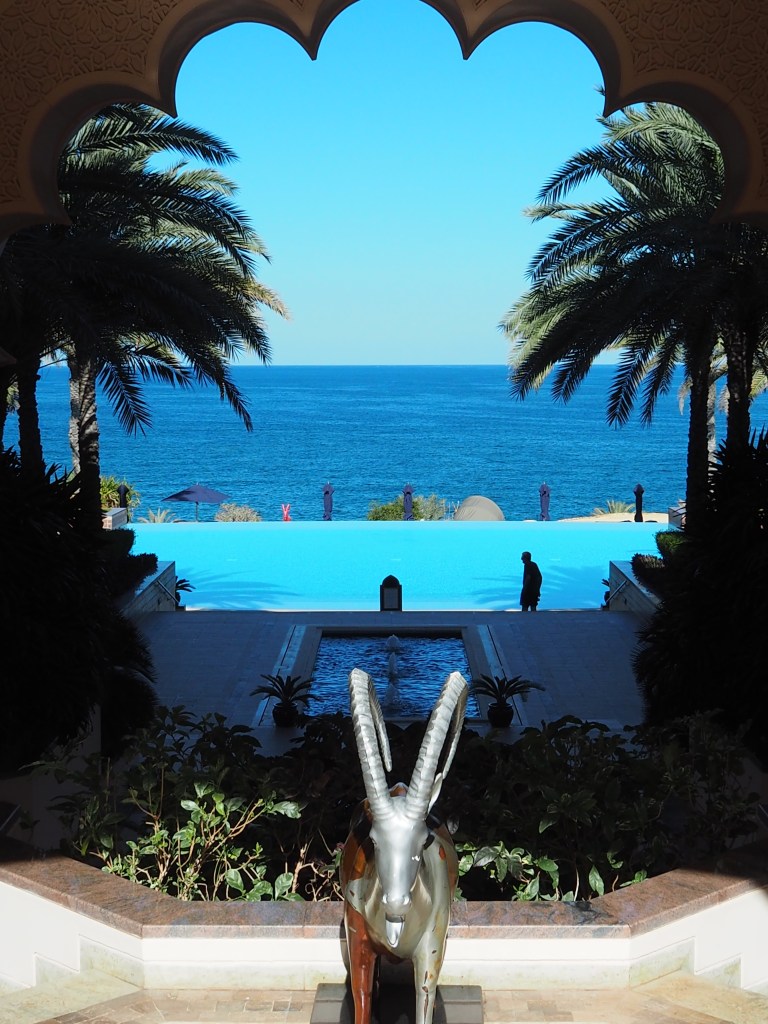
Apero hour under palm trees, their trunks wrapped in golden lights. Reflections dancing in adjacent pools. Guests lounging in comfy sofas and chairs on an elegant, marble-floored courtyard. Multi-lingual, attentive waiters serving drinks and tasty snacks. It was impressive, pure posh.
As we soaked in the classy ambience at the Shangri-La Al Husn Resort, conversation turned to past travels. “I liked those places we went to where the roads were not paved,” Bob said. We have had many exciting adventures to third world countries where, not only are the roads not paved, but sometimes the electricity fails, hot water is non existent. We reminisced about some of our favorites: Trekking through the sand with only a flashlight to guide us through the blackness, dodging ruts and driftwood branches, to a tiny, primitive beach shack in Myanmar where the fresh fish was fabulous and the family proprietors became our friends; Riding ancient, rickety bikes through back roads of Senegal, following Abou, our congenial bicycle guide, who invited us to his wedding, a colorful, spirited event deep in the boon docks; Ducking out of our lakeside tent in Kenya for a middle-of-the night trek to the toilet on the other side of a field when a guide’s spotlight shone on a bloat (group) of hippos heading in our direction.

So, what were we doing in this 5* plus beach resort in Oman? It was our last hurrah, a final fling. We knew that with advancing age and medical issues, those adventures we cherish were no longer feasible. Bob was diagnosed with Alzheimer’s two years ago. Arthritis is taking its toll on my aging body. We decided to treat ourselves to a first class voyage. (We traveled in January. The trip was booked long before Covid 19 changed the world. )

Everything about our two-week trip was ultra – except airfare. That was, per usual, economy with extra leg room seats.
The Shangri-La Al Husn Resort and Spa is about a half hour from the new, state-of-the-art airport of Muscat, the capital of the Sultanate of Oman. The resort is part of a complex of three hotels. Our hotel, the priciest, was built atop a beachside cliff.
We booked half board at Al Husn. The all-inclusive price was expensive, but with all the over-the-top amenities, seemed reasonable.

Starting with breakfast: Mind boggling. Several rooms brimming with all manner of buffet selections to suit the tastes and customs of numerous nationalities, from Asian favorites, to smoked fish to sausage and eggs. The array of fresh fruit was gorgeous and intriguing – things I had never seen before.
There was also a breakfast menu, which, in addition to standard selections (scrambled eggs, pancakes etc.) featured specials that changed daily. I tried a different one each day. During breakfast a waiter or waitress came to offer the smoothie of the day, not to mention coffee refills.
No need for lunch after that, especially since breakfast continued until 11 a.m. You could linger on the terrace and enjoy sea and cliff views.

More pampering at the pool or beach. As you arrive, an attendant greets you and leads you to a lounge chair, presenting you with, not just towels, but a mini cooler filled with bottled water, fruit juice and a refreshing facial spray. The lounge cushions are extra thick. Some of the lounges are king bed size. In the afternoon about 3 p.m., an attendant strolls by offering sherbet, featuring the flavor of the day – strawberry, mango, banana…
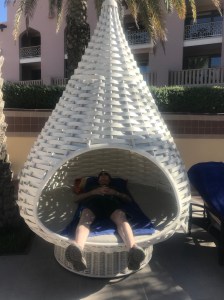
Since our hotel was atop a cliff, its beach, a walk down a pathway, was small, however, its infinity pool was huge. And, we could use the wide sandy beach of the adjacent hotels along the shore

Not long after the sherbet pause, it’s time for a British break, high tea. Oman was a British Protectorate from 1891 – 1951. Tea (you can opt for coffee) is served from 3:45 p.m. to 4:45 p.m. on the same restaurant terrace as breakfast with the photo-perfect views. This time a waiter arrives at the table with a glass case enclosing three savory and three sweet treats. They were different every day, and we ate them all.

No time to work up an appetite for the aperitif snacks. Apero hour is from 6 p.m. to 7 p.m. Fortunately the snacks are petite, but delicious. Music is normally featured during the apero hour, but in honor of the recent death of Sultan Qaboos bin Said al Said, who ruled the country for almost 50 years, music was banned in the country for 40 days. Even with music, Al Husn would be quiet. No children are permitted at this hotel.

Among the three hotels, we had our choice of six restaurants. Our package included dinner and wine at a buffet restaurant with amazing selections. We dined there a few times, but also tried the others: Italian, seafood, international, Moroccan and Middle Eastern. At these, we had had a budget of 25 rial ($65) per person. We had to pay for exceeding the limit which we often did. We like wine – very costly in Oman. A glass was about $19.50. But, hey, this was our splurge trip, and we did limit ourselves to one glass each.

Al Husn means castle. We indeed felt like royalty during the 10 days we spent in this luxurious ambience. At times it seemed too much. Yet, we enjoyed the serenity, the beautiful surroundings—not to mention all those amenities.
The complex of three hotels has 640 rooms, 180 of which belong to Al Husn. The staff, from 800 to 1,000 employees depending on season, represent 44 different nationalities.
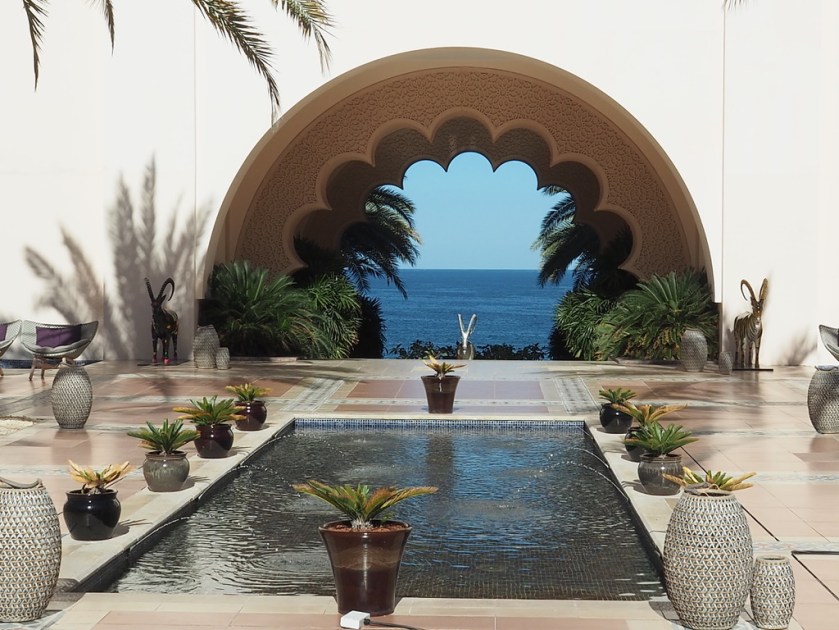
Yes, it was a major splurge, but every penny well spent. As my wonderful husband often says, “You can’t take it with you.” Covid aside, this was our last big trip and a perfect finale.

Today’s Taste, upper right, features a refreshing summer salad, Cucumbers in Sour Cream Dill Sauce. Click on photo for recipe and scroll down for more recipes.


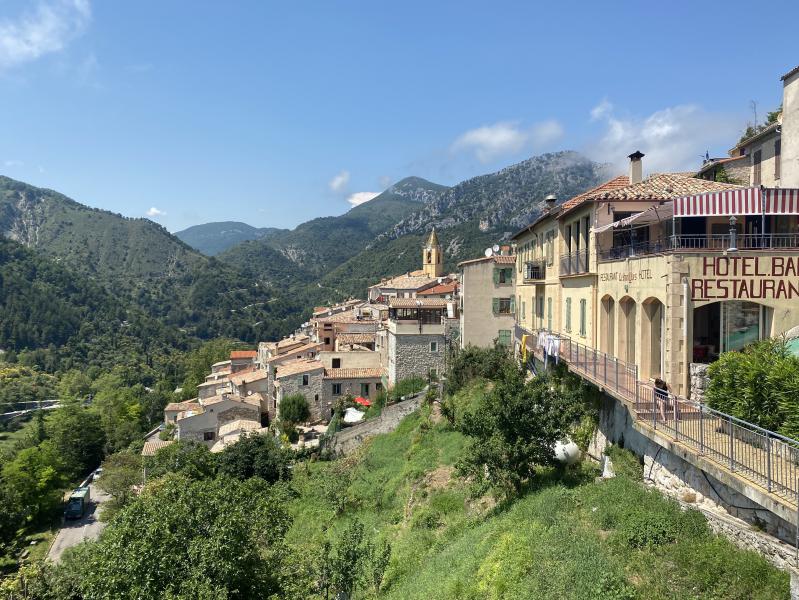

 Please, wherever you are, wear a mask. Social Distance. Stay home if possible. Read. The following two articles, both recommended by friend Trina who has survived lockdown in Italy, are enlightening. They are part of the New York Times 1619 Project which examines the legacy of slavery in America.







 The view was breathtaking. Wisps of clouds drifted in a gigantic canyon sliced through walls of jagged rock. We had paid extra for this room with a view at Oman’s Al Jabal Al Akhdar resort. It was worth the expense. During our three-day stay at this mountain retreat, I was seduced by the dramatic, ever-changing view. I took far too many photos
 Oman’s mountains are not like mountains I have known. These craggy, rugged walls of rock in all shades of brown are intimidating. No wonder they are popular with extreme adventure seekers.

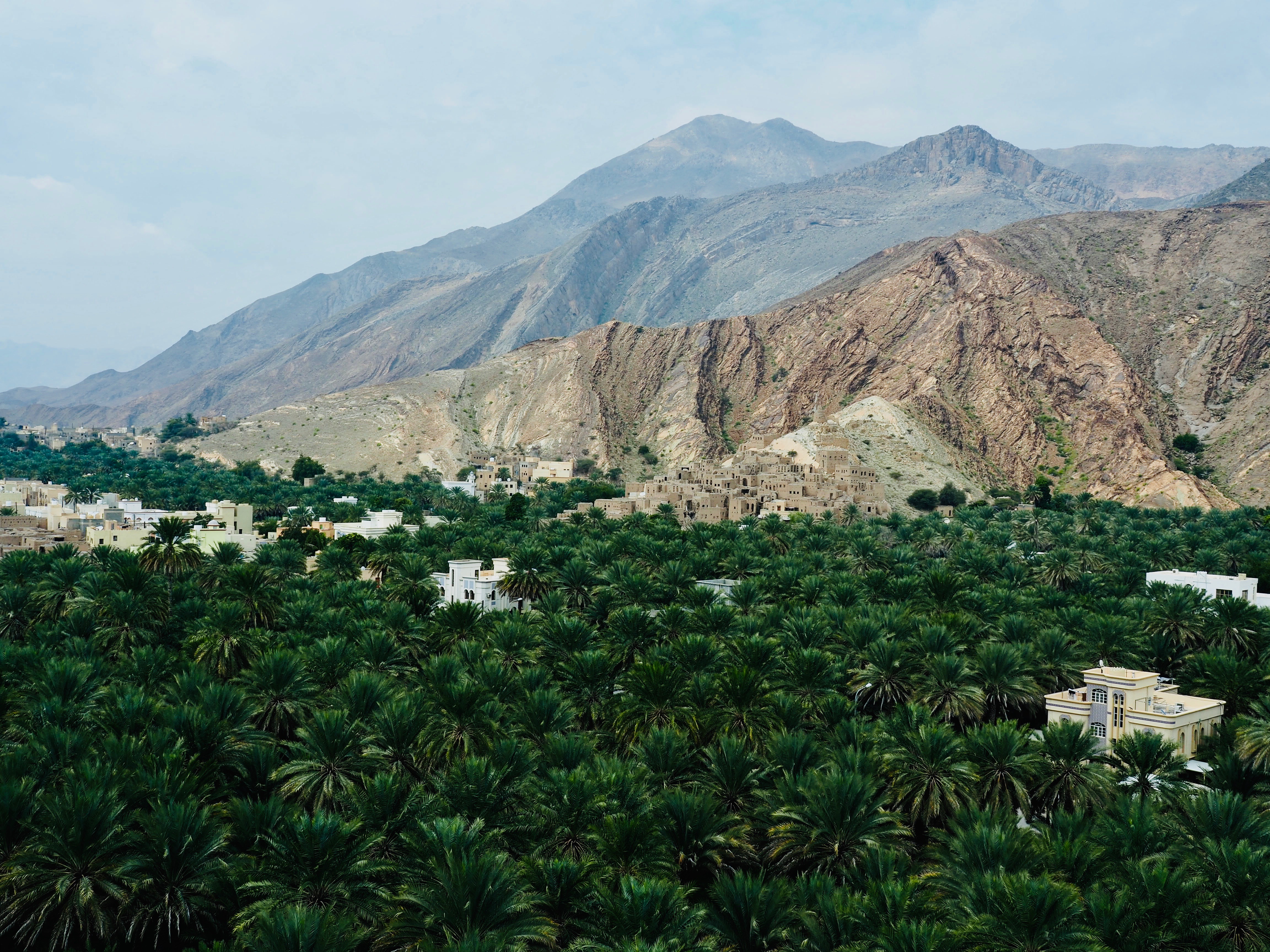
 adventure, all types of mountain hikes are available in the area. Most were beyond us. However, we did set out on a hike rated “easy,” only to turn back after about an hour. The trails, like the surroundings, are rocky. There are sections of steps, uneven, sometimes broken. We stopped at a clearing for photos. Two women with a guide were there. One of the women, far younger and no doubt fitter than I, fell. This made me nervous, nonetheless we continued on a bit until we came to a fairly steep descent which led to a dry creek bed – more rocks of all sizes. The trail on the other side climbed to an ancient village. We decided the view of the village from afar was enough.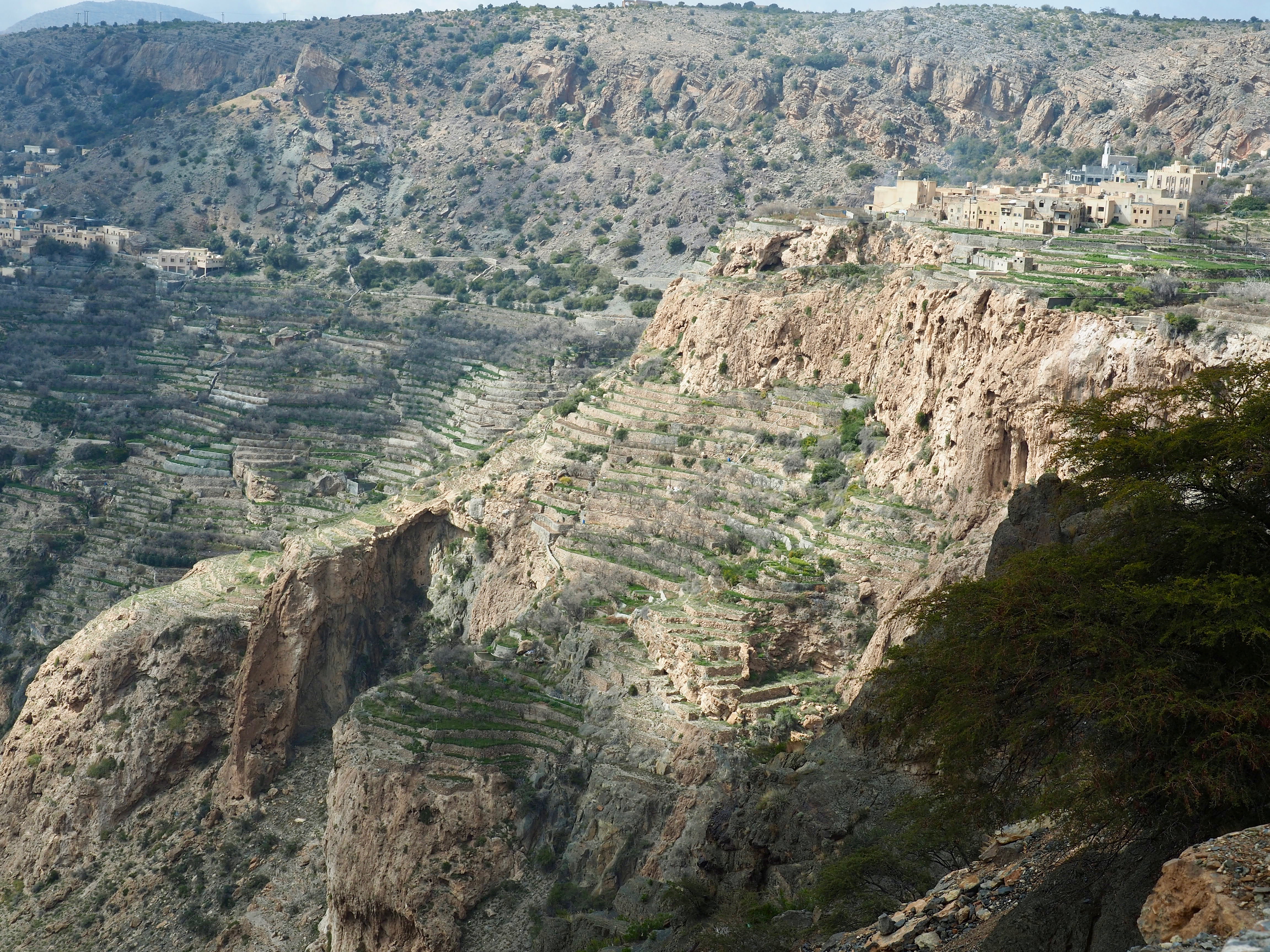


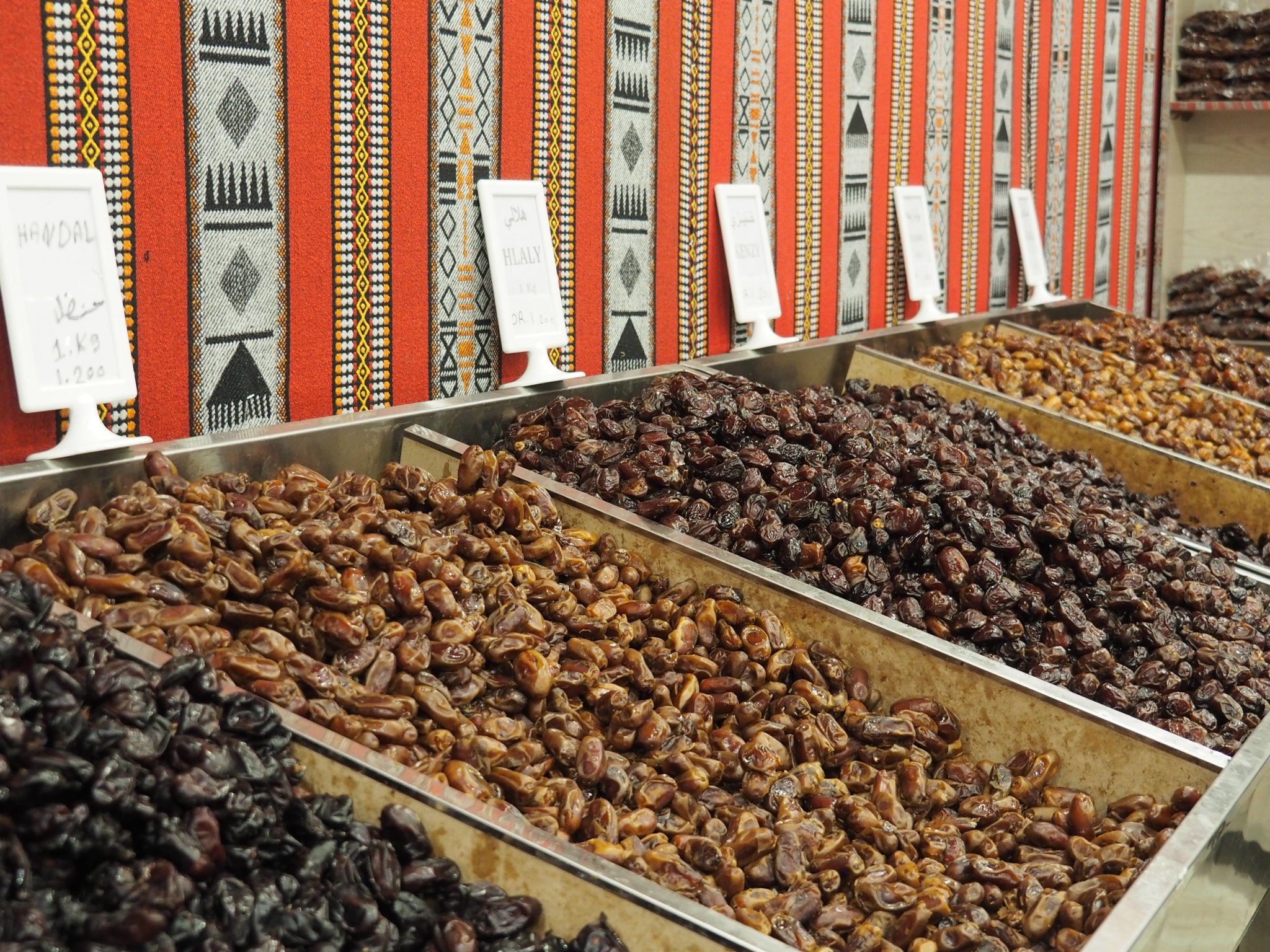

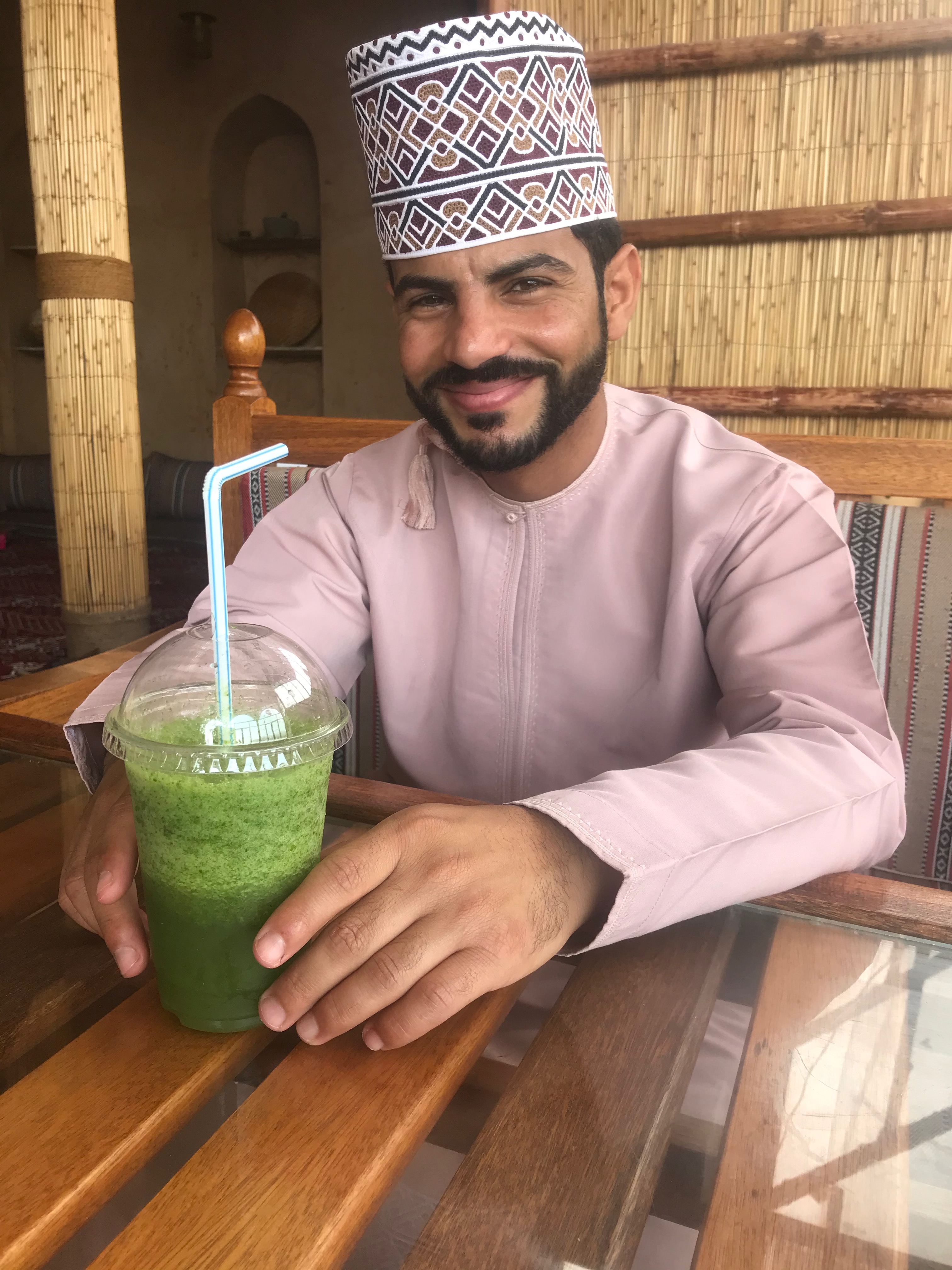
 During the long drive, we talked – about his life, family, job and more. He taught me lots about the way of life in Oman and Islam. (see previous post, “Introducing Awesome Oman” ) The religion has been given a bad rap in many parts of the world. I gained respect and a better understanding of Islam thanks to Salim.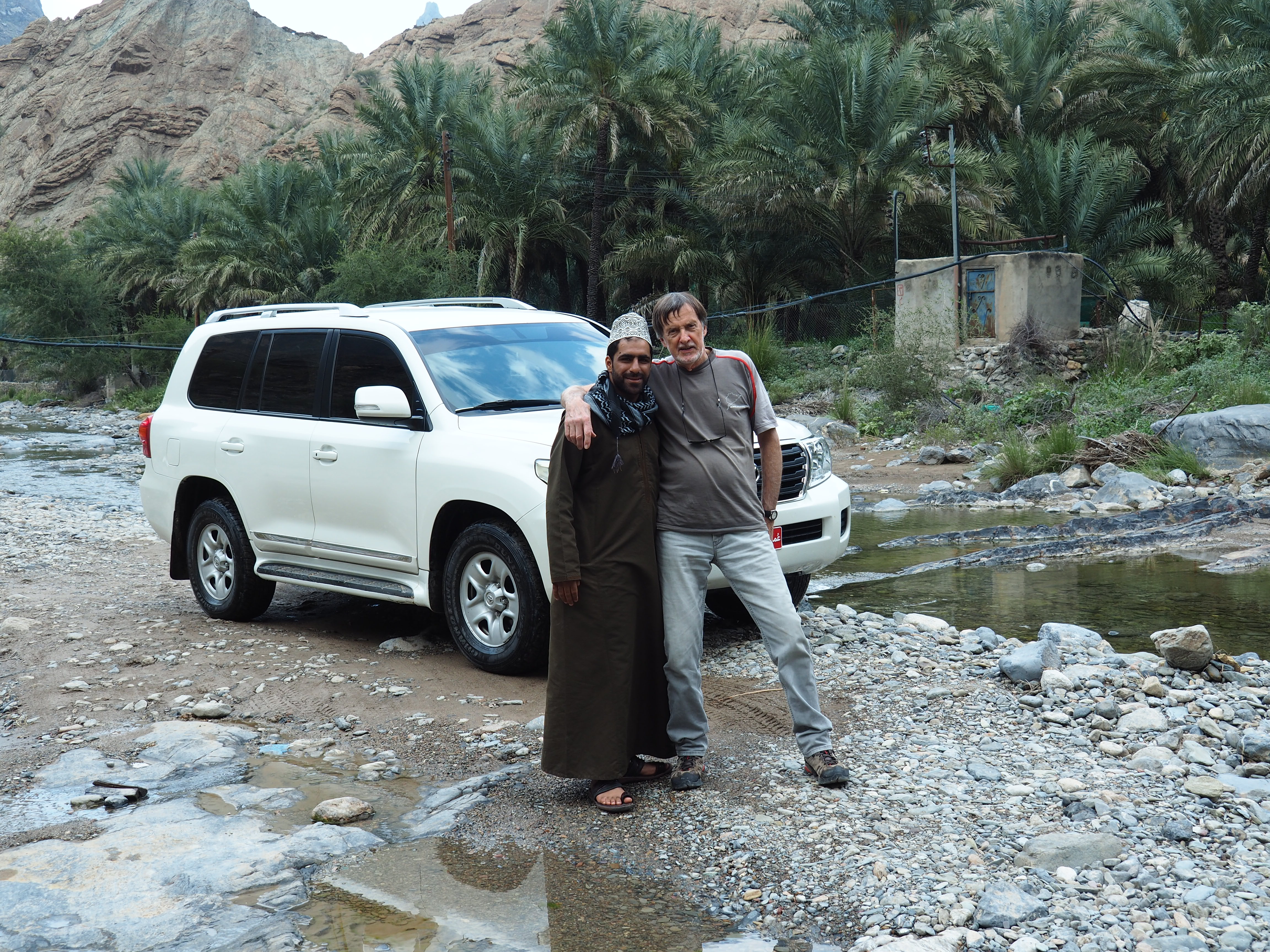



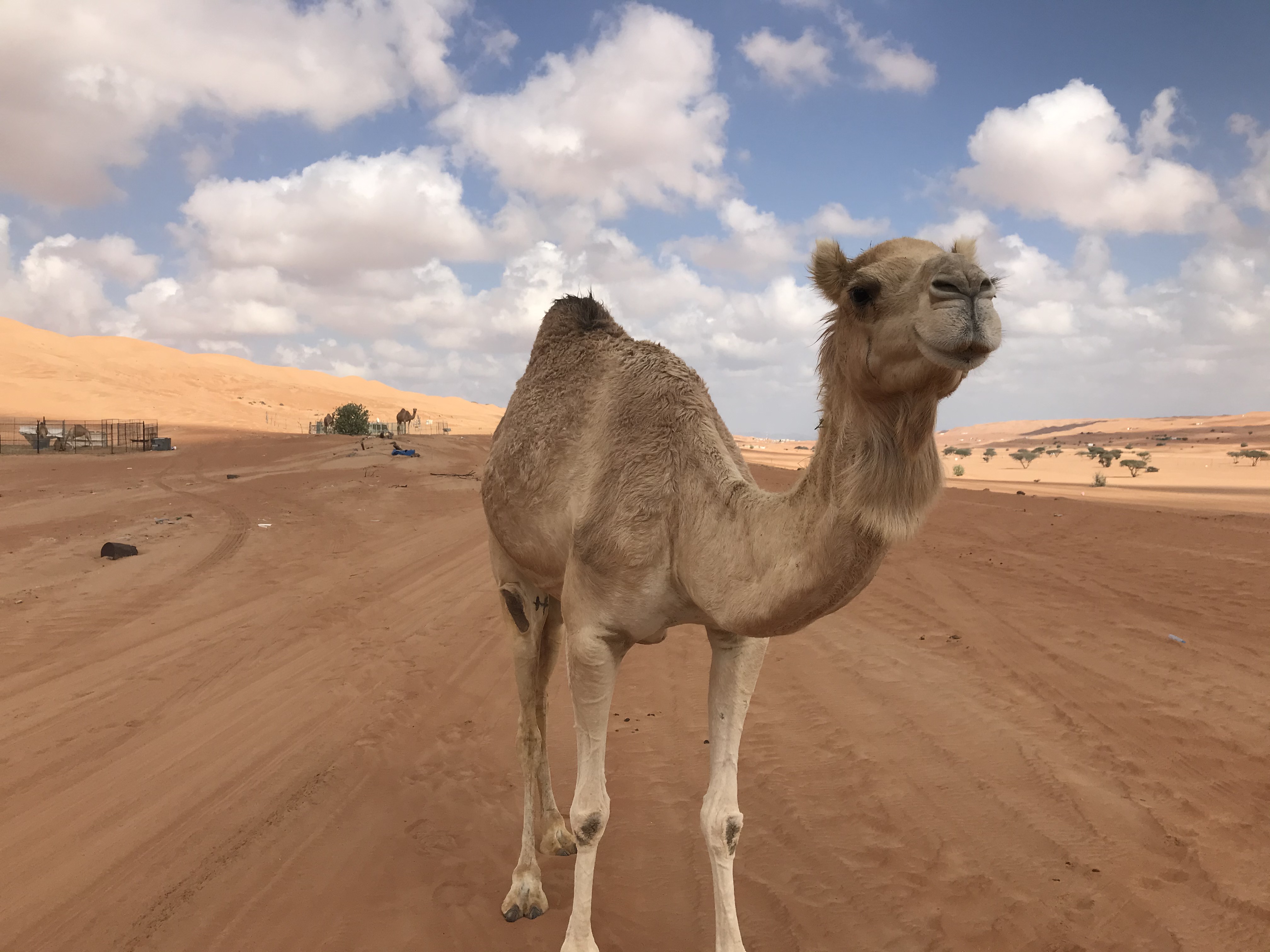
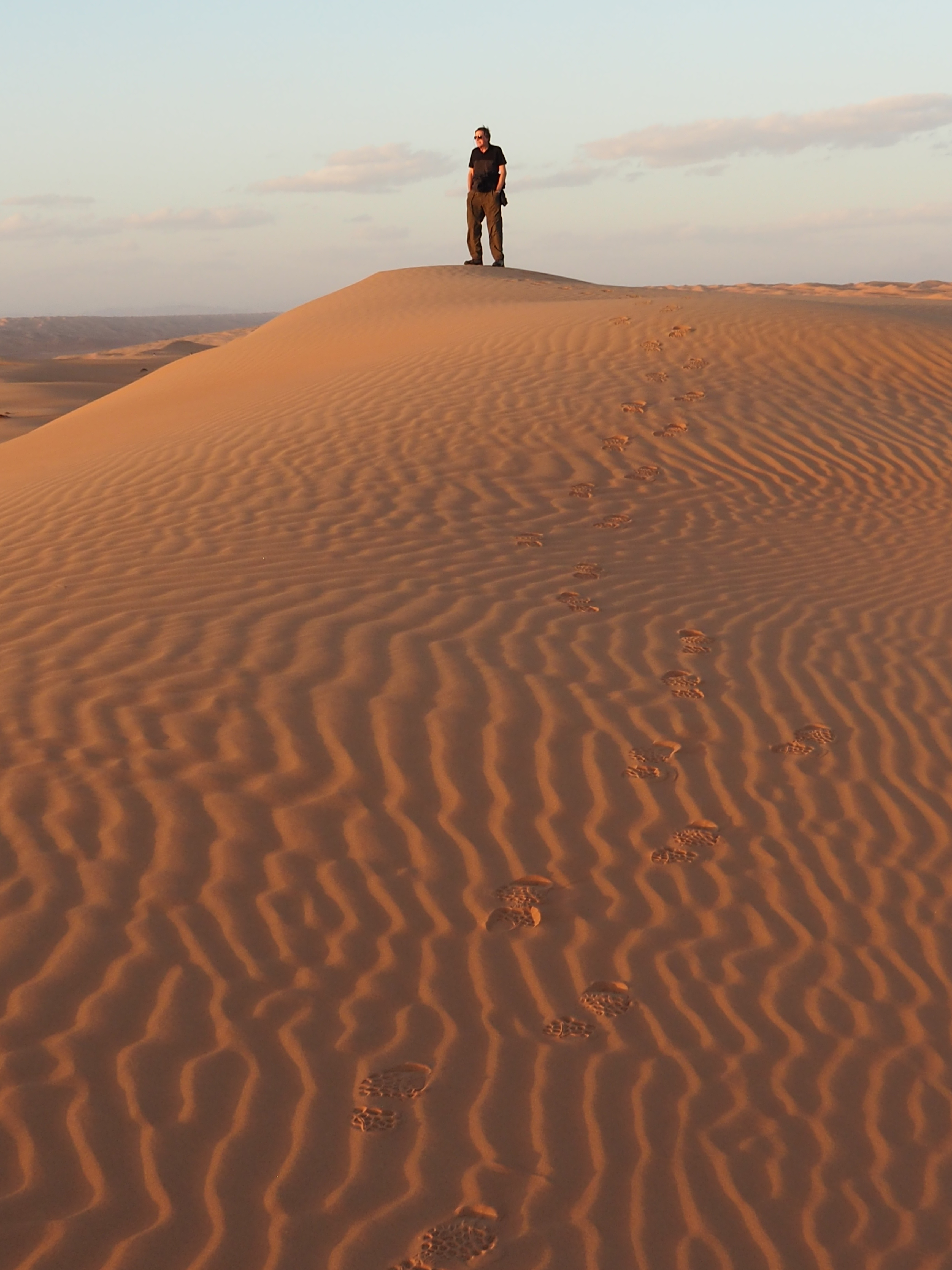
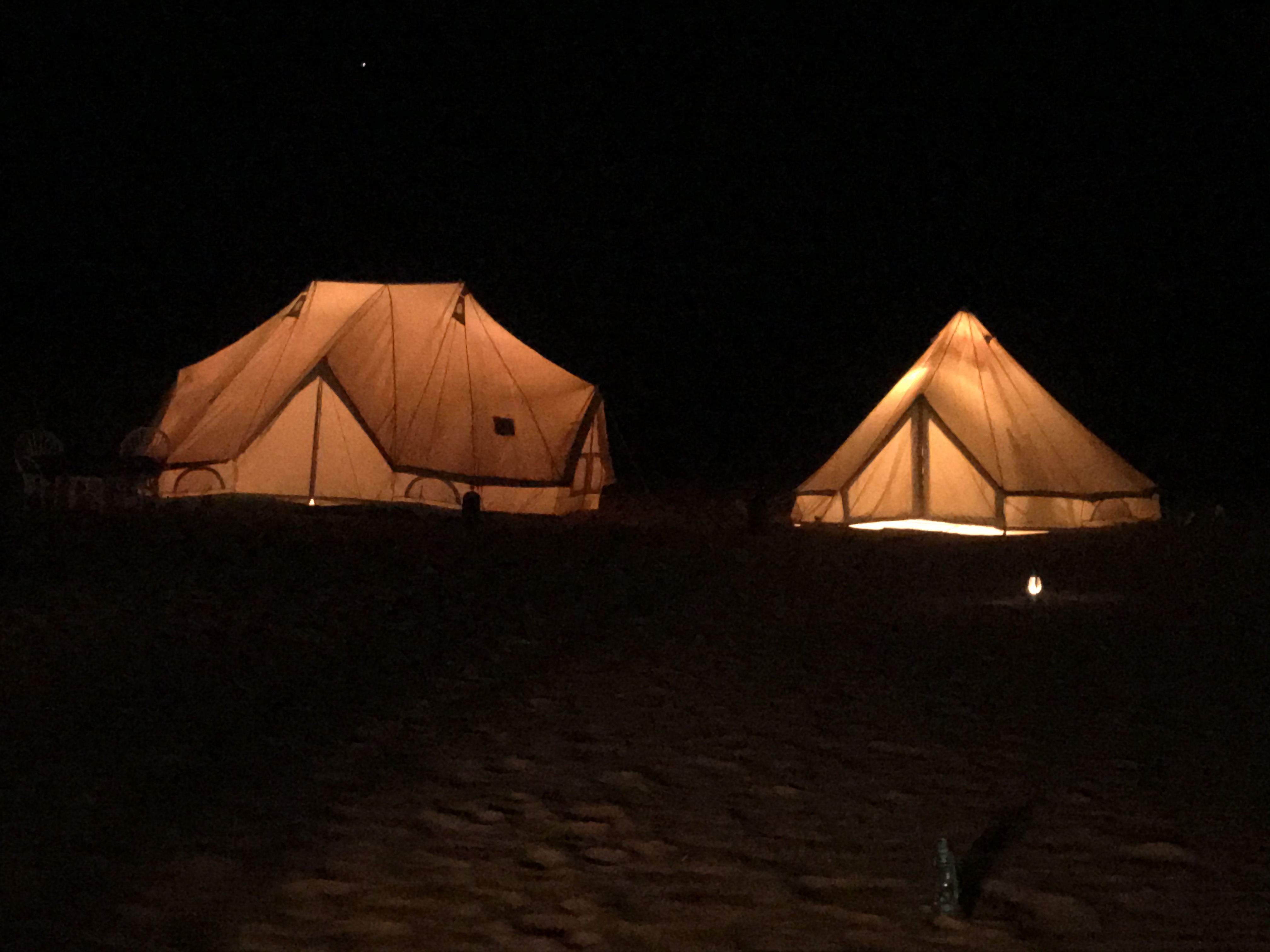
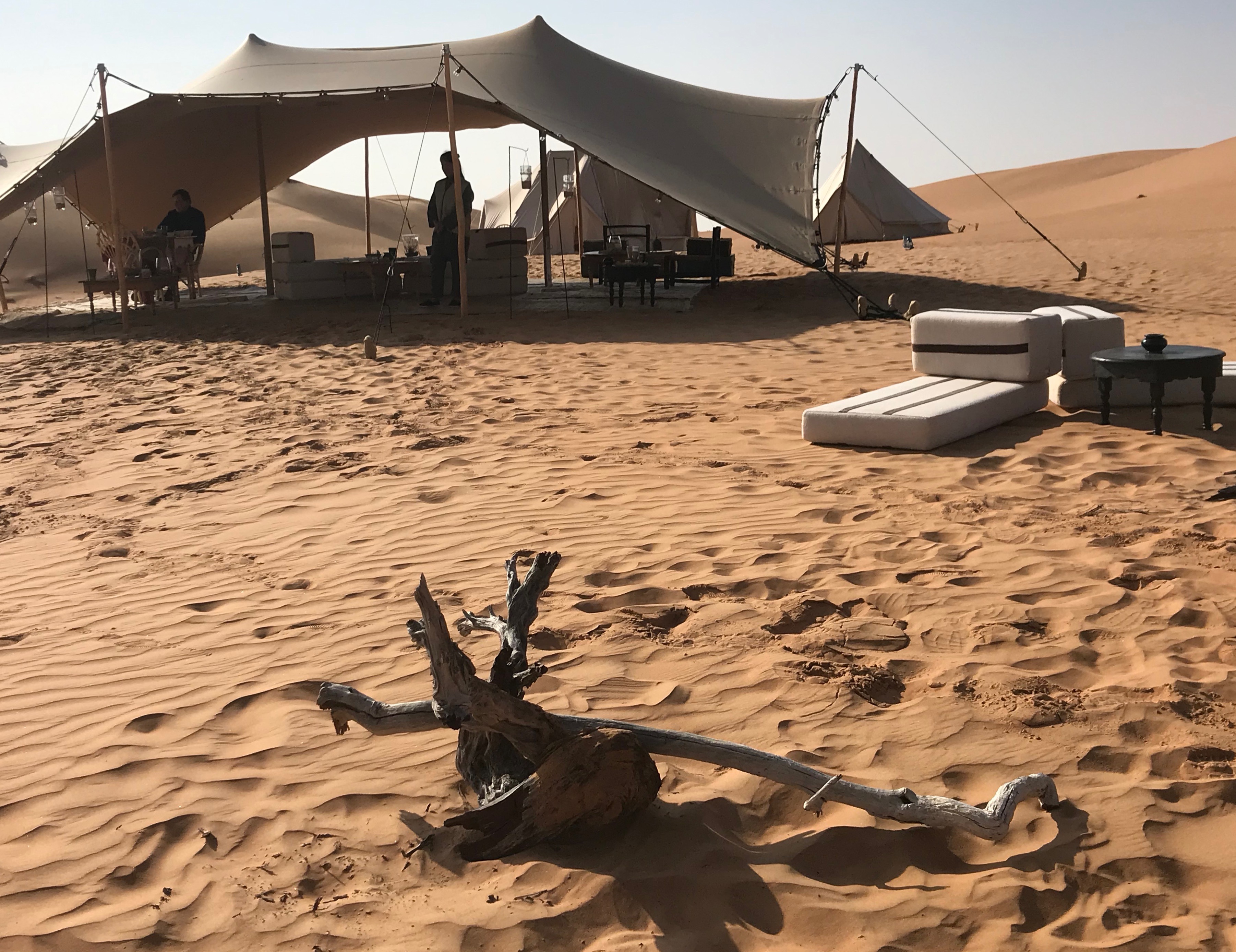
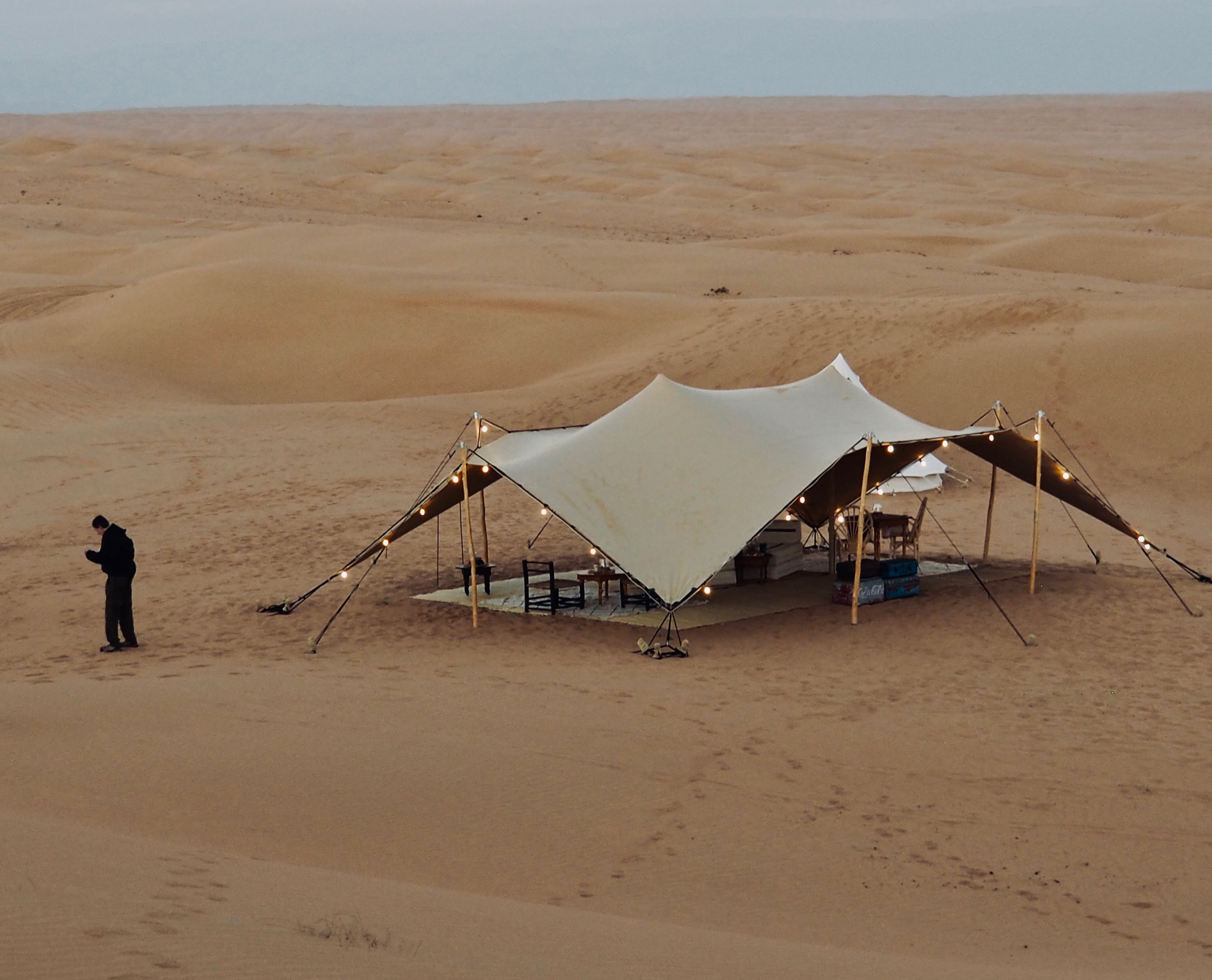
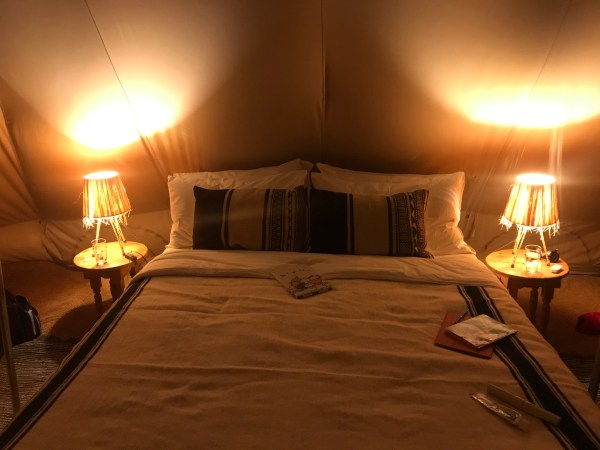 Next to the bedroom tent was our private bathroom tent. This was five-star glamping.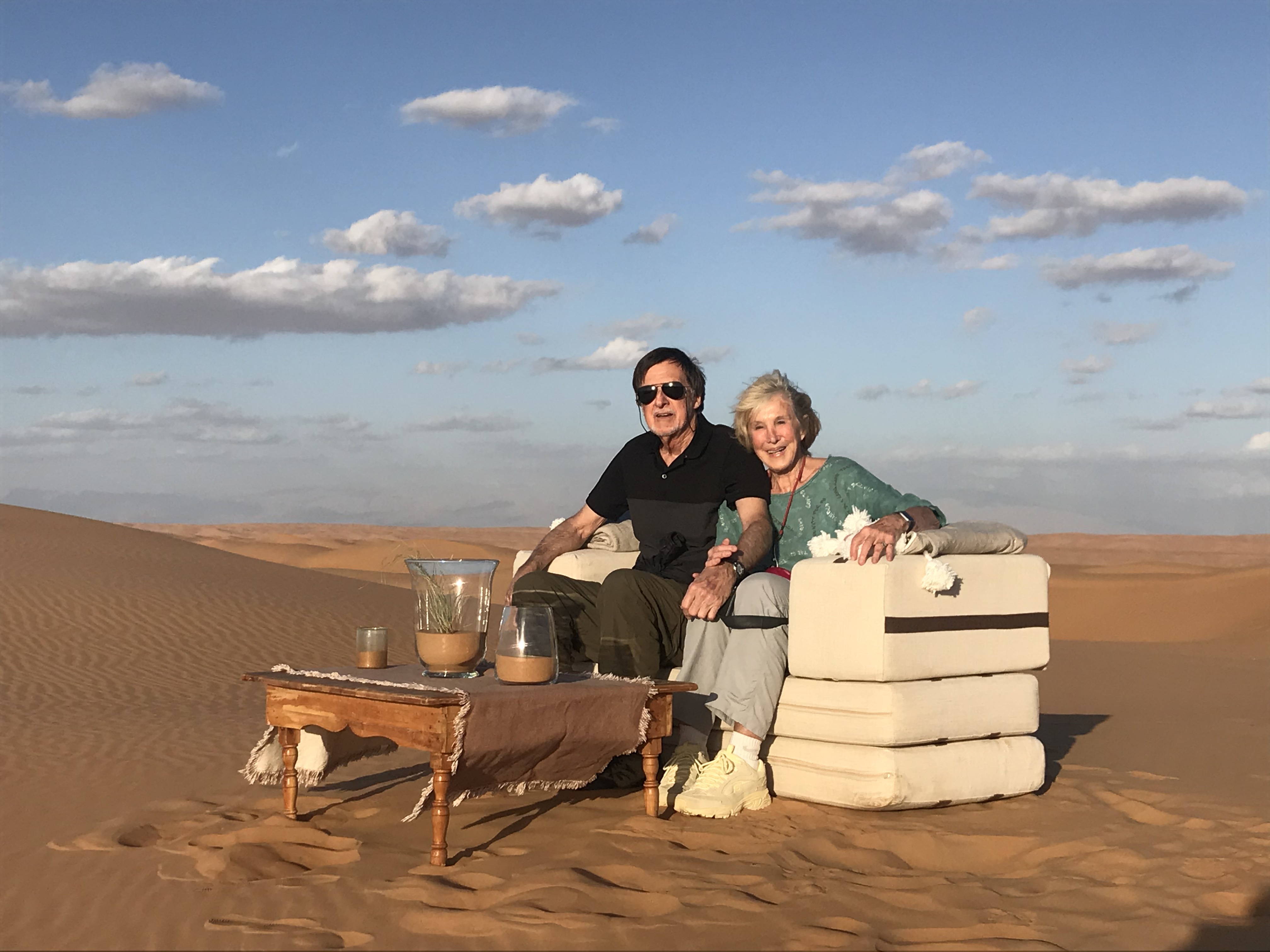
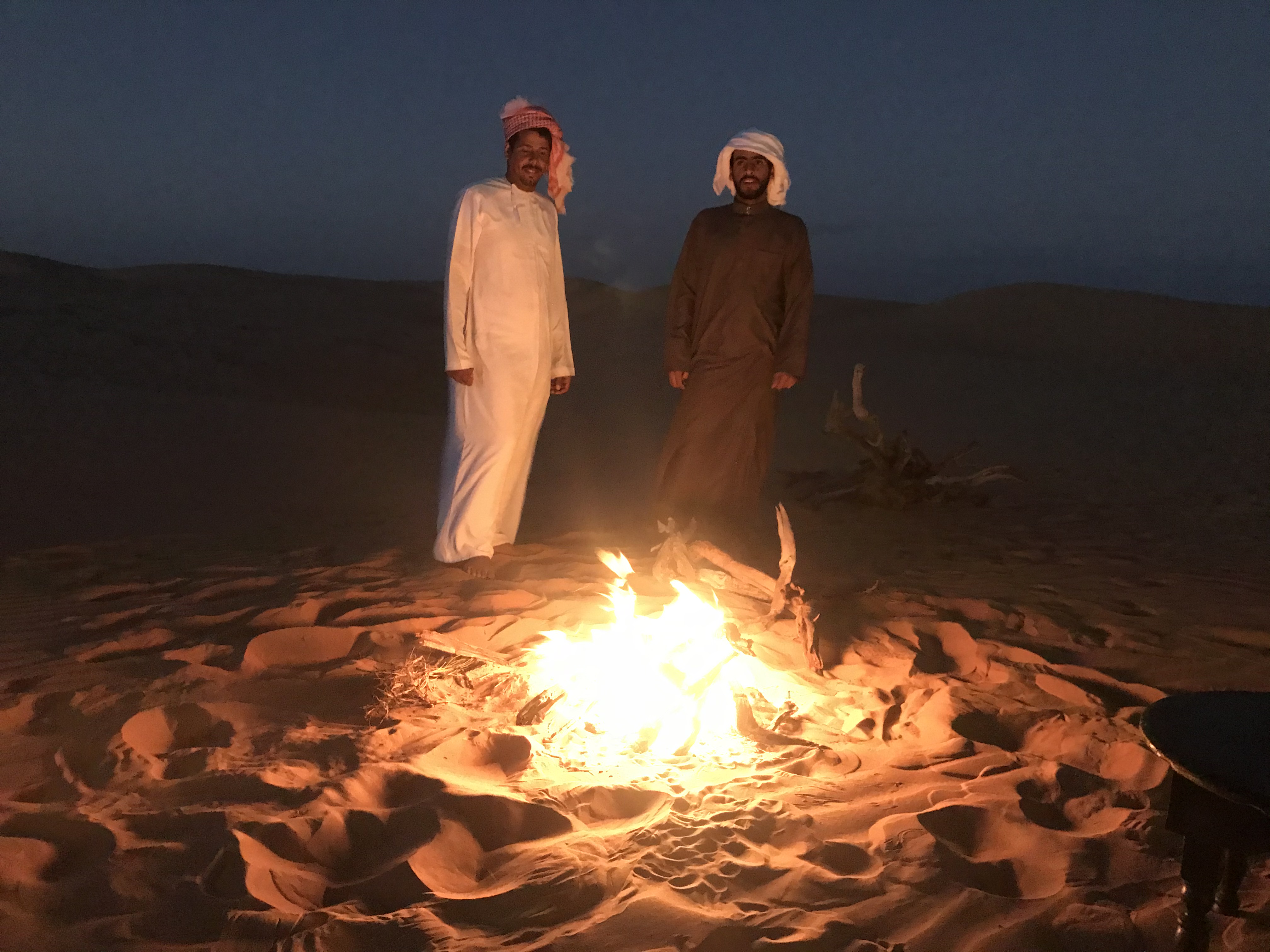 No camp is complete without a campfire. Without the sun, it was cool. The desert fire’s warmth felt good. And, somehow it felt strange to be in this isolated ambience with all these remarkable amenities.