

Elephants, giraffes, zebra, kudos, wildebeest, a hyena — I saw them all on my drive from the airport in Skukuza, South Africa, to the Idube safari lodge 3 1/2 hours away. I was excited and decided this was a good omen meaning lots more to come. I was right.

The highlight on the drive was a mother hyena with two tiny, lively puppies. Driver Cheryl said they were just a few days old, if that. Mom was worn out, sleeping soundly, not disturbed by one of her offspring who was chewing on her ear.

I spent the next two days at the Idube lodge and the following two days at the Motswari Game lodge. Both are vast private game reserves in Greater Kruger, an area with unfenced boundaries outside but adjacent to the Kruger National Park.


Game drives begin in the wee hours, about 6 a.m. It was winter in South Africa, coal black and cold, freezing, at that hour. Hot water bottles and blankets are provided, but still frosty until the sun pops up. At 9 we returned to the lodge for a hearty breakfast, setting out again about 3 p.m. for an afternoon drive.

A tracker sits on a special elevated seat in the front of the safari vehicle, his eagle and trained eyes searching for tracks, movement, listening for sounds, any sign of animal life. The driver/field guide is an encyclopedia of info, as well as a fearless driver, charging off road at Formula 1 speed to reach a site before the animal moves on. Duck under branches, bounce over bumps and ruts, hold onto your seat — more thrills than an amusement park ride.
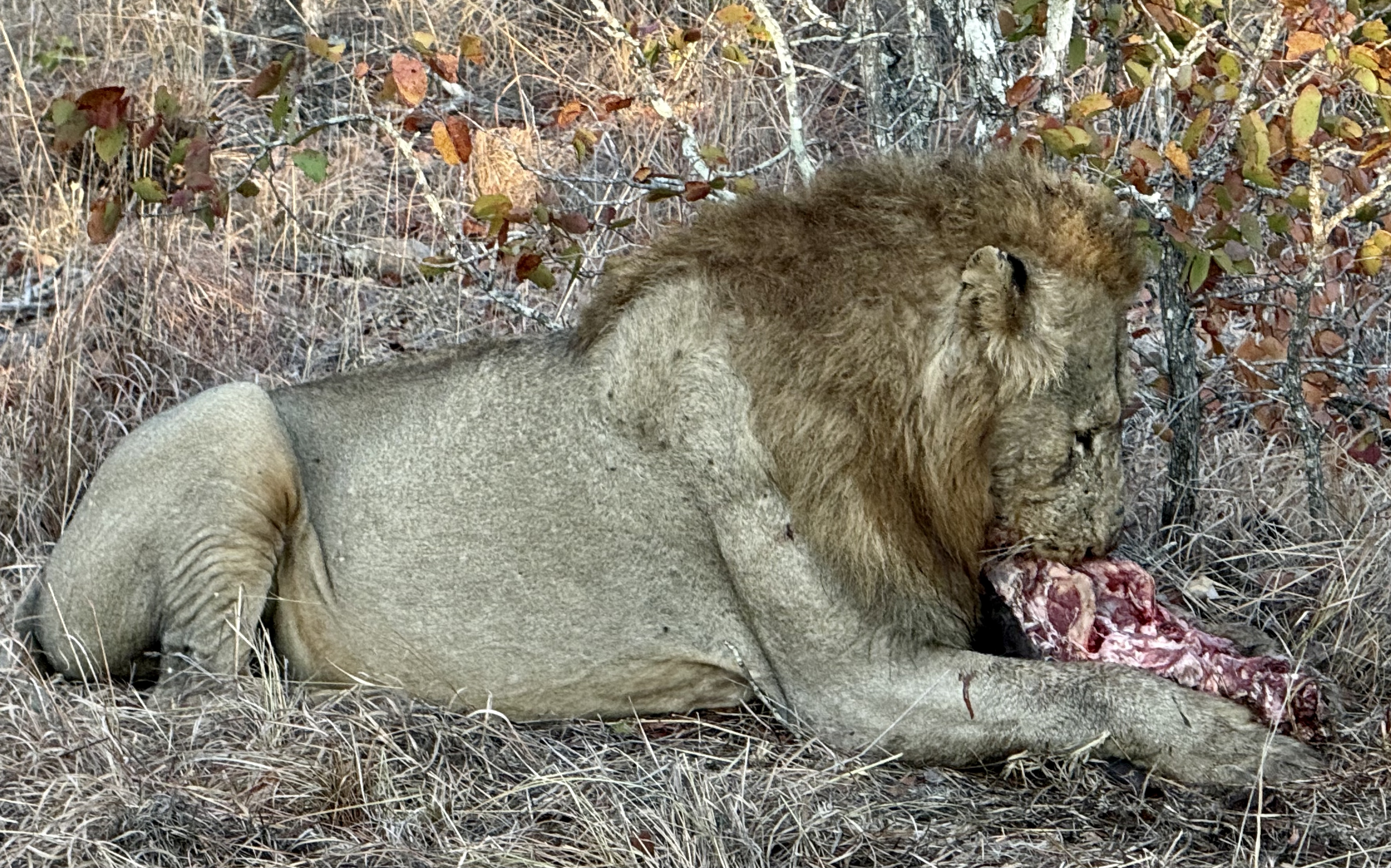
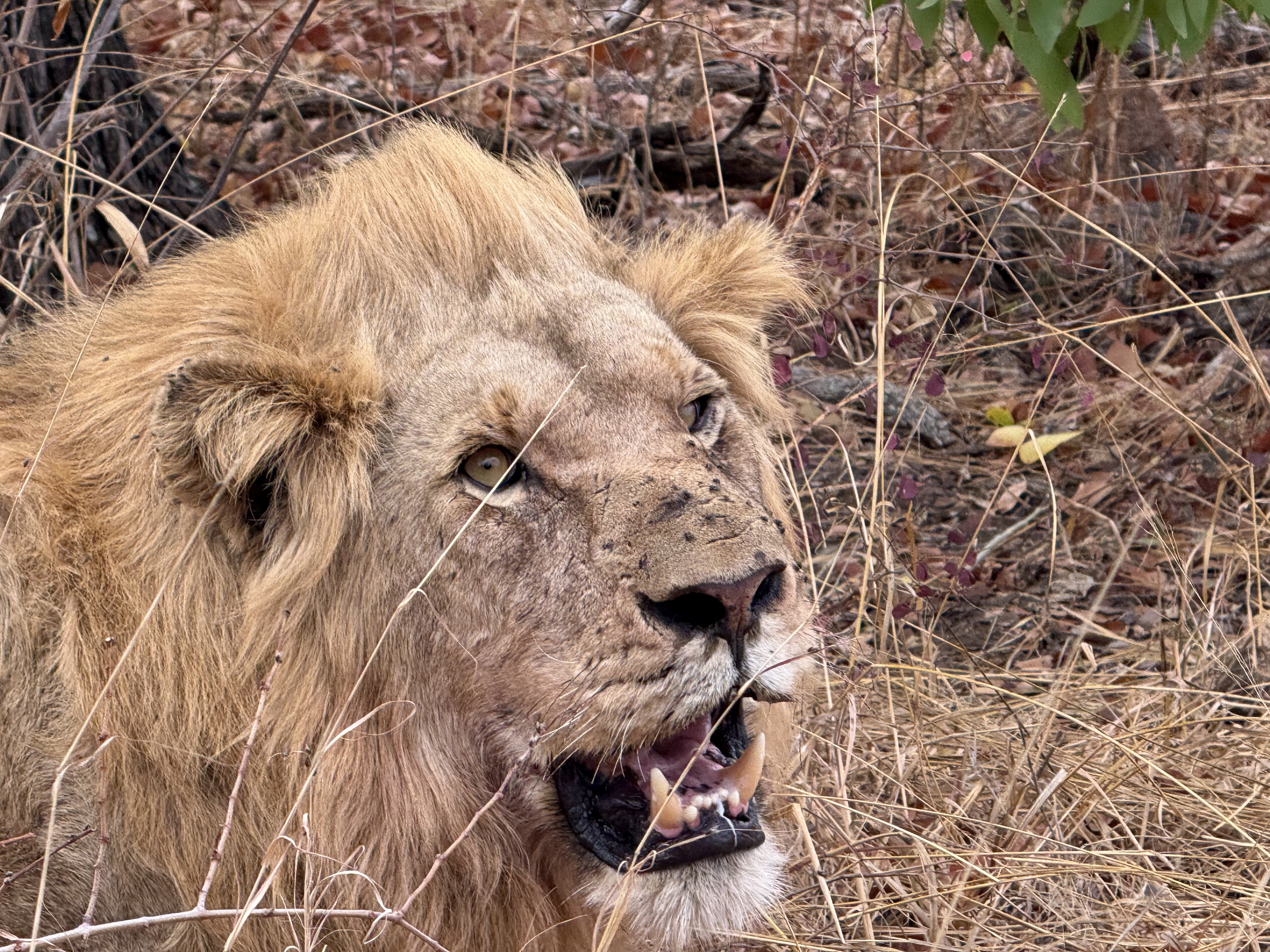
An abrupt halt. There — right in front of us — is the Lion King, gnawing on a bloody piece of carcass. A thrilling, awesome, incredible sight. You almost need to pinch yourself to be sure it’s real.
As in this instance, it is astonishing how close the vehicles get to the animals which completely ignore the visitors. They are accustomed to human intruders and definitely not camera shy. Even with a phone camera you can get decent photos (I used an I-phone 16 pro). For perfection, however, serious gear is best.

Following are photos of my “sightings.” Since I am a “childless cat lady” who adores cats, large and small, I will devote a separate post to cats. I saw many, all magnificent. Watch this space.

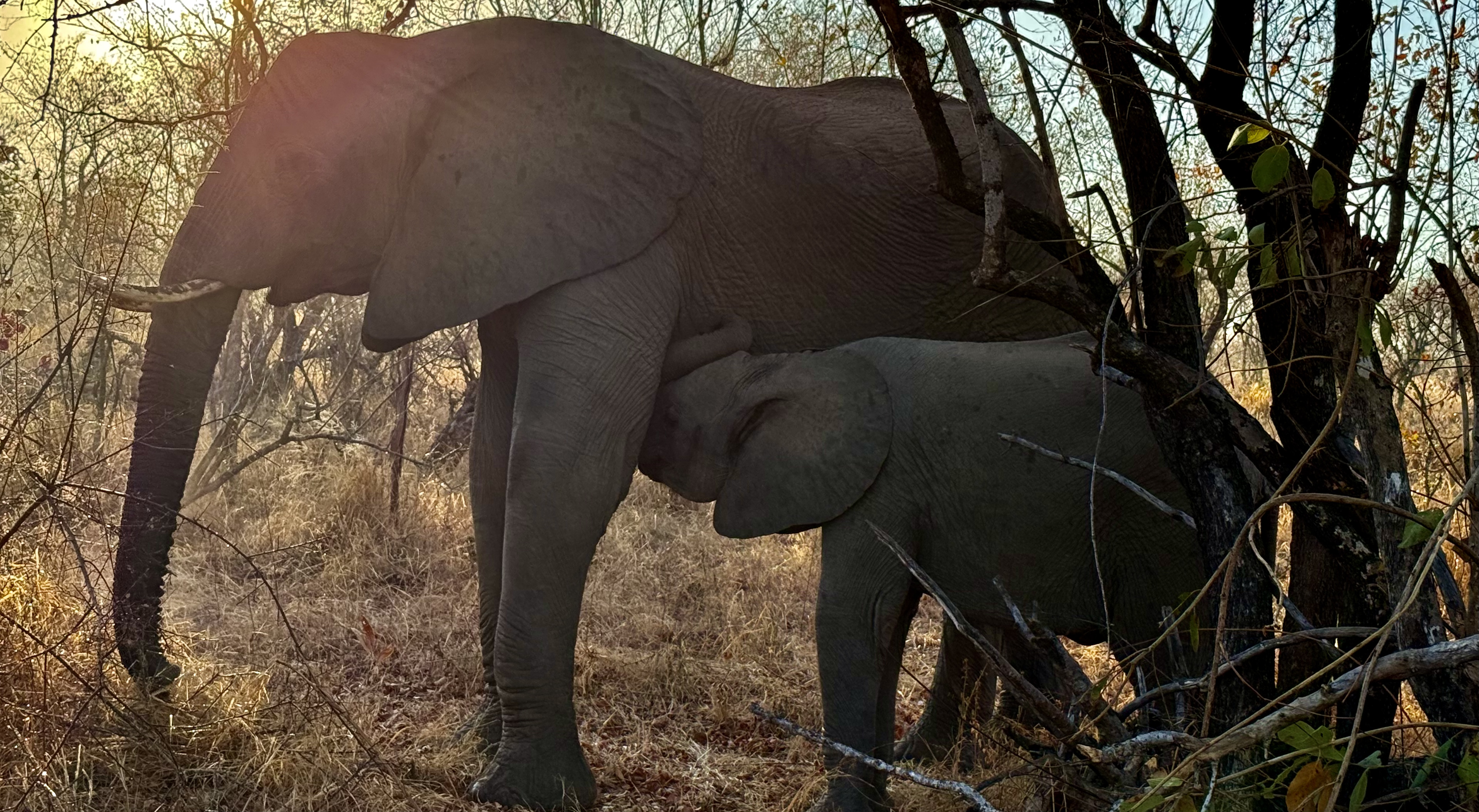
No shortage of elephants on the game drives: majestic males, families, youngsters. These mammoth creatures can live to be 60 to 80 years old. If they manage to survive that long, they die of starvation as their teeth wear out, making it impossible to chew food. The elephant gestation period is 22 months and “babies” nurse for three to four years. Elephants can eat for up to 18 hours per day.
Rhinos, with and without horns. The horns are treasured in many Asian countries for medicinal properties, although there is no scientific evidence that the horns have medicinal value. In some countries, namely Vietnam, the horns are a luxury item and status symbol.
Hence, poachers kill for the valuable horns. In the Idube reserve, rhinos are de-horned at the age of two to dissuade the poachers. Not so in the Timbavati private reserve where the Motswari lodge is located.
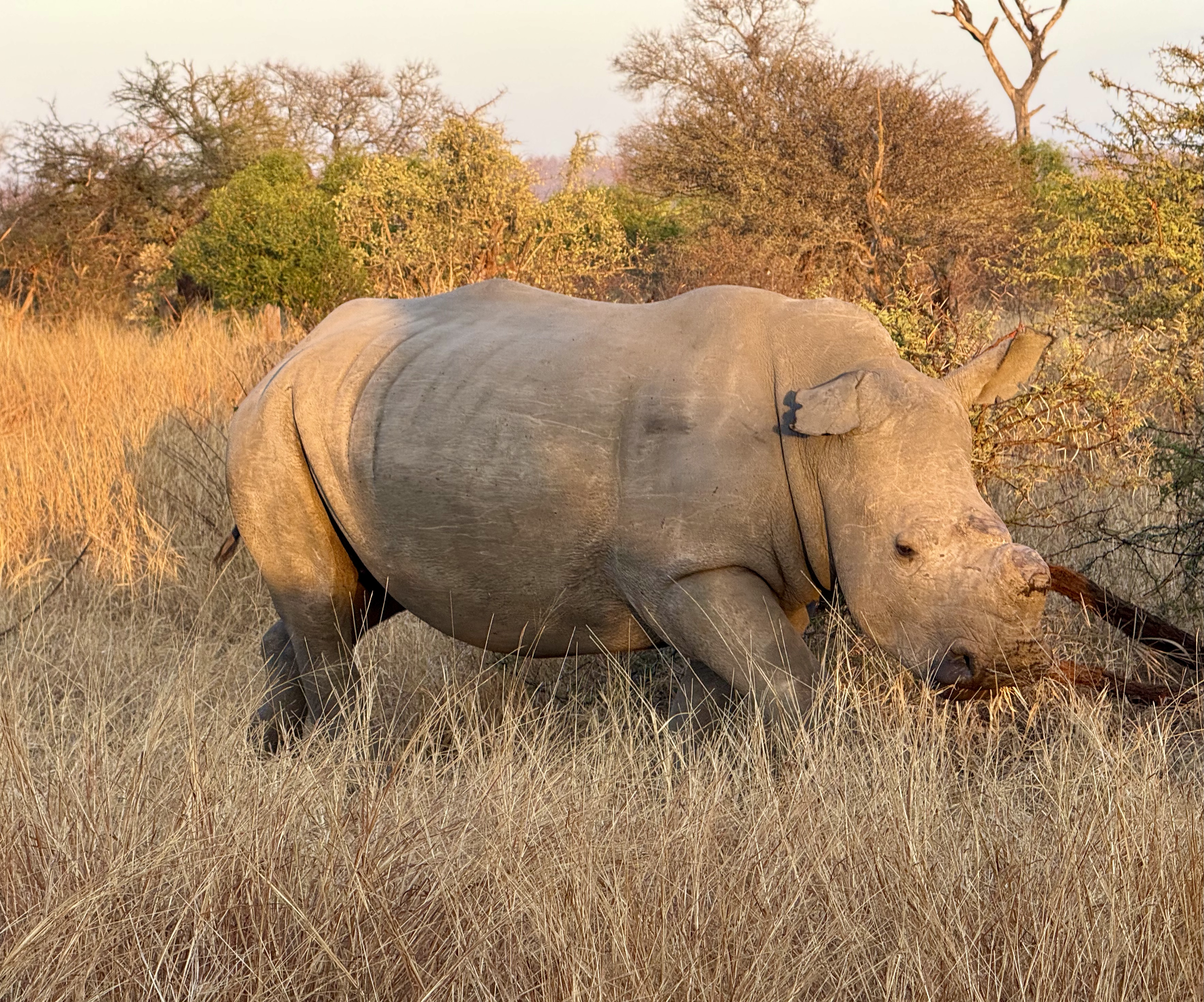

There guide Landon told us that dehorned rhinos are defenseless against predators and in territorial disputes with other rhinos. Poachers may still kill them to avoid tracking the same rhino again. And, the dehorning procedure must be repeated every 12-24 months, expensive and labor intensive. It can also alter natural behavior, leading to social disruption. Rhinos in Timbavati keep their horns.

The buffalo, one of Africa’s most dangerous animals, is one of the Big Five of African wildlife (elephant, lion, leopard, rhino and Cape or African buffalo). We were lucky and saw not just a few of these aggressive beasts, but hundreds crossing a lake.

We never spotted a hippo out of the water, but we did see lots of hippo heads up for air in various lakes. Hippos can stay under water for six to seven minutes, we learned, and they eat grass not meat.
Ian, the guide in Idube, told us the hippo is the number two killer in South Africa, following malaria, number one. Number three is the buffalo. Landon at Motswari disagreed on number two. He said number two is the crocodile, not the hippo which is number three. Both put malaria as the number one killer.

An African safari is a thrilling, rewarding, unforgettable experience. In addition to being awed by the wildlife, I was intrigued with the country and its citizens. I talked to South Africans about their languages, tribal customs, problems in the country and life since the official end of apartheid in 1994. A look beyond safari in the next post.
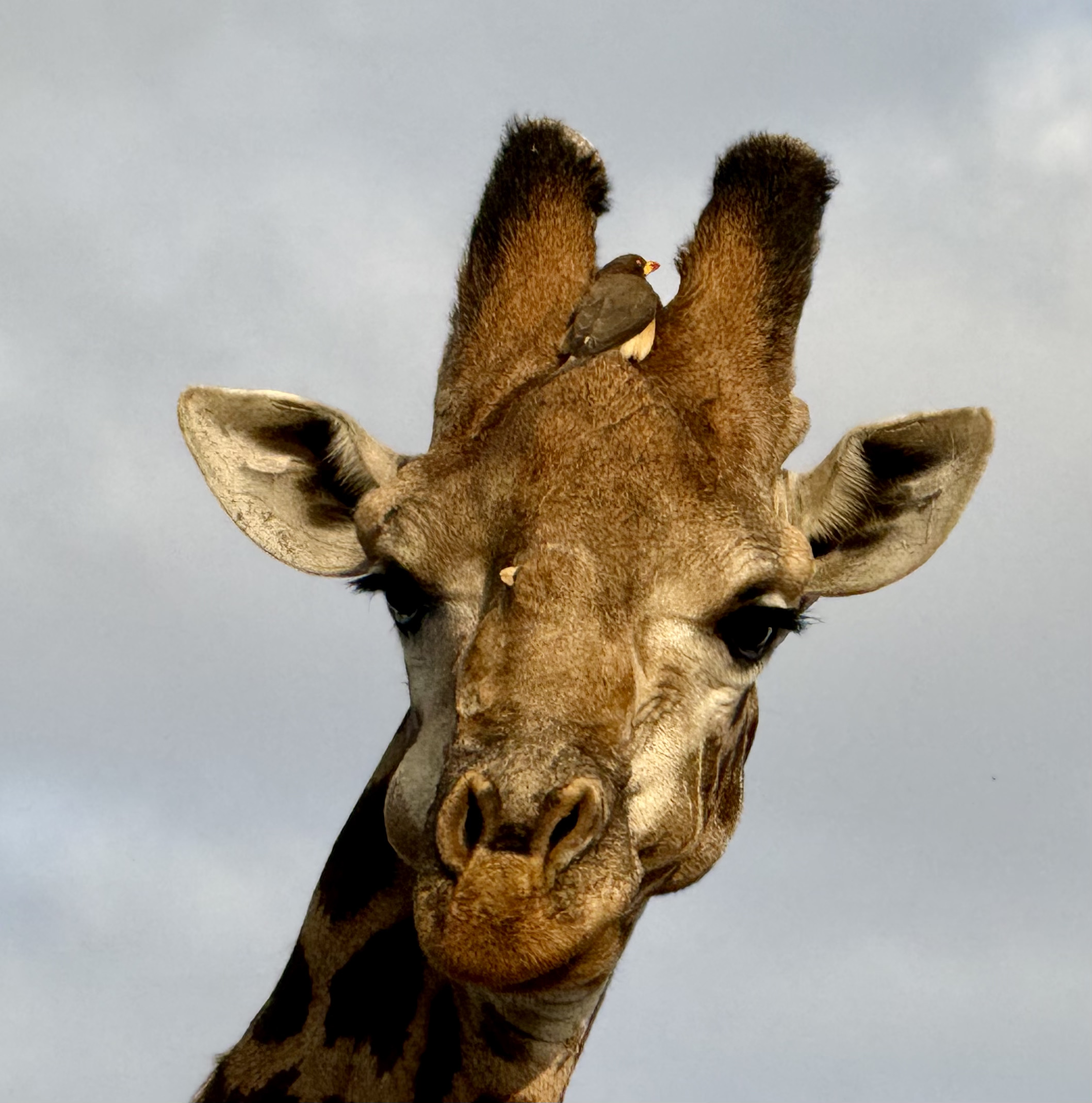
Below, more photos.



I booked my African adventure, South Africa (Kruger) and Madagascar, with Worldwide Quest, http://www.worldwidequest.com
If not a Tales and Travel follower, please sign up here. Trust me. It’s safe. Your address is not shared. Don’t miss out. More about my travels in future posts: South Africa beyond safari, Big cats, the mysteries and marvels of Madagascar.
No new recipe this time. But, it’s not too late to take advantage of those summer tomatoes and try this delicious Savory Tomato Tarte Tatin. For more recipes, click here.
 Tales and Travel
Leave a Reply to leahlarkin Cancel reply