My husband Bob (also known as Bicycle Bob), is more comfortable on the seat of a bicycle than at a kitchen counter. Nonetheless on our recent trip to Paris I talked him into joining me for a lunchtime cooking course. 
He was fearful of slicing shallots as the chef teacher instructed (he left that task to me), but he did a masterful job of separating the meat of a duck breast from its skin, then cutting the flesh it into small, evenly sized chunks. I was relieved – and proud of his culinary precision. At home, he leaves all the cooking to me.
We were at L’atelier des chefs, a cooking school with a broad palette of offerings, from the 30-minute lunch course to two-hour sessions. We chose the former and joined five others to whip up “Farfalle au canard, citron et câpres,” (Farfalle with duck, lemon and capers). Cost of course and meal: €15.
After everyone donned an apron, instructor-chef François Pelletier got right down to business, explaining and directing procedures in rapid-fire French. I speak French, but at times he lost me. No problem. Just watch. 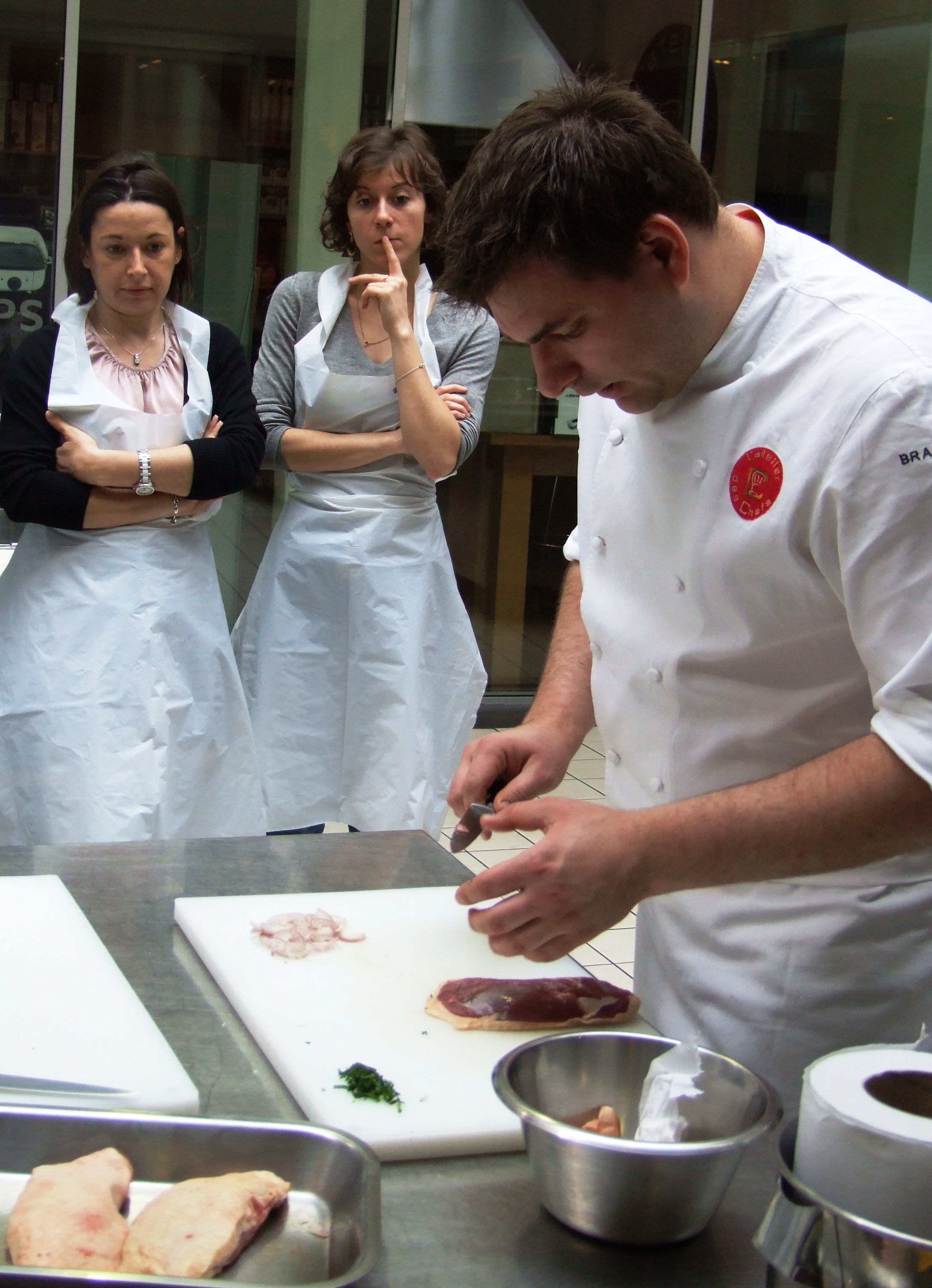
First, he showed how to skin the duck. Then, how to properly slice and dice a shallot, explaining that the same procedure should be followed for an onion. Hold the vegetable with the fingers bent back to avoid cutting yourself. Don’t press down too  hard or the juices of the shallot/onion will escape. You need the juice for flavor. His slicing technique was fast and smooth, a delight to watch, and the slices all equally sized and perfect. Several of our classmates, who no doubt had been to these classes before, were almost as proficient. I was a failure — slow and clumsy. Some of my slices were fat, others skinny, but I did not worry. Who would know the difference in the final dish?
When we were ready to move on to cooking the pasta and sautéing the duck, Pelletier offered this advice: For cooking pasta, add 2 teaspoons of coarse salt per liter of water, and don’t add oil to the cooking water. For al dente pasta, check the pasta for the correct consistency by breaking a piece. It will be al dente when there is still a tiny bit of white left in the middle. Not to worry as the pasta will continue to cook after it is removed from the heat and water.
As to sautéing the duck, or any meat, let the pan heat up before adding the meat.  Resist turning it until it begins to brown. If you try to turn or move it too soon, it will stick to the pan. When it begins to color it means it has reached the same temp as the pan and will turn easily.
Salt and pepper: Add a bit of salt in the beginning of cooking as it aids the cooking process. Add more as desired at the end of cooking. Add pepper at the last minute – or at the table. If you add it too soon it loses its taste.
While some students finished the cooking process, others showed their creative skills by decorating the plates with swirls of crème de balsamique, a product that is very trendy these days, Pelletier said.
The lesson was efficient, fast – and impressive. We all gathered in an adjoining room to savor the tasty creation and chat. Several of the group, who work nearby, were regulars. Jack Bussy, a burly type who fit the stereotype image of a chef, has been coming two to three times a week since 2007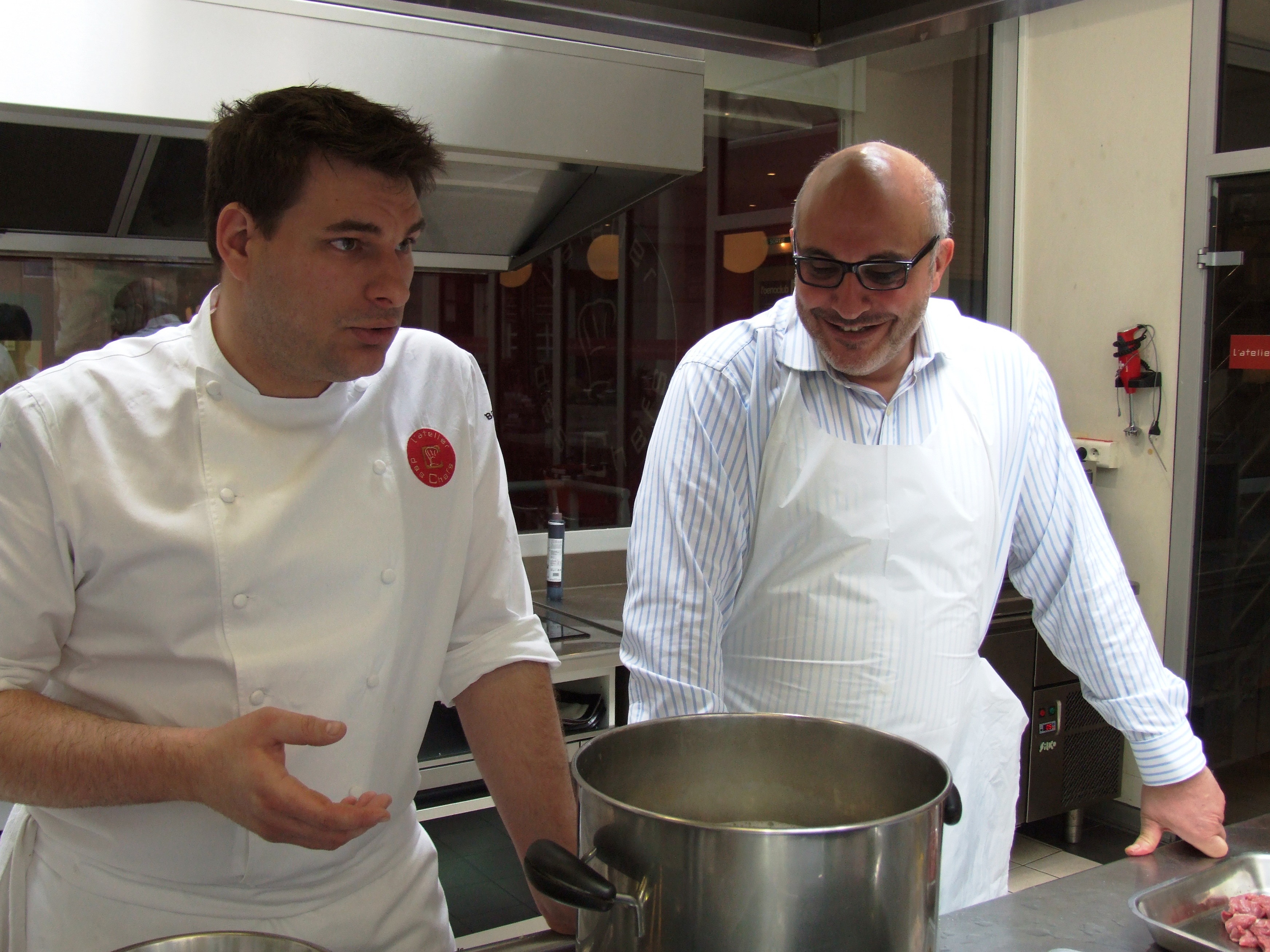
“I love to cook and eat,” he said. “It’s calm here. I know everyone. Restaurants are noisy and you don’t know what you’re eating. The people are not always nice. Restaurants are more expensive.”
It was the second time for Natalie Ceillier. “It’s good, economical and very enjoyable. You meet nice people here,” she said.
Add another €7 to the basic price of €15 and you can have a glass of wine, dessert and coffee, in addition to the main dish.
Two French brothers, Nicolas and Francois Bergerault, started L’atelier des Chefs in 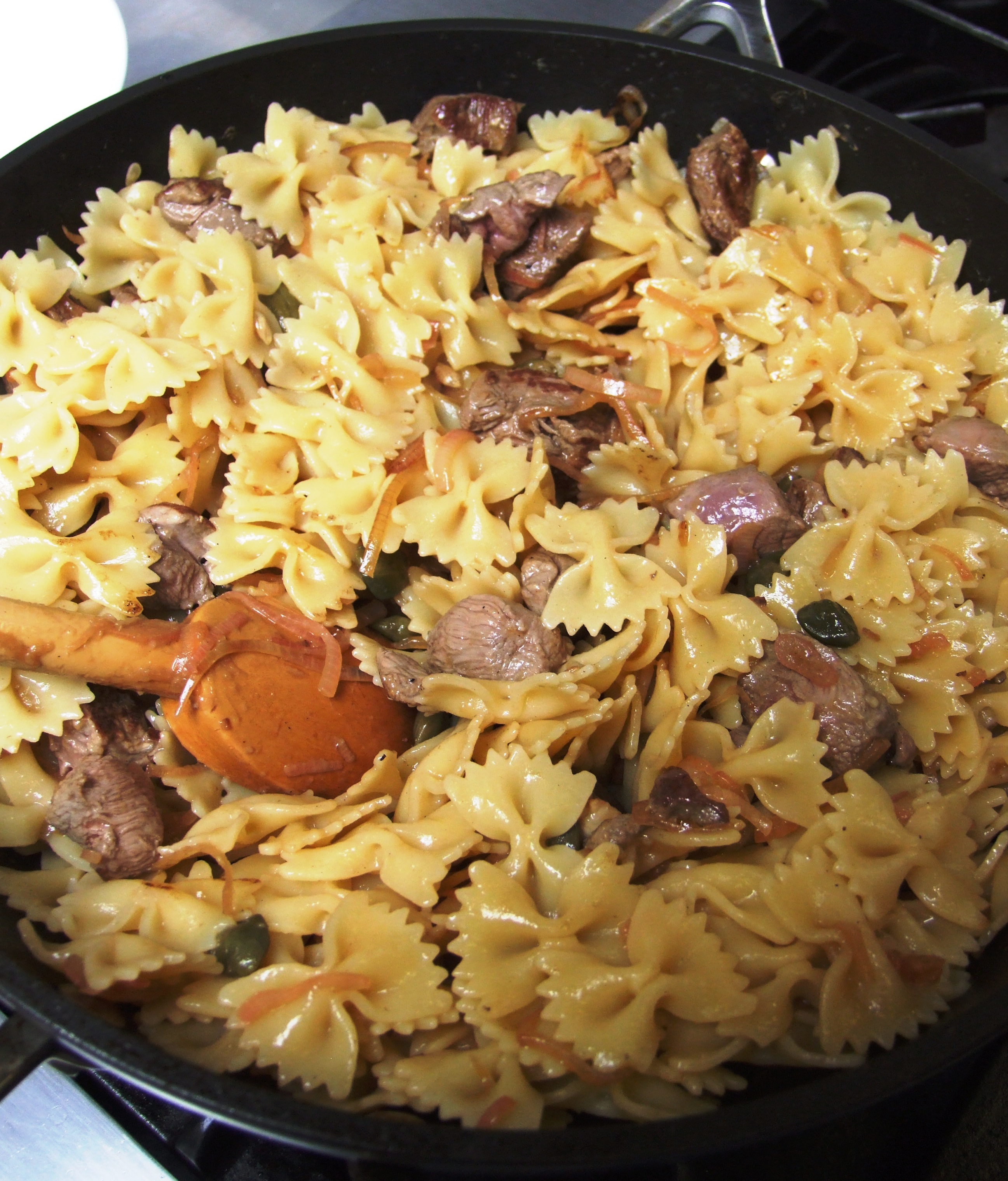 2004 “to get people back in the kitchen.” The lunchtime courses have been a huge success, but for those with more time, there is a range of lengthier courses from a one-hour “party sushis” course (€36) to a two-hour “products of spring” course (€72).
There are now 12 ateliers around the world, including one in London, five Paris locations, five other French locations and Dubai. Thirty more are planned to open by the end of 2011.
Each location has a shop with an excellent range of kitchen gadgets and paraphernalia, as well as gourmet products. I purchased a bottle of tomato vinegar which is exquisite. Bob went for concassée de poivrons grillés (grilled red pepper puree).
BB excelled in the Paris kitchen. But, unfortunately now that we’re home, he remains more enamored of his bicycle than frying pans and casseroles.
More information on the web site www.atelierdeschefs.fr where you will find a complete list of courses and dates, as well as recipes and videos. You can sign up online. The English language version is only for the programs in London.





 Tales and Travel