I left my $ in San Francisco

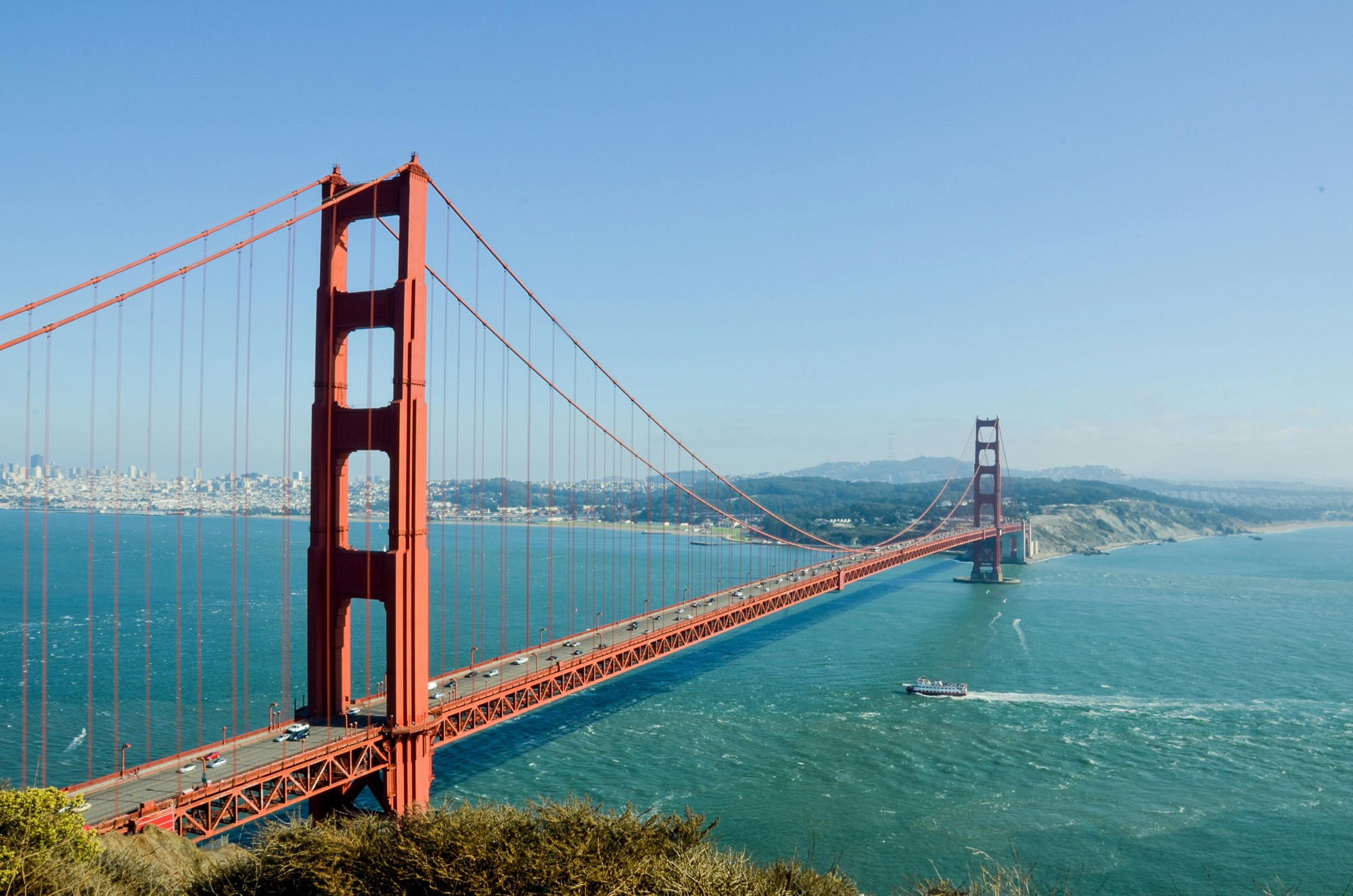
Photo by Pixabay

It is an expensive, very expensive city.  Having lived in Europe for so many years, I was shocked.  I assumed that nothing – with the exception of Switzerland — could be more expensive than the French Riviera where I now live.

San Francisco proved me wrong. Following are some costs I found outrageous:      


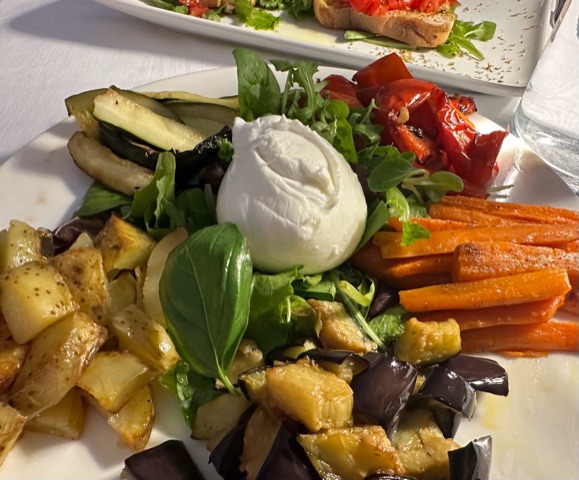
1 small box of Tylenol 500mg (pain reliever like paracetamol) $8.  The equivalent here about 2 euros, $2.16

1 glass of house wine in a restaurant, $14. At restaurants I frequent here, usually from 5 to 8 euros, $5.40-$8.64.

In both San Francisco and southern France, prices vary from one locale to another. In most cases, however, San Francisco seems over the top. I was surprised to learn that prices in much of the US may not be significantly less. While walking through a supermarket with my brother Steve, I asked, “How can people afford these prices?”  “They can’t” he answered.  “That’s why Trump will become president.” Hope he’s wrong.

The above costs were bad enough, but the whopper for me was $16,700 for emergency room treatment and a night spent in “observation” at the University of California San Francisco hospital.

I tripped over a scooter parked half way on the sidewalk, fell, broke my wrist and smashed my face.  Hence the hospital.

Scooters are often parked on the sidewalk. I was looking across the street and did not notice the beast. Photo model: Steve Koester

I do not have Medicare, nor American health insurance.  In France I benefit from socialized medicine (most costs covered), but I have a travel/medical insurance. Let’s hope I get reimbursed.

The San Francisco visit was not vacation. I went to see my brother Tom who had been diagnosed with terminal cancer.  Sadly, he has since passed away, but I am grateful I had the opportunity to spend time with him. He was a special guy, very kind, generous and liked by all.

Fisherman’s Wharf. Tom’s apartment was not far from here.

Due to the accident, my stay in San Francisco was not as long as planned.  I had a cast from my wrist to my elbow and had been told to come back to the orthopedic clinic in two weeks.  Fortunately, after a week I returned to France and saw a specialist.  The wrist should have been operated on immediately after the accident, I learned.  The doctor was concerned that due to the time delay, the surgery might not be completely successful.  I am lucky. So far, all is on track.  

The surgery here has cost nothing.  I will need to pay the specialist his fee: 370 euros (about $400).  There would have been no extra charge for a regular hospital staff doctor.   Surgery in the US? That price tag would have added a heart attack to my woes.

The hospital bill was overwhelming.  Abby, the very caring intern assigned to me, insisted on numerous X-rays and cat scans. A cat scan of my head; $3,288; cat scan of spine, $4,734; shoulder X-ray, $402, plus other X-rays.  The charge for one night in observation, $6,780.  Not much happened.  I slept.  

There were plenty of other hefty charges. This was a simple broken wrist.  What happens to those in the US who have serious medical conditions and no medical insurance?  It’s criminal – both the exorbitant charges and the lack of insurance for all.

On the positive side, an aspect of the US I relish is people: friendly, helpful, smiling.   As I lay on the sidewalk with a bloody face and painful wrist, passers-by were eager to offer assistance. I was alone, in pain, in shock, not to mention somewhat frightened.  As readers of this blog know, I have recently had far more serious mishaps. I feared the worst. The concern from strangers was comforting.

One couple, nurses, determined I had broken my wrist.  The young woman gently wiped blood from my face.  Her partner called an ambulance.  Someone asked if I had been riding the scooter.  OMG! Had that been the case, I would not be writing this blog

View from Chinatown.

From taxi and Uber drivers to waiters and waitresses, from nurses to hotel personnel, I found people interesting, delightful, and not shy to converse and tell their stories.  A taxi driver from Vietnam, now a citizen, told me how he came to the US.  An Uber driver related the details of his job. A young Moroccan who pushed me in a wheel chair at the airport was happy with her job but missed her country.

They came from distant lands, not just those mentioned above.  Mexico. China.  Philippines. Ethiopia. Turkey. Nigeria…. Hard working folk, not drug addicts, rapists and criminals.  Immigrants make the US.  I can’t imagine how San Francisco would survive without them.  

As I read somewhere, the country is a quilt, far more interesting than a boring sheet. 

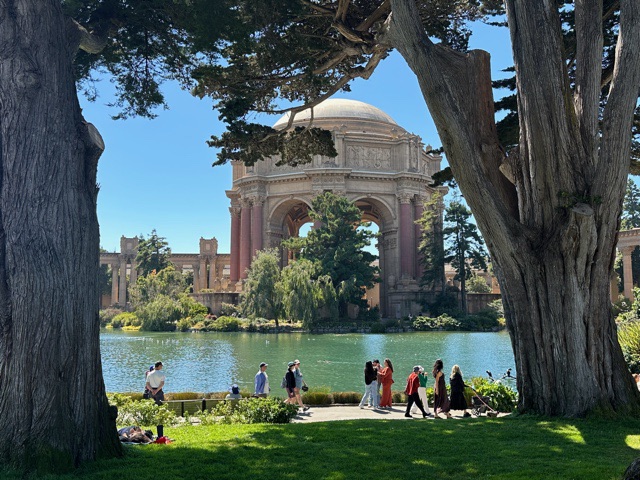
My San Francisco visit left little time for sightseeing.  If circumstances had been different and I had had time to experience the city’s attractions, perhaps I would have left my heart there too, not just my $.

Palace of Fine Arts. I enjoyed a walk in this beautiful area.

If not a Tales and Travel follower, please sign up here. Don’t miss future posts.

Check out my tried and true recipes — keep scrolling down on a phone, or, if on a PC or tablet, up to the column on right then down to “Recipes.” On

A Picture is Worth 1,000 Words

Since I have been doing nothing exciting to write about, this will be mainly a photo blog.

The heat and humidity here in southern France have been too much for me.  Fortunately, my apartment building has a TDF (to die for) pool.  I swim and do my pool rehabilitation exercises every morning, then spend the rest of the day in the comfort of my air-conditioned apartment. It gets monotonous.

At 9 a.m. I am often the only one in the pool. Heaven!

Not just the heat, but the crowds also keep me home bound. I live in a vacation paradise.  The beaches are packed.  Finding a parking place is as challenging as finding a contact lens in the sea. A tranquilizer is required to negotiate the traffic.

Everyone is at the beach.

It is in the French DNA to take vacation in July or August, with August being the preferable month.  This applies to all – not just families with children which is understandable.

A bachelor lawyer I know has closed shop for all of August.  Friend Karen bought an apartment in the spring. She is having it renovated, but all work stopped in mid July and will not continue until September. Vacation time.

My physical therapist is “en vacance “ for the entire month. (The French get five weeks of paid vacation per year, plus lots of holidays.). It’s best not to get sick in France in August.   Your doctor will likely be on the golf course or beach somewhere far off.   Your favorite pharmacy, bakery, butcher shop – likely closed until September.  

Fortunately, the “rentree” ( when kids go back to school) is around the corner. Life will return to normal soon.

Following are random photos retrieved from the innards of my computer. Most are from fascinating trips husband Bob and I had the fortune to enjoy. We loved to explore far off lands, learn about different cultures, and meet the locals. It was all fun and enriching.

Before long I hope the beach will be like this.
Sri Lanka hills at sunset
Fort gunnery platform, Nizwa, Oman
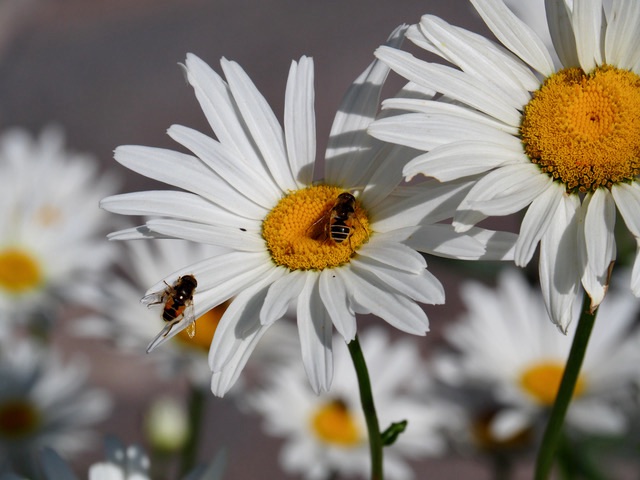
Daisies – and bees
Peillon, France. I went there on July 9 to commemorate the 1 year anniversary my beloved Bob’s death. We had been there many, many years ago.
Geraniums in Grimentz, Swizerland
Name this bird. Seen in Sri Lanka.
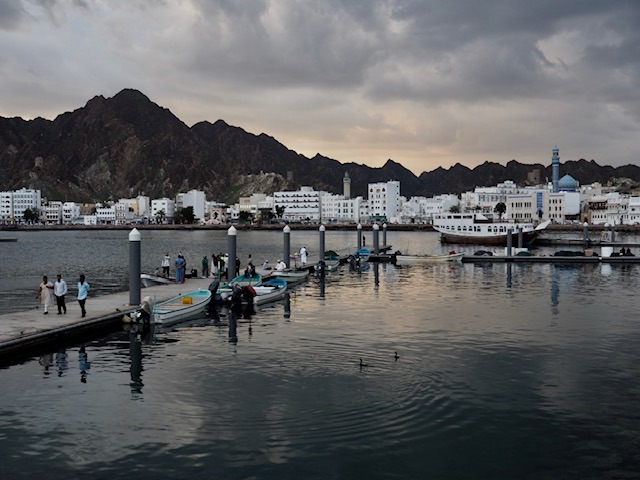
Muscat, Oman, at daybreak.
Mountain goat in Oman mountains
In the medieval garden at the Chateau of St. Agnes, France
Maldives
Wildlife in Sri Lanka
Memories
Beauty in the canton of Valais, Switzerland
On safari in Rajasthan, India.
Classy mansion in Cap Martin, France.
Sultan Qaboos Grand Mosque, Muscat, Oman
Dalmatian coast, Croatia

If not a Tales and Travel follower, please sign up here. Don’t miss future posts.

Check out my tried and true recipes — keep scrolling down on a phone, or, if on a PC or table, up to the column on right then down to “Recipes.”

GERMANY’S

MERRY CHRISTMAS MARKETS

Several years ago I wrote versions of this article which appeared in various publications.

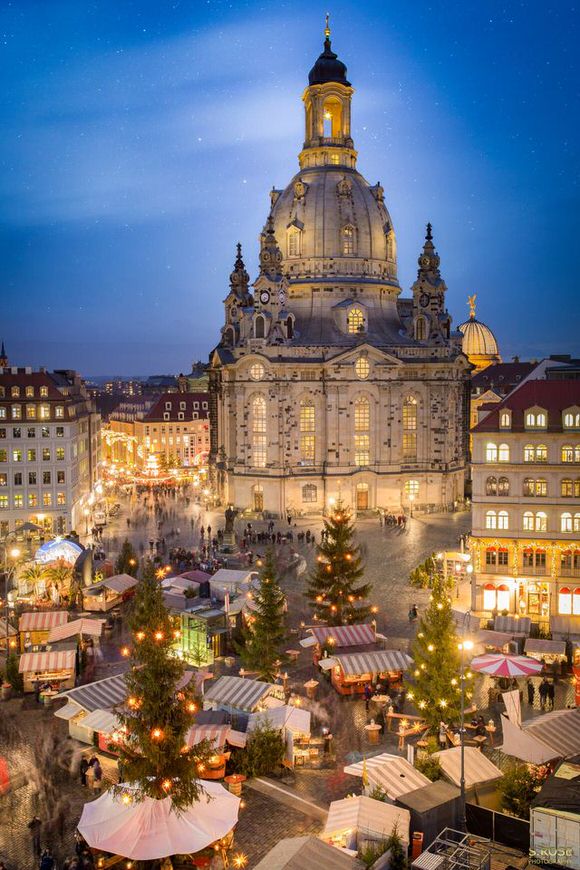
Dresden’s Frauenkirche and the Neumarkt Christmas market. Photo by S.Rose

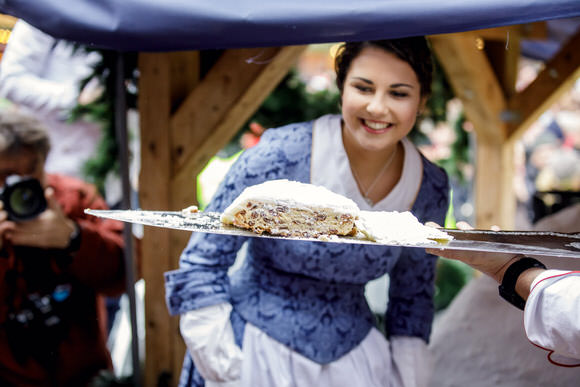
My nose led me to the big black oven. The aromas wafting from behind its doors were heavenly and hunger inducing.   Something delicious was certainly baking inside and I had to have a taste.  I was in Dresden at the Striezelmarkt, the city’s Christmas market, and it was Stollen, a rich buttery cake with dried fruit, nuts and spices, turning golden inside the outdoor oven. Master baker Joachim Winkler was rolling another batch of dough as spectators watched the creation of Dresden’s famous holiday cake. Best of all, there were free samples to taste.

Dresden Christmas Stollen. Photo: Schutzverband Dresdner Stollen e. V., Claudia Jacquemin

That was many years ago.  I lived in Germany then and sought out holiday markets every December. Major cities like Dresden usually have numerous markets in various locations throughout the town. However, Christmas markets in smaller towns, while perhaps not as grandiose, are equally as enticing. 

The tradition of pre-Christmas markets originated in Germany in the late Middle Ages.  The custom has spread throughout the world with Christmas markets on the calendar in numerous countries these days. Now I live in France where, sadly, I find Christmas markets a poor imitation of those magical events in Deutschland.  

Striezelmarkt in Dresden Photo: Sebastian Weingart (DML-BY)

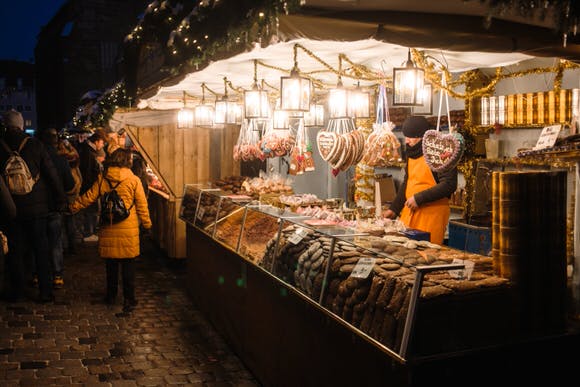
I especially miss going to the markets late in the day.  When dark descends, as early as 4 p.m. in December, they are captivating scenes with twinkling lights sparkling on tinsel and gilded ornaments.  If snow falls, it’s pure enchantment. People wrapped in heavy winter coats and woolen scarves pack the market square to eye the merchandise displayed at stalls decorated with swaths of fir and pine. Everything from holiday decorations to handicrafts, from mittens to furry slippers, is for sale. Aromas of cinnamon and cloves waft through the chilly air. And, in addition to Stollen, other delicious edible treats stir the appetite:  grilled sausages, spicy cookies and Glühwein or “glowing wine,” hot spiced wine served in souvenir mugs.

A toast with Gluehwein at the Munich Christmas market. Photo: Anastasia Dvoryanova

After I tasted free samples of Stollen, I set off to investigate another stand emitting even more delectable aromas.  Delicacies called “Quarkspitzen” were bobbing in a pot of bubbling fat.  I’ve been to many a Christmas market, but I’d never encountered these gems.    Little balls of dough with quark (curd cheese) in the middle, deep-fried and rolled in powdered sugar.  Exquisite.

Lebkuchen (German gingerbread) is a seasonal favorite. Photo: Caleb Owens

Food is my favorite part of Christmas markets.  Be it in Stuttgart, which claims to have Germany’s largest holiday market, or Nuremberg, which says its market is the most romantic, or Dresden, or any small-town Christmas market, there’s nothing quite like standing out in the winter cold, sipping a Glühwein and savoring a grilled bratwurst as church bells toll and children sing Christmas carols.  Move on to another stand for another Glühwein and a healthy portion of Schupfnudeln (potato dumplings with sauerkraut) or Linseneintopf (a thick soup of lentils) and Kartoffelpuffer (potato pancakes).  It’s a unique and thoroughly German culinary experience that is scrumptious.

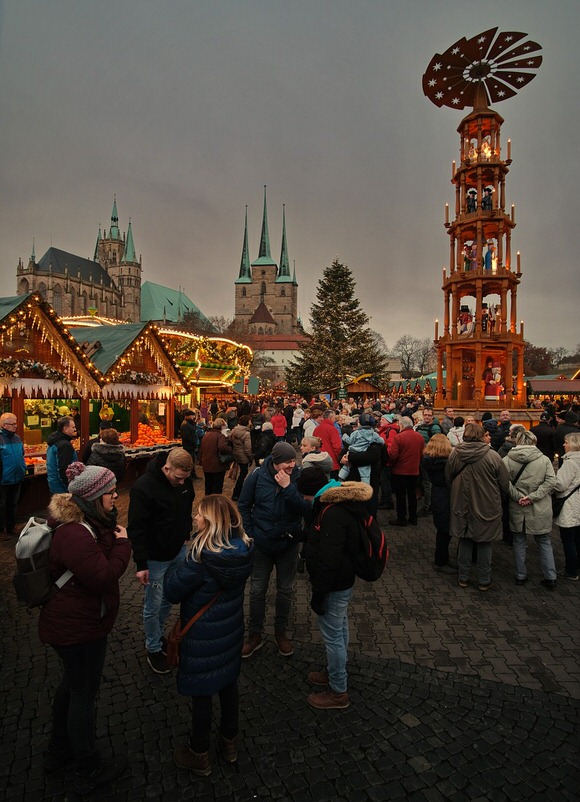
Of course, the markets offer much more than food.  Towering over the market in Dresden, in addition to a giant Christmas tree, is a gargantuan, lighted pyramid with carved wooden figures on multi-levels.  Smaller versions of the hand-carved pyramids are a traditional holiday decoration dating back some 300 years. The pyramids have holders for candles.  When lit, the heat rising from the candles sets the various levels of the pyramid turning, its figures spinning round and round. Woodcarvers in the nearby Erzgebirge (Ore mountains) region make the mobile decorations, as well as other beautiful hand-carved items such as candelabra, smokers (figures that blow smoke from incense cubes) and nutcrackers, which are famous throughout Germany.  There are plenty of stands in Dresden, as well as other Christmas markets, selling these prized items of wood.  I purchased a hand-carved candelabra with nativity figures which has become a cherished Christmas decoration. 

Pyramid at the Dresden Christmas market.

I will spend Christmas in Abano Terme, Italy, a spa town I visited three years in the summer. (see previous post, Taking the Waters – and the Mud, July 2021)It was in the summer and much too hot. Christmas should be perfect. Maybe the mud treatments will soothe my injured body. Of course, a blog post will follow

Wishing all a joyous holiday season full of good food, good cheer and good friends.

If not a Tales and Travel follower, please sign up here. Don’t miss future posts.

Photos for your Easter Basket

 HAPPY EASTER. HAPPY PASSOVER. HAPPY SPRING

“A picture is worth a thousand words.

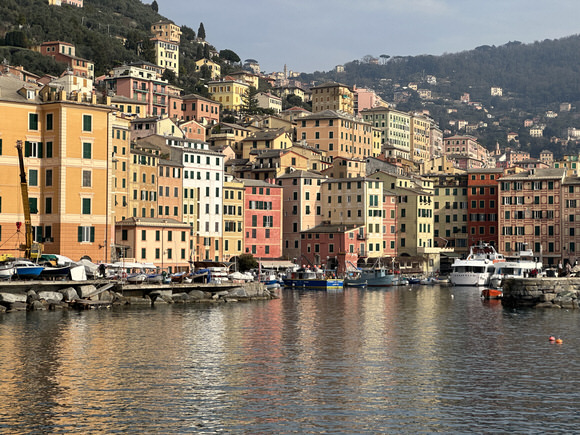
Camogli at sunset

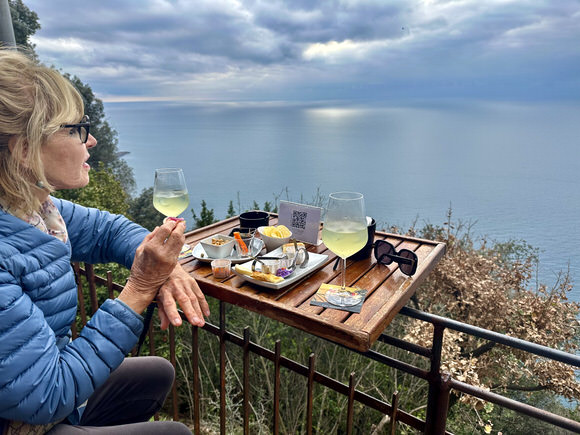
I recently visited my friend Karen, who rents an adorable apartment above the town of Camogli on the Italian coast south of Genoa.  She was my guide for five days as we explored this bellissima region.  Following are photos which say it all.

View of Camogli from Karen’s balcony

Karen at her favorite spot in San Rocco, about a half-hour walk from her apartment. Right, Camogli.

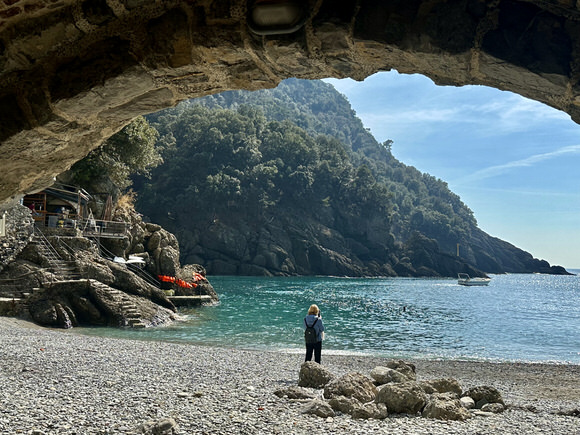
San Fruttuoso, a restored Romanesque abbey, can only be reached by boat from Camogli or on foot via a hiking trail. We opted for the boat.

We had several hours to wait for our return boat. The only restaurant had not yet opened for the season, but the beach was a delight for relaxation.

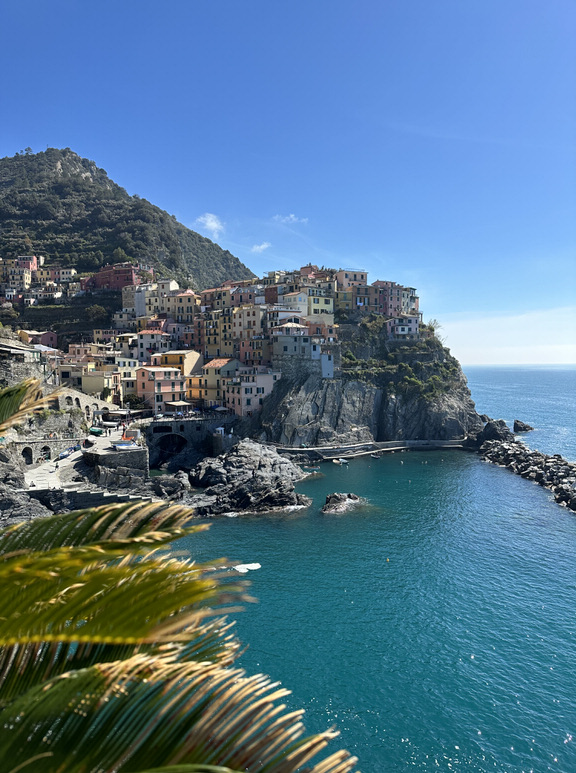
Manarola, above, is one of the five Cinque Terre villages perched and nestled along Italy’s rocky Ligurian coast. They are a magnet for tourists, especially Americans after travel writer Rick Steves touted their merits. Many years ago husband Bob and I hiked the trail between the villages. It was magnificent – not packed with the masses. At this writing, parts of the trail are closed for repairs. Karen and I visited four villages by train.

Manarola, one of the Cinque Terre villages

Lots of tourists, mainly Americans, visited Vernazza, the most popular village, in March, well before the tourist season.

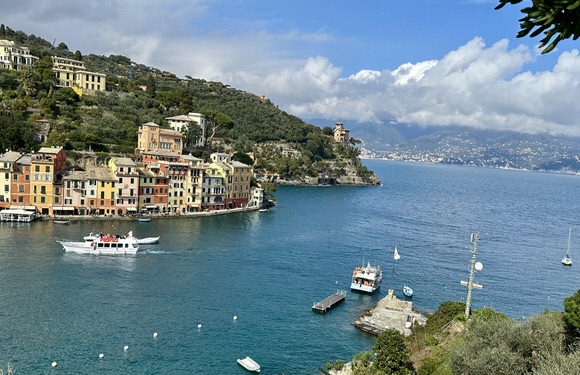
Portofino is another tourist hot spot.
Karen and I enjoyed a pricey lunch in Portofino.
Along the coast near Portofino

We followed the recommendation of a German tourist and hiked to the Portofino lighthouse. Right, another view of Portofino

Nino, a very affectionate and friendly cat, belongs to the owner of Karen’s apartment who lives below her. I thought Nino was one of those rare cats with two different coloured eyes. Not so, I learned. The blue eye minus the pupil is his souvenir of a cat fight he lost.
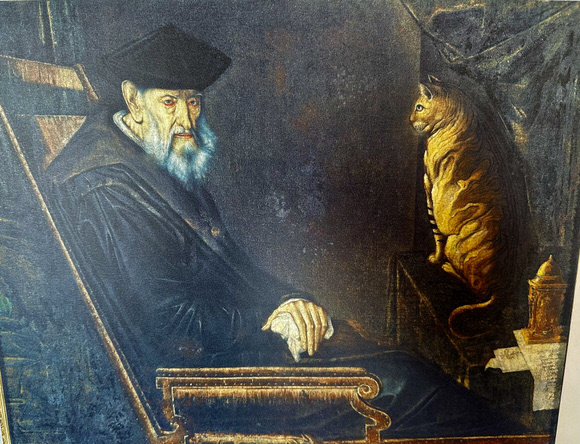
Was this cat an ancient ancestor of Nino?. This portrait of a monk and his cat hangs on the walls of San Fruttuoso.

Only in Italy: My hotel room window had a clothes line outside (left) — very practical. Clothes hanging out to dry decorate many buildings in Italy.

One more photo of Camogli

Albergo La Camogliese, a centrally located hotel in Camogli, is affordable with friendly, helpful staff. You even get a clothes line outside your window. http://www.lacamogliese.it

My other writing projects, Immigrants on the Italian border and Alzheimer- caregivers and victims, are on the burner.

If not a Tales and Travel follower, please sign up here. Don’t miss future posts.

Behind the Scenes in Budapest

Heroes’ Square in Budapest

During our recent visit to Budapest, like most I was dazzled by the city’s grandeur.  But I wanted to dig a bit deeper. Hungary’s autocratic Prime Minister Viktor Orbán has been accused of stifling press freedom, of undermining democracy.  The European Union accuses him of “electoral autocracy.”  He has rewritten the constitution to consolidate his power.  Election laws have been changed to favor his party. He has undermined the independence of the courts He has sealed the country’s borders with Serbia and Croatia with fences which are being made taller and taller to keep immigrants out. 

“We move, we work elsewhere, we mix within Europe, but we don’t want to be a mixed race, a multi ethnic people who would mix with non-Europeans,” Orbán said at a conference in Romania in July.

The racist comment was denounced by many world leaders.  He later tried to walk it back. (During my four  days in Budapest, I saw only four black people.)

 It is no surprise that Orbán is a darling of American MAGA Republicans. He spoke at the August Conservative Political Action Conference (CPAC) in Dallas. Trump entertained him at his New Jersey club, and Orbán is rooting for Trump’s return in 2024.

Vaci Utca is a popular pedestrian shopping street in Budapest.

Tourists enjoy Budapest unaware of political turmoil.  Life seems good.  Restaurants are full.  Merchandise is plentiful.  But, since there are too many dangerous similarities to the current political climate in the US, I was curious. What does the “man on the street” have to say about Orbán. I asked a few folks, as well as a journalist colleague.  The following is not meant to be a definitive treatise on Hungarian politics, just a brief glimpse behind the scenes.

“It’s shame what is going on in my country because of Orbán, journalist friend Agnes told me. “Hungary is not Hungary anymore. It is Orbánia. Democracy does not exist in my country.” She explained that only one newspaper and one television station report real news, the truth. Others spew government propaganda.

“We are not as bad as Russia yet, but we are going in that direction.  Slowly the government is trying to kill a free way of thinking.”   The education system, she said, is in a “critical state.”  Teacher’s salaries are very low.  Young people no longer want to be teachers.  There was a major demonstration on October 6 with 10,000 students, teachers and parents blocking a bridge to support teachers’ fight for higher salaries.

Among the people I spoke with,  some share Agnes’ opinions on Orbán.  Others love their leader. 

A 74-year-old woman at a bus stop who is “very proud of Hungary”  had this to say:  “Believe me there are no problems in Hungary. It is not by chance that Orbán won for the fourth time.”

Edith, another elderly woman, is also an Orbán, fan. I asked about democracy and freedom.

“Everything is free here, Look around. What is not free?” Edith asked.

A young man hawking souvenirs agreed.  ‘I do what I want to do.  If we had no democracy that would not be possible.”

At a paprika stand in the Great Market Hall, I spoke to a young vendor with an opposing view. “People in the countryside are brainwashed,” he said.  “They only have three TV stations all controlled by the government.  People in cities see the reality, but these are hard times… the economy, the war in Ukraine.  What can we do?”

Indeed, the country is not in great shape. The economy is heading into a recession.  The currency, the florint, has plunged to new lows.  Inflation has risen to double digits.

Daniel;, a 24-year-old waiter, left his home in a country village to find work in Budapest, but he is now looking for work outside of Hungary. “I want to leave Hungary. Things are getting worse.” According to Agnes, Daniel is not alone. “Many young people are leaving the country,” she said.

Daniel considers the political situation “very bad…almost as bad as Russia…there is no democracy.”  He said he does not vote because there is no one better than Orbán. “That’s our problem.  Our politics are very amateur.”

“The opposition is impotent,” Agnes said.  “They do nothing.  There are no strong characters.”

The war in Ukraine is another divisive topic.  According to “fake” Hungarian news, Ukraine invaded Russia.  I spoke to a young souvenir salesman who echoed Orbán’s rhetoric on the war. “If the West stopped supplying Ukraine with weapons,  the war would be over in two months,” he said.  “You went to war in Syria and many other countries.  No one cared.  Why do you care about Ukraine now?”

Elena, a Ukrainian who fled war in her country and is now working in Budapest, finds that many she meets live in a vacuum, watching and listening only to state news.  She explains reality and shows pictures from Ukraine.  She has changed many minds, she says.  “This country still has a post-Soviet footprint.  It needs to change.”

Orbán has been prime minister in Hungary since 2010, steering the country farther and farther to the right.  Poland has followed his example.  Far Right Democrats in Sweden did so well in recent elections, they pushed the center-left from power. Giorgia Meloni, a far right candidate, was the winner in Italy’s recent election. Trump and MAGA Republicans are hoping to be on the same track in the US.

The scenario is precarious.

“I feel ashamed that I am Hungarian,” Agnes said.  I hope I will not have to say that I am ashamed to be an American

Architectural gem in Budapest. There are many.

If not a Tales and Travel follower, please sign up here. Don’t miss future posts.