Myanmar Beach Adventure

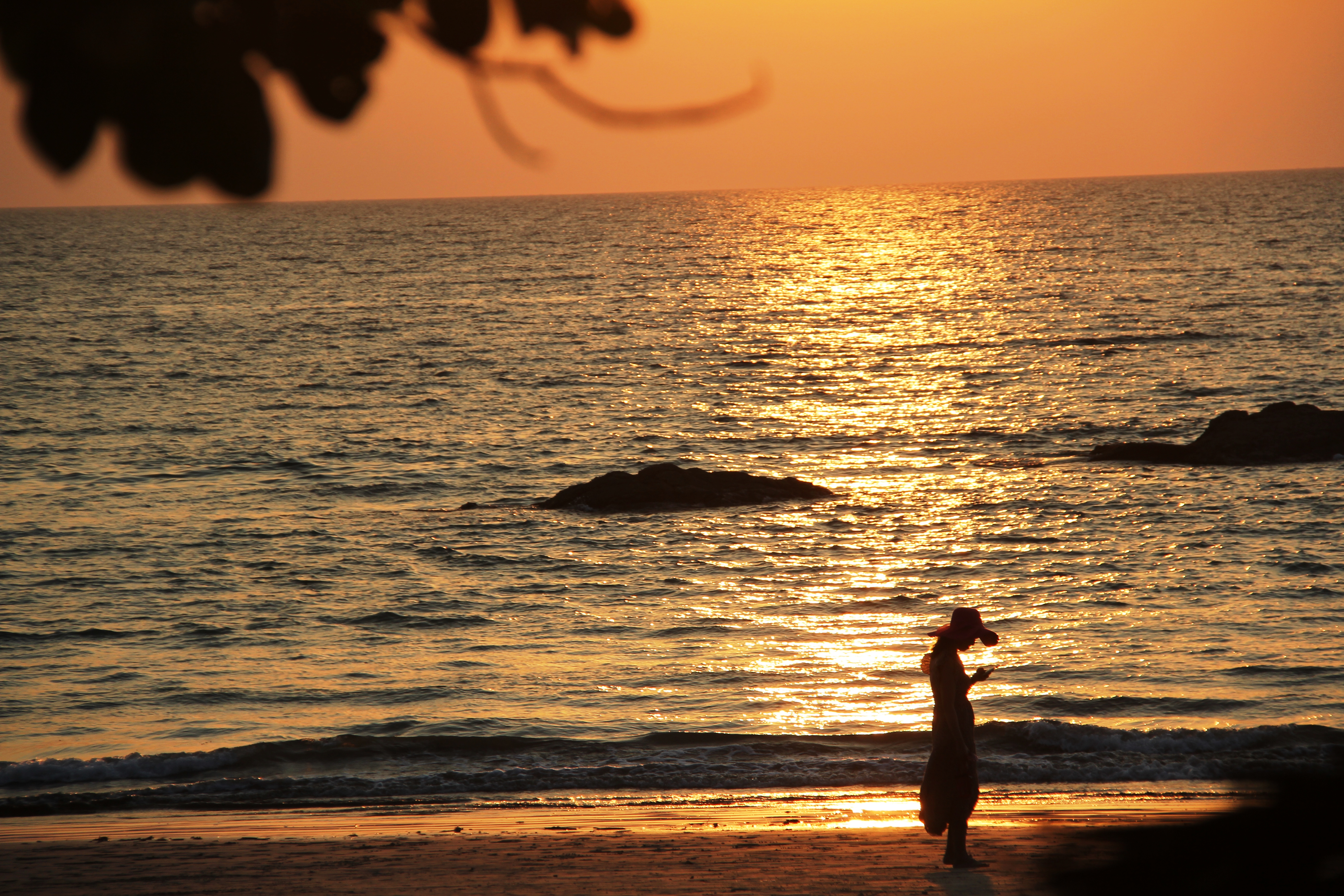
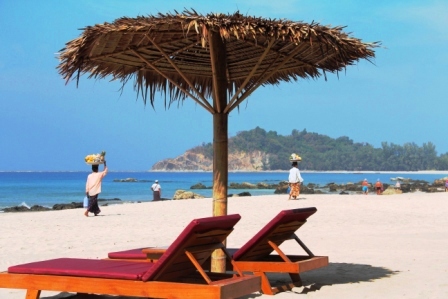
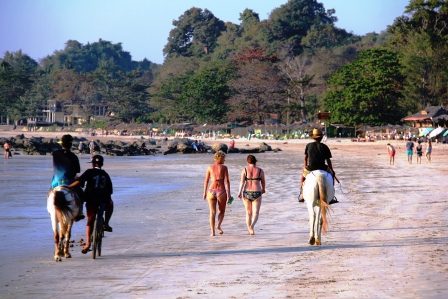
beach.9A long, broad strip of sand, a calm sea, a few lonely swimmers, a few more sunbathers lounging in beach chairs, tranquility: Myanmar’s Ngapali Beach is unspoiled splendor.

After our two-week sightseeing tour of this fascinating land (see previous posts: Burma Background and Myanmar’s Astonishing Sights), we sought seaside relaxation.

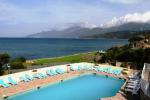
Our beach hotel, one of many luxury resorts here, offered a spacious sea-front room, pool, outdoor dining on a terrace above the beach – all in a perfectly manicured verdant setting.

luxury beach hotel--but not ours. luxury beach hotel–but not ours.

This is Myanmar for tourists. Just outside the hotel grounds is reality: rutted, dusty roads, primitive shacks, broken down temples, wild tropical vegetation. Plus, lots of motorcycles, women walking with burdens balanced on their heads, noisy kids, homeless dogs, monks draped in burgundy, nuns in pink…beach.36

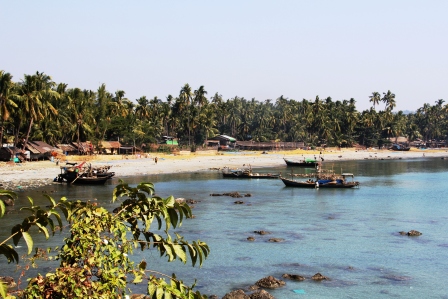
While the hotel world was paradise perfect, we left the sanctuary several times to explore the real world. First, a trip by “bus,” a rickety tuck-tuck type vehicle beach.5with two parallel hard wooden benches for seats, passengers crammed together. The “bus” sped over the ruts, passengers holding on to anything for support while bouncing up and down, jolting to and fro. There were many stops, and not just for passengers to get on and off.

We stopped to pick up a few huge sacks of ice at an ice factory where a vintage machine crushed big ice blocks. The sacks were piled in the middle of the two rows of bus passengers. Then a gas station for a wee bit of petrol. And, stops for giving donations. In Myanmar, a country of devout Buddhists, it’s common to see folks along the roads with large silver colored bowls. These are for offerings for monks. Passers-by often stop and throw in some money.  The bus stopped to oblige those wanting to contribute.

Nuns wear pink. Nuns wear pink.

A woman with a bucket of live squid sat next to me. Another had a few eels on top of a pail of ice. Most had large parcels. Young men jumped on and off at random, hanging out the back of the vehicle. I was intrigued by the scene, but, BB (husband Bicycle Bob) seemed in agony and was all too happy to finally reach our destination, the inland town of Thandwe, after a 45-minute painful ride. I wanted to visit the town’s market in search of souvenir bargains. Alas, this was just a huge, chaotic, smelly market of produce, clothing, hardware. We did buy some fruit, a bathing suit for BB, some instant coffee, cookies, soft drinks and a couple of bottles of beer – all for less than $10.

Souvenirs for sale on the beach-- but not in town. Souvenirs for sale on the beach– but not in town.

There are no taxis in these parts. BB was not up for a return bus ride. We walked all over town, looking for someone we could persuade to give us a ride for cash. Finally the driver of an old and dirty station wagon agreed after his friend, who understood our request, translated.

Unfortunately the bus ride did a number on his BB’s butt. He is skinny – no padding, and ended up with rear end welts. The salty sea water only enhanced the pain. Since he is not a swimmer, he did not seem to miss forays into the water.beach.30
I did myself in with a bargain priced all-body Myanmar massage. Huts whose proprietors offer all kinds of massages for less than $10 are profuse at one end of the beach. My masseur, a slight fellow with the power of an Olympic weight lifter, pounded, stretched and jerked my body for an hour.   Not pleasant, especially since I had sore ribs. On the last day of the sightseeing trip I fell, my ribs landing on my hard camera. The massage finished off the rib injury. Moving my arms was agony. I could no longer swim – my second favorite sport after skiing.beach.16

So, we walked along the beach, went to a “cooking school,” and rented bikes. BB, a bicycle aficionado, was not happy with the bikes, simple, ancient models, but there was no choice. The ride – even more ruts than on the bus ride. We pedaled to a nearby town, a wreck of a fishing village. We saw where much of the factory ice ended up. Trucks loaded down with the heavy bags pulled up to a wharf of sorts. Men loaded as many as five of the bags on their shoulders and headed down a jetty to the boats.beach.15

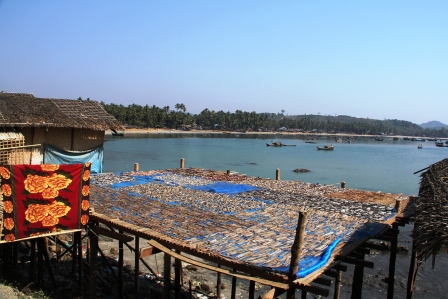
Along our bike route we passed areas blanketed with plastic sheets upon which fish baked in the sun. Dried fish are a staple in much of Myanmar cuisine. While we love fish — the fresh variety which was plentiful and delicious here — the stench of the dried fish was a bit much.beach.17
BB’s butt was still sore, so he passed on a snorkeling trip. I gave it a try since more leg than arm movement is involved in snorkeling. I was the only passenger in a simple motor boat driven by a man and his young son. The snorkeling was a disappointment – few fish. But, the ride was interesting, with a stop at a

Mini island Mini island

miniscule island with a mini restaurant selling food and drinks at inflated prices.

The women who ply the beach selling fruit from the baskets on their heads have also learned to inflate prices. Why not? If the tourists are dumb enough to pay… But, when one wanted to charge me more than $2 for three small bananas and $3 for a mango, I refused.   Bananas are like peanuts in Myanmar – profuse, and I can buy a tropical mango in France for $3 or less.

Except for the soothing sounds of the sea slapping the shore, the only beach sound is these fruits sellers advertising their wares. They saunter up and down, past all the hotel lounge chairs, calling out in sing-song tone, “Ming guh la ba (hello), pineapple, banana, coconut.”   It was like a ritual chant.beach.13

On one of our walks we had seen a sign in front of a rundown restaurant advertising cooking lessons. We liked the food in Myanmar. Since I love to cook, why not sign up? The kitchen was a health inspector’s nightmare, but our two instructors, neither of whom spoke English, washed their hands frequently. They chopped, sliced and diced with professional skill. The resulting meal was excellent, especially the avocado salad (see recipe in column at right).blog.9

In addition to the beach massage “parlors,”   food shacks are lined up along one part of the beach with tables in the sand. We became regulars at one run by a couple and their niece, a friendly young girl who spoke a bit of English and helped me master a few words of Myanmar. I had befriended one of the numerous homeless dogs and wanted to buy some food for it. I tried several beach eateries. All refused to sell me chicken pieces for a dog, except this one, hence we gave them our regular business.beach.27
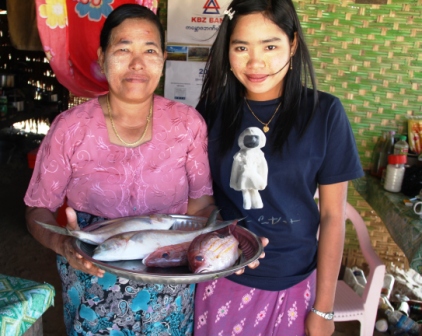
The man was the chef. I asked to watch him prepare fish over an open fire in his tiny, rustic kitchen and picked up a few tips. For a beach finale dinner, we splurged on lobster. Perfect, and my friendly dog even appeared to bid good-bye.beach.35

Myanmar is on the move, emerging from decades of isolation and repression. Tourism is booming. Roads, including the one to the Ngapali beach resorts from the nearest airport, are being improved. Soon there will be quality bikes to rent and Cordon-Bleu type cooking schools at the beach. Throughout the country, new hotels are under construction. People are learning new skills, including English, to qualify for jobs in the tourist industry. According to an official estimate, the hotel and catering industry could create over a half million jobs in Myanmar by 2020. Lives will improve. But, hopefully the rapid rise of tourism will not destroy the allure of Myanmar, a place Rudyard Kipling found “quite unlike any place you know about.”beach.2

See below for more photos. And, for a different take on ratatouille, try Lecso, a Hungarian version mentioned in my recent blog post, Swiss Slopes Welcome Journalists. Click on photo at right for the recipe. Comments and new subscribers welcome. Add your email address at top right to receive future posts.beach.19
Village school along our bike route Village school along our bike route

beach.21

Visiting monk from Thailand where monks wear orange. Visiting monk from Thailand where monks wear orange.

beach.31beach.26

Sand Art Sand Art
beach.24


Wild and Wonderful Corsica

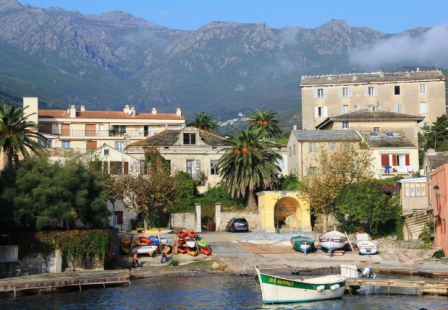
Bonifacio ,
Bonifacio
,

According to the sign posted at the beginning of the hiking trail in the Corsican mountains, it was a one-hour trek to Lac de Melu.  Piece of cake, I figured, and a good test for my new knee.corsica.55,

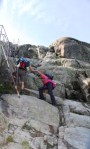
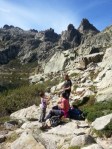
Two hours later we were still huffing and puffing, scrambling over rocks —   even a few times on all fours for me.  No lake in sight. We had conquered the challenging, extra steep sections of chains and ladders.  But, the trail of all rocks went on and on, up and up.  At times it was frustrating to figure out which way to proceed over this stony sea.  The trail was marked by yellow slashes on the rocks, but often they were hard to spot.

Find the yellow slash -- the trail marker.
Find the yellow slash — the trail marker.

I was about to give up when we encountered a group on their way down.  “How much farther?” I asked.  “It’s not that far.  Will you make it?  If you want I can accompany you,” answered the mountain guide who was leading the others.   I must have looked near death, which is about the way I felt, but there was no way I would ask for assistance.  Now I was more determined than ever to conquer this trail.

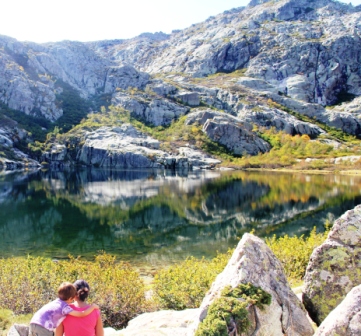
After two hours and 10 minutes we reached the lovely lake.  How could anyone make it here in one hour?   We are old, but not decrepit. That sign was meant for Himalayan sherpas.corsica.36b

Getting down was no easy task.  The rocks, all sizes, were demanding.  You had to keep your eyes on the trial below at all times to figure out where to put your foot next, on top of which boulder, into which crevice.  I was petrified of falling, of breaking a leg, screwing up my knee.  How would I be rescued?  No helicopters could land anywhere near this surface of rugged rocks. I did fall once, but fortunately I had given my camera to BB (husband Bicycle Bob) who was more steady a foot.  I ended up with a badly bruised leg, but nothing broken, including my precious camera.

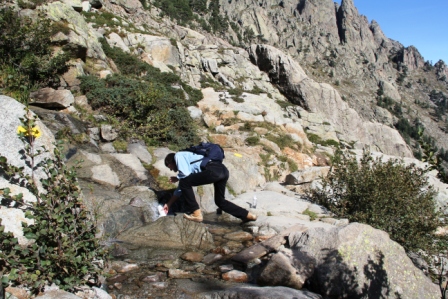
Refilling the water bottles.

In our younger days, BB and I did some long and tough mountain hikes in the Swiss Alps – several days on the trail with backpacks.  We loved it.  This was different.  “Most hikes are strenuous, but enjoyable,” he remarked. “This was work, labor intensive.”

What a relief to get the work over with, to reach the hut at the bottom – and to enjoy that satisfying sense of accomplishment after conquering a mountain.  O.K.  This was just a lake, not a mountain, and we were slow.  But, we did it.  My knee passed the test.corsica.14b

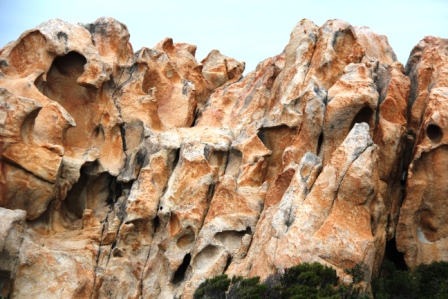
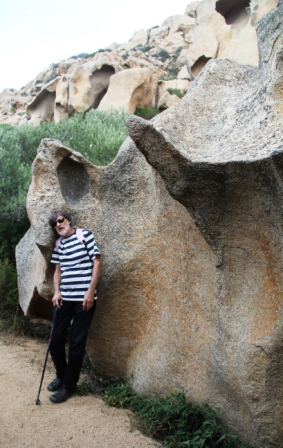
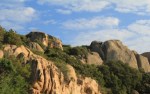
Rocks abound in Corsica—not just on mountain trails.  Along the coast.  On the beaches.  In the sea.  Rocks in the shape of animals, human faces, surrealistic

Natural rock.
Natural rock.

sculptures.

Not long after we disembarked from our all-night ferry ride to this island in the Med (Toulon to Ajaccio); we stopped to visit the archeological site, Filitosa, on our way south.  Incredible rocks there. We followed the path through the site where artifacts dating to as early as 3,300 have been found.  Ancient civilizations lived in caves here.  During the megalithic period they erected menhir statues, granite monoliths, carved to represent human faces or entire figures.  They are intriguing, as are the natural rock formations in the area.

Menhir
Menhir

Onward to the coast and the tiny town of Tizzano for five nights at the Hotel du Golfe, which advertises that it has its feet in the sea. The Mediterranean waters were right below the balcony of our room.  Awake to the soothing sounds of the sea gently slapping the rocks. The hotel beach is just a miniscule patch of sand surrounded by those rocks. Getting in and out of the sea was a bit tricky maneuvering over the hurdles, but the water was perfect. I swam and swam and swam with no one in sight.

Mini beach on a windy day --too dangerous to swim
Mini beach on a windy day –too dangerous to swim

During our October visit to this island utopia we enjoyed still warm weather and mostly blue skies – and tranquility.  The tourist season was over.  On the plus side, no crowds anywhere and the highways to ourselves.  On the down side, many shops, hotels and restaurants had already closed for the season.  All four of the restaurants in Tizzano were boarded shut.

There is just one winding road down the mountain from the inland town of Sartène leading to our mini burg and the sea. Winter Tizzano population:

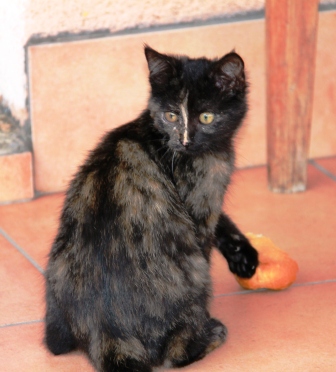
Chopinette, my favorite Corsican,

30 humans and lots of felines.   In the summer:  3,000 tourists.  In October:  us, the locals, a few other tourists and the friendly cats.  I was in heaven.

Since BB is not a swimmer and we wanted to see more than Tizzano, we set out on excursions every day, to Ponte Vecchio on the eastern coast, to Bonifacio in the far southwestern corner of the island, and on foot one day for a hike along corsica.15bthe shore.  No leisurely stroll along a sandy beach was this, but a demanding trek through coastal bush –and yet more boulders.  The scenery was splendid with more fantastic rock formations to photograph.

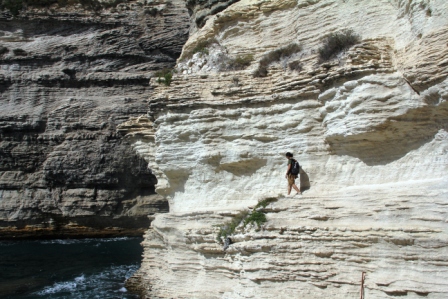
Ponte Vecchio is basically a resort town with lots of sailboats in the harbor, narrow streets with cute boutiques (most closed) and restaurants (also most closed).  Not too exciting.  Bonifacio is different, a two-level, lively town.  The haute ville, an amazing sight, perches precariously atop a cliff on a thin peninsula.  Skinny streets twist past ancient buildings, including numerous churches.   We followed the advice of the woman in the tourist office and set off to the Escalier du Roi d’Aragon – 187 steps from a corner of the town’s citadel plunging to the sea.  Scary, steep steps. Descending them is an exhilarating adventure.  They plummet straight down and at times involve big jumps – one step where there should be two.corsica.20b
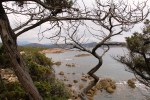
The winds were ferocious on the day of our Bonifacio visit. Mammoth waves roared and crashed into the rocks. We had been told the best view of the city is from the water, but due to the wind velocity, tourist boats were not running.

So, let’s splurge on lunch. Food is always a highlight of our travels.  Since so many restaurants were closed, our choices were limited.  We had few memorable meals in Corsica, including one we’d like to forget — the $98 (72 euro) fish at a harbor restaurant in Bonifacio.  We like fish and craved a fresh Mediterranean corsica.26catch.  The waiter brought out a tray of specimens and recommended a “Sar.”  We had never heard of this fish, but were game to try, not bothering to ask the price.  Bad move. The astronomical bill  –the fish had been priced at nine euros per 100 grams –was a  shock.   Our Sar was a big fellow, tasty, perhaps not that tasty, but it did come with some veggies and potatoes.

Corte's citadel
Corte’s citadel

Cap Corse, the island finger at the northern tip, was our destination for three days before boarding the ferry in Bastia for the trip back to Toulon.  En route we spent a night at the interior town of Corte so we could do the lake hike.  Hiking is just one of numerous outdoor activities offered in Corsica – all kinds of water sports plus mountain adventures:  canyoning, rock climbing, zip line etc.corsica.3

The drive through the interior is spectacular – miles and miles of rugged nature over excellent roads.   Although Corsica is a vacation paradise, it has not been scarred by mass tourism.  There are vast pristine sections in both the interior and along the coast — no towns, no hotels, no commerce.

Erbalunga
Erbalunga

Our hotel in the coastal town of Erbalunga was not on the beach, but it did have a large heated pool — my private pool – no other swimmers.

We drove along the Cap coast with many photo stops.  We drove through the middle of the peninsula over roads that averaged more than a dozen curves per kilometer.  Along the route:  stops for wine tasting and buying.  Wine is the island’s principal export.  According to my guidebook bible, Lonely Planet corsica.38bCorsica, the wines “are not necessarily the most distinguished of wines.”   Some of the grape varieties (Niellucciu for one) are unique to Corsica.  As BB seems to like wine more than bicycles these days, we bought a supply.

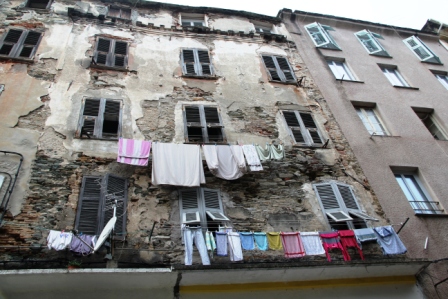
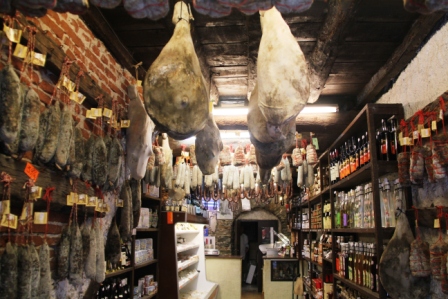
corsica.47Bastia, a town of crumbling splendor, is fun to explore: a busy harbor, imposing citadel, intriguing hillside park, ancient churches – and shops that were open.  Throughout the trip I had been searching for stores where I could purchase Corsican delicacies – cheese, sausage, honey, jams.  No luck. In Bastia’s thriving shopping district, I found my treasures at last.corsica.48b

I hope to return to Corsica, but in late September before so much shuts down for winter.  And, I’d go back to Tizzano and the Hotel du Golfe.  Gil Chopin, the hotel proprietor, told me he was born in the town but moved on to work in Paris and other cities.  “I missed nature, the sea.”  He came back.  “We live in harmony with nature here.  Each day is different.  Each day I am astonished.  For me, this is paradise.”  It was paradise for me, too.

Hotel du Golfe,Tizzano.  A perfect coastal retreat. The simple but comfortable rooms all have balconies above the Med.  Idyllic location. http://www.hoteldugolfetizzano.com

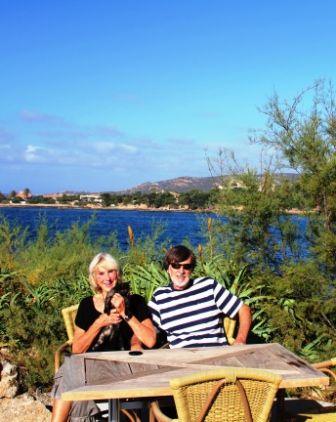
On the terrace at Hotel du Golfe

Hotel Castel Brando, Erbalunga, Cap Corse. Spacious accommodations including rooms with private terraces, lovely garden for breakfast  (ample, including do-it-yourself eggs and pancakes) and a super heated pool.  http://www.castelbrando.com

I’m happy to hear from readers. See “Leave a Reply” below under Comments. Followers also welcome. Don’t miss future posts. Click on Email Subscription at top right.