Return to Germany

Like I remembered.  Idyllic.  We were surrounded by green, pure nature, at the Fischerhütte near Darmstadt, Germany.
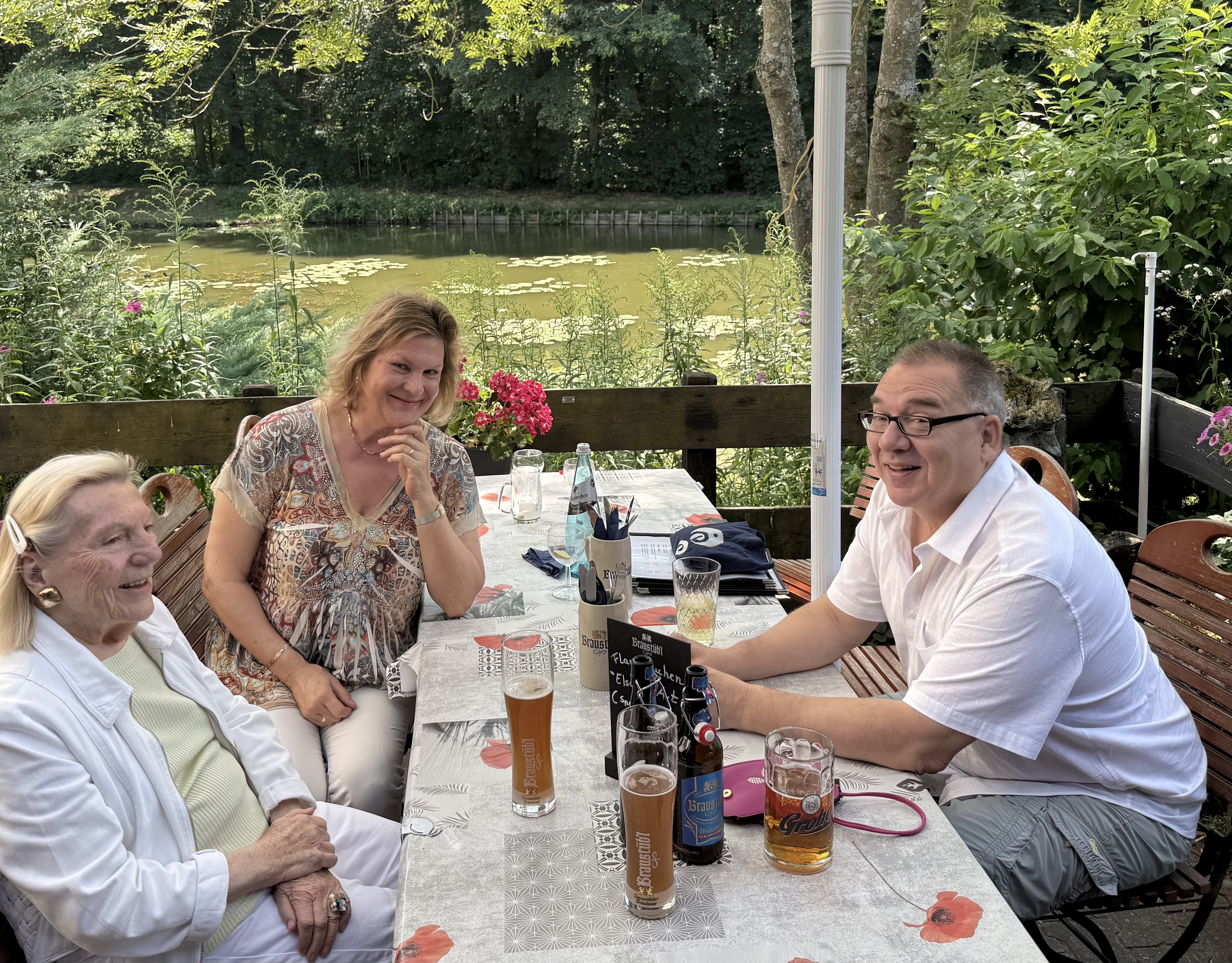
Thekla, Andrea and Thiemo at the Fischerhuettte

Many, many years ago when I worked as a journalist at the newspaper Stars and Stripes, I lived not so far away.  I remember hikes to the hütte in the forest. I remember treks to secret places in that forest in search of the coveted steinpilze (boletus, cepes, porcini – whatever the name, the king of mushrooms). I remember the tranquility, the beauty of those woods.
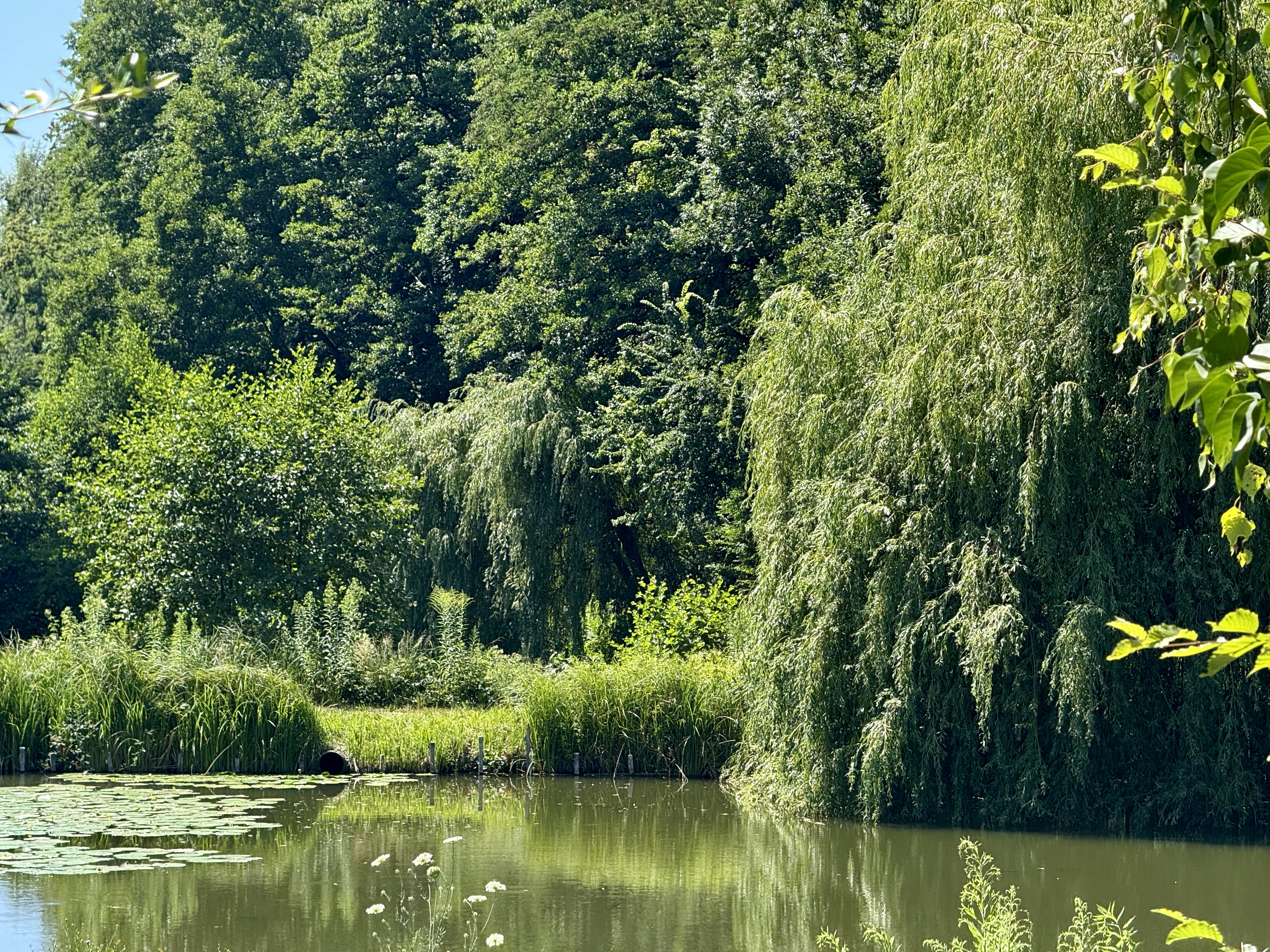
It was wunderbar to return to Germany after so many years. I have missed Deutschland – old friends, favorite foods, the lush forests.
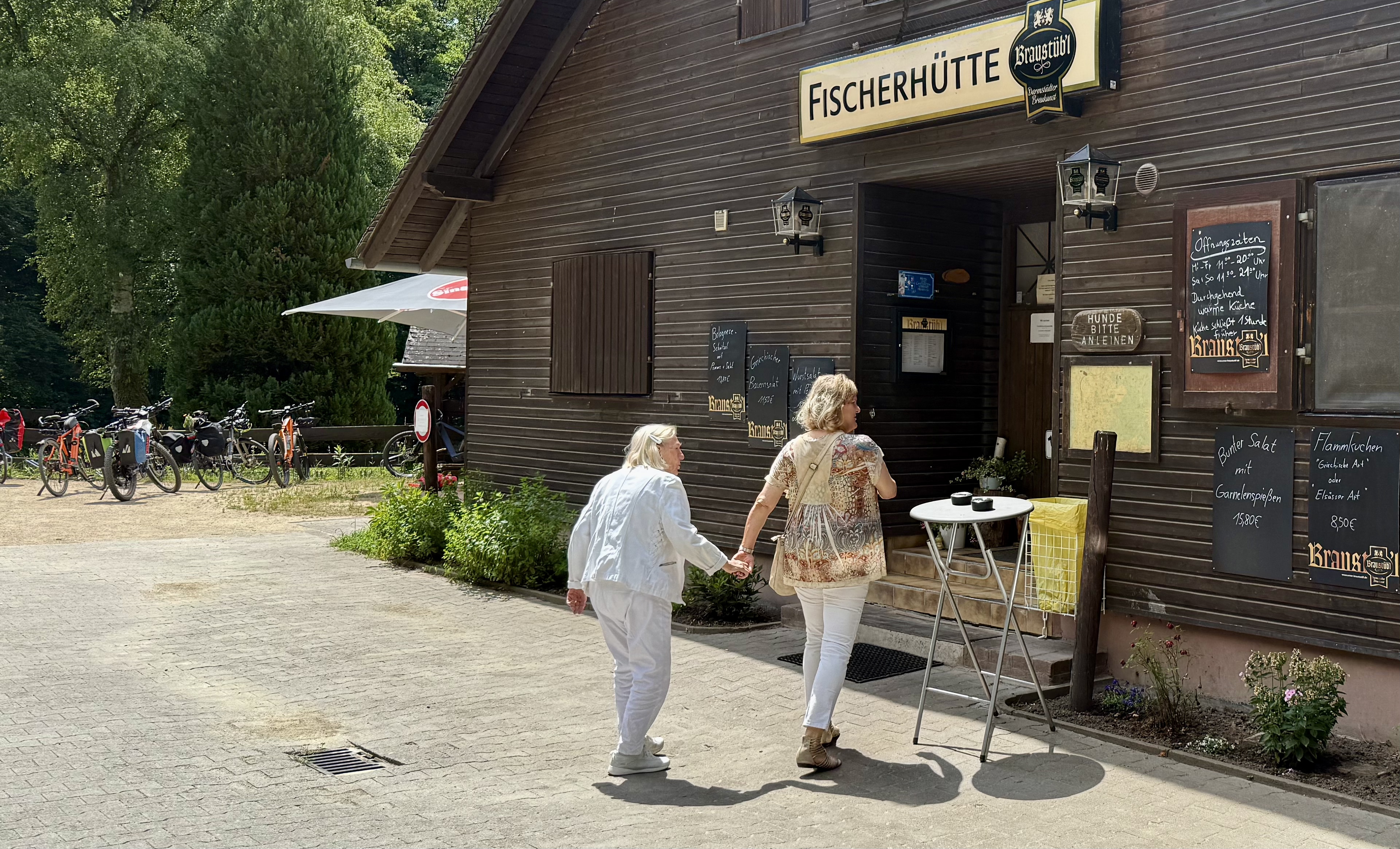
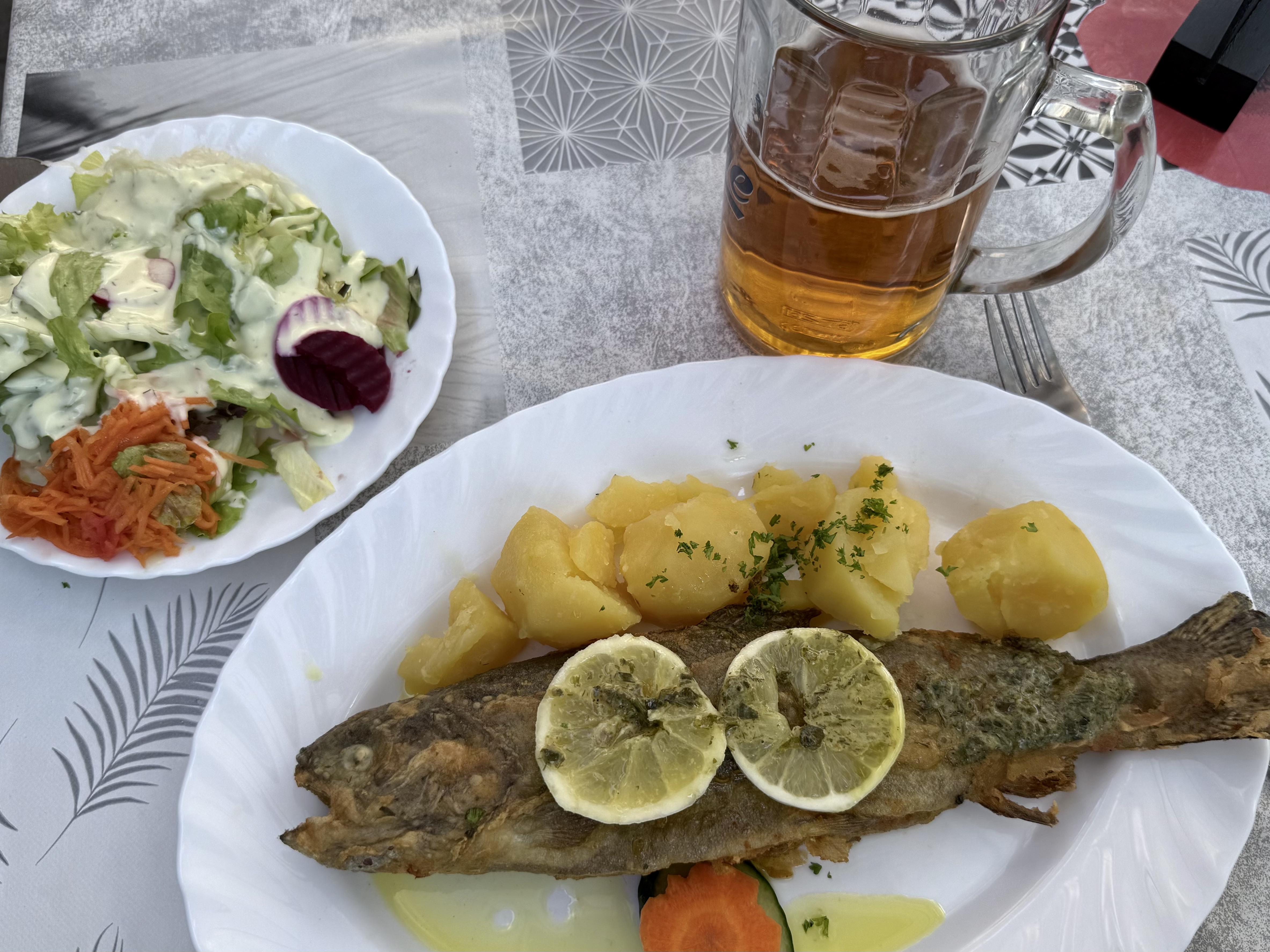
Trout for lunch at the Fischerhuette, and the best German beverage, beer.

Andrea, the daughter of an old friend, her husband Thiemo and her sweet mother, Thekla, led me down memory lane, not just to the Fischerhütte, but other special spots.  It was magical.

Many more memories were rekindled with friends in the Stuttgart area where I lived with husband Bob (RIP) for many years.

Gerlinde welcomed me in her Stuttgart home.  Like many of my friends, she is a foodie par excellence, even making her own yogurt and ice cream. She is also devoted to fitness and swims against the jet stream in her pool for 20 minutes every day.   I just swam, minus the jet stream.  
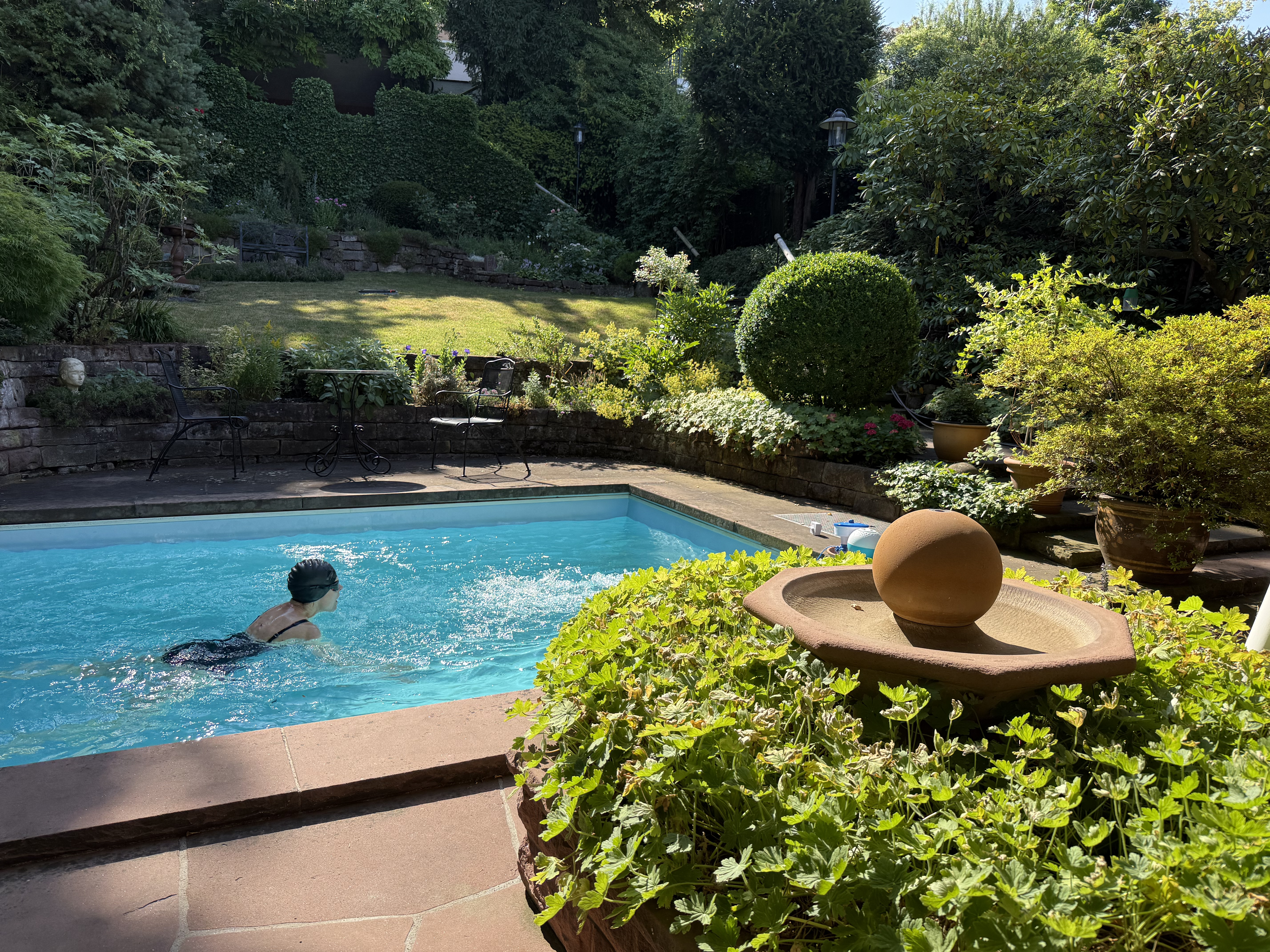
Gerlinde swims daily against a powerful water jet — Impressive.

We drove to Steinenbronn, past the apartment where Bob and I lived for 11 happy years. At a nearby restaurant, I indulged in my very favorite Swabian special, Zwiebelrostbraten (onion steak) with homemade Spaetzle.
I can’t complain about food on the Mediterranean coast where I now live, yet there is a shortage of ethnic eateries.

Not so in Germany where, among others, Turkish restaurants abound.  I miss those, too. Marianne treated me to lunch at her friendly neighborhood Turkish restaurant.  I wanted to bring those flavors back to France.

Then, that de rigeur German ritual, afternoon Kaffee und Kuchen (coffee and cake) at her apartment.   

Fun conversation and memories of good times enhanced all those luscious tastes. 

Marianne and Turkish delight

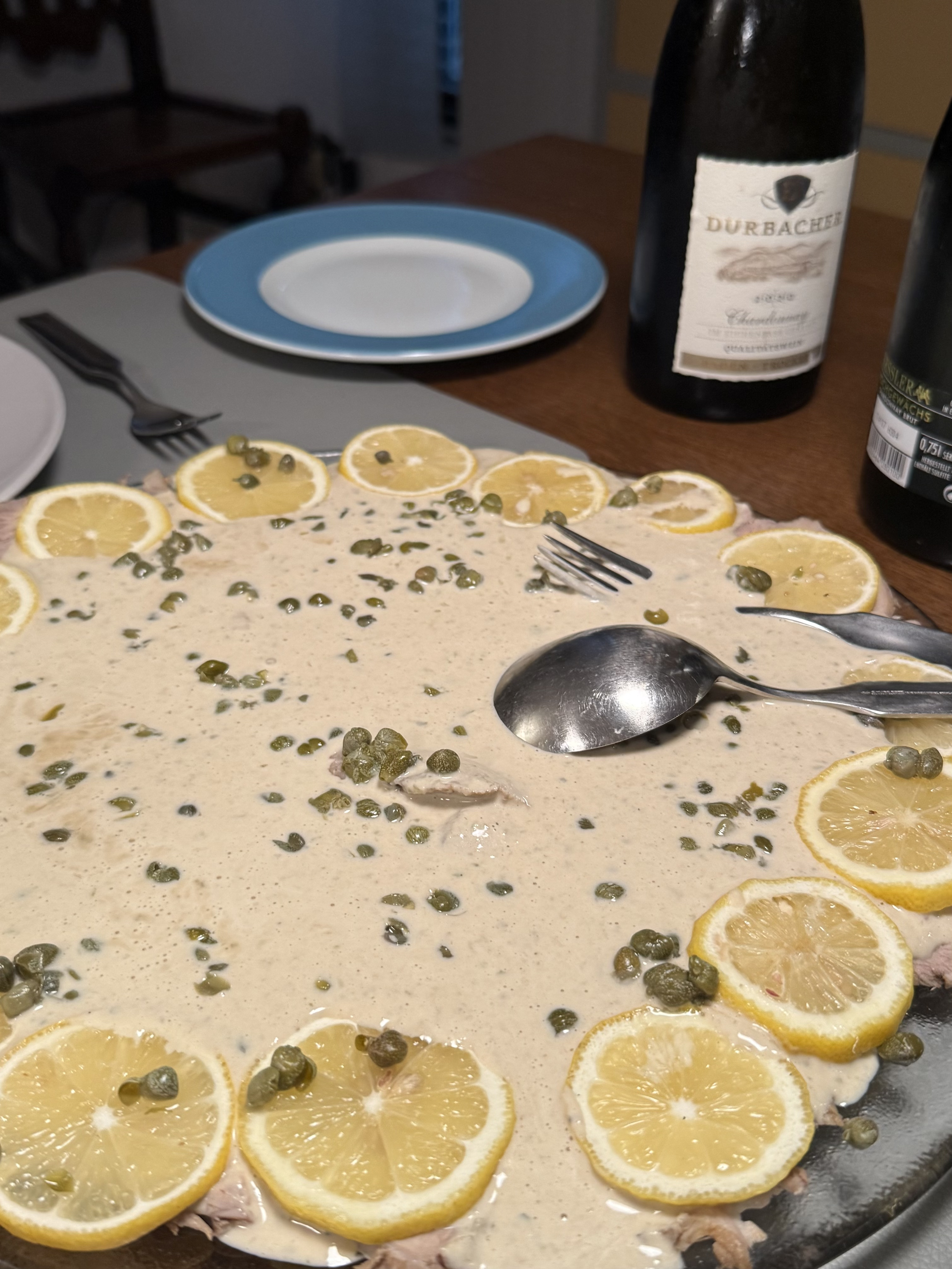
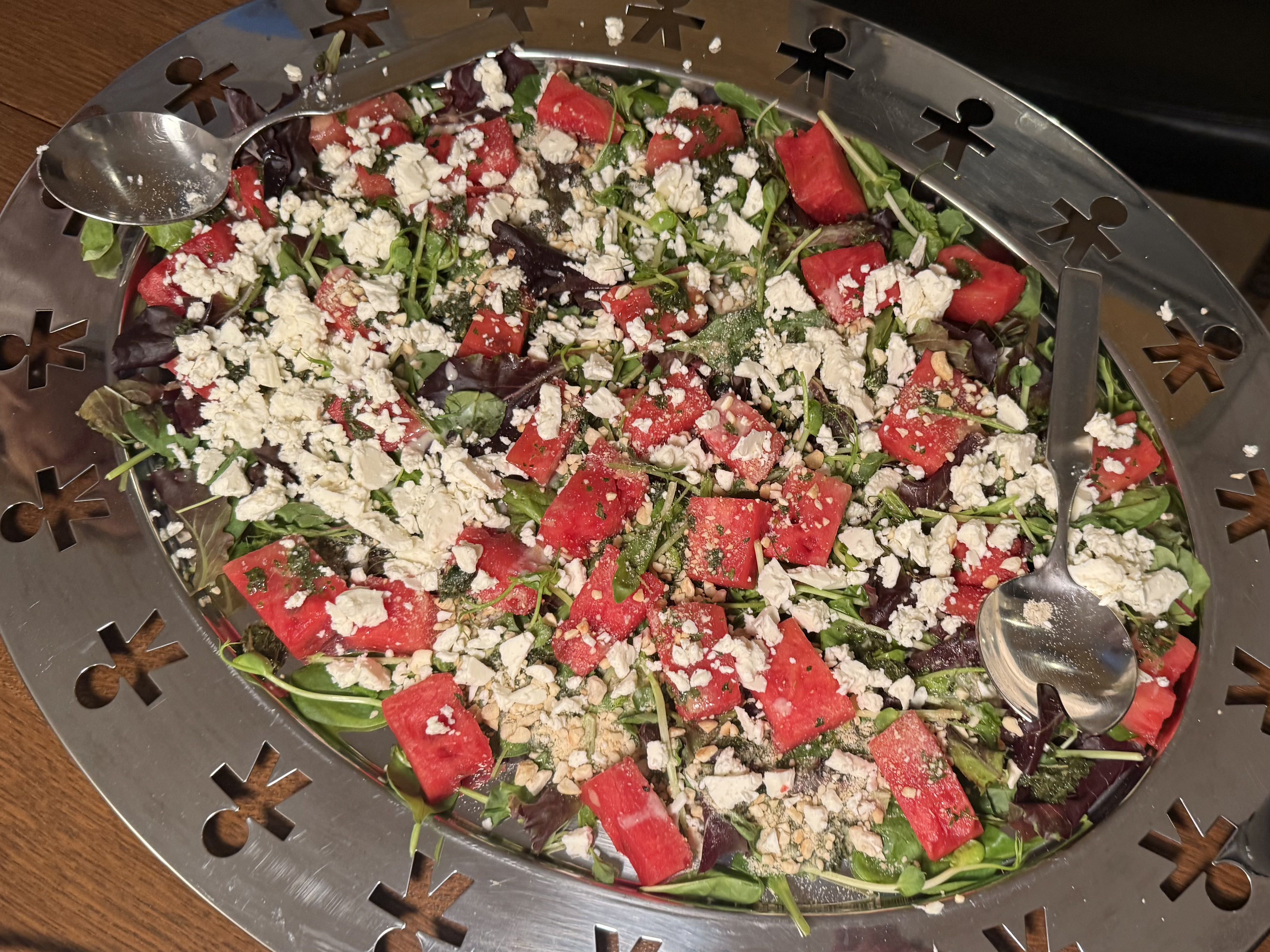
My friends indeed lavished me with generous and delicious hospitality.   Dagmar invited me and other friends to her home for a tasty lunch with a scrumptious raspberry cream dessert.  And, Heti invited us to a multi-course dinner of exquisite delicacies, each worthy of a magazine photo (photos below). This was especially remarkable as she had fallen and broken her wrist the day before.

On my last day we met in Bebenhausen. Bob and I were avid cyclists.  We liked to pedal from Steinenbronn to this tiny burg with an ancient monastery and an excellent restaurant.  It is still charmingly picturesque.  My last treat before heading home, another German delicacy:  Rehrücken filet (venison filet).  Delectable.

Living on the Mediterranean coast, I have the sea, palm trees, the Maritime Alps, tropical gardens – but no dense, enchanting forests.   I had not realized that I was forest deprived.  I was in awe of all the fabulous German greenery.

I mentioned this to Andrea, so we visited yet more. “I’ve never been to so many forests in one day,” she said.  Gerlinde told me that Stuttgart has more green space than any other German city.

“The woods are lovely, dark and deep…,” and a treasure.

Thank you, dear friends, I loved my return to Germany –especially seeing all of you.

Below: Heti’s superb creations. Each was mouthwatering.

I will add a new recipe next time. Meanwhile, for an easy, tasty dessert, try my recent discovery, RUM-SOAKED MANGOES. Sinfully delicious.

If not a Tales and Travel follower, please sign up here. Trust me. It’s safe. Your address is not shared. Don’t miss out. Thrilling adventure coming: South Africa, Madagascar and Mauritius.

Comments welcome. Scroll down and share your thoughts. To read previous comments, scroll way down.

Comments, please!

Your email address will not be published. Required fields are marked *

Swedish holiday “orgy”

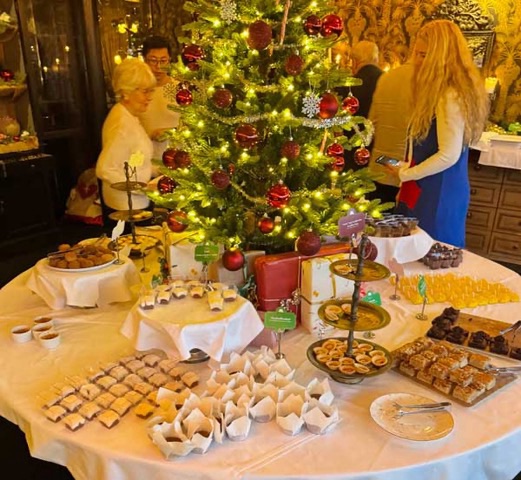
Following is a guest blog with photos by Swedish friend Lars who recently journeyed to his home country to celebrate his sister’s birthday. It was more than an over-the-top birthday party: the Julbord, a holiday overdose of food – and akvavit (a popular and strong Scandinavian spirit. See below for more on this beverage). The Julbord is a must at Christmas, but can be repeated during the festive season including on New Year’s Day. The eating can go on all day, Lars says. “It’s supposed to be drawn out. It’s an orgy. You need time to recover.” He recalls that housewives used to “slave for two weeks” to prepare the food, but many now celebrate in restaurants.

A small section of the Julbord

By Lars Sjöström

On the topic of Christmas food traditions, Sweden is in a league of its own when it comes to sheer opulence embodied in the institution of the Julbord, which is a king-sized jumbo version of the famous “smorgasbord” with extra bells and whistles and a bow on top.

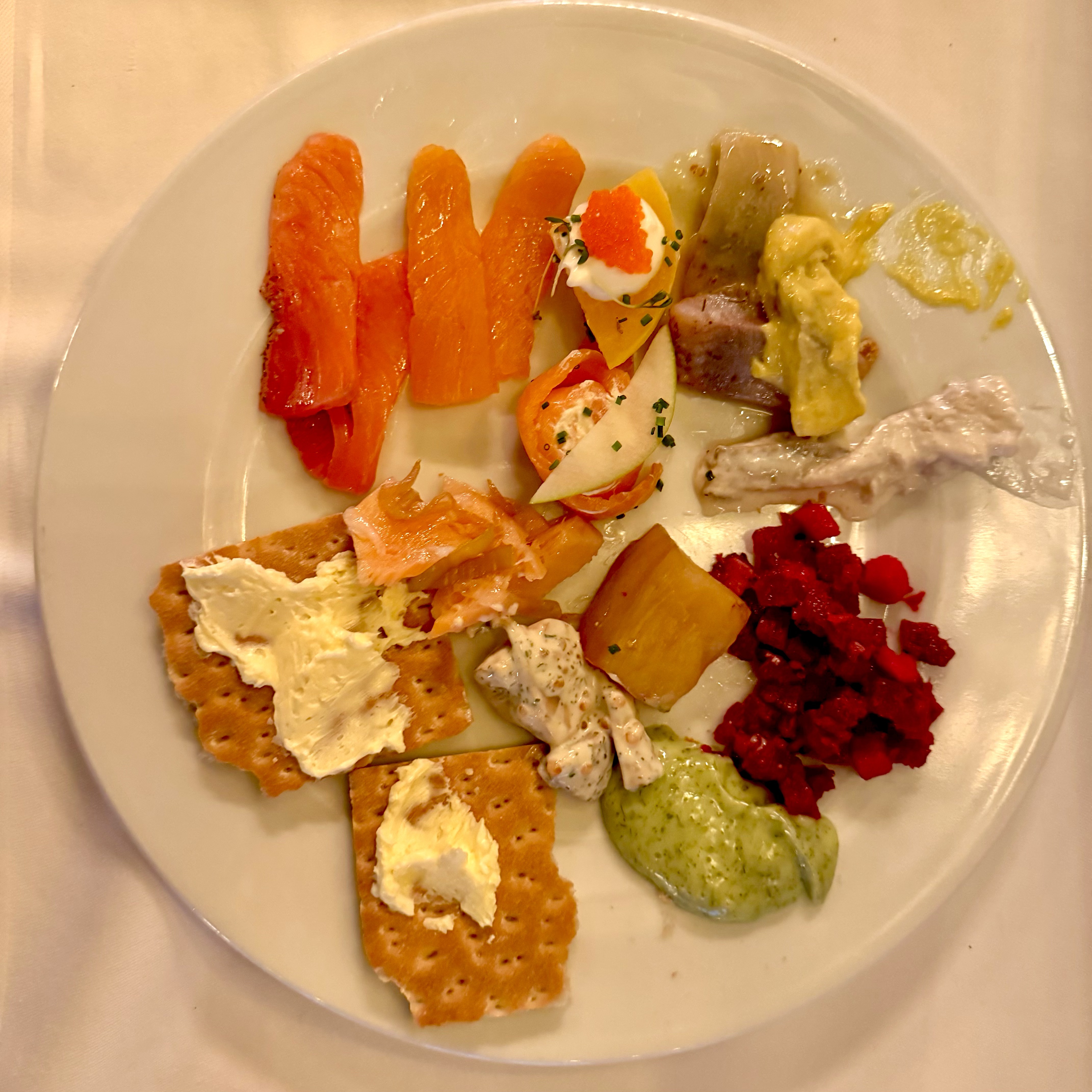
The canonical way of eating your way through a Julbord is to start with a plate of cured salmon, several varieties of smoked salmon, and at least three — preferably 5-7 — different kinds of pickled herring , mackerel, smoked eel and various sauces eaten together with boiled potatoes and “special Christmas edition” crisp bread.

The first of several shots of akvavit is consumed in conjunction with communal singing of a snapsvisa — an often humorous ditty extolling the virtues of (heavy) drinking. There will be many more of these and they become naughtier as the evening progresses…

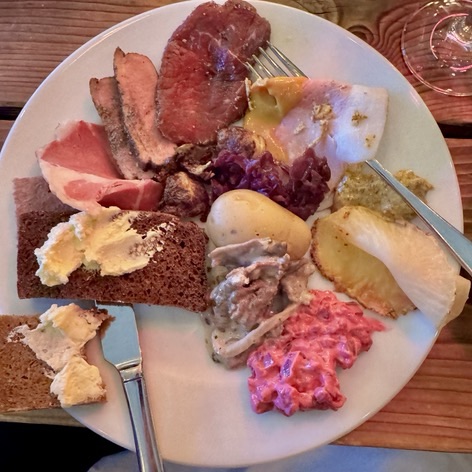
Next up is assembling a plateful of cold cuts, where the glazed ham is the centerpiece. There should be a minimum of ten, but usually many more different dishes ranging from sausages, patées and meats in jelly, to smoked reindeer and smoked lambs leg and whatever else is traditional in various parts of the country.

Another shot, another drinking song, and a swig of either Christmas ale or julmust, a nonalcoholic soft drink only available at Christmas time. 

The third round consists of hot dishes, and here is where the famous Swedish meatballs enter the scene. There should also be tiny hot dogs made from premium ingredients, spare ribs, different kinds of stews often based on game such as deer, moose or reindeer. At this point vegetables like red, green and brown cabbage, cauliflower and Brussel sprouts are introduced. 

Another shot, another song— you know the drill.

There is a cheese round, a dessert round and a Christmas sweets round, all with songs and shots.

If you are still able to function after all this, you can enjoy Julgröt — porridge made from rice boiled in milk and flavoured with cinnamon. There should be a single peeled almond hidden inside, and if you happen to find it, it will bring you luck in the new year.

Lars and his sister Anna.
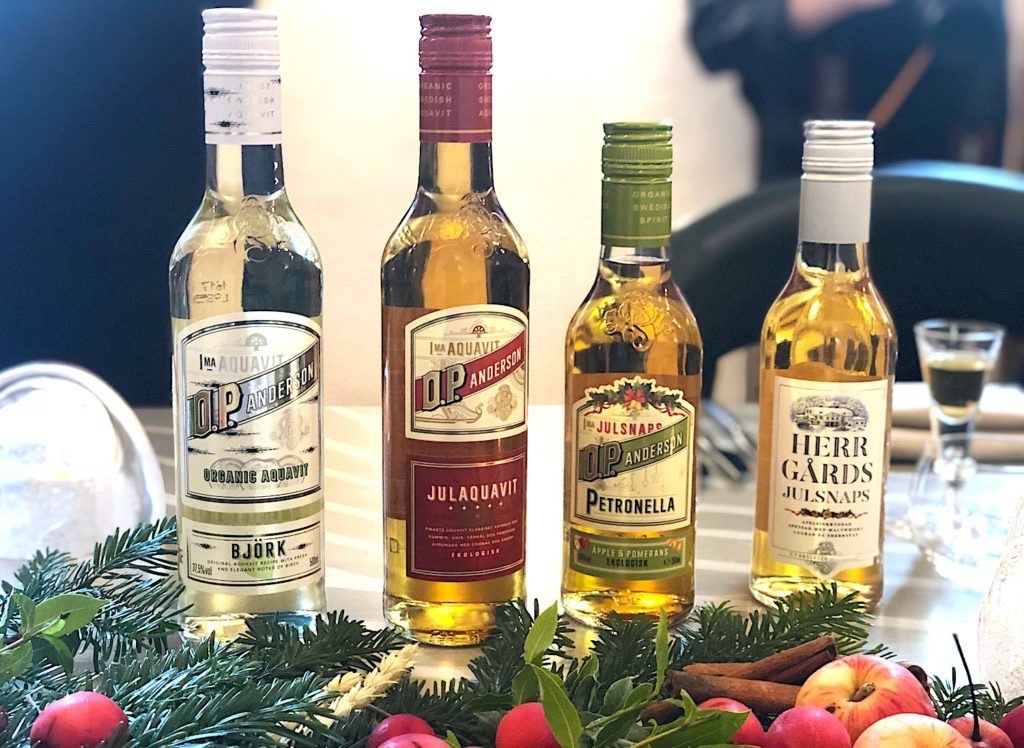
Akvavit/Aquavit is a distilled spirit (at least 37.5 % in alcohol strength) produced in Scandinavia from grain or potatoes and flavoured with spices, especially caraway. Dill is also used in the Swedish version. The obligatory toast, Skål, precedes each shot.

Happy New Year! Let’s hope that the devastating wars ragging in too many parts of the world will come to an end. I especially grieve for Gaza that has and continues to be destroyed by US bombs, with some 45,000 lives lost. This has to stop. Let’s try to be optimistic and hope that somehow sanity and morality will prevail in the U.S.

If not a Tales and Travel follower, please sign up here. Trust me. It’s safe. Your address is not shared.

Check out my tried and true recipes — keep scrolling down on a phone, or, if on a /PC or tablet, up to the column on right then down to “Recipes.”  I will add new recipes soon.

Croatia Calling

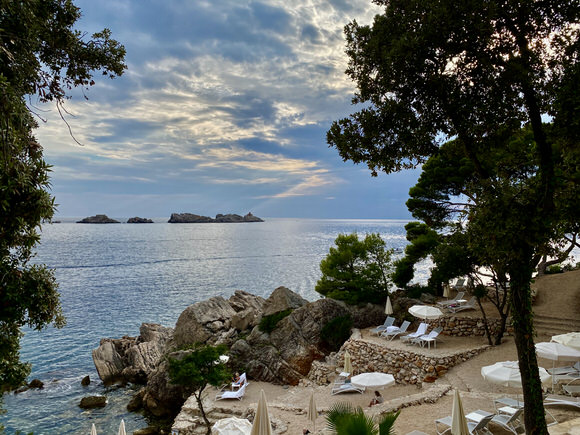
Terraced beach on the Dalmatian coast near Dubrovnik

 Last September I had the good fortune to accompany my friend Karen to her apartment on the Croatian island of Milna.  She insisted on doing all the driving, about 1,200 kilometres or 750 miles. I felt like chauffeured royalty.

Port at Milna

 En route we detoured to Varenna along Lake Como in northern Italy for a two-day break.  (See a previous post, “Bellissimo Lago di Como,” with many photos of the stunning area.) 

Serenity on the Dalmatian coast

The island of Mljet. There is a National Park on the western part of the island.

The journey from Varenna to Milna was long. We waited in a line of cars for almost two hours to cross the border from Slovenia into Croatia. When we reached Split after a day and half of driving from Varenna, my dedicated driver finally had a rest. We boarded our first ferry for the trip to her island. 

Sunset on the Adriatic

Ferries, all sizes,  are the mode of transport  among the Croatian islands. The country claims more than 1,000 islands, but most are small and uninhabited. Some ferries transport cars and people. Some are for passengers only.  Backpackers, families with kids and dogs in tow, old and young – all aboard.  We rode many during our week’s stay.

Karen’s apartment sits atop a hill not far from the ferry stop in Milna.  This was her last visit. She had recently sold the apartment which she had owned for 13 years.  The long trips to reach Milna were getting to be too much.

During our stay we visited other islands, swam in sparkling waters at idyllic beaches, and ate very well. Croatia is paradise for fish and seafood lovers.  We savored  monk fish with truffle sauce, black risotto with shrimp, fettucine with seafood, mussels, calamari, and scrumptious seafood platters. 

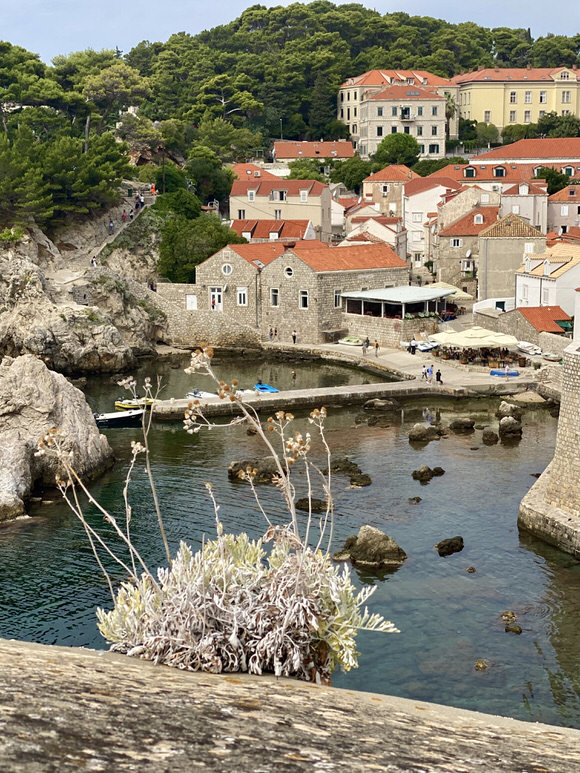
I was keen to visit Dubrovnik where I had been many, many  years ago on assignment for the newspaper Stars and Stripes. I remembered those monumental city walls.

Le Stradun, main artery in the old city of Dubrovnik

Instead of staying in the city, we splurged on a luxurious  coastal hotel.    A bus took us to town where we joined numerous other visitors to walk atop the walls which are considered one of the best-preserved medieval fortification systems in Europe. Wall statistics:  1,940 meters long encompassing five forts, 16 towers and bastions. And steps: 1,080.

A Dubrovnik must: A walk/climb on the ancient walls around the town
Get your exercise climbing 1,080 steps on Dubrovnik’s walls.

More steps, a grand total of 4,343, are within the city perimeter. And cats.  Everywhere. As a  cat lover, I was thrilled and spent too much time trying to get the perfect feline photo.  The kitties  are accustomed to all the attention and seem to pose for photos as they lounge in the middle of plazas, take a cat nap on restaurant chairs, curl up in flower pots, saunter through cobbled alleys.

Dubrovnik cats are considered its oldest citizens.  Their ancestors helped fight the bubonic plague carried by rats.  The plague ravaged the city in the 14th century when Dubrovnik, known as Ragusa, was a main trading hub between Europe and the Ottoman Empire.  Trading boats, coming from all around the Mediterranean,  brought goods to the city, ship cats who disembarked — and the plague.   The cats were welcomed and treated well for their help in fighting the disease.

12th century cathedral of Saint Tryphon in Kotor

Even more cats wander freely in Kotor, a coastal town in neighboring Montenegro.  I had read about the country’s spectacular coast and wanted to visit since it was so close  We set off to Kotor with scenery photo opps the entire way. Those travel articles did not exaggerate.  Kotor, like Dubrovnik, has a medieval old town, lively squares and twisty streets.

A stop for a stroll in Perast on the Bay of Kotor, Montenegro

The Kotor cat is a symbol of good luck.  As in Dubrovnik, cats originally arrived via ships. They helped control the rat population, as well as snakes and other nasty critters from  nearby mountains. Today the cat also contributes to the Kotor economy.   Cat shops selling feline souvenirs and cat paraphernalia are popular.  There is a cat museum. As one blogger wrote, Kotor is for “cat-o-holics” (me).

Before we returned to Milna, we spent a day lounging at our hotel, marveling at the beauty of the surroundings, swimming in the clear water, and taking too many photos.  We did not want to leave.

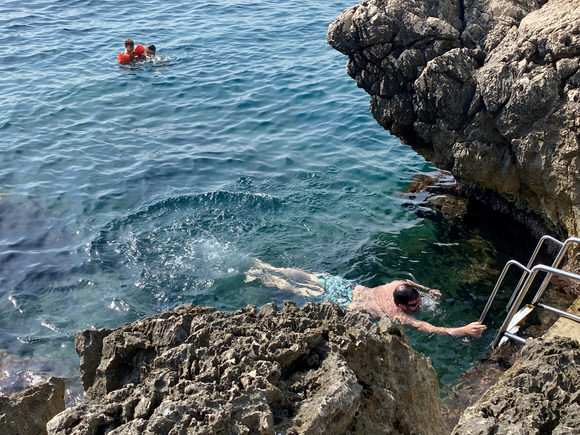
I loved swimming in these waters, but was too chicken to jump from the rocks.

Croatia rates three Michelin stars plus – definitely “worth  a visit.” Croatians are friendly folk, and English is widely spoken.

 Thank you, Karen, guide extraordinaire, for sharing your  swansong journey with me.

More photos follow.

If not a Tales and Travel follower, please sign up here. Don’t miss future posts.

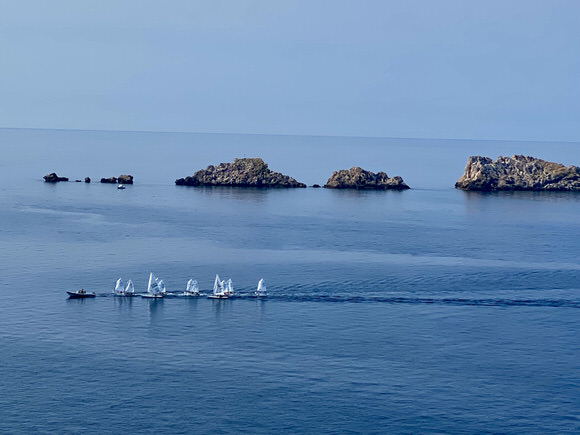
Croatia is a Mecca for sailors and their boats. In Milna we met a Texan with his boat.
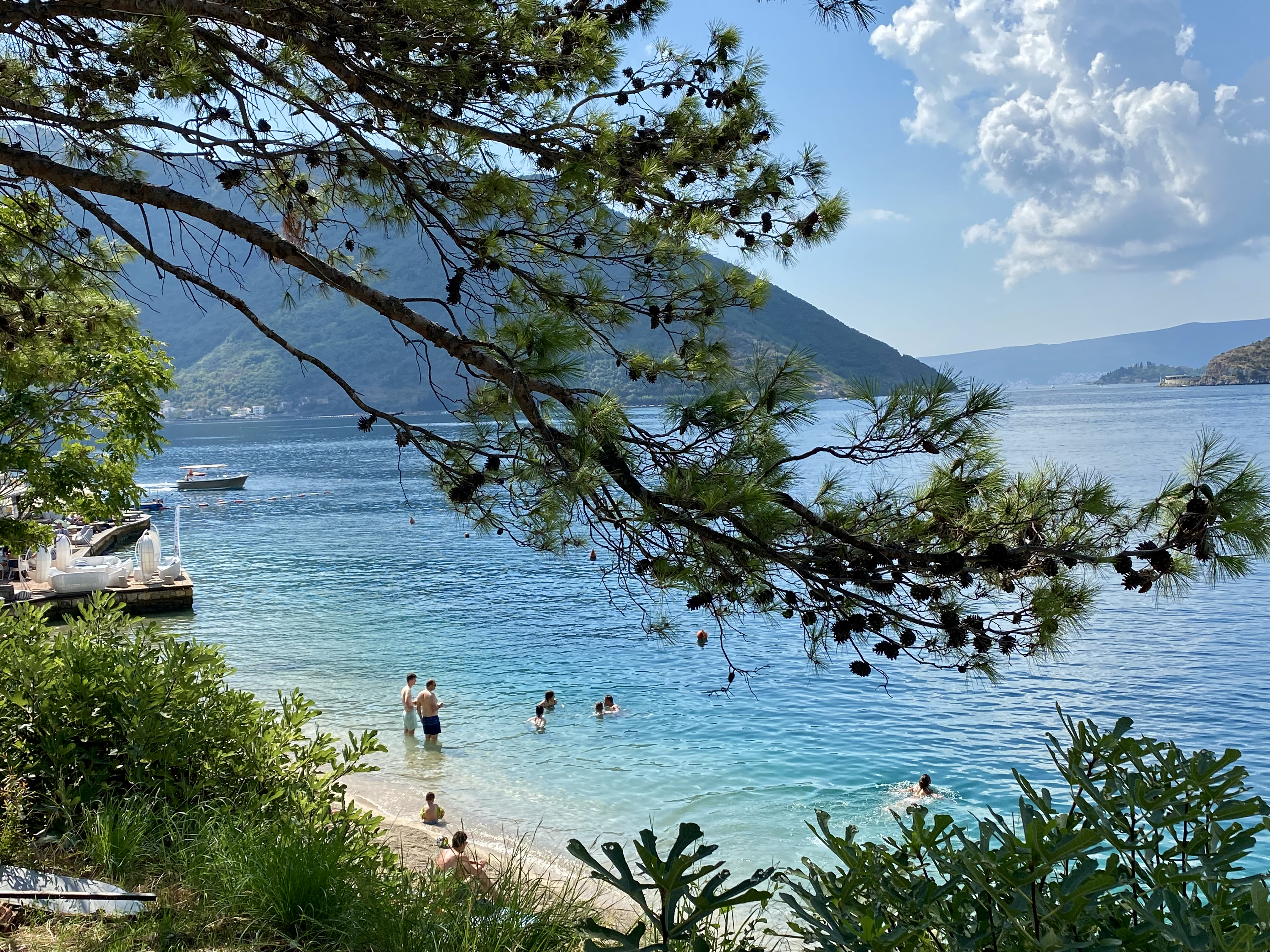
Blissful beach in Montenegro
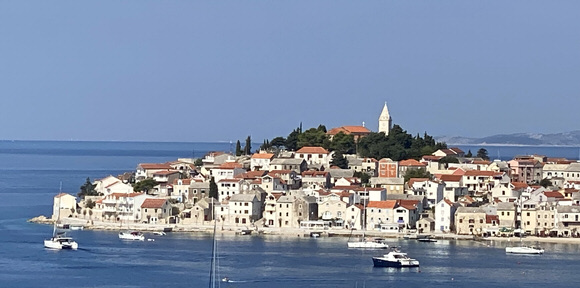
Primosten, a village and municipality on the Adriatic coast

Up on the farm

Agriturismo L’Oasi del Rossese

Way, way up:  A precarious auto journey slowly, cautiously climbing a skinny, twisty road.  We passed a few houses clinging to the hillsides, others hiding below the road down treacherously steep lanes.  Lots of overgrown vegetation all around.  More curves, hairpin turns, and more of each  

This was rough, remote terrain in Italy’s Liguria region above the Mediterranean.  I was driving, and hoping we would not meet a car coming in the opposite direction. I am not skilled at driving in reverse, and this road was barely wide enough for two vehicles.   How much farther?  I was nervous.  Did we miss it?

Alas, a small sign.  “ L’Oasi del Rossese,” our destination, an agriturismo above the town of Dolceacqua.  Agriturismo is a combination of the word for “agriculture” and “tourism” in Italian.  Agriturismi (plural) offer farm stay vacations and are very popular in Italy.  In addition to lodging, most offer meals featuring local specialties, often made with products from the farm.

Bob, Steve and Yoshie.

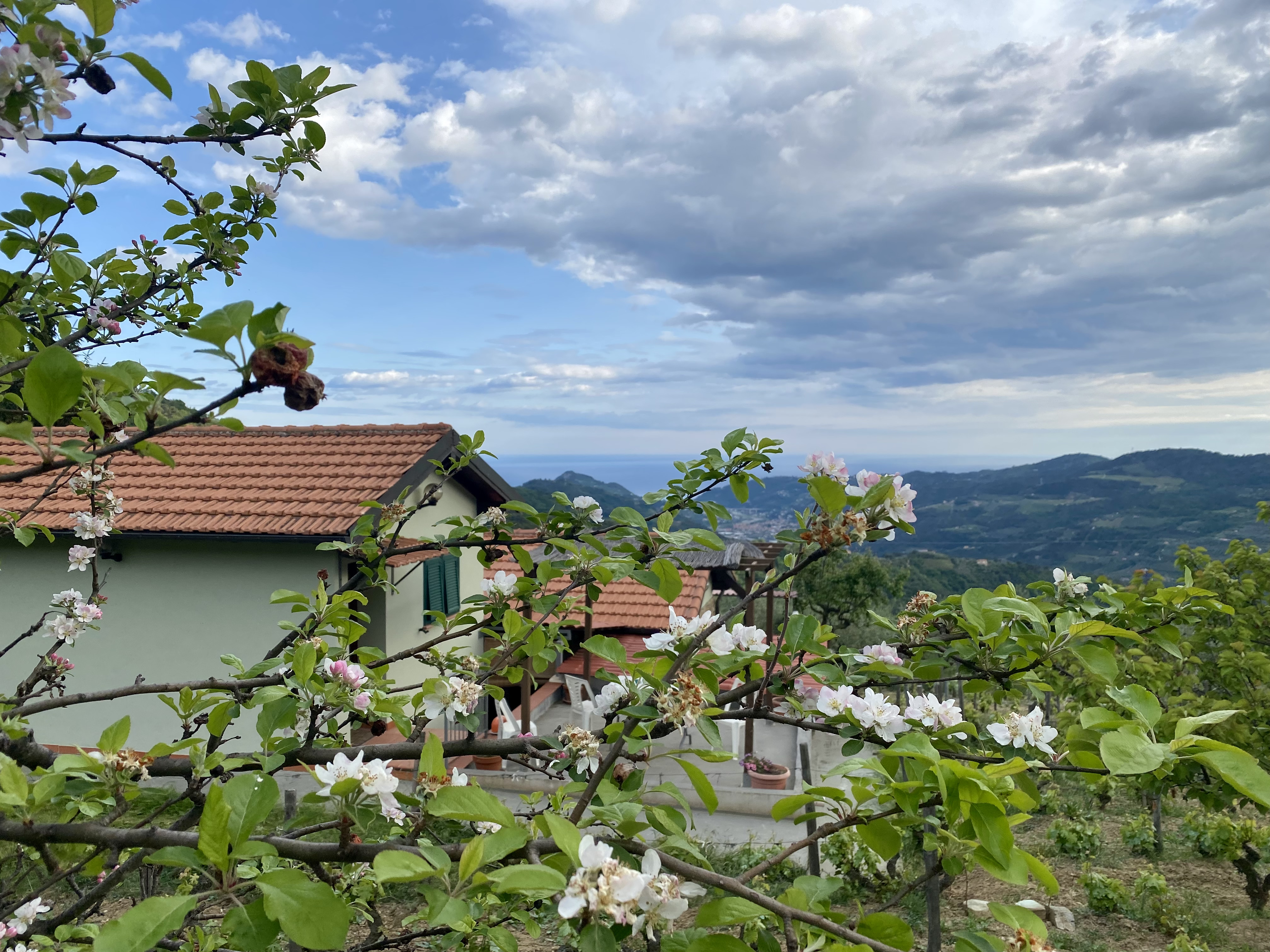
Farm hostess Marinella greeted us and showed  us to our rooms.  My brother Steve and sister-in-law Yoshie from Colorado were with us. First order of business was a welcome  coffee and cookies on the terrace overlooking deep green valleys, mountains and the Mediterranean in the distance.  Sadly, we had no sun to enhance the views.  Even with overcast clouds, it was splendid.

We heard English at a long table under a wall of balloons.  A group was celebrating a birthday.  I got up to take a photo and one of the gentlemen stopped me.  “I think I know you.  Are you a member of BA (British Association of Menton)”?   Yes.  We sat with Wayne and his wife Veronique, who was celebrating her 60th birthday, at a BA luncheon not long ago.   It was Veronique who told me about this agriturismo.  They have a farm nearby.

Marinella, husband Nino and son Stefano harvest grapes and olives on their 7,000 square meters of terrain.  The main farm product is wine, Rossese, hence the name, Oasis of Rossese, the noted red wine of Dolceacqua which we enjoyed with dinner.

Nino, Jordan (named after Michael Jordan), Stefano and Marinella.

We were hoping to see farm animals.  Their livestock consists of chickens and rabbits.  I did venture down to the chicken coop and rabbit hutch. The bunnies were big and beautiful.  I hated to think of their future.

Rabbit, Coniglio alla Liguria, is a local special and often served here.  Steve announced he would not eat it if it was to be our dinner. Luckily it was not, although I would have indulged.  The French are also fond of rabbit, and I prepare it occasionally. 

Yoshie and Steve hiked to the village of Perinaldo.

Food is a big attraction at agriturismi.  Our dinner was a never-ending, multi course feast.  Italian meals begin with antipasti. One after another, Marinella served us five different antipasti dishes:  Tomatoes with fresh sheep cheese, a slice of bruschetta, a frittata of zucchini and peas, stuffed zucchini flowers, and a tasty a slice of torte made with tiny fish from the Med.  This was followed by the pasta course, ravioli burro e salvia (ravioli stuffed with sage) – all homemade.  Instead of rabbit, for the main course we had both roast pork and goat with fagioli (white beans). The latter was our favorite. Dessert:  a strawberry tarte.  Plus, a bottle of Rossese.

Rossese (red wine) display in Dolceacqua

Marinella cooks, all from scratch. Nino lends a hand, stuffing the ravioli. They have a large vegetable garden, in addition to the chickens and rabbits, to supply the products for her cooking.  Stefano and Nino care for the grapevines and olive trees.  Stefano also makes the wine. Their production of both olive oil and wine is limited.  They only sell to guests and a few local clients.  

“People are happy here,” said Marinella.  She did admit that the first time is difficult due to the seemingly endless, challenging trek up the mountain. It is only seven kilometers, but they are long and very slow.  Many French come for the day from Nice just to eat, she said.   In August they have guests from Sweden, Denmark and Germany.

Dolceacqua, photo by Yoshie.

Agriturismo began in Italy in the 1960s when small farmers were struggling to make a profit.  Some abandoned their farms and went off to work in cities.  However, agricultural traditions are sacred in Italy.  In 1973 an official agriturismo farmhouse designation was created to help prevent farmers from abandoning their farms, and to offer tourists a farm stay so they could learn about rural life.

In some regions, but not all, farmers need a license to take part in agriturismo. We have visited nearby Dolceacqua many times.  Every time it seems there are more “agriturismo” signs on houses in the village.   What do they have to do with farms and agriculture?

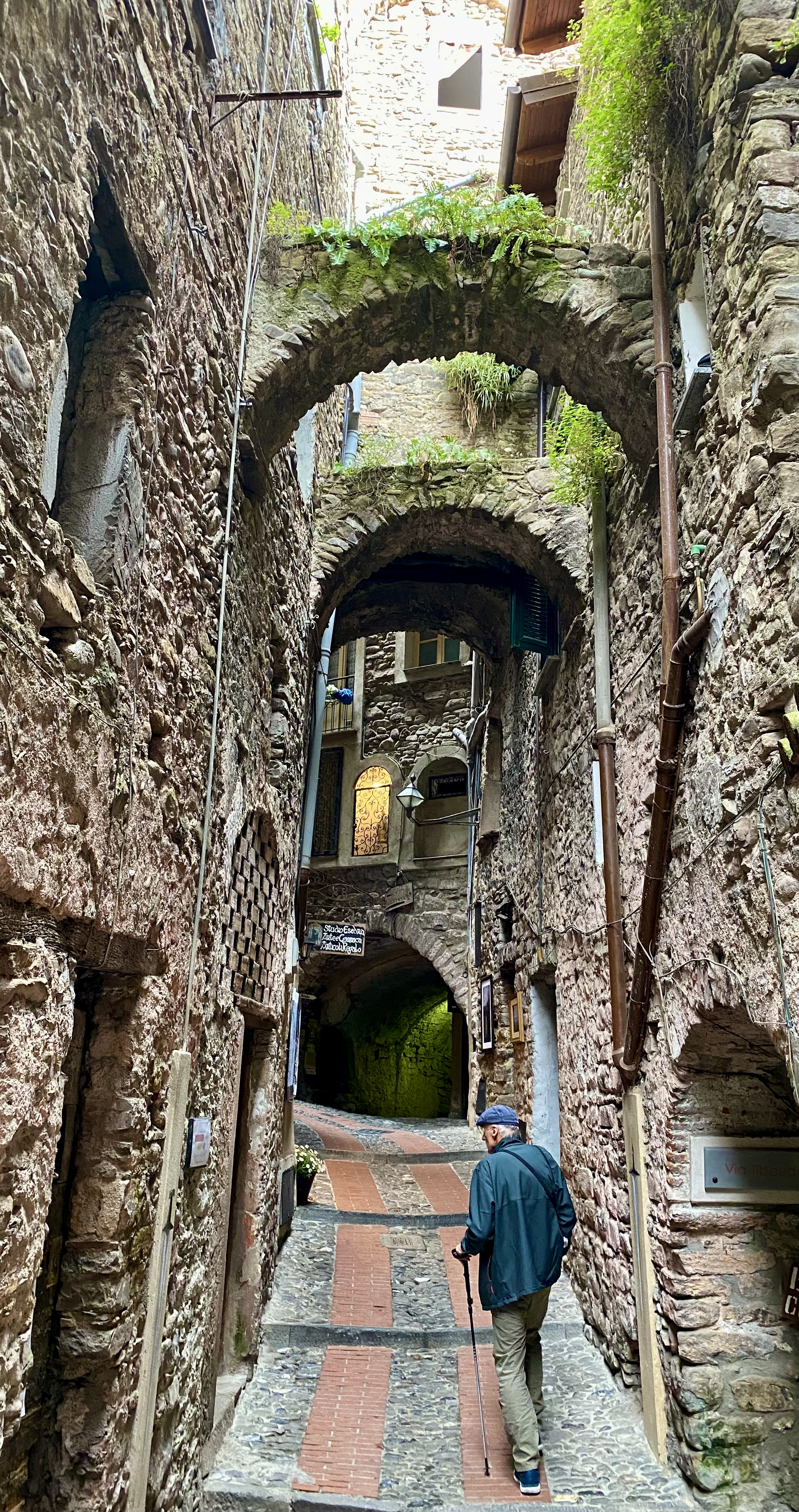
Steve explores the Dolceacqua old town.

According to a spokesperson at the Dolceacqua tourist office, to be considered agriturismo they must show documents to prove they have land and crops.  Of course, many may have such up in the hills. But all of them?

Marinella tells me that today many agriturismo are just Bed and Breakfast accommodations and have nothing to do with agriculture.  I asked Arabella, my Italian friend with whom I study Italian. 
“E una giungla,” (It’s a jungle), she explained.  In Italian the expression refers to situations when laws are not respected, everyone does whatever he/she wishes  … a bit like Italian drivers.

Agriturismo breakfast — Bob, me and Yoshie. No one looks very happy, but we were very happy. The farm and surroundings are a treat.

AZ Agrituristica, L’Oasi del Rossese de Zullo Stefano, Loc Morghe, 18035 Dolceacqua, Italy, Tel. xx 39 347 8821298.

http://www.agriturismo.farm/en/farm-holidays/liguria/loasi-del-rossese-dolceacqua/33419 Double rooms with breakfast, 60 euro per night. Multi course meal with wine, 30 euro per person.

Siesta in Dolceacqua

If not a Tales and Travel follower, please sign up here. Don’t miss future posts.

Feel free to comment. Click on link below.

My Take on Costa Rica

Arenal Volcano

I may be one of few who is not overwhelmed with Costa Rica. I did not dislike the beautiful country. The beaches are grand. The people are delightful. The food is good. But, I have been to too many other places that are more “me.” I had hopes of sighting interesting critters in the jungle on “safari” treks. I spotted few.

Beach near Manuel Antonio park

The critters are there. I suspect too many tourists have been tromping through the jungle, following guides with telescopes, sending the animals deep into the bush in search of peace and quiet.

While husband Bob spent two weeks with his daughter Kellie who has a holiday home in Costa Rica, I toured – on my own but with pre-arranged transportation between destinations. I joined guided tours through parks and to noteworthy sights during my visit last January

Too many tourists ?

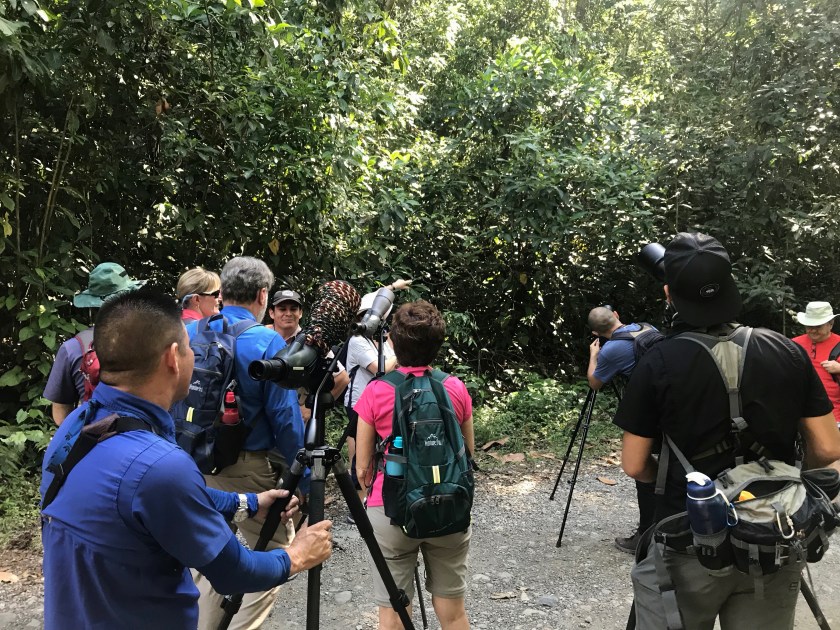
The Manuel Antonio National Park is Costa Rica’s most popular national park and where I joined my first guided hike. Groups like ours, all dutifully following a guide with a large telescope on a tripod, crowded the trails. Word spread quickly of a sighting. Instantly more guides, telescopes and tourists appeared.

Souvenir cell phone photo thanks to guide’s telescope.

Excitement was high at the sighting of a sloth hidden high in dense tree foliage. With the naked eye it was impossible to see anything but leaves. Those with gigantic zoom lenses (there were many) did manage to spot the creature. The rest of us relied on the guide’s telescope. Yet, even with high powered vision, all I could see was a tuft of fur.

This ritual was repeated time after time. The guide, with trained eyes and jungle experience, would spot a creature– various kinds of birds, lizards, sloths – camouflaged in the dense growth. Each of her followers then had a turn for a telescope view. And then, a keepsake photo with their cell phone camera which the guide placed, one by one, on the telescope.

Find the sloth.

It was steamy humid. I grew impatient and bored. I kept thinking of Africa where majestic creatures are often easy to spot. The tour ended on a beach where hundreds of monkeys frolicked. Monkeys may not be exotic, but they are fun and easy to see. I loved them.

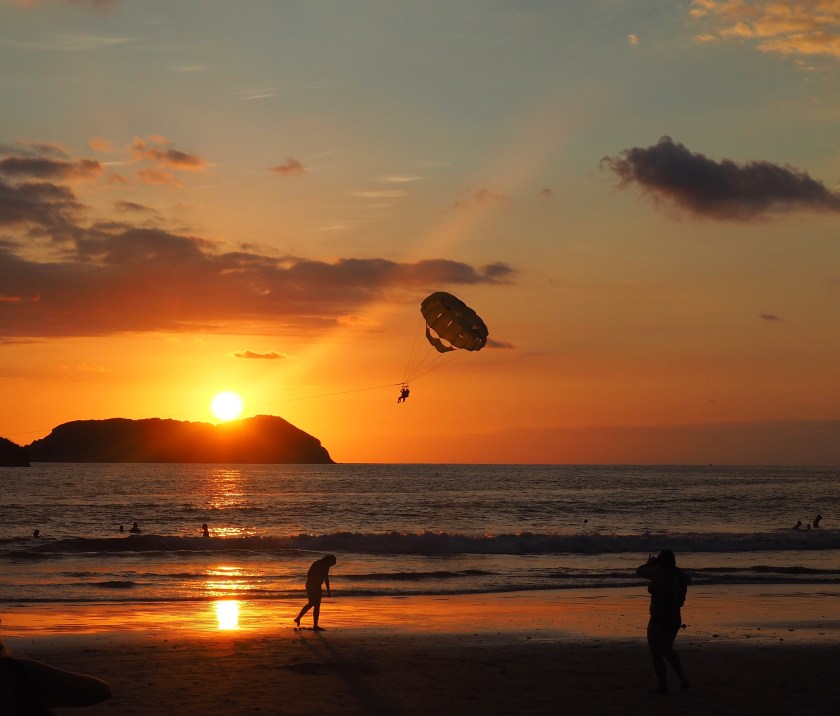
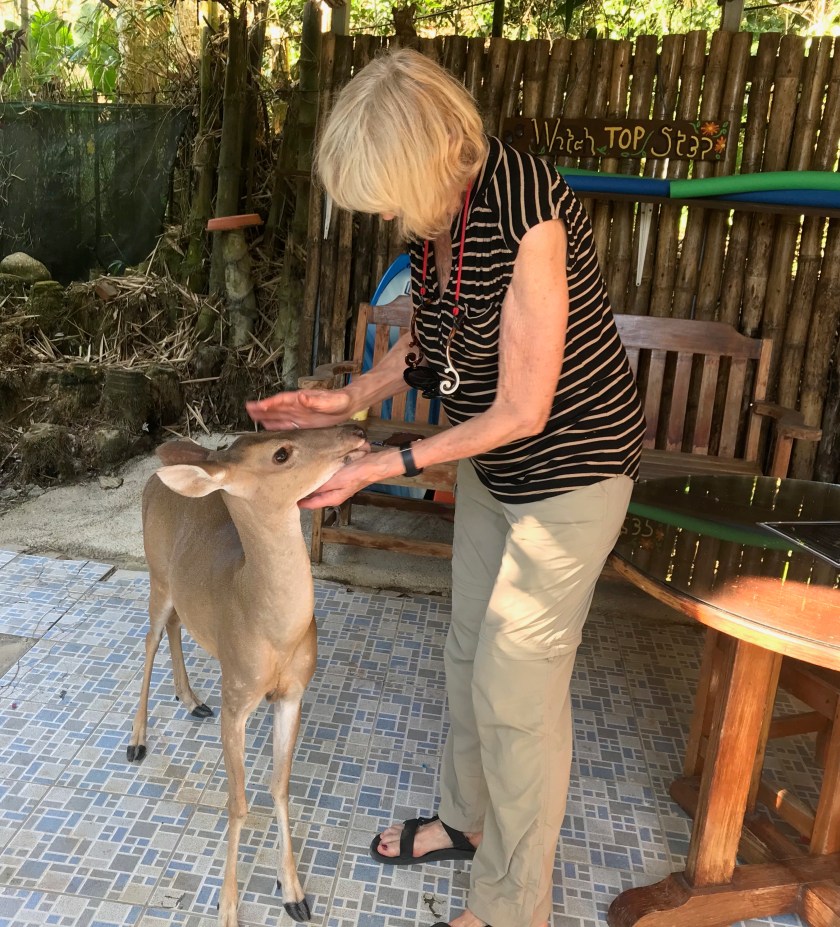
More monkeys, iguanas, a rare lizard, all kind of birds, a deer – I saw them all on the grounds of the Posada Jungle Hotel adjacent to Manuel Antonio park where I spent four nights.  This was better than a guided safari, and at my doorstep.   The beach near the hotel was fabulous, for swimming and sunset viewing.  I spent several evenings aiming for the perfect sunset shot while sipping a mojito.  

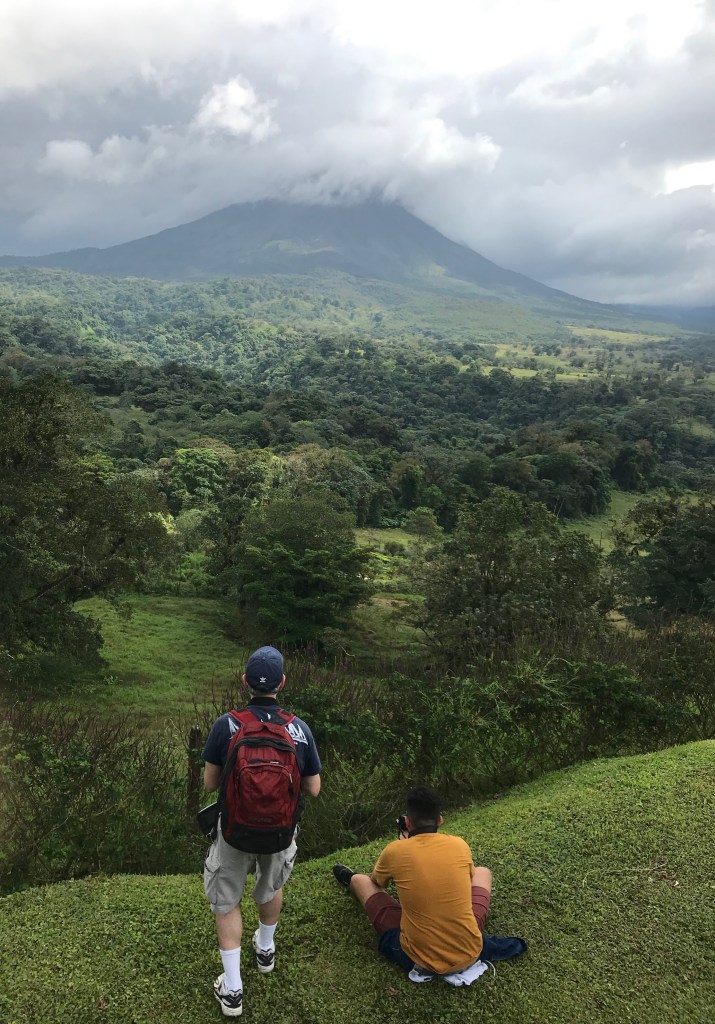
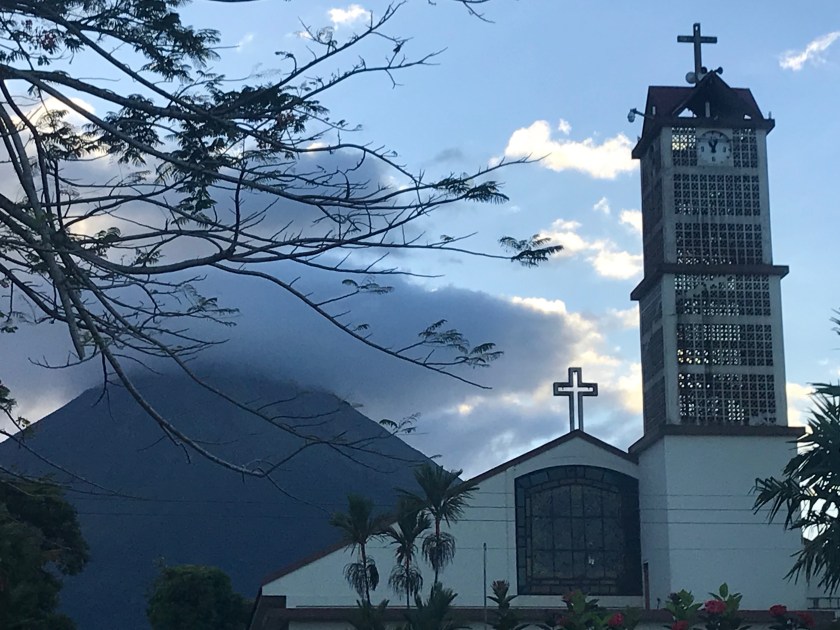
Costa Rica’s Arenal Volcano is a stunning sight. I was lucky. It is often hidden in clouds, but I saw it in all its glory. There have been no regular volcano eruptions since 2010. The surrounding region is popular for hiking and all sorts of rugged,extreme adventure. I opted for gentle adventure, a hanging bridge hike and another hike near the volcano.

Hanging bridges are common in the Costa Rican jungle. I was intrigued. It is exciting, even a tinge scary,  to walk high above gorges  on these structures which gently sway as you cross.
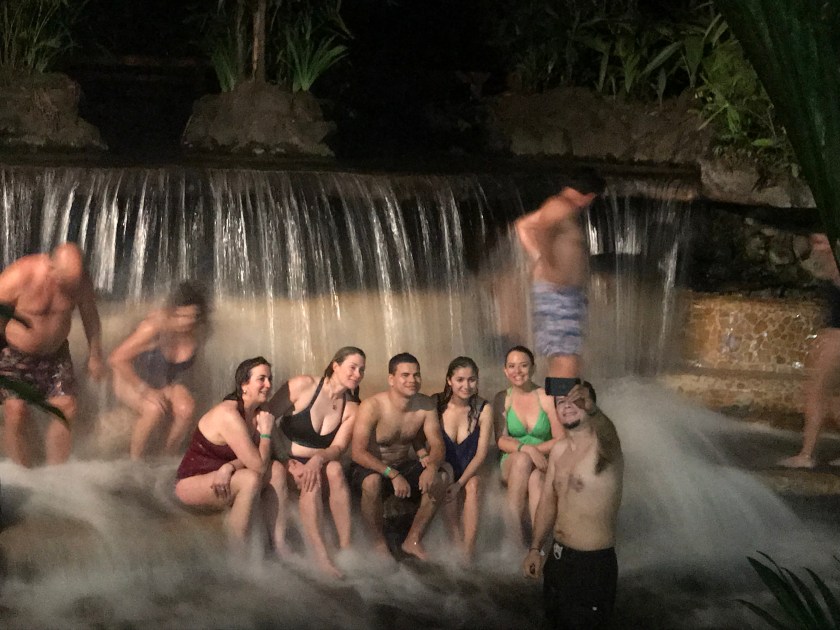
After the near-the-volcano hike, we set off to the Tobacon Hot Springs, a jungle wonderland of hot springs, pools, waterfalls, streams – all a bit kitschy, but crazy fun.
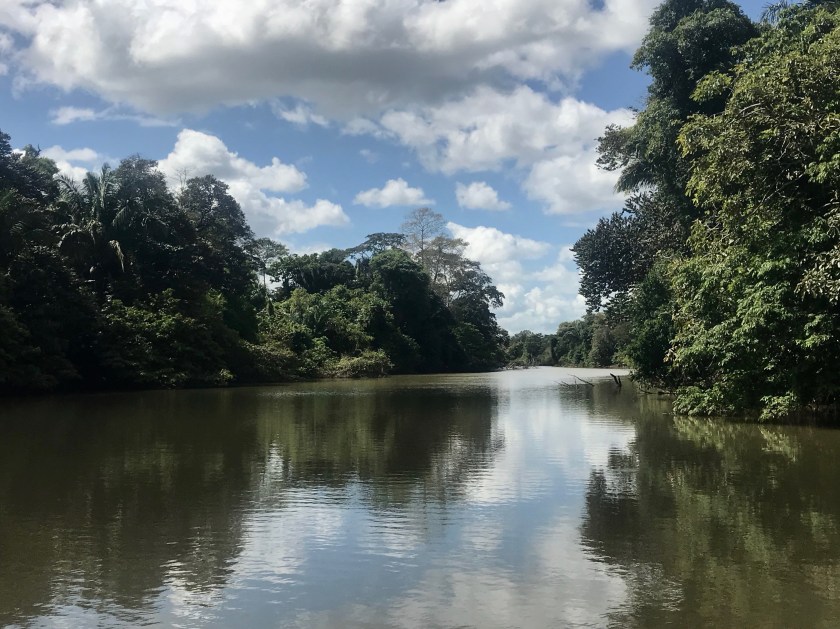
 

Rio Frio near the Nicaraguan border

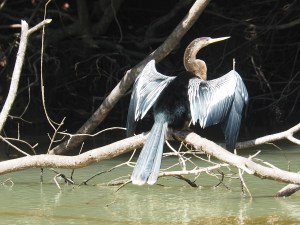
Birds were the star attraction during my relaxing boat tour of the Cano Negro Wildlife Refuge near the Nicaraguan border. The guide entertained us with interesting facts about Costa Rica, as well as river wildlife, as we

drifted past lush rainforest and wetlands. In addition to the birds, we saw bats, a few crocodiles, a lizard… but nothing that thrilled me.  I am spoiled.  It’s  hard to beat being up close and personal with mountain gorillas. (See previous post, “Gorillas in our Mist” Dec. 2015)

I was underwhelmed – and freezing – on the Monteverde Cloud Forest guided hike. This time it was cold and rainy. We learned a lot about various kinds of trees and vines, but – even with the telescope – spotted no exciting wildlife.

The van rides from one destination on my itinerary to the next were often long. The scenery, sometimes spectacular, and chatting with other passengers made the trips interesting. I met folks from the US, Canada, Scotland, England and Israel, including several young female backpackers en route to yoga retreats. Costa Rica is big with the yoga set. There were serious hikers and surfers. Costa Rica is also popular with surfers.

However, I did not come to Costa Rica to surf, nor to soothe my soul during a yoga retreat. Unfortunately I am too old for zip lining and canyoning. Spotting an illusive creature through a telescope did not thrill me. Granted, the beaches are super, but I do not need to travel so far for a fabulous beach
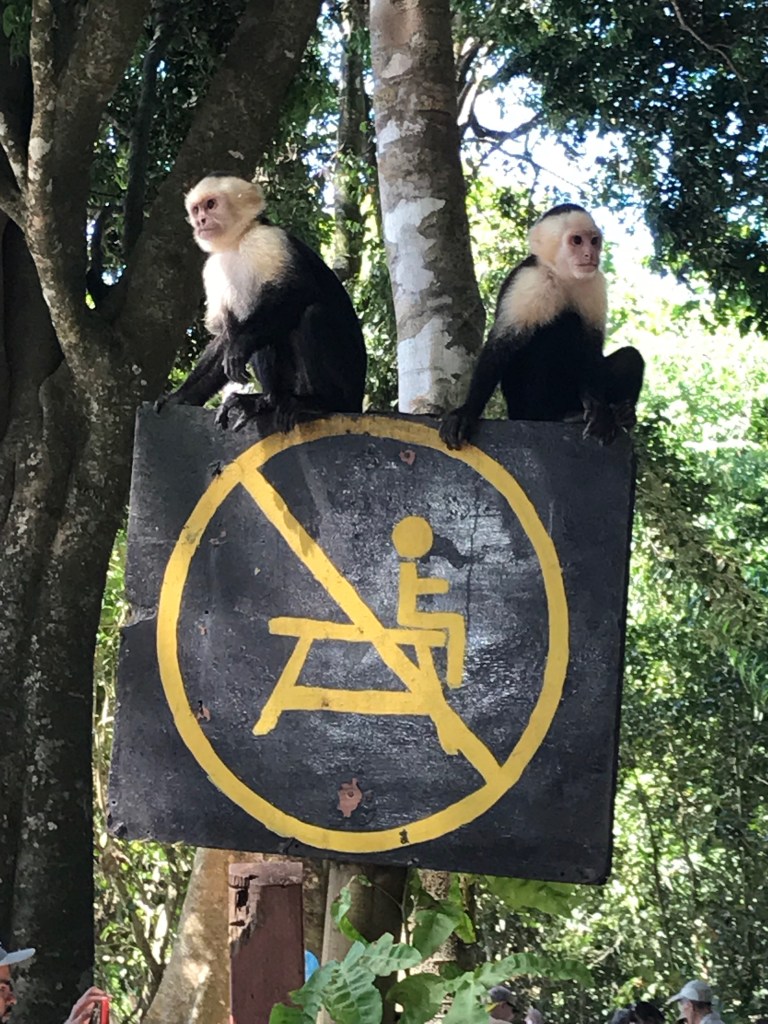
So, Costa Rica does not rank among my favorites, yet I am glad I experienced the country. And, tasted Costa Rican ceviche – a memorable culinary delight. Kellie shared her recipe. Click on photo top right.

Comments welcome.  Click below, then scroll down and Leave a Reply.

If not a talesandtravel follower, please sign up, upper right.  Your address is kept private and not shared.  More on Norway coming soon.  Do not miss it.

See below for  more Costa Rica.

Church at La Fortuna with cloud-covered Arenal.

This sloth was spotted in a roadside tree by a van driver. We stopped for photos.