MERRY CHRISTMAS MARKETS
Several years ago I wrote versions of this article which appeared in various publications.
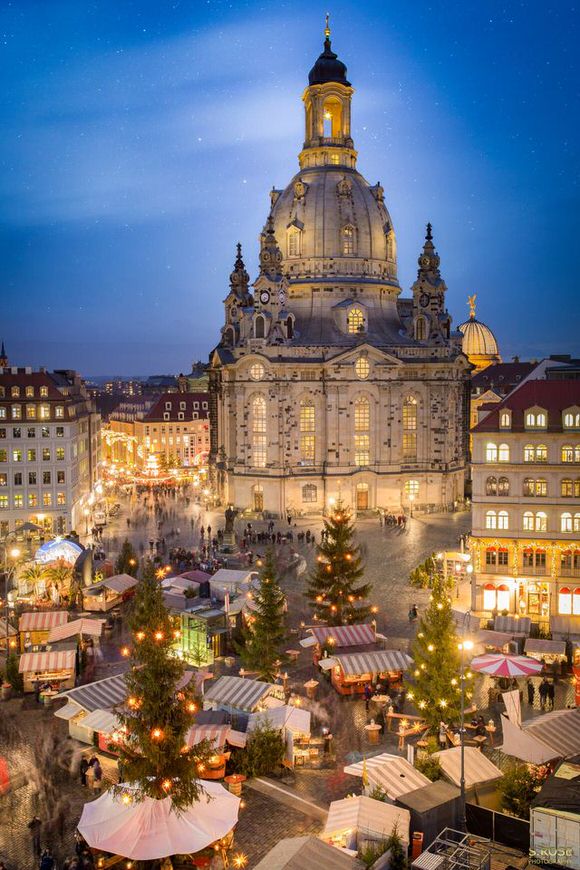
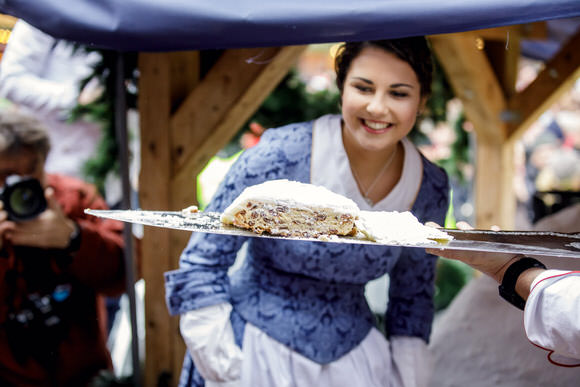
My nose led me to the big black oven. The aromas wafting from behind its doors were heavenly and hunger inducing. Something delicious was certainly baking inside and I had to have a taste. I was in Dresden at the Striezelmarkt, the city’s Christmas market, and it was Stollen, a rich buttery cake with dried fruit, nuts and spices, turning golden inside the outdoor oven. Master baker Joachim Winkler was rolling another batch of dough as spectators watched the creation of Dresden’s famous holiday cake. Best of all, there were free samples to taste.
That was many years ago. I lived in Germany then and sought out holiday markets every December. Major cities like Dresden usually have numerous markets in various locations throughout the town. However, Christmas markets in smaller towns, while perhaps not as grandiose, are equally as enticing.
The tradition of pre-Christmas markets originated in Germany in the late Middle Ages. The custom has spread throughout the world with Christmas markets on the calendar in numerous countries these days. Now I live in France where, sadly, I find Christmas markets a poor imitation of those magical events in Deutschland.

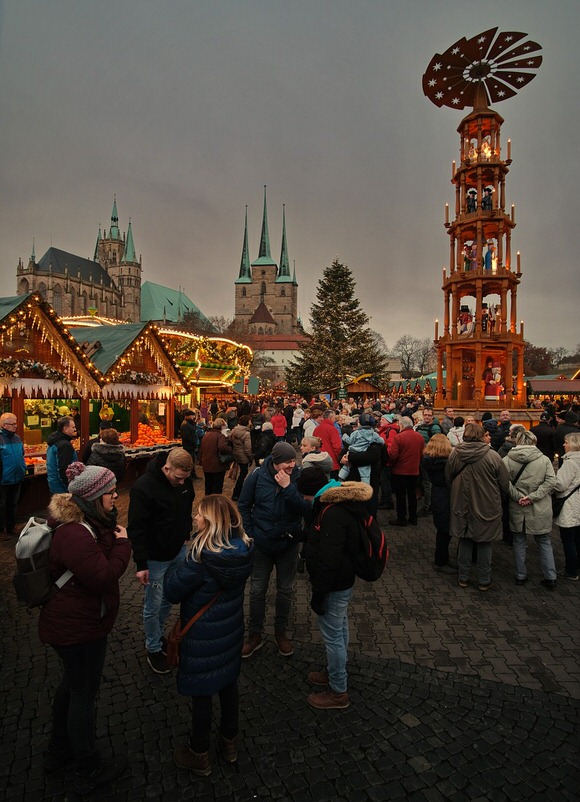
I especially miss going to the markets late in the day. When dark descends, as early as 4 p.m. in December, they are captivating scenes with twinkling lights sparkling on tinsel and gilded ornaments. If snow falls, it’s pure enchantment. People wrapped in heavy winter coats and woolen scarves pack the market square to eye the merchandise displayed at stalls decorated with swaths of fir and pine. Everything from holiday decorations to handicrafts, from mittens to furry slippers, is for sale. Aromas of cinnamon and cloves waft through the chilly air. And, in addition to Stollen, other delicious edible treats stir the appetite: grilled sausages, spicy cookies and Glühwein or “glowing wine,” hot spiced wine served in souvenir mugs.

After I tasted free samples of Stollen, I set off to investigate another stand emitting even more delectable aromas. Delicacies called “Quarkspitzen” were bobbing in a pot of bubbling fat. I’ve been to many a Christmas market, but I’d never encountered these gems. Little balls of dough with quark (curd cheese) in the middle, deep-fried and rolled in powdered sugar. Exquisite.
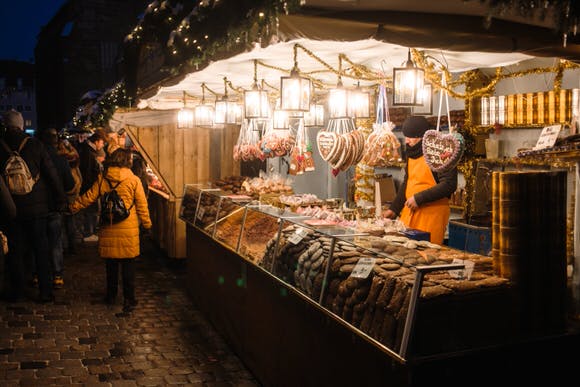
Food is my favorite part of Christmas markets. Be it in Stuttgart, which claims to have Germany’s largest holiday market, or Nuremberg, which says its market is the most romantic, or Dresden, or any small-town Christmas market, there’s nothing quite like standing out in the winter cold, sipping a Glühwein and savoring a grilled bratwurst as church bells toll and children sing Christmas carols. Move on to another stand for another Glühwein and a healthy portion of Schupfnudeln (potato dumplings with sauerkraut) or Linseneintopf (a thick soup of lentils) and Kartoffelpuffer (potato pancakes). It’s a unique and thoroughly German culinary experience that is scrumptious.


Of course, the markets offer much more than food. Towering over the market in Dresden, in addition to a giant Christmas tree, is a gargantuan, lighted pyramid with carved wooden figures on multi-levels. Smaller versions of the hand-carved pyramids are a traditional holiday decoration dating back some 300 years. The pyramids have holders for candles. When lit, the heat rising from the candles sets the various levels of the pyramid turning, its figures spinning round and round. Woodcarvers in the nearby Erzgebirge (Ore mountains) region make the mobile decorations, as well as other beautiful hand-carved items such as candelabra, smokers (figures that blow smoke from incense cubes) and nutcrackers, which are famous throughout Germany. There are plenty of stands in Dresden, as well as other Christmas markets, selling these prized items of wood. I purchased a hand-carved candelabra with nativity figures which has become a cherished Christmas decoration.
I will spend Christmas in Abano Terme, Italy, a spa town I visited three years in the summer. (see previous post, Taking the Waters – and the Mud, July 2021) It was in the summer and much too hot. Christmas should be perfect. Maybe the mud treatments will soothe my injured body. Of course, a blog post will follow
Wishing all a joyous holiday season full of good food, good cheer and good friends.
If not a Tales and Travel follower, please sign up here. Don’t miss future posts.




 Tales and Travel