Following is a guest blog with photos by Swedish friend Lars who recently journeyed to his home country to celebrate his sister’s birthday. It was more than an over-the-top birthday party: the Julbord, a holiday overdose of food – and akvavit (a popular and strong Scandinavian spirit. See below for more on this beverage). The Julbord is a must at Christmas, but can be repeated during the festive season including on New Year’s Day. The eating can go on all day, Lars says. “It’s supposed to be drawn out. It’s an orgy. You need time to recover.” He recalls that housewives used to “slave for two weeks” to prepare the food, but many now celebrate in restaurants.
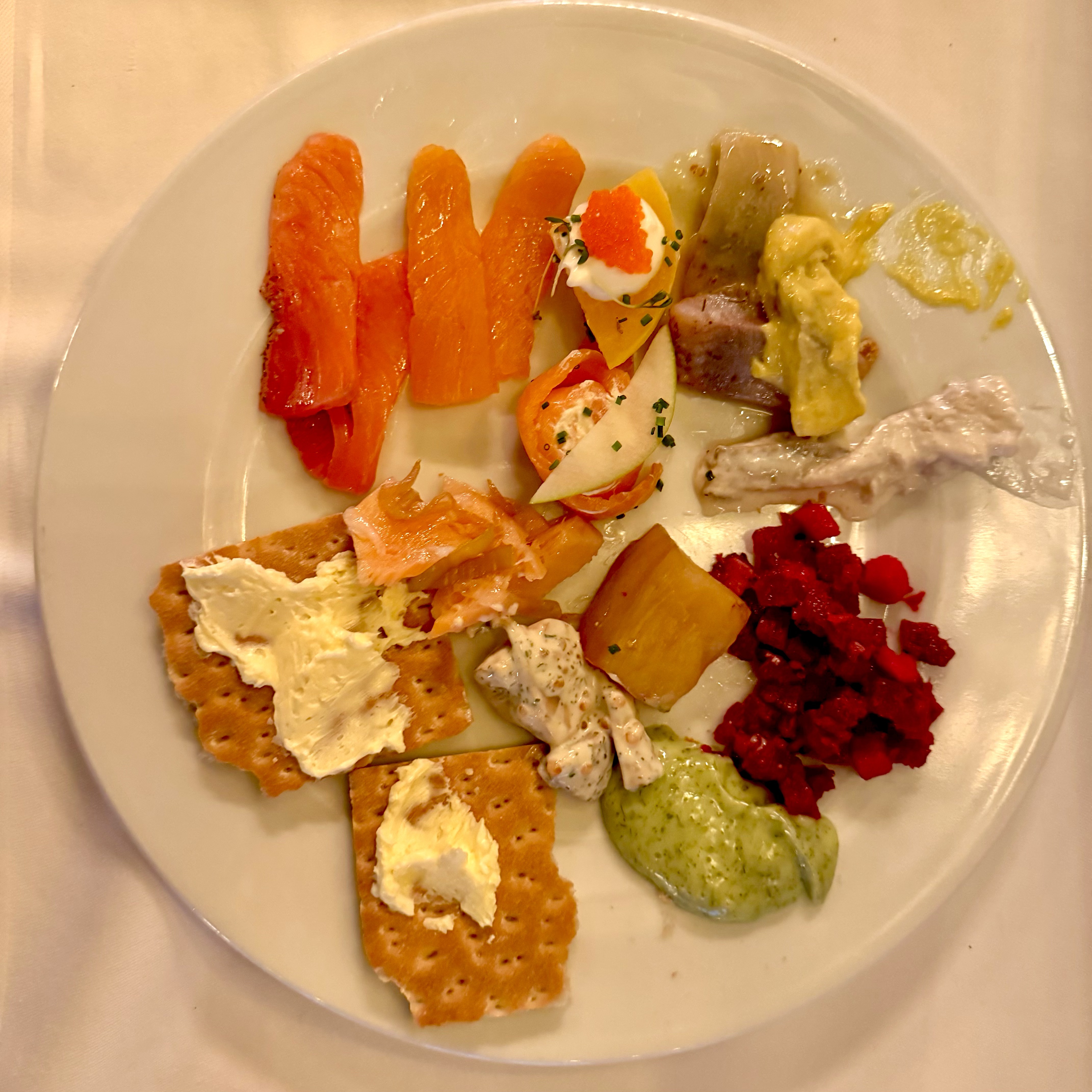
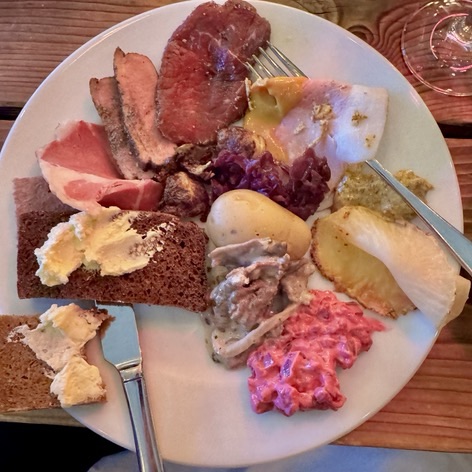
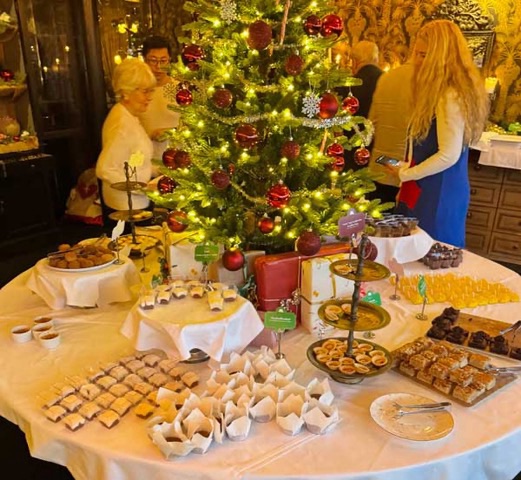
A small section of the Julbord
By Lars Sjöström
On the topic of Christmas food traditions, Sweden is in a league of its own when it comes to sheer opulence embodied in the institution of the Julbord, which is a king-sized jumbo version of the famous “smorgasbord” with extra bells and whistles and a bow on top.
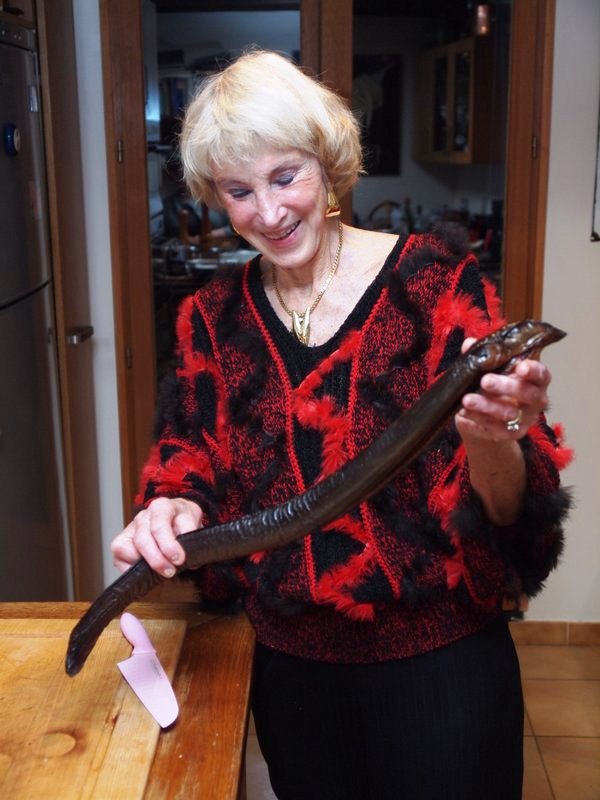
The canonical way of eating your way through a Julbord is to start with a plate of cured salmon, several varieties of smoked salmon, and at least three — preferably 5-7 — different kinds of pickled herring , mackerel, smoked eel and various sauces eaten together with boiled potatoes and “special Christmas edition” crisp bread.
The first of several shots of akvavit is consumed in conjunction with communal singing of a snapsvisa — an often humorous ditty extolling the virtues of (heavy) drinking. There will be many more of these and they become naughtier as the evening progresses…
Next up is assembling a plateful of cold cuts, where the glazed ham is the centerpiece. There should be a minimum of ten, but usually many more different dishes ranging from sausages, patées and meats in jelly, to smoked reindeer and smoked lambs leg and whatever else is traditional in various parts of the country.
Another shot, another drinking song, and a swig of either Christmas ale orjulmust, a nonalcoholic soft drink only available at Christmas time.
The third round consists of hot dishes, and here is where the famous Swedish meatballs enter the scene. There should also be tiny hot dogs made from premium ingredients, spare ribs, different kinds of stews often based on game such as deer, moose or reindeer. At this point vegetables like red, green and brown cabbage, cauliflower and Brussel sprouts are introduced.
Another shot, another song— you know the drill.
There is a cheese round, a dessert round and a Christmas sweets round, all with songs and shots.
If you are still able to function after all this, you can enjoy Julgröt — porridge made from rice boiled in milk and flavoured with cinnamon. There should be a single peeled almond hidden inside, and if you happen to find it, it will bring you luck in the new year.
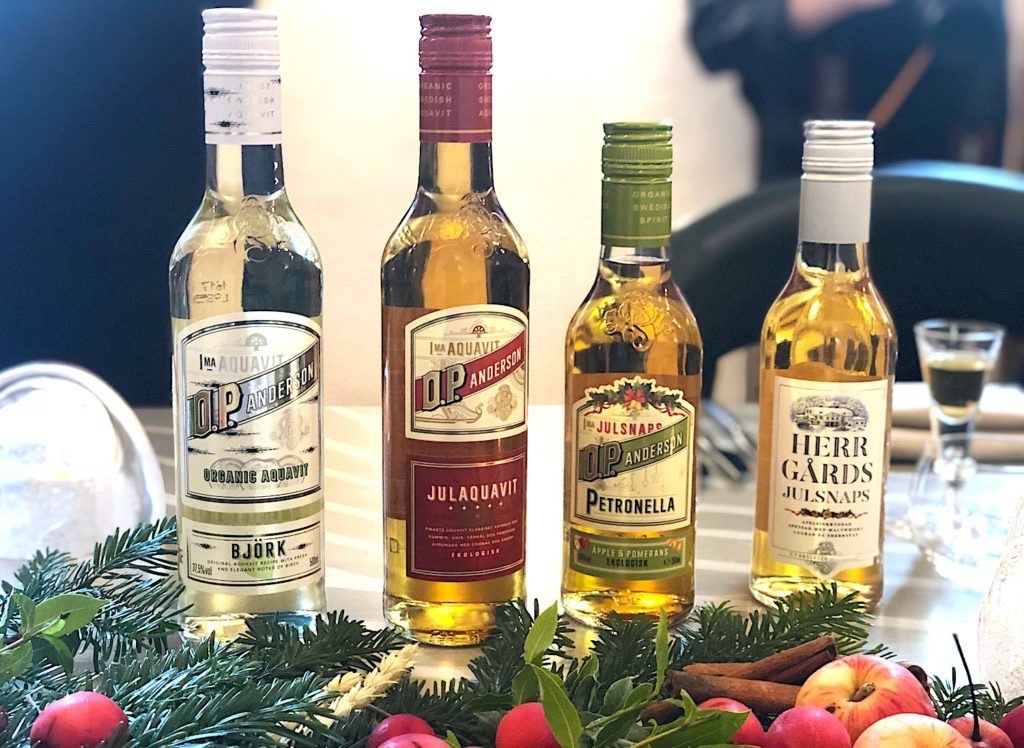
Lars and his sister Anna.Akvavit/Aquavit is a distilled spirit (at least 37.5 % in alcohol strength) produced in Scandinavia from grain or potatoes and flavoured with spices, especially caraway. Dill is also used in the Swedish version. The obligatory toast, Skål, precedes each shot.
Happy New Year! Let’s hope that the devastating wars ragging in too many parts of the world will come to an end. I especially grieve for Gaza that has and continues to be destroyed by US bombs, with some 45,000 lives lost. This has to stop. Let’s try to be optimistic and hope that somehow sanity and morality will prevail in the U.S.
If not a Tales and Travel follower, please sign up here. Trust me. It’s safe. Your address is not shared.
Check out my tried and true recipes — keep scrolling down on a phone, or, if on a /PC or tablet, up to the column on right then down to “Recipes.” I will add new recipes soon.
Forget the tree and presents. Of course, they are important. For foodies like me, however, it’s food that makes the holidays especially tantalizing, delicious, rewarding.
An overload of Christmas desserts in Portugal.
Eggnog, Christmas cookies, fruit cake, turkey, standing rib roast and baked ham are among American holiday treats. What about other countries? What do their citizens savour during the holidays? I asked several non-American friends about their Christmas food traditions.
Thiemo serves the salmonAndrea’s roasted no salmon and potatoesAndrea and her mother Tekla
GERMANY : “It must always be fish on the 24th,” says my German friend Andrea. She prefers salmon and roasted potatoes. Andrea, an excellent cook, seasons the fish with salt, pepper, rosemary, a bit of wine, and rubs it with oil, then roasts it. Delicious, and not a lot of work. Her father went for carp on Christmas Eve.
On the 25th, it’s venison goulash with priselbeeren (similar to cranberries) and dumplings for Andrea, husband Thiemo and her mother, Tekla. In many German households, roast goose is the Christmas highlight. When I lived in Germany, I tried it. Good, but tricky. It can easily dry out. The array of German holiday sweets is almost decadent: Stollen, homemade cookies galore, gorgeous cakes. Lebkuchen, a type of gingerbread cookie, are ubiquitous.
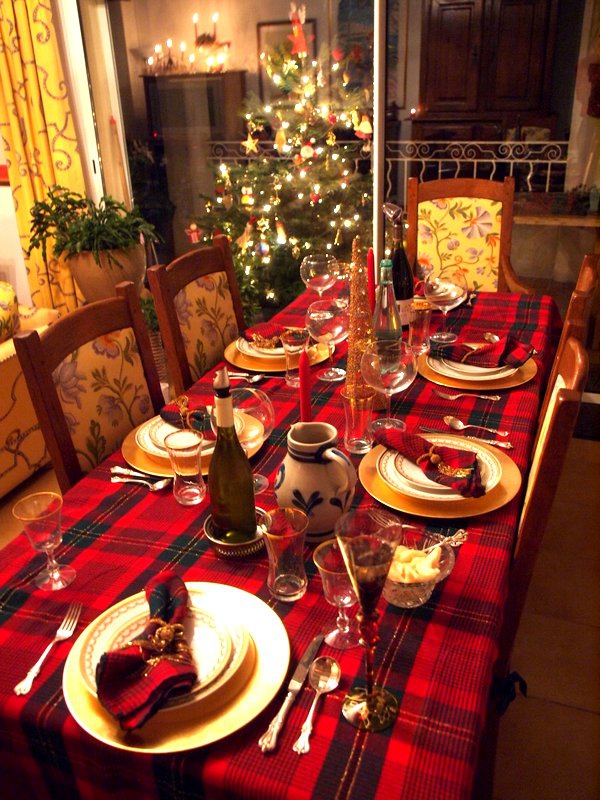
In FRANCE where I now live, the Christmas Eve Réveillon is the meal extraordinaire. It could begin with champagne and oysters, although these are popular throughout the holiday season. If not oysters, perhaps a mixture of shellfish or smoked salmon.
My Réveillon table – many years ago
Foie gras is also de rigeur, although controversial. Geese or ducks are force -fed during the last weeks of their lives to yield extra-large livers.
I love animals, but I also love foie gras. Many years ago, for article research I spent a day working at a goose farm. The geese did not resist the force feeding. Their owner insisted it was not cruel. This was a beautiful farm. The geese were free ranging until their last days. However, not all geese and duck farms are like this.
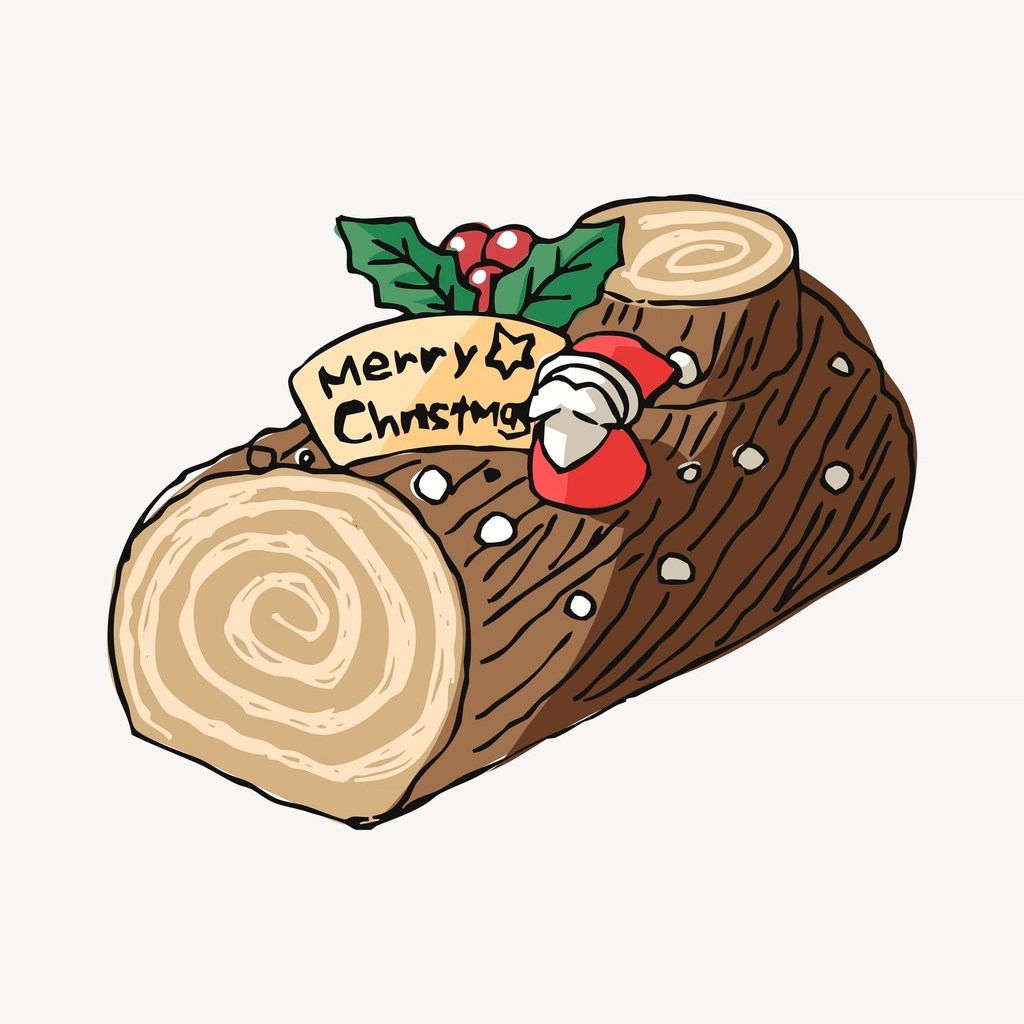
The French love champagne and oysters during the festive season.French Christmas dessert: Bouche de Noel Controversial foie gras is popular in France at this time of year.
I even took a foie gras cooking course and learned to prepare the delicacy which I did for Christmas guests. Those days are over. Now I feel guilty eating foie gras, but I do indulge in a wee bit at Christmas.
Turkey, or another bird such as capon or guinea fowl, can take the spotlight at the Reveillon dinner. A Buche de Noel (Christmas log), a fancy cake in the shape of a log, caps off the meal.
In ITALY, Cinzia tells me, after midnight mass on the 24th, all return home to open presents and enjoy Panettone, the Italian holiday cake, with a glass of sweet wine.
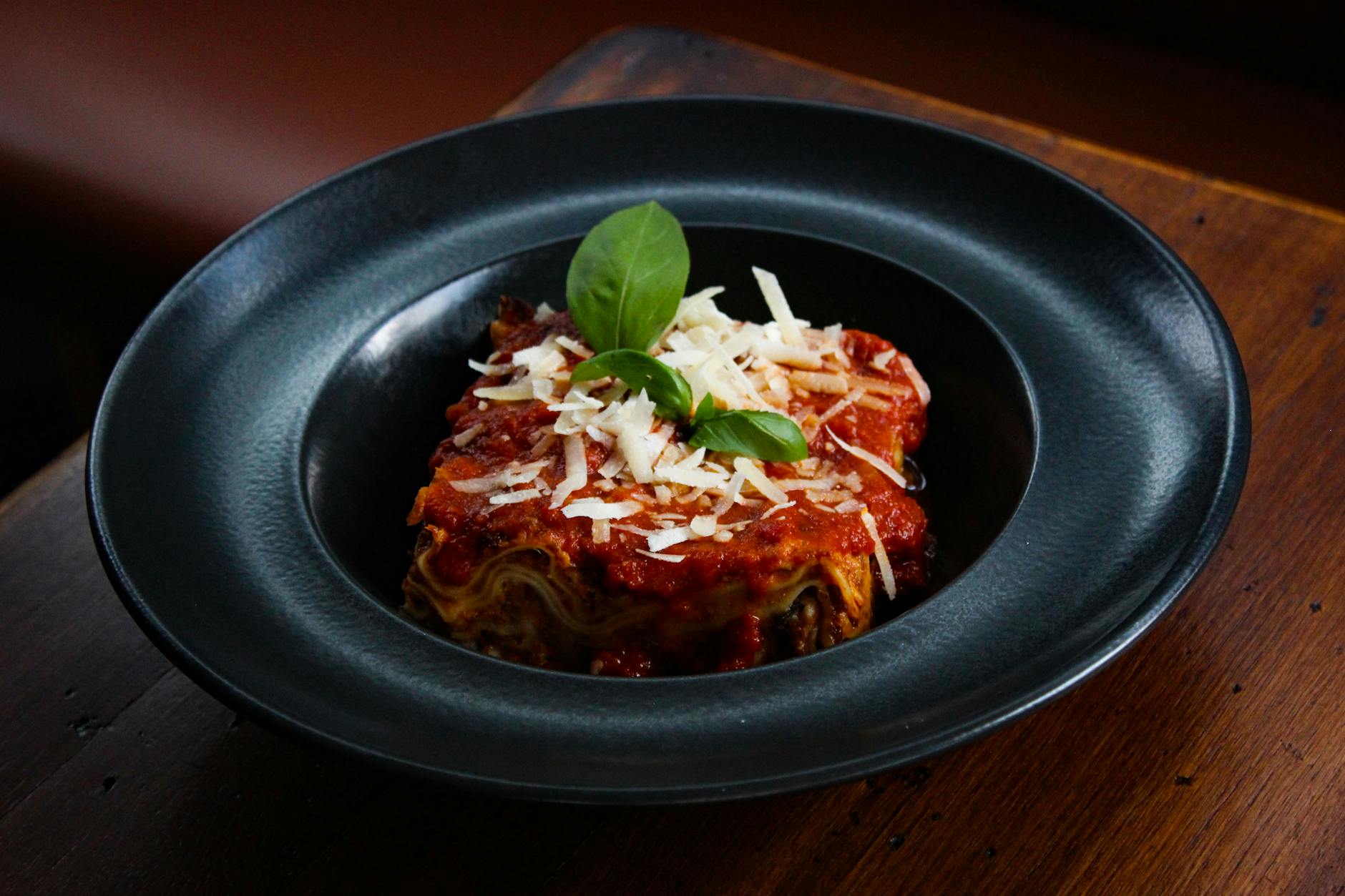
Cinzia loves her mother’s Christmas lasagna.
As in many countries, the customs can vary with regions. She hails from Piedmont, the north, where Christmas lunch on the 25th is the major event. As this is Italy, there’s a pasta course which, at Christmas, is usually homemade stuffed pasta, such as tortellini or cannelloni. Her favorite is her mother’s lasagna. “Now people eat it all the time,” she says, but formerly it was reserved for Christmas and special occasions. Roasted lamb, beef or the holiday special, zampone (stuffed pig’s feet) follow the pasta.
For Cinzia, the Christmas meal represents “the fact of feeling part of a family which was there for you year after year, the (illusory) idea that, no matter what would come, every year the family tradition of eating what she was cooking would perpetuate, it’s about a sense of belonging and ‘safety'”
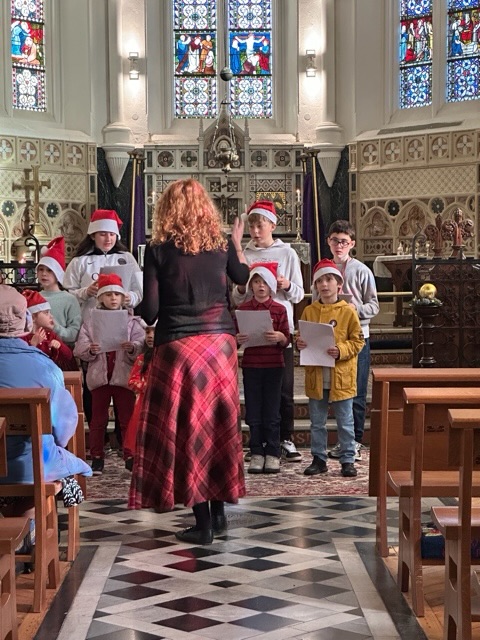
Arabella (back to camera unfortunatley) leads her pupils in Christmas carols
Like Cinzia, Italian Arabella says her favorite is Panettone. But, at her house the major feast is on Christmas Eve featuring some type of meat. That’s fine for her husband and daughter. But, she’s a vegetarian and will also prepare ravioli stuffed with spinach and ricotta. She is also a big fan of an Italian Christmas chocolate, Cri Cri, with hazelnuts and praline.
PanettoneCinzia, left, and her friend Karine
ROMANIA: Romanian Florin remembers childhood Christmases in his country where carnati (smoked sausage) is a holiday must. Preparation in country villages begins on December 18 when neighbors gather outdoors to kill a pig, then cover it with hay and set it afire. Gruseome! Florin even remembers killing the pig once. The cooked beast is divided into parts. All work together to turn out the tasty sausage.
Slaughtered pig is covered in hay and set afire.Pig is butchered with some parts used to make holiday sausage.
Killing the pig is illegal today, but Florin says it probably continues in some areas. Those who are not up to the carnati labor, not to mention killing a pig, can purchase the ready-made sausage. Other Romanian Christmas musts are sarmale (stuffed cabbage) and cozona, a light “puffy” holiday bread.
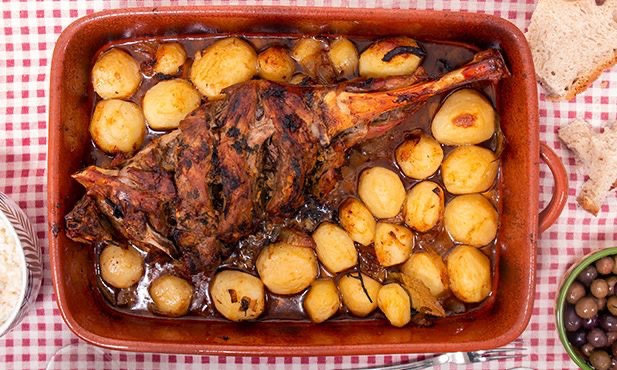
PORTUGAL:“We eat a lot at Christmas and Easter, a lot of different things,” PortugueseCatarina says. “We have a full table of food. It’s too much. We don’t eat it all.” For Christmas Eve dinner, potatoes, carrots, the famous Bacalhau (boiled, dried salted cod), and more fill the table. Her favorite, however, follows the next day, roasted octopus at lunch. She hails from northern Portugal where roasted goat is also common on the 25th.
Roast goat takes center stage on many a holiday table in Portugal.
But it’s the desserts that shine – many, many different treats. She admits they are very rich and sweet, and she is not fond of all. “But I love to see and smell them. That’s Christmas.”
For Portuguese Christmas Eve: boiled cod and vegetables.Catarina and nephew DanyRoast octopus is a Christmas delicacy in Portugal.
She’s right. It’s not just the taste, but the enticing aromas and beautiful presentations that enhance holiday food and make it special. And — friends and family. “Christmas is to be at the table with family,” Catarina adds. Enjoy.
Happy Holidays and Bon Appetit to all.
Scroll down for more holiday photos
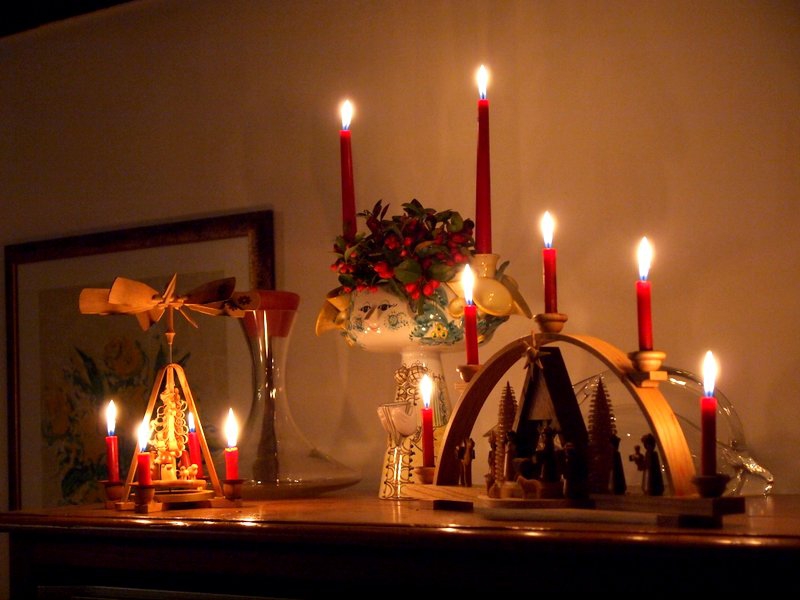
My German holiday decorations.
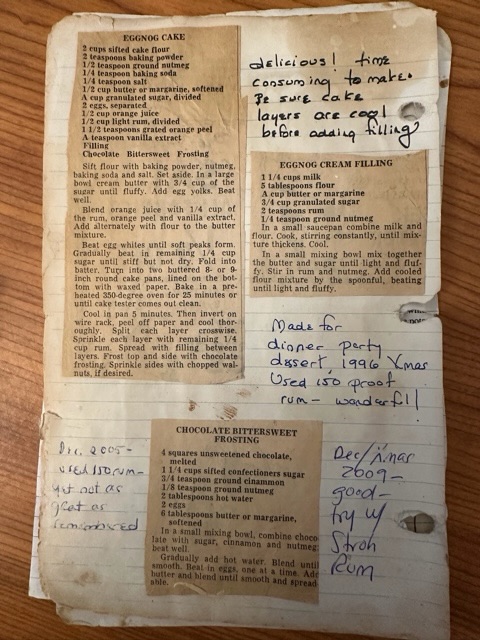
I’m old and so is this treasured Christmas recipe. Long ago I clipped recipes from newspapers and magazines. This one is a winner. Read my scribbled notes. I always go for recipes with a bit of booze. Rum makes this cake.
Smoked eel (exquisite) was a treat at one of my long-ago holiday dinner parties.British friends brought “crackers” and hats to this holiday dinner years ago.
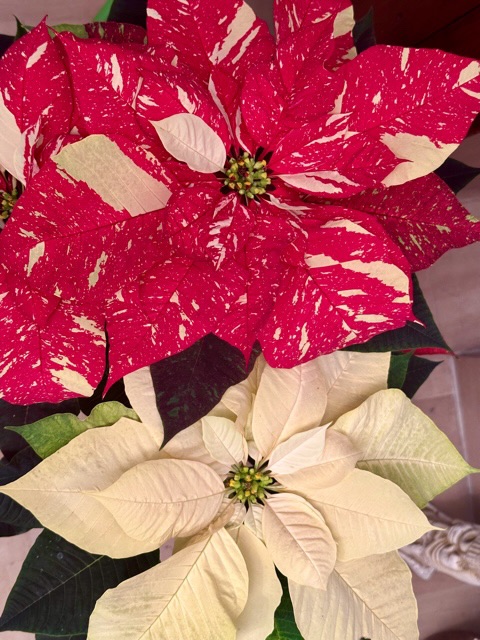
My poinsettia
Coming soon, a guest blog by Swedish friend Lars on the Julbord, “the king-sized jumbo version of the famous smorgasbord.” It’s a food orgy, a mind-boggling, lavish assortment of tastes -and plenty of vodka. Don’t miss it.
If not a Tales and Travel follower, please sign up here. Trust me. It’s safe. Your address is not shared.
Check out my tried and true recipes — keep scrolling down on a phone, or, if on a /PC or tablet, up to the column on right then down to “Recipes.” I will add new recipes soon.
Several years ago I wrote versions of this article which appeared in various publications.
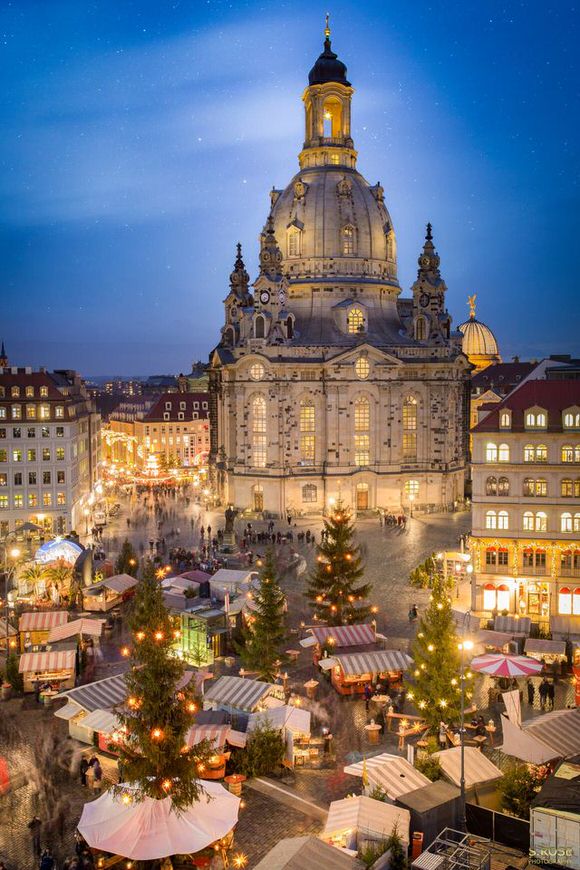
Dresden’s Frauenkirche and the Neumarkt Christmas market. Photo by S.Rose
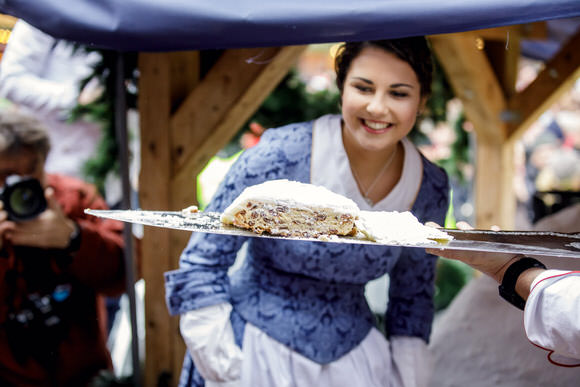
My nose led me to the big black oven. The aromas wafting from behind its doors were heavenly and hunger inducing. Something delicious was certainly baking inside and I had to have a taste. I was in Dresden at the Striezelmarkt, the city’s Christmas market, and it was Stollen, a rich buttery cake with dried fruit, nuts and spices, turning golden inside the outdoor oven. Master baker Joachim Winkler was rolling another batch of dough as spectators watched the creation of Dresden’s famous holiday cake. Best of all, there were free samples to taste.
That was many years ago. I lived in Germany then and sought out holiday markets every December. Major cities like Dresden usually have numerous markets in various locations throughout the town. However, Christmas markets in smaller towns, while perhaps not as grandiose, are equally as enticing.
The tradition of pre-Christmas markets originated in Germany in the late Middle Ages. The custom has spread throughout the world with Christmas markets on the calendar in numerous countries these days. Now I live in France where, sadly, I find Christmas markets a poor imitation of those magical events in Deutschland.
Striezelmarkt in Dresden Photo: Sebastian Weingart (DML-BY)
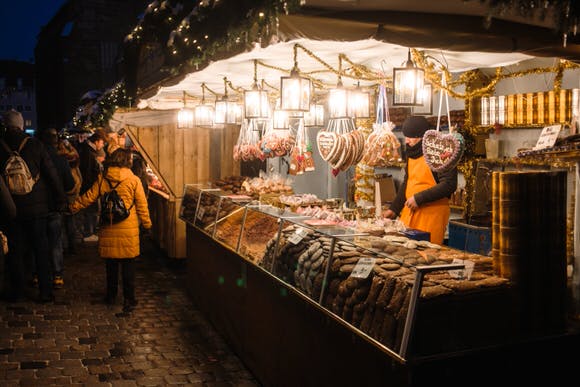
I especially miss going to the markets late in the day. When dark descends, as early as 4 p.m. in December, they are captivating scenes with twinkling lights sparkling on tinsel and gilded ornaments. If snow falls, it’s pure enchantment. People wrapped in heavy winter coats and woolen scarves pack the market square to eye the merchandise displayed at stalls decorated with swaths of fir and pine. Everything from holiday decorations to handicrafts, from mittens to furry slippers, is for sale. Aromas of cinnamon and cloves waft through the chilly air. And, in addition to Stollen, other delicious edible treats stir the appetite: grilled sausages, spicy cookies and Glühwein or “glowing wine,” hot spiced wine served in souvenir mugs.
A toast with Gluehwein at the Munich Christmas market. Photo: Anastasia Dvoryanova
After I tasted free samples of Stollen, I set off to investigate another stand emitting even more delectable aromas. Delicacies called “Quarkspitzen” were bobbing in a pot of bubbling fat. I’ve been to many a Christmas market, but I’d never encountered these gems. Little balls of dough with quark (curd cheese) in the middle, deep-fried and rolled in powdered sugar. Exquisite.
Lebkuchen (German gingerbread) is a seasonal favorite. Photo: Caleb Owens
Food is my favorite part of Christmas markets. Be it in Stuttgart, which claims to have Germany’s largest holiday market, or Nuremberg, which says its market is the most romantic, or Dresden, or any small-town Christmas market, there’s nothing quite like standing out in the winter cold, sipping a Glühwein and savoring a grilled bratwurst as church bells toll and children sing Christmas carols. Move on to another stand for another Glühwein and a healthy portion of Schupfnudeln (potato dumplings with sauerkraut) or Linseneintopf (a thick soup of lentils) and Kartoffelpuffer (potato pancakes). It’s a unique and thoroughly German culinary experience that is scrumptious.
Photo : Cottonbro StudioPhoto: Caleb Owen
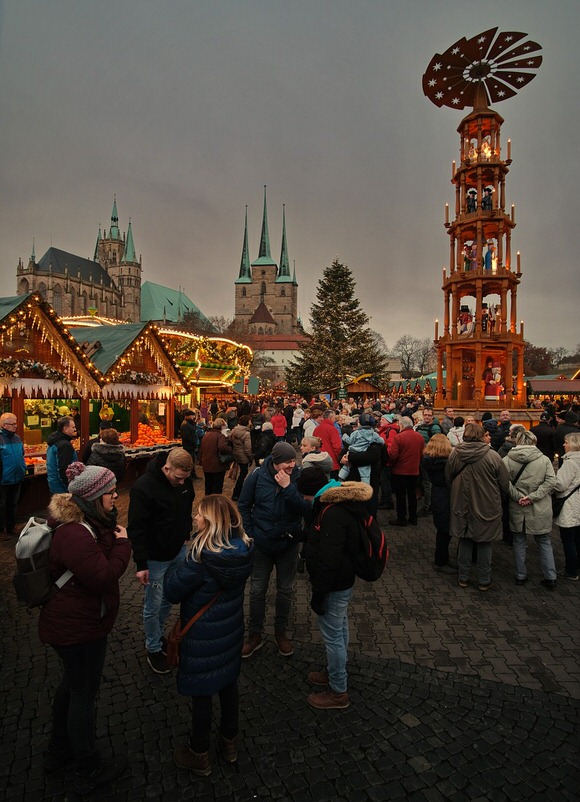
Of course, the markets offer much more than food. Towering over the market in Dresden, in addition to a giant Christmas tree, is a gargantuan, lighted pyramid with carved wooden figures on multi-levels. Smaller versions of the hand-carved pyramids are a traditional holiday decoration dating back some 300 years. The pyramids have holders for candles. When lit, the heat rising from the candles sets the various levels of the pyramid turning, its figures spinning round and round. Woodcarvers in the nearby Erzgebirge (Ore mountains) region make the mobile decorations, as well as other beautiful hand-carved items such as candelabra, smokers (figures that blow smoke from incense cubes) and nutcrackers, which are famous throughout Germany. There are plenty of stands in Dresden, as well as other Christmas markets, selling these prized items of wood. I purchased a hand-carved candelabra with nativity figures which has become a cherished Christmas decoration.
Pyramid at the Dresden Christmas market.
I will spend Christmas in Abano Terme, Italy, a spa town I visited three years in the summer. (see previous post, Taking the Waters – and the Mud, July 2021)It was in the summer and much too hot. Christmas should be perfect. Maybe the mud treatments will soothe my injured body. Of course, a blog post will follow
Wishing all a joyous holiday season full of good food, good cheer and good friends.
If not a Tales and Travel follower, please sign up here. Don’t miss future posts.
“Nothing ever seems too bad, too hard or too sad when you’ve got a Christmas tree in the living room” — Nora Roberts
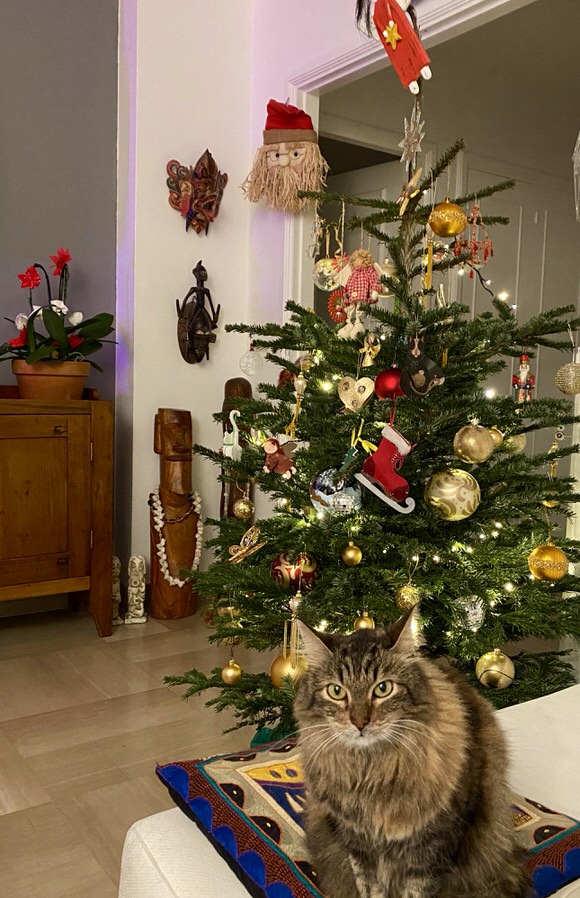
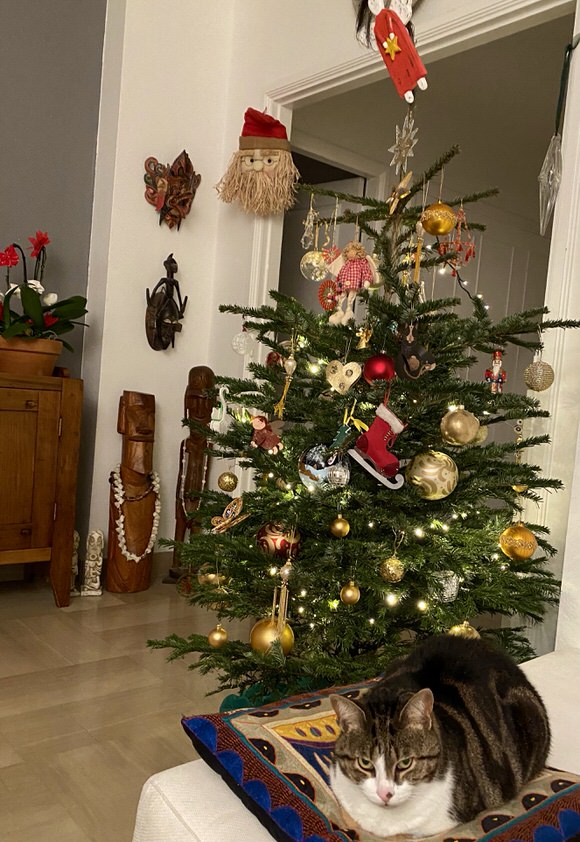
Christmas cat Simba and our tree.
With or without a Christmas tree, may your holiday season be filled with joy, love, laughter – and delicious food.
Scroll down for a few festive photos.
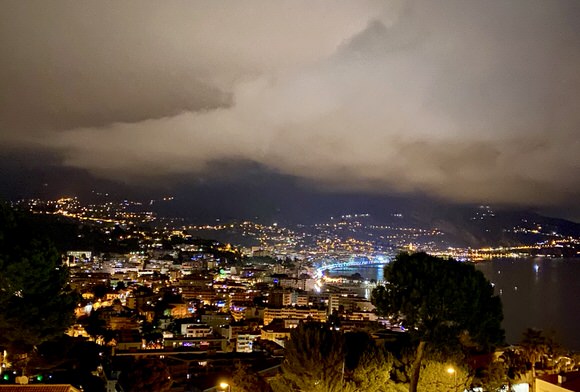
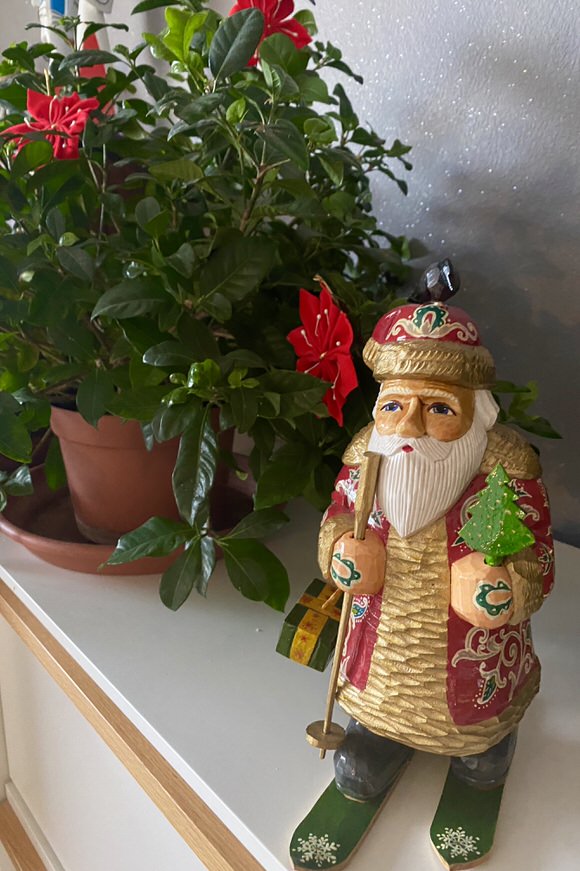
My balcony garden Our view of nearby Menton and its blue Christmas lights.A Russian Santa on skis, one of my holiday treasures. Note the blackbird on his head.After the pre-Christmas rain.Filippo, one of my three Christmas cats. Fortunately they have not tried to climb my precious tree.
Happy 2021. It will be better. We have hope. We have vaccines. We will not have Trump — at least not as president. Rejoice. We can be very, very happy.
More to come soon — including a report on my recent back surgery — it’s good.
If not a Tales and Travel follower, please sign up here. Don’t miss future posts.
Twinkling lights on trees, houses and buildings are as much a part of Christmas as Santa and reindeer. In a tiny hameau in the hills of Provence there’s an illumination extravaganza this holiday season that is a wonder to behold.
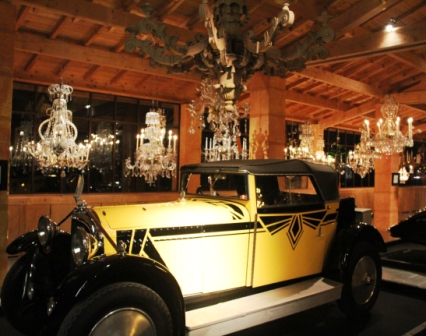
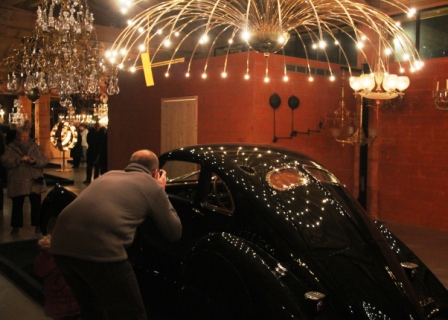
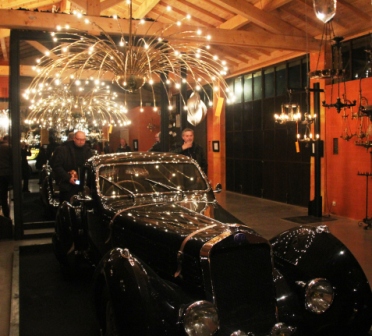
Cars – French classics – gleam under the lights of magnificent chandeliers, most of which are antique. The exhibition brings together his two passions, “cars and chandeliers,” says chandelier designer Regis Mathieu. His company, Mathieu Lustrerie, creates high-end lights, as well as restores and replicates antique chandeliers.
At their showroom numerous glittering antique treasures, as well as some contemporary versions, cast their lights on priceless automobiles – most of which you have probably never heard of: 1937 Delage, 1938 Delahaye, 1926 Hispano-Suiza… There’s also a dazzling 2012 Bugati.
It’s a delightfully different – and fascinating – take on holiday lights.
The nighttime exhibit runs daily, except on holidays, until Jan. 13, from 5 p.m. until 9 p.m. (Hameau des Sauvans, Gargas) www.mathieulustrerie.com
Wishing all a very Merry Christmas, Joyeux Noel, Frohe Weihnachten.
For more on French Christmas, see my guest blog, “Christmas Feasting in France,” posted on Rantings of an Amateur Chef, http://rantingchef.com Special thanks to Lynne for the perfect accompanying food photos.
See slideshow below for more cars and chandeliers. Blog subscribers also welcome. Don’t miss future posts. Click on Email Subscription at top right























 Tales and Travel