Pedaling – and tasting—amongst Danube vineyards

In our not-so-much younger days, Bob (once known as Bicycle Bob) and I did lots of serious pedaling. Weekend bike trips loaded down with panniers in Germany.  Longer treks in Austria,  and even over the Swiss Alps several times.  The Swiss rides, no doubt the most challenging, were our favorites.

Since we’ve settled down in southern France, we seem to do less and less cycling.  A pity, as there is great riding in these parts.  Mt. Ventoux  for one.  I’d never attempt that climb, but Bob long ago said he would… He’s still thinking about it.blog.1

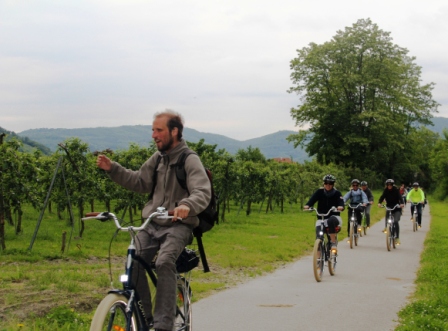
On our recent trip to Austria, we had a chance to get back in the saddle – a Grape Grazing tour by bicycle through the Wachau Valley.  Wine and Biking.  The perfect combination.blog.4

The scenery was  superb along a meandering river bordered by cliffs, forested hills, vineyards and picture-perfect villages.  The pedaling was easy, just 25 kilometers on mainly flat terrain along the Danube and never more than about 25 minutes on the bikes before a  stop.  The bikes were easy- to- ride cruisers with extra comfortable wide seats.  And, the wines were excellent with informative commentary by our helpful guide, Endre Barz, a Hungarian who told us to call him Andy.

Only the weather did not cooperate.  It was cold, gray, dismal, although we never had to use the rain ponchos provided by the tour company.  But, neither did we get to swim in the Danube as the tour literature described.blog.6

Our first stop after a ride along the bike trail that is part of the popular Donau Radweg (Danube Bike Route) was the Domȁne Wachau, a cooperative on the edge of the medieval town of Dϋrnstein where we sampled four different white wines.  In the Wachau Valley, a 21 mile stretch between the towns of Krems and Melk also known as the Danube River Valley, 85 percent of the wines are white.

A 2012 Gelber Muskatteller was first on the agenda, dry, fruity, a “popular summer wine.”  “Austrians prefer young wine.  They drink it immediately,” Andy explained.blog.5

Then came Katzensprung 2012 from the indigenous Grϋner Veltliner grape, a dry, light wine.  Andy told us that there are between 700 and 800 wine producers in the Wachau Valley, mainly small, family farms, with a total of 1,400 hectares of vineyards.

He went on tell us the importance of the Katzensprung wine in the country’s history. After World War II, Austria was divided into four zones:  British, French, Soviet and American.  The seat of government was in Vienna surrounded by the Soviet zone.  ”In 1955 the Austrian president gave visiting Soviet leaders this wine.  He got them drunk and convinced them to let Austria become a neutral nation,” Andy related.

We tasted two Rieslings before a visit to the winery shop where most of the wines were reasonably priced, from seven euros per bottle.  “It’s amazing in Europe.  Austria produces high quality wines but at a lower price than in other countries,” Andy said.blog.9

The charming town of  Dϋrnstein  where we had a lunch break sits at the foot of terraced vineyards and castle ruins. Richard the Lionheart, King of England, was a prisoner in the fortress during the Third Crusade.

From the town, a footpath leads to the ruins where a  remarkable view awaits.  The town’s Parish Church with a Baroque tower is also worth a visit.  Most of our fellow cyclists (we were 12,  from Sweden, Norway, Singapore, Chicago, and Bob and I), preferred to peruse the town’s shops where all sorts of products made from Marille, an apricot variety grown in the Wachau Valley, are big sellers (jams, soaps, schnapps, mustard, chutney, chocolate).blog.12 The Marille strudel Bob ordered to finish off his lunch of a hearty goulash and dumplings was fabulous.

We pedaled on through picturesque countryside, often with vineyards on both sides of the bike path, to Weissenkirchen for a tasting at Weingut Hermengled Mang, a family winery which also has a restaurant, a Heuriger, a special Austrian eatery attached to a winery that serves the season’s new wines and simple, local food.

As we sipped and swirled a Grϋner Veltliner, then a Riesling and lastly a Chardonnay, Andy told us about the wine scandal that almost finished  the wine business in Austria.  Prior to the 1980s, Austria produced mainly sweet wines. The country had a good rapport with Germany which did not produce enough grapes to satisfy the demand of its thirsty wine.gv.blogcitizens.  It bought Austrian wine which it sold as German wine.  But in 1985, Austria did not have enough sweet wine to fulfill its contract for the German market.  Vintners could not add sugar to the wine as it would be detected.  Instead, they added antifreeze which the Germans discovered. Although only three or four companies were involved, “It destroyed 80  percent of the Austrian wine production,” Andy said.
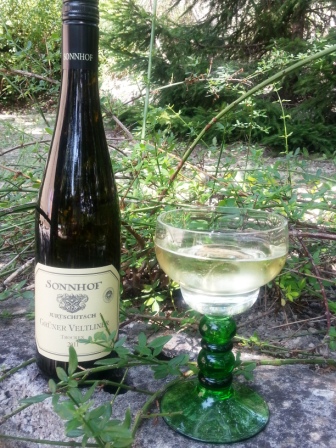
When the wine business was revived, it was decided to focus on dry wine of a high quality and to avoid mass production.  Today “small is beautiful” best describes Austrian wine, most of which is white.  The crisp, dry vintages are appreciated by wine experts around the world.blog.8
VIENNA  WINE

Back in Vienna, we learned more about Austrian wine with a tasting at the Christ Winery and Heuriger in the Vienna community of Jedlersdorf.

Vienna is the only world capital with vineyards in the city limits.  Some 700 hectares on both sides of the Danube are devoted to grapes with 250 wine producers, most of whom produce their own wine, although some sell their grapes to other vintners.blog.2
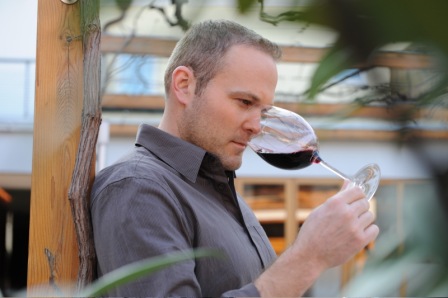
Rainer Christ  took over his father’s winery in 2004, aiming to breathe new life into the more than 400 -year- old company.  He is most enthusiastic about his renowned Gemischter Satz, a Vienna white wine made from different varieties of grapes and his “biggest seller.”  After World War II most vintners used one grape variety to produce one wine, he explained. However, historically several grape varieties were often combined into one wine. “This had been forgotten in Vienna, but it’s become popular in the last 10 to 15 years, “ he said.

Some producers use from eight to ten different grapes varieties in Gemischter Satz,  but usually it’s  from two to four .  We tasted his 2012 Wiener Gemischter Satz which sells  for 7,90 euros  and  is a combination of Grϋner Veltliner, Weissburgunder (Pinot Blanc), Riesling and  Welsch Riesling (an Austrian grape variety).  Christ termed it “elegant, refreshing.”  It has a maximum of 12.5  percent alcohol and is “ not too rich,” he added.  We loved it.  If the trip back to the hotel hadn’t involved a Strassenbahn trek,  followed by a ride on the S bahn and finally U bahn, we would have purchased a case.

Christ has studied oenology and worked in the wine business in many different countries, including the U.S., France, Italy and Germany.  Within the past 20 years, there’s been more science involved in wine production, he explained. “It’s more and more professional, yet knowledge of the past is very important.  Theory and new techniques do not make a good wine.  You need to be out in the vineyards, get ideas and the participation of your parents.”blog.3

Christ, like most vintners, experiments with growing techniques.  His Weiss Burgunder der Vollmund is one result, a wine made from grapes harvested during a full moon.  “We learned that the moon makes a difference.”  Grapes harvested one day before or one day after the full moon had a different character, he explained.   The full moon wine is “richer in aroma, more massive, longer on the tongue.”

We also tried a  2012 Bisamberg Alte Reben, Wiener Gemischter Satz, made from grapes grown in a 75- year old vineyard.  The wine, named “white wine of the year in Austria,”   goes well with richer foods. “Austrians like to combine heavier dishes with full bodied white wines,” he said.  And, Austrians drink white wines with all types of food –meat, fish, poultry, cheese, etc.

Platter of hearty food at the Christ Heuriger

HELPFUL SITES

Grape Grazing Bicycle Wine tour of the Wachau Valley with  Vienna Explorer,  59 euros, http://www.viennaexplorer.com/tours/grape-grazing-tour/‎

Domȁne Wachau, www.domaene-wachau.at

Weingut & Heuriger Christ, www.weingut-christ.at

Vienna Heurigen Express, Hop  on, Hop off sightseeing tour through the Vienna wine region and villages.  Trip ends with a visit to a Heuriger, but you can get off en route to see more at leisure.  www.heurigenexpress.at

Excellent, reasonable hotel in Vienna, Hotel Daniel, http://www.hoteldaniel.comblog.7

More helpful web sites:

http://www.austrianwine.com

www.wienerwein.at

http://www.wien.info

See column at right for recipe:  Baked Salmon Fillets with Goat Cheese and Coriander requested by friend Sue. Comments on blog post and recipes are welcome. See “Leave a Reply” below under Comments. Subscribers also welcome.  Don’t miss future posts.  Click on Email Subscription at top right.
Savoring Switzerland

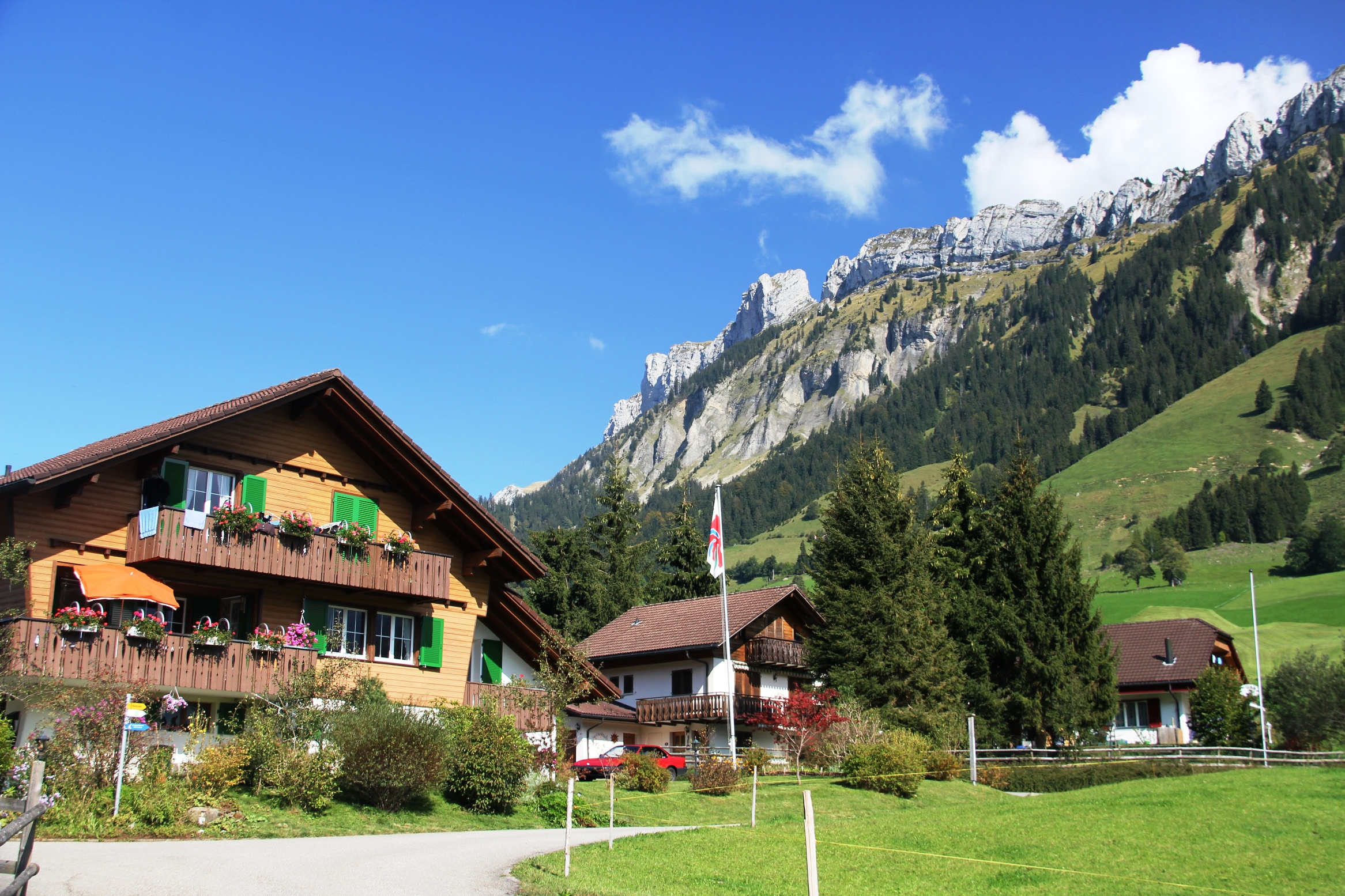
Thank God for digital photography.  I can’t imagine a trip to Switzerland with an old fashioned film camera.  The film costs would break the budget as a gorgeous photo opp beckons wherever you look.

Switzerland may just be my favorite country.  I’ve hiked its demanding mountain trails, skied its endless slopes, and pedaled six of its nine challenging national bike routes across the country.  This time I was on an “agroturismo” press trip. 

Hiking, wine tasting, visiting farms, joining festivals, savoring local cuisine  – we (a group of eight journalists plus a Swiss guide) did it all. 

It got off to a delicious start in Ticino, southern Switzerland where Italian is spoken and the ambience seems more la dolce vita than Swiss efficiency.  We stayed at a small hotel in the vineyards, Fattoria L’Amorosa (www.amorosa.ch)  Ticino is known for excellent wines, especially Merlot.  One of the courses of the welcome dinner featured risotto, a Ticinese favorite replacing pasta.  (See recipe at right for Spinach Risott0)

We toured a winery which, in addition to grapes, grows rice – the world’s northernmost rice plantation. It’s called Loto rice and is used for risotto.  After purchasing  packages of Loto at the shop, where  the farm’s wines are also for sale, we tasted some excellent vintages.  www.terreniallamaggia.ch

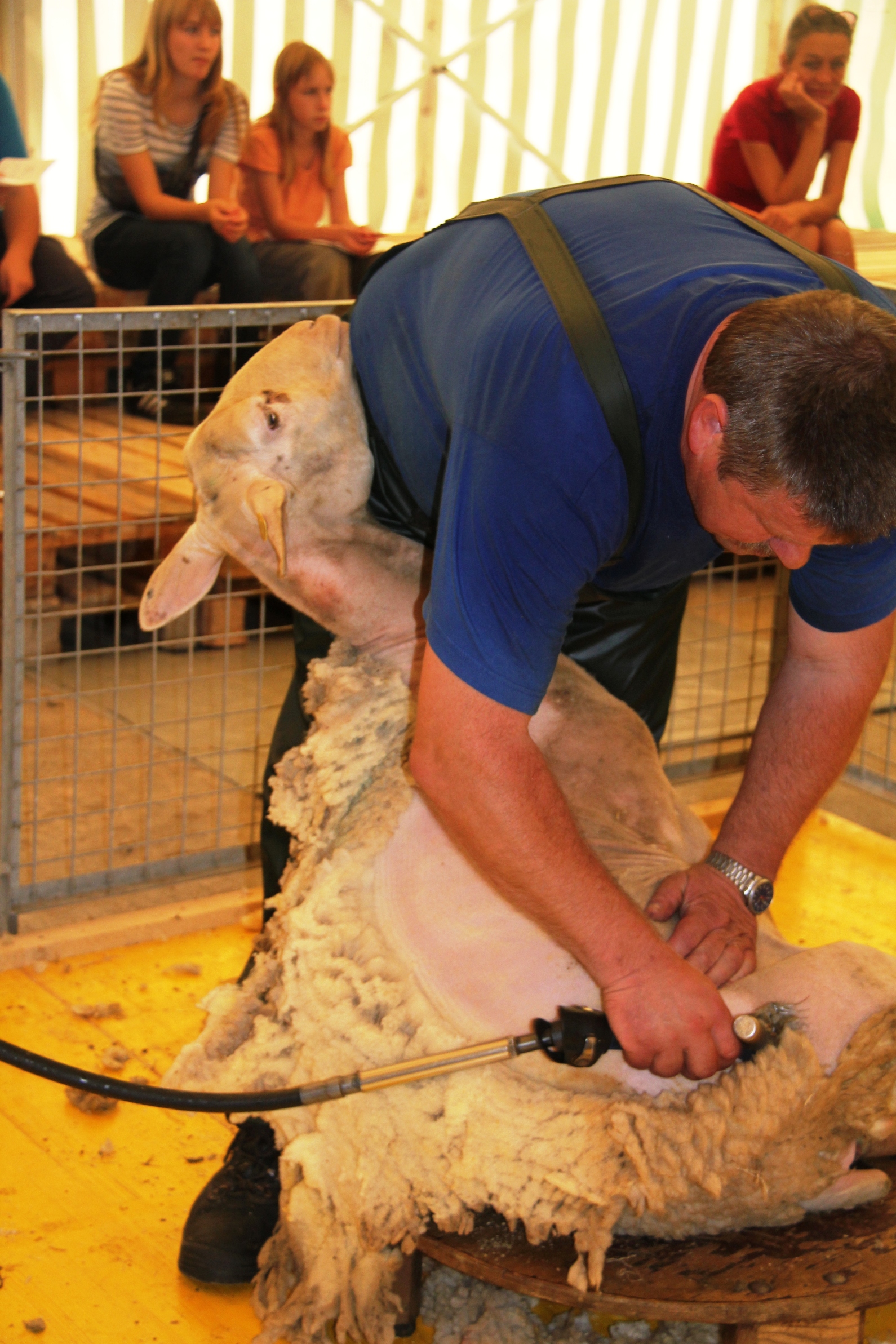
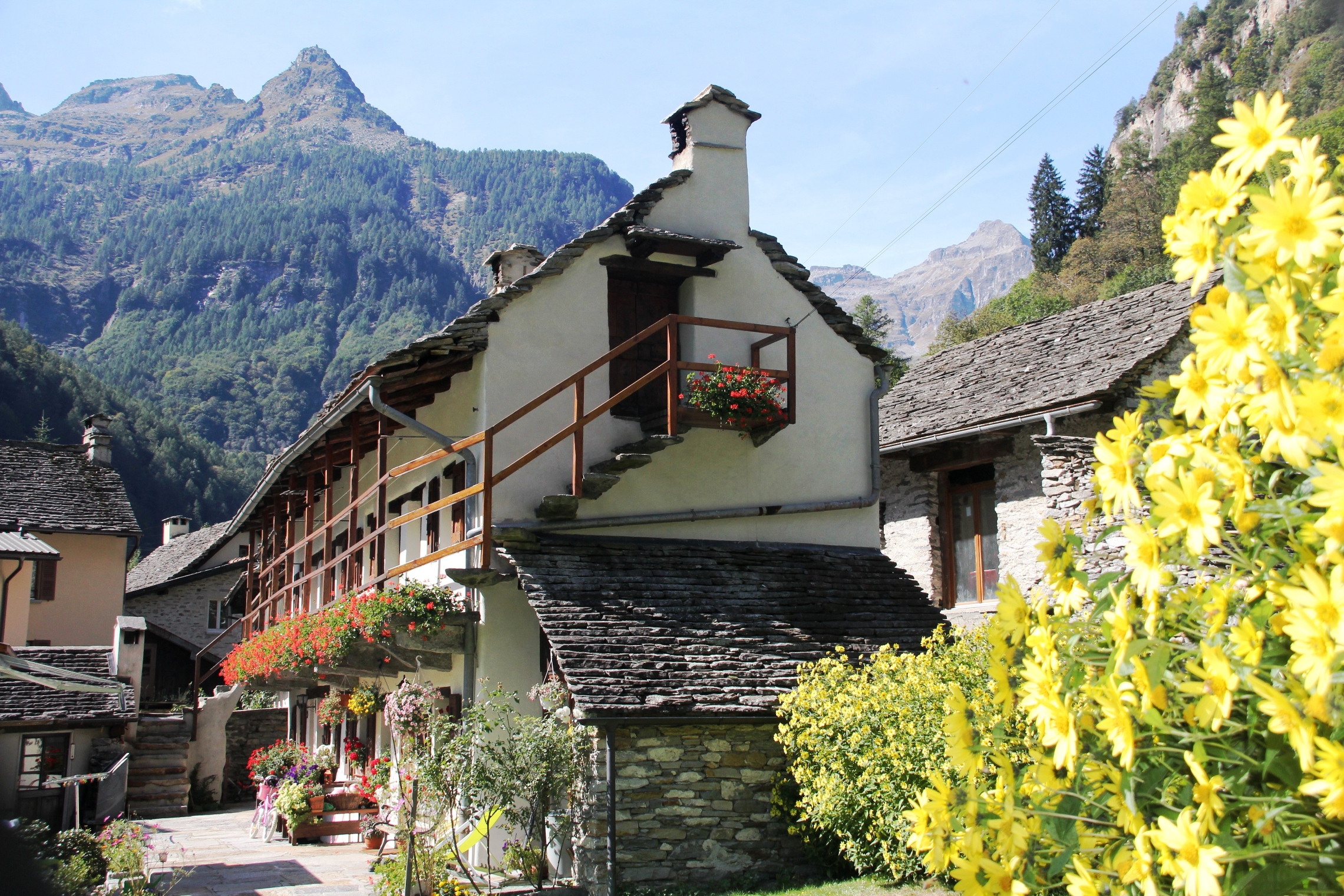
 A bus took us up a narrow, windy mountain road in the Verzasca Valley high above a surging mountain river where tiny villages perched on nearby mountain sides: the stereotype image of beautiful Switzerland.  Our destination was the village of  Sognogno where more photo musts awaited.  Here wool shorn from local sheep is spun and dyed (using only natural products for color), then made into wooly articles such as sweaters and scarves. 

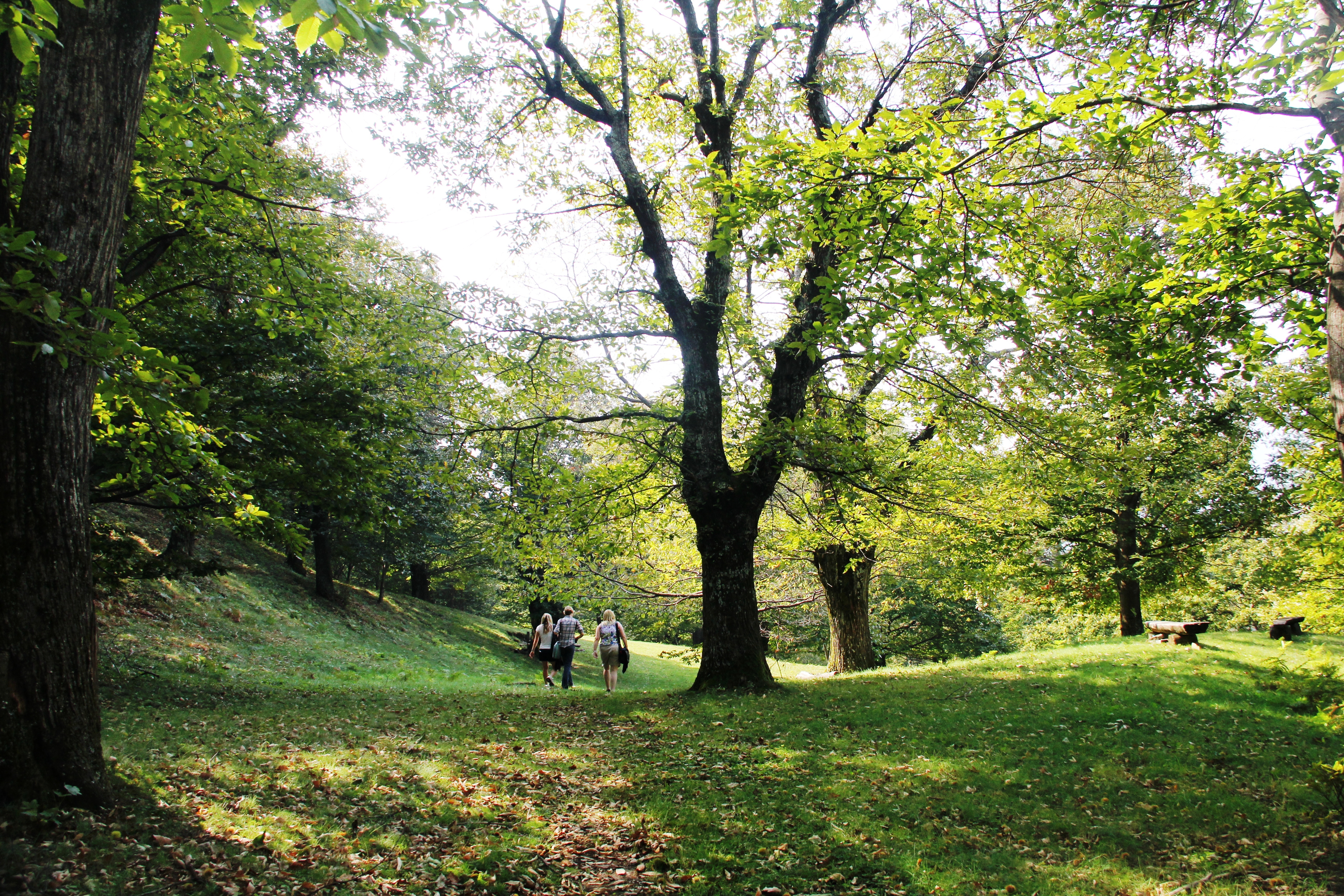
Hiking in the Alps is what draws many to Switzerland.   We did not do any all-day treks to the high peaks, but we did enjoy several scenic shorter hikes. The Chestnut Trail from the village of Vezio in Ticino led us through groves of these magnificent trees.   We learned that chestnuts have been a food staple in the area for centuries. We shared the trail in places with numerous entertaining goats — a pair of bucks even staged a battle for us. 

In central Switzerland (where German is spoken) we hiked up in the hills from the village of Flühli.  The trail took us to several  Kneipp stations.  Kneipp is a type of “kur” therapy based on water, mainly very cold water.  We walked like storks, prancing up and down around a water walkway in a freezing mountain pond.  Then, we moved on to a station with a hose for spraying your face with the ice bath.  Finally a place for submerging arms.  A guide provided explanations and instructions of proper technique, but you could easily give it a go on your own.  It’s chilly, but refreshing and said to do wonders for your health.  www.fluehli-wasser.ch 

Our final hike was an educational experience in the Moorlands, the UNESCO Biosphere Entlebuch near Luzern.  Barefoot, we followed a guide  off the trail back into the swampy landscape. We sank in the squishy mud as he provided fascinating info on the terrain, its insects and plant life. We saw carnivorous plants, an ant hill whose ants don’t bite (actually they do bite, but the bite is not supposed to penetrate human skin,  however one with a mighty chopper got me), a tiny frog and more.  www.biosphaere.ch 

We had fun at two local festivals during our week-long journey. In Mendrisiotto near the Italian border we joined  locals at a jovial wine fest:  music, singing, all kinds of tempting food, and plenty of wine.  Revelers crowded the narrow streets and courtyards where vintners had their stands. We tasted the wine along with roast suckling pig that had been turning on a spit above an open fire. www.mendrisiottoturismo.ch

Cows were the  focus of the festival, the Alpabfahrt, in Schuepfheim in central Switzerland.  Crowds congregate along the village streets to watch the parade of beasts as they come back to the valley after spending the summer in high mountain pastures.  It’s a jolly event with the cows all decked out in flower wreaths, their massive bells clanging as they tread by,  spectators cheering and jostling for the best photo opps — and lots of cheese and wurst stands for the hungry. 

One night during our travels we stayed on a farm , a large one with many rooms for guests. Toilet and shower facilities are shared.  For extra economy, you can opt to “sleep in the straw” – a room with a plank of straw and pillows. During our visit, a father with two young boys spent the night in the hay.  They loved it. You need a sleeping bag.  The farm dinner that night included a buffet with 23 different kinds of local cheese.  www.berggasthaus-salwideli.ch

A wake-up call at 5:30 a.m. got us off to an early start on our next to last day. We took a short walk to the cheese dairy farm Gerschnialp where cows were being milked.  Milking is all done by machine, but we had the opportunity to try the hand method – very easy to get squirted with a stream of milk as I found out.  We watched and helped with the numerous steps in the cheese-making process.  And, we tasted the final products that had been aging on shelves in temperature-controlled rooms.

Yet another walk as the sun was edging over the peaks and basking the mountains in a rosy glow –past fields of cows now back in their pastures with their bells clanging  as they munched on grass, then through the woods to a cable car station for the scenic ride up to Mount Titlis (3,020 meters elevation) above the town of Engleberg.  The viewing terrace at the top is camera heaven.  A popular attraction is a spooky walk through a dark glacier grotto.  A ride on the Ice Flyer, a chair lift that takes you down over glacier crevasses, then back up, is spectacular.

My very favorite part of the Titlis visit was on the way down.  Instead of riding the cable car to the bottom, we got off at the Gerschnialp station and hopped on Trotti bikes (like scooters),  You stand on the bike platform, then head down a mountain lane at top speed, soaring around curves, faster and faster.  It’s thrilling. I wanted to go again.  www.titlis.ch; www.engleberg.ch

Our trip ended in Lucerne, that Swiss gem that is a must for visitors to this land of mountains, lakes, cheese, chocolate — and endless photos. www.luzern.comwww.MySwitzerland.com

See below for more photos.  Click on photo to see full size.  And, try some delicious risotto.  Click on Spinach Risotto under recipes at right.  Comments — and subscribers — welcome


Gourmet Escapade in the Vineyards

 It was a bit of paradise, a perfect combination: trekking  though spring vineyards with stops en route to sip wine and savor gourmet delicacies.  I could not pass this one up – the 12th Escapade des Gourmets in the vine covered slopes surrounding Rasteau, a town well known for its fine Côtes-du-Rhône wines.

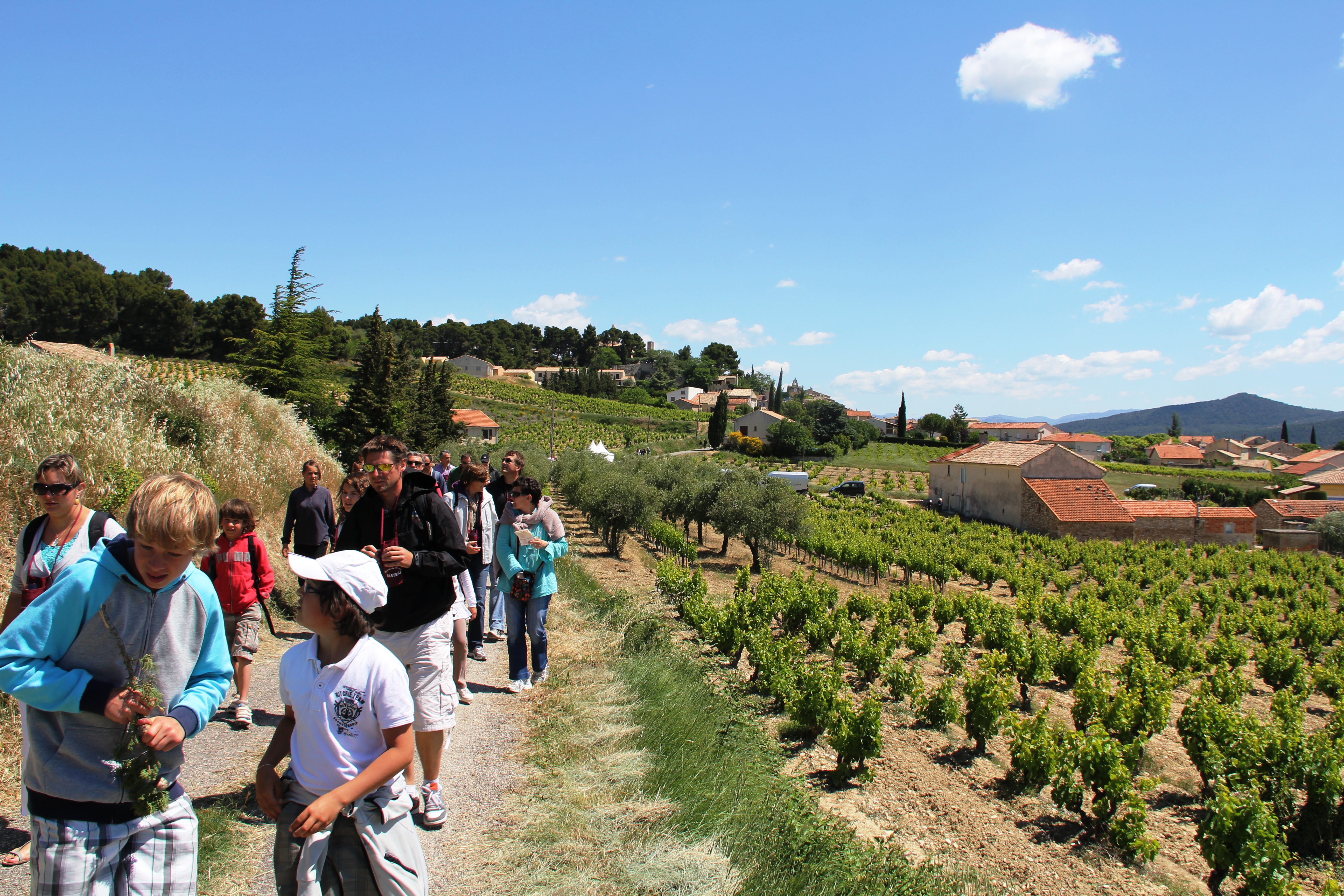
Hiking in the vineyards

This jolly and tasty event was attended by some 2,500 participants who, with dogs and children in tow, hiked up and down the picturesque hillsides.  The scenery and views were splendid. But, the star attractions were wine and food – and entertainment.

The six-kilometer (four hours with stops) jaunt featured six stops along the route, each offering a different culinary treat and numerous wines to sample that best accompanied the food offered.

After paying 36 euros , each participant was given a bib with a glass, and a card marked with the six different stops and the list of wines offered at each.  Participants were also given numbers which assigned them to groups for departure purposes lest all set out at once creating chaos on the hillsides.  Our group was initially accompanied by a farmer in vintage attire who was followed by an obedient flock of geese, two goats, and a dog pulling a baby goat attached to a leash. A jovial entourage.

As you entered each stop, your card was checked.  Then you could proceed to the food and wines – several wines at each stop which you could rate in case you wanted to make purchases later.

First stop, mise en bouche,  hearty snacks,  where three different vintages of Côtes-du Rhône blanc could be sampled. We moved on to my favorite, foie gras.  Here three sweet wines, Vin doux naturel doré, were offered.

Best not go overboard on the wine – many kilometers ahead.  And, the terrain became more demanding with short climbs up a hill into the woods. Along the way were views of the distant peak of Mt.Ventoux, and vineyards stretching mile after mile.  Lots of photo opps.

 At the Feuilleté stop, yummy pastry treats filled with cheese awaited, as well as three different Côtes-du-Rhône rosés.  At this stop and many, a guitarist played.  Some featured singers. Many in the crowd joined in singing folk songs, cabaret tunes, pop… At one stop a male choir performed in a vineyard chapel.  By the last stop, gateaux chocolat,  (chocolate cake) many were so moved by the wine and music, they danced.


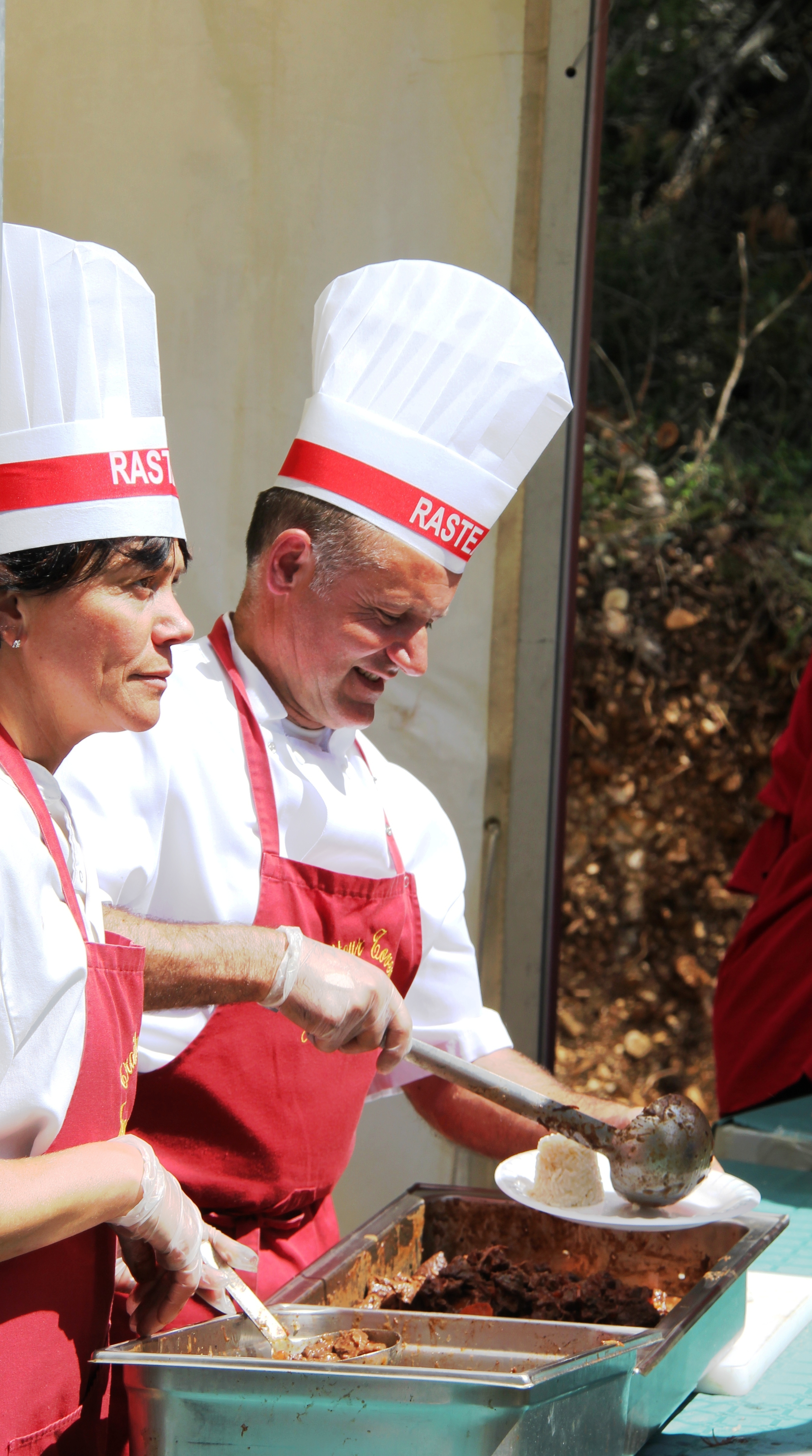
The main course of this progressive meal was Daube Provencale (beef stew)  –— served hot in the hinterlands buffet style. Hats off to the Rasteau volunteers, some 120 dedicated souls who manned the stands, served the food and wine, and overcame many an obstacle to transport both cuisine and drink to these remote locales.  Portable toilets with sawdust had even been constructed.

Wine aficionados had a field day at the Daube stop where no less than 10 Rasteau Côtes-du Rhône Villages rouge wines were offered.  What’s a French meal without cheese?  That was next where another five Côtes-du Rhône Villages reds could be tasted.

The finale, Gateaux chocolat, was   paired with two different sweet wines, Vin doux naturel rouge.


This is one not to miss.  Next year’s Escapade will take place on May 13.  Details at www.terres-de-lumiere.com

More to come on Tales and Travels, including new recipes and more photos in the photo gallery. You’re welcome to subscribe to future posts, and comments are also welcome.

                                                              ###