Since I have been doing nothing exciting to write about, this will be mainly a photo blog.
The heat and humidity here in southern France have been too much for me. Fortunately, my apartment building has a TDF (to die for) pool. I swim and do my pool rehabilitation exercises every morning, then spend the rest of the day in the comfort of my air-conditioned apartment. It gets monotonous.
At 9 a.m. I am often the only one in the pool. Heaven!
Not just the heat, but the crowds also keep me home bound. I live in a vacation paradise. The beaches are packed. Finding a parking place is as challenging as finding a contact lens in the sea. A tranquilizer is required to negotiate the traffic.
Everyone is at the beach.
It is in the French DNA to take vacation in July or August, with August being the preferable month. This applies to all – not just families with children which is understandable.
A bachelor lawyer I know has closed shop for all of August. Friend Karen bought an apartment in the spring. She is having it renovated, but all work stopped in mid July and will not continue until September. Vacation time.
My physical therapist is “en vacance “ for the entire month. (The French get five weeks of paid vacation per year, plus lots of holidays.). It’s best not to get sick in France in August. Your doctor will likely be on the golf course or beach somewhere far off. Your favorite pharmacy, bakery, butcher shop – likely closed until September.
Fortunately, the “rentree” ( when kids go back to school) is around the corner. Life will return to normal soon.
Following are random photos retrieved from the innards of my computer. Most are from fascinating trips husband Bob and I had the fortune to enjoy. We loved to explore far off lands, learn about different cultures, and meet the locals. It was all fun and enriching.
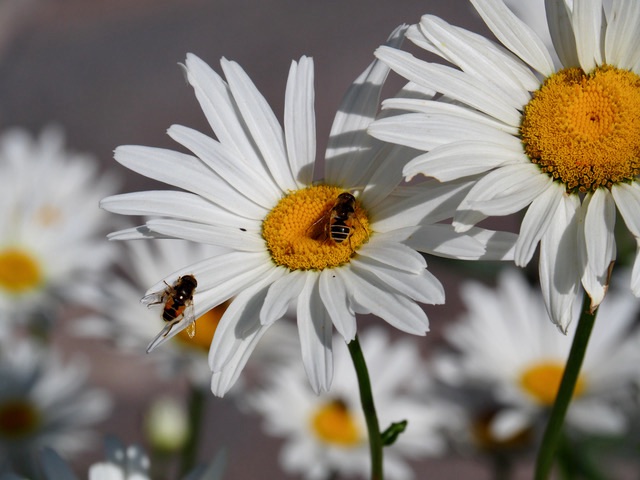
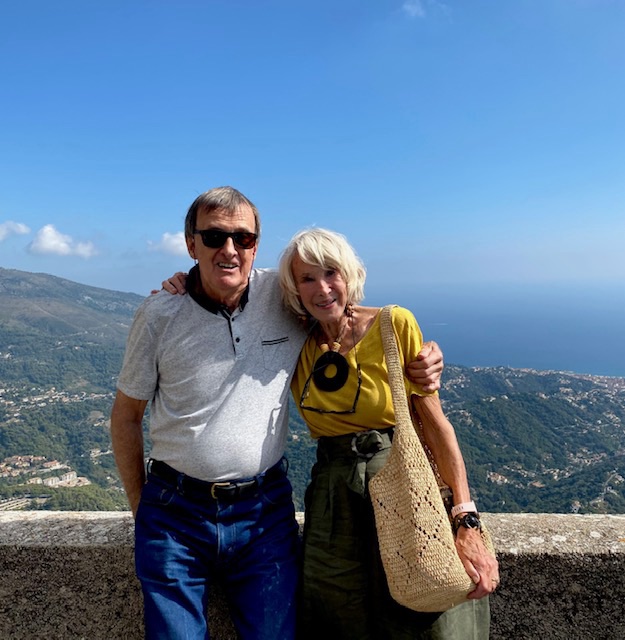
Before long I hope the beach will be like this.Sri Lanka hills at sunsetFort gunnery platform, Nizwa, OmanDaisies – and beesPeillon, France. I went there on July 9 to commemorate the 1 year anniversary my beloved Bob’s death. We had been there many, many years ago.
Geraniums in Grimentz, Swizerland
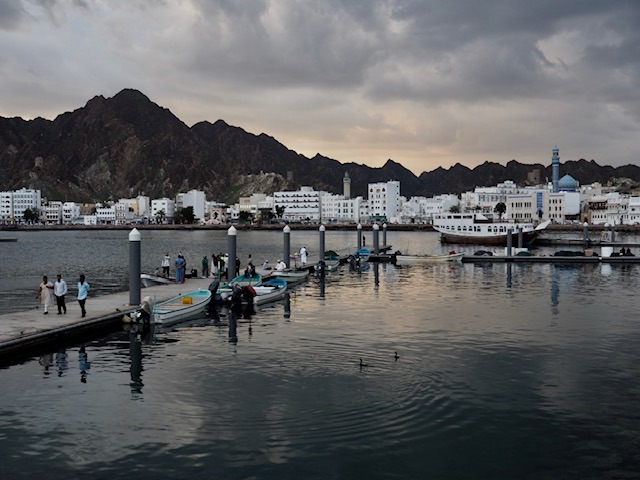
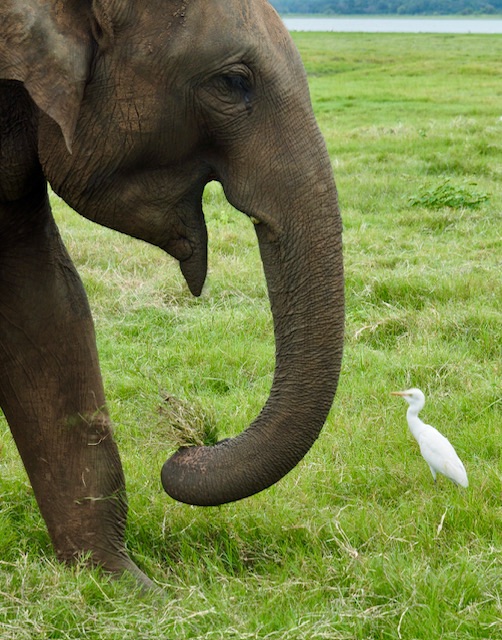
Name this bird. Seen in Sri Lanka.Muscat, Oman, at daybreak.Mountain goat in Oman mountainsIn the medieval garden at the Chateau of St. Agnes, FranceMaldives
Wildlife in Sri Lanka
MemoriesBeauty in the canton of Valais, SwitzerlandOn safari in Rajasthan, India.
Classy mansion in Cap Martin, France.
Sultan Qaboos Grand Mosque, Muscat, OmanDalmatian coast, Croatia
If not a Tales and Travel follower, please sign up here. Don’t miss future posts.
Check out my tried and true recipes — keep scrolling down on a phone, or, if on a PC or table, up to the column on right then down to “Recipes.”
I was draped in shimmering scarves. A colorful turban perched atop Bob’s head. We boarded an oxcart, sat regally on pillows, and set off, bumping along a dusty road, en route to “ a mesmerizing, surreal dinner.”
Soon it would be dark, but it was still light enough to admire distant mountains, lonely cows foraging for food and the occasional villager checking on his sheep. We were headed to a 16th century step well in the hills surrounding Rawla Narlai, an ancient hunting manor turned hotel/resort deep in Rajasthan, India.
Kitsch? A gimmick for tourists? Of course, but it was fun
Step wells are just that – subterranean Indian architectural structures, wells accessed by a series of steps down to a pool of water.
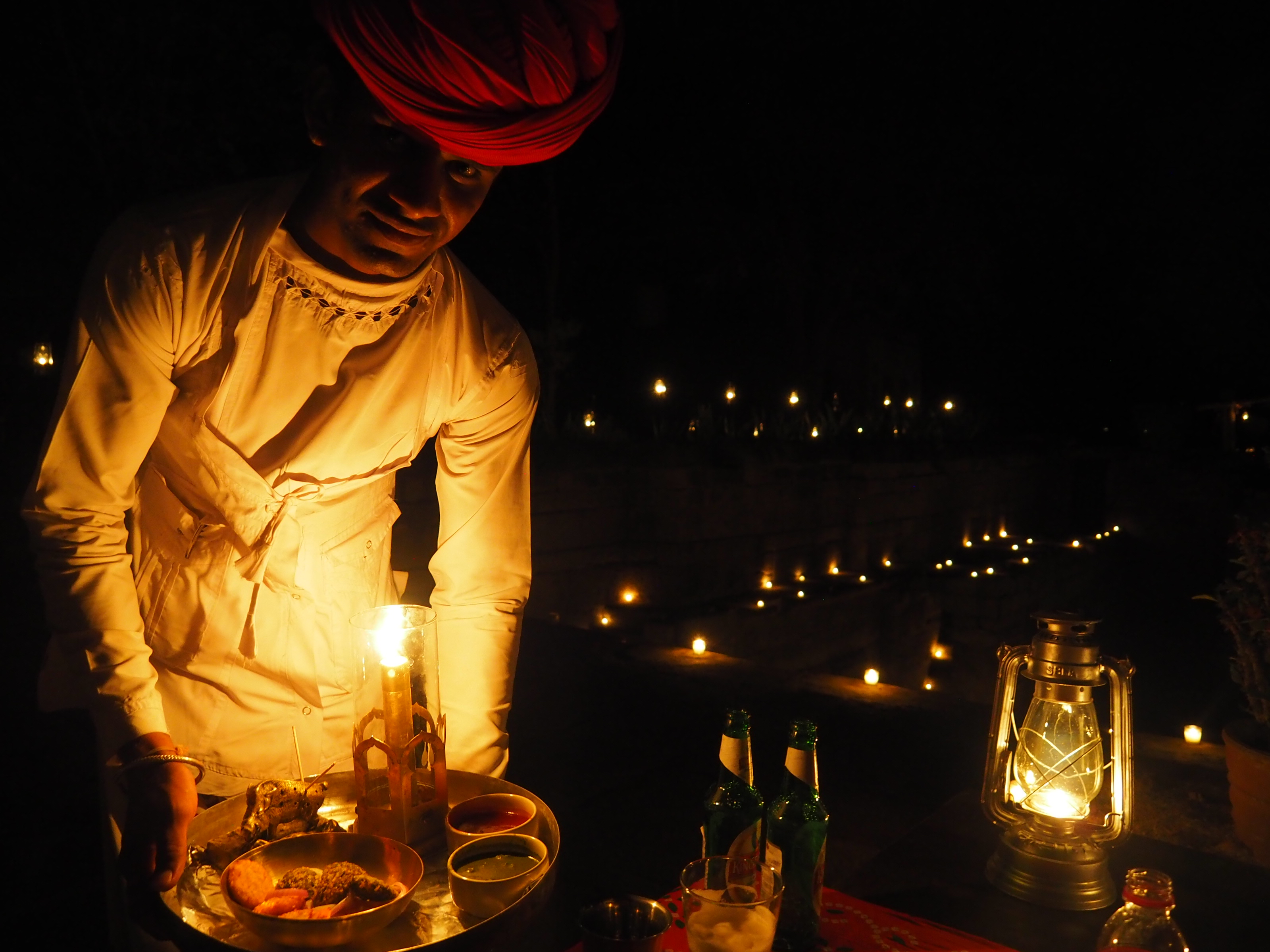
Dinner at the edge of this ancient well was good, but it was the ambience that deserves the stars. Magic and mystical. Seven hundred oil lamps flickered all around the deep hole. Hypnotic sounds echoed from the eerie darkness. Costumed waiters mysteriously appeared offering us all manner of delicacies on silver trays.
Jain temple in Narlai
OK. It is all very touristy and not the kind of experience we usually opt for during our travels. But, we were the only tourists. Just us, the waiters, and a few musicians in the midst of this wild and weird setting. When there are more participants (almost always), more entertainment accompanies the spectacle. We had it all to ourselves, and it was indeed “mesmerizing,”as promised in the literature.
Not many tourists visit Rajasthan, India’s best-loved region, in May when temperatures reach 45 C°, (113 F°) – even above. But, after attending Alok and Ankita’s April 2018 Wedding (see previous post June 21, 2018), we wanted to see more of India. It was hot, very hot, but we survived. We did all on the itinerary except the ride on the legendary Kipling Train, “only 3rdclass.” We were told the train was not running, but I suspect the tour operator felt two old geezers would likely succumb on the two-hour “rudimentary” journey in that heat. He may have been right.
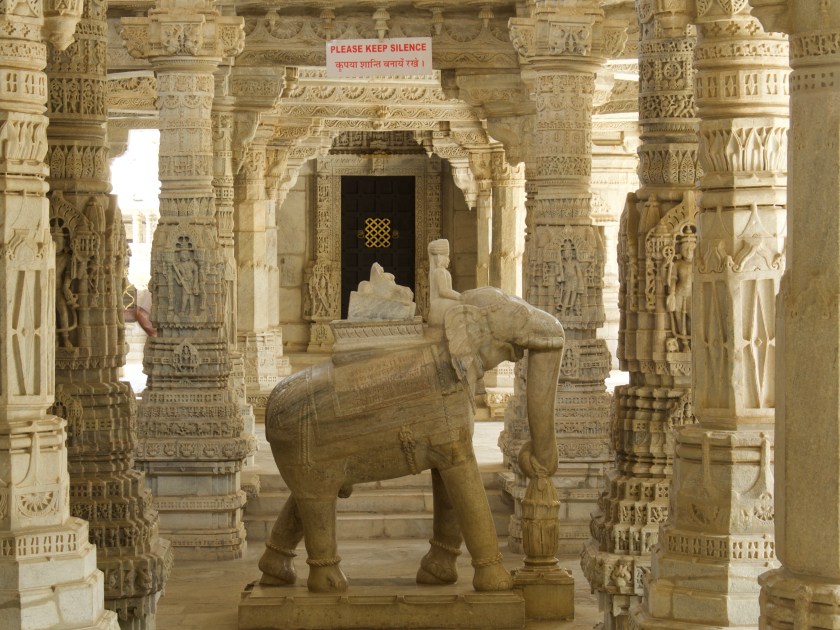
Ranakpur, a 15th century Jain temple
It was a disappointment, but we feasted on so much during our fascinating Rajasthan journey — and I do not mean food. There was plenty of that, but, for the most part, a bit too fiery for us. Palaces, temples, forts, gardens, crafts, folk art, bustling cities, varied landscape — Rajasthan has all.
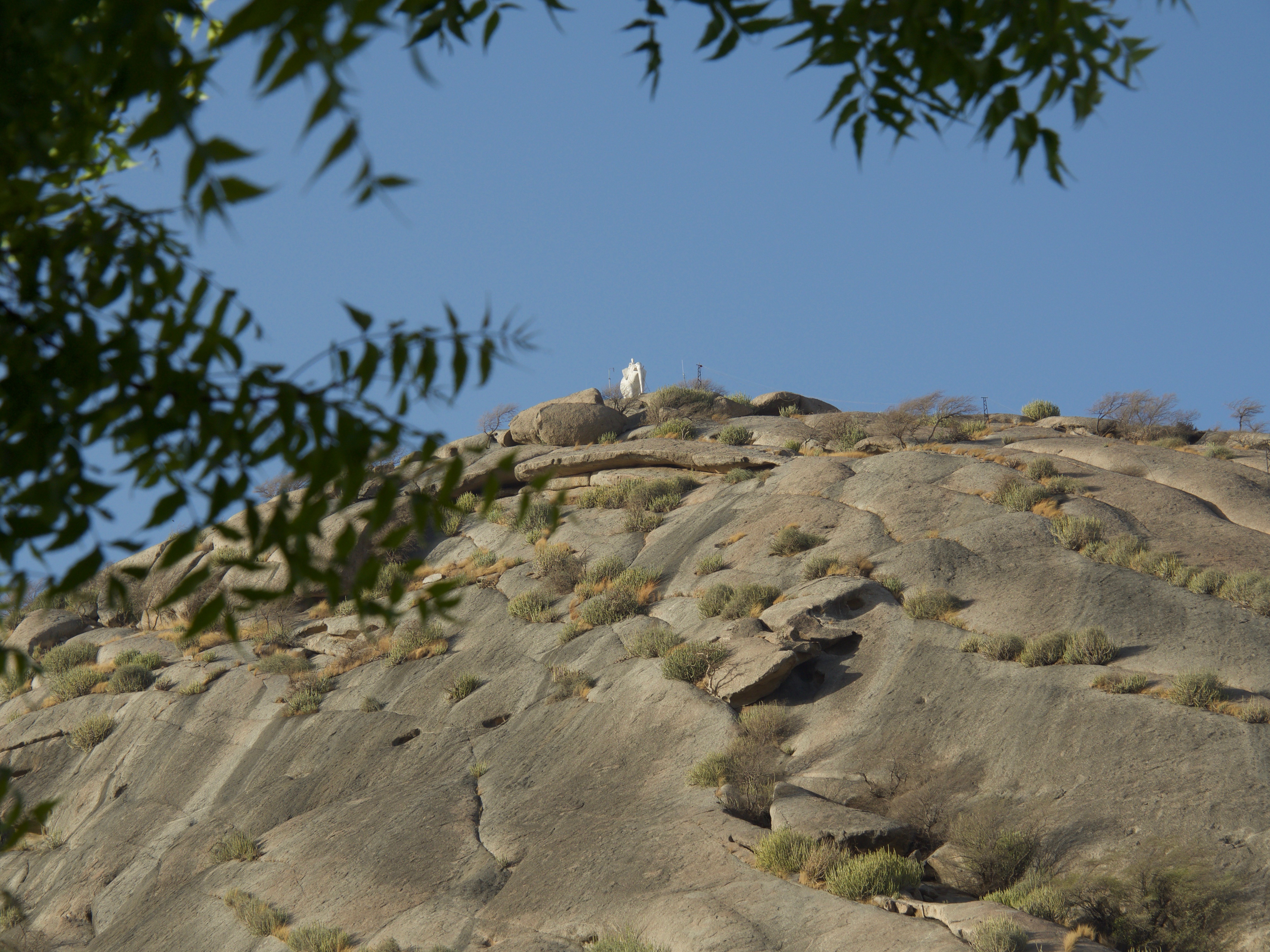
A trek to the top is a “must” for Narlai visitors. We passed — too hot.
The idyllic “holy” village of Narlai sits at the base of an imposing rock hill topped with a colossal elephant statue. We, and an Indian family, were the only guests at Rawla, our 32-room abode that originally belonged the King of Jodhpur and served as a retreat for the royal family.
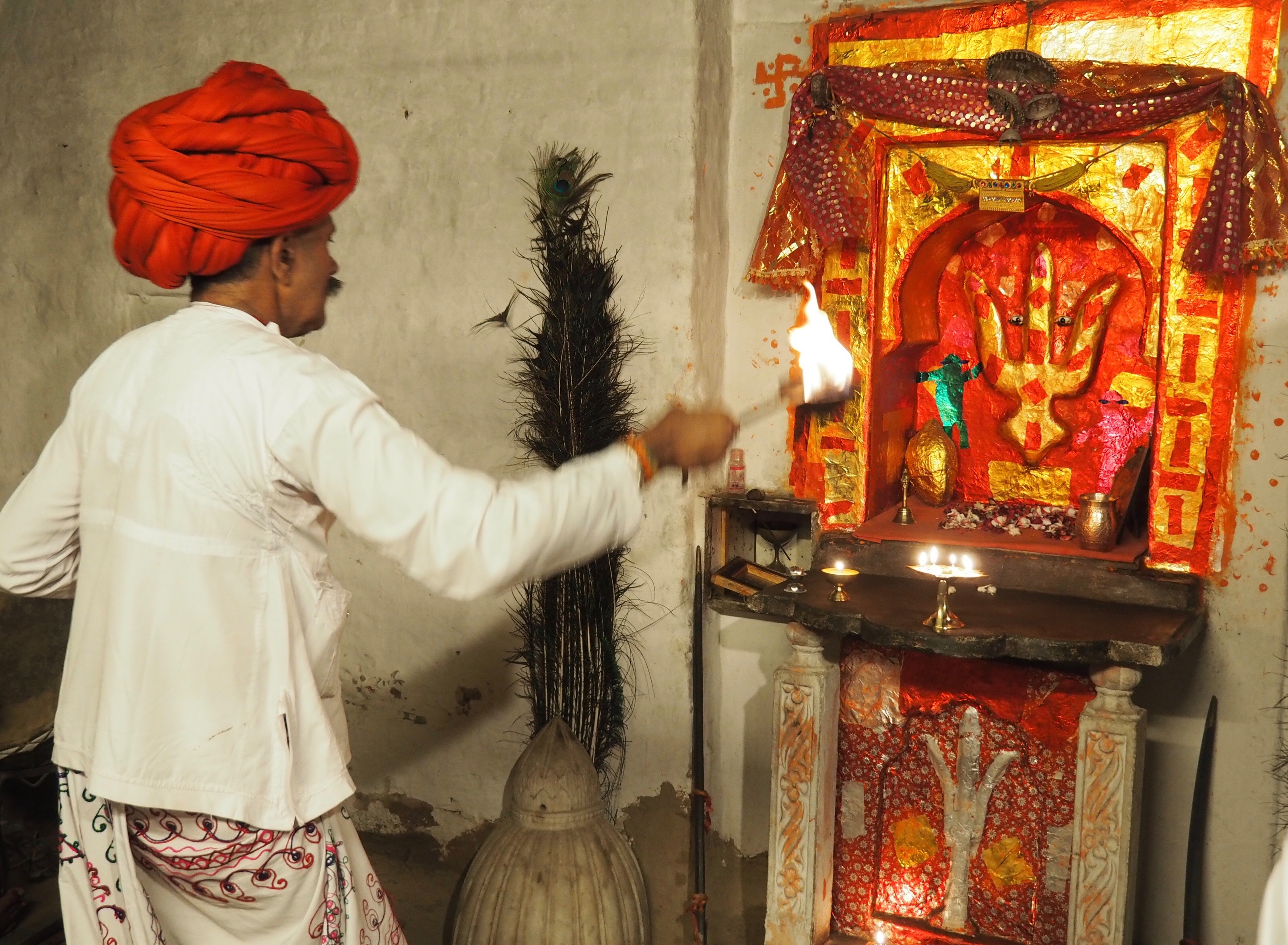
We followed a hotel employee for a guided village walk, were invited inside a few houses, and marveled at a newly reconstructed Jain temple. We witnessed the daily religious fire ceremony.
Jainism is an ancient Indian religion which preaches non-injury to living creatures and re-incarnation. Many Jains from Narlai, as well as Hindis, have gone off to work in big cities, but own property in the village and contribute generously to its temples (300 in the village of 10,000).
Narlai villager
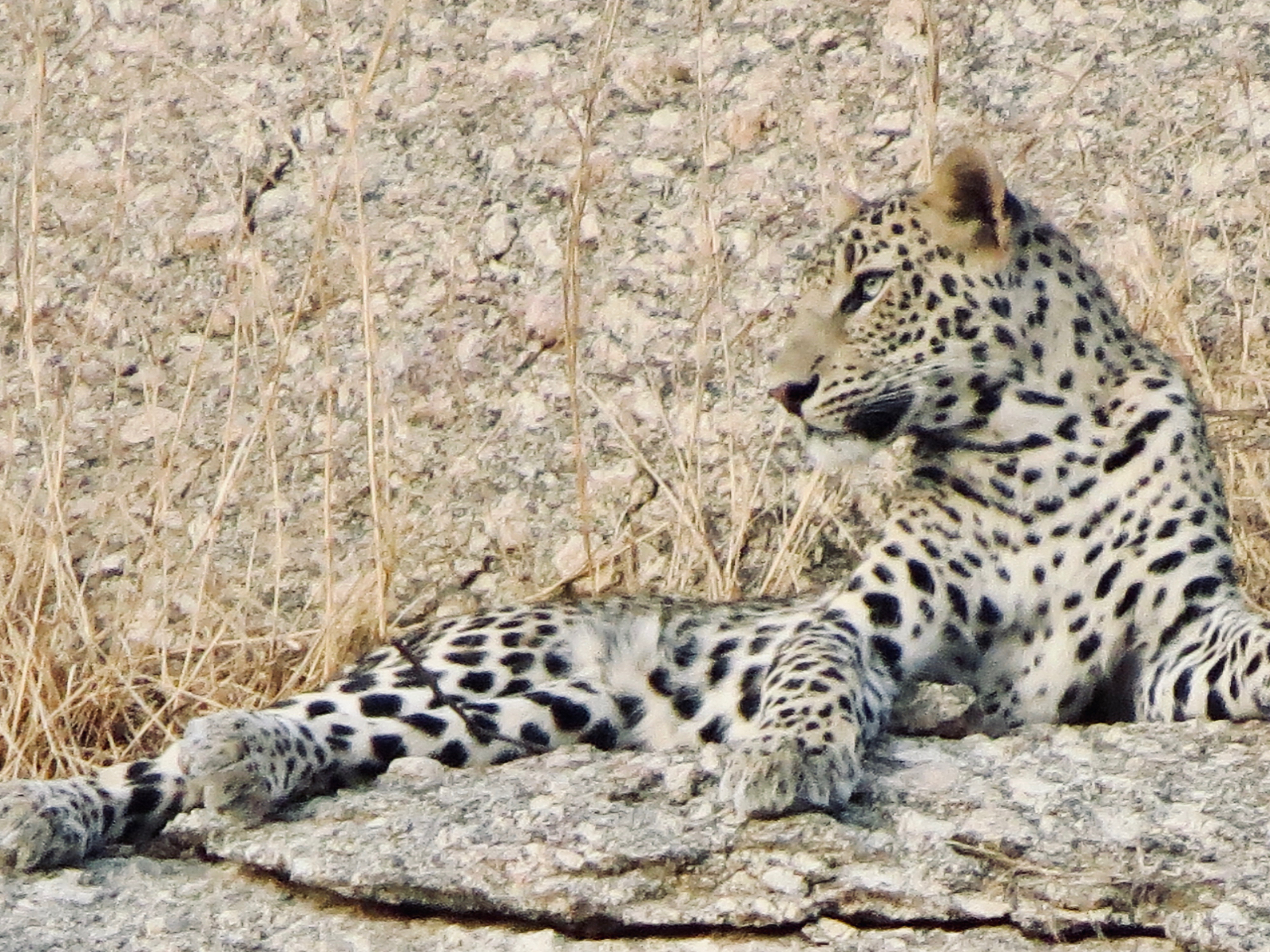
For me the crème de la crème of the Indian trip waited up in the hills – a sighting of the secretive and seldom-seen leopard. See previous post: “India’s Big Cats.”
Narlai may not be on the average Rajasthan itinerary for foreigners. Our “morning walk through the pink city,” offered by the Samode Haveli in Jaipur was also off the beaten tourist track. This, like the other hotels where we stayed in Rajasthan, is a heritage hotel, a lavish palace still owned by maharajas but converted into a hotel.
Sweeping the streets in Jaipur.
We left the hotel at 6 a.m. and followed the hotel manager to places not on the tourist circuit . Most guided tours offer nothing “out of the box,” he said, so the hotel came up with this tour to show visitors more of Jaipur than the city’s top sights, the Amber Fort and city palace museum.
Jaipur market
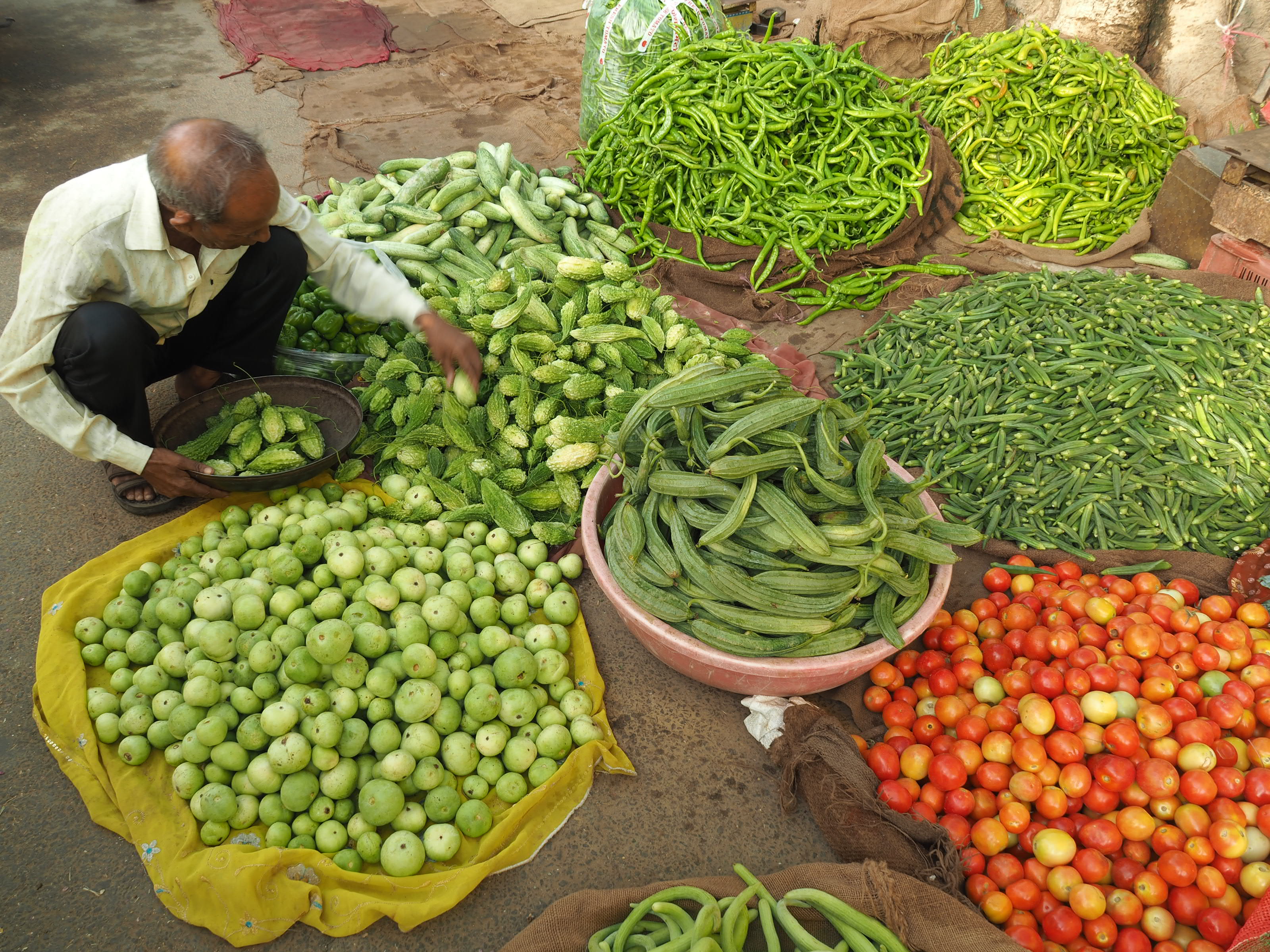
We visited the market, stopped for tastings of street food specials, and we learned, about garbage collection, street sweepers, religion and more.
Palace of the Winds, Jaipur
Hindis believe that all living things have souls and cannot be killed. As an animal lover, I am intrigued with the sacred, ubiquitous cows, stray dogs, and monkeys. The cows that wander freely everywhere usually belong to someone, he said.
Holy cow
The owners tie up the calves and let the mothers roam, knowing they will come back to their babies. The dogs, he said, usually have homes of sort too. “Everyone makes so much food so they give leftovers to the dogs.” The dogs return and “guard the house.” Beware of monkeys. We noticed a group of the rascals on our walk. “That one is especially bad,” he said, pointing to the “dominant male…. He sends his troops out to scout houses. If the coast is clear, they return and raid the place. They know how to open refrigerators. They are very intelligent.”
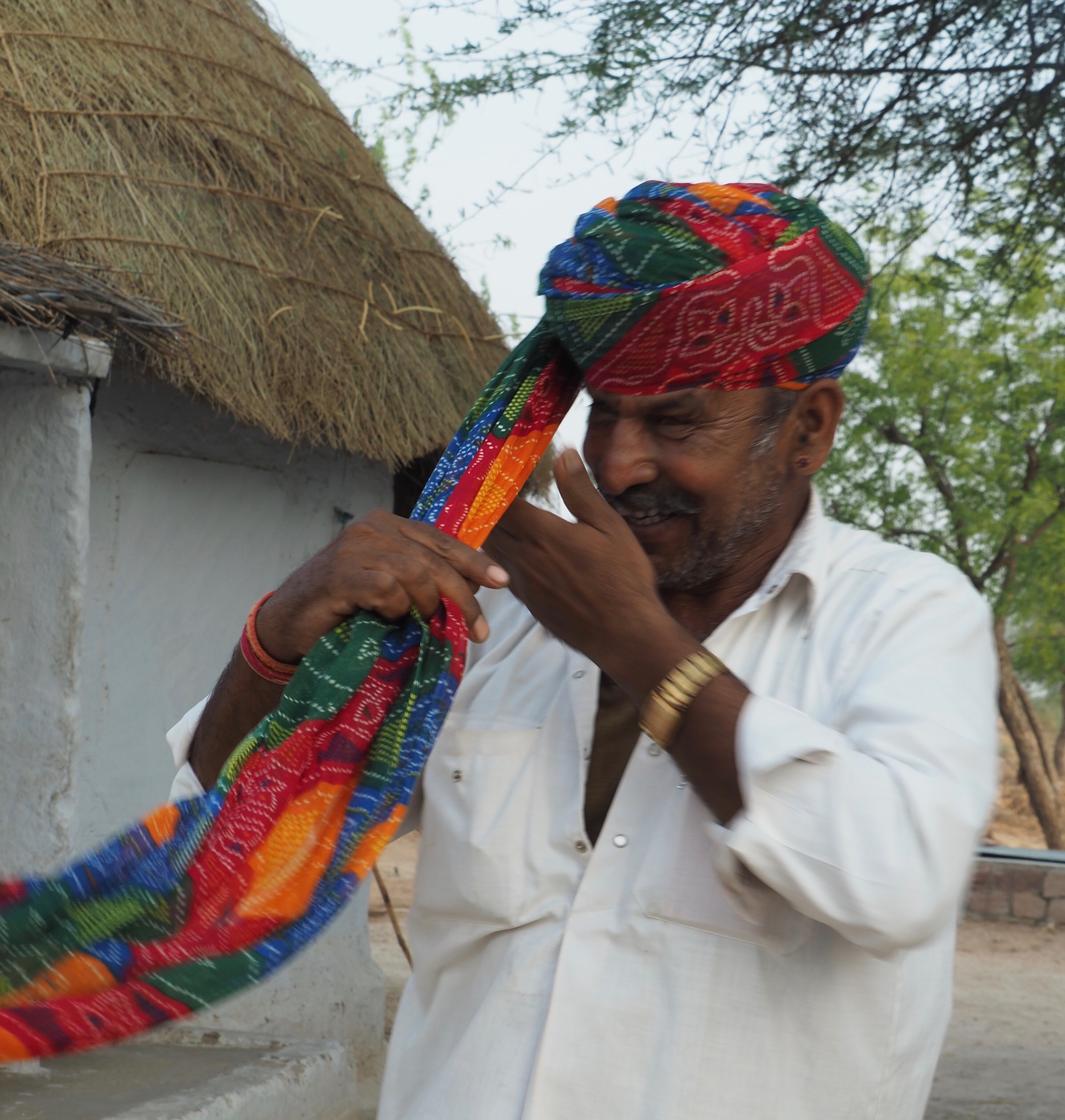
It takes know-how to wrap 15 meters of cloth around your head.
Visiting Rajasthan’s magnificent palaces and forts is impressive, awesome. We also especially enjoyed a visit to a tiny enclave of Bishnoi, a tribe known for love of wild animals. The tribal leader, a jovial character, showed us how he wraps 15 meters of cloth around his head to form his turban. He insisted we taste Bhang, a very potent brew which “can make you crazy.” Alcohol is supposedly forbidden, but “Lord Shiva likes Bhang so much we offer it to him,” – and have a healthy shot in the process.
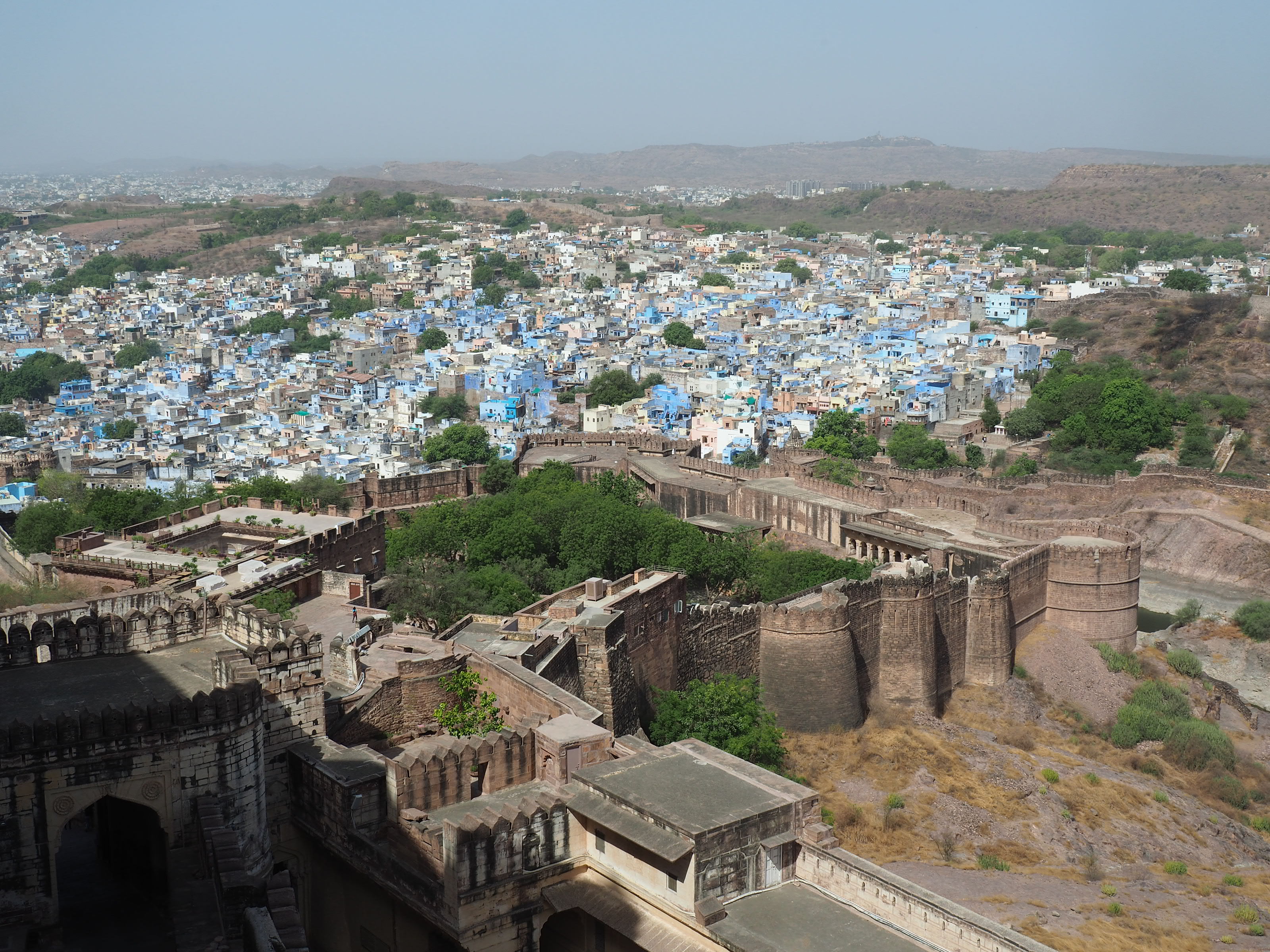
Rajasthan is all about color: vibrant saris wrapped around women; towering vivid, turbans crowning men’s heads; markets bursting with colorful vegetables, fabric and jewelry. Even towns are associated with color, Jaipur, “the pink city;” and Jodhpur, “the blue town.”
Jodhpur, the blue town, seen from the town’s Majestic Fort which has been enlarged over the years. The original fort was built in 1459.
“A picture is worth a thousand words” Enough of my words. Scroll down for more picture highlights of Rajasthan.
Sahelion Ki Bari, Garden of the Maid’s Honor at Udaipur
Don’t be shy. Scroll down, click, then scroll down again and add your comments.
Lakeside Udaipur
Jain temple at Ranakpur has 29 halls and 1,444 pillars all distinctly carved.
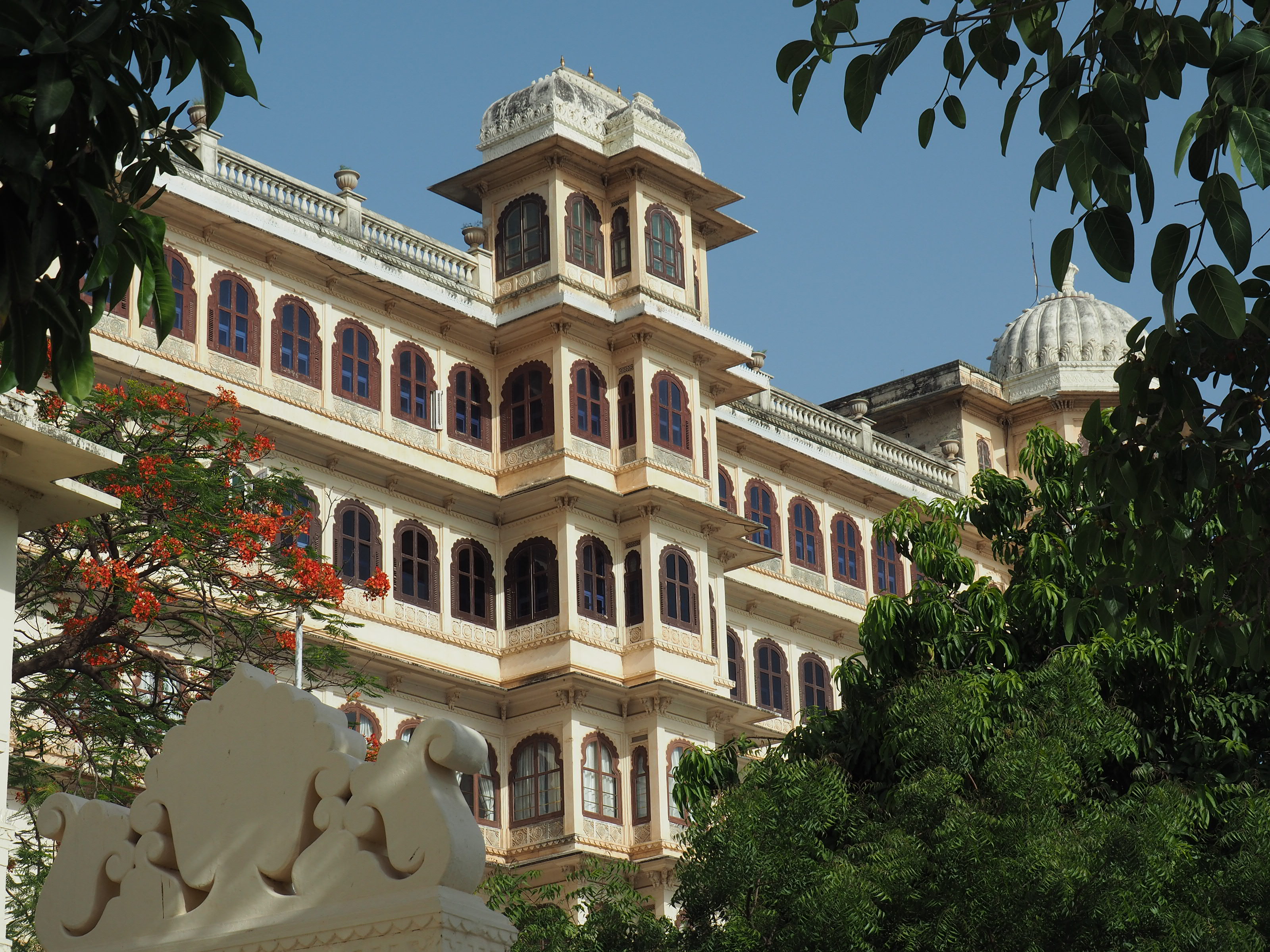
Fateh Prakash Palace, Udaipur, now a hotel where we stayed..
Marigolds are offered to Hindu gods.
If not already a Tales and Travel follower, please sign up, top of right column. Your information is kept private and never shared.
Pool at Samode Haveli, Jaipur
Our fascinating 11-day tour of Rajasthan was organized by Wild Frontiers. Accommodations in the gorgeous maharaja palace hotels were fabulous.www.wildfrontiers.co.uk
By popular request following a Facebook photo, Today’s Taste features a decadent and delicious recipe. Click on photo above right for details.





















 Tales and Travel