My Sorry Story

Humpty Dumpty sat on a wall.
Humpty Dumpty had a great fall.
All the king’s horses and all the King’s men
Could not put Humpty together again.

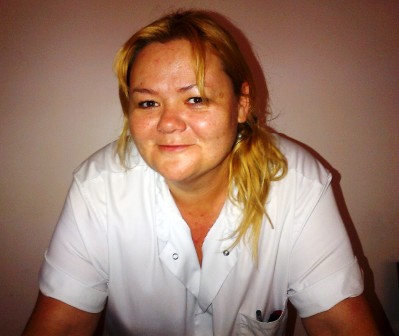
Like Humpty Dumpty, Leah (me) had a great fall. I was luckier than the egg. Dr. Chole, 32, an orthopedic surgeon in Nice, put me back together. 

After this whopper of a crash, she had multiple pieces to repair.  I suffered an open break of the femur.  The bone on my right leg broke in several places above a knee prothesis.  And, I broke and dislocated my left shoulder.  During my 72-day hospital stay, I fell again and fractured the sacrum and pelvis.  

It was challenging enough to cope with the damage and pain, but there was more grief to follow. About a month after my fall, my precious husband Bob died.  He had been suffering from Alzheimer and living in a care home following his great fall last December. (see previous post, “Christmas without the Merry”)
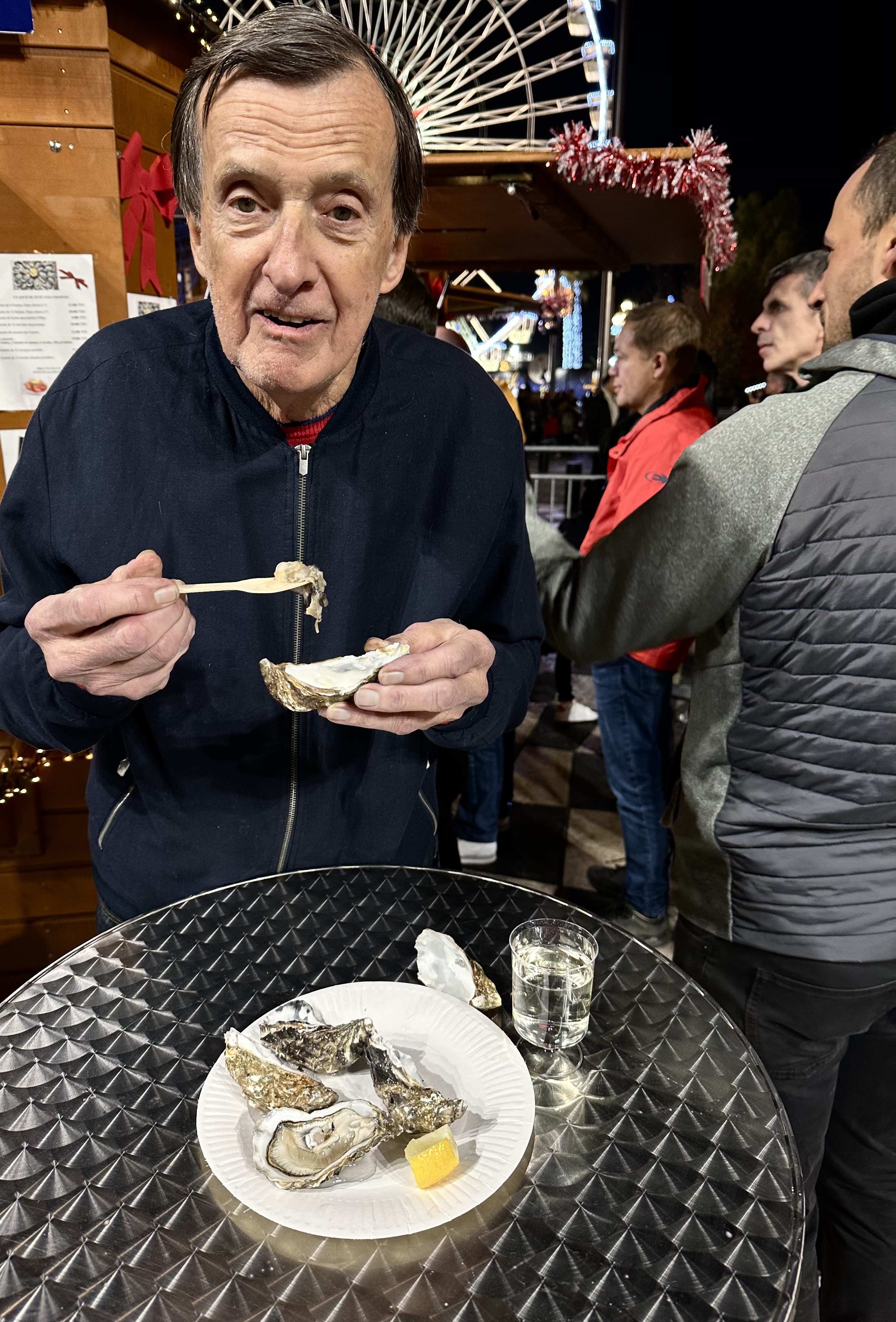
My last “happy” picture of Bob. Minutes later he fell at the Nice Christmas market. It was all down hill after that.

I visited daily until disaster hit.  He became very ill due to an infection.  I was bedridden, immobile in a hospital.  No way to visit.  I was devastated, heartbroken.  I needed, wanted to be with him. (More about Bob in my next post.)

Here’s the sorry story of my great fall:   On June 7, as usual I was stressed and in a rush. I unloaded grocery bags near the elevator in the building basement, parked the car, and came back to proceed to the apartment. My mind and eyes were somewhere else. I tripped and fell over the bags, flying into a wall.  I tried to get up. Impossible. I panicked, screamed, yelled for help.  Finally, a resident came and called an ambulance.

First step:  Give that woman drugs.  They did, and I don’t remember anything after that until Dr. Chole in the Pasteur hospital emergency room explained my injuries and said she would operate.

I was told by a neighbor that the ambulance crew spent more than an hour before moving me.  They called for a portable X-ray machine to make sure I had not broken my back.  Apparently there was a lot of blood from the open break.

All unbeknownst to me. I woke up in the recovery room.  What had I done? My leg, and arm and shoulder were enclosed in some type of heavy-duty armor. I could barely move.
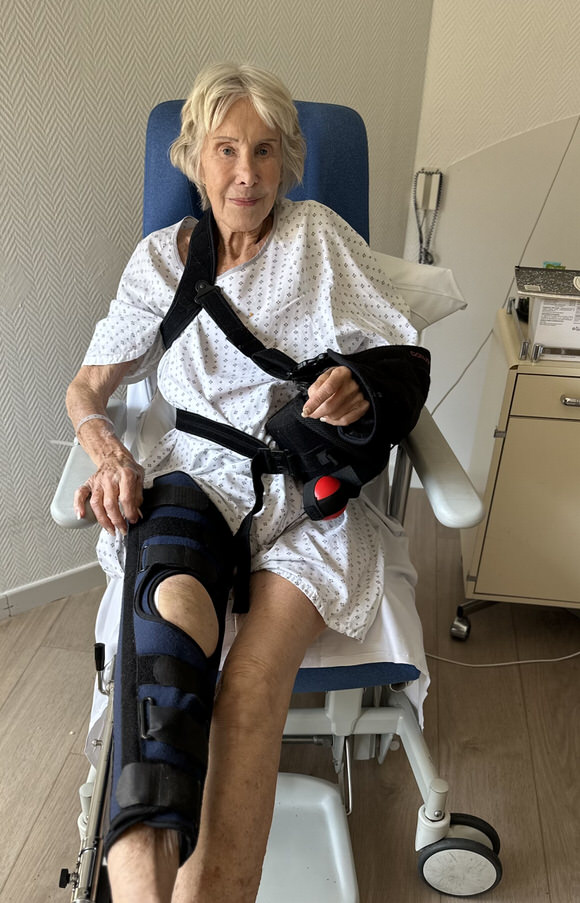
For the next two- and one-half weeks I was bedridden at the hospital, but not without more trauma.    Three days after the orthopedic surgery I suffered an intestinal occlusion.  This meant another operation.  Fortunately a very skilled surgeon performed laparoscopy.   Unfortunately, during that surgery the repaired shoulder was moved which undid the repair work.  I would need another shoulder surgery. 

This can’t be real.  A tsunami of tragedy and bad luck. If I hadn’t been taking strong pain killers (opioids), I might have cracked.

A week later, surgery #3. This time Dr. Chole performed a reverse shoulder replacement.

My right leg.

.

I had tubes in my arms, one in my nose, another in my bladder—all very unpleasant.  As I lay there day after day, I thought about Bob who has suffered, and at that time was still suffering, tremendously.  I thought about soldiers, their bodies ripped apart by war.  How many surgeries did they endure?  Would they ever be normal?… I can do this. 

Comic relief lightened the load at times. Julie, a bright, bouncy young aide sang along with Tina Turner bellowing from her phone as she worked. She liked to practice her English.

Julie sang along with Tina Turner.

One morning as she was giving me a sponge bath, she handed me a wash cloth with the command, “Please refresh your pussy.” Did she say what I think she said? Plenty of laughs instantly chased away the blues. I explained and gave a quick English lesson. 

The professor doctor, the intestinal surgeon who spoke good English, arrived most mornings with his entourage of diligent students. I had repeatedly asked him to remove the nasty tube in my nose.    “You need to poop and fart first,” he replied.  I laughed, not expecting a distinguished professor to use such terms. We then had a discussion on more acceptable terminology for these bodily functions.
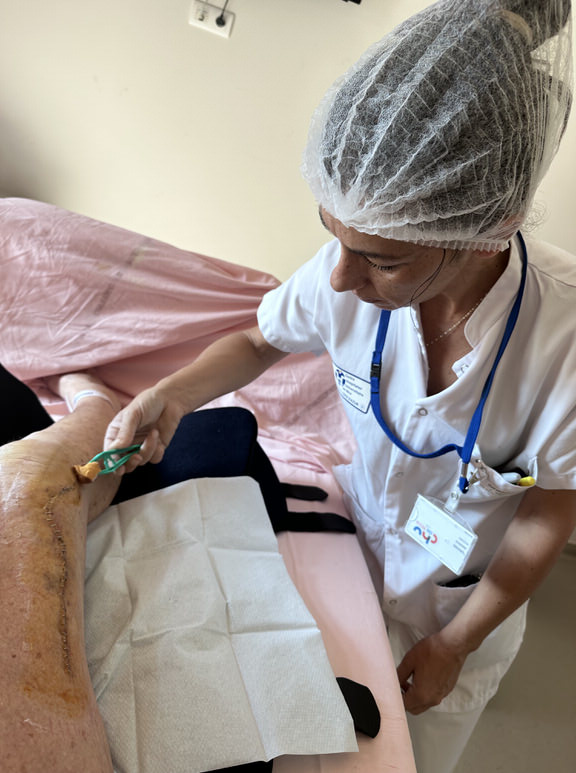
An aide treats my incision, 25 cm or 10 inches long held together by 41 staples.

I left Pasteur, the hospital in Nice about 50  minutes from my apartment, and moved to a rehabilitation hospital in Menton, not far from Cap Martin where I live.

There was not much rehab during the first few weeks. I was basically still immobile. With relief and joy, after too many weeks I shed those dreadful cast- like contraptions.

With my improvement came daily therapy sessions.  Therapy also included weekly meetings with a psychometrician, and an occasional session with a psychologist. 

The therapy room is spacious, bright and filled  with all sorts of equipment. A large staff of qualified therapists tend to patients who practice walking on tracks with parallel bars, work out on exercise bikes, follow sessions of chair exercises and more.  Eventually I was able to go to the therapy pool for water exercise, my favorite.

A happy day. I could start to walk.

Many patients are old like me,  recovering from falls.  But there are also young, some learning to walk on artificial limbs. This puts it all in perspective. 

Steve and Yoshie took me in my wheel chair to the new port in nearby Ventimiglia,Italy.

I enjoyed the therapy, but definitely suffered from cabin fever.  Thanks to my brother Steve and his wife Yoshie, I escaped the hospital on August 18.  They arrived from Boulder to help and take care of me for a month. 

I sent them on errands They were a team, Steve driving my 4 speed Suzuki and Yoshie navigating. Steve was not thrilled with the driving in these parts: lots of narrow, one way streets; a multitude of tourists, and even more motorcycles and scooters. Not for the faint of heart.

I never would have survived without them.  We ordered supplies from Amazon to create a handicap friendly environment in my apartment.  Steve was skilled in assembling all.  Yoshie was my nurse extraordinaire.

The homecoming welcome committee. My “girls” Simba and Oprah joined me in bed on my first night home.

It’s wonderful to be back in my apartment. I enjoy the company of my two cats, a stupendous view of the sea and mountains — and freedom. I return to the rehab center three afternoons per week for several hours of different types of therapy. 

Recovery is slow, too slow for me. I need to drive.  I want to walk normally.  I can walk with my hiking poles, but only for very, very short distances.  Too painful after that.  My left arm only moves so far, not far enough to maneuver a steering wheel. 
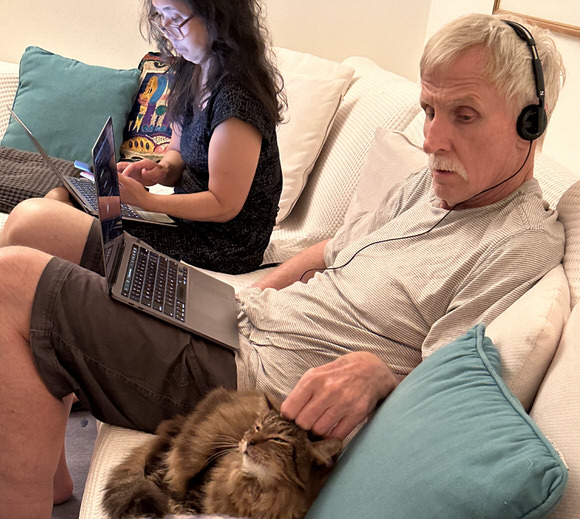
Home sweet home. Simba and Steve bonded.

In desperation I went to my general practitioner.  I complained about the lack of speedier progress.  He gave me a quizzical look.

“You need a year.”  

There is a moral to this sorry story.  Move slowly.  Be alert. Watch where you walk. Manage stress.. Don’t end up like me – or worse, Humpty Dumpty.

.(Most all of my care — surgeries, medications and x-rays, hospital stays, therapy, plus transportation  by ambulance to and from the rehab center three times per week, is paid for by the French social security system.  As a resident of France, I am entitled to these benefits.  I also have a supplemental insurance which covers the portion not covered by the state.

More outings now that I can walk with poles, even if only a few meters. Here with friend Angie.

If not a Tales and Travel follower, please sign up here. Don’t miss future posts.

In the Merde

Yes, in deep and desperately needing escape. I/we cannot get out from under the  ominous, all-encompassing black cloud which has bombarded us with one disaster after another.  What did we do to deserve this merde?  Did someone put a hex on us, cast a black magic spell of evil?

The current calamity ranks as the worst, yet those preceding were far more than minor photo.hexmishaps. (see previous posts: “Prisoners in an Airbnb Apartment” and “China II: The Fall”).
More merde followed those catastrophes but let’s start with the present which began the afternoon of April 10.

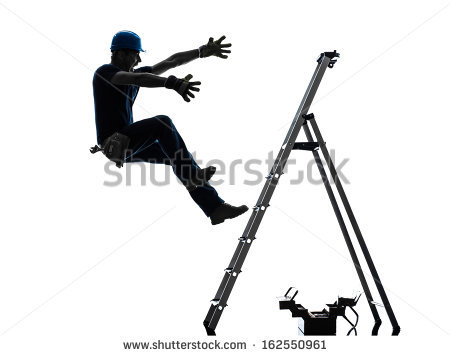
I was typing away at my computer when a frantic husband ran in screaming.  “I need some ice. I need some ice quick.” Too hot?  He needs a cool drink?  No such luck. He related that he had fallen from a ladder while trimming a tall bush.

I was not terribly sympathetic.  At his age, he has no business on ladders.  Last summer he fell out of a tree when trying to trim.  He has fallen off the wall in front of our property when cutting shrubbery.  He relishes climbing a wobbly ladder into our attic. ladder - CopyClimbing must have been one of his favorite boyhood exploits.  But, he is a boy no more.

He had an enormous lump on his calf.  We iced it down.  He was in pain, but he could walk/move with no problem.  Nonetheless that evening we went to the emergency room at the Manosque hospital, about a half hour away.

And, there we spent 3 ½ hours.  Leg was x-rayed.  Nothing broken.  We were told to wait and see the doctor again.  We waited and waited. Many of those who arrived after us had seen doctors and left.  My patience and nerves were shattered. I had a killer migraine.  Bob was getting antsy.  We learned our doctor was on the telephone dealing with a very urgent case. Bob’s leg injury was obviously not urgent.  Who knows how much longer the wait would be?  We  left.

Next day he saw his local doctor.  The lump was a gigantic hematoma, now red, purple, pink and horrific.  His foot had also ballooned – too fat for his shoes. The doctor ordered a Doppler ultrasound to check for blood clots, and he arranged for the test with a nearby doctor that evening.   All clear – no clots.

There had been a half-dollar sized blister on the surface of the hematoma. At some point it burst and a large scab formed. But, the swelling was increasing. The grotesque colors on his leg now engulfed the fat foot, too.

We decided this required another look by a medical professional.  His doctor was off that day, so we trekked back to emergency where this time we only to had to wait a few minutes. A doctor checked it out, said it was infected, gave us a prescription for antibiotics and another one for daily at-home nurse visits to change the bandage (a wonderful plus of French medical care).  He turned us over to a nurse who we assume followed his instructions and cut delicately around the scab which immediately began oozing thick, black blood (the hematoma contents).  She covered it with a large bandage and sent us on our way.

merde.6
Nurse Vero cleans the hole.

Back home the next day nurse Aurelie I appeared, removed the bandage and was horrified.  “They did this at Manosque?”  She began pressing the hematoma, again and again and again, draining it of the ancient blood. I watched, incredulous.  Would it ever stop?  It did, but left a gargantuan cavity in his leg.  It is this cavity which the nurses came to clean out and stuff with treated gauze every day.  In the beginning it took a meter-length piece of gauze to fill the cavity.  The mountainous lump was/is still there, but getting smaller.

Several days passed and a  new nurse arrived, Aurelie II. She was shocked.  “This does not look good….How long has it been like this?”  She urged us to go the emergency department at the hospital in Aix en Provence.  We learned from her, and others, that the Manosque hospital does not have a good reputation.

Afternoon plans were canceled and we set off to Aix, about an hour and 15 minutes away.   A two-and a one half hour wait merited an examination by a very patient and thorough doctor.  He carefully cleaned the “hole,” stuffed it, patched it, wrapped it and sent us on our way with a prescription for a different antibiotic and a new at-home nurse prescription.  He also sent a swab of the cavity to the lab. The results later indicated the infection was resistant to the first antibiotic, but the second, the one he had prescribed, was on target.merde.7

Meanwhile, our lives have been in turmoil since the fall.  My Easter dinner party canceled.  A hotel overnight in Aix canceled. A weekend in Italy canceled. My doctor’s appointment canceled.  No time for my activities:  photo club and French writing group.  The real tragedy, the month-long trip to Germany, out the window. We had planned to see some friends, but the trip was primarily a research trip for me.  I write for the magazine German Life and planned to gather material for future articles.  It was a time-consuming, complicated trip to arrange – reservations, appointments, calculating driving distances and times.  All for naught.  Merde!

Nurses continued to come daily for the cleaning-stuffing wound ritual, warning us that full recovery would be long.  Aurelie I suggested we see a “specialist des pansements” (bandage specialist) at the Manosque hospital, a woman (Hungarian) whom she had great regard for.   I made an appointment, but we had to wait 2 weeks to see her.

When the bandage specialist saw the dreadful wound and learned that we had been to the hospital emergency room way back at the beginning of the sorry saga, five weeks prior, she was angry.  “Why didn’t they call me?  They know this is my specialty?”  She said if she had started treatment initially, by now Bob would be recovered.

OLYMPUS DIGITAL CAMERA
Supplies delivered from hospital for at-home care, all covered by national French health insurance.

She advised Bob be hospitalized for a week to start treatment with a machine which would suction all the bad stuff lodged in the cavity.  The process would take about a month, as opposed to three to four months if he continued with the nurses at-home

OLYMPUS DIGITAL CAMERA
Bob and his talking purse.

treatments.  He would need to spend about a week in the hospital, and then go home with machine.

The machine can hang from his shoulder, like a purse, and can operate on batteries, so he can be mobile.  He was given permission to go home for the weekend. We were elated.

On Sunday we were about to depart for lunch at the home of friends in a nearby town.

Telephone rang.  Hospital.   They had taken a blood sample during his stay.  Results indicated “a very dangerous infection.” Get back to the hospital immediately so treatment can be started, they urged. That ended lunch with friends.  More merde!

I did some research on the bacteria he had contracted – both common hospital infections, multi-antibiotic resistant. Of course, the hospital insists he did not get the infections from contamination there, even though he had been infection free when entering the hospital.

So, now in addition to the machine, he was/is on a drip of a very strong antibiotic for 10 days.   This was the last straw, too much. We were both at rock bottom, very nervous about the gravity of these infections, sick of the hospital, depressed, despondent.the-last-straw

Our sanity was saved, again by the fabulous visiting nurses.  After four days back in the hospital, “hospitalisation a domicile” (home hospitalization) was arranged.  A nurse comes  three times per day, at 7 a.m., 1 p.m. and 8 p.m.,  to hook him up to the drip which lasts about 1/2 hour each time.   The 10 days will end tomorrow, but he will still have the machine, however it only requires a nurse’s attention every three days.

merde.1
Nurse Aurelie I and the drip hook up.

Nurses may call it a miracle machine, praising its medical prowess, but we call it Farting Freddy.  It is noisy, emitting sounds identical to farts all too often. We are ready for a return to the world, a meal in a restaurant, but dare we?

On top of this tragedy, and the others previously mentioned, my China fall still haunts me.  The broken collar bone did not heal correctly, the bones did not realign (non-union). It is still painful at times.  I am (was) a devoted lap swimmer, but the crawl, my stroke, is difficult. Double merde!

merde.8
My hand splint.

Another complication: somehow nerves in my upper arm, below the damaged collar bone, became compressed.  My left hand movement is limited, namely the two little fingers which are basically frozen. At first I was told recovery could take a year.  Now they say two years.  I have learned to type with one good hand, and one finger of the left hand.  Many kitchen/cooking tasks remain challenging.

And yet another whopper: basal cell skin cancer. I had a tiny bump on my nose, cancer caused by the sun and not usually dangerous. Removing the mini lump would be a piece of cake, so I thought.  Not quite – underneath the skin the lump was not so tiny.  Removal left me with 26 stitches on the side of my nose and face.  Fortunately I had a skilled plastic surgeon.  The scar is easily hidden with makeup.  But, after all that, he did not get all the cancer.  One cell remains. More merde!

Perhaps there is light at the end of this tunnel of merde. Since Freddy attacked the wound, it is slowly shrinking.   While these troubles have been – and still are – annoying, I realize it all could have been far worse.  But, we need a break from bad luck. If anyone can offer a hex of happiness and good health, a magic spell of good fortune to chase away the merde, please send our way.

In between all of the merde, we did have a lovely trip to Sri Lanka. See previous post, “Wonders of Sri Lanka.”    More on that coming soon. Don’t miss it.  If not already a Tales and Travel follower, sign up (upper right). Your address is kept private and never shared. 

Please feel free to comment.  Click below, scroll down to Leave a Reply and add your thoughts

makeread2

fairy

All about Life in France

The Germans have a saying, Leben wie Gott in Frankreich, (Live like God in France). After living and working in Germany for more than 25 years, I moved to southern France eight years ago to see just how God lived.  Not too shabby.  Life is good, very good, but not quite paradise.  Read on for my observations.

Topping off the list of pluses is Health Care.  Americans can criticize socialized medicine all they want, but I’m thrilled with the French system, universal care, which even covers home visits, taxi trips to doctors for those unable to drive, weeks in a rehab facility after some surgeries and much more.  For details, see my previous blog post,  “My New French Knee, “ all about my recent experience with knee replacement surgery.

Filing Taxes. My husband does ours.  Since our retirement income comes from the U.S., we file and pay U.S. taxes.  There is a reciprocal agreement between the U.S. and France, so we pay no income tax here. Nonetheless, as residents in France, we must fill out French tax forms.  My husband spent many long days on the computer, fighting with form after form, to file the U.S. taxes.   The French form, even for citizens, is short and simple.  I did it in minutes.

Elections.  During the French presidential campaign this spring, there were televised debates among candidates, as well as spot commercials.  But, each candidate was given the same amount of air time.  No matter how much money a candidate had, he/she could not buy extra television time.    The issues, the candidates’ positions and record, determined the outcome – not their wallet.

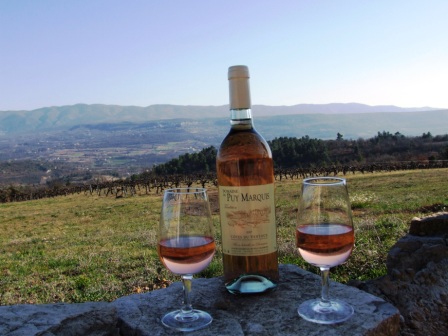
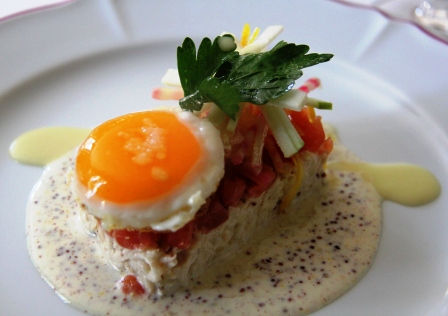
Food/Wine.   Both hard to beat.  Crusty baguettes, flaky croissants, sinful pastries… and, my downfall, all the fabulous cheeses.   Restaurant meals are generally excellent, and the wine is reasonable and good.  A glass of wine at our neighborhood café, 3 Euros, ($3.65).   As my husband and I like to imbibe with dinner at home, we buy table wine in five-liter boxes (almost seven bottles), from 13 Euros or $16 per box.  And, we love to visit the numerous wineries in these parts for tasting and purchasing.

Tips Included.  No need to get out your calculator and figure out what 15 or 20 percent of the total is for your tip.  Service is included in French restaurants.  If you are happy with the meal and service, you can leave a few extra Euros.

Politeness.  The French, including children, are extremely polite and courteous.  When entering a shop, a doctor’s waiting room, an office… they greet everyone with a “Bonjour Mesdames, Monsieurs.”   They also kiss a lot, but more on that to follow.

Laissez-Faire.   Life here is not over regulated.  If you visit a tourist site at the edge of a high cliff, for example, there will be no fences or walls at the edge obstructing your view and keeping you from falling. It’s up to you to use caution and control your children.

Leisurely meals. The French appreciate good food and conversation.  Meals, which consist of several courses, are not eat and run affairs. They can go on for hours.  It’s enjoyable and relaxing.

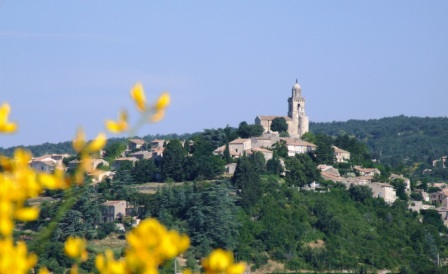
There’s more I love about life here: the beautiful view of the Luberon hills from our balcony, the bounteous markets, colorful local festivals in the summer, poppies in the spring, lavender and sunflowers in the summer, the sunshine, the pool…

But, not all is perfect.  At the top of my list of pet peeves are Business Hours  which drive me crazy.  Every shop, office, restaurant… has its own schedule.  You need a spread sheet to keep track of it all, but be prepared for changes.

Here in southern France, almost everything closes for a long lunch hour, but how long? The bakery and grocery store in my small village are closed every afternoon between 12:30 and 4 p.m. The post office only closes between noon and 1:30 p.m. The pharmacy is closed from 12:30 to 3 p.m., plus Saturday afternoon and Monday morning.  Restaurants are usually closed one or two days a week, but that varies with seasons.  How to remember which one is closed which day during which season.?

What really gets me is “Fermeture Exceptionelle” (exceptional closing). Too often  I have  made a special trip to the bank in a nearby town only to see this sign at the door.  No explanation. Go home and come back another day.

Driving Expenses.   Gasoline is very expensive here – about 1.6 Euros per liter (about $7.80 per gallon). Tolls on the autoroute are also expensive.  But this can be an advantage.  Only during peak travel seasons (certain summer weekends for example) are there traffic jams on these super highways.  You can usually sail along at a maximum speed of 130 km per hour, just over 80 mph.

Hunting Dogs.  As an animal lover, it grieves me to see how these dogs are neglected and abused.  Hunting is a popular sport in these parts, and most dedicated hunters keep several hunting dogs penned up year round. They are not treated as pets and are only released for the hunt.  Many get lost and end up homeless.  We once found a lost, friendly hunting dog wandering along a country road. We put him in the car and called the number on the collar it was wearing, then  met the owner in a nearby town.  Instead of being happy to see the animal, he grabbed it by the collar and tossed it into the back of his pick-up with several other sorry beasts.  I was devastated,  and regretted returning the poor dog to a miserable existence.

Punctuality.  This is strange.  If you invite French to your home, they generally show up on time.  But, go to an event, be it a concert, a performance, or a community dinner, and be prepared to sit and wait at least a half hour, and more often up to an hour, before the show gets on the road.   If it’s a performance, you may need to stay an extra half an hour for curtain calls.  The French are overly enthusiastic and reward performers with endless clapping and cheering.

Much about the French lifestyle is neither bad nor good, but  curious to an American.  I’ll start with la bise (the kiss).  It’s known that the French greet one another with an air kiss on the check, usually both cheeks, and sometimes more depending on which region of France they live in.  I live in the department of Les Alpes de Haute Provence,  just 20 minutes from the border of the department of Vaucluse. On our turf, it’s one kiss on each cheek.  But, in Vaucluse, it’s three kisses, both cheeks, then back to the starting point for a final kiss.  I invariably forget when I visit friends in Vaucluse and pull away after two kisses, only to have the friend, cheek turned, waiting for number three.  Then there’s dilemma of which side first.  How many times have I knocked heads with someone as we both turned in the same direction and crashed?  The good ole American hug is easier.

August This is a mystery to me, but it seems everyone, and not just folks with school aged children, takes a vacance  (vacation) in this hot summer month. Doctors’ offices are often closed for the month.  Many businesses and offices, including the electric company, close during August.  For those of us in the sunny south, August, as well as July, means an invasion:  Parisians, Dutch, Belgians.  Too many drive huge campers which clog the two-lane roads in this hilly region. Parking places in towns are at a premium. Lines at the bakery snake out the door and  down the sidewalk.  We’re happy when these tourists go home and life settles back to quiet normalcy.

Apero,  short  for aperitif and the French preferred way of entertaining.   They often invite guests for apero, which can be potato chips, peanuts, and several glasses of wine or pastis (the favored anise drink of Provence) or an array of elaborate snacks which can be a meal.   In general, dinner parties are for close friends and family.

I could ramble on, but suffice it to say that God could do worse, much worse.

If you’d like to read more of my tales and adventures, click on “Email Subscription” at top right of post.  Comments are welcome.  Click “Leave a Reply” 

What to do with all that summer produce?  Check out my recipe for Great Gazpacho, my summer favorite.  Scroll down the recipe column at far right.

My new French knee

Ah, quelle belle cicatrice!”  (Oh, what a beautiful scar/incision!).  Every time a nurse came to change the bandage, it  was the same remark,  both at  the hospital in Marseille (2 ½  hours away) where I had total knee replacement surgery on May 14, then later at the rehabilitation hospital where I spent 2 ½ weeks.

Are they crazy, I wondered?  Nothing beautiful about this long (8 inches) red and puffy line on my hugely swollen knee.  When it was first uncovered, I was horrified.  It seemed enormous.   Then they showed me an x-ray of my new knee – more panic.  It, too, seemed gargantuan.  How would I ever walk with those chunks of metal (titanium) inserted in my leg?  A plastic substance (the knee cap) is between the two  pieces of titanium.

It did not take long to realize I could walk.  The day after surgery, a therapist had me on my feet walking (limping) up and down the hall on crutches.  He, too, admired the “beautiful”  incision.

It was the work of Dr. Jean-Pierre Franceschi, Marseille’s famous orthopedic surgeon who is the team doctor for the city’s soccer team.  One nurse referred to him as “a star.”  Tall, dark and handsome, he looks as if he belongs in Hollywood,  not bent over an operating table inserting new knees and hips in France’s second city.

When I finally made the decision to proceed with this drastic operation, I wanted the best doctor, a surgeon whose proficiency would get me back on the ski slopes.  It had to be the celebrated Franceschi.  The surgery report I received after the operation stated that the duration of the procedure was a mere 35 minutes.  Amazing, but I hope the renowned doctor did not rush.

Franceschi’s skills are in demand, so it takes months to get on his surgery schedule.  I made the May appointment in early January, and fretted off and on from then until the operation.     What if I ended up worse instead of better?

It’s been a month since surgery, and, according to medical personnel, I am doing very well.  I can bend the new knee leg to an angle of 120 degrees.   A therapist at the rehab hospital told me 130 degrees is what they aim for.  I am almost there.

I’ve also been fortunate as I have had very little serious knee pain.  Discomfort, yes, but that’s to be expected.  The dreadful part for me has been headaches and insomnia, said to be nasty effects from the anesthesia, but that’s another story.

Fabulous French health insurance

I feel very fortunate to live in France and be covered by the French national health insurance.  My husband and I also have a supplemental insurance since the national insurance does not cover everything 100%.  For both, we pay €4,520 (about $5,650) per year.    

The benefits may make some Americans cry.  My 11-day stay in the Marseille orthopedic hospital,  the surgeon’s and anesthetist’s  basic fees,  a transfer by ambulance to the rehabilitation hospital in Forcalquier (about  1 ½ hours from Marseille),  2 ½ weeks at the live-in rehabilitation hospital, all medications, plus 20 follow up sessions of physical therapy now that I am home – all completely covered.

Not covered:  Dr. Franceschi’s additional fee (you pay for his fame) €500 (about $625), and the extra charge for a private room at the hospital in Marseille, €75 per day or $94.   Some of this may be reimbursed by the supplemental insurance.

In France, the standard fee paid by the national insurance to the surgeon for knee replacement is between €400 and €500 ($500 – $625).    According to the July 2012 issue of Consumer Reports, a knee replacement in the U.S. costs between  $17,800 and $42,750.  These figures  also include the anesthetist’s fee and hospitalization, nonetheless they indicate that medical costs in the states are clearly over the top.  An American friend who lives in Aix en Provence recently paid €140 (about $175) for an MRI of his back.  Consumer Reports states than an MRI in the U.S. costs between $504 and $2,520.  Yet many Americans still vehemently oppose mandatory national health insurance?

Hospital Stay

Care at the Marseille hospital was fine. The food was not great, but perhaps a bit better than standard hospital fare.  Lots of healthy fish and spinach. One fish dish with a tomato/caper sauce was excellent , and I plan to try and duplicate it.

The French are fanatics about pre-surgery disinfection. Both the night before the surgery, and again the morning of the operation, you have to take a shower washing with a special red disinfectant.  There are even instructions in the shower as to how to proceed to disinfect the entire body – including hair.  Husband Bob (dubbed Mr. Clean by one of his daughter’s previous boyfriends as he is obsessed with order and cleanliness) was horrified when he saw that the tiles on the lower part of the shower were black with mold.  How sanitary can that be?

Shower mold aside, the room was spacious with an extra bed for a family member to spend the night with the patient if desired.  Mr. Clean is a dedicated husband, but I dared not ask to him to spend nights in the hospital with me.  However, my days were long and lonely as Marseille was too far for most friends to visit.

Every morning therapist Philippe, a jovial type who liked to kid, came to put my new knee leg on a contraption which bends the leg. Each day he increased the bend angle.  I also walked the hall several times a day –and in the middle of the night when sleep escaped me.

I had a favorite nurse: Monika Kiss, an angel from Hungary who was extra kind and caring.  She and her husband, a builder, are out to see the world.  They have lived and worked in Russia, Austria, the Netherlands, England and now France.  Monika speaks at least five languages, and is now studying Spanish as she hopes for a job in Spain next.  Her favorite job was at the Cambridge University  Hospital in England where she termed working  conditions “the best.”

Vanessa, a perky nurse’s aide in training, loved to talk about the U.S.  She’s never been, but dreams of visiting  ”California, New York,  Brooklyn.”   She says most everyone in France thinks Americans are crazy, but her father reminds her, “If it weren’t for the Americans, we’d be Germany today.”

The ambulance ride (my first)  to the rehab hospital was an amusing experience.  A bossy, chatty, 51-year-old woman sat next to me (I was on a stretcher).  Between shouting orders to the driver and talking on her cell phone, she told me her life story:  born in Portugal, six children, divorced, lives with boyfriend.  I heard about the problems with the ex, some of the children, her philosophy of life…    I had mentioned that I was a journalist.  “I’ve been looking for a journalist to write the story of my life. It’s very interesting.”  I did not volunteer.

Rehabilitation

When I arrived at the  Saint Michel rehabilitation hospital in Forcalquier, I thought I had entered paradise.  The hospital is  surrounded by green, with spectacular views of the chapel, Notre Dame de Provence (1875), atop a hill above the town.  Spotlessly clean (no mold in bathroom), a large room which I shared with another patient, a huge window next to my bed offering a lovely view, and an adjoining balcony.  Friend Lynne who visited several times called it   “your hotel.”

There I had lunch and dinner in a dining room with other patients, an entertaining group with whom it was interesting to trade stories about  surgeries, doctors, hospitals, etc.   Gilles, a retired chef, brought his own jars of sauces and condiments to season the food.  Jacques, a retired baker, was used to getting up in the wee hours and also had trouble sleeping.   Fanny, a rail thin woman with a tan that would put Coppertone to shame, sported cute mini dresses and claimed she was born with skin this amazing color.  Suzanne, who often dominated the table conversation,  told us this surgery, hip replacement, was her 17th operation.  Michelle, an artist, spent her days painting the surrounding scenery.

The food was much better than that in Marseille, including an excellent seafood paella and a tasty lamb tagine.  In French fashion, each meal was several courses:  entrée, main course, cheese and dessert.  I had heard that wine was also served with dinner at this hospital, but unfortunately that practice had been discontinued.  The nurse who admitted me explained that  “too many patients were getting drunk.”

Therapy, both morning and afternoon sessions, was excellent.  My first therapist, Carlos from Spain,  liked to chat and joke with those in the therapy room.  The lively conversation took my mind off the pain of bending the knee back and forth.  Carlos went off to another job and was replaced by Sara, a gorgeous young woman, also from Spain.  By my last week at the hospital, the “beautiful “  incision had healed and the stitches had dissolved.  I could join others in the therapy pool for water exercise.  Sara taught me numerous pool exercises which I am continuing in our pool.

There I was closer to home, so I did enjoy visits from friends, as well as their gifts of magnificent  flowers .

The rehabilitation facility was better than I ever expected, but, after almost four weeks of hospitalization, it’s wonderful to be home.

My discharge papers from Forcalquier described the “beautiful” incision as “perfect.”  I hope the new knee will be perfect, too.

Comments welcome.  Please share your thoughts.  Click on “Leave a Comment” at beginning of article.

For a taste of Provence, try the recipe just added in column at right, Chevre Au Gratin (Baked Goat Cheese), a delicious and easy spread for bread or crackers.

More photos follow in the slide show.

This slideshow requires JavaScript.