
Turning of the Bones. Sounds bizarre and morbid. “Famadihana,” exhuming the bones of deceased relatives, is a culturally ingrained ritual in Madagascar (Mada). Five to seven years after death, families exhume the bones of a beloved ancestor, wrap the bones in fresh cloth, and celebrate before reburial. It is a sign of love and respect for the deceased.
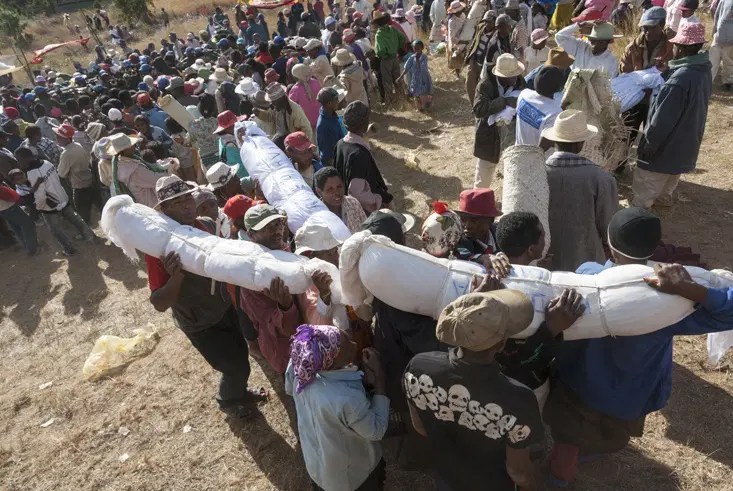
There’s dancing with the wrapped ancestors, eating and lots of drinking – a joyous, festive occasion. The celebrations, which last from one to three days or longer, are a duty, a must for relatives of the dead to host. And, they are expensive, costing up to a year’s earnings.
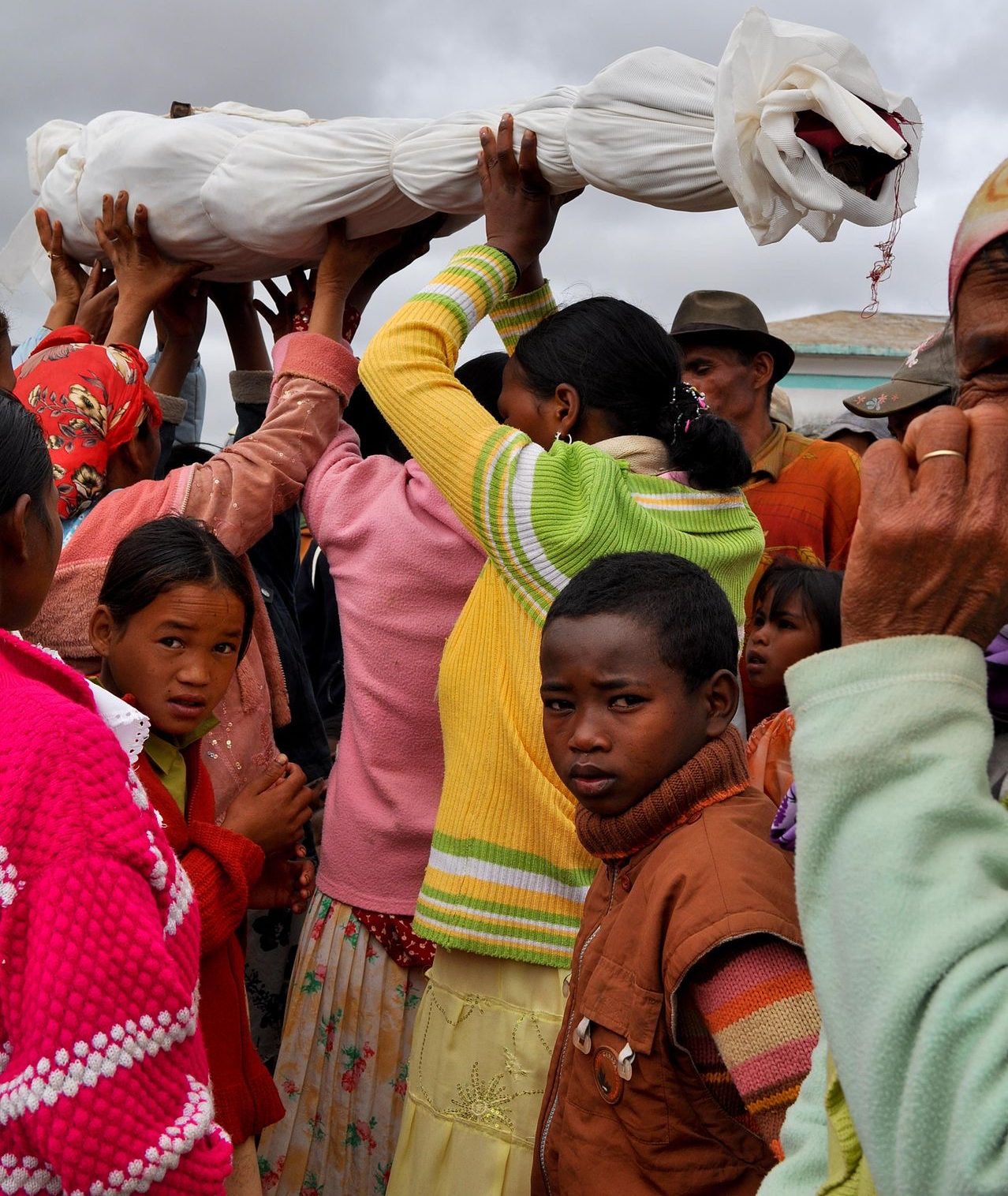
Ravi Matadeen, who rents self-drive vehicles in Antananarivo, the capital of Mada, told of one of his employees who was under fierce pressure from relatives to host a Famadihana for his mother. The employee was distraught. He could not afford it. “I told him I would pay,” Ravi said.
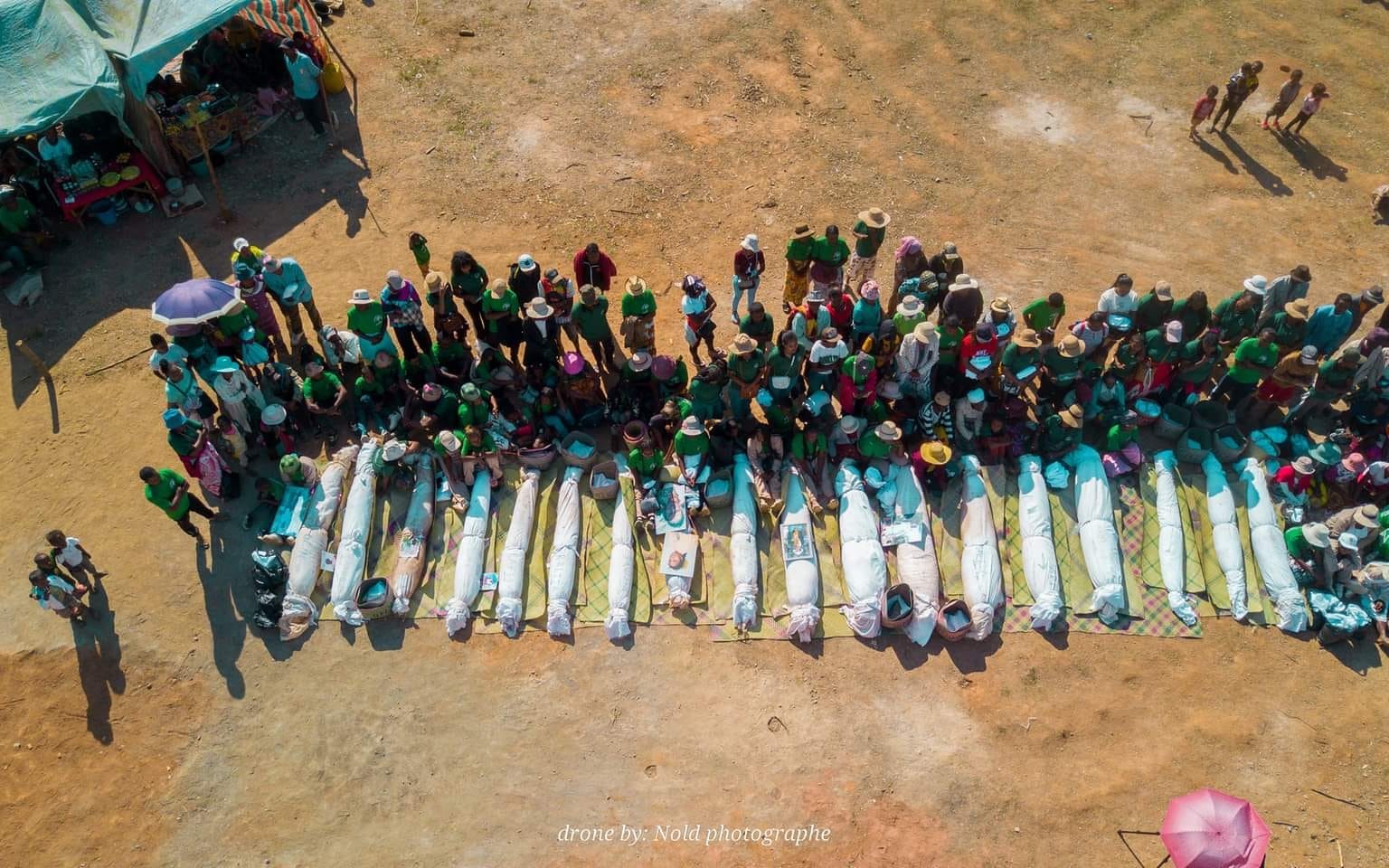
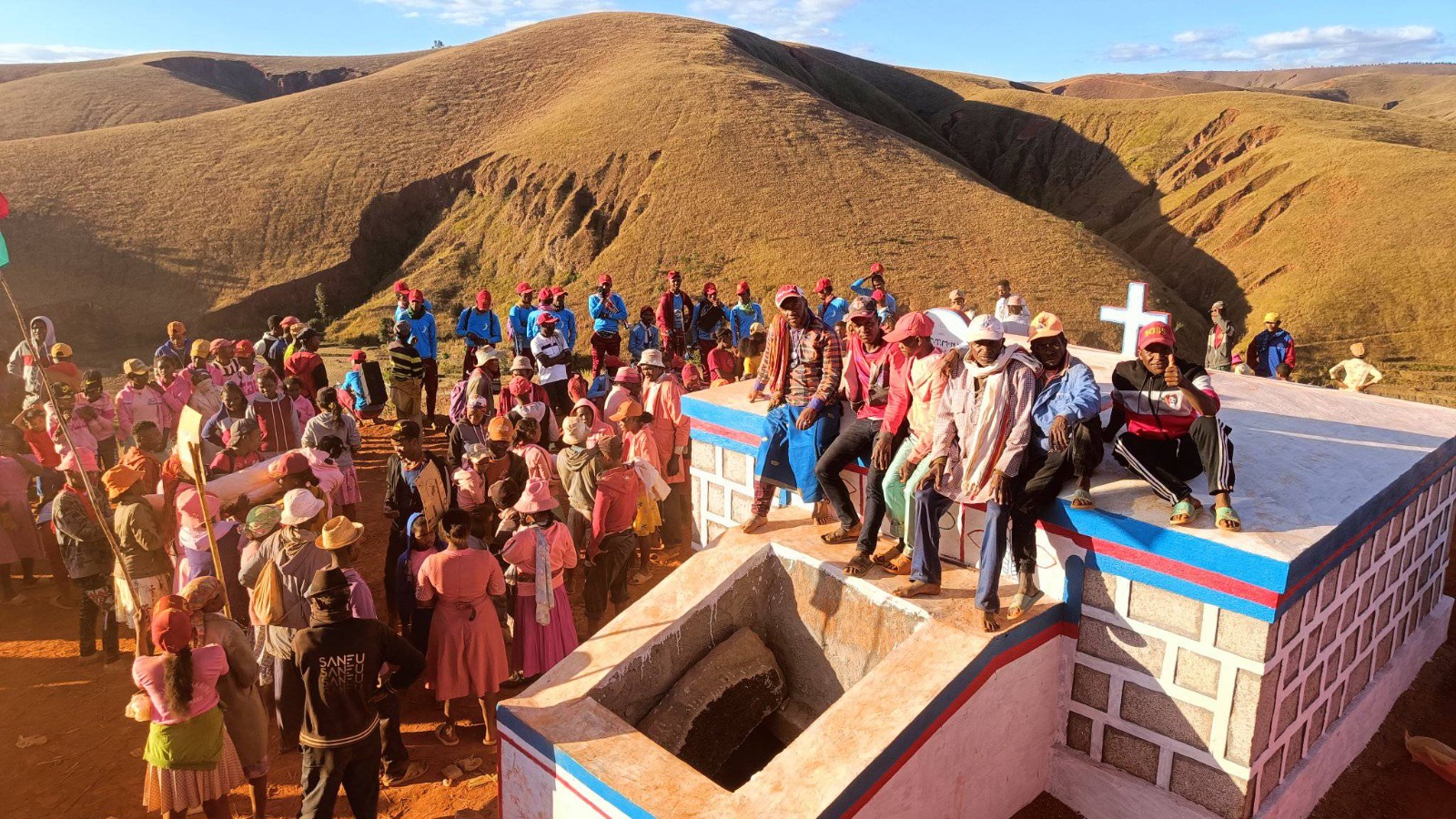
Family graves are huge, with remains of up to 100 persons. At Famadihana, all the bones in the grave are exhumed.
Young people want to resist the ancient custom, he explained, but they are under so much pressure they often must comply. “We must do it,” a 41-year-old guide told me.
Madagascar, the fourth largest island in the world, has 22 distinct regions and 18 different ethnic groups. Customs differ within the groups, but Famadihana is common with several groups. Half of the population is Christian, but many also practice Turning of the Bones.
I was intrigued, fascinated with Famadihana, and many other spooky Mada customs. I did not attend a bones ceremony, a private, sacred ritual, not an event where tourists are usually welcome. Many fear outsiders will disturb the spirits.
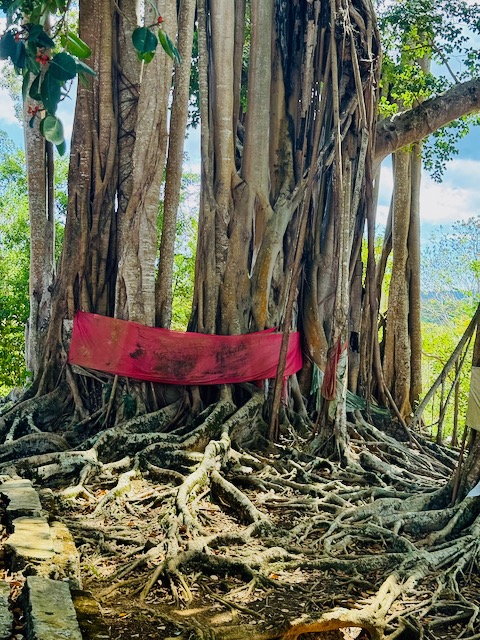
But, I was welcome to visit a sacred tree where spirits live. After a lengthy drive down a rutted dirt road through a jungle-like forest, there it was – a huge, tangled mass of roots, the Banyan Sacred Tree, planted in 1836 by the queen of the Sakalava tribe.
Malagasy come here to ask the spirit of the tree to fulfill a wish, grant them a favor, I learned. A woman may ask to find a husband, for example. Some may request a new car.
Whatever, believers must walk around the sacred tree, as well as make offerings, such as food items, to the tree. If their wish is fulfilled, they must return to the tree and sacrifice a cow. (My wish has not been granted. A cow is spared.)
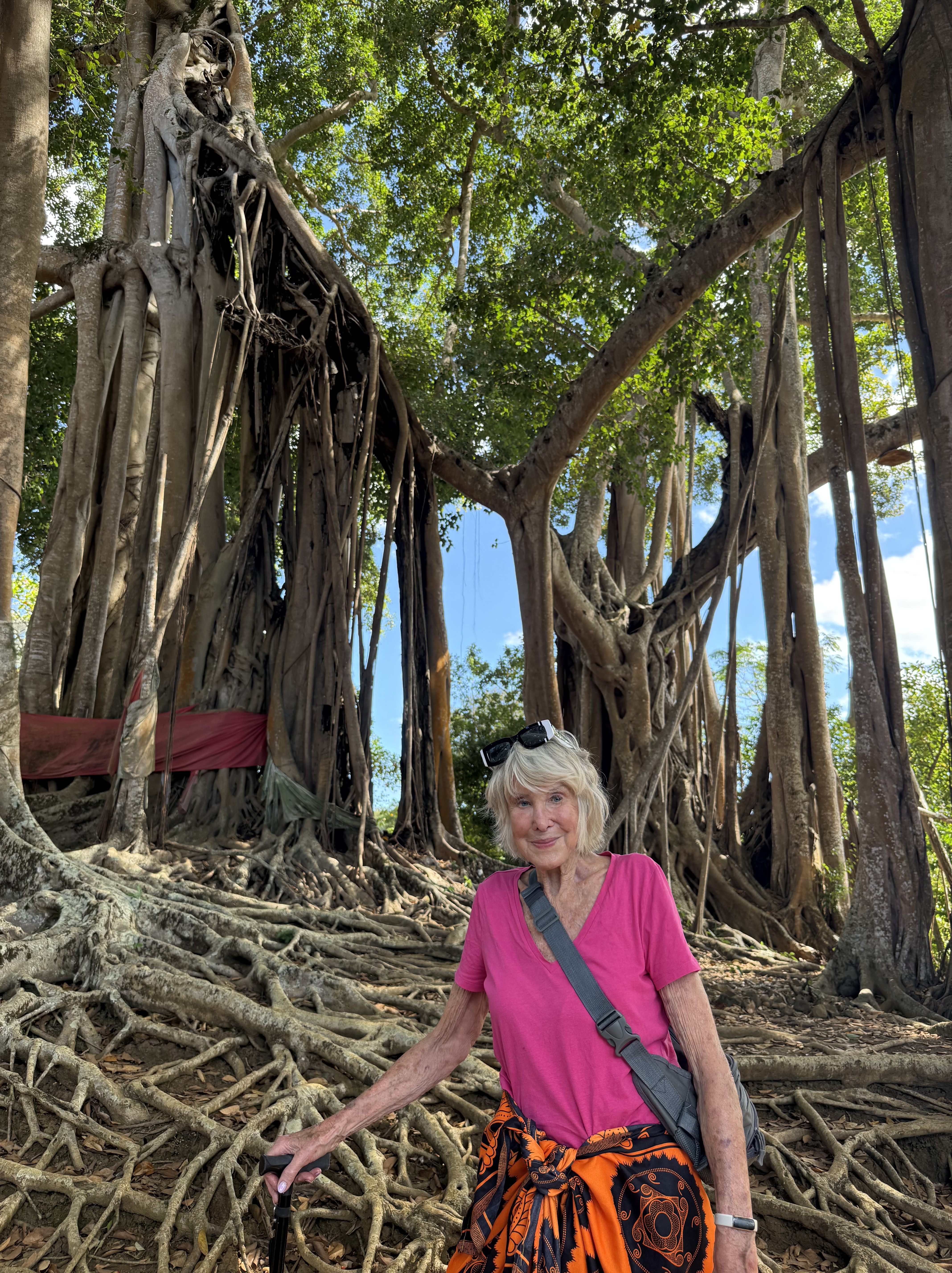
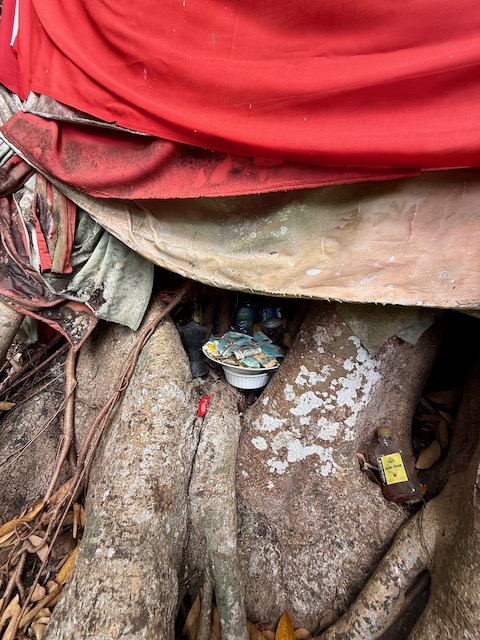
Female visitors must wear a pareo to walk around the tree. The garb can be rented at the site. At right, gifts left under the tree for the spirit.
Cutting or climbing this sacred tree is a fady (taboo), and Madagascar is loaded with fady. Taboos vary with regions, ethnic groups, even within a family. Breaking a fady is said to bring misfortune, bad luck.
Certain food items are a fady for some. A guide told me he does not eat pork. Eels are considered sacred in certain areas and not to be consumed. For many, it is a fady to point at a tomb or grave, to sit on a pillow, to sleep with your head facing north. In some places dogs are a fady.
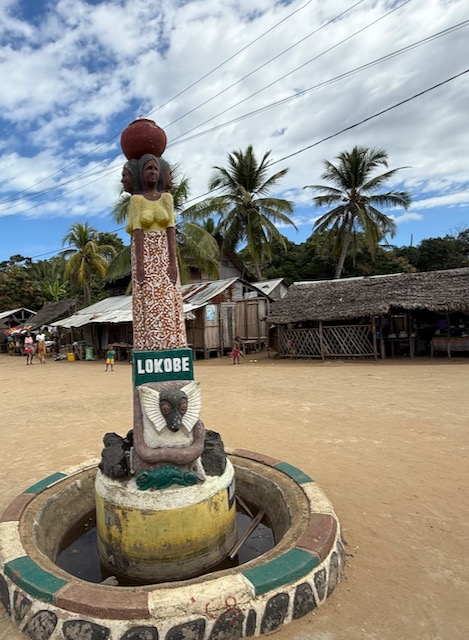
I visited Sakatia island where dogs are taboo. The guide explained that many years ago dogs were used on the island to chase and help capture natives who were to become slaves. “That’s why the people here hate dogs,” he explained. “I don’t like dogs either,” he said, “but it depends on your ethnic background.”
Fady are associated with circumcision, a rite of passage in Mada. It is performed by a traditional circumciser, often using bamboo and medicinal plants, and only on boys – no female circumcision in Mada.
An astrologer must be consulted to set an auspicious date. Rituals, cow sacrifices and feasting are involved. Guides told me as a sign of love the grandfather often eats the foreskin with a banana. In some areas, the foreskin is placed on top of a gun and shot into the air.
There is a movement underway in some parts of the island nation to promote more sanitary circumcision. Signs advertise “American circumcision. No blood.”
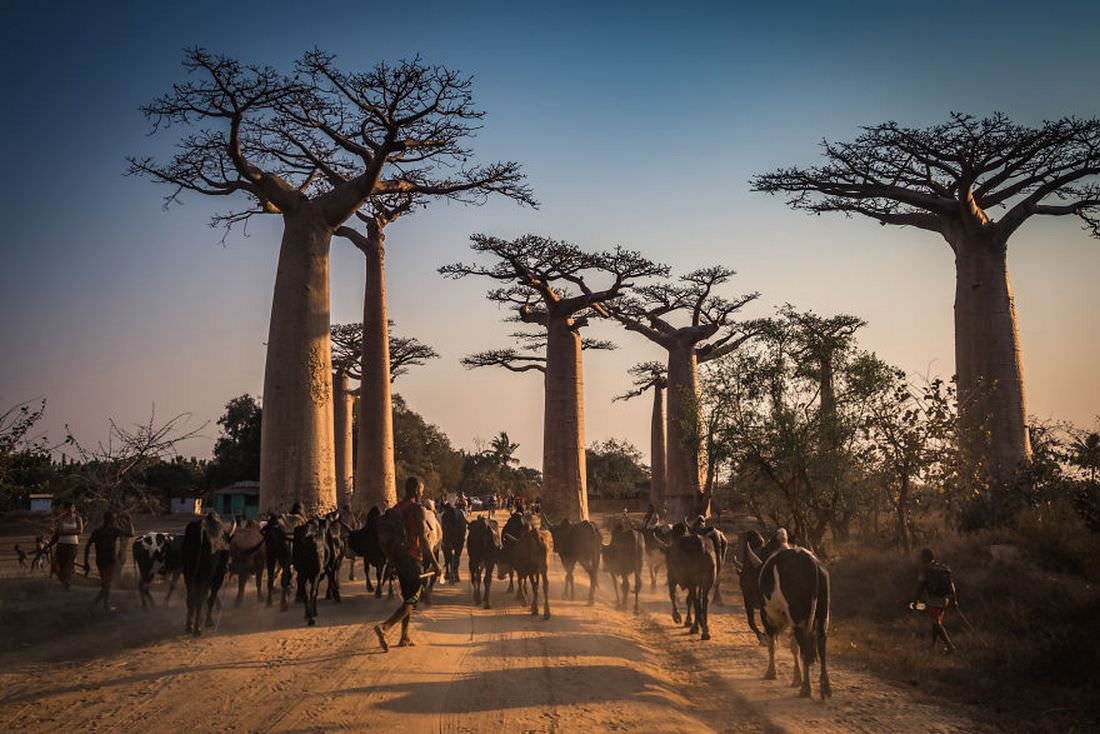
Intriguing, unusual customs are just one of the multitude of wonders of Madagascar. Adventure, wildlife, no crowds, stunning landscapes. Madagascar is mesmerizing. See my previous post, Discovering the Unique Wonders of Madagascar, for more on this stellar destination.
I am a foodie. Madagascar is not the place for Michelin star dining, but its markets and food customs are remarkable. The beef is extraordinary, in my opinion. Twice I treated myself to zebu filet — best steaks ever. More about zebu, the cattle of Madagascar, and Mada cuisine in my next post.
If not a Tales and Travel follower, please sign up here. Trust me. It’s safe. Your address is not shared.

Malagasy John Delmas organizes and guides visits to Madgascar. John was my guide/driver for two days. He was super, taught me lots. Contact his company. https://www.mada-discovery-travels.com
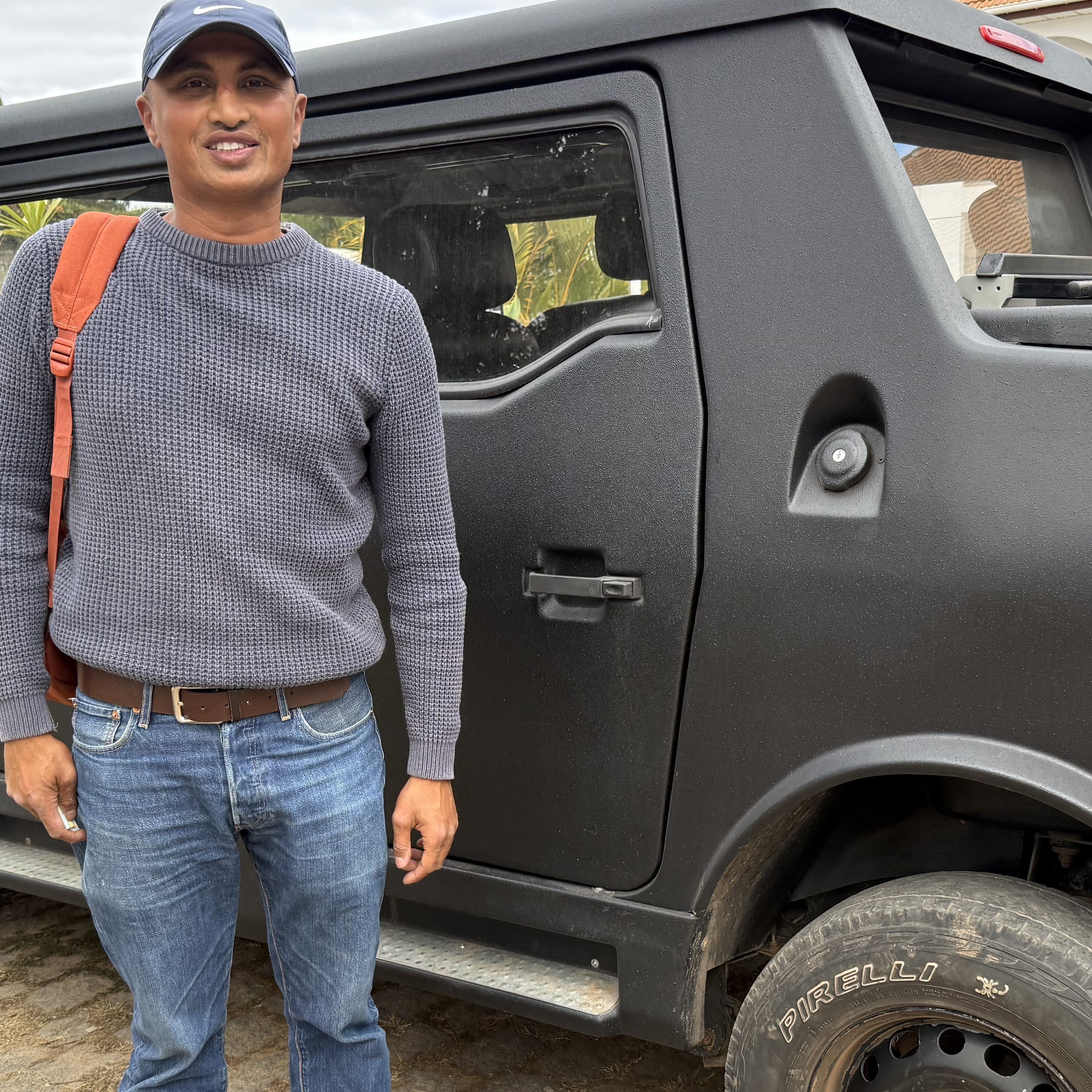
Ravi Matadeen rents made-in-Madagasar unique vehicles for self drive trips. http://www.selfdrivemadagascar.com.
I booked my African adventure, South Africa (Kruger) and Madagascar, with Worldwide Quest, http://www.worldwidequest.com
Today’s Taste: I spent the holidays in Italy, hence a yummy pasta recipe : Fusilli with Broccoli and Gorgonzola Sauce For more tasty recipes, click here.
I welcome comments.
8 responses to “Madagascar’s Intriguing Ancestor Rituals”
-
Salut Leah,
Lovely article for me today as my knee heels and I enjoy a bit of armchair traveler. I’ve not travelled all that much outside of Europe and the states so most of my holy relics have been visited in varies churches and cathedrals. Amusing how many commonalities are found within cultures that we typically think of as vastly different.
-
I am happy to know you enjoyed the article. It is always interesting to learn about other cultures, and more even interesting, surprising, to see the commonalities as you mentioned.
-
-
Hi Leah,
It is quite interesting to read about this ritual, I never read of some similar traditions before.
In Italy it is common to exhume bones of deceased people a few years after the burial, mostly for reorganizing space in the cemetery, but there are no rituals. I can see that they have quite a dedication for the bodies of their families.
It is sad that dogs have such a negative connotation. I would say that it was the men behind those dogs to be blamed for capturing people to become slaves. It sounds like a sort of superstition to me.
When I read the other article about Madascar while I was staying in your home, I then went for a walk to the Parc du Cap Martin and was delighted to see three baobab trees in there 🙂-
These customs, rituals are indeed interesting. Thanks for pointing out the baobab trees in my park. I never noticed, but will surely look for them next time I take a walk there.
-
-
Wow, Leah, incredible experiences you had!
-
Yes, fun and fascinating. Keeps me going.
-
-
I’m intrigued, I really would like to travel to Madagascar. I’ve had enough encounters with dogs on my travels to appreciate Sakatia island taboo. The guide’s comment suggesting that the taboo may have had its origins from when dogs were used to chase and help capture natives who were to become slaves, may help explain it. Like many cultural taboos it may have other positive consequences. It’s interesting how many cultures have celebrations to honor the dead. I liked to have a couple of baobab trees in my yard. I’m sorry your wish did not come to pass, but it saved you from having to go back, purchase a cow and sacrifice it. That would have been an expensive ordeal.
-
Mada would be a great destination for you and Tai. Rent one of those self-drive vehicles for exciting adventure. Not just the expense if my wish had been fulfilled — no way I could have sacrificed a cow.
-
 Tales and Travel
Leave a Reply to gaylesmithpadgett Cancel reply