Encore America

I’ve  lived in Europe for 35 years – and I love it here. But, it’s always interesting to return to the US. This time (May), was a treat with visits to Michigan for my high school reunion, then New Orleans, New York City, Cape Cod and Boston.

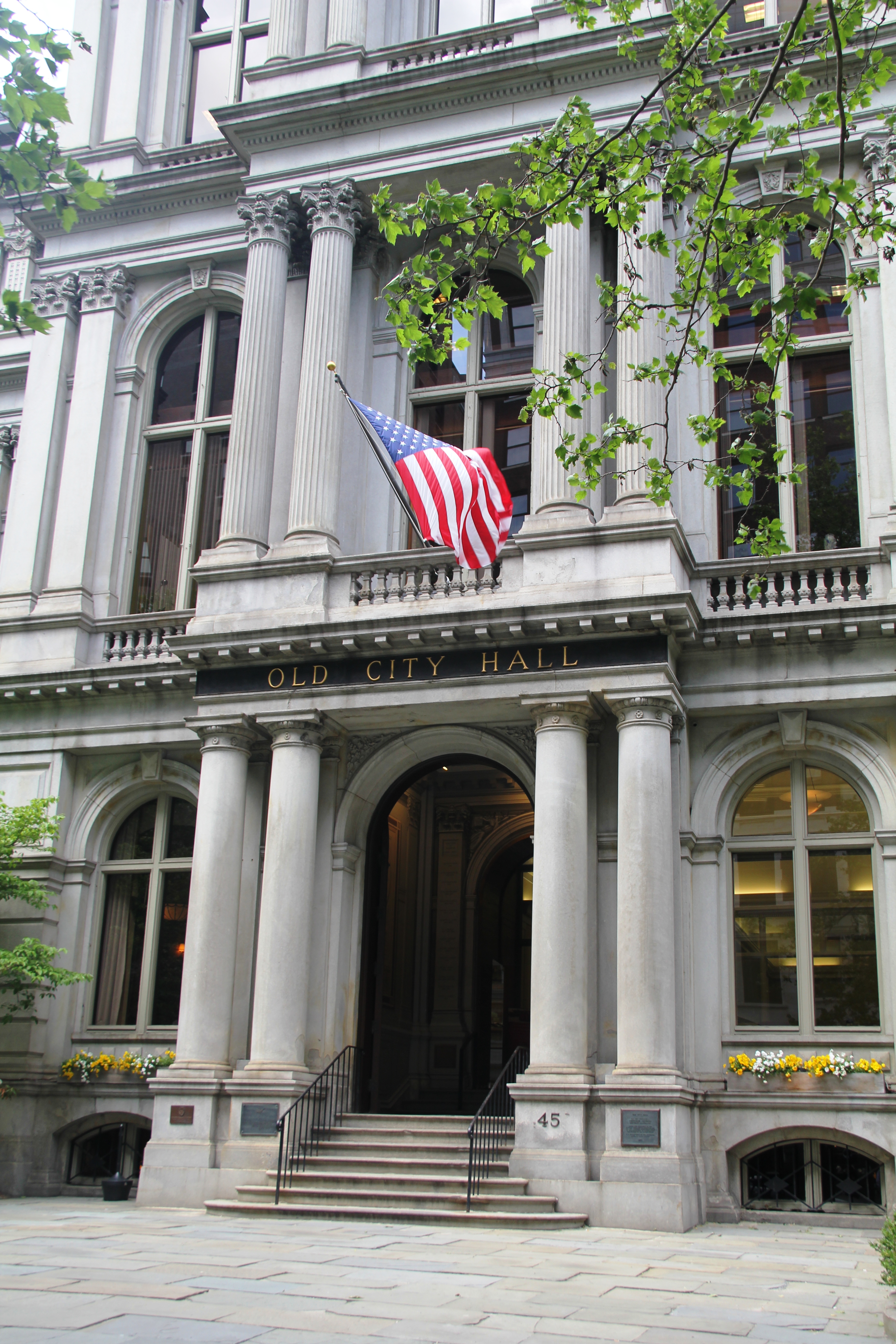
Boston Town Hall

During those first few hours after arrival at the Detroit Airport, I felt I was in culture shock. Our first experience with a “native” was the woman driver of our shuttle van who drove us from the airport to the rental car agency. She helped with our heavy suitcases. She was delightful and chatty, and offered advice on rental car procedures. The woman at the car agency was equally as accommodating, going out of her way to see what discounts she could arrange for us, then giving detailed instructions on how to find our way to our destination. During our travels, we often encountered extra friendly and helpful people like these. It’s rare to find such extra “service with a smile” in Europe.

On the streets of New Orleans

Detroit is car city, so I suppose it’s not unusual to encounter super, super highways – often four lanes in each direction. It all seemed so vast and modern. The buildings along the highways appeared new and sleek. Everything is clean. Our room at a Holiday Inn was another surprise. The room was huge, with a king sized bed, a coffee maker, ironing board and iron, and of course television and Internet. Breakfast, including eggs, was included in the very reasonable price. I guess I’ve lived in Europe too long, but I was in awe of it all.

 It’s a treat to be served water in a glass with ice at restaurants and not have to pay for it. And, coffee refills at no extra charge. The coffee may not be the greatest, but you can drink as much as you want. Shopping is another plus. While in Michigan, we visited the Great Lakes Crossing Mall, Michigan’s largest outlet mall. Mind-boggling.  Twenty-five stores under one roof. I’m not into power shopping, but prices for clothes, shoes, linens and more are usually much less in the U.S. than in Europe. The only problem these days is bringing it back, but we planned ahead and left extra room in our suitcases, and carried the heavier items with us.

It’s not all paradise. Restaurants are often very loud and noisy, the atmosphere less than inviting for lingering over a delicious meal. In the states, you are not supposed to linger. Usually when dessert is served, you are presented with the check and expected to pay and leave promptly. Not pleasant.

 However, reuniting with high school friends after 50 years (I’m old) was more than pleasant. There were only 29 girls in our 1961 graduating class at the Academy of the Sacred Heart in

Class of 1961

Bloomfield Hills, Michigan. Four, sadly, are deceased. Fourteen attended the reunion coming from 14 different states and me from France. We had a lovely evening supper at the home of one of my classmates, another evening cocktail party and buffet dinner at the home of one of the women’s amazing 99-year-old mother, then a cocktail party at the school followed by dinner in a restaurant. I am so glad I did not miss the festivities and meaningful visits.

My husband Bob also celebrated a reunion with some of his eight brothers sisters at the home of his sister Kathy who lives in Romeo, Michigan, about an hour from our hotel in Birmingham. Another sister and brother and their spouses drove all the way to Romeo from their homes in Wadsworth, Ohio (a 4-hour one-way trip) to see brother Bob for a day. A great testimonial to family togetherness.

 On to New Orleans – a fabulous place. Details will follow in a future blog. Then New York City where my stepdaughter Kellie lives in Soho. My stepson Rob and two step grandsons came

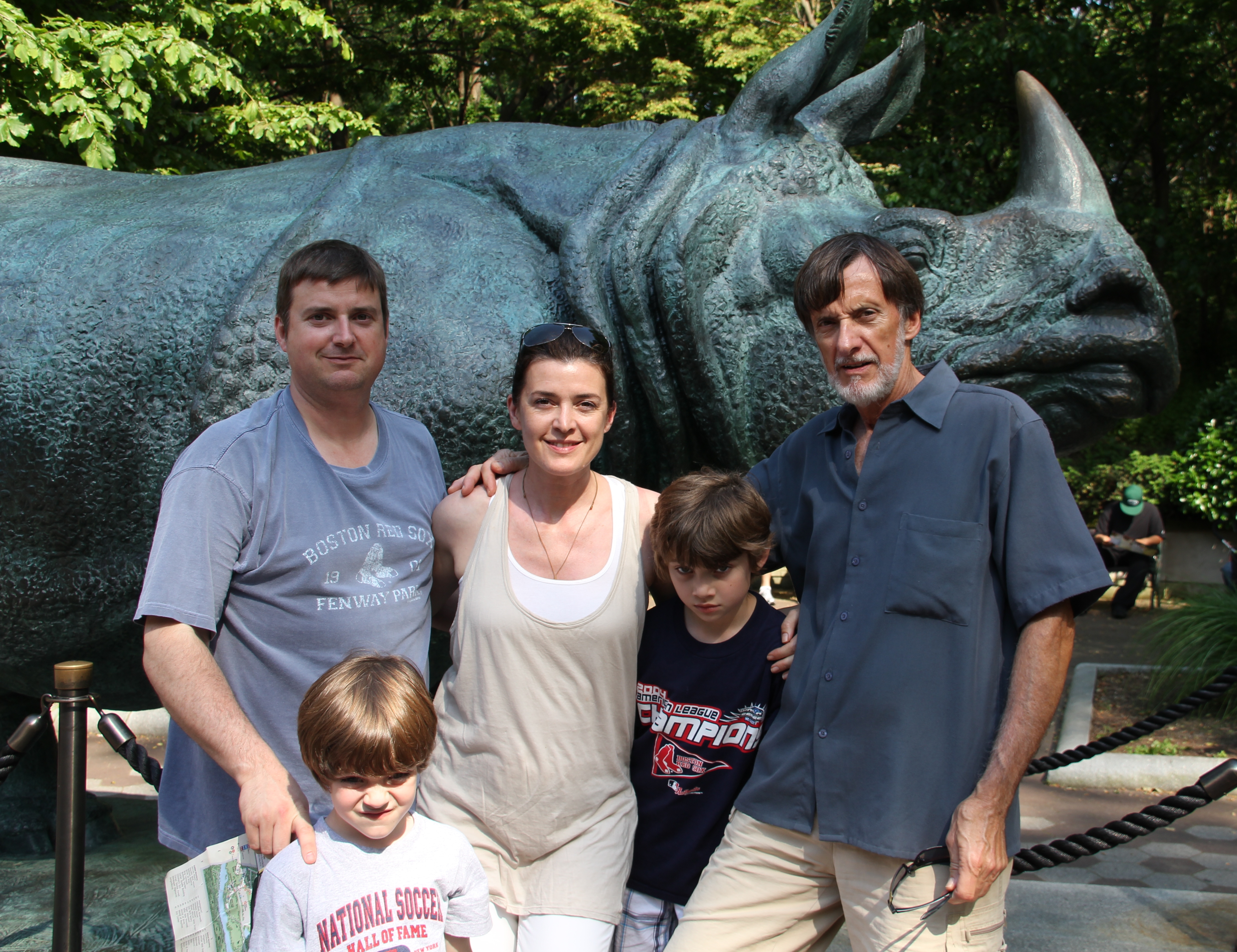
Rob, Lang, Kellie, Sam, Bob at Bronx Zoo

from Winchester, Va., to spend four days with us there. We took a ride on the Staten Island ferry, visited the Bronx Zoo, walked and walked, ate great burgers, cooked delicious meals in Kellie’s brand new state-of-art kitchen…New York is exhilarating.

 Last stop Cape Cod where Bob’s sister Susan and husband Brian have a beautiful home. Susan was tour guide extraordinaire, driving us all over Cape Cod and Boston. At Provincetown, we joined a whale watching cruise and spotted two whales. We were bowled over by the Cape Cod seafood – delicious lobster, scallops the size of peaches, and a wide variety of fish. Compared to Europe, the prices seemed downright cheap. We took the opportunity to visit nearby Boston where we admired the stunning architecture, followed the Freedom Trail, a walking excursion in the city past historical sites, and, for a special end-of-journey meal, dined at a classy restaurant atop the Prudential Building with spectacular views – courtesy of Brian. Indeed a “bon voyage.”

Noel en Provence

 Strings of twinkling lights decorating the bare trees swung precariously back and forth.  Dried, brown leaves flew in every direction.  Wisps of black clouds raced across a full moon.  The Mistral had arrived.

It was the La Nuit des 13 Desserts (night of 13 desserts) in Rasteau, an ancient town  Rasteau4 in Provence’s Vaucluse.  Although the wicked wind gave no respite for the festivities in this village known for its wine,  it did not dampen the spirits of  some 800 souls who came to wander through the town’s cobbled streets, stopping at stands to savor the Christmas treats as they sipped local wines.                

Thirteen desserts served after the réveillon (Christmas Eve dinner)  are a holiday tradition in Provence adhered to by even the staunchest Scrooge. The desserts symbolize Christ and the 12 apostles. Dates, figs, raisins, hazelnuts, almonds, nougat, fresh and crystallized fruit and fougasse (a type of flat bread) are among the selection. 

Rasteau1 Those who came to Rasteau that night were bundled up in ski jackets, long coats with hoods, mittens and scarves.   They seemed prepared for the wind, which fortunately did let up occasionally.

 Nine booths were set up  along Rasteau’s  alleys and paths leading to the  hilltop church of St. Didier, each one offering a different dessert, as well as local wines. Some of the weathered houses along the route were festively decorated with lights.  Torches and candles illuminated the path to the church.   

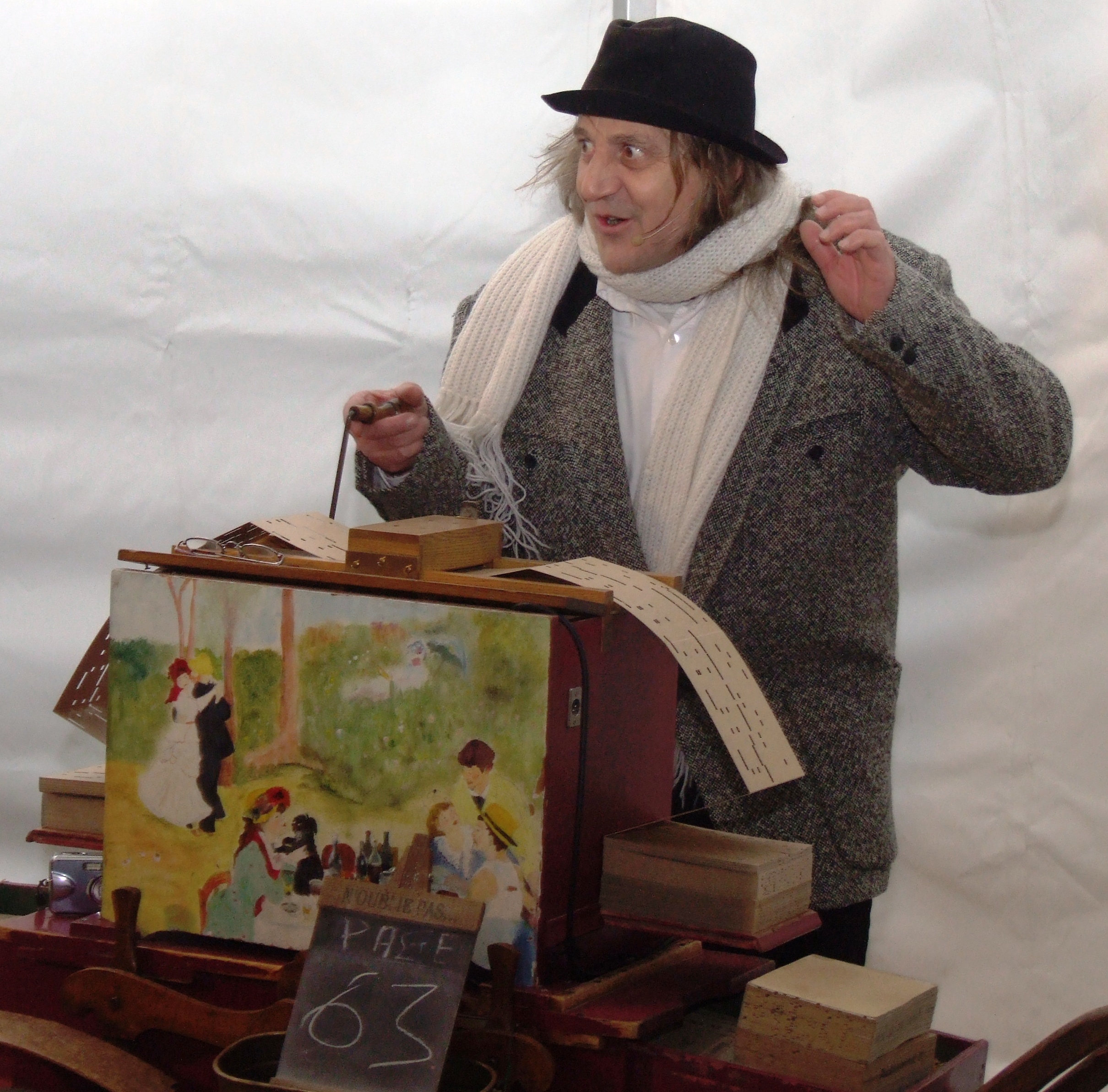
At some stands, barrels with roaring fires provided warmth. Hot wine was offered with roasted chestnuts at one stand. The nougat stand offered both black and white chunks of the candy which was so hard one had to wonder if it had not been supplied by the local dentist hoping for more business. Interspersed with the dessert stands was entertainment – story tellers, a concert at a chapel, folk songs, an organ grinder, even a mini theatrical production. 

“We’ve doubled the size of the town tonight, “  said Robert Aimé, the mayor of Rasteau Rasteau5 (population 700) announced proudly.  The jolly evening came to an end  about 11 p.m. when most of the fest goers headed home just in time to avoid the torrential rain which  replaced the wind.  That was two years ago.  Unfortunatley, due to the precarious weather in December, Rasteau no longer hosts the Night of 13 Desserts.

Thirteen desserts is just one of many special Christmas traditions in Provence where   the holiday season officially gets underway on December 4, the feast of Sainte Barbe, the patron of miners and fire fighters who lived in the third century.  On this day  it’s the custom to scatter grains of wheat in a saucer covered with moistened cotton.  The grains are diligently watered everyday.  By Christmas Day they should have sprouted, producing a  dish of lush green shoots which foretell a bounteous harvest for the coming year.  Beware – if the grains rot the harvest will be poor.

 The mini wheat field becomes an essential part of the Christmas crèche. In Provence, the crèche is de rigueur.  But not just any crèche.  Provençal crèche figures are special:  santons  from the Provençal Noel3 word santoun meaning “little saint.”   The Italians were thought to be the originators of the Christmas crèche.  In Provence the custom was copied beginning in the 12th century when parts of it were ruled by Italy.  Back then it was mainly the churches that set up a nativity scene.  When the churches were closed during the French Revolution, citizens secretly made their own crèche figures of papier-mâché or bread crumbs and created a manger scene at home.

 Through the years the scenes in Provence crèches became more elaborate, the figures more numerous.   In addition to the baby Jesus, Mary, Joseph, shepherds, the Three Kings, and animals, a santon crèche can be a mini reconstruction of a Provençal village with a baker, butcher, fish monger, doctor, even boule (Provence bowling) players, in addition to houses, barns, shops and streams.  An animal missing is the cat.  According to legend the cat is associated with witchcraft and was banned from the crèche by St. Francis of Assisi.

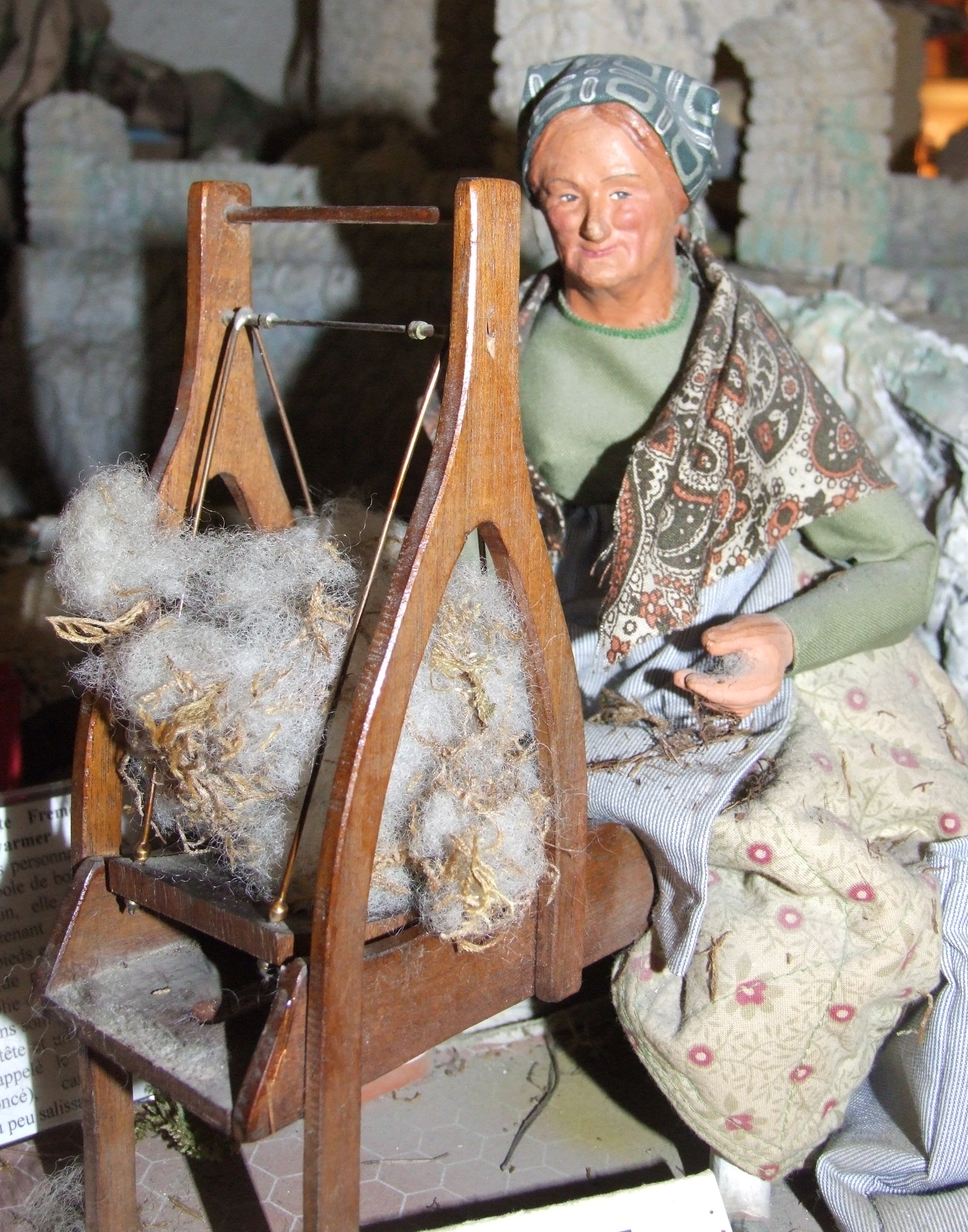
 At the Santon Museum in Fontaine de Vaucluse some 2,000 santons and 60 crèche and ProvençNoel4 al scenes are on display. The smallest features 39 tiny santons in a walnut shell.  The collection includes santons made of terra cotta, wood, wax and bread crumbs. Some of the figures move – a baker shoving bread into an oven, a woman spinning yarn, another doing laundry..

During the Christmas season, many towns and villages in Provence host santon markets with vendors offering all sizes of the figures and an extensive range of different village characters in a wide range of prices. Santon collections are a part of the décor in many a Provence home, with the figures displayed year round. 

 Be it in Paris or Provence, food plays a star role at Christmas.  For many in France, the Christmas Eve meal outranks that served on Christmas Day. In Provence it’s known as the gros souper or big supper served before Midnight Mass.  The dinner table is covered with three white tablecloths to symbolize the Trinity.  There may also be three white candles, but never any mistletoe in the Provence home as it is said to bring bad luck. 

An Noel5 ancient tradition may precede the meal, the Cacho-fio or lighting of the Yule log which should be from a fruit tree. The youngest and oldest members of the family bring the log to the fireplace and pour mulled wine over it three times before it is lit.  It then must burn for three days.  This custom is said to be the inspiration for the Büche de Noel, the Christmas log which these days is a cream-filled cake in the shape  of a log that pastry shops sell during the holidays.  

I won’t be making a Buche de Noel this Christmas, but this morning I made my special Holiday Fruitcakes.  See the recipe in the far column. 

 Joyeux Noel, Merry Christmas! 

Feel free to comment on my blog.  Click “comment” below.

                                                     ####


Iguazu Falls

The bow of the big raft lurched high in the air over another oncoming wave, then abruptly smashed back down.  Then again, and again. Up and down. Water splashed on board. Passengers were tossed about, but they loved it, shrieking with delight.

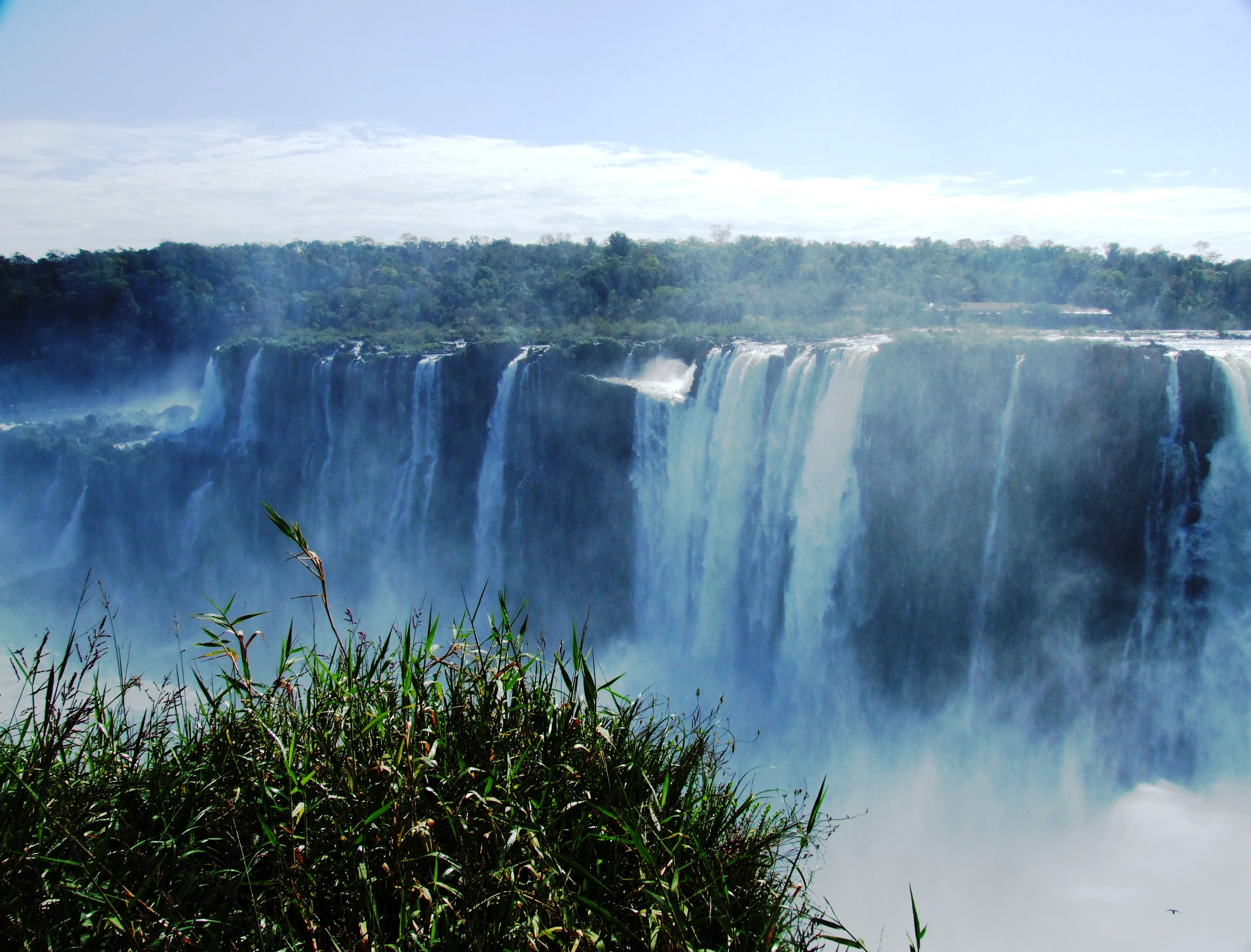
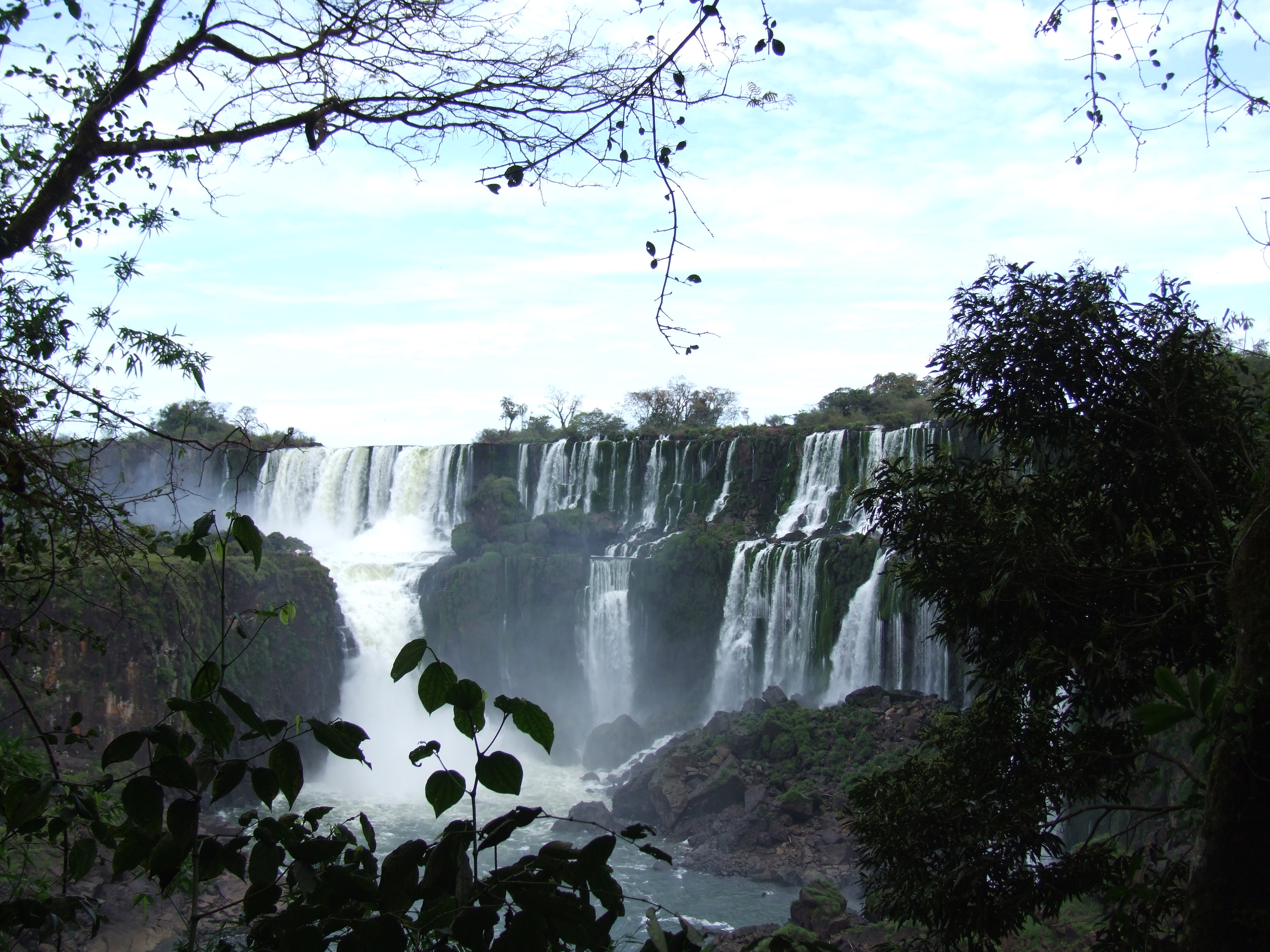
All around us were the great waterfalls, tons of water avalanching down into the river where the raft bobbed.  This was the “Gran Aventura” ride on the Argentinean side of Iguazu Falls which border both Argentina and Brazil, but can also be seen from Paraguay. Falls15

The real adventure was yet to come as the raft got nearer and nearer to the torrents of water.  Soon everyone was completely soaked. The helmsman was determined to give us our money’s worth.  He steered closer and closer, adding an element of fear to the thrilling ride. Shrieks turned to screams. It was better than anything you’d find in an amusement park.

 My friend Isabel and I spent three days in the Argentinean town of Puerto Iguazú near the Falls. The boat ride was a highlight of our Falls visit which began with a train ride through the jungle.  The train deposited us at a trail where we followed a guide who led us through the dense tropical environment.  Soon we heard a roar in the distance.  It grew louder as we approached the magnificent sight, thunderous, powerful surges of water.  We proceeded onto a walkway which took us to the edge of the falls which cascade as far as 200 feet below.  Shifting winds blew sprays of water in every direction. Rainbows danced in the mist. Birds dove above. Everyone was taking pictures of the falls, and of each other with the falls in the background.  

This is no Niagara, but some 275 waterfalls shaped by 120 million years of geological history.  That’s the amazing part—not just one big falls, but falls everywhere.  Our walk on the Upper Circuit took us Falls20 past several falls with viewing stands along the edges.  The Lower Circuit walk leads below yet other falls. Some wide and open.  Others long and narrow and surrounded by vegetation.  It’s all overwhelming.

 Our guide Margarita, who got married at the falls named “Margarita,” provided us with interesting facts about the Falls and the surrounding jungle.  The latter shelters 2,000 different kinds of plants, 200 species of trees, 85 species of orchids, five different kinds of bamboo, 450 bird species, 80 kinds of mammals including the jaguar  and 2,000 different insects including 250 kinds of butterflies.  The birds that fly around the Falls are swifts. Falls19  They have clawed feet which prevent them from landing. They hang off rocks and eat insects in the spray.  And, “they copulate in the air.”

 Every year two to three people commit suicide at the Falls, Margarita said, and they are always women. 

Our package tour also included an excursion to Brazil to see the Falls from that country.  The views there are said to offer a greater panorama.  Alas, I was not told that as an American I would need a visa to go to Brazil.  Cost would have been about $150, plus a long wait in a line at the Brazilian consulate in the town of Iguazu.  I decided, mainly for financial reasons, to pass.  Isabel, who is Irish, did not need a visa.  She went to Brazil and said it was stunning.

 Our hotel on the outskirts of Iguazú was almost next door to a wildlife refuge, the Güiráoga Center where rescued animals live in a natural habitat. We boarded an open truck into the jungle, then followed a guide to large enclosures where different animals lived.  It’s illegal in Argentina to keep wild Falls11 animals as pets.  Many of the animal residents were taken from homes where they had been pets.  Others were hit by cars or had been injured by hunters.  The goal is to re-introduce all to the wild, but some, such as a black-fronted Piping guan, a large bird which lost one eye to a sling-shot, cannot be fully rehabilitated and will stay at the center. 

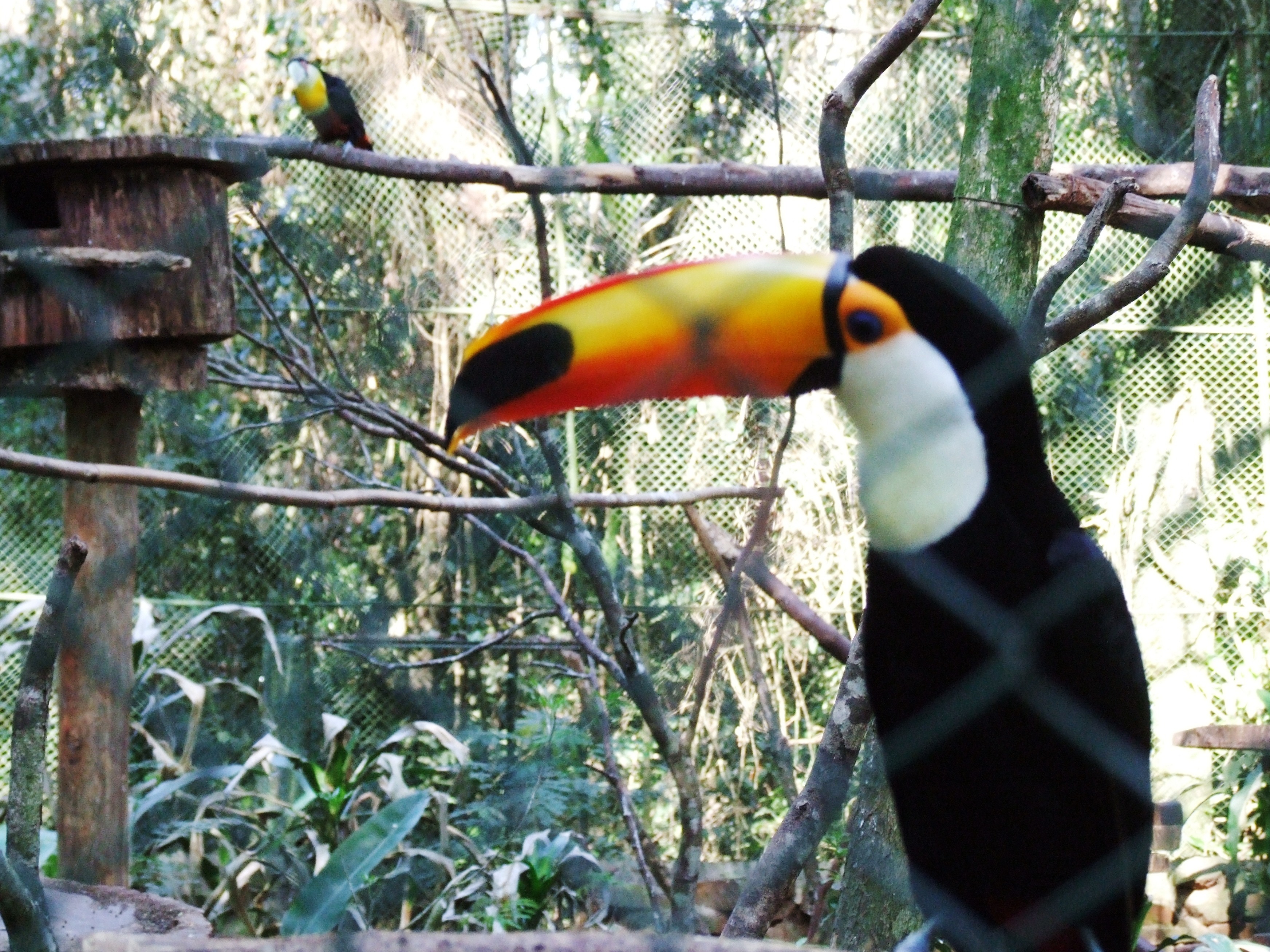
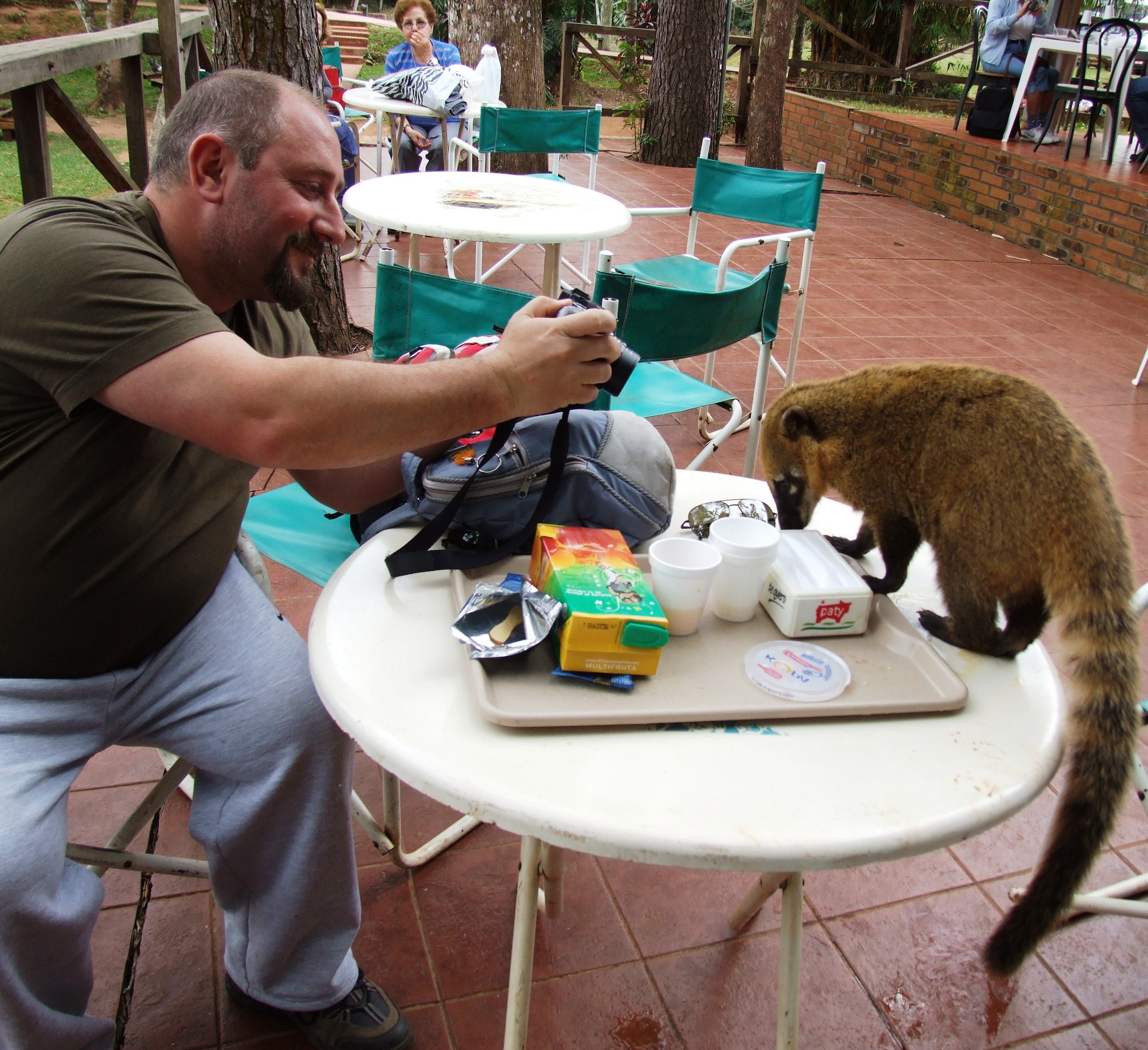
We especially enjoyed watching, and trying to photograph, the Brown Capuchin monkeys.  We were shocked at some of the tragic stories about the animals.  A Toucan had been found inside a suitcase, along with 17 other of the colorful big-beaked birds, in the cargo hold of a plane at the airport in Buenos Aries.  This is the only one2010_0307argentina0236 that survived.  Then there was the coati which was recovering from food poisoning.  Coatis (similar to raccoons) hang out at the food stands and restaurants at the Falls.  They are very tame and engaging. Tourists, even though they are told not to, feed the animals.

See more photos of the Falls under “photo album” center column. And, feel free to comment on this blog. Click on “comments” below.


Cry for me Argentina — the dark side

It was a sunny August afternoon in Buenos Aires as I walked down Carlos Pellegrini avenue with a friend.  We were off to a museum. The broad sidewalk of this major thoroughfare was crowded with pedestrians, three and four abreast in each direction.  I clutched my purse and camera tightly to my body as I always do when traveling.  

Suddenly, from out of nowhere, a man lunged at my neck and ripped my three gold necklaces from my body.  He raced down the steps of a subway entrance, disappearing with my precious jewelry.  I was in shock. My neck hurt. It seemed unreal. 

Fortunately my friend Gill offered comfort and care.  We retreated to a nearby restaurant where I ordered a beer to calm my nerves.  When I realized what had happened, the tears flowed.  But, I had to be thankful I was not hurt. And, I can only blame myself for wearing gold jewelry on the streets of Buenos Aires.  I’ve read articles about this very kind of theft.  Why did I think it would not happen to me?  Worse yet, did I even think at all? 

That was the first day of a two-week trip to Argentina to ski with the Ski Club of International Journalists in Ushuaia.  See previous blog, “To the End of the World.” 

My stroke of bad luck actually began the day before when we arrived at the airport.  All my European friends proceeded quickly through customs.  I was stopped and told to go to another desk.  There I learned that Americans must purchase a $140 visa to enter Argentina.  Apparently it’s because the U.S. requires the same of Argentineans visiting the United States.  Lucky Europeans. 

Things improved once we got to the ski slopes, at least for the first few days. But on our last day, a gorgeous day that makes skiing an out-of-this world experience,  someone skiing at lightning speed crashed into me as I stood in a lift line.  The binding on the leg with my bad knee (that’s another story) did not release.  My knee was twisted into a painful position.  When I finally got skis and poles sorted out, with help from others in line, I was in pain.  I had to stop skiing.  So I spent most of that last lovely day in a lodge.

 A post trip to Iguazu Falls was part of my Argentina adventure.  Irish friend Isabel and I booked a package tour and spent three great days ( well maybe two for me) at this amazing site. We had a wonderful hotel.  The first day’s tour to the Argentina side of the Falls was super.  We planned to tour the Brazilian side the next day.  When the van arrived to pick us up, the driver asked for our passports.  He spotted my American passport and asked if I had a visa.  I did not.  He said a visa was required of Americans visiting  Brazil.  It would require photos and a trip to the Brazilian consulate in the town where he said I would undoubtedly have to wait in a long line.  He wasn’t sure, but he thought the visa would cost about $160.

 The tour company we booked the trip through knew I was American.  They never mentioned the visa. I thought about trying to get one and joining the tour the next day, but I decided $160 to spend two hours in Brazil was out of the question.  Isabel went and said it was fabulous.

 What else can go wrong?  Unfortunately I picked up some evil germs on the trip.  It’s been two months, and even though I am no longer really sick, I still don’t feel up to par. 

My postcard writing is another saga.  I diligently wrote 12 postcards to friends and family as I thought sending a card from “the end of the world” was neat.  I purchased DHL stamps at a hotel.  The cards, I learned, finally arrived this week, some two months after they were mailed.  But, they did arrive.

I just returned from a trip to Germany where fortunately my luck improved.  During three weeks in the country I experienced only two days of rain – almost unheard of in Deutschland. Stay tuned, I’ll be writing about Iguazu Falls (Argentina – the bright side) and Germany soon.

 Feel free to comment on my blog.  Click “comments” below.


To the End of the World

Some 68 skiing journalists from 24 countries recently visited the  “end of the world,” Ushuaia, Argentina, the world’s southernmost city. It was the 57th winter meeting (it’s winter in Argentina) of the Journalists’ International Ski Club (SCIJ) www.scij.info Argentina20

The trip had more than its share of mishaps for me, but I’ll relate those in another blog.  Read on for a tale of fun.

It all got underway in Buenos Aires with a dynamite dinner and tango show. This sensuous, sexy dance is to Buenos Aries what flamenco is to Madrid.  Maybe even more. There are dance halls where locals show off their moves, street dancers who stop pedestrian traffic, as well as the glitzy shows.  It’s enticing, spell binding.

But we came to ski, not dance. Ushuaia, a port city surrounded by snowy peaks withArgentina1 a population of 55,000,  is at the bottom of the country, 3,000 kilometers from Buenos Aires in the Tierra del Fuego province and some 1,100 kilometers from Antarctica.  The ski week got off to a lively start with the city’s welcome ceremony.  Through the streets, we followed local children carrying the flags of the countries represented to a hall and museum where the mayor and other officials greeted us.

The museum is Ushuaia’s former jail and military prison. In the late 19th century, Argentina wanted to colonize this distant post and decided to establish a prison there for “second offenders.”  The convicts were put to work building the prison which was not completed until 1920.  It was closed in 1947.

The museum exhibits shed light on prison life.  In the same building is the Maritime Museum with displays on Antarctica expeditions.

Next day off to the slopes at the nearby resort, Cerro Castor, a lovely ski area with lots of wide open cruising runs and pleasant woodsy and stone lodges.  We were most impressed with the organization and attentiveness at the rental facility.  Only a few participants (those who take the obligatory races very seriously) brought their own skis and boots.  At Cerro Castor, in addition to distributing skis and boots in record time, the staff even helped us on and off with our boots.

Argentina6 The weather in Ushuaia tends to be gray.  It is said it either rains or snows almost every day.  It had been drizzling in the city the day before  our giant slalom competition but it was snow on the slopes so we had excellent racing conditions.  And,  because we were such a small number,  we each had the opportunity to ski the course twice, with the best time counting in the final results.

That afternoon we attended a round table discussion with ex-combatants, several former soldiers wearing tan leather jackets loaded with medals,  from the Malvinas (Falkland Islands). They explained their conviction that the Malvinas belong to Argentina, not Great Britain, and related how they have been ignored by the Argentinean government, presumably since they lost the war.  And, they let us know they’d be ready to fight again to reclaim the islands now inhabited by British citizens.

There was time for more than skiing during our week at the end of the world.Argentina8

We had a bus tour and walk through the National Park in Tierra del Fuego, a vast area of forests, peat bogs, and water.  The guide told us about the early inhabitants in this area, the Yamana, who went naked in this frigid environment and had constant fires to keep them warm, even in their boats, hence the origin of the name Tierra del Fuego (land of fire) as it was called by European explorers. 

We took a ride on the “End of the World Train,”  an old steam train that, some 100 years ago, brought prisoners to the area to cut trees to supply wood for heating and building purposes for the prison in Ushuaia.  Fields of tree stumps still abound in the area. In this climate it takes ages for trees to regenerate.

And, we took a boat ride in the Beagle Channel, the body of water which connects Ushuaia to the Atlantic Ocean.  We stopped off shore of an island where hundreds of sea lions lounged on the rocks.  Hanging out behind them were flocks of Imperial Argentina11 Cormorants, large regal black birds with long necks and white bellies which can dive to a depth of 80 meters. The sea lions, a noisy, stinky lot, live in harems, we learned.  A great photo opp.

Nation’s night is a tradition at SCIJ meets.  Participants bring refreshments (liquid and solid) from their respective countries to share.  It’s a feast:  Italian pasta, Russian caviar, French foie gras, Swiss cheese, Finish reindeer sausage, Swedish salmon, Belgian chocolate, etc. – all washed down with an incredible variety of international alcoholic beverages.

SCIJ members are a tough lot.  Party until the wee hours, but fit for the slopes early the next morning.  The cross-country race demands extra stamina.  It’s always fun. An Argentina14
après-race tradition is Dutch pea soup made by the team from Holland. Unfortunately the ingredients did not make it through Argentinean customs, but this did not stop the innovative Dutch who used local produce to concoct a tasty soup.

After the race we participated in a variety of snow activities:   snow mobiling, dog sledding and snow shoeing. We followed a leader on the snow mobiles, but I was anxious to race across the snow on my own in the vehicle for even more thrills.  Sledding was super. I love the dogs and am always amazed at their speed and power.

As everyone knows, Argentina is beef country.  We had our share of bovine flesh as well as some lamb.  The assado is a staple: a variety of cuts and sometimes sausage grilled and served on the “parilla,” a small grill.  Very tasty, especially with chimichurri, the spicy Argentine sauce made from parsley, olive oil, garlic, vinegar and hot pepper flakes.  There are numerous versions with additional flavorings such as paprika, cumin, cilantro…

Then there are the wines.  We savored many a glass of the famous red wine, Malbec, but also discovered some delectable whites (Chardonnay and Sauvignon Blanc).  The beer is also good.  You can find it in three colors: blonde, red and black. 

After the ski week, I returned to Buenos Aries and from there my friend Isabel and I continued to Iguazu Falls. See a future blog for more on that adventure. Click on the photo in the middle column to see my photos.