Bella Venezia

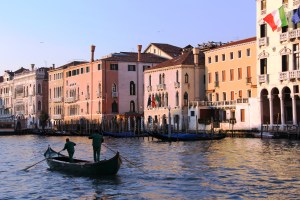
Venice is one of my very favorite places.  It’s beautiful, unique, fascinating… how can you not fall it love with this wondrous place where streets are streams of water? Venice29

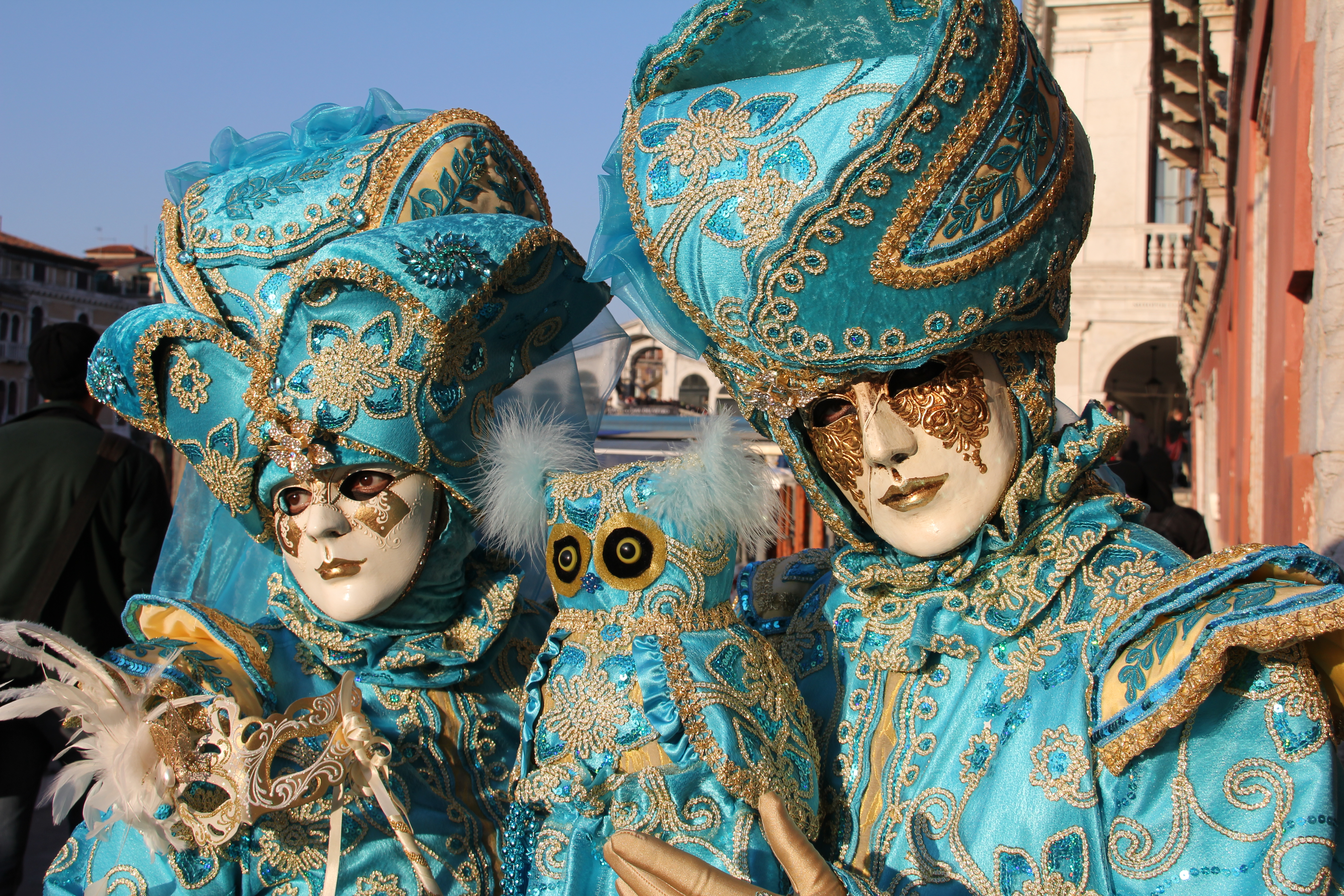
Venice is a collection of 118 islands, intersected by more than 150 canals and joined by some 400 bridges – all resting in the heart of 200 square miles of partially navigable salt march.  I’ve been several times, most recently in March for a few days.  We arrived on the last day of Carnevale. This is an amazing spectacle.  Gorgeously costumed posers wander throughout the city, stopping by monuments, on bridges, in front of churches, happily pausing for tourists to snap the obligatory photo.

This was our second time in Venice for Carnival, but this time was somewhat disappointing as we did not see as many costumed revelers.  As the festivities go on for two weeks, perhaps many were tired and had packed up and headed home by the last day. 

Venice, however, was not disappointing. Our friend Noel Parks, an American we know from our days in Germany, is now retired and lives about an hour from the magical city which he visits frequently.  He adores Venice, and knows it inside and out. 

Venice17  Noel and friends had rented a house in Venice for the Carnival period.  A friend of theirs, obviously a gifted seamstress, had made the group lavish costumes so they could fully participate in this marvelous event. 

After serving us a Bellini (delicious Venetian cocktail made with sparkling wine and peach puree),  Noel gave us his Venice tour.  We followed him down skinny alleys,  along picture-book canals, across bridges.  The city is labyrinthine, but Noel never consulted a map.  He knew every turn and guided us to numerous hidden treasures most tourists probably miss.  His commentary at the sites was lively and entertaining.  We were mesmerized. 

I asked Noel to send me the text (14 pages) – his extensive research on Venice.  Following are some of the highlights which he pointed out during our tour. 

Our guide led us through a Sotoportego, a passage under a building and explained that Venice is a challenge to get around as there are numerous dead-end alleys.  They were designed on purpose to confuse anyone who might invade. Venice14

Piazza San Marco (St. Mark’s Square) was called “the finest drawing room in Europe” by Napoleon.  This is the place to sit in an outdoor café and people watch, but be prepared to pay for the popular seats in these pricey places.  Noel told us this is the only “piazza” in Venice as the other squares are all called by different names, “campo, piazetta ,”etc. 

San Marco, the famous church depicted in the favorite Venice postcard, is the third church built on the spot.  It is said that every ship returning to Venice had to bring a treasure for the church.  The mind-boggling ornate interior is a collection of these objects which accumulated over the centuries. 


The campanile (church bell tower) was built in the  beginning of the 20th century as a replacement for the original which collapsed in 1907.  The city is built on pilings that were driven into the mud to support the weight of the buildings.  When rebuilding the campanile, they figured they best check the pilings since they had been in the ground for about 1,000 years.  Upon examination, the pilings proved to be in perfect condition as they were in an anoxic environment.  They were simply driven back into the mud.
 Venice19

Our visit to the ghetto where Venetian Jews were forced to live until the time of Napoleon was haunting.  Jews in the ghetto were rounded up and deported to extermination camps.  The Holocaust Memorial is a series of bronze reliefs depicting Jews who faced the gas chambers and other forms of Nazi brutality. 

A highlight of the excursion was our lunch break at one of Noel’s favorite restaurants, Sempione.  He helped us order.  We started with a glass of Prosecco, the popular Italian bubbly.  I went for a tasty seafood pasta creation.  We topped the meal with a glass of the luscious Italian lemon liquor, limoncello, and then a wonderfully decadent concoction, Sgroppino, a creamy mixture of lemon and plain ice cream and lemon Vodka.  Magnifico!   Venice11

On our last day we took the vaporetto (water bus) to the island of Murano, the glass island.  The trip by water offered spectacular views of the city.  I was in pursuit of a whimsical chandelier,  a curious creation I had seen at an Italian restaurant in the mountains during a ski vacation.  I was told it came from Venice. 

In Murano all the glass factories have show rooms with displays of their merchandise.  Vases, chandeliers, glasses, bowls, jewelry….We visited them all.  The main street along a canal is lined with shop after shop offering more of the same.  We perused them all – but no chandelier like the one I craved to be found.   Nonetheless, we enjoyed Murano.  It was quiet and calm, a contrast to the bustle of Venice.  And, even if I did not find my prize, I enjoyed looking at all the fabulous, colorful glass objects. 

There’s so much to see and visit in Venice.  This was a short trip.  No time to visit the interiors of museums, churches and palazzi.  We’ll go back for sure. 

For more photos of Venice, click on the Photo Album, center column. We ate lots of wonderful seafood in Venice. I was inspired to serve a shrimp salad at my most recent dinner party.  It was a winner.  See recipe in far left column.  And, please feel free to comment.  Click Comment below.

Celebrating in Croatia

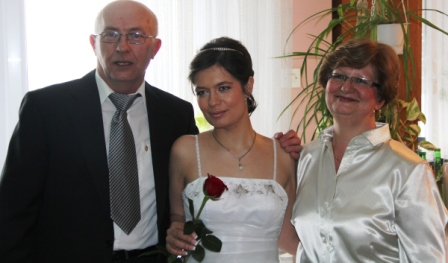
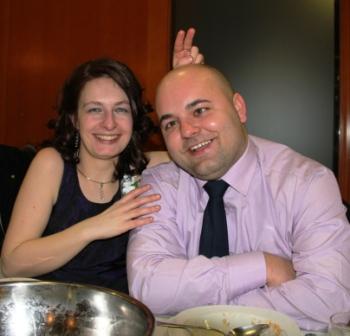
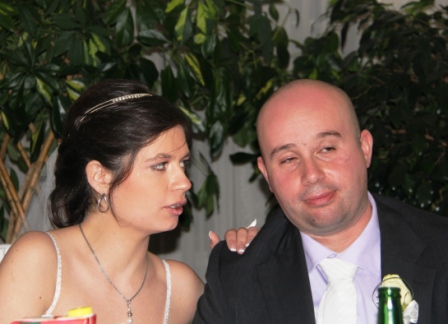
Another wedding.  This time in Nasice, Croatia.  Zrinka Habuda, 29, the daughter of husband Bob’s second cousin, Dubi, married Slobodan “Bocko” Licinic, 35, on March 5.

It was a rollicking event.  Mountains of food. Ample quantities of wine and slivovica (plum brandy, the potent national beverage). Non-stop music.  Spirited song.  Lively dance.  For hours… and hours …. and hours. 

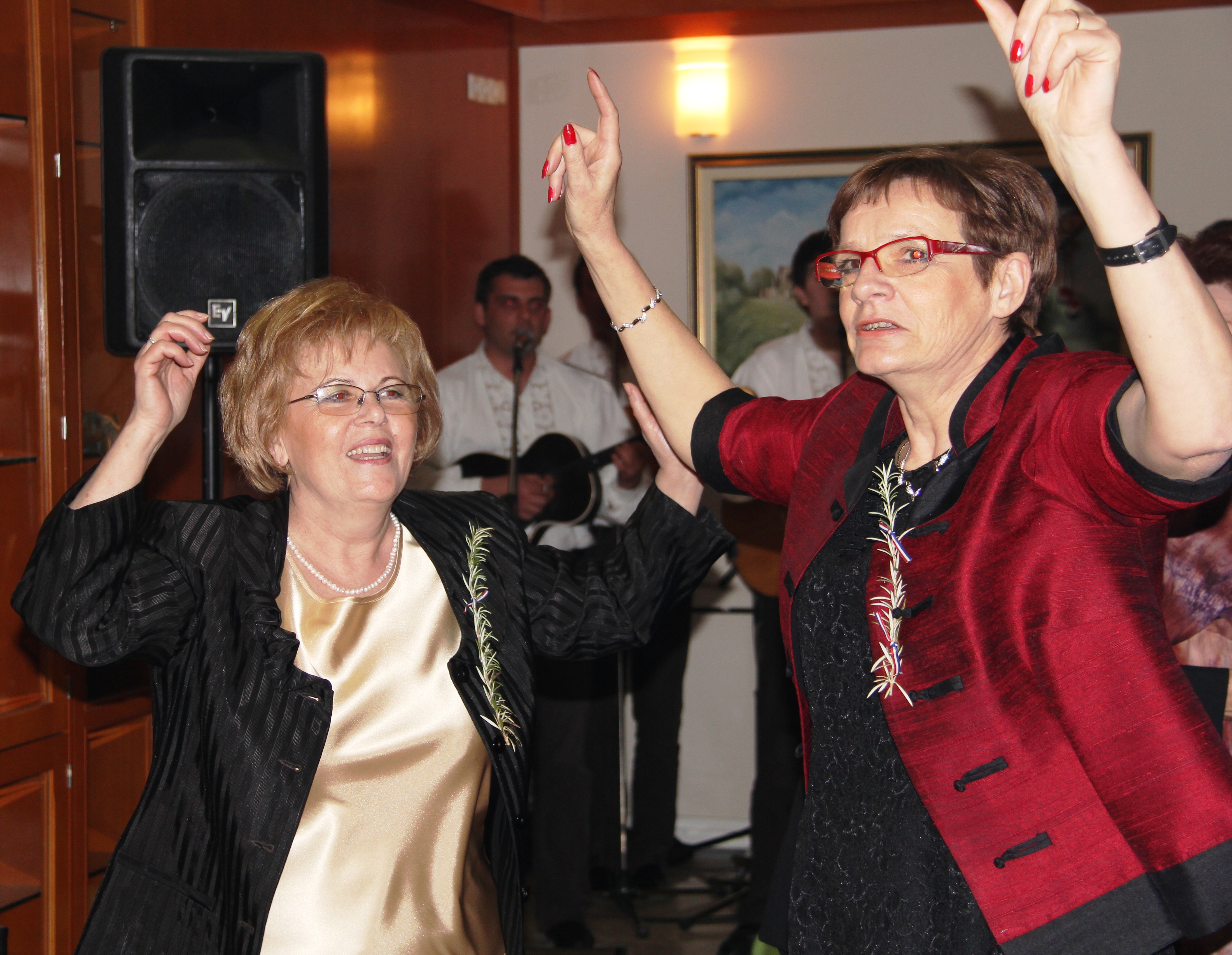
For us, festivities got under way at the bride’s home at about 1 p.m.  Close friends and family of the bride gathered to savor platters of smoked meat, a variety of pastries, glasses of wine and/or that wicked brandy, while a five-piece band belted out tunes that everyone knew.  As guests arrived, Marija, Zrinka’s sister, pinned most with a swig of rosemary decorated with a tiny ribbon of Croatia’s national colors. A tradition, she told me. Close family members and those in the wedding party got small corsages. 

As the crowd mushroomed and the liquid refreshment flowed, the party heated up.  Most everyone sang – loud, hearty voices.   Song after song, mainly jaunty ethnic tunes, and they knew the words to all.  They danced, linking arms, making a circle, always in motion. 

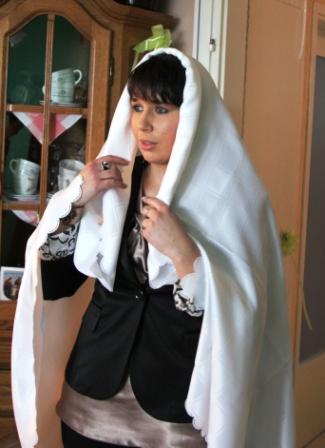
Several hours later the groom and his family arrived. They had been celebrating in a similar fashion at his home.  Another tradition got underway.  Instead of his bride-to-be, Bocko was presented with a fake bride, one of Zrinka’s friends, head covered with a white cloth. 

The small apartment was crowded, but the celebrants still found room to dance.  The merry-making continued until it was time to move on to the church, about 5 p.m.  Before departing, Pavle, Zrinka’s father, gave a moving speech to his daughter which brought tears to some. 

Zrinka had a maid of honor and Bocko, a best man.  Zrinka also had two bridesmaids, but, unlike in the U.S., they wore street clothes instead of matching formal attire. The momentous event was well documented – two video photographers, and another for still shots.  

Candles provided a romantic, if not mystical, atmosphere in the old world Catholic  church.  The ceremony was short, and at the end the bride and groom stepped to the altar to sign numerous documents to make it all official. 

Long, long tables stretched across a vast room of a hotel in a town about 20 minutes away where the reception was held. The same band, now wearing matching white “folk costume” shirts, wasted no time to get on with the show. And, the guests were quick to move to the dance floor. 

Some 120 guests, a small wedding by Croatian standards, were treated to a wedding meal – more precisely meals.  Bottles of wine, juice, cola and vials of slivovica, as well as another type of brandy, sat on the long tables.   

The first course was the “obligatory” wedding soup (chicken noodle) which is always served at Croatian weddings.  Then bowls of tender boiled beef and carrots.  Next came stuffed cabbage in  broth.  After that, cole slaw and tomatoes.  Then, enormous platters with big chunks of pork, lamb, and breaded schnitzel, surrounded by potatoes and mixed vegetables. Wedding cake would not be served until after midnight, so trays of pastries appeared after this over-the-top meal. 

“We need lots of food for energy.  We dance a lot,” one guest explained when I expressed astonishment as the food kept coming.  As the night wore on, the music and dance were equally as astonishing.  The band never took a break.   Nor did many of the dancers.  Song after song, they kept up the pace. The music was part ballroom, part folk, but always energetic.  

At midnight, a several-tiered wedding cake arrived.  The cutting ceremony was much like that in the U.S., but it was followed by a procession of all the guests who stepped up one by one to greet the happy couple and present their gifts. Most put an envelope with money in a basket held by sister Marija.  

In addition to the wedding cake, some seven or eight lavishly decorated cakes covered a table. It’s a tradition that each bridesmaid, as well as any others who wish to display their baking skills, bring a cake.  “It’s more like showing off,” Marija said. 

Even after all that food, I had to try a few small bites of these delicacies.  The wedding cake, layered with fruit and custard, was the clear winner. 

I was growing weary, but not the other guests. Maybe if Bob and I were better dancers, we would have been more in the spirit.  But, we failed dancing lessons we took years ago when we lived in Germany.  So, we sat and watched the joyous revelers. 

We were told we had to stay for the traditional goulash served at 2 a.m. Yes, more food, but it was delicious Croatian fare.  And, we noticed a few people leaving after goulash, so we, too, said our farewells. 

We were back in the same room the next day at 1 p.m. for a luncheon, mainly tasty leftovers from the night before.  No music.  No song and dance.  The party goers, including the bridal couple now wearing jeans, were clearly weary.  No wonder. Marija said the dancing went on until 4:30 a.m. 

See recipe for “Palachinka” (Croatian crepes) in far column – my husband’s favorite.


Abou’s Wedding

Link to Abou’s wedding guests.

It was like no wedding you’ve ever been to.  Abou, our 31-year-old Senegalese guide on bike trips, married Khady, a 24-year-old hairdresser, on Jan. 30 in Mbour, Senegal.  But when the knot was tied, neither the bride nor groom was present. 2011_0130senegal0293

It all happened in the mosque (95 percent of Senegalese are Moslem).  Abou’s male relatives gathered at the mosque with Khady’s male relatives.  The agreed dowry (500 euros for Khady, a virgin) was paid to her family with the blessing of the Imam.  Money was also paid to the Imam to buy treats for the wedding guests.

 The celebration was a two-day affair.  Late Saturday afternoon, Abou came to our hotel to bring us to his home where groups of women, most sitting outside on the ground,   were busy preparing huge platters of food.  Husband Bob and I were provided with appropriate Senegalese wedding attire.  

Abou took the opportunity to show us his living quarters, a spacious room in a small building behind his parents’ home. The walls were decorated with numerous pictures of marabout (holy men — see below). He and Khady would live there together. He insisted we see the bathroom, complete with a western WC. 

This was the day the party would be celebrated at Khady’s home – minus Abou.  He would wait at home until Khady’s mother, sisters and aunts brought her and all her belongings to him late that evening.  She would then go to his room where she would stay until morning when it would be time for more partying.  We later learned that she would not be able to leave the house for a week.

 Abou3  While waiting for the bride, groups of men gathered on the floor in Abou’s quarters, listening to the marabout (holy man, clairvoyant and spiritual guide) who was present.  Abou was very proud that the marabout came to his wedding, and he wanted us to meet him.  Marabout Ousmane Mbacké told me that I would become a recognized journalist.  “Everyone will read you.”  He also said I would be offered two jobs, one by Russians who would pay me well to write about their country, and one by the CIA.  No mention of money for the latter.  He predicted good fortune for me and Bob.  “You must always think back on what he said,” Abou interjected. 

Outside, other groups of men were singing religious songs to the beat of drums. 

The Islam practiced in Senegal is Mouridisme, a mystical branch of the religion. On a visit to a market with Abou, he pointed out herbs and animal skins used in religious practices, as well as shells used to tell fortunes.  The marabout advises what is needed, he said.  He lifted his T-shirt to show us two primitive belts of snake skin which he wears to ward off evil spirits.2011_0130senegal0273

In addition to marabouts in this African society, there are also griots, members of a hereditary caste who entertain with stories and song.  At the celebration at Khady’s home, a female griot held her audience of several hundred guests, mainly women and children,  spellbound as she talked about the couple and their families. 

The crowd gathered outside around her in the dark. In this part of Senegal, there is electricity only for a few hours during the day.  But, a big fire provided some light, as well as the illumination of cell phones. Almost everyone had one. The bride, lavishly dressed and made up, joined the group, all crowding around here.  Later she would receive presents from the female guests, mainly fabric. 

Soon it was too cold to stay outdoors and all moved inside, sitting on the floors of different rooms and hallways.  Eventually bounteous plates of food were served, all eaten with the hands.

 We did not stay for the meal, returning instead on foot to Abou’s home with his friend Alfa, whom Abou had assigned to be our guardian for the evening. The walk was an adventure, down roads of ruts and sand in the pitch black. I held on to Bob.  Alfa led the way.

 Back at Abou’s, his relatives served us couscous.  Outside, speakers were being set up for the next day’s party which would take place there.  We’re sorry we had to miss it, but we had a flight back to France.

For photos of wedding guests, click on “Link to Abou’s wedding guests” at the top.  For a delicious soup with the flavors of Africa, see my recipe in the far right column.  Comments are welcome.  Click on “comments” below.


Surprising Senegal

  We wanted a winter vacation. Since my days on the ski slopes are about over due to decaying knees, the sun and sand were appealing. A young woman at a travel agency suggested Senegal.  Senegal? We’d never have thought of this African country, but it’s in former French West Africa (Senegal became independent in 1960), and its beaches are popular with the French.

We just returned from two glorious weeks full of leisurely days at the beach, fascinating excursions, challenging bike rides, and the grand finale: attendance at a local wedding. 

This was a charter package trip, and it got off to a rough start with numerous flight delays and arrival at the chaotic Dakar airport in the middle of the night. A bus took us from Dakar to our beach resort in Saly, about a 1 ½ hour trip.  Arrival time: 3 a.m. The hassles of  the voyage were quickly forgotten later that morning when we awoke to a paradise of sunshine, palm trees and bougainvillea.   Breakfast (as well as all meals) was served pool side.  

During our sojourn, I especially loved the beach and long swims in the calm Atlantic. Bob only went into the water once during our entire stay, and then only briefly. Water temperature varied from 20 to 23 degrees Centigrade, too cold for my delicate husband. 

We wanted to experience more of Senegal than pristine beaches and the comforts of our lovely hotel compound. The contrast between the hotel world and real Senegal (Third World Africa) is mind boggling.  Our first outing was to Dakar and the island of Gorée. For this we opted to take a taxi with a guide/driver instead of hopping on a tour bus.  It may have been a mistake. 

We learned a bit about the culture talking to Demba, our driver. Most Senegalese speak French, in addition to their principal native language, Wolof.  There are also five different ethnic languages. 

 Demba, 31, has three children and a fourth on the way.   He is Muslim, as are most Senegalese.  “It’s our obligation to have lots of children,” he said.  He only has one wife, but when he has more money, he plans to take a second.  Muslims are permitted to have four wives. “There are too many women in Senegal,” he said.  “If a man has only one wife, too many women will be left alone.” 

From Dakar, we took a ferry to Gorée, the “slave island,” where we visited the remaining Slave House (originally there were 29 such  houses) which has been preserved as a poignant reminder of Goree’s role as the center of the West African slave trade.  Thousands were chained and held in small cells in these houses before being loaded on ships for the voyage to the New World.  A local guide provided grisly details of their captivity and treatment. It was haunting.

Back in Dakar, Demba plunged his ancient white Nissan into the thick of city traffic to drive us past monuments and important buildings. You would not want to drive in this city. It’s a free for all, truly a mad house with salesmen and women peddling everything from glass bowls, sunglasses, socks and clocks to monopoly games and antennas as they circulate among the creeping cars displaying their merchandise.  A crazy highway bazaar. 

The ride back to Saly was even crazier.  First, there was a flat tire.  Then the car overheated. No problem. Demba fixed these annoyances, but not for long.  Soon more steam was pouring from the engine.  Another stop.  This time after his tinkering the engine spewed out a geyser of hot, green antifreeze.  Demba sought assistance and once again it appeared all was well.  Not for long. Yet again the old motor rebelled.  We wondered if we’d ever make it back.  En shalla, we did.  

After that misadventure, we were happy to join the organized tourist excursions on  buses.  But, we weren’t always on buses.  There are some modern highways in Senegal, but more common are dirt/sand roads full of ruts and holes.  Several of our outings were in vehicles called “6 x 6”,  big open trucks with rows of seats under a roof.  We were jostled, bounced, and bumped through the bush.

Highlights of our trips included several visits to isolated villages where residents live in clusters of  thatched huts.  Women live in huts separate from their husbands.  Seemingly the husband summons the wife of choice to his bedside when he so desires.  

The men go off and work in the fields or nearby towns during the day, while the women tend to the children and food preparation.  Children are numerous.  Babies are wrapped to their mothers’ backs. 

Wherever we went, even in these remote villages, we were accosted by those selling all manner of Senegalese souvenirs.  Carved wooden figures are especially popular.  It’s a mistake to ask a price unless you really want to buy.  Bargaining is to be expected, but the persistent Senegalese won’t let you get away if they think they can make a sale.  They follow, pester, and relate sob stories about numerous mouths to feed.  Obviously they are poor and depend on sales, but you can’t buy from everyone.  However, we did our part. 

Bob (Bicycle Bob) is not into water sports, but he is a fanatic about cycling.  We tracked down rental bikes at a nearby hotel where we joined a guide, Abou, for three different treks. We often had to pedal on roads of sand (tough) and through massive jams of people, horse carts and vehicles in towns.

Our favorite trip was to the coastal city of Mbour, a fishing port where we watched  the boats come in. It was an amazing sight of activity with men wading through the water with containers of fish on their heads, women in their brightly colored garb transferring the loads to their heads, then proceeding to a type of warehouse full of enormous piles of fish. 

Another day we pedaled to a coastal lagoon where we took a boat ride and saw lots of water fowl, as well as a sacred baobab tree.  The tree is a symbol of Senegal, and can live for thousands of years.  Baobabs have very shallow roots, but huge trunks which store water.  In Senegal, the hollow interiors of the trunks were often used as burial grounds for members of a religious cult, but this practice has been outlawed. During our visit, the dry season, most of the trees had no leaves, but stood out as bare skeletons silhouetted against a blue sky.

 Our last night in Senegal was special thanks to Abou who invited us to his wedding. See my next blog for an account of this remarkable event. 

  For a tasty Senegalese specialty, see my recipe in the far right column for Chicken Yassa.


SHIP AHOY: Houseboat Adventure


2011 is upon us, and I wish all a year of joy, good health, good fortune, happy trails — and delicious food.

In addition to making resolutions for the coming year these days, I like to reflect back on the past year.  It began on a sad note with the loss of my mother on Jan. 3.  I think about her a lot and am grateful that I was able to hold her in my arms when she died. (See my tribute to her in an earlier blog, “Homage to Helen.”)

On a brighter note, there were some fun times last year, including the highlight – our houseboat trip on the lakes and canals in Brandenburg, a region in northeastern Germany around Berlin that was part of the former East Germany.  

The Katinka, a 13-meter (43-foot) long, 15-ton houseboat was our home during our five-day journey in Boat-7 early October in this region of 3,000 lakes and 30,000 kilometers (18,600 miles) of waterways. We were six, three couples, including the captain. Each couple had a separate cabin and head on board the spacious craft.

Days were mostly leisurely: lounging on board, admiring the scenery, reading, chatting. That is, until a lock approached.  Then, all sprung into action. We navigated eight of these narrow passageways during our voyage. With the captain at the helm,  two “mates” rush to grab the ropes for tying up.  Others  keep a careful watch at the bow and shout directions to the captain as we enter a narrow, walled channel.  It’s a challenge to keep the craft from crashing into the walls.  But this tricky navigation added fun and excitement to the journey and kept us on our toes. Most of the locks had attendants, but a few were self-service, adding more demands to the task.Boat-11

 Even though October is not swimming and sunbathing weather in northern Germany, we were content on our cozy ship.  The Brandenburg panorama, Germany’s largest water landscape,  was an awesome surprise for us (me and husband Bob), and our German friends (Heinz and Heti Lutz, Klaus and Dagmar Stark).  

“I never expected the scenery to be so beautiful,” said Heti. “This was one of the best kept secrets in Western Germany – the beautiful scenery in the East…It reminds me of Finland, Scandinavia.”  

Dagmar piped in: “We are so lucky to be reunited. I never knew Germany was so beautiful.  It’s a shame people don’t know so much about the new states in the former East Germany.” 

While we relaxed, Captain Heinz was always on duty.  Occasionally someone would relieve him and takeBoat-2  the helm. In the open water, steering the boat was child’s play.  Locks and maneuvering the huge boat in and out of harbors were another story. Captain Heinz, who has a German motor boat license, was given a brief trial initiation before we set sail. “It’s challenging at first, but after a few turns and trials in  open lakes, it’s easy to operate,” he said.   He impressed us with his skills in those tight spots. 

In early October there was little traffic on the placid lakes, wide expanses of shimmering water bordered mainly by forests. Along many of the canals connecting the lakes are pretty, well-kept houses with perfect gardens.  Big villas and small cabins.  Many were, and still are, the “datsche,” weekend homes of  East Germans. 

We cruised by willows whose branches skirted the water, reeds and water lilies, families of ducks, swans, the occasional heron, and fishermen.  Sometimes we’d pass a small boat. Faster boats passed Boat-8 us.   On shore we enjoyed a walk in the woods, a visit to the lovely spa town of Bad Saarow, and several tasty meals at harbor-side restaurants. It was all calm, peaceful and totally relaxing. 

Our first day out, Heti’s brother, Hermann Riedemann who lives in Berlin and has a sailboat on the Wannsee, joined us. He gave us tips on the region and its waters, and suggested a super place to pull in for lunch.  That evening we docked at the home of  his friends,  Thomas and Birgit Pfannschnitt  We all huddled around a roaring fire in their terrace fireplace, drank red wine, and listened to their stories about life in the former East Germany.   “Berlin is the most beautiful city. It’s multi-culti.  The changes in the past twenty years are phenomenal,” said Thomas.  “Most people don’t know about Berlin and all the water,” said Birgit.  “Berlin has more bridges than Venice.” 

The other evenings we tied up for the night at harbors where we could plug in to electricity needed toBoat-10  heat the boat, and take advantage of the on shore shower facilities.  We could have showered on board, but the bathrooms were mini, and we had visions of a flood if we attempted a shower. We opted to keep things dry. We all slept well. There was a gentle rock to the boat which Dagmar said was like a water bed.  

The Katinka galley was well supplied with dishes, pots and pans, cutlery and gadgets. Heti was our “chef” who planned and prepared scrumptious meals. We usually had two meals on board –always breakfast,  hearty German fare of wurst, cheese, soft-boiled eggs and fresh Brötchen, then lunch or dinner.  Someone would search out a bakery on shore to supply the Brötchen . 

In addition to maps of recommended routes, the booklets supplied by our boat rental company, Kuhnle-Tours, provided restaurant recommendations.  The culinary highlight of the trip was the four-course gourmet dinner we savored at the Schloss Boat-23 Hubertushöhe, a 100-year-old hunting castle which is now a luxurious hotel  and restaurant on the Storkower See.  The over-the-top meal began with appetizers served in small glasses: cucumber soup with smoked salmon and an Asiatic lemon grass soup with scallops. This was followed by variations of foie gras and green apple, pumpkin soup with lobster ravioli, rabbit with polenta and steinpilzen (boletus), and the finale, a gorgeous creation of white chocolate and peaches.   

Our journey started in Zeuthen, a Berlin suburb where our boat rental company has a dock with its craft.  We cruised about three to four hours per day at a top speed of 10 kilometers (6.2 miles) per hour and covered about 115 kilometers (71 miles) in the roundtrip to and from Bad Saarow.  

“The scenery was changing all the time.  It was never boring. I did not expect our boat would be so big,” said Heti as we gathered to celebrate the end of the idyllic voyage with a bottle of  Rotkäppchen Sekt (a “champagne” that was famous in the former East Germany). 

Kuhnle-Tours (www.kuhnle-tours.de) rents houseboats in Germany in both Brandenburg and Mecklenburg Western Pomerania, as well as in Poland and France. 

Feel free to comment on this blog.  Click “comments” below.  And, don’t forget the photos.  Click on “Photo Album” center column.  For a Quiche with flair, check out my Shrimp Quiche recipe in the far column.